Lebanese President Joseph Aoun indicated that he aims to achieve Hezbollah’s disarmament by 2025. He referred to Iraq’s experience with the Popular Mobilization Forces, stating,
“We will not repeat the experience of the Popular Mobilization Forces by integrating Hezbollah into the army. Furthermore, Hezbollah will not function as an independent unit within the army; their members can join the army after the recruitment period like members of other Lebanese parties.”
Aoun expressed his agreement with Nabih Berri on this matter, stating that the decision to limit weapons to those in the hands of the government has been made. He noted that the process for implementing disarmament should be determined through dialogue with Hezbollah leaders.
Clearly, Joseph Aoun is pursuing the objective of disarming Hezbollah in alignment with the demands of the United States, Israel, Qatar, and Saudi Arabia, claiming that this is a Lebanese demand. However, one must ask: who in Lebanon would want the resistance to surrender and forfeit the weapons that provide protection against Israel?
The recent removal of banners honoring the martyred leaders of the resistance—from Sayyed Hassan Nasrallah and Saleh Al-Arouri to Imam Musa Sadr—across the walls and streets of Beirut is one of the smallest consequences of this misguided trend, indicating that more serious repercussions may lie ahead for the resistance.
According to this report, after completing the clearing operation south of the Litani River, the Lebanese government plans to ask Israel to withdraw from the five remaining points in southern Lebanon. Following that, they will request Hezbollah to surrender its weapons to the Lebanese army.
Disarming Hezbollah, aside from the internal developments in Lebanon, is a significant measure for future developments in the region. Lebanese government officials are taking this issue seriously. Samir Geagea recently claimed that Lebanese President Joseph Aoun informed him that he was negotiating with Hezbollah to achieve this goal.
This matter is particularly important because Lebanese officials are not just discussing the handover of weapons or the integration of Hezbollah into the Lebanese Armed Forces; rather, they are focused on disarming and dismantling Hezbollah under the supervision of Western observers.
Therefore, disarming Hezbollah poses a threat not only to Lebanon but also to the axis of resistance, as it could pave the way for Israel to take further actions in the region.
The Lebanese resistance movement Hezbollah’s media has just released a video of the operation carried out earlier on Wednesday against positions of the Israeli regime’s army at the Tzrifin military base in the outskirts of the city of Tel Aviv. Hezbollah used Fateh-110 ballistic missiles during this retaliatory operation.
Hezbollah released video of missile attack on Tel Aviv
This operation is considered Hezbollah’s first ballistic missile strike against the Israeli regime’s army during the recent confrontation. Previous attacks by the Lebanese resistance movement were conducted using heavy rockets such as Fadi, Qader, Nasr, and other rockets.
Hezbollah missile targeted Ben Gurion airport
It is said 20 Israelis were wounded in the attack.
The Fateh-110 ballistic missile is one of Iran-made short-range ballistic missiles, manufactured in various versions and in large numbers.
This missile has high accuracy and is considered a good option for striking military targets and positions of the Tel Aviv regime in the central and southern areas of occupied territories of Palestine.
Following the increase in attacks by the 36th Brigade of the Israeli regime’s army in the Lebanese villages of Aitaroun and Maroun El-Ras over the past 48 hours, it was expected that the western front of Bint Jbeil town would also turn into a scene of confrontation between Israeli military forces and Lebanese resistance fighters.
The Israeli regime’s forces moved from Rmaych village towards the Christian village of Ain Ebel and attacked positions of the Lebanese resistance movement Hezbollah to the east and south of the village of Hanine.
Previous reports also indicated that the goal of the 36th Brigade of the Israeli regime’s army in this operation is to capture and destroy the town of Bint Jbeil.
To achieve this goal, the Israeli regime’s army needs to launch attacks from three axes: Aitaroun (east of Bint Jbeil), Maroun El-Ras (south of Bint Jbeil), and Ain Ebel (west of Bint Jbeil).
Ain Ebel is a Christian village, and there is a high possibility that its residents will act in a similar manner to those in Rmaych during the confrontation.
However, Hezbollah is present in the village of Hanine, which makes the situation in this axis different from that of Rmaych, and the betrayal of the Christians may not have a significant impact on the developments of the ongoing war.
This video has been published at a significant time, as the Israeli regime claimed to have destroyed a large part of Hezbollah’s missile capabilities following the assassination of the movement’s Secretary General Sayyed Hassan Nasrallah. The filming of this video took place after the assassination of Sayyed Hassan and demonstrated that the regime’s claims about the destruction of Hezbollah’s missile capabilities are baseless.
Images of Hezbollah’s Imad 5 missile facility
In this video, Hezbollah’s missile unit showcases its fixed underground launch platforms for heavy rockets (Fadi and Nasr missiles). These platforms mechanically rise to the surface for launch and quickly return to their underground positions after the operation.
The video concludes with quotes from the fiery speeches of the late resistance Leader, Martyr Sayyed Hassan Nasrallah: We cannot be feeble here, we cannot be afraid, we cannot surrender. We will neither leave the field nor abandon our arms.
Hezbollah’s Imad 5 missile facility
Imad has its roots in the name of a series of underground missile facilities of the Islamic Resistance in Lebanon, designed for rapid and destructive responses against the Israeli regime in central and southern Lebanon.
In these underground facilities, Hezbollah stationed various missiles, especially Fadi, Nasr, and Qader rockets, enabling the movement to launch rocket attacks across the Israeli-occupied territories. Prior to unveiling the Imad 5 underground missile facility, Hezbollah had released another video showcasing the Imad 4 underground missile facility.
Lebanon’s Hezbollah confirmed the martyrdom of Sayyed Hashem Safi Al-Din, the head of Hezbollah’s executive council, in the terrorist attack by the Zionist army fighter jets on the suburbs of Beirut on October 5.
Last night the spokesman for the Israeli regime’s army Admiral Daniel Hagari also announced in a statement that the head of Hezbollah’s Executive Council Sayyed Hashem Safi al-Din and head of Hezbollah’s intelligence section Hussein Ali Hazimeh were assassinated by Israeli airstrikes in Beirut suburb.
The Israeli statement was issued following the removal of debris at the site of the Israeli airstrike in Beirut suburb. Local media reported that rescue forces retrieved the bodies of 24 individuals from the site, all of whom were senior members of the Lebanese resistance movement, including Sayyed Hashem Safi al-Din.
Martyr Sayyed Hashem Safieddine
Sayyed Hashem Safieddine was the head of Hezbollah’s executive council, who was mentioned as a potential successor of martyr Sayyed Hassan Nasrallah, the secretary general of Hezbollah. Sayyed Hashem was the cousin of Sayyed Hassan Nasrallah and was his companion and supporter since the founding of Hezbollah. Since 1992, Safieddine has been the head of Hezbollah’s executive council and was one of the seven members of Hezbollah’s decision-making advisory council.
Sayyed Hashem Safieddine was martyred on October 5, during the terrorist attack of the Zionist regime’s army fighter jets on the neighborhood of Hara Harik located in the suburbs of Beirut.
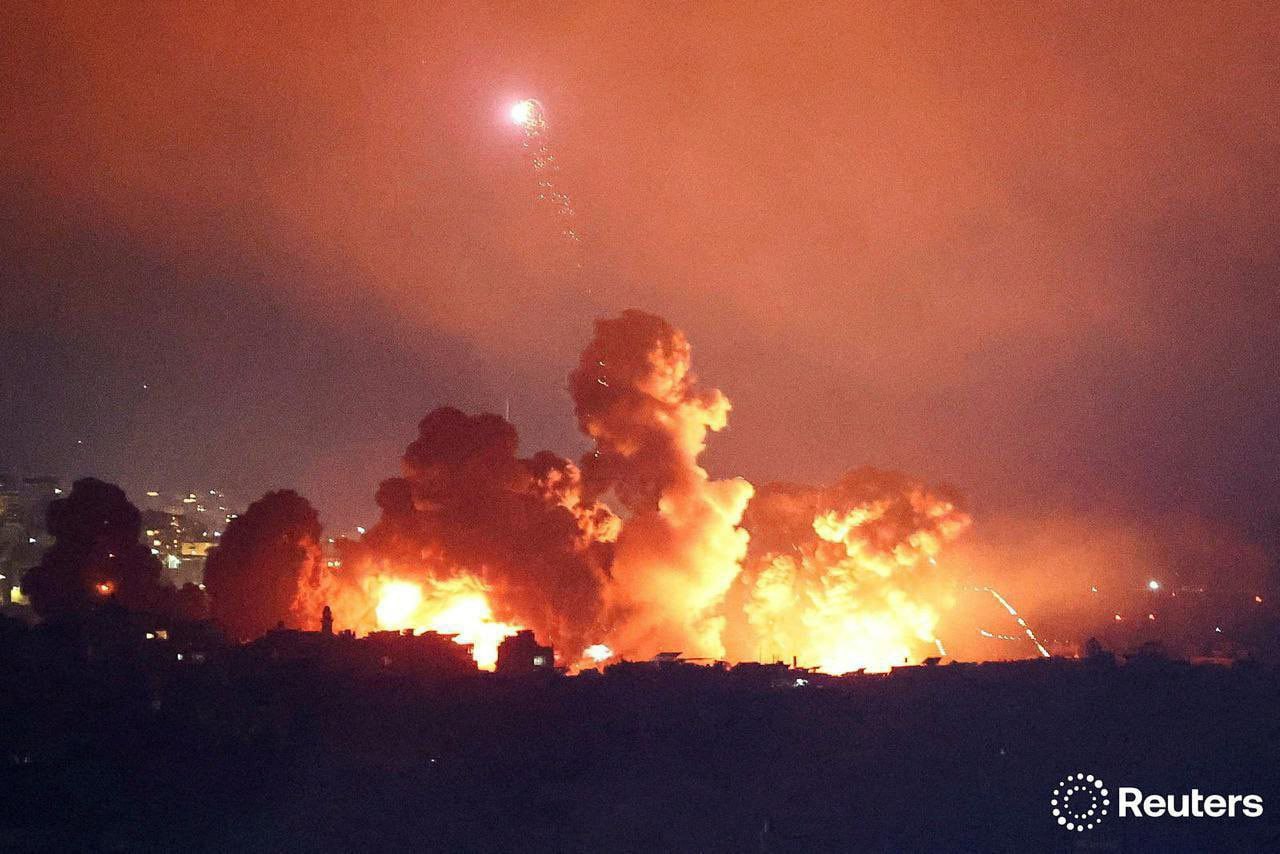
The Israeli army bombarded the location of Martyr Sayyed Hashim Safiuddin with bunker booster bombsIsraeli airstrikes 1Israeli airstrikes 2
According to a statement released by spokesman for the Israeli regime’s army Admiral Daniel Hagari, head of Hezbollah’s Executive Council Sayyed Hashem Safi al-Din and head of Hezbollah’s intelligence section Hussein Ali Hazimeh were assassinated in an airstrike by Israeli fighter jets on October 5, when the Israeli warplanes targeted a building in Beirut suburb.
The statement was issued following the removal of debris at the site of the Israeli airstrike in Beirut suburb. Local media reported that rescue forces retrieved the bodies of 24 individuals from the site, all of whom were senior members of the Lebanese resistance movement, including Sayyed Hashem Safi al-Din.
Despite the official declaration from the Israeli army, Hezbollah has not yet issued a statement regarding the martyrdom of its senior members.
Sayyed Hashem Safi al-Din is the head of Hezbollah’s Executive Council, who had been mentioned as a potential successor to the martyr Sayyed Hassan Nasrallah, the Secretary-General of Hezbollah.
The Israeli army announced that six commandos from the Egoz Unit (officially Unit 621) and two from the Golani Brigade were killed in battles in southern Lebanon on Wednesday.
The Israeli army declared that the commandos of the Egoz Unit initiated an attack early this morning against a village near the border (likely Kfar Kila). The occupying forces broke into a building in the village but soon found themselves ambushed by Hezbollah fighters.
During the confrontation, dozens of Hezbollah fighters opened fire on the Israeli troops, using light and medium weapons and targeting their equipment with anti-tank missiles. Through the evacuation of the wounded troops, the Lebanese resistance movement again targeted the Israeli forces with mortar fire, resulting in additional injuries among the Israeli troops.
In the end, the Israeli forces managed to retreat under the cover of drone strikes and tank fire. The Israeli regime claimed that more than 20 Hezbollah fighters were killed in the attacks.
It appears that the Israeli regime now fully understands that the battles in southern Lebanon will be significantly more costly and challenging for their forces compared to what is occurring in the Gaza Strip. The first day of the incursion indicates a costly conflict for the Tel Aviv regime with eight dead and dozens injured.
Hezbollah said in a statement that it had launched a Qadir-1 ballistic missile at the headquarters of Israel’s spy agency, Mossad, in the suburb of the city of Tel Aviv. The attack was carried out in response to recent assassinations in Lebanon and the attack that targeted communication devices across the country a week earlier, the group noted.
The unprecedented set off warning sirens in Tel Aviv and its suburbs. The Israeli Defense Forces later said in a statement that the missile was intercepted by the David’s Sling medium-range air defense system. No injuries were reported by the military.
Video of interceptingVideo of intercepting
At least 42 people were killed and more than 3,500 others were wounded on September 17 and 18 in a sabotage attack that thousands of pagers and walkie-talkies were exploded in Lebanon.
Later on September 20, an Israeli strike hit the southern suburb of the Lebanese capital, Beirut, assassinating Hezbollah top military commander Ibrahim Aqil along with more than 50 other people. Over 68 others were wounded in the strike.
Israel escalated again on September 23, launching an aerial campaign against Hezbollah that has so far claimed the lives of 569 people and left over 1,800 others wounded across Lebanon.
One of the Israeli strikes on September 24 hit Beirut, claiming the life of Ibrahim Qubisi, the commander of Hezbollah missile forces.
Up until the ballistic missile attack on Tel Aviv, Hezbollah had limited its response to rocket attacks on northern and central Israel.
The confrontation between Israel and Lebanon broke out after the beginning of the war in the Gaza Strip last October, with Hezbollah and its allies launching near-daily attacks against the IDF in support of the Palestinian enclave.
So far, the confrontation has resulted in 26 civilian deaths in Israel and the occupied Syrian Golan Heights as well as the deaths of at least 22 soldiers and security officers. On the Lebanese side, more than 1,800 people have been killed, including more than 500 fighters of Hezbollah.
As a result of the terrorist strike, six individuals, including Qubaisi, were martyred, and 15 others were wounded.
Prior to Hezbollah’s recent announcement, the Israeli military claimed to have targeted and assassinated the commander of Hezbollah’s missile unit in an air raid on the southern Beirut region.
Israeli strikes in the Dahieh of Beirut
Ibrahim Muhammad Qubaisi was born on October 10, 1962, in the Zebdine municipality of southern Lebanon. He joined the Islamic resistance in Lebanon in 1982 and was appointed to various organizational roles within the ranks of the resistance movement. Martyr Qubaisi played a key role in planning and leading plentiful military operations against the Israeli occupying forces in Lebanon from 1998 to 2000.
From 2001 to 2018, Hajj Ibrahim was in charge of the Bader military unit (north of the Litani River) in southern Lebanon and also managed segments of Hezbollah’s missile units. The esteemed commander was ultimately assassinated on September 24, 2024 by Israeli military aircraft in the southern areas of Beirut.
The assassination of Martyr Qubaisi marks the fifth terrorist strike by Israeli military aircraft in the Lebanese capital in the course of the recent days.
Israeli regime released footage of its terrorist strike in Dahieh
Earlier, the Tel Aviv regime had attempted to assassinate key leaders of the resistance movements in Lebanon and the Gaza Strip, including the founding commander of Hamas military wing (the Izz ad-Din Al-Qassam Brigades) and also served as the Hamas’s military commander of the West Bank and deputy head of Hamas’s Political Bureau Saleh al-Arouri, as well as senior Hezbollah commanders such as Fuad Shukr, Ibrahim Aqil, and Ali Karaki; however, the regime failed on conduct a successful assassination when it came to Karaki.
The Israeli regime’s objectives behind such terrorist operations in Lebanon appear to be aimed at putting more pressure on Hezbollah to halt its retaliatory attacks on the front along the southern Lebanon and northern occupied Palestine.
Hezbollah has declared that its operations in this front are intended to provide the Palestinian people with support as well as to counter the Israeli regime’s aggression in the Gaza Strip.
The Lebanese resistance movement also emphasized that they will continue their attacks on northern occupied Palestine until the Israeli military ceases its operations in this usurped region.
– Place and date of birth: Bednayel (Bekaa), born on December 24, 1962.
– From the generation of the founders of the Islamic Resistance Movement in Beirut and one of the leaders of heroic operations against the Israeli assault on Beirut in the early 1980s.
– Abdul Qader took on the responsibility of training for Hezbollah fighters in the 1990s and then he took shoulder the responsibility of the headquarters of the resistance, and played a key role in developing human capabilities within the organization of Hezbollah.
– From 1997 until after the liberation of Lebanon from the Israeli occupation, he was in charge of the operations unit in Jabal Amel region in southern Lebanon and was the main commander of many special operations. He was one of Hezbollah’s field commanders in the 33-day war and was considered one of the pillars of Islamic resistance in Lebanon. In 2008, he was appointed as the assistant Secretary-General of Hezbollah for operational affairs and turned into a member of the Jihad Council Hezbollah, a council responsible for directing the groups’ military and security activities.
– For several years until the date of his martyrdom, Haj Abdul Qader was in charge of the establishment, development, and command of the Redwan Force in Hezbollah.
– Haj Ibrahim Aqil was one of the senior leaders and fighters who planned and managed military operations against Takfiri groups on the eastern borders of Lebanon, the city of Al-Qusayr, the town of Qalamoun, and other regions of Syria.
– In the recent war with the Israeli regime, he led the military operations of the Radwan Force of the Lebanese front in support for the resistance factions in the Gaza Strip.
– Finally, Haj Ibrahim Aqil was martyred in a terrorist attack by the Israeli regime’s fighter jets of on a building in the al-Dahiya district of Beirut on September 20, along with several field commanders and senior members of the Lebanese resistance movement.
According to Hezbollah’s fresh statements, the first two rocket attacks were carried out on Tuesday morning in response to the repeated Israeli air raids on various regions of Lebanon. During these assaults, the Ramat David base and airport were attacked by Hezbollah with dozens of Fadi-1 and Fadi-2 rockets.
The Fadi-1 and Fadi-2 rockets are being utilized for the first time since the onset of the confrontations, and the launch of such rockets is likely to have taken place from one of the underground facilities at Imad underground missile base. The Fadi-1 rocket is a 220 mm artillery rocket, which is manufactured by Syria, and also known as the Khyber M220 class. Fadi-2 rocket, also named Khyber M302, was featured in the video unveiling of the Imad 4 underground facility in Lebanon.
According to reports published by Israeli media outlets, 13 Zionist settlers were injured as a result of Hezbollah’s rocket attacks and the settlers escaped to shelters. One of the injured is reported to be in critical condition. In addition, 12 residential buildings and dozens of cars were demolished or damaged. Moreover, the Israeli army’s Arabic-spoking spokesman Avichai Edrei announced that Hezbollah had fired more than 115 rockets into the northern Israeli-occupied areas of Palestine.
Initial images of Hezbollah’s rocket attack on Ramat David Air Base
The Ramat David Air Base is the main Israeli Air Force base in the northern region of occupied Palestine, which is situated 46 kilometers from Lebanese border areas. The air base includes three runway and is home to several F-16 fighter squadrons, the IAI Heron class drones and combat helicopters. The Ramat David base is the main pillar of the Israeli army’s bases, which is used to carry out attacks on Lebanon.
Ramat David air base in the outskirts of Haifa
It should be mentioned that on July 2024, the Lebanese resistance movement’s Hudhud (hoopoe) drone succeeded in infiltrating northern occupied Palestine, flew over the Ramat David Air Base, and returned to Lebanon safely after carrying out reconnaissance operation and filming of maintenance facilities, hangars, fuel and ammunition storage tanks, and the Boeing Apache helicopters.
Israeli air Defense systems confronting Hezbollah rockets in the outskirts of Haifa city.The fall of Hezbollah rockets or Israeli air defense missiles has caused fire and destruction in the town of Al-Nasra and other occupied areas.Hezbollah’s rockets hit or fell in the occupied territoriesZionist settlers flee to shelters after Hezbollah rocket attack
In the third operation, which was carried out as part of Hezbollah’s initial response to the brutal crime of the Israeli enemy in various regions of Lebanon on September 17 and 18 (the explosion of pagers and other communication devices), the Rafael military industrial facility, situated in north of Haifa, was attacked with Fadi-1 and Fadi-2 rockets and Katyusha rockets.
The Rafael Advanced Defense Systems Ltd. is a specialized manufacturer of electronic devices and equipment and is located in the north of the city of Haifa.
Rafael company in the suburbs of Haifa
Hezbollah’s today attacks on the city of Haifa have forced at least 300,000 residents of the Israeli-occupied territories to escape. Various pictures and footages of fires and heavy smoke in the cities of Nazareth, Tamra as well as other towns around Haifa also indicate that, contrary to the Israeli regime’s claims, the great number of Hezbollah rocket attacks have caused a lot of damage and destruction to the occupied territories. As the scale of Hezbollah’s strikes expands, the internal pressure on Israeli Prime Minister Benjamin Netanyahu’s cabinet and the wave of migration from the north to the center of occupied Palestine will surge. Perhaps if such attacks had been carried out in previous rounds of escalations between Hezbollah and the Tel Aviv regime, Israel may not be able to escalate tensions and embark on such heinous terrorist attacks against the Lebanese people.
Today’s military operation is Hezbollah’s first large-scale rocket assault and its second military incursion deep into Israeli army’s positions following the drone strikes on the Glilot base and the Ein Shemer Airfield in the center of occupied Palestine. With this new attack, Hezbollah increased the range of its rocket strikes to a distance of 50 kilometers from Lebanon’s southern border. In a speech commemorating the martyrs of the second Israeli terrorist attack in Lebanon’s capital city Beirut, which led to the martyrdom of senior Hezbollah commander Fuad Shukr, Hezbollah’s Secretary-General Sayyed Hassan Nasrallah warned that the Lebanese resistance movement possesses the ability to carry out rocket attacks in all areas of the Israeli-occupied territories from Kiryat Shmona to Eilat, which could increase the number of displaced Israeli settlers to two million.
Hezbollah’s retaliatory operations on the southern Lebanon and northern Palestinian fronts kicked off on October 8 last year in order to actively support the Palestinian people and resistance groups in the Gaza Strip. During the operation, the Lebanese resistance movement used rockets, drones, anti-armor ammunition and artillery to pound numerous positions of the Israeli regime’s army in the northern areas of occupied Palestine as well as the Israeli-occupied Golan Heights of Syria more than 10 times on a daily basis. It is worth mentioning that 485 Lebanese resistance commanders and fighters have been martyred as a result of the Israeli regime’s strikes.
Hezbollah rocket attack on Ramat David base and Rafael companySeveral Hezbollah rockets hit Tamra town.Fires and smoke in occupied settlements following repeated rocket attacks by Hezbollah Fires and smoke in occupied settlements following repeated rocket attacks by Hezbollah Fires and smoke in occupied settlements following repeated rocket attacks by Hezbollah Fires and smoke in occupied settlements following repeated rocket attacks by HezbollahVideoFires and smoke in occupied settlements following repeated rocket attacks by Hezbollah