Tag: Israel

  • Intense Israeli Airstrike on Yemen’s Capital (Video)

    Intense Israeli Airstrike on Yemen’s Capital (Video)

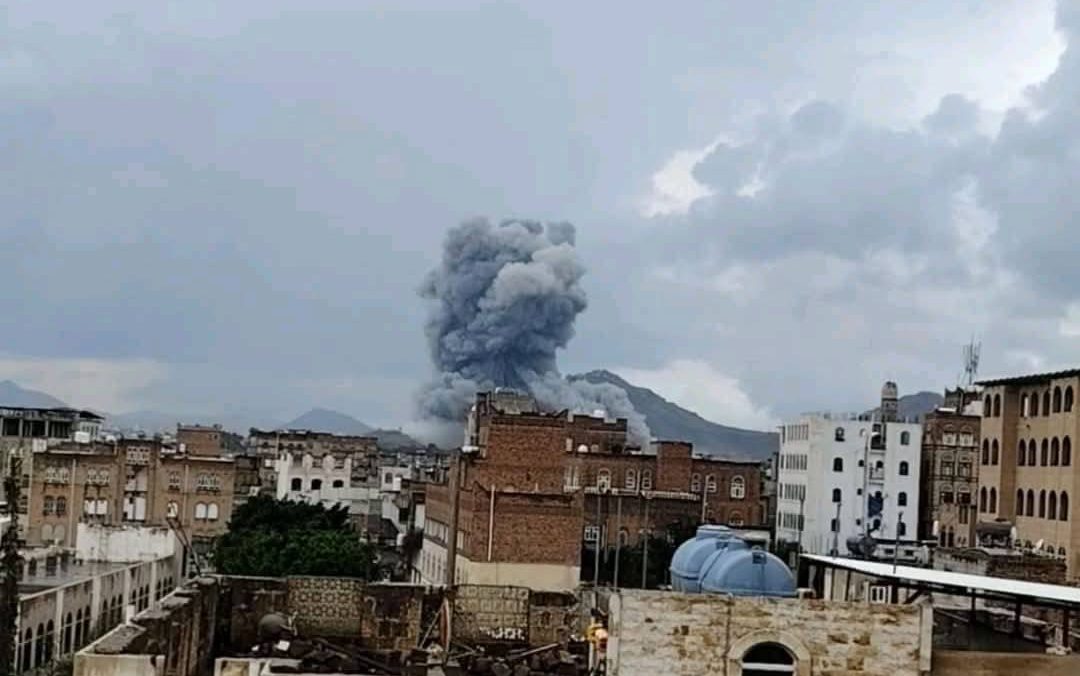
    The strikes hit multiple sites including the presidential palace, the Haziz power station in Sanhan district, a facility referred to as the Assar power station (not identified in Yemeni sources), and a fuel depot. So far, six fatalities have been reported, with 86 others injured.

    Simultaneously, Yemeni air defense forces engaged the Israeli aircraft, launching interceptor missiles that successfully repelled some jets and disrupted the operation.

    According to Israeli statements, the airstrikes were a retaliatory measure against ongoing missile and drone attacks by Yemeni forces. The Israeli regime claims the targeted sites were being used militarily by Ansar Allah.

    The attack drew widespread condemnation from regional actors, including the Yemeni Foreign Ministry, the Political Bureau of the Ansar Allah Movement, Iran’s Foreign Ministry, Oman, Hezbollah in Lebanon, and various Palestinian resistance groups, all of whom issued statements denouncing Israel’s actions.

    Israeli Airstrike on Yemen’s Capital

    This marks the 15th aerial assault by the Zionist regime on Yemen since the escalation of hostilities.

    Analysts suggest that by targeting civilian infrastructure and energy facilities, Israel aims to weaken Yemeni military pressure and shift focus away from internal challenges. The Israeli security apparatus is allegedly prioritizing the elimination of key figures within the Yemeni armed forces and the Ansar Allah political leadership, though these efforts have failed. Meanwhile, the U.S. Navy and Air Force are actively working to intercept Yemeni missile and drone attacks, utilizing regional airspace, including that of Saudi Arabia, to prevent strikes from reaching Israeli territory.

  • Yemeni Missile and Drone Strike on Israel (Video)

    Yemeni Missile and Drone Strike on Israel (Video)

    The Yemeni Armed Forces launched an attack on Israeli positions in Tel Aviv and Ashkelon using one hypersonic missile and two suicide drones. A video from the occupied territories captured the moment of impact.

    As part of their continued support for the Palestinian people and resistance, the Yemeni Armed Forces targeted Lod Airport (Ben Gurion) near Tel Aviv with a hypersonic ballistic missile named “Palestine 2.” Israel’s missile defense systems failed to stop the missile, and the operation reportedly hit its target successfully. The strike caused millions of Israelis to flee to shelters and suspended airport operations.

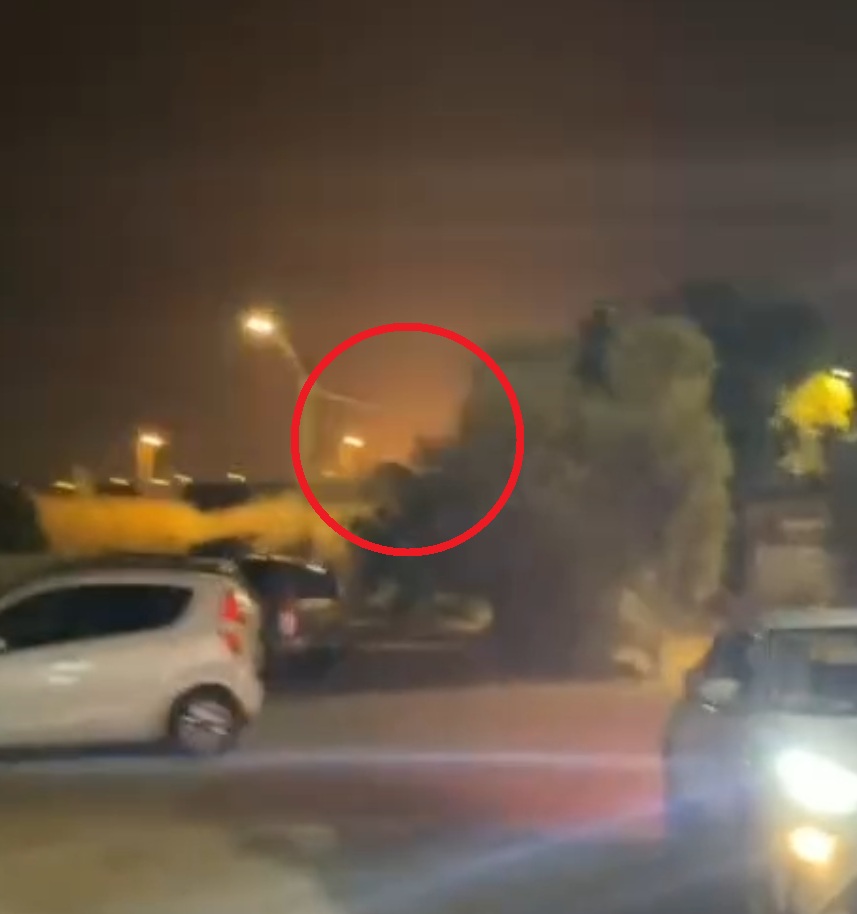
    Yemeni missile impact in occupied territories

    The Yemeni Air Force also carried out two military operations using suicide drones against critical Israeli military targets in Tel Aviv and Ashkelon. According to Brigadier General Yahya Saree, both missions successfully reached their objectives.

    In his statement, Brigadier General Yahya Saree expressed Yemen’s deep appreciation for the heroism and sacrifices of the steadfast Palestinian fighters in Gaza. He described them as the embodiment of resistance against the enemies of the Muslim nation, selflessness in the path of God, and defenders of the dignity of the Ummah. He affirmed that Yemen—with its loyal people, devoted army, and faithful leadership—will stand by them until the aggression ends and the blockade is lifted.

    According to Islamic World News statistics, these operations mark the 178th to 180th aerial strikes by the Yemeni Armed Forces against Israeli positions in occupied Palestine.

  • Latest Updates on Southern Syria (Map)

    Latest Updates on Southern Syria (Map)

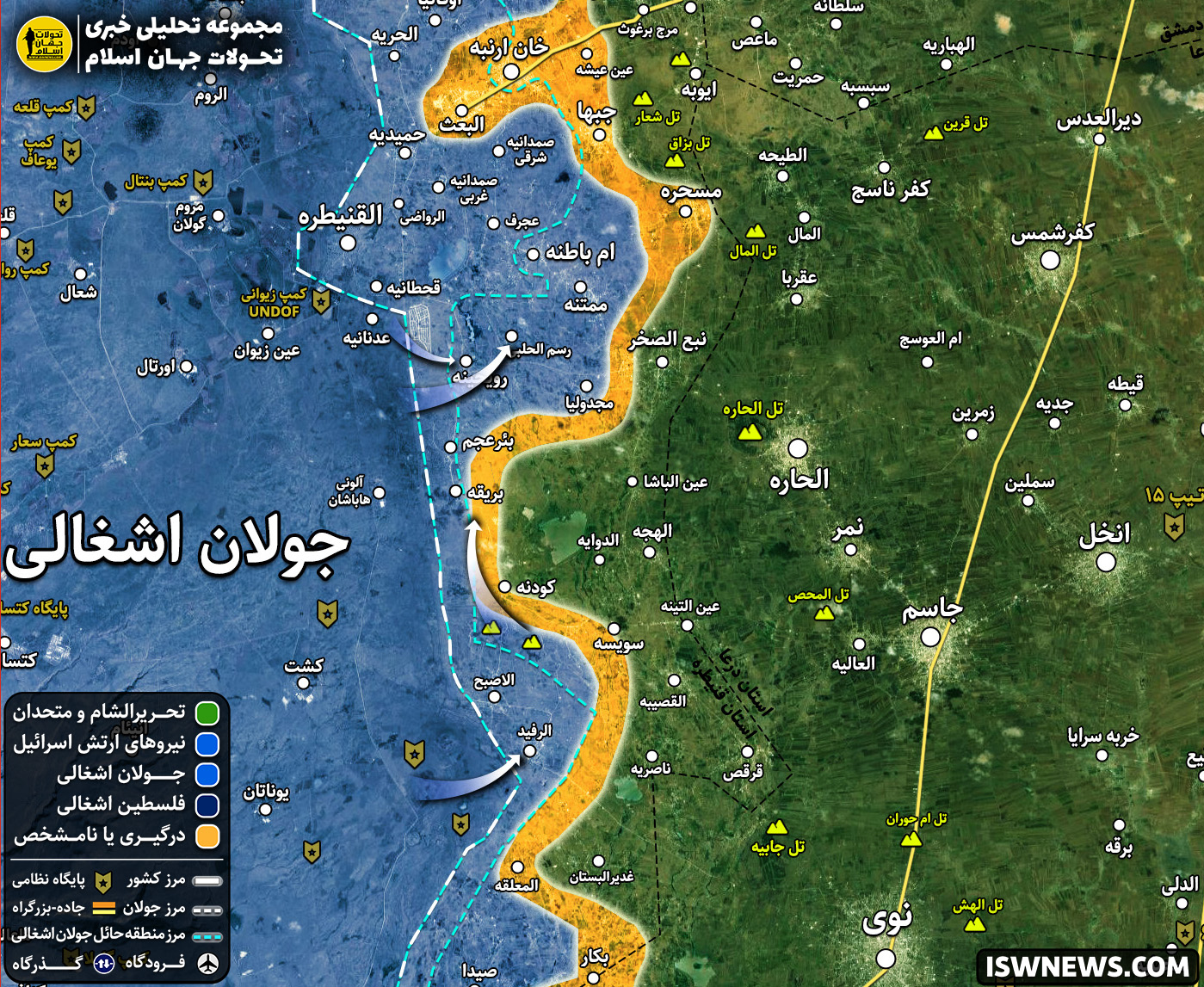
    In the latest movements, 10 Israeli military vehicles departed from Tel Ahmar and headed toward the Bariga-Kudna road, establishing a checkpoint there.
    Additionally, another convoy of 10 vehicles entered Ruwaiheena village before proceeding toward Rasm al-Halabi in central Quneitra.
    Five Israeli vehicles also entered Rafid village.
    An Israeli patrol, supported by two tanks, moved from Adnaniyeh to Ruwaiheena, with the tanks positioning themselves on the village outskirts.

    It appears that the regime’s movements in southern Syria are now directly influenced by ongoing Syrian-Israeli-American negotiations, and until the parties’ agreements are clarified, significant changes in frontlines are unlikely.

  • Syrian Foreign Minister Meets with Israeli Delegation in France

    Syrian Foreign Minister Meets with Israeli Delegation in France

    The United States facilitated the meeting. The talks focused on reducing tensions and preventing Israeli interference in Syria’s internal affairs(!), monitoring the ceasefire in Sweida province, and implementing the 1974 agreement.

    The goal is to foster regional understanding to enhance security along Syria’s southern borders and prevent conflicts in areas under Julani government control.

    Additionally, on August 21, 2025, during a visit to Amman, the Syrian Foreign Minister met with Jordanian Foreign Minister Ayman Al-Safadi and US Special Envoy Thomas Barak to discuss trilateral cooperation aimed at stabilizing Syria.

  • Israeli Defense Minister Approves Operation Gideon’s Chariots 2 in Gaza

    Israeli Defense Minister Approves Operation Gideon’s Chariots 2 in Gaza

    This meeting occurred amid Hamas’s recent announcement of a ceasefire proposal! If an agreement is finalized to release hostages and establish a ceasefire, the plan to attack Gaza City might be canceled.

    Hours after the meeting, Hebrew media reported that Yisrael Katz approved Operation Gideon’s Chariots B plan on Wednesday. The plan was approved after Eyal Zamir and senior commanders presented operational details to Katz.

    The goal is to fully capture Gaza City, continuing Israel’s efforts to pressure Palestinian resistance groups into negotiating a prisoner exchange.

    As part of this plan, the Israeli army is calling up 60,000 reservists. Additionally, the defense minister approved relocating about one million Palestinian civilians from Gaza City to the southern parts of the strip.

    This new phase of Operation “Gideon’s Chariots” underscores Israel’s resolve to diminish Hamas’s military influence in Gaza. With the large reserve call-up and focus on controlling Gaza City, Israel seems intent on shifting the battlefield dynamics. Future developments, including diplomatic efforts and military actions by Palestinian resistance groups, will significantly influence the outcome of this military operation.

  • Israel is bolstering its air defenses in preparation for potential conflict with Iran!

    Israel is bolstering its air defenses in preparation for potential conflict with Iran!

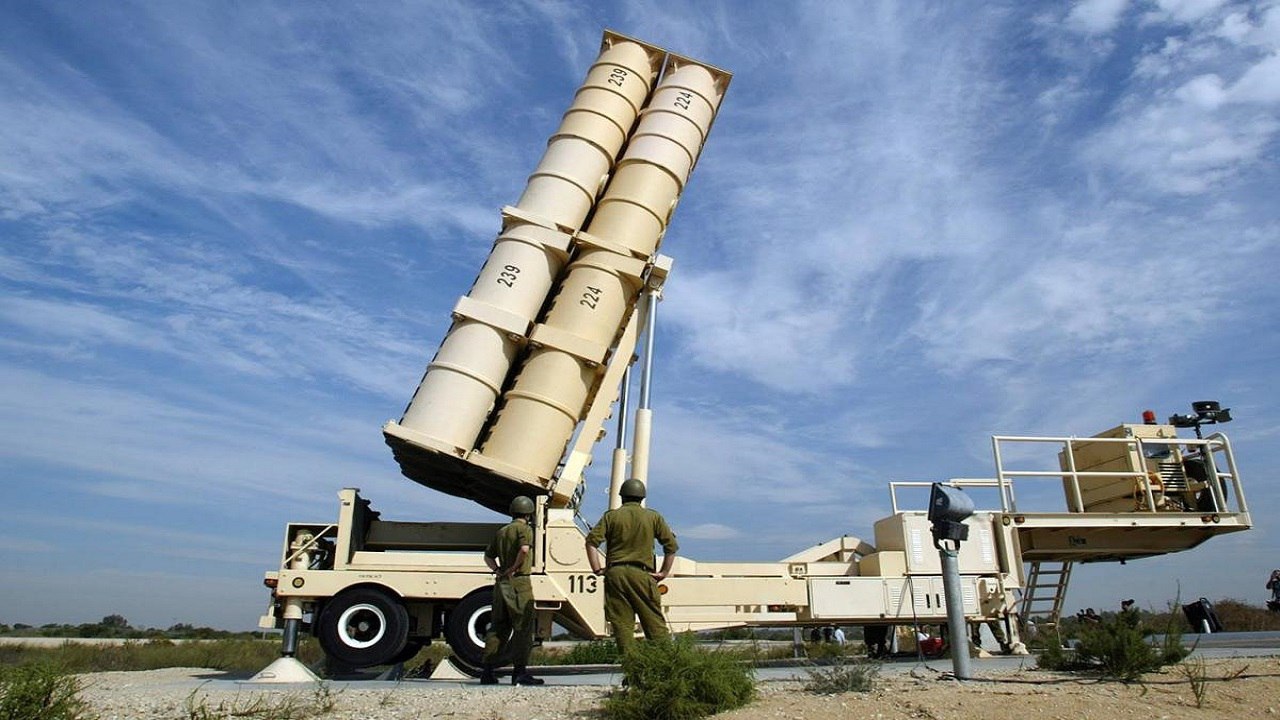
    This strategy includes new laser and radar technologies, along with classified systems. The Iron Dome protects against short-range rockets and drones; David’s Sling intercepts cruise and tactical ballistic missiles; Arrow 2 and Arrow 3 handle long-range and extra-atmospheric missiles, with Arrow 4 still under development for advanced missile threats inside and outside the atmosphere.

    Last month, Israel’s Defense Ministry agreed to ramp up Arrow missile production. These steps follow the recent 12-day conflict between Tel Aviv and Tehran, during which, according to Israeli claims, Iran launched over 500 ballistic missiles and 1,100 suicide drones, damaging residential areas, killing 29, and injuring over 3,000. Yemen’s Ansar Allah has also increased missile and drone attacks on occupied Palestine since March 18, with nearly 70 ballistic missiles and 20 drones fired.

    Read more: Operation True Promise 3: Which Locations Were Targeted In Occupied Territories?

    Meanwhile, IDF Chief Eyal Zamir warned that Israel might carry out new strikes against Iran if needed.

    The accelerated military buildup highlights Israel’s growing concern over its deterrent capacity against Iran and resistance groups, especially after recent attacks that exposed weaknesses in its defense systems, creating political and psychological pressure.

    Furthermore, the significant investment in layered defenses suggests preparation for a prolonged, multi-front regional conflict. The active presence of Yemen’s Ansar Allah fighting Israel and potential involvement of other resistance axis members indicate Israel aims to establish a broad defense umbrella against threats from Iran, Yemen, Lebanon, and Iraq, signaling that the region may be nearing a new round of conflicts.

  • Hamas agrees to Egypt and Qatar’s ceasefire proposal

    Hamas agrees to Egypt and Qatar’s ceasefire proposal

    The Palestinian news agency Samaa also reported that Hamas and Palestinian groups fully support the proposal offered by Egypt and Qatar for a ceasefire.

    The proposal includes a pathway to reach a comprehensive agreement to end the war and will temporarily pause military operations for 60 days.

    It is reported that 600 trucks of humanitarian aid will enter Gaza each day, and 1,700 Palestinian prisoners, including 1,500 from Gaza, will be released. Discussions to end the conflict are also scheduled to start during the 60-day ceasefire period.

  • Turkey has spoken! Corridor from Sweida to the north is prohibited!

    Turkey has spoken! Corridor from Sweida to the north is prohibited!

    Turkey deemed such actions “imperialist and Zionist demands”, and a threat to the unity and sovereignty of Syria, as well as to the country’s political transition process. The spokesperson emphasized that Ankara will take all necessary measures to protect its national security.

    This stance indicates that Turkey views the situation not merely in terms of border security in Syria, but as part of a broader regional equation. This perspective may lead Turkey to consider more direct and preemptive actions in the Syrian arena.

    The mentioned corridor, often referred to as the so-called “David’s Corridor” is seen as a long-standing goal of Zionists aimed at expanding their influence in the region, both physically and spiritually. As long as this corridor is perceived as a threat to Turkey, the country will view it as a significant geopolitical shift and will oppose it firmly, unless the issues related to the Syrian Democratic Forces and the PKK in northern Syria are resolved.

    Turkey is particularly concerned about scenarios that could strengthen federal or autonomous structures in Syria, as these might bolster the position of armed Kurds in the northern regions.

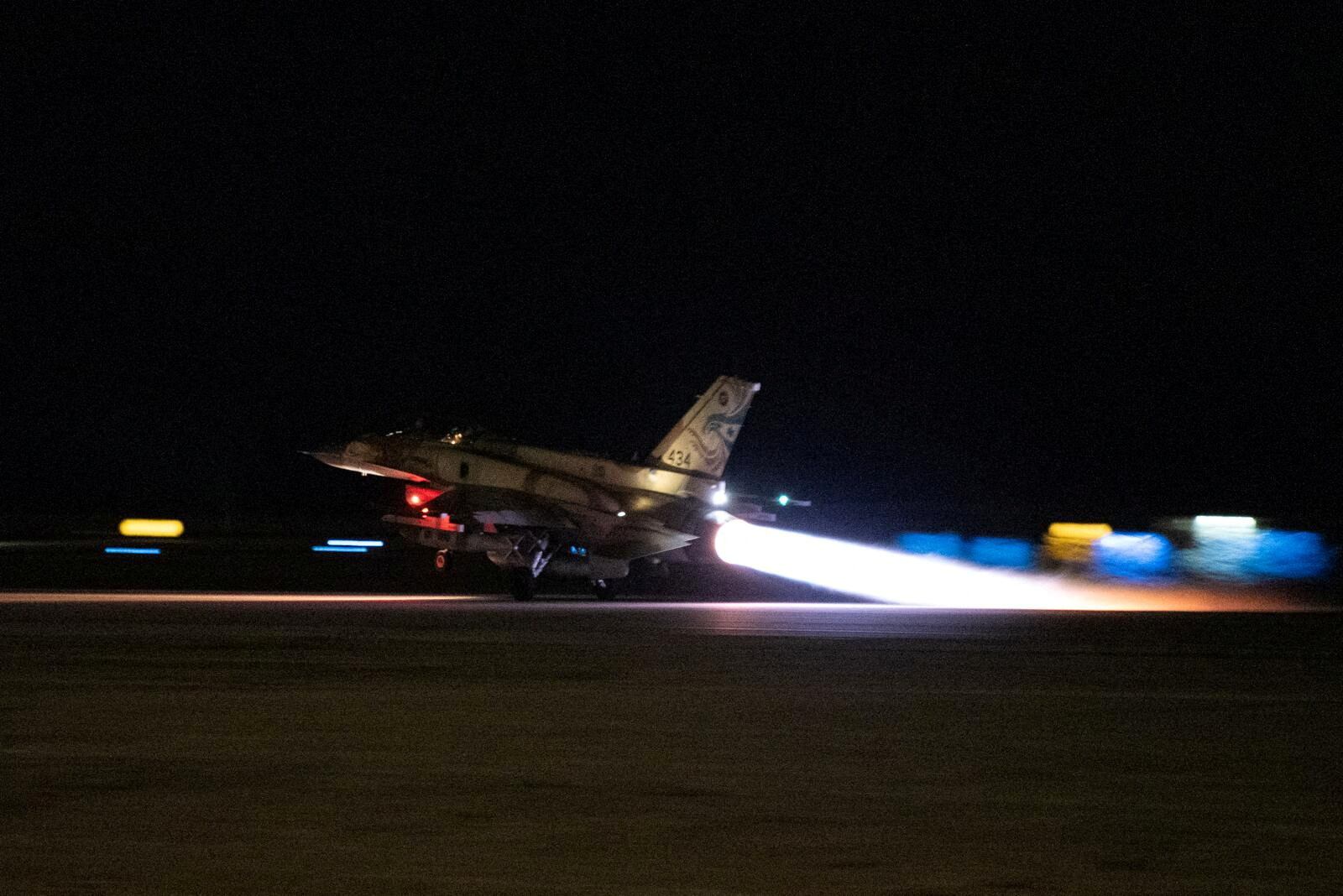
  • Operation Dawn Begins: Israeli Regime Launches Major Air Drill Amid Tensions

    Operation Dawn Begins: Israeli Regime Launches Major Air Drill Amid Tensions

    It is said that this exercise has been designed and implemented with the aim of assessing the readiness of the Zionist regime’s army to confront multi-front attacks and simultaneous conflicts. The operation is commanded by the Chief of Staff of the Israeli regime’s army, General Eyal Zamir, and is overseen by the army’s comptroller, retired Brigadier General Ofer Sarig.

    In addition to Israeli fighter jets, 40 fighter jets from the United States and 20 from Britain are also present in this exercise. A significant number of reconnaissance and intelligence-gathering aircraft have also been deployed for operational support.

    This exercise is being held amid rising tensions in the region, especially in southern Lebanon and the Gaza Strip, and officials of the regime continue their threats against Iran. The Israeli army has recently intensified its airstrikes against alleged Hezbollah positions in southern Lebanon and is preparing for the full occupation of the Gaza Strip.

    According to the spokesperson of the Zionist regime’s army, the goal of the exercise is to assess reaction speed, decision-making quality, and operational coordination among various branches of the army. The exercise will continue until the end of the week. Some believe that the Israeli regime may use this exercise for another surprise and to carry out new attacks against Iran.

  • Israeli Intelligence Infiltration Plan in Yemen Using Ali Abdullah Saleh’s Son

    Israeli Intelligence Infiltration Plan in Yemen Using Ali Abdullah Saleh’s Son

    Recently, Arab media reported that Ansar Allah was at odds with its main political ally, the “Popular Congress Party,” and claimed that the party’s leaders were detained and their headquarters seized, allegedly due to connections with Ahmed Abdullah Saleh, the son of ex-Yemeni leader Ali Abdullah Saleh, now residing in the Emirates. These reports, however, were false, and the Yemeni Popular Congress Party denied the accusations circulated by Saudi and Emirati media that Ansar Allah intelligence agents had attacked its headquarters in Sanaa.

    Salim Al-Mughlas, a member of the Ansar Allah political bureau, revealed that Saudi Arabia and the UAE recently attempted to incite Yemeni factions and trigger internal conflict in Sanaa, but this plan failed. He dismissed rumors in Arab media about the arrest of Popular Congress Party members, stating that these provocations aimed to target both the Popular Congress Party and the Ansar Allah movement.

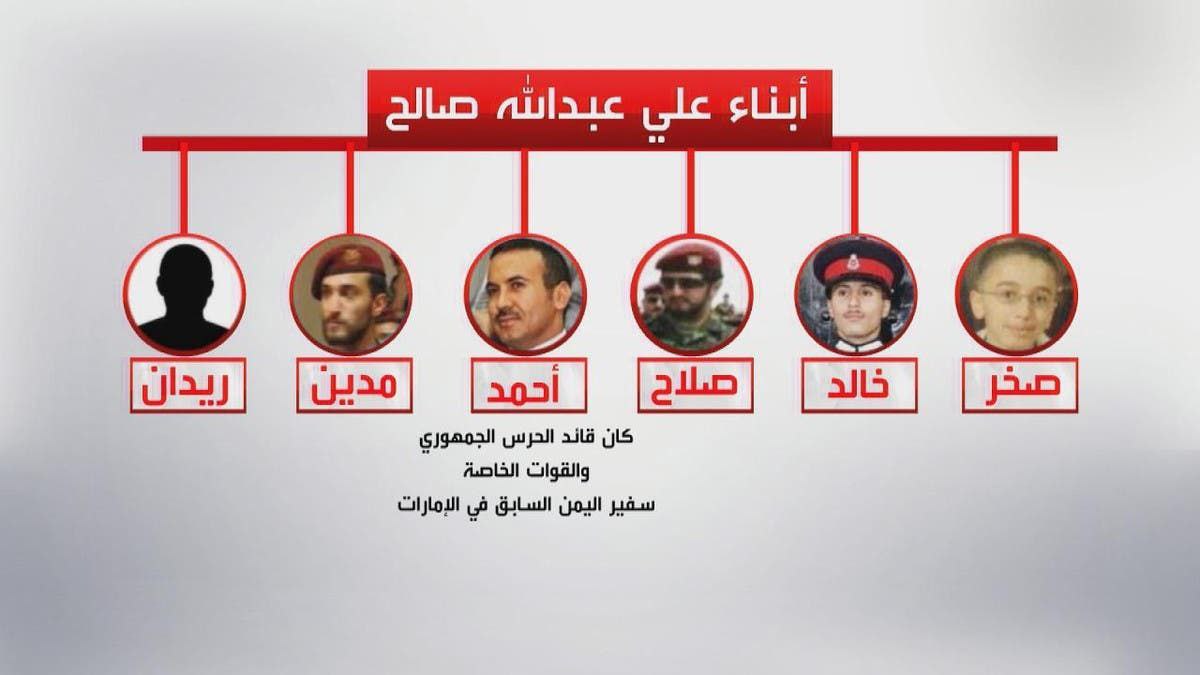
    The story indicates that the Ansar Allah intelligence service acted wisely by uncovering and preventing the sedition led by elements linked to the Popular Congress Party. It appears that Mossad is trying to involve Ahmed Abdullah Saleh in politics through Emirati agents and by attracting members of the Popular Congress Party based in Sanaa, aiming to create new security tensions. Meanwhile, alongside Tariq Saleh’s covert efforts to strengthen ties with the Islah Party in Taiz, local sources confirmed that Madin Abdullah Saleh, another son of former Yemeni leader Ali Abdullah Saleh, recently arrived in Marib. He traveled to Riyadh a few days earlier and was coordinated into Marib by the Saudis. These actions align with a tripartite plan involving Israel, the UAE, and Saudi Arabia to reintroduce Saleh’s children into Yemeni politics. During his visit, Madin likely met with Saudi-UAE coalition military leaders, including Sultan Al-Aradah, other Islah Party leaders, and Lieutenant General Sagheer bin Aziz, to discuss ongoing political and military developments.

    The plan to bring Ali Abdullah Saleh’s children back is actually a security strategy orchestrated by the Israeli Mossad. It started by rewriting the story of Saleh’s death at the hands of Ansar Allah while he was fleeing Sanaa, and progressed through his eldest son Ahmed’s contact with members of the Popular Congress Party in Sanaa. Recently, this has become more evident with the movements of Tariq and Madin Saleh in southwestern Yemen and Marib. It is anticipated that Saleh’s sons will enter Yemen as part of a new group of mercenaries connected to the Saudi coalition. Their goal is to recruit members of the Popular Congress Party in Sanaa, as well as forces loyal to Tariq Saleh and supporters of Ali Abdullah Saleh, such as Lieutenant General Sagheer bin Aziz. This strategy aims to weaken the political influence of Ansar Allah’s allies.

    At first glance, this plan might appear weak and naive, since the Popular Congress Party lacks significant power in Sanaa. Meanwhile, Ansar Allah, with its considerable political and social influence, could easily seize control of the entire organization of this party through a security operation. However, their separation will undermine Ansar Allah’s political standing in Yemen. Additionally, their subordinate elements could turn into a Mossad spy network in Sana’a and infiltrate the Yemeni government and armed forces. This would allow Israel to gather more intelligence and data on military and vital installations, as well as the headquarters of Ansar Allah leaders, commanders, and the Yemeni armed forces.

    Overall, Ansar Allah must work harder than ever to maintain the unity of their internal front within the Sana’a government and prevent spies from infiltrating areas under their control. One method of infiltration involves reopening roads between cities held by Ansar Allah and the resigned government, which is being pushed by the UN. This move could allow spies easier access to Ansar Allah’s internal territories. Although Ansar Allah oversees and inspects these roads, Israeli field agents possess specialized training and resources to evade security checks, potentially infiltrating cities controlled by Ansar Allah.
  • Azerbaijan and Israel: Baku to Host European Rabbinical Conference

    Azerbaijan and Israel: Baku to Host European Rabbinical Conference

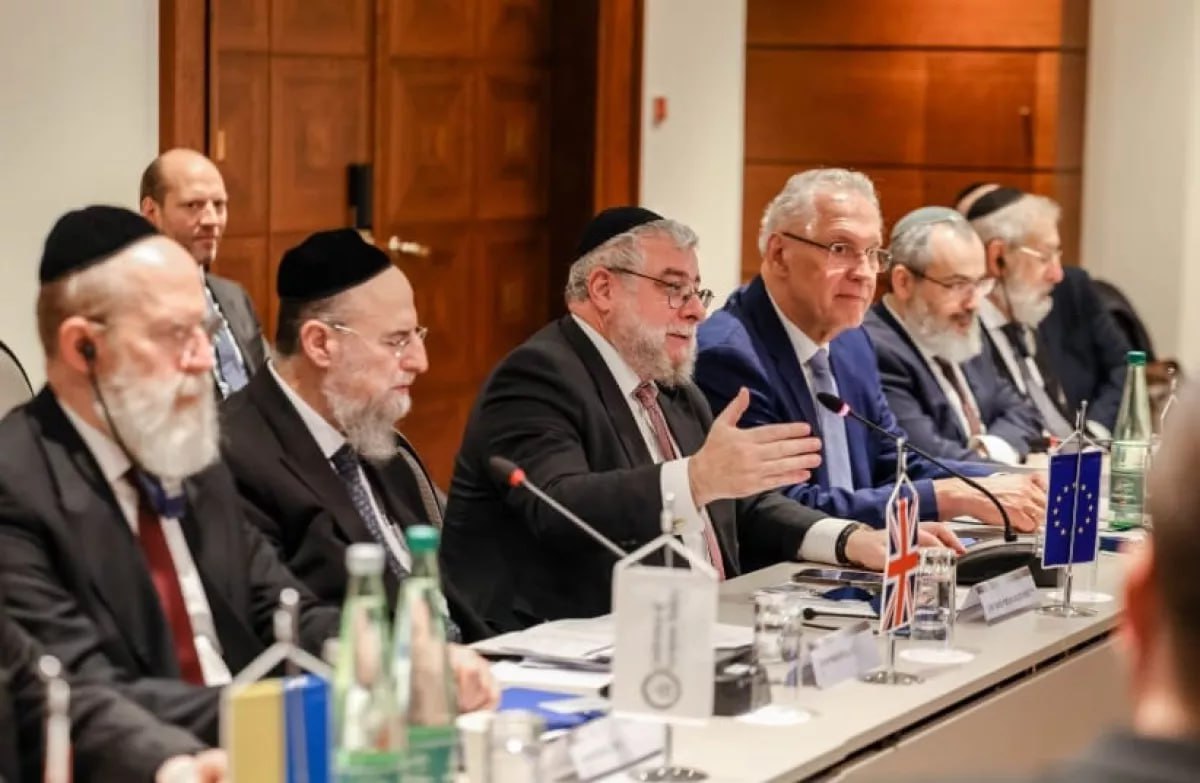
    Hundreds of European rabbis will gather in Baku to discuss Azerbaijan’s accession to the Abraham Accords. This conference is significant as it will be the first of its kind held in a Muslim country.

    Azerbaijani President Ilham Aliyev is also likely to attend the event. The previous session of the Jewish Conference was canceled due to the Operation Al-Aqsa Flood against Israel on October 7, 2023.

    Holding the first European Jewish Conference in Baku not only highlights the strong relations between Azerbaijan and Israel but also reflects ongoing efforts to enhance cooperation between the two sides. The Donald Trump administration had been advocating for Azerbaijan’s accession to this treaty for some time, considering Azerbaijan’s geopolitical position and strategic relations with Tel Aviv.

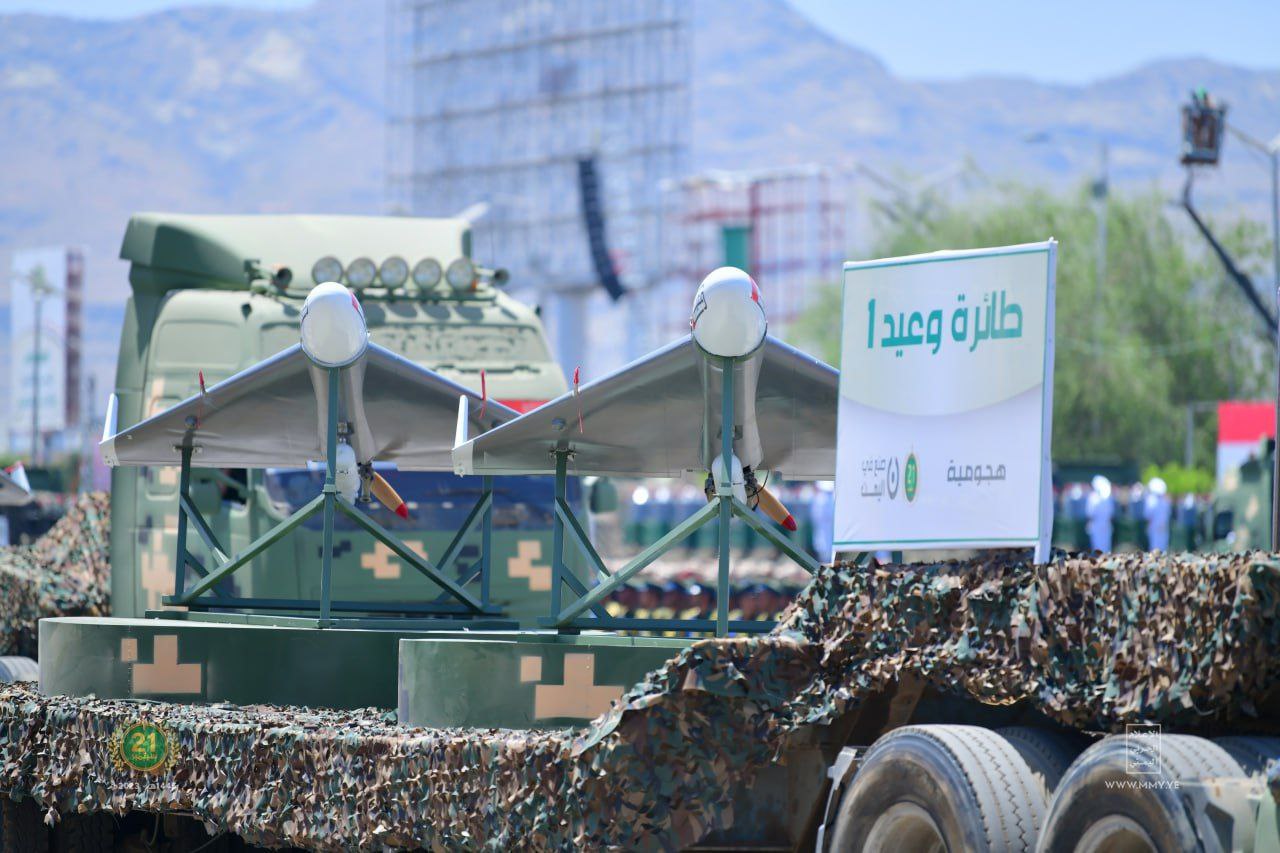
  • Yemen’s Army Drone Attacks Against Israel

    Yemen’s Army Drone Attacks Against Israel

    According to a statement from the spokesman of the Yemeni armed forces, these operations were deemed successful.

    The Yemeni armed forces urged Islamic and Arab nations to support Palestine. They also warned companies involved with the ports in occupied Palestine, calling on them to cease their cooperation to safeguard the crews of their ships.

    Data collected by IWN indicates that these operations mark the 169th to 171st air operations of the Yemeni armed forces against the positions of the Zionist regime in occupied Palestine