An overview of the development and production history of the Rampage missile:
The Rampage missile emerged from a collaboration between Israel Military Industries (IMI) and Israel Aerospace Industries (IAI). This partnership traces its origins to the development of the EXTRA series rockets at IMI, from which an air-launched version was created in collaboration with IAI. Initially named MARS (Multi-purpose, Air-launched Rocket System), this version was later marketed as Rampage and is currently produced by the military company Elbit Systems.
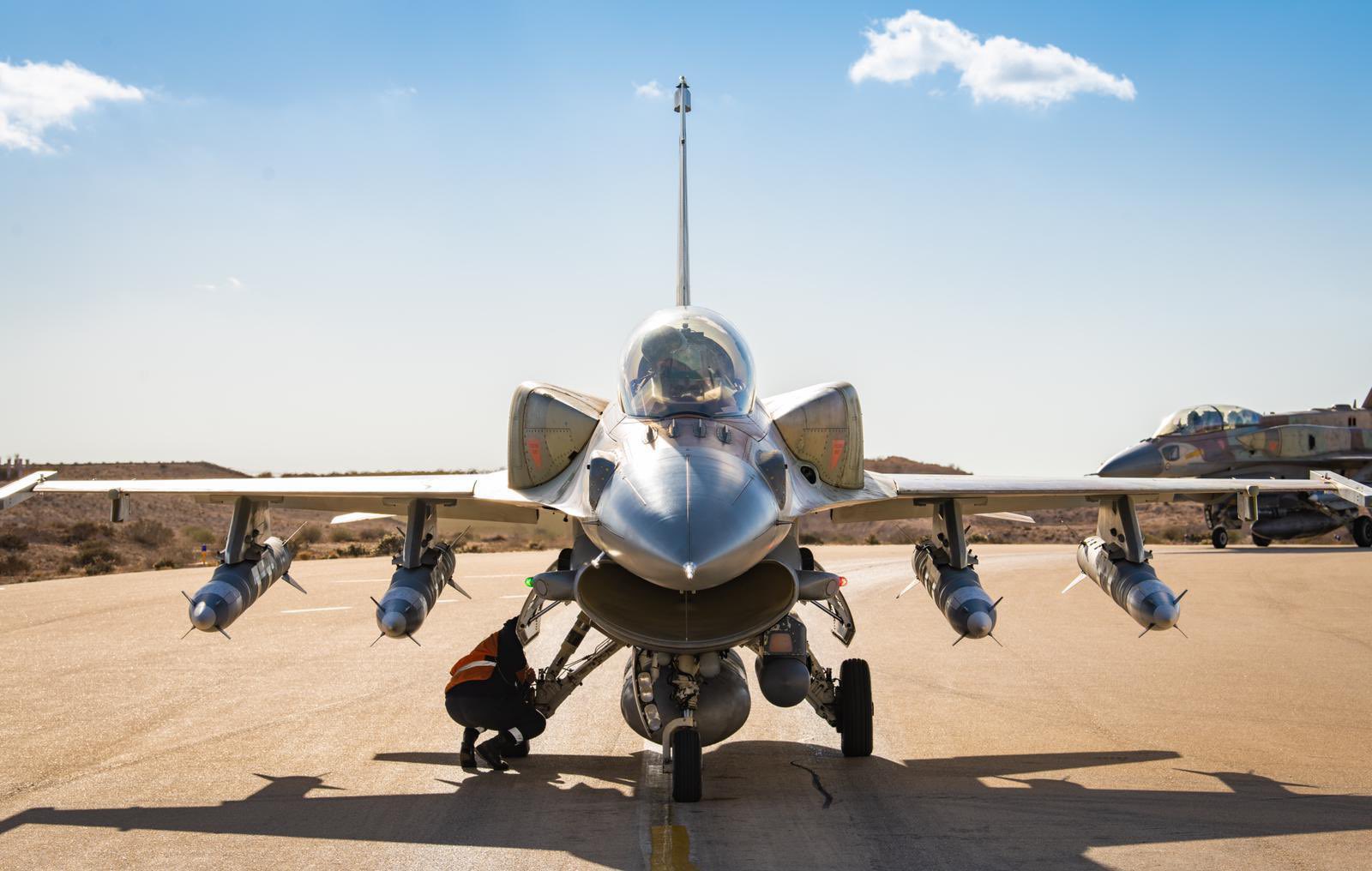
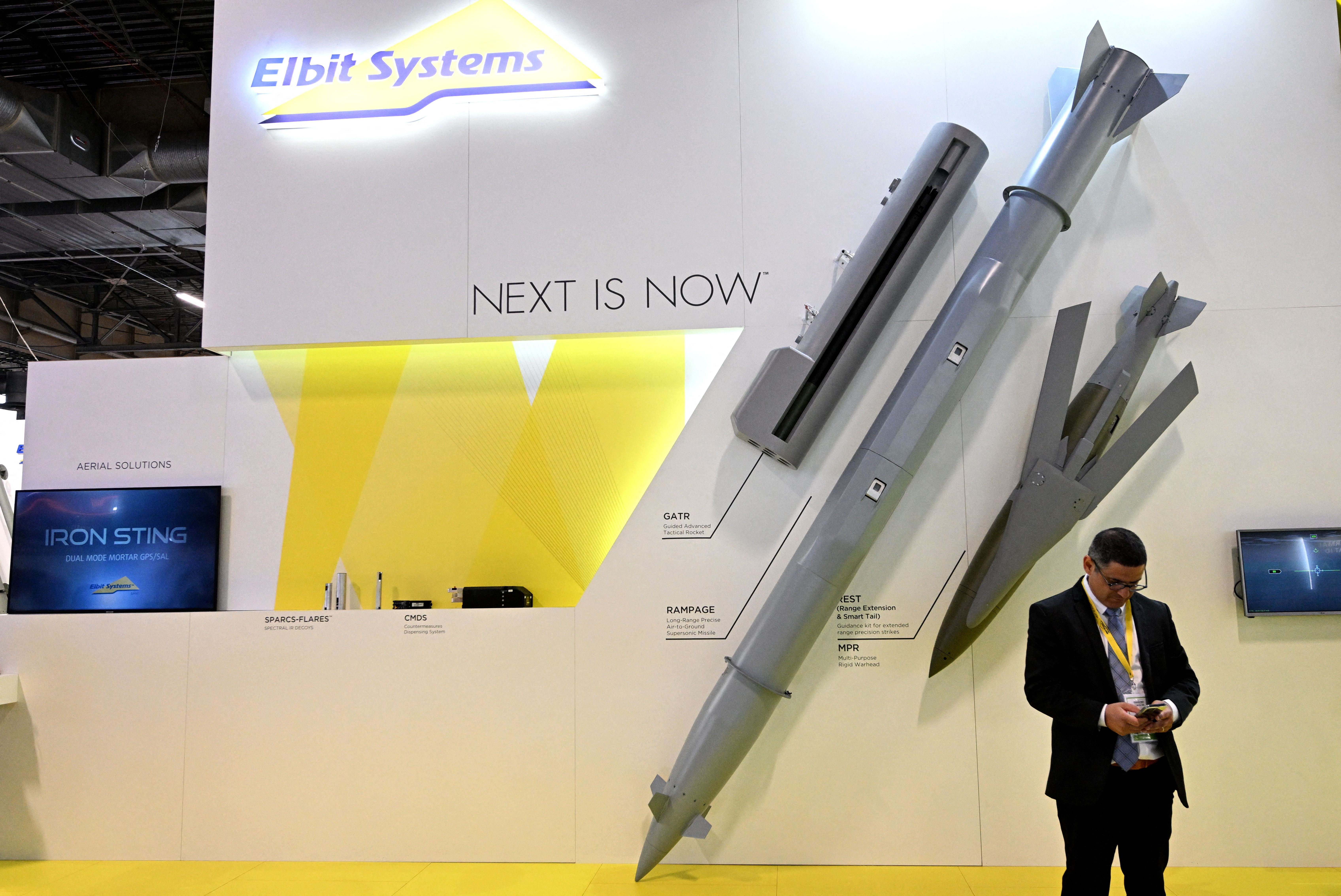
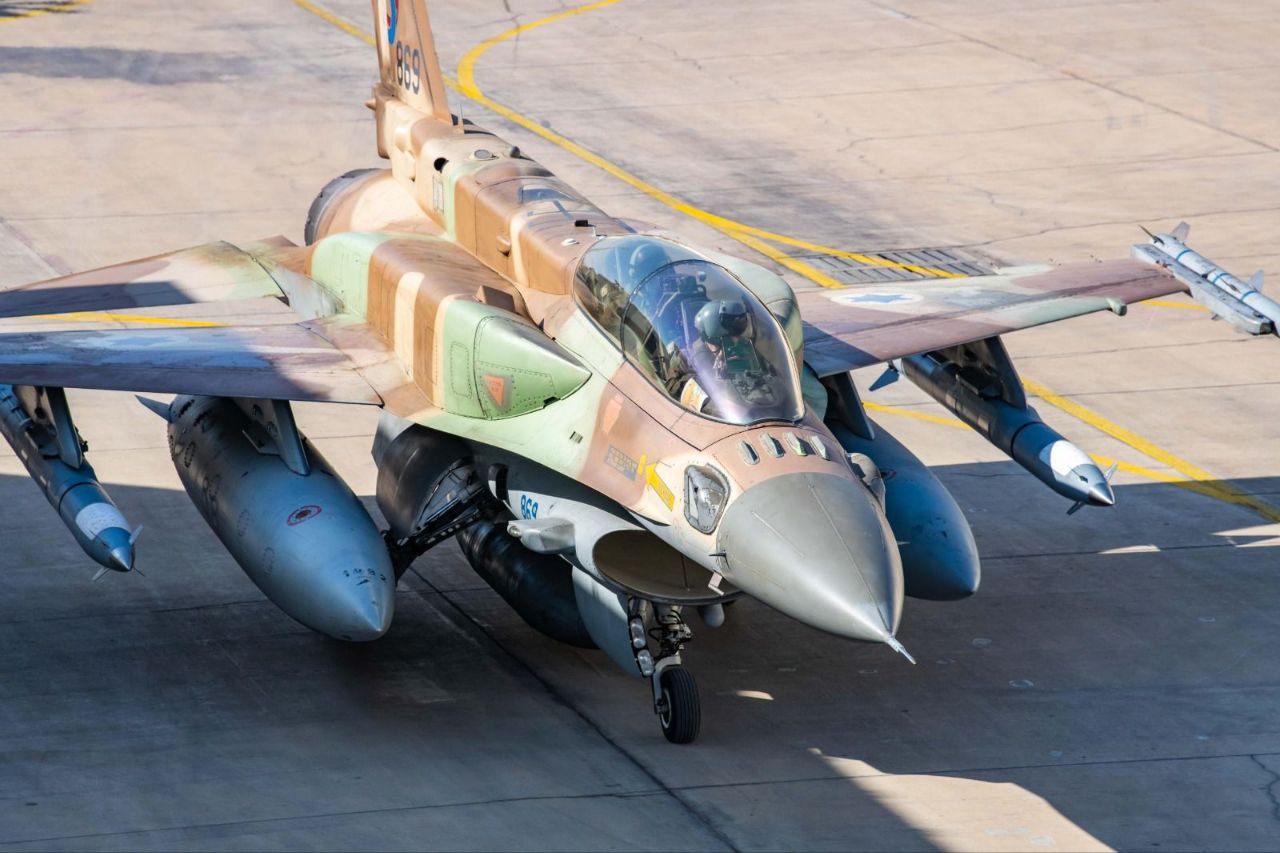
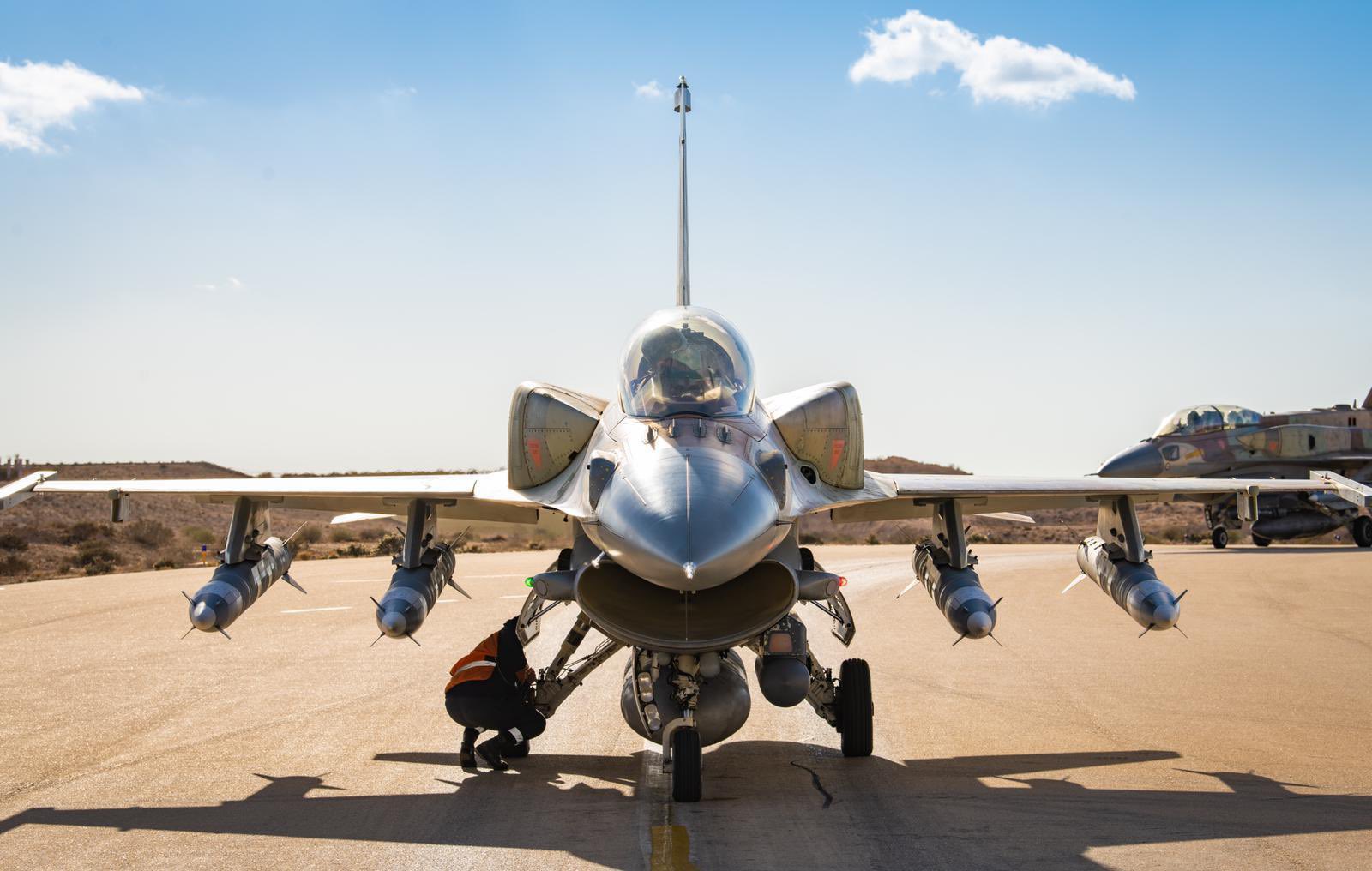
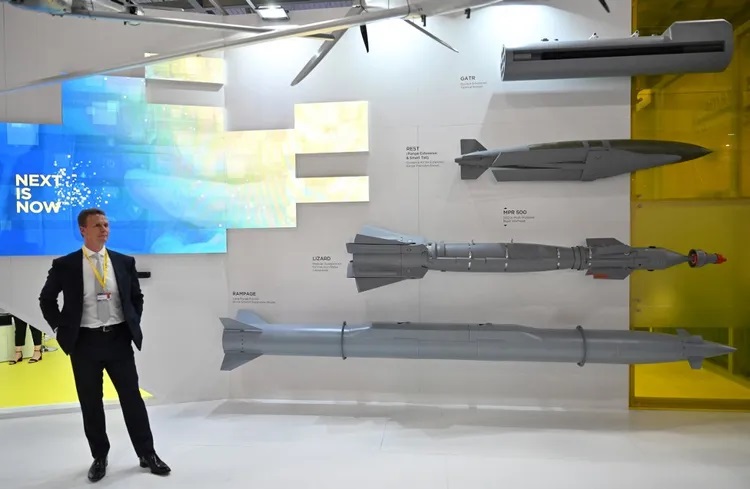
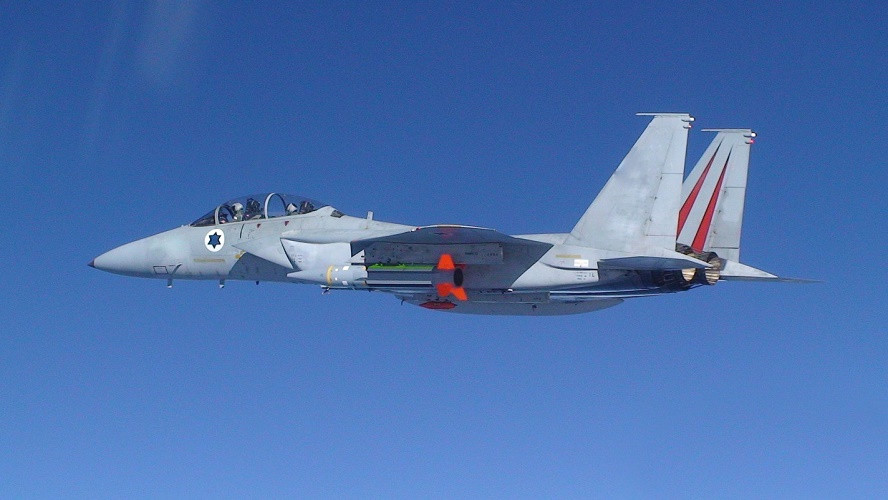
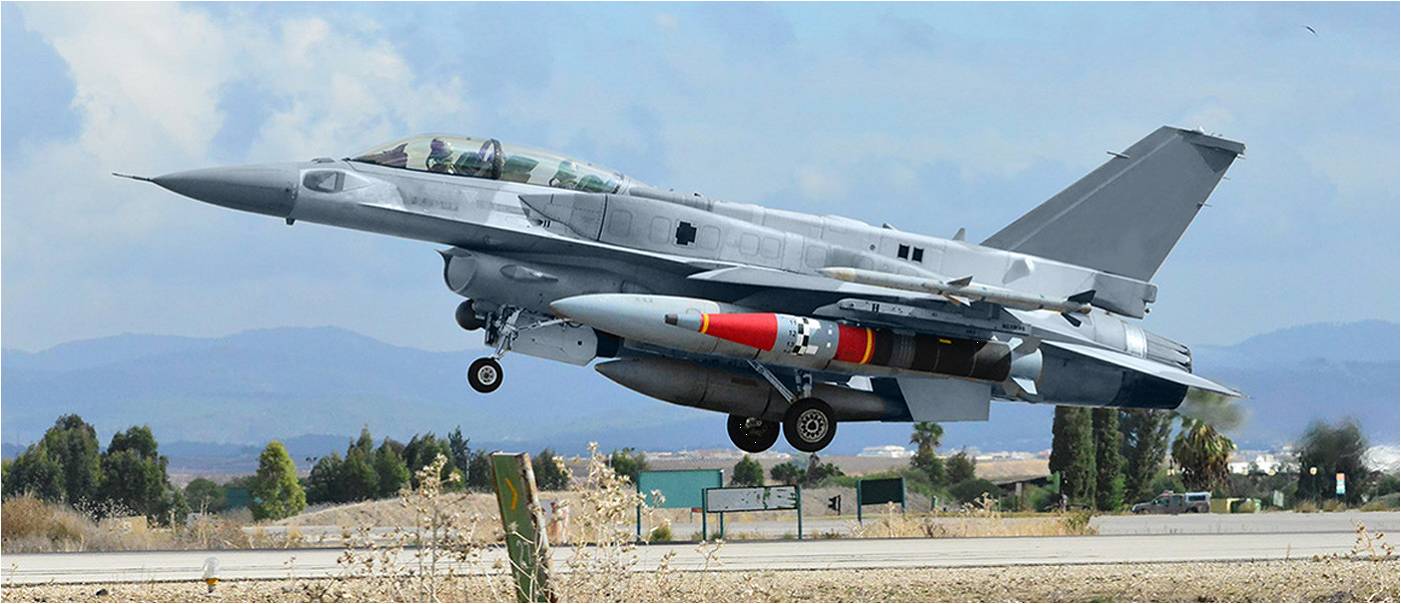
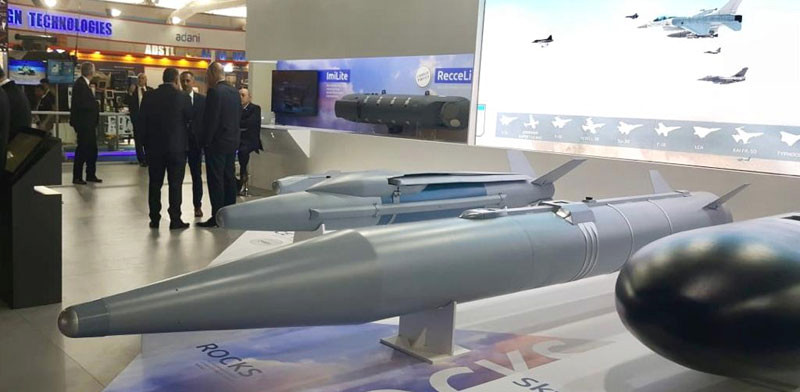
An Israeli F-16I fighter equipped with four Rampage missilesRampage missile (center) at the Eurosatory defense and security exhibition in France on June 13, 2022Click to view full size
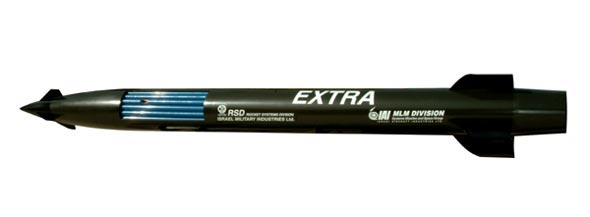
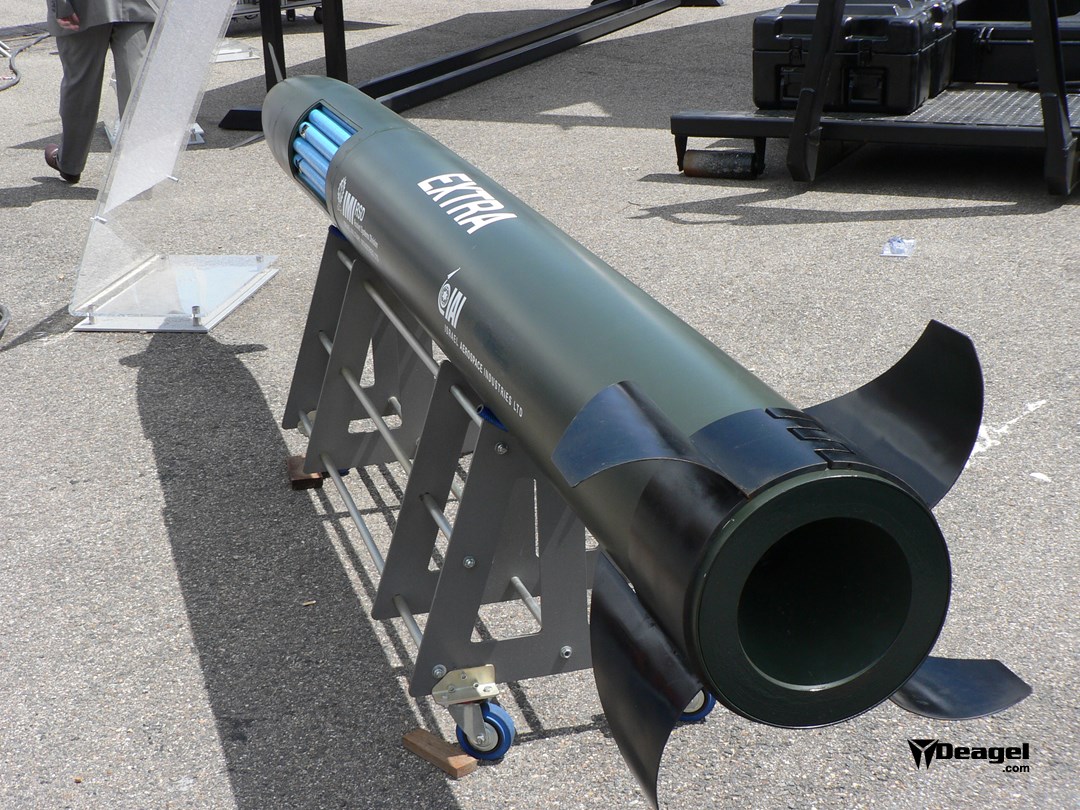
The EXTRA (Extended Range Artillery) is a type of artillery rocket developed by Israel Military Industries (IMI) and has been used by the Israeli army, the Baku government, Vietnam, and Kazakhstan since 2013.
The EXTRA rocket boasts a maximum range of 150 km, equipped with a 120 kg warhead, and maintains an accuracy of 10 meters at its maximum range.
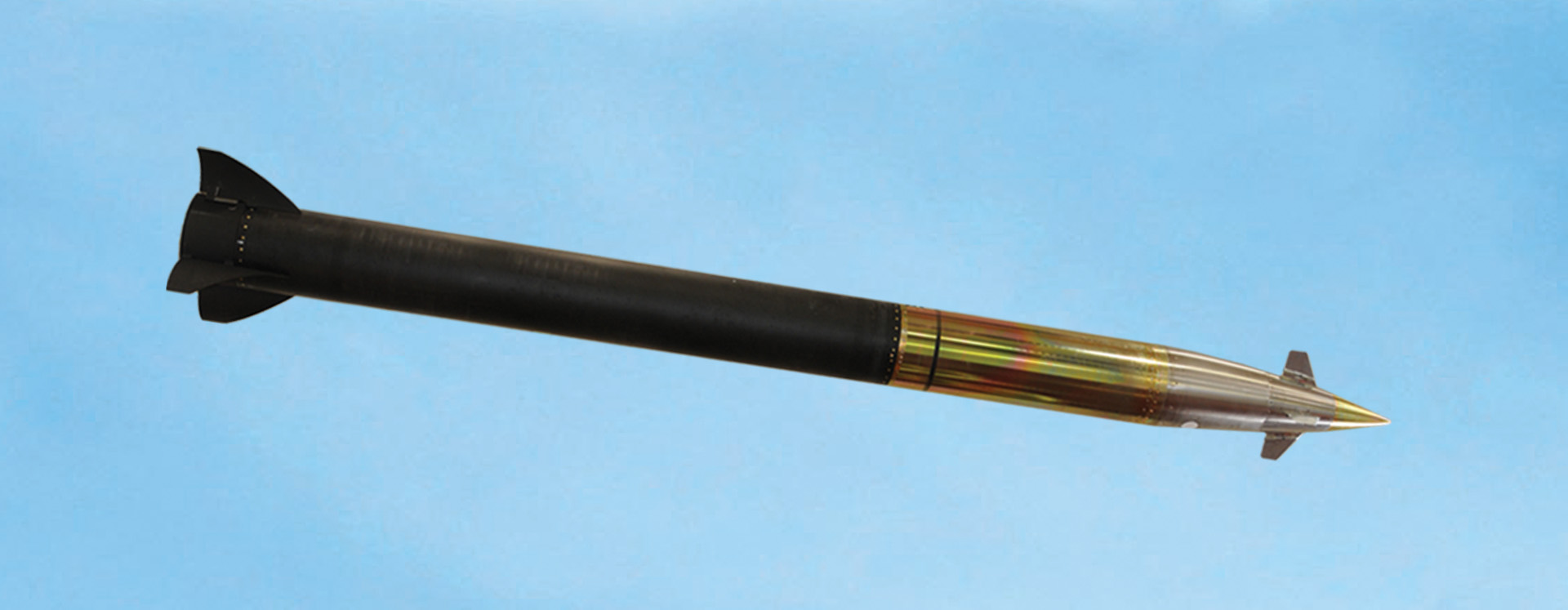
Its design features a solid-fuel propellant, stabilizing wings at the rear of the fuselage, and guide fins near the nose. The guidance and control system enhances the missile’s accuracy by four times that of unguided rockets, adjusting the ballistic trajectory to counteract wind drift and other meteorological effects.
Extended Range Artillery Rocket – EXTRA
The warhead of this guided rocket is also modular, suitable for carrying different types of submunitions or a single warhead. For example, the EXTRA can carry up to 400 bomblets, anti-runaway munitions or penetrating warheads.
Extra rocket equipped with small submunitions
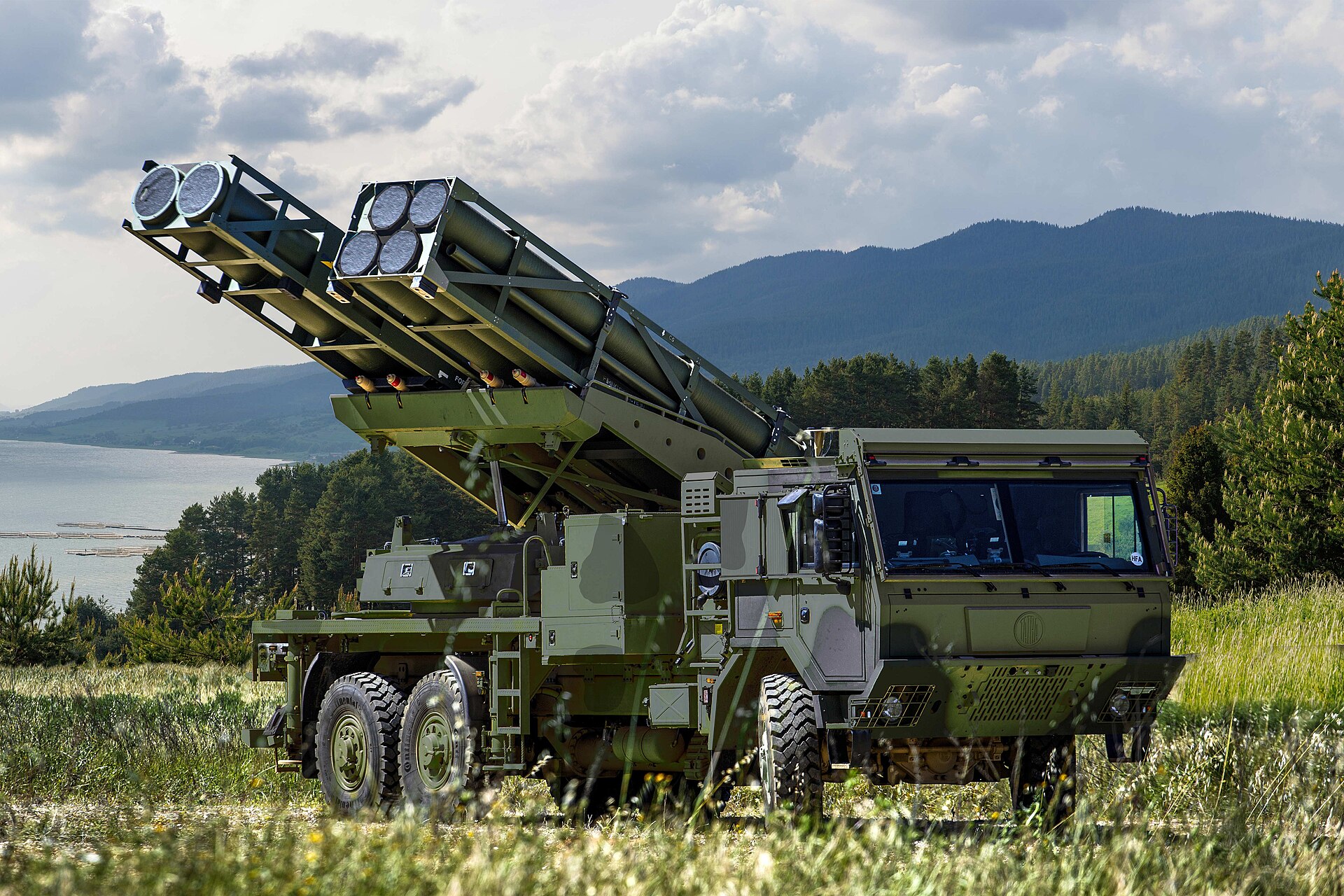
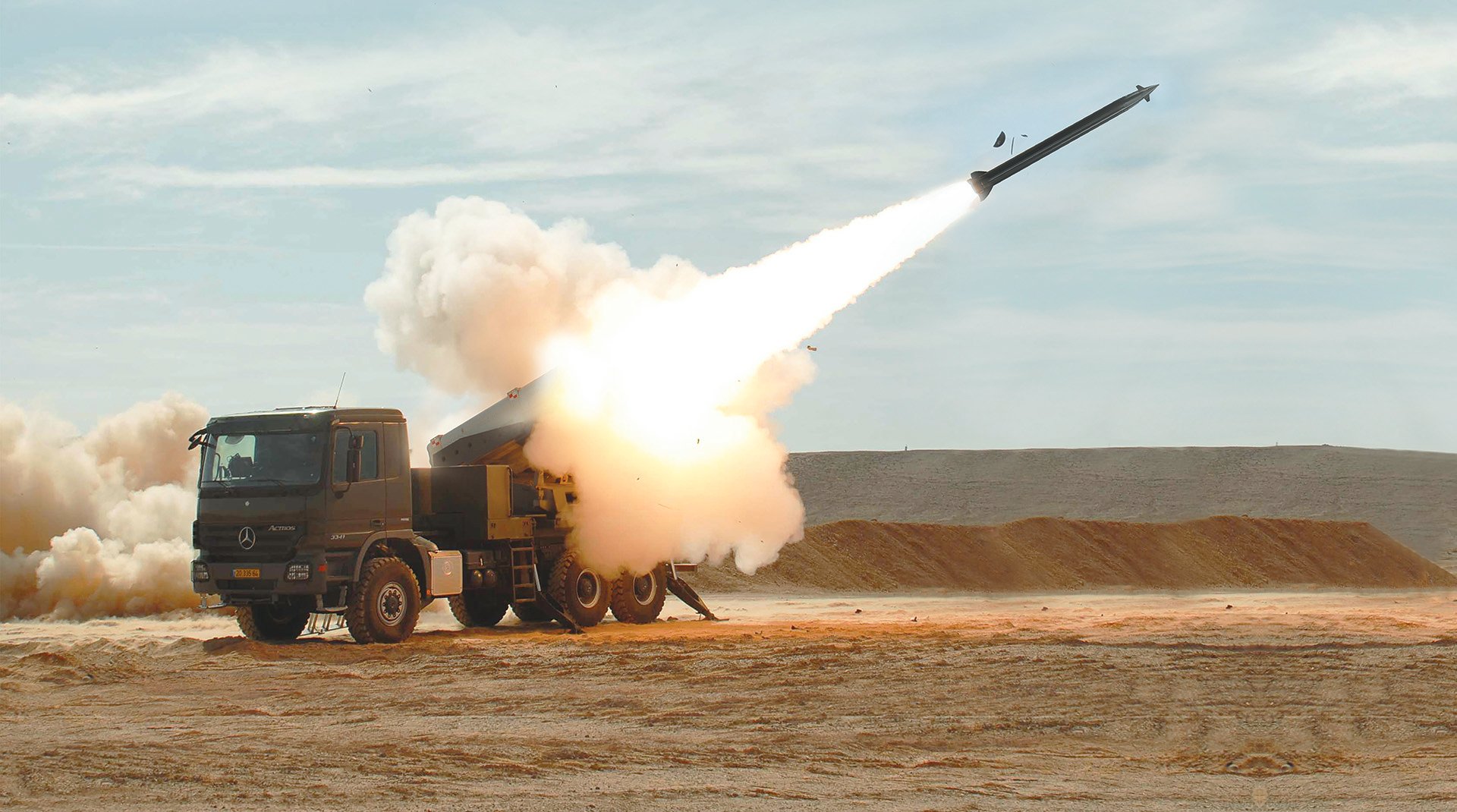
The Extra rocket is commonly used in the PULS rocket launcher system, formerly known as Lynx. The launcher was originally developed by Israel Military Industries (IMI) and was called Lynx. When IMI was sold to Elbit Systems, the launcher was upgraded and renamed PULS, which stands for Precise & Universal Launching System.
Elbit Systems promotional video for the PULS Multiple Launch Rocket System
The PULS system can carry two separate launch pods, each of which can host up to 18 Accular-122 rocket pods with a range of 36 km, 10 Accular-160 rocket pods with a range of 40 km, 4 EXTRA guided rocket pods with a range of 150 km, or two Predator Hawk tactical ballistic missiles.
Due to the remarkable success of the EXTRA rocket, the development of its air-launched version was also commissioned.
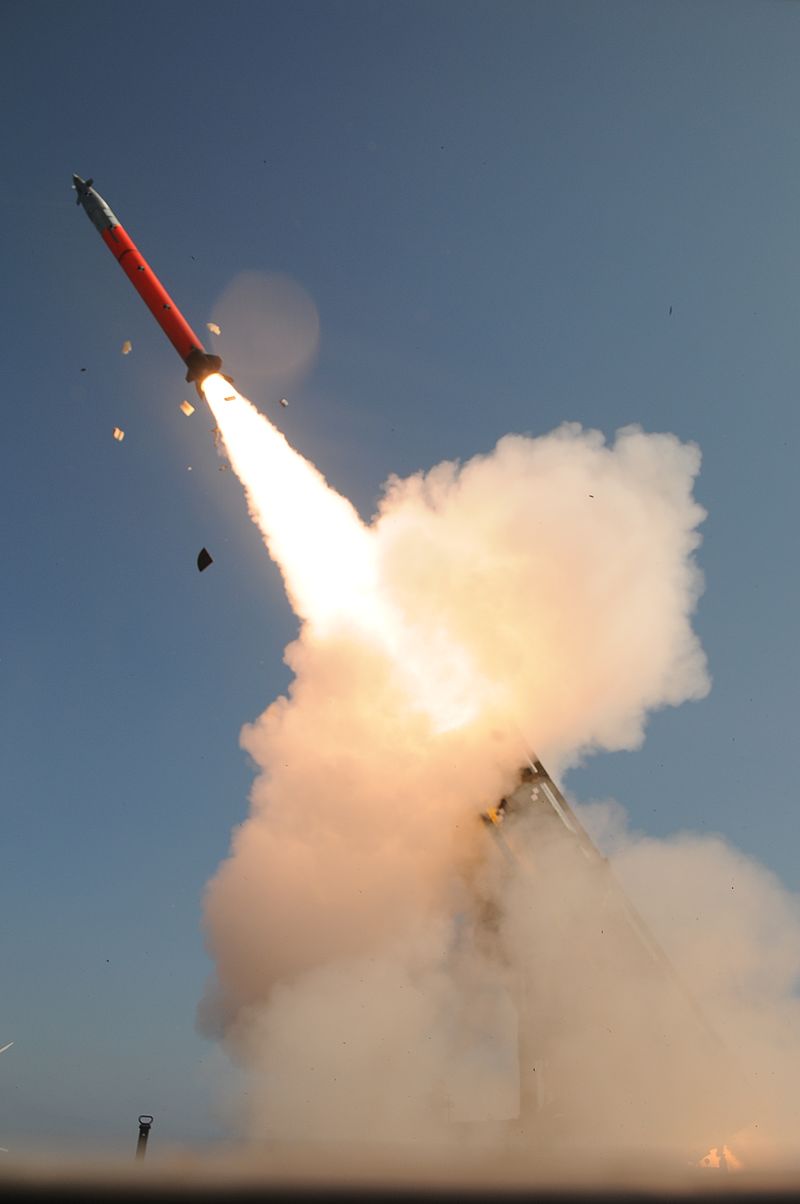
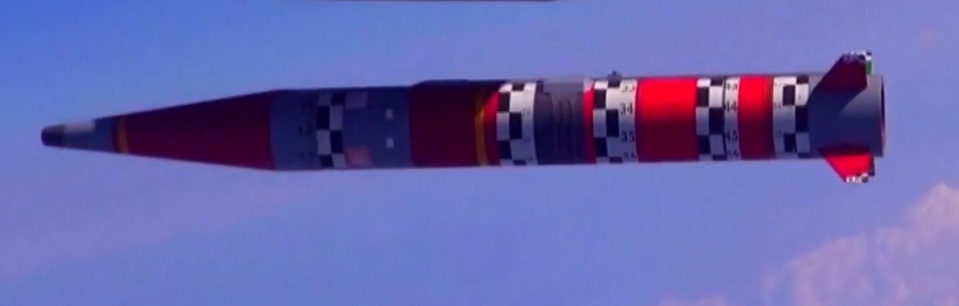
PULS Multiple Launch Rocket SystemFiring EXTRA rocket from the Lynx launcherEXTRA rocket testClick to view full size
Rampage missile:
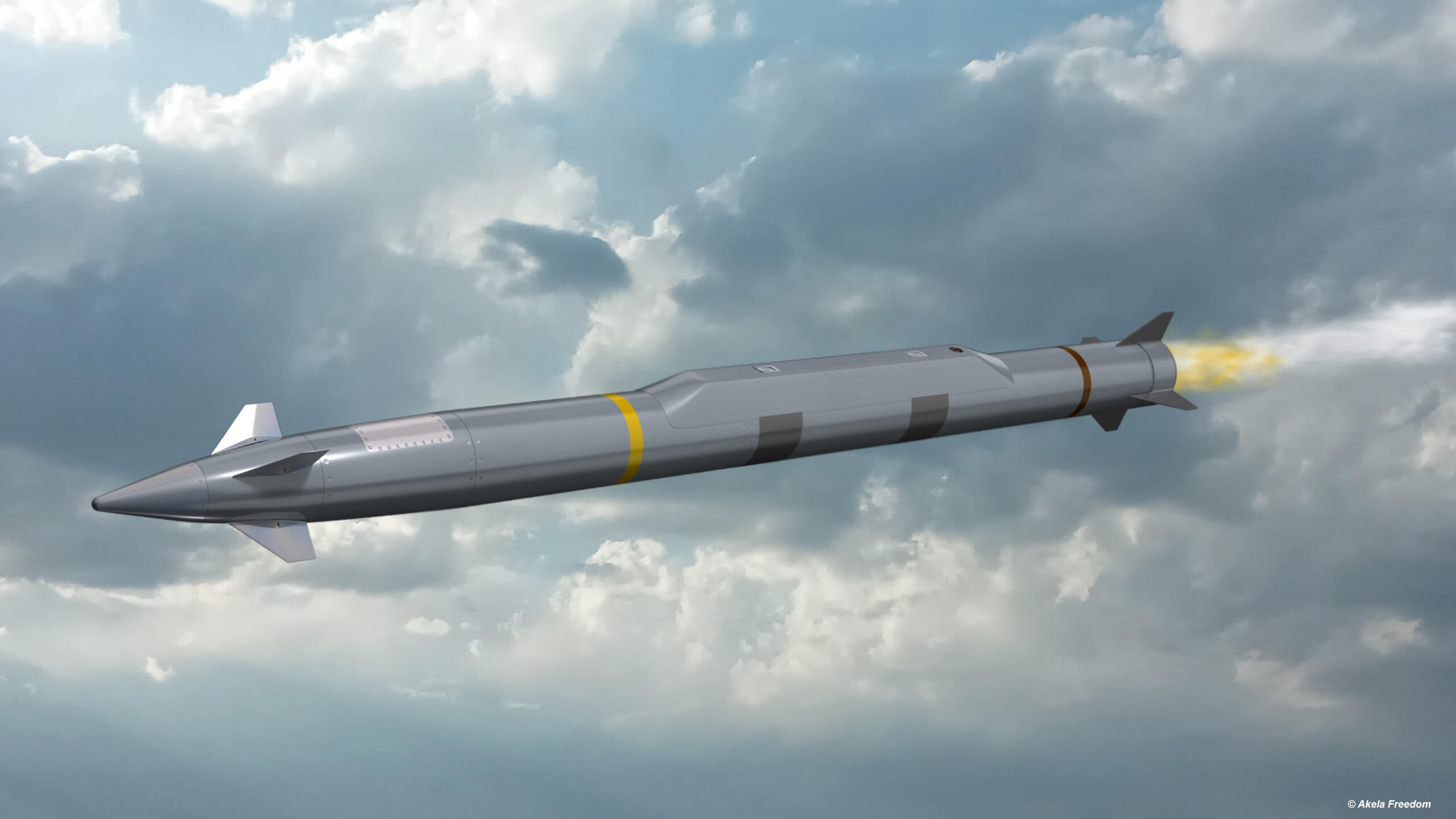
The Rampage long-range air-to-surface missile is engineered for precision strikes against strategic targets from a safe distance. It minimizes risks to the aircraft and crew, enabling operations beyond the range of enemy air defenses. This offers a significant advantage when targeting high-value fixed or mobile assets, including command centers and air force bases.
Officially unveiled in June 2018, the Rampage missile was initially developed by Israel Military Industries (IMI) and Israel Aerospace Industries (IAI). On November 25, 2018, Elbit Systems acquired IMI and rebranded it as Elbit Systems Land. Today, Elbit Industries produces the missile.
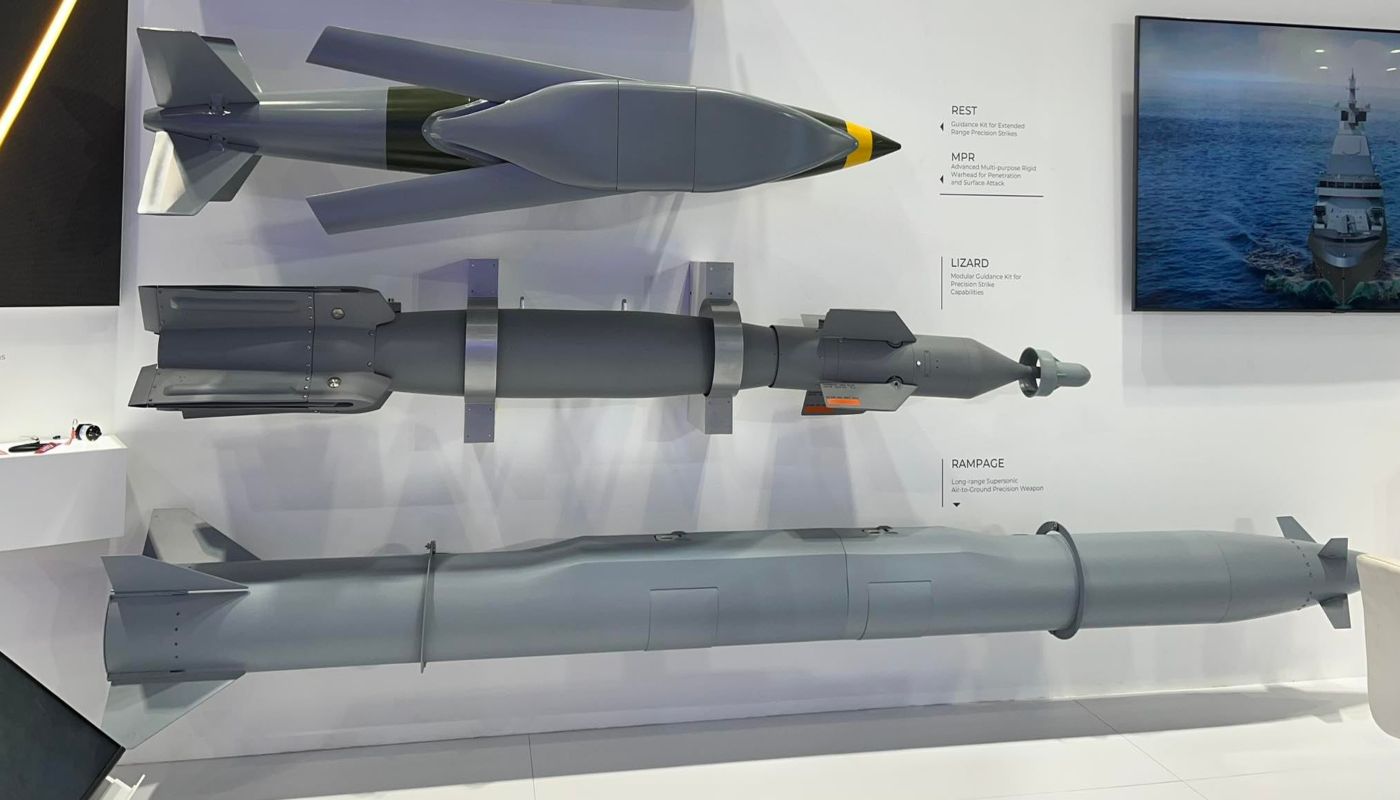
Measuring 4.7 meters in length, 306 millimeters in diameter, and weighing 580 kilograms, the Rampage missile boasts excellent operational flexibility. It is compatible with a wide range of Eastern and Western fighter aircraft, eliminating the need for avionics changes. Rampage can be adapted to fighter jets through various methods, such as reprogramming the weapon system or deploying a separate avionics kit in the cockpit.
The missile’s capability to operate in all weather conditions makes it a reliable option for quick-response attacks, functioning effectively both day and night.
Additional features of this weapon include pre-programmed or in-flight mission execution, allowing target coordinates to be directly provided to the missile’s flight computer before firing.
Guidance for the Rampage missile relies on a combination of satellite navigation and internal inertial navigation, with anti-jamming and fire-and-forget capabilities.
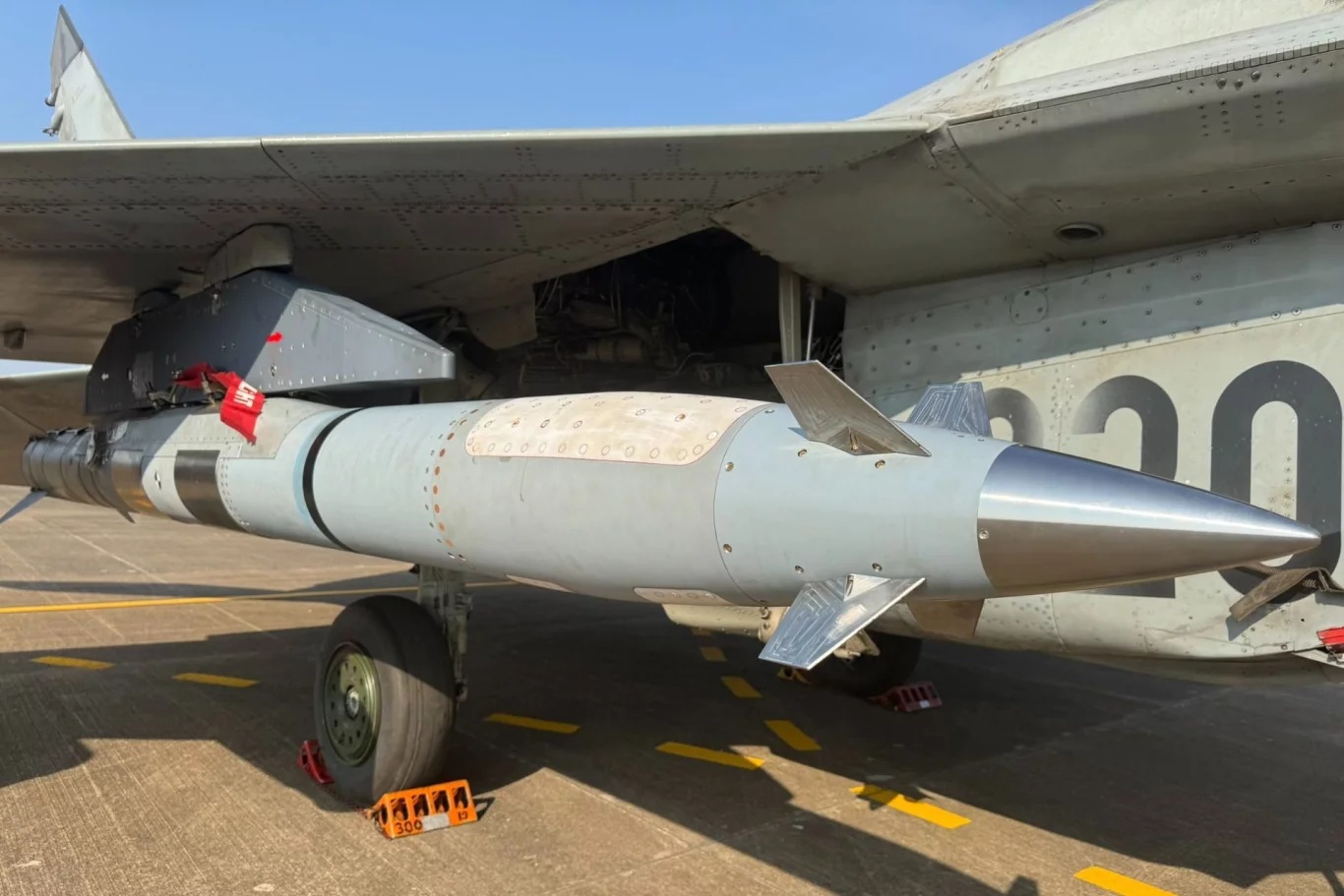
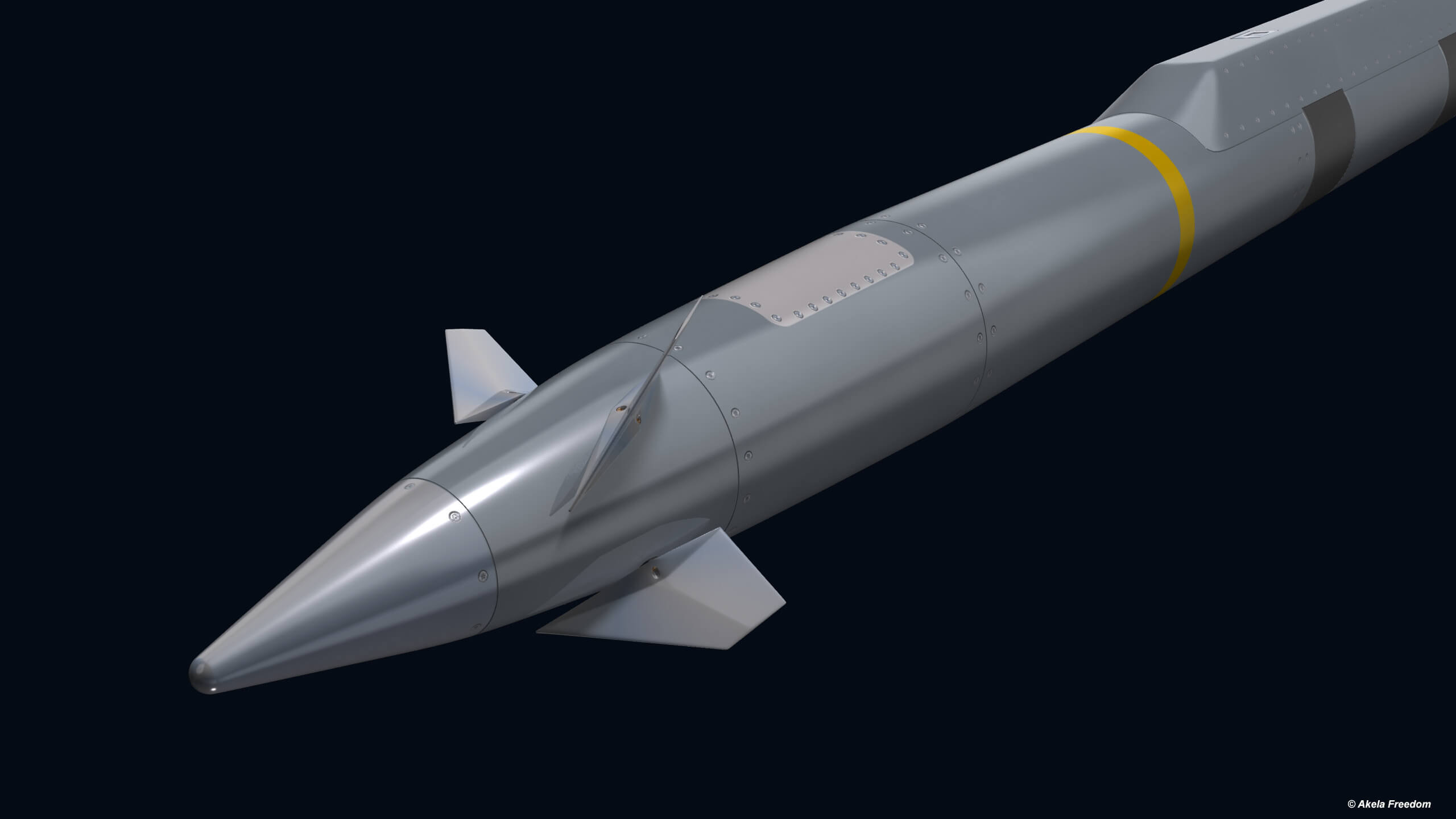
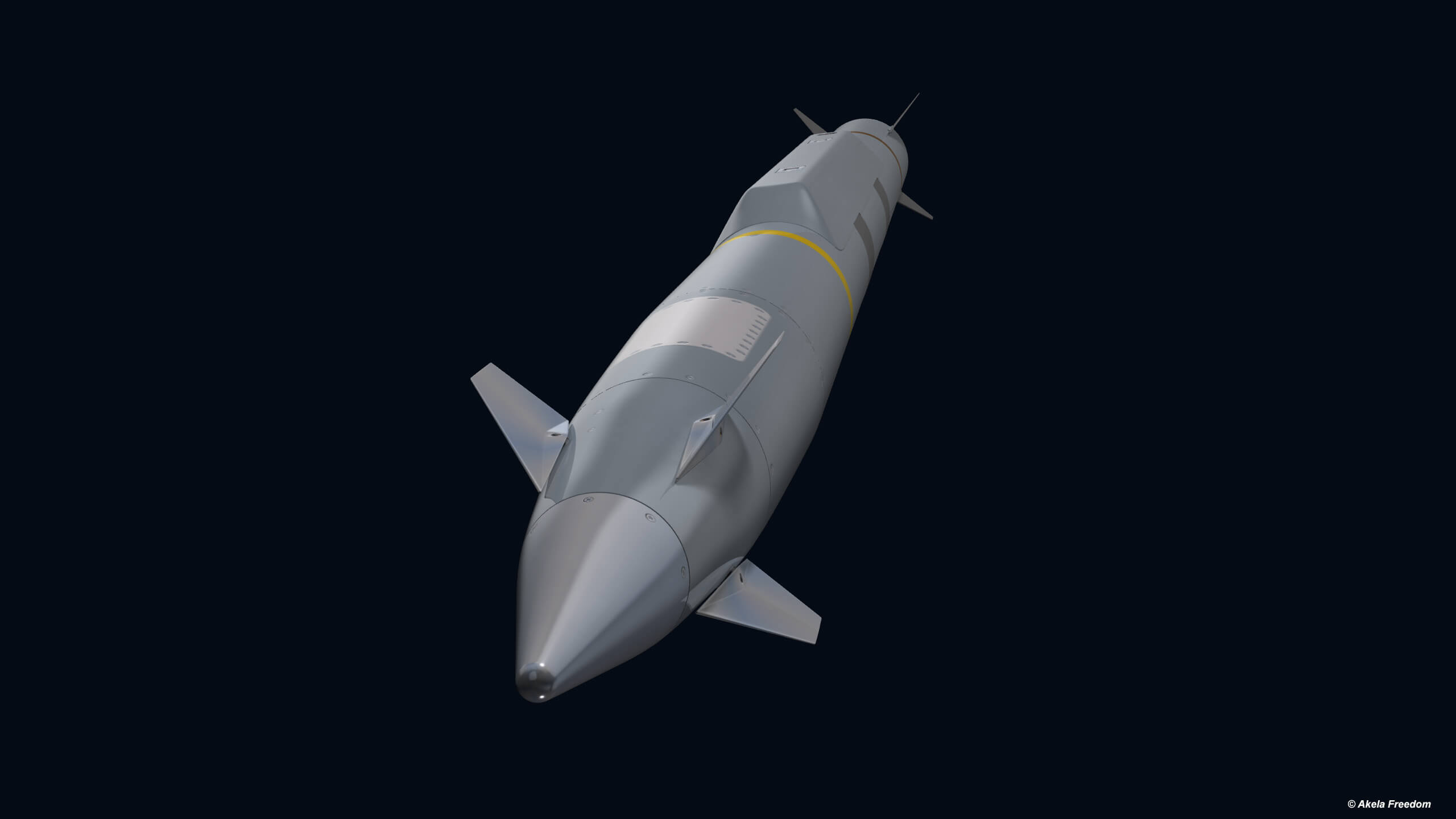
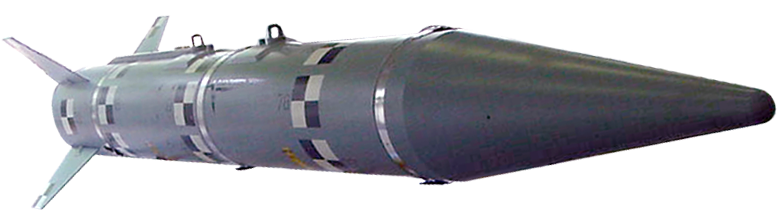
Rampage missile in service with the Indian Air ForceRendered image of the Rampage warhead control finsClick to view full size
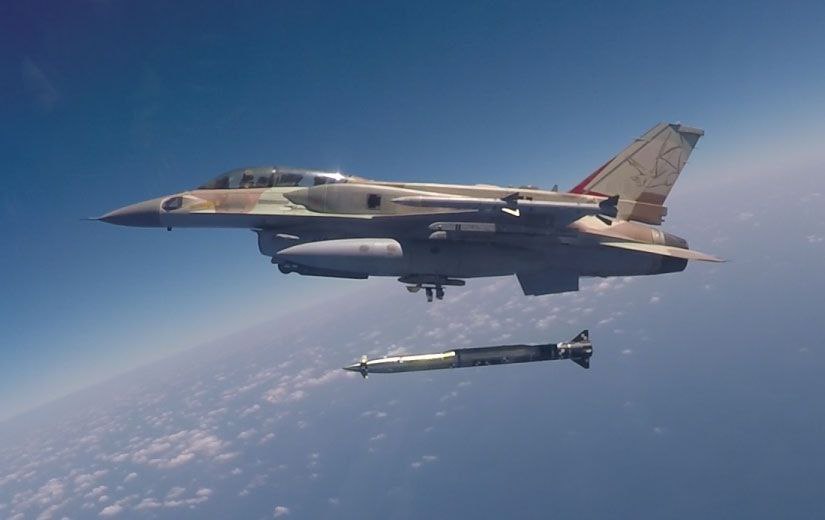
The Rampage missile can be deployed by single-engine or so-called small fighter aircraft, each capable of carrying up to four missiles. The missile’s ease of use allows it to engage a single target or multiple targets simultaneously.
Rampage missiles can be launched from altitudes of 3,000 to 4,000 feet, at speeds of Mach 0.7 to 0.95, and at angles of 0 to 35 degrees. Depending on the launch type, the missile hits the target at speeds of 350 to 550 meters per second (Mach 1.6), with an accuracy of less than 10 meters, and at a maximum angle of 90 degrees.
The maximum range of this missile is stated in various sources to be up to 250 kilometers.
It should be added that this missile is capable of using a diverse range of warheads, including multipurpose, bunker-busting, and fragmentation warheads.
Click to view full size
Operational history:
The Israeli regime air force uses the Rampage missile extensively. The weapon’s operational history includes the assassination of Mustafa Ahmed Shahdi, deputy commander of Hezbollah’s Radwan forces, and Israeli airstrikes in Yemen.
On December 26, 2024, the Israeli Air Force targeted several locations in Yemen, including Sana’a International Airport, the Haziz power plants in Sana’a and Ras Qanateb in northern Hodeidah, and military infrastructure in the ports of Hudaydah, Al-Salif, and Ras Qanateb on the west coast of Hudaydah. The operations were primarily carried out by F-15D Eagle, F-16I fighter jets, and KC-707 tankers. The F-16I fighter jets involved in these operations were armed with two Rampage air-launched missiles.
Israeli attack on Sanaa airport control tower with Rampage air-launched missile
It is likely that Israeli warplanes used Rampage air-launched missiles in the October 26 attacks against Iran, targeting the Qadir defense installations and radar site in Ahvaz, the Ilam radar site, and the Abadan refinery. The proximity of these targets, all located less than 200 kilometers from the southwestern border with Iraq, supports this possibility.
Users of Rampage rocket:
Israel: The Israeli Air Force is the first user of the Rampage missile. This weapon is typically seen in combination with F-16 fighters. Retired Kfir fighters can also be equipped with this missile. Sri Lanka, Ecuador, and Colombia still have this fighter jet in service and are considered potential customers of the Rampage missile.
India: The Indian Air Force selected the Rampage missile for service in 2024. The force’s fleet includes Sukhoi-30 and MiG-29 fighters. The Indian Navy’s MiG-29 fighters also use this missile.
Greece: The Hellenic Air Force is considering introducing the Rampage missile for its F-15 fighters.
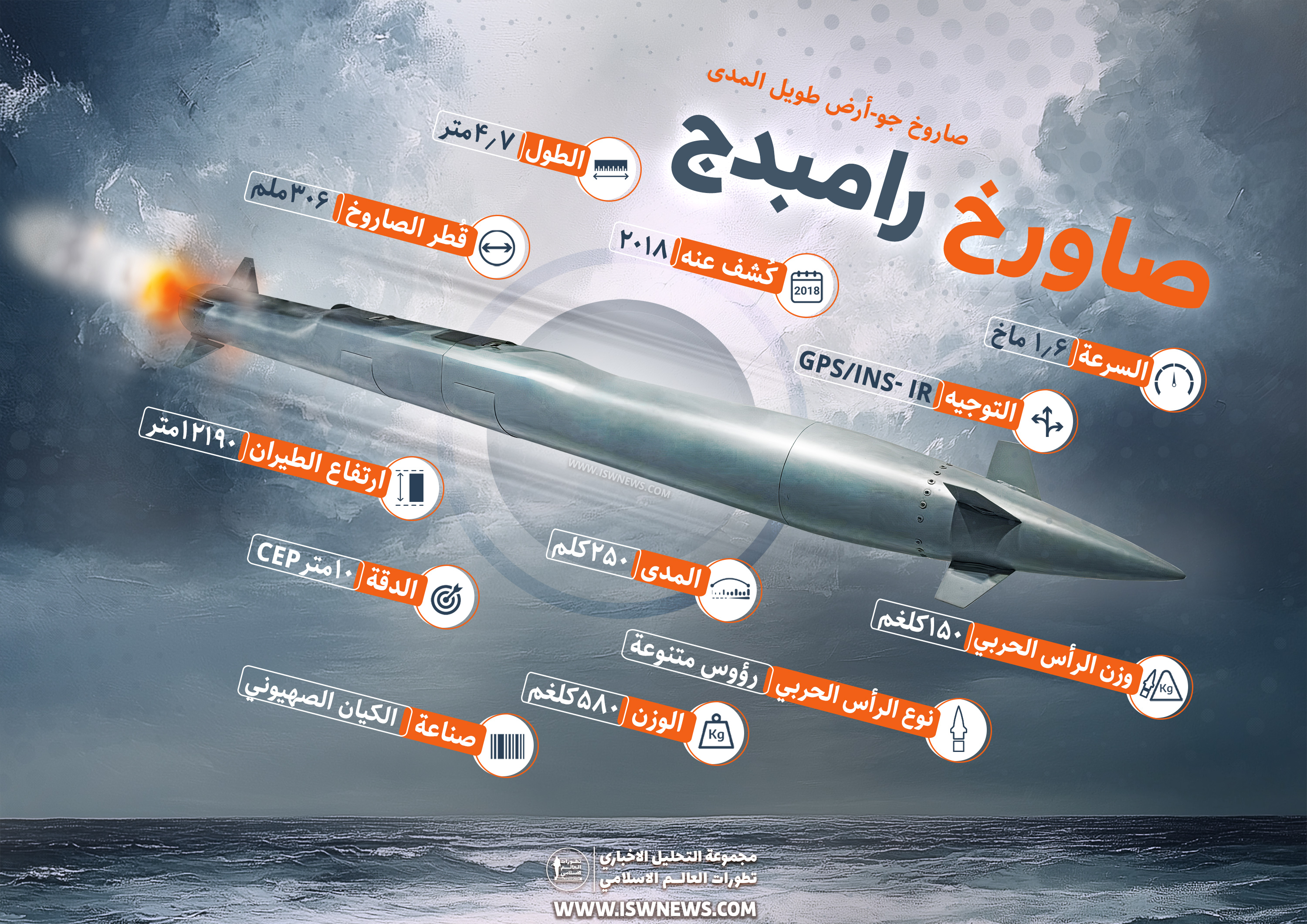
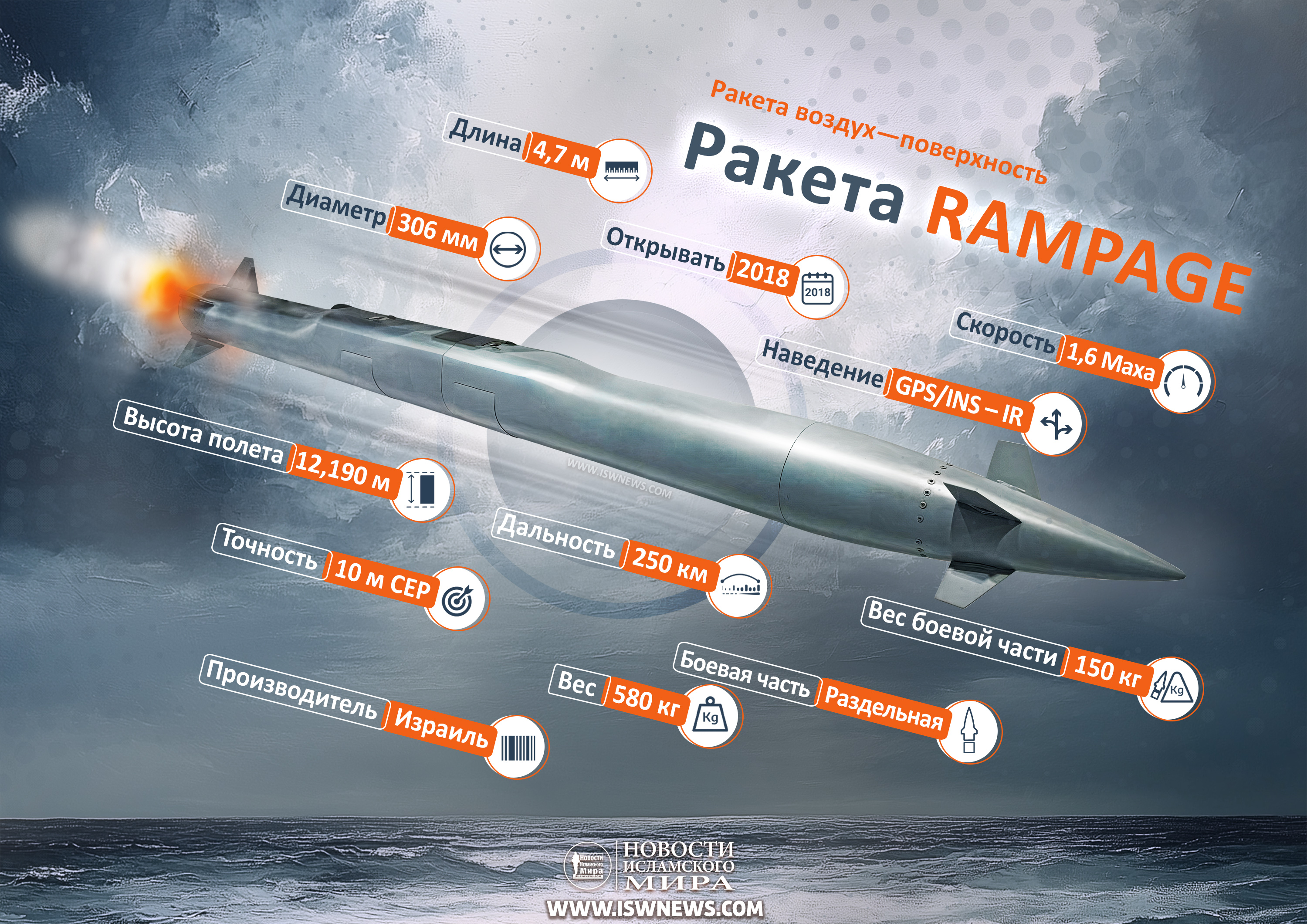
Rampage missile specifications: Type: Standoff air-to-surface missile Manufacturer: Israeli regime Unveiled: 2018 Length: 4.7 meters Diameter: 306 mm Range: up to 250 km Speed: 1.6 Mach Accuracy: 10 meters CEP Weight: 580 kg Warhead: Multipurpose Warhead weight: 150 kg Flight altitude: 12,190 meters Guidance: GPS/INS – IR
Rampage air-to-surface missile – click to view in full size
More images of Rampage missile:
Click to view in full size
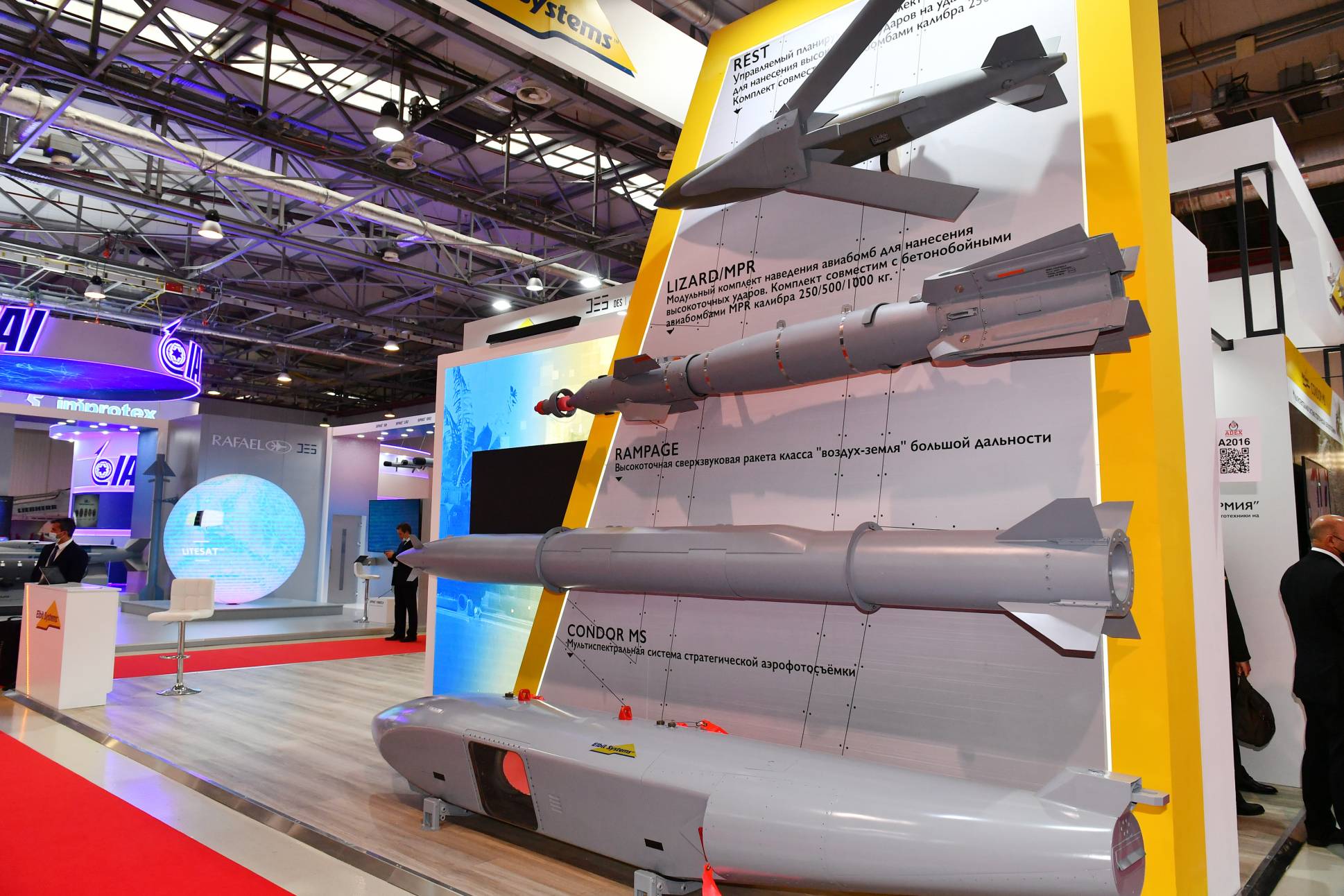
Posters of Rampage missiles in Farsi, Russian and Arabic:
Air-launched ballistic missiles, launched from fighter jets, can be highly effective and strategically advantageous for attacking targets. Their significance is especially notable when surprise and rapid deep strikes are required in environments with sophisticated and impenetrable defense systems.
Sparrow missiles gained great attention after their remnants were discovered following the Israeli attacks on Iran on April 19 and then again on October 26. The missile boosters from the first attack were found in Al-Azizia, Wasit Province, which is 100 kilometers from the Iranian border and near Baghdad. In the second attack, the remnants were located in Salahuddin Province.
Ballistic missiles pose a significant threat to Israel, with Iran being one of the most formidable adversaries in this domain. Iran’s advancements in ballistic missile technology have made it a powerful force, causing considerable concern for Israel.
The Israelis initiated the development of anti-ballistic missile defense systems to mitigate the threat posed by ballistic missiles. However, testing these systems necessitated the use of ballistic missiles, which European countries did not possess in their arsenals. Additionally, treaties like the INF prevented the United States from supplying Israel with these types of missiles.
This situation gave the Israeli regime a viable excuse, with American assistance, to develop high-speed, maneuverable target missiles to test and enhance its anti-ballistic capabilities. Additionally, producing these missiles could enable the Israeli regime to use them offensively, if necessary, to strike distant targets and enemy defense systems.
The Israelis designed the missile to be carried and launched by a fighter jet. This approach could significantly enhance the strategic offensive capabilities of their fighter jets.
The development of this target missile, known as Project Sparrow, was initiated by Israel’s Rafael Military Industries with support from the American company Raytheon.
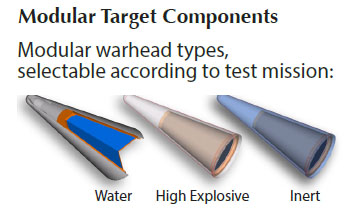
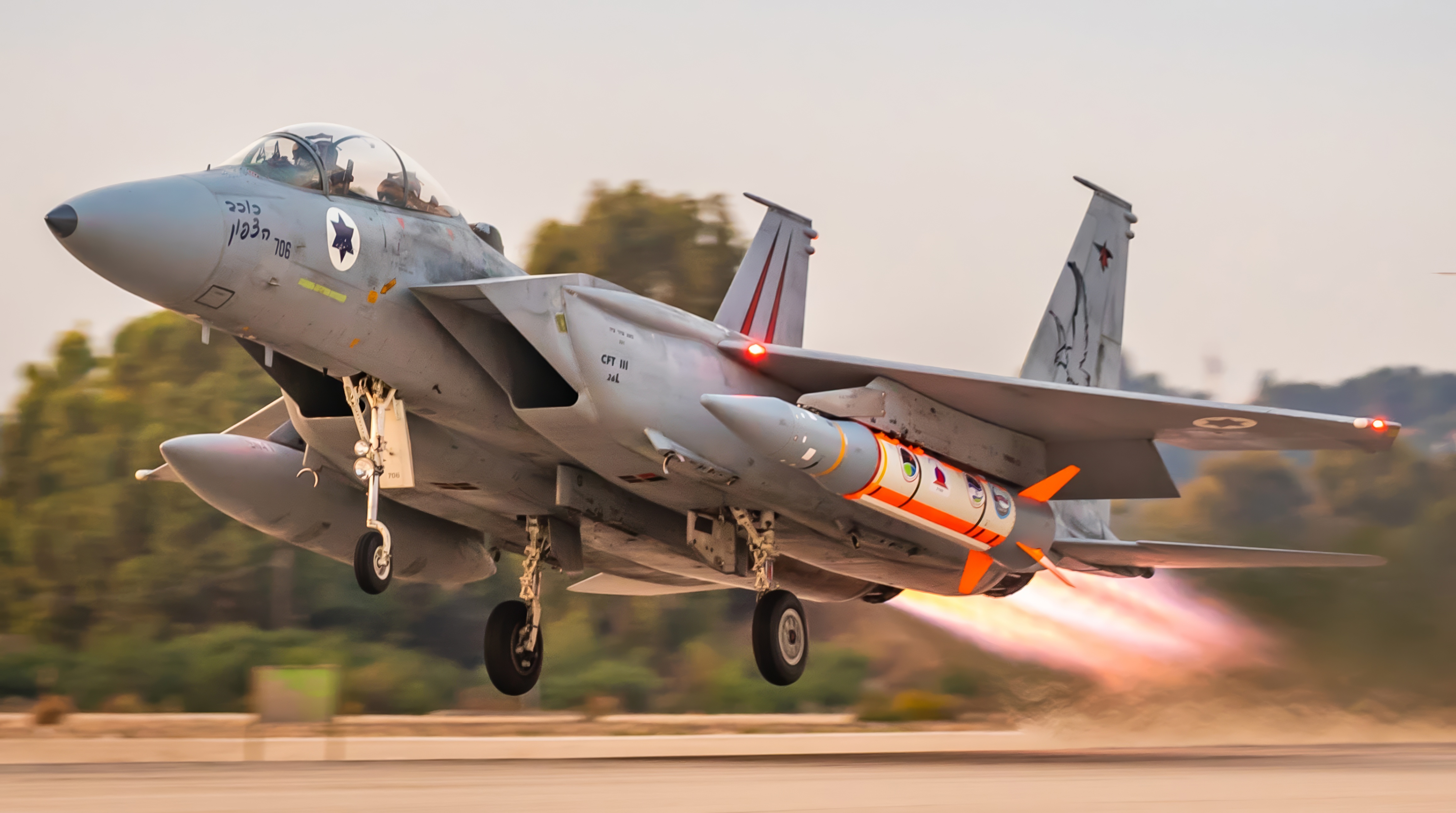
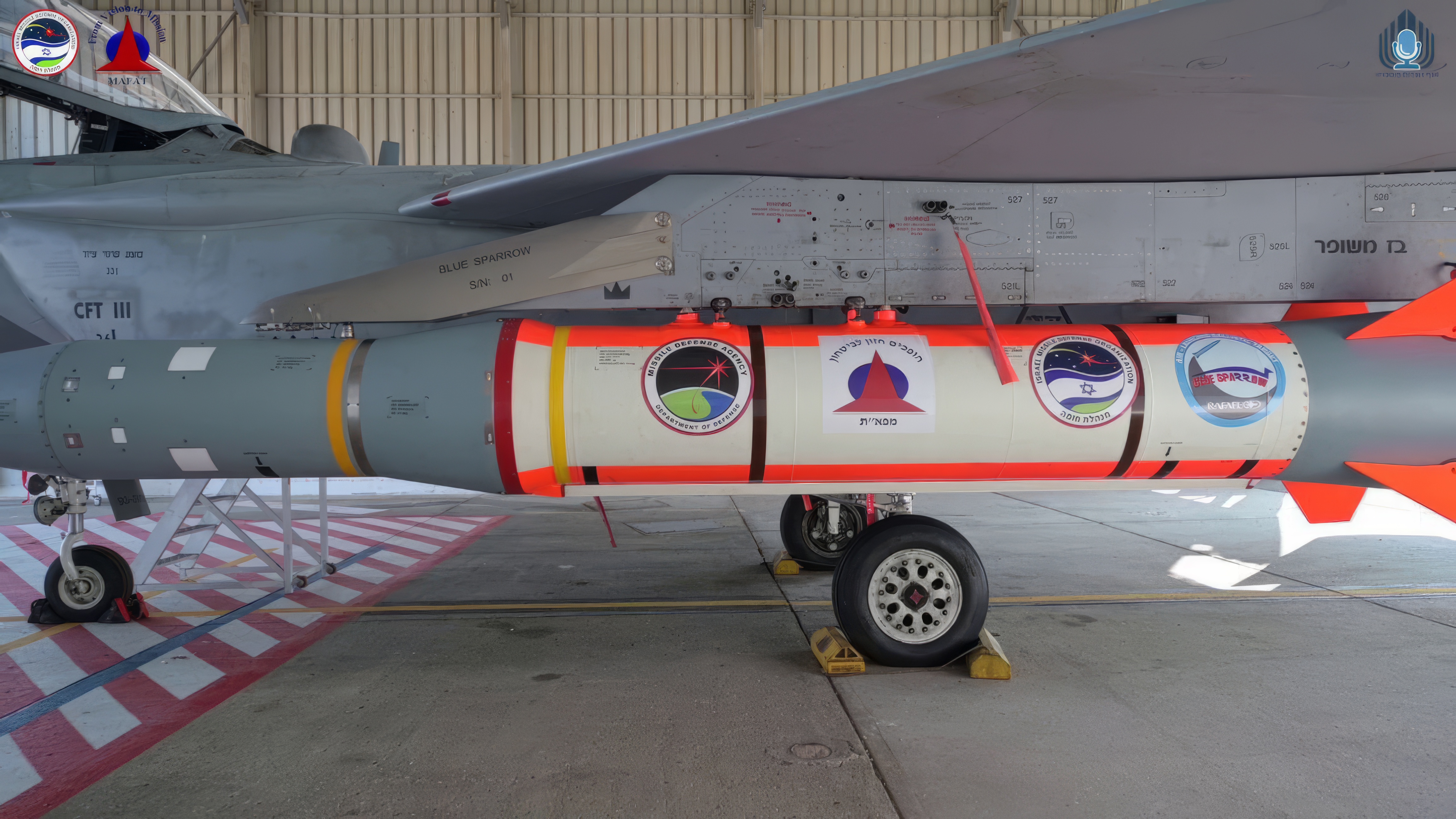
The Sparrow missile family consists of three models: Black Sparrow, Blue Sparrow, and Silver Sparrow. Depending on the mission requirements, the warheads can be of three different types: liquid-filled warheads, high-explosive warheads, and inert warheads.
Sparrow missile warheads
Equipped with explosive warheads, Sparrow missiles offer strategic advantages to the Israeli Air Force. Carried by fighters or bombers, these missiles can cover greater distances than ground-launched variants, thanks to the increased range provided by the aircraft and the launch altitude. Their speed and high maneuverability make them particularly effective against heavily defended, deep, and strategic targets.
Furthermore, there is the potential for Sparrow missiles to be equipped with nuclear warhead. Due to Israel’s policy of nuclear ambiguity, this capability is not officially listed in the Sparrow catalog. However, if Israel were to pursue this option, it would undoubtedly pose a significant and dangerous threat.
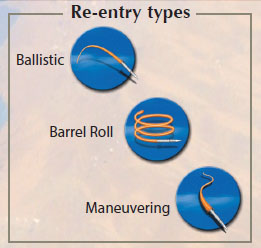
The official catalog from Rafael Military Industries outlines three flight profiles for these missiles: ballistic trajectory to mimic Scud-level missiles with conventional warheads, barrel roll, and maneuvering to simulate stealthy competitors like Iranian missiles with maneuverable warheads.
Three flight profiles for Sparrow missiles
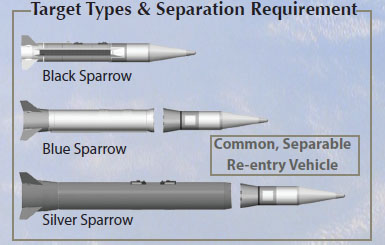
Let’s take a closer look at the different models in the Sparrow series. As previously mentioned, there are three models: Black Sparrow, Blue Sparrow, and Silver Sparrow. According to the official catalog, two of these missiles are equipped with detachable warheads.
Sparrow missiles, from top to bottom: Black Sparrow, Blue Sparrow, and Silver Sparrow
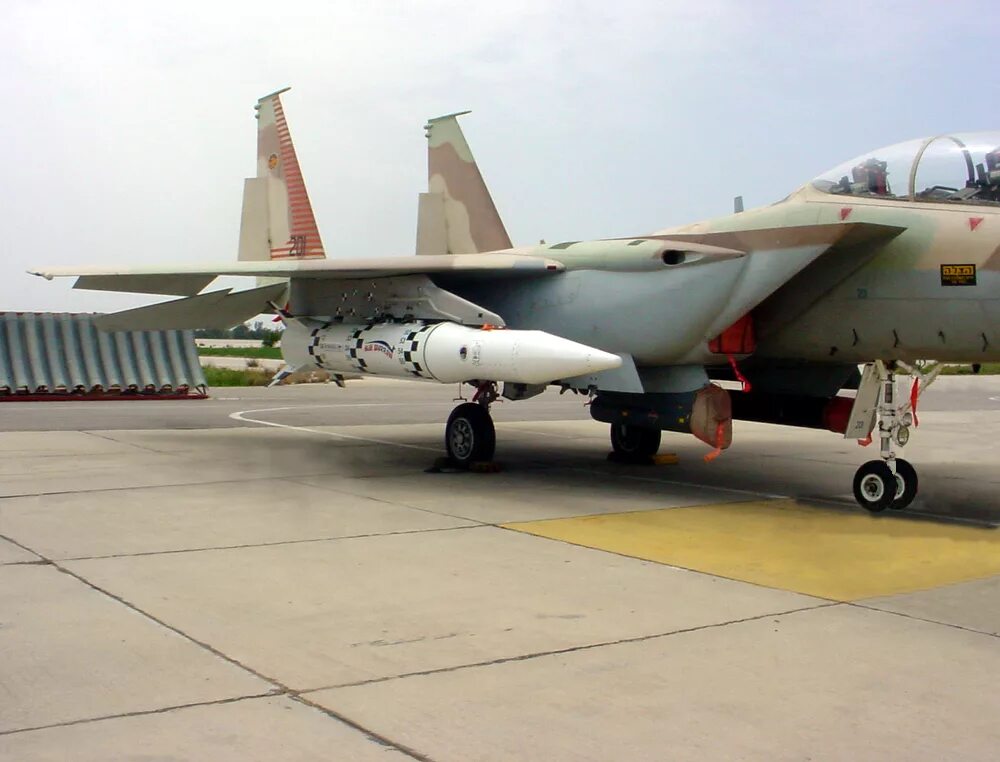
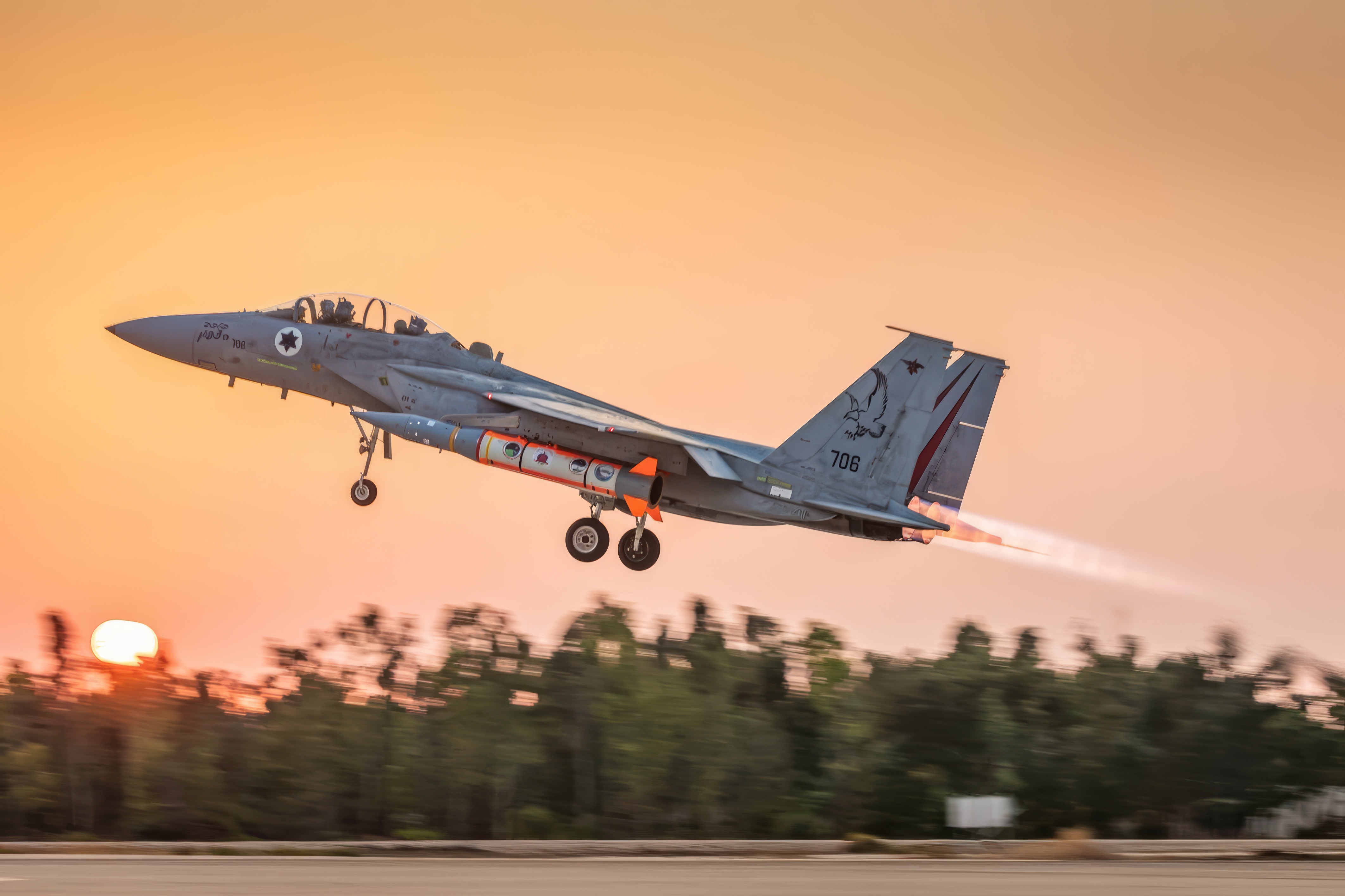
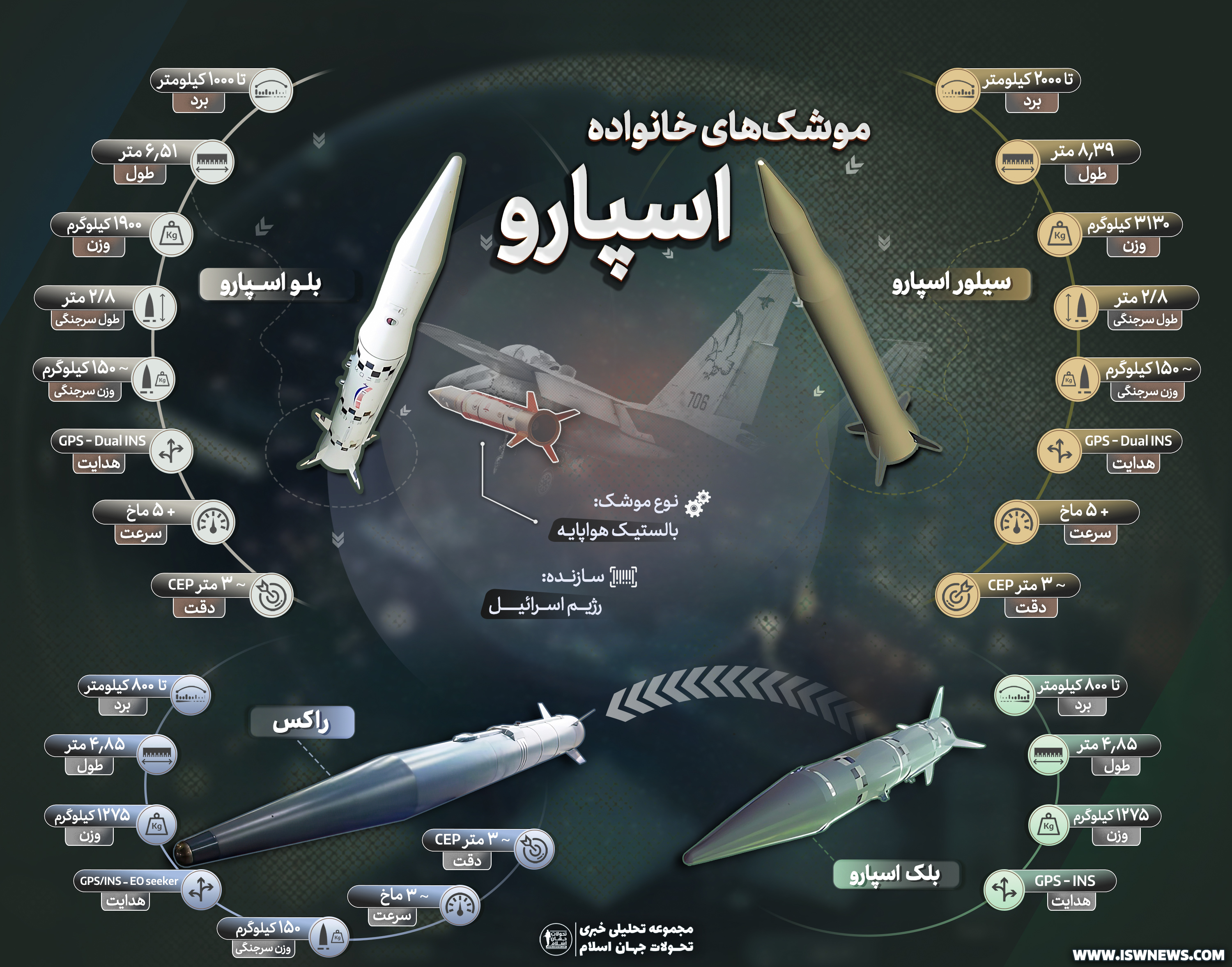
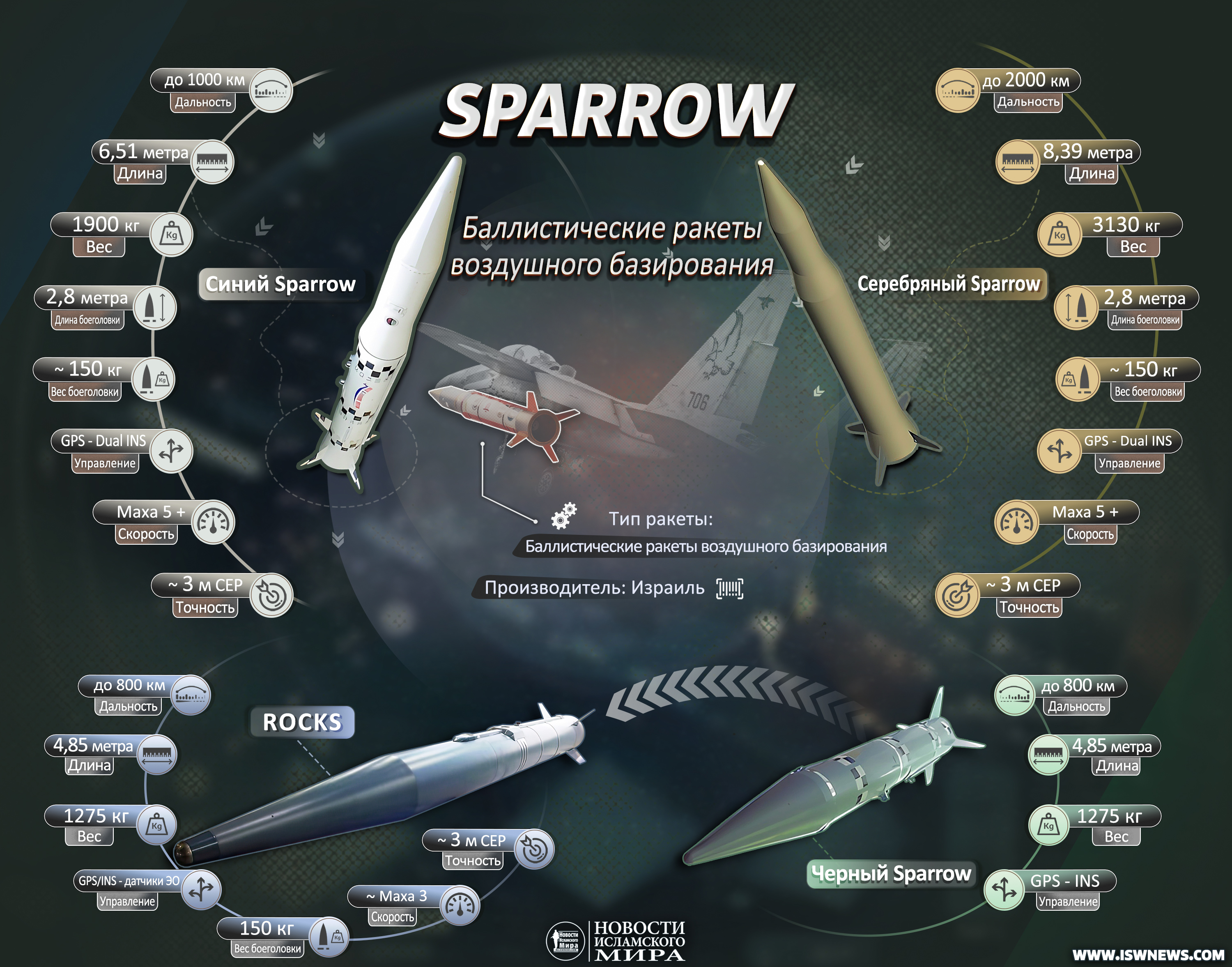
Black Sparrow and ROCKS missile: The Black Sparrow is designed as a Scud-B missile simulator. While its speed is unknown, its range is estimated to be between 600 and 800 kilometers. This missile can be launched from F-16 and F-15 fighters. The Black Sparrow measures 4.85 meters in length, weighs 1,275 kilograms, and uses inertial/GPS guidance.
Black Sparrow missile test by Israeli F-15 fighter jetA video of Black Sparrow ballistic missile (the early version)
Israel has developed another missile based on the Black Sparrow, called the ROCKS missile. This missile closely resembles the Black Sparrow in both dimensions and appearance.
ROCKS missile
The ROCKS missile was displayed at the 2019 Aero India air show in Bengaluru, India.
The ROCKS missile at the Aero India air show in Bengaluru, India, 2015
According to available information, the ROCKS missile is a supersonic missile with a speed of approximately Mach 3. It utilizes inertial guidance and GPS for mid-course navigation. Additionally, during the final phase to reach its target, the ROCKS missile is equipped with an electro-optical seeker, and an alleged anti-radiation homing system to enhance its anti-radar capabilities.
The circular error probable (CEP), or the accuracy of this missile, is estimated to be around 3 meters.
The ROCKS ballistic missile can be outfitted with either a penetrating or high-explosive warhead. When equipped with a delay warhead, it becomes particularly effective against fortified targets buried deep underground.
From the limited images available of the ROCKS missile, it appears that the warhead is approximately 1.2 meters in length and has a diameter of about 500 millimeters. Based on the missile’s overall length and weight, and comparing these dimensions with the warhead, it is estimated that the warhead weighs around 150 kilograms.
The range of this missile is estimated to be up to 800 kilometers.
Footage of a ROCKS missile test targeting a sea-based objective captures the final moments of impact from the electro-optical seeker’s viewpoint.
A key question is whether radar-absorbing materials are used in the ROCKS version. While Israel has access to this technology through the U.S., its application in ROCKS is uncertain. The Israelis place significant emphasis on the electro-optical and anti-radiation systems, highlighting their potential to enhance the missile’s targeting accuracy. This emphasis likely stems from their awareness of Iran’s advanced electronic warfare capabilities.
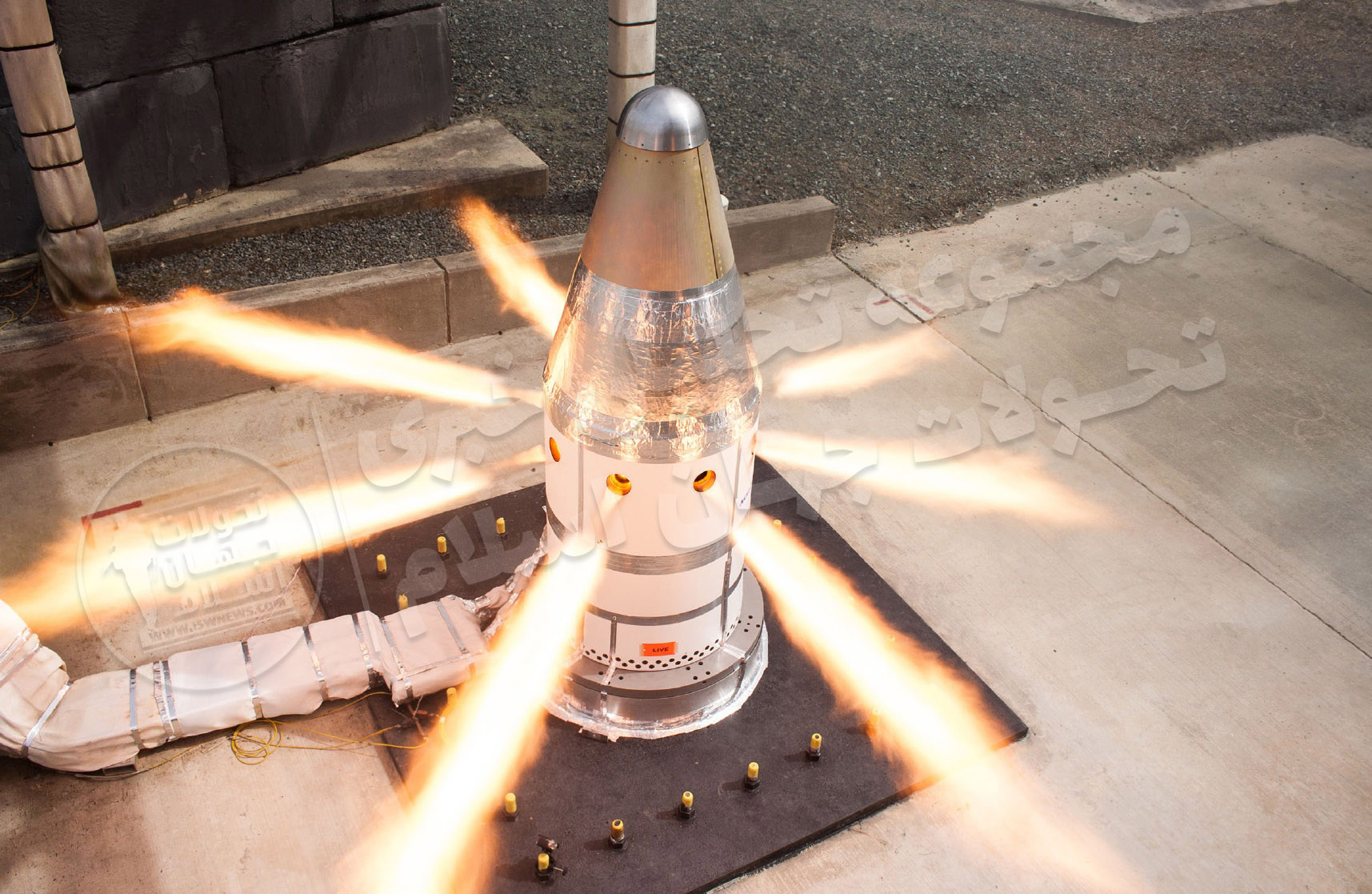
Blue Sparrow missile: The Blue Sparrow missile features a detachable warhead equipped with a Divert Attitude Control System (DACS). DACS consists of small rocket thrusters mounted on the projectile. When activated and fired at short intervals, these thrusters cause the projectile to rotate or change its angle of motion, enabling it to maneuver towards the target. In its role as a target missile, the Blue Sparrow simulates Iranian missiles with maneuverable warheads. When used offensively, it functions as a high-speed, maneuverable ballistic missile.
NASA tests control thrusters on Orion launch abort system
The Blue Sparrow missile boasts a range of approximately 1,000 kilometers and can reach speeds between Mach 5 and 9, classifying it as a hypersonic ballistic missile.
The Blue Sparrow missile uses a GPS and dual inertial guidance system. The implementation of dual inertia significantly reduces the potential for error. The missile’s accuracy, or circular error probable (CEP), is estimated to be approximately 3 meters.
The Blue Sparrow measures 6.51 meters in length and weighs 1,900 kilograms. Published images indicate that its detachable warhead, including the guidance system, is 2.8 meters long with a diameter of about 530 millimeters.
Given the dimensions of the warhead and the overall weight of the missile, the Blue Sparrow warhead’s weight, similar to the ROCKS, is estimated to be around 150 kilograms.
In classified U.S. documents related to the Israeli attack on Iran, leaked on October 15, 2024, this missile is referred to by the code name “Golden Horizon.”
Blue Sparrow ballistic missile tests by Israeli F-15 and F-16 fighters
Silver Sparrow missile: The Silver Sparrow missile is another variant in the Sparrow series. Similar to the Blue Sparrow, it features a detachable warhead. However, it is larger and heavier in terms of both dimensions and weight.
The Silver Sparrow has been reported to measure 8.39 meters in length and weigh 3,130 kilograms.
There are no images of the Silver Sparrow missile or its tests available. Reportedly, due to its high weight, the first test launch was conducted by a C-130 aircraft. The Silver Sparrow was initially tested on September 2, 2013. The launch, originating from the Mediterranean Sea, was detected by the Russian missile early warning radar in Armavir, and the Israelis confirmed the test shortly thereafter.
Based on the available information, the Silver Sparrow warhead appears to be very similar in size to the Blue Sparrow’s. However, a larger booster has been used to extend its range, which is estimated to be up to 1,500 kilometers.
Based on official catalog information, the missile’s guidance system utilizes both GPS and inertial navigation. Its accuracy is estimated to be around 3 meters, similar to the Blue Sparrow missile.
Specifications of the Sparrow family missiles: Type: Air-launched ballistic missile Manufacturer: Rafael Advanced Defense Systems Origin: Israel
Black Sparrow missile: Range: up to 800 km Length: 4.85 m Weight: 1275 kg Propulsion: single stage solid propellant Guidance: GPS/INS
ROCKS missile: Range: up to 800 km Length: 4.85 m Weight: 1275 kg Warhead length: ~ 1.2 m Warhead diameter: ~ 500 mm Warhead weight: ~ 150 kg Propulsion: single stage solid propellant Guidance: GPS/INS – EO seeker Speed: ~ Mach 3 Accuracy: ~ 3 m CEP
Blue Sparrow Missile: Range: up to 1000 km Length: 6.51 m Weight: 1900 kg Warhead length: 2.8 m Warhead diameter: ~ 530 mm Warhead weight: ~ 150 kg Propulsion: single stage solid propellant Guidance: GPS – Dual INS Speed: Mach 5 + Accuracy: ~ 3 m CEP
Silver Sparrow Missile: Range: up to 2000 km Length: 8.39 m Weight: 3130 kg Warhead length: 2.8 m Warhead diameter: ~ 530 mm Warhead weight: ~ 150 kg Propulsion: single stage solid propellant Guidance: GPS – Dual INS Speed: Mach 5 + Accuracy: ~ 3 m CEP
Sparrow and ROCKS missiles – click to view in full size
Sparrow and ROCKS missile posters in Persian and Russian:
History and development: After the First Persian Gulf War and Saddam’s use of the Al-Hussein missile against some neighboring countries such as Saudi Arabia, exposed the controversial performance the Patriot air defense system, And the production program of the anti-ballistic system was specially placed on the agenda of the Israeli regime.
The Arrow anti-ballistic system has been jointly funded and developed by Israel and the United States since 1986, and its production and development process has continued until today. According to the Israeli regime, this system is more effective than the American MIM-104 Patriot system to repel ballistic missile attacks.
Undertaken by the MALAM division of the Israel Aerospace Industries (IAI) and Boeing, it is overseen by the Israeli Ministry of Defense’s “Homa” administration and the U.S. Missile Defense Agency.
Israel initially produced the Arrow system domestically, but on February 11, 2003, IAI and Boeing signed an agreement, valued at over $25 million for fiscal years 2003–2004, to establish production facilities for the manufacture of components for the Arrow missile in the United States. In March 2004, IAI awarded a $78 million production contract to Boeing; the total contract value could exceed $225 million through second quarter 2008. As a result of successful implementation of this contract Boeing is responsible for production of about 35 percent of Arrow missile components, including the electronics section, booster motor case and missile canister, at its Huntsville, Alabama, facilities. IAI, the prime contractor of the Arrow system, is responsible for integration and the final assembly of the Arrow missile in Israel.
Boeing also coordinates the production of Arrow missile components manufactured by more than 150 American companies located in over 25 states.
Today, Boeing’s share in the production of the “Arrow 3” system has reached 40-50%.
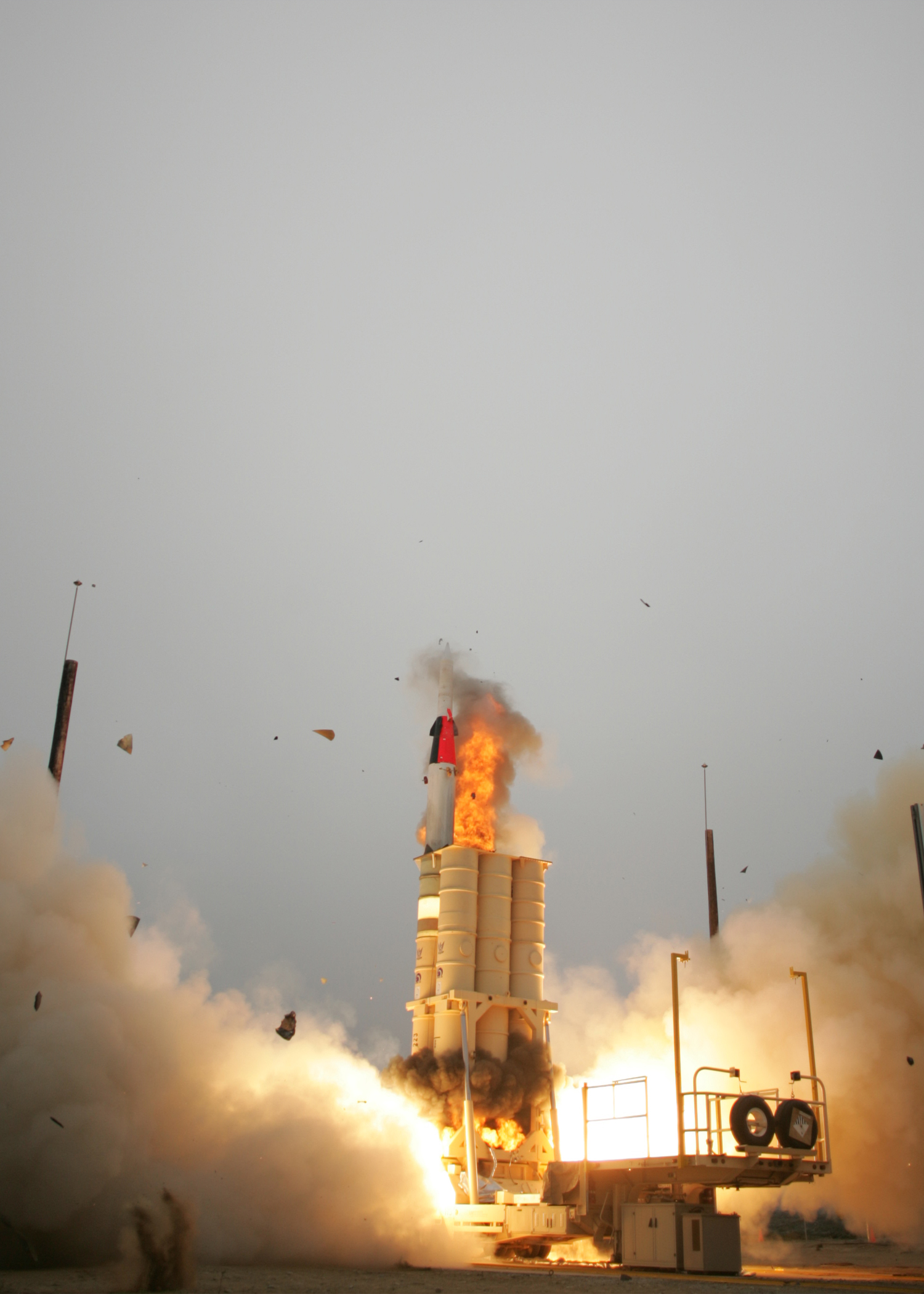
The first launch of the Arrow interceptor took place on August 9, 1990, designed to test the missile’s control and guidance systems. This test was stopped after a few seconds due to a malfunction in the systems and the missile was destroyed in the sky. This missile had several unsuccessful tests in 1991. Although the missile was finally successful in 1992, and the missile design was changed to Arrow 2. Although Arrow 2 also encountered problems many times, after solving the problems in 1998, the Arrow 2 system was delivered to the army for testing.
On March 14, 2000, the first complete Arrow 2 battery was rolled out in a ceremony at Palmachim Airbase.
In June 2001 Arrow missiles were test-fired in the course of a joint American-Israeli-Turkish exercise code-named Anatolian Eagle, in the southeast of Turkey.
In October 2002 the second battery was declared operational.
In the continuation of the development of the Arrow anti-ballistic system, changes were made on the Arrow 2 missile, and each of these changes was placed in different blocks. The Arrow 2 block-2 missile entered the test phase in 2003. In 2007, Arrow 2 block-3 was also tested. In September 2008, a Blue Sparrow missile, capable of simulating “Scud-C/D” missiles was used to test the Arrow 2 block-4, but the test failed; The next test was repeated on April 7, 2009 and this time it was successful.
By August 2008 the United States and Israeli governments have initiated development of an upper-tier component to the Israeli Air Defense Command, known as Arrow 3. The development is based on an architecture definition study conducted in 2006–2007, determining the need for the upper-tier component to be integrated into Israel’s ballistic missile defense system. According to Arieh Herzog, the main element of this upper tier will be an exoatmospheric interceptor, to be jointly developed by IAI and Boeing. Arrow 3 was declared operational on January 18, 2017.
By April 2011 Israel’s Missile Defense Organization (IMDO) launched initial definition of a new block-5 upgrade to the complete Arrow system that will merge the lower-tier Arrow 2 and exoatmospheric Arrow 3 into a single national missile defense system. According to Arieh Herzog, the planned block-5 will include new ground- and airborne sensors, a command and control system, and a new target missile – the Silver Sparrow – to simulate potentially nuclear-capable delivery vehicles developed by Iran.[68] According to the U.S. Missile Defense Agency, block-5 is expected to be able to deal with “more stressing regional threats” by increasing total defended area by some 50 percent.
In 2017, the Arrow 4 system was defined and put on the agenda for future complex threats. These threats included hypersonic cruise missiles or any other supersonic aircraft. It should be noted that research on Arrow 4 has gained more speed after the unveiling of the Iranian Fattah hypersonic missile.
Until today, parts of Arrow anti-ballistic system, such as radar, have been exported to countries such as the Republic of Azerbaijan. But Arrow, as a complete system, serves only in the army of the Israeli regime. It should be noted that a contract for the full sale of the Arrow system has recently been concluded with Germany.
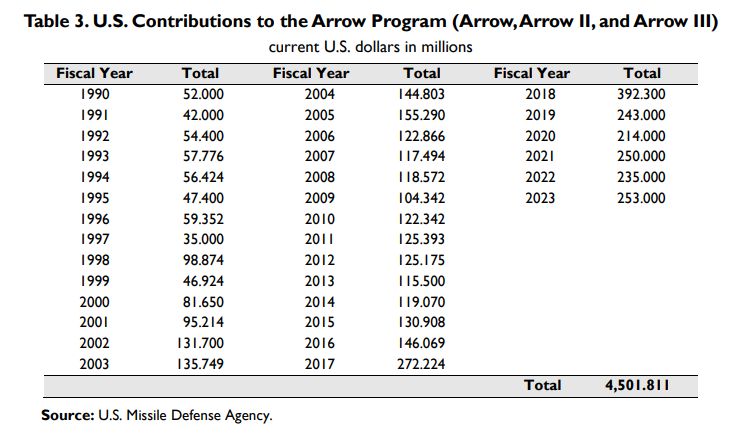
Financial sources of the project: From the beginning of the design of the Arrow anti-ballistic system, the United States has had a direct role in financing it. Estimated credits required for this project are 1.6 billion dollars and the price of each Arrow missile is estimated at 3 million dollars. However, according to the financial report of the Congressional Research Service (CRS) published in 2023, the total financial assistance of the United States to the Arrow anti-ballistic system reaches 4.5 billion dollars. Estimates of Israel’s spending on the Arrow program show that Israel has spent more than 60 million dollars annually for this project independently, which amounts to more than 2 billion dollars. As a result, the Arrow anti-ballistic system program has cost more than 6.5 billion dollars so far.
An image of the United States financial aid report to the Arrow program
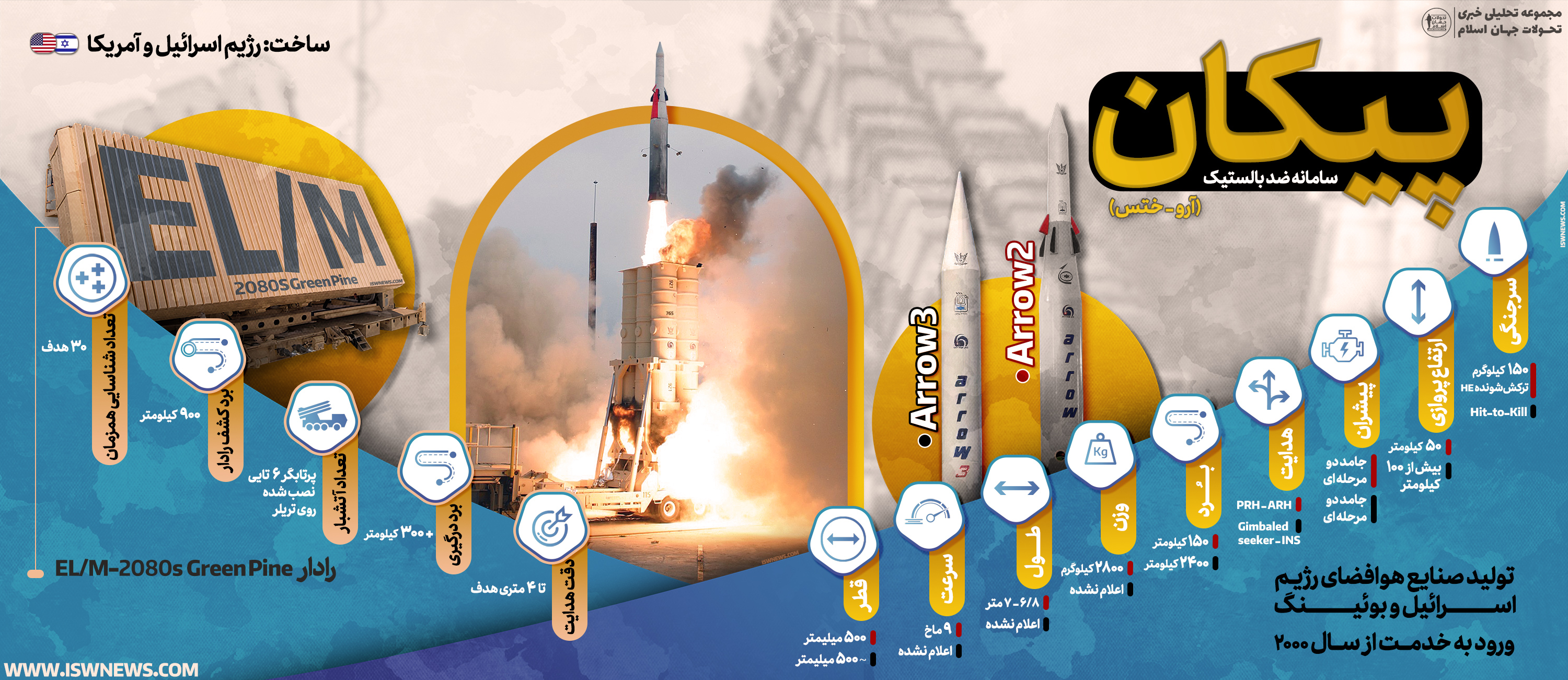
Design and parts: The Arrow system consists of the hypersonic Arrow anti-missile interceptors, Arrow 2 and Arrow 3, the Elta EL/M-2080 “Green Pine” and “Great Pine” early-warning AESA radars, the Elisra “Golden Citron” (“Citron Tree”) C3I center, and “Brown Hazelnut” (“Hazelnut Tree”) launch control center. The system is mobile and can be moved to other prepared sites.
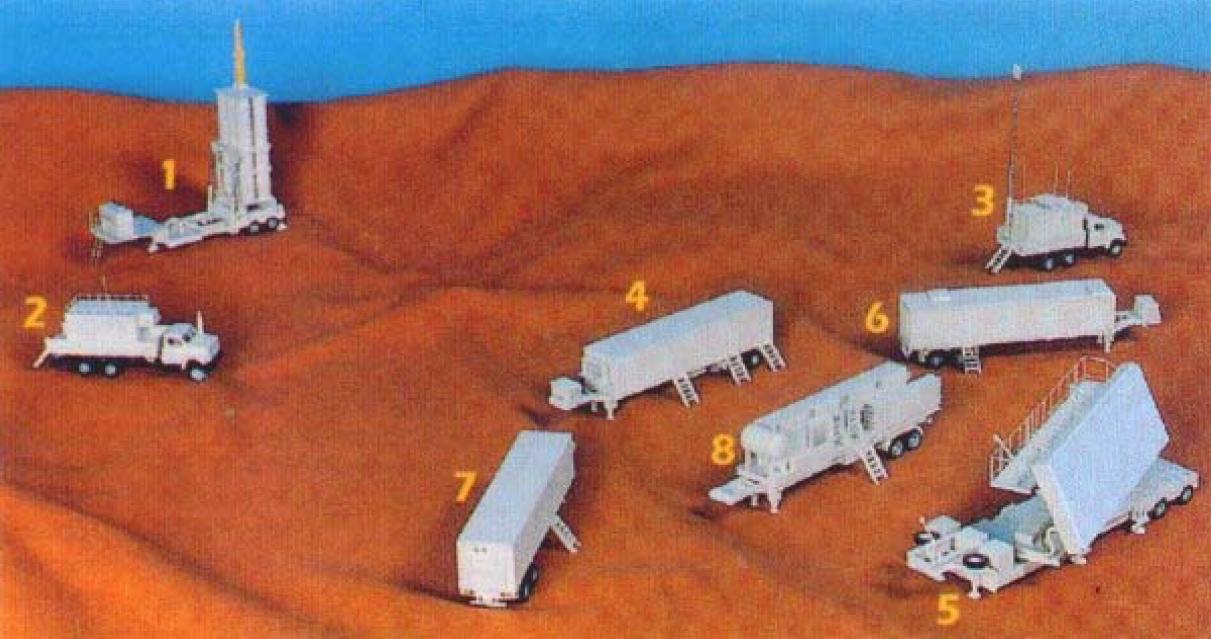
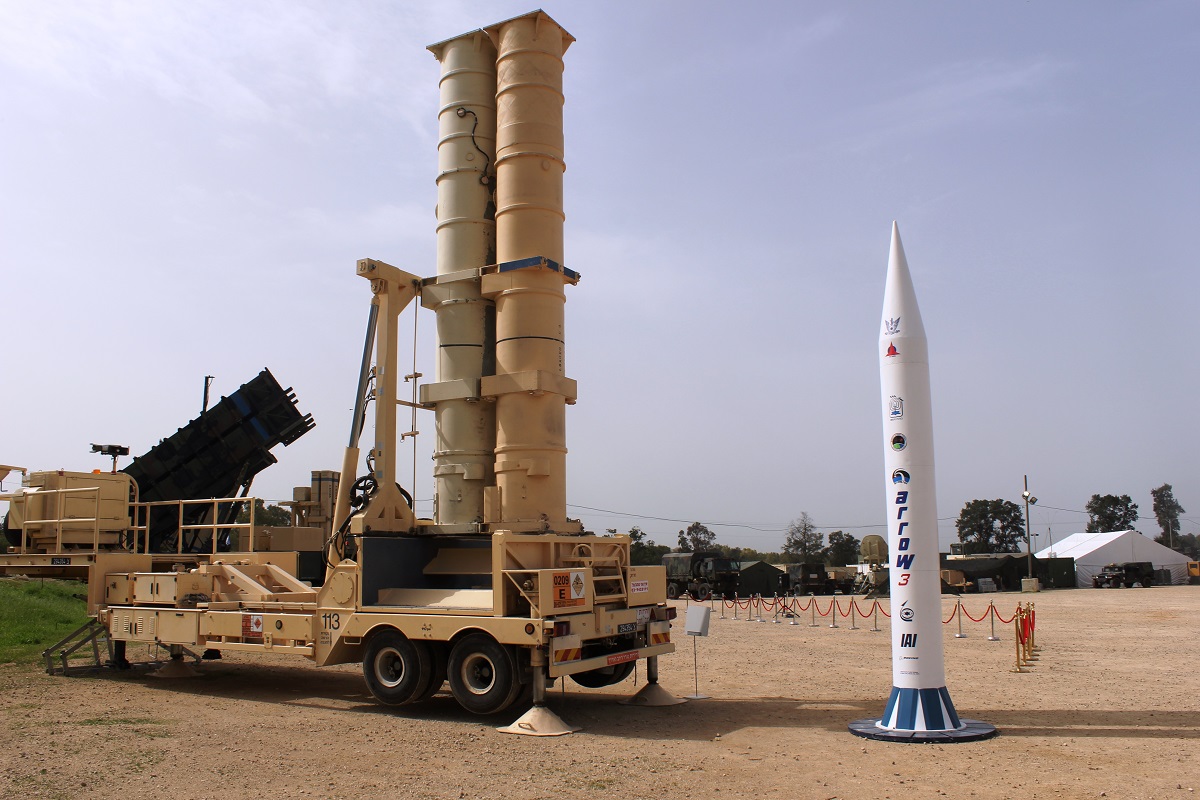
Each missile of the system is placed in a canister and all 6 of them are placed on a truck. Each Arrow anti-ballistic system battalion includes 4 to 8 mobile launchers (24 to 48 missiles), a mobile Green Pine early warning radar unit, a radar power supply unit truck, a radar cooling unit truck, a radar control unit truck, a Elisra Golden Citron control center, Brown Hazelnut mobile launch control center and mobile communications center, resulting in 11 to 15 trucks per battalion.
The model set that shows how to arrange the components of the arrow system. 1- Arrow missile launcher 2- Golden Citron control center 3- Communication center 4- Brown Hazelnut launch control center 5- Green Pine early warning radar antenna 6- Radar control center 7- Radar power unit 8- Radar cooling unit
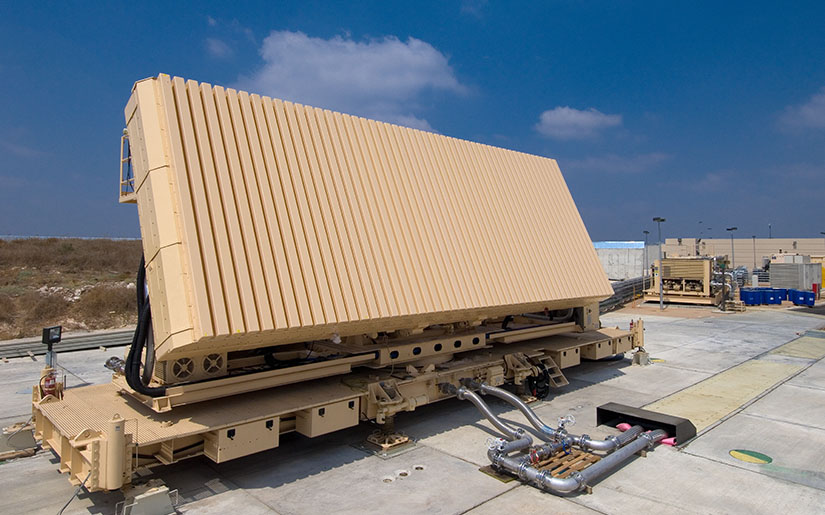
Green Pine early warning radar: The Green Pine early warning radar model EL/M-2080 has a range of 500 km and the Block-B Super Green Pine version or EL/M-2080s has a range of 900 km. This radar also has a Block-C version, the specifications of which have not been revealed yet.
The Green Pine radar is an active electronically scanned array (AESA) radar. This radar is active in the X-band and is capable of detecting 30 targets at a speed of 3000 meters per second (equivalent to Mach 8.8) in a maximum range of 500 to 900 km depending on the model. The accuracy of missile guidance by the green pine radar is up to 4 meters of the target, and after that the missile acquires the target and hits with its own radar.
The Green Pine early warning radar antenna has a width of 9 meters and a height of 3 meters. This radar system consists of an antenna, a power system (including a diesel generator and fuel tank), a cooling system and a radar control center, and it has 2000 to 2300 modules that send and receive waves and weighs 60 tons.
The Green Pine radar is mobile and can be moved using 4 trailers, but it is not possible to set it up anywhere. In general, it takes about 24 hours to set up a green pine in a new operational site.
Golden Citron control center The “Golden Citron” truck-mounted net-centric open systems architecture Battle Management Command, Control, Communication & Intelligence Center can control up to 14 intercepts simultaneously. The system provides fully automatic as well as Human-in-the-Loop options at every stage of battle operation management. It is also capable of interoperability with other theater missile defense systems and C3I systems. Notably Link 16, TADIL-J, communications were being altered to allow interoperability with Patriot fire control units. Assigned targets can be handed over to the Patriot’s AN/MPQ-53 fire control radar. The “Golden Citron” has three banks of operator consoles laid out in a U shape. All in all, the “Golden Citron” is manned by 7–10 operators.
Brown Hazelnut launch control: The “Brown Hazelnut” launch control center is located at the launch site, up to 300 km from the “Golden Citron” fire control center. It employs microwave and radio data and voice communications links to the “Green Pine” and “Golden Citron”. The launch method is a vertical hot launch from a sealed canister, providing all-azimuth coverage. “Brown Hazelnut” also has missile maintenance and diagnostic capabilities
Missiles (interceptors): The Arrow anti-ballistic system includes several missiles, including Arrow 1, Arrow 2 (including five models), Arrow 3 and Arrow 4.
Arrow 1: The Arrow 1 was a two-stage solid propellant missile that was not put into service. The test of this missile failed on August 9, 1990. The ninth and last test of this missile, which was successful, was conducted on June 12, 1994, from a ship in the Mediterranean Sea. Although several tests of this missile failed and some of them were successful, but in the end this missile was not put into service; And the development of Arrow 1 ceased and further research continued with the “smaller, faster and more lethal” Arrow 2 missile.
This Arrow 1 had inertial and command update mid-course guidance, with a terminal infrared focal plane array. Also, the Arrow-1 interceptor had the capability of thrust vectoring in both stages. The exact specifications of the Arrow 1 missile have not been revealed, but its estimated specifications are available.
Specifications of Arrow 1: Length: 7.5 meters Body diameter: 1.2 meters Length of the second stage: 2.5 meters Weight: about 2000 kg
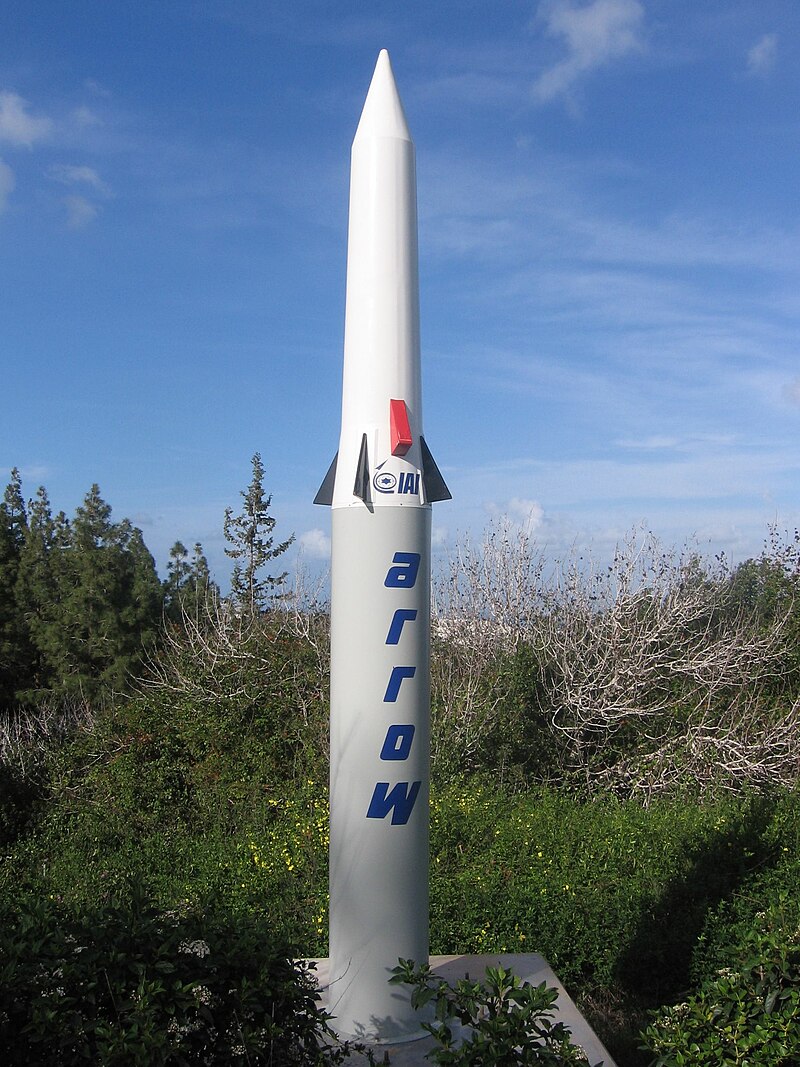
Arrow 1 missile replica
Arrow 2: The Arrow 2 missile project was developed to achieve a smaller but faster and more lethal missile. The development of this missile started in 1994 and it successfully passed its first tests on July 30, 1995. These experiments continued until 1998. On November 1, 1999, an Arrow 2 missile successfully intercepted and destroyed a Scud missile. After this success, the first battalion of this system was activated on March 14, 2000 during a ceremony at the Palmachim Air Base.
This two-stage missile is equipped with solid propellant booster and sustainer rocket motors. The Arrow-2 missile uses an initial burn to carry out a vertical hot launch from the container and a secondary burn to sustain the missile’s trajectory towards the target at a speed of Mach 9. Thrust vector control is used in the boost and sustainer phases of flight. At the ignition of the second stage sustainer motor, the first stage assembly separates. The Arrow missile is launched before the threat missile’s trajectory and intercept point are accurately known. As more trajectory data becomes available, the optimum intercept point is more precisely defined, towards which the missiles is then guided. The 500 kg kill vehicle section of the missile, containing the warhead, fusing and the terminal seeker, is equipped with four moving delta aerodynamic control fins to give low altitude interception capability. The dual mode missile seeker has a passive infrared seeker for the acquisition and tracking of tactical ballistic missiles and an active radar seeker used to home on air-breathing targets at low altitudes. The infrared seeker is an indium antimonide focal plane array.
The kill vehicle is designed to achieve a hit-to-kill interception, but if this is not achieved, the proximity fuze will direct the warhead fragments at the target shortly before reaching the closest point to the target. The high explosive directed blast fragmentation warhead is capable of destroying a target within a 40–50 m radius. In this manner, Arrow also differs from Patriot PAC-3, THAAD, and Standard Missile 3, which rely purely on hit-to-kill technology in which the kinetic force of a precise impact causes the destruction of the threat.
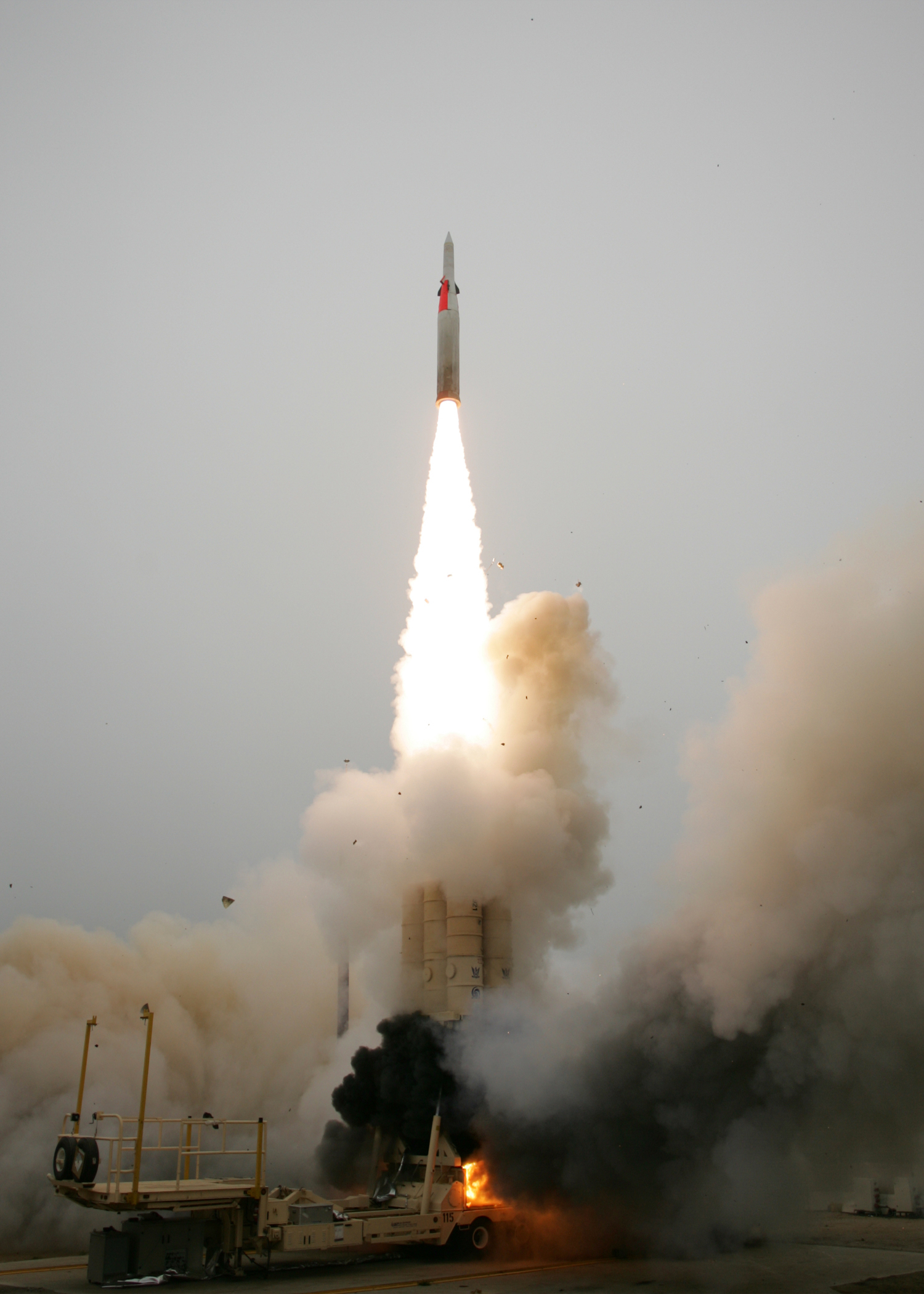
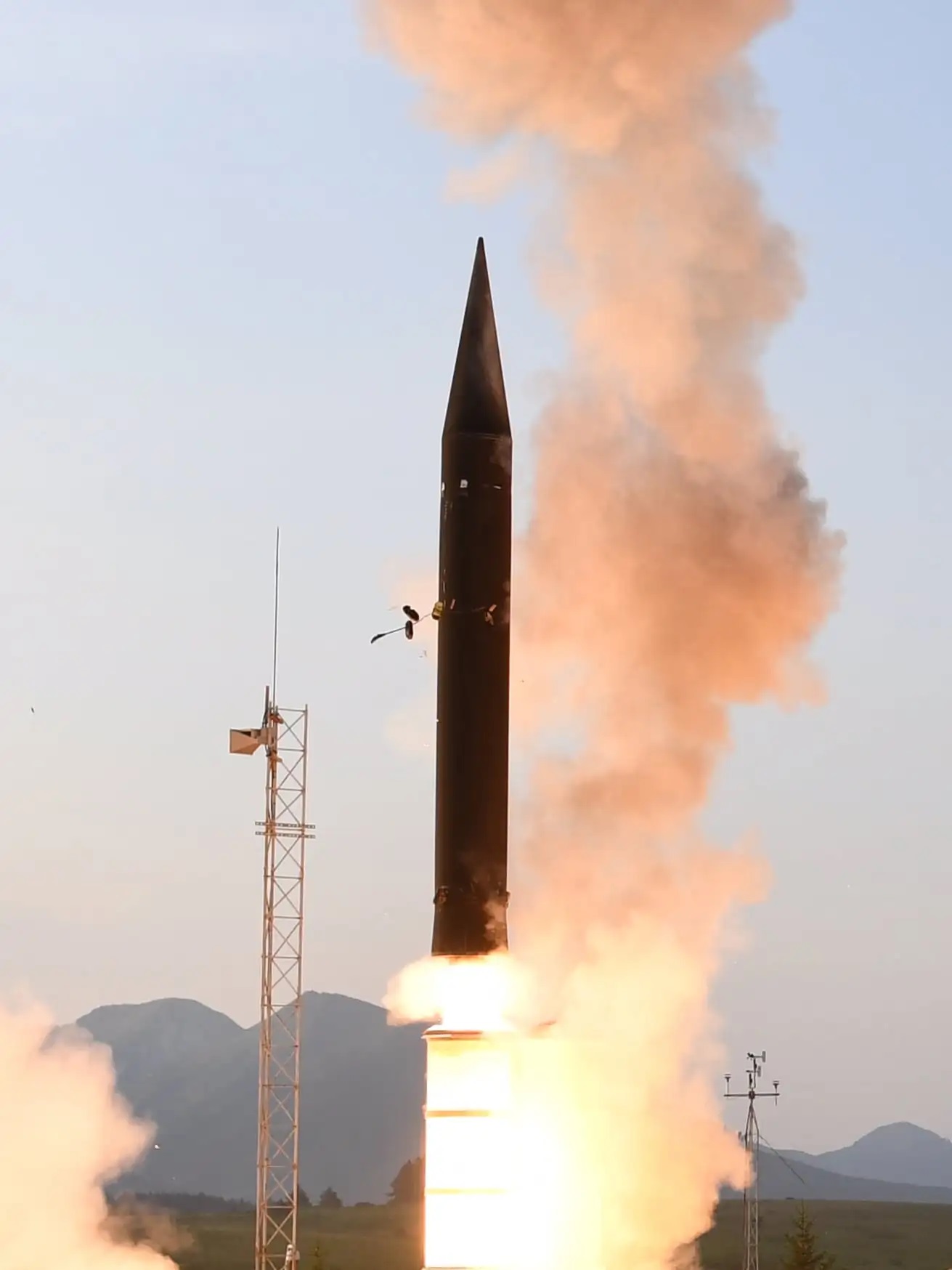
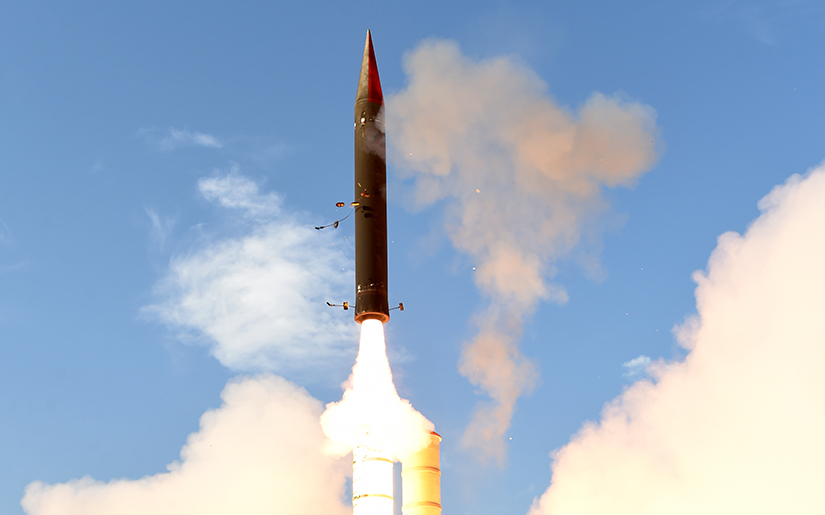
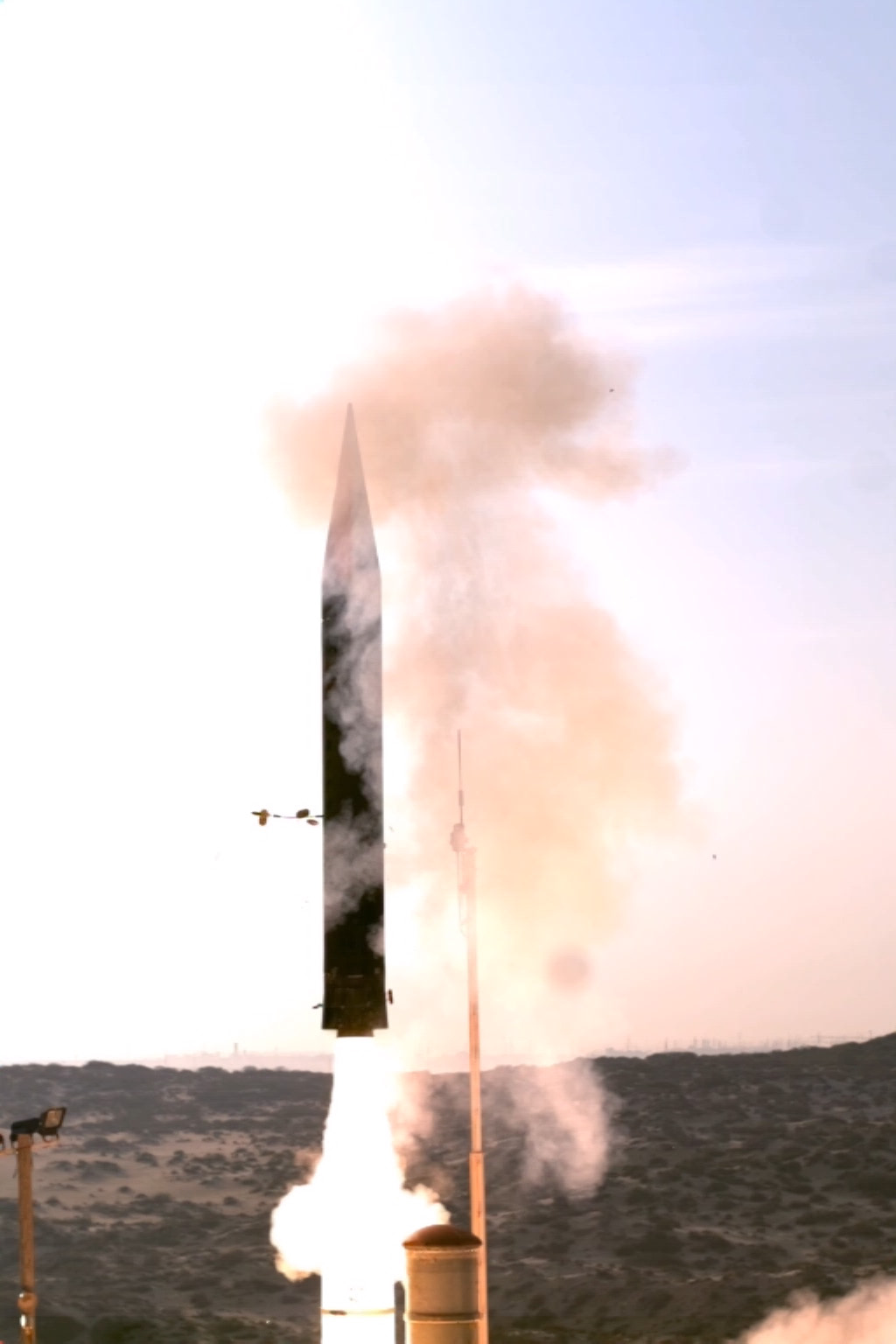
Video of the successful interception of a Yemeni missile outside the atmosphere by an Arrow-2 missile, May 2025Arrow 2 missile
Arrow 2 Block-2 missile: A successful test of the Arrow 2 block-2 took place on January 5, 2003. Four missiles were launched towards four simulated targets in order to examine the interceptor’s performance during special flight conditions as well as system performance during a sequence of launches. The test did not include actual interceptions. Another successful test held on December 16, 2003, examined the system’s ability to intercept and destroy incoming missiles at significantly high altitudes, around 60 km.
On July 29, 2004, Israel and the United States carried out a joint test at the Naval Air Station Point Mugu Missile Test Center in California, in which the Arrow interceptor was launched against a real “Scud-B” missile. The test was a success, with the interceptor destroying the “Scud” that flew a 300 km (190 mi) trajectory at an altitude of 40 km.
This system conducted another test on August 26, 2005. This test was aimed at examining the Arrow’s ability to detect a splitting warhead of a separating ballistic missile. During the test, despite the correct detection, it could not destroy it due to a technical defect.
In March–April 2005 the ability of “Green Pine” and “Golden Citron” to work with Patriot system elements operated by U.S. Army was successfully tested against simulated “Scud”-type targets during regular series of U.S.–Israeli biennial exercises code-named “Juniper Cobra”.
Actual testing of the complete Arrow system was resumed in December 2005, when the system successfully intercepted a target at an unspecified but reported record low altitude.
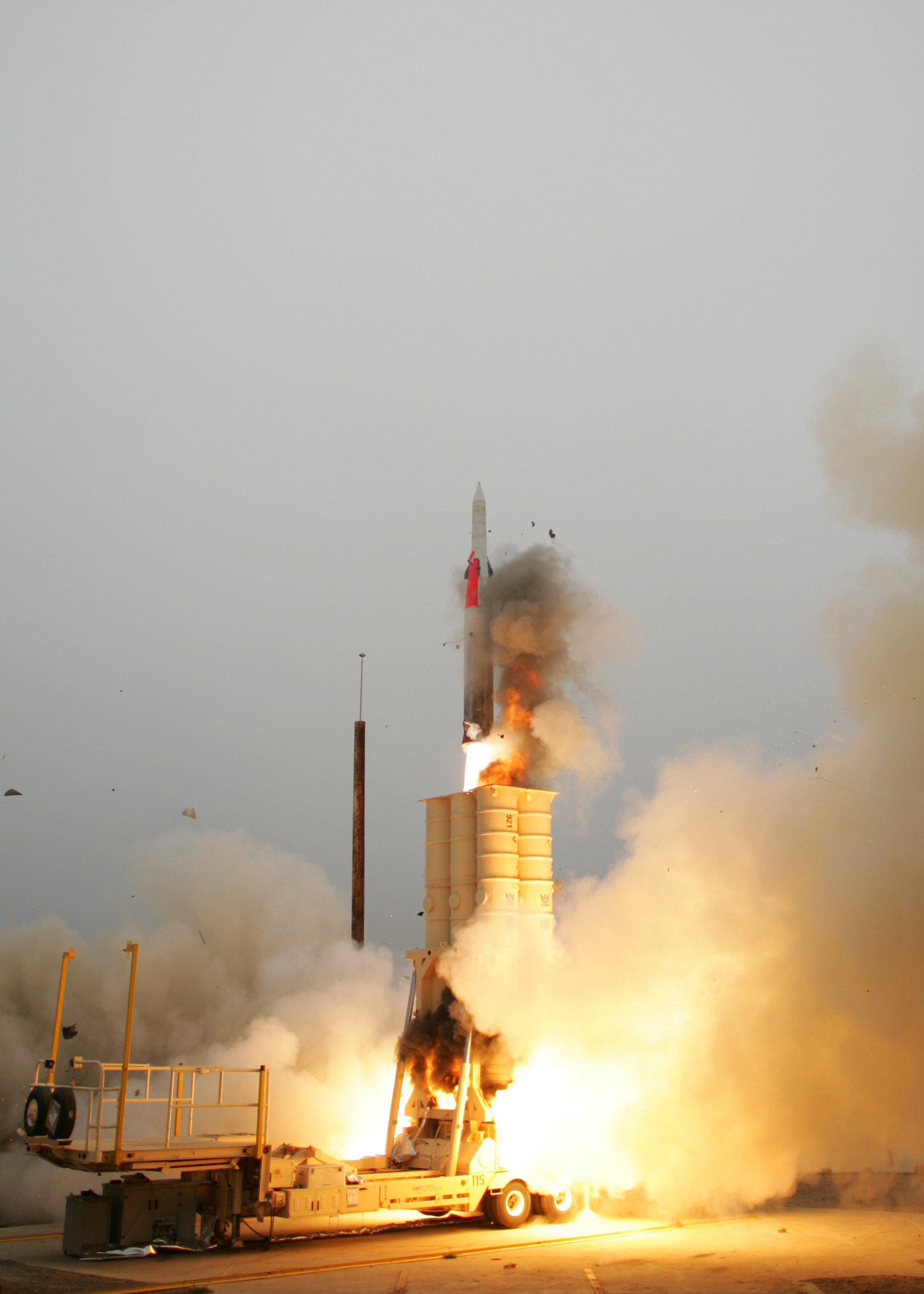
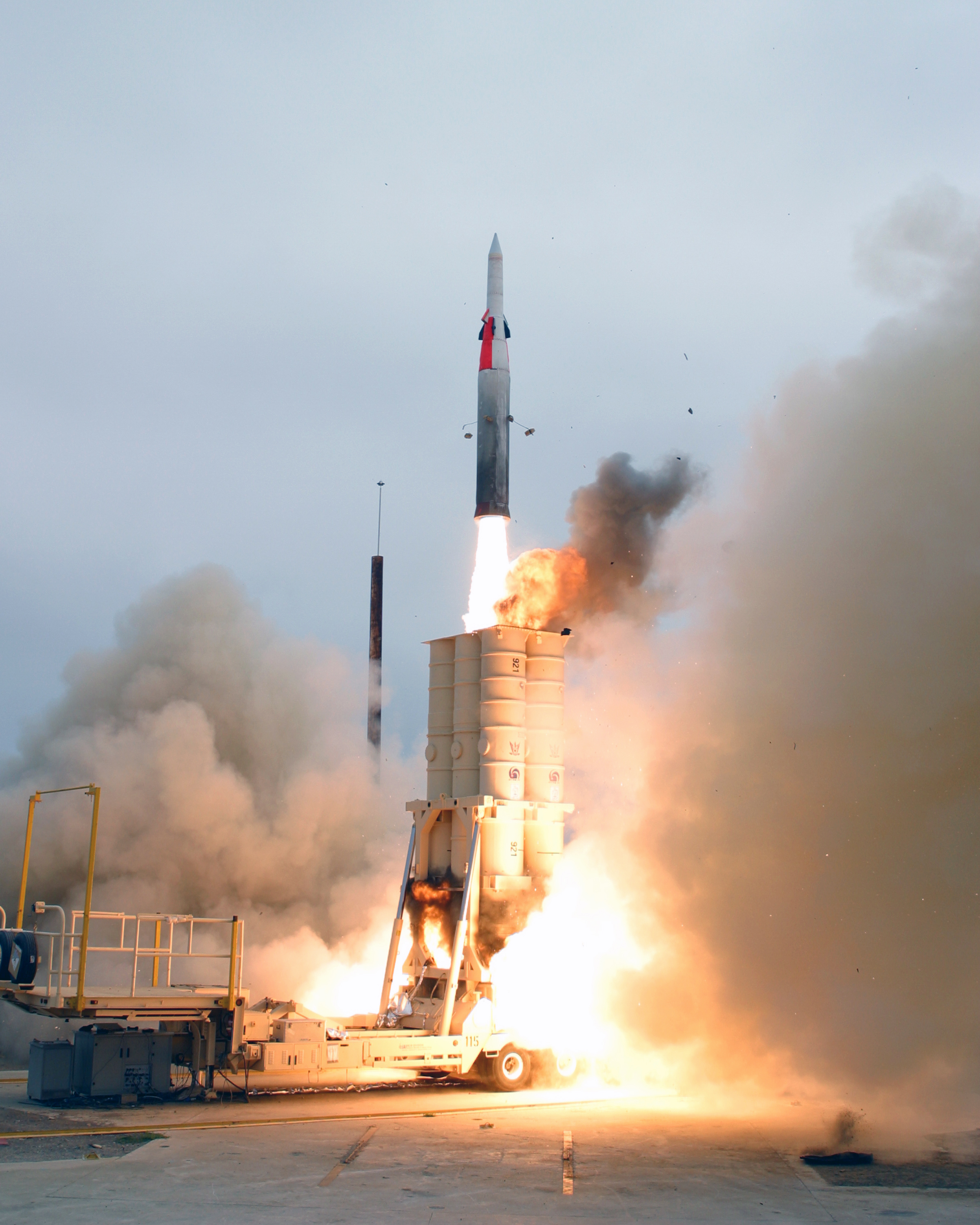
A picture of the Arrow system launcher, which is the same for all types of this system.
Arrow 2 Block-3 missile: On February 11, 2007, an Arrow 2 block-3 successfully intercepted and destroyed a “Black Sparrow” target missile simulating a ballistic missile at high altitude. It was the first so-called distributed weapon system test conducted in Israel, which required two Arrow units deployed some 100 km apart to share data on incoming threats and coordinate launching assignments. It was also the first time the Link 16 data distribution system was used to connect two Arrow units.
Arrow 2 Block-4 missile: On April 15, 2008, the Arrow system successfully detected and made a simulated intercept of a new target missile. During the test, a target missile was launched from an Israeli F-15 at a height of 27.5 km. The missile split into multiple warheads, making it harder to intercept it. Nevertheless, “Green Pine” tracked the warhead, simulating an intercept. In September 2008, another test attempted against the “Blue Sparrow” missile but the test failed. Eventually the Arrow 2 block-4 was successfully tested against the “Blue Sparrow” on April 7, 2009.
This missile was also tested on July 22, 2009 against an airborne missile with a range of 100 km fired from a C-17 Globemaster III transport aircraft, but the test was unsuccessful.
This missile successfully passed several other tests until 2015. These tests revealed the need to create a new Battle Management Center, launchers with high shooting availability, better communication with other missile systems and wider ranges of interceptions. Because the probability of success was not high and better launchers should have been used to protect the crew. Also, the control center was facing problems in transmission and correct detection of the firing position, which had to be solved.
Arrow 2 Block-5 missile: By April 2011 Israel’s Missile Defense Organization (IMDO) launched initial definition of a new block-5 upgrade to the complete Arrow system that will merge the lower-tier Arrow 2 and exoatmospheric Arrow 3 into a single national missile defense system. So, a new ground and airborne sensors, a command and control system, and a new target missile – the Silver Sparrow – to simulate potentially nuclear-capable delivery vehicles were defined for test.
The planned block-5 will optimize the existing Super Green Pine radar to operate with the AN/TPY-2 radar as well as with radars commanding anti-ballistic missiles aboard United States Navy destroyers. U.S. radars will be used to support closed-loop operations if Israel and U.S. targets in the region come under attack.
Arrow 3: By August 2008 the United States and Israel have initiated development of an upper-tier component to the Israeli Air Defense Command, known as Arrow 3. Arrow 3 missile was tested on January 23, 2012 and was declared operational on January 18, 2017.
Arrow 3 operates at greater speeds, greater range and at greater altitudes than Arrow 2, intercepting ballistic missiles during the space-flight portion of their trajectory.
Arrow 3 is a two-stage solid fueled missile. Unlike the Arrow 2 missile, this missile only uses “Hit-to-Kill” method to deal with ballistic missiles. The concept of Hit-to-Kill uses the effect of kinetic energy and direct impact to destroy the target instead of proximity fuze. These types of weapons are also called kinetic energy weapons.
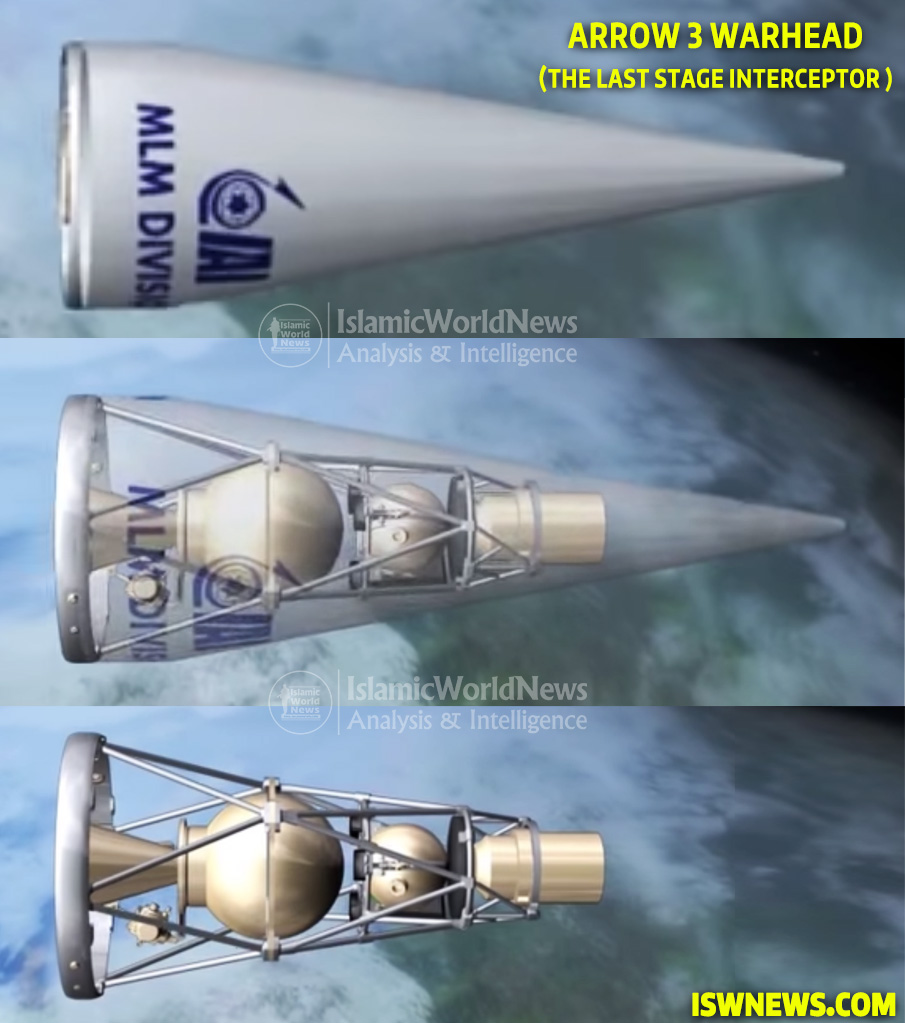
Arrow 3 – Interceptor section in the last stage
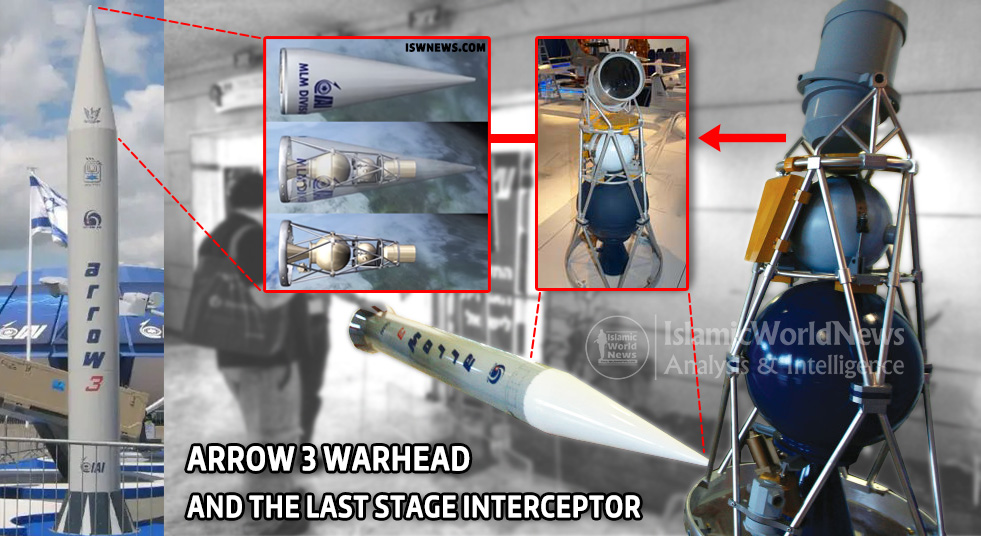
The interceptor part of the last stage of this missile consists of a solid fueled propellant with the ability a thrust vectoring, which is very reliable at the same time as simplicity and cheapness. At the tip of this section, there is an infrared seeker that tracks the target and provides the possibility of high accuracy.
The location of the ‘hit-to-kill’ part in the Arrow 3 missile
This missile and its system are designed to intercept targets at an altitude of more than 100 km and with longer ranges; Thus, the range of this missile reaches 2400 km.
The interception capability of this system has not been revealed, but the Arrow 3 system is expected to intercept 5 ballistic missiles within 30 seconds.
According to Isaac Ben Yisrael, the former chairman of the Israeli Space Agency, Arrow 3 may serve as an anti-satellite weapon, which would make Israel one of the world’s few countries capable of shooting down satellites.
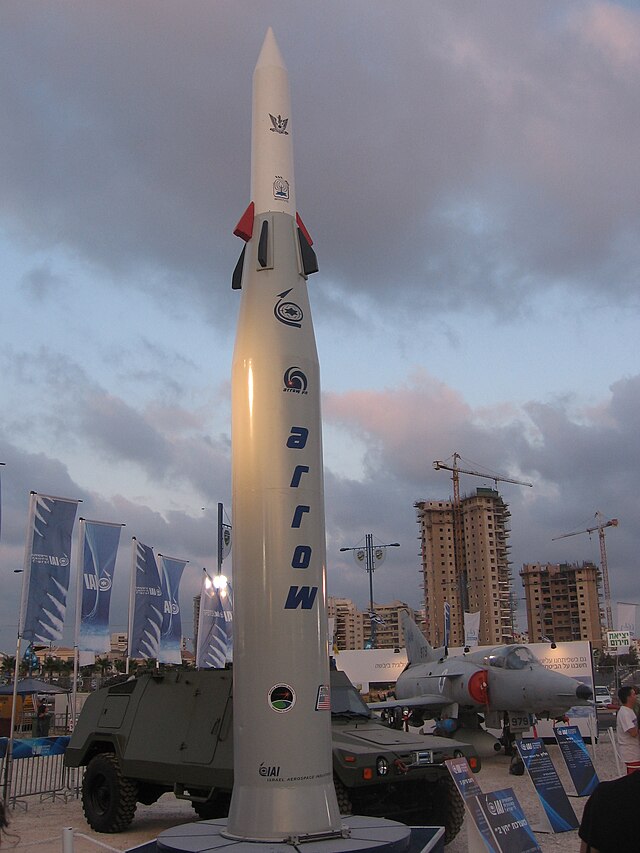
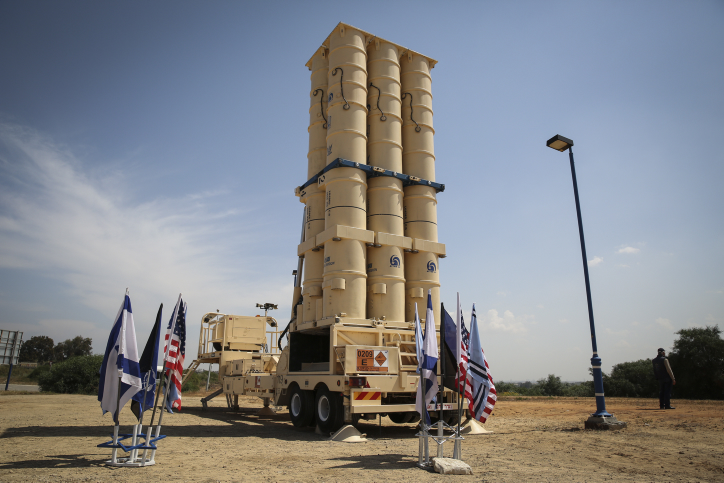
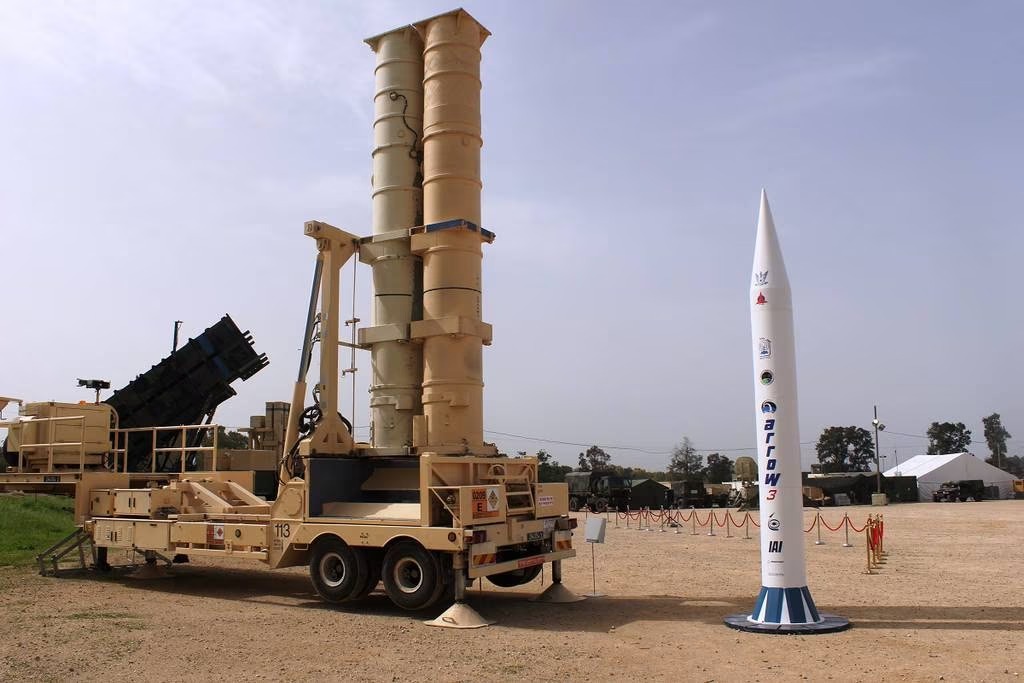
Arrow 3 missile and launcherVideo of how the Arrow 3 system worksVideo of the Israeli Ministry of Defense’s explanation of how the Arrow 3 system works
Arrow 4 missile: In 2017, after the Arrow 3 missile entered service, the Israeli Ministry of Defense set a new goal and plan for defense against future threats. The main goal was to deal with hypersonic missiles. These weapons, whether cruise or ballistic, were among the targets that could not be intercepted and engaged by the Arrow system. In the new program, the goal was to develop a new radar and a new control center and a new missile. In early 2021 Israel revealed that the development of the Arrow 4 interceptor was ongoing and that the system was targeting the interception of hypersonic threats such as hypersonic cruise missiles and hypersonic glide vehicles. Efforts to counter hypersonic threats took on new urgency following a November 2022 announcement by Iran that they had tested a hypersonic missile that could hit Israel in as little as four minutes.
Specifications of Arrow anti-ballistic missile system: Type: Anti-Ballistic Missile Origin: Israeli and American regime Manufacturer: Israel Aerospace Industries and Boeing Defense, Space & Security (BDS) Entered service: since 2000
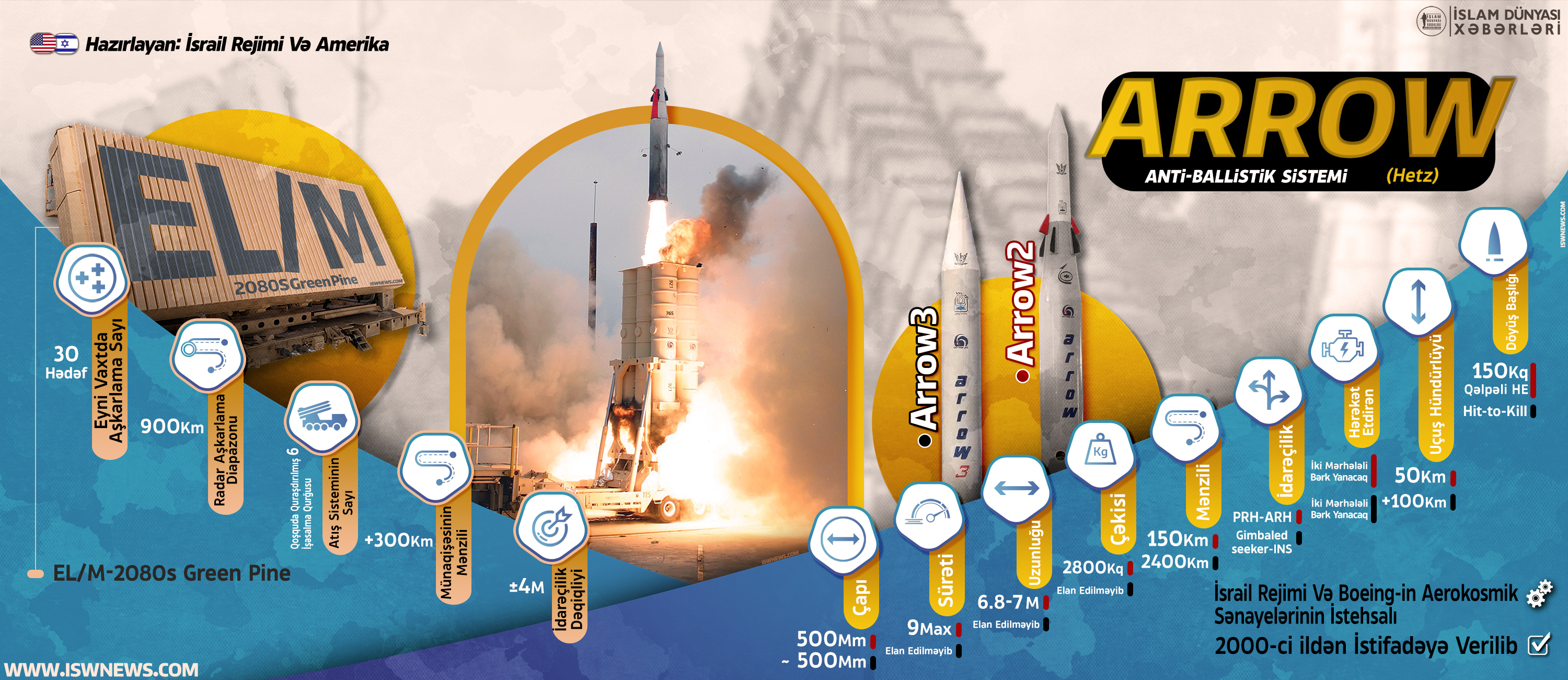
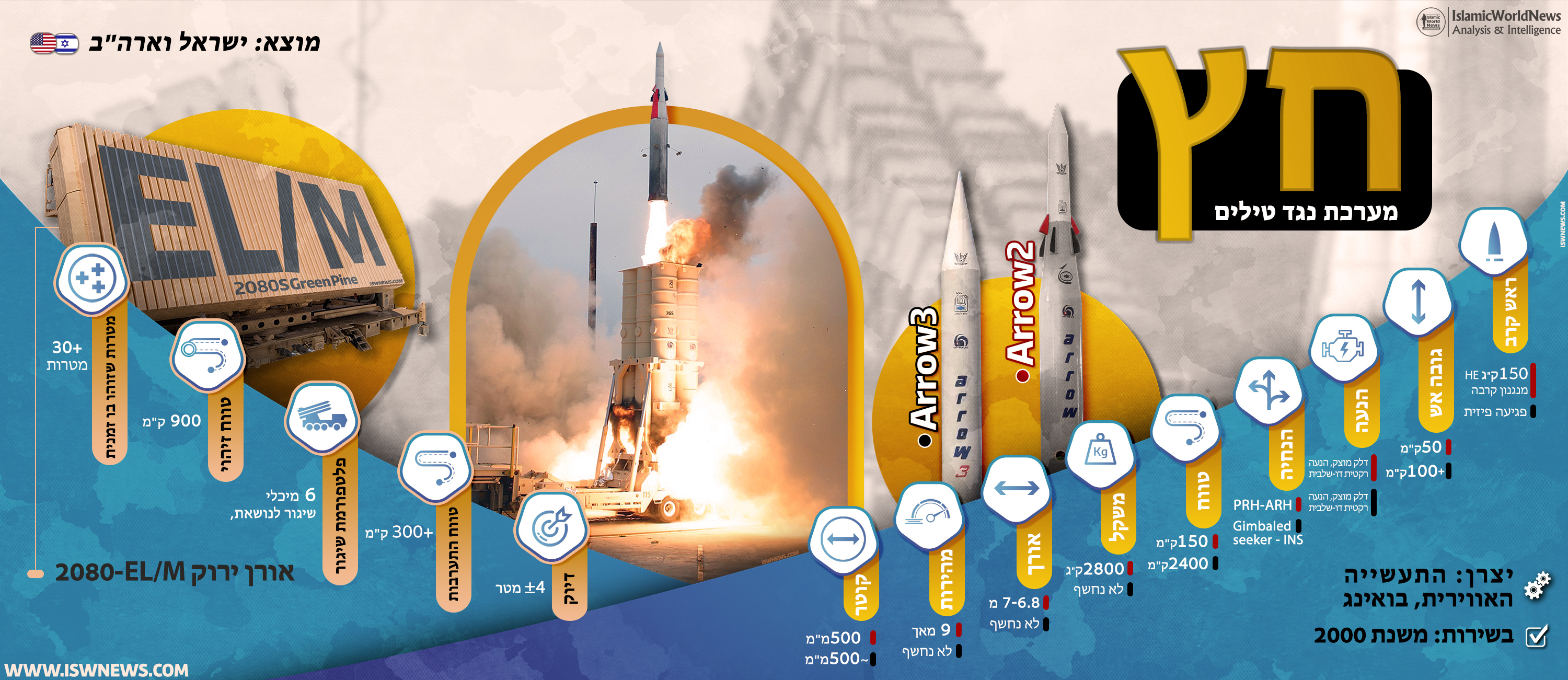
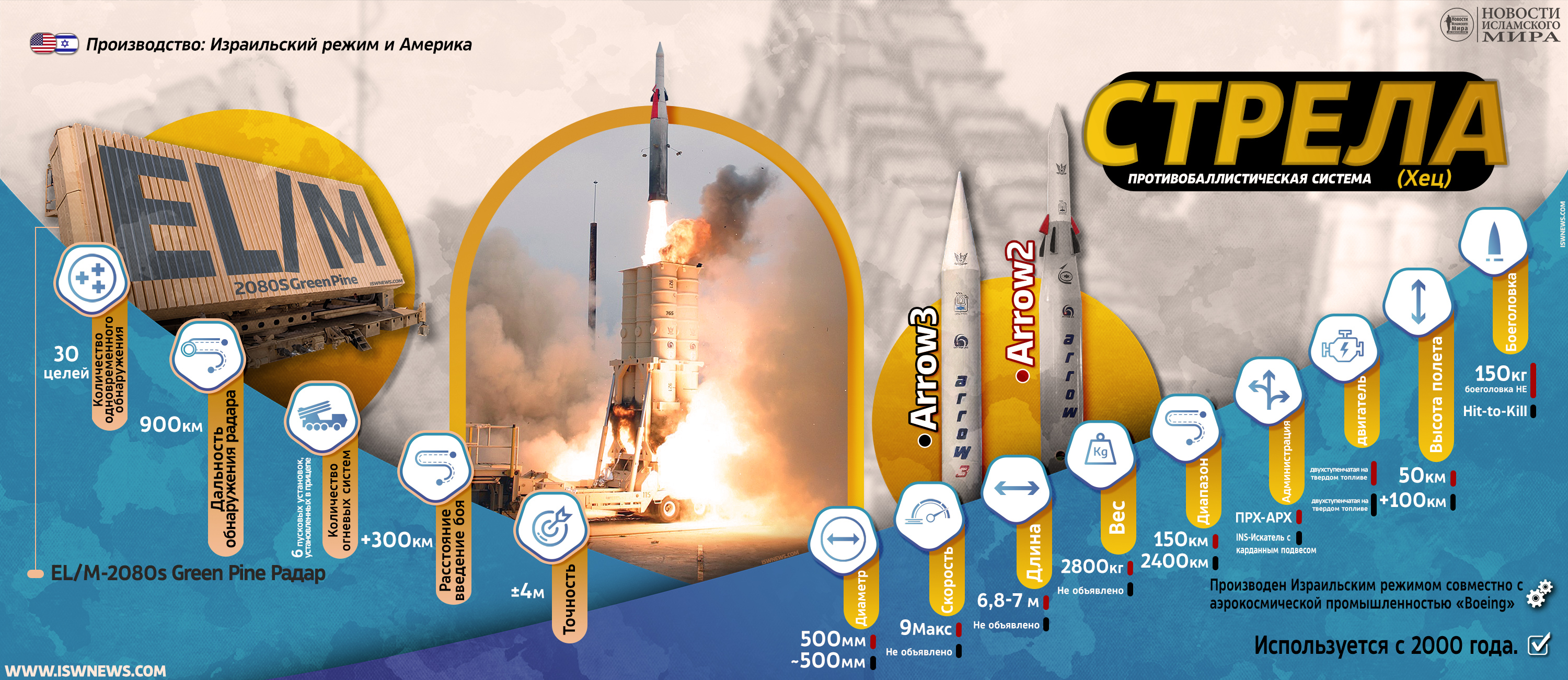
Arrow 2 missile: Range: 150 km Speed: Mach 9 Flight altitude: 50 km Length: 6.8 to 7 meters Diameter: 500 mm Weight: 2800 kg Warhead: 150 kg HE fragmentation Propulsion: two-stage solid propellant Guidance: PRH – ARH
Arrow 3 missile: Range: 2400 km Speed: Not disclosed Altitude of fire: more than 100 km Length: Not disclosed Diameter: about 0.5 meters Weight: Not disclosed Warhead: Hit-to-Kill Propulsion: two-stage solid propellant Guidance: INS – Gimbaled seeker
Radar: EL/M-2080 Green Pine Detection range: 500 km in EL/M-2080 – 900 km in EL/M-2080s Engagement range: 300 km at an altitude of 40 km against the Scud missile Number of simultaneously detected targets: 30 targets with a maximum speed of Mach 8.8 Number of simultaneously engaged targets: Not disclosed Reaction time: Not disclosed Batteries: 6 launchers mounted on a trailer
Arrow (Hetz) anti-ballistic system – click to view full size
More images of Arrow system:
Click to view full size
Infographics of ‘Arrow anti-ballistic missile system’ in Farsi, Hebrew, Russian and Azeri:
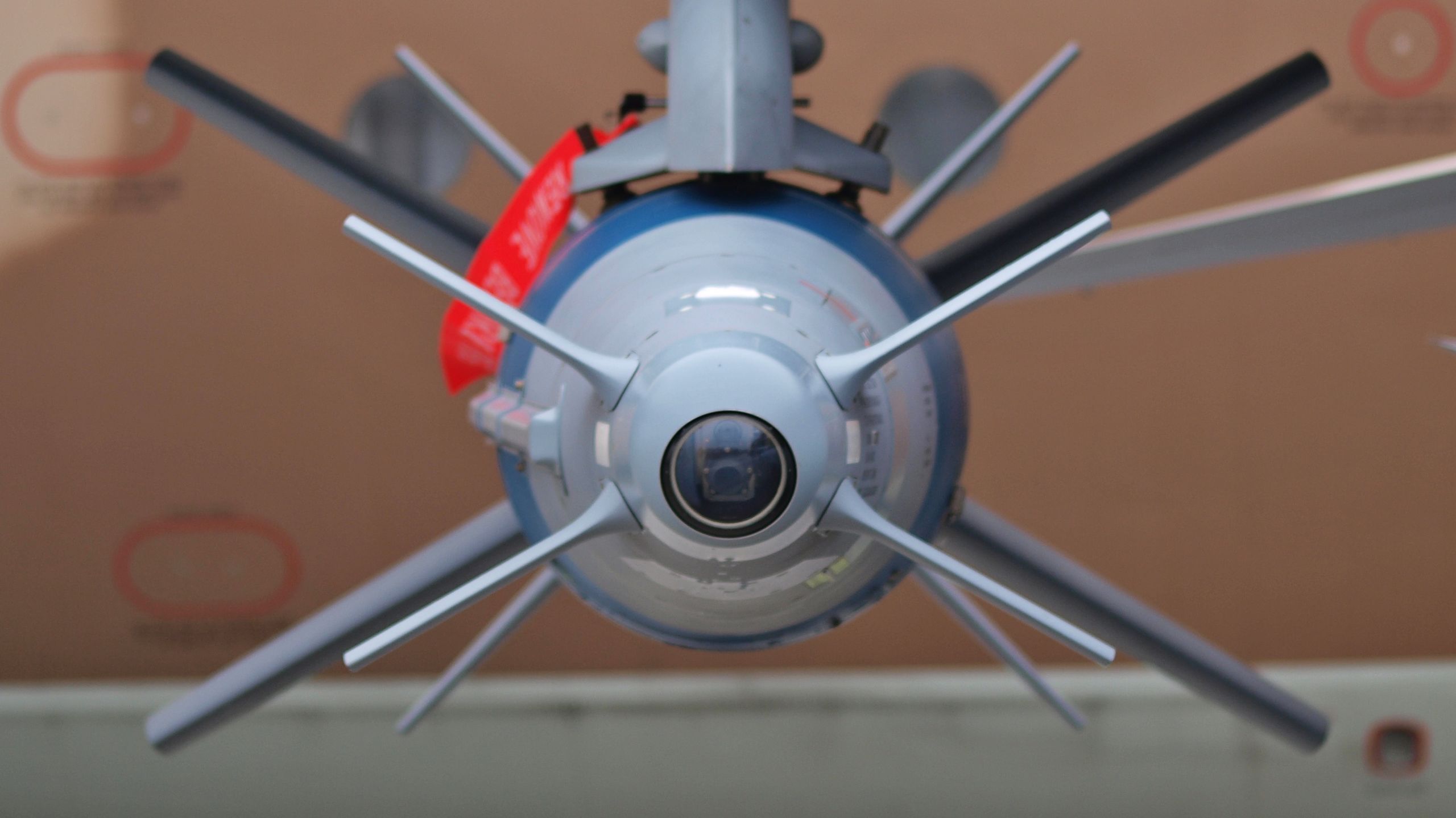
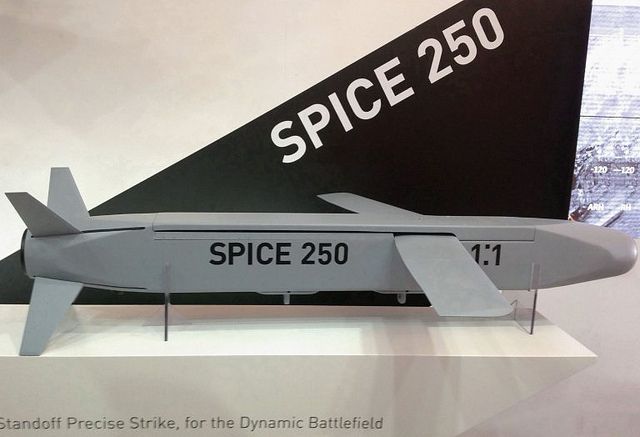
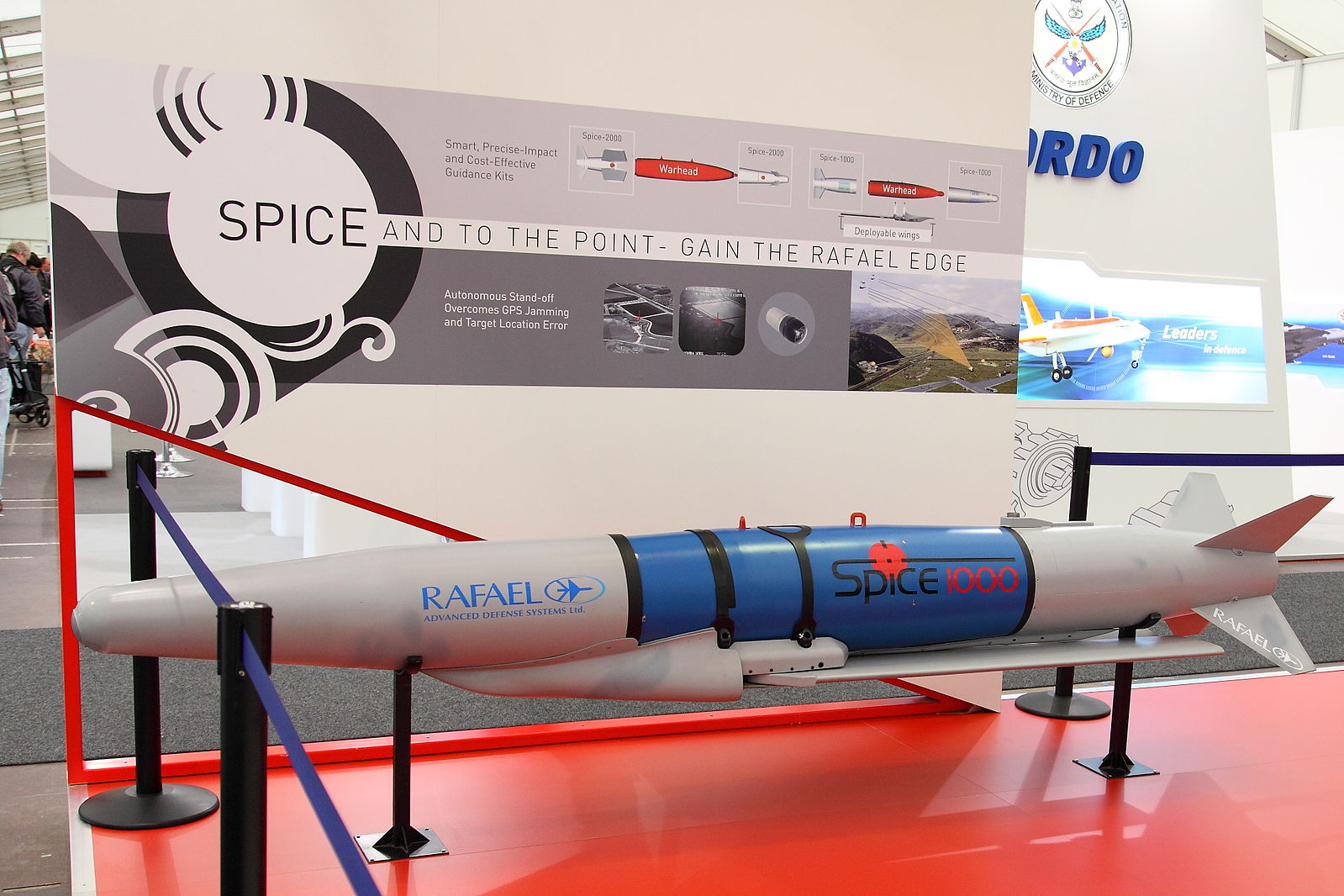
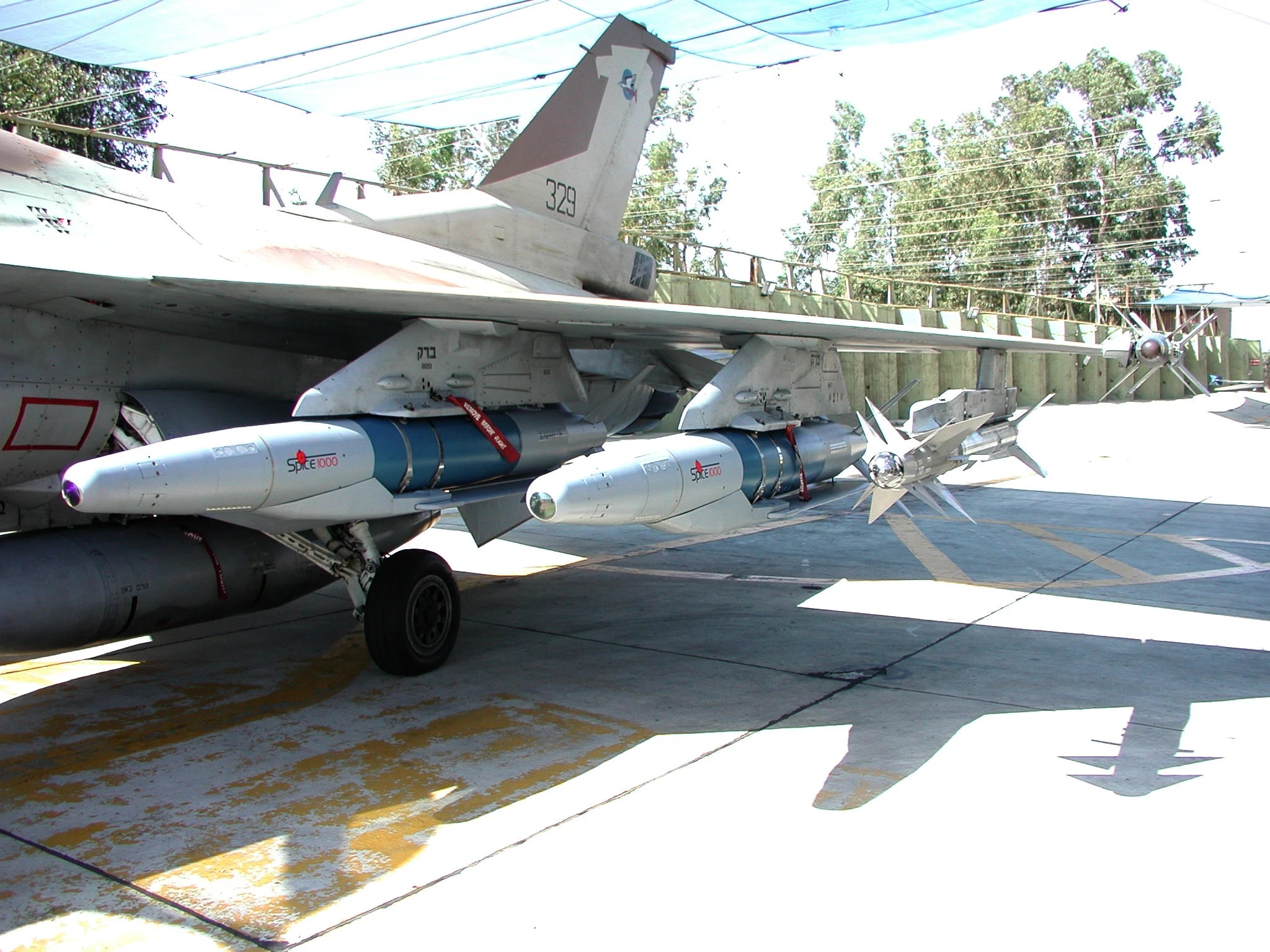
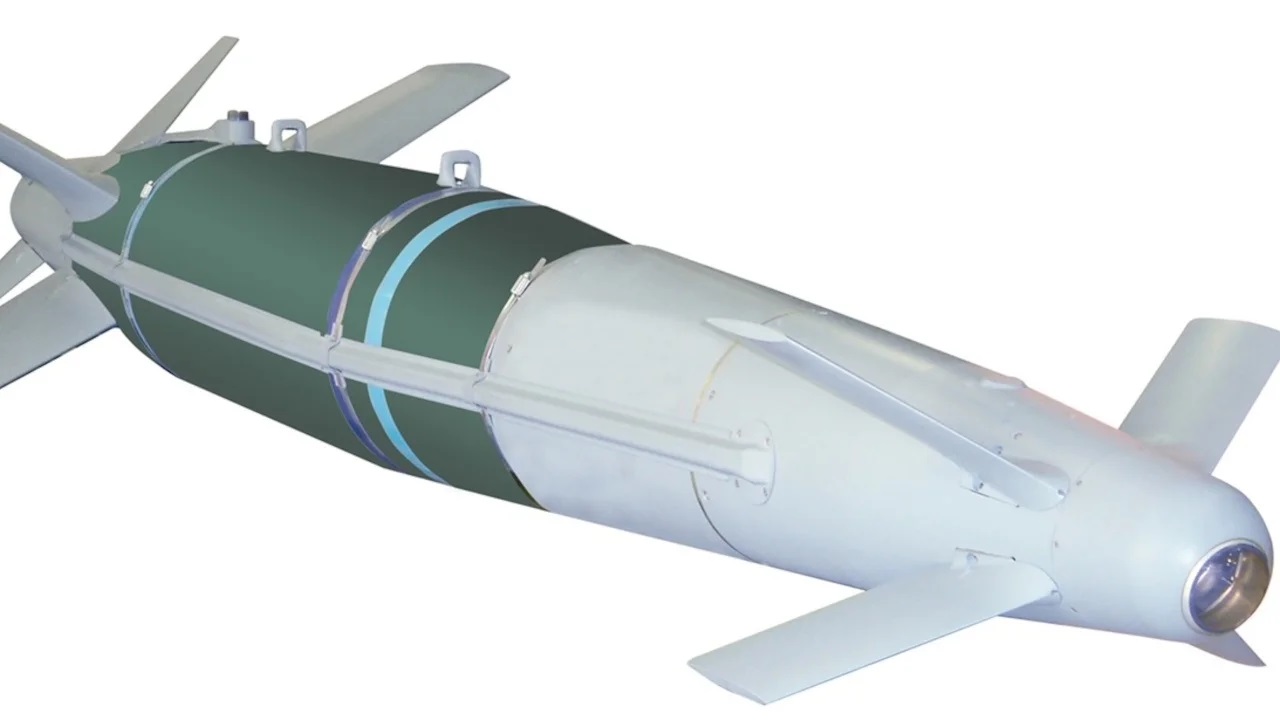
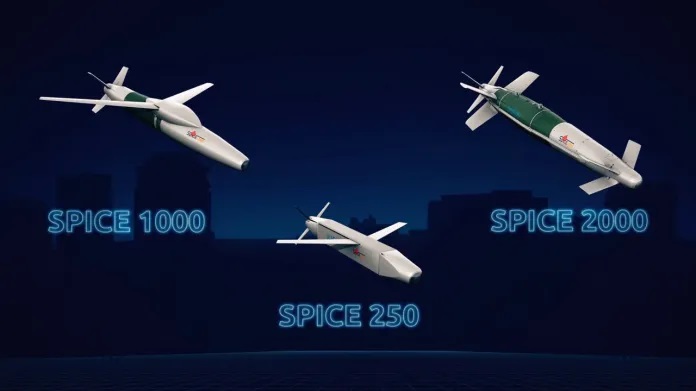
The Spice bombs have been in service with the Israeli army since 2003 and are classified as Spice 1000, Spice 2000 and Spice 250. The numerical part of the name of each bomb indicates the weight of that bomb per pound. For example, Spice 250 weighs 250 pounds, and is the result of add-on kit for the Mark 81 (Mk 81) 250-pound bomb.
Spice bombs use a combination of electro-optical and satellite guidance and have the advantages of both methods. The use of satellite guidance provides drop-and-forget option for several such targets simultaneously and the ability to engage hidden or camouflaged targets in all weather conditions; and electro-optical guidance provides man-in-the-loop guidance for extremely high precision; the ability to engage relocatable targets; lower CEP than that of satellite-guided munitions; and independence from external information sources like satellites.
Electro-optical guidance is based on the pilot’s command and can be independent of external information sources such as satellite imagery, and the pilot can instantly determine and engage the target. It is also possible to transfer target information to the bomb with up to 100 different targets, and the pilot selects one of the predetermined targets depending on the circumstances and drops the bomb for it.
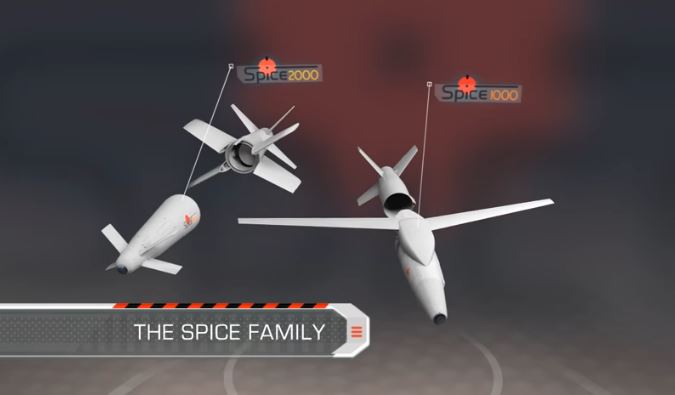
One of the advantages of spice bombs is their glide capability, which due to the use of 12 aerodynamic control surfaces in 3 groups (fore, mid-body and tail), the “Spice” has a very long glide range of about 60 kilometers. This allows a striking aircraft to release a bomb at a target without entering the threat envelope of most short and medium-range air defense systems which might protect it.
Regarding target selection and engagement, the spice bomb engages the target in three ways: First, there is pure CCD or thermographic camera (IIR) image matching, when the guidance section uses algorithms to match the target image in its memory with the image provided by the seeker, and align the center of the seeker’s field of view with the desired image.
Second, if the CCD\IIR seeker can not acquire its target for any reason (such as visual obstructions), the bomb can automatically switch to GPS\INS guidance. This means that the bomb aspires to bring itself to the target’s altitude at a known geographical location. The bomb receives data on its current location from GPS satellites, or from an inertial navigation system in the bomb itself, that has been fed, through the pylon datalink, with the dropping aircraft’s coordinates a fraction of a second before the drop, and can therefore calculate its coordinates from the dropping time and on.
Third, there is a manual “man-in-the-loop” guidance option, in which the weapon systems officer looks at a backseat TV display to see the seeker’s view and uses the backseat stick to control the bomb to the target. This guidance method is probably the most accurate one employed today for air-dropped munitions. Its main drawback is that it allows for only one bomb to be guided at a time.
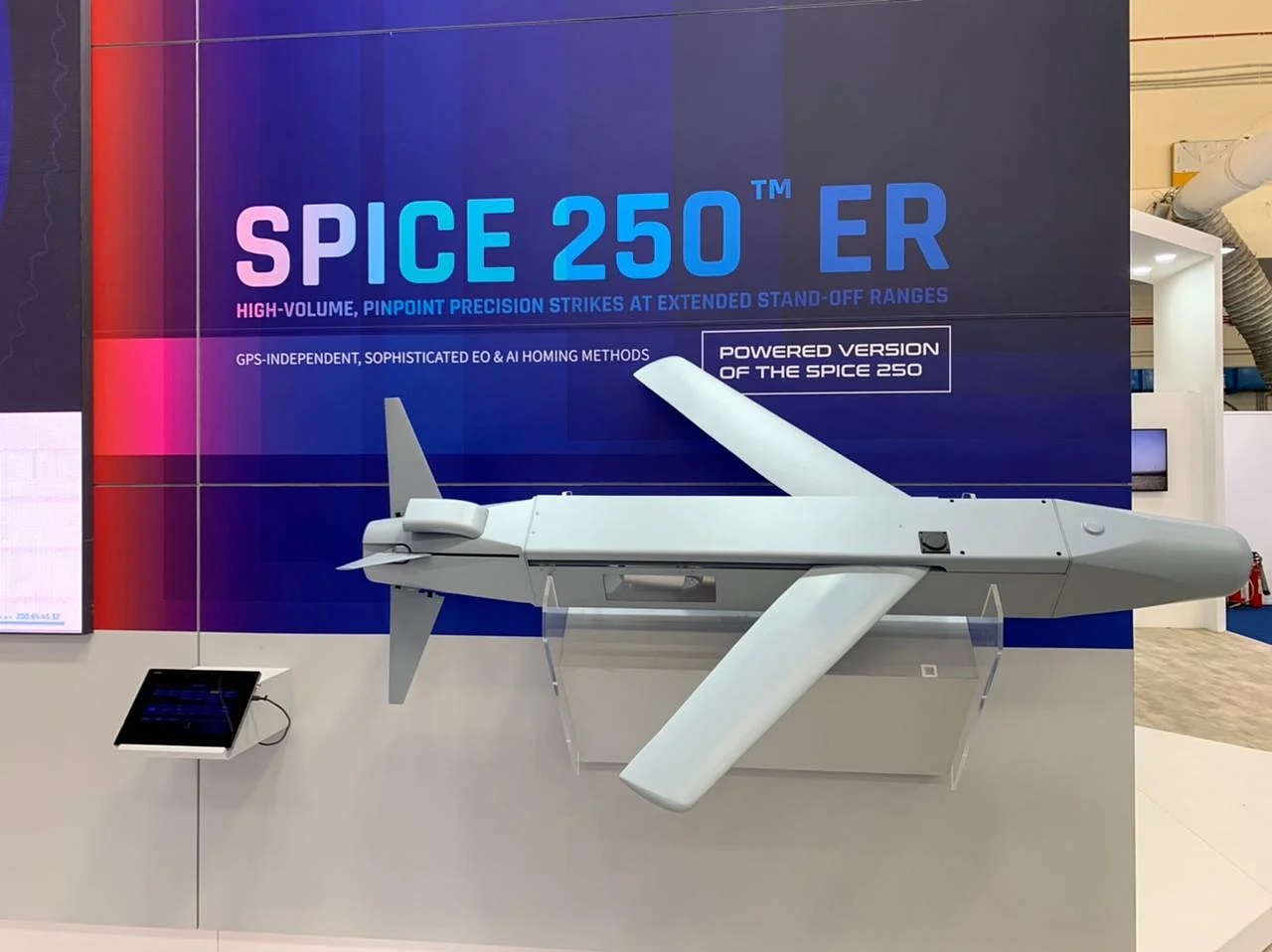
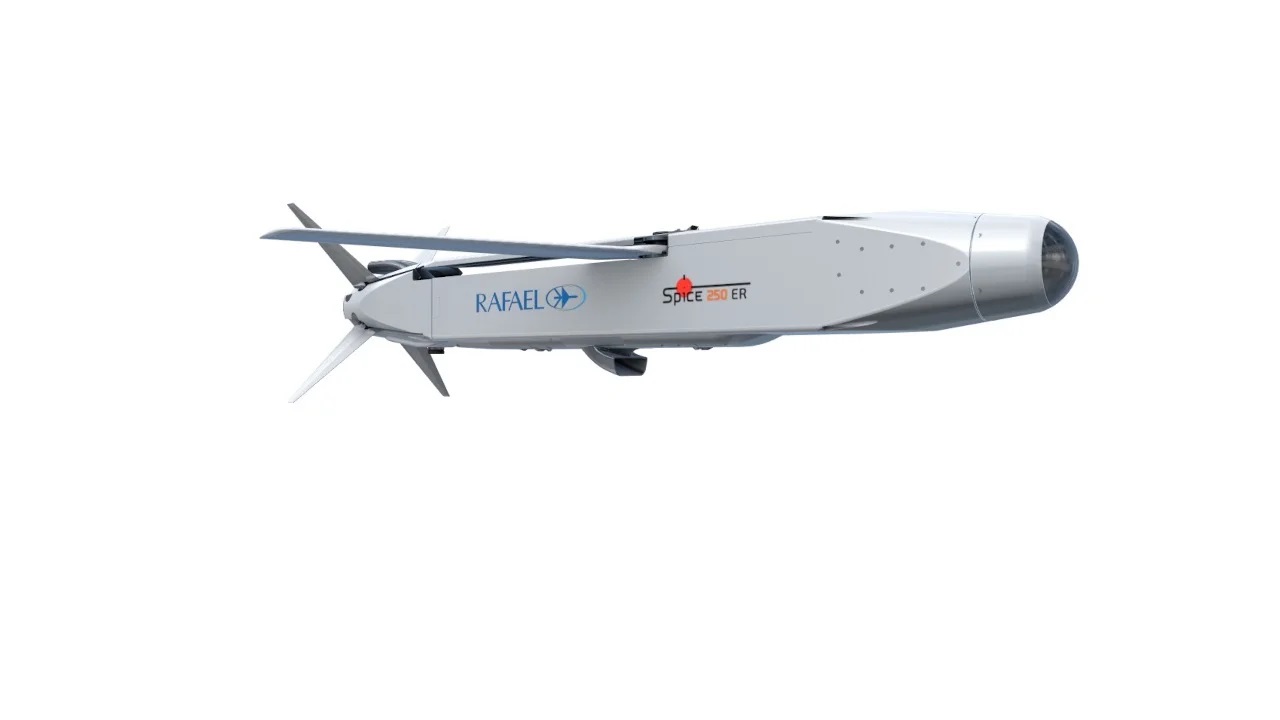
Spice bomb variants: – Spice 1000. An add-on kit for 450 kg warheads such as the MK-83, MPR1000, BLU-110, RAP-1000 and others. The weapon has deployable wings similar to the JSOW and the SDB that substantially increase its range to 100 km and facilitate the integration to light fighter aircraft. –Spice 2000. An add-on kit for 900 kg warheads such as the MK-84, BLU-109, RAP-2000 and others. –Spice 250. A 113 kg glide bomb designed as a complete system rather than an add-on kit, with a stand-off range of 100 km. –Spice 250 ER. A new version of the Spice 250 bomb equipped with micro-turbojet engine with an internal JP-8/10 fuel tank to increase its range to more than 150 km.