Tag: Khaybar Shekan Missile

  • Operation True Promise II: Review On Iran’s Missile Attack On Israeli Regime

    Operation True Promise II: Review On Iran’s Missile Attack On Israeli Regime

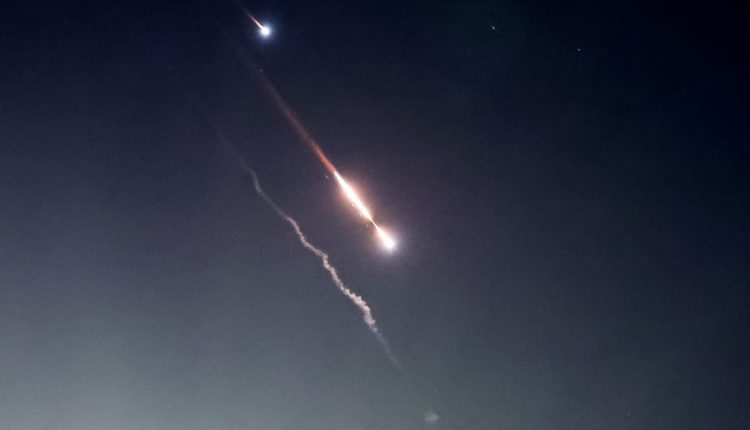
    On Tuesday (October 1) at 8:00 p.m. local time, the Iranian Armed Forces attacked military positions of the Tel Aviv regime in various regions of occupied Palestine, when they fired dozens of ballistic and hypersonic missiles. The following is an assessment of the attack and an analysis of the areas targeted in the operation.

    Moments after the Iranian missiles were fired at 8:00 p.m., Spokesman for the Israeli army Rear Admiral Daniel Hagari claimed that our defense systems are fully operational and are detecting and intercepting threats wherever necessary, even at this moment.” Shortly after this claim, numerous videos were released showing Iranian missiles hitting Israeli positions, indicating a high success rate for the Iran-fired missiles. The large number of projectiles hitting the Israeli targets proved that the defense systems of the Israeli military, as well as those of the United States, failed to intercept the Iranian missiles.

    Operation True Promise I: Which Israeli positions were targeted in Iran’s retaliatory attack?

    According to the initial statement from the Islamic Revolution Guards Corps (IRGC), the Operation True Promise II was carried out in response to the assassination of Palestine’s Hamas political leader Ismail Haniyeh, Lebanon’s Hezbollah Secretary General Sayyed Hassan Nasrallah, and the senior advisor of the IRGC in Lebanon Major General Abbas Nilforushan. Significant military and security positions in the heart of the Israeli-occupied territories were targeted during the operation. The IRGC considered Iran’s military response to be in line with the Islamic Republic’s legal rights as well as international law, warning the Zionists that if they try to react to this retaliatory operation, they would face more devastating and crushing strikes.

    As more time passed following the missile attack, the spokesman for the Israeli army again claimed, “the IRGC used the Fattah hypersonic missiles for the first time in tonight’s attack. We will respond to this attack at the right time and place.”

    Stunning video of firing a batch of Khaybar Shekan and Fattah-1 missiles in the Sadeq-2 operation towards the Zionist regime

    Read: Military Knowledge: Fattah Hypersonic Ballistic Missile

    According to the second statement from the Islamic Revolution Guards Corps, several air and radar bases, as well as centers that had been involved in hatching the plot of assassinating resistance leaders, were targeted during the aforementioned operation. Despite the fact that these areas are being protected by the most advanced and extensive defense systems, most of the Iranian missiles successfully hit their targets.

    Israeli media outlets reported that Iran fired 181 ballistic missiles toward the occupied territories of Palestine. Some Western sources estimated the number of projectiles to be between 200 and 250. Nevertheless, the official figure was declared by chief commander of the IRGC Major General Hossein Salami, who stated that 200 missiles were launched toward the occupied territories.

    It is worth noting that the missiles were launched from several locations across the Islamic country, including Tehran and its suburbs as well as other cities such as Kermanshah, Shiraz, Khorramabad, Tabriz, and Isfahan.

    Firing a batch of missiles from Tabriz
    Firing a batch of missiles from Kermanshah

    According to the released footages, most of the fired projectiles reached their targets, which indicates a very high success rate for the Iranian armed forces.

    One notable aspect of Operation True Promise II was the execution of targeted cyber operations and extensive electronic warfare by the use of jamming systems against the Israeli regime with the aim of disrupting its defense systems. Advisor to the IRGC commander General Ebrahim Jabari announced that a broad cyber operation was carried out simultaneously with the missile operation against Israel’s defense systems.

    Hours after the strike, the Islamic Revolution Guads Corps released images of several missiles used in Operation True Promise II. The released images showcased ballistic missiles such as Emad, Khaybar Shekan, Qadr-H and Qadr-F with upgraded warheads. Furthermore, analysis of videos released by the Israeli settlers indicated that the IRGC also utilized advanced hypersonic Fattah missiles in this operation.

    Additionally, based on images released by Israeli settlers, the booster of the Fattah-1 missile was seen in the occupied territories. These images confirmed the claims of using hypersonic missiles.

    Fattah missile’s booster

    On the other hand, the Israeli regime attempted to intercept the Iran-fired missiles using Arrow-2 and Arrow-3 anti-ballistic missile systems, while the United States fired at least 12 Standard Missile-3 (SM-3) anti-ballistic missiles from the USS Bulkeley and USS Cole. The number of successful interceptions remains unclear. An ambiguous footage of the interception of the Iranian missiles was also released, but it appears to be old and cannot be verified.

    The targets hit in Operation Promise II are as follows:

    1-Mossad Headquarters:
    The Mossad headquarters is located near the Glilot base in northern Tel Aviv city. This base is also the main site for the Unit 8200 or the Central Collection Unit of the Intelligence Corps (AMAN). Visual evidence show that the Mossad headquarters was targeted by two projectiles. Although these two missiles, for whatever reason (likely intentionally to warn Mossad), struck approximately 500 meters apart – one to the north and the other to the south of the building. However, this attack sends a clear message to the Israeli regime: Iran’s reach extends to the main intelligence hub of Israel, and if it makes a decision, it can target that site with a barrage of missiles; and there may not be any mistake next time.

    Missile struck approximately 500 meters north of Mossad HQs
    Missile struck approximately 500 meters north of Mossad HQs
    Missile struck approximately 500 meters north of Mossad HQs
    Missile struck approximately 500 meters south of Mossad HQs

    In addition, three other missiles struck several kilometers into the sea. One of these missiles hit the western area of the Mossad headquarters in the Mediterranean Sea, resulting in a fire in the water! Clearly, a specific target was struck in the strike.

    Two other missiles hit another point a few kilometers off the coast of Tel Aviv with an extraordinary accuracy. The precise impact of these two missiles on a specific point in the sea cannot be by chance. The nature of this target is still unclear.

    The missile (left) hits the sea and causes a fire in the sea! This video show the beach along the west side of the Mossad headquarters.
    Two missiles hit a specific point in the sea on the coast of Tel Aviv, precisely one after another.

    2-Tel Nof Airbase in Southern Tel Aviv:
    Apart from one video that clearly captured the missile strikes, no other videos have been released from this base so far. In the released video from this military base, several missiles hit the Tel Nof airbase. In one of the strikes, flames and white smoke rose from the targeted site, indicating that solid-fuel air defense systems, such as the Arrow missile defense system, were targeted.

    To date, no high-quality or even low-quality images of the Tel Nof Airbase have been released, and perhaps they never will be. The damages at Tel Nof were also quite remarkable!

    Missiles hit the Tel Nof air base

    It is also noteworthy that during the attack on Tel Nof base, one missile struck several kilometers south of this base, hitting the courtyard of an elementary religious school (Shalhavot Chabad) in Gedera, causing damage to the school building! This school is affiliated with the Haredi movement, a branch of Orthodox Jews in Israel.

    Shalhavot Chabad school
    Missile hit the courtyard of Shalhavot Chabad religious school in Godra

    3-Nevatim Airbase:
    Most of the attacks and recorded videos are related to the Nevatim Airbase. According to the videos, the Nevatim base has been targeted by a barrage of Iranian ballistic missiles, and it likely suffered the most damage from Iran’s missile attacks on Israel.

    Satellite images released after the attack on Nevatim base also indicate the damage inflicted on the base.

    The satellite images indicate that the location of the F-35 fighter jets at Nevatim was hit. One of the missiles struck one of the F-35 shelters with high precision. Additionally, a large hangar, administrative buildings, and other points within the airbase were also hit. The targeted areas show that it can be said that several types of missiles were used in the attack on Nevatim base, and the missiles that hit their targets with high accuracy were likely of the Khyber-Shekan or Fattah class.

    A batch of missiles hit Nevatim Air Base
    A batch of missiles hit Nevatim Air Base
    A batch of missiles hit Nevatim Air Base

    4. Hatzerim Airbase:
    Another target of Iran’s missile attack was the Hatzerim Airbase near the city of Be’er Sheva. Reports confirm Iran’s attack on this base. According to Israeli media outlets, the city of Be’er Sheva sustained minor damages during the Iranian missile attack. This may have occurred due to the fall of missile boosters on Be’er Sheva.

    Furthermore, a video footage from inside the Gaza Strip has been released, confirming at least one projectile hitting the Hatezrim Airbase.

    A missile hit the Hatzerim Air Base

    5. Ovda Airbase:
    Among the areas in the occupied territories targeted by Iran’s missile attacks, less attention has been given to the Ovda Airbase. However, considering the rate of missiles fired at this base and the very precise hits, it could be said that the most successful attack on Israeli military bases was on the Ovda Airbase.

    Based on the low-quality satellite images available, it can be observed that seven missiles struck this base, and nearly all of them hit their targets with remarkable precision.

    If higher-quality satellite images are released, it may be possible to identify several other targeted sites. The main reason that no videos of the missile craters at this base have been released is that the Ovda Airbase is located kilometers deep in the desert, and unlike other bases, there are no nearby villages or towns where someone could film the moments of the attack. However, these satellite images are still valuable.

    The Ovda Airbase is located in the southernmost part of the occupied territories, in the southern Negev Desert, 40 kilometers north of the port city Eilat.

    This airbase houses Israel’s Squadron 115, which includes F-16C fighters (now retired) and F-16D Barak fighter jets. Additionally, the Israeli Air Force Flight Academy and the Air Force Officer School are part of the training programs for Air Force officers, which are operational at this airbase.

    Another important point is that the Ovda Airbase is officially the only air base authorized for the transportation of explosive materials for the Israeli regime. Therefore, this base is used for the export of military equipment and munitions to other countries.

    Overall, the missile Operation True Promise II marks a turning point in the developments in the West Asian region. This operation goes beyond being merely a “long whip” against the enemy; it not only inflicted heavy damage on the military bases of the Israeli army but also caused the collapse of the Israelis’ defensive structure, undermining their claims of being invulnerable.

    The assassination of commanders and leaders of Islamic resistance groups, especially Sayyed Hassan Nasrallah and Ismail Haniyeh, was an unforgivable sin, and a failure to respond to it would undermine Iran’s establishment and reputation within the resistance axis.

    Iran’s missile strikes also serve as a strong response to Israeli Prime Minister Benjamin Netanyahu’s threats; he should know that Iran is not defenseless, when it comes to his threats against the Iranian nuclear and oil facilities. In fact, Iran possesses greater, heavier, and faster capabilities, and certainly, Israel, with all its defensive and aerial resources, will be defeated in this competition in the face of Iran.

    The areas that were hit by Iranian missiles in the occupied territories.
  • Iran’s ‘Khaybar Shekan’ Ballistic Missile Demonstrates Evasive Maneuvers, Captures Attention

    Iran’s ‘Khaybar Shekan’ Ballistic Missile Demonstrates Evasive Maneuvers, Captures Attention

    A viral video which has spread widely across social media platforms, showcases Iranian “Khaybar Shekan” ballistic missile executing last-moment evasive maneuvers before striking its target in Israel, has drawn significant public attention.

    This footage confirms the capabilities of Iran’s ballistic missile technology.

    The “Khaybar Shekan”ballistic missile, introduced three years ago, is reported to have maneuvered evasively in the final moments to evade Israeli air defenses.

    This evasive action at the end of its trajectory demonstrates the sophistication of Iran’s ballistic missile technology, particularly in avoiding interception by Israeli defense systems.

    The moments Khaybar Shekan’s warhead conducts evasive maneuvers and hits the Nevatim Airbase

    However, regional defense analysts state that, Iran did not extensively use the “Khaybar Shekan” in its “limited” assault on Israel. Instead, Iran is believed to have predominantly deployed older ballistic missiles in its strike.

    Read more: Operation True Promise; Which Of The Israeli Bases Targeted In The Retaliatory Missile And Drone Attack By Iran?

    To date, Iran confirmed to have used four types of medium-range ballistic missiles (MRBM) in its recent assault on Israel, including the 20-year-old “Ghadr,” the 10-year-old “Emad,” the five-year-old “Dezful,” and the three-year-old “Khaybar Shekan.”

    Although the “Khaybar Shekan” was not widely used in last night’s attacks, it successfully evaded interception and struck targets including the Nevatim and Ramon Air Bases located in Israel’s Negev desert.

    The Israeli military has confirmed that both crucial air bases sustained damage from the Iranian missile attack.

    The moments Iranian missiles hit the Ramon Airbase in Negev desert

    The “Khaybar Shekan” is a variant of the Fateh-110 ballistic missile, boasting a longer range and utilizing solid propellant.

    Read more: Military Knowledge: Khaybar Shekan Ballistic Missile

    According to the Islamic Revolutionary Guard Corps of Iran, this missile can strike targets up to 1,450km away, compared to the earlier “Dezful” variant which was publicly revealed in February 2019 with a range of 1,000 km.

    The “Khaybar Shekan” is designed for high precision and speed, as demonstrated in attacks against northern Iraq and Syria.

    The warhead of the “Khaybar Shekan” reportedly reaches speeds between Mach 7 and Mach 9 during its final flight phase before striking its targets.

    In addition to high speed, the missile possesses significant agility, enabling it to overcome enemy air defense systems.

    The last reported use of the “Khaybar Shekan” against its adversaries was in January, targeting what it referred to as an “Israeli intelligence center” and “locations of anti-Iran groups” near Erbil in northern Iraq and in Syria.

    Read more: IRGC Hybrid Attacks Aimed At Crushing Terrorists, Renewing Warnings to Israel

    Iranian media report that the Islamic Revolutionary Guard Corps launched a total of 24 ballistic missiles at targets in northern Iraq and Syria as a “retaliatory” action for the assassination of a senior Iranian military officer and the commander of a pro-Iran armed group. The Iranian missile strike also responded to a deadly terrorist suicide attack in Kermanshah, Iran, which killed approximately 100 civilians.

    The ballistic missile attack in Erbil reportedly destroyed one of Israel’s most significant intelligence centers in Erbil, the capital of the semi-autonomous Kurdistan region.

    Originally posted on Defence Security Asia

  • Military Knowledge: Khaybar Shekan Ballistic Missile

    Military Knowledge: Khaybar Shekan Ballistic Missile

    On February 9, 2022, during the visit of the Chief of General Staff of the Iranian Armed Forces, Major General Mohammad Bagheri, and the Commander of the IRGC Aerospace Force, Brigadier General Amir Ali Hajizadeh, to one of Iran’s underground missile bases, the Khaybar Shekan or Kheibar Shekan (Khaybar Breaker) tactical short-range ballistic missile was unveiled.

    The unveiling of this missile on the eve of the forty-third anniversary of the victory of the Islamic Revolution of Iran, and especially the unique name of this missile, attracted many attention and reactions around the world. “Khaybar” refers to the famous war between Muslims and Jews in the early years of Islam and the victory of Muslims over the Jews after Imam Ali (as) threw down the door of the final fort.

    The first thing that catches the eye in the Khaybar Shekan missile is the relatively larger dimensions of its warhead movable fins. Increasing the size of the fins, increases the maneuverability of the warhead after entering the atmosphere and allows for more sophisticated and faster maneuvers in order to pass more effectively through layers of in-atmosphere anti-missile defenses such as the David Sling and Patriot.

    Khaybar Shekan missile warhead and larger movable fins

    The warhead configuration is of Tri Conic type. The use of this conservative configuration is to maintain the stability of the warhead during heavy maneuvers and in the landing phase causes high maneuverability to pass through the layers of missile defense systems. Of course, the amount of drag in this configuration is a bit high. In engineering, increasing the drag force is intended by the weapon designer to achieve greater maneuverability.

    An example of how a maneuverable warhead (MaRV) works

    Unfortunately, the exact details of the missile, such as weight, length, diameter, warhead weight, etc., have not been officially provided by Iranian officials; But according to estimates, the diameter of the missile is 800 mm and its length is about 10.5 meters.

    Due to the reflection of light from the missile body and its texture, it seems to be a composite body material, which means low deadweight of engine. Therefore, the missile weighs between 4.5 and 5 tons, assuming the weight of the warhead is 500 kg, which is a unique number for a short-range ballistic missile with a range of 1450 km. At the time of unveiling, it was mentioned that the weight of this missile has been reduced to one third, which is consistent with one third of the mass of the 15-ton Qadr S missile.

    Extreme agility and speed in hitting targets at a range of 1450 km is one of the main capabilities of this missile.

    Body of Khaybar Shekan Ballistic Missile

    As mentioned, this missile is based on the Dezful missile and with a weight of 30% of liquid fuel missiles, it has achieved the range of the same missiles. Therefore, this missile has solid fuel, and due to the reduction of dimensions and weight of this missile, it is possible to use two missiles of this type on dual launchers.

    Smaller missile dimensions have significant advantages. The smaller the missile, the more missiles can be stored in the confined space of underground missile bases. Also, the need for drilling to increase the length of the tunnels and the cost and time is reduced. It should be noted that in the past, due to the lack of space for missiles, the IRGC Aerospace Force implemented the idea of multi-floor missile depots.

    Iran Underground Missile Base

    Another advantage of reducing the dimension of missiles is the use of a wide range of launchers; So that the Khaybar Shekan ballistic missile can be launched from the Iran Khodro Diesel’s Aria 10-wheel launcher. This truck has recently joined the Iranian Armed Forces.

    Iran Khodro Diesel’s Aria 10-wheel launcher

    Another item that was revealed with the unveiling of Khaybar Shekan missile is the use of a dual launcher that have the ability to carry and launch up to two Khaybar Shekan short-range missiles. Until now, short-range missiles, such as Iranian Qiam missiles with a maximum range of 1,000 km, were carried by the launcher as a single unit; Increasing the number of missiles means increasing the firing rate, which is a very effective and proven tactic in overcoming on missile defense systems.

    Another important issue that occurred during the unveiling of the Khaybar Shekan missile, which led to much speculation, was the naming of the missile and the type of warhead: Khaybar Shekan (Breaker). At first, it looked like a bunker buster warhead, but with the release of more footage of the missile firing and hitting the target, the bunker buster warhead theory was rejected due to the angular impact on the target and how it exploded instantly.

    Of course, the possibility of developing a bunker buster warhead for this missile is quite possible. However, in the unveiling footage of the missile, the missile uses the HE warhead, which according to the commander of the IRGC Aerospace Force, Sardar Hajizadeh, the explosive used in the warhead, is several times more than its TNT equivalent, and provides more explosive power. Therefore, a combination of RDX and HMX has probably been used to provide such performance.

    Video of the unveiling and performance of the Khaybar Shekan ballistic missile

    In 2023, another variant of the Kheibar Shekan missile was unveiled. This missile, which is known as Kheibar Shekan-2, is almost identical to Kheibar Shekan-1.

    Khaybar Shekan-2 with a range of 1800 km

    The only difference in the appearance of Khaybar Shekan-2 with Khaybar Shekan-1 is the warhead. The Khaybar Shekan-1 missile has a three-cone warhead, but the Khaybar Shekan-2 missile uses a single-cone warhead.

    In the booster section, the boosters of the Khaybar Shekan-2 and 1 missiles are exactly the same size with a diameter of 76 cm, but the weight of the Khaybar Shekan-2 missile is less than the Khaybar Shekan-1 missile. The range of Khaybar Shekan-2 has also increased from 1450 km to 1800 km.

    It should be noted that the variants of Khaybar Shekan 1 and 2 missiles named Palestine and Hatem missiles have been put into service by the Yemeni army (Ansar Allah).

    In fact, the Hatem-1 and 2 missiles with a three-cone warhead are similar to the Khaybar-Shekan-1 missile, and the Palestine-1 and 2 missiles with a single-cone warhead are similar to the Khaybar Shekan-2 missile.

    Regarding the range of these missiles, apart from the Palestine-2 missile, no exact information is available, but naturally, their range should be similar to the Iranian variants.

    The range of these missiles is classified as follows based on the announced information:
    Khaybar Shekan-1 »»» 1450 km
    Hatem-1 »»» 1450 km
    Hatem-2 »»» unknown range
    and
    Khaybar Shekan-2 »»» 1800 km
    Palestine-1 »»» 1800 km
    Palestine-2 »»» 2150 km

    The Palestine-2 missile was used in an attack on a target near the city of Tel Aviv, and its range was officially announced as 2,150 km. Considering that Palestine-2 is similar to Khaybar Shekan-2 (with a range of 1,800 km), it seems that its warhead has been greatly reduced in order to reach a range of 2,150 km.

    Khaybar Shekan-1 missile specifications:
    Length: 10.5 m
    Diameter: 0.8 m
    Weight: 4500 kg
    Warhead: High Explosive up to 500 kg
    Fuel: Solid (One-stage)
    Range: 1450 km
    Flight trajectory: Ballistic, MaRV warhead
    Origin: Iran

    Click to view full size

    “Kheibar Shekan Ballistic Missile” collection of posters in Persian, Arabic, Kurdish, Azeri, Russian for Social Media: