This progress comes after engaging in clashes with militants from the Jaysh al-Watani (Syrian National Army – SNA) and making advancements north of the Tishrin Dam.
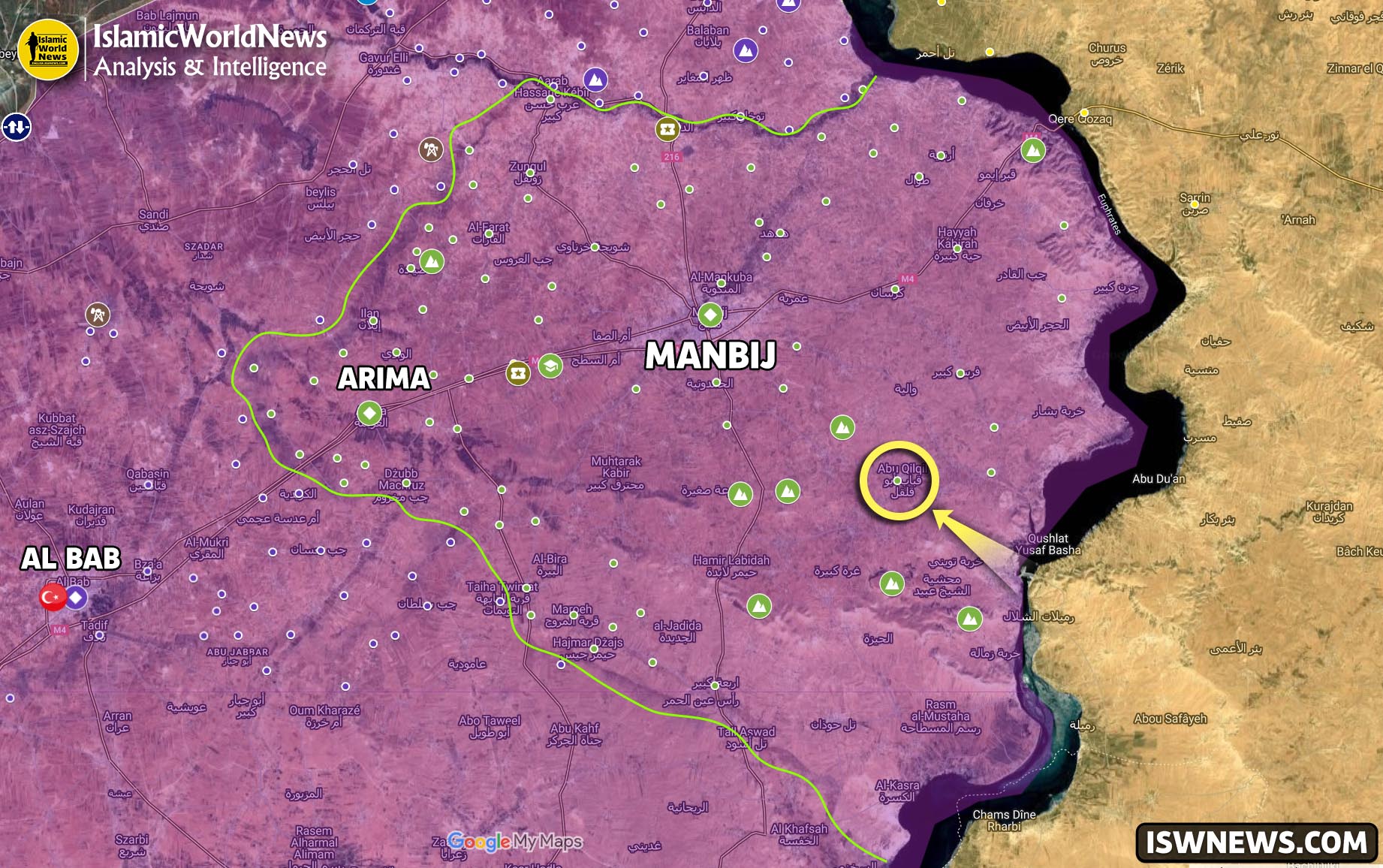
Yesterday, artillery of Turkish-backed militants shelled areas around Abu Qalqal. This indicates that SDF forces remain in these areas and have not withdrawn behind the Tishrin Dam.
SDF forces near Abu Qilqil
Erdogan has vowed that Turkey will take decisive action to create a terror-free zone in northern Syria. By “terror-free zone”, he means northern Syria, without the presence of SDF and PKK. Turkish ground operations in northern Syria have not yet begun. Turkey seems to be waiting for the results of negotiations concerning the possible dissolution or integration of the SDF into a new Syrian army led by al-Julani. Additionally, Turkey is awaiting the outcomes of discussions between the central gov. & the SDF.
The ceasefire agreement in the Manbij region has been in effect since 5:00 PM on Thursday.
According to the terms of the ceasefire, remaining cells of the Syrian Democratic Forces will be allowed to withdraw from Manbij to the east of the Euphrates River along with their families.
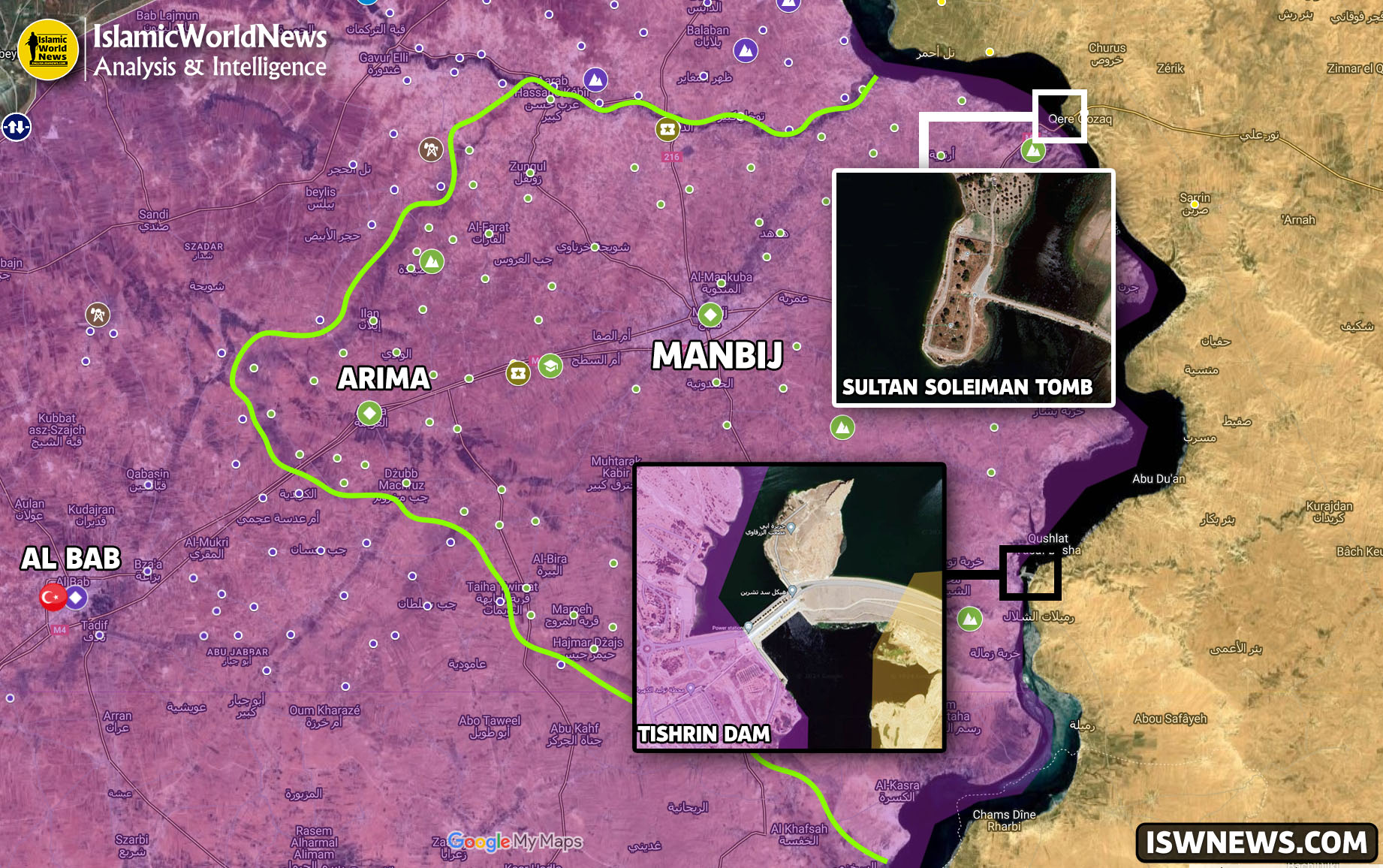
In return, the Syrian Democratic Forces will hand over control of the Tomb of Sultan Suleiman Shah and the surrounding areas to Jaysh al-Watani (SNA) militants. The Tomb of Sultan Suleiman Shah is located north of the Qara Qozagh Bridge, which connects the western and eastern regions of the Euphrates River and has witnessed intense fighting and exchanges of fire in recent days.
Both sides have agreed to withdraw their forces from the Tishrin Dam and its surrounding areas, restore electricity distribution and management services to their previous routine, and ensure that the people of the region can once again benefit from electricity services.
Turkish army drones played a crucial role in supporting the SNA militants, conducting numerous attacks on Manbij and its outskirts. Notably, the Qarah Qawzaq Bridge in eastern Manbij was targeted to prevent the Syrian Democratic Forces (SDF) from sending reinforcements to the city. These attacks effectively blocked the SDF’s supply route, leaving their forces in Manbij unable to sustain a long-term defense against the SNA.
Currently, sporadic clashes continue in some areas of Manbij between remaining SDF elements and SNA militants. However, the fate of Manbij has been sealed, as Kurdish media, citing Syrian Kurdistan authorities, have confirmed the defeat in Manbij.
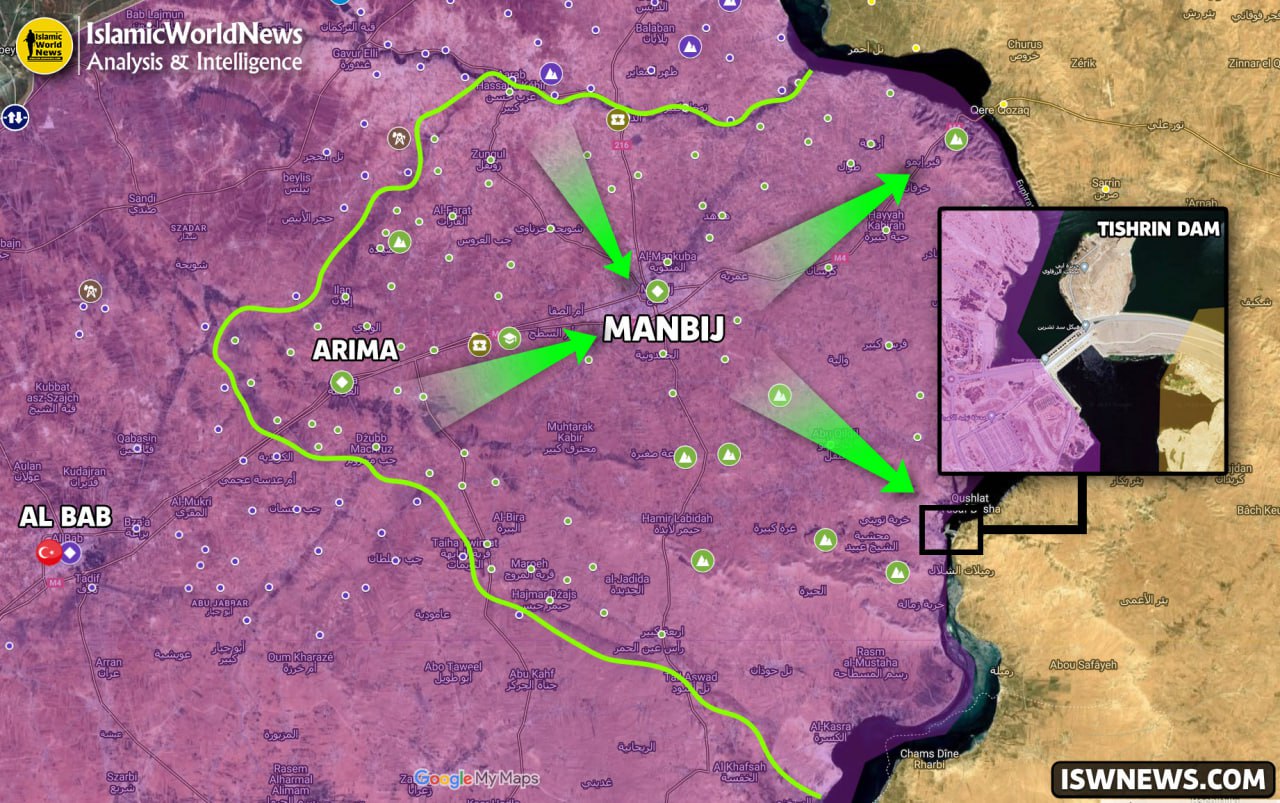
Following their success in Manbij, SNA militants have shifted their focus to the eastern Euphrates region. They are attempting to capture the Tishrin Dam and advance through it into eastern areas of the Euphrates River. So far, SDF forces have repelled these attacks.
This morning, the SNA militants attacked the village of “Andabat” near the Al-Sajur crossing. After resistance from SDF forces, the SNA militants withdrew.
The Turkish army has conducted at least 20 drone strikes against SDF positions on the Deir Hafer axis and the Tabqa-Aleppo road.
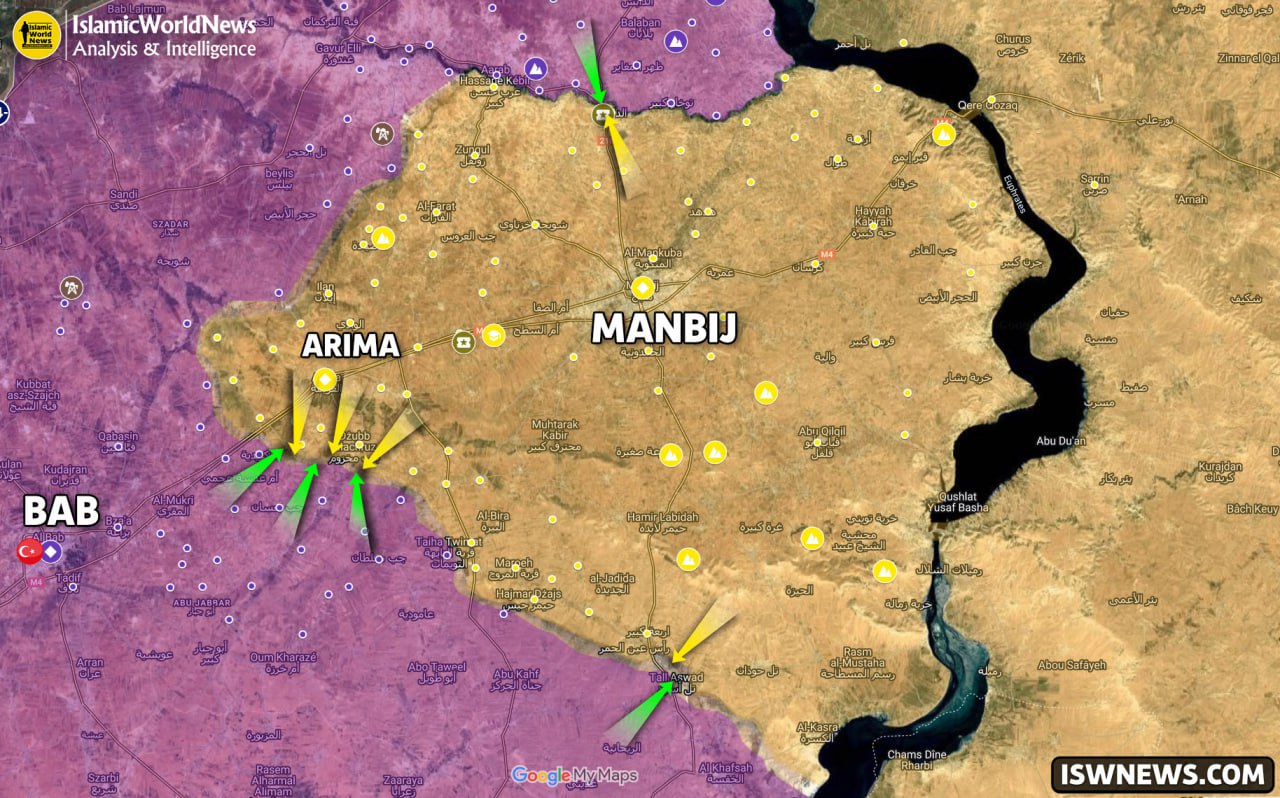
The SNA militants attempted to infiltrate the villages of Jablat al-Hamra, Houta, Tal Turin, Jab Makhzoum west of Araima a few hours ago, but their attack was repelled by SDF resistance.
Turkish-backed militants also attacked the Tal Aswad area south of Manbij, attempting to advance on this axis.
According to the latest reports, there has been no significant change in the areas controlled by the parties, and clashes around Manbij continue.
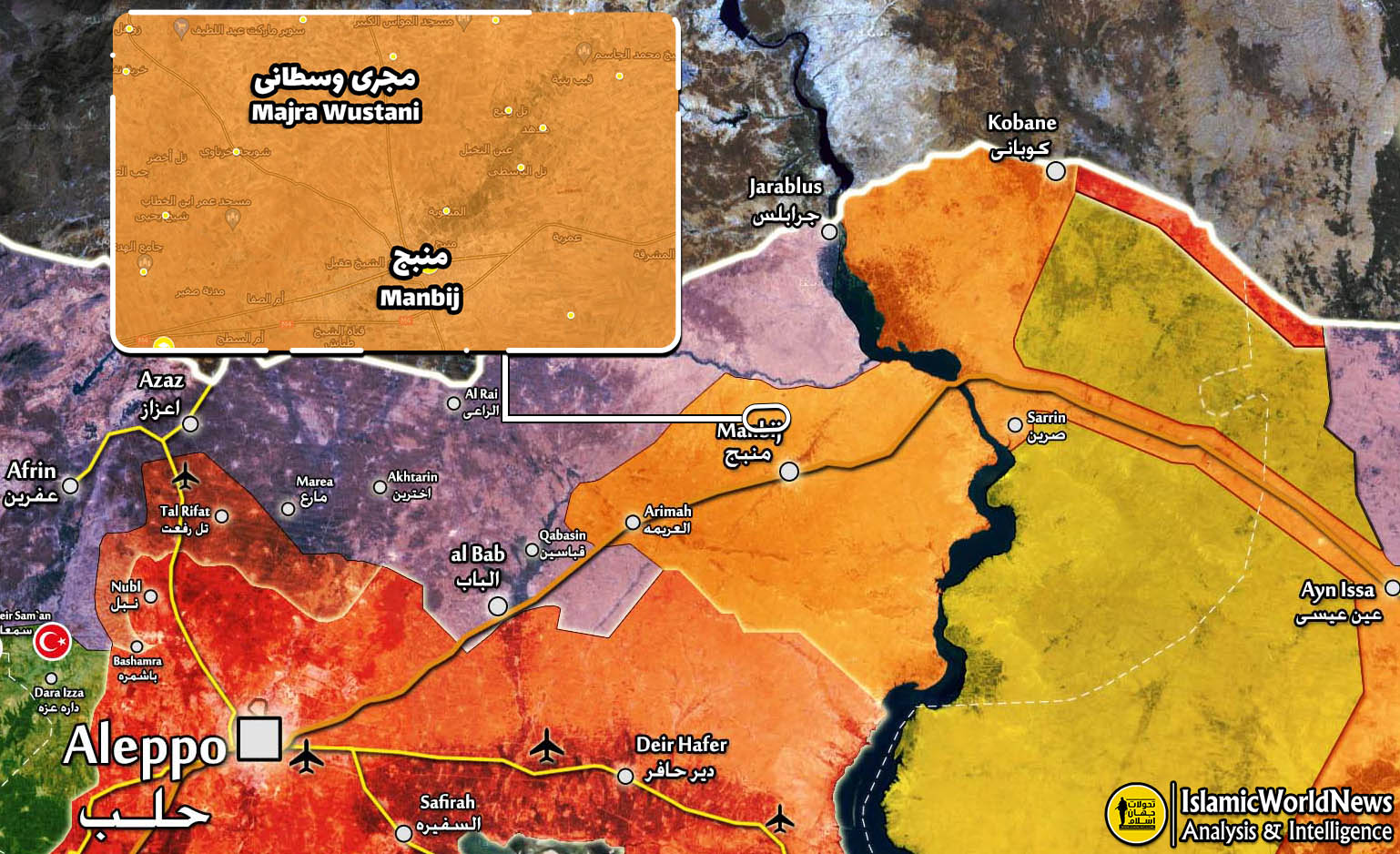
On May 19, the Turkish drones attacked a joint headquarters of the Syrian army and the Syrian Democratic Forces (SDF) in the village of Majra Wustani in north of Manbij city. Four Syrian Army servicemen lost their lives and several others were wounded.
According to local sources, Turkish drones targeted two vehicles parked in front of this headquarters.
Targeted Turkish drone attacks on the northern regions of Syria have increased since 2022. The highest number of this type of attacks was recorded in November 2022. According to a research group based in Syria, the Turkish armed forces carried out at least 130 drone attacks in northeastern Syria in 2022, which is a 46% increase compared to 2021.
After the Syrian war subsided and a period of unofficial ceasefire between Russia, Iran, the United States and Turkey in the north of the country passed, Erdogan rekindled the fire under the ashes by laying his hands on areas north of Aleppo.
It was in late May that the Yeni Şafak newspaper revealed the intention of the Turkish army to carry out operations in all northern regions of Syria, focusing on Tal Rafaat, Ain al-Arab, Ain Issa and Manbij. But Russian moves and joint Russian-Syrian-SDF military patrols in northeastern Syria reduced the Turkish army’s operations to the towns of Manbij and Tal Rafaat in Aleppo province and canceled operations in northeastern Syria.
As usual, Turkey weighs the aspects of the issue with the viewpoint of Russia and the United States before starting any operation in Syria, and then goes on an adventure. In fact, the US behind-the-scenes satisfaction and Russia’s indifference to the situation in northern Aleppo have drawn all of Turkey’s attention to the reaction of Iran and the Syrian government. The reason for this is also clear! The Russians and the Americans have been so involved in the Ukraine war that issues such as Turkey’s cooperation with Sweden and Finland in NATO membership, Black Sea shipping, and wheat exports, etc. can help them a lot!
Map of northern Syria and areas controlled by the SDF and occupied by the Turkish army – Click to view full size
Looking at the latest developments in the region and the latest military map in northern Aleppo, several important issues are of interest. These are as follows:
1- What’s Turkey’s military goal in northern Syria? According to Erdogan, Turkey’s main goals by conducting military operation in northern Syria are to prevent the growth of Kurdish groups based in northern Syria, to keep the PKK away from the territory of the Republic of Turkey and to establish a 30-kilometer-wide security zone in the remaining 458-kilometer-long strip of land between the region of Afrin and the town of Qamishli in the east. But that’s not all! Erdogan’s main goals by the operation are to revive the nationalist sentiment among voters and boost his declining popularity a year before the presidential election in June 2023; so, it’s to gain points to win the presidential and parliamentary elections. And reducing the risks of the presence of Syrian refugees in Turkey and their transfer to northern Syria is another goal of this operation.
2- Who will confront Turkey? The military power of the Syrian army alone is not enough to confront Turkey, and they need the Russian army. The view of the main supporter of Syria, namely Russia, is such that he will not enters into wars and conflict unless it jeopardise its interests. On the other hand, the Kurds living in northern Syria have so far not been very supportive of the positions and actions of the Syrian government and its allies. Therefore, in the eyes of the Russians, Kurdish groups are not worth that much for them to be the source of confront with Turkey. The relations of the Kurds in the north of Aleppo with the United States have weakened after Trump betrayed them during the 2019 conflicts, and also the United States no longer has military bases in the north of Aleppo that can protect Manbij and Tal Rafaat from Turkey. In the meantime, eyes are on Iran and the resistance groups. So far, no clear position has been taken by Iran and the leaders of the resistance groups on a possible Turkish operation in northern Aleppo, but their response is important. If Kurdish groups lean towards Iran and the Syrian government, the support of Iran and the Syrian government will surely change Turkey’s agenda. The support of the Iranians will undoubtedly draw the Russians to the region, and Turkey will have to change its plan. It is not clear how this will change, but Turkey with no doubt will avoid a direct military confrontation with Iran. But if the Kurds remain skeptical about their relationship with Iran and the Syrian government, they will certainly be under Erdogan’s boot, and Tal Rafaat and Manbij, and wherever they are based, will face the fate of Afrin, Tal Abyad,etc. It should be noted that according to the field sources of “Islamic World News” from northern Syria, the resistance forces are actively present around Deir Jamal, and yesterday the Russian army deployed a large number of its forces at Minnagh airbase in south of Azaz. These moves reinforce speculation about cooperation between Russia, Iran and the Kurds in northwestern Aleppo province.
3- Axes of possible Turkish operations: Despite Erdogan’s statements about attacking Tal Rafaat and Manbij, the details of their military operations in northern Syria have not yet been finalized, and Ain al-Arab and Ain Issa are also possible targets for Turkey. In general, the Turkish army will not have much trouble capturing Kurdish positions north of Aleppo unless Syrian and Iranian forces enter the battlefield. They can attack Tal Rafaat from the south of Azaz and west of Marea and blockade Tal Rafaat by cutting off the road to Aleppo. After this, work will remain on the capture of Minnagh Airbase and about twenty villages, which of course pose a threat by Turkey and its militants against the Shiite towns of Nubl and Al-Zahra. On the Manbij front, attacks can begin fromt the al-Dadat area north of Manbij and the al-Arimah suburb west of Manbij, and continue along the Euphrates River. Turkey’s advance on this axis will strengthen its position on the northern front of Aleppo and will let Turkey to prepare for another campaign n towards Ain al-Arab.
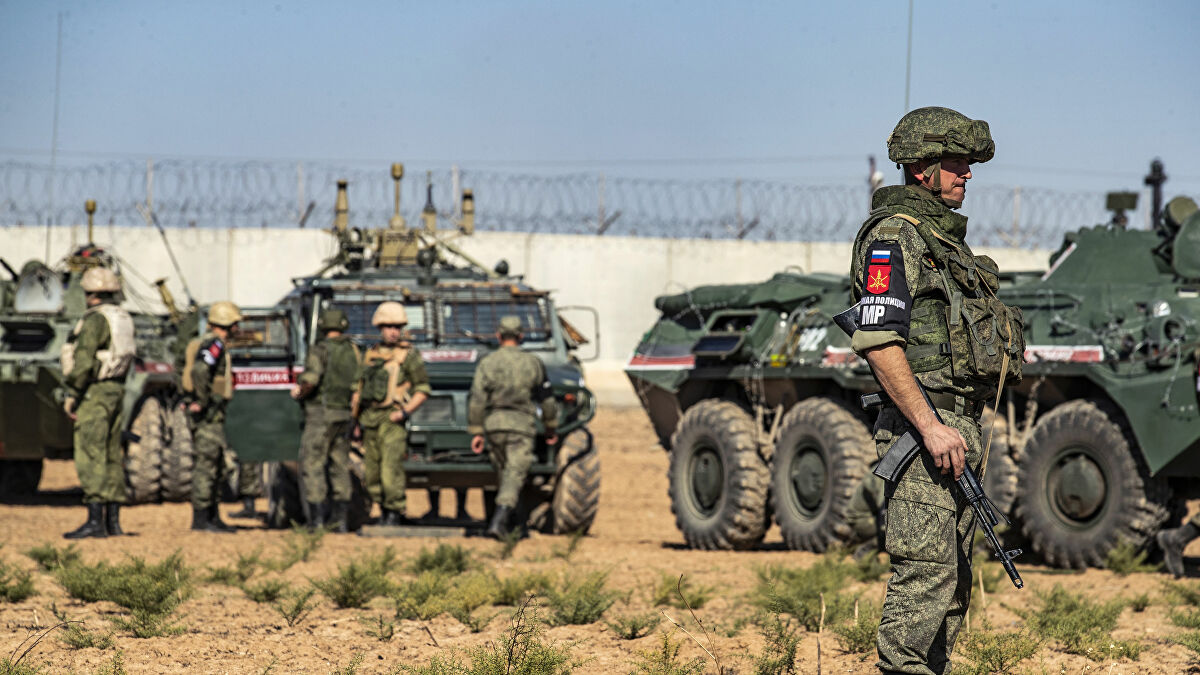
The base is located 20 km from the Turkish-occupied areas along the M4 highway. Syrian Army artillery and several Russian military vehicles have been stationed at the base for some time. This action was taken in order to strengthen the presence of Russian forces from the eastern suburbs of Aleppo to Ain Issa in the north of Raqqa province on the Aleppo-Hasakah road.
After the withdrawal of American forces from some parts of northeastern Syria, Russian forces were stationed in some of those bases, such as al-Tabqa military airport on the outskirts of Raqqa, and strengthened their presence by establishing other bases in Raqqa and the eastern suburbs of Aleppo.
The city of Manbij has been under YPG control since 2016, and in 2019, after US troops withdrew from the city, the Syrian army set up a network of military posts on the outskirts of Manbij to counter the possible offensive by Turkey and Ankara-backed militants.
Following mass rallies and protests against the SDF/YPG, Asayish security forces opened fire on demonstrators in Manbij, killing and wounding several civilians. On Friday morning, 4,000 YPG/Asayish forces and counter-terrorism forces arrived in Manbij region with dozens of armored vehicles.
The situation has calmed down a bit after the widespread deployment of security forces in Manbij and talks with tribal elders and local officials. Following these events, the Asayish officials announced that from now on, the conscription will take place after consulting with the Manbij local authorities, and all the detainees of the last few days will be released. The forces that fired on the people will also be dealt with.
The city of Manbij has a population of about 100,000 and most of the population of Manbij is Arab. This alone is a major problem for the Kurdish separatist ideals in northern Syria. Hence, the Manbij city has been the site of many conflicts between regional and local powers in recent years. The city of Manbij has been under the control of YPG forces since 2016; However, some YPG policies, such as forced conscription from among the Arabs, have led to Arab dissatisfaction with the YPG and SDF, and on the other hand, the YPG is deeply concerned about the desire of a significant part of the people of Manbij to regain control of the region to the Syrian government.
So far towns Qamishli, Hasakah, Manbij, Ayn Issa and Tabqah are controlled by Syrian army and they are expanding their realm. Today Russian Ministry of Defense stated officially that with Syrian army entering Manbij town and Russian forces taking position in north of it, the entire west bank of Euphrates River is under control of Syrian government. Regarding Ayn al-Arab(Kobani), Syrian army has not officially entered the town.
On the other hand, Pentagon announced officially the complete evacuation of north of Syria.
Turkey-Backed forces increased their infiltrate between Tal Abiad and Ras al-Ayn(Sari Kani) and could occupy numerous villages in Ras al-Ayn axis near Tal Tamar. During the last two days, Tal Abiad town was occupied by Turkish troops. Considering the shape of Turkey’s advances, it seems M4 is their furthest point to advance and the operation will continue along this axis. Yesterday Turkish forces tried to advance in Manbij axis against SDF and Syrian army but their operation was halted after occupying Dandaniyah and Yalshli in west of Manbij, under order of Erdogan.
Click to see the full size map ( Map size 14112× 4198, 7 MB)