1- Saudi coalition airstrikes in the last 48 hours: – 28 times Sarwah district, Marib province. – 2 times Shada district, Saadah province. – 3 times Bani Hasan area, Hajjah province.
2- Saadah: – Saudi coalition artillery shelled different areas in districts Munbah, Razeh and Shada. – Due to Saudi coalition artillery shelling on border area Raqu, Munbah district, one martyred and one wounded.
3- Al Hudaydah: Saudi coalition violated ceasefire 154 times in the last 48 hours.
4- Aden: Unknown armed people blocked Tawahi area gate and demanded liberation of Fuad Diqan, an Al Qaeda terrorist.
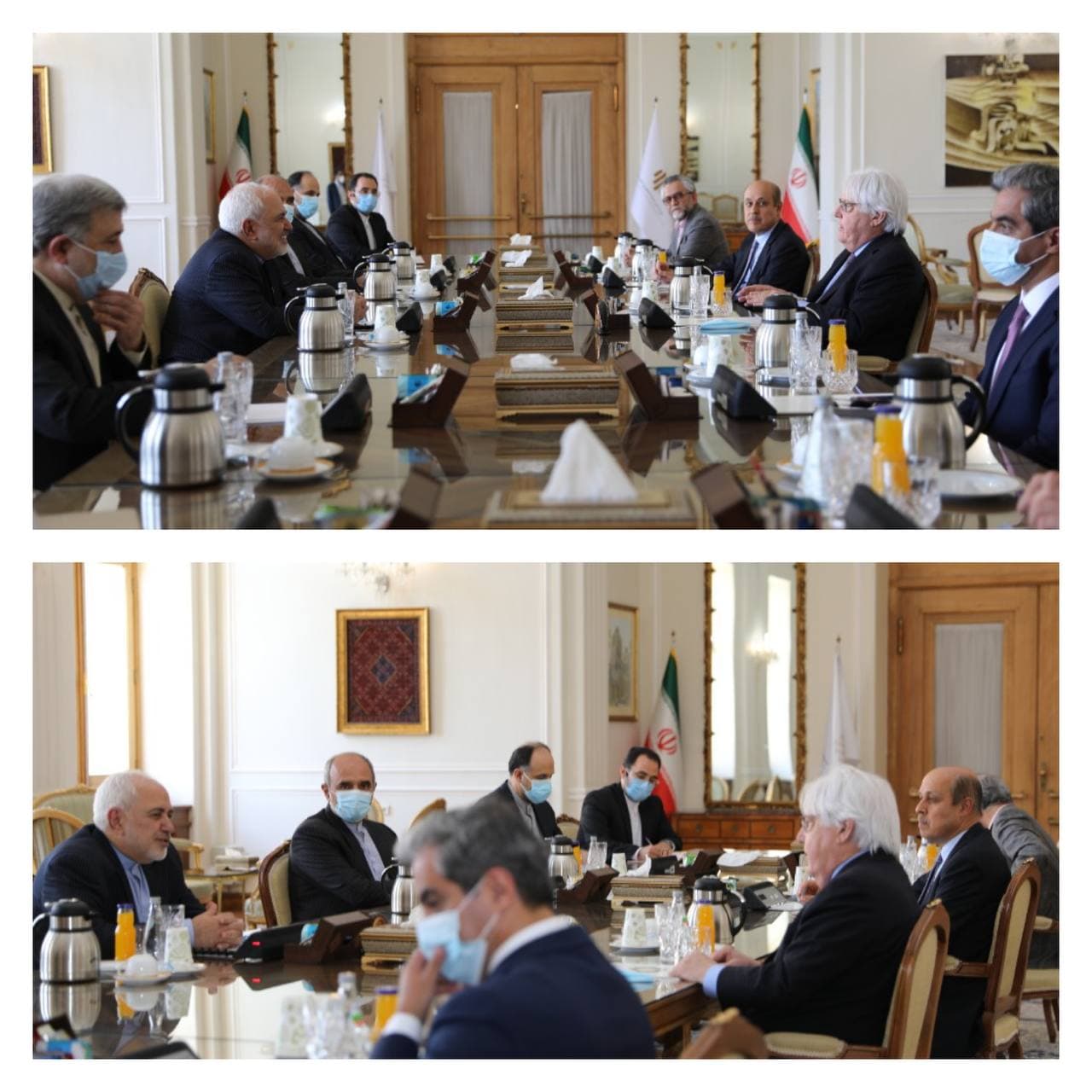
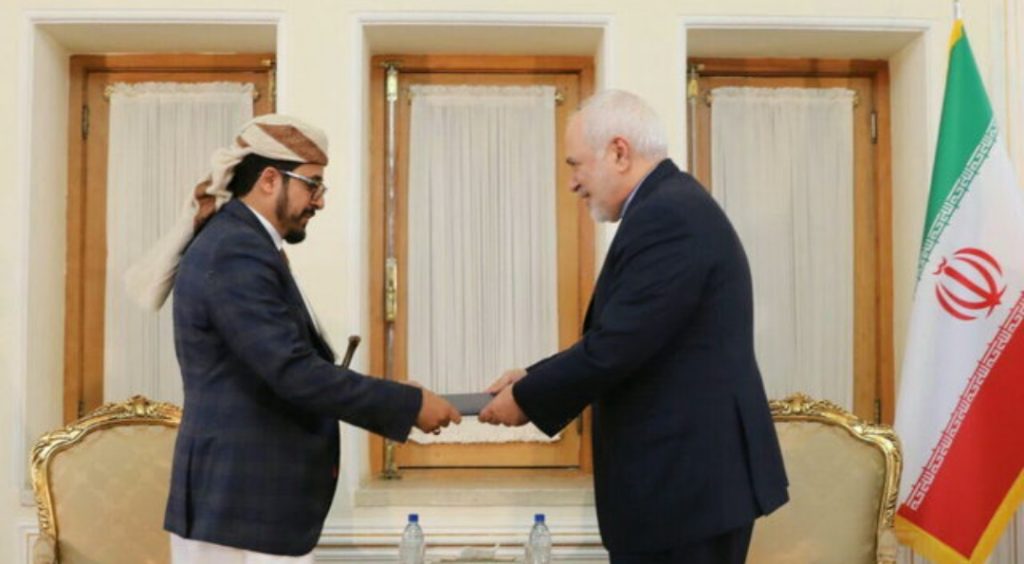
5- Martin Griffiths, UN envoy in Yemen affairs in a trip to Tehran met with Mohammad Javad Zarif, deputy of Iran’s FM regarding Yemen.
Without directly referring to Turkey’s role in sending Syrian and Asian mercenaries to the battlefields in Nagorno-Karabakh, the Iranian foreign minister called them “Takfiri terrorists” and stressed that Iran would not tolerate their presence on its borders.
“As for the terrorist forces, we are almost certain that they were present in the midst of the conflict, and we must have emphasized that this is not in anyone’s interest,” said Mohammad Javad Zarif. He added “These terrorists are not present at our borders now, but the probability that they will be present at a distance from our borders is still high, and we have expressed this concern to both sides.”
In this meeting Mohammad Javad Zarif emphasized on US soldiers to leave Afghanistan, negotiation between Afghans, formation of an inclusive government and peace making in Afghanistan.
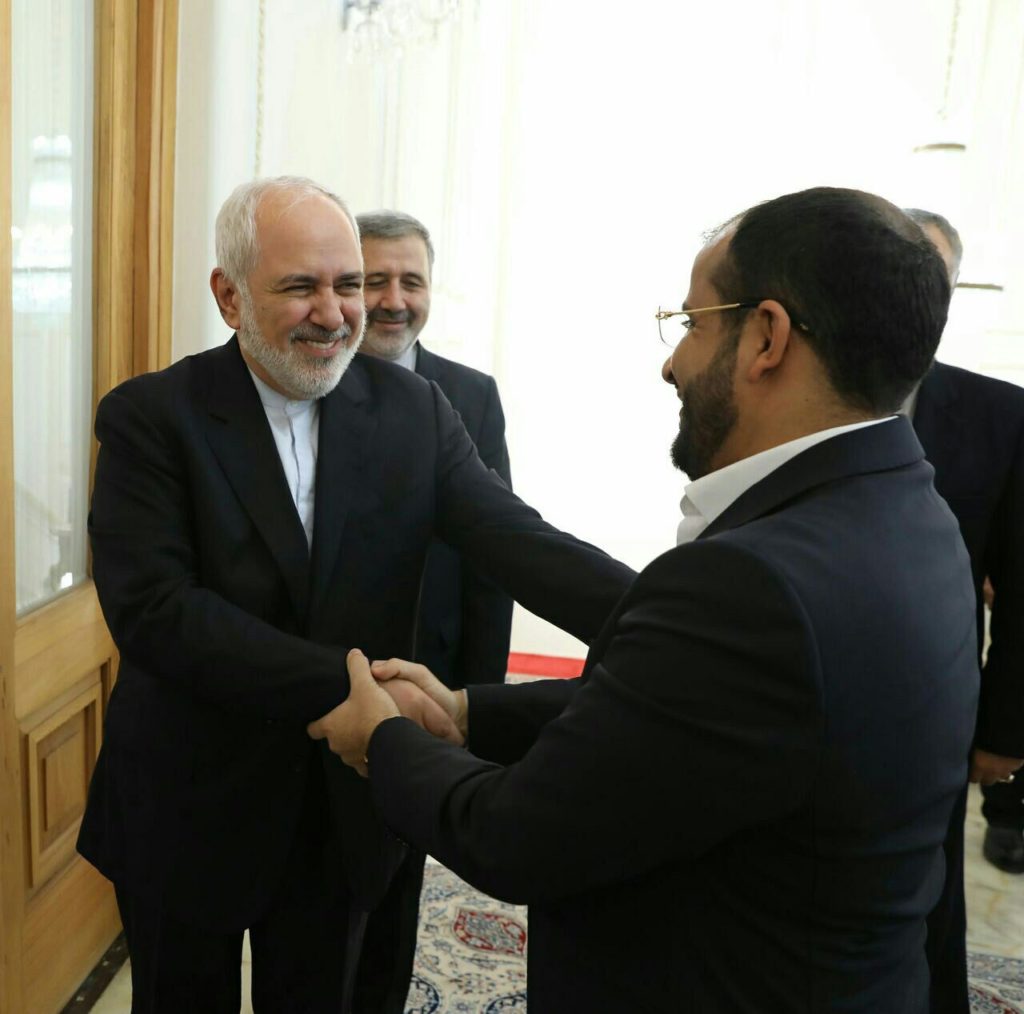
Mohammad Abdul-Salam: – I talked with Mr. Minister about negotiations and field situation and peaceful means to stop assaults and siege of Yemen. – I discussed the results of international meetings who promote peace. – We appreciate Islamic Republic of Iran’s stance supporting peace and stability of Yemen.
Mr. Zarif also showing sorrow for the enforced war and siege of Yemen for 5 years, emphasized on political solution, Iran’s support of ceasefire and Yemeni-Yemeni talks. He reminded of Iran’s preparation for immediate humanity aids to send to Yemen.
Zarif said: – Iran is always with Yemeni people and we believe stopping the war helps the people of Yemen. – We are continuously in touch with Imran Khan regarding Yemen. – Tehran welcomes any idea to reduce the tension in the region and does anything to end the war in Yemen. – If the situation is prepared, I am ready to visit Riyadh to solve the difference.
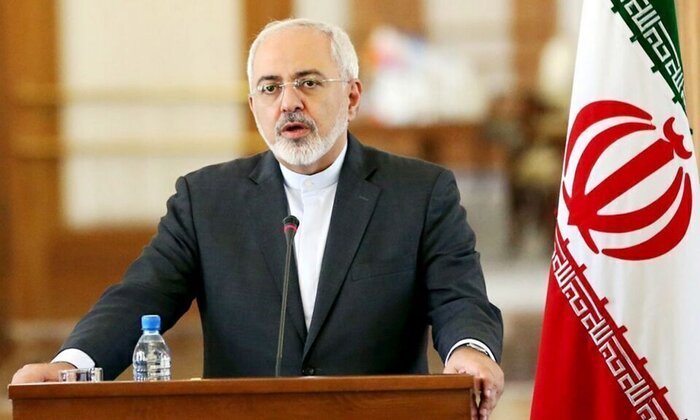
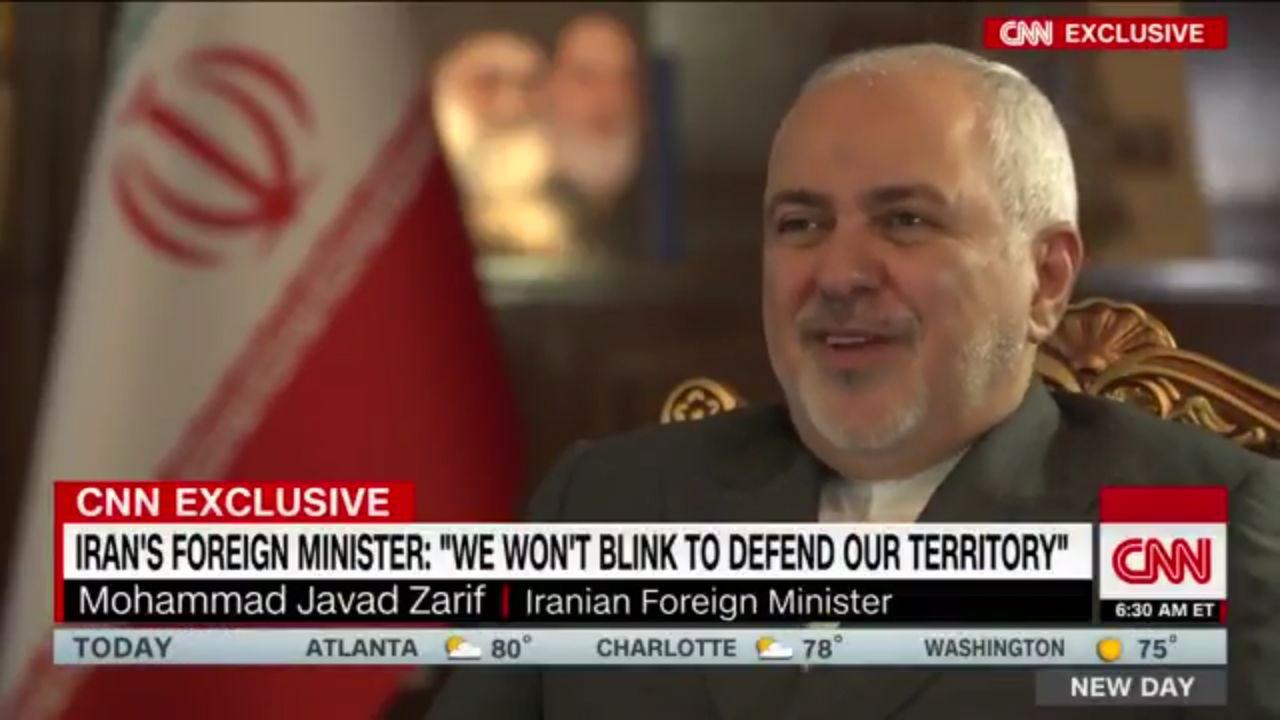
Iran’s Foreign Minister Mohammad Javad Zarif says a possible military strike against his country by the United States or Saudi Arabia will unleash an “all-out” war in the region.
Asked what the consequence of a US or Saudi military strike on Iran would be, Zarif said: “All-out war.”
“I make a very serious statement about defending our country. I am making a very serious statement that we don’t want to engage in a military confrontation,” Zarif said, adding that a military response based on “deception” about the weekend attacks on Saudi oil installations would cause “a lot of casualties,” and he said “We won’t blink to defend our territory.”
He denied Tehran’s involvement in attacks on Saudi Arabia’s oil facilities, saying that Yemen’s Ansar Allah movement, which claimed responsibility for the attack, has stepped up its military capabilities and is now capable of conducting a sophisticated operation such as the one that knocked out half of the kingdom’s energy production.
“I know that we didn’t do it. I know that the Houthis made a statement that they did it,” Zarif said.
“Tens of billions of dollars of air defenses without any external assistance and took out 19 targets. That’s a big ask for people to believe.” CNN reporter said.
Responding to CNN reporter’s surprise at the Yemeni ability and complexity of recent operations, Zarif said, ” Well, you see, if you want to make your calculations based on this, Saudi Arabia should have been able to win this war against this group of besieged people, exactly when they thought they would, four weeks after they started the war. But it’s four and a half years. They have not been able to bring the Yemenis to their knees.
CNN reporter said: “But that is a different argument to resisting an invading army on the ground. It’s different to getting technology out of nowhere, it seems, and managing to evade state of the art tens of billions of dollars, American assisted air defenses. That’s a different argument.”
ZARIF responded: “Well, I mean, then you should go and find the problem with the state of the art American air defense, not with the Houthis. I mean you believe that the United States is omnipotent and the United States military equipment are flawless. And that is why you’re a bunch of people with no access to anything, cannot defeat that.”
He added “But I can tell you, I mean, it’s going to be news for you and it’s going to continue to be news for you, that people can do a lot of things when they are desperate, when they see their kids killed, when they see their kids maimed, when they see their wives bombarded, their houses, their hospitals, their schools destroyed. That gives you a lot of creativity, a lot of tenacity to go and search for yourself. This is exactly how we did it. How do you think we built all of this? Huh? How do you think we built the missile system that brought down a U.S. drone? We were not supported by anybody. We were not given any equipment. We were not given any means of defending ourselves. We went through eight years of war. Nobody gave us means of defense.”
Zarif: “Iran wants security in the region. Iran wants stability in the region. Iran does not want war. Iran want an end to all wars. It is important for the Saudi government to understand what they’re trying to achieve. Do they want to fight Iran until the last American soldier? Is that their aim? Because if that is the aim, they can be assured that this won’t be the case.”
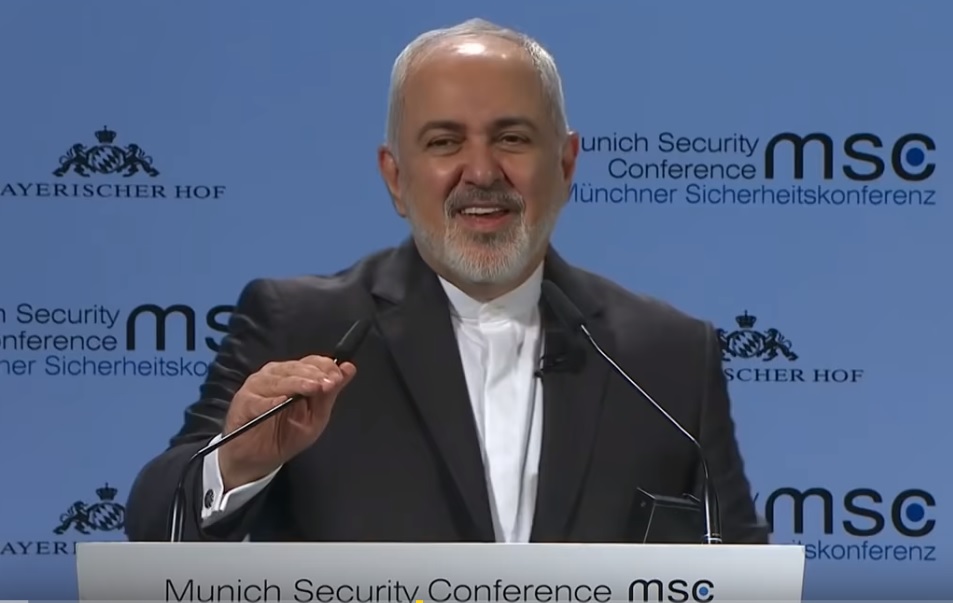
Iran’s Foreign Minister Mohammad Javad Zarif accused Israel of looking for war and warned that its behavior and that of the United States was increasing the chances of a clash in the region.
“The risk (of war) is great. The risk will be even greater if you continue to turn a blind eye to severe violations of international law,” he said.
Zarif added “Israeli behavior is putting international law on the shelf, US behavior is putting international law on the shelf.”
Zarif said the U.S. had an “unhealthy” and “pathological obsession” with Iran and accused Pence of trying to bully his allies.
“All in the name of containing Iran, the U.S. claims, and some blindly parrot, that it is Iran that is interfering in the region, but has it been asked whose region?” Zarif said.
“Look at the map, the U.S. military has traveled 10,000 kilometers to dot all our borders with its bases. There is a joke that it is Iran that put itself in the middle of U.S. bases.”
Zarif, who said Iran was committed to the 2015 nuclear deal with world powers for now, also noted that France, Britain and Germany of not doing enough to ensure Tehran received the economic benefits of that accord.
What follows is the full text of Zarif’s speech at the MSC 2019:
In the name of God, the Compassionate, the Merciful
Ladies and Gentlemen,
This past Monday, millions of Iranians gathered for mass rallies to mark the 40th anniversary of the Islamic revolution; an earthquake that collapsed a pillar of US domination in West Asia.
We’ve never been forgiven by the United States for having exercised our right to self-determination. As a result, we have long been the target of an unhealthy fixation—an obsession—which continues to this very day.
The demonization of my country has been a convenient cross for seven consecutive American presidents to bear—and a smokescreen for America’s regional clients to hide behind. It is long overdue for the United States to dismantle this malign institution, for it has today morphed into one of the greatest threats to even its own interests—and of course international peace and security.
In the past two years, the US has taken its animus towards Iran to a new extreme, as epitomized by its unlawful and unilateral abrogation of its commitments under the painstakingly-negotiated Joint Comprehensive Plan of Action, which was unanimously endorsed by the UN Security Council. To gain accomplices in its lawlessness, the US is now even labouring to force others to violate that Resolution, which explicitly calls for normalization of economic relations with Iran.
At the recent meeting of “the unwilling” and “the openly-coerced” in Warsaw, the US Vice President and the Secretary of State both blasted Europe for even attempting—albeit without much practical success—to abide by its obligations under the JCPOA and Security Council Resolution 2231. Yesterday – right here in Munich – Vice President Pence repeated this farce when he arrogantly demanded that Europe must join the US in breaking its commitments while undermining its own security. His hateful accusations against Iran—including his ignorant allegation of anti-Semitism against the heirs of a man described as ‘Messiah’ in the Torah for saving Jews – is both ridiculous and dangerous.
This malign obsession with Iran is imposing costs on others—and especially in our region, which has for 40 years suffered the consequences of US insistence on making wrong choices.
Driven by its pathological obsession with Iran, America has long encouraged reckless and destructive adventurism on the part of its clients: from arming Saddam Hussein in his attack against Iran to supporting the propagation of extremism; from aiding and abetting the ruining of Syria and bombing of innocents in Yemen to whitewashing the incarceration of a Prime Minister and dismemberment of a journalist. In parallel, the US has systematically shielded Israel’s constant aggression against Palestinians, while insulating its severe violations of the sovereignty of Lebanon and Syria.
And all in the name of “containing” Iran.
Ladies and Gentlemen,
The US claims—and some blindly parrot its accusation—that it is Iran which is interfering in the region. But has it ever been asked whose region? Just glimpse at a map. The US military has travelled 10,000 kilometres to dot all our borders with bases. Meanwhile, it has milked the region of its resources through vast arms sales. According to the most conservative estimate, the GCC’s military spending alone will reach a record high of $100 billion this year—almost seven times that of Iran.
So, who is really exporting insecurity to our region?
What is it that threatens the region more?
The unfathomable arsenals used to terrorize the people of Yemen? Or Iran’s defensive missiles, which have only ever been used against ISIS terror in self-defence?
Is it Iran that threatens the annihilation of others—or is it Mr Netanyahu—Israel’s wolf-crier-in-chief—who openly threatens my country’s obliteration while standing next to his nuclear bomb factory?
No theatrics here—including the show put on by Vice President Pence—can obscure these realities.
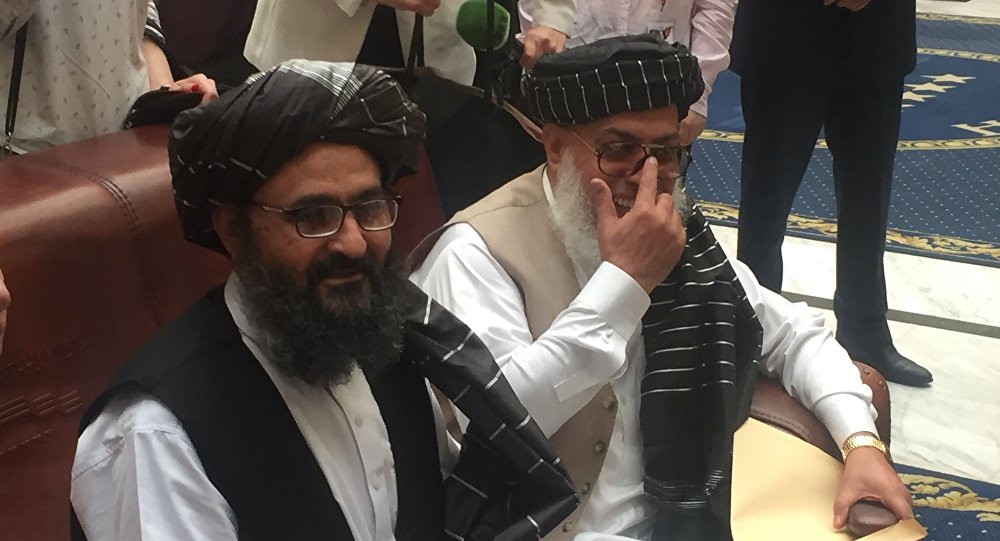
Indeed, more and more nations are becoming explicit about the fact that the United States is now the single biggest source of destabilization in our neighbourhood. As we speak, Iraqi lawmakers are demanding the withdrawal of US forces from their land. And after more than 17 years of failure in Afghanistan, the US is now negotiating with the Taliban to withdraw the American military.
In contrast, our standing with the peoples of Iraq and Syria to counter terrorism has put ISIS on the verge of extinction, with both countries enjoying levels of peace and stability not seen in years.
I arrived here in Munich from Sochi, where President Rouhani continued his dialogue with his Russian and Turkish counterparts on how to further promote peace in Syria. Prior to that, I visited Lebanon and Iraq for 7 days of discussions with government officials, as well as with political, community and business leaders on how to work together to strengthen stability and advance mutual economic opportunity in our region.
But the reckless US obsession with Iran is threatening these hard-won victories.
On another front, Iran’s continued full implementation of the JCPOA—despite the US’ abrogation—has played a major role in decreasing tension and promoting regional and global stability. But Iran cannot foot the entire bill for vital global security achievements – whether it is the nuclear accord, or the combatting of drug and human trafficking to Europe. Europe needs to invest too. Many around the world—and particularly on this content—speak eloquently about multilateralism. But they also need to walk the walk. For instance, INSTEX falls short of the commitments by the E3 to “save” the JCPOA. Europe needs to be willing to get wet if it wants to swim against the dangerous tide of US unilateralism.
While we have shown our desire for engagement, we don’t depend on others for our security, stability, prosperity and progress. We solely depend on our own people. That is why 40 years of so-called “maximum pressure”—namely demonization, war, sanctions and terror—including the heinous foreign-sponsored terrorist bombing in my country on Wednesday—has failed to “bring Iran to its knees”; nor has it affected our people’s decision-making calculus.
Distinguished Friends,
Iran’s foreign policy is designed to further the goal of creating a strong region that precludes the emergence of hegemonic aspirations by any power – regional or global.
A strong region simply means more confidence, more trade and more interaction between and among the countries in the region, than with external powers.
It requires home-grown political and territorial stability; reliance on the populace as the source of legitimacy, security and prosperity; harmonization of national identities and regional citizenship; participation of all in ensuring peace; and the exercising of strategic self-restraint.
Ladies and Gentlemen
In spite of all the ignorant hate-speech by American officials, let me remind you that we Iranians are proud to be the inheritors of a great civilization. The entirety of humanity is today riding in the same boat and we either sail together; or sink together. Our renowned poet, Sa’adi, testified to this truth over 900 years ago:
Parwan province security officials announced Taliban fired two mortars to Bagram airbase.
They were intercepted and did not hit the target.
On the other hand Taliban spokesperson claim US casualties due to the attack.
Bagram airbase is the largest US airbase in Afghanistan.
2. Zarif, Iranian Minister of Foreign Affairs meeting Abdullah Abdullah, Afghan Chief Executive.
Mohammad Javad Zarif meeting with Abdullah Abdullah to discuss the agenda of Geneva International Conference about Afghanistan, peace evolutions in Afghanistan and war against terrorism.
International Conference about Afghanistan to be held on Tuesday and Wednesday, 27-28 November 2018 with presence of officials of Afghanistan and more than 100 countries including Federica Mogherini, the High Representative of the European Union for Foreign Affairs and Security Policy, Russian, German, Swedish and British Ministers of Foreign Affairs at UN office in Geneva, Switzerland.
This is the 13th conference about Afghanistan since 2001.
3. Three US soldiers killed in Ghazni.
NATO said today that three US soldiers are killed due to a road bomb trap near Ghazni, four more injured.
Taliban took responsibility for the attack in a statement.
Three days ago another US soldier was killed in southwest of southwest Nimrouz.
In this meeting both sides emphasized that the pressure of western countries against Syria and Tehran doesn’t prevent the cooperation between the countries, and the fight for the interest of the two countries and for the security of the region, continues.
Both sides stated that the escalation of pressure and threats from western countries against the people of Syria and Iran is the reflection of their former failed plans, which now shows itself in this way.
In this meeting the latest situation and changes of the region and Syria were discussed; also they discussed about a upcoming mutual meeting in Iran between Iran, Syria, Russia and Turkey in order to resolve the issue of northwest Syria.
Zarif said it was necessary to consult “with our Syrian friends” ahead of the Sept. 7 summit.
He added: “All of Syrian territory must be preserved and all the sects and groups should start the round of reconstruction as one collective and the displaced should return to their families, And the remaining terrorists in the remaining parts of Idlib must be cleaned out and the region should be placed back under the control of the Syrian people”