Mustafa al-Kadhimi attracted the attention of most of groups (except parties of State of Law Coalition led by Nouri al-Maliki, al-Wataniah led byAyad Allawi, al-Aghd al-Watani led by Falih Al-Fayyadh, etc.), after extensive consultations with different parties and coalitions.
According to the Iraqi parliament agreement, the parliament early election should held in the spring of 2021 and the major goal of Mustafa al-Kadhimi temporary government should be this issue.
Mustafa al-Kadhimi faces with other problems such as the oil selling, the ISIS returning, the Resistance conflict with the US, the fighting with Corona, attracting the protesters attention, corruption and so on; and solving these problems without the help of influential foreign countries in Iraq, is impossible. In fact, as al-Kadhimi said in the interview with the media, he is the crisis era prime minister and has not magic cane for solving the problems.
So, the future of al-Kadhimi government can be examined in the following cases:
1. The oil war
Saudi Arabia in the recent months, has faced the oil market with a serious problem under the name of the oil war with Russia; and the loss caused by deep drop in oil price, is unbearable for Iraqi oil-based economy. On the other hand, Saudi Arabia with offering low prices to the customers of Iraqi oil like India, has attracted them and has reduced the Iraq selling rate. Therefore, al-Kadhimi has a hard situation in choosing the oil and foreign affairs ministers (their seat is currently empty in his government); Because selling the oil and relations with Saudi Arabia and the customer countries of Iraqi oil, are not the simple work.
2. Dissolution of the Hashd al-Shaabi and disarmament of the Resistance groups:
Some Iraqi groups and figures demand the disarmament of the Resistance groups and the dissolution of the Hashd al-Shaabi; and with coming of al-Kadhimi to power, this demand may become more serious. Due to that Kataib Hezballah is in the top of al-Kadhimi opponents, it doesn’t seem logic that he involve himself in this controversial issue. Unless, the goal of bringing him to power, be the intensifying the conflict between Resistance with US and removing the popular groups of power scene in Iraq.
3. US withdrawal from Iraq:
Despite ratifying of this issue in Iraqi parliament, it seems unlikely that al-Kadhimi has a plan for it. Because he has entered to policy square by US support, and for protecting of their interests, has received and will received privileges.
The US foreign ministry, after the al-Kadhimi government formation, extended Iraq exemption of Iranian energy imports for another 4 months, beside announcing the support of him.
4. Iran’s view on the al-Kadhimi government:
The recent trip of Ali Shamkhani, the Iranian supreme national security council secretary, reflects Iran’s tendency for stability in Iraq. The protests and insecurity in Iraq, has the most damage to Iran among the west Asian countries. Perhaps, the cause of companionship by al-Hikmah and Fath in choosing the al-Kadhimi, be this issue.
The opponent Iraqi groups positions like Kataib Hezballah, is independent and revolutionary, and Iran currently has not any influence in its formation.
The opposition of political groups like Nouri Maliki, Falih al-Fayadh with al-Kadhimi is not due to anti-US belief, the accusations against al-Kadhimi, or Iran’s bilateral position, but is because of political competition.
Surely, the chaos in Iraq will continue with the coming of Mustafa al-Kadhimi interim government to power, and the problem of the corruption and lack of integration in power will remain. Therefore, the interim government of al-Kadhimi should be viewed as a challenging but temporary period, beside the coma of the political protests, that should not ignore the political decisions and the events of this era.
Tag: Nouri al-Maliki
-

I’m the Prime Minister of the Hard Times!
-

The Final Results of the Electronic Election of Iraq Has Been Released.
After the conflicts of last night and the delay in releasing the final results, The Independent High Electoral Commission, after one week of election released the final results.
According to the results,
The alliance of “Revolutionaries For Reform”(Saairun) with the leadership of Muqtada Sadr, obtained 54 seats,
The “Fatah alliance” with the leadership of Hadi Al-Amiri 47 seats,
and the “Victory alliance”(al-Nasr) with the leadership of Haider Al-Abadi 42 seats.
Also in this results,
The “State of Law Coaliton”(Dawlat al-Qanoun) with the leadership of Nouri Al-Maliki obtained 26 seats,
Kurdistan Democratic Party with the leadership of Masoud Barzani 25 seats,
“Al-Wataniya Coalition” with the leadership of Ayad Allawi 21 seats,
The “National Wisdom Movement”(Tayar al-Hikmah al-Watani) with the leadership of Sayyid Ammar al-Hakim 19 seats,
The “Patriotic Union of Kurdistan”(PUK) with the leadership of Jalal Talibani 18 seats,
and the “al-Qarar al-Iraqi Coalition” with the leadership of Osama al-Nujaifi 11 seats.
According to the announcement of the Independent High Electoral Commission (IHEC), the number of participants in this election is %44.52, which is 10,848,000 out of 24,000,0000 eligible citizens who could vote.
About electing the prime minister and to form the cabinet, the participant lists, have to form the biggest coalition in parliament, which started with the meeting of Hakim and Sadr.
It needs mentioning that today, Saturday, the parliament of Iraq with the request of 81 of its representatives will form a meeting about the electoral fraud of the past days.
-
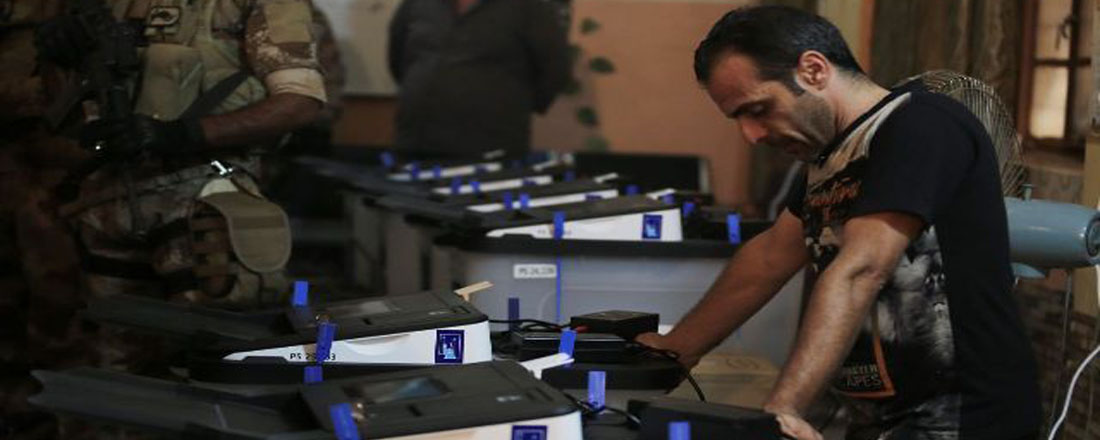
The First Elections of Iraq After the Defeat of ISIS and the First Electronic Election; Introducing Iraqi Coalitions.
According to the unofficial results, “The Alliance of Revolutionaries for Reform” (Sairoon) with the leadership of Muqtada Sadr gained 55 seats, “The Victory Alliance” (Al-Nasr) with the leadership of Haider al-Abadi gained 51 seats, “The Fatah Alliance” with the leadership of Hadi Al-Amiri gained 50 seats.
Meanwhile in some cities, specially Kirkuk and the three provinces of Iraqi Kurdistan, the protests about the results and election manipulation continue.
After the announcment of 91% of election results and achieving first place in election by “The Alliance of Revolutionaries for Reform” (Sairoon), Muqtada Sadr in his twitter showed his cabinet choices and the way he wants to form his administration.In his tweet, Sadr announced:
We “The Alliance of Revolutionaries for Reform” will act with “Wisdom” (Hikma), “Nationalism” (alwatanyah) and “The Will of The Electorate” (tajmae ‘iiradat alaintikhabii), and to create a “New Generation” we try and expect to see the “Change Movement” towards “Reforms”, and it is our “Decision” to create an iraq so that we raise the “Flags” of “Victory”, and Baghdad (our “identity”) is our capital, and our movement will be “Democratic” and we will form a “Technocratic Government” without “Partisanism”.

After this tweet, Nechirvan Barzani and Masoud Barzani —which because of the high tensions of this election, their absence in this election were overlooked — were the first ones to call and congratulate the alliance of revolutionaries for reform’s victory to Muqtada Sadr.
Because of very close difference in number of gained seats by the victorious political parties and coalitions, and the necessity to create a big coalition of different parties in order to ensure the formation of a bigger parliamentary group, the idea of forming such a coalition is hard and complicated.
The possible scenarios by some of the sources, about which of these coalitions will form the cabinet :
1. The state of law coalition, along with Fatah alliance and victory alliance.
2. The alliance of revolutionaries for reform, along with victory alliance, Fatah alliance and the national wisdom movement.
3. The alliance of revolutionaries for reform, along with Fatah alliance and the national wisdom movement.
4. The alliance of revolutionaries for reform, along with victory alliance and the national wisdom movement.
5. The alliance of revolutionaries for reform, along with victory alliance, patriotic union of Kurdistan (PUK), the Kurdistan democratic party (KDP or PD), and Al-Qarar.
6. The victory alliance , along with national wisdom movement, fatah alliance, state and law coalition, and the national coalition (Al-Wataniya)
7. The victory alliance, along with national wisdom movement, the national coalition (Al-Wataniya) and the alliance of revolutionaries for reform.
8. The victory alliance, along with state of law coalition, Fatah alliance, and the national wisdom movement.✅ The Shia Coalitions
1) The Alliance of Revolutionaries for Reform
Muqtada Sadr, along with Iraq Communist Party, Justice Government Party, People’s Party for Reform, Committee of Union and Progress, And Republic of Iraq Party, forms this coalition.
2) The Fatah Alliance
Fatah or Fath Al-Mobin (Undeniable Victory) is a electoral coalition including different shia political factions backed by Hashd Al-Sha’abi (Popular Mobilization Forces, PMU) which announced it existance with registering itself in “Independent High Electoral Commission, ” of Iraq.
The main core of this treaty are as follows:a. The Badr Organization (Munaẓẓama Badr) with the leadership of Hadi Al-Ameri
b. Brigades of the Party of God (Kata’ib Hezbollah)
c. League of Righteous People (Asa’ib Ahl al-Haq),
d. Soldiers of Imam Brigades (Kata’ib Jund al-Imam)
e. Islamic Supreme Council of Iraq (Al-Majlis Al-A’ala Al-Islami Al-‘Iraqi, namely, ISCI or SIIC)and some other groups that are backed by “Popular Mobilization Forces”.
3) The Victory Alliance The head of this coalition is the prime minister of iraq, Haider Al-Abadi, also some of the prominent leaders of “Islamic Dawa Party” and and some sunni figures including, Khaled al-Obaidi former minister of defense of iraq.
4) State of Law Coalition
The head of this coalition is the former prime minister of iraq and the general secretary of “Islamic Dawa Party”, Nouri al-Maliki, which
5) The National Wisdom Movement
Sayyid Ammar al-Hakim, after leaving the “Islamic Supreme Council of Iraq”, established this movement.
✅ The Sunni Coalitions
1) The National Coalition (Al-Wataniya)
This coalition includes sunni groups of iraq which are under the leadership of Ayad Allawi and the participation of Salim al-Jabouri, head the “Civil Society for Reform”, and Saleh al-Mutlaq, head of the “Al-Arabiya Coalition” and some other political movements and figures.
2) Al-Qarar Al-Iraqi coalition
This coalition is under the leadership of Osama al-Nujaifi, former deputy of president and former head of iraq parliament. he formed a coalition with Khames Al-Khanjar, leader of the arabic project movement, Salman Al-Jumaili and other iraqi sunni figures.
✅ The Kurdish Coalitions
Kurdistan Democratic Party (KDP or PDK) and Patriotic Union of Kurdistan (PUK), The alliance of Taqiir Party, Jama`t Islami, Barham Salih