Tag: PKK

  • The Echo of PJAK in Turkey’s Silence

    The Echo of PJAK in Turkey’s Silence

    PJAK was established in 2004 by Iranian members of the Kurdistan Workers’ Party (PKK). Its military branch, the “Eastern Kurdistan Units,” operates across Iranian Kurdistan and Qandil in Iraq. Due to its origins, PJAK is influenced by the Turkish PKK, and the United States also regards it as an affiliate of the PKK.

    Over the past two decades, multiple clashes have occurred between Iranian forces and PJAK. One of the most significant confrontations took place in the summer of 2011, when the Iranian army launched a large-scale operation against PJAK positions in Qandil, which ended with a ceasefire declared on September 29 of that year. Nevertheless, sporadic skirmishes continued in the following years.

    PJAK is led jointly by Amir Karimi and Peyman Wiyan. The group is part of the Kurdistan Communities Union (KCK) and regards Abdullah Öcalan as its ideological leader. After the collapse of the peace process between Turkey and the PKK in 2015, a significant number of Iranian Kurds joined the KCK’s ranks, now making up roughly 35% of its military forces. This has strengthened PJAK’s role in both regional and international contexts.

    With the resumption of talks between Turkey and Öcalan in 2024, along with the PKK’s announcement of its withdrawal from armed struggle, the future of the PJAK remains uncertain. Some believe that the PKK’s military and guerrilla capabilities may shift to the PJAK, which could create significant security challenges for Iran.
    Maybe it’s worth revisiting Öcalan’s earlier statements; since 2008, he has expressed concerns regarding Iran’s interference in the peace process and in 2013, recommended boosting PJAK forces to 40,000 to confront Iranian dangers.

    Global developments—from the war in Ukraine and the Syrian crisis to Iran-Turkey rivalry, the role of Israel, and NATO tensions—have influenced Turkey’s strategic calculations regarding Iran. Turkey’s experiences in Syria and Iraq have shown that the Kurds act as a balance of power. Ankara now seeks engagement and coordination with PJAK instead of direct confrontation.

    In this context, Netanyahu’s focus on destabilizing Iran has pushed Turkey to develop a more calculated approach toward Iranian affairs. It seems Ankara has concluded that it cannot play an effective role in Iran’s future developments without considering PJAK’s influence. All these factors are compelling Turkey to seriously revise and prepare its strategic agenda concerning Iran. One indication of this may be the Turkish leadership’s intention to align the PKK’s congress with its own interests in renegotiation and potential rearmament.

    The Necessity of PJAK in Turkey’s New Strategy
    In 2015, the Democratic Party of Iranian Kurdistan (PDKI), along with several other Kurdish parties, attempted to reclaim their former position in Iranian Kurdistan’s political and social scene through a campaign called “Rasan,” aiming to curb PJAK’s growing influence. Clashes occurred in the mountainous region of Kileh Shin, allegedly part of an operation orchestrated by the Turkish government. Media outlets close to the PDKI and to some extent Komala subtly confirmed Turkey’s role in these events.

    However, these efforts failed, and the Iranian Kurdish parties were unsuccessful in achieving their objectives. Following this setback, Turkey began looking for a more effective alternative force in the region—and that force was PJAK. Simultaneously, Israel unofficially conveyed a message to these Kurdish parties suggesting that significant developments were approaching in Iran and that Kurds could play a key role in shaping them.

    PJAK in Turkey’s Strategic Calculations
    PJAK has yet to hold a congress to formally disarm or dissolve, and this process has stalled, with Qandil attributing the deadlock to Öcalan’s absence from the process. Even if a decision to end armed struggle is made, the guerrilla forces would not immediately lay down their arms. Integrating them into formal politics would require a transitional structure—something PJAK could provide, but only if a comprehensive agreement is reached between Turkey and Öcalan, and anti-Turkish elements within PJAK shift their stance.

    Turkey aims to use PJAK as a tool to manage potential developments in Iran and prevent the Kurds from aligning with Israeli interests, thereby avoiding a repeat of the Syrian scenario. For this reason, Ankara seeks to incorporate PJAK into any future peace agreements. According to a Kurdish journalist, Turkey envisions PJAK playing a role in Iran similar to that of the Syrian National Army (SNA) in Syria.

    Iran’s Position in the Turkey-PJAK Equation
    Since 2013, when PKK guerrillas withdrew toward Iran’s borders, Tehran has grown increasingly concerned about the implications of the Turkey-PKK peace process. In meetings with the PKK and Kurdish parties in Iraq, Iran explicitly warned about the expanded presence of these forces near its borders, questioning who would control PJAK in the event of a Turkey-Öcalan agreement. This concern led to a widening rift between Iran and Qandil.

    This concern was not solely security-related; it also stemmed from a deeper geopolitical rivalry between Iran and Turkey. From Tehran’s perspective, PJAK could become a tool of Turkish influence if the group aligns itself with Ankara. As a regional actor, Iran must maintain ties with Qandil and use political tools to prevent the balance from tipping solely in Turkey’s favor.

    The future role of PJAK depends on the PKK’s orientation toward Iran. If relations between Qandil and Tehran deteriorate, it would signal a full alignment of the PKK with Turkey—a scenario that seems unlikely for now without concrete assurances. For the sake of regional stability, both Iran and Qandil will likely be forced to maintain engagement.
  • Kurdistan Workers’ Party Dissolved: A Look at the PKK’s History and Activities

    Kurdistan Workers’ Party Dissolved: A Look at the PKK’s History and Activities

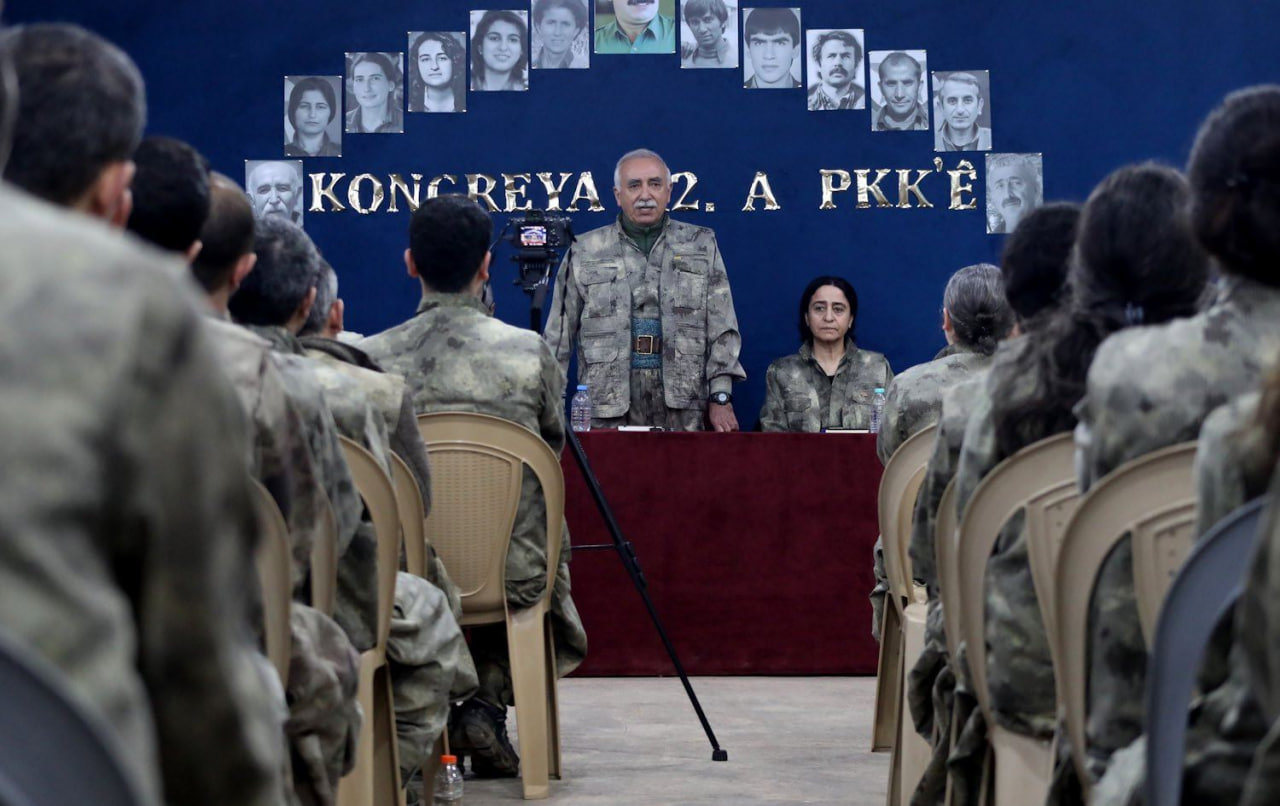
    The PKK’s leadership issued resolutions following meetings held between May 5 and 7, which prominently included the announcement that “the Kurdistan Workers’ Party officially declares its dissolution, the end of the armed conflict, and the laying down of arms.”

    In their resolutions, the party stated, “We believe that Kurdish political parties will fulfill their duties and responsibilities to develop Kurdish democracy. We will call for the strengthening of Kurdish-Turkish brotherhood.”

    Notably, Abdullah Ocalan, the founder of the PKK, issued a statement on February 27, urging PKK forces to lay down their weapons. Following his request, the PKK announced a ceasefire with Turkey just two days later.

    History and Activities of the Kurdistan Workers’ Party

    The Kurdistan Workers’ Party (PKK) was established in 1978 under the leadership of Abdullah Ocalan. The PKK has been recognized as one of the primary Kurdish armed groups in the region, with the declared goal of achieving greater rights for the Kurdish community in Turkey. The party resorted to armed struggle against the Turkish government in the 1980s.

    Abdullah Ocalan was arrested in 1999 and imprisoned on Imrali Island; however, even after his arrest, the PKK continued to play a significant role in developments across Turkish Kurdistan, northern Iraq, and even parts of the Syrian conflict.

    Various affiliated groups, including the YPG and PJAK, operate in neighboring countries, further complicating regional interactions regarding the Kurdish issue. The PKK has been designated as a terrorist organization by Iran, the United States, the United Kingdom, Canada, the European Union, and several other countries. According to international organizations, clashes between PKK elements and the Turkish army resulted in the deaths of more than 7,000 soldiers and civilians between 2015 and 2025.

  • Turkish Strikes In Syria And Iraq Killed, Wounded 24 People

    Turkish Strikes In Syria And Iraq Killed, Wounded 24 People

    Turkey’s Interior Minister Ali Yerlikaya announced that preliminary evidence indicates that the recent terrorist attack in Ankara was carried out by the Kurdistan Workers’ Party (PKK).

    Hours after this statement, Turkish military aircraft targeted PKK positions in northern Iraq and Syrian Democratic Forces (SDF) bases in northern Syria. Turkish-backed militants also launched several artillery attacks on SDF positions in northern Syria.

    The Ministry of Defense of Turkey has announced that in response to yesterday’s terrorist attack in Ankara, it has bombed 32 headquarters of the Kurdistan Workers’ Party and its allies in northern Iraq and Syria, and these attacks will continue.

    Based on investigations, the Turkish army and its allied militants have launched attacks on the positions of the SDF forces in various areas including Qamishli, Malikiya, Kobani (Ain al-Arab), Manbij, Qahtaniyah, Amuda, Ain Issa, Tal Tamr, and Tal Rifat. These attacks resulted in the deaths of at least 4 people and injuries to more than 20 others. Additionally, Turkish attacks targeted several important infrastructure facilities in northern Syria.

    Areas targeted by Turkish army and its militants / Click to view in full size

    Following these attacks, the Syrian Democratic Forces evacuated some of their headquarters in northern Syria. The military and security meetings of the SDF commanders in Hasakah, Qamishli, Ain al-Arab, and Manbij were canceled until further notice.

    Mazloum Abdi, the commander-in-chief of the Syrian Democratic Forces (SDF), condemned Turkey’s recent attacks on northern Syria. He stated that these attacks have targeted civilian, service, and health centers, which is considered a war crime.

    It is worth mentioning that on October 23, two armed individuals attacked the Turkish Aerospace Industries Company near Ankara. During this attack, 5 people were killed and 22 others were injured. Some Turkish officials and media believe that this operation was carried out by PKK forces.

  • PKK Member Assassinated In Northern Iraq

    PKK Member Assassinated In Northern Iraq

    The Turkish intelligence agency succeeded in killing one of the leaders of the Kurdistan Workers’ Party (PKK) in a special military operation in the north of Iraq.

    According to Turkish media outlets, the Turkish intelligence apparatus assassinated Gulistan Tekik, nicknamed Pelin Batman, in the city of Sulaimaniyah, in the east of the Kurdistan Region of Iraq, during an operation. She joined the Kurdistan Workers’ Party in 1998.

    Tekik was reportedly a significant member of the PKK in that area. She engaged in propaganda and disinformation missions, aided by the Patriotic Union of Kurdistan (PUK), and was also involved in recruitment section of the group.

    It is worth mentioning that the northern regions of Iraq experience assassinations by Turkiye’s intelligence forces from time to time. Most of these killings take place in Iraq’s Sulaimaniyah.

  • PKK Drone Attacks On Turkish Troops Ankara’s New Challenge In Northern Iraq (Video)

    PKK Drone Attacks On Turkish Troops Ankara’s New Challenge In Northern Iraq (Video)

    The Kurdistan Workers’ Party (PKK) forces have carried out several drone attacks against Turkish army positions in northern Iraq in recent weeks.

    A review of the released footages shows that the PKK forces used Mugin-3 commercial drones made by the Chinese company Mugin, which have a length of 2,488 mm, a wingspan of 3,600 mm, and a take-off weight of about 28 kilograms.

    The minimum speed of this drone is 45 kilometers per hour with a flight duration of up to 3 hours and is capable of carrying a payload between 5 and 8 kilograms. The price of this UAV is recorded on some international websites as about $3,600, and with the short runway (between 50 and 70 meters), it is considered a suitable option to be used by armed groups in the West Asia region.

    The video released by the PKK of the attack on the Turkish forces

    The PKK forces have also used ArduPilot open-source autopilot systems and software in this field to guide the drone, so that they can easily create a flight line by drawing a path or creating a waypoint towards the target, therefore, they can have the least human intervention in the operation.

    It should be noted that the low price of such drones, along with the fact that certain Western states try to arm some terrorist groups around Iran’s borders, can be considered a serious alarm for the Iranian armed forces, because terrorist groups can create new troubles and numerous problems against border posts and bases, and even military positions and densely populated areas inside the country. Preventing these incidents requires vigilance and preventive measures by the Iranian armed forces.

  • Imminent Conclusion Of Turkish Army’s Operations In Iraq, Syria

    Imminent Conclusion Of Turkish Army’s Operations In Iraq, Syria

    According to the IWN, Erdogan addressed a group of graduate cadets of a military center in Istanbul: In the very near future, we will announce the end of operations in northern Iraq. We have inflicted very painful blows on the terrorist organization (referring to the Kurdistan Workers’ Party or PKK). Along our southern border with Syria, we will also complete the security belt.

    He also said: We are determined to dismantle any structure that could pose a threat to our country along the borders with Iraq and Syria. The terrorist organization (PKK) is not able to move inside our borders and is under complete siege in Iraq and Syria.

    Turkish Defense Minister Yasar Guler had also announced that the operation, which is ongoing in northern Iraq against PKK elements, will end in November this year.

    Turkiye’s Operation Claw Lock kicked off on April 18, 2022, on the orders of Turkish Defense Minister Hulusi Akar against PKK militants in northern Iraq. The history of the Turkish army’s military intervention in northern Iraq dates back to 1982. According to an agreement between Ankara and Baghdad, Turkiye was allowed to enter northern Iraq to a depth of 20 kilometers.

  • Presence Of PKK In Iraq Illegal: Turkiye-Iraq Joint Statement

    Presence Of PKK In Iraq Illegal: Turkiye-Iraq Joint Statement

    Minister of Foreign Affairs of Turkiye Hakan Fidan, Minister of National Defense of Turkiye Yasar Guler, and Director of the National Intelligence Organization of Turkiye (MIT) Ibrahim Kalin entered Baghdad on March 14 to participate in a security meeting. In this meeting, the two sides discussed their joint plan to fight against terrorism as well as the way to deal with the PKK issue.

    In the final statement of this meeting, the two countries (Turkiye and Iraq) emphasized on preserving the territorial integrity of Iraq, respecting its sovereignty, and political unity. It also stressed the role of the PKK as a security threat to both countries and reminded that the presence of such an organization on Iraqi soil constitutes a violation of Iraq’s constitution.

    It is worth mentioning that Iraq and Turkiye had previously declared the Kurdistan Workers’ Party (PKK) a common threat, but this is the first time the two countries have jointly defined the PKK as an “illegal organization.”

    Based on the outcome of this meeting, it appears that we are witnessing a major policy shift by the central government of Iraq towards illegal groups in the Kurdistan region of the Arab country, and it is likely that in the future, Turkish military operations against these groups will be carried out more intensively in coordination with the Iraqi central government.

  • PKK Field Commander Assassinated In Sulaymaniyah

    PKK Field Commander Assassinated In Sulaymaniyah

    It is said that Komek had a background in the PKK’s intelligence division and also supervised training sessions for some PKK forces in Sulaymaniyah.

    More details have not been released in this regard. It is worth noting that two days ago, the Turkish intelligence agency also reported the assassination of Gulsun Silger, the head of the youth branch of the Kurdistan Workers’ Party in the Iraqi city of Sulaymaniyah.

  • 9 Turkish Servicemen Killed In Northern Iraq

    9 Turkish Servicemen Killed In Northern Iraq

    The Ministry of National Defense of Turkiye announced that as a result of an attack by the Kurdistan Workers’ Party (PKK) elements on a military base in northern Iraq, 5 Turkish soldiers were killed and 8 others were injured, with 3 of them in critical condition.

    After a few hours, sources announced that 4 more soldiers were also killed, which brings the total number of Turkish soldiers killed in Iraq to 9.

    According to media close to the PKK, the recent operation against Turkish soldiers took place in the Great Zab region in northern Iraq, during which at least 9 Turkish soldiers were killed and over 15 others were injured.

  • PKK Takes Responsibility For Ankara Attack; Turkey Responds!

    PKK Takes Responsibility For Ankara Attack; Turkey Responds!

    Following the terrorist attack in front of the Turkish Interior Ministry and accepting responsibility for the operation by the PKK, Turkiye’s Ministry of National Defense announced an attack on Kurdistan Workers’ Party hideouts in the north of the neighboring country.

    Read more: Terrorist Attack Near Turkiye’s Interior Ministry

    According to reports published by some Turkish media outlets, Turkish warplanes bombed and destroyed about 20 headquarters belonging to the Kurdistan Workers’ Party in northern Iraq on Sunday evening.

    Turkiye’s Ministry of National Defense announced that the Turkish armed forces will continue to fight terrorism in order to preserve the security of the nation and its borders.

    The Turkish Interior Ministry in Ankara was targeted in a terrorist attack by two members of the PKK group on Sunday, which came to an end when both attackers were killed and two Turkish police officers were wounded.

  • Deadline For Disarming Iraqi Terrorists Ends On September 19!

    Deadline For Disarming Iraqi Terrorists Ends On September 19!

    The deputy commander of the IRGC said in an interview with an Iranian media outlet that we expect from our brothers in the Kurdistan region to show brotherliness, because providing terrorists with safe haven in that region, which has become a source of operations against our country, is not consistent with brotherliness or good neighborliness.

    After uninterrupted negotiations, we finally signed an agreement with the central government in Baghdad as well as the Kurdistan region, and the deadline of the accord to become operational is on September 19 in terms of scheduling and agreed-upon provisions, he argued.

    Read more: Iraqi, Iranian Top Security Advisors Meet In Tehran

    The brigadier general went on to say that we are committed to all the provisions of the agreement, not one word less or one word more; thus, we expect the other party to also abide by the agreement in the same way as the Islamic Republic of Iran has fulfilled its obligations. Otherwise, the situation will come back to its previous state, and we will be forced to protect the interests of the Iranian people, he warned.

    It should be noted that some time ago, Chief of Staff of the Iranian Armed Forces Major General Mohammad Hossein Bagheri stated at a meeting with commanders of the Ground Forces of the Islamic Revolution Guards Corps that the Iraqi government has time up to September in order to eradicate separatist groups in the Kurdistan region of the Arab country.

    Prime Minister of Iraq Mohammed Shia’ al-Sudani also emphasized the seriousness of his government to implement the provisions of the Tehran-Baghdad security agreement completely. He made the remark in a meeting with a delegation of senior managers from Iranian media outlets yesterday.

    The Iraqi premier said that for various reasons, we as the Iraqi government feel obligated to address Tehran’s security concerns regarding terrorist activities, which are being committed from the Kurdistan region in Iraq. To this end, we have spent over $200 million on this issue and deployed more than 3,000 National Army forces along Iran’s borders and throughout the region, he noted.

    Read more: Are Iran’s armed forces on the brink of a new round of attacks on terrorist groups in Iraqi Kurdistan region?

    In recent months, senior commanders of the Iranian armed forces have warned the Iraqi government and officials in the Kurdistan region of Iraq about the illegal and terrorist movements of certain outlawed groups.

    Given the continued presence of anti-Iran armed groups in the Kurdistan region of Iraq as well as the Iraqi sides’ failure to make proper decisions and implement practical plans to expel or disarm terrorist groups from Iraq’s border areas, the Islamic Republic of reserves its rights to resort to all available capacities to establish security along its western borders after the end of the September 19 deadline.

    Map of the distribution of terrorist groups in the western borders of Iran – click to view in full size

    Read more:
    Iranian missiles pounds terrorist positions in Kurdistan region!
    Iran missile and drone attacks on terrorist groups in Iraq’s Kurdistan + Video

  • Turkish Strikes Kill 3 PKK Members In Iraq

    Turkish Strikes Kill 3 PKK Members In Iraq

    On May 16, Turkish drones targeted a headquarters belonging to the Kurdistan Workers’ Party (PKK) in Khana Sor area located on the outskirts of Sinjar city, during which three PKK members were killed.

    The Kurdistan Region of Iraq also announced in a statement: “A Turkish drone targeted a base belonging to the Kurdistan Workers’ Party in Sinjar region, and the attack resulted in the death of three fighters of the Kurdistan Workers’ Party.”

    It is worth mentioning that on March 1, Turkish drones also targeted a vehicle in Sinjar city, during which one of the field commanders of the Sinjar Resistance Forces (YBS) along with his bodyguard lost his life.

    Read more: Turkish Drone Attack On Sinjar; Two YBS Members Were Killed