Israel’s public broadcasting authority also reported that Jared Kushner, Donald Trump’s son-in-law and former advisor, during his recent visit to the occupied territories, urged Israeli officials to allow this transfer as the first step in what he described as the “gradual disarmament of Gaza.” According to these reports, the proposal involves al-Qassam fighters handing over their weapons in exchange for security guarantees and a stabilized ceasefire.
At the same time, other Hebrew media outlets rejected the claim, stating that no comprehensive agreement acceptable to all parties has yet been reached regarding Rafah and the resistance forces.
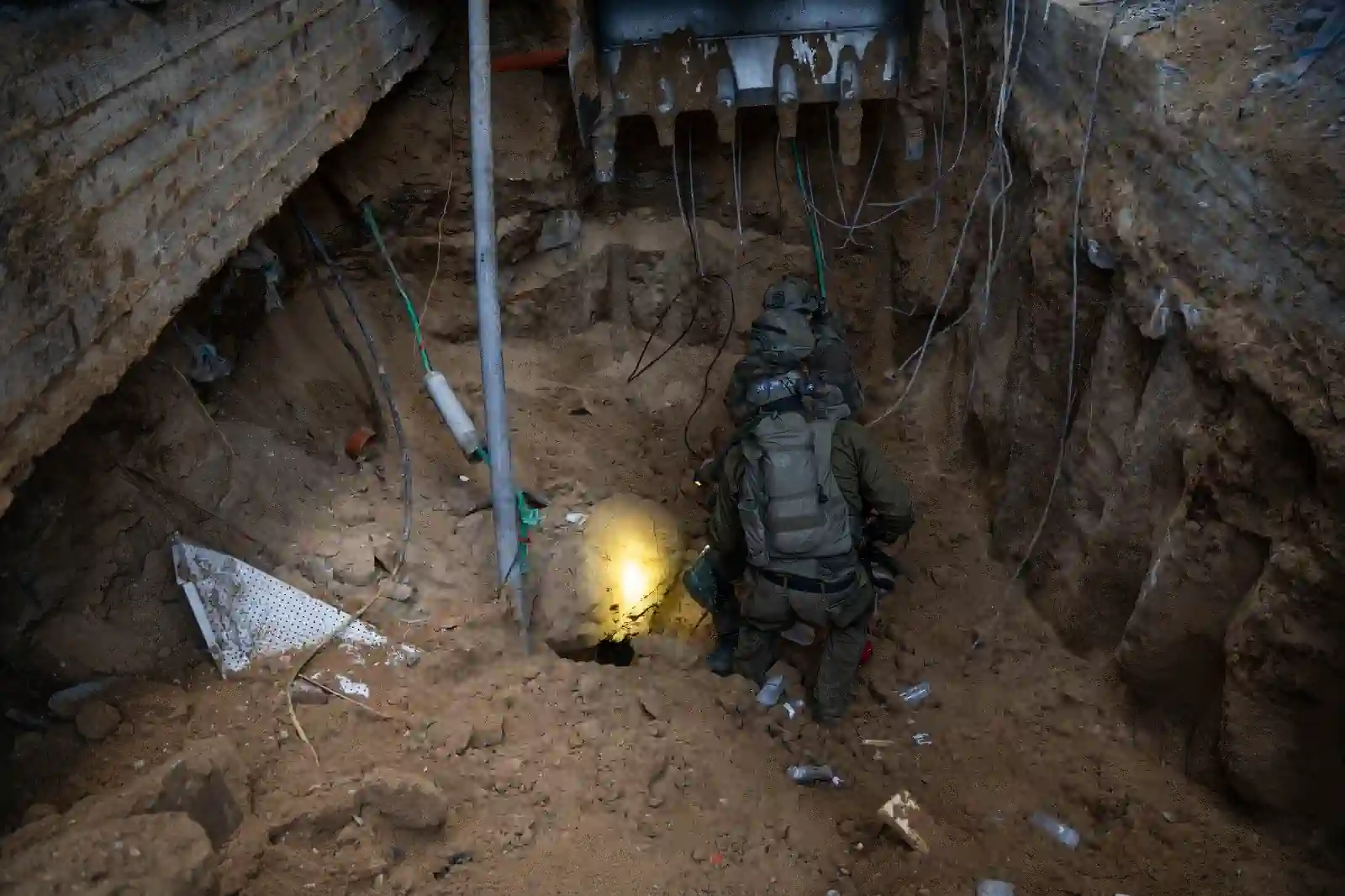
It is noteworthy that several al-Qassam fighters remain in Rafah’s tunnel networks, cut off from central command, and continue to carry out operations against Israeli forces even after the ceasefire took effect. In recent actions in Rafah, several Israeli soldiers were killed and wounded.
An alternative account of the Rafah incident has also emerged. It suggests that Palestinian resistance forces targeted a group affiliated with Yasser Abu Shabab—allegedly collaborators with the Israeli military—and that Israeli soldiers were caught in the crossfire during the clashes.
In response to the confrontation, Israeli warplanes bombed the Rafah area, citing the need to support Abu Shabab’s forces.
Israeli Prime Minister Benjamin Netanyahu is currently assessing the security situation in Gaza alongside the defense minister and other senior officials, preparing a response to what is being described as a violation of the ceasefire.
This attack underscores the intensifying resistance operations in southern Gaza, where Palestinian fighters continue to confront Israeli forces with guerrilla tactics and improvised explosive devices. As ground incursions deepen, such incidents reflect the growing cost of occupation and the resilience of local defense efforts.
In the Khan Younis axis in the south of the Gaza Strip, during the past 24 hours, the Israeli army again entered the center of Khan Younis by crossing the Bani Suheila square. Israeli forces are currently located in the Khan Yunis Center near Abu Hamid Square and around the Department of Education in the Mahtah area.
During the past months, the Israeli army had advanced to Khan Yunis center. But finally, the Israeli army withdrew from these areas. It is unclear whether the Israeli army will expand its advance to the west of the city or if this operation is only a short-term raid.
Israeli advances into the central areas of Khan Yunis
In the center of the Gaza Strip, following the military operation in the Wadi al-Salqa axis, Israeli army advanced along the Salah al-Din road to the south of Deir al-Balah and also to the south of Maghazi. Heavy clashes continue in the mentioned axes.
Israeli advances near Deir al-Balah and Maghazi
Fighting in the Gaza Strip continues as ceasefire negotiations between the Israeli regime and the Hamas movement in Cairo have hit an impasse.
The ceasefire talks were held on Thursday and Friday last week in Doha, Qatar, without any particular achievement. Another round of negotiations are underway in Cairo, the capital of Egypt, between mediators and Israeli military and intelligence officials.
Nevertheless, the delegations of the Hamas movement and Israel have each opposed the clauses of the agreement that were presented by the mediators.
Izzat al-Risheq, a member of the political bureau of the Islamic resistance movement Hamas, emphasized that the negotiating delegation of this movement left Cairo on Sunday evening after meeting with Egyptian and Qatari mediators and being informed of the new demands of the Israeli regime.
Izzat al-Risheq pointed out that the Hamas delegation wants to oblige the Israeli regime to adhere to the agreements made on July 2 based on the items mentioned in Biden’s speech and the UN Security Council resolution. But Israel has added new conditions to the agreement and violates the agreement.
Israelis introduced new conditions, making it harder to reach a lasting ceasefire. Under the new terms, Israel intends to maintain control over the Netzarim corridor and Philadelfia axis and Rafah border crossing as well as other areas in the Gaza Strip, showing no willingness to withdraw from Gaza and offering no significant concessions to the other party.
Although the Palestinians are strongly looking for a ceasefire agreement and the end of the war, on the other hand, they insist on their positions to realize the interests of the Palestinian nation. The Palestinians demand a comperhensive ceasefire, the complete withdrawal of Israeli forces from the Gaza Strip, the free return of Palestinians to their homes in the northern part of the Strip, and the exchange of prisoners.
Due to Israel’s obstructions, it seems that the peace talks have reached a dead end.The Hamas movement has announced that it will no longer participate in the negotiations.
The dispute over the Philadelphia axis is one of the main obstacles on the way to the conclusion of negotiations and the signing of a ceasefire agreement and exchange of prisoners. While the Palestinians and Egypt insist that the Israeli forces withdraw from the axis of Philadelphia, Netzarim corridor and the Rafah crossing, Netanyahu still insists on occupying these axes and has so far failed the negotiations with his positions and is still prolonging the war.
Mediation efforts of the United States, Egypt and Qatar to establish a ceasefire in the Gaza Strip in exchange for the release of 110 Israeli prisoners in the Gaza Strip began a few months ago. After several rounds of indirect negotiations in Egypt and Qatar, the parties to the conflict have not yet reached an agreement. These negotiations have not yielded results due to Netanyahu’s refusal to stop the war and genocide in Gaza.
The war in Gaza has left more than 40,500 martyrs and more than 93,500 wounded. The humanitarian situation is dire and is getting worse due to the restrictions imposed by the Israeli regime on the entry of food and medicine into the Gaza Strip.
The military situation in Gaza and Rafah has not changed much. Israeli forces have not been able to completely clear Rafah after weeks of fighting. Around 70% of the town is currently under Israeli control.
Fighting continues in the central areas of Rafah, in Tal al-Sultan, around the Saudi project and in the southern areas of the city.
The situation in other parts of the Gaza Strip remains unchanged. Israeli forces are stationed in the central axis of the Gaza Strip, known as the Netzarim axis. In addition, Israeli engineering units are demolishing buildings and clearing areas in the northern and southern parts of the Netzarim axis.
Military situation in the Rafah area
Israeli forces recently destroyed six tunnels belonging to Hamas and Islamic Jihad in the Shujaiyeh area. One of the tunnels destroyed was Islamic Jihad’s main tunnel in Gaza City, which was 2.5 kilometres long and used for command and control operations. In total, at least six kilometres of tunnels were destroyed in Shujaiyeh.
The tunnels and underground facilities used by Palestinian resistance groups pose a significant challenge to the Israeli regime. Despite the Israeli army’s efforts to secure Gaza City and other areas of the Gaza Strip, the extensive network of underground facilities makes this task seem impossible.
Palestinian fighters use these tunnels on a daily basis to launch surprise attacks against Israeli forces and equipment.
Ambush of Palestinian forces against the occupiers in Gaza City
Yesterday, the Israeli army ordered Palestinians in several neighbourhoods of Gaza City to evacuate the area and move to designated humanitarian zones. The zones are located in the al-Mawasi area on the southern coast of the strip, the western districts of Khan Yunis and Deir al-Balah in central Gaza.
Colonel Avichay Adraee, the IDF’s Arabic-speaking spokesman, has published a list of areas for evacuation. Among the areas to be evacuated are the neighbourhoods of Sabra, Rimal, Tal Al-Hawa and Daraj in Gaza City.
The announcement of the Israeli regime army to evacuate a part of Gaza City
These announcements are made as bombardment of civilian targets and infrastructure continues. At least 50 Palestinians have been killed in Israeli attacks over the past 24 hours.
In just one of these attacks, 17 Palestinians were martyred. In this crime, the house of Abu Farih’s family in the Nusairat refugee camp was bombed by Israeli warplanes. 14 of those killed were women and children.
Today, also the fighter jets of the Israeli regime targeted the so-called humanitarian area of Mawasi. In this crime, more than 70 Palestinians were martyred and 290 others were injured. A large number of martyrs and injured are women and children, including children less than two years old.
The video contains heartbreaking scenes
A glimpse of the Israeli regime’s crime in Mawasi, Khan Younes
In recent months, the Israeli army has issued statements calling on civilians to evacuate certain areas. However, these evacuations do not appear to have had a significant impact on the Israeli army’s operations in Gaza. Palestinians return to their homes after some time, and the Israeli army does not actually send troops to the evacuated areas. So these announcements mainly mean more air strikes, more destruction and more casualties in Gaza.
So far, Israeli air strikes have killed at least 38,243 Palestinians and wounded 88,033, most of them women and children.
Yesterday there was a major change in the command of the Israeli army in the West Bank.
Major General Avi Blot took over the Israeli army’s Central Command in a handover ceremony at the unit’s headquarters in Jerusalem, becoming the new general in charge of the West Bank region.
Major General Avi Blot will be replaced by Major General Yehuda Fox, who is retiring from the IDF, ending a 36-year military career.
Major General Avi Blot
Following the 7 October attacks, tensions and conflicts in the West Bank have escalated significantly, leading to dire security conditions. The Israeli army carries out military operations in the area on a daily basis. In a recent incident, 13-year-old Palestinian Ghassan Gharib Zahran was fatally shot by Israeli soldiers in the town of Deir Abu Meshaal, near Ramallah.
The Palestinian Prisoners’ Club announced that the Israeli army has arrested 16 Palestinians in different areas of the West Bank since yesterday. Israel has arrested more than 9,600 Palestinians in the West Bank since the start of the war on Gaza.
The situation on the northern front remains tense: despite repeated Israeli threats to launch military operations into Lebanese territory, no attacks have been carried out. Earlier, Lebanese Hezbollah leader Sayed Hassan Nasrallah warned in a televised speech that any Israeli military operation into Lebanese territory would be met with a strong response from Lebanese resistance groups and Hezbollah. The message seems to have gone down well in Tel Aviv.
However, the Israeli military has stepped up its drone strikes and assassinations against key Hezbollah figures in recent weeks. Israel is attempting to raise the cost of the war for Lebanese Hezbollah by targeting Hezbollah field commanders and key figures with assassination attempts.
On July 9, an Israeli airstrike against a vehicle on the Beirut-Damascus highway, near a checkpoint between Lebanon and Syria killed Yasser Qarnabash, a senior Hezbollah member close to the Seyed Hassan Nasrallah.
Martyr Yasser Qarnabash
On July 3, a senior Hezbollah military commander, Muhammad Na’amah Nasser, was assassinated by Israeli drones in the city of Tyre in southern Lebanon. Na’amah played a major role in the liberation of southern Lebanon in 2006 and in the battles in Syria and Iraq against ISIS and Al-Qaeda terrorist groups. He also led and supervised dozens of operations against the Israeli army during the recent fighting in northern occupied Palestine.
Martyr Muhammad Na’amah Nasser
Alongside targeted assassinations, artillery and airstrikes continue in southern Lebanon.
Israeli warplanes bomb Lebanon’s southern regions and towns on a daily basis. Hezbollah fighters also use heavy rockets, anti-tank missiles and suicide drones to target Israeli positions and bases in northern occupied Palestine.
On July 6, for example, Hezbollah carried out a series of targeted attacks on key Israeli army positions in southern Lebanon. Hezbollah fired dozens of rockets at the Nimra base west of the Sea of Galilee and the Mount Meron air traffic control base. They also targeted Israeli troops in the Birkat Risha area with guided missiles, hit surveillance equipment in the al-Rahib area, and shelled the Bayad Blida and al-Baghdadi areas.
Part of Hezbollah’s operations in northern occupied Palestine
Military operations along the northern borders have led to widespread evacuations of settlements. The Israeli Ministry of Housing and Immigration reports that hundreds of thousands of settlers have left the occupied territories since the start of the war.
According to the latest reports, more than 250,000 Israeli citizens have been displaced by the war, with some 164,000 ordered or recommended to evacuate with government compensation and nearly 150,000 evacuated without being asked.
The number of Israeli refugees increases daily...
According to a report by Israel’s Channel 12, social media has been filled in recent weeks with posts from Israeli settlers to their friends who are considering leaving Israel. The ongoing 10-month war has produced unclear results, prompting some settlers to consider leaving the country.
Channel 12 TV reported that a new survey shows that the number of Israelis who want to emigrate from Israel has increased by two and a half times.
It is worth noting that 500,000 Israelis have left the country since the start of the Gaza conflict.
The disastrous political situation in Tel Aviv, the unfavourable and critical security situation in the West Bank, the war in the Gaza Strip and Israel’s failure to achieve its set goals in the Gaza Strip, the war and tense situation on the northern front and the possibility of a full-scale war with Hezbollah are challenges that have made Israel more vulnerable to collapse than ever before.
All this, together with the massive wave of emigration from Israel, has left the outlook for the political and security situation in the crisis-ridden country in a cloud of uncertainty.
The fallen troopers, identified as lieutenant Tal Shabilsuki Shaulov, sergeant Eitan Karlsbrown, sergeant Almog Shalom, and sergeant Ya’ir Lewin, were reportedly ambushed by the Izz ad-Din Al-Qassam Brigades, the military wing of Hamas movement, in Rafah city.
In addition to the four casualties, the Israeli army announced that five other troops were seriously injured during the same ambush. This incident underscores the power of the Palestinian resistance fighters in the face of the Israeli regime’s military personnel on the frontlines, as conflicts continue to escalate in the besieged strip.
The death toll on the Israeli side has now risen to 299 since the commencement of the ground assault on the Gaza Strip. Furthermore, the total number of military casualties, as claimed by the Israeli regime, has reached 650 since the start of the genocidal war on Gaza.
An Israeli reporter has raised concerns about discrepancies in the reported numbers of Israeli troopers killed in the Gaza conflict, suggesting that the actual death toll may be significantly higher than officially stated.
Ariel Shimon questions why the government is not transparent about the exact figures of casualties since the ground attacks, as well as the losses in equipment and machinery in the Gaza Strip.
According to Shimon, thousands of soldiers have been affected, with at least 3,700 facing permanent disabilities, and he claims that the true number of soldiers and officers who have died is more than 3,850.
These statistics highlight the cost of armed conflicts and serve as a reminder of the toll that is inflicted upon the invader during an unparalleled conflict.
The Israeli regime’s army’s advancement to the shores of Rafah marks a pivotal moment in the evolving dynamics of the conflict, with implications reverberating across the region.
In Rafah, a city at the heart of the conflict, clashes persist in multiple fronts, spanning the southern, western, and northern axes. Recent confrontations have seen targeted assaults by Israeli forces on vital locations such as Tel al-Sultan and the Saudi Housing in the city’s northern sector. Concurrently, efforts to secure and clear areas in the western part of Rafah are underway, underscoring the intensity of the ongoing military incursion.
The advance of Israeli regime in Rafah and along the border line
Insights from field sources within the Israeli regime shed light on the tactics employed by the Israeli army in Rafah. Despite lacking the requisite strength for a full-scale assault, Israeli forces are employing tactical approaches involving limited raids, strategic retreats, and iterative movements to consolidate control over the region incrementally. This strategy indicates a push by Israeli forces to expand their territorial influence along the coastal perimeters of Rafah.
Reports indicate a significant evacuation of approximately two-thirds of Rafah’s population, highlighting the humanitarian impact of the genocidal war. Furthermore, with around 35% of Rafah falling under Israeli occupation, the plight of civilians in the region is exacerbated, underscoring the urgent need for international intervention and humanitarian assistance.
In a tactical deployment towards Al-Bureij refugee camp in the central axis, the Israeli regime’s army has advanced several kilometers to support military operations aimed at the release of Israeli captives. However, these advancements are deemed temporary, with expectations of Israeli forces withdrawing from these areas in the near term, reflecting the fluid and dynamic nature of the conflict landscape.
The intensifying clashes in Rafah underscore the precarious situation faced by civilians caught in the Israeli plot for the region.
Meanwhile, some reports point out to the fact that discussions regarding the reopening of the Rafah Crossing have hit a roadblock due to Israeli Prime Minister Benjamin Netanyahu’s rejection of involving the Palestinians in overseeing the vital crossing.
After two weeks of military operations and penetrating deep into Jabalia in the north of the Gaza Strip, the Israeli occupying forces have completely withdrawn from this area. As it was said before, the Israeli army never has the ability to clear, stabilize and establish a long-term presence in these areas, and the recent operations of the Israeli regime in Jabalia lacked any strategic goals. The only goal that may have been achieved was more destruction and killing in Jabalia.
But in the south of the Gaza Strip in the Rafah axis, Israeli forces are slowly expanding their territories along the Egyptian border. During the last week, Israeli forces entered Tel Zaarab, the highest hill in the west of Rafah city. In the attack on Rafah, the Israeli army has adopted a strategy similar to the attack on Gaza City from the north. In the north of Gaza, the Israeli army slowly bypassed Gaza City using the coastal line, and in the next stages, from the east side, it cut off the Palestinian forces in the depth of Gaza. In Rafah, Israeli forces are slowly increasing the contact lines along the border, and probably in the next stages, with the addition of forces from the eastern axes, the Palestinian forces will be cut off in the center of Rafah.
On the other hand, there are whispers of the possibility of establishing a comprehensive ceasefire in the Gaza Strip, but nothing is certain yet and we have to wait.
According to the latest field reports, the Israeli forces have advanced in the southern part of the Jabalia refugee camp and re-entered the Al-Faloujah cemetery. Clashes are currently ongoing near Al-Faloujah Street and Abu Sharakh Square.
These areas had previously been under the control of the Israeli regime’s army, but the occupying forces were ultimately forced to withdraw from them in the past months. The purpose of the latest Israeli incursion into these regions remains unclear, as the regime has never demonstrated the ability to effectively cleanse, stabilize and maintain a long-term presence in these areas.
A kind of lack of planning and confusion is seen in the movements of the regime in the northern Gaza Strip, reports show, suggesting that the Israeli military’s actions in the region lack a coherent strategic vision.
Israeli forces advanced in the southern part of the Jabalia refugee camp
Elsewhere, the battles in the southern city of Rafah continue, with no significant changes in the frontlines. However, new images have emerged showing that the Israeli regime’s battle tanks and remote-controlled armored vehicles have entered Tel Zaarab, located in the western part of the Rafah city.
Israeli regime’s battle tanks and remote-controlled armored vehicles in Tel Zaarab
Tel Zaarab is considered the highest point in Rafah and overlooks the entire city. This development suggests that the Israeli military forces may be preparing to expand the scope of their operations from the western outskirts of Rafah towards the center of the city in the coming days.
Israeli regime’s battle tanks in Tal Zaarab
The ongoing conflict in the Gaza Strip has been a subject of international concern, with calls for a peaceful resolution to the longstanding Israeli-Palestinian tensions. However, the latest escalation in the fighting indicates that the region remains a powder keg, with the potential for further violence and instability.
The death toll from the Israeli ongoing onslaught on the Gaza Strip has surged to 36,096, the Health Ministry in the besieged enclave said on Tuesday. At least 81,136 people have also been wounded in the genocidal war since October 7, 2023.
Latest military situation in the Gaza Strip – click to view full size
According to reports from Israeli media outlets, some Egyptian army soldiers at the Rafah border crossing opened fire at Israeli military personnel.
The Israeli military also responded by firing warning shots towards the Egyptians.
In the initial local media reports, it was mentioned that the confrontation came to an end following the intervention of border officials from both sides.
The Israeli newspaper Yedioth Ahronoth reported that during the confrontation between Israeli and Egyptian military personnel at this border crossing, two Egyptian soldiers were injured, one of them succumbed to the injuries.
Some Israeli media outlets have also reported that the regime’s soldiers were also wounded, but the exact details of their casualties are not yet available.
According to the independent English-language Egyptian newspaper, Daily News Egypt, unnamed sources stated that Egyptian soldiers were “affected” by the Rafah massacre that occurred on Sunday, when an Israeli bombing led to the killing of 45 Palestinians at a displacement camp.
The Rafah border crossing has been seized by Israeli military forces since May 7 as the regime’s forces expanded ground invasion of Gaza into the southern city.
The Palestinian Health Ministry in the Gaza Strip announced on Monday that 45 people, including 23 women, children and elderly, lost their lives and 249 others were injured in the air strike.
Eye witnesses said at least eight missiles pummeled the refugee camp, which was designated by the Israeli regime’s army to be a safe zone, at about 8.45 p.m. local time (17:45 GMT).
In the early morning, the Rafah camp had been reduced to a smoking ruin, with tents, twisted metal, and charred belongings scattered throughout. Women could be seen weeping, and men gathered to hold prayers beside the bodies wrapped in shrouds.
Palestinian families rushed to hospitals to prepare their dead for burial after the late-night strike on Sunday set tents and makeshift shelters ablaze.
Video footage captured the chaos as a fire raged in the darkness, with people screaming in panic.
The regime’s military said it was investigating reports that a strike it carried out against Gaza residents in Rafah caused the deadly fire.
Survivors described the panic as families were preparing to sleep when the strike hit the Tall as-Sultan neighborhood, where thousands were sheltering after Israeli forces began a ground offensive in eastern Rafah over two weeks ago.
This incident prompted outrage from global leaders, who urged the implementation of an order by the International Court of Justice (ICJ) to halt Israel’s assault on Rafah.
Despite the ruling by the top UN court ordering the Israeli regime to stop its offensive, Israel has continued its military operations, saying the court’s ruling grants it some scope for military action in Gaza.
Several leaders from around the world condemned the latest attacks, stating that the International Court of Justice ruling must be respected.
Clashes between the Palestinian resistance fighters and the Israeli troops continue in the southern areas of Rafah, especially north of the neighborhoods of Al-Janinah and Al-Salam, as well as inside the Brazil neighborhood and the outskirts of the Salah al-Din Gate.
According to reports from local sources, Israeli military forces have gathered in the municipal stadium (east of the Salah al-Din Gate) and also north of the Abu Yousef Al-Najjar Hospital.
Given the density and urban environment of the southern areas of Rafah, as well as the partisan attacks by the resistance fighters against the Israeli military forces, it is expected that the Israeli army will carry out intense artillery and air strikes to pave the way for the advancement of its own forces.
The advance of the Israeli army on the Rafah front and the extensive attacks on this area come at a time when the International Court of Justice (ICJ) in The Hague ordered the immediate cessation of the Israeli regime’s attack on Rafah on May 24.
In the north of the Gaza Strip, clashes continue between the Israeli troopers and the Palestinian resistance fighters in the east of the Jabalia camp. The Israeli army is slowly expanding the areas under its control in the Jabalia camp.