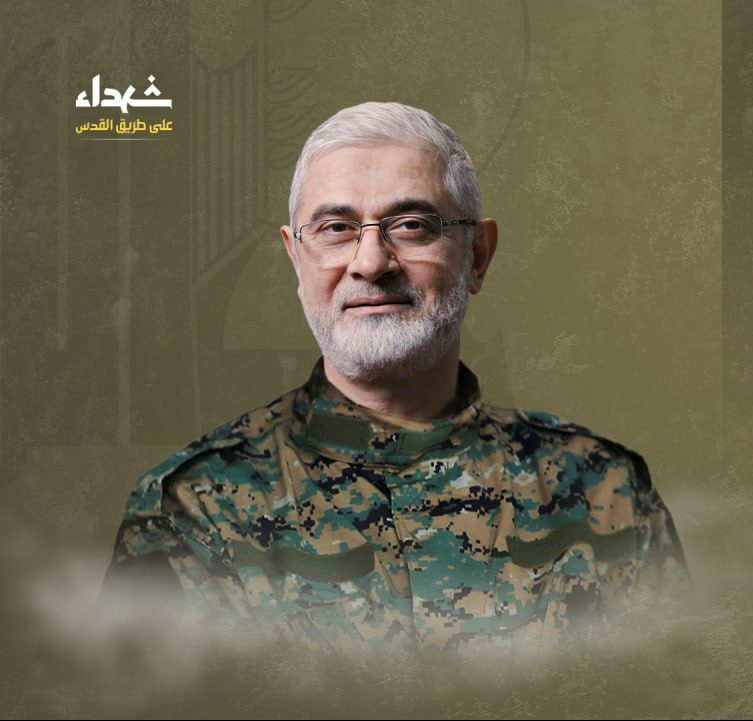
– Place and date of birth: Bednayel (Bekaa), born on December 24, 1962.
– From the generation of the founders of the Islamic Resistance Movement in Beirut and one of the leaders of heroic operations against the Israeli assault on Beirut in the early 1980s.
– Abdul Qader took on the responsibility of training for Hezbollah fighters in the 1990s and then he took shoulder the responsibility of the headquarters of the resistance, and played a key role in developing human capabilities within the organization of Hezbollah.
– From 1997 until after the liberation of Lebanon from the Israeli occupation, he was in charge of the operations unit in Jabal Amel region in southern Lebanon and was the main commander of many special operations. He was one of Hezbollah’s field commanders in the 33-day war and was considered one of the pillars of Islamic resistance in Lebanon. In 2008, he was appointed as the assistant Secretary-General of Hezbollah for operational affairs and turned into a member of the Jihad Council Hezbollah, a council responsible for directing the groups’ military and security activities.
– For several years until the date of his martyrdom, Haj Abdul Qader was in charge of the establishment, development, and command of the Redwan Force in Hezbollah.
– Haj Ibrahim Aqil was one of the senior leaders and fighters who planned and managed military operations against Takfiri groups on the eastern borders of Lebanon, the city of Al-Qusayr, the town of Qalamoun, and other regions of Syria.
– In the recent war with the Israeli regime, he led the military operations of the Radwan Force of the Lebanese front in support for the resistance factions in the Gaza Strip.
– Finally, Haj Ibrahim Aqil was martyred in a terrorist attack by the Israeli regime’s fighter jets of on a building in the al-Dahiya district of Beirut on September 20, along with several field commanders and senior members of the Lebanese resistance movement.
On July 30, Fuad Shukr, a prominent commander of Hezbollah was assassinated in Beirut by the Israeli regime. The following day, on July 31 in Tehran, Israel assassinated Ismail Haniyeh, the head of the Hamas political office.
The Israeli newspaper Ma’ariv recently stated in an article that Israel is extremely worried about the infiltration of Hezbollah’s Redwan forces into the Galilee region. Israeli army officers believe that Hezbollah forces, especially Redwan’s elite forces, can infiltrate Israeli settlements or capture Israeli bases.
Lebanon’s Hezbollah has tens of thousands of trained military personnel. Many believe that Hezbollah forces are stronger than the Lebanese army. In fact, the military wing of Hezbollah is known as the most powerful non-state military force in the world.
Various military units of Hezbollah are stationed in the southern fronts and other parts of Lebanon. Some of these units include Wahdat Brigade, Aziz Unit, Badr Unit, Khayyam Unit, etc. In general, detailed information about Hezbollah’s military units and charts is not available as the organization never publishes such information.
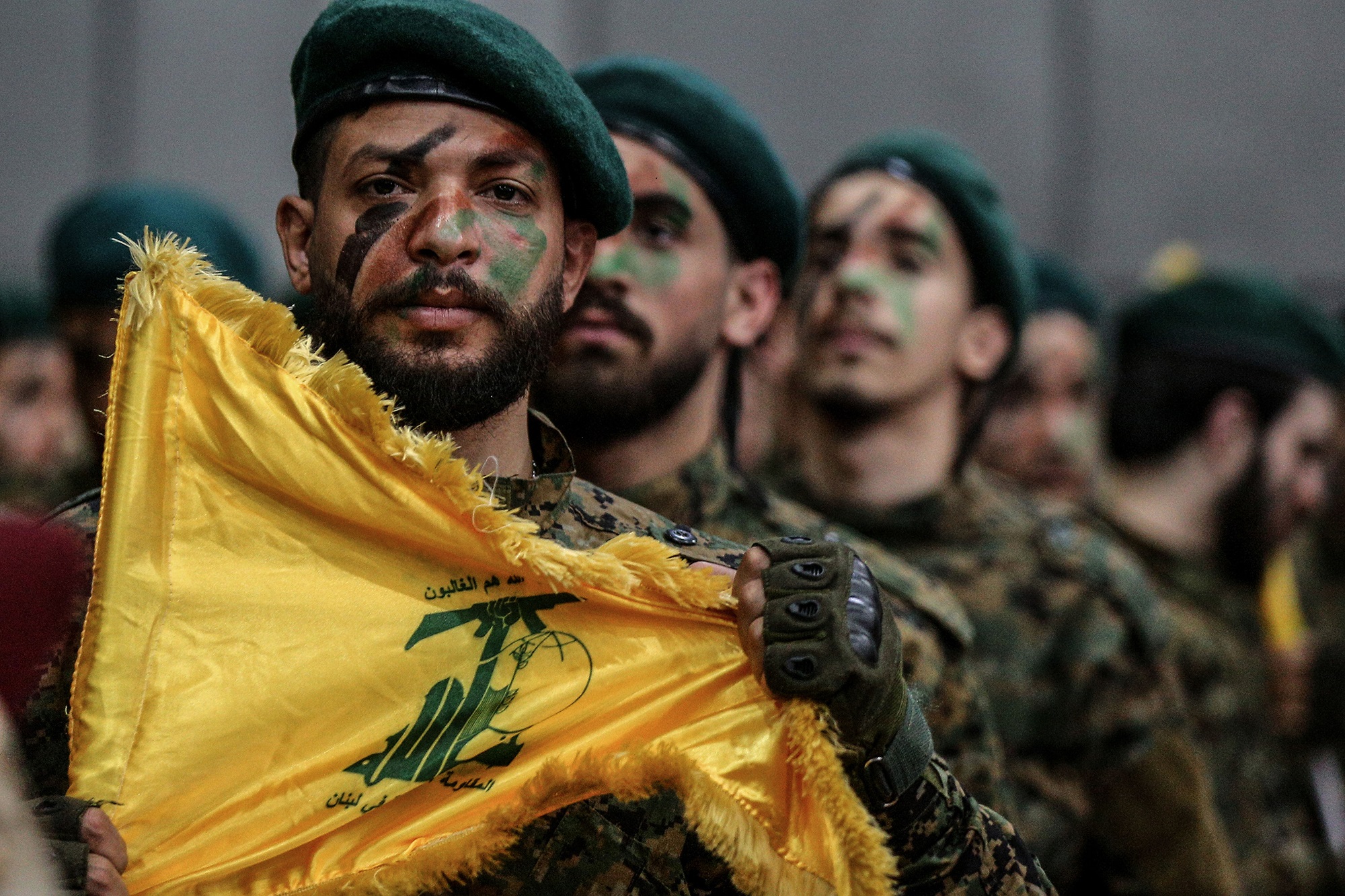
However, the Rezwan unit is one of Hezbollah’s most famous and well-known military units. It is considered one of the main elite units of Hezbollah and plays a key role in advancing the goals of the operations. Although the exact number of Rezwan forces has not been announced, estimates indicate that at least 2,500 special forces are active in this unit. Rezwan’s forces have significant combat experience and have participated in past battles in Syria and Qalamoun. The main mission of this group is to infiltrate the territory of Israel, with specific attention to Galilee and northern Israel.
Redwan forces
The Rezwan forces are highly skilled and have undergone rigorous training. They are proficient in using anti-tank weapons and explosives. They possess the ability to travel long distances and perform difficult missions in mountainous areas. Additionally, they excel in carrying out secret and sensitive military operations in a thoroughly professional manner.
Redwan forces are said to be divided into seven- to 10-man squads, each operating independently without constant orders or logistical support from a central command. Their main feature is actually the operational independence given to its commanders, and these commanders are allowed to make quick tactical decisions on the battlefield. They have the speed, flexibility and noteable striking capability that characterizes any military force.
Yediot Aharonot quoted Israeli security sources as saying, “As long as the Rezwan unit is on the Lebanese border, the residents of the northern settlements who have been evacuated have no hope of returning to their homes.”
Military operations along the northern borders have led to widespread evacuations of settlements. The Israeli Ministry of Housing and Immigration reports that hundreds of thousands of settlers have left the occupied territories since the start of the war.
According to the latest reports, more than 250,000 Israeli citizens have been displaced by the war, with some 164,000 ordered or recommended to evacuate with government compensation and nearly 150,000 evacuated without being asked. The number of Israeli refugees increases daily.
Avichai Stern, mayor of Kiryat Shemona, said that the Israeli settlers’ fear of returning to their homes stems from the images they saw on October 7.
Lebanon’s Hezbollah has a formidable rocket and missile arsenal in addition to its strong ground forces. According to recent estimates, Hezbollah has 150,000 mortars, rockets, and missiles of varying ranges. Experts consider Hezbollah to be one of the world’s top five missile powers based on this significant arsenal.
Hezbollah says it has missiles that can target all areas of Israel. Hezbollah is also equipped with drones and anti-tank and anti-ship missiles, many of which were built in Lebanon with Iran’s help or delivered directly from Iran to Lebanon’s Hezbollah.
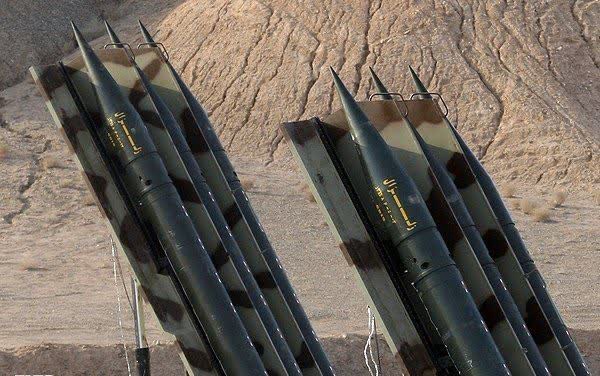
Unguided rockets form a major part of Hezbollah’s missile arsenal. Among these rockets, we can mention Burkan, “Fajr” and “Zelzal” rockets.
For example, Katyusha and Burkan short-range rockets have an explosive payload between 300 and 500 kilograms. The solid fueled Zelzal rockets have a range of about 250-300 km and carry about 400-600 kg of explosives.
Zelzal rocketBurkan rocket
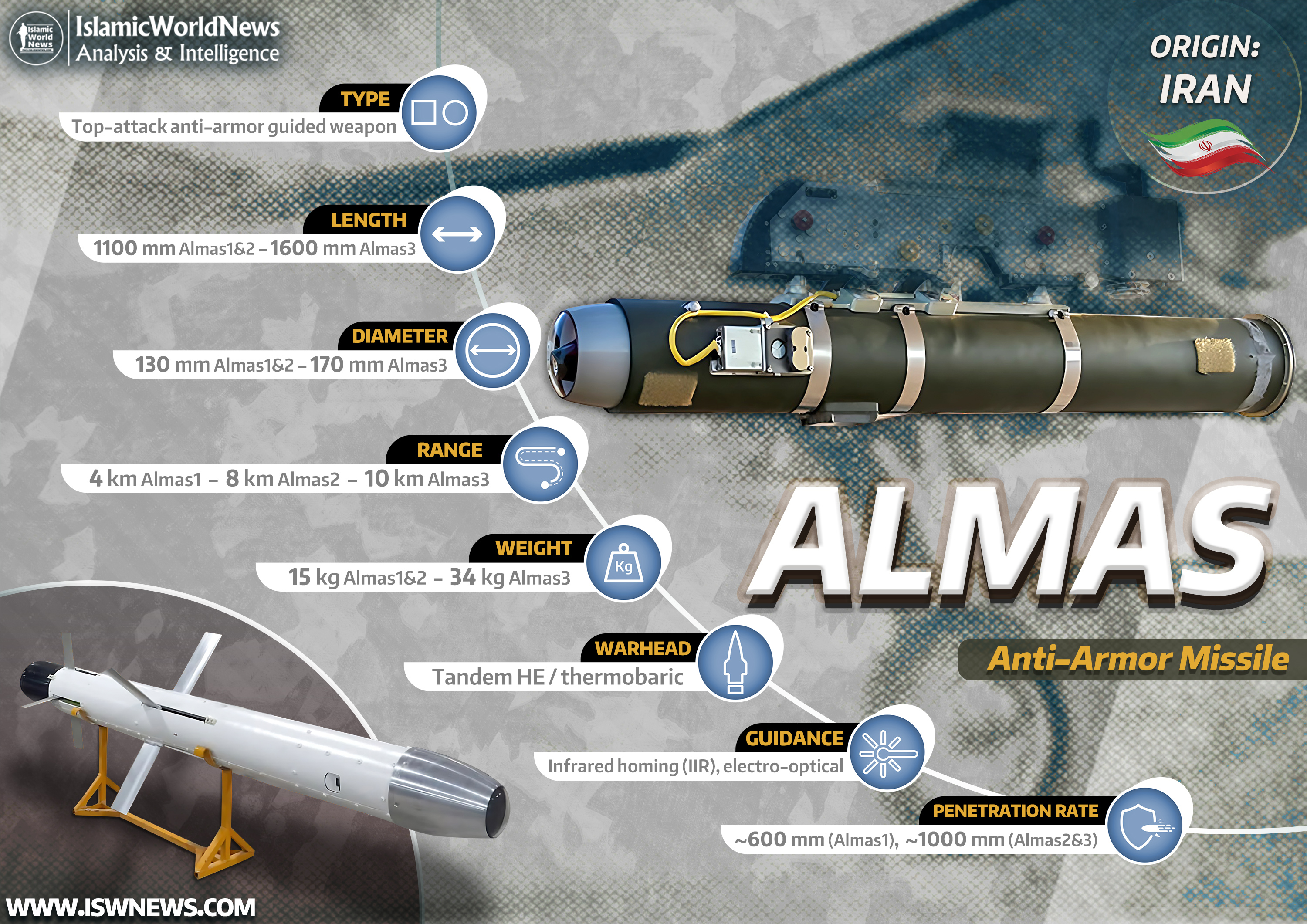
Due to the mountainous nature of southern Lebanon and the experience of the 2006 war, Hezbollah is widely equipped with anti-tank guided missiles (ATGM). Hezbollah has a wide range of anti-tank missiles in its arsenal. Russian Kornet missiles and various types of Iranian anti-armor missiles such as Toofan and Almas are among Hezbollah’s anti-armor missiles.
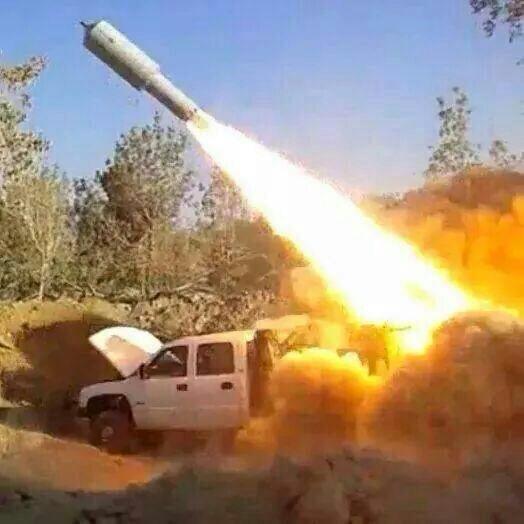
During the recent war in northern occupied Palestine, Hezbollah has repeatedly targeted the positions of the Israeli army with Almas missiles. Hezbollah has released video clips of ATGM attacks on Israeli military installations and tanks and military vehicles since October 7.
The release of the video showing these operations has attracted a lot of attention. The Almas missiles are actually the reverse-engineered version of the Israeli Spike anti-armor missiles, which were produced by Iran. Hezbollah has inflicted significant casualties on the Israeli army with these missiles.
Hezbollah attacks Israel with Almas ATGMsHezbollah attacks Israel with Almas ATGMsAlmas anti-armor missile
Hezbollah is equipped with a significant number of man-portable air-defense system (MANPADS) missiles. Based on available information, Hezbollah is reported to have air defense missiles, but specific details about these missiles are not readily available. In recent conflicts, Hezbollah successfully used these missiles to shoot down several Israeli drones, including the Hermes 450 and Hermes 900, over southern Lebanon.This was the first time that Hezbollah used these missiles to shoot down drones.
Another important component of Hezbollah’s missile power is anti-ship missiles. Hezbollah first demonstrated its anti-ship missiles in 2006 when it attacked an Israeli warship 10 miles off the coast of Lebanon, killing four Israelis and damaging the ship.
According to the available information, Hezbollah has been equipped with a significant number of anti-ship missiles in recent years. The Noor missile, which is the Iranian version of the Chinese C-802 anti-ship missile, is one of these missiles. The Noor missile has a range of up to 170 km. There are also speculations that Hezbollah has acquired the Russian “Yakhont” anti-ship missile, which has a range of up to 300 kilometers.
Noor missile or Chinese C-802 anti-ship missile
Hezbollah’s missile capabilities, including anti-ship missiles, have significantly increased due to Iran’s support. This poses a serious threat to Israeli and US warships. Consequently, Israel’s naval power is affected, prompting the country to take different factors into consideration in potential naval confrontations with Hezbollah.
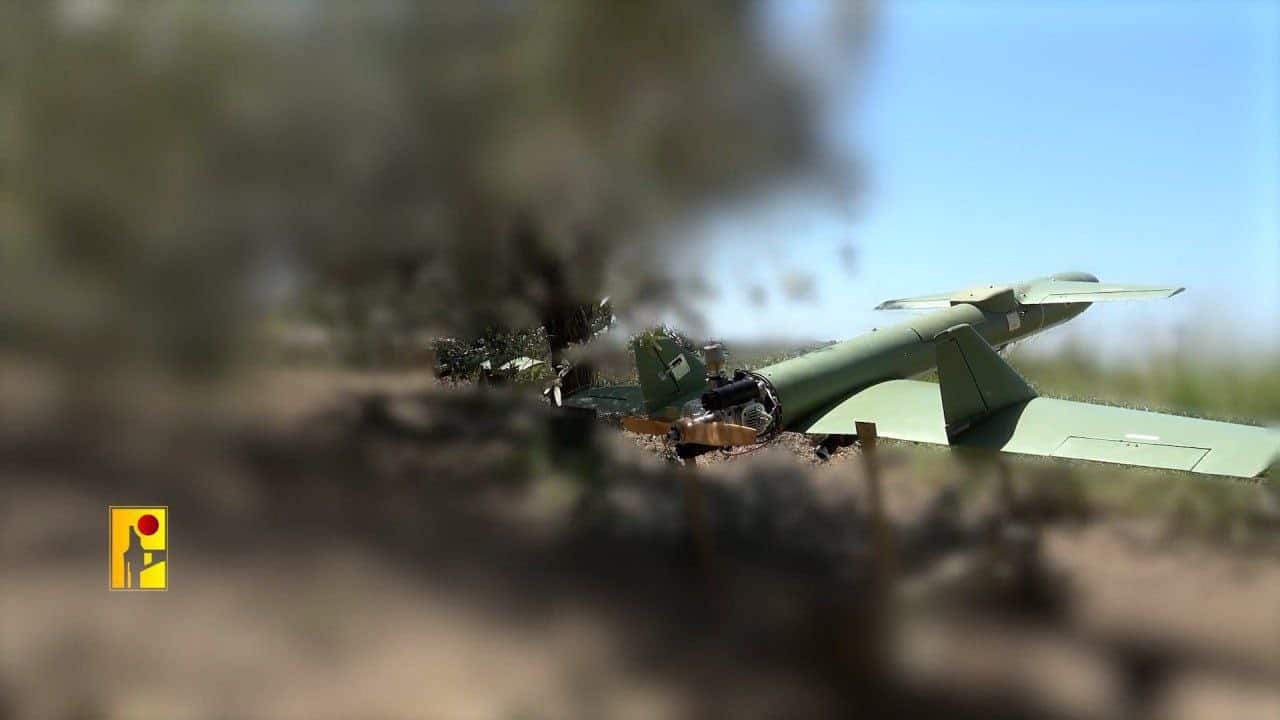
During the recent war, Hezbollah has repeatedly launched suicide drones towards the bases and positions of the Israeli army. Hezbollah mainly uses Mersad and Ababil suicide drones to target Israeli army positions. These drones are assembled locally. However, due to Iran’s support for the Lebanese resistance, there is a possibility that more advanced Iranian drones such as Shahid-136 are also available to Hezbollah.
Since the start of Israel’s military aggression on the Gaza Strip, the Lebanese Islamic Resistance has initiated operations against the Israeli regime in northern Palestine, aiming to divert a portion of Israel’s military might and help the Palestinian resistance in the Gaza Strip. It is estimated that Lebanon’s Hezbollah alone has engaged around half of the Israeli regime’s army in the northern front and has hindered the Israeli army’s complete deployment in the southern front of the Gaza Strip.
Recently, several drones of Lebanon’s Hezbollah penetrated into the north of occupied Palestine and successfully filmed critical bases in the port of Haifa. This is a major challenge for Israel, which considers itself the high-tech superpower in the region and insists on using drones and other surveillance tools against its enemies near and far.
The Hezbollah drone operations in Israel are a clear warning to its enemy, indicating that Hezbollah has extensive intelligence on sensitive and vital locations in Israel. Hezbollah is not interested in prolonging the conflict and explicitly seeks an end to the military aggression in the Gaza Strip.
Nevertheless, Israel continues to ignore Hezbollah’s warnings and insists on continuing military aggression in the Gaza Strip. Therefore, the war between Hezbollah and Israel is about to enter a new phase. All of Hezbollah’s intelligence and technical combat capabilities indicate that in the event of an all-out war on the northern front, Israel will suffer significant and staggering losses.