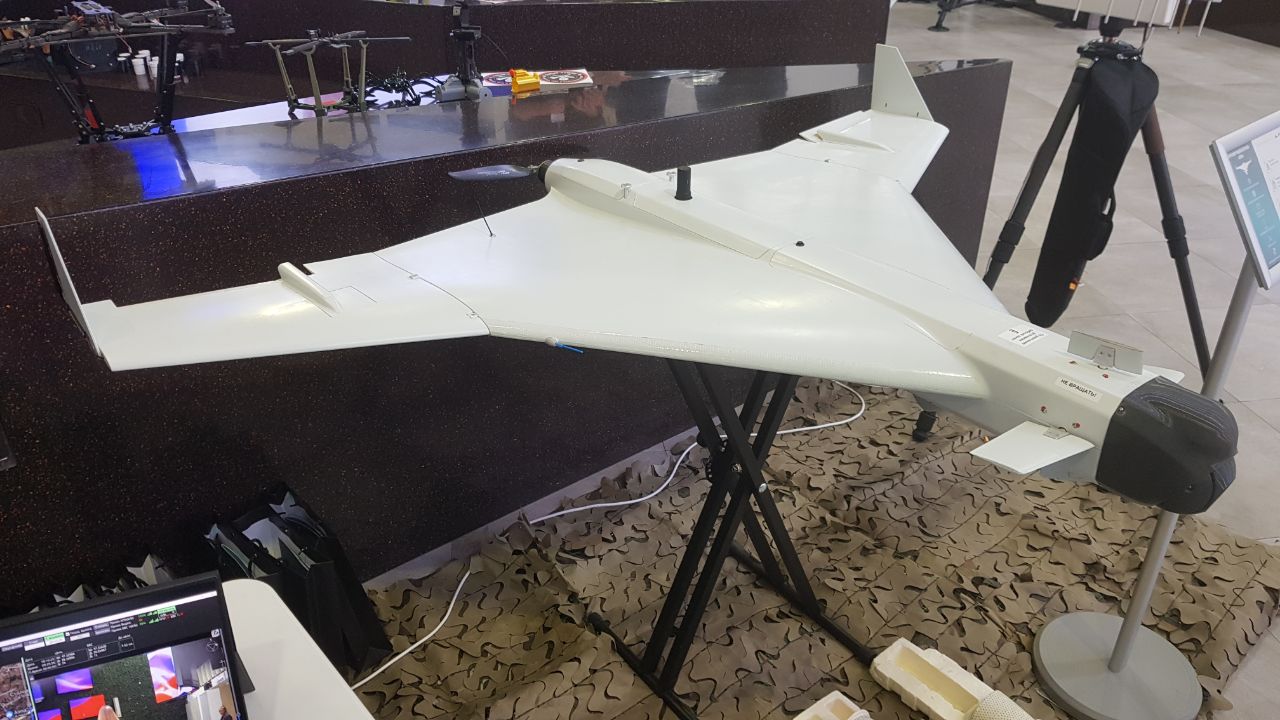
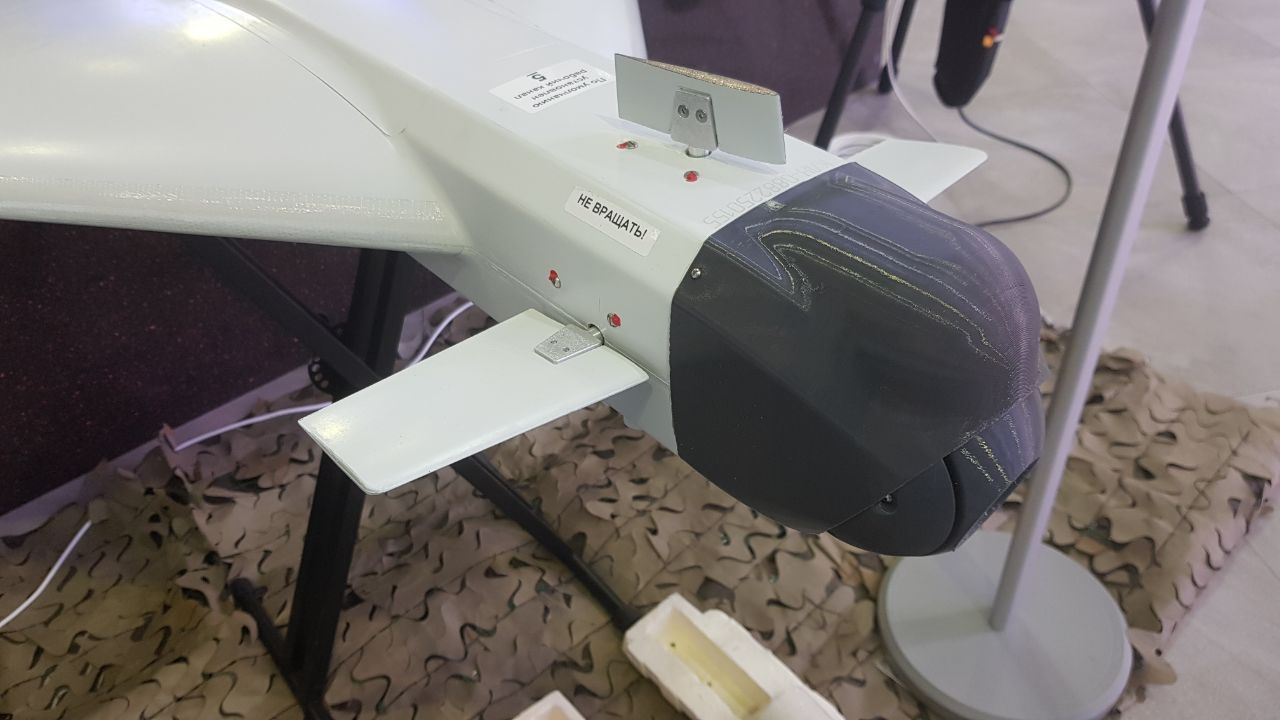
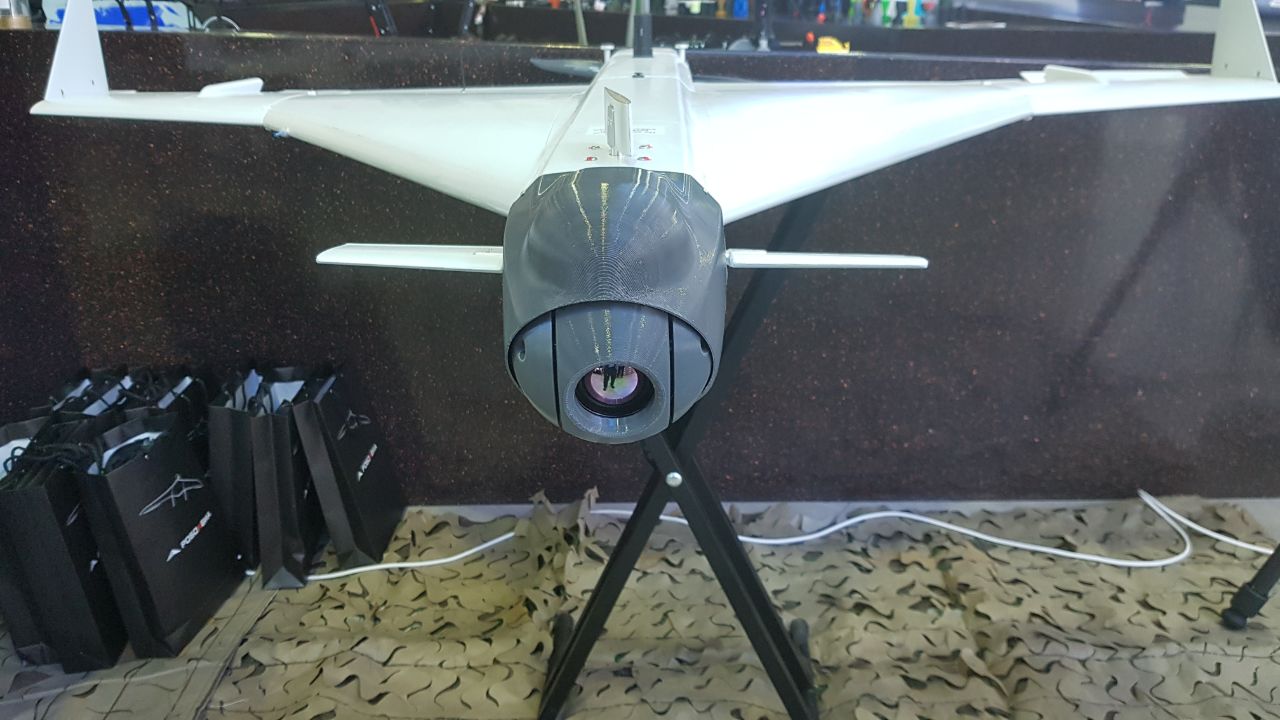
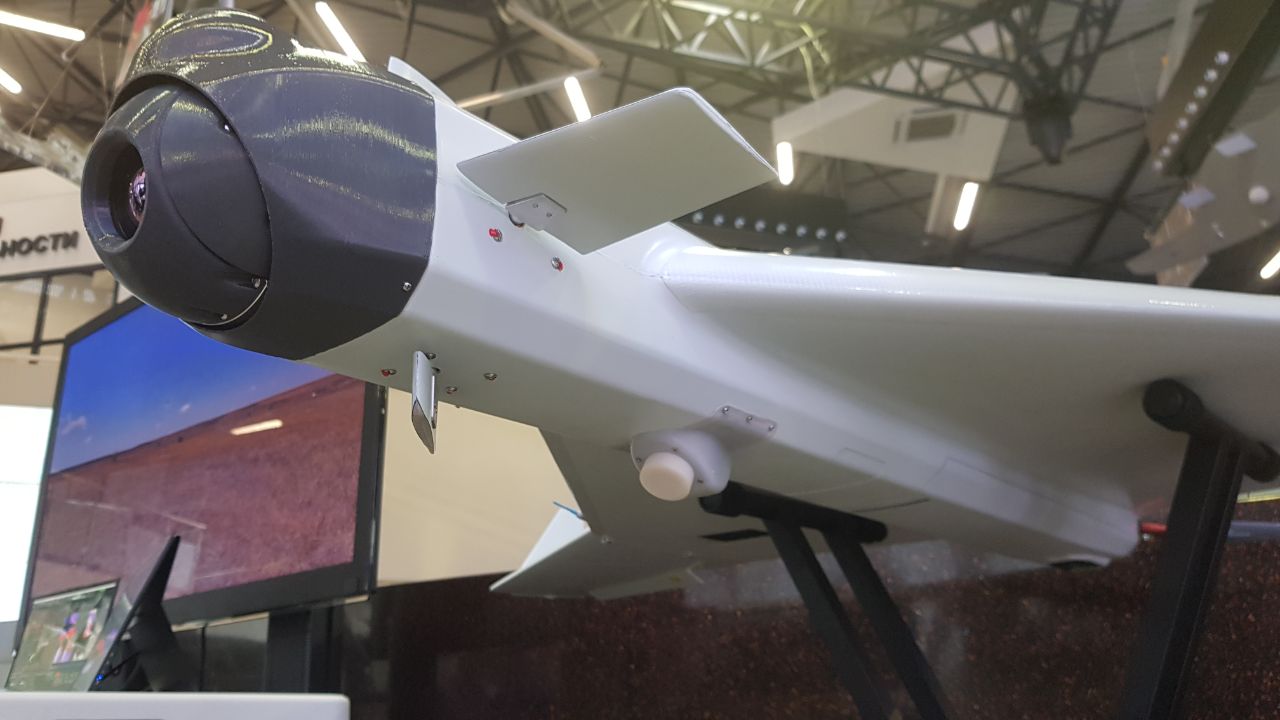
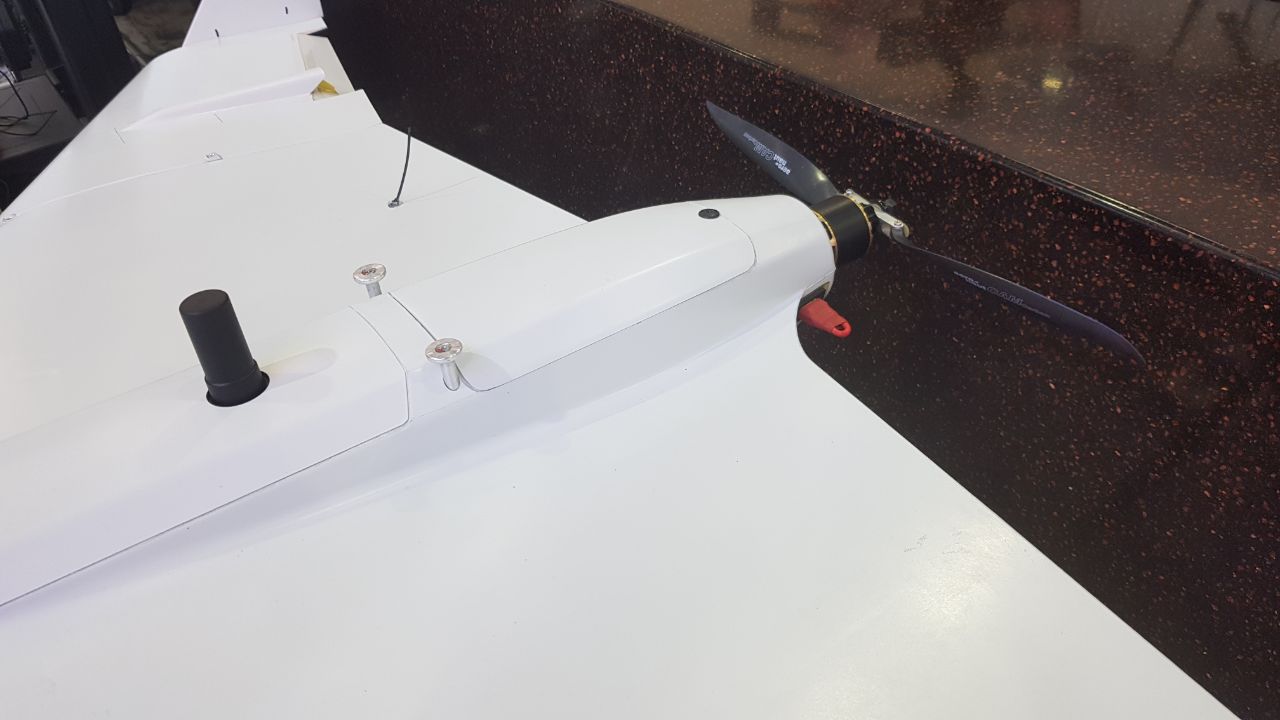
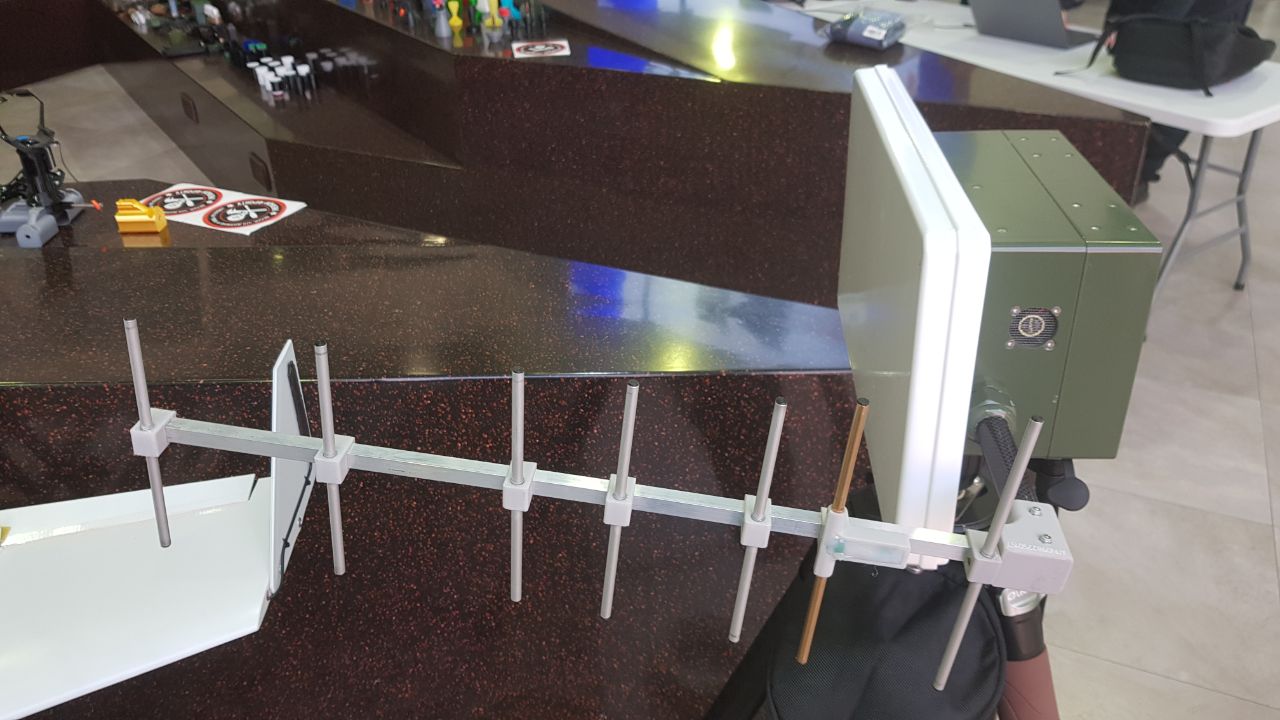
According to information provided by the manufacturer, the Klin suicide drone has a range of 120 kilometers, a flight endurance of 80 minutes, a ceiling of 2,000 meters, a speed of up to 300 kilometers per hour, a length of 1.6 meters, a wingspan of 1.9 meters, a takeoff weight of up to 13.5 kilograms, and a warhead weighing 5 kilograms.
The Klin suicide drone/loitering munition can autonomously track targets without relying on satellite positioning systems like GPS, using artificial intelligence. In addition to conventional targets, it can also track other drones.
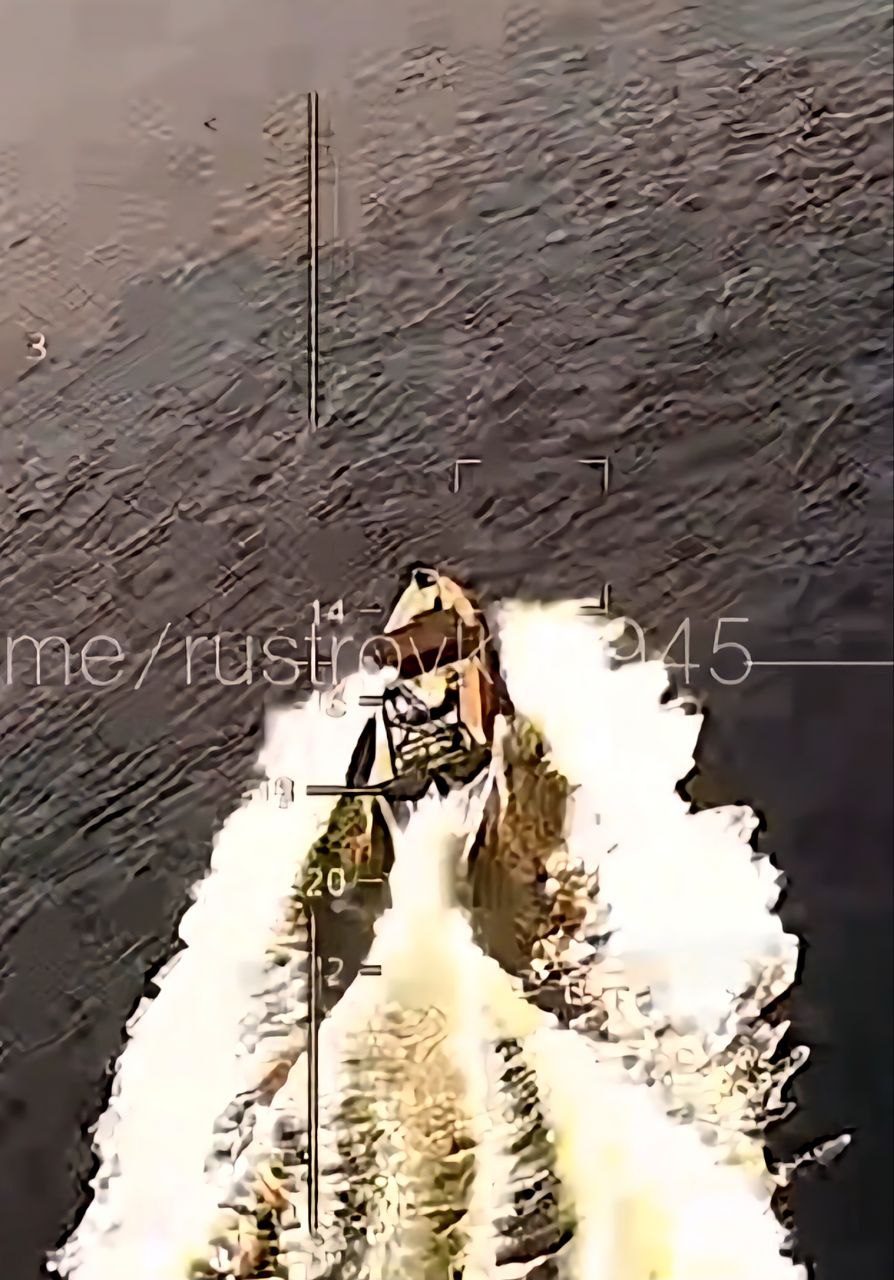
In a video released in June this year showing Klin’s field performance, the drone locks onto a Ukrainian unmanned surface vehicle (USV) in the Black Sea and uses airburst munitions to accurately strike the target.
Klin drone field performance against Ukrainian USV
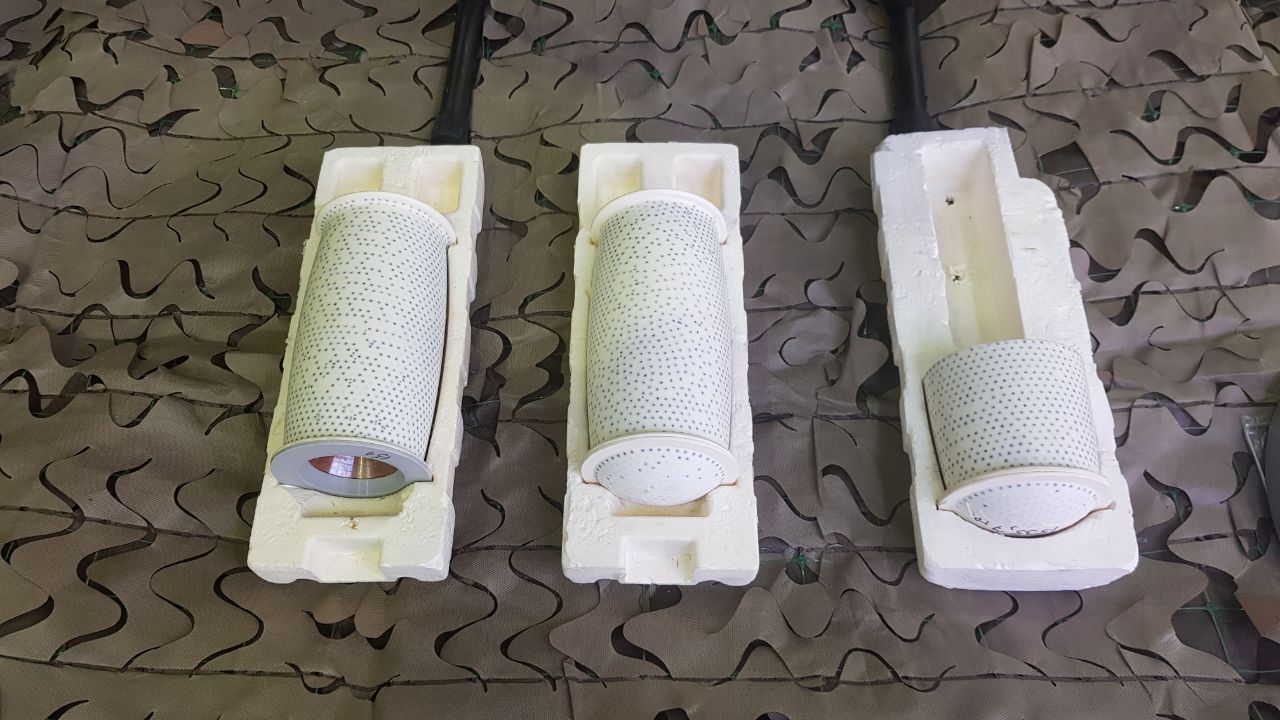
During the unveiling, three types of munitions were showcased: shaped charge, airburst explosive, and high-explosive fragmentation. This variety of munitions enhances the drone’s effectiveness against different targets and in various field conditions.
Types of munitions introduced for the Klin suicide drone
At first glance, the Klin drone may seem simple like other drones in its class; however, the development of autonomous drones like Klin reflects the rapid and significant evolution in Russia’s drone doctrine. Russia is quickly adapting to new battlefield conditions and filling tactical gaps to enhance asymmetric attack capabilities against Ukraine or any potential future conflict in Europe.
One of the things to consider about this drone is the use of the M135 Pulsejet engine. Pulsejet engines are the simplest type of jet engines and in the valveless type they do not have any complicated moving parts. The use of this engine greatly reduces the cost of construction.
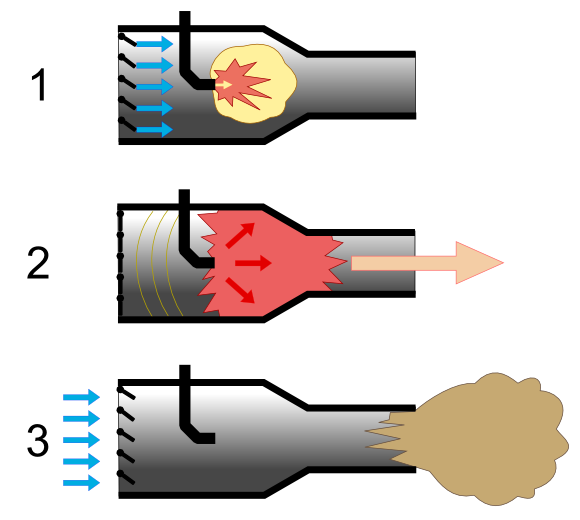
There are two main types of pulsejet engines, both of which use resonant combustion and harness the expanding combustion products to form a pulsating exhaust jet that produces thrust intermittently. The first is known as a valved or traditional pulsejet and it has a set of one-way valves through which the incoming air passes. When the air-fuel is ignited, these valves slam shut, which means that the hot gases can only leave through the engine’s tailpipe, thus creating forward thrust.
Diagram of a pulsejet engine
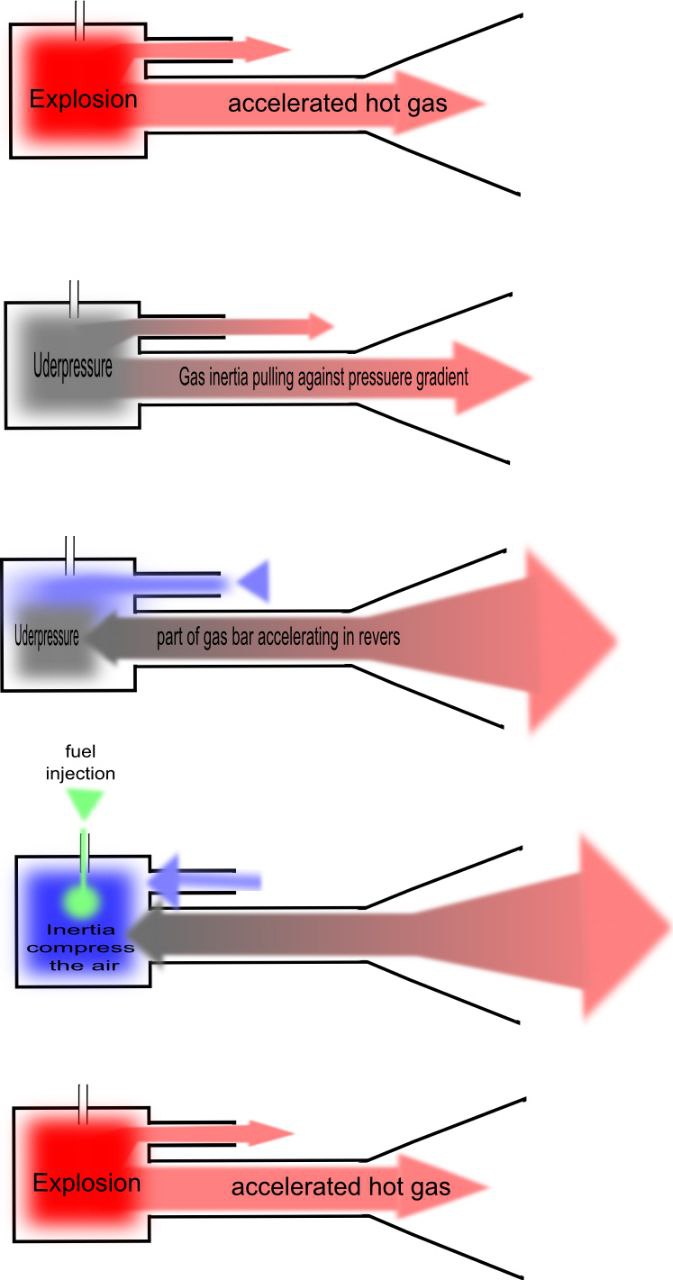
The second type of pulsejet is known as the valveless pulsejet. The valveless pulsejet is, mechanically speaking, the simplest form of pulsejet, and is, in fact, the simplest known air-breathing propulsion device that can operate “statically”, i.e. without forward motion. Valveless pulsejet engines have no mechanical valve, eliminating the only internal “moving part” of the conventional pulsejet.
One notable line of research of pulsejet engines includes the pulse detonation engine, which involves repeated detonations in the engine, and which can potentially give high compression and reasonably good efficiency.
Working mechanism of a valveless pulsejet engine
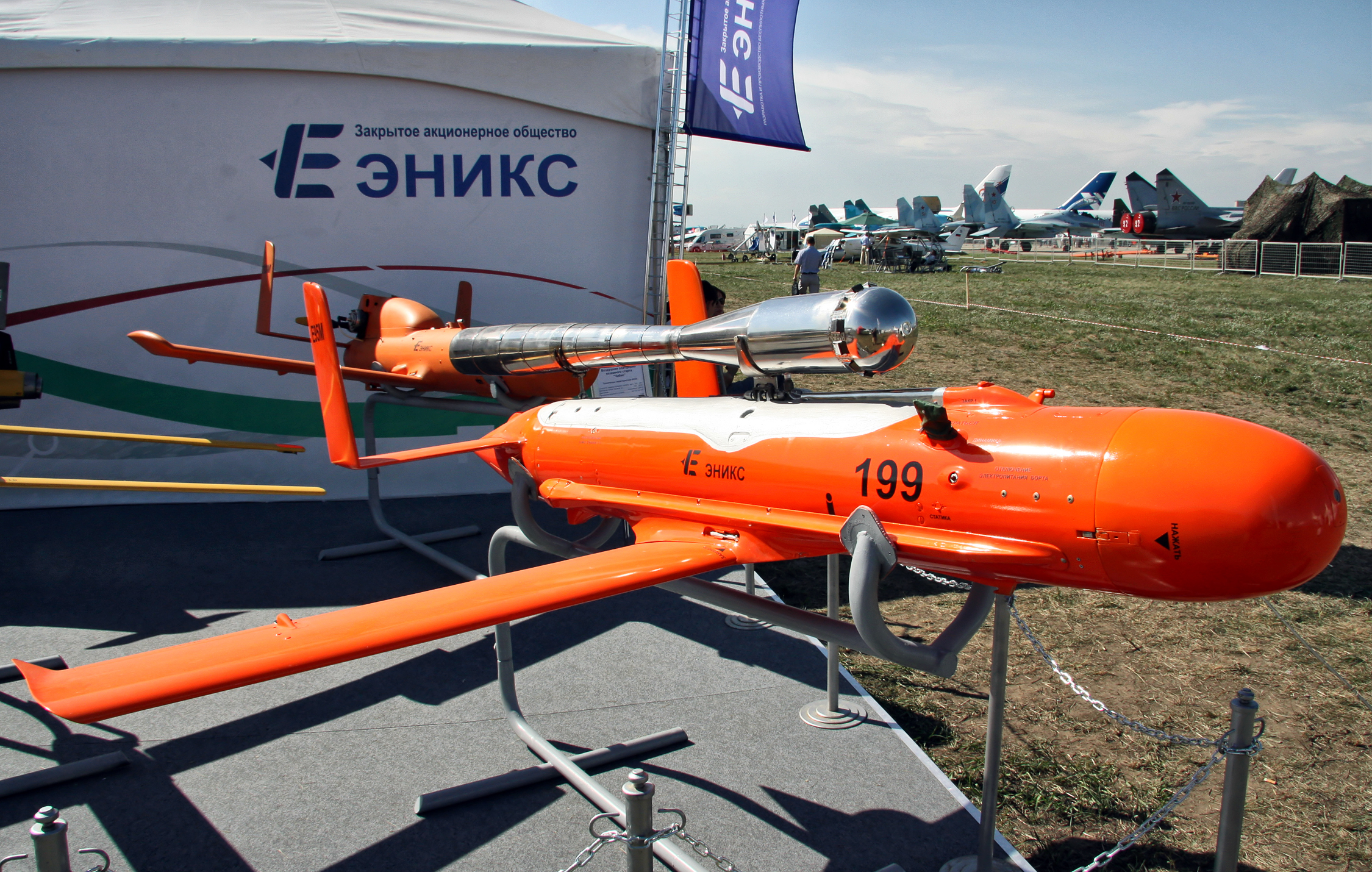
The takeoff is carried out using a low-pressure pneumatic catapult. Landing and recovering is carried out using a parachute that is placed in its body.
E95M drone pneumatic catapult launcher and ground control station
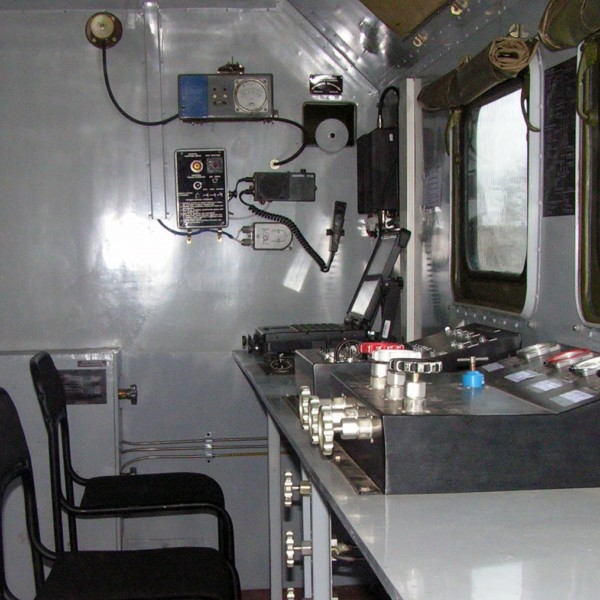
The E95M target drone is controlled by a ground mobile control station. The ground control station is mounted on an off-road chassis KAMAZ-4350, GAZ-3308 or Ural-4320. The control station is completely autonomous and provides tracking and control of the drone at a distance of up to 70 km.
E95M drone control room
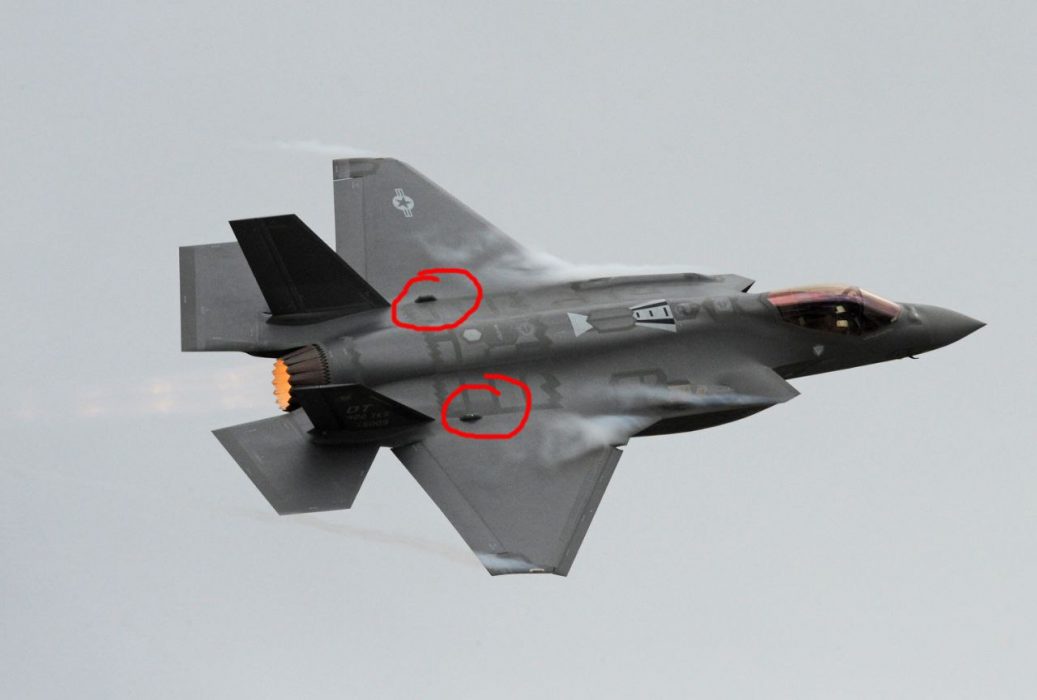
One of the cargoes of this drone in order to increase the cross-sectional area of the radar and simulate larger aircrafts is the Luneberg lens. Due to its geometry, the Luneberg lens causes resonance in the radar waves in the return wave and amplifies it and increases the overall cross section of the bird. Therefore, removable Luneburg lens type radar reflectors are sometimes attached to military aircraft in order to make stealth aircraft, such as the F-35 fighter, visible during training operations, peacetime or to conceal their true radar signature.
Luneburg reflectors (the marked protrusion) on an F-35
More pictures of the E95M target drone:
Click to view full size
E95M specifications: Length: 1.2 m Wingspan: 2.4 m Range: 50 km Flight ceiling: up to 3000 meters Flight duration: 32 minutes Maximum speed at low altitude: 300-400 km/h Available maneuvers: Dive, pull up (lifting the nose), S-turn Engine: PuVRD M135 Pulsejet Engine thrust: 150 newtons Take-off weight: 70 kg
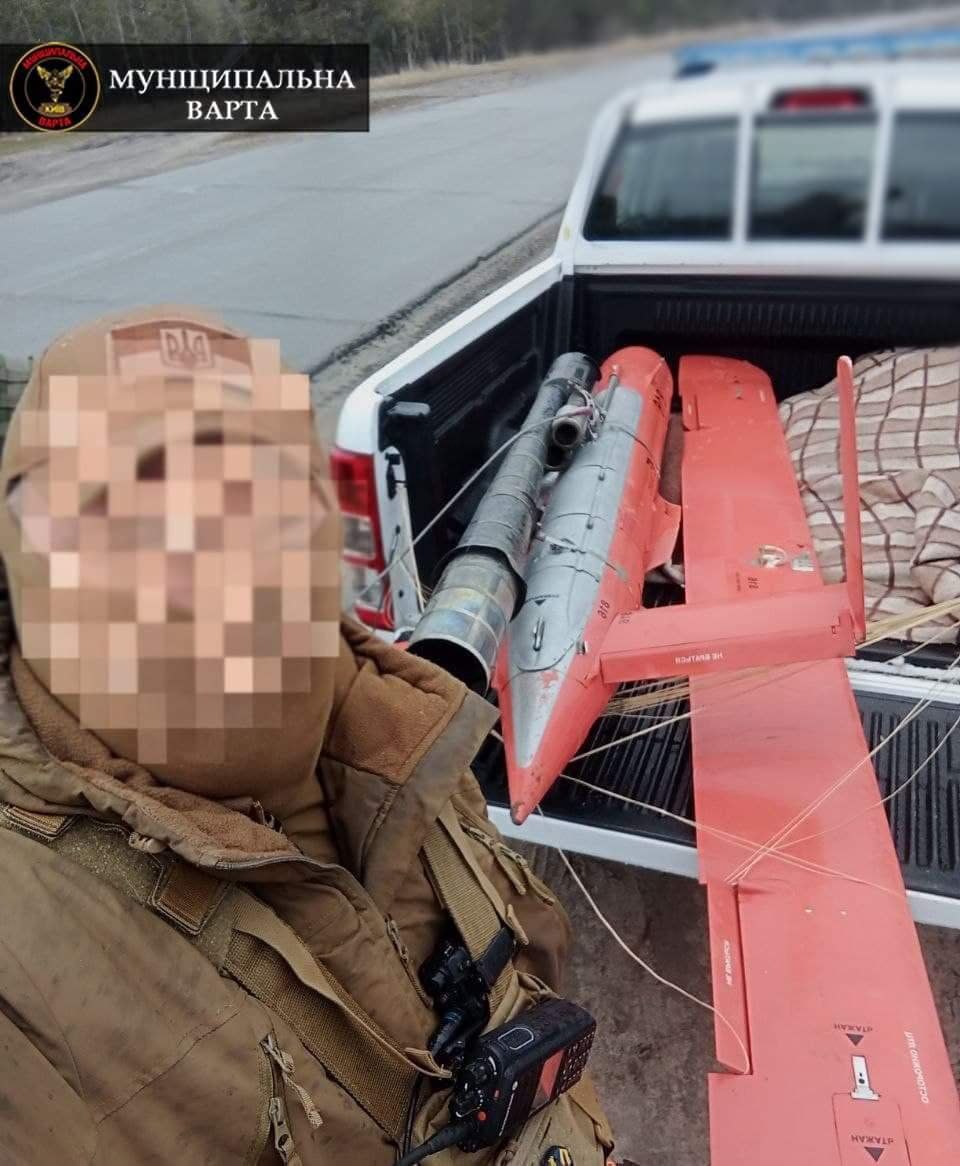
Images of the E95M target drone that fell into the hands of Ukrainian forces during the Ukrainian war
The Orlan-10E, an export variant of the Orlan-10 drone, was unveiled at the 19th FIDAE International Exhibition in March 2016, and ROSOBORONEXPORT (the sole state intermediary agency for Russia’s exports/imports of defense-related and dual use products, technologies and services) also announced plans to export the Orlan-10E drone.
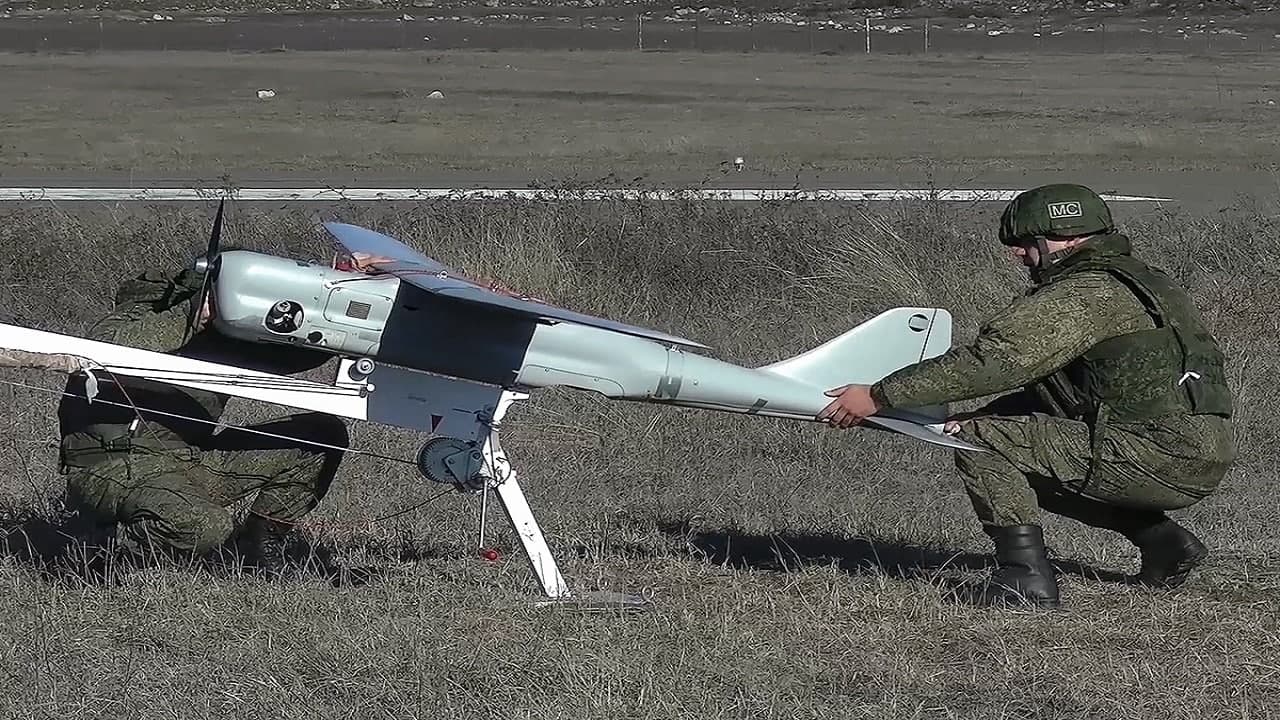
The drone is used for a variety of missions, including reconnaissance, surveillance, electronic warfare, search and rescue, combat training, radio signal detection and target tracking on difficult terrain.
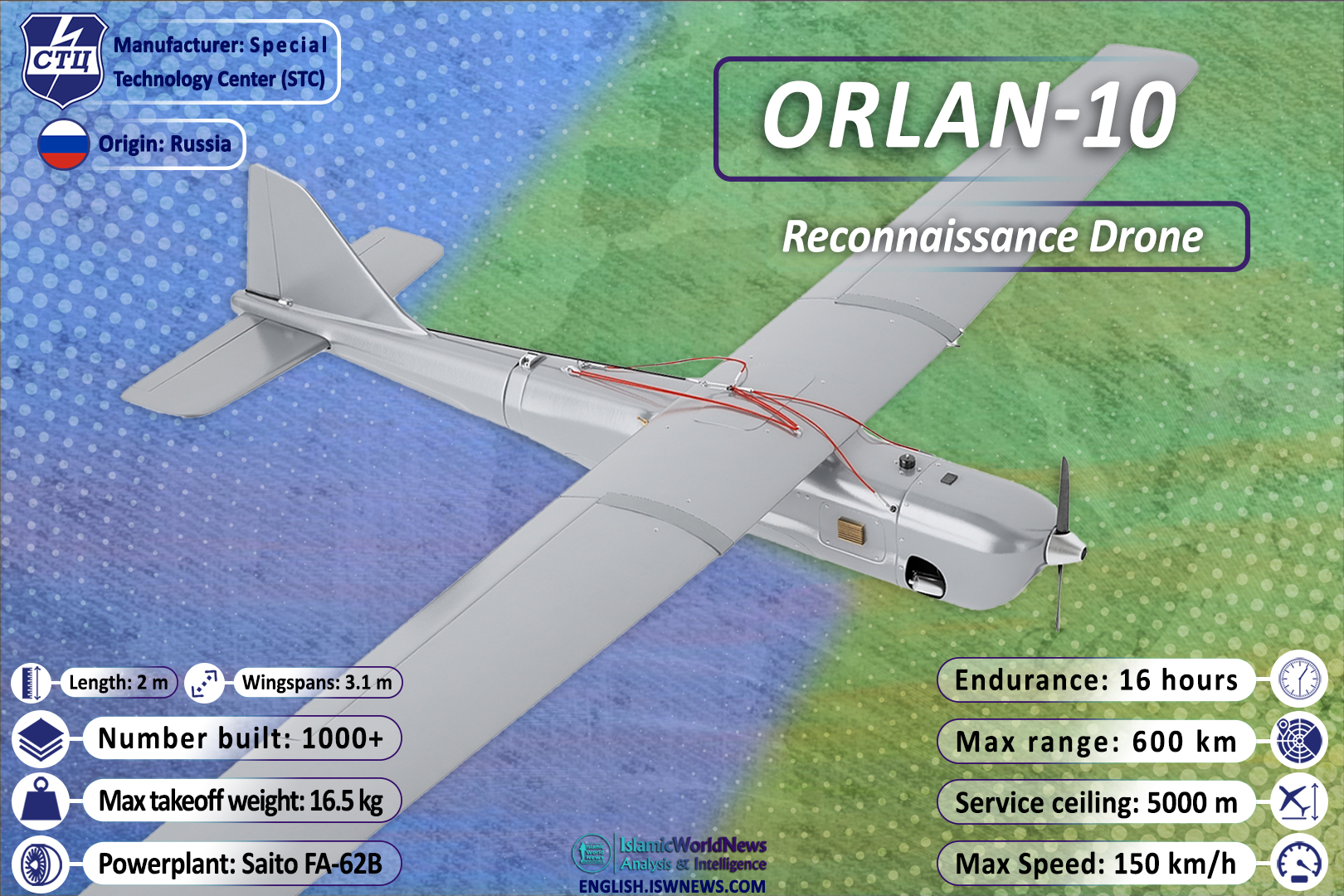
Orlan-10 specifications: Length: 2 meters Wingspans: 3.1 meters Max takeoff weight: 16.5 kg Empty weight: 12.5 kg Endurance: 16 hours Combat range: 140 km Maximum(ferry) range: 600 km Service ceiling: 5000 meters Speed: 150 km Engine: Saito FA-62B single cylinder four stroke gasoline piston engine, 0.75 kW (1 hp)
Click to view full sizeClick to view full size
“Orlan-10 Reconnaissance Drone” collection of posters in Persian, Arabic, Kurdish, Azeri, Russian for Social Media:
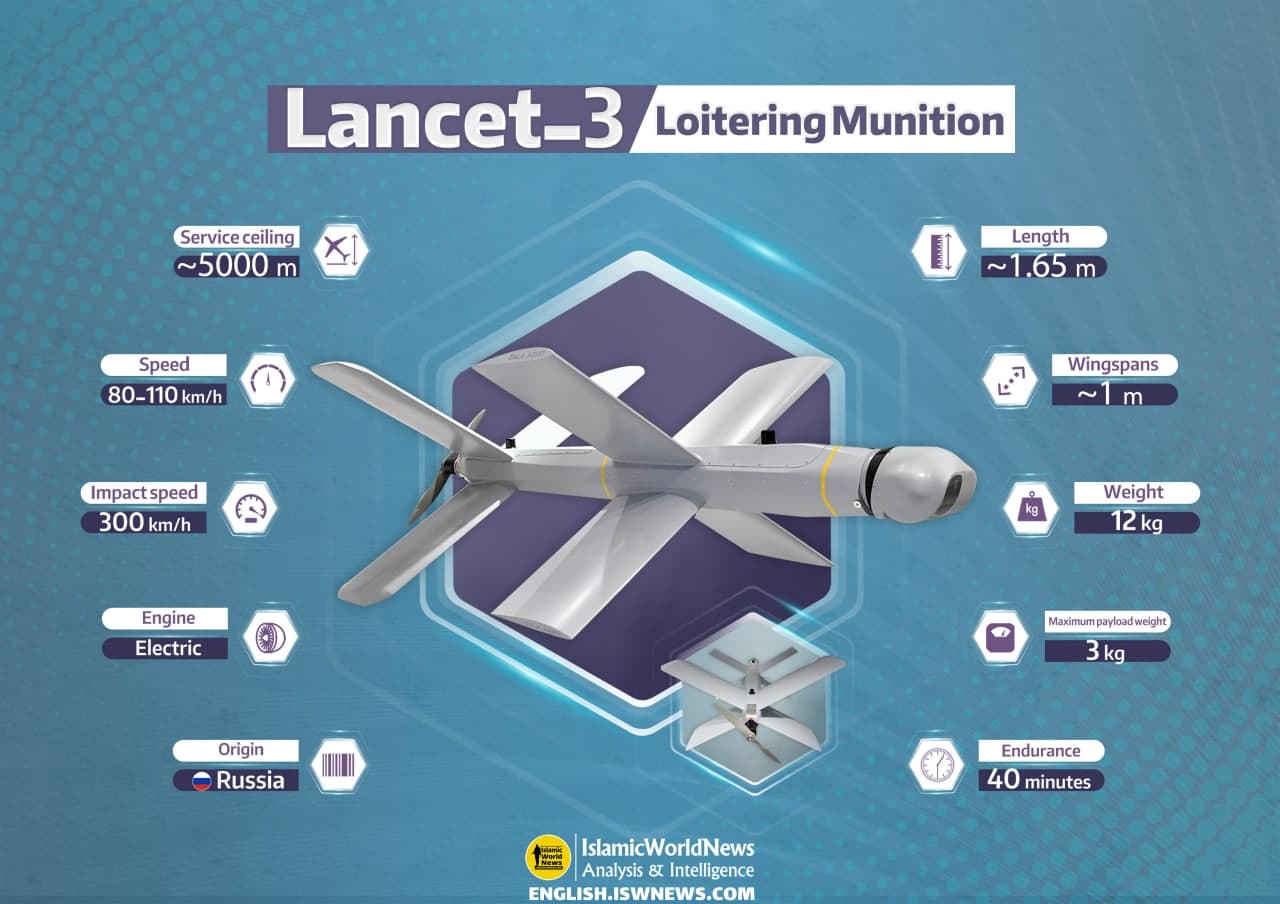
Lancet-3 loitering munition is a Russian drone made by the ZALA AERO GROUP. Since 2004 ZALA AERO GROUP is the leading Russian developer and manufacturer of unmanned aerial systems, unique payloads and mobile systems. Starting from January 2015, the Zala Aero Group became a subsidiary of the famous Russian arms company Kalashnikov. Hence, the Lancet-3 is also known as the Flying Kalashnikov.
ZALA AERO GROUP has recently developed the Lancet-3 loitering munition, And its seems the drone was inspired and modeled on other competitors.
The Zala Lancet drone was announced in late June 2019 at the Russian Army Expo exhibition with the development trials already being completed. The Lancet attack drones were deployed successfully by the Russian Armed Forces in Syria targeting Idlib militants in November 2020.
A loitering munition (or suicide drone) is a weapon that loiters around the target area for some time and attacks only once a target is located. This process can be self-reliant based on artificial intelligence or based on target approval by the operator. Loitering munitions enable faster reaction times against concealed or hidden targets that emerge for short periods without placing high-value platforms close to the target area, and also allow more selective targeting as the attack can easily be aborted. Loitering munitions fit in the niche between cruise missiles and unmanned combat aerial vehicles (UCAVs), sharing characteristics with both. They differ from cruise missiles in that they are designed to loiter for a relatively long time around the target area, and from UCAVs in that a loitering munition is intended to be expended in an attack and has a built-in warhead.
Video published by ZALA AERO GROUP on performance of the Lancet-3 suicide drone
The Lancet-3 suicide drone appears to have been modeled on the Israeli regime’s Hero family drone. Lancet-3 offers the ability to hunt targets with a range of 40 km with the ability to confirm the target before hitting. In this method, through the data link, the images of the drone electro-optical system are transmitted to the operator and the operator, after confirming the target, gives the order to engage.
The warhead fuse of this drone is of the proximity type in order to increase its effectiveness against soft targets such as tents, gatherings of enemy personnel, etc. This fuse is activated before the weapon hits the target.
According to information released by the manufacturer of this drone, the built-in laser protection device embedded in the Lancet-3 drone can effectively resist the laser weapons which are used to shoot down drones. Lancet-3 uses dual X-shaped tail design that increases its stability and maneuverability based on aerodynamic principles. This design has also helped to reduce the size of the drone effectively.
Kalashnikov’s promotional video of the Lancet-3 drone
The Lancet-3 drone weighs 12 kg and is easily portable. Also, the maximum amount of cargo (warhead) carried by this drone is 3 kg. The Lancet-3 drone can fly for 40 minutes at a speed of 110-180 km / h.
The previous version of this drone, the Lancet-1, weighs 5 kg with a payload of 1 kg and a flight time of 30 minutes and smaller dimensions. Comparing the Lancet-3 and Lancet-1 drones, it can be seen that the new version has a much better offensive capability.
The drone uses an electric motor to operate at the lowest noise level. This type of electric motor uses for surprise attacks and this method has a significant psychological effect on the enemy. Lancet-3 is launched from a catapult. The drone has no provision for landing as it is designed to self-destruct when it hits enemy targets. The drone is also capable of crashing into enemy drones.
It should be noted that Lancet-3 has earned the nom La Guerre “flying Kalashnikov” (or flying AK-47) for its simplicity, usability, and reliability.
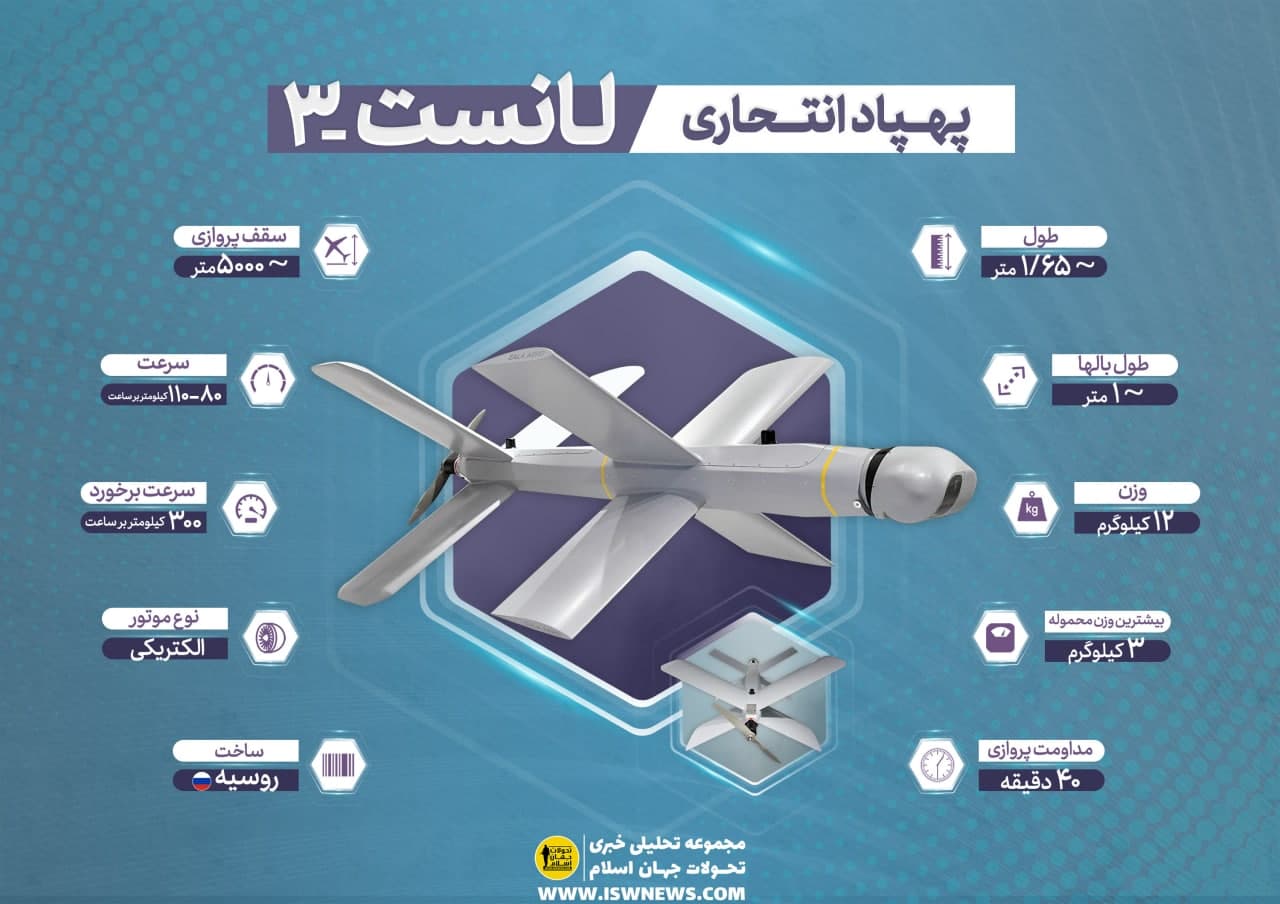
Lancet-3 suicide drone specifications:Length: ~ 1.65 m Wingspans: ~ 1 m Weight: 12 kg Maximum payload weight: 3 kg Endurance: 40 minutes Service ceiling: ~ 5000 m Speed: 80-110 km/h Impact speed: 300 km/h Engine: Electric Origin: Russia
Click to view full size
“Lancet-3 Suicide Drone ” collection of posters in Persian, Arabic, Kurdish, Azeri, Russian for Social Media: