On October 12, an Ukrainian MiG-29 fighter jet crashed while intercepting and hunting the Shahed-136 suicide drone over Vinnytsia region. The Ministry of Defense of Ukraine has announced that this fighter jet suffered a technical failure during the mission and the pilot ejected before the crash. Ukrainian military officials claim that this fighter jet destroyed 5 Shahed-136 planes yesterday.
The crash of this fighter jet just to hunt a low-cost suicide drone has led to many reactions on social media. Since the entry of inexpensive but powerful and very effective Shahed-136 drones into the war in Ukraine, the balance has been notably tipped in favor of Russia, and Ukrainian infrastructure and equipment are being destroyed with great precision.
On the other hand, despite the existence of short-range and medium-range defense systems and heavy intelligence support for Ukraine by western countries, the Ukrainian army has so far failed to effectively repel Shahed-136 drone attacks. Therefore, the Ukrainian army has turned to using expensive fighter jets to repel these kind of attacks. Currently, direct and visual interception by fighter jets is the only less effective but available way to deal with these attacks; A solution that brings many costs and risks for the Ukrainian army!
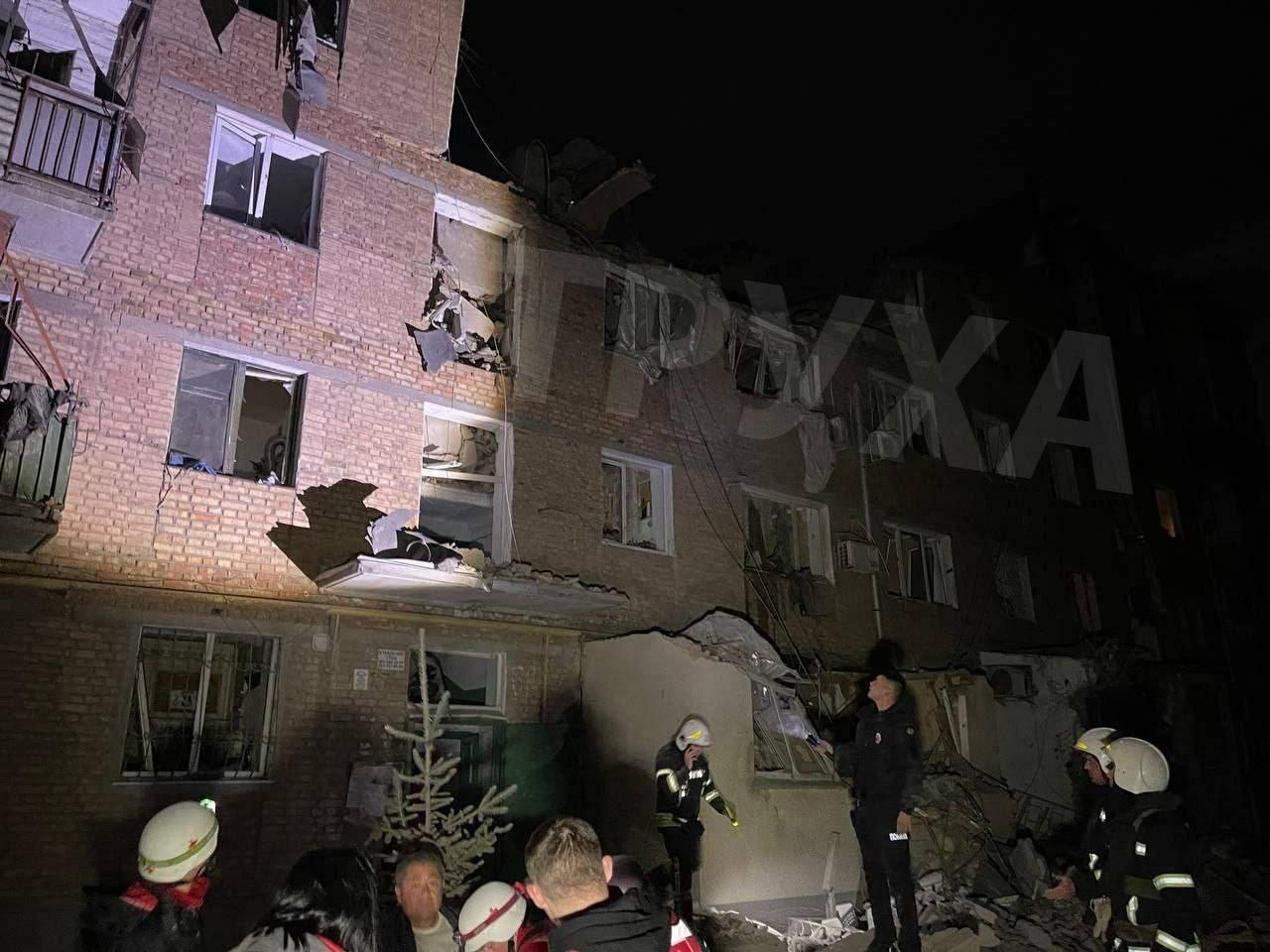
Last night, in another failed attempt, Ukrainian air defense systems intercepted a Shahed-136 drone; But they fail to destroy this drone and the air defense missile returns to them and causes damage to the residential areas of Odessa.
Destruction of a residential area due to an air defense missile
Also, this morning, Shahed-136 drones precisely targeted Ukrainian infrastructure facilities in Makarovsky district on the outskirts of Kyiv. In this attack, the Ukrainian army also fails to destroy the drones.
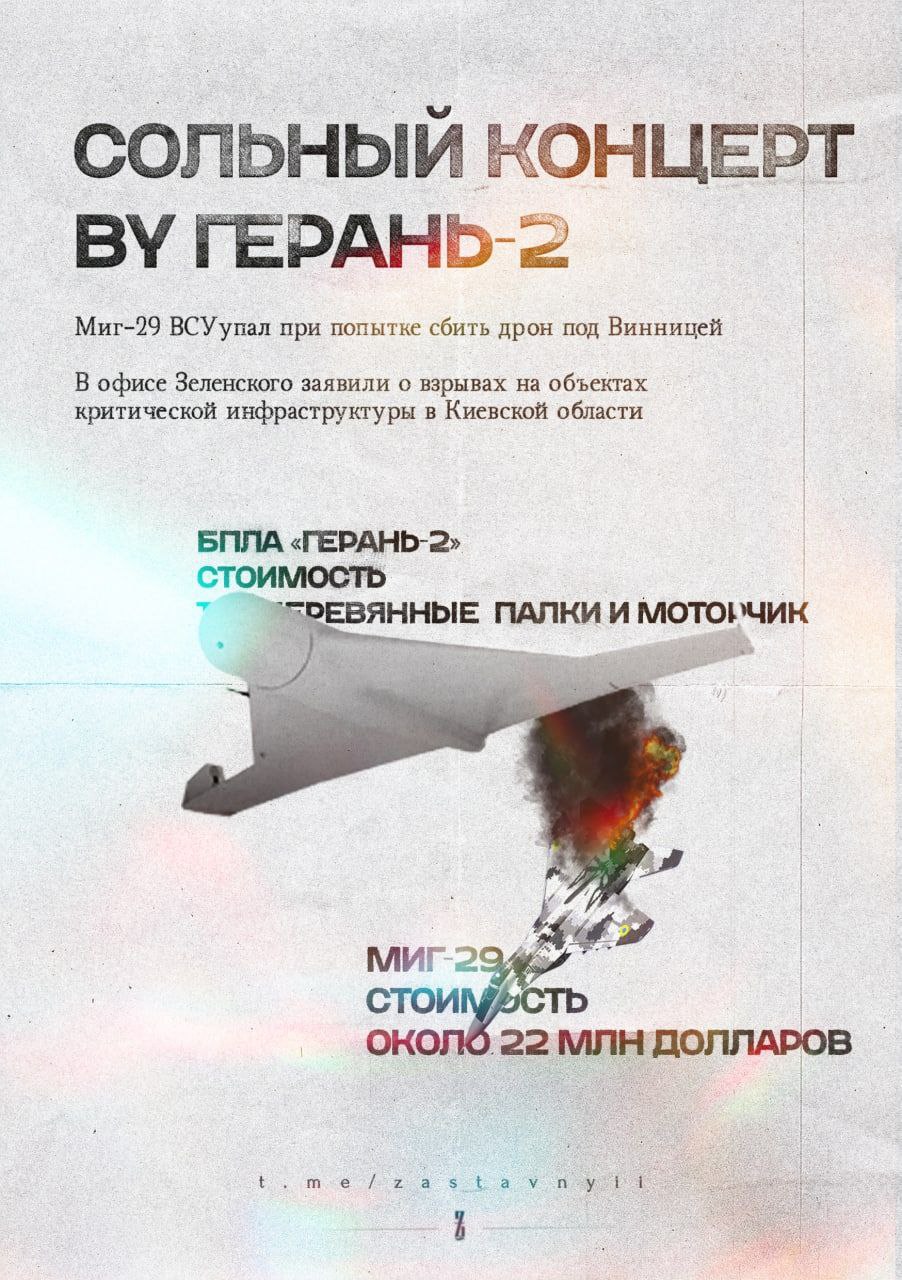
The translation of a poster published by pro-Russian media mocking the crash of the MiG-29: “Infernal flying mopeds continue to kill Ukrainian statehood.”
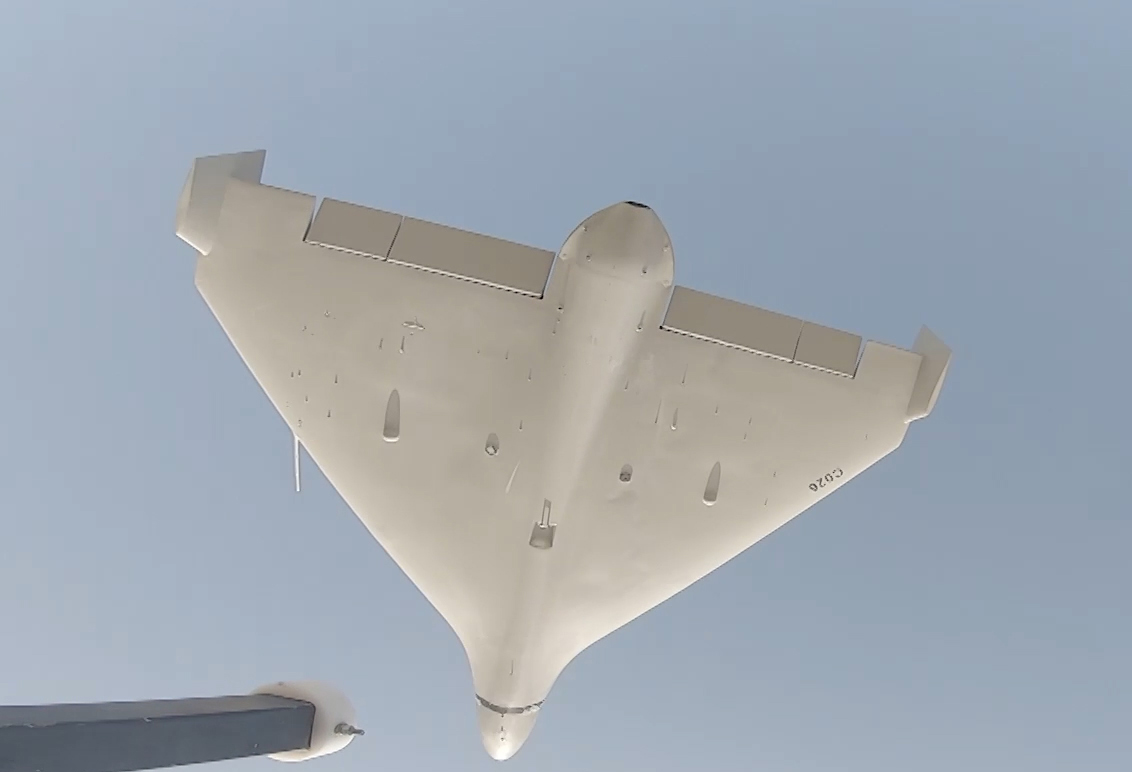
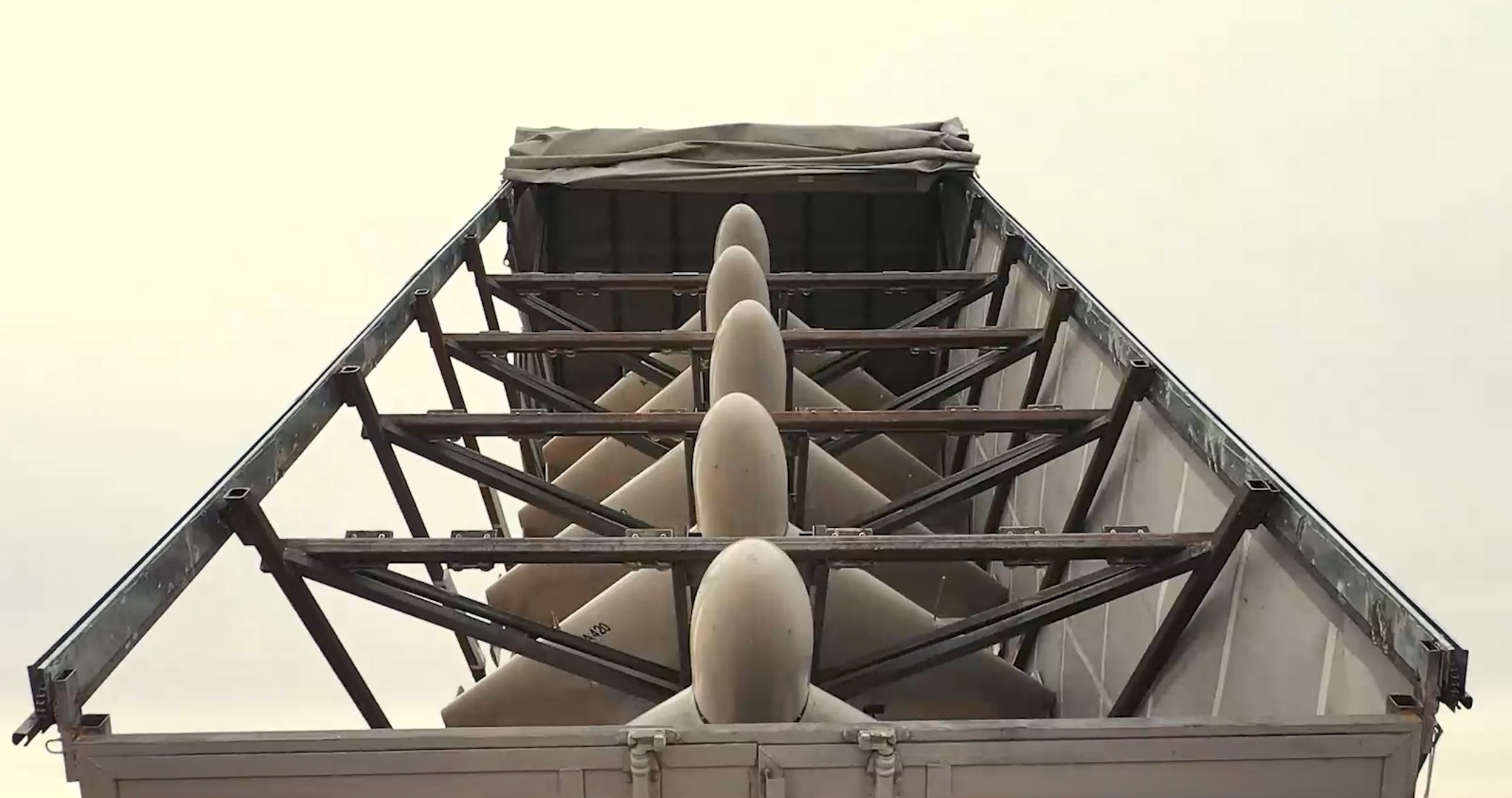
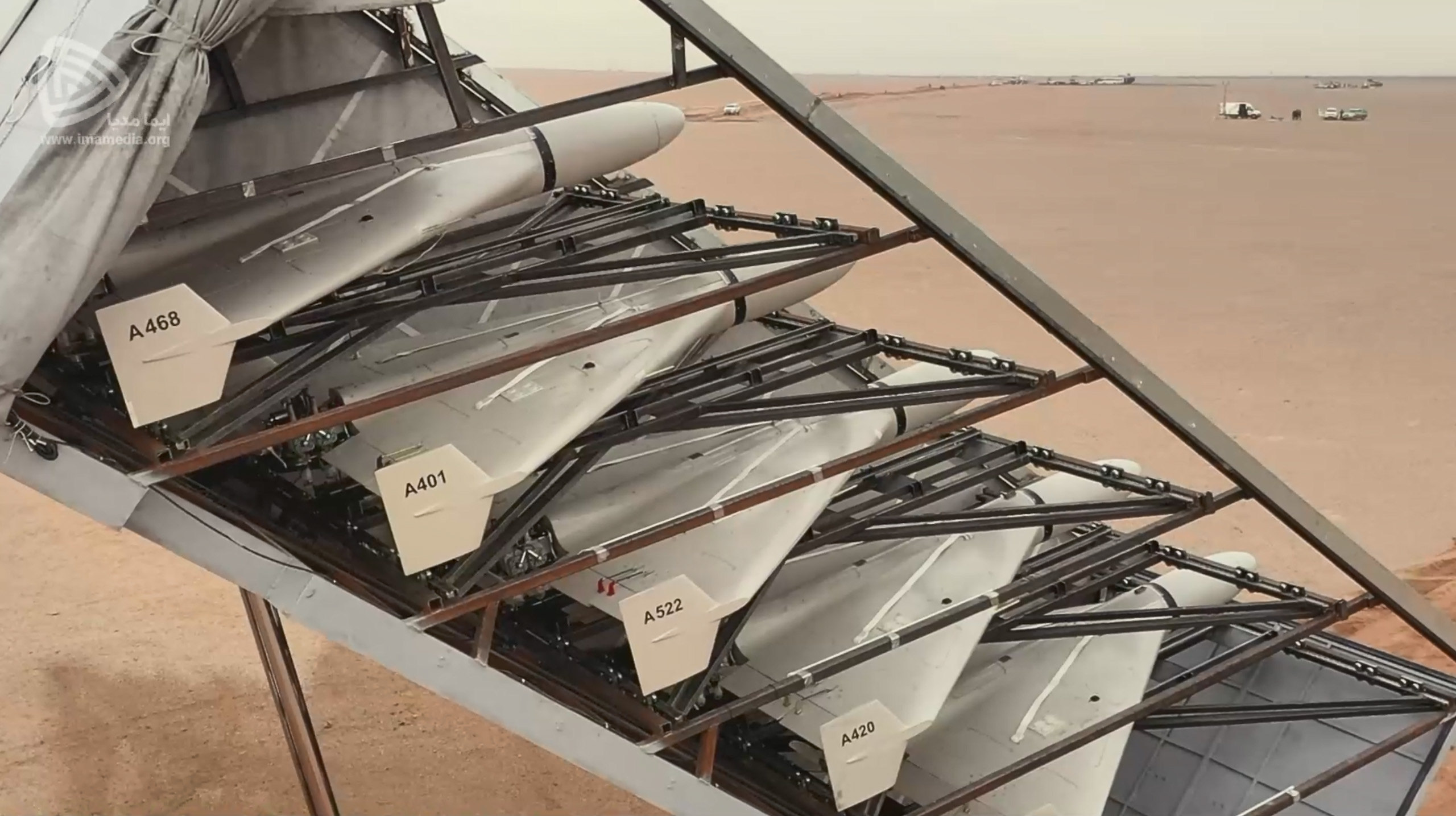
In the ‘Great Prophet (PBUH) 17‘ exercise for the first time, close-up images of Shahed-136 suicide drone and its performance were shown publicly. As part of the exercise, Shahed-136 suicide drones launched from a pod or a rack with five launcher, hitting its targets with exemplary accuracy. This phenomenon attracted many comments but where does this high accuracy come from?
In some parts of the video released from the exercise in some frames, it seems that the color and amount of light reflection from the nose of the drone is different from the body, which can indicate the use of an infrared nose (IR Dome).
Footage of the performance of Shahed-136 drone in the Great Prophet (PBUH) 17 exercise
Due to the fact that the nose color is milky in color, it seems that ZnS sulfide (without applying hot isostatic pressing process) or magnesium fluoride is used in the manufacturing process to reduce the manufacturing cost. These materials are capable of transmitting infrared spectrum and largely absorb the visible spectrum. This feature could mean using a standard camera sensor that detects only the near-infrared (NIR) spectrum by absorbing the visible light spectrum through the infrared nose. (Visible camera sensors have the ability to detect near-infrared spectrum)
Considering the defense policies of the Iranian Armed Forces, weapons such as suicide drones should be as low-cost as possible, and using conventional/standard camera sensors instead of expensive infrared sensors is fully consistent with this strategy. Of course, it is possible to use infrared sensors in the MWIR and SWIR spectrum for night operations, and radar nest detectors for suppression operations of enemy defence systems.
Also, it is noteworthy that some sources, by examining the progress of infrared air-to-air missiles and examining their infrared nose, have rejected the use of infrared nose in Shahed-136. Because in the infrared imaging models of heat-finding missiles, a transparent nose is used. However, with the some more deep studies performed, it was revealed and confirmed that in the electro-optical system of Iranian Shahed-149 drone, a milky infrared nose has been used, which indicates that these noses can be used even for imaging sensors. Therefore, the idea of using an infrared nose for the Shahed-136 is still valid.
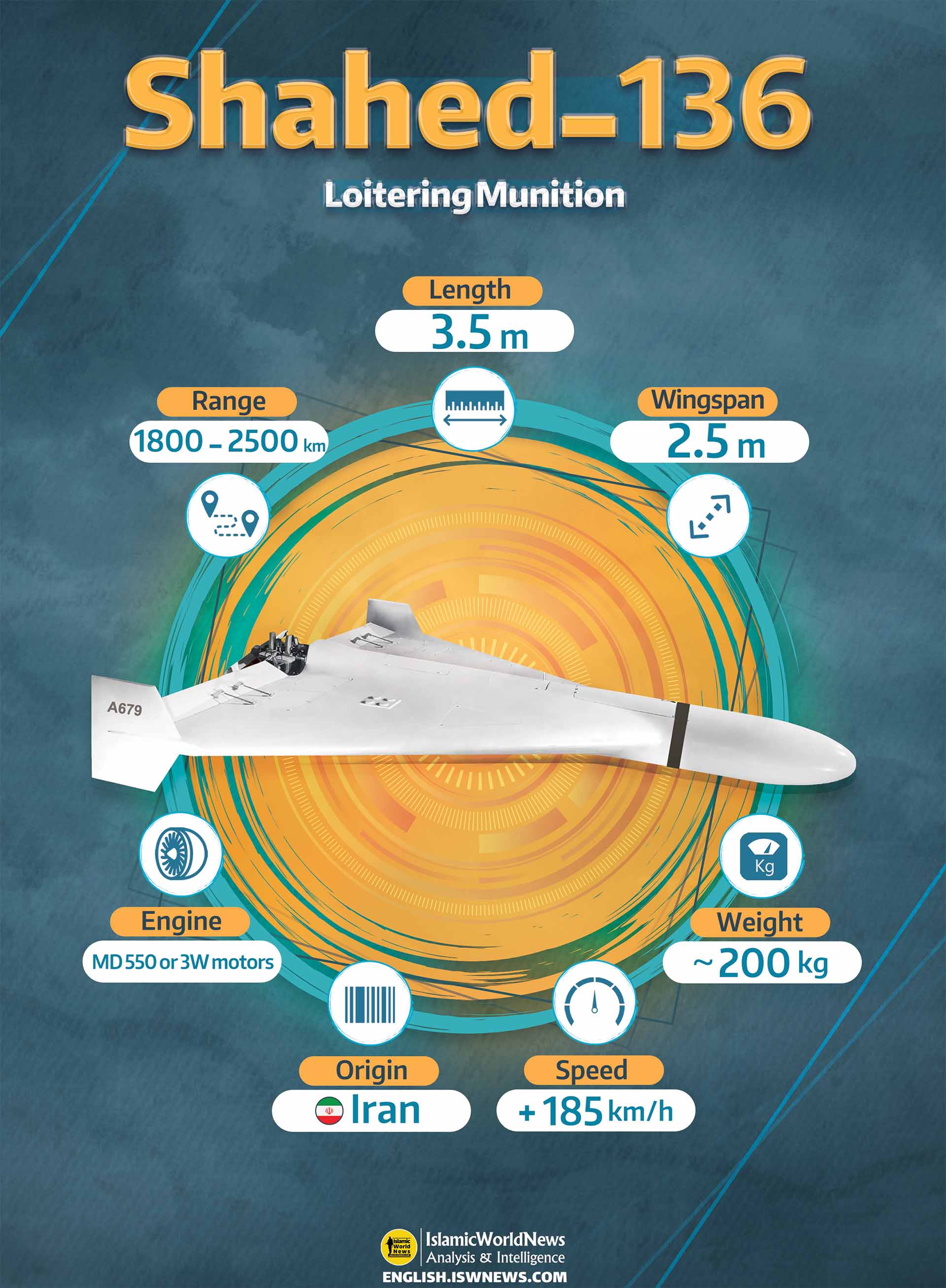
Shahed-136 suicide drone specifications: Length: 3.5 m Wingspan: 2.5 m Range: 1800 – 2500 km Weight: ~ 200 kg Speed: + 185 km/h Engine: MD 550 or 3W motors Origin: Iran
Shahed-136 suicide drone – click to view full size
The new version of the Shahed-136 suicide drone equipped with a jet engine
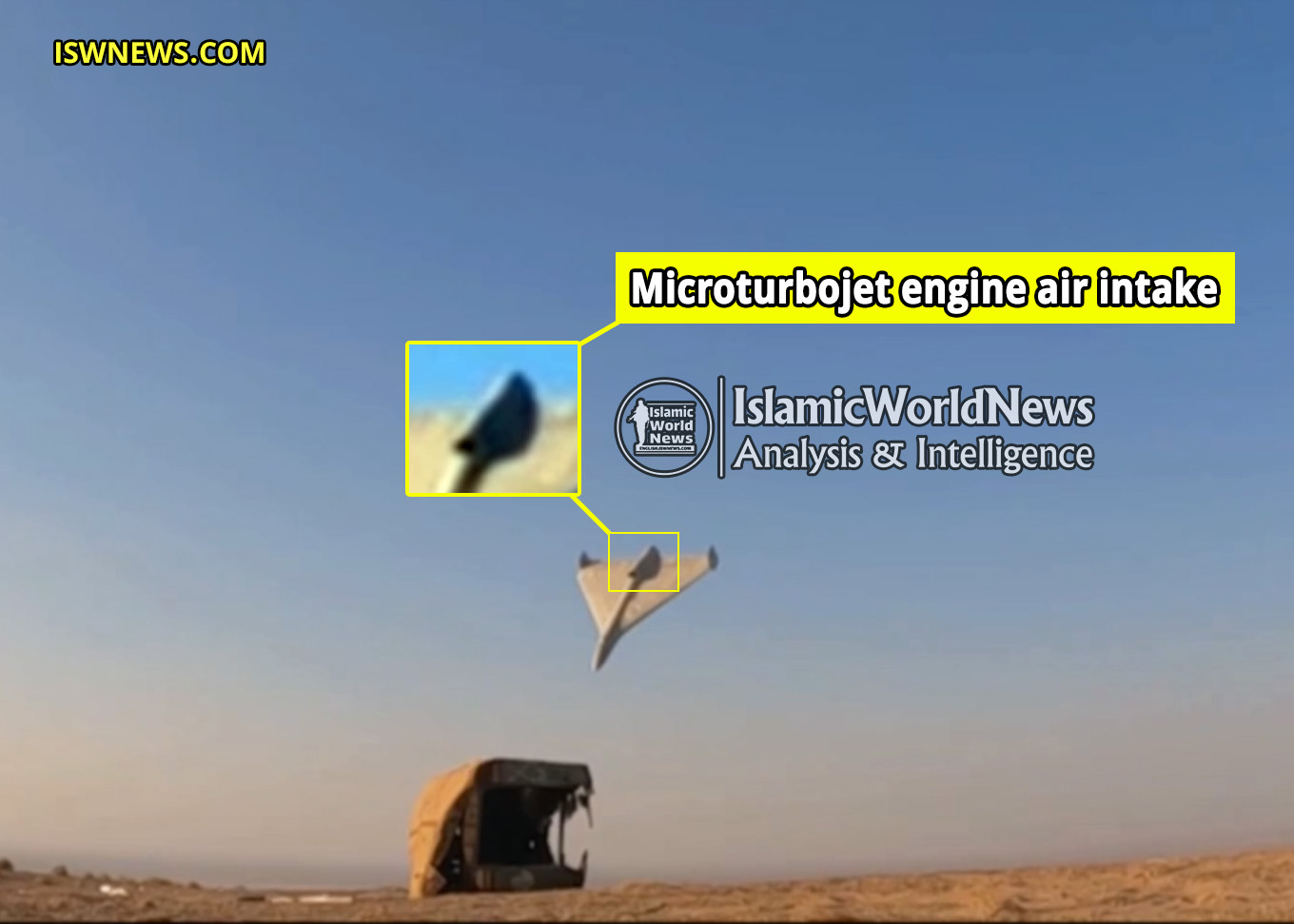
The new version of Shahed-136 suicide drone, which was unveiled recently, is equipped with a mini turbojet engine and has a higher speed and less noise than the basic version of Shahed-136. This new version was first unveiled in an Iranian documentary in October 2023 and is now known as Shahed-238.
A screen grab of the new version of the Shahed-136 suicide drone equipped with a micro-turbojet engine
The Shahed-136, despite its low radar cross-section (RCS), due to its piston engine, low speed, and distinctive loud noise, provided the enemy’s air defense systems and even ground forces with enough time to identify it. However, the use of a turbojet engine in the Shahed-238, while increasing the speed and reducing the noise, along with the drone’s specialized airframe, provides much better protection against heavy machine guns and anti-aircraft cannon, improving the overall success rate of the drone.
Air intake of the micro-turbojet engine in the new version of the Shahed-136 drone
The increase in the speed of the UAV and its very low cross-sectional area make this UAV practically a more dangerous version than the previous one, and the air defense systems that previously had problems in intercepting the Shahed-136, become more vulnerable to this new suicide drone.
More images of the Shahed-136 drone:
Click to view full size
Shahed-136 Loitering Munition posters in Persian, Arabic, Kurdish, Azeri, Russian for Social Media: