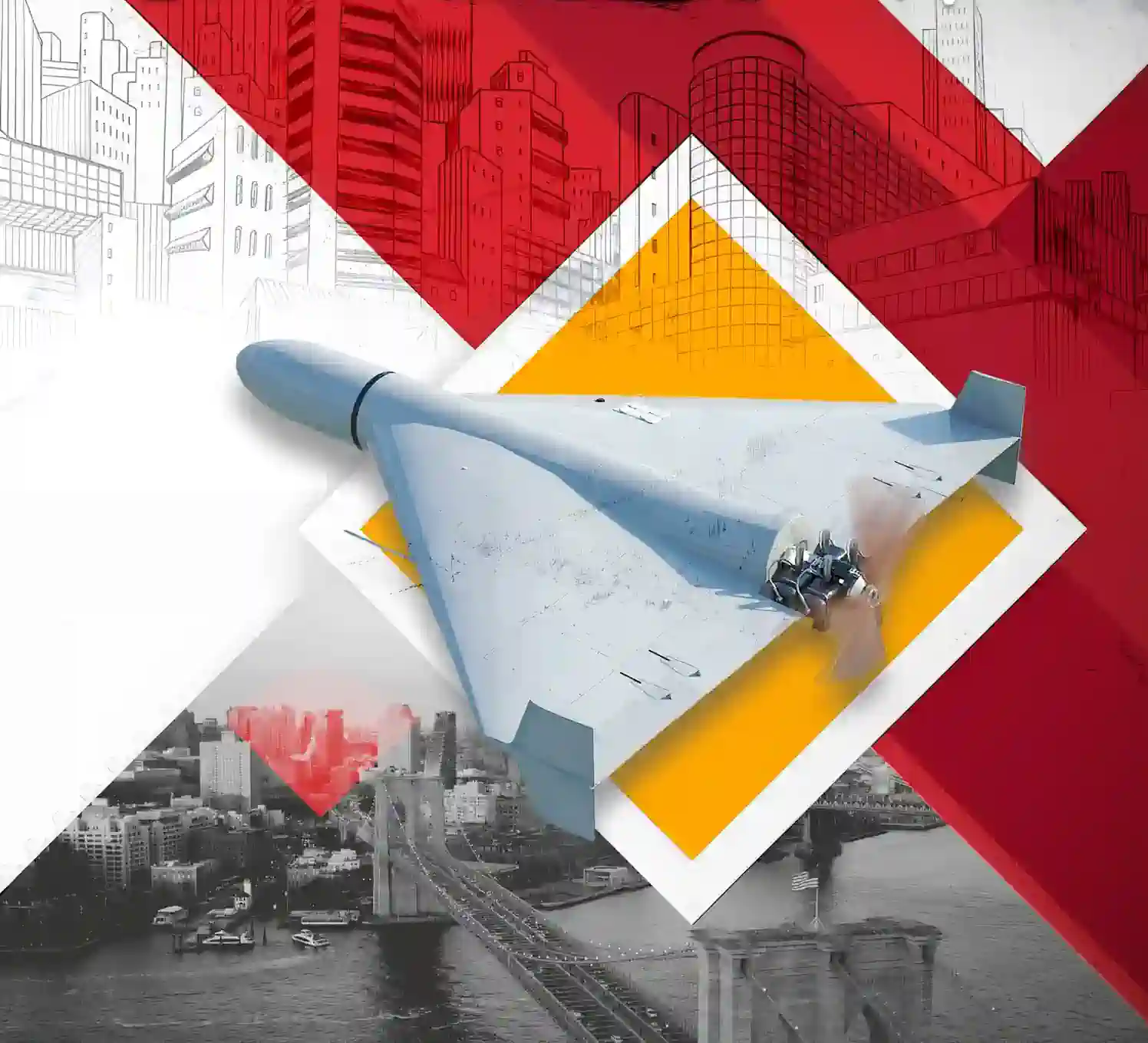
Tag: Suicide drones

  • Reverse Suicide Rotation!; America’s New Drone Policy in West Asia

    Reverse Suicide Rotation!; America’s New Drone Policy in West Asia

    Increased US Threat in Iran’s Vicinity:
    Since the drones in this plan are based on the Shahed-136 model but feature additional capabilities and automated coordination, their deployment could boost US ability for precision strikes, swarming attacks, and long-range operations targeting regional assets.

    Evolving Deterrence and Military Competition:
    The introduction of a large number of low-cost drones will challenge the traditional balance between Iran’s air-missile capabilities and advanced US systems, potentially initiating a new arms race focused on “cheap mass production.”

    Uncertain Security and Political Outcomes:
    Deploying these systems, which can operate independently and within networks, raises questions about Washington’s intentions: Is it deterrence? Preparing for future offensives? Pressuring Iran? Or fostering a new pattern of regional conflict? The key issue is the impact of deploying the Scorpion Strike drone unit and affordable, network-capable drones on regional power dynamics, security, and Iran’s deterrence against the US. This report explores how this could alter combat rules, increase limited conflicts, or forge a new drone warfare paradigm in West Asia.

    Background
    The US Army has deployed its first operational unit equipped with affordable kamikaze drones of the “Unmanned Combat Attack System” type in West Asia. These systems are based on reverse-engineering the Iranian Shahed-136 drone. According to Gifron Aerospace, the team leader, establishing the Scorpion Strike Task Force marks a major shift in operational structure and reflects Washington’s new stance on Iran. Earlier reports also highlighted the US military’s need to heavily invest in these Shahed-136 clones, which are quick to produce and adaptable, and could be crucial in future global missions.

    Analysis of Findings:

    Mechanism of Formation of the Scorpion Task Force
    The United States Central Command (CENTCOM) announced the formation of the Scorpion Strike Task Force, created under the “US Military Drone Dominance Plan” launched earlier this year by US Secretary of War Pete Hegseth. The task force, which reports directly to the US Special Operations Command Central, is responsible for overseeing the deployment of new drones in the region. Additionally, the “CENTCOM Joint Rapid Response Task Force,” established last September to enhance the deployment of military capabilities, has also been involved. Tim Hawkins, a CENTCOM spokesperson, explained that the task force includes approximately 24 specialists whose role is to manage the deployment and operation of new drones. He noted that while the exact number of drones deployed remains undisclosed, their deployment is substantial enough to grant the US military a “significant level of operational capability.”

    Drones and Estimated Production Cost
    The drones, featuring a delta wing design and measuring about 10 feet in length and 8 feet in width, were created by Arizona’s Spectre Works in partnership with the US Army. This system includes technical features enabling ‘automated coordination” among the drones, making them suitable for group tactics and network operations. Captain Tim Hawkins, a project team member, reported that each drone costs approximately $35,000. Despite the low price, the system offers capabilities comparable to traditional long-range US Army systems but at a significantly reduced cost. He also highlighted their long range, the ability to operate beyond line of sight, and extensive coverage potential within CENTCOM’s area. An official CENTCOM statement mentioned that these long-range, autonomous LUCAS drones are now operational in the region and can be launched via various methods, including catapults, rocket-assisted systems, and ground- or vehicle-based launchers.

    Multi-platform drones
    Military analyst Joseph Trowick explained that LUCAS drones can be launched from various platforms, not just ground-based systems. These drones support multiple launch methods, including deployment from naval vessels, which enhances their value in maritime and sea-based missions. Earlier US military analyses indicated that integrating inexpensive, multi-role drones into the US Navy could add new layers of defense, attack, electronic warfare, intelligence, and networking capabilities. This would transform warships into advanced nodes within a combat network. Trowick also noted that the initial design of the new UAS drone was directly inspired by Iran’s Shahed-136. The US military collaborated with several innovative tech companies to develop and produce the drone, which is a “direct result of that reverse engineering effort”. While it follows the general pattern of the Shahed, some parts have been redesigned to meet US operational requirements.

    FLM-136 UAV
    SpectreWorks, a manufacturer of these drones, has released specifications for a related design called the FLM-136, described as a “training target” or experimental platform. According to the data, the drone can reach a maximum range of approximately 715 km and remain airborne for up to six hours. Its payload capacity, excluding fuel, is around 18 kg, and it flies at about 137 km/h, with the ability to accelerate to roughly 194 km/h. It remains unclear whether these features fully represent the operational prototype of the combat offensive system or if they only pertain to experimental and early versions.

    According to data from the US Army Operational Environment Data Integration Network portal, the Shahed-136 drone features a 50-horsepower internal combustion engine and can reach speeds of around 185 km/h (100 knots). Its standard version has an operational range of approximately 2,000 km and can carry a 40 kg warhead. Designed mainly for point attacks on stationary targets, it relies on pre-programmed targeting data. Recently, Iran has introduced new Shahed-136 variants, including models with advanced guidance systems and a jet engine version with different speeds and ranges. Russia has also started producing the “Geran” variants based on the same design since beginning drone cooperation with Iran. Several derivative models are now part of its arsenal. Reports suggest that both Iran and Russia are working to enhance their drones with more dynamic, flexible, and reactive targeting capabilities, aiming for semi-intelligent drones capable of attacking moving targets or altering course during flight.

    The Importance of Cheap, High-Performance Drones
    Captain Tim Hawkins announced that the US has reached a new stage: mass-producing drones and deploying them in West Asia for the first time. He described this as a “reverse scenario against Iran,” where the US is using the same approach Iran developed through frequent drone attacks in the region. According to the head of the CENTCOM team at MacDill Air Base, observing Russia’s operations in Ukraine and Iran’s drone attacks on the Zionist regime shows that this tactic can cause significant disruption and impose heavy defense costs on the enemy. From the US perspective, it is now time to apply the same “Iranian strategy” against Iran.
    Although the Scorpion Special Forces haven’t yet deployed their new drones in actual missions, they have been tested against regional targets, confirming their operational potential. Hawkins pointed out that enhancing the US’s offensive and defensive capabilities is a concurrent strategy and stated that “sometimes effective defense comes from effective attack.” Until now, the US military has mainly regarded the drones publicly as training tools or threat simulators rather than as active offensive systems.The system could also be employed against the Houthi rebels in Yemen. While the US has announced a formal ceasefire with the group, the capability to strike them remains if necessary. The main obstacle, however, is not a lack of offensive power but rather identifying the right target. From a strategic perspective, drones like Shahed offer advantages beyond West Asia and North Africa, providing the ability to deliver large amounts of low-cost firepower. This enhances the capability to weaken enemy defenses and aligns with the US military’s focus on developing long-range, affordable, and mass-produced weapon systems.

    New capabilities
    Modern drones can be continuously upgraded thanks to their modular and open architecture design. This setup permits the integration of the latest sensors, navigation tools, and AI components without altering the core drone structure. As previously mentioned, advancements in positioning, navigation, and timing technologies are ongoing, allowing affordable, precision-attack drones to leverage this flexibility to combat electronic warfare. Additionally, the deployment of artificial intelligence in lower-end drones is imminent, enabling them to navigate autonomously without GPS and target moving objects effectively.Consequently, the effectiveness of electronic warfare in disrupting these systems is waning. In the near future, thousands of inexpensive yet highly threatening drones—costing just a fraction of a traditional cruise or ballistic missile—could easily overwhelm and disable even the most advanced enemy air defenses. This capability is expected to become a vital component of future major conflicts. Tim Hawkins notes that development efforts are progressing rapidly, especially for low-cost attack drones that are scalable and upgradeable. Spectre Works is not alone in this market; Gryphon Aerospace, an American company, also supplies a drone similar to the Shahed series, the Arrowhead MQM-172, to the US armed forces.

  • Iran Unveils New Jet Suicide Drone: Dalahu (Hadid 110)

    Iran Unveils New Jet Suicide Drone: Dalahu (Hadid 110)

    It is worth noting that this drone, initially introduced as the Hadid-110 at the IRGC’s military achievements exhibition, officially entered the IRGC Ground Forces’ combat organization as the Dalahu drone on February 19, during the second phase of the Great Prophet 19 exercise.

    Unveiling of the Hadid 110 Jet Suicide Drone at the Iranian Military Achievements Exhibition, known as Eghtedar-1403

    The Hadid 110 or Dalahu drone is equipped with a mini jet engine and is launched by a rocket booster, similar to other conventional suicide drones.

    It features a delta wing configuration and a design with sharp edges to reduce its radar cross-section.

    According to provided information, the Dalahu drone’s mini-jet engine gives it a cruise speed of 510 km/h, a range of 350 km, and a flight ceiling of 30,000 feet. The drone’s warhead weighs 30 kg and it has a flight endurance of 1 hour.

    Unveiling of the Hadid 110 or Dalahu Jet Suicide Drone
  • Military Knowledge: Yafa Drone

    Military Knowledge: Yafa Drone

    It seems that the “need for greater range” of attack is a good explanation for the reason behind the manufacturing of Yafa drone, which is a UAV that has its roots in the Sammad class, and is considered as a big development in terms of range, compared to previous drones.

    The first prototype of the Samad class drones was unveiled in 2018. Like Yaffa UAV, Samad had a long and flat wing design, which could reach a greater range, while it rises high in the air. The aircraft needs to fly at high altitudes in order to be able to reach a greater range in this flying method. The high flight altitude provides the enemy with the opportunity to detect the presence of the drone more quickly and its radars will be able to issue early warning.

    It is believed that in the July 19 air attack on the occupied city of Jaffa (Tel Aviv), the Israelis may have noticed the UAV; however, they could not act in time because of operator fault.

    The possible path of the Yafa drone towards Tel Aviv

    The path that the drone had flown, was effective in misleading the Israelis. The long route of the drone flight and its circumvention over the waters far from the Israeli-occupied territories may have played a role in confusing them.

    Military Knowledge: Sammad-3 Reconnaissance and Suicide Drone

    One of the most vital segments of an aircraft is its propulsion system. In the Sammad drone, two German two-cylinder engines 3W-110i B2 with 10 horsepower have been utilized, and a Chinese two-cylinder DLE-170 engine with approximately 17 horsepower has been applied in the more advanced versions.

    The state of affairs in Yemen and the sanctions imposed on the Arab country make the usage of accessible equipment a priority for the Yemeni army. The aforementioned engines have dual capabilities and are being utilized in civilian aerial industries and are easily accessible. Of course, the extensive usage of the German engine by the Axis of Resistance has forced Germany to adopt a more vigilant approach in this respect, and the Germans have attempted to cut the access of resistance groups to the 3W-110i B2 engines.

    For instance, based on the findings of Germany’s intelligence services, some 42 engines of this class were purchased in Greece in 2015 and then ended up in Iran. For this reason, the German officials have imposed a series of restrictions on the dealing of this sort of dual-use engine. The usage of a Chinese engine, which is both more powerful, on the other hand, the seller does not have a significant problem with the type of usage, as well as Iran’s success in developing a more powerful version of this class of engine, were among Tehran’s response to the restrictions imposed by the West.

    It can be predicted that similar Chinese engine or an upgraded Iranian version of that engine will be used on Jaffa suicide drone.

    Video of the unveiling of the Yafa suicide drone

    The Yaffa UAV requires a rocket booster to be able to start moving and speed up, like the previous variants of the Samad drone, and after reaching the appropriate speed and altitude, a piston engine begins working.

    Yafa drone’s rocket booster

    The prototypes of the Samad drone are probably utilize civilian GPS for navigation in the guidance and navigation segment, which naturally allows the UAVs to strike fixed targets, but it cannot be expected to perform appropriately, when it comes to encountering GPS disruptors.

    The Yemeni Armed Forces have applied a combination of inertial and GPS guidance to resolve this problem during the overhaul of the Yafa drone. A computer set controls the UAV’s trajectory. The suicide Yafa drone can improve the chances of reaching its target by choosing a more proper route. According to data released by the United States, two types of gyroscopes, the V-9 and V-10, have been installed on Yemeni drones. For instance, the V-10 version has been found among the remnants of Qasef drone. One of the advantages of an inertial conduction system is that it is very hard to be disrupted.

    V10 gyroscope

    In terms of dimensions, the Yafa UAV is obviously larger than the previous versions so that it can carry more fuel inside its fuselage. More fuel will help Yafa drone to fly a longer range. In accordance with the images of Yaffa drone, the aircraft has a length of 3 meters and a wingspan of about 6 meters. With these features, the range of Yafa drone is perhaps about 2,500 kilometers. This range is consistent with the expected 2,600-kilometer route flown to conduct air strike on Tel Aviv city.

    Consistent with the route covered and the type of its engine, the average speed of Yafa UAV is between 140 and 180 kilometers per hour and enjoys a flight duration of 14 hours.

    The drone has a high-explosive warhead, which weighs between 20 and 50 kilograms.

    Based on the official announcement by the Yemeni authorities, the drone is classified among stealth aircraft, possibly due to the fact that a honeycomb structure is being used inside its fuselage.

    On the whole, the Yafa UAV is considered as a long-range suicide drone, which has extended the space of operations of the Yemeni Armed Forces to the city of Tel Aviv as well as the southern half of occupied Palestine. It is also considered a significant breakthrough in terms of the range and guidance compared to the Samad class drone. Given that Israel is a regime, which possesses a powerful defense system and is widely supported by extra-regional powers, this UAV is certainly not an armament that changes the balance of war against the Israeli regime. Nonetheless, the Yafa drone represents a growing trend of cutting-edge modern technologies in the Yemeni army.

    Specifications of the Yafa suicide drone:
    Type: Suicide Drone
    Country of Manufacture: Yemen
    Unveiled: July 23, 2024
    Length: 3 m
    Wingspan: 6 m
    Engine: Piston
    Range: 2,500 km
    Speed: 180 km/h
    Flight Duration: 14 hours
    Navigation: INS – GPS – Radio
    Warhead Weight: Up to 50 kg
    Takeoff Type: JATO

    Yafa suicide drone – click to view full size

    More images of Yafa drone:

    The collection of Yaffa suicide drone posters in Arabic, Hebrew, Farsi and Russian languages:

  • Military Knowledge: Switchblade Loitering Munition

    Military Knowledge: Switchblade Loitering Munition

    Switchblade drones are a type of miniature loitering munition developed by AeroVironment specifically for the US military. The dimensions of these drones are so small that they can be carried in a backpack. The Switchblade launches from a tube, flies to the target area, and crashes into its target while detonating its explosive warhead. The first prototype of the Switchblade drone was introduced in 2011 and reached the production stage; But in 2020, after the unveiling of the Switchblade drone, the first version was rebranded to Switchblade 300.

    It is worth noting that during the Ukraine-Russia war, the US military provided more than 100 of these drones to the Ukrainian army.

    Switchblade 300 drone:
    The Switchblade 300 drone is designed as an expendable drone to increase precision firepower for platoon-sized infantry units. It is 49.5 cm long and weighs 2.7 kilograms including the carrying case and launcher, making it small and light enough for one soldier to carry.
    The name switchblade comes from the way the spring-loaded wings are folded up inside a tube and flip out once released.

    Launch and function of the wings of the Switchblade 300 drone

    It can be controlled up to 10 kilometers. Its small size limits its endurance to 10 minutes. This makes it unsuited for scouting roles, but it is useful for inexpensively engaging long-range targets and assisting in relieving units pinned down by enemy fire. The Switchblade uses a color camera and GPS locating to identify, track, and engage targets, as well as being able to be pre-programmed on a collision course. Its warhead has an explosive charge equivalent to a 40mm grenade to destroy light armored vehicles and personnel. If a situation causes a strike to be called off, the operator can call off the Switchblade and re-target it.

    Switchblade 300 performance and observing by Puma UAV – Switchblade 300 launch capability from Jump 20 UAV

    Switchblade 300 is propelled by an electric engine, so its small size and silent flight makes it extremely difficult to detect or try to intercept, enabling it to close in on a target at 160 km/h. The Switchblade uses the same Ground Control Station as other AeroVironment drones including the Wasp, RQ-11 Raven, and RQ-20 Puma. This creates commonality and the potential for teaming of longer-endurance small UAVs to recon for targets, then having the Switchblade attack once they are identified with the same controller.
    It should be noted that the multi-pack launcher with remote control capability is also designed for Switchblade 300 drones. This launcher comes in a standard 6-pack configuration weighing 73 kg. The design is scalable from 2 to 20 rounds and allows fast reloading in less than 30 seconds per round. The U.S. military has been deploying these packages since early 2019 to defend its bases. The system can be placed outside and remotely fired from the relative safety of a command-and-control center more rapidly and with up to six shots.

    Switchblade 300 Multi-pack launcher – Six-tube firing system

    Switchblade 300 specification:
    Range: 10 km
    Endurance: 15 minutes
    Max speed: 160 km/h
    Weight: 2.5 kg
    Length: 49.5 cm
    Wingspans: 68.6 cm
    Flight ceiling: 4600 m
    Flight altitude: 150 m
    Origin: USA

    Switchblade 600 drone:
    The Switchblade 600 drone is larger than the Switchblade 300. The length of this drone is 1.3 meters and its weight is 22.7 kilograms; However, it is still portable by man and can be assembled in 10 minutes. The Switchblade 600 is designed to fly up to 40 km in 20 minutes, as well as for a further 20 minutes of roaming, which means a final range of 80 km (40 minutes in total).
    The Switchblade 600 attacks at a 185 km/h dash speed, carrying an ATGM warhead based on the FGM-148 Javelin, designed to neutralize armored vehicles.

    Launch and function of the wings of the Switchblade 600 drone

    A touchscreen tablet-based fire control system can manually or autonomously control the Switchblade 600. It is secured through onboard encrypted data links and Selective Availability Anti-Spoofing Module GPS with a patented wave-off capability. An optional pocket digital data link module allows engagements beyond 90 km. The Switchblade 600 was developed for the Single Multi-Mission Attack Missile development program. Other methods could include a six-pack vehicle-mounted version and by air-launch. One of the advantages and interesting points of the Switchblade 600 drone is that it can hunt targets with a much longer range than Javelin ATGM, but it costs less than a Javelin missile.

    Switchblade 600 specification:
    Range: 40 km
    Endurance: 40 minutes
    Max speed: 185 km/h
    Weight: 22.7 kg
    Length: 1.3 m
    Wingspans: ~ 1.4 m
    Flight ceiling: 4600 m
    Flight altitude: 198 m
    Origin: USA

    Click to view full size

    “Switchblade Loitering Munition” collection of posters in Persian, Arabic, Kurdish, Azeri, Russian for Social Media:

    Source1 Source2