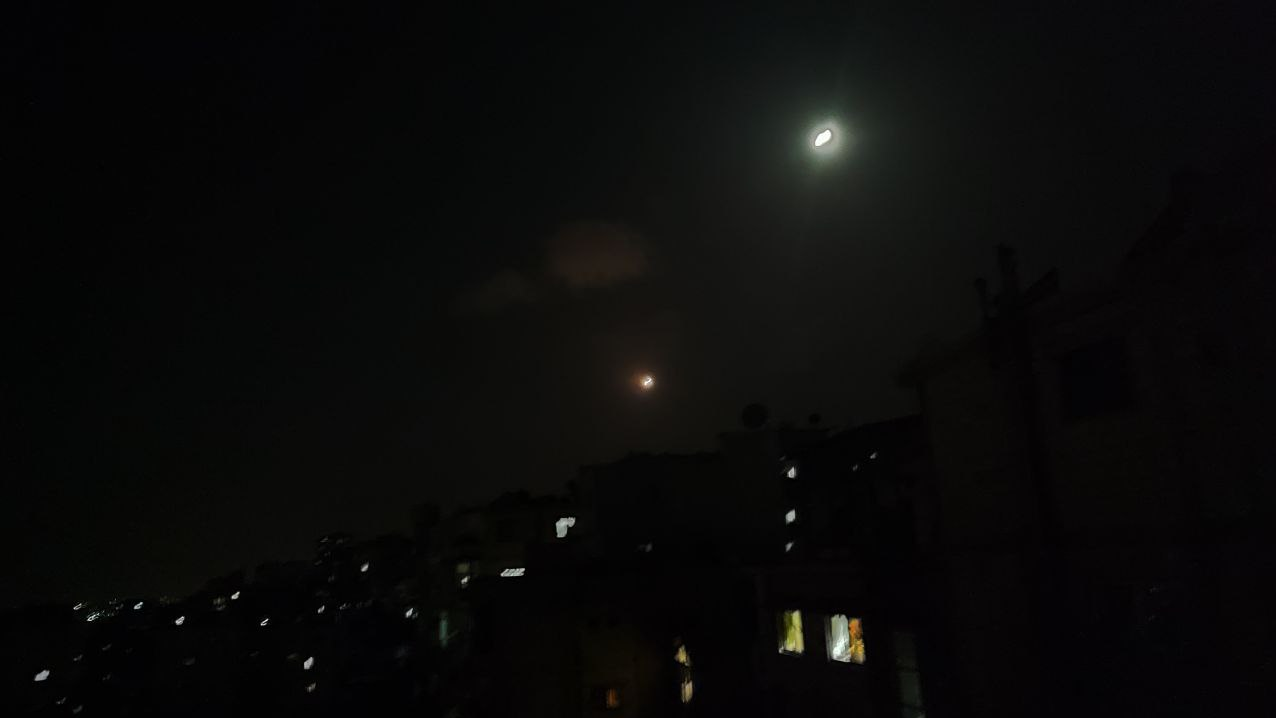
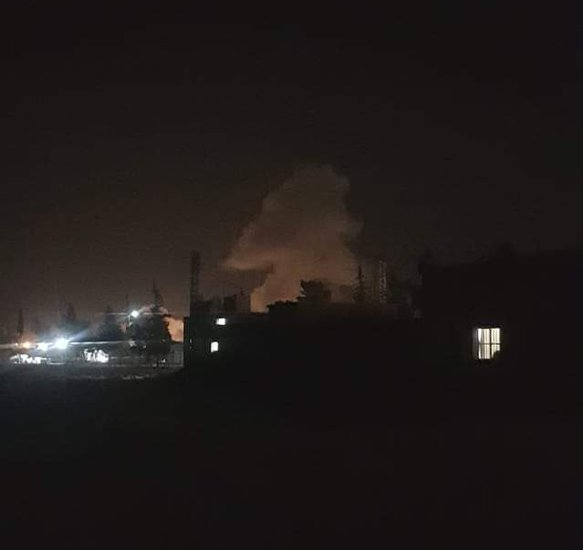
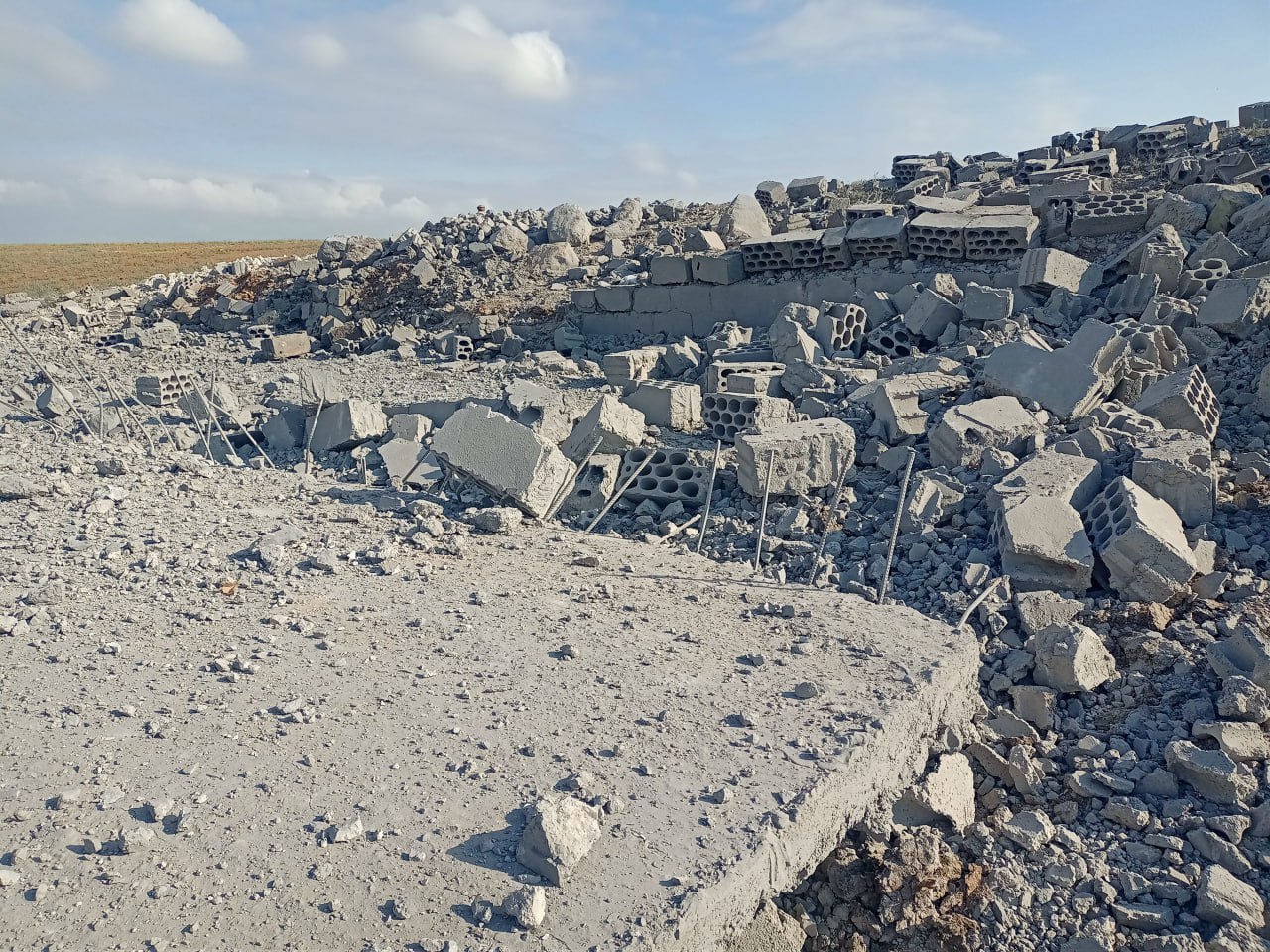
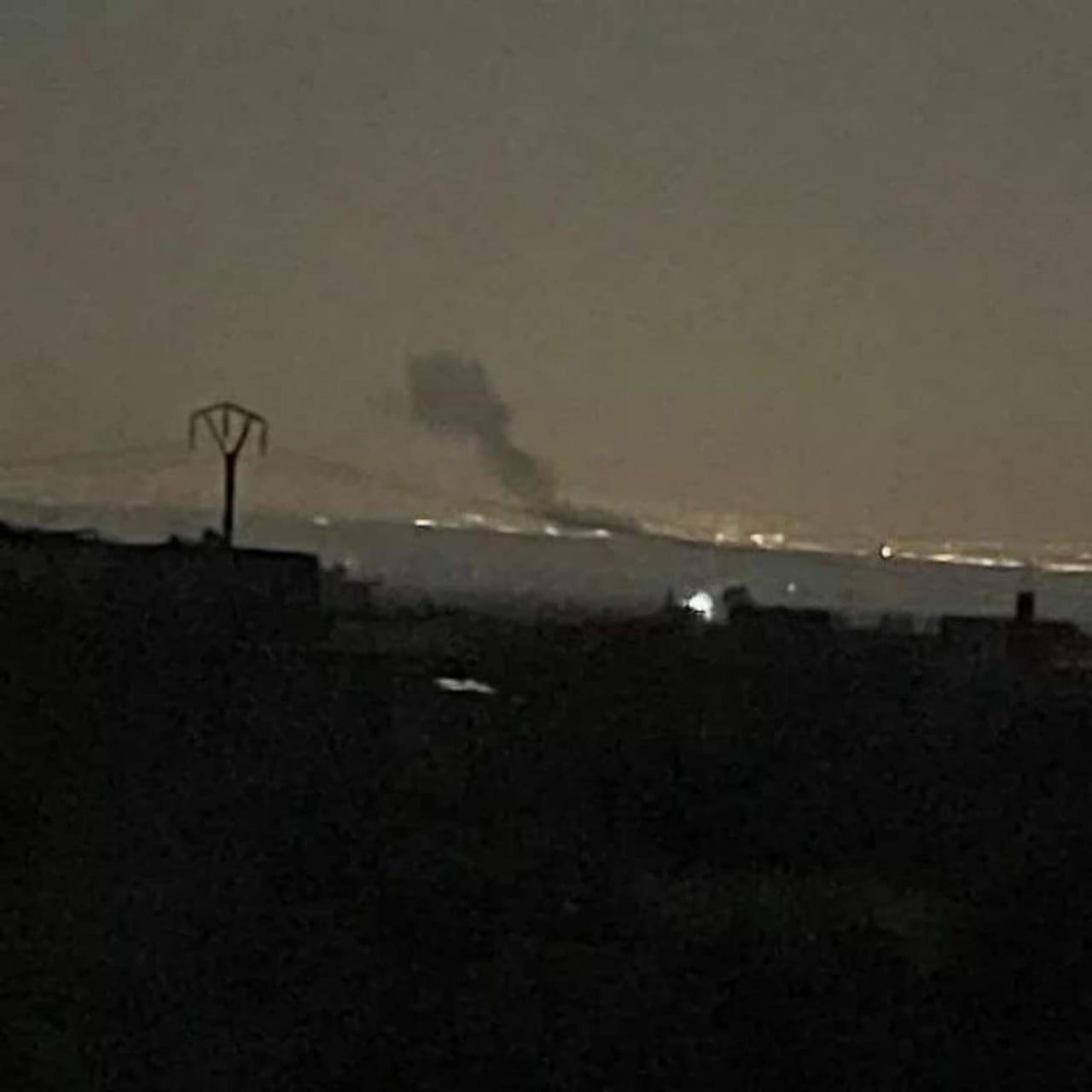
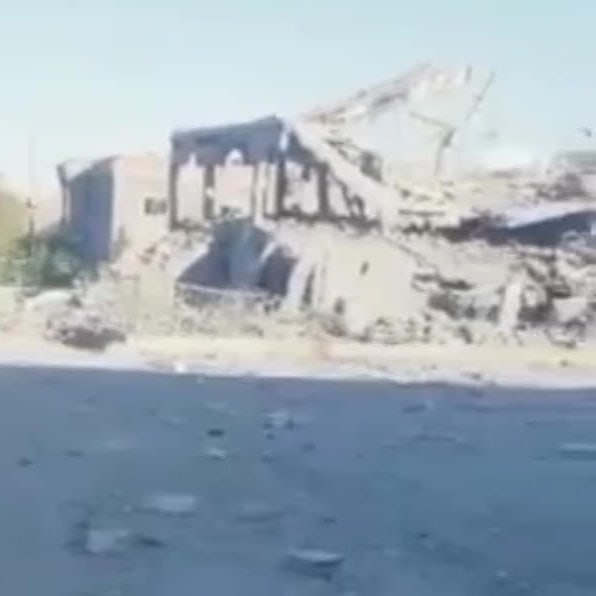
According to information released by a Syrian military source, the Israeli enemy struck some targets in the outskirts of Damascus with a number of missiles from the occupied Golan Heights around 23:24 p.m. Sunday local time and the Syrian army’s air defense shot down most of the missiles. The attack ended up in some material damages.
Further information has not been released yet, but it is said that the Syrian army’s positions in Hafeir al-Fouqa village in the Al-Tall District of the Rif Dimashq Governorate, which is located in northern Damascus, were targeted in the airstrike by Israeli fighter jets.
This is the first strike by the Israeli regime on the Syrian soil following a five-day war against Palestinian resistance groups during the Thar al-Ahrar operation. It seems that the Israeli regime’s army was reassured that there would be no new confrontation with the Palestinian resistance groups; the Tel Aviv regime focused its attention on Syria.
Thus, it is likely that in the coming days there will be strikes by the Israeli army against targets in Syrian soil due to different reasons, including attacks on centers active in designing and manufacturing missiles as well as drone arsenals and so on.
It should be noted that fighter jets of the Israeli regime’s army also fired some missiles at targets in Aleppo Governorate on May 2, which led to martyrdom of a Syrian soldier and injury of seven others.
Images of Israel’s airstrikes on the outskirts of Damascus
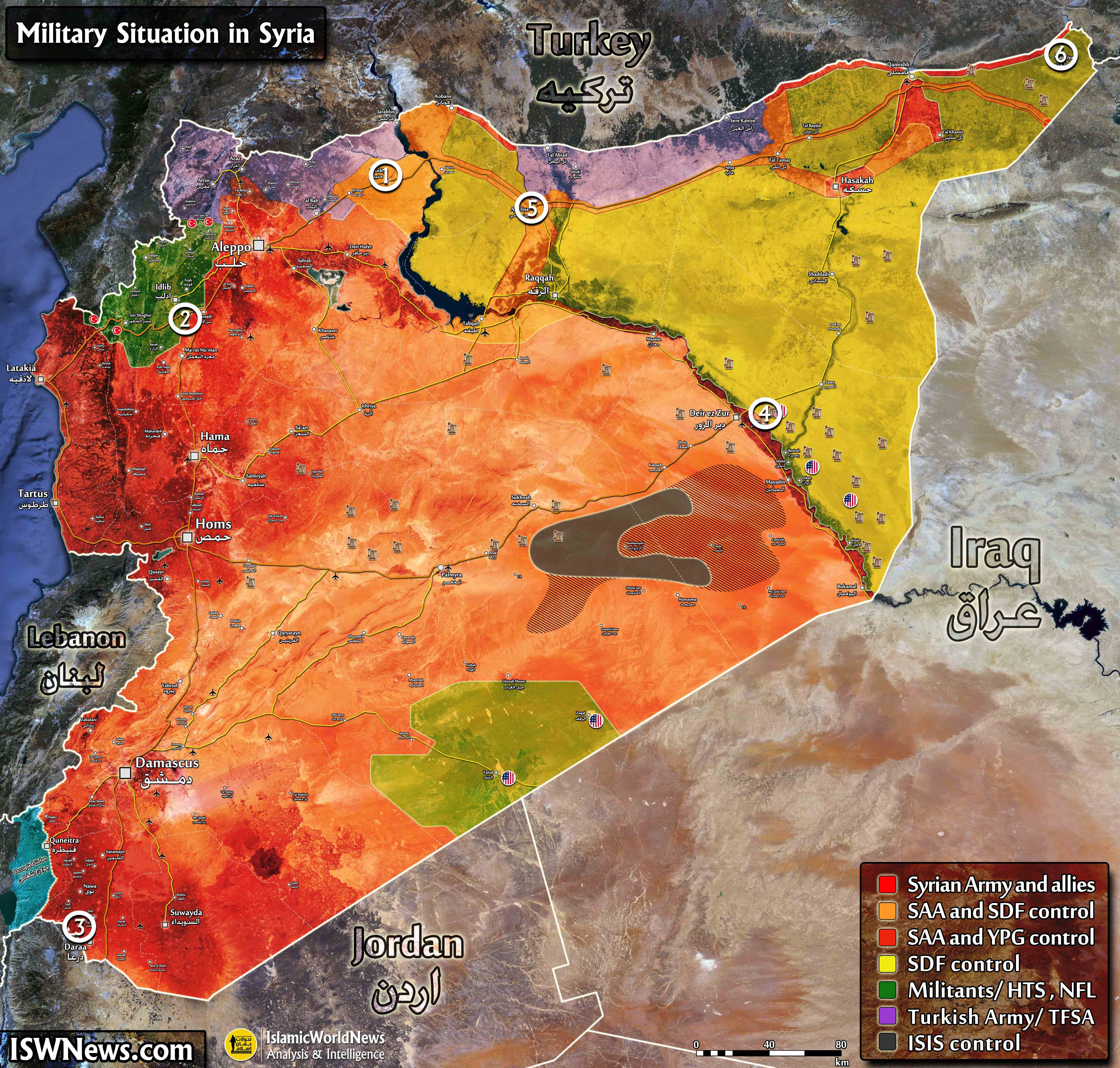
1- Aleppo: – On May 19, Turkish army drones targeted a joint headquarters of the Syrian Army and the Syrian Democratic Forces (SDF) in the village of Majra Wastani in the north of Manbij city in Aleppo Governorate, during which four Syrian soldiers were martyred and several others were wounded. – On May 12, the Syrian Army targeted militants’ positions in the villages of Kafr Taal and Kafr Amma in western countryside of Aleppo with the use of artillery. – On May 22, a joint patrol of the Military Police of Russia and the Turkish Armed Forces was carried out in the western outskirts of the city of Ayn al-Arab (Kobani) in Aleppo Governorate, Syria. This patrol mission is the 138th joint military patrol since the signing of the Russian-Turkish ceasefire agreement regarding northern Syria.
2- Idlib: – On May 22, the Syrian army targeted militants’ positions on the outskirts of San village, which is located in Saraqib Nahiyah in Idlib Governorate, by the use of artillery – On May 20, militants’ positions in the Maarbalit area, which is located in Ariha District of southern Idlib, were targeted by the Syrian army’s artillery attacks. – On May 20, militants’ positions in the Maarbalit area, which is located in Ariha District of southern Idlib, were targeted by the Syrian army’s artillery attacks.
3- Daraa: – On May 19, two civilians were killed by unidentified armed men in Muzayrib town in Daraa Governorate in southern Syria. – On May 6, a judge was martyred by unidentified armed men in Al-Harak city, which is located in southern Syria. – On May 6, one of the former militants was killed by unidentified armed men in Busra al-Harir is a town in southern Syria.
4- Deir ez-Zor: – On May 16, the US-led coalition forces patrolled the village of Al-Azba, northeast of Deir Ezzor.
5- Raqqa: – On May 17, the militants backed by Turkiye targeted the M4 highway and the outskirts of Ayn Issa is a town in the Tell Abyad District of Raqqa Governorate with artillery attacks. – On May 16, the Syrian Democratic Forces (SDF) arrested four ISIS members in two separate security operations in Raqqa Governorate.
6- Al Hasakah: – On May 15, the US-led coalition forces patrolled the outskirts of the Al-Malikiyah city, also known as Derik.
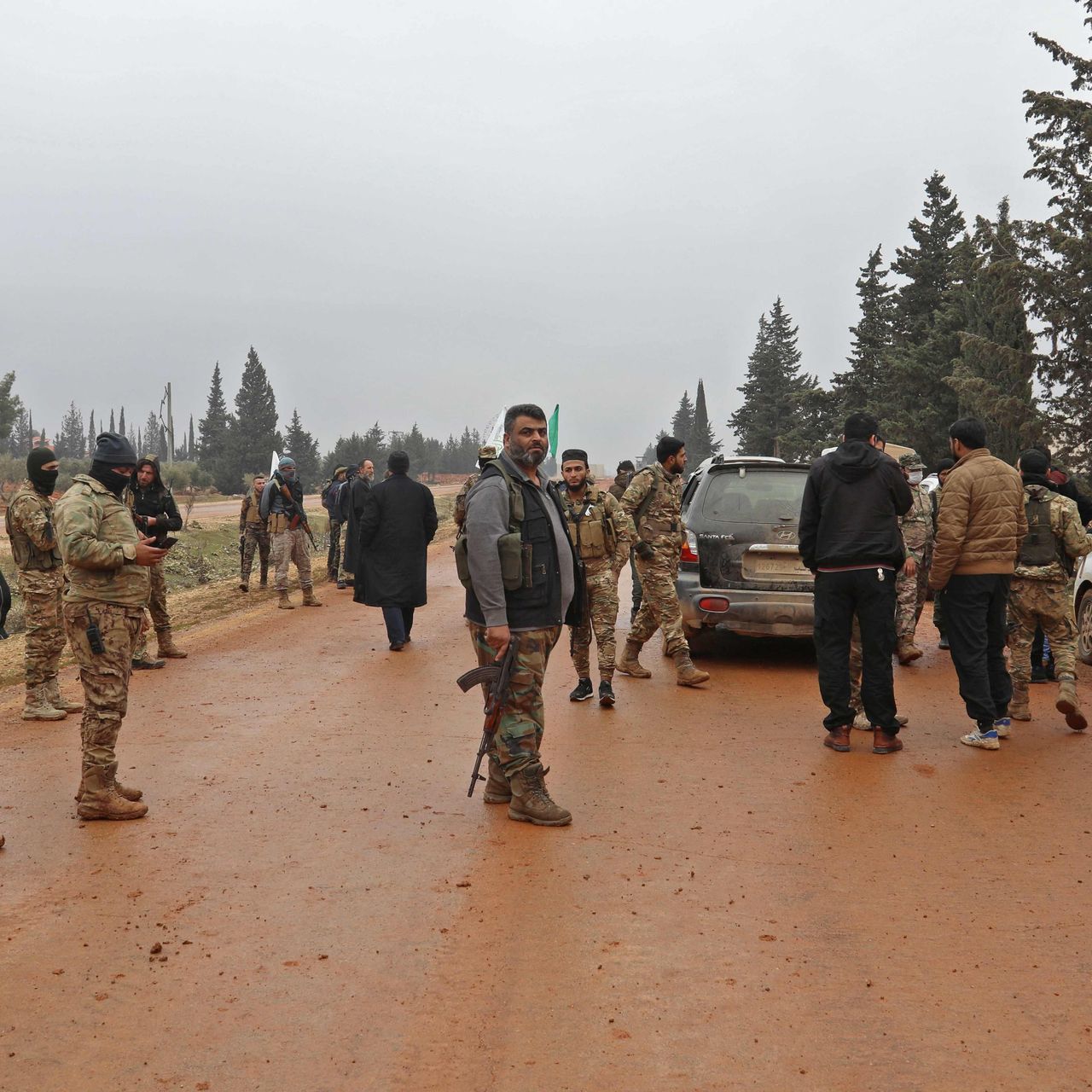
7- Informed sources close to the Al-Fatah al-Mubin or Great Conquest, which is an operations room of the Syrian militant factions, affiliated with Hay’at Tahrir al-Sham, Sunni Islamist political and armed organization involved in the Syrian war, disseminated images of the outcomes of their clashes with the Syrian armed forces during April.
8- On May 3, some 199 displaced Syrian citizens, including 60 children, in Sudan returned to the Syrian capital city Damascus on a flight by the Cham Wings Airlines as part of the process of repatriating the Syrian citizens from the war-torn African country. Previously, other 191 Syrian citizens, including 21 children, were evacuated from Sudan on May 2.
9- On May 7, foreign ministers of Arab states agreed upon Syria’s return to the Arab League during a meeting in Egypt.
10- On May 7, President of Syria Bashar al-Assad held a phone conversation with President of the United Arab Emirates (UAE) Mohammed bin Zayed Al Nahyan after the foreign ministers of the Arab states decided to return Assad’s country to the Arab League.
11- On May 7, Jordanian army fighter jets targeted a workshop in Kharab al-Shahm region, which is located in Daraa Governorate, as well as a house in Al-Shaab area located in As-Suwayda Governorate under the pretext of fighting drug trafficking.
12- On May 9, the Saudi Arabian Foreign Ministry announced in a statement that given the fraternal bond between the Saudi kingdom and Syria and in line with the desire to expand joint Arab activities as well as strengthen security and stability in the region, Riyadh has decided to resume its diplomatic mission in Damascus.
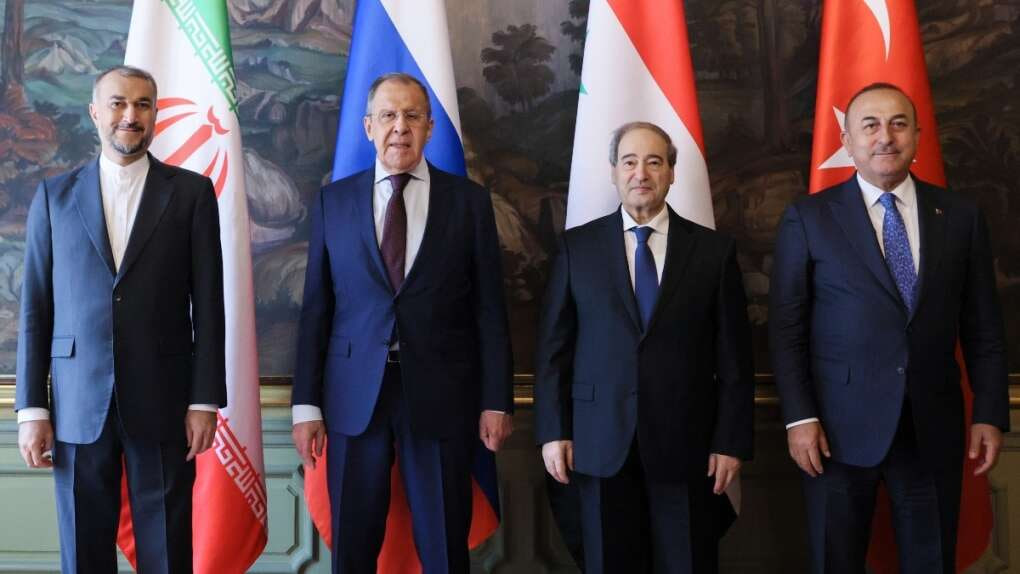
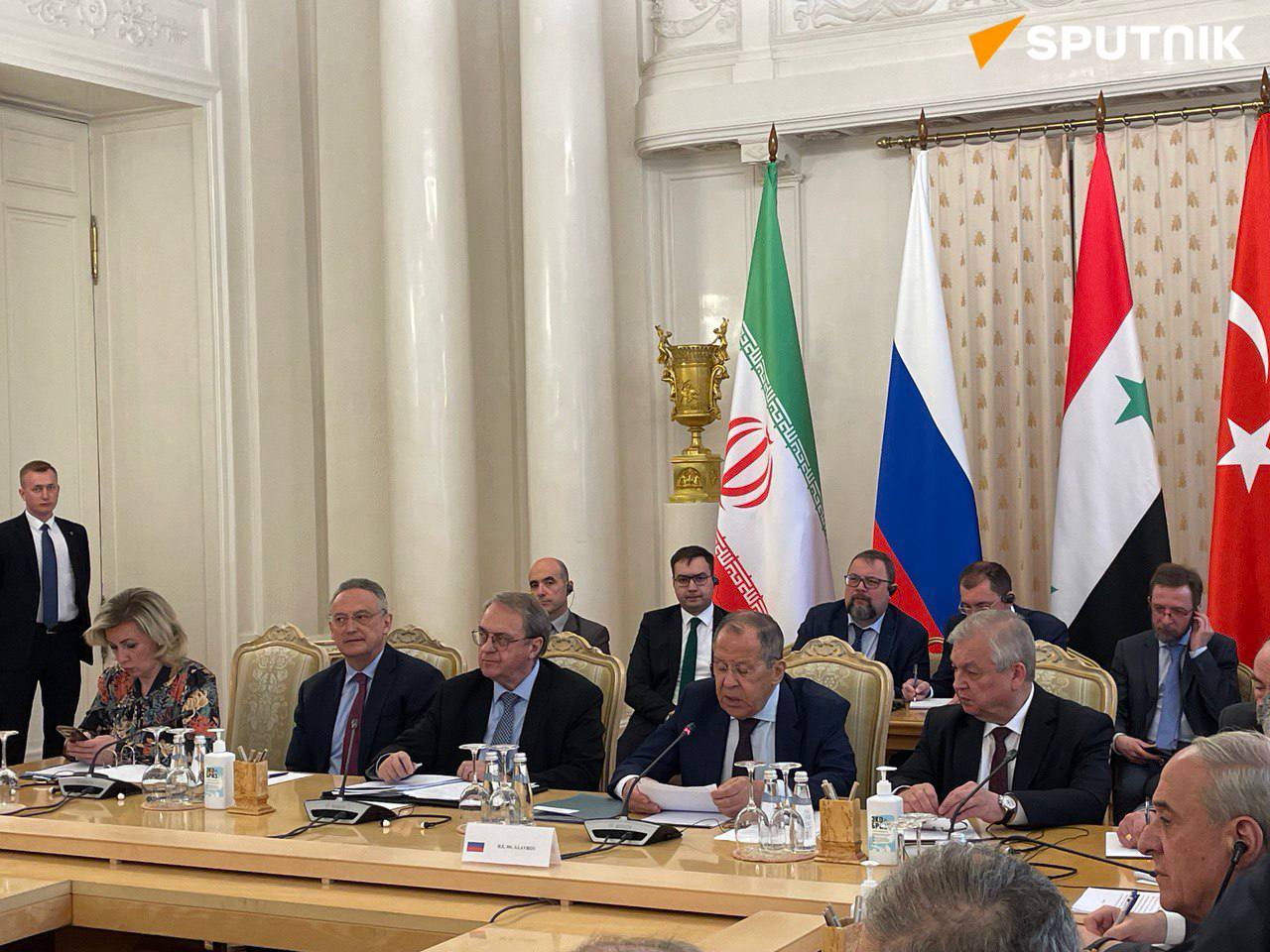
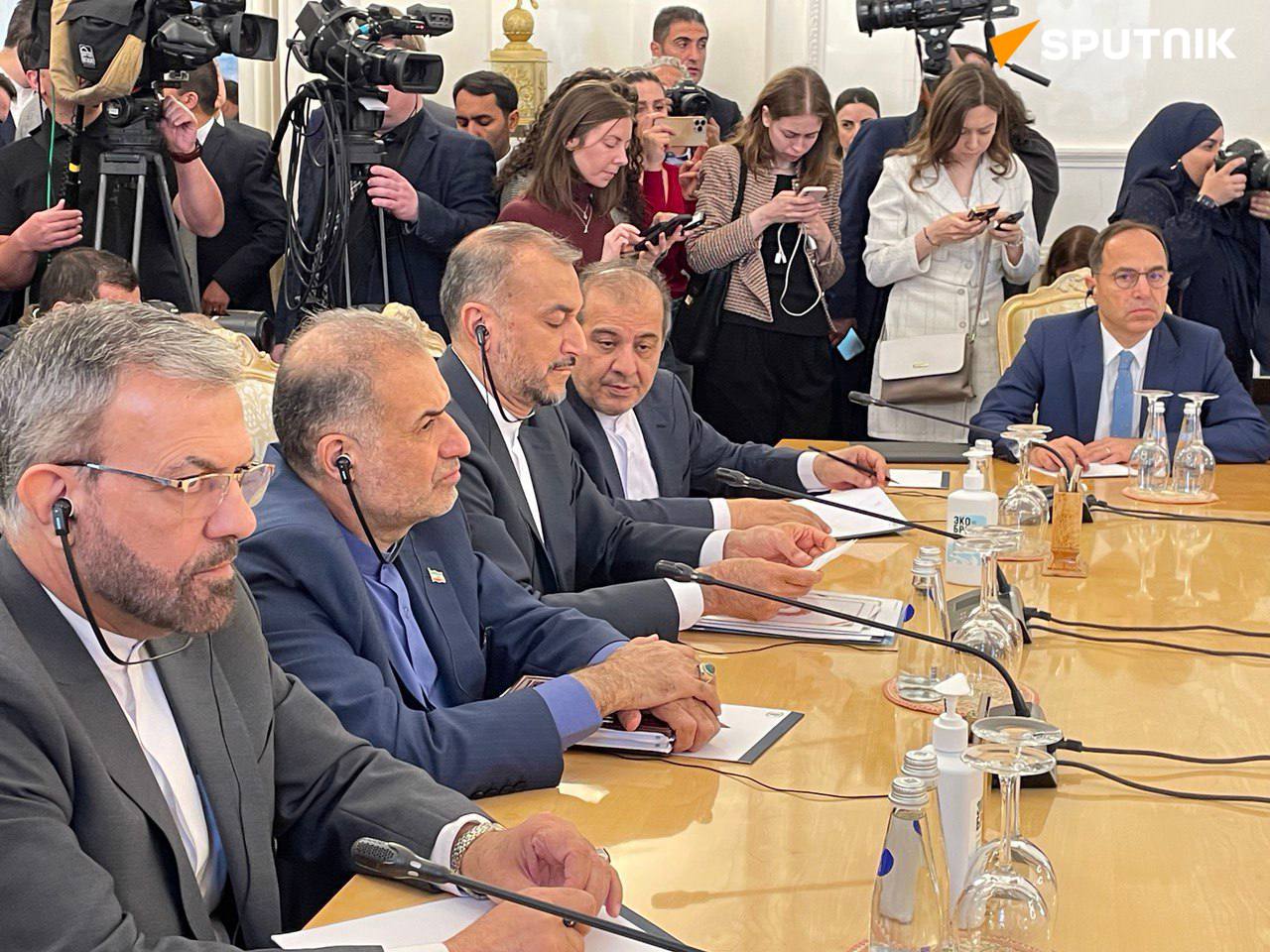
13- On May 10, a quadrilateral meeting of the foreign ministers of Russia, Turkiye, Syria and Iran was held in the Russian capital Moscow to pave the ground for discussing developments in Syria and also resolving differences between Ankara and Damascus. One of the important achievements of the meeting was a session between the foreign ministers of Turkiye and Syria before the start of the Moscow consultation.
14- Ali Mamlouk, Syrian intelligence chief, met with commanders of Turkiye-backed armed groups in Aleppo and held talks with them the process of normalizing relations between Damascus-Ankara.
15- On May 18, Turkish intelligence forces held a secret meeting with members of Hay’at Tahrir al-Sham at a security center located at Bab al-Hawa border crossing near Syria–Turkiye border.
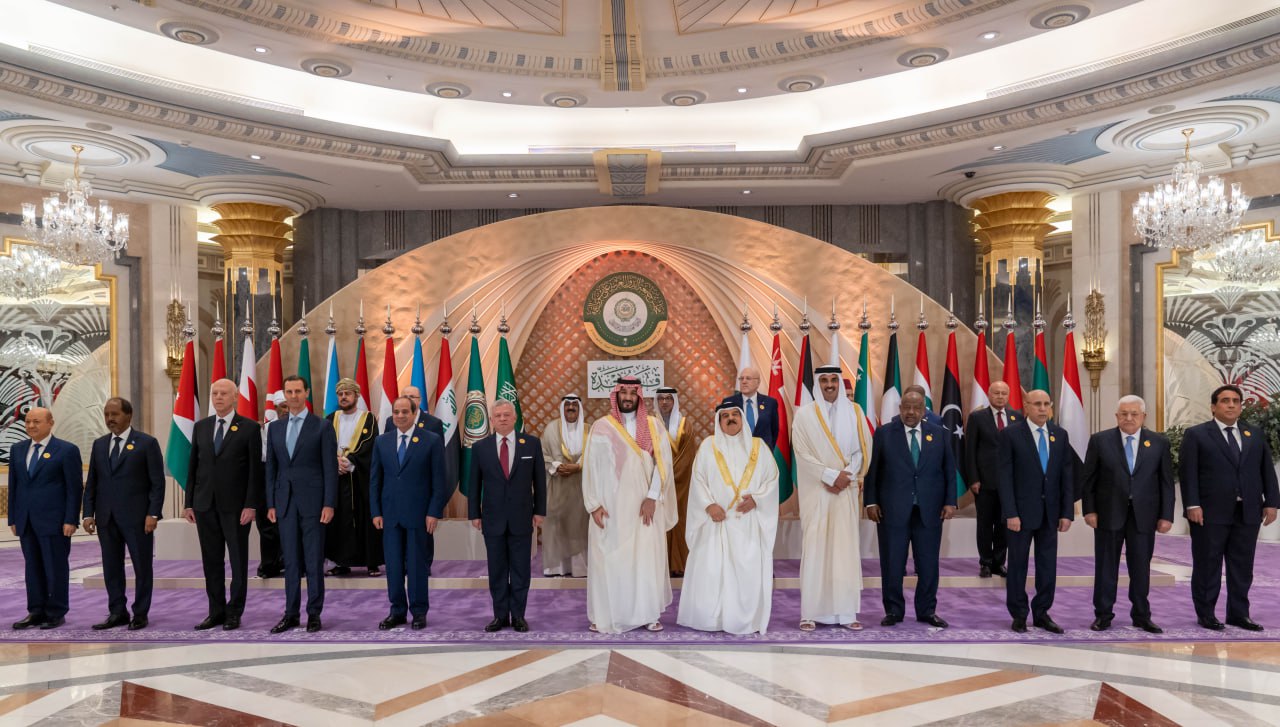
16- On May 18, President of Syria Bashar al-Assad arrived at the King Abdulaziz International Airport in Jeddah city and was received by the Saudi officials. One day after President al-Assad’s arrival in Saudi Arabia, the 32nd summit of the Arab League was held on Friday in Jeddah. Furthermore, according to Saudi media reports, Crown Prince of Saudi Arabia Mohammad bin Salman officially received the Syrian president before the onset of the Arab League summit.
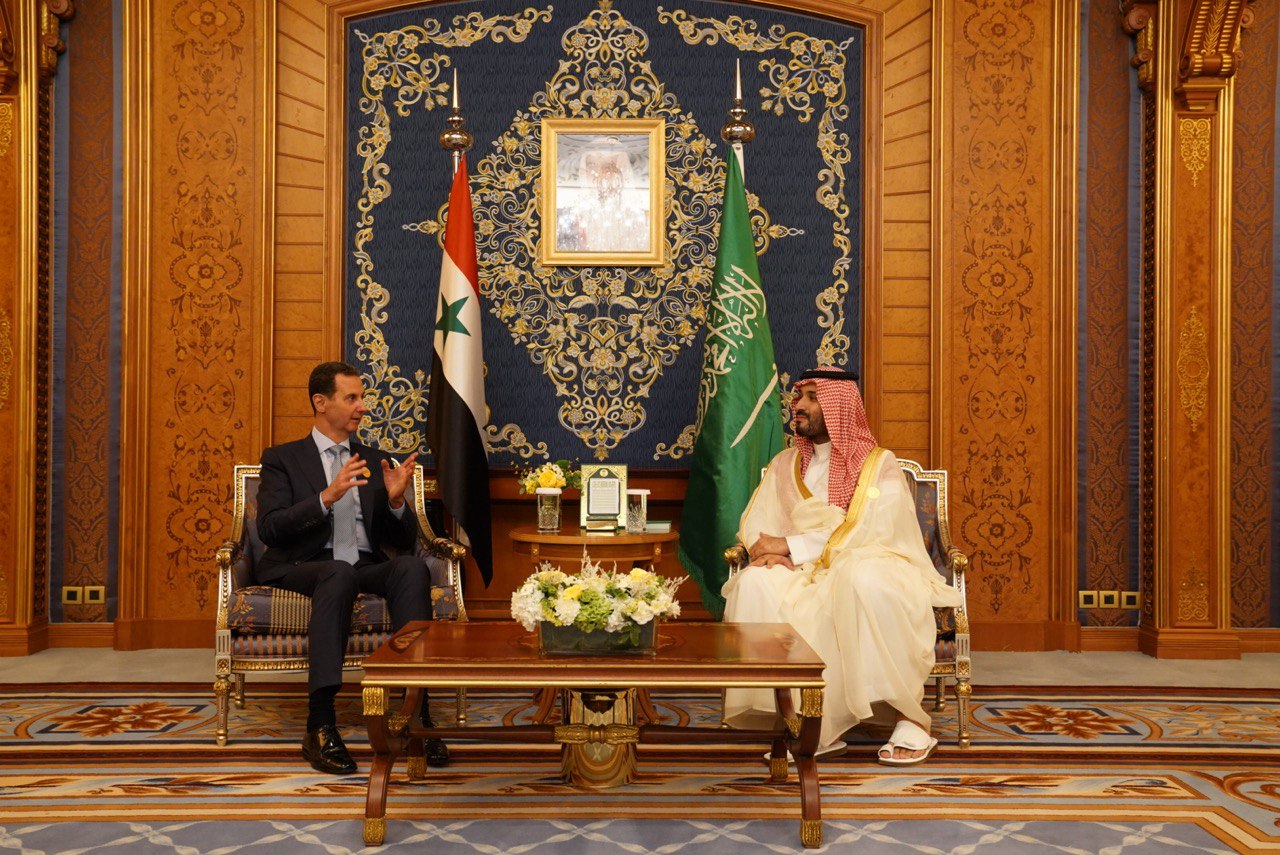
17- On May 19, President Bashar al-Assad met with Mohammad bin Salman on the sidelines of the Arab League summit to discuss some bilateral and regional issues.
Latest military map of Syria – click to view full size
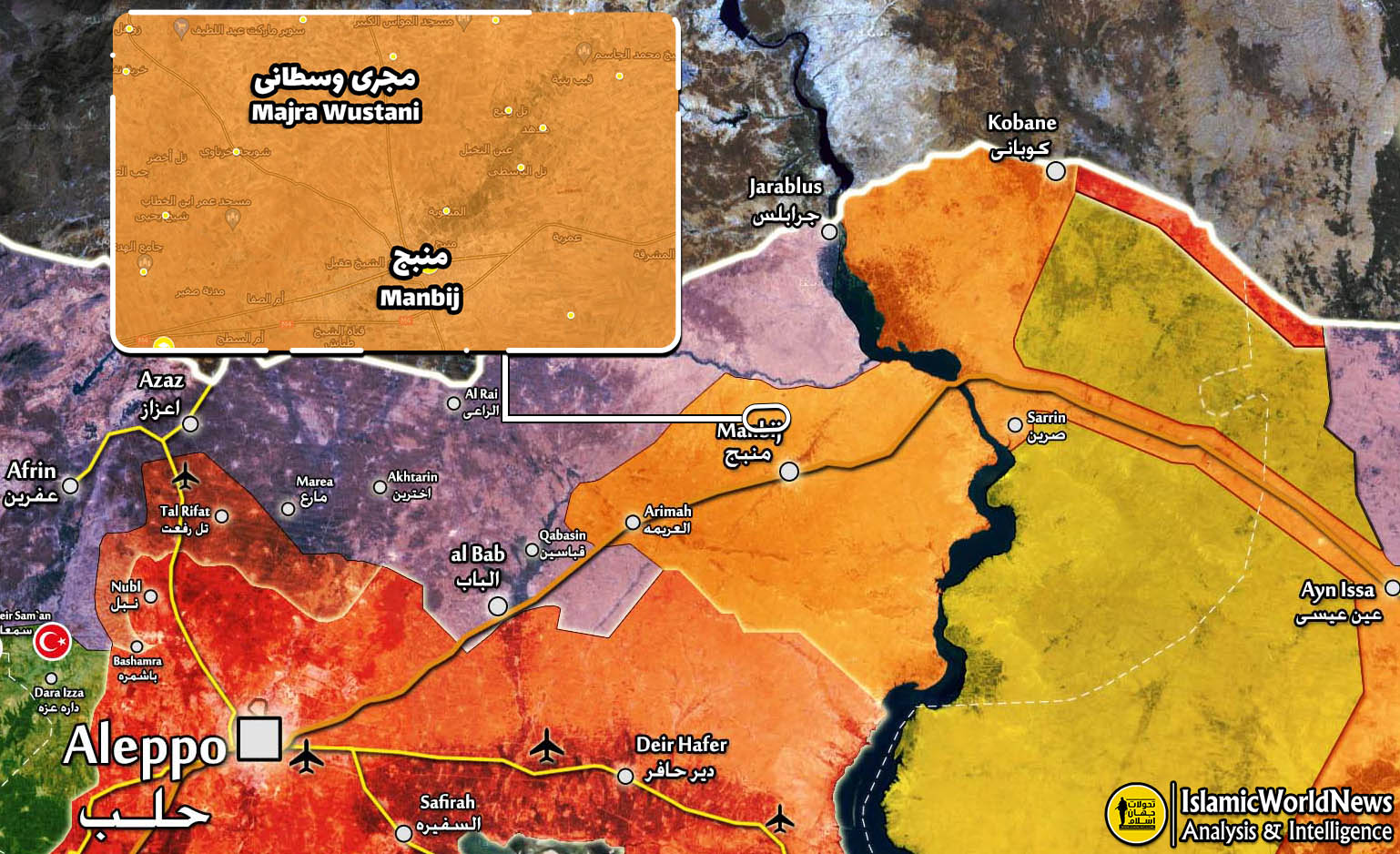
On May 19, the Turkish drones attacked a joint headquarters of the Syrian army and the Syrian Democratic Forces (SDF) in the village of Majra Wustani in north of Manbij city. Four Syrian Army servicemen lost their lives and several others were wounded.
According to local sources, Turkish drones targeted two vehicles parked in front of this headquarters.
Targeted Turkish drone attacks on the northern regions of Syria have increased since 2022. The highest number of this type of attacks was recorded in November 2022. According to a research group based in Syria, the Turkish armed forces carried out at least 130 drone attacks in northeastern Syria in 2022, which is a 46% increase compared to 2021.
In this meeting, Assad and bin Salman discussed the developments in the Arab countries and the positive reflection of the relations between these countries and emphasized that this atmosphere indicates a collective movement towards common views.
The President of Syria appreciated the efforts of Saudi Arabia for convergence among Arab countries and said that joint actions between the Arab countries will help to realize the interests of their nations.
He congratulated bin Salman on the successful holding of the Jeddah summit and emphasized that this summit will increase cohesion among Arab countries.
The parties also expressed their satisfaction with the re-establishment of Riyadh-Damascus relations and said that this will stabilize the region.
It is worth mentioning that the President of Syria, who attended the 32nd meeting of Arab League in Saudi Arabia, met and talked with a number of senior officials of the Arab countries. The meeting between the President of Syria and the Crown Prince of Saudi Arabia was held after the end of the summit of the heads of the Arab League.
The president of Syria arrived at King Abdulaziz International Airport in the Red Sea port city of Jeddah on Thursday (May 18), when he was welcomed by Saudi authorities.
A day after Bashar al-Assad’s arrival in Saudi Arabia, the thirty-second summit of the leaders of Arab countries was held on Friday in Jeddah. According to Saudi media outlets, Mohammad bin Salman officially welcomed the President of Syria prior the onset of the 32nd summit of the Arab League.
The crown prince of Saudi Arabia welcomed the president of Syria
The summit kicked off with a speech by Mohammad bin Salman and he said at the beginning of the session that we are pleased with the presence of Bashar al-Assad, President of Syria, at the meeting of the leaders of Arab countries.
We hope that Syria’s return to the Arab League will help Syria’s security and the support for the country, he said.
Also, the subject of Palestine is the key issue of Arab and Muslim countries; an issue that is at the top of Saudi Arabia’s priorities, he noted, adding that the issue of Palestine is a focal point in the Arab world and we are working together to find a solution for it.
Bin Salman went on to say that we will not allow our region to become a battlefield; we have had years of conflict, which hurt people, and that we will devote our efforts to support for Yemeni parties to find a solution to the current crisis in their country.
Secretary-General of the Arab League Ahmad Aboul Gheit, for his part, stated at the summit that we welcome the agreement between Iran and Saudi Arabia, and that the Jeddah meeting is an opportunity to revive Arab issues, which had been left to others for a long time.
During the meeting, Bashar al-Assad described Syria as the heart of the Arab community, saying that I thank the heads of delegations who expressed their deep friendliness for Syria. A joint Arab cooperation to promote our role in resolving crises and issues requires common goals and strategies, the Syrian president argued.
Assad further emphasized that we are facing a historic opportunity to reorganize the mechanisms of the Arab League with the least amount of foreign intervention. The reconciliations that have taken place are a historic opportunity to re-examine our own affairs without foreign interference, he mentioned, adding that the world must leave internal affairs to our own people; so, we reject any foreign interference.
The president also concluded that I hope the conference will mark the commencement of a new phase of joint Arab action for solidarity among us so that instead of war and destruction, we can achieve peace, development and prosperity in the region.
Syrian President Bashar al-Assad’s arrival in Saudi Arabia
It is worth mentioning that the Arab League suspended Syria’s membership in this bloc in 2011 under the pretext of some political and security issues. Finally, after 12 years and following the failure of plots hatched to overthrow President Bashar al-Assad from power as well as the victories of the resistance axis in different fields, foreign ministers of Arab countries of the region agreed to return Syria to the Arab League during a meeting in Egypt on May 7.
The Syrian return to the Arab League and President Assad’s visit to Saudi Arabia created concern among the foes of the resistance axis so much that some Hebrew-language media outlets reacted to the promising developments, as they said that “This is the Arab League that has returned to Syria and not vice versa!”
The Zionists are of the opinion that with Syria’s return to the Arab League, the Arab Spring plot has officially come to an end and the issue of Palestine will once again become the main focus and concern of the Arab countries in the West Asia region and North Africa.
During the four-hour-long meeting, the two sides discussed the presence of foreign military agents of Hay’at Tahrir al-Sham in the Idlib Governorate as well as the presence of foreign women and children.
In the meeting, a number of reports presented by Hay’at Tahrir al-Sham elements to the National Intelligence Organization, which included accurate statistics on the presence of foreign elements in Idlib, were discussed.
They also held talks on the ways to deal with the issue of foreign prisoners in Hay’at Tahrir al-Sham’s prisons as well. It is also said that Hay’at Tahrir al-Sham has agreed to hand over some prisoners, who are European and Asian nationals, to the Turkish authorities.
It seems that The Turkish government, which is aware of the importance of such an issue for Russia and Western countries, is seeking to maintain the presence of foreign elements in Idlib in order to exploit them in possible negotiations about the future of the regions, where the foreign-backed militants are still there.
It is worth mentioning that, earlier this month, the head of the Syrian General Intelligence Directorate, Hussam Louqa met with the commanders of Turkish-backed factions in Aleppo city in northern Syria. In the meeting, the normalization of relations between Damascus-Ankara was discussed. This meeting took place after Hussam Louqa met and talked with the head of the Turkish Intelligence Service on May 5, on the sidelines of the quadrilateral meeting of Iran, Syria, Turkey and Russia in Moscow.
The head of the Syrian General Intelligence Directorate met with the commanders of Turkish-backed forces in Aleppo. In this meeting, the normalization of relations between Damascus-Ankara was discussed.
The Intelligence Online reported on May 12 that Hussam Louqa met and talked with the head of the Turkish Intelligence Service on May 5, on the sidelines of the quadrilateral meeting of Iran, Syria, Turkey and Russia in Moscow; Two days later on May 7, he went to Aleppo and met with the commanders of Turkish-backed forces.
So far, no further details have been released in this regard. The meeting of the head of the Syrian Intelligence Organization with the militants is considered a very important matter because Louqa is the designer of several reconciliation agreements in Syria. The holding of this meeting shows an important progress in the process of normalizing relations between Syria and Turkey, which is also supported by Russia and Iran.
It is worth noting that the agreement between Damascus and Turkish-backed groups could encourage Ankara to withdraw its forces from Syria and help millions of Syrians return to their homes. However, it is not yet clear whether such an agreement will be possible with the presence of many radical elements among the militants in northern Syria.
A quadrilateral meeting of the foreign ministers of Iran, Russia, Turkey and Syria was held in Moscow on May 10 with the aim of reviewing the developments in Syria and resolving the differences between Ankara and Damascus. One of the important achievements of this meeting was the meeting between the foreign ministers of Turkey and Syria for the first time after 12 years since the start of conflicts in Syria.
At the beginning of this meeting, Russian Foreign Minister Sergey Lavrov described the meeting of the foreign ministers of Turkey, Syria, Iran and Russia as important and said: “We have continuously moved to achieve this result. The process of normalizing relations between Turkey and Syria creates new opportunities for the Astana meeting to resolve the Syrian crisis. The beginning of the normalization process between Turkey and Syria has a positive effect on the situation in the region and the Middle East in general.”
Moscow quadrilateral meeting
The Russian Foreign Minister further proposed the development of a road map within the framework of the process of normalizing relations between Ankara and Damascus and said: “The road map for the settlement of the Syrian case should be prepared for the next meeting of the foreign ministers of Turkey, Syria, Iran and Russia, and then to be presented to the presidents.”
At the end of this meeting, a joint statement was issued by the four countries. In this statement, it is stated that according to the UN Security Council Resolution 2254 and the official statements in the Astana process, the participants reaffirmed their commitment to the territorial integrity of Syria, non-interference in internal affairs and the fight against all forms of terrorism, separatism and extremism. The participants also agreed that the deputy ministers of foreign affairs should undertake the task of designing a road map to advance relations between Turkey and Syria in coordination with the ministries of defense and intelligence chiefs of the four countries.
On May 7, Jordan’s army fighter jets targeted a workshop in the Kharab al-Shahm district of Daraa governorate as well as a residential unit in the Al-Sha’ab district of Suwayda governorate under the pretext of fighting drug trafficking.
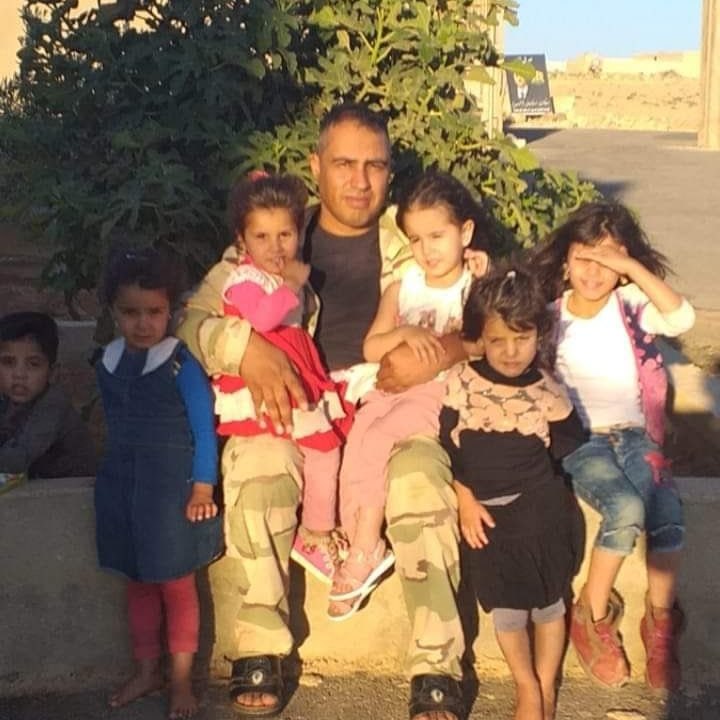
It is claimed that the house targeted by Jordanian fighter jets belonged to a person named Marai Al-Ramthan (45 years old), an alleged high-profile smuggler in southern Syria. The man, his wife and six children were killed in the Jordanian air strike.
Marai Al-Ramthan and his six children
The air raid took place after Minister of Foreign Affairs of Jordan Ayman Safadi threatened on May 5 that military operations would be carried out inside Syria if necessary decisions and effective actions were not taken to curb drug trafficking in the neighboring country. He also underlined that Jordan’s armed forces do not consider the threat of drug trafficking as a simple problem.
The Syrian officials and military commanders have not yet reacted to the issue of the recent air strikes by Jordan’s air force against two different governorates in the war-stricken country.
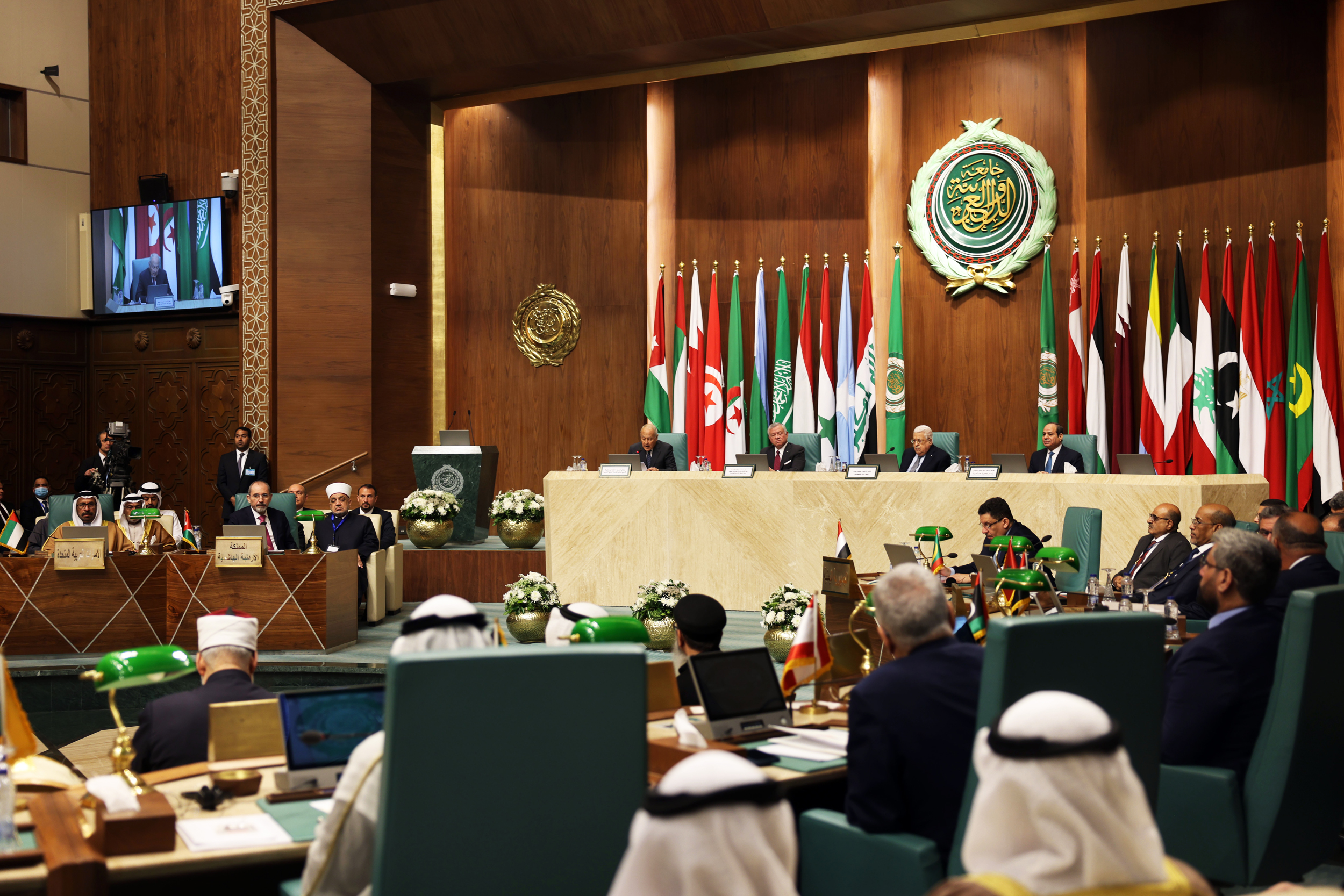
The meeting of the foreign ministers of the member states of the Arab League to lift years-long suspension of Syria’s membership was held in Egyptian capital Cairo on May 7.
Minister of Foreign Affairs of Egypt Sameh Shoukry stated at the beginning of the ministerial meeting that all phases of the Syrian crisis have proven that the crisis has no military solution and that the crisis must be resolved based on political negotiations.
The Syrian government and national forces of the country are primarily responsible for achieving the political solution without foreign dictates, Shoukry said, adding that all forms of terrorism in Syria must be overcome.
Spokesperson of the Ministry of Foreign Affairs Dr. Ahmed Al-Sahhaf also emphasized that Syria’s return to the Arab League will be agreed upon in the meeting.
Then, Spokesman for the Arab League’s secretary general Gamal Roshdy also announced that foreign ministers of the Arab states have decided to pave the way for returning Syria to its seat in the Arab League.
Prior to the Sunday meeting, Minister of Foreign Affairs of Jordan Ayman al-Ṣafadi said in an interview with CNN that Syria’s return to the Arab League is very likely given the fact that the Arab League’s member states initially agreed to the war-torn country’s return to the bloc.
It should be noted that a few months after the onset of the Syrian crisis in November 2011, some Arab states such as Qatar and Saudi Arabia decided to suspend Syria’s membership in the Arab League because of its failure to implement the provisions of the Arab peace plan for finding a political solution and settlement in the Arab country by the government in Damascus.
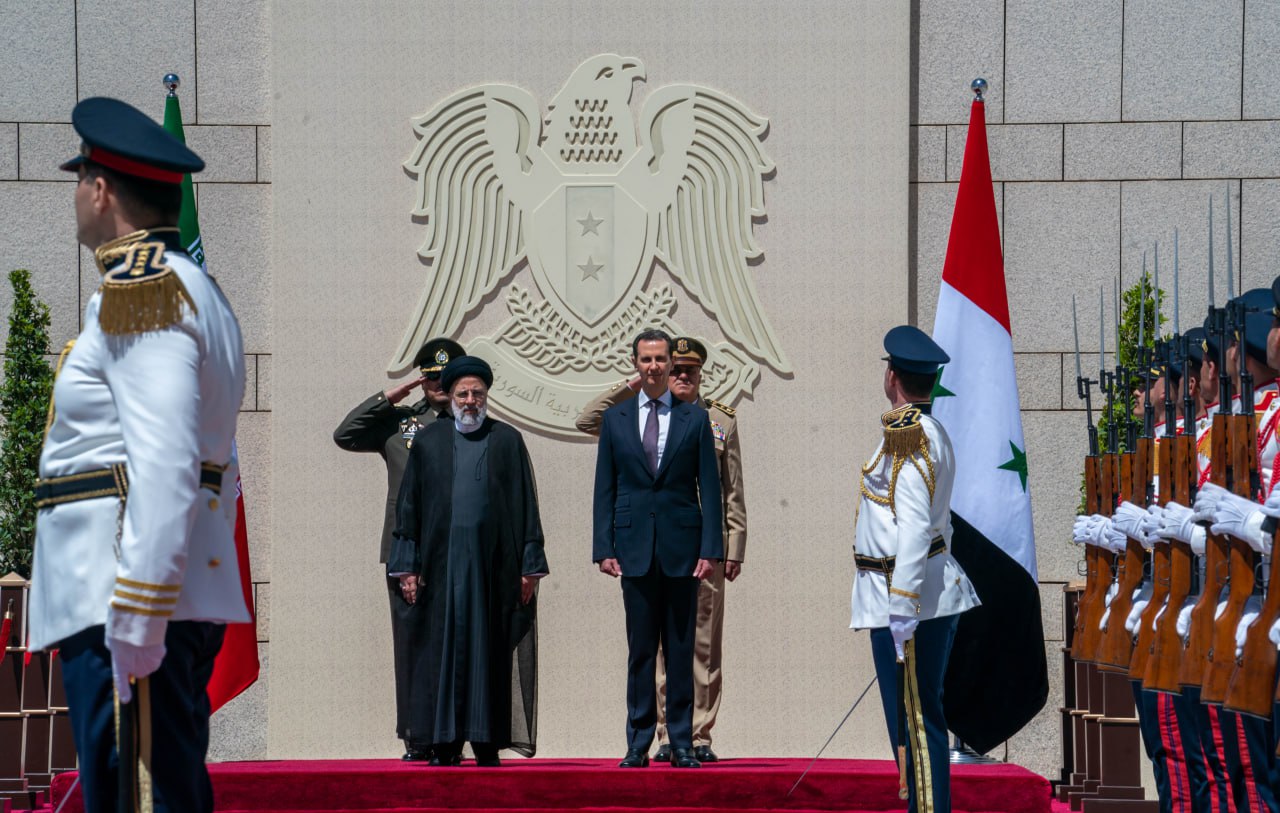
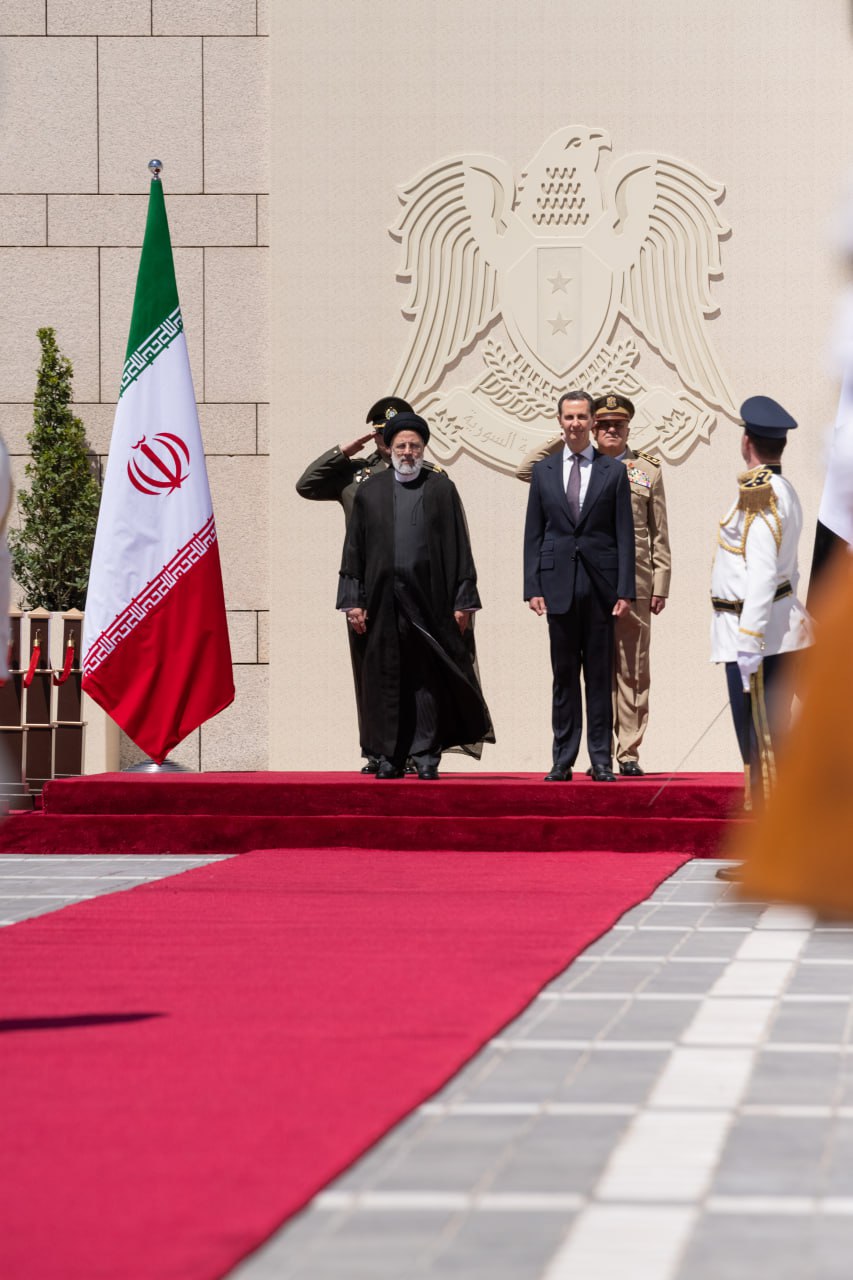
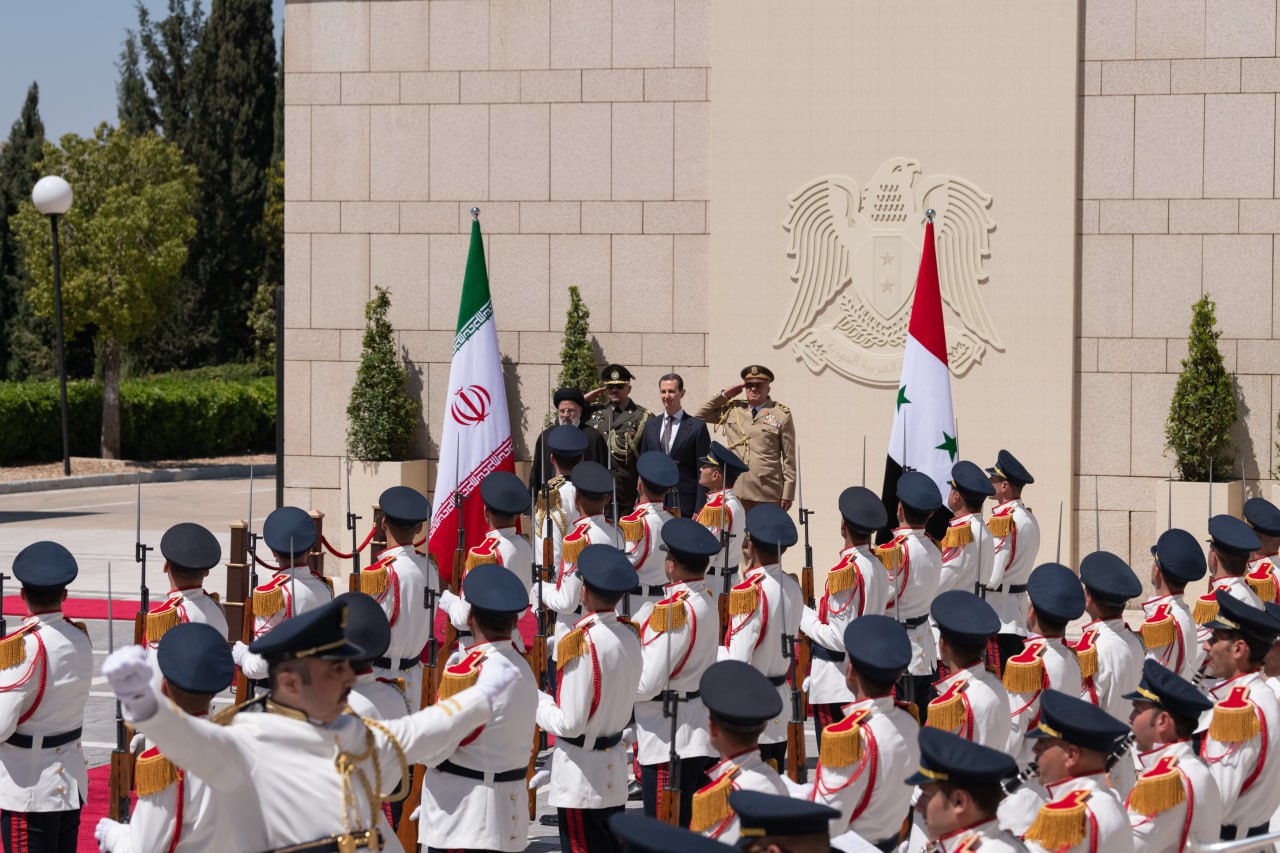
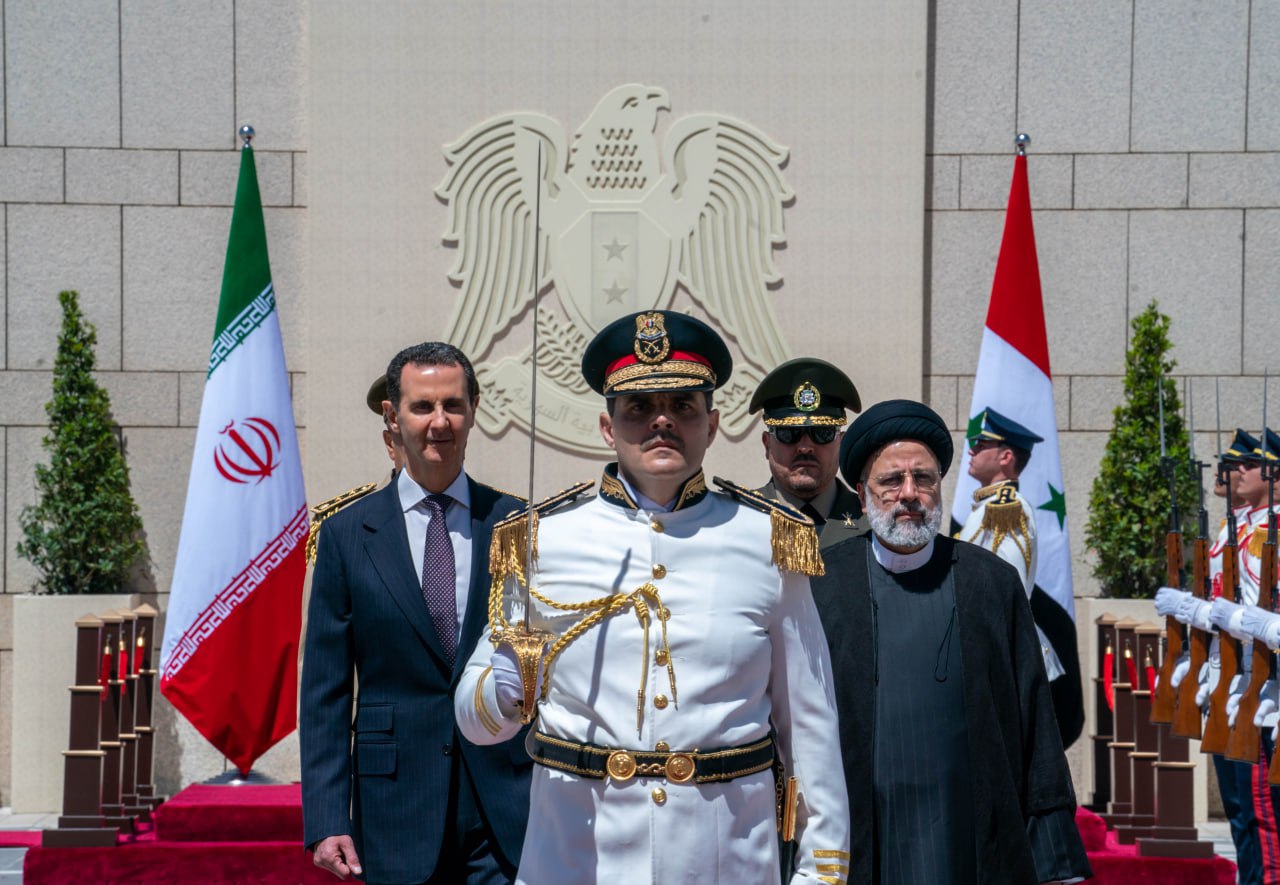
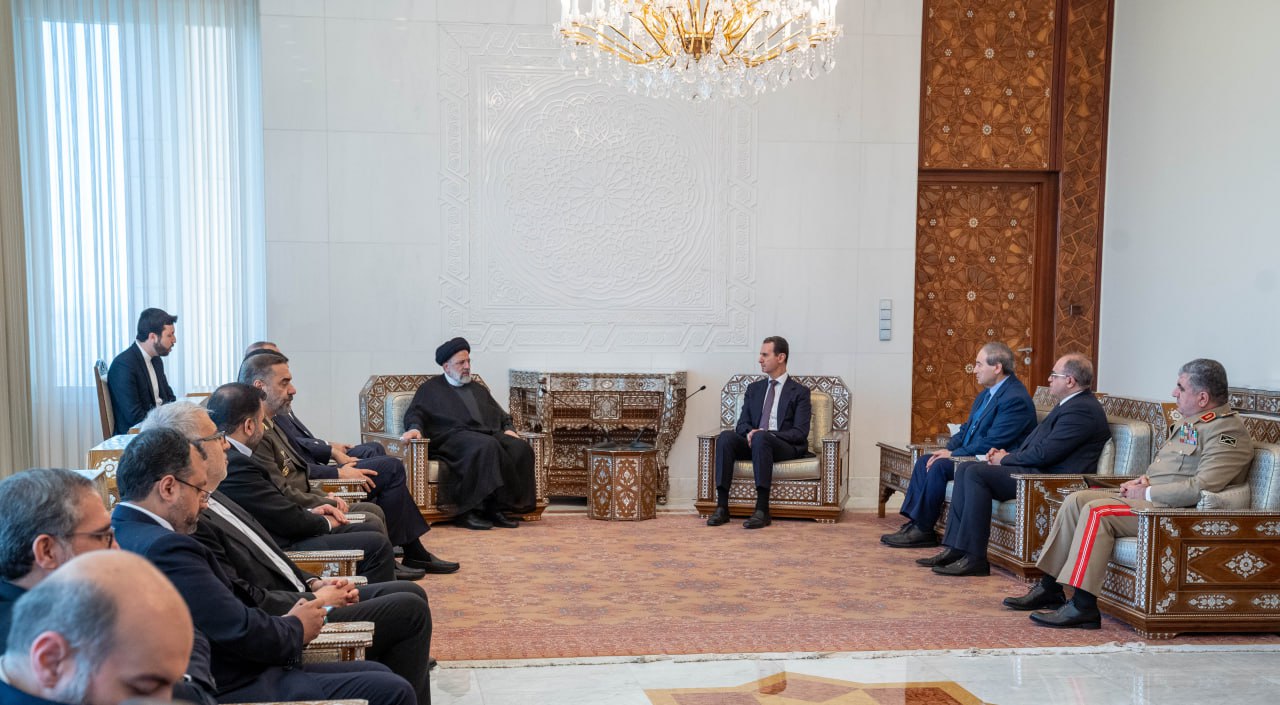
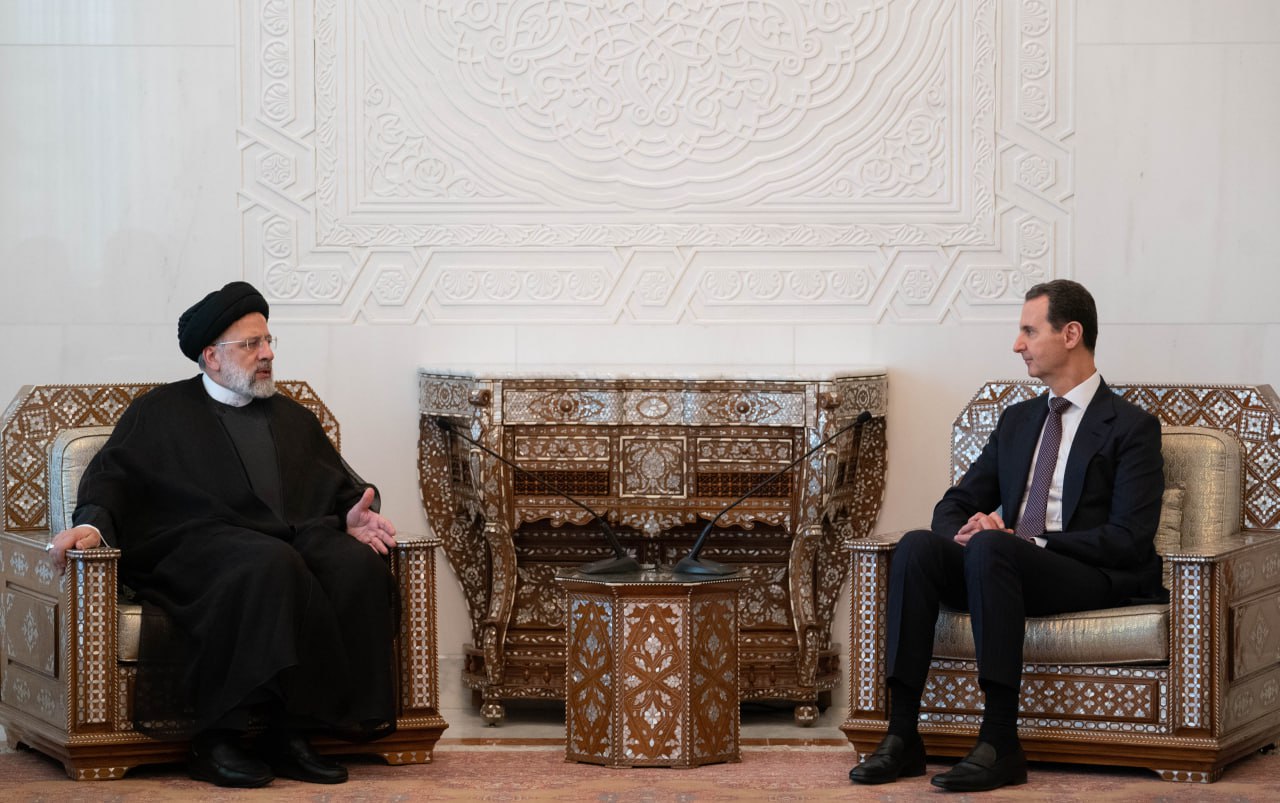
During the meeting with President Raisi in Damascus, his Syrian counterpart said that Iran and Syria have rich and fruitful relationships full of good experiences; because during the difficult and challenging times, our relationship remained stable and steady despite the severe political and security storms that have plagued the West Asia region.
The Iranian president, for his part, said that the Syrian government and people have overcome many difficulties and great challenges; thus, today we can say that you have overcome these problems and despite the threats and sanctions imposed on you, you have been able to succeed.
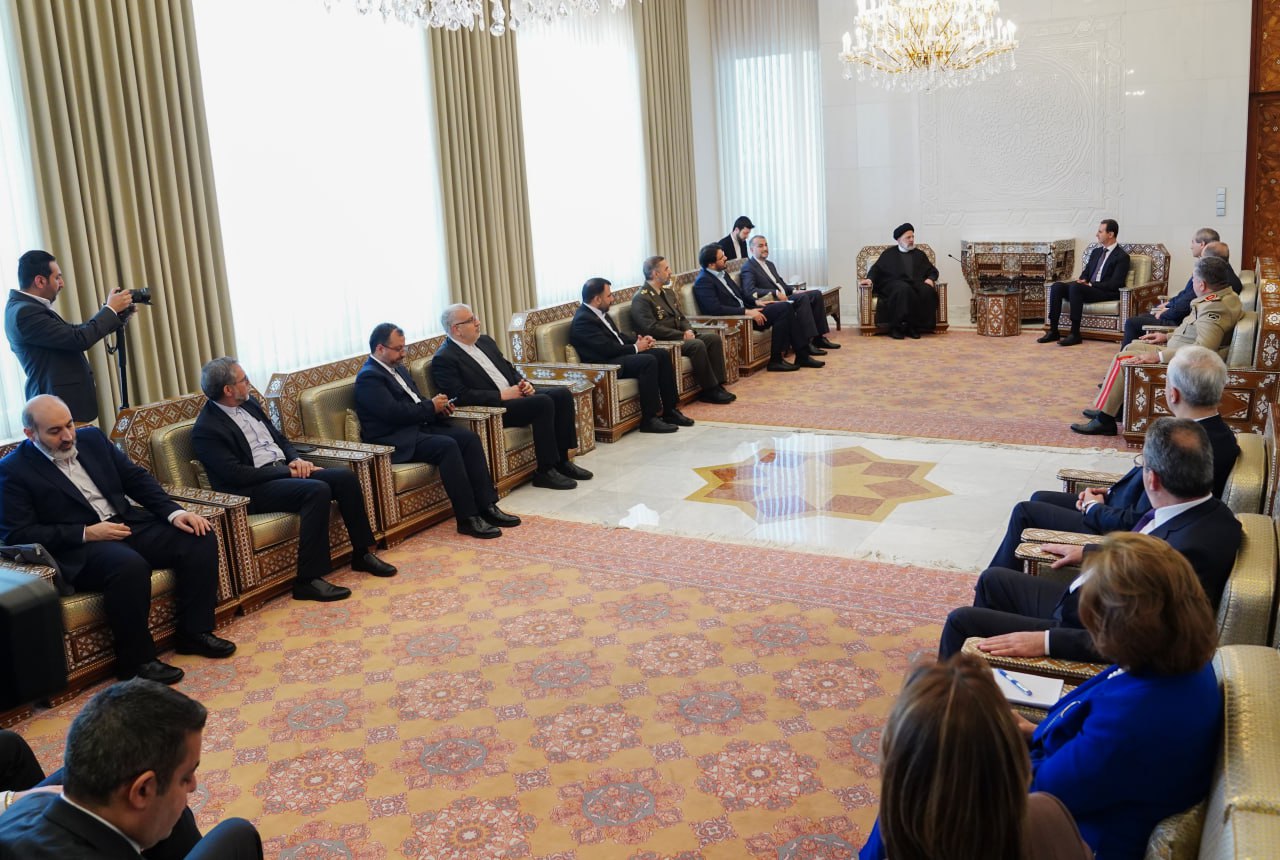
Iran’s Foreign Minister Hossein Amirabdollahian, Defense Minister Amir Ashtiani, Minister of Petroleum Javad Oji, Minister of Roads and Urban Development Mehrdad Bazrpash, Minister of Information and Communications Technology Issa Zarepour, Member of Iranian Parliament’s National Security and Foreign Policy Commission Abbas Golroo and President’s Chief of Staff Gholam Hossein Esmaeili accompanied President Raisi in the trip to Damascus.
It is worth mentioning that this is the first visit by an Iranian president to Syria since 2010. Raisi’s travel to Syria has been reflected in international media outlets significantly, to the extent that Hebrew-language media covered the news and described it as an achievement for the axis of resistance. They also noted that the achievement has its roots in Israel’s weakness and missed opportunities.
Images of the meeting between the presidents of Iran and Syria
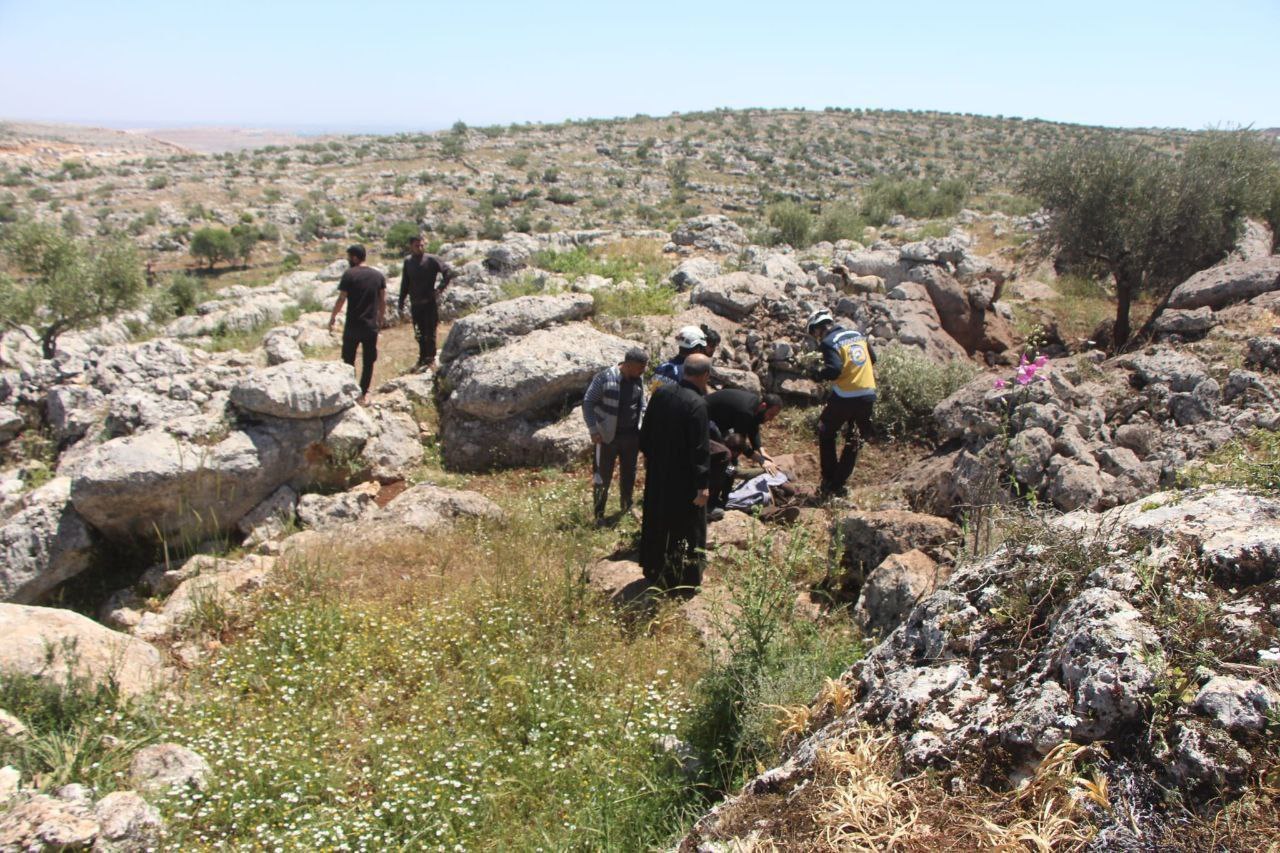
In the attack on the Qurqania district located in the north of Idlib, which occurred on May 3, a US coalition drone targeted an area, where one of the senior commanders of Al-Qaeda was killed. According to local sources, the attack was carried out by a United States MQ-9 drone.
Some hours after the military operation, the US terrorist command in West Asia (CENTCOM) issued in a statement, announcing that the US forces targeted one of Al-Qaeda’s commanders during an operation in northwest Syria at 11:42 a.m. local time.
No further details have been released on the issue, but sources close to the terrorist group declared that as a result of the US drone strike on the outskirts of Qurqania, a 60-year-old civilian named Lutfi Hassan Masto was killed.
It is worth noting that on February 24, 2023, US coalition drones targeted a motorcycle on the Qah-Mashhad Rouhin road, killing one of the commanders of Tanzim Hurras al-Din (a major branch of Al-Qaeda in Syria) named Abu Ubayda ibn al-Jarrah, also known as Abu Abadah Al-Iraqi, along with another person.