Tag: The battle of Al-Hudaydah

  • Monthly Report on Yemen’s Developments, Eighth Article | Latest Updates on Yemen War after Sweden Agreement

    Monthly Report on Yemen’s Developments, Eighth Article | Latest Updates on Yemen War after Sweden Agreement

    Hajjah:
    Hajur tribes (Bani Qimas, Bani Malek, Bani Othman, Bani Saad, Bani Omar, Al Talahiya, Bani Zahir, Zaakirah,etc.) rebellion, which opposed AnsarAllah’s plans before, did not have the courage to rebel due to AnsarAllah’s power and the Coalition distance with the border. But after the Coalition’s advance in northern axis of Hajjah province, the tribes under the Coalition’s stimulation and allurement rebelled in Kushar and Qarah districts and other points in north and east of Hajjah.
    After rebellion, AnsarAllah asked other tribes’ chiefs to mediate for a ceasefire but Hajur tribes’ chiefs did not accept and there are engagements in eastern districts of Hajjah (such as Kushar and Qarah) between rebelled tribes and AnsarAllah, People’s Committees and tribes close to AnsarAllah for two months.
    AnsarAllah almost controlling the intrigue, reclaimed main roads and 70% of areas from rebelled tribes such as Ubaysah.
    In northern front of Hajjah, AnsarAllah grounding Saudi Coalition in northern and western suburbs of Haradh, in eastern front, repelled Saudi Coalition from southwest of Haradh until south of Nar and reclaimed Husnayn, Hayjah, Shabakah mountains, villages Shalila, Majbariya and etc.
    More details on Hajur tribes rebellion: Investigating Aspects of Possible Operation by Saudi Coalition in North of Hajjah

    Saadah:

    Saudi Coalition’s operation in Saadah is continuing in three axes:
    1. Northern: which includes Alab to Baqim.
    2. Eastern: which includes Al Boqa to Kitaf.
    3. Western: which includes Malahit to Marran heights.
    In northern front Saudi Coalition could not advance beyond AnsarAllah’s defence in Baqim area and in Kitaf axis the Coalition is grounded in northern heights of Kitaf(Wadi AlBu Jabbar and Rashaha areas) and in Malahit front it is grounded at the foot of Marran heights.
    More details on Saadah front: Analyzing Saudi Coalition Operation in Sa’adah + Map

    Marib, East of Sanaa and Jawf:

    The Coalition’s operation in northeastern of AnsarAllah’s position from east of Saadah to Jawf and Nihm was not successful and there is no significant activities by the Coalition in the axis. There were heavy engagements in Ajasher desert, Maslub, Motun districts and Nihm(north east of Sanaa) and Sirwah(west of Marib)districts and AnsarAllah repelled the Coalition’s attack and reclaimed some points in Sarwah district.


    Dhale:
    Southern forces (led by Emirates) under the Coalition’s support operated in Juban, Damt and Al Hisha districts against AnsarAllah which resulted in some advances.
    Most of tribes in Al Hisha district sending letters to AnsarAllah and Mansoor Hadi announcing being neutral and proposed local governor but their request rejected and there are engagements in northern part of the district and AnsarAllah has lost some points in Al Hisha.

    In Damt and Juban districts the Coalition’s operation in Haqab(southwest of Damt) and south of Juban was fruitless due to AnsarAllah’s resistance.


    Baydha and Taiz:

    There is no significant changes in the fronts of these two provinces and only sporadical engagements in Nate, Malajim, Dhi Naem, Qifah(in Bayda) and Wazeiyah, Kadhah axes and northern part of Taiz.


    Al Hudaydah:
    After Sweden Agreement, al Hudaydah shores are being hit by mainly Saudi Coalition’s rockets and artillery and AnsarAllah’s answer which delayed the incipient of the Agreement implementation.

    The future of the Agreement is predicted as follows:
    1. Continuation of engagement and further violation of the Agreement, which makes its future unknown.
    2. Negotiation suspension and UN exit: which results in engagements resume and UN can announce one or north sides as violators of the Agreement or send the case to UN Security Council.
    3. Implementing the Agreement: which results in a new wave of engagements in western shore of Yemen (from Hajjah province in north) and other provinces. In the most optimistic case we can observe the establishment of the administration and peace in Yemen which is very unlikely due to some sides’ separationism and cupidity of Saudi Coalition.
    More details on Sweden Agreement:

    Analyzing Yemeni Agreement in Sweden

    Answering Key Questions about Yemen War – Part Three


    Conclusion:
    Considering the trend of Yemen war in the last year, it can be concluded that Yemen war is entering the fifth year while Saudi Coalition is not willing to end the sanguinary war even with multi-billion loss and heavy casualties. AnsarAllah and Saudi family confrontation due to deep-rooted issues ends only when one side is removed.
    The future of Sweden Agreement is unpredictable and its implementation can start the best or worst conditions for the war; continuing the war, peace agreeing on other issues and etc.
    Sanctions and siege blocked AnsarAllah’s access to secure routes and international aids and subsequently the basic necessities of life which resulted in AnsarAllah’s tightness in politics and society. This is the biggest threat for the government, however AnsarAllah tries to control their lands.
    Allies’ treachery, tribes’ rebellion and etc against AnsarAllah shows the difficult current situation and more difficult future situation.
  • Latest Updates on Yemen 11 July 2018; Fall of Tuhayta

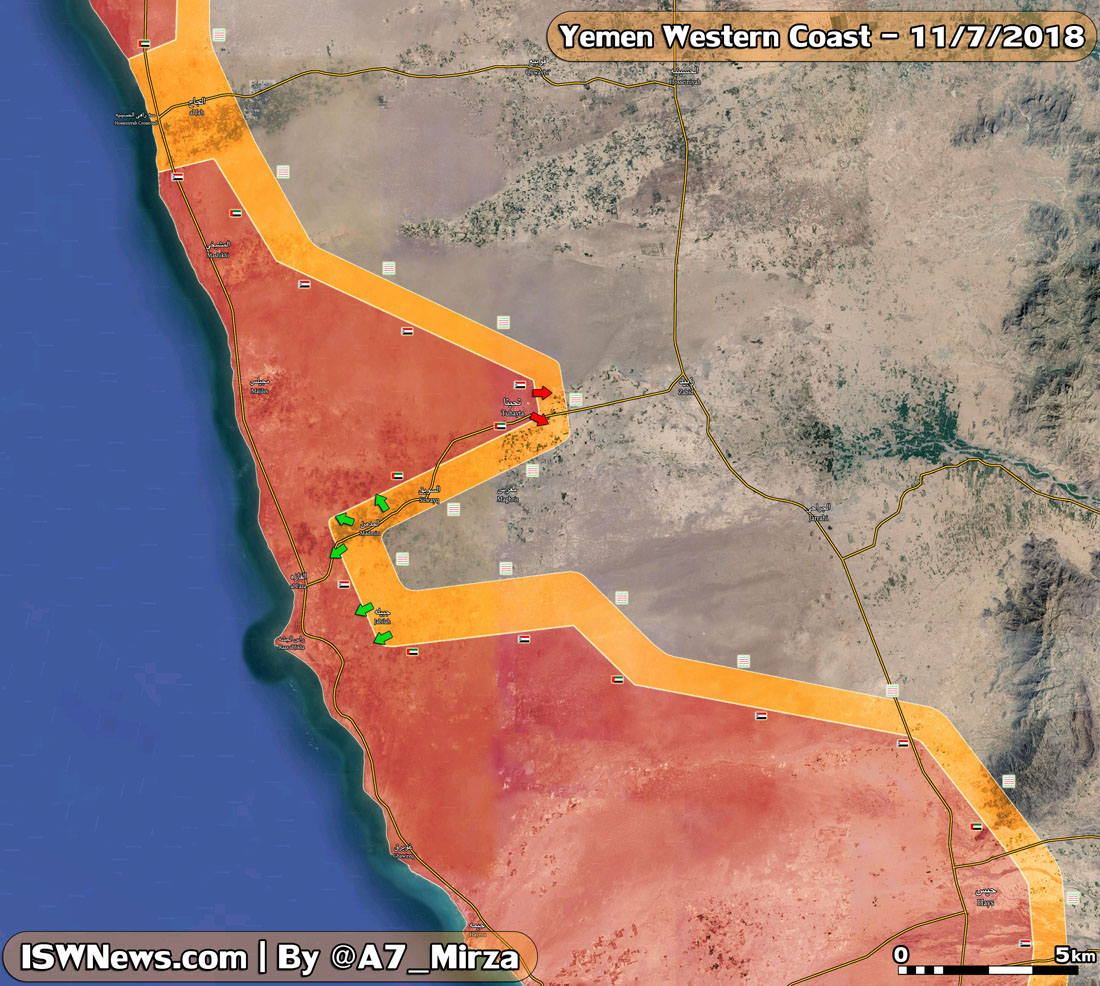
    Latest Updates on Yemen 11 July 2018; Fall of Tuhayta

    1- al Hudaydah
    After 5 days of intense clashes and retreat of Ansarallah, Tuhayta has fallen to UAE-backed forces.

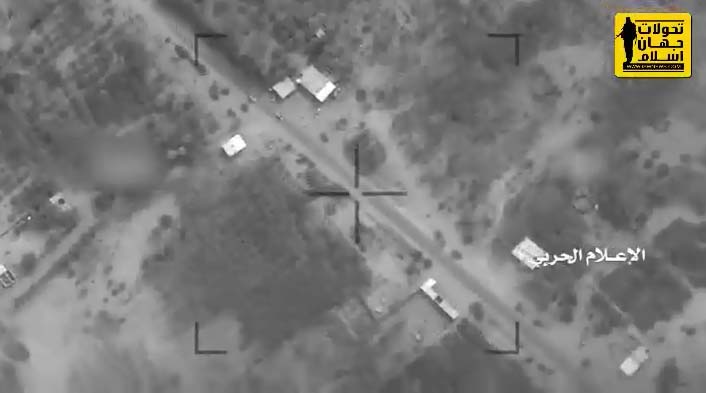
    Right now, Maghris, Madmin, Suwayq and Jabilah are the contact line between Ansarallah and UAE-backed forces. Also hours ago missile division of army and Ansarallah launched another short-range missile against amassed forces of coalition in southern al-Hudaydah


    2. Taiz

    Coalition-backed forces of Salwa front in eastern Taiz; are operating towards southern Damnah and arrived to region of Jisr Moqia and Saele.
    Meanwhile Hayfan is kind of under the siege.
    In east of Rahidah the clashes in Sharijah continues.


    3. A Badr-1 missile was launched towards Jizan
    Saudi medias said that a missile was shot down in Jizan’s sky.


    Download HD Map

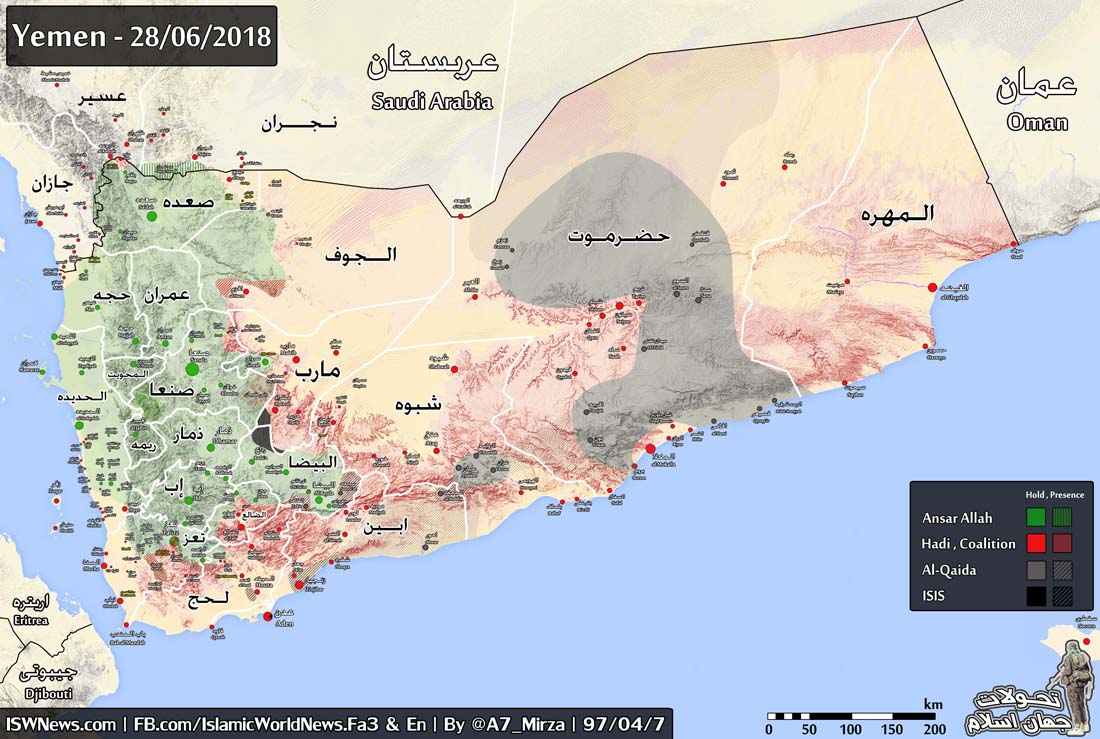
  • Monthly Report on Yemen’s developments 28 June 2018; Situation of Fronts + Maps

    Monthly Report on Yemen’s developments 28 June 2018; Situation of Fronts + Maps

    In the past month three pivot, out of ten pivot, had more change and clashes.
    – Northern Al-Hajjah pivot
    – Southern Al-Hudaydah pivot
    – Al-Bayda pivot


    Al-Hajjah pivot:
    In Yemen’s northern pivot, the coalition forces —after that Ansarallah left the Saudi Arabia soil and heavy bombardments against villages & border towns, like Khobah— invaded border crossings and cities across the main roads, which resulted the fall of “Midi” port (northern Al-Hajjah) and Al-Nar & Al-Shabaka heights (east side of Tawwal crossing) all the way up to northern Harad, into the hands of coalition. Right now Al-Nar & Al-Shabaka are retaken by Ansarallah, and once again the coalition forces have retreated from eastern Tawwal to Saudi Arabia’s soil, However, Midi is still under control of coalition.


    Southern Al-Hudaydah pivot:

    As we mentioned in our previous report, the aim of their operation in west coast of Yemen is to cut Ansarallah’s access to the sea. For achieving this goal, from the beginning of Yemen war, southern Al-Hudaydah have faced heaviest attacks from Saudi-led coalition, with pivotal role of United Arab Emirates.

    (According to the latest news & field informations, the situation of southern Al-Hudaydah is explained in this Link: Latest Updates on Al-Hudaydah and Western Coast Fronts; Map)


    Al-Bayda pivot:

    In this pivot, the attacks by Saudi-led coalition, ISIL and Al-Qaeda are still going on in pivots which were described in previous report.
    In Na’man district, Ansarallah retreated from its positions and now Malajim, Nati` and Qaniya are the contact lines between Saudi-led coalition and Ansarallah.
    In Rada’a district, the enticed elements of Al-Qaeda & ISIL were killed by Ansarallah in its recent operations, and some of them are captured. ( For more information about this news, go to: Latest Updates on Yemen 25 June 2018; News of Fronts )
    In other pivots, there is no report about notable clashes.


    And about negotiations and the fate of the war:

    The fate of the war in Yemen is dependant on Al-Hudaydah Operation.
    Overall it can be said that Saudi-led coalition sword is double edged. The blunt side is the negotiations, and the sharp side is their military operation. So in light of this the negotiations are still going on with the mediation of UN’s Envoy, in one hand, and the military operation in Al-Hudaydah continues, on the other hand.


    Previously, Ansarallah’s leader said that they are ready to give UN the control over the payments of government employees & revenues from Al-Hudaydah port, and he also said that if coalition stop its military operation in Al-Hudaydah coasts, they will stop their attacks in sea and secure the sea.


    For completing the military victories, Ansarallah needs to achieve a political victory, which they have alot of troubles in the way of getting it.
    One of these troubles is the International Consensus that has been created by lots of Saudi and UAE money & mercenary states of the region.
    Ansarallah officials need to break this consensus and get themselves out of international limitations. (maybe this solution is the only channel right now that Iranians can help Ansarallah with it)
    Ansarallah, in terms of military power, social support, security of cities, etc… is not in a bad position, but in Diplomacy War, sometimes they need the support of countries like Iran and sometimes creating an agreement with other fronts and even an election on a national scale.


    Despite the things that are being said, Ansarallah has enough power to defend western coasts, and what led the UAE to Al-Hudaydah airfield is Ansarallah plan to swamp Emirates in order to drain their power.


    The battle of Al-Hudaydah will determine the next stage of war in Yemen, and in future we shall see that Ansarallah can make Al-Hudaydah for Emirates sheikhs & Saudi crown prince, another Stalingrad, or that the fall of Al-Hudaydah will be the key to secession & colonization of Yemen.


    HD map
    Interactive map


    Monthly Report on Yemen’s developments 29 May 2018; Situation of Fronts + Maps