Tag: Trump
-
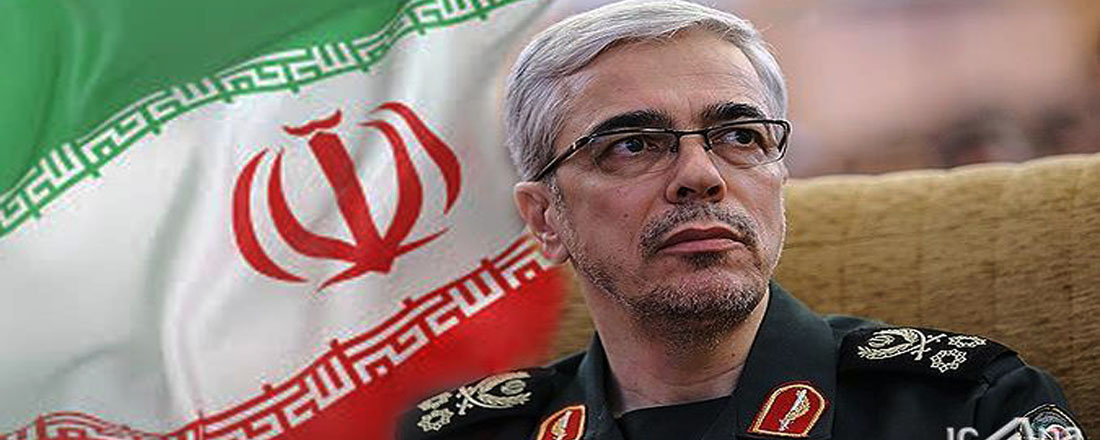
Chief of Staff of the Iranian Armed Forces: “Iran Shouldn’t Have Accepted JCPOA from Very First Day”
“[The US exit] proved we should stand on our own feet and do not rely on such things as JCPOA,” he said, adding that the country needs to depend on domestic capacities to make progress.
US President Donald Trump on Tuesday pulled the United States out of an international nuclear deal with Iran.
Once again, it has been proven to the whole world that the United States never adheres to its promises, and once again it became clear that the United States can not be trusted.
-
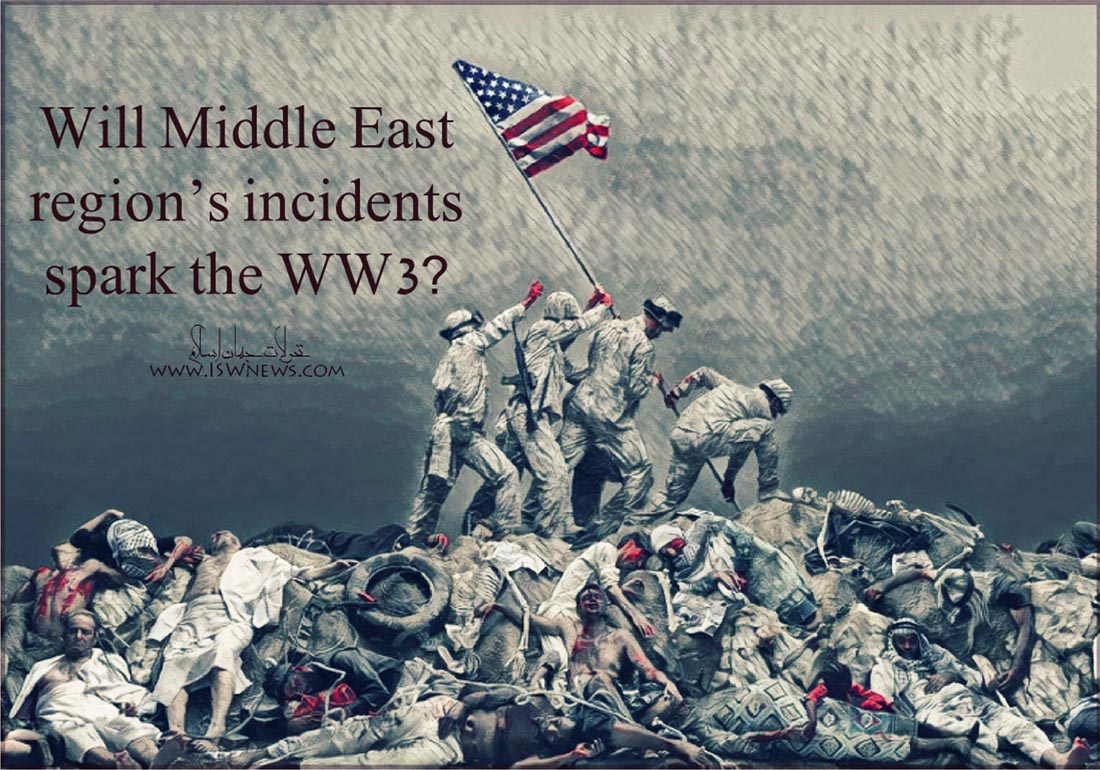
Will Middle East Region’s Incidents Spark The Third World War? Part One
In recent years, countries with power and authority (specially in west of Asia) to achieve their goals form economic, political and recently military alliances.
Shanghai Cooperation Organization, BRICS, NATO (to confront USSR and then Russia), Saudi-led Coalition (to confront Islamic Resistance, Moghawemah) among others are some examples and now in west of Asia and in post-Takfirism (extremism), western countries to implement a new plan.
A plan that Prof. Aleksandr Dugin (Russian strategist) believes Sergei Skripal terror and chemical attack to Douma are introduction to third world war and Abdul Bari Al- Atwan (famous Palestinian analyst) says that according to recent Trump’s assertions, assault of the West will span beyond attacking T4(Tiyas) airbase and even Russian positions are threatened by USA and its allies!
To enlighten different aspects of the recent incidents, answers to some questions out of many questions are examined:
1. What will happen if war starts?
In one plan, USA and the Zionist regime and other allies attack some of the bases in Syria (similar to the missile attack to Shu`ayrat airbase) that Syria answers in three ways:
Foreign bases in occupied Palestine will be targeted or US bases inside Syria such as al-Tanf and Ayn Eissa and etc will be targeted, or even no military retaliation and only diplomatic solutions.
If in these attacks Moghawemah(Resistance) forces are attacked too, probably a response similar to first or second will be used and if USA responses again, Moghawemah responses back and so on until one side stops, otherwise this results in a wide war spanning the whole world similar to the final years of war between Iran-Iraq which resulted in oil export difficulties from Strait of Hormuz in Persian Gulf. In this case, not only Strait of Hormuz but also Bab al-Mandab Strait and Suez Canal are threatened.
2. Does Moghawemah(Resistance) have enough strength to answer USA and its allies or even the recent attack to T4 airbase?
Considering the current situation (economic problems in Iran, Iraq being busy with elections and still dealing with ISIS, Syria engaged in a war and dealing with state decomposition, AnsarAllah under air raids and siege and Russia’s complicated and unknown stands) the answer is very difficult, however there is preparation for engagement at all levels. In addition, Iran’s Sword of Damocles, i.e. Hezbollah, is on the throat of Israel.
3. In the case of a war, what will be the reaction of Saudi Alliance?
There are two possibilities:
First is that they participate in the war, in this case the harshest reaction of Moghawemah(Resistance) will be for Riyadh and Saudi bases after occupied Palestine. Considering troubles of Saudi including domestic protests (suppressions in al Awamiyah and Qatif), war with Yemen and cut relations with Qatar, their engagement with a bigger war will result in their removal from the region.
In second possibility, they do not engage in war and only pay the West for the war. In this context, we refer to crown prince of Saudi who said there is a high chance of engagement with Iran in the next ten to fifteen years and indeed current situation is surprising for him. He is in a trip to Europe and negotiation with powers such as France. However Macron, president of France has always insisted on solving the problem by negotiation and demanded to limit Iran’s missile power and exiting it from the region.
4. Which areas will be involved?
The most immediate points to be attacked are US bases in north of Syria, occupied Palestine and other US bases in the region from Bahrain to Iraq are at higher level of reaction. Military ships and tankers also will not survive.
5. What will be the result of war?
According to studies of American Thinktanks during the time of George Bush (after Afghanistan war and during the military drill of millennium challenge) the cost of fighting with Iran is very high and it causes a high spike in oil price and up to 20 thousand of casualties for US and allies.
On Iran’s side there is no study but indeed the casualties will be severe too.
But it is noteworthy that US tried to attack Iran from 1979 revolution several times and they know that the situation has changed from early years after revolution and Iran-Iraq war time and even after Sadam’s fall. So the casualties should be more than 20 thousand or the oil price should go even higher and also it can result in Saudi and Zionist regimes’ extinction.
This is not a slogan and by studying the recent situation of Saudi Arabia (with reasons mentioned in third question) and Zionist regime (due to Moghawemah preparation in Palestine and the narrow width of this region up to Mediterranean Sea), they are very likely to extinct.
The confrontation between Moghawemah and the West is unavoidable and considering Russia’s effort to reduce the stress, passive assertions and silence of political and military officials, it is not very impossible that a severe war starts in a few days.
Of course Trump’s threats and limited attacks and also sending messages via Russians and other pressure levers are to make Iran withdraw from victory and its position in the region specially in Syria, since the next step of Moghawemah is to end Israel in occupied Palestine and they have not seen themselves closer to extension in recent years than now!
In the end, we can say that there is very high chance that US and Israel attack limitedly to Syria’s or Moghawemat’s positions. Beside military attacks, they will put political pressure to restart negotiations and these pressures might end up in “withdraw-missile negotiation-destiny similar to Libya” or it might end up in a severe war, which is called third world war(WW3) by Aleksandr Dugin or hot war by Abdul Bari Al- Atwan and the winner is the one who persists more.
Read: Will Middle East Region’s Incidents Spark The Third World War? Part Two
-
Trump’s Decision Insults 1 Billion Muslims, Millions of Christians
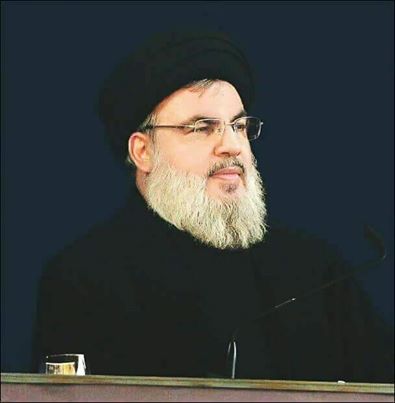
Speaking in a televised speech to the Lebanese nation from Beirut on Thursday, Sayyed Hassan Nasrallah referred to the US president’s decision to recognize Jerusalem al-Quds as the capital of the Zionist regime, and said, “It was the second Balfour declaration. I expect to hear voices in the Arab and Muslim world saying it was meaningless.”He emphasized that Trump’s decision would have negative consequences for all adding that, “We must all shoulder our responsibilities in face of US president’s move because this is a very dangerous act.”
He noted that following Trump’s remarks, the Israeli regime would definitely try to expand its dominion over the greater Quds.
“With this move, the sacred places of Muslims and Christians especially al-Aqsa Mosque, will be in grave danger as the Zionists will seize this opportunity to pose a major threat to Muslims’ sanctities.”
Nasrallah also warned that remaining silent in face of Trump’s decision is very dangerous, and Washington may feel free to do whatever it wants in the Arab world.
He further called the United States a country that does not respect international resolutions and ignores international treaties.
Nasrallah went on to say that the US is openly insulting al-Aqsa Mosque, its people, and their cultural identity. He stressed that Washington’s move must be strongly condemned with mass protests and through showing solidarity with the oppressed nation of Palestine.
“It is important to emphasize that al-Quds is the eternal capital of the Palestine, and we must stand against its Judaisation.”
He said the least the Arab and Muslim states could do is to summon their ambassadors from the United States to protest at US administration’s measure.
“We call on the Muslim world to stop the wars and internal conflicts in Yemen, Libya and Syria and seek solutions to these problems,” underpinned Nasrallah.
In the end, the Hezbollah leader called on all people to take part in a huge rally against Trump’s decision, which will be held in on the southern suburbs of Beirut next Monday.
In a short speech delivered at the White House, US President Donald Trump recognized Jerusalem al-Quds as the capital of the Israeli regime on Wednesday.
His announcement drew condemnation from US allies, and a furious reaction from Palestinian leaders and the Muslim world. Within minutes of Trump’s announcement, US embassies and consulates in several countries were the scene of protests. On Thursday, heavy clashes also erupted between Palestinians and Israeli forces in several cities including Hebron al-Khalil, Jerusalem al-Quds, Gaza, and Bethlehem. Infuriated demonstrators set fire to US flag and Israeli forces used water cannon and tear gas injuring many of them.
The United Nations Security Council is likely to meet on Friday to discuss the move, after a request by eight countries on the 15-member body, including the UK, Italy and France.
-
Trump lacks Syria strategy, risks confrontation with Russia and Iran, analysts say
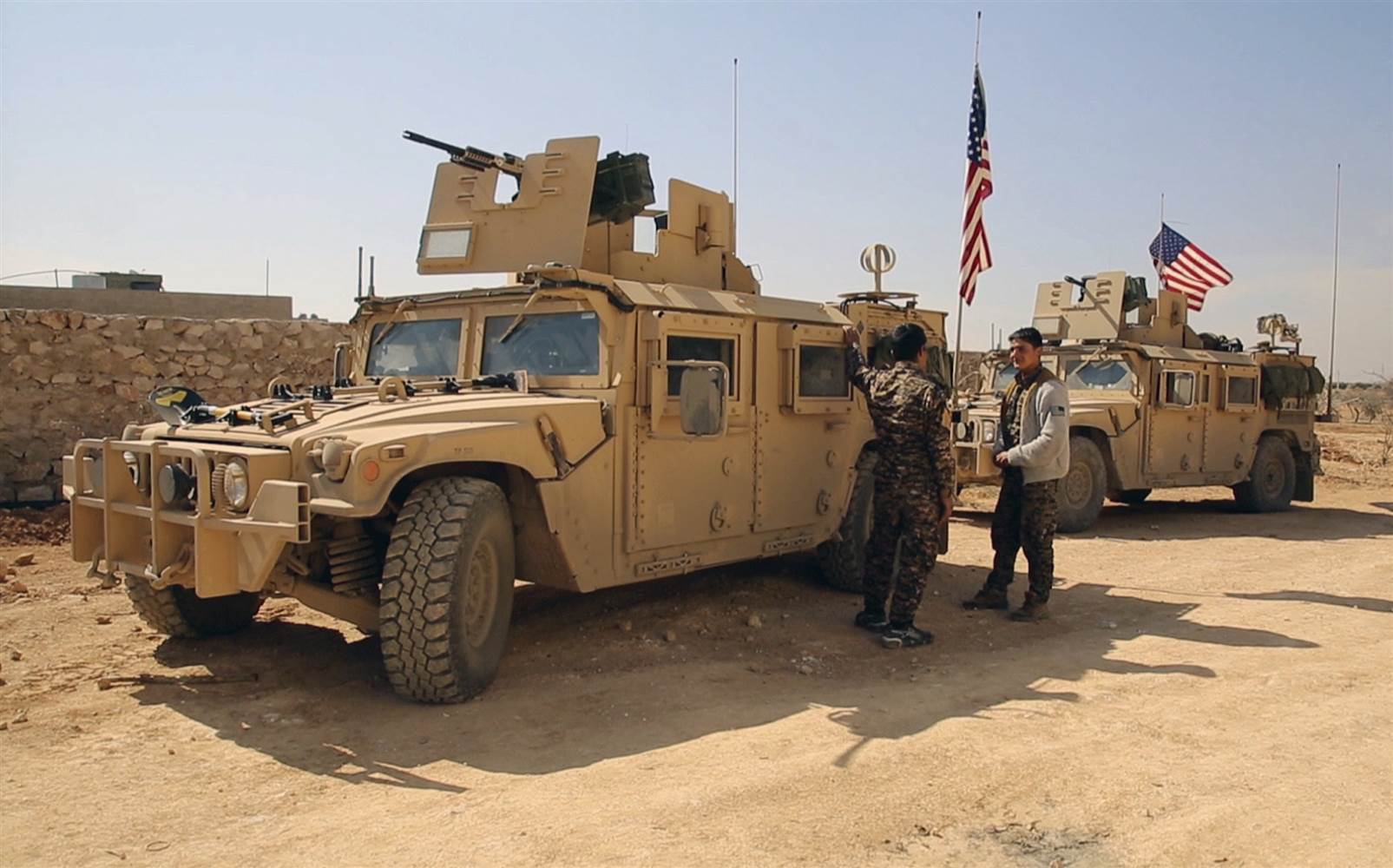
US President Donald Trump has ordered increased military operations in Syria and delegated more authority to his generals despite lacking a comprehensive strategy, an approach that may spark a confrontation with Syria, Iran and Russia, according to US officials and analysts.
The United States has taken a series of military actions over the past three months against Syrian government forces and its allies, including the shoot-down of a Syrian jet on Sunday.
In April, Trump ordered cruise missile strikes against a Syrian airfield from which Washington said a deadly chemical weapons attack was launched.
Analysts say these incidents are tactical and not part of any military strategy in Syria.
“There isn’t an over-arching US strategy driving this,” said Charles Lister of the Middle East Institute.
“This is just the result of tactical decisions by a commander on the ground whose only focus is a specific theater in Syria. He is acting to protect his assets … This is purely a series of tactical decisions that are creating a series of very serious strategic consequences.”
Russia and Iran are both assisting Syrian President Bashar al-Assad to fight Daesh (ISIL) and other terrorist groups wreaking havoc in Syria.
The larger problem, the officials and analysts said, is that Trump and his national security team have not prepared a long-term political strategy for dealing with Syria.
“We have never had a coherent Syrian strategy,” said one US official, speaking on condition of anonymity. “We oppose Assad, but our main enemy is ISIS, which also opposes Assad. Our most capable allies are the (Kurdish) peshmerga, but Turkey, who is a NATO ally and host to an airbase that is central to our efforts, considers the Kurds enemies.”
US General Joseph Dunford, the chairman of the Joint Chiefs of Staff, said Monday the US is working to restore a communications line with Russia intended to avoid mid-air collisions over Syria, after Moscow cut it off following the US downing of the Syrian military jet on Sunday.
The deconfliction arrangement was first established with Russia in 2015 to avoid unnecessary conflict and miscommunication in the military movements of US-led coalition and Russian forces in Syria.
The Russian military involvement in Syria began in September 2015 after an official request by the Syrian government for military assistance against terrorist groups.
Different foreign-backed terrorist groups have been wreaking havoc in Syria since 2011. Over the past few months, Syrian forces have made sweeping gains against Takfiri elements, who have lately increased their acts of violence across the country following a series of defeats on the ground.