Tag: Turkey in Afghanistan

  • Turkey deported hundreds of Afghan refugees!

    Turkey deported hundreds of Afghan refugees!

    In an inhumane act, the Turkish Interior Ministry deported 414 Afghan refugees from refugee camps in the eastern Turkish city of Erzurum and transferred them to Afghanistan. These people say that after the police raid on the Erzurum refugee camp, they were confronted with the violent behavior of the Turkish police and were arrested. They were tortured in prison and later handed over to Taliban militants in Kabul in three flights.
    These measures have been taken by Turkey in line with the policy of reducing the immigrant population, which has created several problems in this country.

    In the past few days, pictures of the beating of Afghan refugees in Turkish prisons have been published, which has provoked strong protests from the Afghan people and human rights activists.

    This is the third serious move by the Turkish government in deporting Afghan refugees in the last two months, and in this regard, 1367 refugees have been transferred to Afghanistan after deportation and torture. According to local media reports, since January 27, 2022, about 28,857 Afghan refugees have been deported from various countries and transferred to Afghanistan. Most of these people have been tortured and harassed in Greece, Bulgaria and Turkey.

    Read more:
    Turkey’s presence in Afghanistan; mutual respect or expansionism? (1)
    Turkey in Afghanistan; Mutual respect or expansionism? (2)

  • Turkish plan to deploy troops in Afghanistan failed!

    Turkish plan to deploy troops in Afghanistan failed!

    Earlier, Turkey and the United States had considered and decided on plans to deploy more Turkish troops at Kabul Airport, but failed due to strong opposition from the Taliban.

    Since 2002, the Turkish Armed Forces have operated in Afghanistan under the NATO plan. After Taliban take over Afghanistan, the group insisted that Ankara must withdraw its military fully by the end-August deadline.

    Overally, the Taliban has withdrawn from the phase of political dependence on Turkey after not attending the Istanbul summit. However, according to a recent statement by Zabihullah Mujahid, Turkey is one of Afghanistan’s most important future economic partners, indicating the Taliban’s continued economic and financial dependence on Turkey.

  • Turkey in Afghanistan; Mutual respect or expansionism? (2)

    Turkey in Afghanistan; Mutual respect or expansionism? (2)

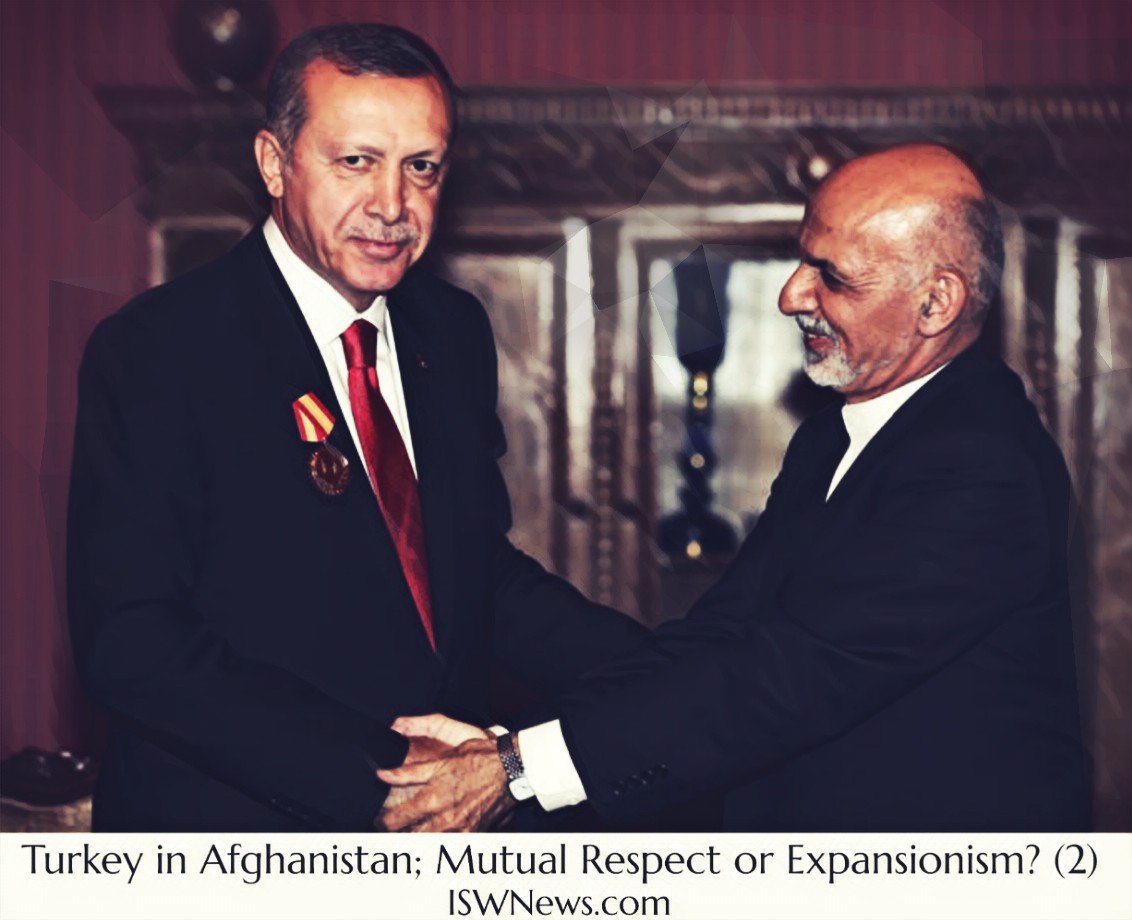
    It was in July this year that Turkish Defense Minister Hulusi Akar confirmed the continued presence of Turkish troops at Kabul Airport, stressing that control of Kabul Airport had been in Turkey’s hands for the past six years.
    According to unofficial reports from the US-Turkey agreement, after the completion of the withdrawal of US troops from Afghanistan, control of Kabul Airport will be handed over to the Turkish military, which includes 600 to 1,000 troops, and this issue has been coordinated with Ashraf Ghani’s government.

    As mentioned in the previous article, the commonalities of Turkey and Afghanistan can be seen in the following three components: a- Religion (Sunni) b- Race (Turkmen, Uyghur and…) c- Thought (Islamic Party led by Gulbuddin Hekmatyar and The Jamiat-e-Islami party, whose religious thought is close to the Muslim Brotherhood.)

    But these components can only answer the background and why Turkey is present in Afghanistan, and the reasons for the military presence can be found in other cases. In summary, these are:

    1- Warming relations with the United States:
    In recent years, US support for the Kurds in Syria, the dispute over Turkey’s purchase of the Russian S-400 defense system, and the subsequent imposition of US sanctions on Turkey have led to strained relations between the two countries. Now, accepting Joseph Biden’s offer, Erdogan is seeking to open a new page in relations with the United States, which he says will attract US financial, logistical and other support to Turkey.

    2- Turkey’s political relations with the leaders of the Northern Afghanistan coalition, including General Dostum, Gulbuddin Hekmatyar and others:
    In fact, in this way, Turkey can strengthen its military influence and even establish itself in the northern bases of Afghanistan and export its goods to Afghanistan. This model has already been implemented in Libya, and Turkey, by influencing a number of Libyan politicians and on their behalf, sent invitations to itself and legalized its presence.

    3- Turkey’s relations with Pakistan and India:
    Following Pakistan-India tensions over Kashmir in 2019, Turkey strengthened its ties with Imran Khan’s government, making it more dependent on Pakistan by investing $ 1 billion and increasing arms exports to Pakistan. Pakistan supports the Taliban, and Turkey’s deployment in Afghanistan will certainly be supported by Pakistan, as it pursues their interests. On the other hand, Turkey’s presence in Afghanistan is confirmed by one of the regional powers, India. India opposes the Taliban and sees their return to power as an increase in Pakistan’s power in the region. India therefore welcomes Turkey’s decision to have a military presence at Kabul Airport and to play a role in facilitating negotiations between the Taliban and other factions.

    4- Uyghurs living in Afghanistan:
    One of the reasons for the confrontation between Turkey and China in Afghanistan is the presence of Uyghurs in this country.
    The Uyghurs are the main source of mercenary groups in Central Asian countries, including Tajikistan and Turkmenistan, which are mainly formed to counter the Taliban threat. Now, given Turkey’s racial affinity with the Uyghurs, the Uyghurs are the best option for building armed groups in Afghanistan. From this perspective, China sees the issue of Afghanistan as a margin of its security and, in addition to other Afghan political currents, seeks to strengthen ties with the Taliban. Of course, Turkey’s reliance on the Uyghurs is formed when their goals are shaped by military confrontation with the Taliban, or when Turkey feels the need for a regional consensus against China and other countries in the region. The transfer of the Uyghur threat from Afghanistan to China is also not possible due to the specific geographical conditions of the region, but their arming could be a problem for China.

    In general, the appearance of Turkish policy in Afghanistan is a policy of “mediation”. They have been successful in starting their work and are waiting for the reaction of their opponent, the Taliban and the countries influencing Afghanistan, to take the next steps. Turkey is facing two serious rivals in Afghanistan, China and Iran, and the Taliban’s close relations with the two countries are intensifying the competition.
    Turkey’s military presence and expansionist presence in Afghanistan may not seem like a big deal at the moment, but their freedom of action in Afghanistan could lead to a regional confrontation.

  • What is the story of the deployment of Turkish troops at Kabul Airport?

    What is the story of the deployment of Turkish troops at Kabul Airport?

    According to Turkish Defense Minister Hulusi Akar, the airport has been under Turkish military control for the past six years, and the main topic of recent US-Turkish talks on Afghanistan is their continued presence at Kabul Airport.

    The United States recognizes the importance of Kabul Airport in maintaining the activities of foreign embassies, including its own. Turkish troops will also be deployed to secure the routes between these areas and the area around the airport.
    Details and the number of Turkish troops have not been released, but some US officials stated that Defense Ministry officials have requested that 600 to 1,000 Turkish troops be stationed at Kabul Airport. It is also said that the provisions of this issue have been discussed and finalized with Turkey and the Government of Afghanistan and will be implemented in the coming weeks.

    The Afghan government has also welcomed the deployment of Turkish troops at Kabul Airport, but the Taliban have called the presence of foreign troops, including Turkey, unacceptable.

    Kabul Airport is a well-equipped air base that, in addition to being able to accommodate more than 100 aircraft, has a large set of US and NATO military and intelligence bases. The airport was built by the Soviets in 1960 and has been developed by the United States over the last twenty years with funding from Japan and NATO.
    Kabul Airport is the last stronghold of foreign troops in Afghanistan, and the increase in Turkish troops there is a cover to protect US intelligence and security interests in Afghanistan.

  • Turkey’s presence in Afghanistan; mutual respect or expansionism? (1)

    Turkey’s presence in Afghanistan; mutual respect or expansionism? (1)

    In recent days Recep Tayyip Erdogan, president of Turkey, has asked for military presence in Afghanistan by submitting a plan, renewal of his country’s presence in Afghanistan for another 18 months, to his country’s parliament. This is while the USA and NATO have committed to the agreement of their military forces’ withdrawal from Afghanistan. Of course Turkey in recent years has not seen its presence in Afghanistan by occupation and colonization, and to create this view in Afghanistan, it has been taking extensive measures, including building schools, TV channels, and so forth.

    Generally the common reasons between Turkey and Afghanistan are as follows:
    1-Sunni religion 2-Racial affiliation with Uzbeks, Turkmen, Ghezelbash, etc. 3-Presence of Muslim Brotherhood in Afghanistan, Jamiat-e-Islami Party, in the body of Afghan government.

    Indeed, Turkey’s presence after 11th September and Afghanistan’s war entered a new stage as one of the members of NATO, and the Turkish government with special role of Ahmet Davutoglu and according to its national interests and taking into account political, economic, cultural, etc. consideration expanded its influence in Afghanistan and exploited its existing potentials in this country.
    Turkey began its military presence in Afghanistan in 2015 as a peacekeeping force, which initially reached 1079 and raised to 1206 in 2018. Erdogan, regardless of the USA peace agreement with Taliban, has demanded renewal of his country’s presence in Afghanistan for another 18 months.
    Turkey has a warm and close relationship with the Islamic party of Afghanistan and its leader, Gulbuddin Hekmatyar, in respect of ideas and stances as well as with General Abdul Rashid Dostum and the National Islamic Movement in terms of races. Somewhat these two parties can be considered Turkey’s main allies in Afghanistan.

    They believe that Turkey’s presence in Afghanistan, whether military or civilian, is based on absolute respect and observance of Afghan people’s rights, and is not for implementing colonialism and occupation.
    On the other hand, opponents of Turkish influence in Afghanistan, either militaristic or non militaristic presence of this country in Afghanistan, are not satisfied with Turkish cultural influence which is implemented by TV channels, schools, and so forth, and condemn the view of secular Islamic in Turkey.

    From previous years, Turkey has old relations with Afghanistan, and the government of Ottoman was the second country to announce Afghanistan’s independence from Britain. Turkey has established close links to Pakistan to fortify its influence in Afghanistan, and ita endeavors to reduce Iran’s mediation by its Uzbek and Turkmen neighbors.
    Turkey has been pursuing this issue before with the formation of Turkish countries council in 2009, and in general, it can be said that Turkey is trying to build a bridge between Azerbaijan and Turkmenistan to better exert its influence on Central Asian countries, including Afghanistan.
    Religious and racial commonalities are the main elements of Turkey’s foreign policy and in spite of the fact that Afghanistan is not a priority of Turkey’s foreign policy, the Erdogan government have not limited themselves to build military, cultural, etc. bases in this country, from Kabul and Mazar-e-Sharif to Jawzjan.