Tag: UN

  • Israel’s Listing On UN Blacklist: A Victory For Justice, Accountability In Palestine

    Israel’s Listing On UN Blacklist: A Victory For Justice, Accountability In Palestine

    The Palestinians Authority (PA) has described the United Nations’ decision to place the Israeli regime on the blacklist for harming children as a proper measure to make the regime accountable.

    This move has shed light on the plight of Palestinian children who have long suffered the brunt of Israeli aggression and violations of their basic rights.

    The confirmation from the representative of the Israeli regime at the United Nations regarding Guterres’ decision has sparked a wave of condemnation from Israeli officials, underscoring the sensitivity and significance of this development.

    The criticism levied by the Israeli representative, in response to the listing, reflects a desperate attempt to deflect attention from the atrocities committed by the Israeli regime, particularly during the Gaza war, where innocent Palestinian children bore the heaviest burden of violence and displacement.

    Israeli Prime Minister Benjamin Netanyahu’s dismissal of the UN’s decision and his claim of the Israeli army’s ethical standards only serve to perpetuate the narrative of impunity and disregard for Palestinian lives that has characterized Israel’s actions in the region.

    Netanyahu said: “It is the United Nations that is on the blacklist. When the UN joined Hamas supporters, it was placed on the blacklist; the Israeli army is the most ethical army in the world, and no ridiculous decision by the United Nations will change this reality.”

    Netanyahu’s rhetoric fails to acknowledge the systemic injustices and human rights violations that Palestinians have endured for decades at the hands of the Israeli military.

    For Palestinians and advocates of justice worldwide, Israel’s inclusion in the UN blacklist symbolizes a glimmer of hope for accountability and a recognition of the ongoing humanitarian crisis in Palestine.

    The international community must stand firm in holding Israel accountable for its actions and ensuring that the rights of Palestinian children and civilians are safeguarded against further violations and atrocities.

    As the voices of the Palestinian people grow louder in their quest for freedom and justice, the listing of Israel on the UN blacklist serves as a reminder of the urgent need for solidarity and action to end the cycle of oppression and violence in Palestine.

  • Iranian Foreign Minister To United Nations Security Council: Iran’s Response To Israel’s Aggression Will Be Immediate, Decisive, And Strong

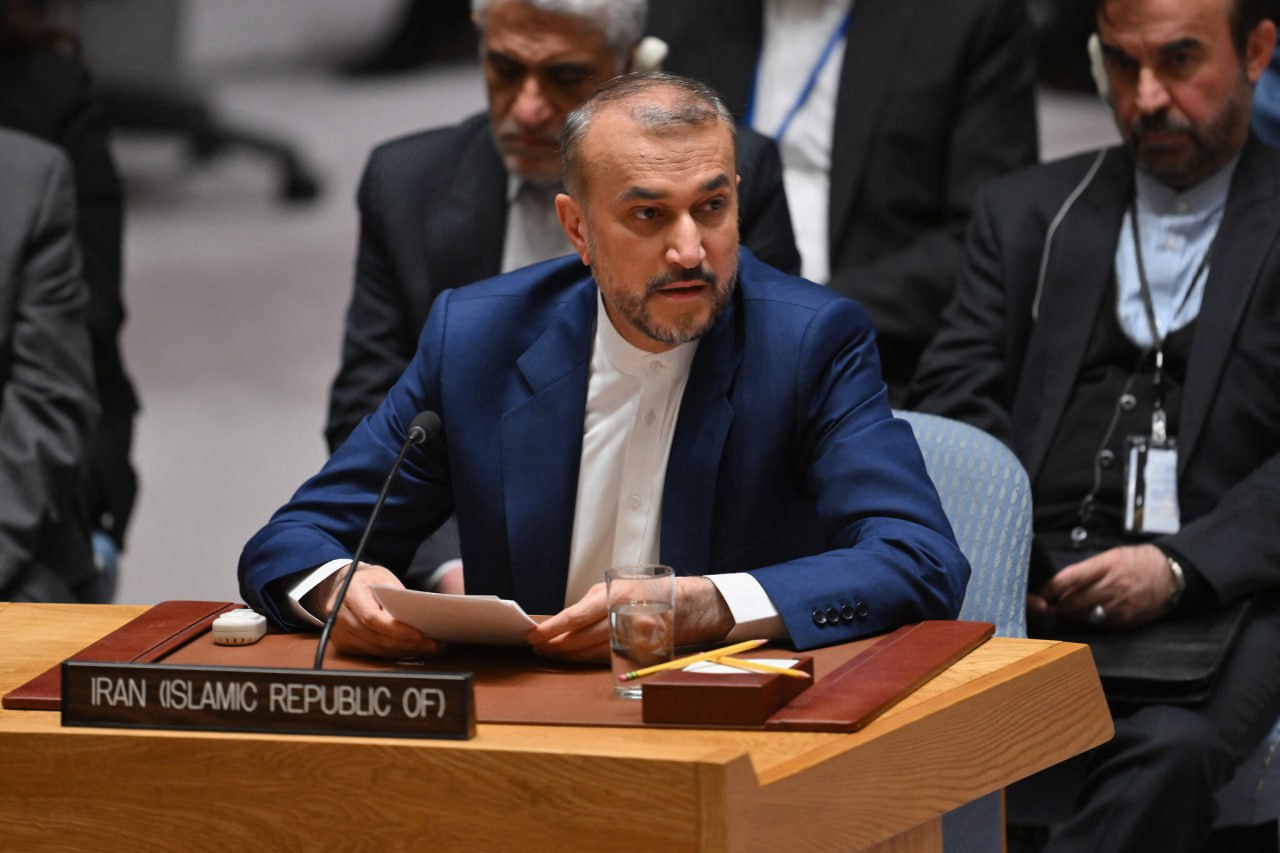
    Iranian Foreign Minister To United Nations Security Council: Iran’s Response To Israel’s Aggression Will Be Immediate, Decisive, And Strong

    Some excerpts from Hossein Amirabdollahian’s speech at the UN Security Council are as follows:

    – We will not tolerate any aggression against our national security, the country’s interests, and the collective security of the sensitive region of West Asia by any party.

    – The UN Security Council has held numerous meetings to address the war crimes and genocide committed by the Israeli regime, which, despite the adoption of three resolutions and one statement, has had ‘no practical result.’

    – No government will remain silent in the face of such brazen missile attacks on its embassy, which is considered a symbol of sovereignty, and the killing of its legal forces.

    – Iran’s legitimate defense and proportionate action have come to an end. Therefore, the Israeli regime must be compelled to refrain from any further military adventurism against Iran’s interests.

    Certainly, if the Israeli regime uses force and violates Iran’s interests, Iran will not hesitate for a moment to give an immediate, decisive, and strong response and make the regime regret its actions.

    Amirabdollahian also stated at the United Nations Security Council session that it is expected that the council will take action on the following matters by adopting a comprehensive and decisive resolution under Chapter VII of the United Nations Charter:

    1- Immediate, complete, unconditional, and permanent ceasefire in all Gaza areas, including Rafah, and even the western border.

    2- Complete lifting of the humanitarian blockade of Gaza.

    3- Humanitarian prisoners swap.

    4- Compelling the regime to immediately, completely, and unconditionally withdraw all military forces, equipment, and weapons from Gaza and ensuring the safe return of people to their areas and places.

    5- Imposition of comprehensive and immediate sanctions against the Israeli regime.

    6- Supporting the binding temporal jurisdiction of the International Court of Justice (ICJ) and paving the ground for the trial and punishment of all perpetrators, agents, and supporters of Israel’s crimes for committing genocide, targeted killings of journalists, staff of public service institutions, repeated use of unconventional weapons such as phosphorus bombs, and repeated threats by Israeli regime officials to use nuclear bombs in the Gaza Strip.

  • UN Security Council Resolution On Gaza Ceasefire Finally Adopted

    UN Security Council Resolution On Gaza Ceasefire Finally Adopted

    This resolution was proposed by Malta and was approved by a positive vote of 12 countries and the abstention of three other members of the UN Security Council to push for a humanitarian halt of the conflict in the Gaza Strip.

    According to the resolution, a temporary humanitarian ceasefire must be established in Gaza and safe passages must be identified in various routes in this region.

    Moroever, Palestinian resistance groups must release all captives and prisoners in the Gaza Strip.

    It should be noted that the duration of the ceasefire in this resolution is not specified and can be extended by agreement of the parties to the confrontation.

    It is worth mentioning that, there is no mention of the freedom of Palestinian prisoners as well as the recognition of the Palestinians’ rights.

    The adoption of the UNSC resolution takes place as 40 days have passed since the start of the war in Palestine and the inhumane and unconventional actions of the Israeli regime in the Gaza Strip, and two resolutions proposed by Russia and Brazil for a ceasefire and sending humanitarian aid to the Gaza Strip were faced with the opposition vote of the United States and European states.

  • UN coordinated with Saudi coalition

    UN coordinated with Saudi coalition

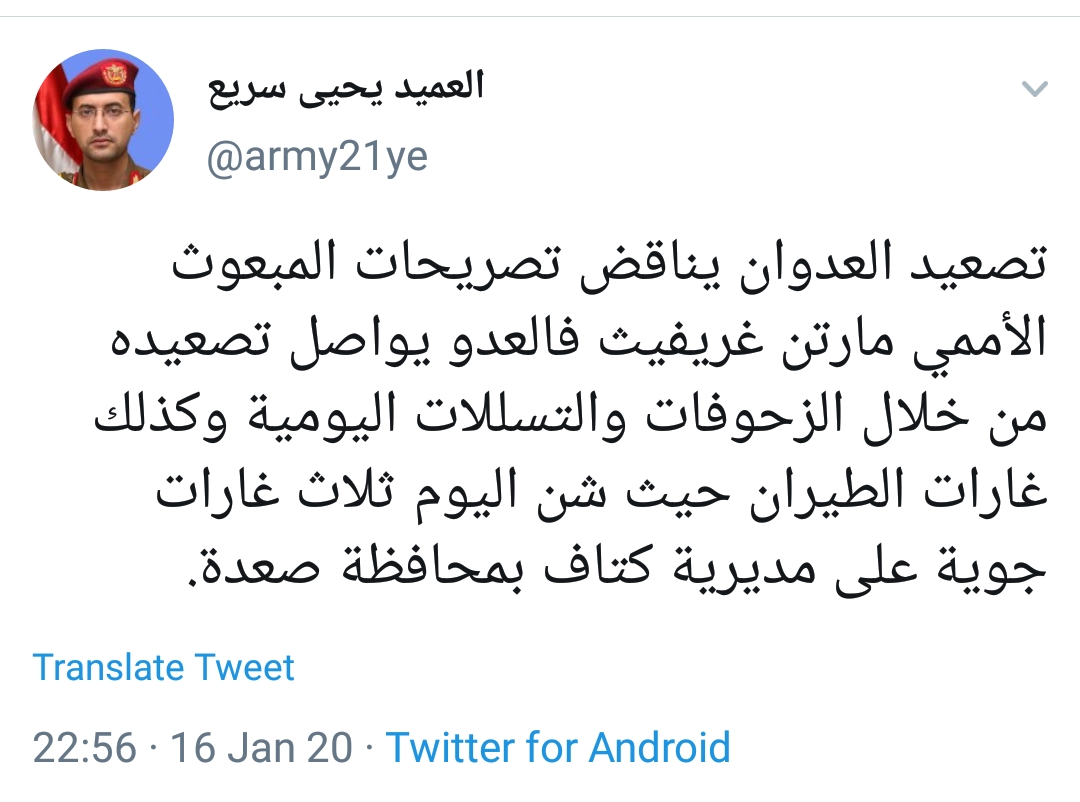
    P.S. UN envoys have not done anything useful to stop Saudi coalition attacks and helping the ceasefire. They do not follow up with Ansar Allah’s complaints until they are making troubles in the media!
    The role of strong and active media in this issue can be seen.

  • UN Did Not Confirm That Weapons Used to Attack Aramco Were Iranian

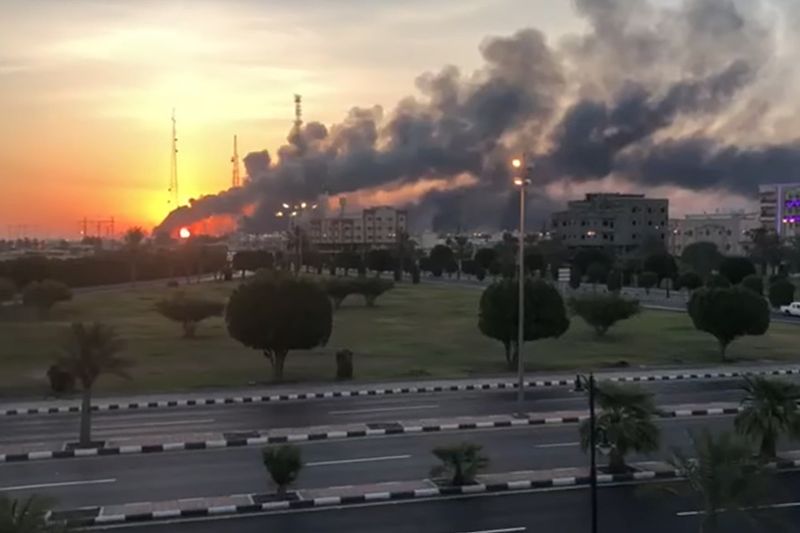
    UN Did Not Confirm That Weapons Used to Attack Aramco Were Iranian

    Guterres gave the report of UN investigation to Security Council and rejected the claim that drones and missiles were Iranian.
    He said that at the current critical moment based on our independent investigations we cannot confirm the Iranian origin of the cruise missiles and drones used in the attack Aramco.
    USA, Europe and Saudi Arabia claim against Iran in despite that AnsarAllah showed evidences that the operation was performed by Yemeni built weapons.

  • Sudanese Soldiers Sent to Libya

    Sudanese Soldiers Sent to Libya

    Important points in UN report:
    – UAE, Turkey, Jordan and Sudan violated weapon sanctions on engaging groups in Libya.
    – Sudanese army sent one thousand soldiers to Binghazi and Jufrah to help LNA army led by Gen Haftar with Tripoli battle.
    – UAE violated weapon sanctions by deploying air defense systems in Jufrah and Gharyan.

    Undoubtedly sending Sudanese soldiers to Libya was under support and order of Saudi coalition and therefore Sudanese ten thousand soldiers pull back from Yemen was influenced by these decisions.

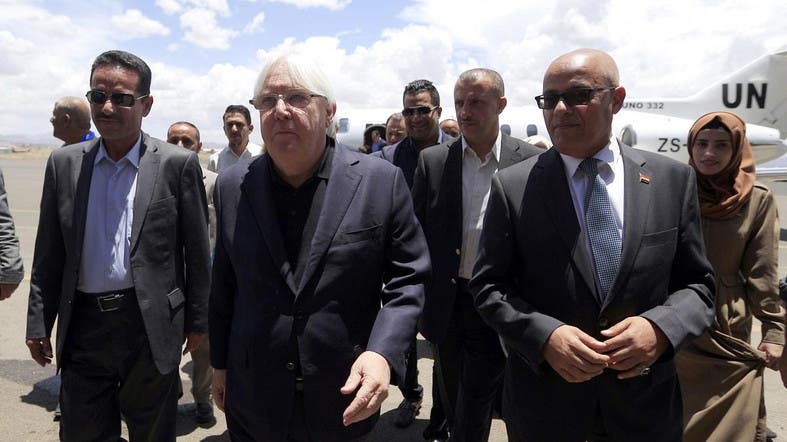
  • Martin Griffiths Meeting with Ansar Allah Leader

    Martin Griffiths Meeting with Ansar Allah Leader

    Sayyed al-Houthi asked UN to fulfill its promises regarding breaking the siege, stopping enemies assault and sending humanitarian aids.
    Sayyed al-Houthi also proposed plans on prisoners exchange and called foreign forces complete pull out from Yemen as a step toward stable peace.

  • Syria to Trump: US Can Give Israel Two of Its Own States!

    Syria to Trump: US Can Give Israel Two of Its Own States!

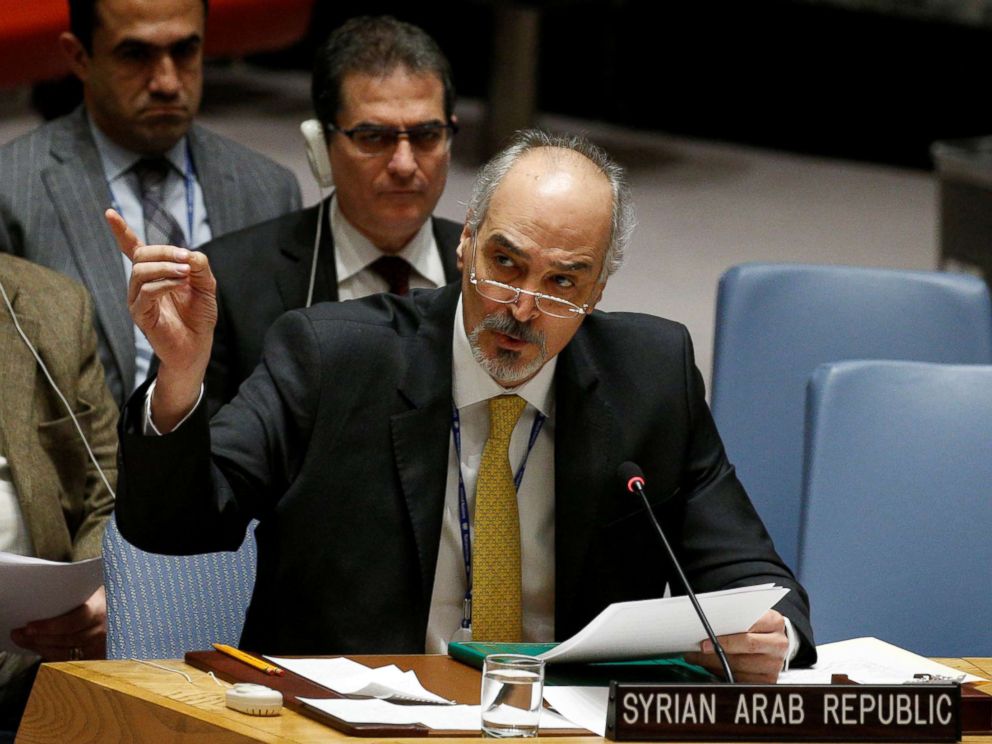
    Jaafari made the remarks at a Security Council session organized Thursday at his country’s request in the wake of President Donald Trump’s decision to recognize “Israeli sovereignty” over the Syrian territories of Golan Heights.


    He called the decision “null and void” and warned of “a serious and unprecedented delinquency in the current US administration toward undermining international law and insulting the United Nations.”


    “The Syrian Arab Golan is ours and will return to us,” Jaafari said, arguing the occupied land would not “be part of some damned and wicked deal, or a pawn to be exchanged for support in your electoral games,” which should instead concern “the territory of the American administration.”


    “America is a wide and vast country, so why doesn’t it give up a state or two of the United States to the Israelis, for example, North Carolina or South Carolina?” Jaafari asked, as his Israeli counterpart, Danny Danon, laughed and shook his head.


    “South Carolina is nice, because it’s the land of Senator Lindsey Graham, who supported President Trump in his actions.”


    Trump’s decision came two weeks after Graham visited the Golan Heights and called on the US to recognize it as part of Israel.

    The president first hinted at the landmark policy decision in a tweet last Thursday as Secretary of State Mike Pompeo was in Israel to shore up ties with the White House’s closest ally.


    On Monday, Trump made it official during a visit from Israeli Prime Minister Benjamin Netanyahu.

    The move was widely condemned by world powers, many of whom cited UN resolutions that still consider the Golan Heights part of Syria after it was seized by Israel during the 1967 Six-Day War and annexed without international recognition in 1981.


    Source

  • The AbuZayd-Pinheiro Committee: Systematic Misinformation on Syria

    The AbuZayd-Pinheiro Committee: Systematic Misinformation on Syria

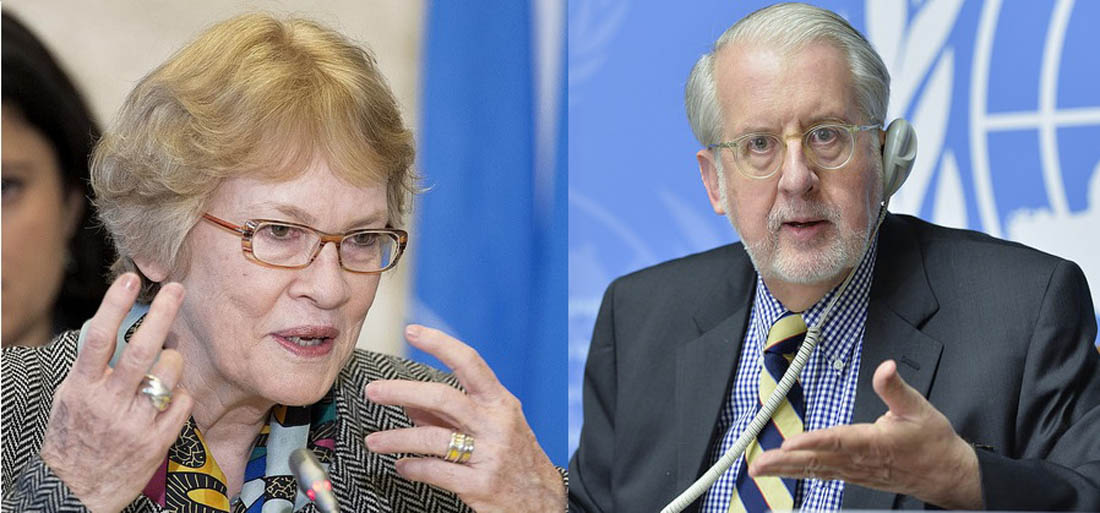
    In mid 2012, as foreign jihadists poured into Syria, UN Secretary General Ban Ki Moon authorised replacement of the Special Mission on Syria (UNSMIS) with a Geneva-based ‘Independent International Commission of Inquiry on Syria’ (IICOIOS), co-chaired by US diplomat Karen Koning AbuZayd and Brazilian Paolo Pinheiro.

    Unlike UNSMIS, led by Norwegian General Robert Mood and based in Syria, the IICOIOS was based in Geneva, never visited Syria and was deeply compromised by its link to US diplomacy and its reliance on jihadist sources. The US Government, by then, was arming anti-government jihadist groups in Syria. Ban had thus embedded a deep conflict of interest in a nominally ‘independent’ UN agency.

    The Abuzayd-Pinheiro group, joined by Italian lawyer Carla del Ponte, issued a series of distant reports which echoed western war propaganda against Syria. Notable amongst these were reports on the 2012 Houla massacre, a report on the 2016 liberation of Aleppo, and a recent report which seeks to blame a series of chemical weapons attacks in 2017 on the Syrian Government. Carla del Ponte, in a better moment, revealed in mid 2013 that the first use of sarin gas in Syria was by Jabhat al Nusra. But none of this appeared in the group’s reports.

    In a pretence at even handedness, the group has made criticism of the terrorist groups and the US-led bombardment of Syrian cities. However when it comes to accusations against the Syrian Government it pays literally no attention to genuinely independent evidence, such as that from Syrian civilians who have blamed jihadists for ‘false flag’ massacres, and reports from the US military forensic expert Professor Ted Postol.

    The result is what we might expect of a US-embedded organ: a partisan adjunct to official war propaganda, vilifying the Syrian Government and the soldiers of the Syrian Arab Army, as they struggle to defend their country. The UN group’s systematically distorted misinformation, during a war, most likely constitutes a war crime, as propaganda for war is prohibited. Let’s look at three key reports.

    The Abuzayd-Pinheiro’s first report, on the May 2012 Houla massacre, set a standard for low grade but well timed war propaganda. As I document in chapter eight of my book The Dirty War on Syria (Anderson 2016), 15 independent witnesses gave great detail about the massacre of over 100 villagers in rural Homs by members of the Farouq Brigade (FSA) and several named local collaborators. The jihadists, expelled from Homs city by the Syrian Army, took revenge on families in Houla who had participated in recent elections, violating the jihadists’ call for a boycott.

    UNSMIS head General Robert Mood had recognised conflicting reports coming from Houla, which was then under Farouq-FSA control. However UNSMIS was rapidly disbanded and the Abuzayd-Pinheiro group issued a report which unambiguously blamed pro-army civilian militia (‘shabiha’). Based on a few long-distance interviews, arranged by the Farouq brigade, they IICOIOS tried to blame the atrocity on the Syrian Government. However, unlike the local eyewitnesses (reported by Syrian, European and Russian media), they could provide no names, little detail and no motive (HRC 2012: 20).

    Their report came before a UN Security Council meeting in which the US sought authorisation for Libyan-style attacks on Syria in the name of ‘civilian protection’ (a ‘no fly zone’). The manoeuvre failed and the report was strongly criticised at the UNSC, with Russia, China and India refusing to accept it as a basis for action. However it was used as a pretext for many other countries to downgrade their relations with Syria.

    Almost five years later the AbuZayd-Pinheiro group tried to portray as a ‘crime’ the liberation of the city of Aleppo from al Qaeda aligned groups. They paid no attention to the thousands of relieved and celebrating civilians who had been rescued from al Qaeda held East Aleppo. Once again the assertions were reckless and partisan. The group falsely claimed that the liberation of the city had involved ‘daily air strikes’ on the eastern part of Aleppo city (HRC 2017: 19). Yet it was reported widely in foreign media that air strikes on the east part of the city were suspended on 18 October (BBC 2016; Xinhua 2016). NPR’s Merrit Kennedy (2016) reported ‘several weeks of relative calm’ during the ‘humanitarian pause, aimed at evacuating civilians. The ‘resumption’ of airstrikes almost one month later was aimed at the armed groups in rural Aleppo, not on the shrinking parts of the city held by the jihadists (Pestano 2016; Graham-Harrison 2016). Of course, al Qaeda aligned ‘media activists’ did claim the city was being continuously bombed (CNN 2016). However the UN commission, as Gareth Porter pointed out, ‘did not identify sources for its narrative … [but rather] accepted the version of the events provided by the ‘White Helmets’’, a jihadist auxiliary funded by the US and UK governments (Porter 2017). This report seemed to belatedly support calls by the UN Secretary General’s representative, Stefan di Mistura, for the Syrian Government to allow jihadist groups to maintain control of a lage part of the country’s second city. Syria would never allow that to happen.

    In its most recent report of September 2017 the AbuZayd-Pinheiro group criticised terrorist groups and the US air strikes, in a pretence at impartiality. But it added a remarkable claim that had no basis in independent evidence: that ‘government forces continued the pattern of using chemical weapons against civilians in opposition held areas’. Abuzayd-Pinheiro claimed that 20 of 25 chemical weapons attacks in 2017 ‘were perpetrated by government forces’, referring to incidents at Khan Sheikhoun, al Latamneh and East Ghouta (HRC 2017b: 1, 14). Yet critical, independent evidence from US Professor Ted Postol had disproved the notion that the Khan Sheikhoun incident came from an air strike (Postol 2017). Indeed, the Syrian Government says the Army never once used chemical weapons during the 2011-2017 conflict, and no independent evidence contradicts this position. For example, in chapter nine of my book (Anderson 2016) I document the catalogue of independent evidence that discredited the ‘chemical weapons ‘false flag’ in the East Ghouta, of August 2013.

    So, on what evidence were AbuZayd-Pinheiro’s claims based? They refer to interviews with victims and aid providers in jihadist controlled areas, some satellite images, a report of the UN’s OPCW (which did not attribute blame) and a non-response from the Syrian Government (HRC 2017b: 14-16). Clearly Damascus refuses to cooperate with AbuZayd-Pinheiro because of their previous propaganda activity. In the case of Khan Sheikhoun incident, the OPCW refused Russian invitation to visit and investigate, preferring to rely on information and samples provided by jihadist groups and their auxiliaries, such as the US-UK funded ‘White Helmets’. Once again, virtually all evidence cited by the Abuzayd-Pinheiro group came from US-backed and jihadist sources – al Nusra aka Hayat Tahrir al Sham, Ahrar al Sham, Jaish al Islam and Faylaq al Rahman (HRC 2017b: 14-16).

    This latest AbuZayd-Pinheiro report came as the Syrian Army broke a three-year ISIS siege on the eastern City of Deir Ezzor. Fake chemical weapons claims at this time might briefly distract from this latest Syrian victory over the NATO-Saudi proxy armies, but they carry less import than before. Nevertheless, this US-led ‘independent’ group showed itself partisan and propagandist to the end.

    Source: Ahtribune
  • Leaked UN Report: Saudi-led Coalition Is Responsible For Over Half Of Child Deaths In Yemen

    Leaked UN Report: Saudi-led Coalition Is Responsible For Over Half Of Child Deaths In Yemen

    According to the report obtained by Reuters, “attacks carried out by air caused over half of all child casualties, with at least 349 killed and 333 injured”. The report says that the deaths were “unacceptably high”.

    The report insists that 51% of all child deaths and injuries in Yemen last year were the result of military actions of the Saudi-led coalition.

    The Saudi-led coalition destroyed more than 28 schools in Yemen, the report added.

    The obtained text was reportedly drafted by UN Secretary-General Antonio Guterres’ special envoy for children and armed conflict, Virginia Gamba, acting on a request from the UN Security Council.

    However, Guterres still has to approve the report. If this is done, the report will be released this month.

    The report will be a serious problem for the UN secretary-general because if he releases the report, he will damage the UN’s relations with Saudi Arabia and its allies. If he does not release the report, he will be accused of undermining the UN’s commitment to human rights.

    In February, Gutierrez suggested to his senior advisors to postpone the release of the report for three to six month in hope that it may motivate Saudi-led coalition to improve its human right performance in Yemen and particularly the rights of children in war.

    Gutierrez will allegedly receive the final report this week.

    The signing of the de-escalation agreement in Avril 2016 reportedly reduced the civilian casualties. However, the actual death toll can be higher than the provided in the report because of a lack of access to documents that can provide accurate info on the civilian casualties.

    According to reports, there is still no final decision on the countries that would be added to the final list of countries that violate the human rights.

  • Myanmar to deny entry to UN staffers investigating plight of Rohingya Muslims

    Myanmar to deny entry to UN staffers investigating plight of Rohingya Muslims

    Myanmar says it will refuse entry to the members of a United Nations fact-finding mission tasked with investigating allegations of crimes by Myanmar’s security forces against Rohingya Muslims.

    Kyaw Zeya, a permanent secretary at Myanmar’s Ministry of Foreign Affairs, said the government would not grant visas to the UN staffers.

    “If they are going to send someone with regards to the fact-finding mission, then there’s no reason for us to let them come,” he said. “Our missions worldwide are advised accordingly.”

    The government in the capital, Naypyidaw, which is practically led by Aung San Suu Kyi, had already said it would not cooperate with a UN mission in the country.

    The United Nations Human Rights Council agreed in March to send an international fact-finding mission to Myanmar and called on Suu Kyi to “fully cooperate.” During a trip to Sweden this month, however, she claimed that the UN mission “would have created greater hostility between the different communities.”