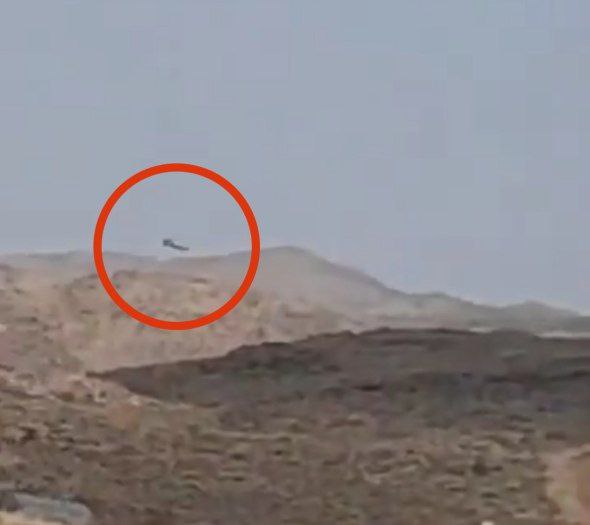
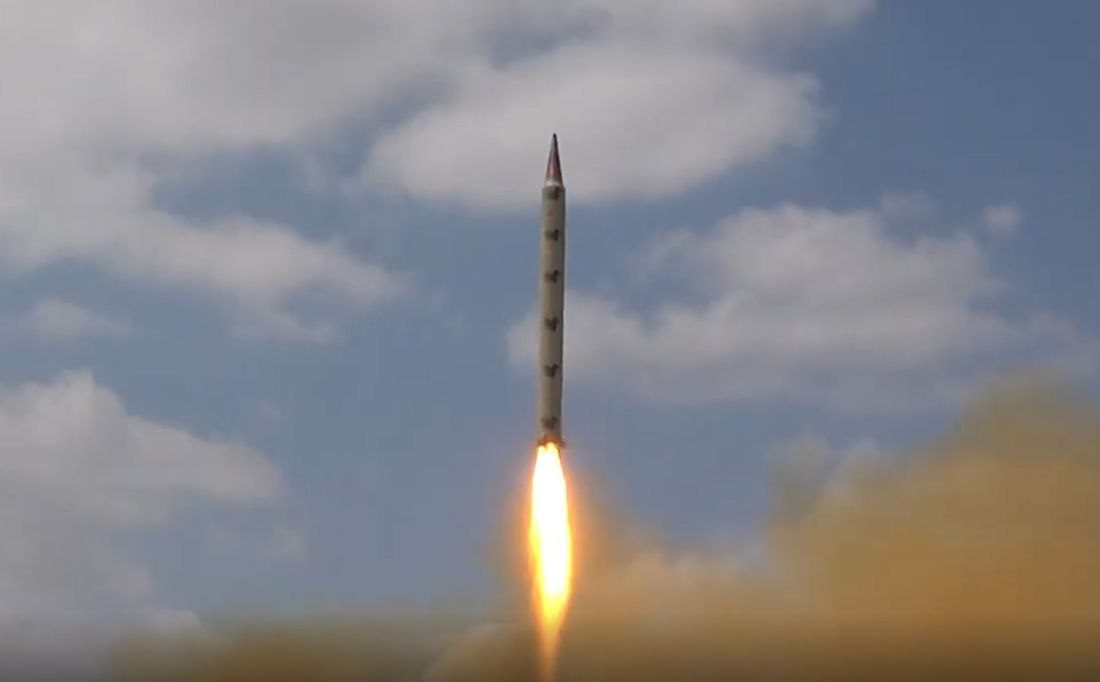
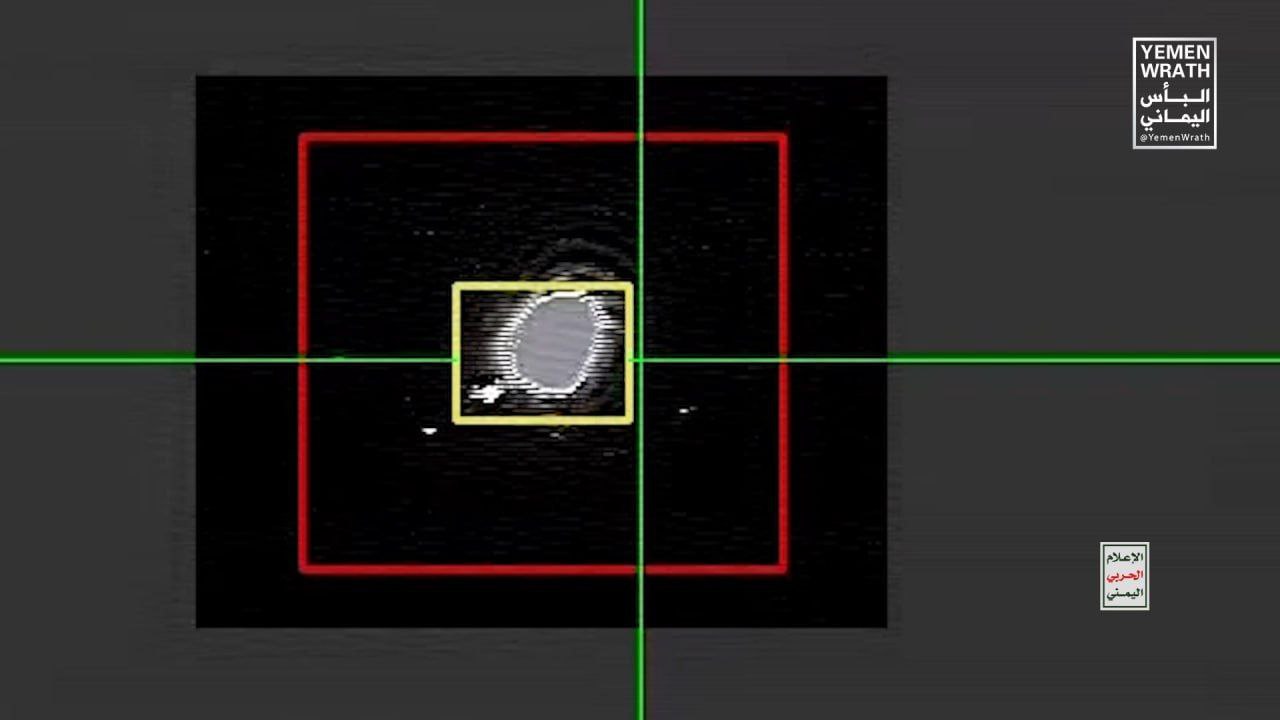
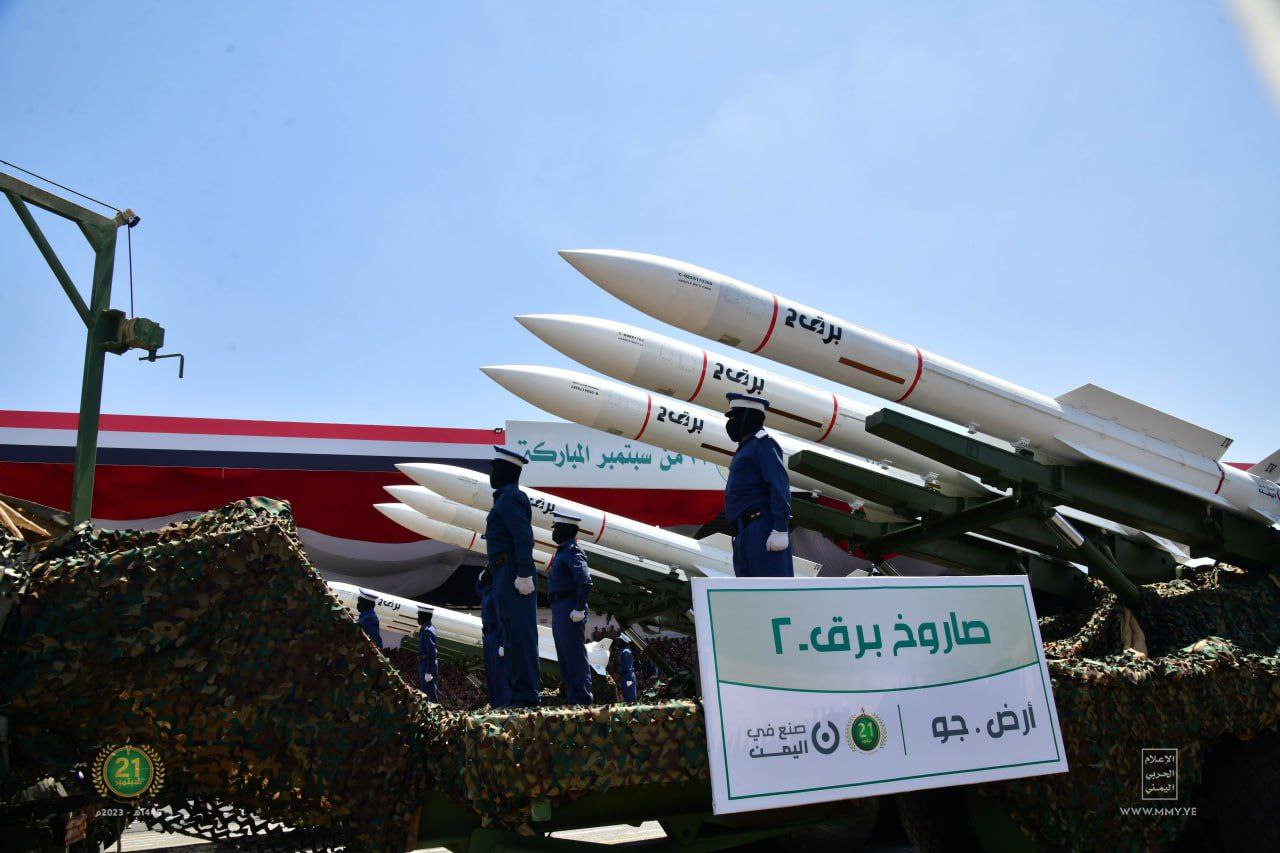
This incident marks the 25th MQ-9 drone downed throughout the Yemeni conflict, with 20 of these drones being downed during the operation aimed at aiding Palestine, titled “Promised Conquest and Holy Jihad. “
Video of the moment a US MQ-9 drone crashed in Sanaa province. This drone was probably also destroyed by a 358 or 359 anti-aircraft missile
The loss of these MQ-9s represents a significant cost for the US military, estimated at $800 million.
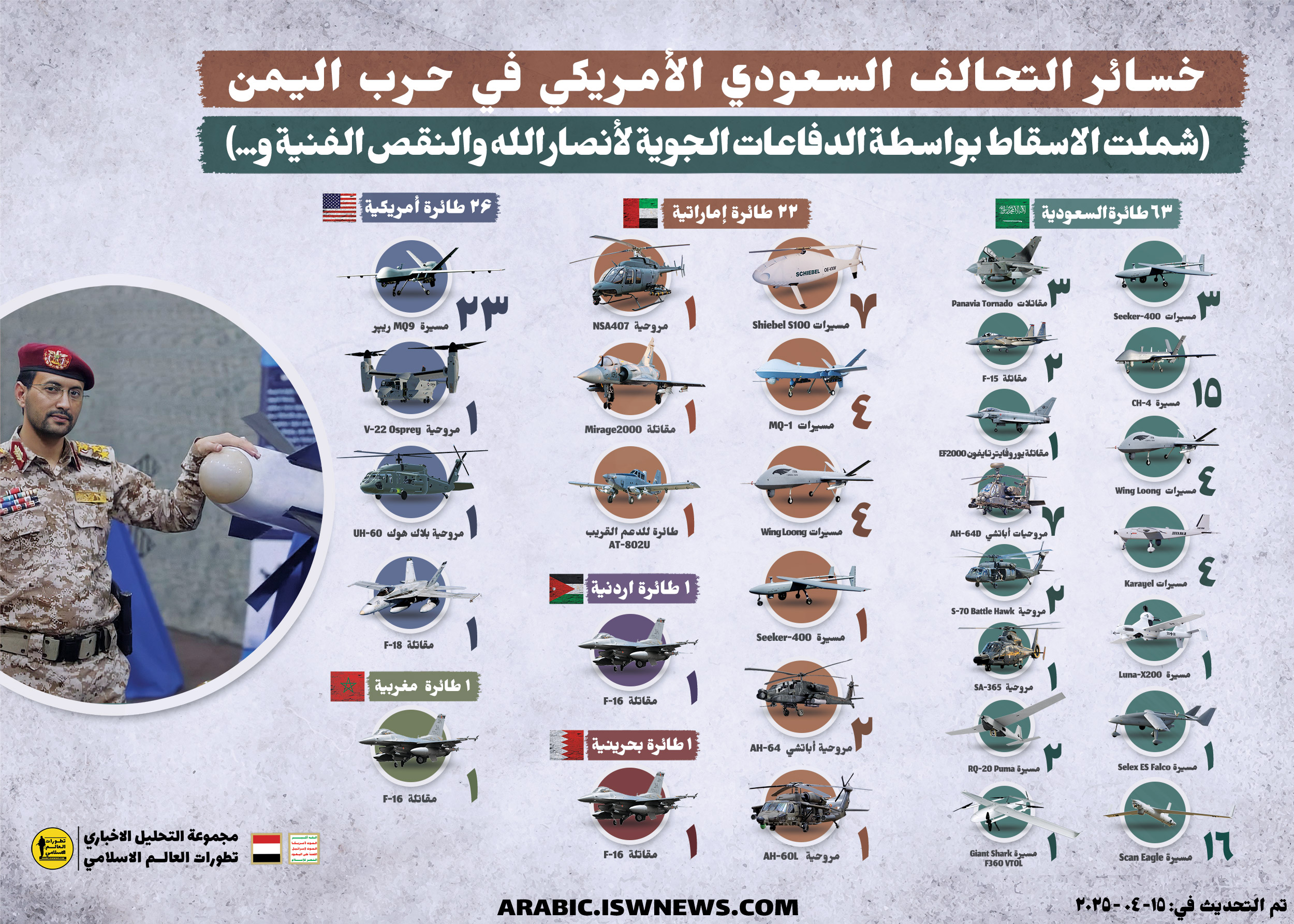
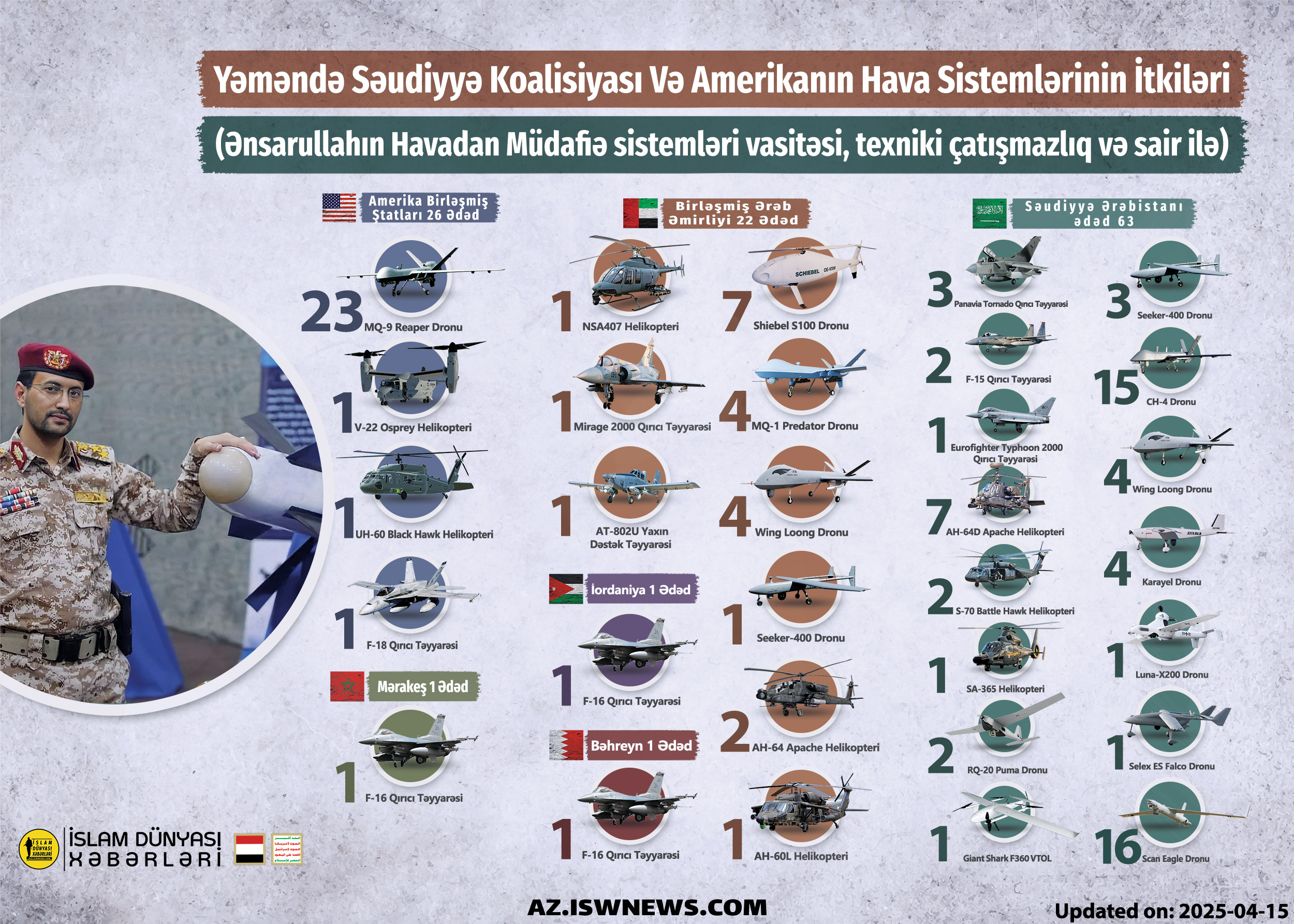
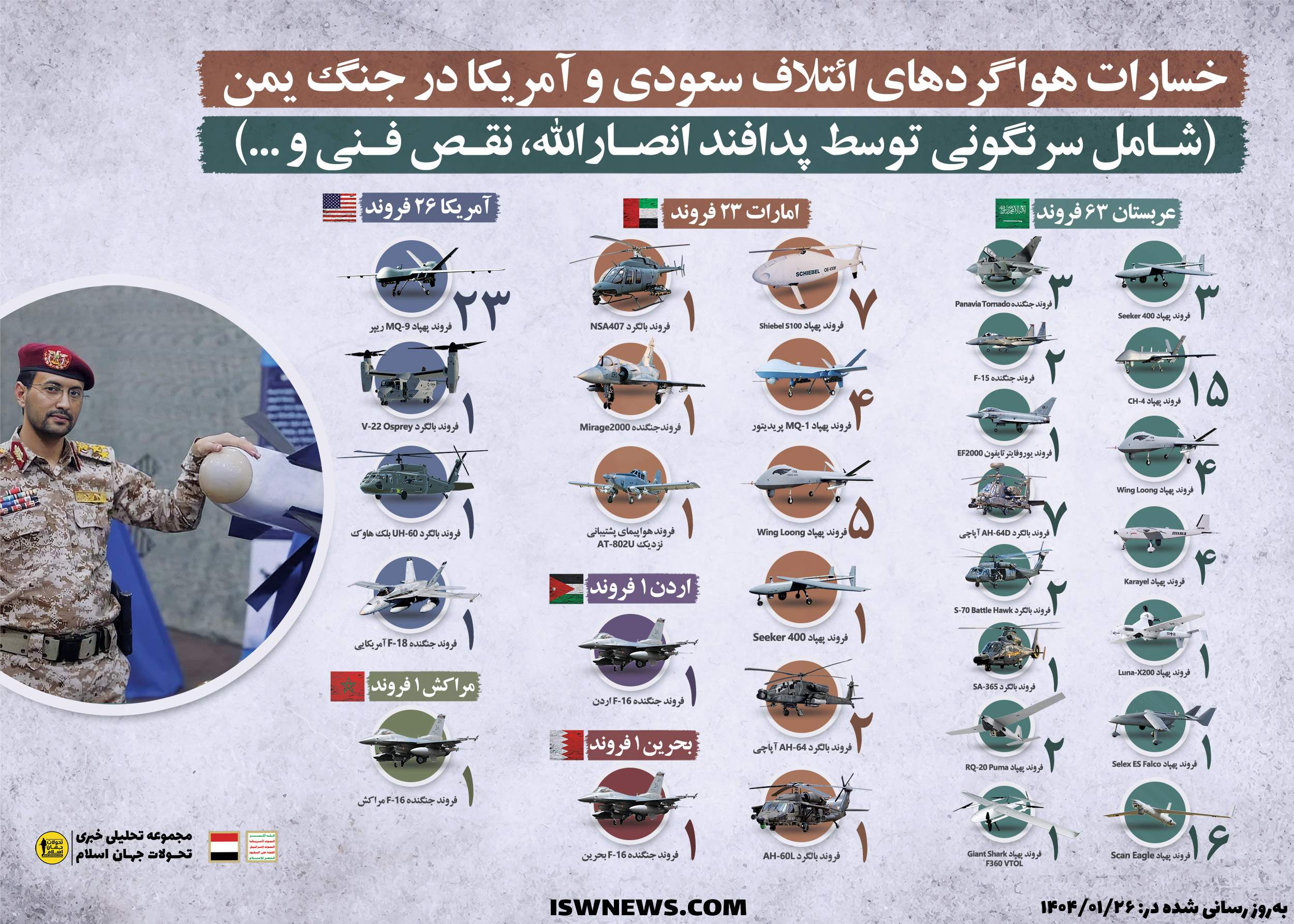
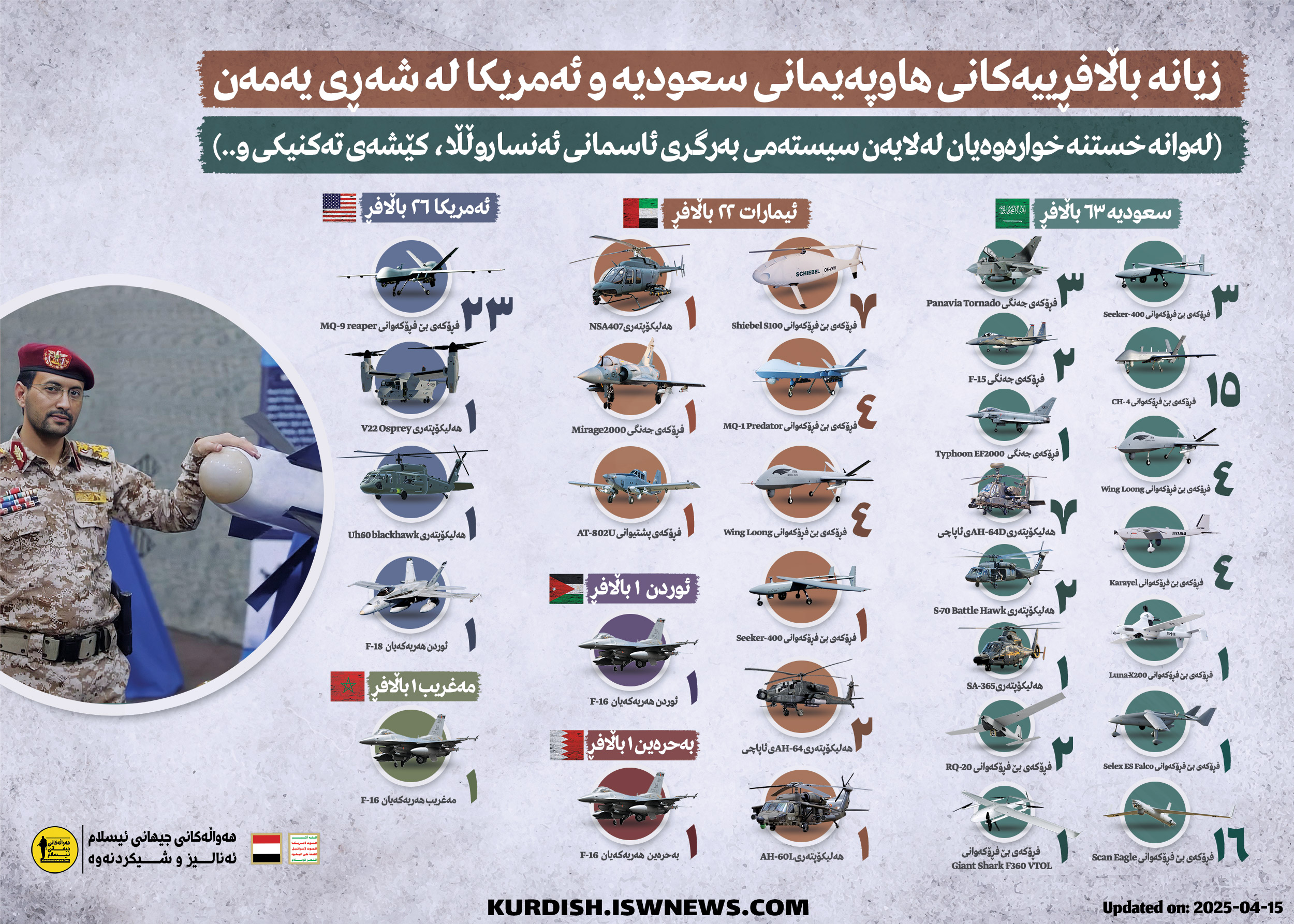
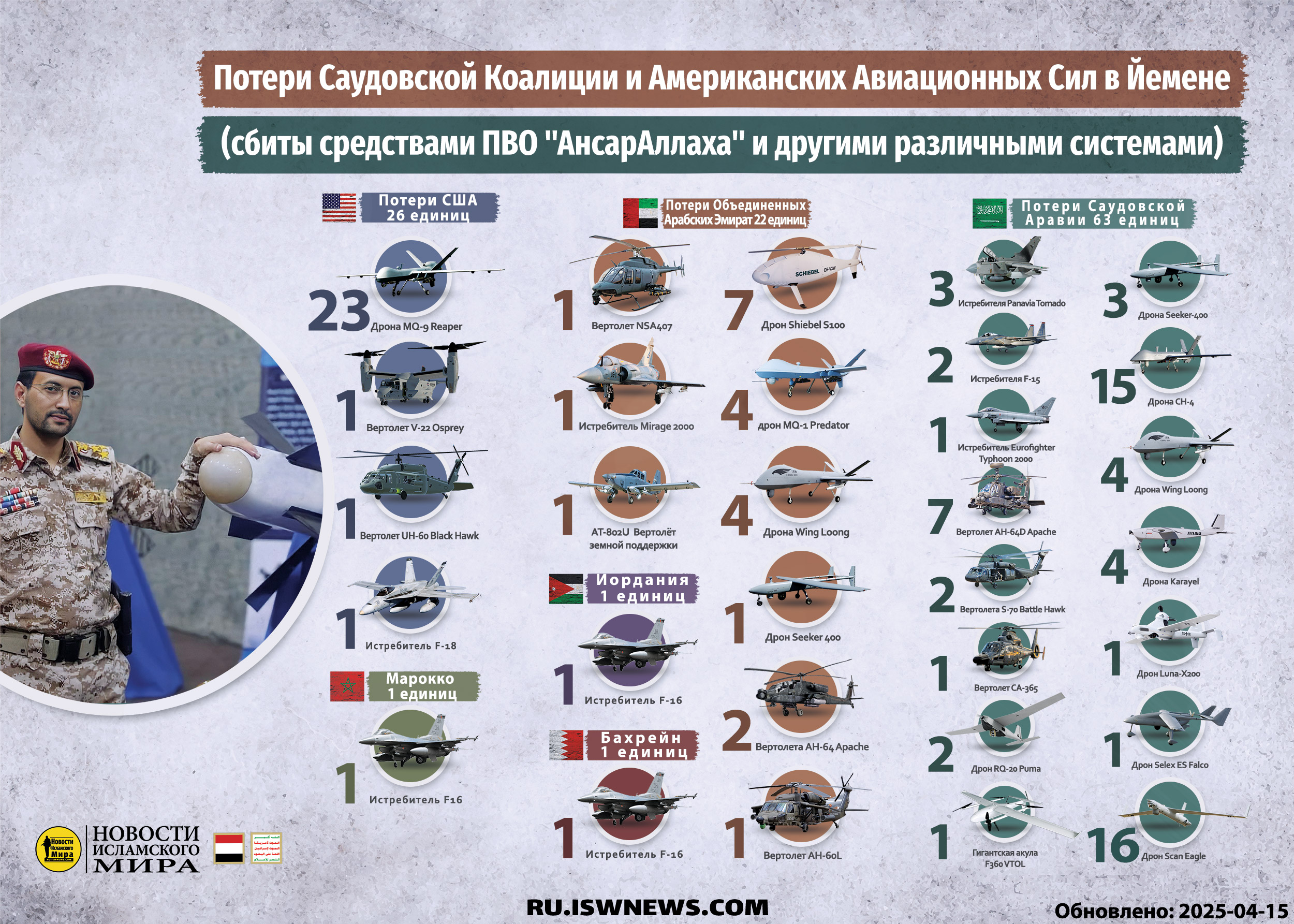
Since the start of the Yemeni war, the Yemeni Armed Forces have shot down a total of 117 military aircraft from the United States, Saudi Arabia, the UAE, Morocco, Bahrain, and Jordan across various fronts in the country. Of these, 28 aircraft belong to the US military, which includes 25 MQ-9 drones, one F/A-18F fighter jet, one UH-60M helicopter, and one V-22 Osprey helicopter.
The destruction of a significant number of aircraft showcases the defensive capabilities of the Yemeni armed forces. These forces, leveraging the strength of the former Yemeni army and receiving advisory support from the Iranian armed forces, have managed to rebuild their weaponry and expand their power despite the extensive bombardment of Yemeni air defenses by Saudi and US coalition fighter jets.
The details of these attacks are as follows: – Sanaa: 6 airstrikes in the Al-Haffa area of the Al-Sab’een district, 6 airstrikes in the Bani Hashish district, and additional strikes in the Al-Samaa area and other locations within the Arhab district. – Al-Jawf: 4 airstrikes targeting Bart al-Anan, Khab, and al-Sha’af districts. – Saada: 3 airstrikes in the city of Saada.
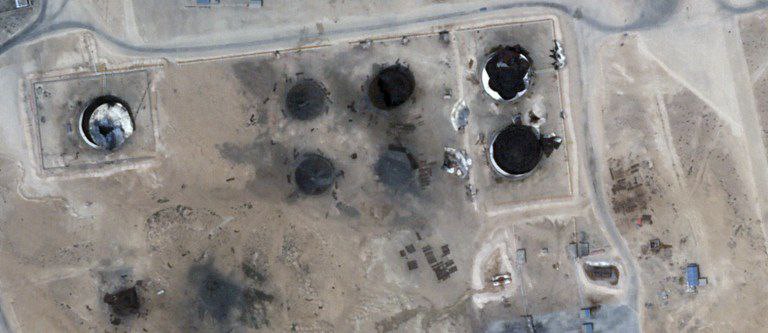
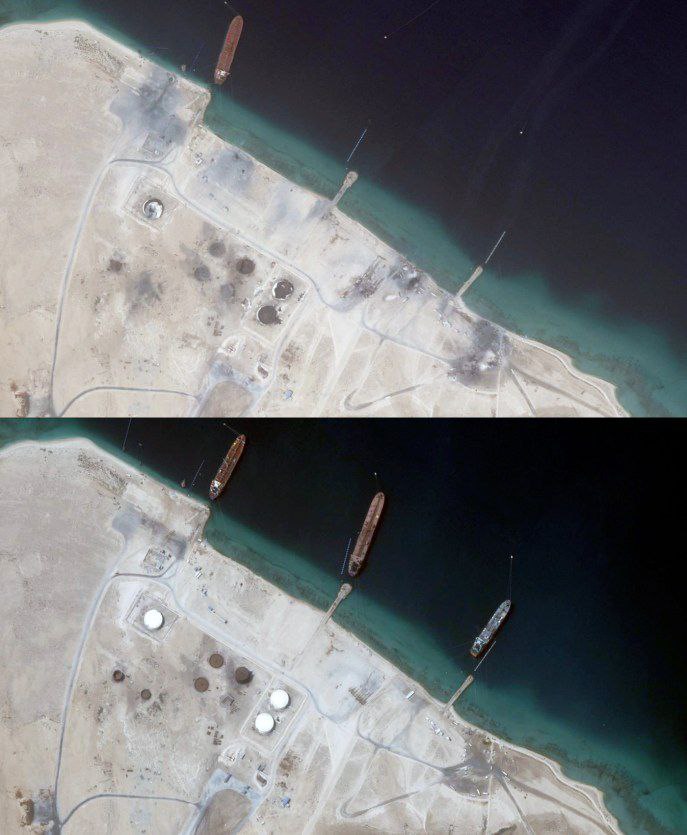
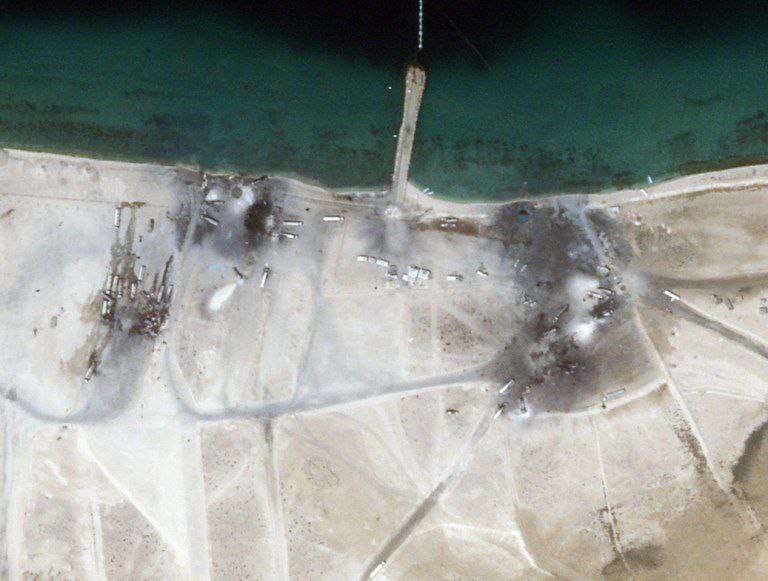
The number of casualties from the US terrorist airstrike on the port of Ras Issa in northern Hudaydah on April 17 has risen to 80 martyrs, with an additional 150 people wounded.
Satellite images released from Ras Issa oil port reveal how US warplanes have targeted oil terminal loading routes, fuel tanks, and fuel tankers with heavy bombs. The US regime is seeking to exert maximum pressure on the Yemeni people by aiming at Yemen’s energy sector.
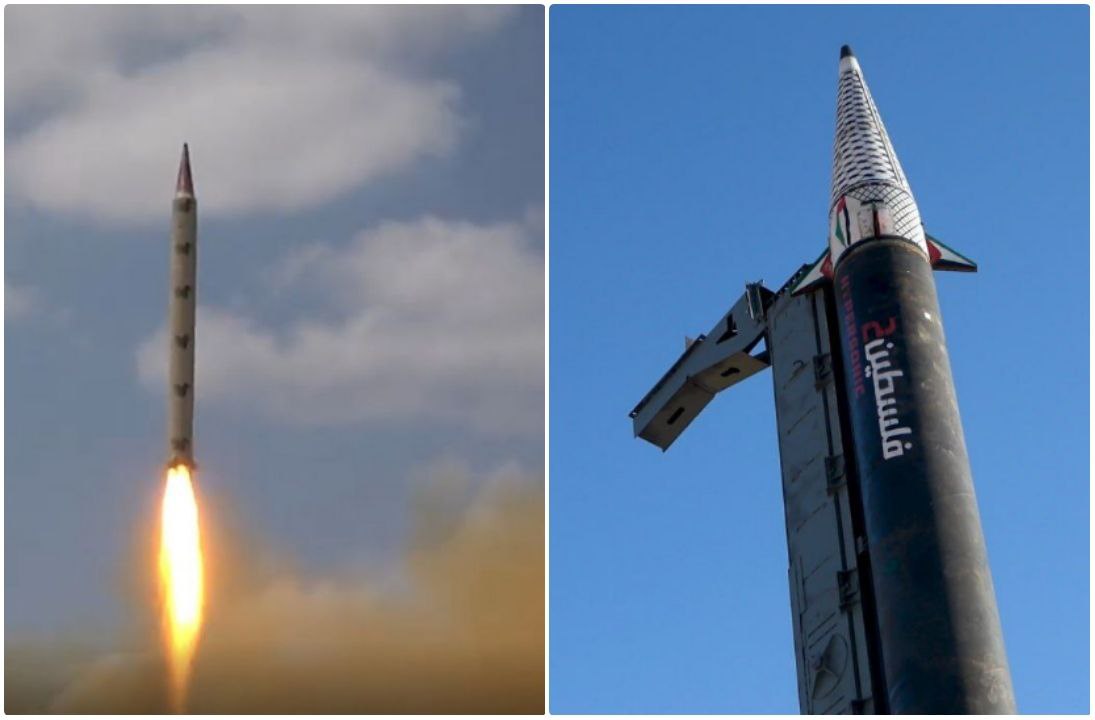
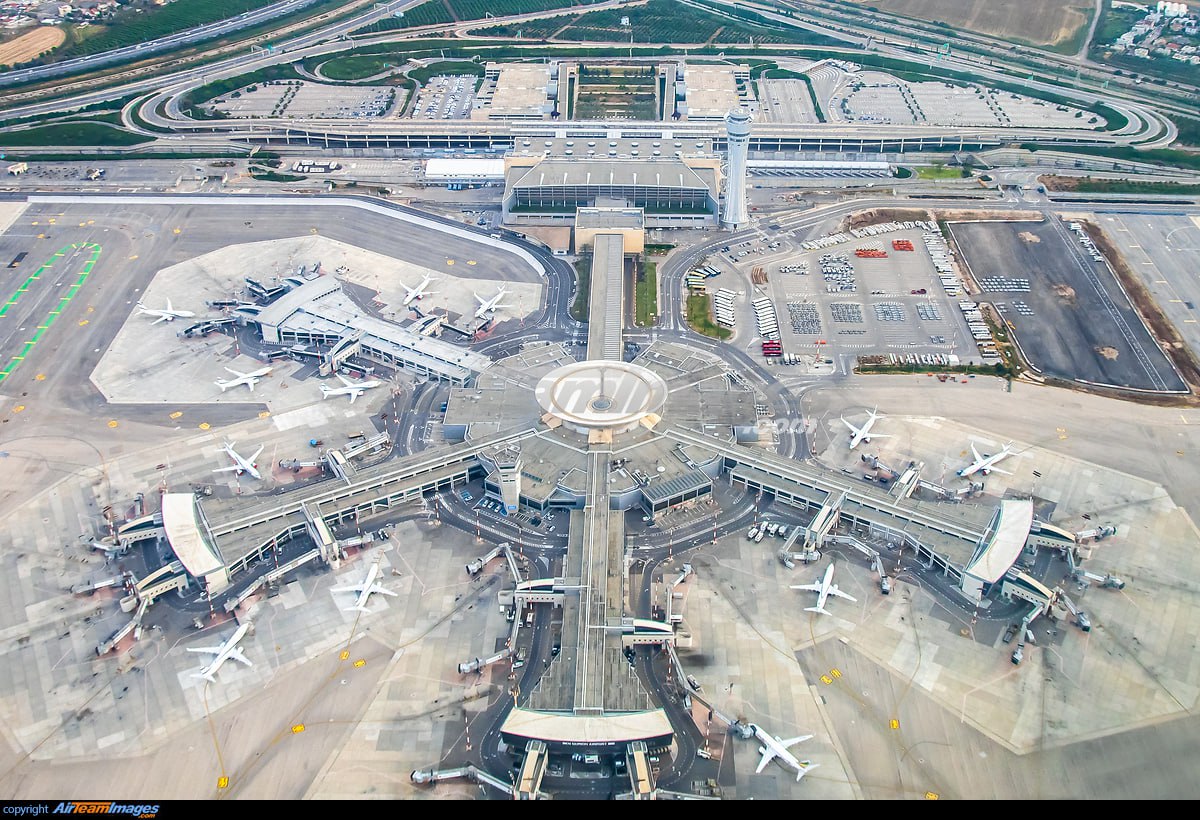
According to Brigadier General Yahya Saree, a spokesman for the Yemeni Army, the Yemeni missile force attacked a military site near Ben Gurion Airport, on the outskirts of Tel Aviv with a Zulfiqar ballistic missile.
The attack on Ben Gurion Airport triggered alarm sirens across central occupied Palestine, prompting thousands of residents to seek shelter.
Alarm sirens across central occupied Palestine
Additionally, Yemeni missile, drone and naval forces executed a coordinated military operation in the Red Sea and the Arabian Sea against the USS Harry Truman and USS Carl Vinson aircraft carriers, along with other US warships, employing several cruise missiles and suicide drones.
It is important to note that the USS Carl Vinson had just arrived in the region in April.
The attack on the USS Carl Vinson marked the first strike on this aircraft carrier and the 26th operation against the USS Harry Truman. Furthermore, this operation constituted the 203rd and 204th assaults by the Yemeni army against illegal ships associated with Israel, the US, and the UK in the region.
This incident marks the 24th MQ-9 drone downed throughout the Yemeni conflict, with 20 of these drones being downed during the operation aimed at aiding Palestine, titled “Promised Conquest and Holy Jihad. “
AnsarAllah released the moment the MQ-9 drone targeted over the Sanaa province
The loss of these MQ-9s represents a significant cost for the US military, estimated at $736 million.
Ansar Allah has censored footage of the moment the missile strikes the MQ-9 drone to protect details regarding Yemeni weaponry. It is presumed that a 358 or 359 defense missile was used by Yemeni forces to bring down the drone.
It appears that one of the goals behind the massive shipments of weapons and military forces is to set the stage for a major conflict in areas controlled by Ansar Allah in Yemen. Last year, American officials discussed the need for a ground operation along the western coast of Yemen to sever Ansar Allah’s access to the port of Hudaydah and limit their influence in the region. Additionally, Yemeni military exercises have involved practicing both defensive and offensive tactics at sea and on land, with over 1.1 million people and tribal groups in Yemen undergoing military training through a program known as “popular mobilization.”
Recently, there have been indications of US preparations for a ground conflict:
American fighter jets have been conducting airstrikes along the lines of conflict in Yemen, particularly in the western and southern regions of Marib province, the Al-Jawf desert, and to the south of Hudaydah. The primary objective of these attacks is to weaken Ansar Allah’s defense lines in these areas, allowing the forces loyal to the resigned government to advance without significant resistance.
The aircraft carrier USS Carl Vinson has entered the Arabian Sea and was last reported moving toward the Gulf of Aden. It is anticipated that this carrier, in conjunction with the USS Harry S. Truman, will provide air support and execute heavy attacks deep into Ansar Allah positions.
Blue: Main directions of attacks – Black: Secondary directions of attacks
This evidence suggests that a ground battle in Yemen, centered on forces affiliated with the Saudi coalition and supported by US airpower, is imminent. According to the Wall Street Journal, Saudi officials have informed their American counterparts that they will not partake in the operation due to threats posed by Ansar Allah and the severe repercussions of their assaults. Hence, the probability of the Islah Party militants, Home Shield Forces, and other Saudi-affiliated factions participating in ground operations against Ansar Allah is low.
However, field evidence indicates that the United Arab Emirates will be involved in the operation against Ansar Allah. Although Reuters has cited officials from the UAE denying this involvement, their role is evident. They have facilitated communication between officials of the Southern Transitional Council and Tariq Saleh with US forces, providing essential support to prepare these factions. Additionally, the Emirates has deployed an Israeli-made radar at its base in Puntland state, located in northern Somalia, to counter missile and drone attacks from Yemeni armed forces targeting the Gulf of Aden.
Given the direction of the Saudi coalition’s ground assaults in recent years and the current conditions in Yemen, the fronts prioritized for a ground attack include southern Hudaydah, western Marib, the Al-Jawf desert, the western cities of Taiz province, southern Al-Bayda, and Al-Dhale. Both the Yemeni government and Ansar Allah have made necessary preparations for this impending attack. However, support from the US and the Saudi coalition in terms of air and logistical resources could significantly disrupt Yemen’s sea and air communications through Sanaa airport and the port of Hudaydah.
1- Saudi F15S fighter on March 27, 2015, Gulf of Aden 2- Saudi AH-64D helicopter on May 7, 2015, Al-Boqa, Saada area 3- Moroccan F16C fighter on May 10, 2015, Wadi Nashur 4- Saudi Seeker400 UAV, July 3, 2015, Al-Boqa 5- Saudi AH-64D helicopter, August 5, 2015, Jizan 6- Saudi AH-64D helicopter, August 21, 2015, Jizan 7- UAE Schiebel Camcopter S-100, August 25, 2015, Makiras, Abyan Province 8- UAE Schiebel Camcopter S-100, October 25, 2015, Al-Abdiyah, Marib Province 9- Bahrain F16C fighter, December 30, 2015, Jizan 10- UAE MQ-1 Predator UAV, January 19, 2016, Sanaa 11- Saudi Selex ES Falco UAV, February 3, 2016, Midi, Hajjah province 12- UAE Schiebel Camcopter S-100, February 27, 2016, Dhubab, Taiz province 13- UAE Mirage 2000 fighter, March 13, 2016, Al-Bariqa, Aden 14- UAE AH-64D UAE helicopter, June 12, 2016, Gulf of Aden 15- UAE NSA407 helicopter, June 13, 2016, Al-Bariqa, Aden 16- Saudi AH-64D helicopter, July 25, 2016, Beer Al-Maraziq, Al-Jawf 17- Saudi Seeker400 UAV, August 16, 2016, Kataf, Saada province 18- UAE Wing Loong UAV, September 26, 2016, Kholan, Sanaa province 19- Saudi AH-64D helicopter, December 30, 2016, Najran 20- US V-22 Osprey Helicopter, January 29, 2017, Al-Baydha province 21- Saudi SA 365F Helicopter, January 30, 2017, Al-Hudaydah coast (on the Al-Madinah frigate) 22- UAE MQ-1B Predator UAV, February 14, 2017, Al-Manin, Marib province 23- Jordanian F16A fighter, February 24, 2017, Najran 24- Saudi S-70A helicopter, April 18, 2017, Marib province 25- UAE Schiebel Camcopter S-100, June 21, 2017, Dhubab, Taiz province 26- UAE AH-60L helicopter, August 11, 2017, Wadi Amaqin, Shabwa province 27- Saudi Seeker 400 UAV, August 15, 2017, Al-Boqa, Saada province 28- US UH-60M helicopter, August 25, 2017, Gulf of Aden 29- UAE AT-802U aircraft, September 11, 2017, Gulf of Aden 30- Saudi Eurofighter Typhoon fighter, September 13, 2017, Abyan province 31- US MQ-9 UAV, October 1, 2017, Sanaa city 32- UAE AH-64D Helicopter, October 17, 2017, Khab and Shaaf, Jawf province 33- Saudi S-70A helicopter, November 5, 2017, Abha 34- Saudi Panavia Tornado fighter, January 7, 2018, Kataf, Saada province 35- Saudi F-15S fighter, March 21, 2018, Saada province 36- Saudi CH-4B UAV, July 12, 2018, Al-Rabu’ah 37- Saudi Panavia Tornado fighter, July 12, 2018, Asir 38- Saudi CH-4B UAV, August 30, 2018, Jizan 39- UAE Schiebel Camcopter S-100, September 2, 2018, Al-Jah, Hudaydah province 40- Saudi AH-64D helicopter, September 14, 2018, Al-Mahra province 41- Seeker 400 UAE UAV, November 26, 2018, Al-Jabaliya, Hudaydah province 42- Saudi CH-4V UAV, December 23, 2018, Saada province 43- US MQ-9 UAV, June 6, 2019, Hudaydah province 44- Saudi CH-4B UAV, April 11, 2019, Hadhramaut province 45- UAE Wing Loong, April 19, 2019, Saada province 46- UAE RQ-1E Predator UAV, May 15, 2019, Bani Matar, Sanaa 47- UAE Schiebel Camcopter S-100, June 2, 2019, Hays, Hudaydah area 48- US MQ-9 UAV, August 21, 2019, Dhamar province 49- US MQ-9 UAV, March 23, 2021, Marib province 50- UAE Shiebel Camcopter S-100, November 1, 2019, Raas Issa, Hudaydah province 51- Saudi AH-64D helicopter, November 29, 2019, Asir 52- Saudi Wing Loong UAV, November 30, 2019, Hayran, Hajjah province 53- Saudi Luna X2000 UAV, December 4, 2019, Saada province 54- Saudi Karayel UAV, December 30, 2019, Al-Salif, Hudaydah province 55- Saudi CH-4V UAV, January 7, 2020, Khab and Shaaf, Jawf province 56- Saudi Panavia Tornado fighter, February 14, 2020, Jawf province 57- Saudi RQ-20 UAV, August 2, 2021, Haradh, Al-Hajjah province 58- Saudi CH-4B UAV, December 21, 2020, Marib Province 59- Saudi Karayel UAV, January 6, 2021, Jawf province 60- Saudi CH-4B UAV, February 12, 2021, Marib province 61- Saudi Karayel UAV, March 7, 2021, Jawf province 62- Saudi CH-4B UAV, March 23, 2021, Sarwah, Marib province 63- Saudi Wing Loong UAV, May 21, 2021, Najran 64- US MQ-9 drone, May 23, 2021, Jawf province 65- Saudi Scan Eagle UAV, June 19, 2021, Marib province 66- Saudi Scan Eagle UAV, June 21, 2021, Marib province 67- Saudi Scan Eagle UAV, August 14, 2021, Madghal, Marib province 68- Saudi Wing Loong UAV, September 13, 2021, Kataf, Saada province 69- Saudi Scan Eagle UAV, September 27, 2021, Madghal, Marib province 70- Saudi CH-4 UAV, October 6, 2021, Jubah, Marib province 71- Saudi RQ-20 UAV, October 7, 2021, at the Jizan border 72- Saudi Scan Eagle UAV, November 9, 2021, Al-Juba, Marib province 73- Saudi Scan Eagle UAV, November 13, 2021, Al-Juba, Marib province 74- Saudi CH-4 UAV, December 1, 2021, in Al-Amshia area, Amran province 75- Saudi Scan Eagle UAV, December 4, 2021, Al-Juba, Marib province 76- Saudi Scan Eagle UAV, December 8, 2021, Al-Juba, Marib province 77- Saudi CH-4 UAV, December 8, 2021, Al-Wadi, Marib province 78- Saudi Scan Eagle UAV, December 10, 2021, Sarwah, Marib province 79- Saudi CH-4 UAV, December 14, 2021, Usaylan, Shabwa province 80- Saudi Scan Eagle UAV, December 16, 2021, Al-Wadi, Marib province 81- Saudi Scan Eagle UAV, December 25, 2021, Yatmah, Khab and Al-Shaaf, Al-Jawf province 82- UAE Wing Loong UAV, January 5, 2022, Usaylan, Shabwa province 83- UAE Wing Loong UAV, January 11, 2022, Ain Shabwah province 84- Saudi Scan Eagle UAV, January 29, 2022, Al Juba, Marib Province 85- Saudi CH-4 UAV, February 10, 2022, Harad, Hajjah province 86- UAE MQ-1 UAV, February 25, 2022, Al-Jawf province 87- Saudi Scan Eagle UAV, February 25, 2022, Al Juba, Marib Province 88- Saudi Scan Eagle UAV, February 28, 2022, Harad, Hajjah province 89- Saudi Scan Eagle UAV, March 8, 2022, Harad, Hajjah province 90- Saudi Scan Eagle UAV, March 29, 2022, Al-Wadi, Marib province 91- Saudi CH-4 UAV, May 4, 2022, Harad, Hajjah province 92- Saudi Karayel UAV, May 21, 2022, Hayran, Hajjah province 93- Saudi CH-4 UAV, May 23, 2022, Sana’a, Sana’a province 94- Saudi Wing Loong UAV, May 24, 2022, Kataf, Saada province 95- US MQ-9 drone, November 8, 2023, Hudaydah province 96- US MQ-9 drone, February 19, 2024, north of Hudaydah province 97- US MQ-9 drone, April 25, 2024, Saada province 98- UAE Wing Loong 1 drone, April 29, 2024, Al-Rawdha district, Shabwah province 99- US MQ-9 drone, May 16, 2024, Al-Wadi district, Marib province 100- US MQ-9 drone, May 21, 2024, Al Bayda province 101- US MQ-9 drone, May 29, 2024, Marib province 102- US MQ-9 drone, August 4, 2024, Saada 103- US MQ-9 drone, September 7, 2024, Marib 104- US MQ-9 drone, September 10, 2024, Saada 105- US MQ-9 drone, September 30, 2024, Saada 106- US MQ-9 drone, November 8, 2024, Al-Jawf 107- US MQ-9 drone, November 28, 2024, Al-Bayda 108- US MQ-9 drone, December 2, 2024, Marib 109- US F/A-18 fighter jet, December 21, 2024, Red Sea 110- US MQ-9 drone, March 3, 2025, Al-Hodeidah 111- US MQ-9 drone, March 31, 2025, Marib 112- US MQ-9 drone, April 3, 2025, Al-Hodeidah 113- Saudi Giant Shark F-360 Giant Shark drone, April 5, 2025, Saada 114- US MQ-9 drone, April 9, 2025, Al-Jawf 115- US MQ-9 drone, April 13, 2025, Hajjah
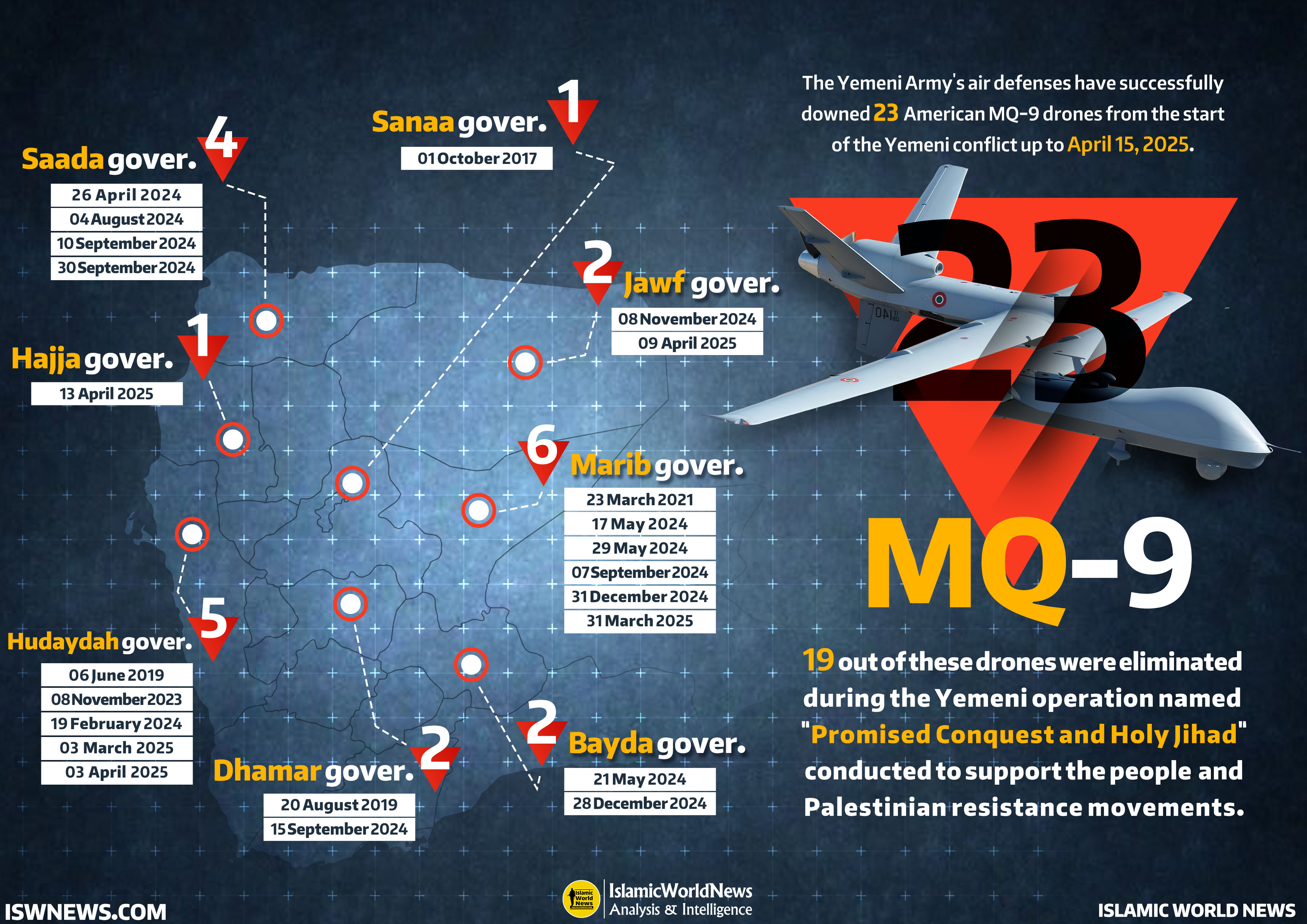
19 out of these 23 drones were eliminated during the Yemeni operation named “Promised Conquest and Holy Jihad,” conducted to support the people and Palestinian resistance.
General Atomics MQ-9 Reaper is a versatile and heavy drone used by the US Army for reconnaissance, surveillance, and offensive operations, including assassinations in Iraq, Afghanistan, and Syria since 2001. As of 2023, each MQ-9 drone costs approximately $32 million to produce, resulting in $576 million in damage inflicted by Ansar Allah through the destruction of 18 drones.
The dates and locations of the destroyed MQ-9 drones in Yemen are as follows:
Sanaa, 01 October 2017
Hudaydah, 06 June 2019
Dhamar, 20 August 2019
Marib, 23 March 2021
Hudaydah, 08 November 2023
Hudaydah, 19 February 2024
Saada, 26 April 2024
Marib, 17 May 2024
Al-Bayda, 21 May 2024
Marib, 29 May 2024
Saada, 04 August 2024
Marib, 07 September 2024
Saada, 10 September 2024
Dhamar, 15 September 2024
Saada, 30 September 2024
Al-Jawf, 08 November 2024
Al-Bayda, 28 December 2024
Marib, 31 December 2024
Hudaydah, 03 March 2025
Marib, 31 March 2025
Hudaydah, 03 April 2025
Al-Jawf, 09 April 2025
Hajjah, 13 April 2025
The extensive destruction of reconnaissance-combat drones belonging to the Saudi-American coalition in Yemen stands out as one of the most significant accomplishments of the Yemeni armed forces over a decade-long conflict. Throughout this time, the Yemeni army has downed approximately 115 military aircraft from Saudi Arabia, the UAE, the United States, Jordan, Morocco, and Bahrain, including 26 from the United States.
Since the onset of the Palestine war, the US Army has dispatched numerous MQ-9 drones to Yemen to monitor military installations and equipment, and to carry out assassination missions. However, the Yemeni Army’s air defense forces have successfully disrupted these drone operations in Yemen through their intelligence and persistent efforts.
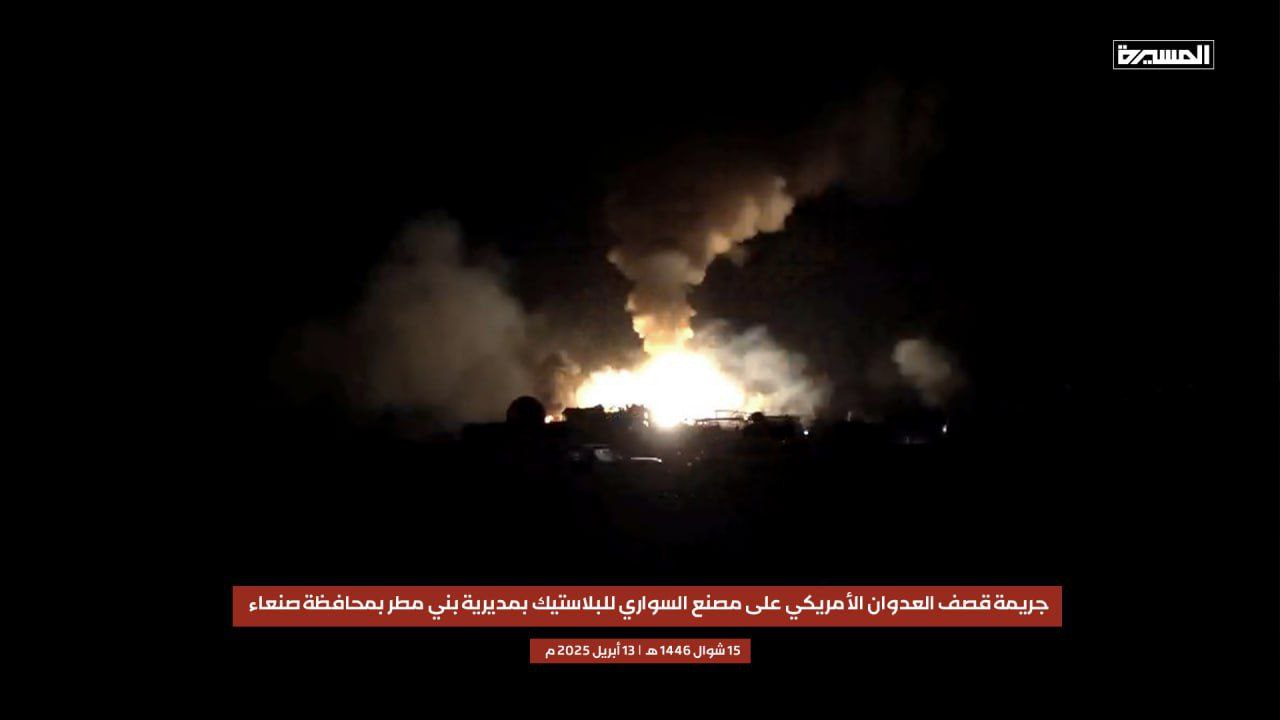
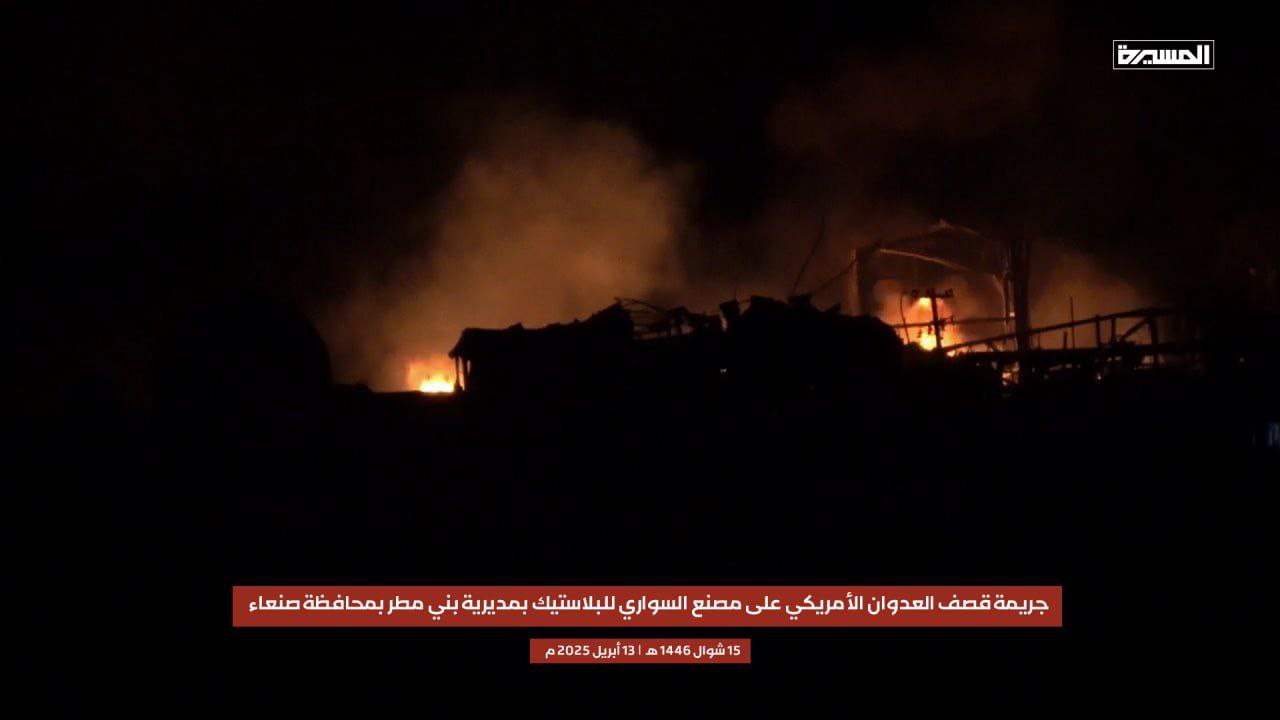
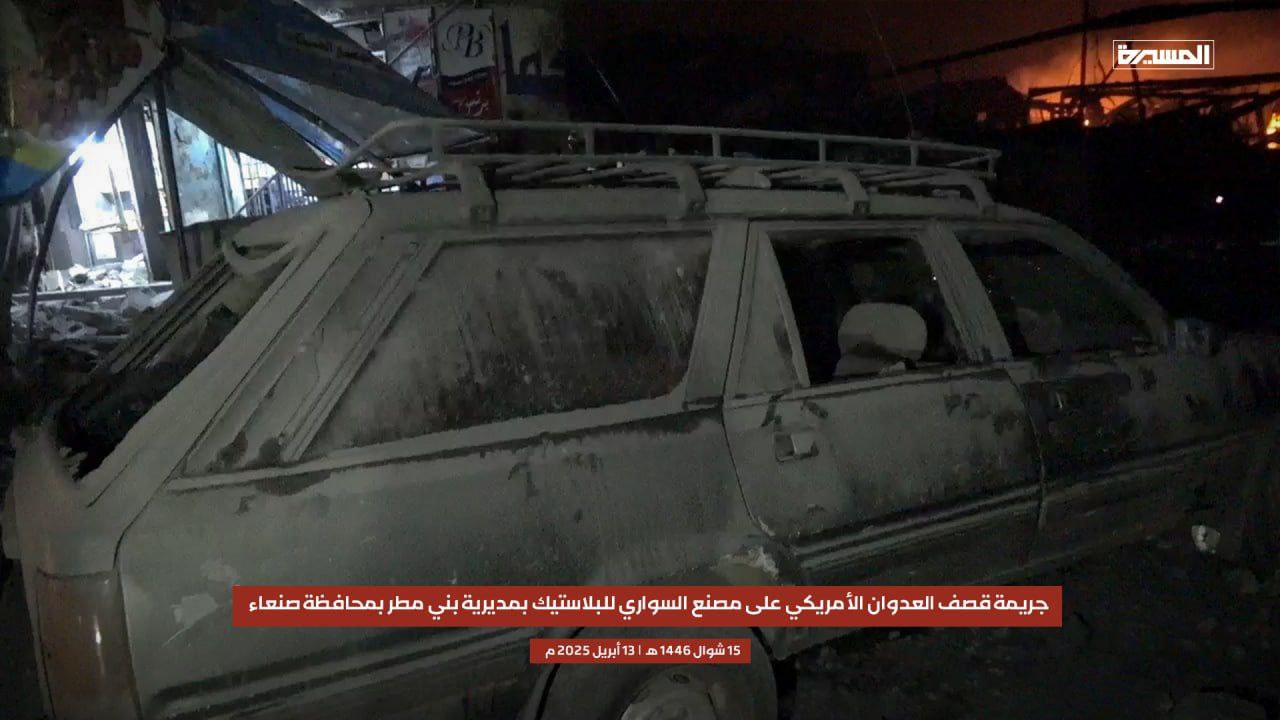
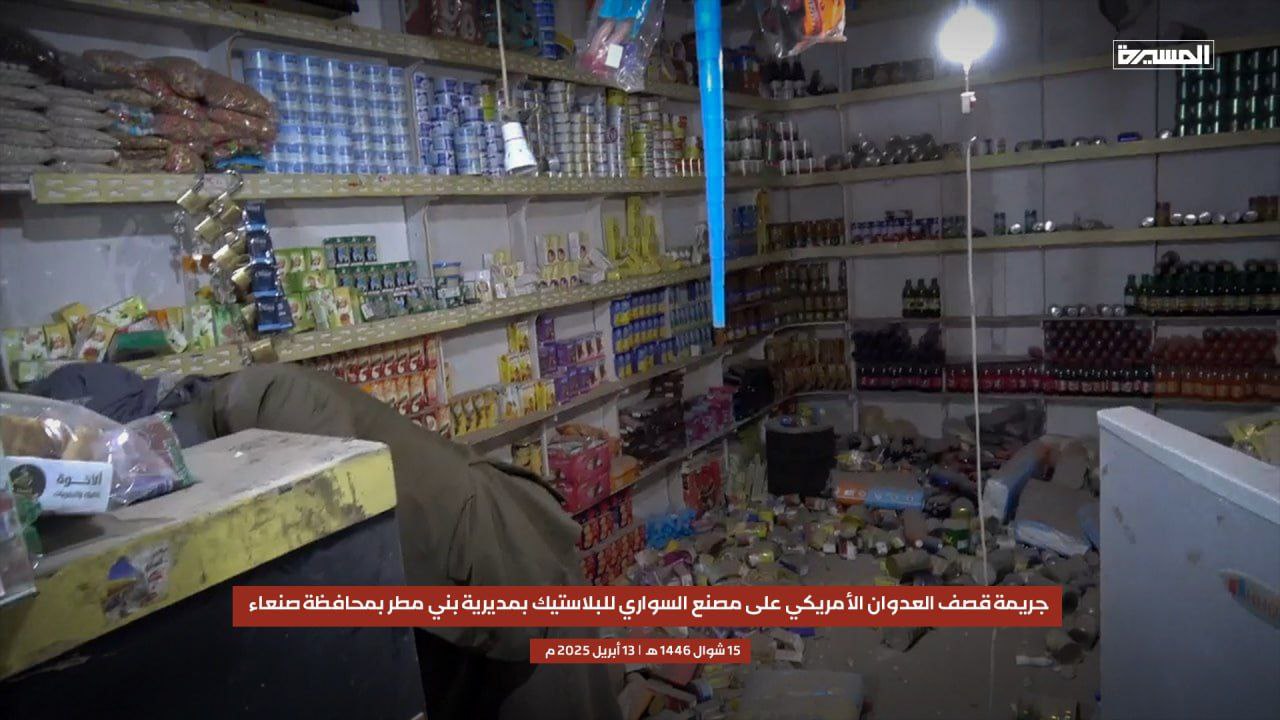
During these aggressions, one airstrike was executed in the Al-Mahadhir area of the Sahar district, three airstrikes struck the Al-Sawari factory in the Matna area of the Bani Matar district, and two airstrikes targeted the Al-Yatma area in the Khab and Al-Sha’af district.
The attack on the Al-Sawari factory resulted in six fatalities and injured 20 civilians. The factory’s facilities were significantly damaged, and its products were set ablaze.
This incident marks the 23rd MQ-9 drone downed during the Yemeni conflict. Out of these, 19 were shot down as part of the Yemeni Armed Forces’ support operation for Palestine, which is titled “Promised Conquest and Holy Jihad.”
Since the conflict in Yemen began, the Yemeni Armed Forces have shot down a total of 116 military aircraft belonging to the US, Saudi Arabia, the UAE, Morocco, Bahrain, and Jordan across various fronts in the country. Among these, 26 aircraft are attributed to the US military, including 23 MQ-9 drones, one F/A-18F fighter jet, one UH-60M helicopter, and one V-22 Osprey helicopter.
The MQ-9 drone is one of the US military’s advanced multi-purpose drones, utilized for reconnaissance, surveillance, and attack operations in several conflicts, including those in Iraq, Afghanistan, and Yemen. The MQ-9 has faced significant challenges on the Yemeni front, with 23 of this drone type shot down by the Yemeni Armed Forces’ air defenses. The financial loss to the US military from these incidents is considerable, estimated at $736 million.
According to a statement by Brigadier General Yahya Saree, the missile force targeted the Sdot Micha base, located east of Ashdod, and Ben Gurion Airport with two Palestine 2 hypersonic missiles and one Zulfiqar ballistic missile.
Footage showing sirens sounding in Tel Aviv a few hours ago.
The Sdot Micha base is one of Israel’s missile facilities, housing Jericho missiles and Arrow missile system batteries.
Additionally, the Yemeni drone force carried out an operation against a vital target in the Ashkelon region using a suicide drone.
Brigadier General Yahya Saree reported that these operations successfully achieved their objectives, leading to the closure of Ben Gurion Airport for about an hour. The attacks caused panic and confusion among residents, with millions of people seeking shelter during the incident.
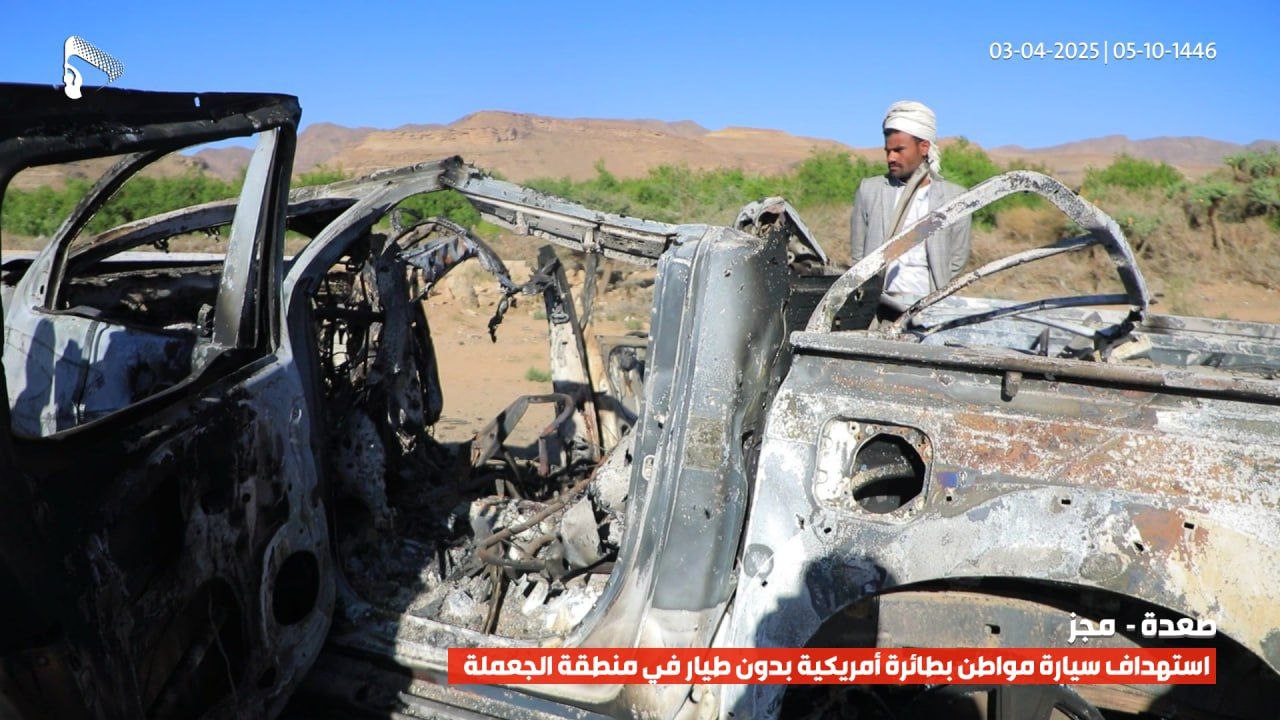
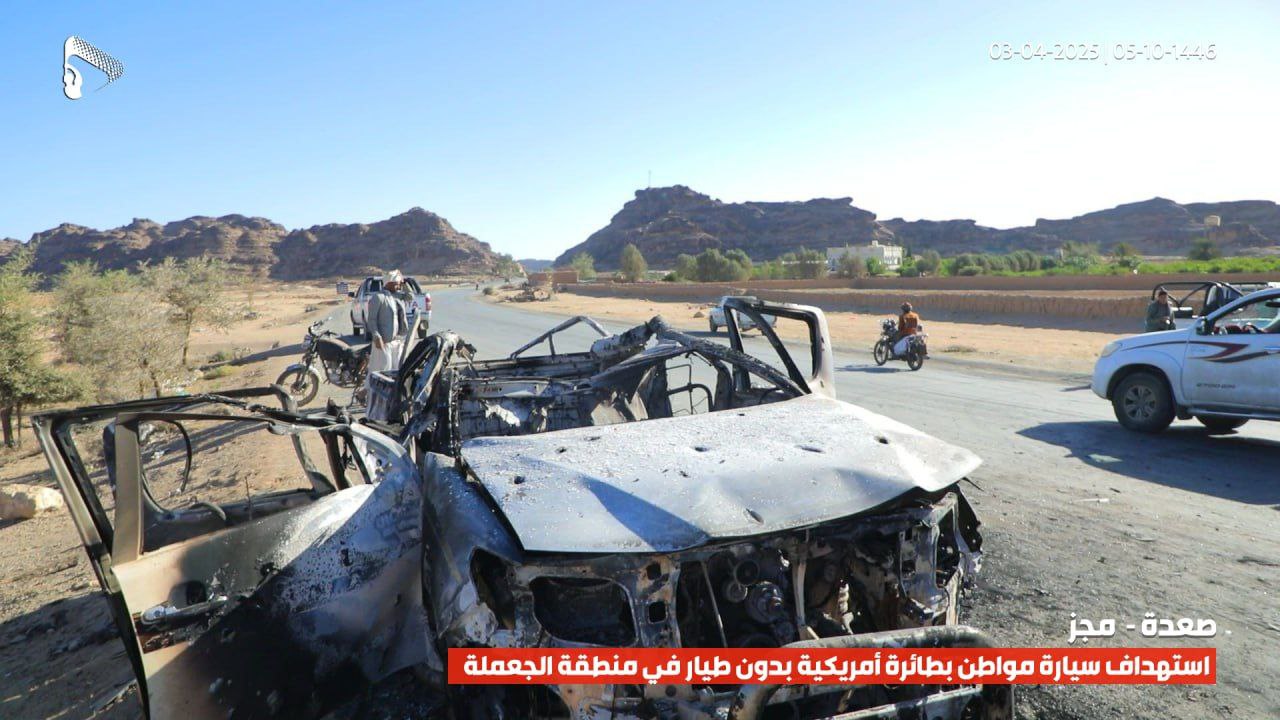
1- Saada: – On April 3, American drones attacked a passenger vehicle in the Al-Jamleh area of the Majaz district in Saada province. It remains unclear whether this attack was aimed at commanders or members of Ansar Allah. However, it indicates that American efforts to gather intelligence on senior Ansar Allah members and to carry out assassinations are intensifying.
Click to view full size
– On April 11, the Saudi coalition conducted artillery attacks in the Shada district.
– On April 11, artillery from the Saudi coalition targeted border villages in the Baqim district.
2- On April 14, some Israeli media outlets reported that American forces stationed in Saudi Arabia successfully countered a missile attack launched by the Yemeni armed forces against occupied territories. The missile was intercepted in Saudi Arabia with support from Saudi air defense systems. These media outlets expressed gratitude to Arab countries for their cooperation in repelling Yemeni attacks.
3- The National Interest magazine published a critical report on the performance of the U.S. military in the Red Sea, stating, “Washington has failed to maintain freedom of navigation in one of the world’s most important choke points.”
As an American investigative media outlet focusing on international relations, The National Interest described the situation in the Red Sea as precarious due to attacks by Yemeni armed forces.
The report added, “The Navy, having lost its position as the ‘world’s largest navy,’ is seeking new methods to counter drones and anti-ship missiles. Traditional aircraft carriers and warships, outfitted with costly and sophisticated fighter jets and missile systems, are inadequate for this new era of warfare.”
The naval operations of Yemeni armed forces against the Israeli regime, which have included closing the port of Eilat and halting Israeli shipping in the Red Sea, have inflicted significant losses on the United States. More serious consequences are anticipated for both the U.S. and European nations, increasing domestic pressure on the Trump administration to continue military actions in Yemen.
4- On April 9, U.S. defense systems, with assistance from Saudi Arabia, successfully countered a ballistic missile attack originating from Yemen. This missile was aimed at positions of the Israeli regime in occupied Palestine and ultimately landed in northern Saudi Arabia.
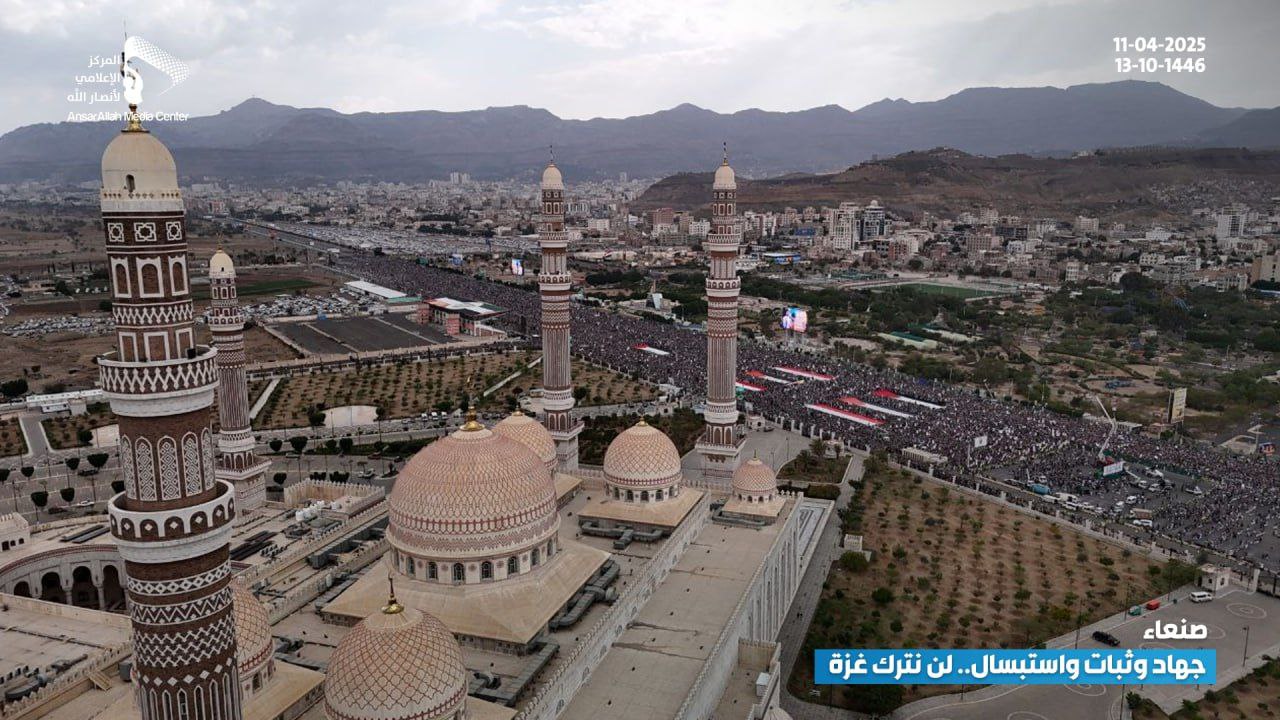
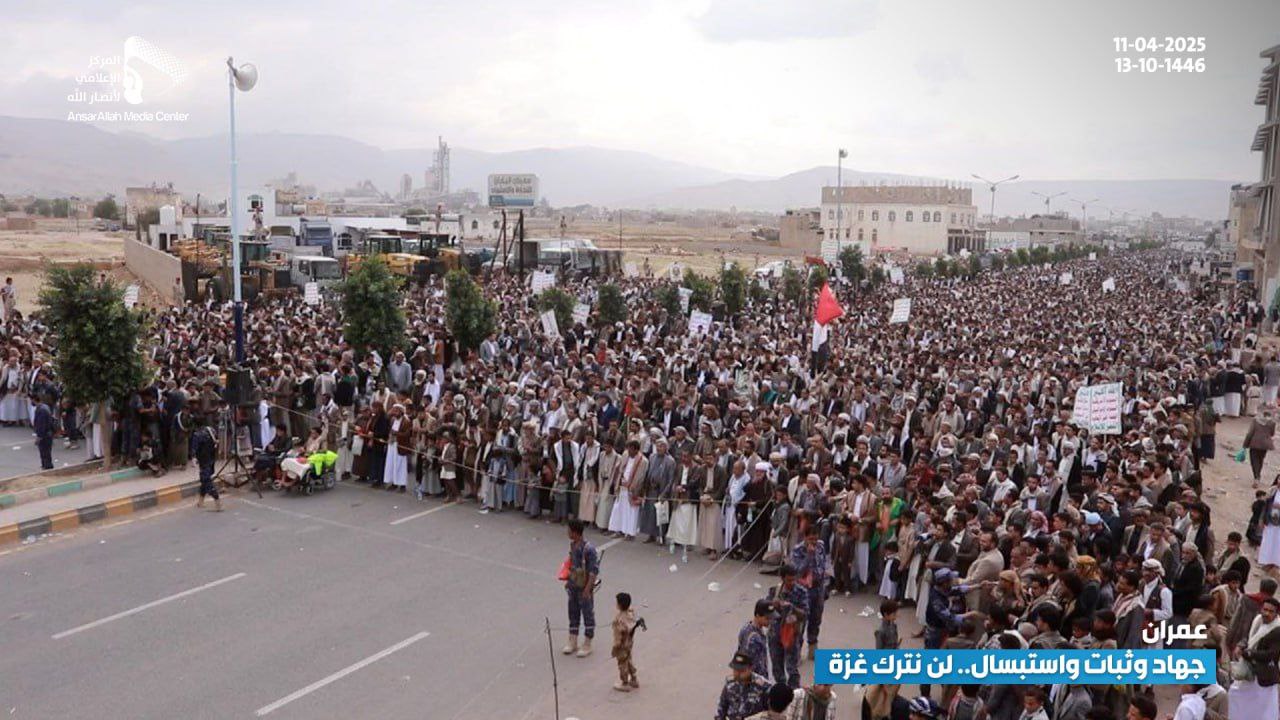
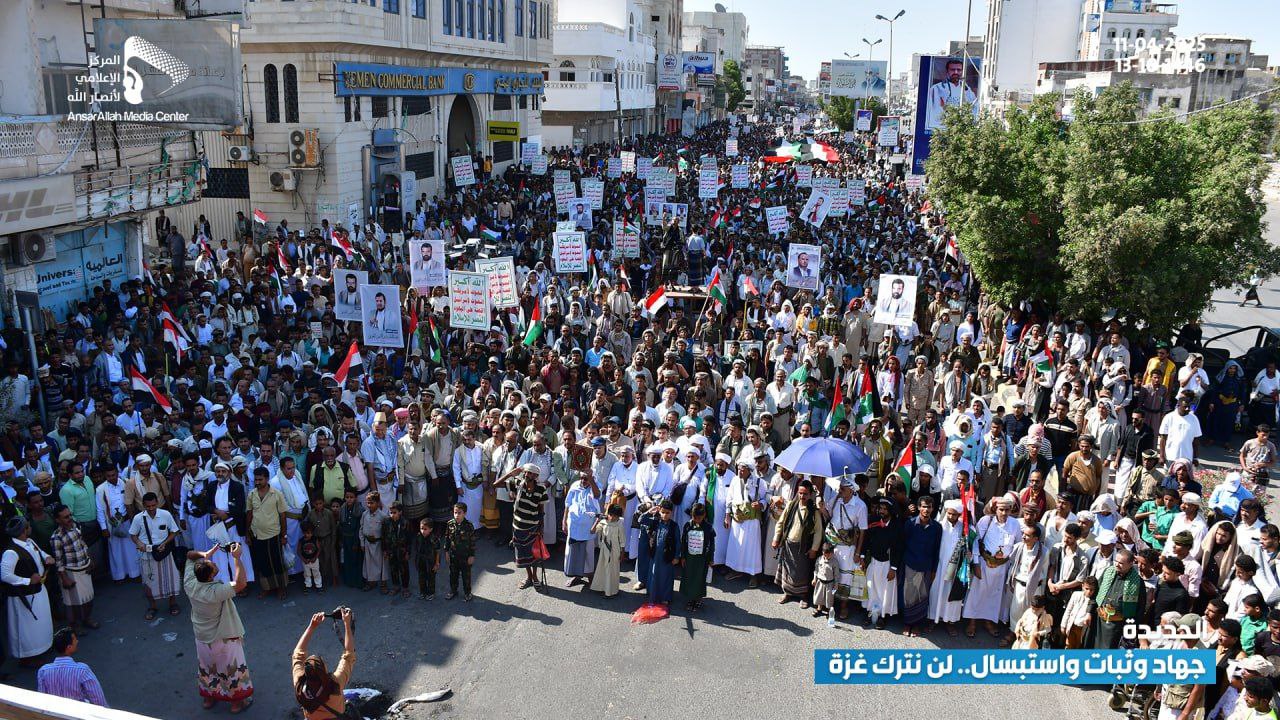
5- On April 11, in response to a call from the leader of Ansar Allah to resume weekly marches supporting Palestine, the Yemeni people organized a march titled “Jihad, Steadfastness, and Courage: We Will Not Abandon Gaza” in the cities of Sana’a, Sa’ada, Al-Hudaydah, and others. In the final statement of the march, the Yemeni people emphasized the need for general mobilization and the activation of an economic boycott against American and Israeli goods.
Click to view full size
6- U.S. warplanes conducted at least 93 airstrikes in the past week, targeting sites in the governorates of Hudaydah, Sana’a, Sa’ada, Hajjah, Imran, Dhamar, and Ibb. The majority of these attacks focused on civilian targets, including residential areas, shops selling solar energy equipment, water facilities, and communication networks.
7- On April 10, the Yemeni Ministry of Foreign Affairs reported that the death toll from U.S. airstrikes in Yemen since mid-March 2025 had reached 107, with 223 people injured. Most of the casualties are children and women.
8- The American media outlet Media Line reported on the impact of Yemeni missile attacks on Israeli tourism, stating:
“With the end of the short ceasefire in Gaza, Israel’s tourism industry is once again on the verge of collapse. The Passover holiday presents a good opportunity to travel to Israel, but the renewed attacks from Yemen threaten this sector. The Houthis’ explicit announcement of a flight ban at Ben Gurion Airport disrupts airline operations, placing the tourism industry in a precarious situation.”
Additionally, the media outlet interviewed Mark Feldman, CEO of Zion Tours, a travel agency in occupied Jerusalem. He commented, “Foreign airlines have confirmed that if missiles fall on Ben Gurion Airport again, they will immediately leave Israel. The Houthis know what they are doing. They are targeting Ben Gurion Airport to harm Israel economically and psychologically, and unfortunately, they have succeeded so far.”
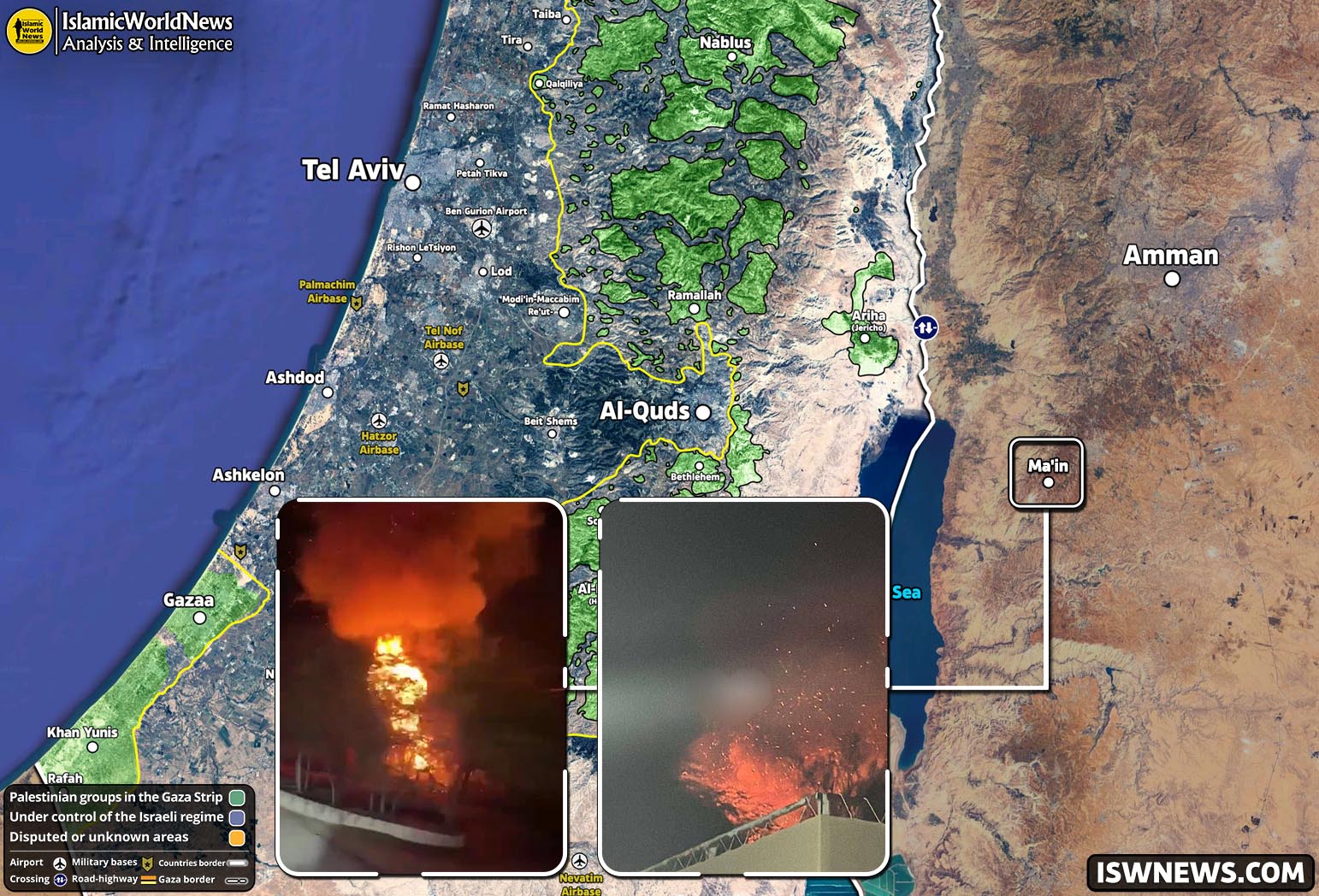
The wreckage of the drone caused a fire in the Ma’in area. Shortly after local residents reported the flames, security and government forces were dispatched to the site of the crash. They managed to control the fire and declared the area off-limits until further notice.
The Ma’in region is part of the Madaba province in western Jordan, located near the Dead Sea. The trajectory of the drone suggests that the attack likely originated from Iraq. The Yemeni armed forces have not clarified how the attack was executed or if they coordinated with Iraqi resistance groups. Meanwhile, both the Israeli and Jordanian military have not addressed the attack’s origin in their statements, focusing instead on their response to the Yemeni drone attack.
The wreckage of the drone caused a fire in the Ma’in area in western Jordan
The renewed participation of the Iraqi resistance in attacks on Israeli positions has broadened the scope of conflict and heightened tensions, potentially imposing greater pressure and damage on Israel. The recent suspension of Iraqi resistance attacks against Israel was shaped by internal pressure from the Iraqi government and the United States.
With the recent developments in Syria and the withdrawal of the new government from the resistance front, the Iraqi front has gained increased significance in confronting Israel; And it is anticipated to play a crucial role in regional developments in the coming months.
According to the leader of Ansar Allah movement, Israel is trying to expand its aerial operations in the region. Consequently, it is inevitable that the Zionists will take more serious measures against Iraqi groups, which could prompt the Americans to directly engage in the conflict with Iraq.