
The Collapse of Qatar’s Outsourced Defense Strategy: An Analysis of the Israeli Airstrike on Doha
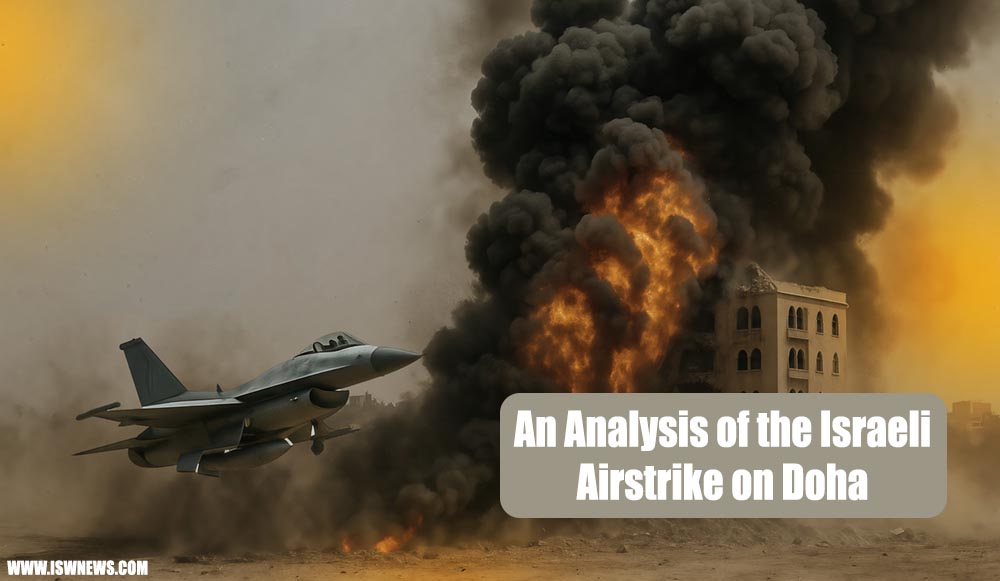
The Israeli airstrike on Qatar in September 2025 marked a turning point in Gulf security dynamics, exposing the fundamental weaknesses of Qatar’s outsourced defense model. The strike, which occurred on September 9 and killed six people—including a Qatari security officer¹—was the first official Israeli attack on a Gulf state, placing Qatar in a precarious position.
Israeli fighter jets targeted a Hamas leadership gathering in Doha’s West Bay Lagoon, a district known for its embassies and international residential compounds². The attack took place despite Qatar hosting Al Udeid Air Base, the largest U.S. military installation in the Middle East, home to over 10,000 American troops³.
Although the United States condemned the attack at the UN Security Council⁴, its response failed to prevent further escalation. President Donald Trump expressed being “deeply troubled” by the strike, calling it inconsistent with U.S. and Israeli objectives⁵. Nonetheless, his remarks did little to ease the profound sense of insecurity that gripped Qatar.
This incident revealed that despite Qatar’s multibillion-dollar investments in U.S. military infrastructure and its role as a coalition host, the country remains vulnerable to regional threats.
British Refueling Aircraft: Rumor or Reality?
In the hours following the Israeli strike, the presence of a British RAF Voyager KC3 refueling aircraft over Doha sparked speculation about possible UK involvement. Flight tracking data showed the aircraft flying over Qatar from 3 p.m. local time—precisely when explosions were reported⁶.
Some sources claimed the British aircraft may have refueled Israeli jets on their return journey, given the 2,200 km distance between Israel and Qatar, which aligns with the maximum range of Israeli F-35s⁷. However, subsequent investigations revealed the aircraft was conducting its annual “Soaring Falcon” exercise with the Qatari Air Force⁸.
More importantly, the RAF’s “probe and drogue” refueling system is incompatible with the “flying boom” system used by Israeli jets⁹. Defense experts confirmed that even if the UK had intended to assist, refueling would have been technically impossible¹⁰. Nonetheless, some media outlets continue to question whether Israel and the UK were truly uninformed about each other’s actions.
Al Udeid Air Base: Symbol of Dependence or Security Guarantee?
Built in the 1990s with over $1 billion in Qatari funding¹¹, Al Udeid Air Base plays a central role in Qatar’s defense strategy. Hosting the U.S. Central Command (CENTCOM), the base has served as the hub for coalition air operations since 2003, supporting missions in Iraq, Afghanistan, and Syria¹².
Qatar has spent over $8 billion on upgrading the base and plans to invest another $8.4 billion by 2033¹³. Yet the Israeli strike demonstrated that even this massive investment could not guarantee Qatar’s security.
As analysts noted, despite advanced radar systems at Al Udeid, the U.S. either failed—or chose not—to intercept the attack¹⁴. This raised serious questions about the reliability of American security assurances. Some reports indicated that the U.S. operations center in Doha remained “silent” during the strike¹⁵, suggesting either deliberate non-intervention or operational incapacity.
This event has led many experts to question the true value of America’s security umbrella and prompted Qatar to reconsider its defense strategy. The Iranian missile strike on Al Udeid in June 2025 further underscored that the base may not be a shield for Qatar—but rather a strategic target in regional conflicts¹⁶.
Broken Commitments and a Crisis of Trust
Over the past three decades, Qatar has built its security strategy on close cooperation with the United States and the United Kingdom. Since signing its first defense cooperation agreement with the U.S. in 1992¹⁷, Qatar has invested more than $26 billion in Foreign Military Sales (FMS) contracts, making it the second-largest FMS partner globally¹⁸. These deals include advanced air defense systems like Patriot and NASAMS, F-15QA fighter jets, and Apache helicopters¹⁹.
In addition, Qatar has hosted British forces at Al Udeid Air Base and has participated in UK-led military operations against ISIS since 2014²⁰. However, the recent Israeli airstrike revealed that these commitments and investments have failed to deliver real security. As one analyst put it: “Qatar and other regional states have done much to advance U.S. interests, and in return, they expect security guarantees. This attack will shake their trust in that entire formula”²¹.
The lack of effective response from the U.S. and UK underscored the ineffectiveness of Western security assurances against Israeli actions. Some experts now suggest Qatar should reconsider hosting Al Udeid, arguing that the base “creates more political and diplomatic challenges than opportunities”²². This trust deficit could have long-term implications for U.S. security relations across the Gulf.
Structural Flaws in Qatar’s Outsourced Defense Model
With fewer than 300,000 citizens and a military force of just 16,500, Qatar has the smallest army in the Gulf²³. These demographic constraints have made the country heavily reliant on foreign contractors and imported weapons systems. Between 2014 and 2024, Qatar’s defense spending surged by 434%²⁴, yet most of this went toward foreign arms purchases, with limited investment in domestic capabilities.
Defense analysts note that despite acquiring advanced platforms like French Rafales, British Typhoons, and American F-15s, Qatar lacks strategic depth and independent operational capacity²⁵. As senior analyst Anthony Cordesman explains: “Qatar’s training and readiness are solid for such a small force, but the military can only operate at battalion level, with limited combined arms capability and minimal maneuver warfare potential”²⁶.
This dependence on foreign forces became evident during the recent crisis. Qatar’s air defense systems—Patriot and NASAMS—operated by U.S. personnel, failed or were not permitted to respond to the Israeli strike²⁷. Moreover, Qatari fighter jets did not scramble to intercept, highlighting either a lack of operational autonomy or readiness. These shortcomings demonstrate that outsourcing defense without building indigenous capacity cannot guarantee real security.
Alternative Paths: Domestic Investment and Diversifying Partnerships
Unlike Qatar, other Gulf states such as the UAE and Saudi Arabia have pursued different strategies. Through EDGE in the UAE and SAMI in Saudi Arabia, both countries are developing domestic defense industries²⁸. The UAE has increased its local defense production from 2% in 2014 to over 75% of contracts at IDEX 2025²⁹. Saudi Arabia aims to localize 50% of its defense spending by 2030³⁰.
As for diversifying defense partnerships, China has been floated as an option, but with clear limitations. As Qatar’s Prime Minister stated in 2023: “We have a strong defense alliance with the U.S., and our armed forces are built primarily on Western systems, mainly from the U.S. and France”³¹.
Experts argue that China cannot offer a security umbrella comparable to the U.S. or supply the advanced systems Qatar requires³². Nonetheless, investing in domestic defense capabilities could help Qatar achieve greater autonomy in key areas. Building indigenous air defense systems, expanding maintenance and repair industries, and training local specialists could reduce reliance on foreign forces. Strategic partnerships with countries like Turkey—known for its successful defense industry development³³—could also facilitate technology transfer and expertise sharing. This shift would require Qatar to fundamentally rethink its approach—from purchasing security to producing it.
Lessons for the Future of Regional Security
The Israeli airstrike on Qatar in September 2025 served as a wake-up call for all small Gulf states that have built their security strategies around foreign military presence and expensive arms purchases. This incident revealed that even billions of dollars invested in military infrastructure and cutting-edge weapon systems cannot replace indigenous defense capabilities and strategic autonomy. The failure of Qatar’s air defense systems to intercept—or even detect—the Israeli strike³⁴ exposed deep flaws in the country’s defense architecture.
As some analysts have noted, the attack “will have profound implications for how regional states view U.S. security guarantees”³⁵. For Qatar and similar nations, the time has come to reassess their security strategies. This reassessment must include serious investment in domestic defense industries, training of local specialists, and diversification of strategic partnerships.
Moreover, enhancing regional cooperation and establishing joint defense systems with neighboring countries could strengthen deterrence. The key lesson from this event is that real security cannot be bought—it must be built. Qatar and other Gulf states must shift from being mere consumers of foreign arms to becoming producers and developers of their own defense capabilities. This transformation requires political will, long-term investment, and acceptance of the reality that, ultimately, every nation must take responsibility for its own security.
Sources:
- Al Jazeera – “Qatar PM meets Trump after Israel’s deadly strike on Doha” (12 September 2025) https://www.aljazeera.com/news/2025/9/12/qatar-pm-meeting-trump-after-israels-deadly-strike-on-doha
- Al Jazeera – “Israel attacks Hamas leadership in Qatar: What we know” (9 September 2025) https://www.aljazeera.com/news/2025/9/9/israel-attacks-hamas-leadership-in-qatar-all-to-know
- Al Jazeera – “What to know about the US’s Al Udeid airbase in Qatar after Iran’s attack” (23 June 2025) https://www.aljazeera.com/news/2025/6/23/hld-irans-attack-on-al-udeid-air-base-in-qatar-all-you-need-to-know
- Al Jazeera – “UN Security Council unite in condemning Israeli bombing of Qatar” (12 September 2025) https://www.aljazeera.com/video/newsfeed/2025/9/12/un-security-council-unite-in-condemning-israeli-bombing-of-qatar
- The Washington Post – “Israeli strike targeting Hamas in Qatar ‘does not advance Israel or America’s goals,’ Trump says” (9 September 2025) https://www.washingtonpost.com/world/2025/09/09/qatar-doha-explosion-israel-hamas/?chead=true
- Middle East Eye – “RAF plane seen over Doha during Israeli attack part of annual UK-Qatar exercise” (9 September 2025) https://www.middleeasteye.net/news/raf-plane-seen-flying-over-qatar-during-israeli-attack-part-annual-exercise
- Skwawkbox – “Breaking: RAF refuelling plane was circling over Doha during Israeli terror attack” (9 September 2025) https://skwawkbox.org/2025/09/09/breaking-raf-refuelling-plane-was-circling-over-doha-during-israeli-terror/
- Middle East Eye – “RAF plane seen over Doha during Israeli attack part of annual UK-Qatar exercise” (9 September 2025) https://www.middleeasteye.net/news/raf-plane-seen-flying-over-qatar-during-israeli-attack-part-annual-exercise
- The New Arab – “No, the UK’s RAF didn’t refuel Israeli jets during Doha strike” (9 September 2025) https://www.newarab.com/news/no-uks-raf-didnt-refuel-israeli-jets-during-doha-strike
- Gazette News – “Fact check: UK tanker aircraft cannot refuel Israeli jets” (11 September 2025) https://www.gazette-news.co.uk/news/national/25460688.fact-check-uk-tanker-aircraft-cannot-refuel-israeli-jets/
- 5Pillars – “Al Udeid Air Base: America’s largest military installation in Middle East” (24 June 2025) https://5pillarsuk.com/2025/06/24/al-udeid-air-base-americas-largest-military-installation-in-middle-east/
- Grey Dynamics – “Al Udeid Air Base: The Largest US Military Installation in Middle East” (11 October 2024) https://greydynamics.com/al-udeid-air-base-the-largest-us-military-installation-in-middle-east/
- Congressional Research Service – “Qatar: Issues for the 119th Congress” (March 2025) https://www.everycrsreport.com/reports/R47467.html
- Defence Security Asia – “Israel’s Airstrike in Doha Exposes Qatar’s Air Defence Failure” (9 September 2025) https://defencesecurityasia.com/en/israel-airstrike-doha-qatar-air-defence-failure/
- Middle East Eye – “Israel’s attack on Qatar eviscerates promise of US security umbrella for Gulf” (9 September 2025) https://www.middleeasteye.net/news/israels-attack-qatar-eviscerates-promise-us-security-umbrella-gulf
- Middle East Monitor – “Time for Qatar to review its hosting of US Al Udeid military air base” (3 July 2025) https://www.middleeastmonitor.com/20250703-time-for-qatar-to-review-its-hosting-of-us-al-udeid-military-air-base/
- Congressional Research Service – “US-Qatar Defense and Security Relations” (2025) https://www.congress.gov/crs_external_products/R/HTML/R47467.web.html
- U.S. Department of State – “U.S. Security Cooperation With Qatar” (21 May 2025) https://www.state.gov/u-s-security-cooperation-with-qatar
- U.S. Department of State – “U.S. Security Cooperation With Qatar” (21 May 2025) https://www.state.gov/u-s-security-cooperation-with-qatar
- Grey Dynamics – “Al Udeid Air Base: The Largest US Military Installation in Middle East” (11 October 2024) https://greydynamics.com/al-udeid-air-base-the-largest-us-military-installation-in-middle-east/
- Middle East Eye – “Israel’s attack on Qatar eviscerates promise of US security umbrella for Gulf” (9 September 2025) https://www.middleeasteye.net/news/israels-attack-qatar-eviscerates-promise-us-security-umbrella-gulf
- Middle East Monitor – “Time for Qatar to review its hosting of US Al Udeid military air base” (3 July 2025) https://www.middleeastmonitor.com/20250703-time-for-qatar-to-review-its-hosting-of-us-al-udeid-military-air-base/
- Congressional Research Service – “US-Qatar Defense and Security Relations” (2025) https://www.congress.gov/crs_external_products/R/HTML/R47467.web.html
- Wikipedia – “Qatar Armed Forces” (accessed September 2025) https://en.wikipedia.org/wiki/Qatar_Armed_Forces
- New Defence Order Strategy – “Qatar’s Defense Procurement and Its Relevance for The Persian Gulf Security” (December 2022) https://dfnc.ru/en/journal/2022-1-72/qatar-s-defense-procurement-and-its-relevance-for-the-persian-gulf-security/
- New Defence Order Strategy – “Qatar’s Defense Procurement and Its Relevance for The Persian Gulf Security” (December 2022) https://dfnc.ru/en/journal/2022-1-72/qatar-s-defense-procurement-and-its-relevance-for-the-persian-gulf-security/
- Defence Security Asia – “Israel’s Airstrike in Doha Exposes Qatar’s Air Defence Failure” (9 September 2025) https://defencesecurityasia.com/en/israel-airstrike-doha-qatar-air-defence-failure/
- Arab Gulf States Institute – “UAE Defense Industry Ambitions” (22 July 2025) https://agsi.org/analysis/uae-defense-industry-ambitions/
- AGBI – “UAE and Saudi pour billions into homegrown defence industries” (18 February 2025) https://www.agbi.com/analysis/manufacturing/2023/05/uae-saudi-arabia-homegrown-defence-industries/
- CSIS – “Indigenous Defense Industries in the Gulf” (21 September 2022) https://www.csis.org/analysis/indigenous-defense-industries-gulf
- Breaking Defense – “Balancing act: Asked about China’s Middle East arms sales, Qatari PM lauds US ‘defense alliance'” (25 August 2023) https://breakingdefense.com/2023/08/balancing-act-asked-about-chinas-middle-east-arms-sales-qatari-pm-lauds-us-defense-alliance/
- Breaking Defense – “Balancing act: Asked about China’s Middle East arms sales, Qatari PM lauds US ‘defense alliance'” (25 August 2023) https://breakingdefense.com/2023/08/balancing-act-asked-about-chinas-middle-east-arms-sales-qatari-pm-lauds-us-defense-alliance/
- Carnegie Endowment – “The Rise of the Emirati Defense Industry” (May 2019) https://carnegieendowment.org/sada/2019/05/the-rise-of-the-emirati-defense-industry?lang=en
- Defence Security Asia – “Israel’s Airstrike in Doha Exposes Qatar’s Air Defence Failure” (9 September 2025) https://defencesecurityasia.com/en/israel-airstrike-doha-qatar-air-defence-failure/
- · Middle East Eye – “Israel’s attack on Qatar eviscerates promise of US security umbrella for Gulf” (9 September 2025) https://www.middleeasteye.net/news/israels-attack-qatar-eviscerates-promise-us-security-umbrella-gulf
Comment