
Doctrine of Controlled Resistance: A Narrative of Joseph Aoun’s Strategic Shift Toward Zionist Attacks
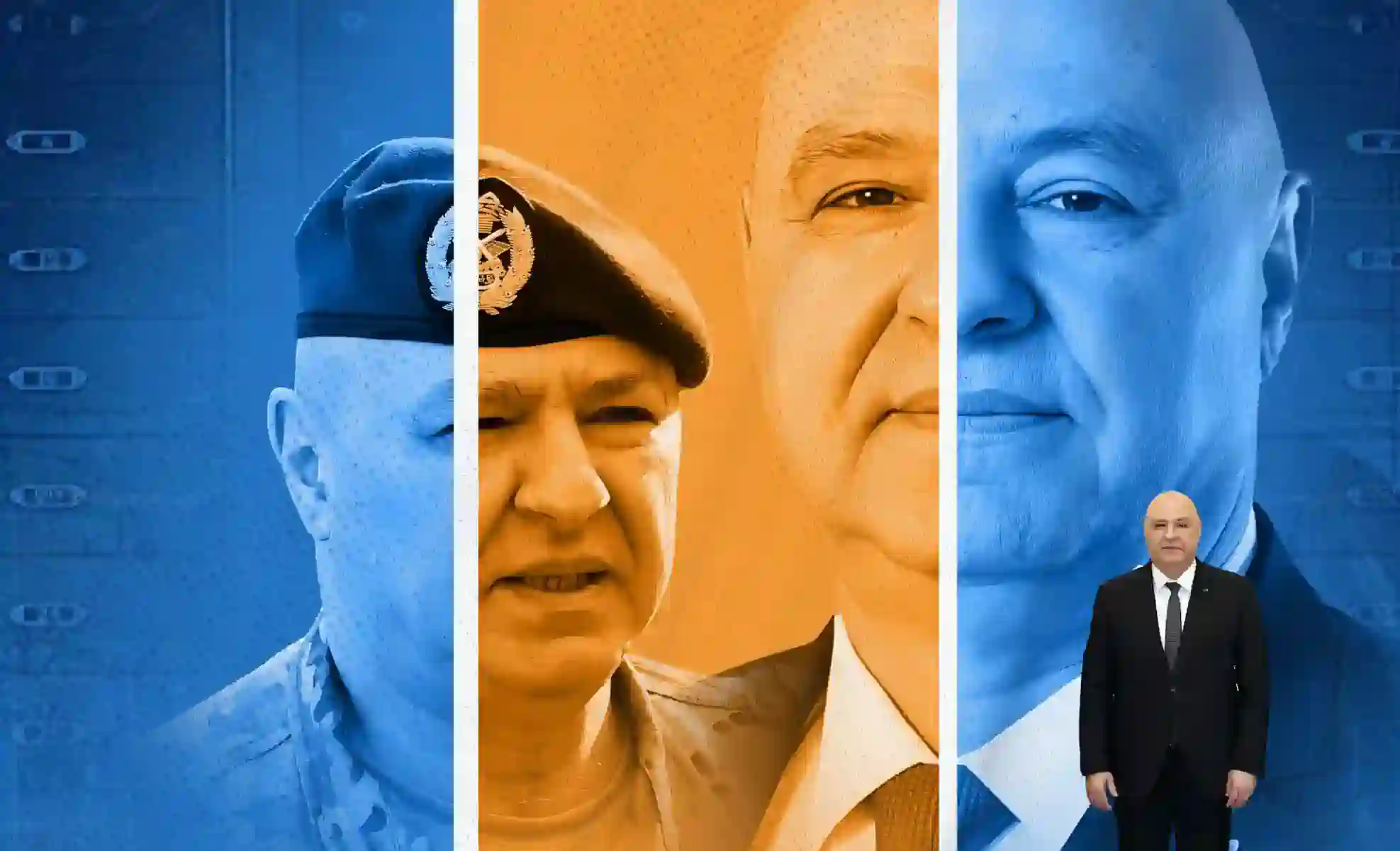
This report examines the gradual pivot of Joseph Aoun in confronting Zionist assaults—a transformation that has evolved from a cautious stance into a more proactive policy. The narrative highlights how this strategic shift has been shaped by Lebanon’s internal dynamics, regional pressures, and international considerations.
Introduction
On the international stage, Hebrew media reports claiming that recent Zionist regime attacks were coordinated with the United States—and that Tel Aviv is dissatisfied with the “army’s slow pace in disarming Hezbollah”—illustrate the mounting pressure from Washington and Tel Aviv to curb this trajectory. The West now fears the emergence of an independent Lebanese national defense model, in which the army and resistance secure the country’s borders without reliance on international institutions. This concern has driven the Zionist regime to employ its attacks not only as military responses but also as political tools to prevent closer ties between the army and Hezbollah.
Meanwhile, the Wall Street Journal’s report on Hezbollah’s military rebuilding—coinciding with U.S. diplomatic and security maneuvers alongside Arab allies—signals a coordinated effort to reframe Lebanon’s narrative from “legitimate defense” to “regional threat.” From this perspective, a critical question arises: does Joseph Aoun’s recent directive to delay the disarmament of the resistance reflect political weakness and isolation, or is it a calculated attempt by Aoun and the army to redefine Lebanon’s defense policy and restore national legitimacy? Exploring this question is key to understanding the new phase of security developments along Lebanon’s southern borders and the balance of power in the Middle East.
From “Potential Partner” to “Implicit Supporter of Resistance”
At the outset of his presidency, Joseph Aoun was regarded by the West and Arab allies as a “potential partner” to contain Hezbollah and rebuild Lebanon’s political order after the war. Yet, over time, the gap between Western promises and on-the-ground realities eroded this perception. The “Barak Roadmap” and Arab backing for Hezbollah’s disarmament placed Aoun in a dilemma between external pressures and domestic sensitivities. As Zionist attacks persisted and Washington failed to manage the crisis, the legitimacy of alignment with the West weakened in Lebanon. Gradually, Aoun shifted from cooperating with Washington to emphasizing Lebanon’s “right to national defense” against Zionist aggression. By October 2025, he had transformed from a pragmatic figure supported by the West into a nationalist leader who saw his political survival in maintaining balance among the state, the army, and the resistance.
The Beginning of a New Phase in Lebanon’s Defense Policy
In late October 2025, the Wall Street Journal published a report claiming that Hezbollah had resumed “rebuilding its military capacity” after the ceasefire. According to Zionist and Arab security sources, part of the defensive equipment was entering Lebanon via Syria, while other parts were being produced domestically. The report warned that the Zionist regime was “losing patience” and might act “unilaterally” if Beirut failed to respond.
The significance of this report lay less in its military content than in its political and psychological impact. Around the same time, Joseph Aoun ordered the Lebanese army to respond to any Zionist aggression—a decision widely seen as the start of a new phase in Lebanon’s defense policy. Simultaneously, renewed Zionist attacks on southern Lebanon, Aoun’s directive to suspend Hezbollah’s disarmament, and the overlap of these events created a tense and complex environment where media narratives and military decisions shaped public opinion in parallel.
Strategically, the Wall Street Journal report pursued two objectives:
- First, by amplifying claims of weapons transfers from Syria, it sought to provide international legitimacy for any potential Zionist preemptive strike, making such action politically defensible—something already witnessed in recent attacks on southern Lebanon.
- Second, the narrative targeted Lebanon’s political sphere by raising the issue of “security contacts between Lebanon and the Zionist regime,” thereby deepening internal mistrust and placing Aoun between two conflicting narratives: either ignore Hezbollah’s activities or implicitly cooperate with the Zionist regime.
This dual pressure was precisely what Aoun sought to avoid. Until then, he had tried to maintain a fragile balance among the army, the state, and the resistance. Yet the Wall Street Journal article disrupted that equilibrium, marking a preemptive strike in the war of narratives—framing any Lebanese defensive action as “aligned with the resistance axis.”
Regionally, the timing of the report with the Egyptian intelligence chief’s visit to Beirut and the U.S. defense secretary’s call to Baghdad was no coincidence. These events reflected a multilayered coordination—political, security, and media—aimed at curbing Lebanon’s shift from “Western cooperation” toward “independent defense.”
Thus, the Wall Street Journal report should be seen not as a reflection of battlefield reality but as a tool to redefine it. It implanted the Zionist regime’s narrative in the public mind, reframing Aoun’s decision from “legitimate defensive action” into a “reactive and risky response.” In this sense, its publication marked the first shot in a new media war—one designed to shape the battlefield in southern Lebanon through words and headlines before any bullets were fired.
A New Equation Between Army, Hezbollah, and the State
Recent developments in southern Lebanon—particularly Joseph Aoun’s direct order to the army to confront Zionist incursions and his subsequent proposal to suspend the plan for exclusive arms control south of the Litani River—represent a turning point in redefining Lebanon’s security equation. These decisions demonstrated that the Lebanese army was no longer a neutral observer but was gradually becoming part of the national deterrence system. By issuing this directive, Aoun effectively shifted from “containing the resistance” toward conditionally integrating the army into the concept of legitimate defense—a reflection of the collapse of the old order and the emergence of a new doctrine of “controlled resistance.”
Structurally, the suspension of the arms monopoly plan signaled the return of defensive initiative to Lebanon’s domestic institutions. In practice, the army acknowledged Hezbollah’s defensive role, since confronting Zionist aggression is impossible without coordination with the resistance. For the first time since the 2006 war, the Lebanese army, through an official decision, stepped beyond the restrictive framework of Resolution 1701. Thus, the boundary between the roles of the state and the resistance was redefined—not as contradiction but as overlap.
The Strategic Credibility Crisis of the Zionist Regime
As analyst Ibrahim Majid observed, the Zionist regime, which a year earlier boasted of “complete victory” over Hezbollah, now admits that the resistance has been “rebuilt.” This shift in narrative is not the result of new intelligence but rather an implicit acknowledgment of failure to achieve war objectives. To compensate for this setback, the Zionist regime needs to construct a new threat—one that justifies its continued aggression and pressures the Lebanese state into internal conflict with the resistance.
A New Phase of Deterrence
Strategically, Joseph Aoun’s order for the army to respond directly to Zionist incursions ushered Lebanon into a new phase of formal deterrence. With this directive, he narrowed the historic gap between the state and the resistance, moving the concept of “national defense” from rhetoric into practice. While the decision garnered support from parts of society, it simultaneously placed Lebanon at the center of U.S. and Arab diplomatic pressure. Nevertheless, Aoun’s move can be seen as a calculated effort to reclaim sovereignty and restore legitimacy to Lebanon’s security decision-making.
Ultimately, Lebanon now operates within a framework of threefold deterrence: the army, the resistance, and the state—each playing distinct yet complementary roles in defending the nation. Looking ahead, three possible trajectories emerge:
- Stabilization of controlled deterrence through limited coordination between the army and the resistance.
- Short-term localized clashes if Zionist attacks persist.
- Escalation to a regional confrontation should the resistance axis intervene directly.
Lebanon today stands in a state between war and peace—what can be termed “armed peace.” Its stability rests not on external agreements but on internal capacity to maintain balance among the state, the army, and the resistance.
Comment