
Latest Developments in Southern Syria – August 28, 2025 (Map)
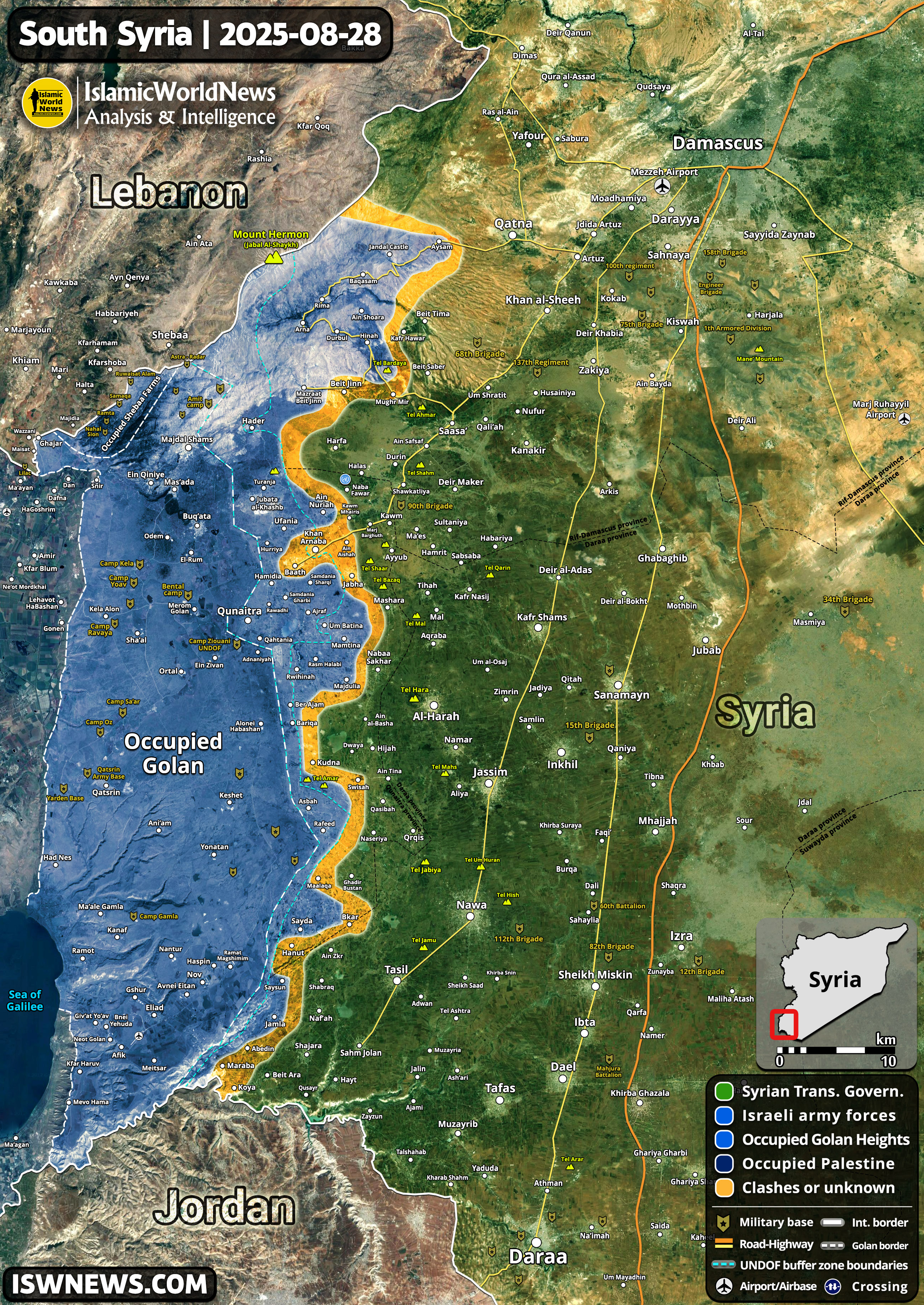
In recent weeks, the situation along the lines in southern Syria—specifically in the provinces of Daraa and Quneitra—has remained stable and unchanged. The Israeli military has been intermittently moving through villages and occupied areas in southern Syria, occasionally setting up checkpoints along roads and routes leading to residential zones.
According to the latest data gathered by Islamic World News, the most recent Israeli military movements in southern Syria are as follows:
- August 24: Five Israeli military vehicles entered the village of Bariqa in Quneitra province. Troops stationed themselves in front of the Public Security building and set up a temporary checkpoint, inspecting passing vehicles.
- August 25: A convoy of 11 military vehicles and over 60 Israeli soldiers entered the Beit Jinn area in the Damascus countryside, detaining six local residents. Simultaneously, Israeli forces took control of Bat al-Warda hill on the slopes of Mount Hermon.
- August 25: Israeli military activity intensified in the Al-Rafid area of Quneitra. After deploying on Al-Jamous hill, troops entered the village of Al-Hiran, while another group patrolled Ayn Zivan. The village of Ayn al-Abd also witnessed an Israeli raid.
- August 26: An Israeli attack on a residential home in the village of Tarnajah, north of Quneitra, resulted in the death of a Syrian youth named Rami Ghanem.
- August 27: Israeli forces entered the village of Western Samadaniyah in Quneitra province, conducted patrols, and then withdrew.
- August 28: Israeli troops appeared at the Abu Ghara junction east of Al-Rafid and continued scattered patrols in Beit Jinn.
The physical presence of Israeli forces on Syrian soil—regardless of its immediate outcomes—sends a clear regional message: Israel is willing to enter a new operational phase to prevent the establishment of intelligence or military infrastructure near its borders. These recent actions reflect Tel Aviv’s effort to solidify a security belt beyond the ceasefire lines.
Moreover, field developments suggest that Tel Aviv aims to secure its desired geographic clauses in security agreements not through negotiation, but via direct military pressure. This strategy indicates Israel’s intent to impose its security equations on the Golan governance through a combination of iron and fire.

Comments