
Military Knowledge: Orbiter-5 Drone
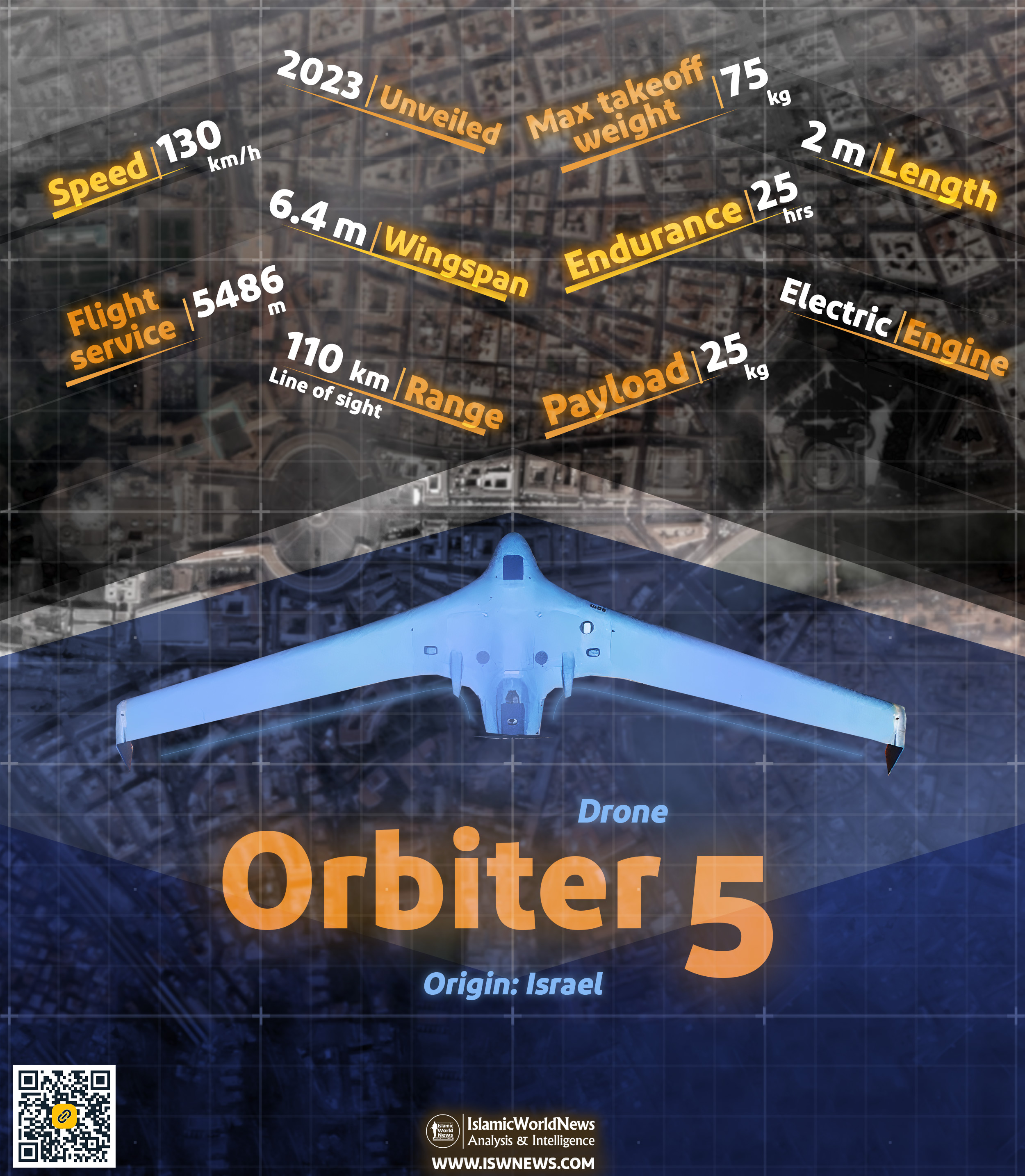
The Orbiter-5 drone, developed by Israel’s defense company Aeronautics, is a tactical unmanned aerial system designed for multi-purpose missions in complex combat environments. Equipped with satellite communication, it offers advanced capabilities beyond those of typical lightweight tactical drones and has played a significant role in military and security operations.
Design and Development History:
Aeronautics Ltd. began its journey in the late 1990s, focusing on the development of cost-effective unmanned aerial vehicles. This vision led to the creation of the Orbiter drone family. In 2019, the company was acquired by Israeli defense firm Rafael and private investor Avichay Stolero. The merger significantly enhanced Aeronautics’ technical and operational capabilities, granting it broader access to advanced technologies and resources.
Early models such as the Orbiter-1K and Orbiter-2 were initially designed for short-duration missions. However, as operational demands evolved, Aeronautics Ltd. introduced more advanced versions—first the Orbiter-4, and ultimately the Orbiter-5—to meet the growing complexity of tactical requirements.
Orbiter-5 was officially unveiled in June 2023 during the Paris Air Show, marking a major milestone in Aeronautics Ltd.’s tactical UAV development. Designed to deliver capabilities comparable to MALE (Medium Altitude Long Endurance) drones, Orbiter-5 stands out for its lightweight and portable design. As the most advanced member of the Orbiter family, it combines extended flight endurance, increased payload capacity, and enhanced operational intelligence in a compact tactical platform.
Orbiter Drone Variants:
The Orbiter UAV family includes a range of models, each tailored for specific mission profiles:
- Orbiter-1K: Designed for strike missions, with a flight endurance of approximately 3 hours.
- Orbiter-2: Built for short-range tactical reconnaissance.
- Orbiter-3: Offers capabilities for surveillance and target acquisition.
- Orbiter-4: Suited for extensive land and maritime operations.
- Orbiter-5: The most advanced model, featuring over 25 hours of flight time and a payload capacity exceeding 25 kg.
Together, these drones cover a wide spectrum of operational needs, from rapid tactical missions to long-endurance strategic deployments.
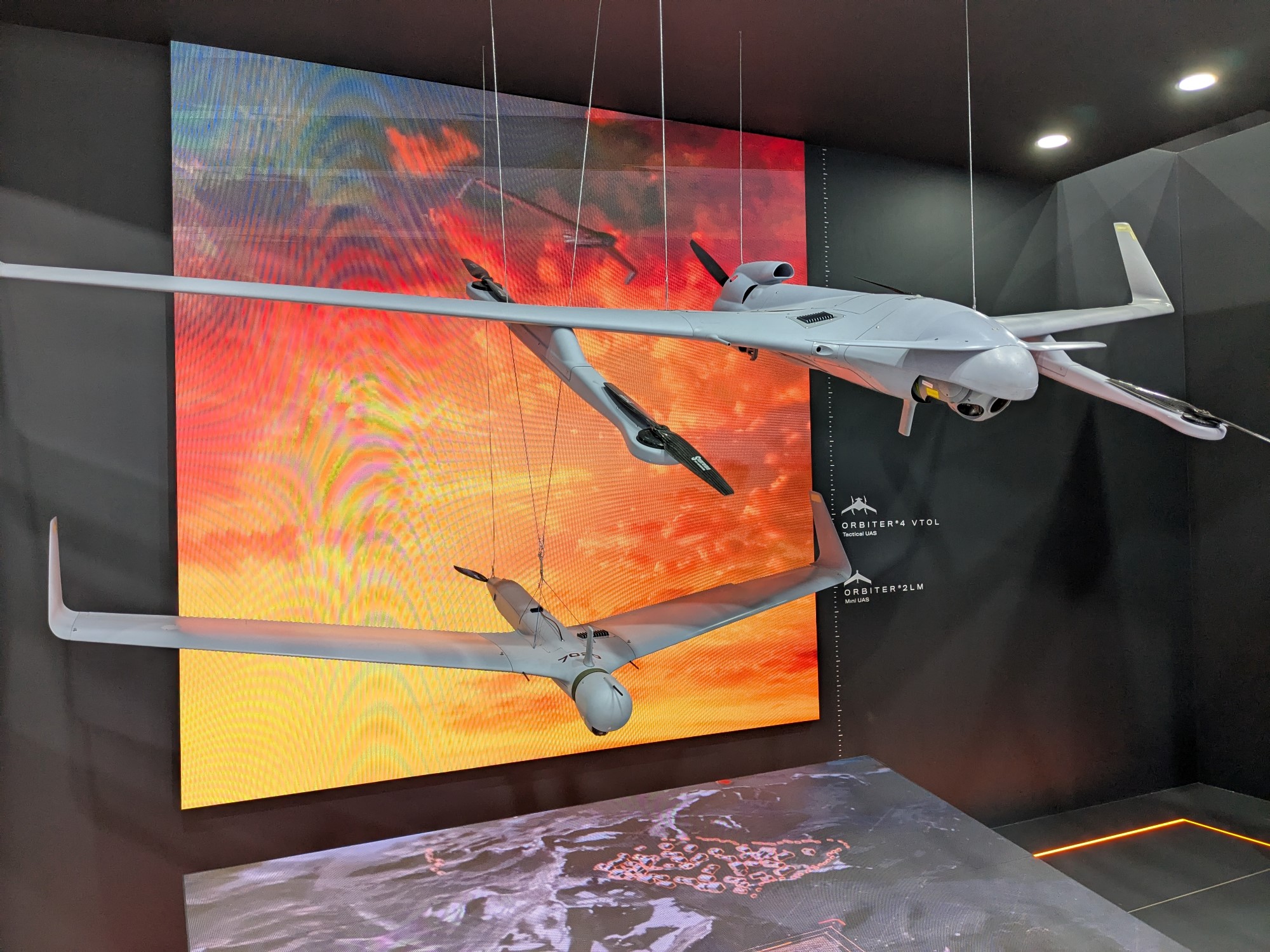
Technical Features of the Orbiter-5 UAV:
The Orbiter-5 drone boasts technical specifications with a wingspan of 6.4 meters, a body length of 2 meters, and a takeoff weight of 75 kilograms, it is built for endurance missions. It can reach an operational ceiling of 5,486 meters and a top speed of 130 km/h. Powered by a 600-watt four-stroke electric engine, the Orbiter-5 is equipped to perform long-duration tactical operations with efficiency and reliability.
The drone’s navigation system enables precise operation even in GPS-denied environments. Additionally, its dual avionics setup, dual-combustion engine, and automatic recovery capability in emergency situations significantly enhance its operational safety.
This drone is launched either via a rail-based launcher or directly from a vehicle, and it uses a parachute system for recovery upon landing.
Quick assembly—even in hostile territory—and easy transportability are among the key advantages of this drone, making it ideal for mobile and tactical operations. This capability is clearly demonstrated in the promotional video released by the manufacturer.
Payload and Sensors of Orbiter-5:
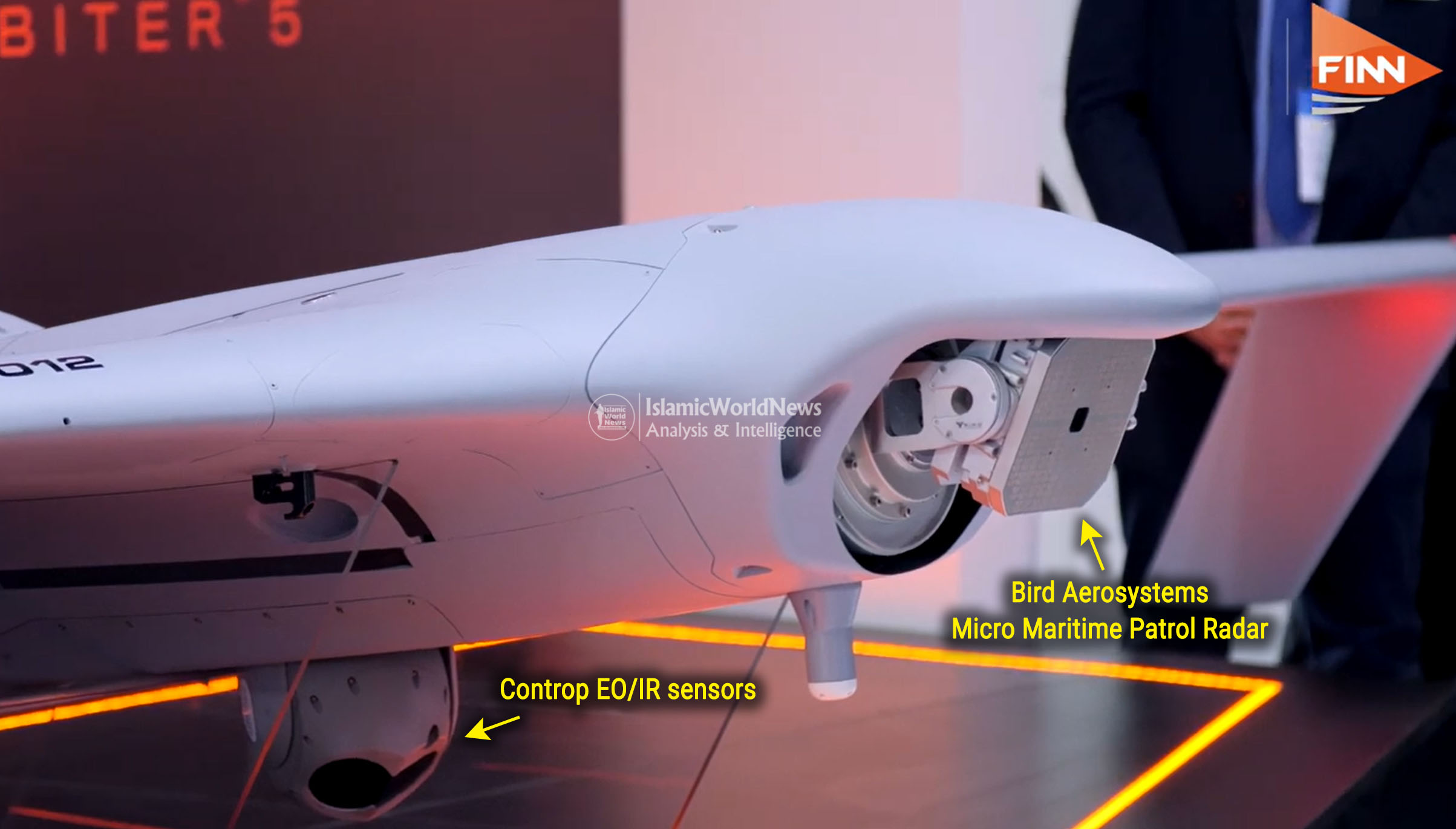
The Orbiter-5 is engineered to carry two separate payloads simultaneously, with a combined weight capacity of up to 25 kilograms—a significant leap compared to earlier Orbiter models. Its payload options include EO/IR (Electro-Optical/Infrared) sensors, SAR (Synthetic Aperture Radar), compact maritime surveillance radars (micro radars), communication and data transmission systems, and lightweight electronic warfare modules.
One of Orbiter-5’s key advantages is its modular payload design. This feature allows operators to quickly swap payload types based on mission requirements. For instance, the unit showcased at the 2023 Paris Air Show was equipped with a micro maritime patrol radar (MPR) from Bird Aerosystems and EO/IR sensors from Controp, demonstrating its adaptability and mission-specific configuration capabilities.
Satellite Communication Capability of Orbiter-5:
One of the most significant strengths of the Orbiter-5 UAV is its satellite communication system and ability to transmit live imagery. This feature sets it apart from many other drones in its class. It plays a crucial role in reconnaissance, surveillance, and precision targeting missions—especially in environments where ground-based communication or GPS signals are disrupted.
Prior to the 12-day conflict between Israel and Iran, the satellite communication capability of the Orbiter-5 drone was largely unknown, and it was not widely believed that the UAV was equipped with such technology. When operating via direct line-of-sight with a ground control station, Orbiter-5 has a maximum range of 110 kilometers. However, when connected through satellite communication, its operational range is determined by its flight endurance duration.
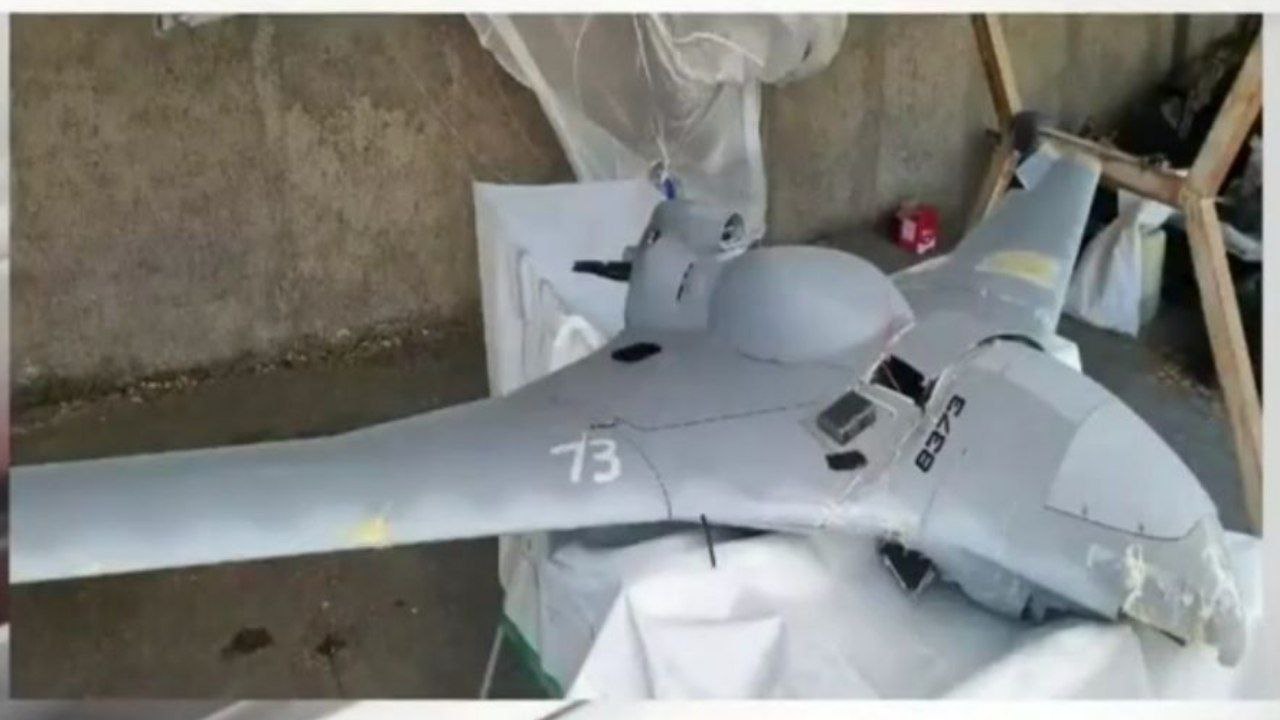
During the 12-day conflict between Israel and Iran, the Israeli Air Force deployed the Orbiter-5 drone for precision reconnaissance, monitoring troop movements, and guiding aerial strikes against Iranian targets. Notably, Iran’s air defense systems succeeded in downing at least one Orbiter-5 unit in the western provinces of the country.
Read more: How Many Israeli Drones Were Shot Down Over Iran During 12-Day War?
UAVs in the same class as the Orbiter-5—given its weight and dimensions—are typically deployed as tactical drones on the front lines. However, the Orbiter-5 unit downed in Iran was equipped with a satellite communication antenna, effectively overcoming the 110-kilometer range limitation of ground-based control stations. This upgrade elevated its role beyond that of a standard tactical drone, enabling Israel to extend its surveillance capabilities deeper into Iranian territory.
In summary, the Orbiter-5 has secured its place within Israel’s drone fleet by combining long flight endurance, satellite connectivity, and operational simplicity. As a cost-effective tactical UAV, it has significantly enhanced Israel’s reconnaissance and surveillance reach into rival territories.
Orbiter-5 drone specifications:
Type: Reconnaissance and surveillance
Origin: Israel
Manufacturer: Aeronautics Ltd.
Unveiled: 2023
Length: 2 meters
Wingspan: 6.4 meters
Engine: Four-stroke electric motor
Range: 110 km (via ground control station)
Maximum Speed: 130 km/h
Operational Ceiling: 5,486 meters
Endurance: 25 hours
Maximum Takeoff Weight: 75 kg
Payload Capacity: 25 kg

Sources:
Wikipedia – Aeronautics Defense Orbiter | ListDrone – Orbiter-5 UAV Specification | The Droning Company – Aeronautics Launches Orbiter-5 | Aeronautics Ltd. – Official Website | Defense Update – Aeronautics Systems Overview | FlightGlobal – Paris Air Show Reports | Israel Defense – Aeronautics Product Portfolio | Aeronautics unveils Orbiter 5 UAV


Comments