
Baghdad and Damascus on Path to Revive Kirkuk–Baniyas Pipeline
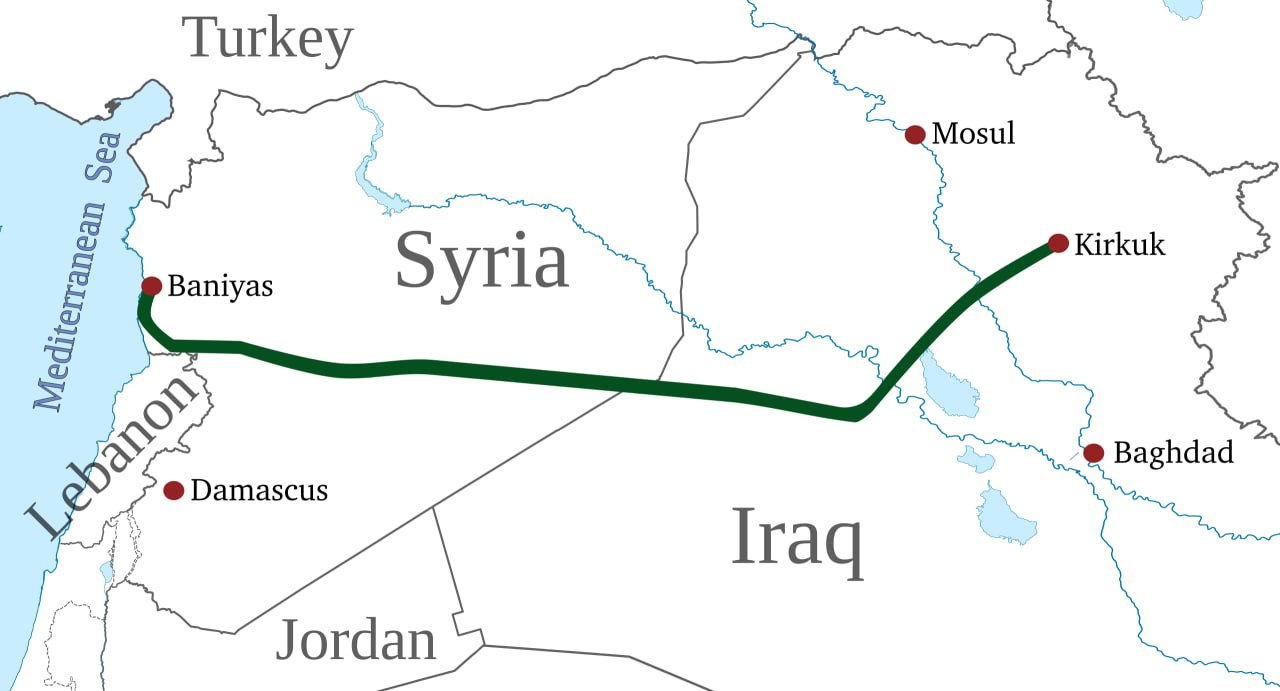
Syria and Iraq have begun coordinating efforts to restart the Kirkuk–Baniyas oil pipeline, an old yet strategic project now placed on the agenda with U.S. backing to strengthen bilateral energy cooperation. The initiative could restore Syria’s role in regional energy dynamics and open a new route for Iraq’s oil exports to European markets.
Ghiyath Diab, Syria’s Deputy Minister of Energy for Oil Affairs, noted the pipeline’s deteriorated condition, stating that existing infrastructure—including pumping stations, transmission lines, and electrical equipment—has been severely damaged and requires complete reconstruction. According to him, initial assessments suggest that reviving the old line alongside building a new route would be more economically viable than full restoration alone.
In this context, the Executive Vice President of Syria’s National Oil Company emphasized that Damascus and Baghdad are rapidly advancing the project’s implementation. He described the pipeline as a vital artery for reactivating Syria’s energy sector and a direct, cost-effective export route for Iraq to the Mediterranean and European markets.
Published information indicates that joint technical committees from both countries are currently conducting engineering and feasibility studies. These include evaluating two main options—restoring the existing route or constructing an alternative path—as well as assessing the project’s technical, security, and economic requirements.
The Kirkuk–Baniyas pipeline, stretching about 800 km with a daily capacity of nearly 300,000 barrels, is one of the oldest oil export routes in West Asia, first commissioned in 1952. Preliminary estimates suggest that reviving the project could cost over $4.5 billion and take around three years to complete.
According to the proposed technical plan, construction of a dual pipeline with a daily capacity of up to 1.5 million barrels, new pumping stations, and advanced monitoring systems is envisioned. It also foresees replacing part of the old route in Deir ez-Zor with a shorter path south of Homs to improve efficiency and security.
For Syria’s new government, this project is more than just a pipeline—it is a tool to rebuild oil infrastructure, generate transit revenues, and gradually reintegrate into the regional energy network after years of war and sanctions. The high costs, lengthy timeline, and security concerns along certain sections remain major challenges. Success depends on attracting investment, ensuring route security, and maintaining political stability in both countries. U.S. support for this energy cooperation may signal an attempt to shape a new regional energy order—one that simultaneously serves the economic interests of Baghdad and Damascus while influencing the geopolitical balance of the Eastern Mediterranean.

Comments