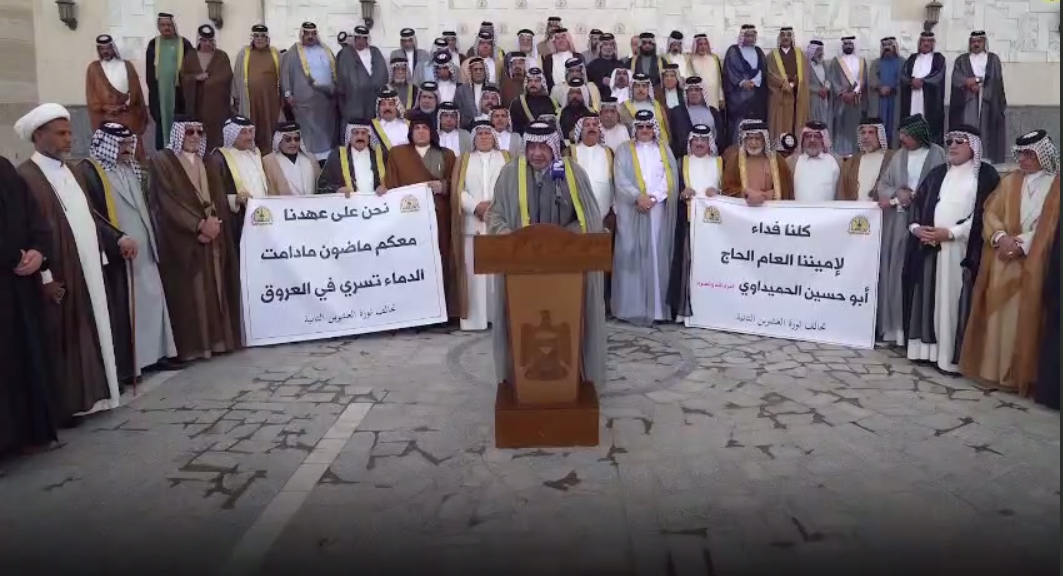
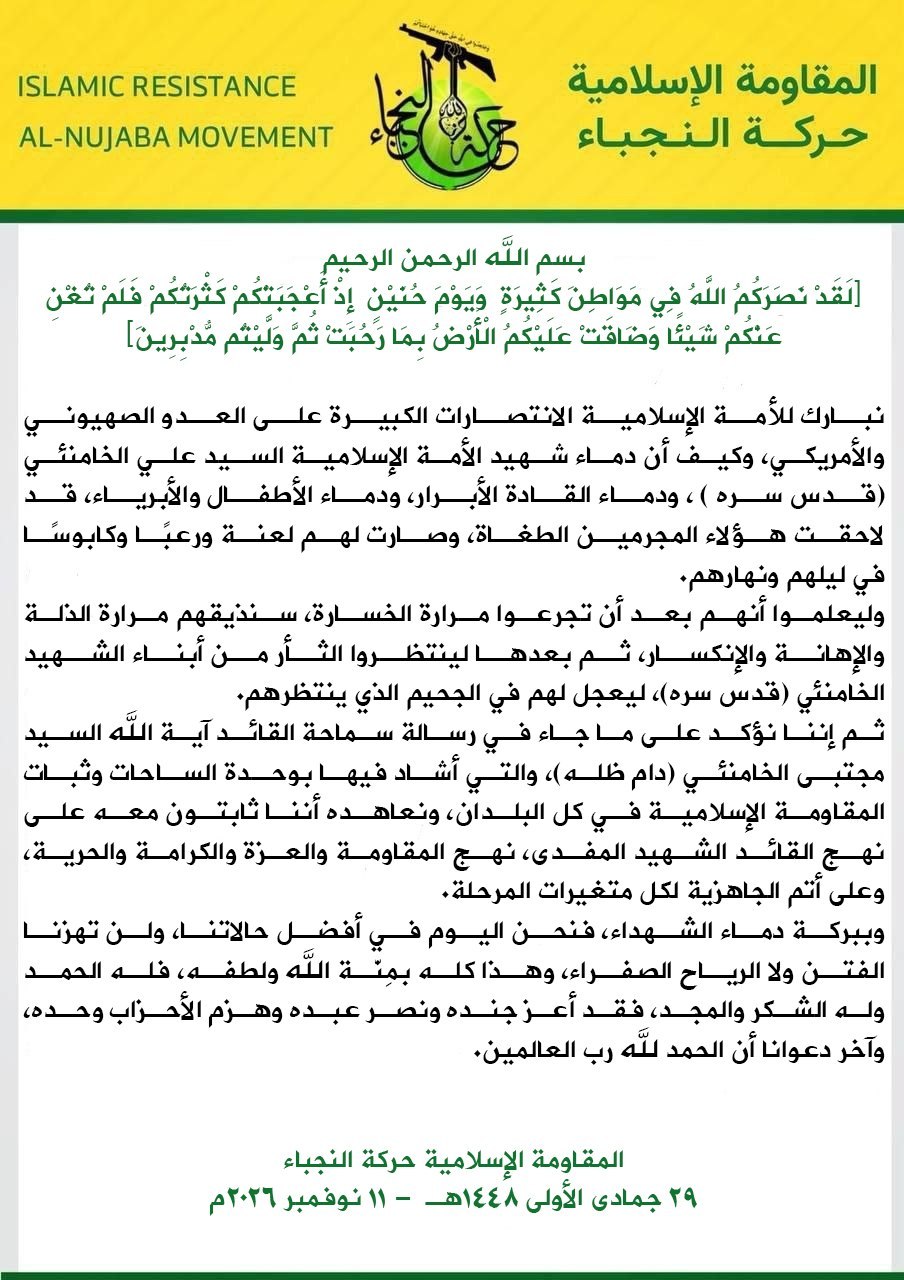
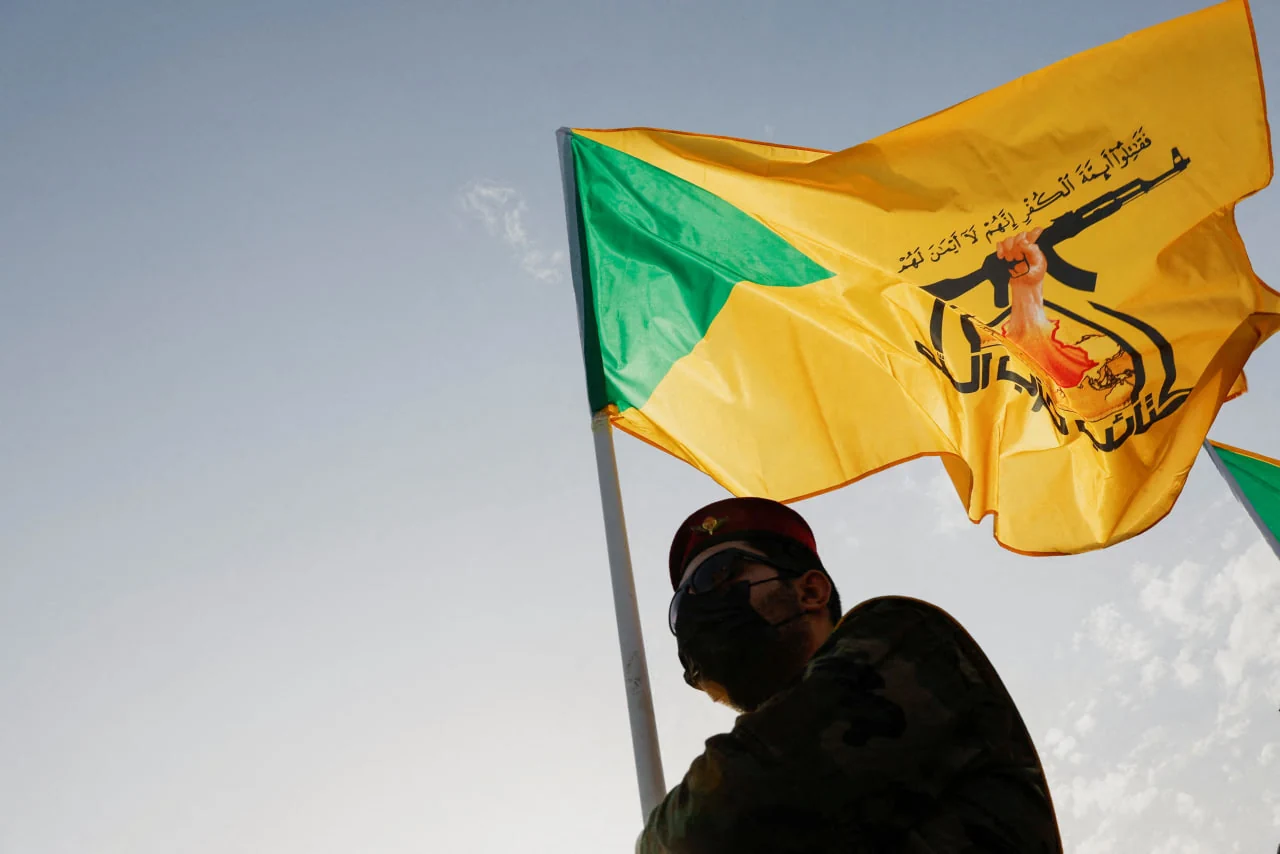
A key passage from the statement reads: “We are all ready to sacrifice ourselves for our Secretary-General, Hajj Abu Hussein al-Hamidawi, and as long as blood flows through our veins, we will remain faithful to our pledge to you.”
The statement was issued following remarks by Hajj Abu Mujahid al-Assaf, a security official of Iraq’s Kata’ib Hezbollah, who stressed in a statement that the group would remain committed to its principled positions and that neither international nor domestic pressure could force it to retreat even slightly from its positions and objectives.
Another part of the statement emphasized defending the interests of the oppressed Iraqi people; confronting the country’s domestic and foreign enemies, in whatever form or guise they may appear; defending the Islamic Republic of Iran; supporting the fundamental causes of the Islamic Ummah, particularly the Palestinian cause; and standing alongside their brothers in Yemen and Lebanon until their last breath.
We reaffirm our commitment to what was stated in the message of His Eminence Ayatollah Seyyed Mojtaba Khamenei (may God protect him), in which he praised the unity of the fronts and the steadfastness of the Islamic resistance across all countries.
We pledge to stand alongside him and remain steadfast on the path of the martyred and esteemed leader: the path of resistance, dignity, honour, and freedom. We also declare our full readiness to confront all developments and circumstances that may lie ahead during this phase.
By the blessing of the martyrs’ blood, we are now in our strongest position and condition. The enemy’s conspiracies and plots will never weaken our resolve.
All of this is by the grace and favour of Almighty Allah. To Him belong all praise, gratitude, and glory: the One who has granted victory to His forces, supported His servant, and defeated the confederates single-handedly.
And the final words of our supplication are: All praise and thanks belong to Allah, Lord of the Worlds.
In West Asia and North Africa, oil and its transmission routes have never been merely economic matters; they have always been defined in close connection with politics, national sovereignty, and survival calculations. Every decision in the energy sector carries profound geopolitical messages capable of altering the balance of power among regional actors. Within this framework, Ankara’s announcement to terminate the Kirkuk–Ceyhan oil pipeline agreement with Iraq by 2026 once again demonstrated that energy lies at the heart of Turkey’s security and strategic calculations. From the Erdogan government’s perspective, this decision is not merely a revision of a technical contract but part of a broader effort to redefine the future of energy, reduce costly dependencies, and consolidate Turkey’s role as a regional energy hub. Simultaneously, the cautious resumption of Iraqi oil exports through this pipeline after a long hiatus reflects both parties’ awareness of the geopolitical costs of obstructing energy arteries—an obstruction that, beyond inflicting heavy economic losses on Iraq and the Kurdistan Region, exposed the depth of legal and sovereignty disputes among Baghdad, Erbil, and Ankara. Meanwhile, developments in Syria and the prospect of a post-Assad order represent a key variable in Turkey’s energy and geopolitical calculations. From Ankara’s perspective, post-Assad Syria is not only a security issue but also a geopolitical opportunity to diversify and complete energy and transit corridors—corridors that could link Iraq, the Eastern Mediterranean, and even European markets. In this context, the central question is how Turkey is attempting, through the simultaneous use of energy tools, transit corridors, and Syria’s geopolitical shifts, to redefine its position in West Asia’s transitional order. This situation raises a fundamental question: Will energy and its transit routes in the coming decade become a factor intensifying competition and divisions among Turkey, Iraq, and Syria, or can they serve as a lever for cooperation, integration, and the definition of shared regional interests? The answer to this question will shape not only the future of Turkey’s relations with its neighbors but also the configuration of the region’s energy and geopolitical order.
Background
Among all foreign actors active in the Syrian crisis, Turkey has been the most steadfast supporter of opposition currents against the Damascus government, continuing this support despite heavy security, political, and economic costs. The consequences of this policy, particularly in the form of millions of Syrian refugees, have placed additional pressure on Turkey’s economy and social fabric, gradually becoming one of the most contentious domestic issues in the country. In past years, domestic critics of the Erdogan government repeatedly questioned this policy, calling for normalization of relations with Bashar al-Assad’s government and an end to support for opposition groups. From these factions’ perspective, the continuation of conflict neither guaranteed Turkey’s national security nor imposed long-term costs on Ankara. However, Assad’s fall transformed the equation, and the Erdogan government views this development as validation of its strategy. Ankara now believes its long-term investment in Syrian opposition groups has yielded effective leverage within Damascus’s new power structure. The groups and actors with which Turkey has established political, security, and field ties during the crisis years now find themselves in a position to play a significant role in Syria’s political future, thereby strengthening Turkey’s position as a decisive actor. Prior to Assad’s fall, Turkey’s policy in Syria was based on four core objectives:
Facilitating the return of a portion of Syrian refugees
Securing its southern borders
Containing and rolling back the political and territorial gains of the Kurdish-led Syrian Democratic Forces
Securing concessions for its allied opposition groups in any negotiation process with Damascus.
With the collapse of Assad’s government, the last objective has effectively become obsolete. Under the new circumstances, Ankara is attempting to pursue the remaining three objectives through more indirect and complex paths. Influencing Damascus’s new leadership, establishing active communication with Syria’s Arab community and local tribes, while simultaneously maintaining military and security pressure on the Syrian Democratic Forces, are Turkey’s primary tools for shaping the post-fall order in Syria. However, this strategy’s scope is not limited to Syria alone. Turkey is simultaneously attempting to translate its growing influence in Syria into leverage for increasing geopolitical pressure on Iraq—particularly in areas sensitive to Ankara in terms of border security, energy, and the presence of actors aligned with the Axis of Resistance. In this framework, Turkey is using political, economic, and security tools to shift the balance of influence in Iraq in its favor and limit the role of actors close to the Axis of Resistance. Pressuring Baghdad on security matters, cross-border operations, and managing Kurdistan Region files are part of this multi-layered strategy to consolidate Turkey’s regional position. Overall, Turkey’s policy in the post-Assad era can be seen as a coordinated effort to translate field gains in Syria into sustainable geopolitical influence across West Asia’s northern axis—a strategy encompassing both Syria and Iraq, with the ultimate goal of redefining Turkey’s role against the Axis of Resistance and solidifying Ankara’s position as a decisive regional actor.
Analysis and Findings:
Major projects in Iraq
Ankara’s Strategy Toward Baghdad: Iraq, which until recently was primarily viewed by Ankara as an unstable security belt on Turkey’s southern periphery, has now become one of the focal points of Turkey’s regional strategy. This shift in perspective has been shaped following the transformation of regional dynamics after the events of October 7—developments accompanied by the relative weakening of Iran’s influence across several fronts, increased economic and diplomatic weight of Arab Gulf states, and regional actors’ search for new stability models in West Asia. In this context, Turkey’s renewed engagement with Iraq is not limited to containing the PKK but reflects broader ambitions to redefine Ankara’s regional role. This new approach encompasses a combination of security cooperation with Baghdad and Erbil, advancing a fragile internal peace process in Turkey, and a targeted effort to integrate Iraq into trade, transit, and energy networks between Turkey and the Gulf states. At the heart of this strategy lies geoeconomic logic. Ankara seeks to consolidate its position as a regional trade and energy connectivity hub by investing in shared infrastructure and creating sustainable interdependencies. Projects such as oil pipelines, medium-term gas export plans, and electricity grid development are key tools for Turkey to link Iraq to the region’s emerging energy architecture. The implications of this approach extend beyond Iraq as well. For Europe, redefining connectivity routes and access to energy resources, alongside strengthening stability in the continent’s southeastern neighborhood, holds strategic importance—and developments in Iraq, within this framework, are part of Europe’s larger energy security equation.
Turkey’s policy shift toward Baghdad has occurred concurrently with a series of profound regional transformations, from the Gaza war and escalating Iran-Israel tensions to the fall of the Assad regime, which are collectively rearranging the balance of power in West Asia. These developments have heightened Ankara’s concerns about the spillover of insecurity and the expansion of crisis into its periphery. In such an atmosphere, Turkey feels an urgent need for cooperation with Baghdad to contain PKK threats and recalibrate relations with Iran-backed Popular Mobilization Forces—particularly given fears that Iraq might become the next arena for indirect confrontation between Iran and Israel. This concern has turned Ankara’s more active engagement with Baghdad into a security and political necessity. At the same time, this renewed engagement is meaningful within the broader context of Turkey’s rapprochement with Arab Gulf states, especially Saudi Arabia and the United Arab Emirates. Ankara seeks to position Iraq within a network of emerging regional frameworks that pursue trade, connectivity, and stability simultaneously. Overall, this new alignment strengthens Turkey’s strategic influence in Iraq while reducing Iran’s weight and centrality in shaping Baghdad’s regional dependencies. Thus, from Ankara’s perspective, Iraq is not only a security issue but a geopolitical and geoeconomic opportunity for redefining the regional order in West Asia.
Turkey’s Strategies in Iraq in Confrontation with the Islamic Republic of Iran: Strategic estrangement between Turkey and the United States effectively began in March 2003, when Ankara opposed opening a northern front for U.S. forces during the invasion of Iraq. This decision marked a turning point in bilateral relations and laid the groundwork for a series of mutual tensions and mistrust that deepened over the years. In the months following Iraq’s occupation, field incidents further intensified this rift. The detention of a truck belonging to Turkish special forces in April 2003 and the arrest of Turkish military personnel in July of that year in Sulaymaniyah—an event known as the “Hood Incident”—dealt a serious blow to mutual trust and hardened Ankara’s security outlook toward developments in Iraq. The PKK’s return to armed activities in 2004 further exacerbated Turkey’s threat perception. Simultaneously, widespread opposition from Iraqi Shiite Arabs and Kurds to any Turkish military role—rooted in concerns over the revival of Ottoman ambitions—marginalized Ankara from effective participation in post-war reconstruction and Iraq’s political transition. In this tense atmosphere, Iran’s growing influence in Iraq after 2003 further strengthened Turkey’s security-driven perspective. The expansion of Popular Mobilization Forces into disputed areas such as Tal Afar and Sinjar during the fight against ISIS brought Iran’s influence closer to Turkey’s borders, overlapping with PKK presence and bases—a situation Ankara perceived as a “dual security threat.” In response to this linkage between the PKK, Shiite militias, and Iran, Turkey gradually shifted since 2016 toward a strategy based on unilateral military actions. This strategy included cross-border operations, establishing operational bases in northern Iraq, and deepening security and political cooperation with the Kurdistan Regional Government. However, in recent years, Ankara has sought to recalibrate its approach, redefining its military activities within the framework of “joint security arrangements” with Baghdad rather than unilateral authorities. The stated goal of this shift is to reduce political estrangement in Iraq and gain greater legitimacy for Turkey’s military presence, while addressing Baghdad’s sovereignty sensitivities. Despite this rhetorical shift, Turkey’s cross-border operations and the legal status of its bases in Iraq remain contentious, complicating bilateral relations. Nevertheless, efforts to establish shared institutional frameworks indicate both sides’ willingness to manage disputes through formal cooperation. In this regard, in 2024 Turkey and Iraq agreed to establish a joint security coordination center in Baghdad and transform the controversial Bashiqa base into a center for joint training and cooperation under Iraqi command. Turkish officials describe this move not as a retreat but as a strategic shift toward a “shared security” model—one that, while maintaining Ankara’s operational presence, grants greater formal authority to the Iraqi government. Over the past years, Ankara has continuously sought to reduce its strategic estrangement from Baghdad. The turning point in this process dates back to the Kurdistan Region’s independence referendum in September 2017, when Turkey aligned with Iraq’s central government against Kurdish separatism, supported Baghdad’s recapture of Kirkuk, and thereby opened the path to gradual engagement with Iraq’s federal structure. This process accelerated with the shift of U.S. forces from combat to advisory roles from 2021 onward—a change shaped under internal Iraqi pressure for U.S. withdrawal following the assassinations of General Soleimani and Abu Mahdi al-Muhandis. From Ankara’s perspective, this situation simultaneously contained a threat and an opportunity: the threat of a potential vacuum being filled by Iran, and the opportunity to institutionalize security, economic, and political cooperation with Baghdad before that could occur. Recent geopolitical developments, including the fall of Assad’s regime, the weakening of Iran’s regional position, and mounting pressure on the Axis of Resistance, have created new room for maneuver for Turkey. Ankara views these developments as an opportunity to expand its influence through institutional mechanisms and emerging regional alignments. In this framework, Turkey seeks to integrate Iraq into its broader strategy by linking security cooperation to infrastructure development and positioning Baghdad within regional energy, trade, and stability equations—a strategy aimed at establishing a new balance against Tehran. One tool of this policy is the multilateral security framework involving Turkey, Iraq, Syria, Jordan, and Lebanon, launched in 2025 to manage the ISIS threat. At the Amman summit in March 2025, Turkey, Syria, and Jordan agreed to establish a joint operations center for counterterrorism coordination and managing ISIS-linked camps and prisons. Ankara views this framework as a tool to limit the role of the Syrian Democratic Forces—which it considers the Syrian branch of the PKK—and hopes that by transferring management of camps such as Al-Hol and Roj to Syria’s new government, the logistical links between the PKK and these forces, particularly along the strategic Sinjar corridor, will be severed. The Sinjar corridor, once part of Iran’s ground bridge connecting its allied networks in Iraq, Syria, and Lebanon, retains its geopolitical significance.
Turkey’s Strategic Objectives in Establishing Economic Agreements with Iraq: Turkey’s new approach toward Iraq is not solely a product of geopolitical competition with Iran but also a direct reaction to Ankara’s marginalization in the U.S.-led India–Middle East–Europe Economic Corridor (IMEC) initiative. In response, Turkey is promoting the Iraq-based “Development Road” project as a strategic alternative to IMEC—a project aimed at preserving Turkey’s geoeconomic position, balancing against Iranian influence, and deepening ties with Gulf Arab partners. This major logistics project, by connecting Basra to Turkish territory, transforms Iraq into the cornerstone of Ankara’s east–west connectivity vision, while complementing the central corridor passing through Central Asia and Turkey. The Grand Faw Port, as a regional logistics hub, stands at the center of this project, covering a corridor of approximately 1,200 kilometers from southern Iraq to the Turkish border. Simultaneously, Ankara is upgrading its domestic infrastructure and border crossings, including Habur–Fishkhabur and Ovaköy, to better align with EU customs zones. Regionally, this initiative is part of Turkey’s broader strategy to create interconnected networks and temporary economic alliances along the Turkey–Iraq–UAE–Qatar axis. Given domestic financial constraints, Turkey relies on Gulf state investments, particularly from the UAE and Qatar, to share costs, reduce political risks, and secure regional support. Beyond financing Iraq’s infrastructure, this support lends political legitimacy to the project and integrates Baghdad into broader regional economic frameworks—while enabling Ankara to compete with Iran’s east–west corridors that bypass Turkey.
Turkey-Iraq Energy Agreement: By placing Iraq at the center of its regional connectivity strategy, Ankara has extended the same logic to the energy sector—a domain where pipelines and transit routes are not merely economic assets but effective instruments of geopolitical influence. Iraq’s vast oil and gas reserves, if integrated into regional infrastructure, play a key role in Turkey’s vision of becoming an energy hub—a goal that leads to increased regional influence, supply route diversification, and enhanced Turkey’s position in European energy security. In this regard, Turkey seeks to strengthen and synergize its existing network, including the Trans-Anatolian Natural Gas Pipeline, TurkStream, and Baku–Tbilisi–Ceyhan pipelines, to connect West Asian and Caspian resources to European markets while reducing dependence on Russia and Iran. Within this framework, resuming oil flows through the Kirkuk–Ceyhan pipeline has become a primary priority for Ankara. The pipeline was halted in March 2023 following an international arbitration ruling in favor of Iraq, imposing a $1.5 billion fine on Turkey for unauthorized oil exports from the Kurdistan Region between 2014 and 2018. In response, Ankara terminated the 50-year pipeline agreement in July 2025 and announced its readiness to negotiate a new framework—one that would recognize Baghdad’s sovereignty over oil exports, establish a clear revenue-sharing mechanism, and ensure supply stability. In September 2025, Baghdad and the Kurdistan Regional Government reached an agreement to begin oil exports through this pipeline—a pilot move to restore oil flows toward Turkey. Although Ankara still contests the arbitration ruling, it has signaled willingness to restore oil flows under redesigned arrangements that integrate the pipeline into a broader regional infrastructure vision. Continuing this process, Turkey has submitted a comprehensive draft of a new agreement to Baghdad to expand bilateral energy cooperation. This proposal extends beyond oil to include natural gas, petrochemicals, and electricity—reflecting the expanded scope of Ankara’s energy diplomacy. Crucially, the plan is designed to align energy transit infrastructure with regional connectivity corridors, complementing the “Development Road” project. Turkey’s energy minister has emphasized that the program also envisions extending the pipeline to southern Iraq’s oil fields—a move that would increase export capacity and establish a direct link between southern Iraq and Turkish ports. From Ankara’s perspective, this strategy not only diversifies Iraq’s export routes but also embeds the country more deeply into Turkey-centric regional energy networks—thereby strengthening Turkey’s ambition to become a regional energy hub and enhancing its geoeconomic influence during a period of widespread regional instability from the Strait of Hormuz to the Red Sea.
Scenarios for the Turkey-Iraq Energy Agreement: Several potential scenarios may emerge as a result of Turkey’s decision: Scenario 1: Successful Negotiation of a New Agreement In this scenario, Ankara and Baghdad will successfully sign a new, comprehensive, and extensive oil agreement. Supporting factors include the Iraqi parliament’s readiness to vote on a draft law regulating the renewable energy sector and encouraging local and international investment. Washington’s support further reinforces these prospects, with U.S. State Department spokesperson Tammy Bruce confirming U.S. backing for the understanding among Baghdad, Erbil, and Turkey. Scenario 2: Continuation of the Status Quo In this scenario, oil relations between Iraq and Turkey will remain largely unchanged. The full-capacity restart of the oil pipeline remains out of reach, particularly as estimates indicate Iraq currently lacks the capacity to export 1.5 million barrels per day to Turkey. Scenario 3: Failure of New Agreement Negotiations Various technical and diplomatic challenges between Ankara and Baghdad could hinder finalizing a new agreement. Critics argue that a new deal might restrict oil exports through the State Organization for Marketing of Oil, potentially undermining the Kurdistan Region’s autonomy. Scenario 4: Revised Extension of the Original Agreement Many analysts consider this scenario more likely, whereby both countries extend their original oil agreement but with enhanced cooperation, coordination, and increased export quotas. Turkey’s Energy Minister Alparslan Bayraktar has affirmed Turkey’s willingness to extend the 1973 agreement with legal amendments and expanded activities. Kemal Etrushi, advisor to the Kurdistan Region’s Prime Minister, has also suggested the likelihood of an extension, provided that maintenance and transit costs are economically viable for all parties.
Emphasizing that the current responsibility requires that weapons be placed in the hands of the state, the resistance group announced the formation of committees to inventory and hand over its equipment under the supervision of the Commander-in-Chief of the Armed Forces.
This decision follows a meeting of the Shiite Coordination Framework attended by Iraqi Prime Minister Ali Faleh al-Zaydi, during which support was expressed for the plan to monopolize weapons in state hands and to sever the Popular Mobilization Forces’ ties with all political, party, and social frameworks.
Kata’ib Imam Ali is the third armed Iraqi group, after Asa’ib Ahl al-Haq and Saraya al-Salam, to officially announce the implementation of the process of transferring weapons to the state.
The statement reads that the leadership of Asa’ib Ahl al-Haq, in coordination with the call of the supreme religious authority and in response to the national position of the brothers in the Coordination Framework, and in affirmation of the remarks of Sheikh Qais al-Khazali, Secretary-General of Asa’ib Ahl al-Haq, regarding severing ties with the Hashd al-Shaabi and the state monopoly on weapons, has proceeded to implement this approach by forming a central committee headed by Jawad al-Talibawi and including several members.
It is worth noting that the process of armed groups disaffiliating from Hashd al-Shaabi and joining the Iraqi Armed Forces began with the dissolution of Saraya al-Salam (the military wing of the Sadrist Movement) under a direct order from Muqtada al-Sadr. Subsequently, two other groups, Kata’ib Imam Ali (AS) and Asa’ib Ahl al-Haq, have also announced their readiness to hand over their weapons and join the Iraqi state.
In a statement addressed to the group’s members, al-Sadr cited the national interest and the need to avert imminent threats facing Iraq as the reasons behind the decision. He emphasized that Saraya al-Salam would henceforth be completely separated from the Sadrist movement and would operate exclusively under official military institutions .
Al-Sadr also called on other armed groups—particularly those under the umbrella of the Popular Mobilization Forces (PMF)—to follow this approach, urging them to employ their weapons solely within the framework of the state and independent of partisan or sectarian directives .
The move was immediately welcomed by Ali Faleh al-Zaidi, the Prime Minister and Commander-in-Chief of the Iraqi Armed Forces. The Prime Minister’s office issued a statement praising the decision as an effective step toward consolidating the rule of law, centralizing weapons in the hands of the state, and enhancing national stability and security.
“Amid U.S. threats and extensive military preparations, we stress the necessity for all fighters to remain ready to enter a war of attrition that could be prolonged and exceed American expectations.
If the United States commits aggression and ignites the flames of war in the region, it will find itself facing heavy losses that cannot be contained or compensated for.
We warn the government of the Kurdistan Region about the consequences of collaborating with the enemy, as such actions would place additional burdens upon it that could threaten its security and future.”
Abu Ali al-Askari, security official of Kata’ib Hezbollah Iraq, warned in a statement about increasing U.S. military movements in Syria and the Kurdistan Region of Iraq, claiming these actions are part of preparations for aggression against the Islamic Republic of Iran along what he described as a “land corridor.”
He called on Kurdish factions to avoid any adventurism against Iran and stressed the need for vigilance and readiness among Iran’s security and armed forces to defend the country’s northwestern borders. He described Washington’s activities as part of a broader regional destabilization scenario.
The remarks come amid recent reports of U.S. Army Special Forces (Delta Force) deployments near the Iran-Iraq border. Political and security analysts have interpreted these moves as potential signs of Washington preparing for military scenarios, including strikes or targeted operations against Iran and resistance groups in Iraq.
During the year before the 2025 parliamentary elections, Muhammad Shia al-Sudani’s government introduced a new form of role-playing in Iraq’s technology and information sectors. It awarded sensitive telecom and communication contracts to companies linked with resistance forces and granted Axis of Resistance views this trend through several strategic lenses.
Increasing Iraq’s strategic independence in the field of communications and reducing the country’s dependence on structures under Western influence
Stabilizing the soft power and social influence of the resistance movement against separatist or destabilizing projects
Reducing the scope of US surveillance and espionage by limiting Western-dependent information and technology tools
Economic and technological synergy between Iran and Iraq, especially in the field of communications, data, and electronic infrastructure
Preventing Iraq from becoming a base for intelligence operations against Iran and the countries of the Axis of Resistance
Background Iraq’s telecommunications sector, after oil, has become a key strategic area for the Axis of Resistance. Expanding influence here not only enhances the Axis’s economic and technological capabilities but also plays a crucial role in fortifying Iraq’s internal security, supporting its legitimate government, deterring foreign interference, and managing information. From Iran’s view, control in this sector helps protect Iraq’s vital communications from Takfiri terrorism, foreign intelligence eavesdropping, and infiltration, while also countering psychological warfare and perception operations against the Resistance axis. Therefore, any US attempt to label Iraq’s telecommunications as a “threat” or a “sanctions circumvention tool” aligns more with a renewed maximum pressure strategy and limiting Iran-Iraq cooperation. This approach has been recently reinforced by the US National Security Council’s Memorandum No. 2.
Infiltration of telecommunications infrastructure The effort to effectively infiltrate the telecommunications infrastructure of allied countries is not aimed at “control,” but at safeguarding national security, countering Western cyberattacks, and establishing information deterrence. There are two strategic reasons for this from the Resistance Axis perspective; first, in nations facing external threats, Takfiri terrorism, and Western intelligence operations—such as Iran, Yemen, Lebanon, and Iraq—digital telecommunications are seen as crucial to national security. Foreign interference in this sector can lead to perception wars, political instability, and fake protests, which Iran and other Resistance Axis members have repeatedly experienced. Therefore, enhancing the Resistance Axis’ role here means shielding regional countries from cyber infiltration and foreign sabotage. second, managing data traffic and information routes enables governments to protect critical networks and keep internal communications secure during crises or widespread cyberattacks. Temporarily slowing internet speeds or restricting platforms is not meant to suppress society but to prevent misuse of digital tools like encrypted messaging or video calls during security crises. Many countries, including Western ones, recognize such measures as protective. From this view, what some call “Iranian dominance of the telecommunications sector” is actually a legitimate effort to achieve digital independence, bolster cyber sovereignty, and reduce reliance on Western-controlled infrastructure—an essential step for collective security based on resistance and regional stability.
Key Findings and Analysis
1- The Growth of Resistance and Iran’s Influence in Iraq’s Tech Sector Iran leverages advanced telecommunications, whether from allies like Russia and China or domestically produced, as part of a strategy to boost digital sovereignty and cyber defense. These tools enable Iran and regional allies to monitor, safeguard, and strengthen critical networks against cyber threats from hostile nations, primarily targeted by Western intelligence, especially the U.S. and Europe. Controlling telecommunications regulators in allied countries allows Iran and resistance groups to introduce secure, compatible technologies aligned with security needs while blocking systems that could cause dependency or data leaks. This acts as a sovereign security measure rather than anti-competitive behavior, as regional nations face widespread electronic espionage, making unregulated market access to key infrastructure risky. Additionally, establishing and managing independent, encrypted networks helps Iran and resistance forces secure their strategic communications from cyber attacks, eavesdropping, and sabotage by foreign adversaries. This creates an information defense shield crucial for regional stability during crises and curbing foreign influence. Economically, overseeing telecommunications infrastructure in allied nations can bolster an independent digital economy. Price and bandwidth controls serve not to create monopolies but to prevent Western dominance, protect sensitive data, and ensure sustainable government revenue. Leveraging unused network capacity or international links might also generate legitimate income under sanctions, helping regional actors earn foreign currency and lessen economic vulnerabilities.
2- Resistance-oriented capabilities in Iraq’s telecommunications industry A) Single Internet Gateway: A single Internet gateway centralizes the management of global connectivity, serving as a tool for digital sovereignty. By routing international connections through a single, government-controlled point, countries like Iran, Iraq, or Lebanon can protect themselves against cyber threats from foreign entities such as NSA, Israeli operations, or Western tech firms that transfer data abroad. This approach does not isolate them from the global network but ensures data flows are regulated according to national laws and security protocols. Unregulated private options, including some Western satellite Internet services, could threaten a country’s cyber sovereignty. Therefore, nations have the authority to establish their own legal frameworks to uphold security.
B) Preventing Foreign Infiltration Controlling key organizations to prevent foreign infiltration of critical infrastructure is vital. Countries vulnerable to terrorist threats, cyber sabotage, and extensive information infiltration—especially those under pressure from the United States or the Zionist regime—must maintain an integrated and secure telecommunications management system. From the resistance axis perspective, coordination among the head of state, the ministry of communications, the regulatory authority, and the national operator is crucial, not to stifle competition but to shield critical infrastructure from infiltration by Western companies and security agencies. This strategy aims to protect fiber optic cables, submarine cables, microwave stations, and data centers from unauthorized access by foreign or malicious entities. Such access is not meant to control society but to prevent cyberattacks, delay targeted attacks, avoid network breaches, and safeguard data traffic. In volatile regions like Iraq and Yemen, lacking these controls often facilitates infiltration by the Zionist regime, the United States, or Takfiri groups.
C) Cyber Defense and Preventing Covert Attacks Deep inspection technologies play a crucial role in cyber defense and thwarting covert attacks within the resistance-oriented framework. They enhance protection against electronic espionage, multi-layered cyber assaults, and networks of digital terrorists. These tools enable governments to detect attack patterns, suspicious data flows, infiltration methods, and attempts to bypass national laws. Monitoring IP addresses, devices, and suspicious activities is standard practice worldwide—from China and Russia to the United States. When combined with intelligent management of network traffic speed and routes, these technologies defend citizens and critical infrastructure from malware, data theft, deception, and foreign espionage. From the resistance axis perspective, these measures aim to create a secure internet, establish independent digital governance, and prevent foreign influence—not to restrict people, but to shield nations that have long been targets of hybrid warfare and cyberattacks.
3- The Role of Iraqi Resistance Groups in the Telecommunications Industry and the US Confrontation A contract in the Iraqi telecommunications sector highlights a critical aspect of communication security: the Popular Mobilization Forces’ access to Western, particularly American, satellite internet technology. This access, which enables the forces to utilize advanced communication systems, is part of Iraq’s broader effort to bolster defenses against terrorism, cyber attacks by the Zionist regime, and American influence in regional communication networks. Although the US has not officially sanctioned the Popular Mobilization Forces, it has made extensive efforts over the years to restrict their access to strategic technologies. A notable example is the prolonged US campaign to recover M-1 Abrams tanks held by some PMF units, including Kata’ib Hezbollah, during the fight against ISIS—an effort that achieved only partial success. This demonstrates that the US aims to limit Iraq’s self-defense capabilities. In late 2024, US-sanctioned Faleh al-Fayyadh signed a contract with the Iraqi Ministry of Communications to supply strategic satellite communication systems to the PMF headquarters. The contract, titled “Contract for the Supply of Strategic Satellite Communications Systems to the PMF Committee,” was signed by Nabil Abdul-Baqi, then director general of Al-Salam Company, a state-owned entity affiliated with the Ministry.
In late 2024, Faleh al-Fayyadh, who is sanctioned by the US, signed a contract with the Iraqi Ministry of Communications to supply strategic satellite communications systems to the Popular Mobilization Forces (PMF) headquarters. The contract, officially titled “Contract for the Supply of Strategic Satellite Communications Systems to the PMF Committee,” was signed by Nabil Abdul-Baqi, then director general of the state-owned Al-Salam Company affiliated with the Ministry of Communications.
Although the contract is relatively small at 1.09 billion Iraqi dinars (around $832,000), it involves advanced equipment, including VSAT (Very Small Aperture Terminal) systems of the US-made Kymta U-8 type. Most of the equipment listed is produced in the US and Europe. Analysis suggests that this equipment was initially sold to the Iraqi Ministry of Communications, likely with the understanding that they were the end user. However, it appears to have been later transferred to the PMF by the Iraqi government, aligned with national security needs. From Baghdad’s and the resistance axis’s viewpoint, such a transfer is a legitimate, defensive action within Iraqi sovereignty, though it might trigger a response from Washington.
4- Engineer Company; the infrastructure arm of the resistance The “General Engineer Company” is part of Iraq’s effort to strengthen its sovereignty and stabilize its economy and security. These forces played a crucial role in protecting territorial integrity and regional security during tough years fighting Takfiri terrorism. Founded in 1401, the company aims to organize the economy of popular organizations and reduce reliance on foreign firms, similar to Iran’s large construction entities like Khatam al-Anbiya. Its structure allows legal activities across sectors such as industry, agriculture, infrastructure, communications, and equipment, leveraging government resources to boost Iraq’s rebuilding efforts. U.S. sanctions are not driven by concern for Iraq’s economy but by a desire to hinder the development of independent, domestic infrastructure that could weaken Western dominance. Washington fears Iraq developing a resistance economy—one based on local power and popular support—reducing Western economic influence and contractors. Sanctions against the company and its affiliates are thus a form of political pressure aimed at limiting Iraq’s popular forces and regional allies. In communications, the company’s involvement in fiber optic and telecom projects is seen by Iran as essential to prevent Iraq’s dependency on Western systems.
Controlling communication infrastructure locally ensures data security, privacy, and guards against foreign espionage. The U.S. fears Iraq becoming autonomous in this sector, as data networks are key points of dependence in the region. From this angle, U.S. hostility toward the company’s communication projects reflects efforts to preserve this dependence. For resistance groups, U.S. sanctions aim to prevent the formation of a coordinated, resilient resistance network within the broader resistance axis.
Companies involved in digital infrastructure, energy, and communications, when managed by popular Iraqi institutions, can enhance data exchange, secure communications, technology transfer, and regional economic cooperation. This process will eventually reinforce Iraqi sovereignty and diminish Washington’s influence, which is why the US aims to impede or slow it through sanctions. Additionally, US claims about Western communication equipment or technologies being transferred to popular forces are part of psychological warfare and media campaigns to undermine the reputation of legitimate Iraqi institutions. These allegations are largely based on political speculation and seek to delegitimize institutions crucial in fighting terrorism and maintaining stability. The supervision of the Iraqi Ministry of Communications should not be used as a tool of external pressure but should be conducted within the framework of Iraqi sovereignty by its legitimate institutions. Any Western intervention in this sector perpetuates the same approach that has long hindered Iraq’s political and economic independence.
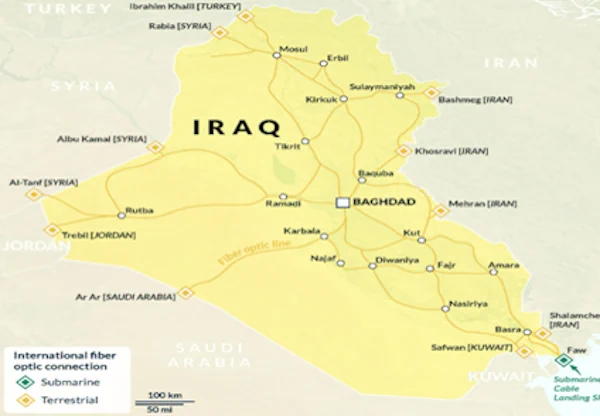
Iraq’s fiber optic infrastructure, which is in the hands of resistance groups.
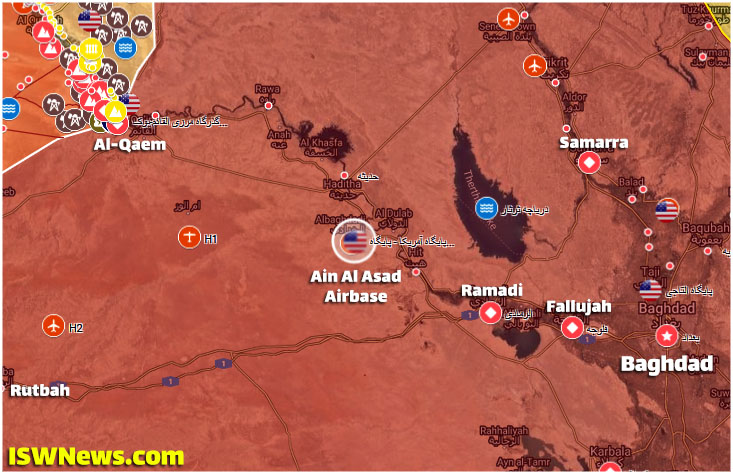
Referring to Baghdad’s shifting approach toward foreign partners, he added that Iraq is moving away from direct foreign troop presence and instead toward memorandums of understanding and security/training agreements with the United States, Britain, and France. He said security across Iraq’s desert regions has reached an advanced level, and revealed a special intelligence operation carried out beyond Iraq’s borders — particularly in Syria — coordinated with Syrian authorities and the U.S.-led coalition, which resulted in the arrest of several wanted militants.
Implementation of the agreement to withdraw U.S. forces and fully transfer Ain al-Asad to Iraqi control marks the beginning of a new phase in Baghdad–Washington security relations. In this phase, Iraq seeks to reduce reliance on foreign troop presence while redefining cooperation around training, intelligence sharing, and technical agreements. The government also hopes to ease domestic sensitivities toward foreign military footprints — while still keeping channels with Western partners open. Yet despite Iraqi forces’ readiness, fully executing the withdrawal presents challenges, as parts of the Iraqi army and counter-terrorism apparatus still depend on U.S. technical, aerial, and intelligence support.
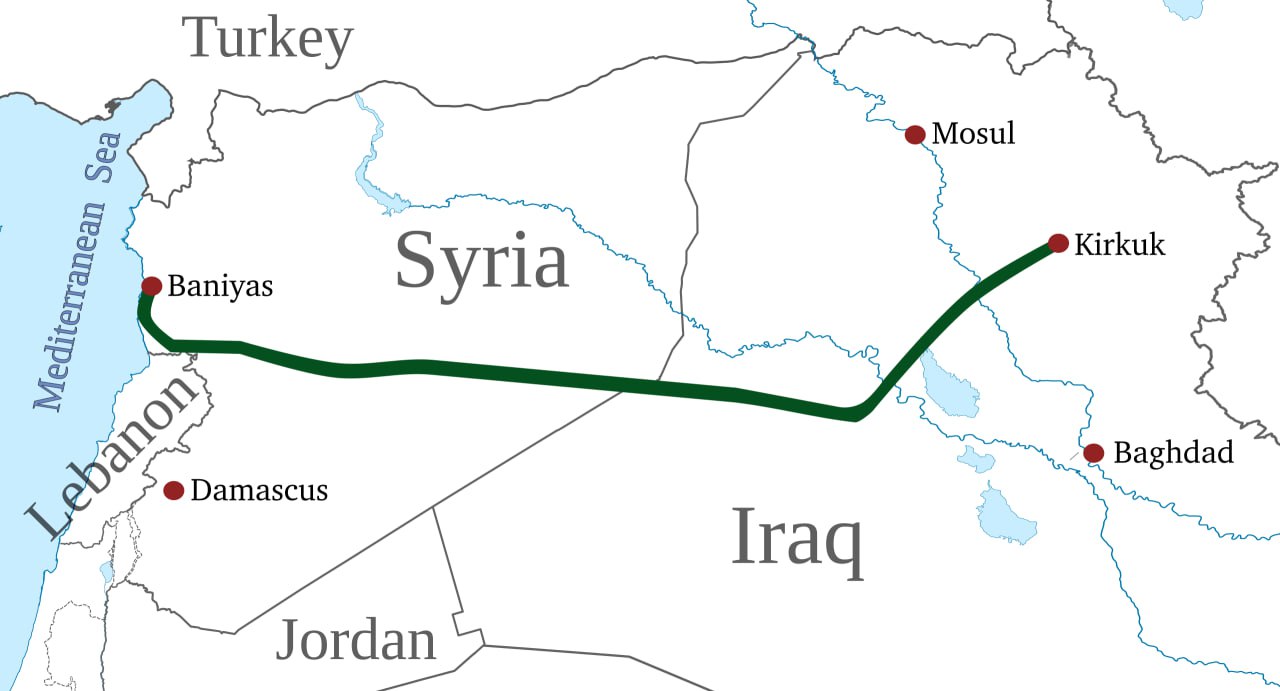
Ghiyath Diab, Syria’s Deputy Minister of Energy for Oil Affairs, noted the pipeline’s deteriorated condition, stating that existing infrastructure—including pumping stations, transmission lines, and electrical equipment—has been severely damaged and requires complete reconstruction. According to him, initial assessments suggest that reviving the old line alongside building a new route would be more economically viable than full restoration alone.
In this context, the Executive Vice President of Syria’s National Oil Company emphasized that Damascus and Baghdad are rapidly advancing the project’s implementation. He described the pipeline as a vital artery for reactivating Syria’s energy sector and a direct, cost-effective export route for Iraq to the Mediterranean and European markets.
Published information indicates that joint technical committees from both countries are currently conducting engineering and feasibility studies. These include evaluating two main options—restoring the existing route or constructing an alternative path—as well as assessing the project’s technical, security, and economic requirements.
The Kirkuk–Baniyas pipeline, stretching about 800 km with a daily capacity of nearly 300,000 barrels, is one of the oldest oil export routes in West Asia, first commissioned in 1952. Preliminary estimates suggest that reviving the project could cost over $4.5 billion and take around three years to complete.
According to the proposed technical plan, construction of a dual pipeline with a daily capacity of up to 1.5 million barrels, new pumping stations, and advanced monitoring systems is envisioned. It also foresees replacing part of the old route in Deir ez-Zor with a shorter path south of Homs to improve efficiency and security.
For Syria’s new government, this project is more than just a pipeline—it is a tool to rebuild oil infrastructure, generate transit revenues, and gradually reintegrate into the regional energy network after years of war and sanctions. The high costs, lengthy timeline, and security concerns along certain sections remain major challenges. Success depends on attracting investment, ensuring route security, and maintaining political stability in both countries. U.S. support for this energy cooperation may signal an attempt to shape a new regional energy order—one that simultaneously serves the economic interests of Baghdad and Damascus while influencing the geopolitical balance of the Eastern Mediterranean.
Al‑Askari described Savaya as an “unknown figure” dispatched by Trump to pursue America’s narrow interests amid complex regional circumstances, stressing that the mission serves Washington’s hostile agenda against Iraq.
Addressing the U.S. envoy directly, al‑Askari said: “Iraq is a land where great powers have been defeated, and the U.S. army has been dismantled here. The Iraqi people defeated ISIS, a product of American policy, and will not allow Washington to achieve its goals in this country.”
He added that Kataib Hezbollah sees no need to confront the envoy directly, claiming Iraq’s youth are sufficient to thwart his mission. Al‑Askari again warned Iraqi politicians—especially clerics—against any contact with Savaya, insisting that those who do so will be branded by the people as traitors and tools of the U.S. government.
This statement reflects growing sensitivity and concern among Iraqi resistance groups over new U.S. moves in Baghdad. From their perspective, Washington’s appointment of a special envoy is an attempt to rebuild political and security influence in Iraq. By labeling any engagement with the envoy as treason, the Iraqi resistance is signaling its intent to raise the political cost of cooperation with Washington.