The situation has given the National Council for the Safeguard of the Homeland (CNSP), which is the ruling military junta of Niger, as well as leaders of Burkina Faso and Mali, who have referred to the decisions of ECOWAS member states as bluff and Westerners’ dictates, an opportunity to ridicule the ECOWAS.
Despite the circumstances, some Western media reported on ECOWAS’ military preparations with the support of the United States and France; moreover, Niger’s military also mentioned a Western country’s involvement in inciting war against the African country in their own reports.
ECOWAS spokesperson Emos Lungu announced that the next meeting of the organization’s leaders will be held on Thursday (August 10) in Abuja, the capital of Nigeria.
It seems that until this meeting takes place, the ECOWAS delegation will once again travel to Niger’s capital city Niamey to negotiate with the CNSP leaders.
However, the CNSP has taken advantage of ECOWAS’ delay and appointed Ali Mahamane Lamine Zeine, an economist and former Minister of Finance, as Niger’s new Prime Minister. The council has also replaced the commander of the presidential guard, the inspector general of the Army, and the chief of staff to the president.
Negotiations between Jewish diplomat and Under Secretary of State for Political Affairs of the United States Victoria Nuland and Niger’s ruling military junta have also been unsuccessful, and in response to this failure, the US government has suspended its financial aid to Niger.
The CNSP has also issued a statement addressing the United States as saying that we don’t want your money; Use it to fund Victoria Nuland’s weight loss program.
Concurrent with the foreign threats against Niger’s ruling junta, senior military officials in the country requested assistance from the Wagner Group, a Russian state-funded private military company (PMC).
Algeria and Chad, who are Niger’s northern and eastern neighboring countries, have also announced that they do not agree with the military option against Niger and will try to find a political solution to the crisis.
The lack of support from Algeria and Chad weakens the military option against Niger and turns the northern borders of Nigeria and Benin into the only route open for ECOWAS to take military action against Niger.
The terrorist army of the United States Fifth Fleet declared the deployment of 3,000 American marines and sailors to the West Asia region as part of a previously announced plan by the US Department of Defense to deploy the forces in strategic maritime areas of the region, including the Red Sea and Bab al-Mandab.
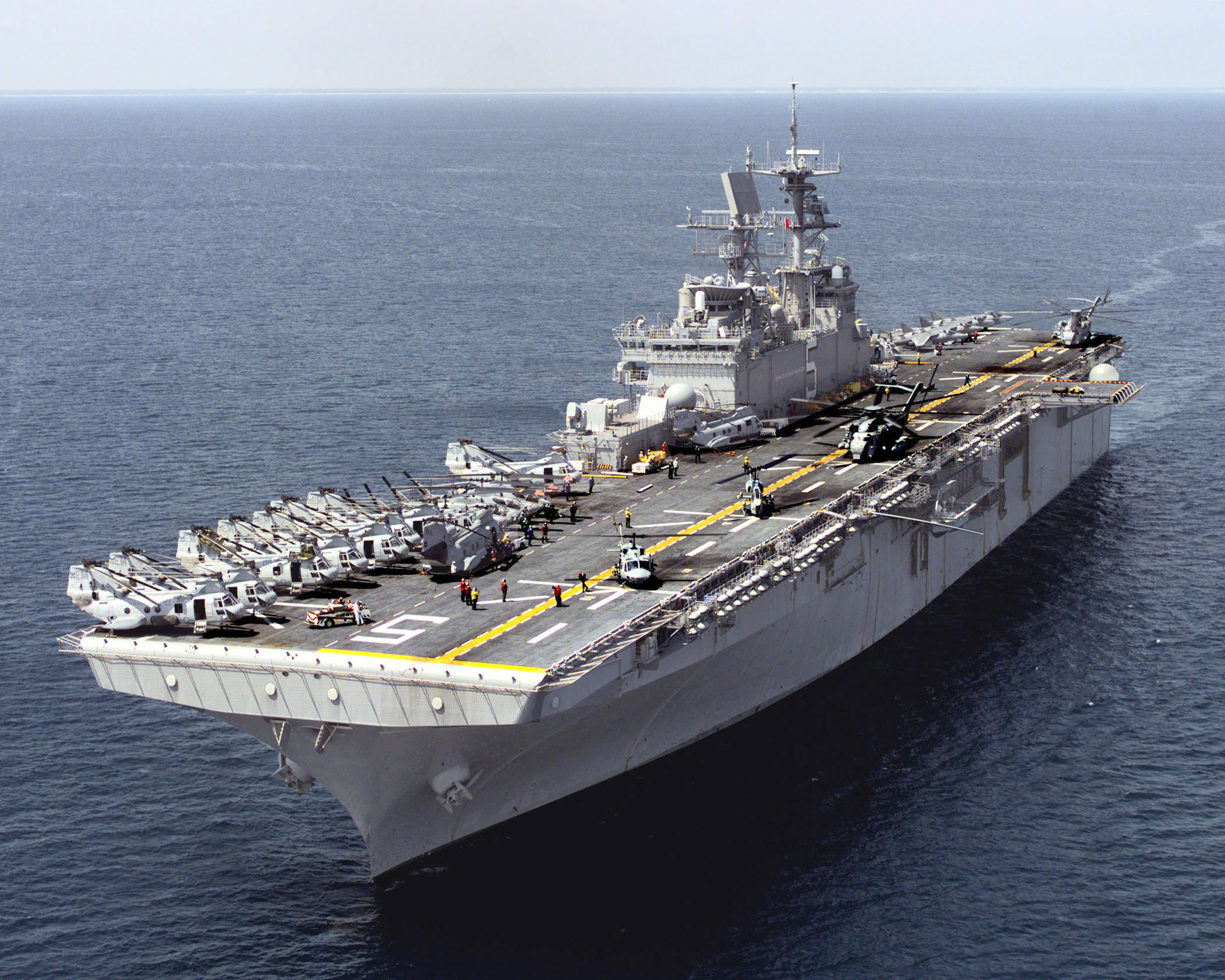
The United States Navy has also entered the Red Sea through the Suez Canal after crossing the Mediterranean Sea with the USS Bataan aircraft carrier, which is capable of carrying more than 20 helicopters, plus the USS Carter Hall, which is a Harpers Ferry-class dock landing ship.
This move by the United States is aimed at creating tension and disrupting maritime security in the West Asia region.
Some analysts have seen the deployment of heavy US military equipment and weapons as preparation for military action against Iran and intervention in the Yemen war.
These claims are made as Saudi Arabia’s negotiations with the Ansar Allah movement were halted as a result of the United States’ intervention, and Ansar Allah publicly strengthened and equipped its naval force with new missiles and armed boats in response to military movements by the Saudi-led coalition in Bab al-Mandab and the deployment of American forces to the West Asia region.
The Islamic Republic of Iran also unveiled and operationalized Abu Mahdi cruise missiles and carried out a recent naval exercise by the Islamic Revolutionary Guards Corps (IRGC), declaring its readiness to confront any scenario, including a naval war, and emphasized that Iran and other regional countries provide security for the Persian Gulf; so, there is no need for foreign boots in this region.
In general, regional developments are going ahead in such a path that there is a possibility of direct confrontation between the US-led coalition and the axis of resistance.
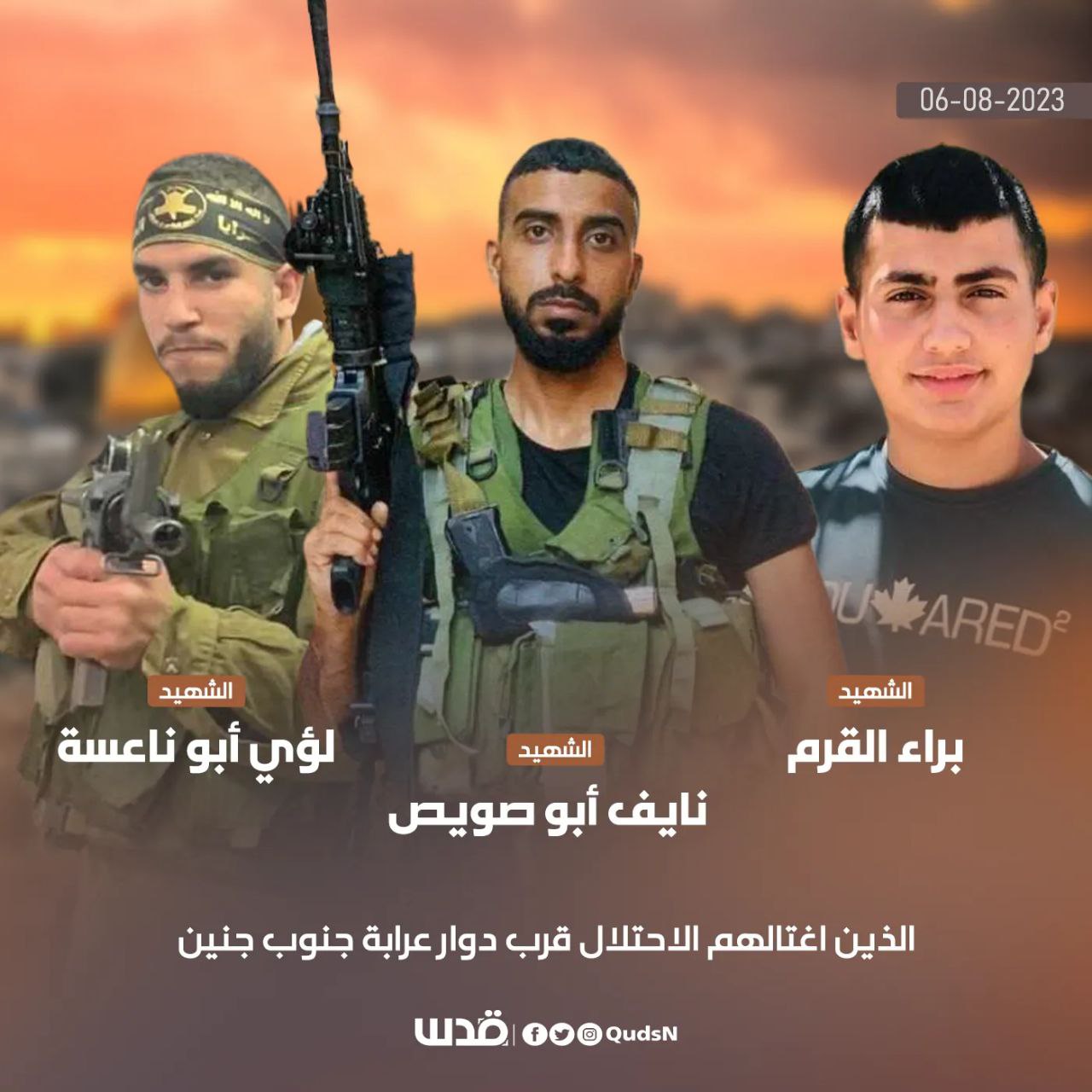
ISWNews Analysis Group: On August 6, some special forces of the Zionist regime’s army opened fire on a vehicle carrying three Palestinian fighters near the village of Arraba in southern Jenin, which ended up in the martyrdom of all three Palestinians.
The three martyrs of the Palestinian resistance forces were named Naif Abu Suwais, Lui Abu Nasa and Bara Al-Qaram.
Tareq Salami, spokesman for the Islamic Jihad movement in Palestine, said that the occupying regime’s offense in Jenin is a crime against the Palestinian people and that the Al-Quds Brigades will never fall short of taking revenge for the bloodshed of its fighters.
He went on to say that resistance is the way and choice of the Palestinian people and these enemy crimes will never weaken resistance, but will increase Palestinians’ strength and determination to fight and confront in the face of the occupiers.
It is worth mentioning that as a result of the growing trend of anti-Israeli operations and the expansion of resistance in the West Bank, it is likely that the assassination of Palestinian resistance fighters will be repeated, which is an issue that has a long history and it is likely to lead to the onset of a new round of tensions and conflicts in the occupied territories of Palestine.
Video: assassination of three Palestinian resistance forces near Jenin by the Israeli special forces
According to information released by a Syrian military source, “around 02:20 local time on Monday, the Israeli enemy fired several missiles from the occupied Golan Heights at targets on the outskirts of Damascus, and that the Syrian air defense succeeded in shooting down some of the missiles. The Israeli attack resulted in the martyrdom of four Syrian soldiers and wounding of four others as well as some material damages.”
It is worth mentioning that the Israeli regime’s fighter jets also fired several missiles from the occupied Golan Heights at targets on the outskirts of the Syrian capital on July 19. The July attack also led to the wounding of two Syrian soldiers as well as some material damages.
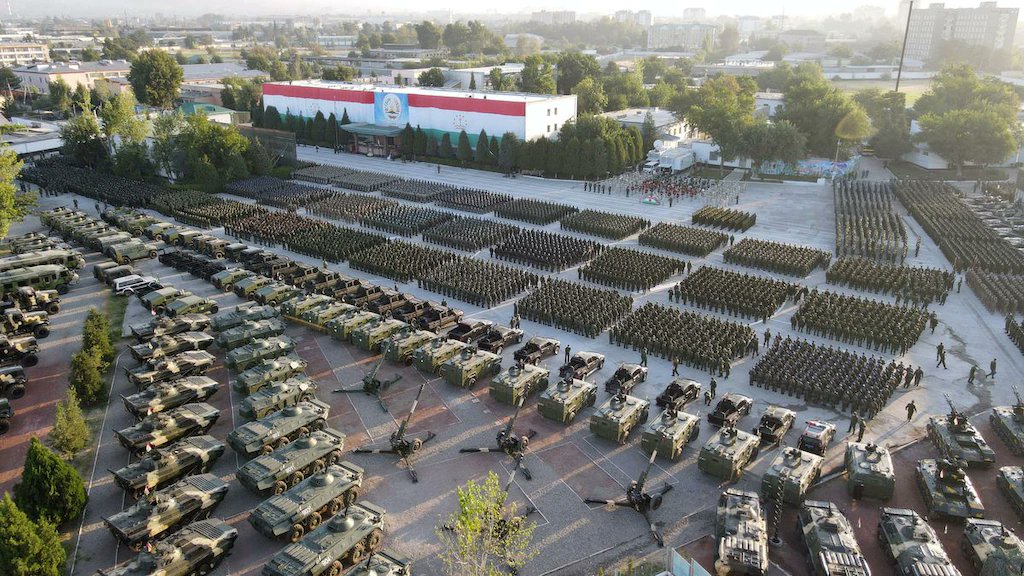
Khairuddin Osmanzadeh, the chairman of the Center for Strategic Research under the president of the republic of Tajikistan emphasized that after the Taliban’s takeover of Afghanistan, security threats from the south have increased; So, in order to ensure the security and control of the southern borders, the country has strengthened and increased the army posts in the south.
While emphasizing the continuation of Tajikistan’s economic cooperation with Afghanistan, Osmanzadeh asked Taliban to form a comprehensive government and respect the rights of women in the field of work and education in Afghanistan.
It should be noted that the Taliban government also reciprocated the common borders with the country of Tajikistan in the provinces of Badakhshan, Takhar, Kunduz and Balkh by deploying the , Omari, Sarkh and Badri battalions consisting of thousands of foreign fighters (Jamaat Ansarullah Tajikistan, Tehreek Taliban Pakistan and East Turkestan Islamic movement) has strengthened
It should be noted that the Taliban government has also strengthened the common borders with Tajikistan in the provinces of Badakhshan, Takhar, Kunduz and Balkh by deploying Badri and Surkh battalions, Red Unit and suicide squads consisting of thousands of foreign fighters from Tajikistan Jamaat Ansarullah, Pakistani Tehreek-e-Taliban and Eastern Turkistan Islamic movement.
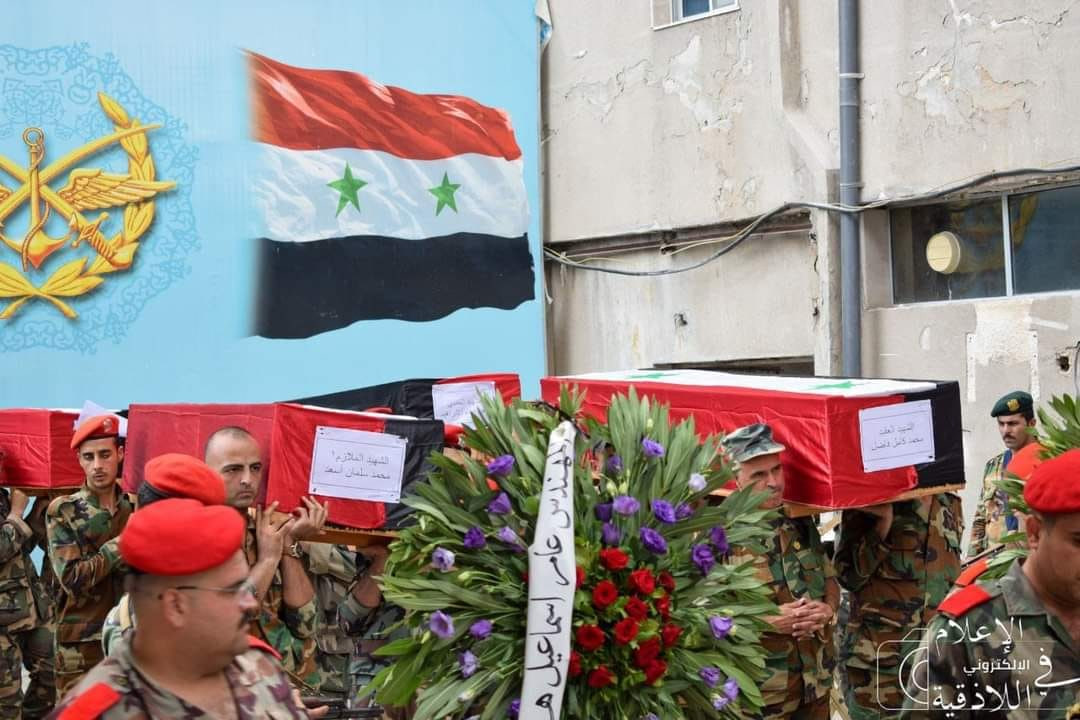
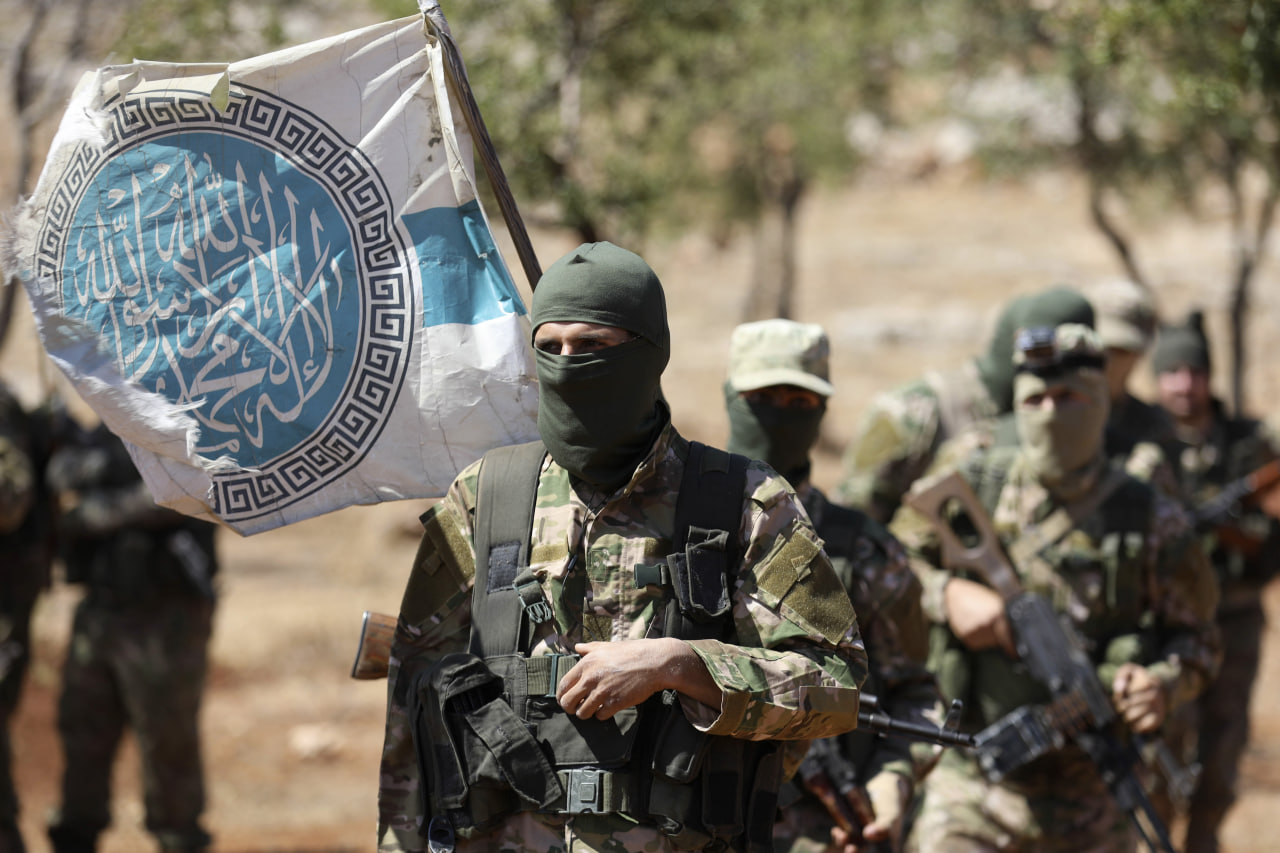
ISWNews Analysis Group: The attack targeted a key position of the SAA in Mount Nabi Yunis, a field source told the Russian news agency, adding that militants from the TIP managed to reach the position due to the rough terrain and heavy fog.
Syrian pro-government activities identified the four casualties as Colonel Muhammad Kamel Fadel, Captain Muhammad Salman Asaad and soldiers Muhammad Ghalib al-Akhras and Khaled Hajj Muhammad.
The TIP is a close ally of Hay’at Tahrir al-Sham (HTS), the de-facto ruler of the Greater Idlib region and the former main branch of al-Qaeda in Syria. The Uyghur-led group is mainly active in the northern Lattakia countryside, the western Idlib countryside and the northwestern countryside of Hama.
Mount Nabi Yunis is one of the main heights in the northern Lattakia countryside. Russian forces are known to be deployed there to assist and advise the SAA.
Earlier this week, the Russian Center for Reconciliation in Syria revealed information about a plot to launch suicide attacks against the Russian military group in the country and said that the group’s command is ready to take deceive action.
Hours before the TIP’s deadly attack a series of Russian airstrikes destroyed a headquarters of HTS in the western outskirts of Idlib city.
The attack on Mount Nabi Yunis represents a major escalation and a violation of the ceasefire in Greater Idlib that was brokered by Russia and Turkey more than three years ago. The attack will likely be met with a fierce response from the SAA and the Russian military group in Syria.
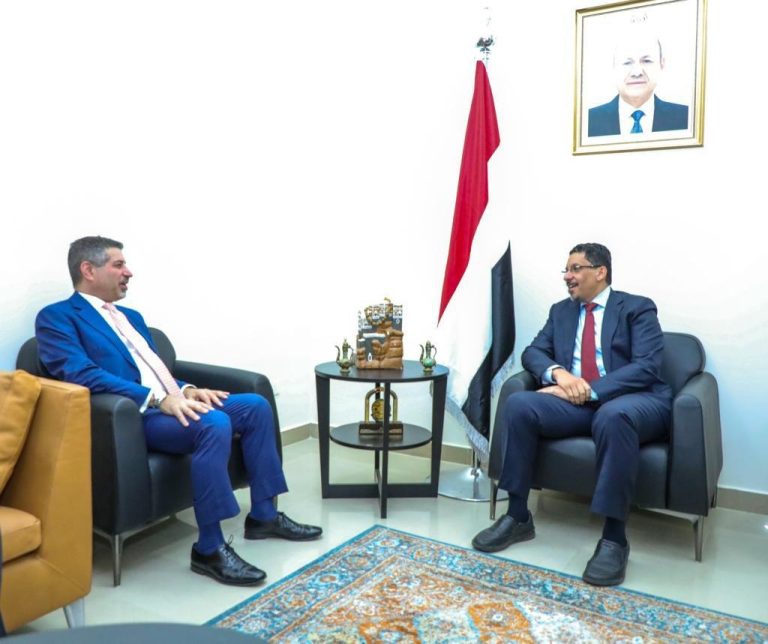
1- Aden: On August 3, US ambassador to Yemen Steven Fagin met with foreign minister of the resigned Yemeni government Ahmed Awad bin Mubarak in Aden Governorate, when they discussed peace talks and the provision of humanitarian aid.
Steven Fagin and Ahmed Awad bin Mubarak
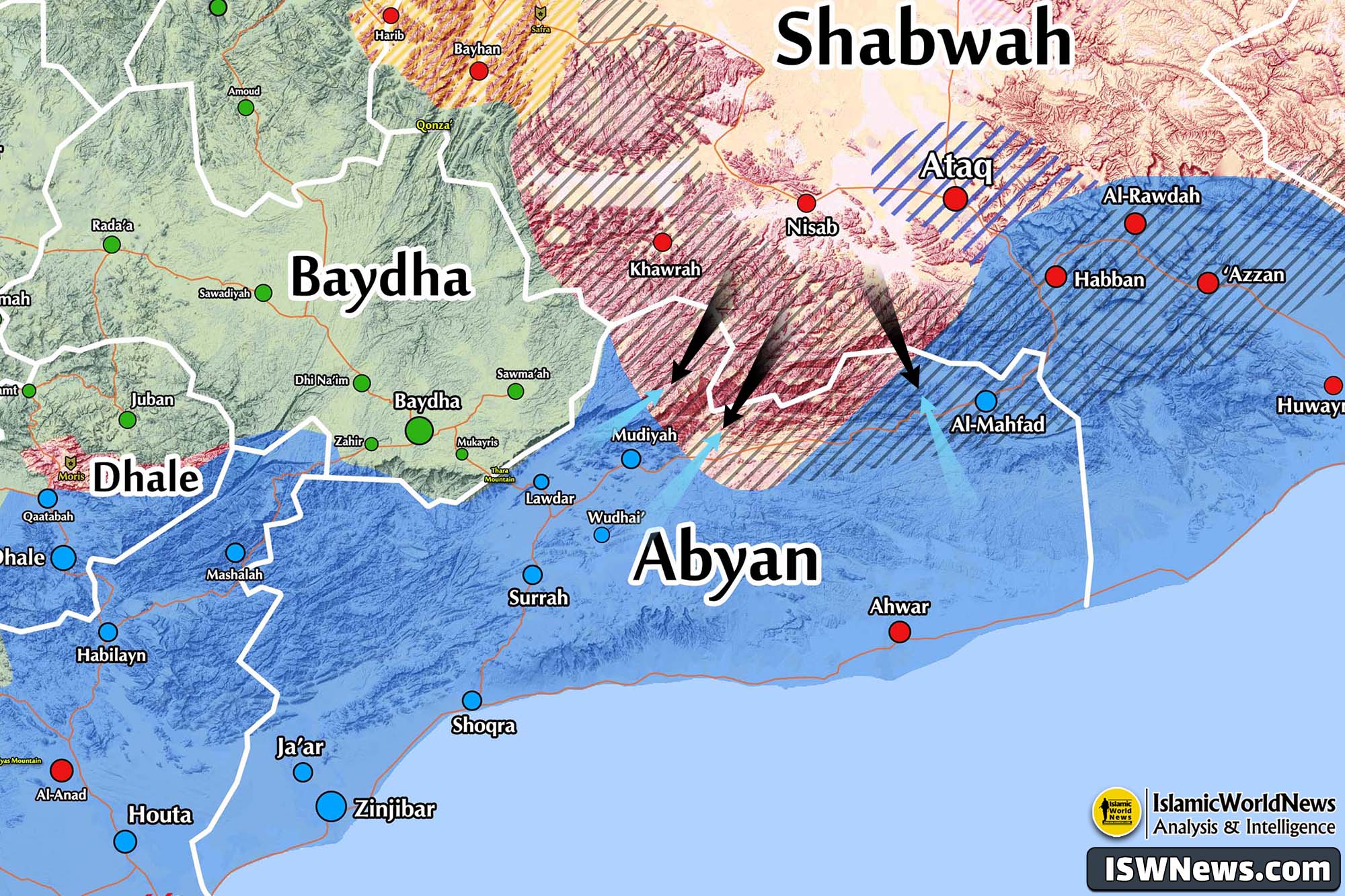
2- Shabwah: – On August 5, al-Qaeda militants launched a widespread attack on one of the Shabwah Defense Forces’ military bases in Al-Musaina, Shabwa Governorate. The casualties and damages of the attack have not yet been determined. – On August 5, after a mortar attack on the Balhaf gas facilities by unidentified individuals, the Shabwah Defense Forces went on alert. Given the history of sabotage by the Al-Islah Party in Balhaf, it is likely that the attack was carried out by their militants.
Balhaf port on the coast of Shabwah Governorate
3- Abyan: – On August 4, as a result of a bomb explosion on the route of the Southern Transitional Council (STC) militants’ vehicle at the western entrance of Mudiyah village, one person was killed and eight others were injured. The attack was carried out by al-Qaeda elements. – On August 4, the Southern Transitional Council handed over command of the security belt forces in Abyan province to Abdullatif Al-Sayed, one of the local southern commanders in Abyan Governorate and a former member of al-Qaeda. – On August 6, local sources reported on a peace proposal from the Southern Transitional Council to al-Qaeda militants in Abyan Governorate. According to the report, Abdullatif Al-Sayed Bafaqih, a Southern Yemeni warlord from Abyan, sent some of his representatives to tribes living in Wadi Omran area and proposed forming a group from elements of these tribes who are allied with al-Qaeda. According to this proposal, tribal militants should operate as part of southern forces in Mudiya and Al-Mahfad areas and refrain from attacking southern militants from Ad Dali’ and Lahij governorates.
4- Lahij: – On August 5, as part of the UAE’s plan to control southwestern Yemen’s coastal regions, the Southern Transitional Council deployed Hizam al-Amni forces in Al-Mudaribah and Ras Al-Ara areas. Prior to deploying these forces, the second battalion of Amaliqa forces had been stationed in these areas on August 4.
5- Al-Hudaydah: – The Saudi-led coalition forces violated the ceasefire 111 times in the Al-Hudaydah governorate during the past 48 hours. – The Saudi-led coalition drones bombed Ansar Allah movement’s positions in Muqbanah district of the Taiz Governorate four times and Hays district twice during the past 48 hours.
The Ghadir has a range of 300 kilometers and is armed with a 165-kilogram warhead, while the smaller Nasir has a range of 90 kilometers and carries a 130-kilogram warhead. Both missiles are equipped with an Inertial navigation system with an active radar seeker for terminal phase guidance.
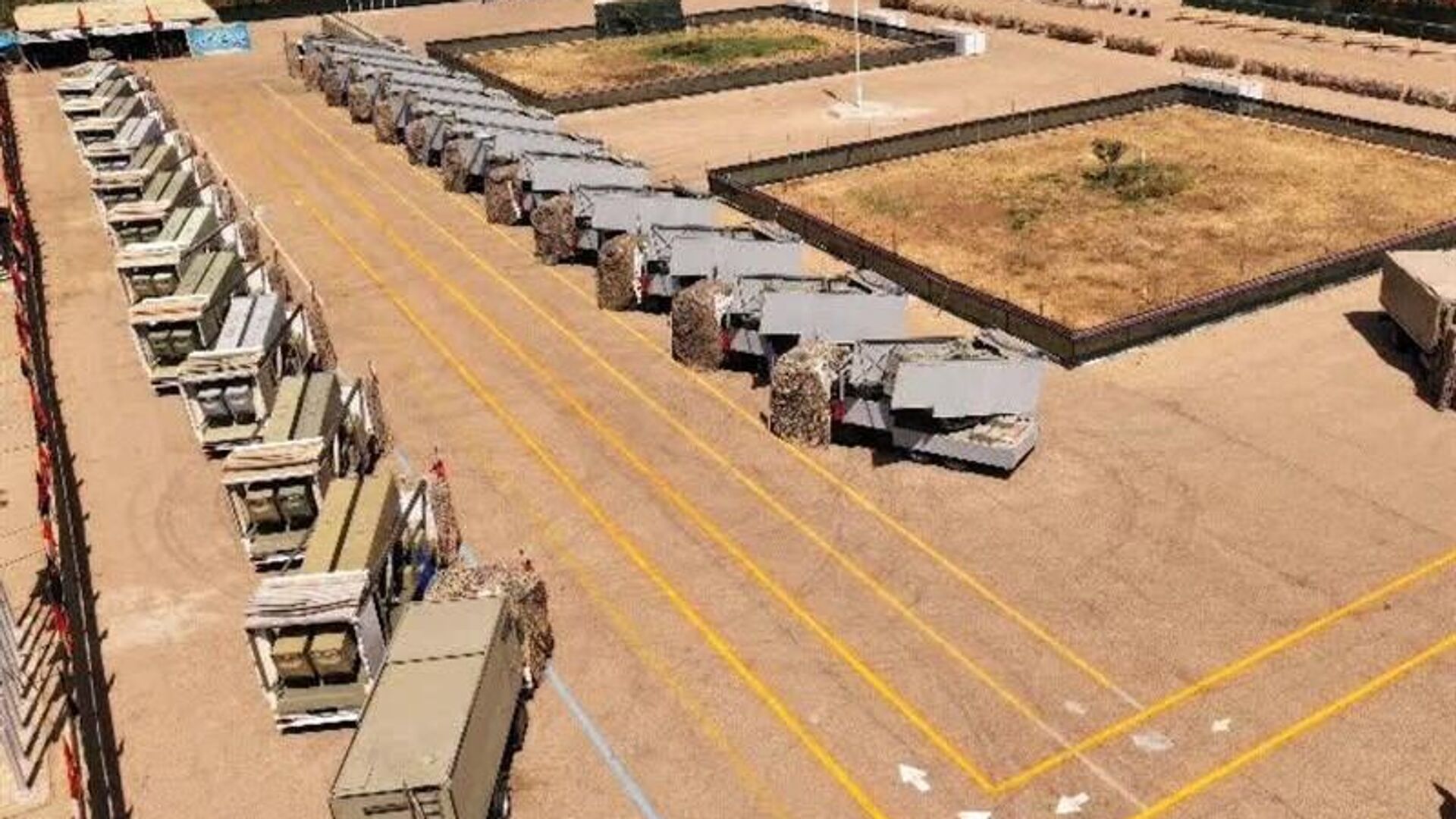
A day earlier, the Mehr News Agency reported that the IRGC Navy had received hundreds of new “strategic” systems and equipment.
The new systems and equipment included reconnaissance and combat drones; several support and command vehicles; electronic warfare offense and defense systems; different types of anti-ship cruise missile launchers.
Earlier this week, the IRGC Navy held an exercise off the coast of Abu Musa, Greater Tunb and Lesser Tunb islands which are controlled by Iran but disputed by the United Arab Emirates (UAE). During the exercise, the IRGC Navy for the first time unveiled a new vessel armed with anti-ship missiles with a range of 600 kilometers.
The naval exercise came amid high tensions not only with the UAE, but also with the United States, who recently deployed additional fighter jets, warships and marines in the Middle East to deter Iran who seized two tankers in the Persian Gulf earlier this year.
Abu Huzaifah al-Ansari, new spokesman for the ISIS terrorist group, announced on August 3 the killing of the ringleader of the terrorist group in northwestern Syria.
Media outlets affiliated to the ISIS terrorist group published an audio file belonging to the new spokesman of the terrorist group, claiming that Abu al-Hussein al-Husseini al-Qurashi, the ringleader of the ISIS, was killed by HTS in one of the suburbs of Idlib Governorate in Syria.
Al-Ansari said in the audio file that Hay’at Tahrir al-Sham had handed over the body of the ISIS ringleader to show its loyalty to Turkey; that is why, President of Turkiye Recep Tayyip Erdogan claimed in a televised interview that the Turkish intelligence agency had been monitoring Abu al-Hussein al-Husseini al-Qurashi for a long time, and that they finally removed the ISIS ringleader from power during an operation in the Syrian soil.
After such remarks by the new spokesman for ISIS, Hay’at Tahrir al-Sham issued a statement denying any involvement in the assassination operation against the ISIS ringleader.
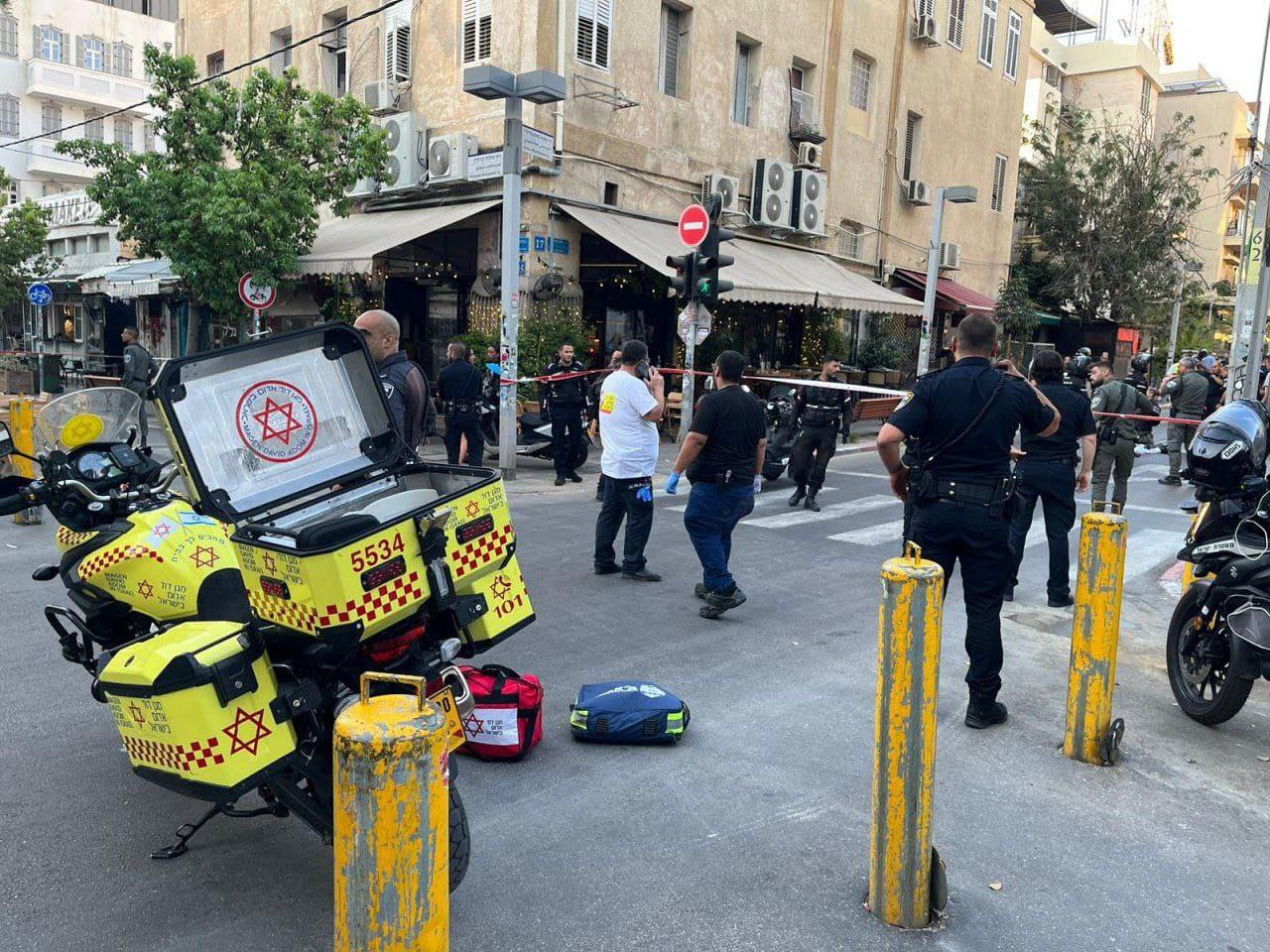
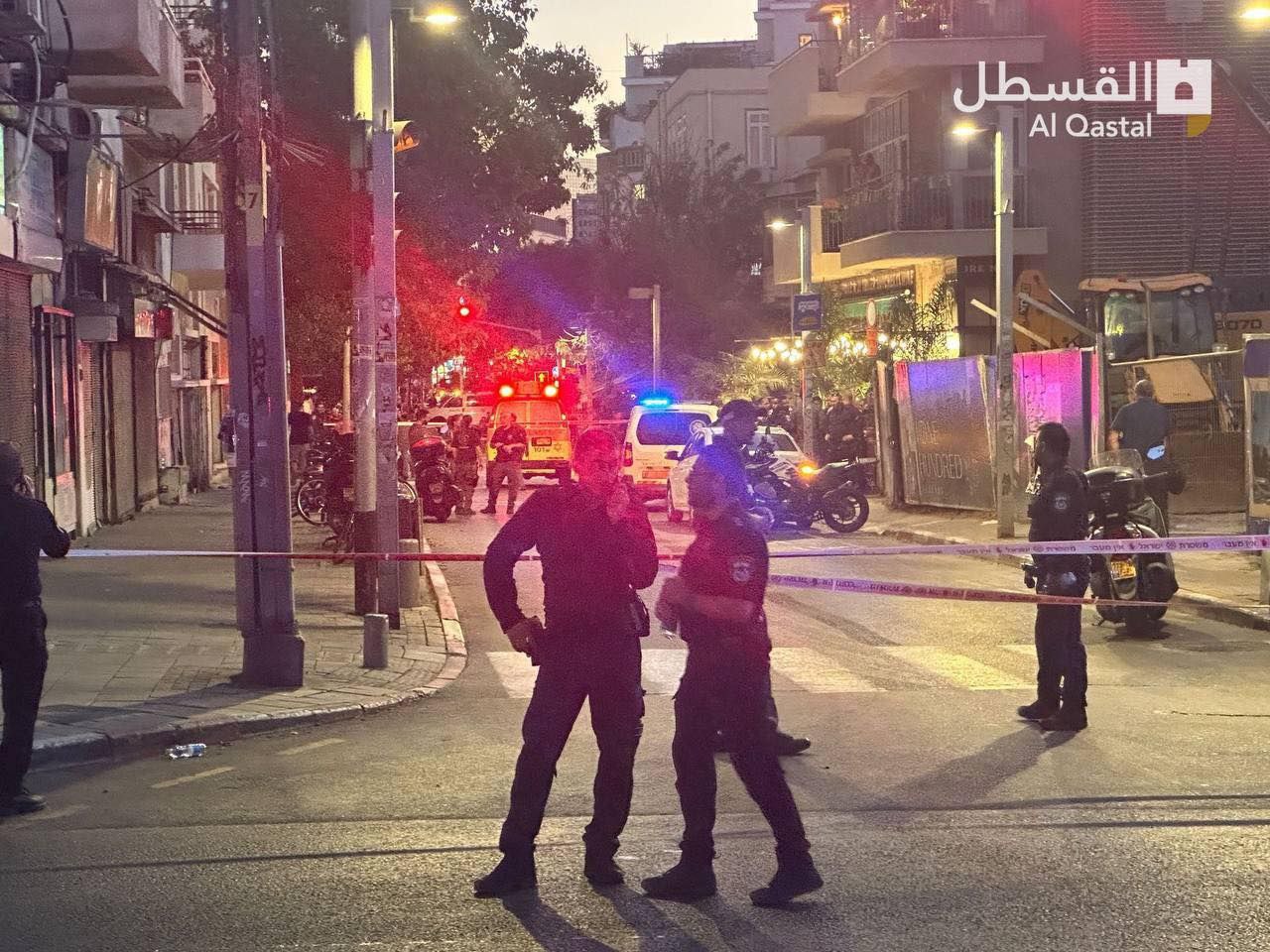
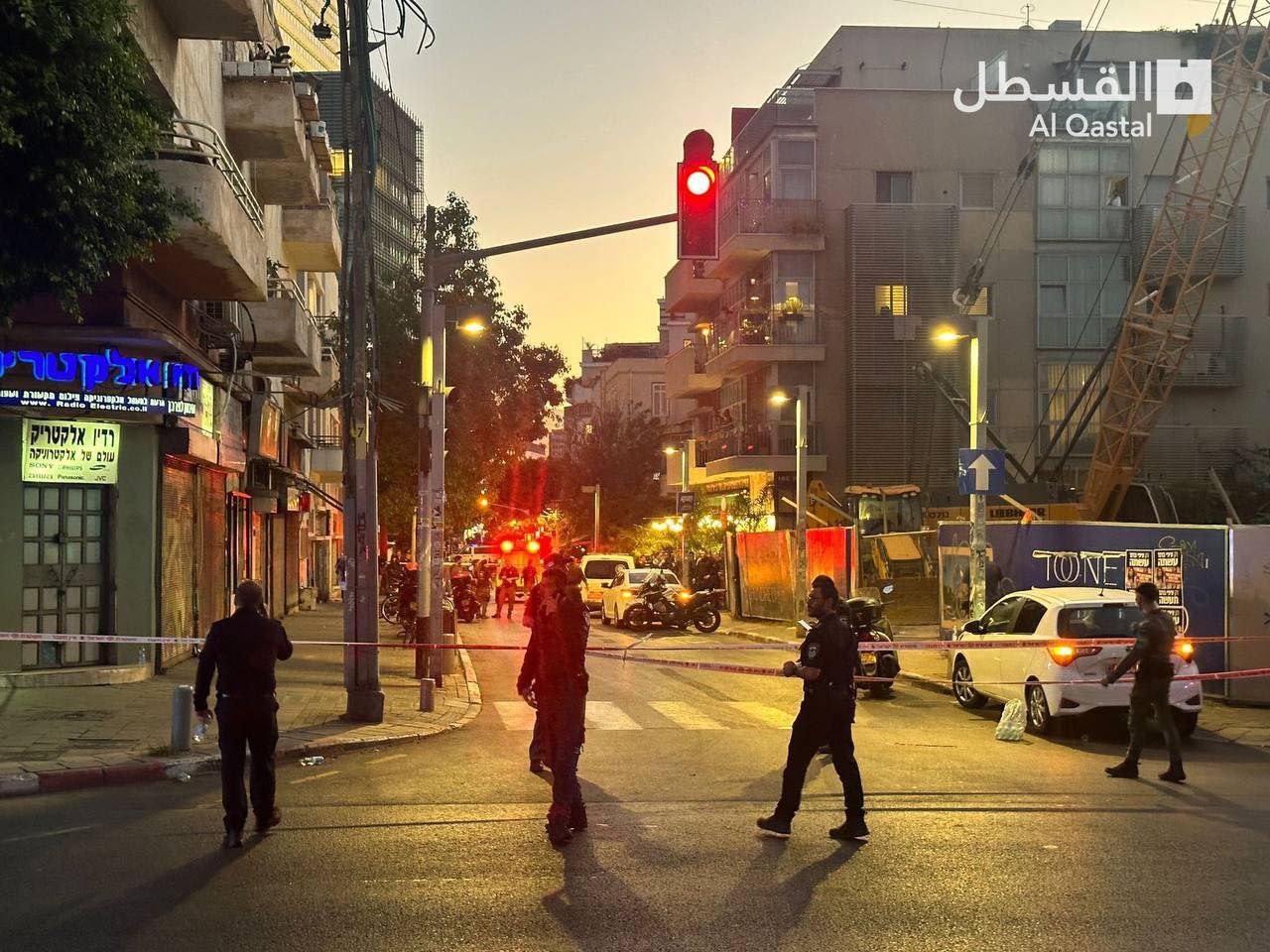
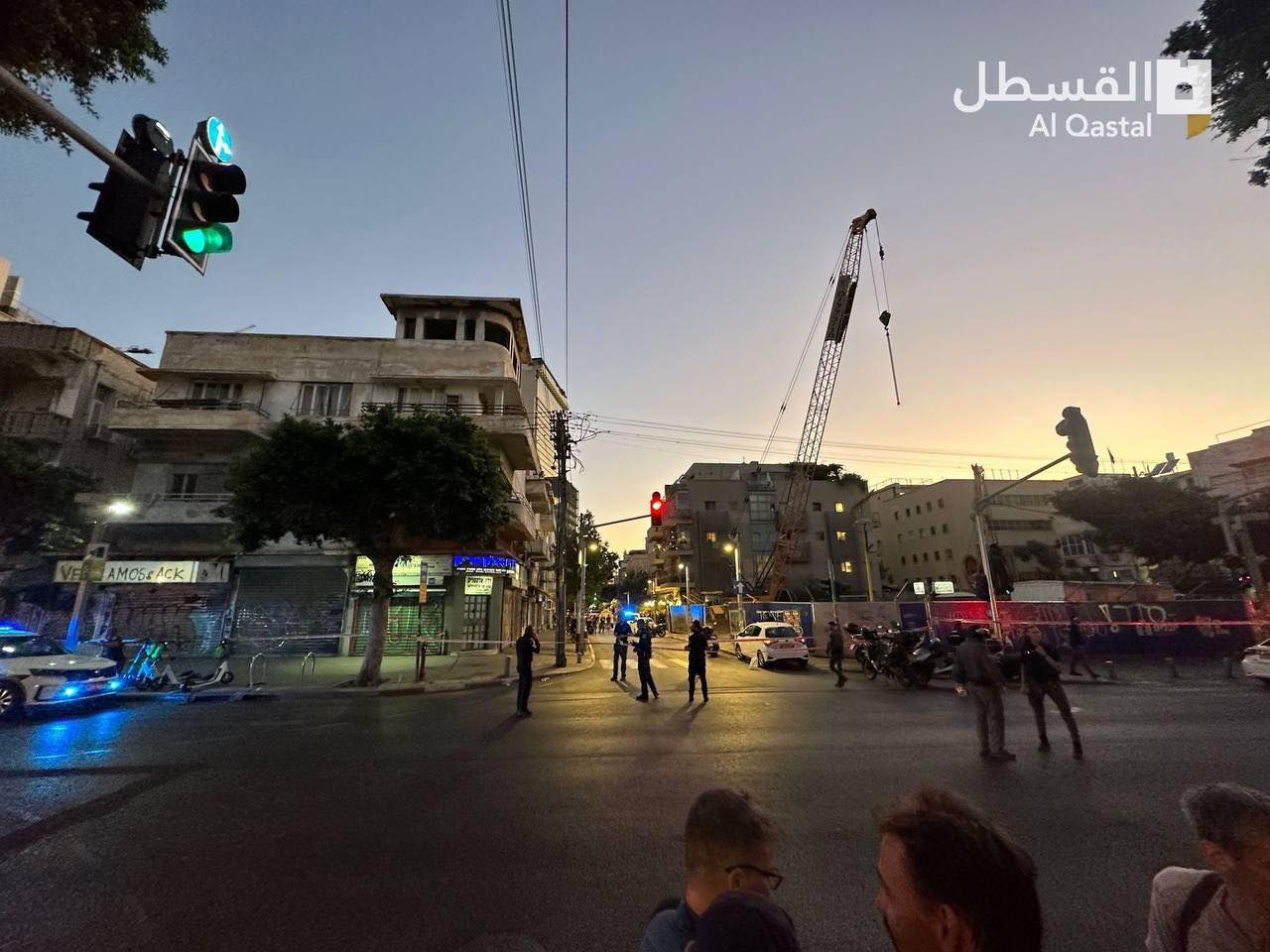
ISWNews Analysis Group: On August 5, a Palestinian youth targeted a group of Israeli security forces with gunfire in Tel Aviv.
Some minutes after the incident, the Israeli Army Radio reported that the perpetrator of the fatal shooting in Tel Aviv targeted four security forces affiliated to the Tel Aviv municipality, adding that three of whom were injured and another soldier was reported to be in critical condition.
Hours after the operation, some Palestinian media reported that Chen Amir, one of the security forces of the Tel Aviv municipality who was injured On Saturday’s operation in Tel Aviv, succumbed to death due to the severity of his injuries.
Chen Amir
Some Hebrew-language media also reported that Saturday’s shooting took place on one of Tel Aviv’s most famous streets and near the site of weekly Israeli demonstrations against Prime Minister Benjamin Netanyahu’s controversial judicial reforms.
According to Israeli Army Radio, the perpetrator of this operation was a member of the Islamic Jihad movement in Palestine. It is said that Prime Minister Benjamin Netanyahu was also closely informed about the anti-Israeli operation.
The Islamic Jihad movement in Palestine issued a statement, announcing that the Tel Aviv operation emphasized unity and continued resistance against the occupying foe and it was a natural response to Israel’s daily crimes against the Palestinian people in the West Bank.
Following Saturday’s shooting in Tel Aviv, the Israeli army increased its readiness level at West Bank military posts, because the Israelis are afraid of Palestinian fighters’ infiltration into occupied territories of 1948.
It is worth noting that a Palestinian youth targeted a group of Israeli settlers at Taqou military post in southern West Bank on July 16, which left at least three Israelis injured.
The first moments of the shooting operation in Tel Aviv
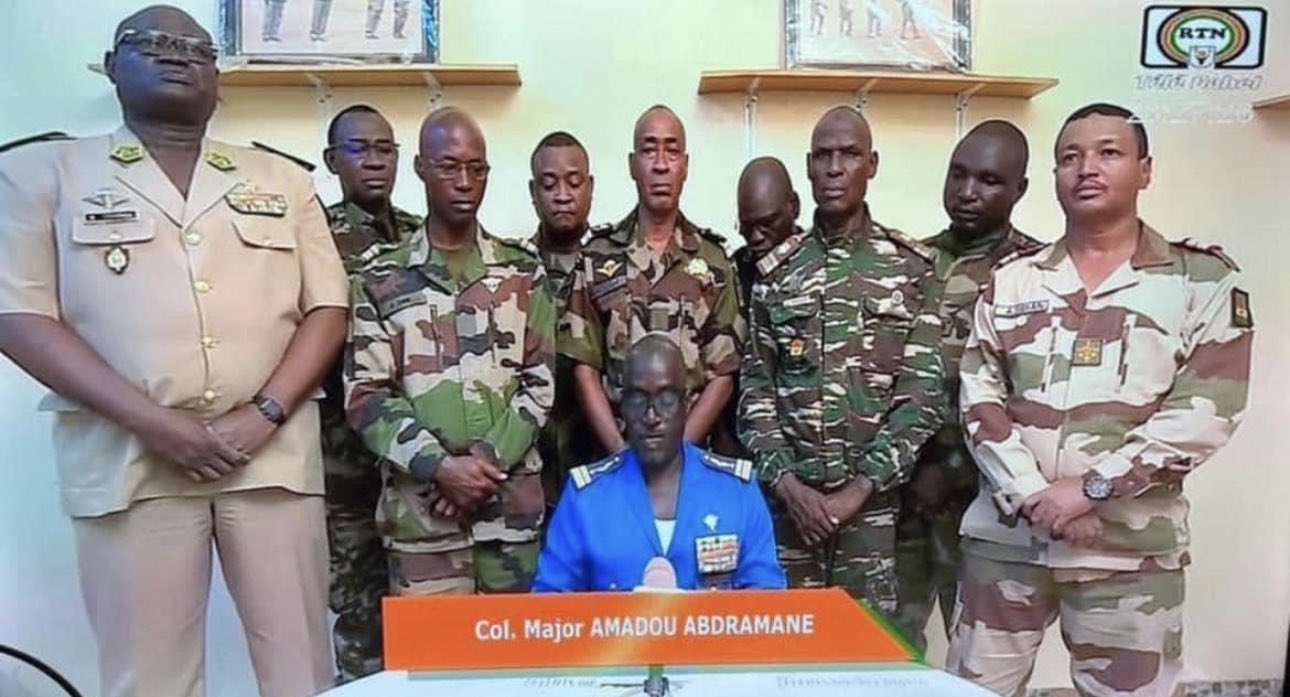
On July 26, the presidential guard of Niger arrested President Mohamed Bazoum along with his family at the Presidential Palace in capital Niamey under the command of General Omar Tchiani. At the same time, another group of Niger’s military personnel led by Colonel Amadou Abdul Rahman announced the coup through a live TV program, when they officially declared the removal of President Bazoum.
Colonel Abdul Rahman also said in this statement that security and defense forces had been forced to carry out a coup due to the severity of the security circumstances as well as bad governance. The colonel asked foreign countries to refrain from any interference in Niger’s internal affairs.
Abdul Rahman also announced that government institutions were suspended, all borders of Niger were closed, and a military government was set up throughout the country. The Nigerien armed forces issued a statement signed by General Issa Abdou Sidikou, Chief of Staff of the Niger Army, expressing their support for the coup in order to prevent bloodshed and protect the lives of the President and his family as well as the security of the people of the country.
One day after the coup was announced in Niger, President Mohamed Bazoum swore in a message posted on social media to protect democratic achievements. His Foreign Minister, Hassoumi Massaoudou, also asked his supporters and democratic forces to stand up against the coup plotters.
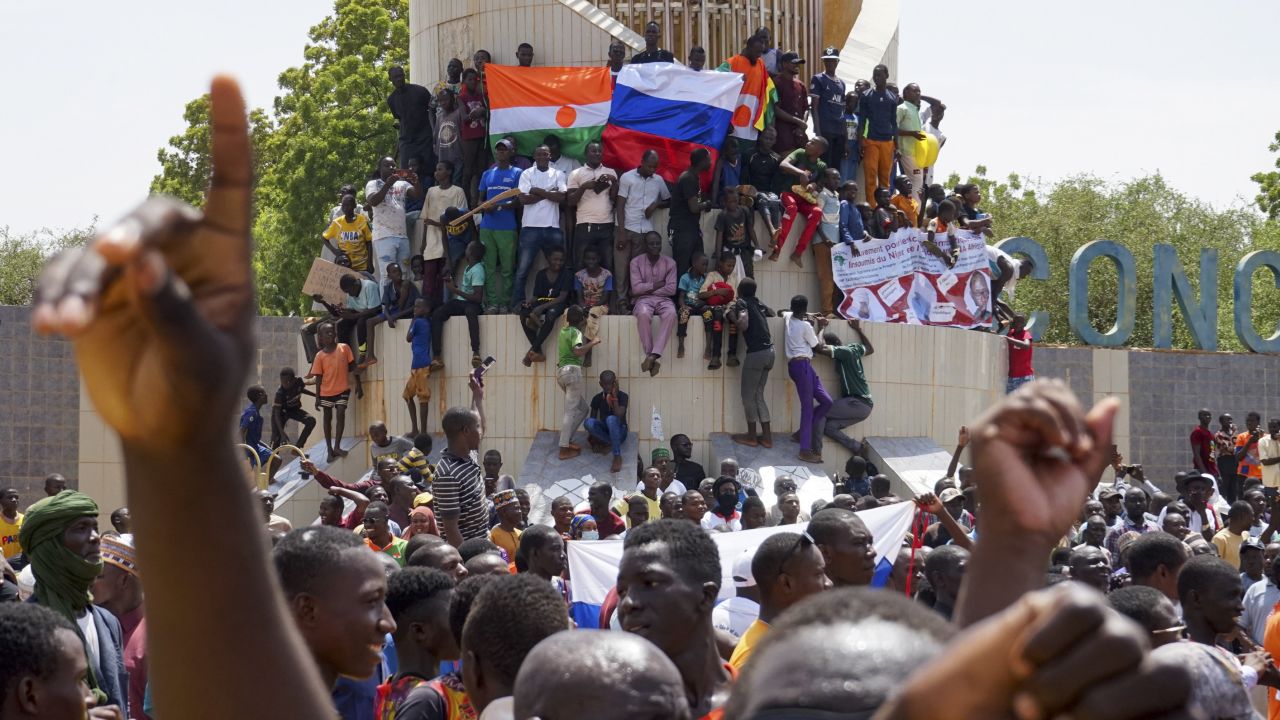
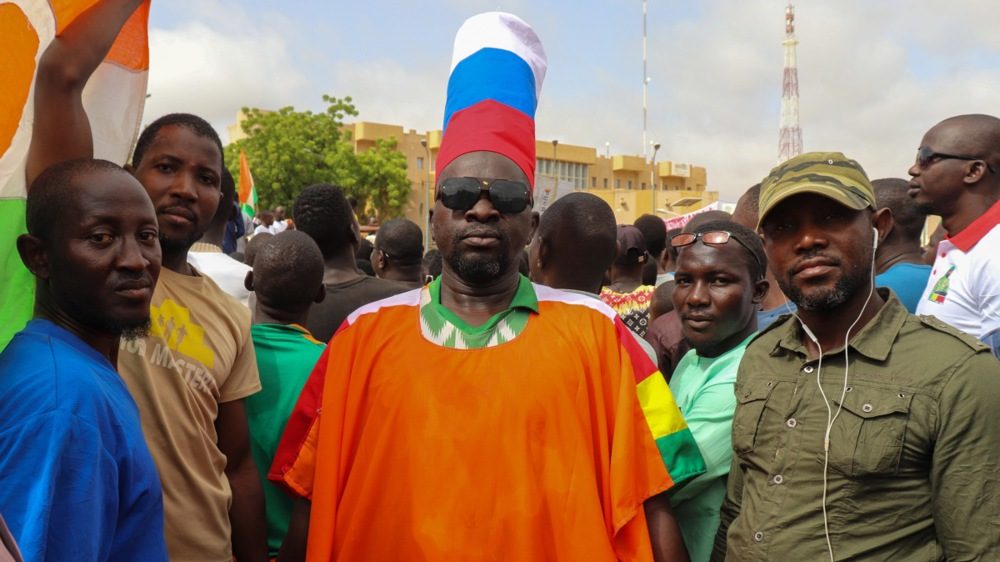
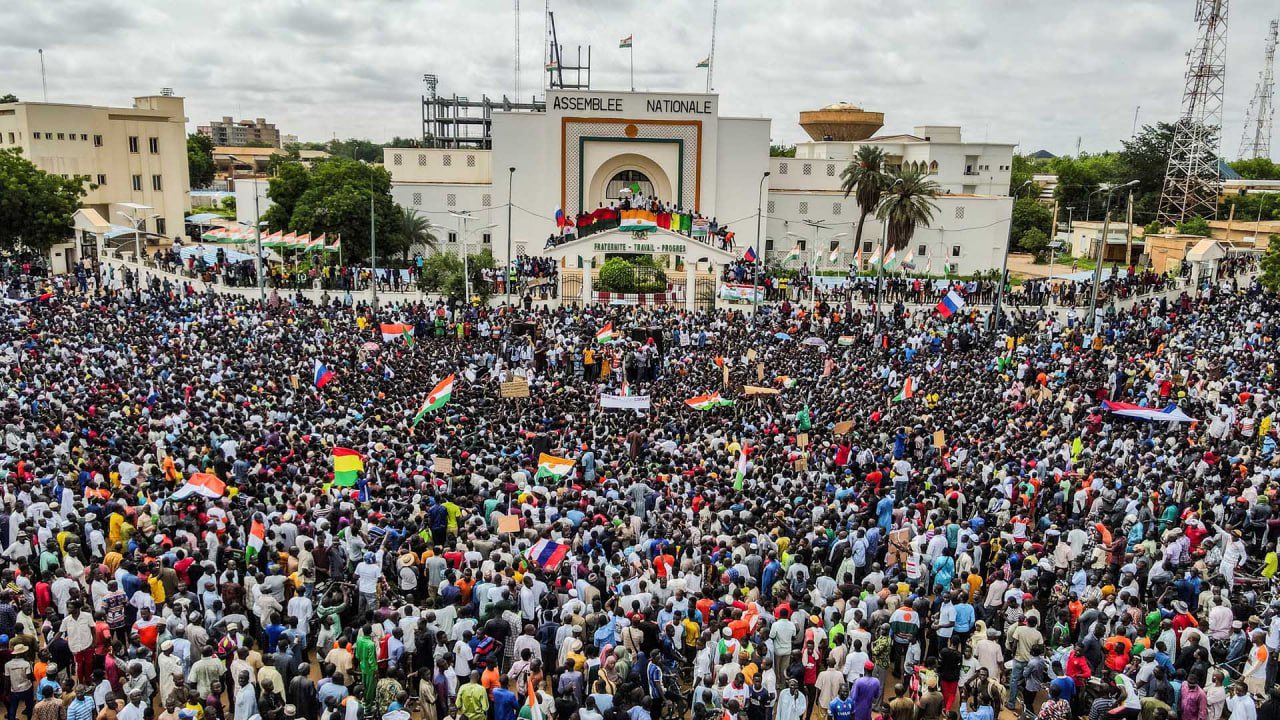
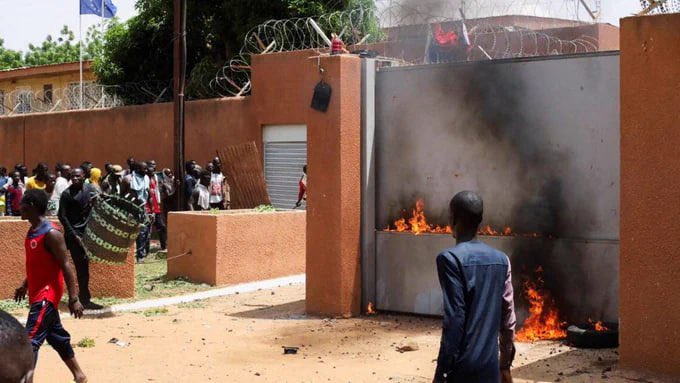
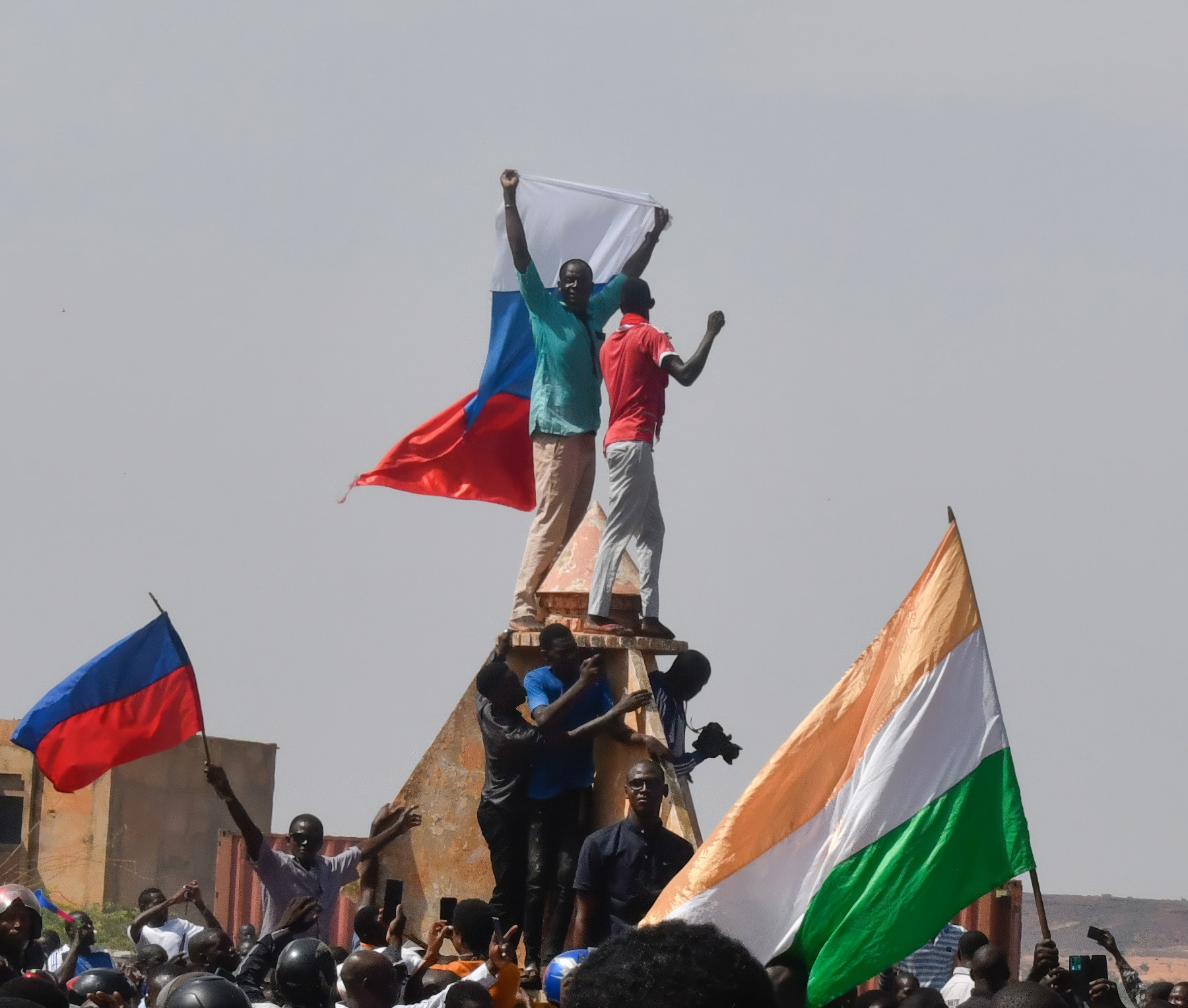
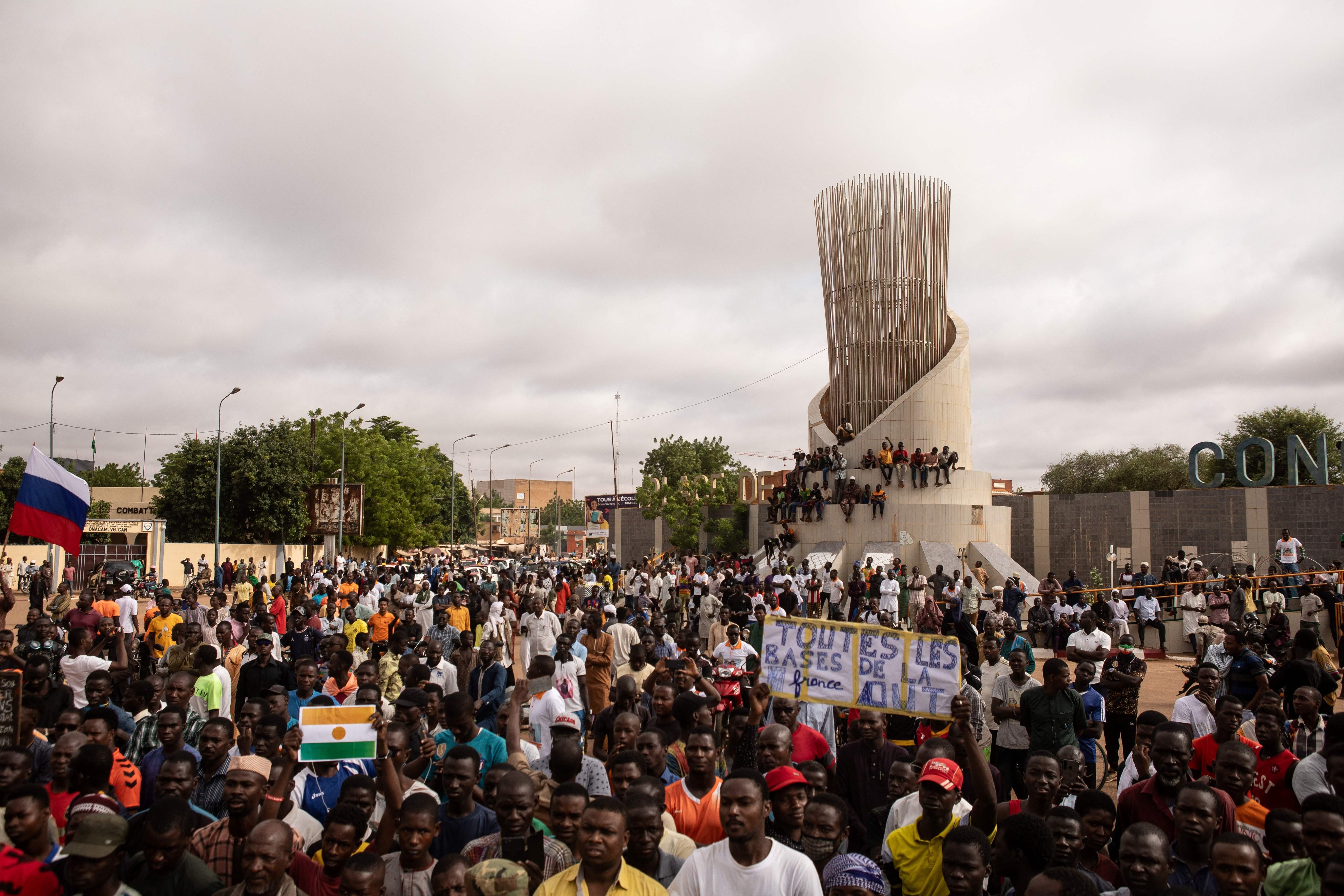
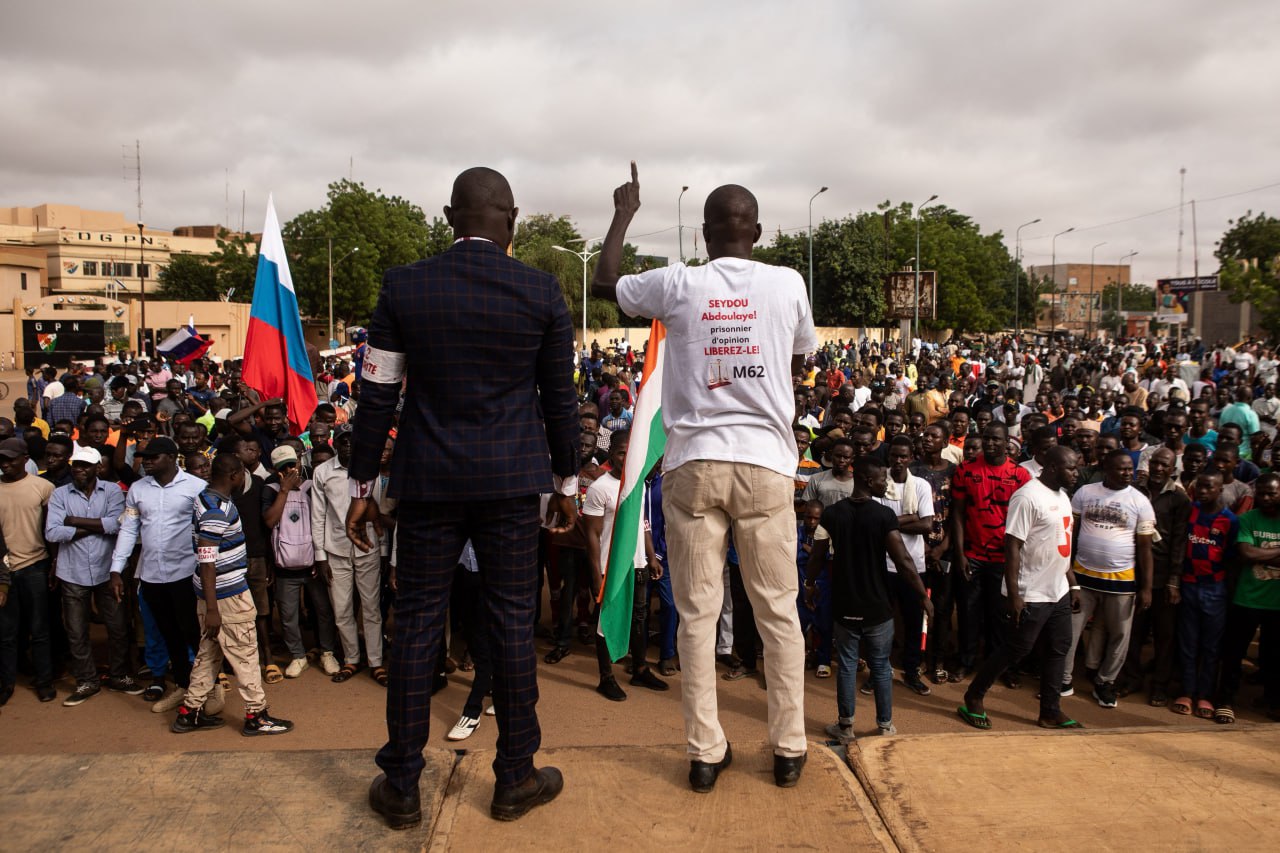
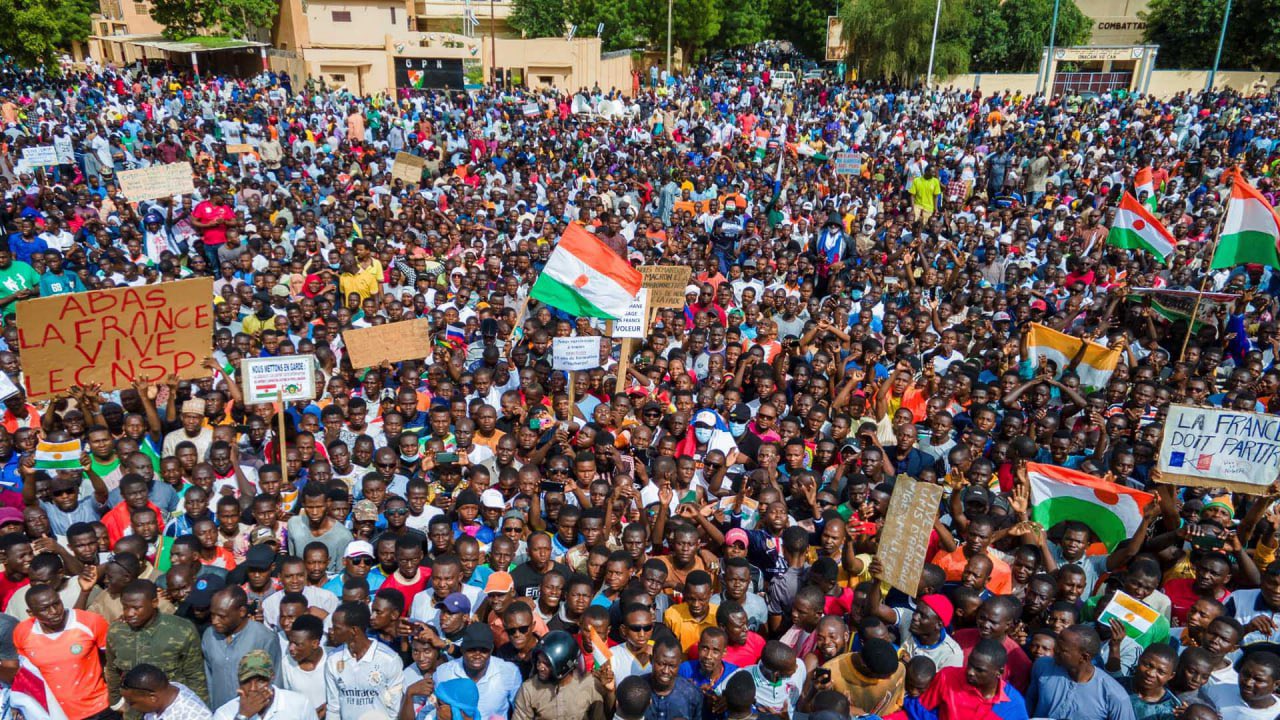
The resistance of Bazoum and his government has led his supporters to launch protests in front of the Presidential Palace and demand the release of the President as well as an end to the coup. Niger’s military supporters also gathered in front of the National Assembly with the Russian flag in their hands and they chanted anti-French slogans. They also set fire to the headquarters of Niger’s Party for Democracy and Socialism (the ruling party) in Niamey, which was confronted by the police of the African country.
Coup d’état and the gathering of the people of Niger in the main squares of Niamey
The military, in their next step, formed the National Council for the Safeguard of the Homeland on July 28 and appointed General Omar Chiani, the commander of the Presidential Guard, as the leader of the council.
French President Emmanuel Macron described the coup in Niger as illegitimate and announced France’s readiness to work with regional organizations to sanction the coup leaders. European countries and the United States also expressed their support for President Bazoum and called for his release. The African Union issued a 15-day ultimatum to the National Council for the Safeguard of the Homeland to restore the previous government to power.
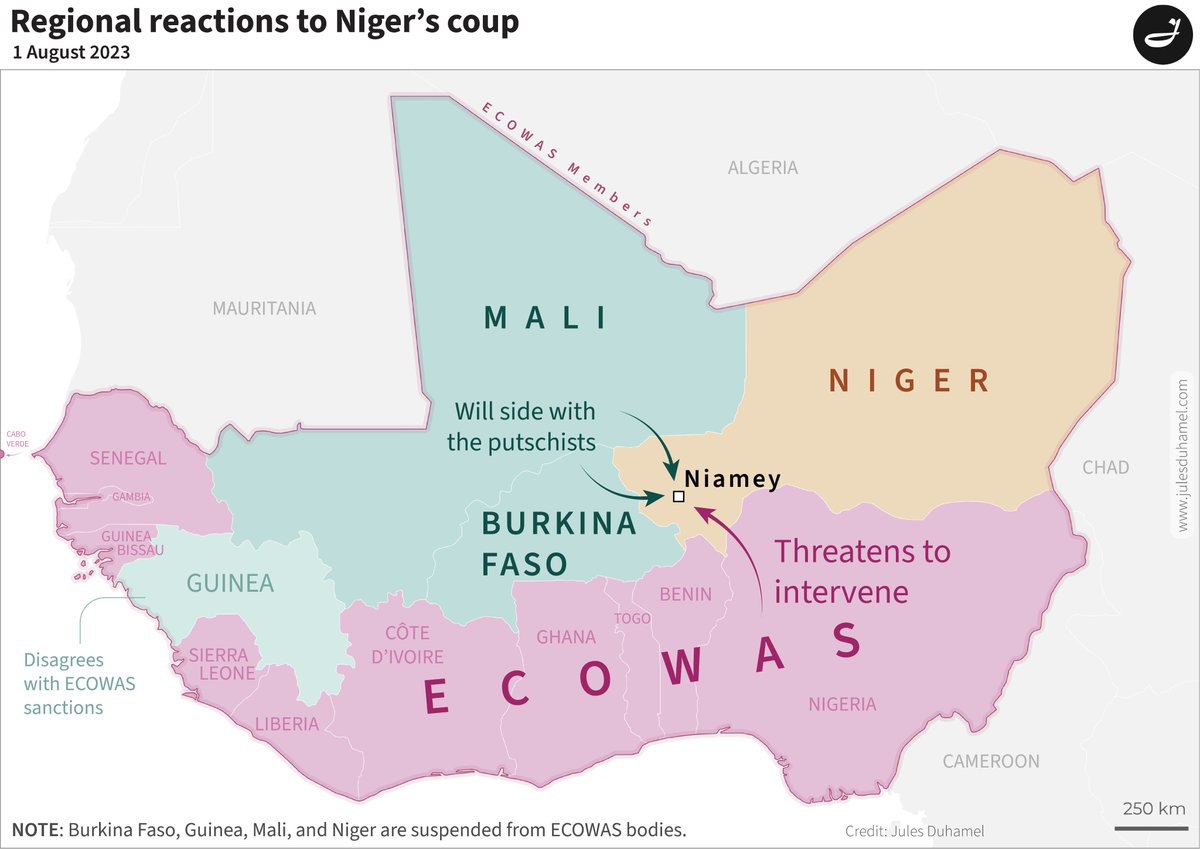
The military forces of Niger considered this ultimatum a declaration of war against Niger and declared their readiness to defend the African country. Along with the African Union, the Economic Community of West African States (ECOWAS) has strongly reacted to the coup in Niger and issued a joint statement on July 30 with the aim of suspending trade and financial transactions with Niger and imposing sanctions on the coup leaders. The 15-member group of ECOWAS has given one week for the release of President Bazoum as well as the restoration of the presidency, threatening to take all necessary measures, including military action, if the demands are not met. The latest news indicates that ECOWAS has approved an attack on Niger, and military invasion will kick off soon.
The position of the countries in favor (Mali and Burkina Faso) and against (ECOWAS members) of the coup in Niger
Along with the intensification of foreign threats against the military forces of Niger, two countries of Burkina Faso and Mali, in a joint statement on July 31, considered any foreign military intervention in Niger as a declaration of war against these two countries as well. It should be mentioned that the governments of these two neighboring countries were also dependent on France in the past and were under the influence of this European power, but they came out of French domination as a result of similar coups.
The Interim President of Guinea Mamady Doumbouya also announced that he would not participate in any action against Niger in a similar position to Mali and Burkina Faso. Algeria also opposed any foreign military intervention in Niger.
However, the most interesting position by the foreign states was the reactions from the Russian government and head of the private military company Wagner Yevgeny Prigozhin. The Russian Foreign Ministry called the interference in Niger’s affairs unfounded and described Russia’s position as the need for normalizing the situation and getting on the path of law. In contrast to this position, Prigozhin introduced himself as responsible for the coup in Niger on a Telegram channel attributed to the official channel of the Wagner group, and he called this action an attempt by the people of Niger to gain independence from colonialism.
In general, Niger is an important military and security partner of France in the West Africa region, and after the withdrawal of French troops from Mali, the Niamey base became the main French base in Africa. In addition, the CIA’s drone base is located in the northeastern part of the country. Niger has several high-quality uranium mines, and according to statistics, this African country, with a 5% share of global uranium production, is the seventh largest producer of this valuable material in the world, most of which is exported to France and Europe.
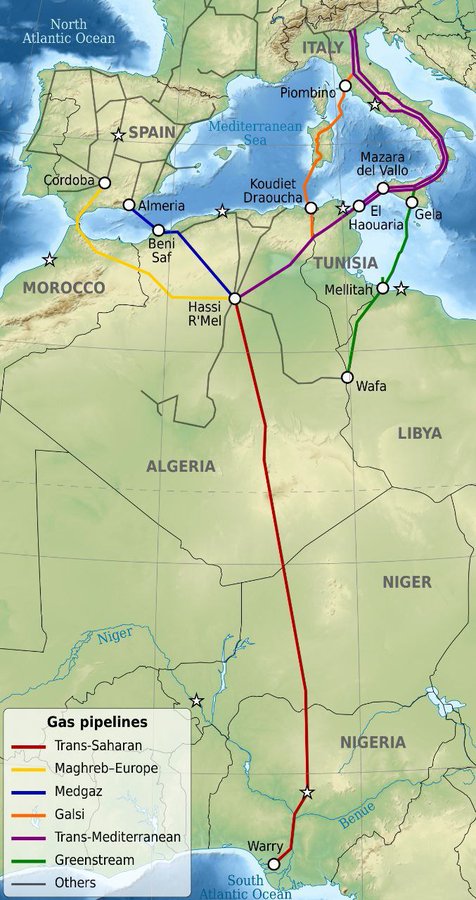
Moreover, part of the project to transfer Nigeria’s gas to Europe under the name of the Trans-Saharan Gas Pipeline (TSGP) passes through the neighboring country. The change of government in Niger with the support of the Wagner group or Russia will force the French to leave this African nation as the move was done in Mali and Burkina Faso in recent years. The military defeat of the Western powers in Afghanistan and the West Asia region, the war between Russia and Ukraine, economic problems, and son on have caused colonial powers to become passive against military and security movements such as recent coups in West Africa; so, they have no tools other than economic pressures and empty threats. In case of success of the Niger coup, we should expect the domino-like collapse of French plans in this region and their military withdrawal from Group of Five (G-5) nations.
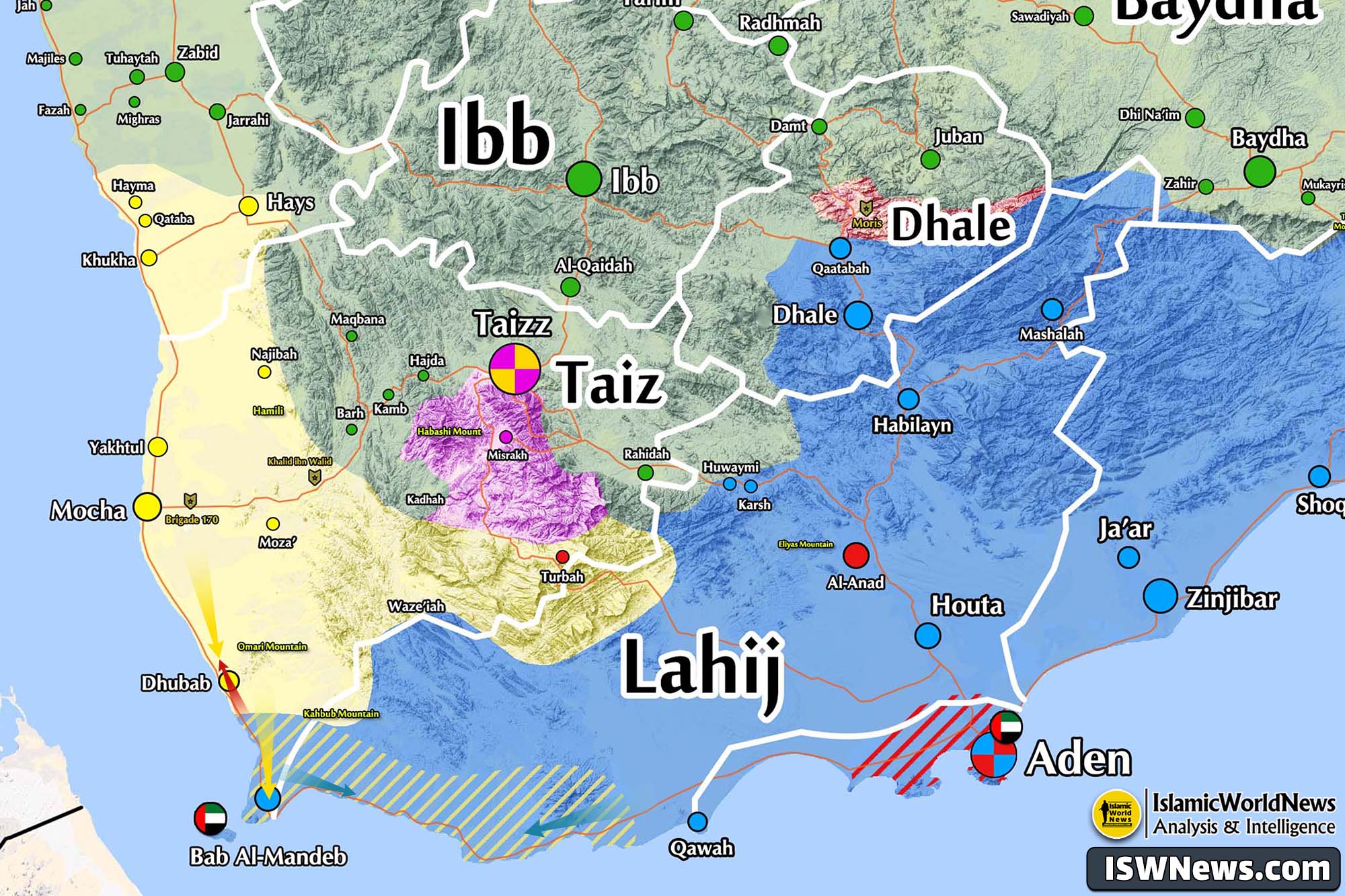
According to the plan, militant forces affiliated to Tareq Saleh, a Yemeni military commander and the nephew of the late President Ali Abdullah Saleh, will control the coastal areas from Hays city to Bab al-Mandab Strait, as well as the Southern Transitional Council (STC) forces will control the coastal regions from Ras al-Ara area to Aden governorate. The implementation of this plan faces problems, because tribes such as al-Sabiha tribes in Lahij Governorate, southern Yemen, want their share and try to control this region.
The seventh brigade of Amaliqa forces as well as groups of Al-Sabihah tribal militants prevented Tareq Saleh’s forces from constructing a base and settling in the Bab al-Mandab coastal strip, located in southwestern Taizs Governorate, on July 28.
The tension was accompanied by a halt in the movement of Tariq Saleh’s forces near Dhubab town, and al-Sabiha tribes warned Tareq’s forces against any military movement towards Bab al-Mandab. After this event, Tareq Saleh ordered more forces to be sent to Dhubab town, but eventually, due to resistance from al-Sabihah tribes, he was forced to retreat from Dhubab towards Mocha.
Al-Sabiha tribes claim that the southwestern lands of Taizz Governorate belong to these tribes and Tareq Saleh’s forces must also retreat from their other positions. They did not stop at this condition and demanded that their militants be officially recognized within the framework of the Saudi-led coalition forces and also Abu Dhiyab al-Alkami return to his position in command of support for national resistance forces (under Tareq Saleh’s command) and also hand over the killers of a soldier named Saadan Ali Saeed.
Tariq Saleh, on July 30, in his first reaction to the clash with al-Sabiha tribes in Bab al-Mandab, published a statement entitled leadership statement of national resistance forces. Saleh considered Bab al-Mandab within his operational space in this statement and referred to a plan that has been approved in joint operations with the participation of Abdul Rahman Abu Zaraa Al Muharrami, commander of Amaliqah forces. He also considered establishing himself in all areas of Taizz Governorate and securing international navigation routes as part of his duties.
Following this escalation, Tareq Saleh’s adviser Nabil Al-Sufi announced in a tweet that the plan to establish joint forces (under Tareq Saleh’s command) was designed by the United Arab Emirates and includes the area from Hays in the south of Al-Hudaydah Governorate to Bab al-Mandab. Also, the Southern Transitional Council forces will protect the coastal areas from Ras al-Ara region to Aden to ensure the security of Bab al-Mandab Strait. In addition, Djibouti’s armed forces will be stationed on the other side of the strait.
In this regard, some local sources reported that the Southern Transitional Council forces transferred control of al-Ardhi region in Bab al-Mandab to Tareq Saleh’s forces on July 31.
Based on the circumstances on the ground, this plan can be considered as part of the US-led coalition’s deployment to support a future naval war with the Ansar Allah movement. In recent months, the Ansar Allah movement has strengthened its naval force with the support of Iran and other resistance groups and has armed its forces with various missiles and speed boats.
The tension between al-Sabiha tribes and Tareq Saleh’s forces can also be considered as a sabotage by some Saudi officials to disrupt the United Arab Emirates’ plan, as they are not interested in resuming hostilities with the Ansar Allah movement and are not willing to completely surrender southwestern Yemeni coasts to the United Arab Emirate. Therefore, they play a role with the card of al-Sabiha tribes in this axis.
Altogether, the conflicts in the Red Sea and the vital Bab al-Mandab Strait seem to be important issues, which have been raised since the early years of the Yemen war and they have turned into more serious topics with the permanent deployment of the United States’ naval coalition or Combined Task Force 153 to the waters of the region.
The US and Israel resort to sabotaging the Yemen peace process and destroying relations between Iran and Saudi Arabia in order to send Saudi Arabia back to war with the Ansar Allah movement. Despite avoiding re-engagement in Yemen, the Saudi authorities continue to show inflexible reactions in negotiations as well as military deployment in a bid to maintain their positions! However, such an attitude is expected to weaken the efforts to find a political solution in line with achieving peace in Yemen.
Military situation in southern Yemen – click to view full size