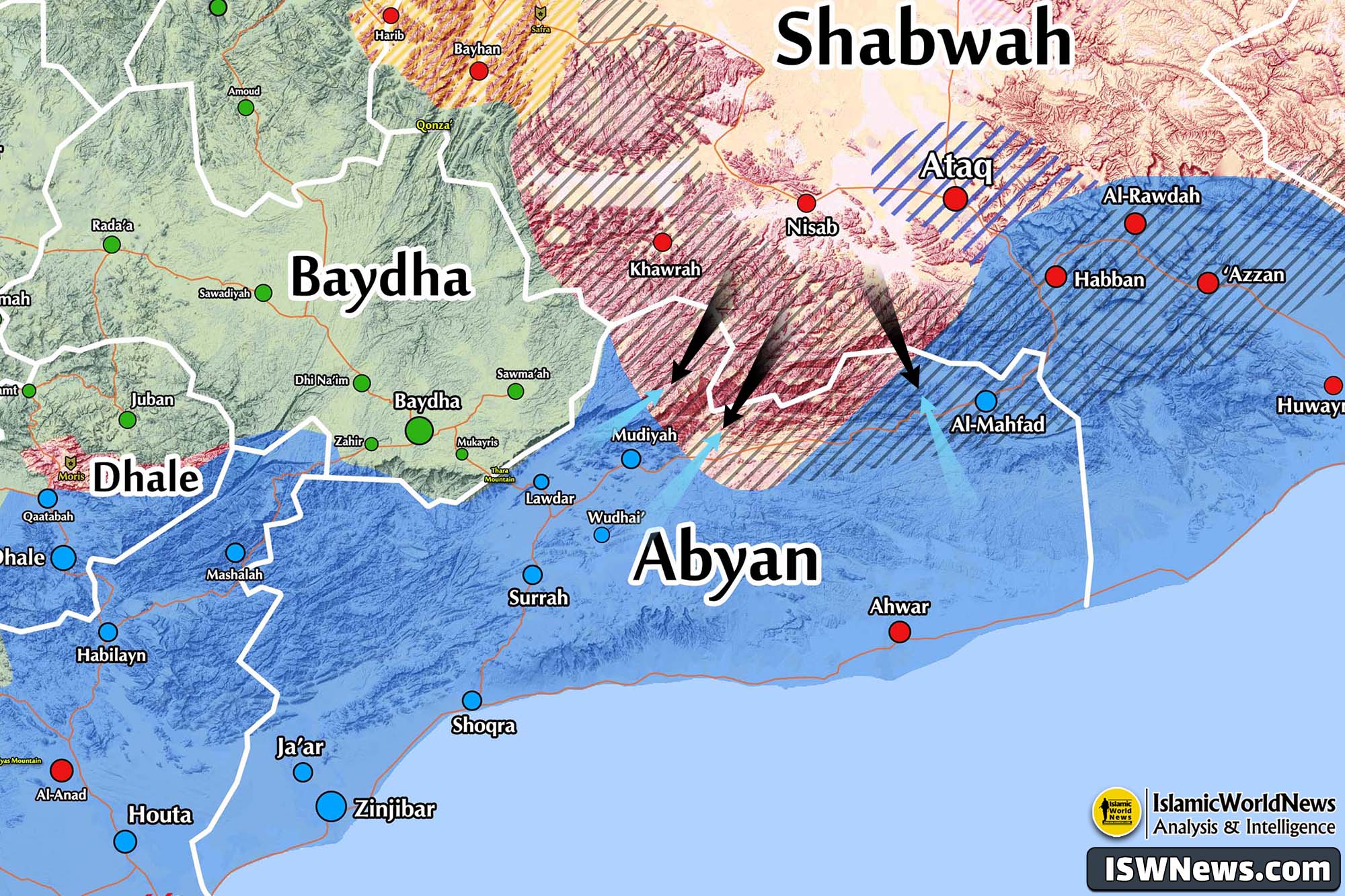
As a result of an IED attack on a vehicle carrying the field commanders of Southern Transitional Council in the Al-Baqira area, in the east of Mudiyah district, three STC commanders were killed: Saddam Al-Saadi, the commander of the 3rd brigade battalion, Aref Nasser Makani, the head of the Baqira Center in the Transitional Council, and Ghassan Al-Qadimi.
Considering the beginning of the new round of Al-Qaeda attacks on STC positions in Abyan province, which started on July 22, this assassination most likely Mudiyah-Abyanwas also carried out by the operatives of this terrorist group.
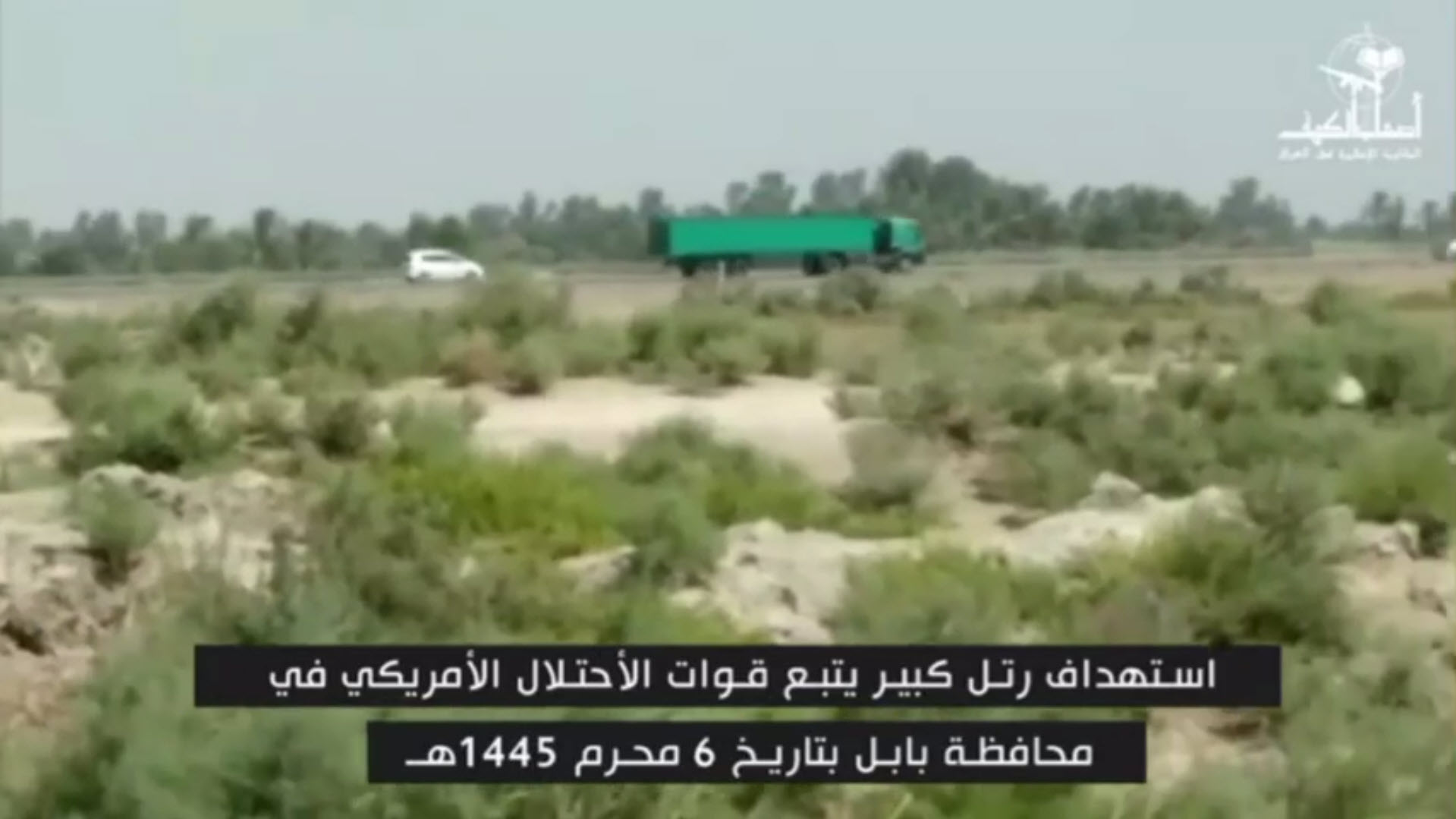
On July 24, a US military logistics convoy in the Babil province was targeted by the As’hab al-Kahf resistance group. Previously, another US military logistics convoy had been targeted by resistance groups in the Babil Province on April 5, 2023.
It seems that a new round of attacks by resistance groups against US military convoys in Iraq has kicked off.
It should be noted that the Iraqi resistance groups had stopped their attacks against the US military forces’ positions and convoys due to the request by Prime Minister of Iraq Mohammed Shia al-Sudani.
Investigations also show that no attack has taken place against the US forces’ positions and convoys in Iraq during the last three months.
According to field investigations by the ISWNEWS, the last one is the 11th attack by the Iraqi resistance groups against the US forces’ positions and logistics convoys since the onset of the current year.
Furthermore, this is the 136th attack against convoys and positions of American occupiers, which is taking place in the Babil Province since the beginning of 2021.
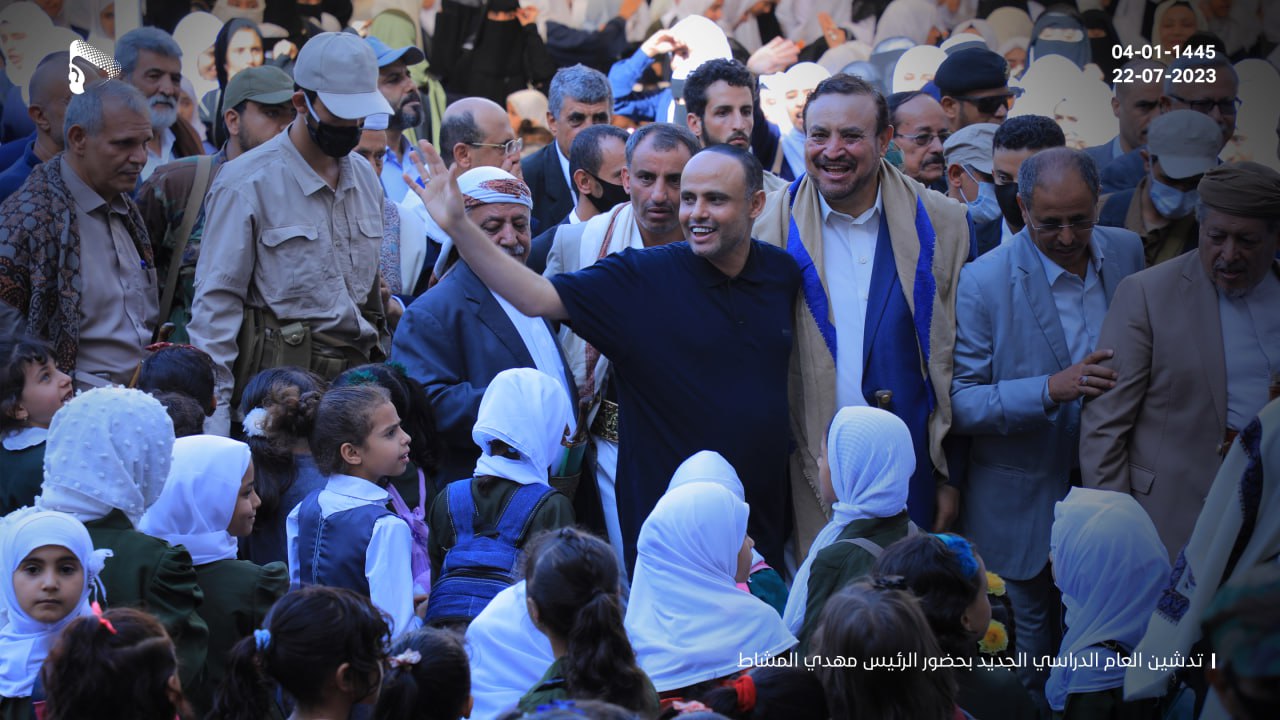
Al-Mashat went on to say that negotiations on paying employees’ salaries from our oil and gas revenues have stopped and that Saudi Arabia was willing to pay it from itself, not from our oil and gas revenues!
What Saudi Arabia wants is to steal our oil wealth and transfer it to its national bank and then, it wants to give charity to our employees and people, which is the issue that we rejected, the Yemeni official noted.
The United States is the one who urged the Saudis to refrain from paying Yemeni government employees’ salaries, he said, adding that we advised the Americans not to create enemies in each of the Yemeni people’s houses, because by preventing payment of salaries to employees, tens of millions of Yemenis will become the enemies of the Americans.
The talks between the Ansar Allah movement and Saudi Arabia entered a new phase, when the Saudi ambassador to Yemen paid a visit to the Yemeni capital Sana’a in April.
The negotiations were accompanied by a cessation of hostilities and lifting certain restrictions for activities in Yemeni ports; however, the lack of flexibility from the Saudi side on the issue of paying Yemeni employees’ salaries led to a halt in the talks. The Ansar Allah movement claims that the US is behind the scene, when it comes to the Saudi-pressure on the Yemeni people.
Yemen has been fighting a war imposed by Saudi Arabia and its allies for more than eight years, which created one of the worst humanitarian crises in the world.
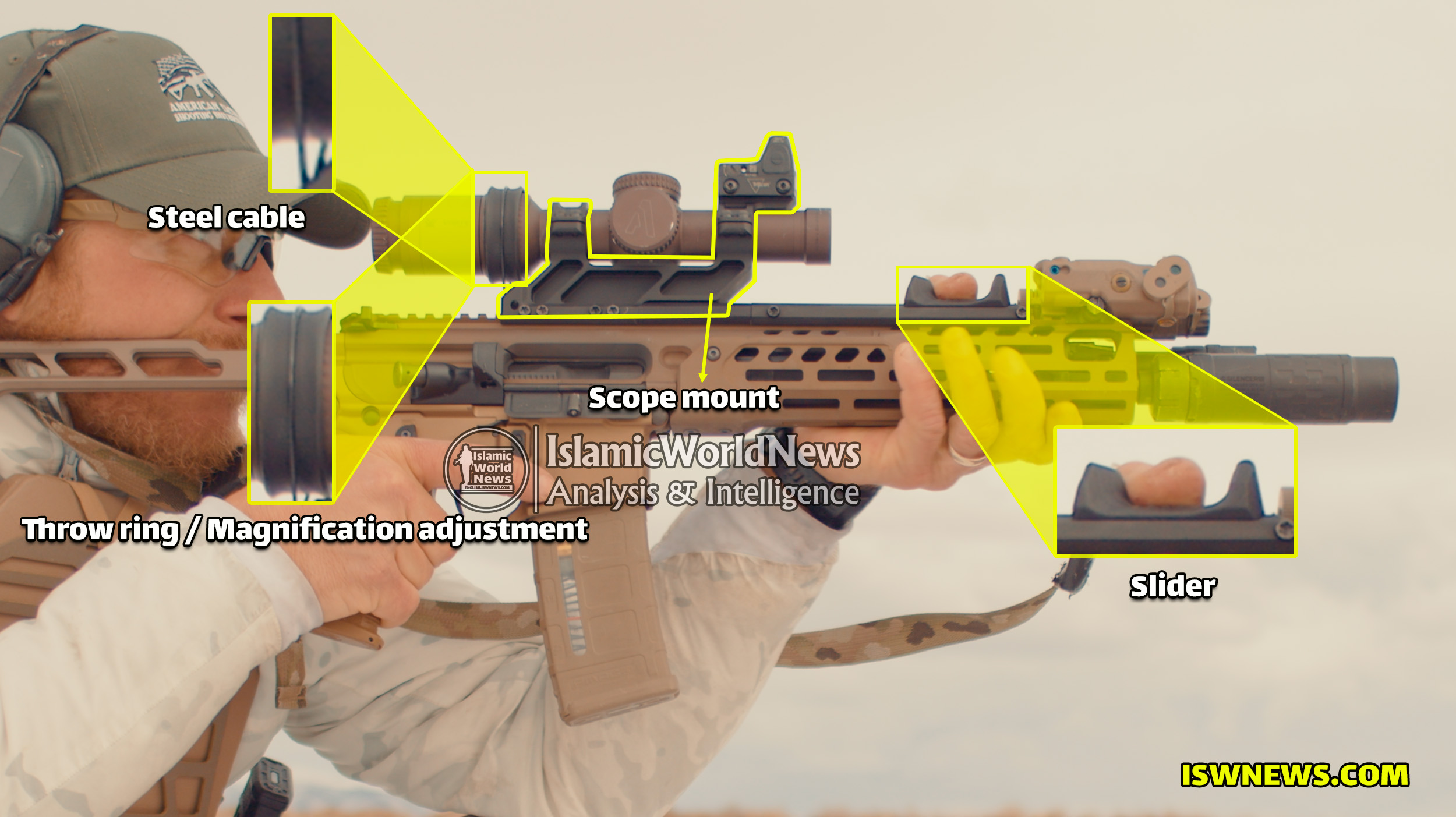
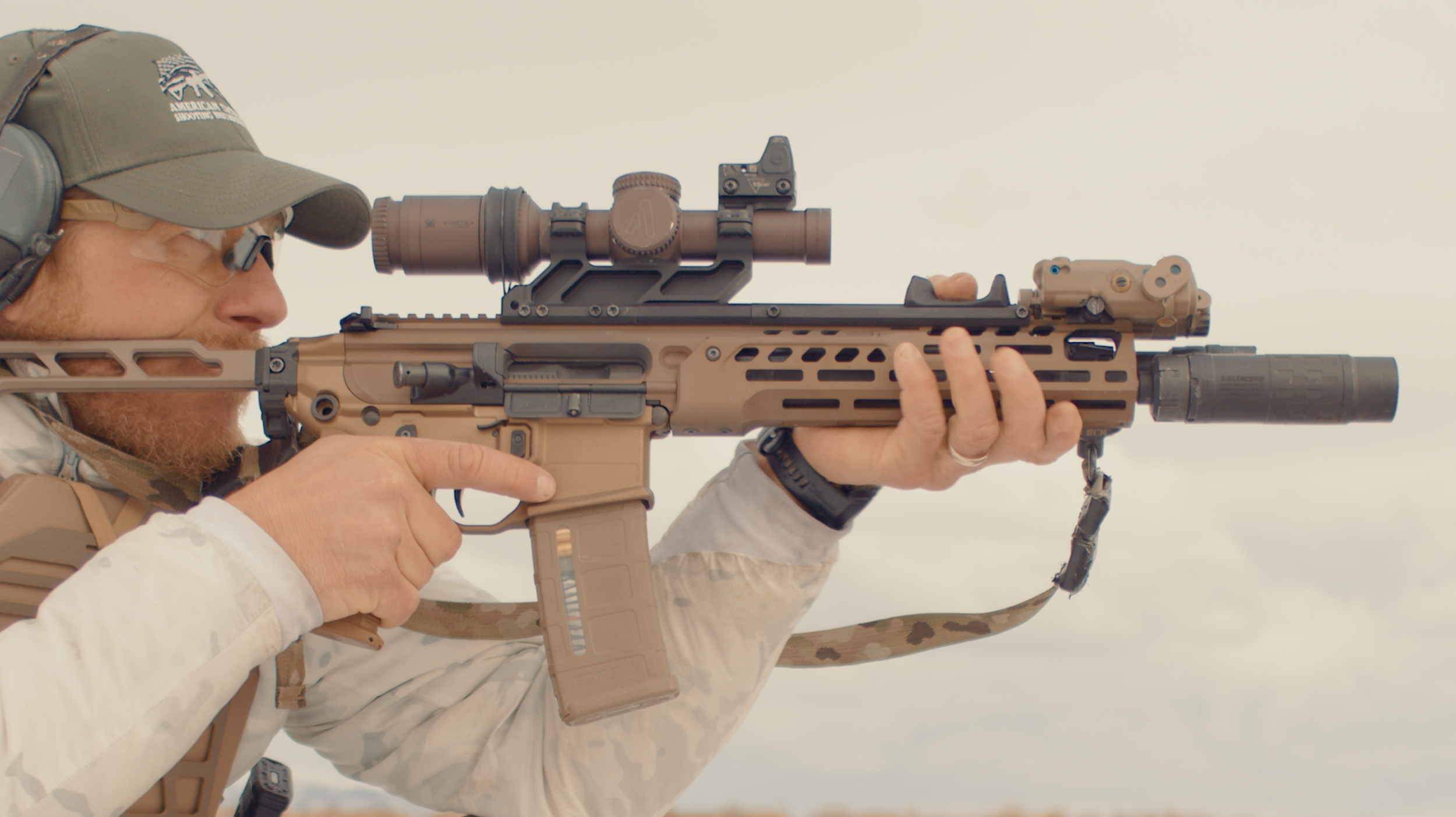
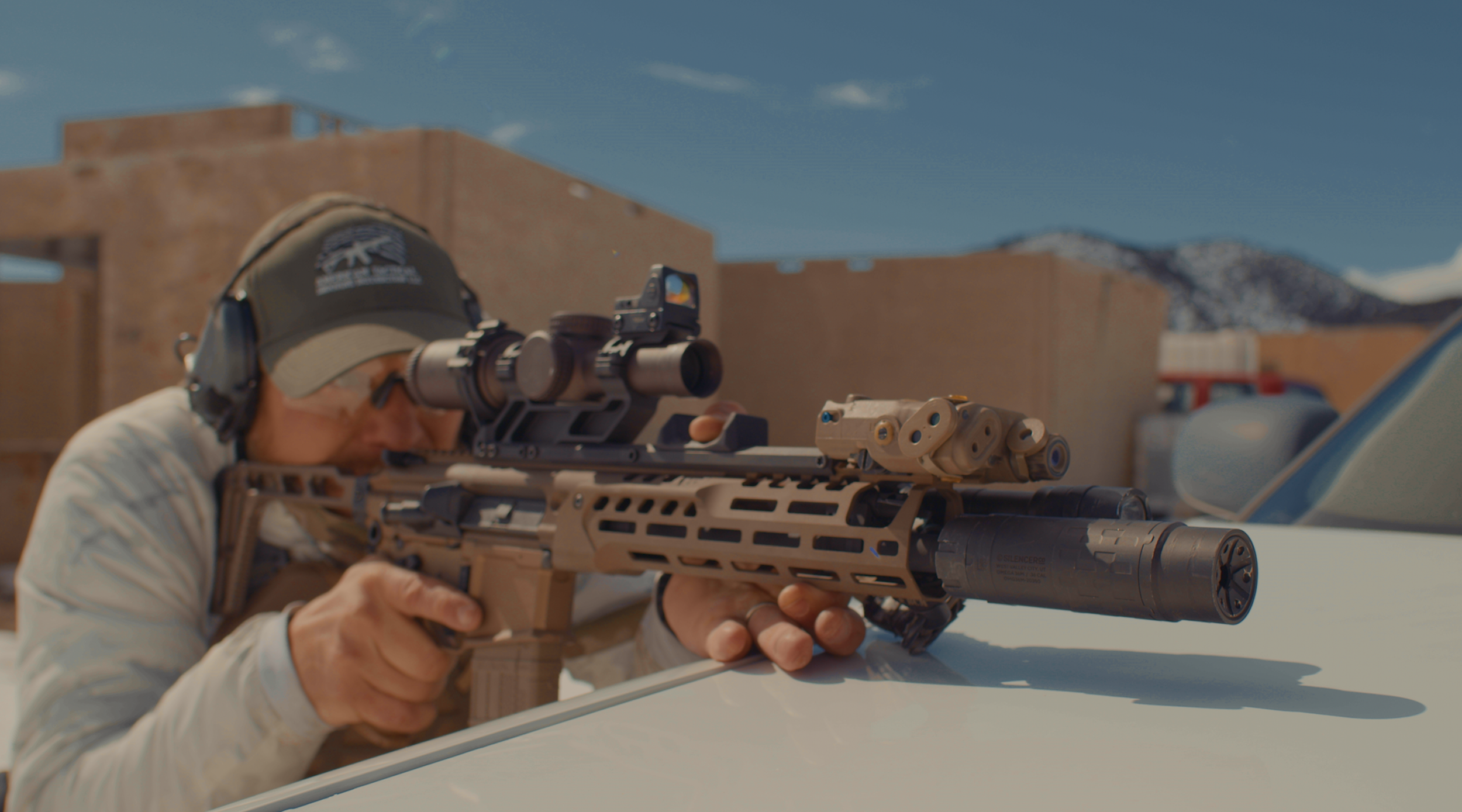
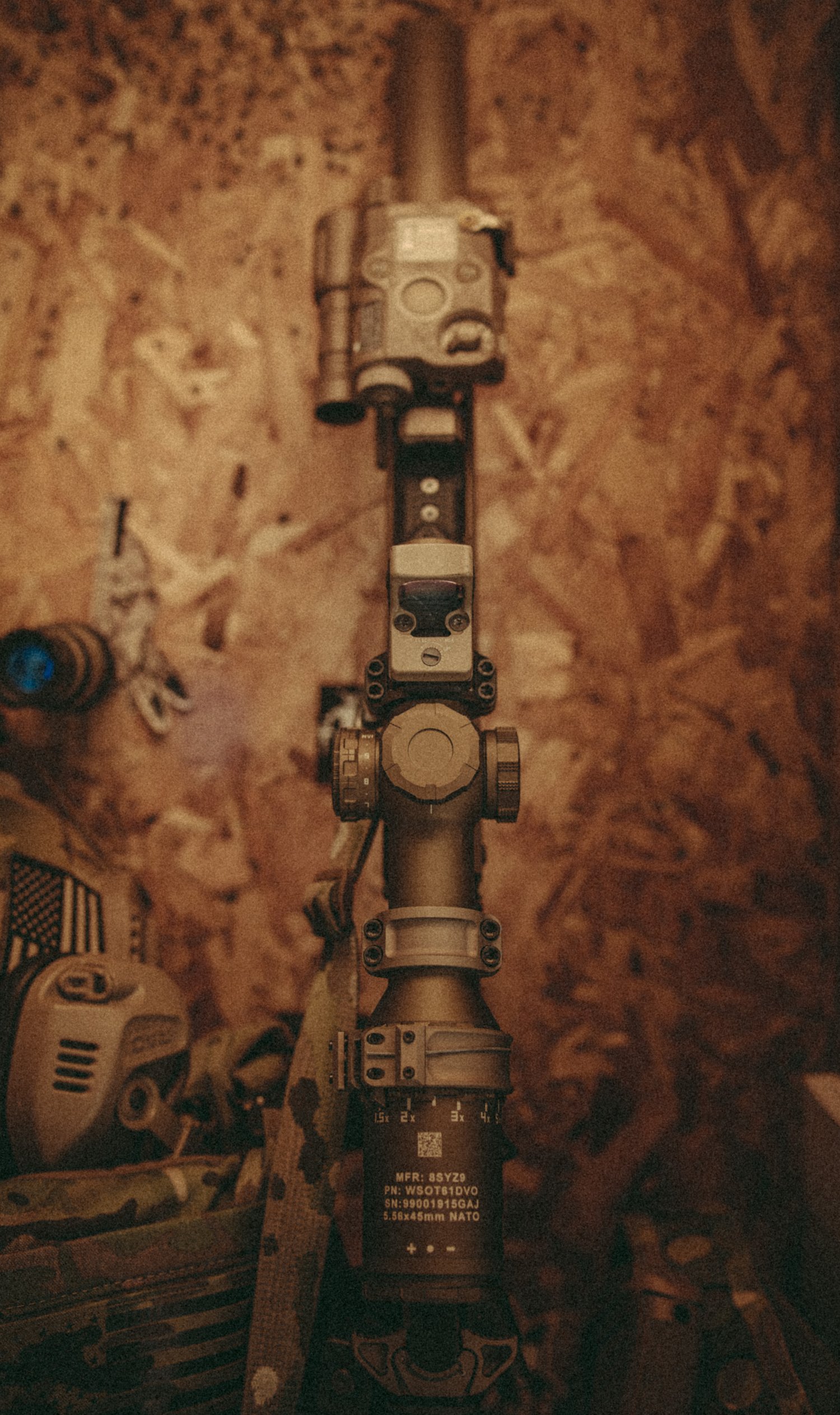
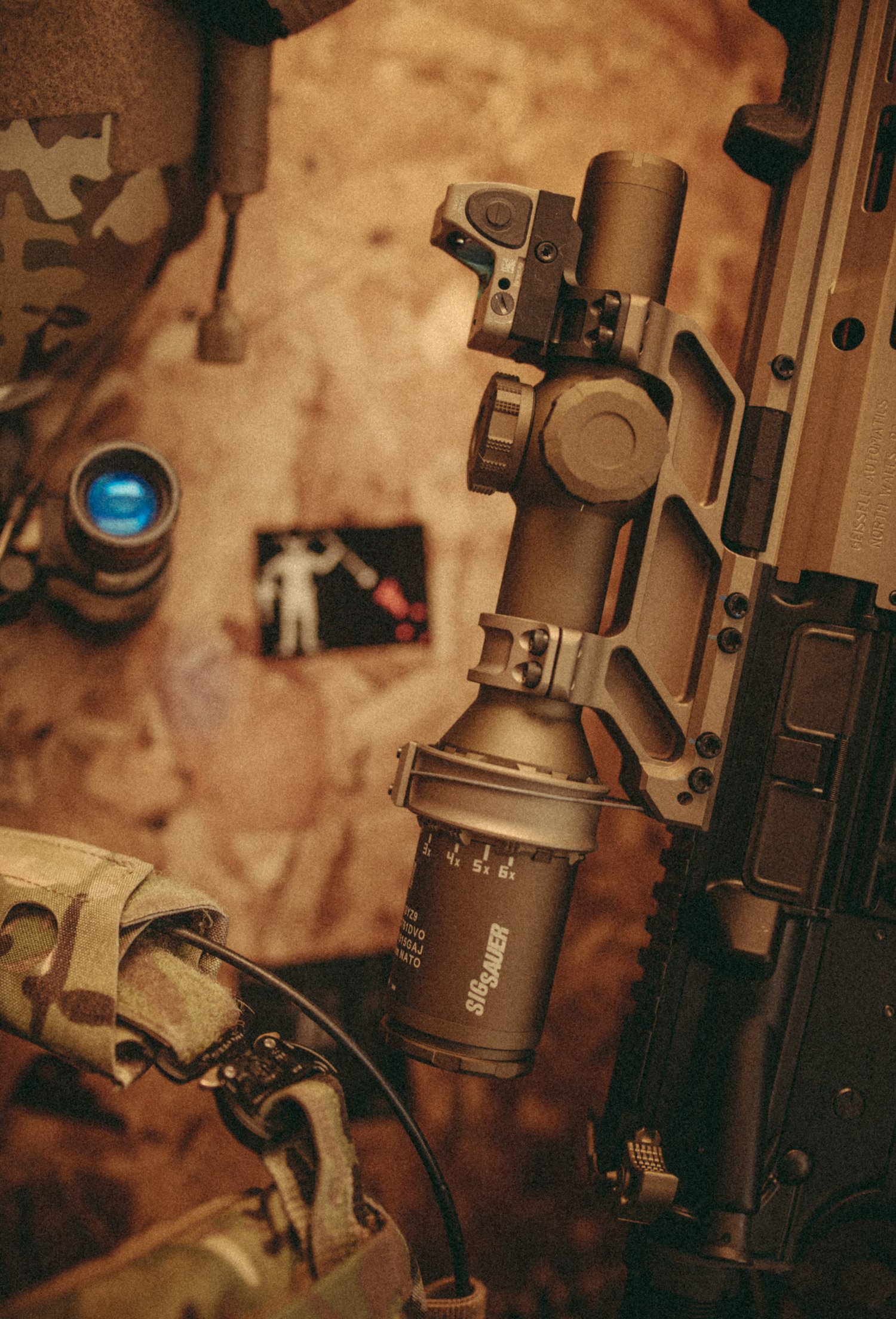
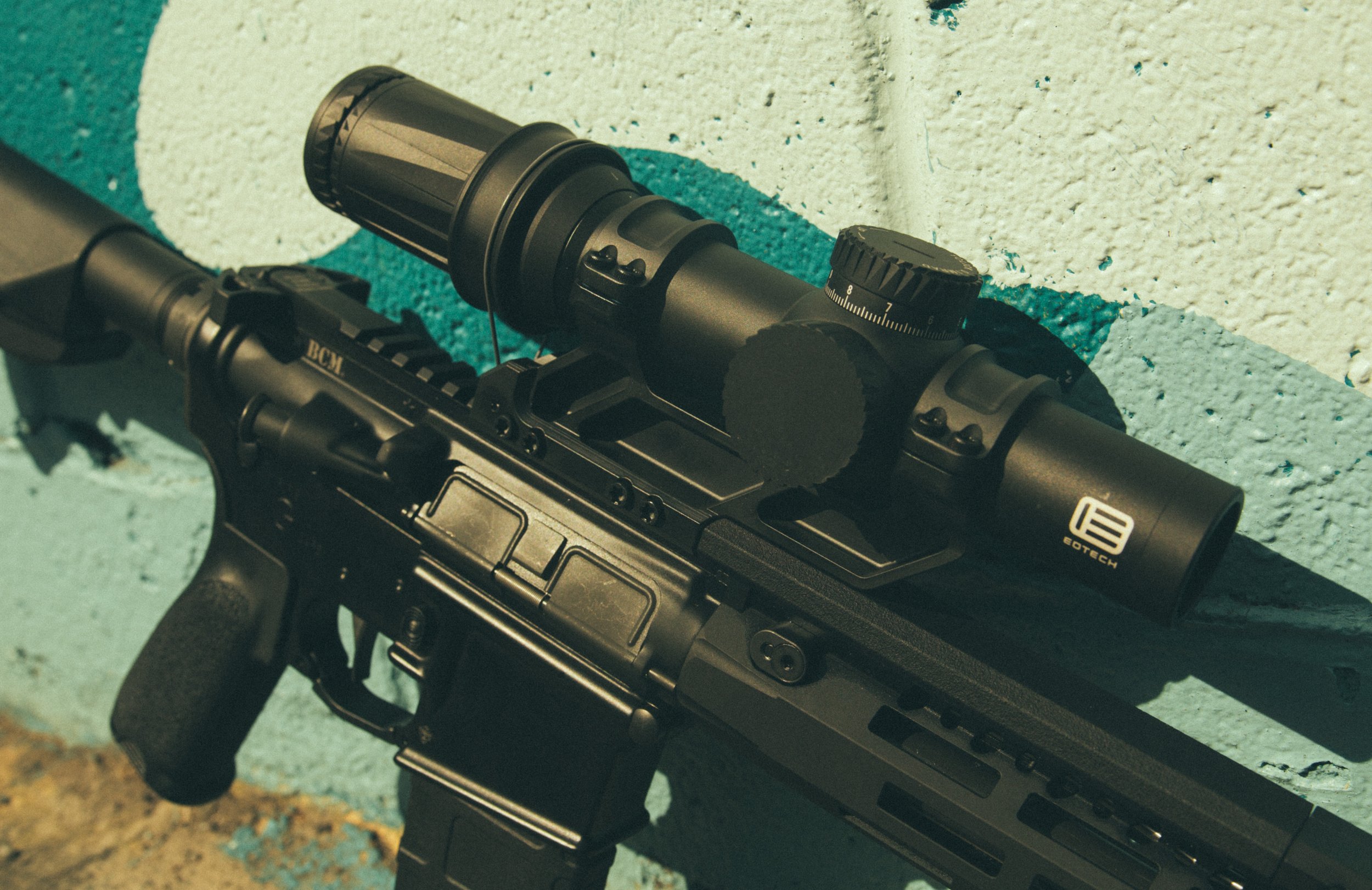
The Antimatter’s SCOPESWITCH consists of four general components. The first part is a scope mount that is fixed on the picatinny rail and then a scope is installed on it. The next part is a throw ring, which is installed on the magnification ring and provides the possibility to change the zoom. The third part is a slider installed on the picatinny rail, which can be easily moved on the rail with fingers.
The slider is connected to the throw ring using a fine steel wire. By moving the slider by the shooter’s hand, which is also on the gun, without removing the hand, the scope provides the necessary magnification for the shooter to see the target.
Antimatter SCOPESWITCH components
Antimatter has used 4140 nitrided steel lugs for the SCOPESWITCH. 4140 steel is an alloy with very high hardness and strength against stress, fatigue and wear and has high impact resistance. Also, T6-7075 aluminum is used for three other components, i.e. scope mount, throw ring and the slider. T6-7075 aluminum is considered to be a very suitable alloy for use in aircraft parts or parts that are subject to wear due to its characteristics such as high strength against fatigue, tension, and the possibility of proper machining, good welding, and corrosion resistance in addition to its low weight.
A video of how SCOPESWITCH works
According to the above, it can be said that SCOPESWITCH is made of the best materials in the market. Currently, this tool is sold in the US market for $150.
One of the negative points of this tool is that if it is installed, almost all the space above the rail will be occupied and unused. Therefore, the creators of SCOPESWITCH have said that in order to solve this problem and free up the upper space of the rail, they will also make an electronic and wireless version in future.
1-Aleppo Governorate: – On July 17, a joint patrol of Russian military police and Turkish army forces was carried out in the western districts of the city of Ayn al-Arab (Kobani), Aleppo Governorate. – On July 18, the Syrian army targeted militant positions in the village of Al-Qasr, located in western Aleppo Governorate, with artillery shells.
2- Idlib Governorate: On July 22, militant positions on the outskirts of the San village in southern Idlib Governorate were targeted by Syrian army artillery strikes.
3- Daraa Governorate: On July 11, one of the Syrian security forces was assassinated by unidentified gunmen in the town of Inkhil, Daraa Governorate. Local sources are of the opinion that this military staff was martyred by elements of the ISIS terrorist group.
4- Deir ez-Zor Governorate: – The released image of a vehicle belonging to the US-led coalition while passing near an American coalition military base in the Conoco gas station located in Deir ez-Zor Governorate, Syria, shows that this vehicle was equipped with an anti-drone system. – On July 15, the Lebanon’s Al-Mayadeen TV network quoted local sources as saying that the movements of the US-led coalition forces and their affiliates in the eastern parts of the Euphrates had increased with the aim of attacking the Syrian army and resistance positions on the western bank of the river. – On July 13, as a result of a mine blast around the town of Al-Tabni located in Deir ez-Zor Governorate, one of the forces of Liwa al-Quds Brigade was martyred and another one was injured.
5- Raqqa Governorate: – On July 17, militants supported by Turkiye targeted the M4 Motorway and suburbs of the Ayn Issa town in Raqqa Governorate with the use of artillery strikes. – On July 17, militants supported by Turkiye targeted the M4 Motorway and suburbs of the Ayn Issa town in Raqqa Governorate with the use of artillery strikes.
6- Al Hasakah Governorate: – On July 21, the US-led coalition forces held a military exercise at Al-Shaddadi military base in southern Al Hasakah Governorate. – On July 22, several trucks belonging to the US-led coalition entered the American military bases in Al Hasakah Governorate from Iraqi Kurdistan region through the illegal Al-Waleed border crossing.
7- President of Turkiye Recep Tayyip Erdogan recently stated that he is ready to talk to his Syrian counterpart Bashar al-Assad, but if the withdrawal of Turkish forces from Syrian soil is set as a condition for negotiations; however, Erdogan has said that he will not meet with al-Assad.
8- On July 16, Prime Minister of Iraq Mohammed Shia al-Sudani held talks with Syrian President Bashar al-Assad during a trip to the Syrian capital Damascus.
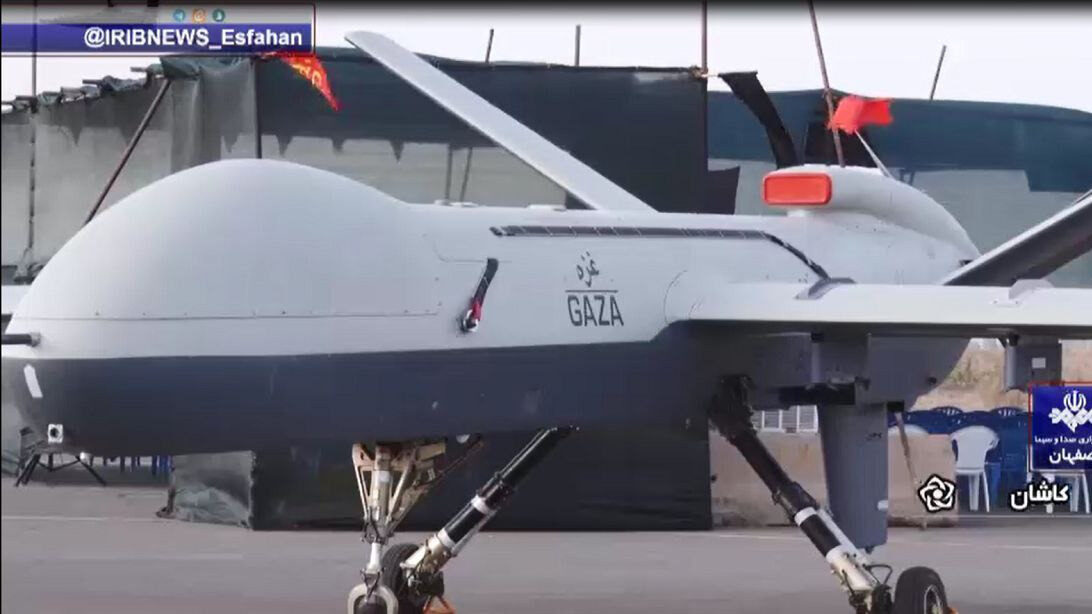
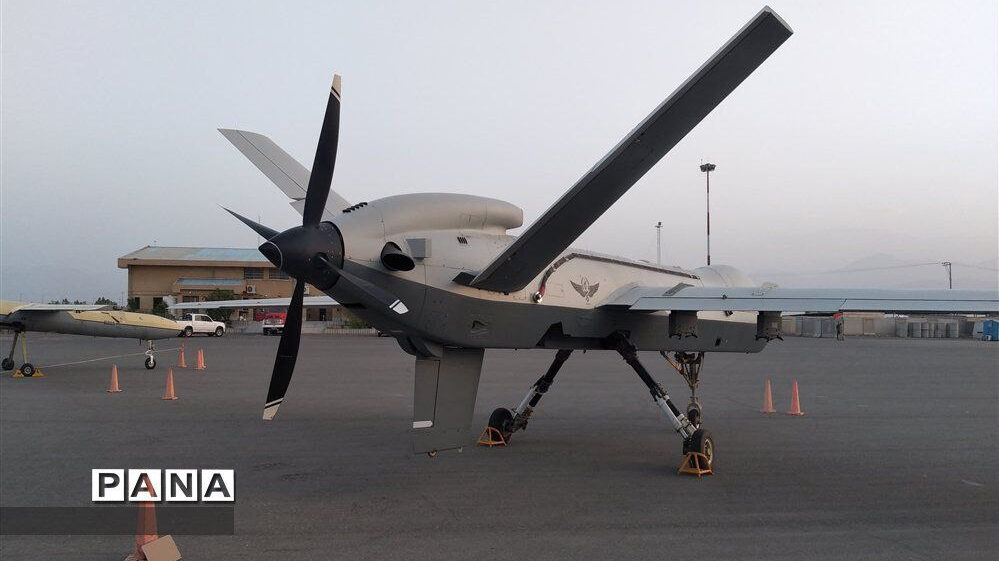
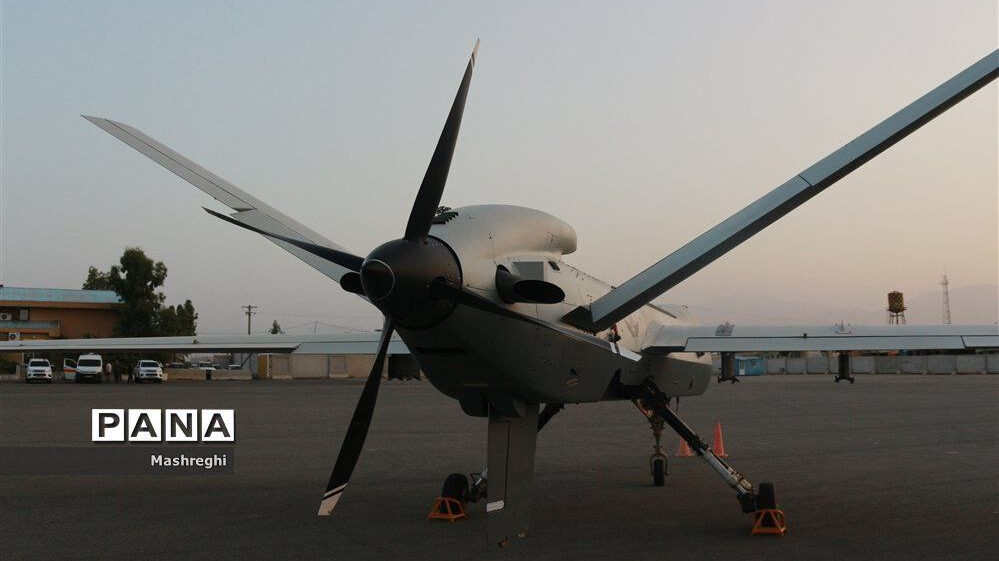
The Shahed-149, which was developed by the Shahed Aviation Industries, is a high-altitude long-endurance combat drone similar in size, shape and role to the American MQ-9 Reaper. The drone was first unveiled and named after the Gaza Strip in honor of the Palestinians’ struggle against Israel amid the May 2021 Palestinian-Israeli crisis.
The upgraded version of the drone, which was unveiled at Martyr Karimi Air Base in the central city of Kashan, is equipped with an improved landing gear system and new hardpoints.
The Shahed-149 has a flight duration of 35 hours, an operational range of 2,000 kilometers and a cruising speed of 350 kilometers per hour. The combat drone is capable of carrying 13 bombs and 500 kg of electronic equipment. It is the first Iranian UAV powered by a turboprop engine.
The long endurance and range of the Shahed-149 should allow it to operate all the way from western Iran to Israel. The drone can also operate over the entire Persian Gulf and the Sea of Oman from Iran’s southern region.
Despite facing sabotage attempts by Israel as well as strict sanctions by the United States and the European Union, Iran managed to expand its drone program in the last few years. Today, the country is one of the world leaders in drone technology.
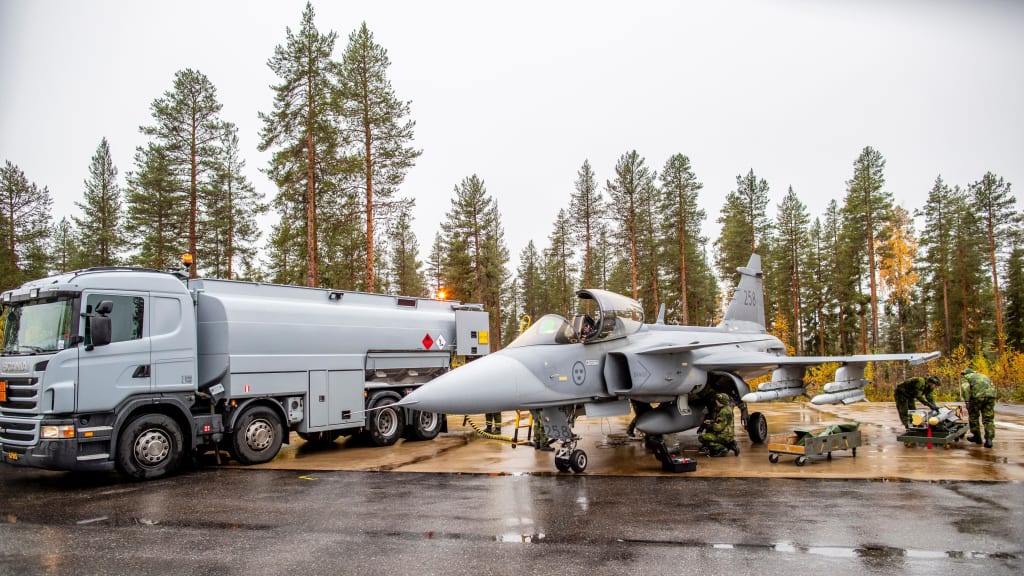
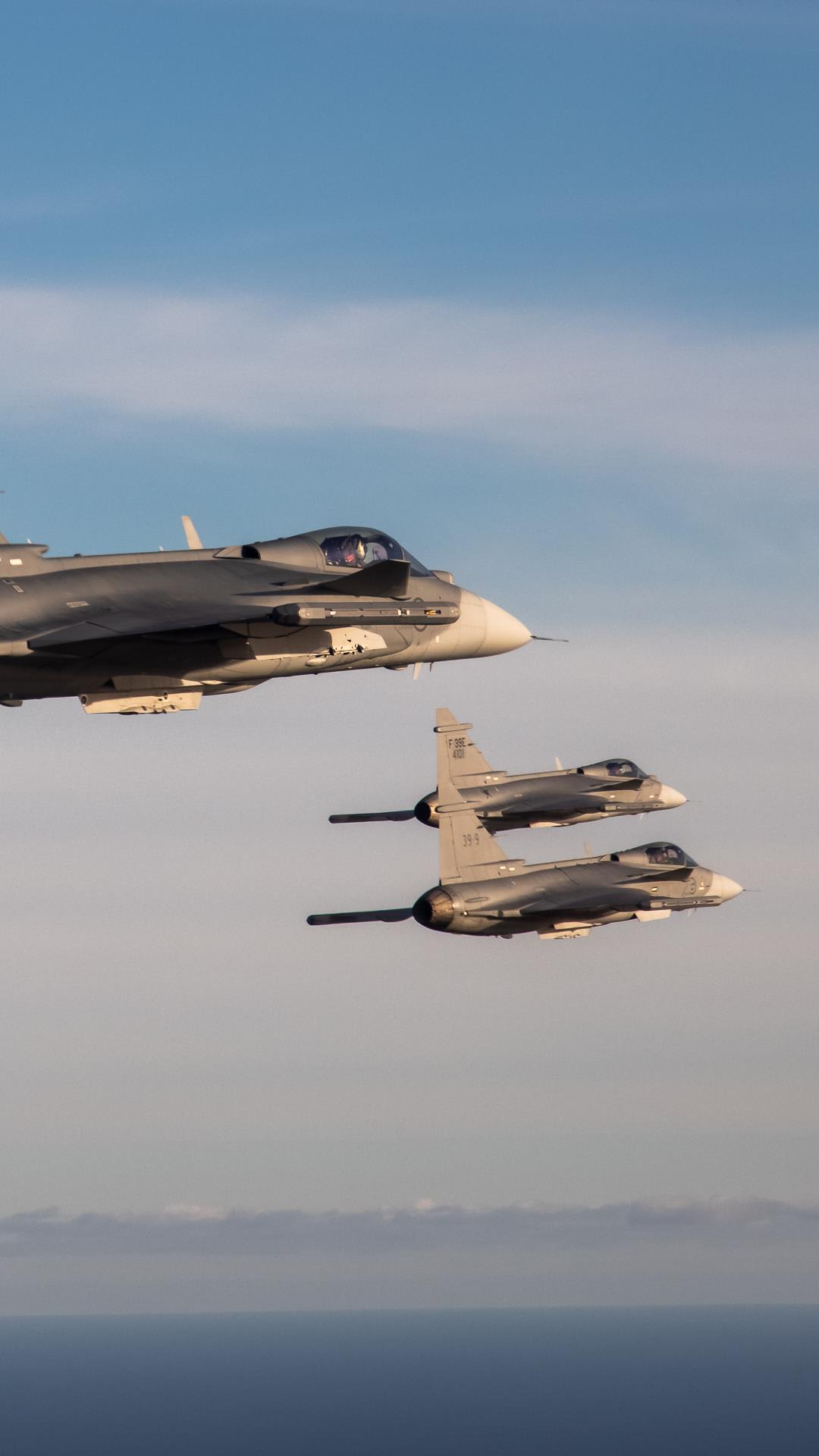
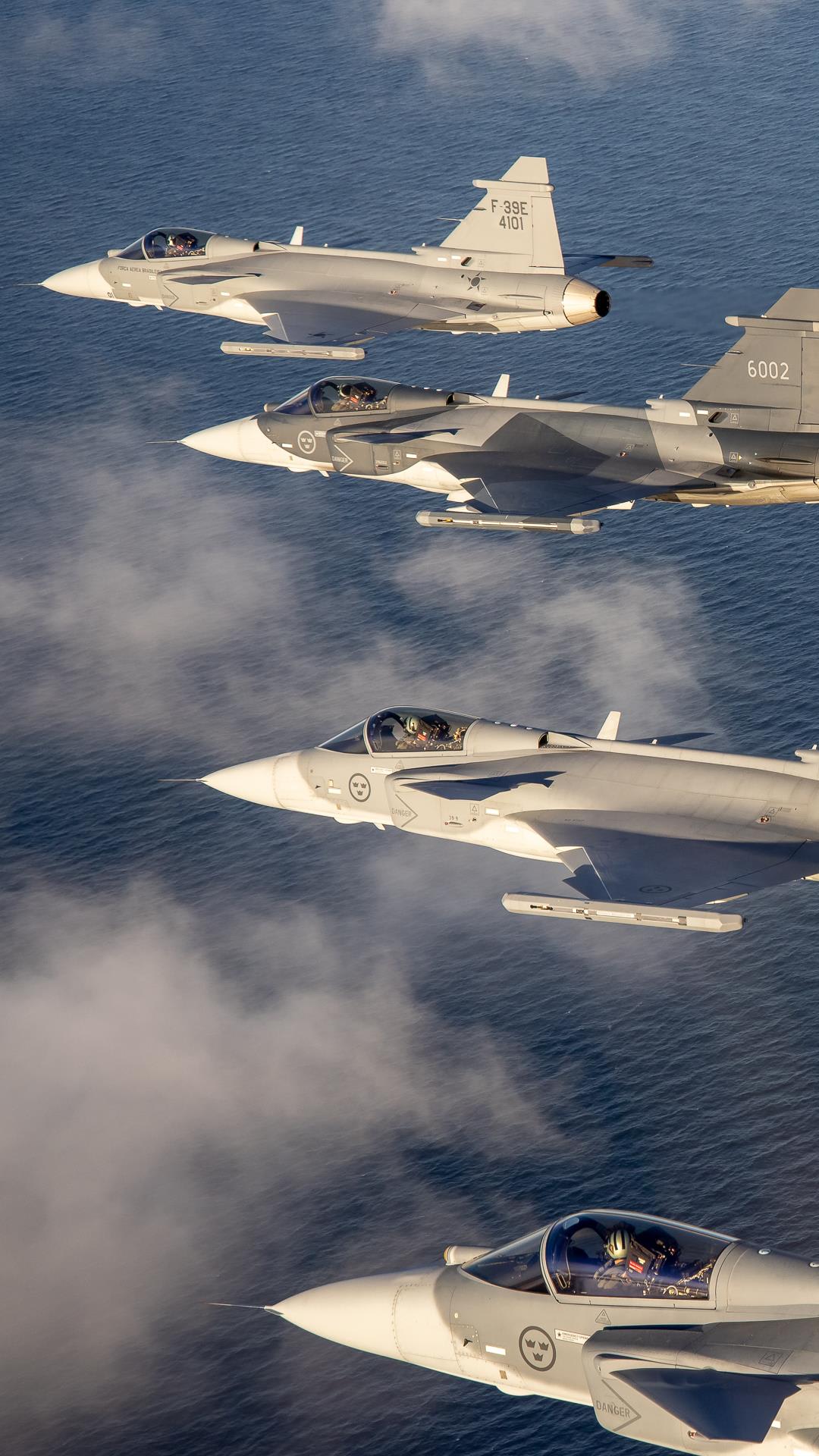
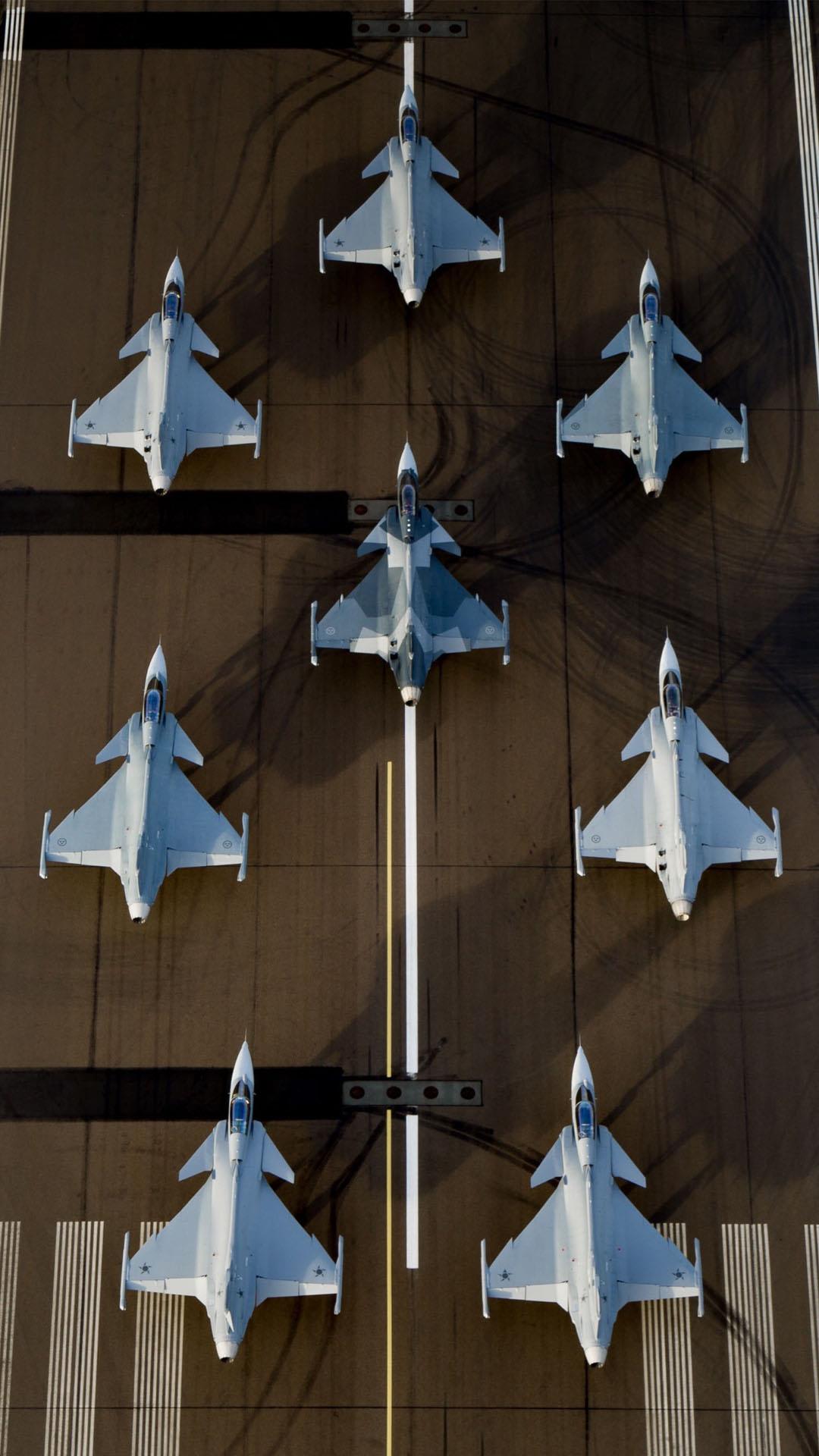
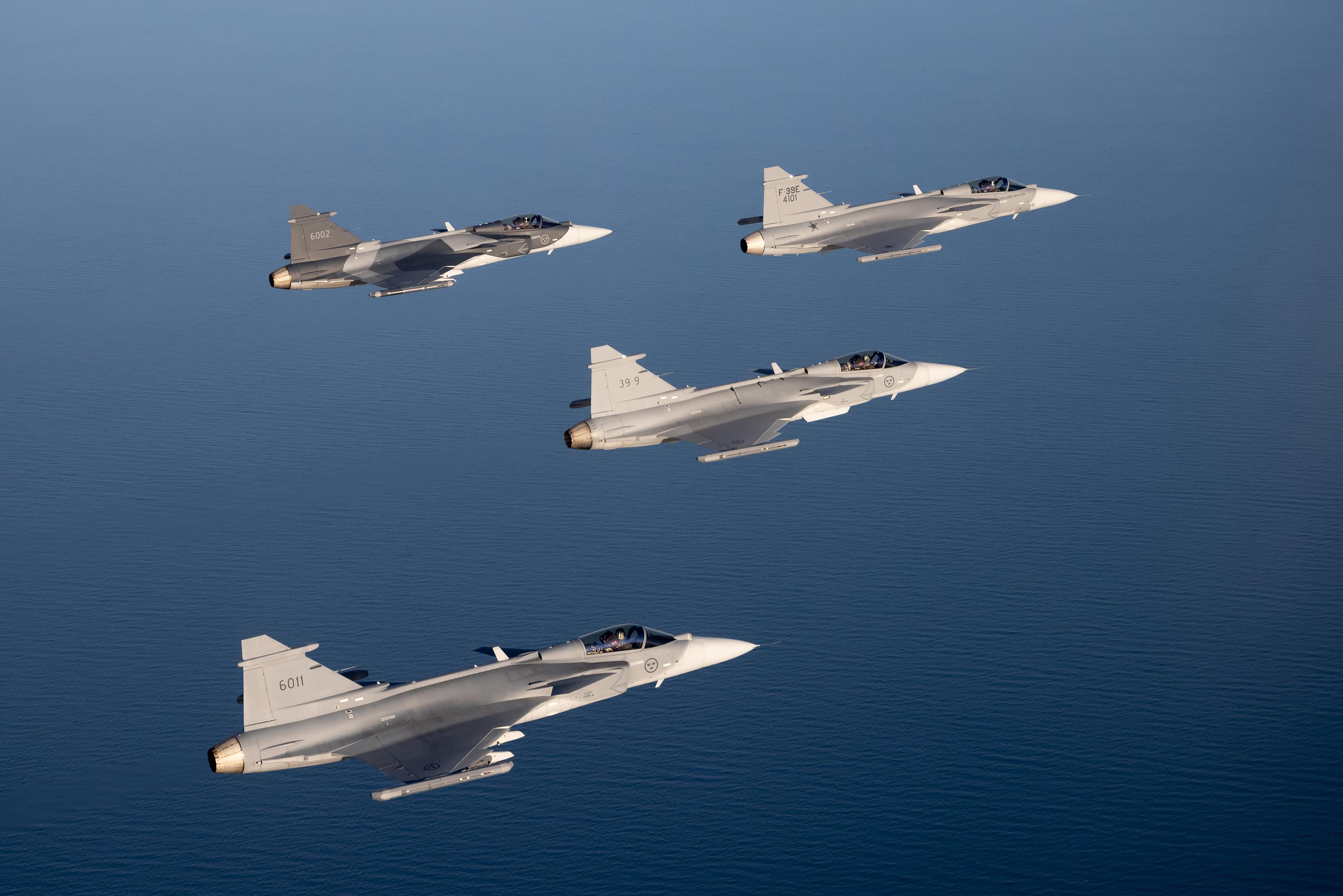
History In the late 1970s, Sweden sought to replace its aging Saab 35 Draken and Saab 37 Viggen. Early proposals included the Saab 38, also called B3LA, intended as an attack aircraft and trainer, and the A 20, a development of the Viggen that would have capabilities as a fighter, attack and sea reconnaissance aircraft. Several foreign designs were also studied, including the General Dynamics F-16 Fighting Falcon, the McDonnell Douglas F/A-18 Hornet, the Northrop F-20 Tigershark and the Dassault Mirage 2000. Ultimately, the Swedish government opted for a new fighter to be developed by Saab.
On 30 June 1982, with approval from the Riksdag, the FMV issued contracts worth SEK 25.7 billion to Saab, covering five prototypes and an initial batch of 30 production aircraft. By January 1983, a Viggen was converted to a flying test aircraft for the JAS 39’s intended avionics, such as the fly-by-wire controls. The JAS 39 received the name Gripen (griffin) via a public competition, which is the heraldry on Saab’s logo.
Saab launched the first Gripen on April 26, 1987, on the occasion of the company’s 50th anniversary. This company managed to make the first flight in 1988 by developing the JAS 39 design. In 1993, its first aircraft was delivered, which was able to enter the service of the Swedish Air Force in 1996.
For the international marketing of this aircraft, Saab made joint efforts with aerospace companies outside of Sweden. In the export market, early Gripen models achieved moderate success with sales to countries in Central Europe, South Africa, and Southeast Asia.
A 2007 report by the European Union Institute for Security Studies stated the total research and development costs of Gripen were €1.84 billion. According to a study by Jane’s Information Group in 2012, the Gripen’s operational cost was the lowest among several modern fighters; it was estimated at $4,700 per flight hour. The Swedish Ministry of Defense estimated the cost of the full system, comprising 60 Gripen E/F, at SEK 90 billion distributed over the period 2013–42. The Swedish Armed Forces estimated that maintaining 100 C/D-model aircraft until 2042 would cost SEK 60 billion (€6.6 billion in 2013), while buying aircraft from a foreign supplier would cost SEK 110 billion (€12.1 billion).
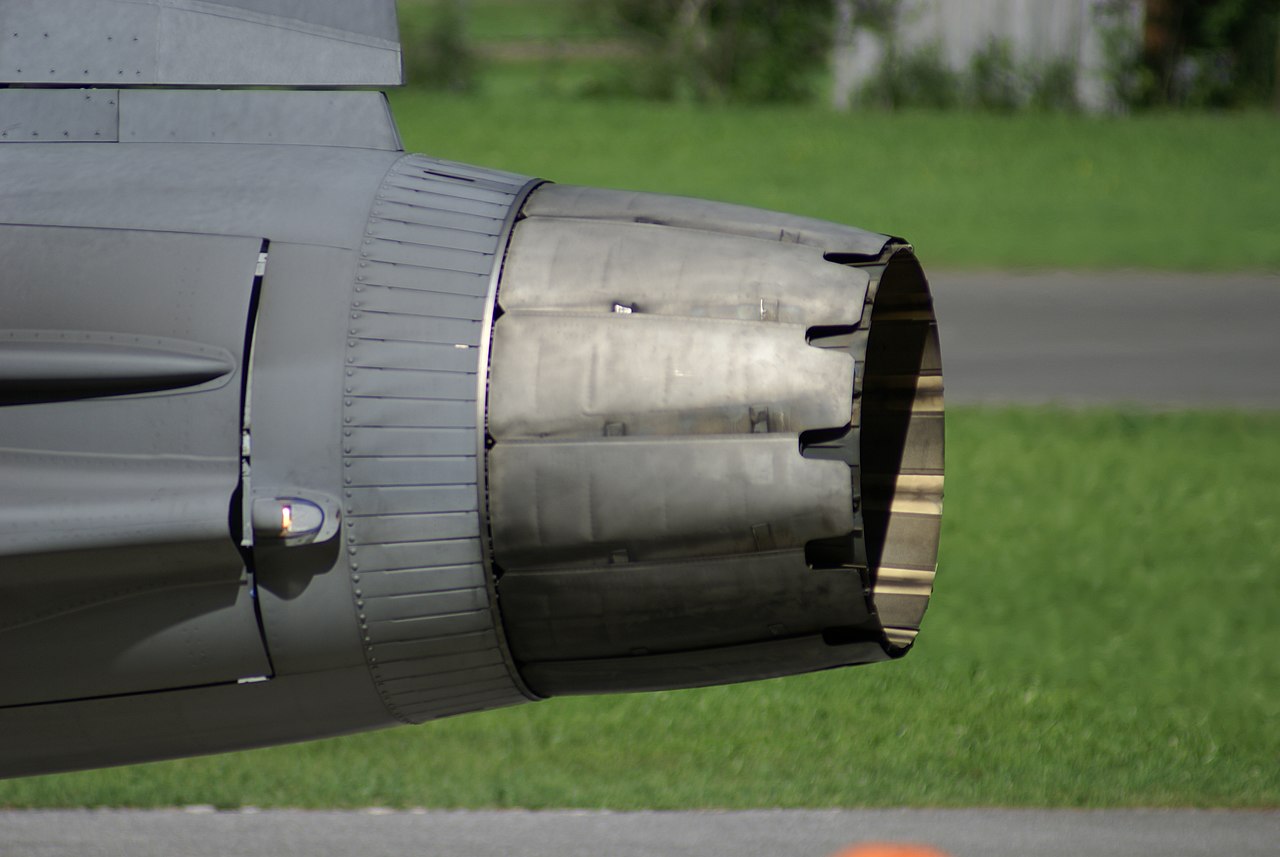
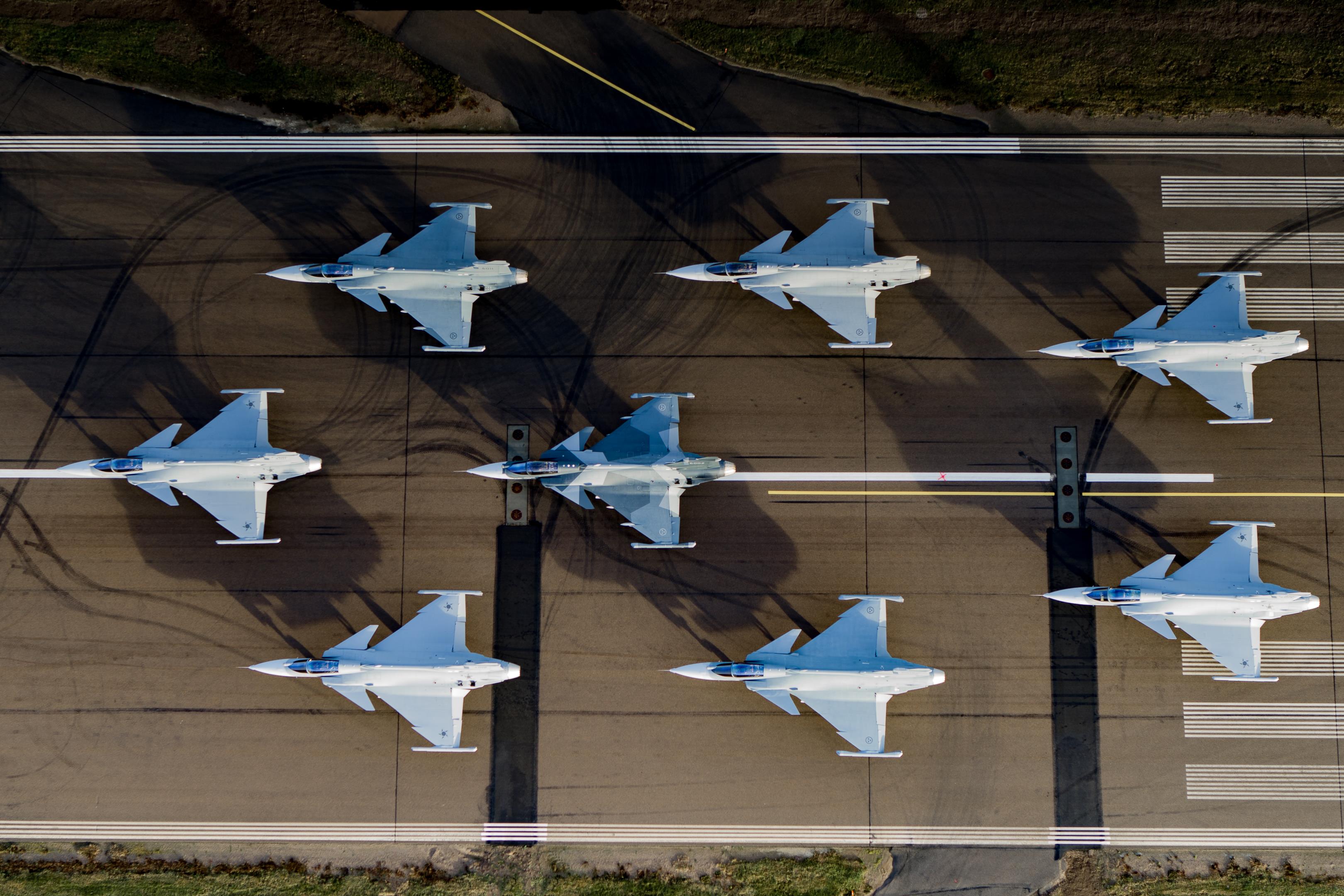
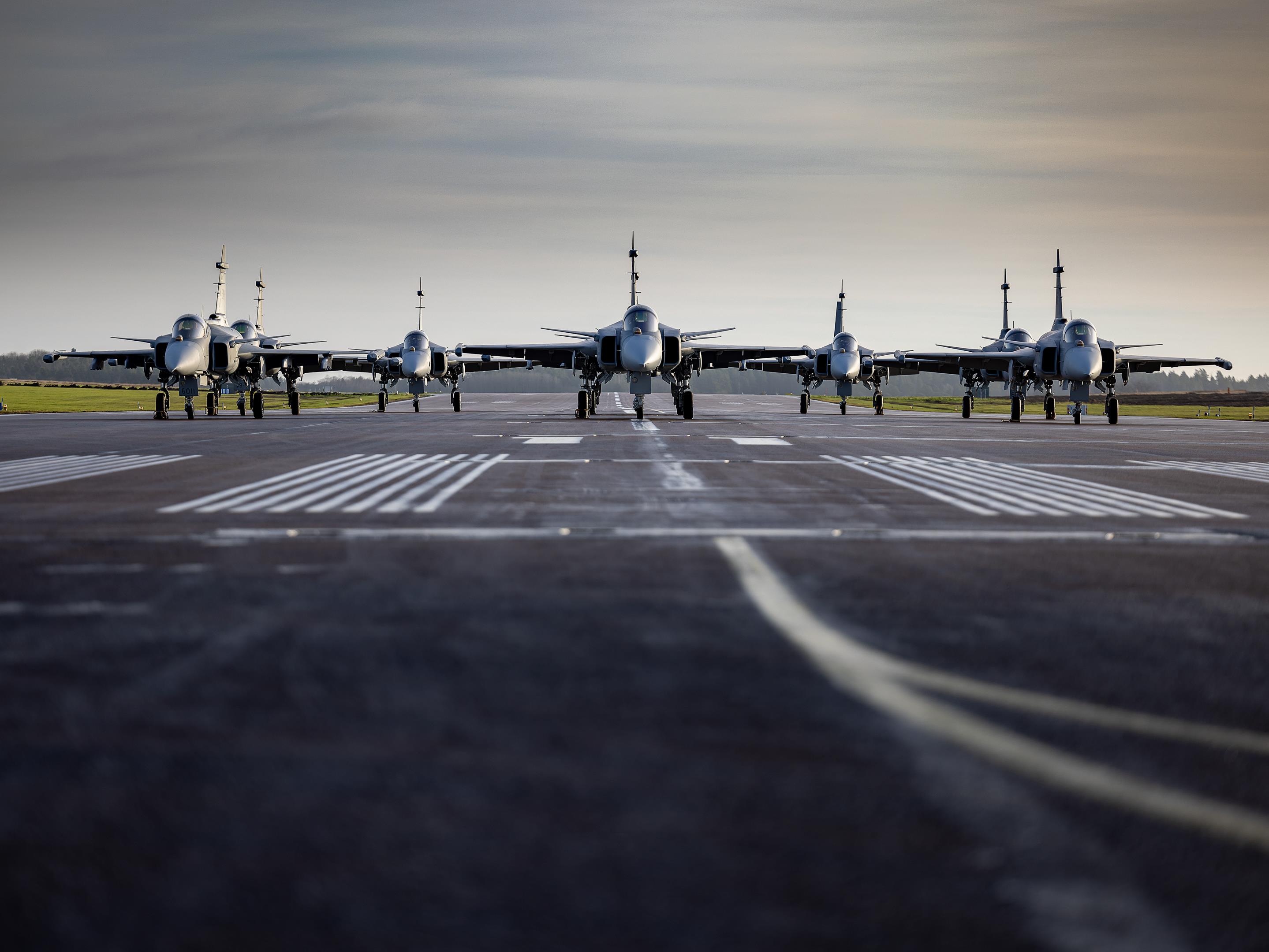
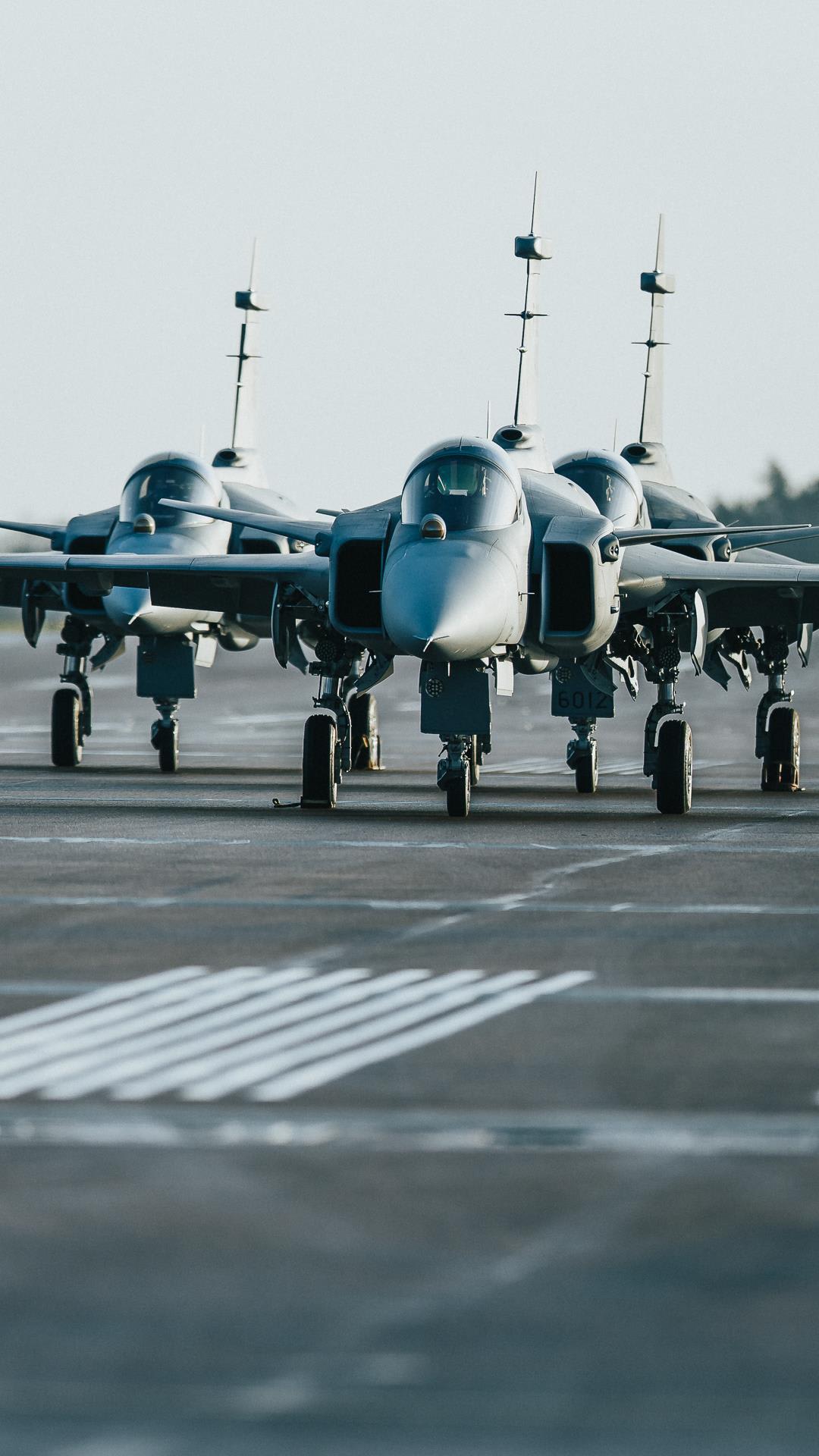
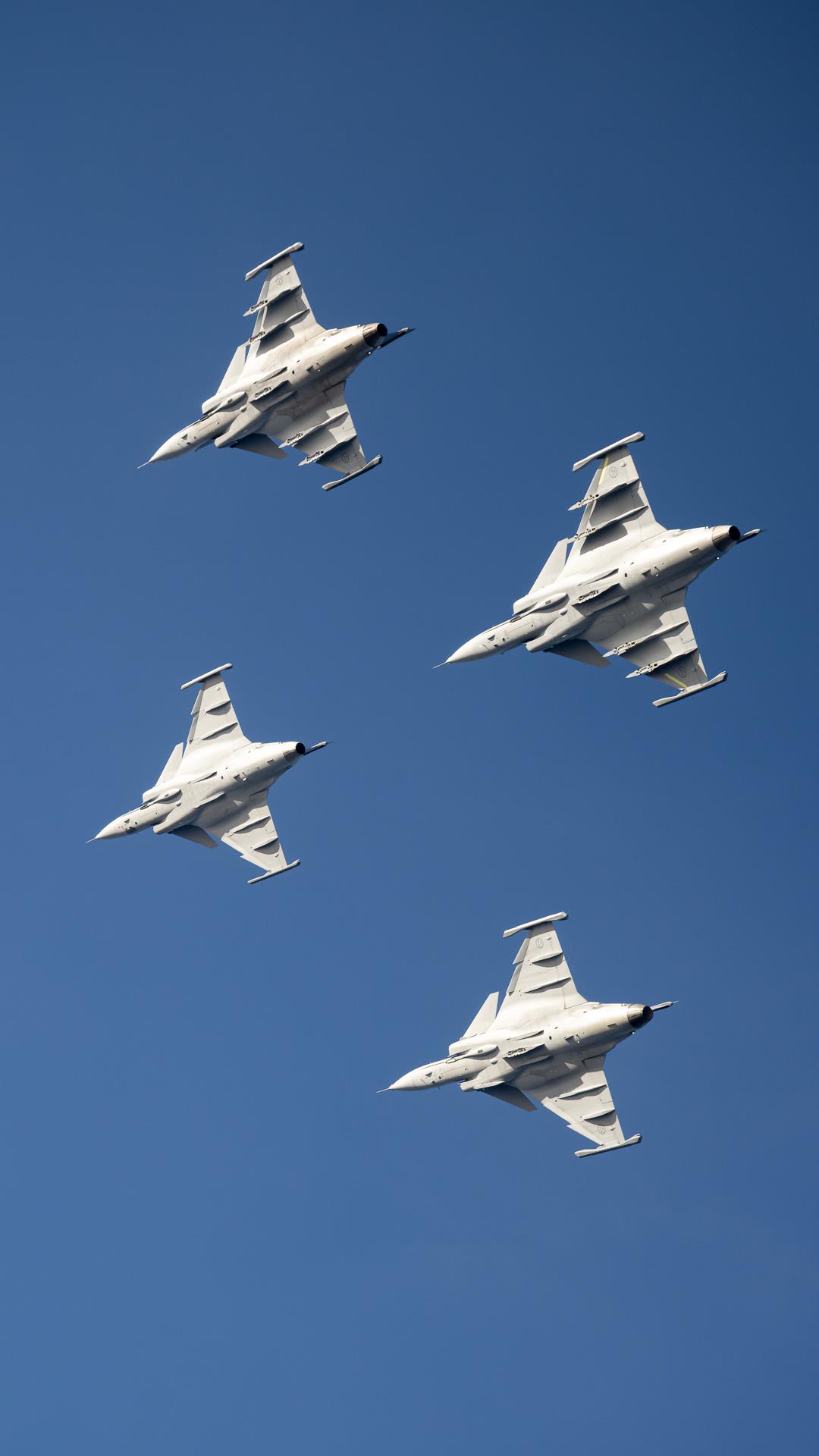
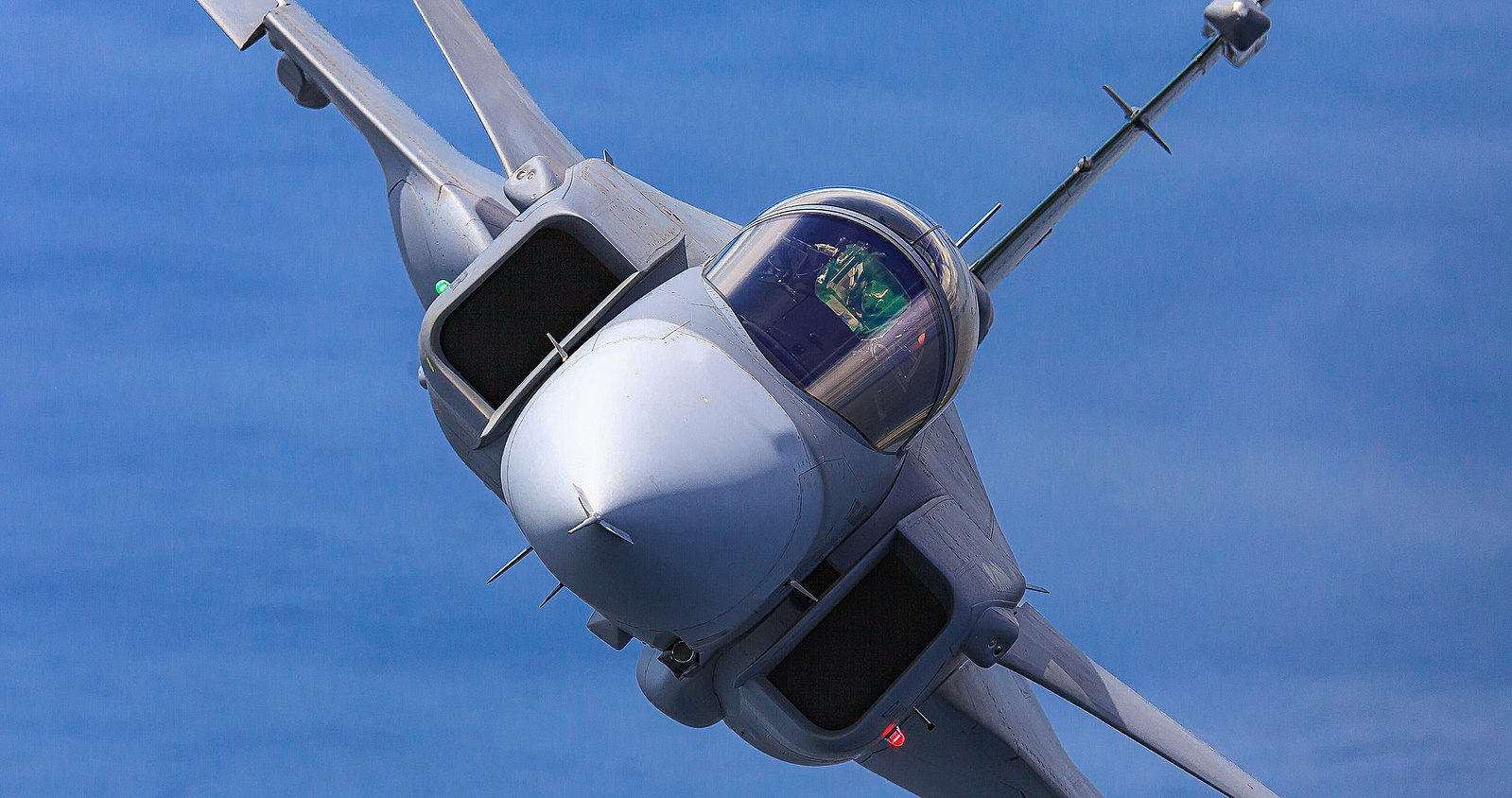
Design The JAS 39 Gripen fighter jet is a light single-engine supersonic multirole fighter jet with a delta wing and canard configuration with relaxed stability design and fly-by-wire flight controls. The engine used in this fighter jet is called Reaktionsmotor 12 (RM12), which is a licence-built derivative of the General Electric F404−400. The RM12 engine is produced by the Swedish company Volvo Aero, which was sold to the English company GKN Ltd in 2012.
Volvo RM12 engine
The Gripen fighter jet uses the PS-05/A radar, which is a 156 kg pulse doppler radar currently installed on the A, B, C and D models. The PS-05/A radar works in the 8-10 GHz band and has an energy output of 1 kW (more than 10 kW maximum output) and can automatically identify, locate and track multiple targets in the upper and lower spheres, land and sea or air in any weather condition. The PS-05/A family radars were developed by Ericsson in collaboration with GEC-Marconi.
Variants and upgrades
Gripen A, or JAS 39A: initial single seat version that entered service with the Swedish Air Force in 1996. A number have been upgraded to the C standard or been converted to 39D at a 2:1 ratio.
Gripen B, or JAS 39B: two-seat version of the 39A for training, specialised missions and type conversion. To fit the second crew member and life support systems, the internal cannon and an internal fuel tank were removed and the airframe lengthened 0.66 m.
Gripen C, or JAS 39C: NATO-compatible single seat version with extended capabilities in terms of armament, electronics, etc. Can be refuelled in flight. Variant was first deliveried on 6 September 2002.
Gripen D, or JAS 39D: two-seat version of the JAS 39C, with similar alterations as the JAS 39B.
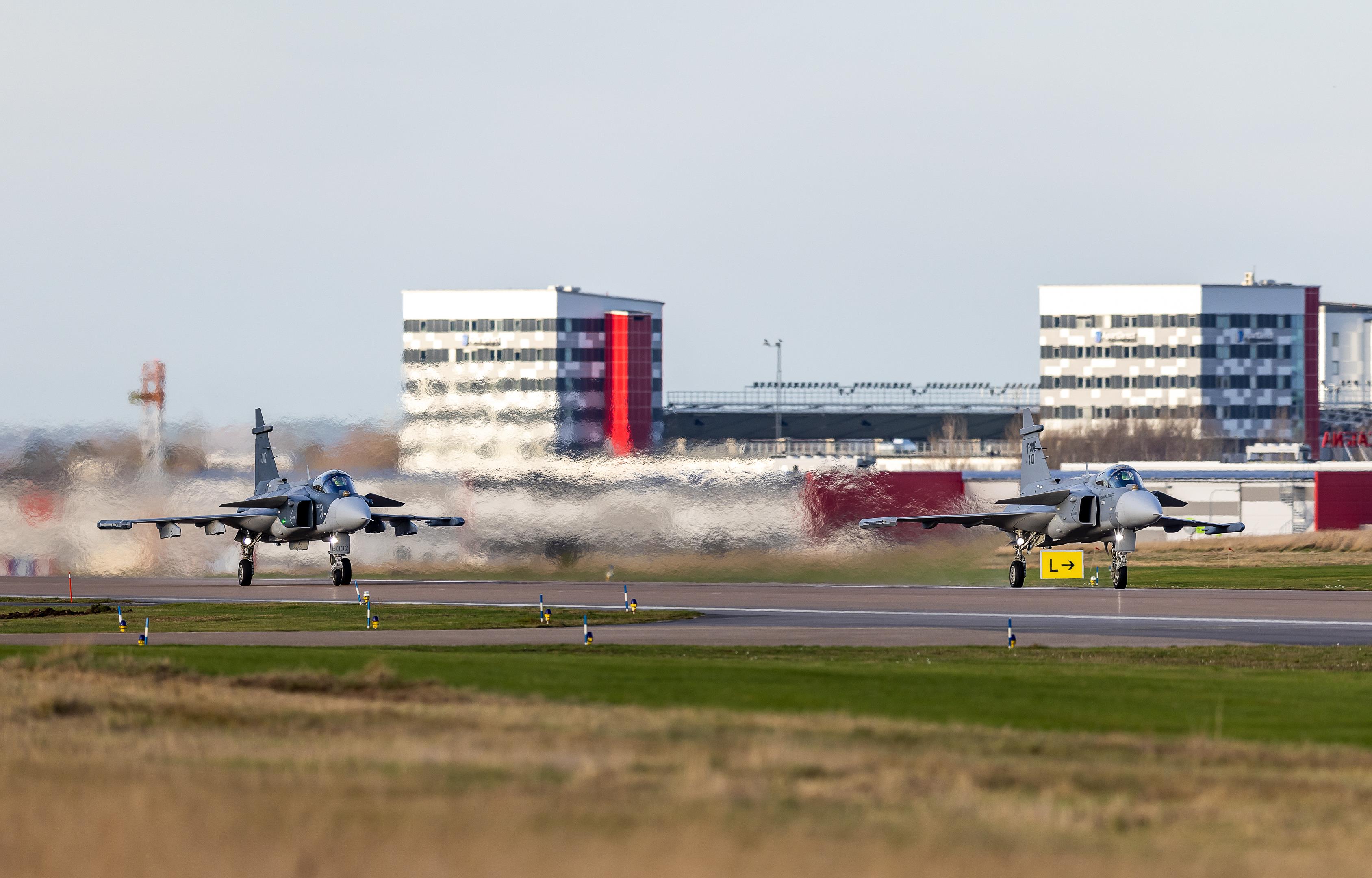
Gripen NG: Follow-on the Gripen Demo technology demonstrator. Changes from the JAS 39C include the more powerful F414G engine, Raven ES-05 AESA radar, increased fuel capacity and payload, and two additional hardpoints. These improvements reportedly increased costs to an estimated 24,000 Swiss Francs (US$27,000) per hour, and the flyaway cost to 100 million Swiss Francs (US$113M).
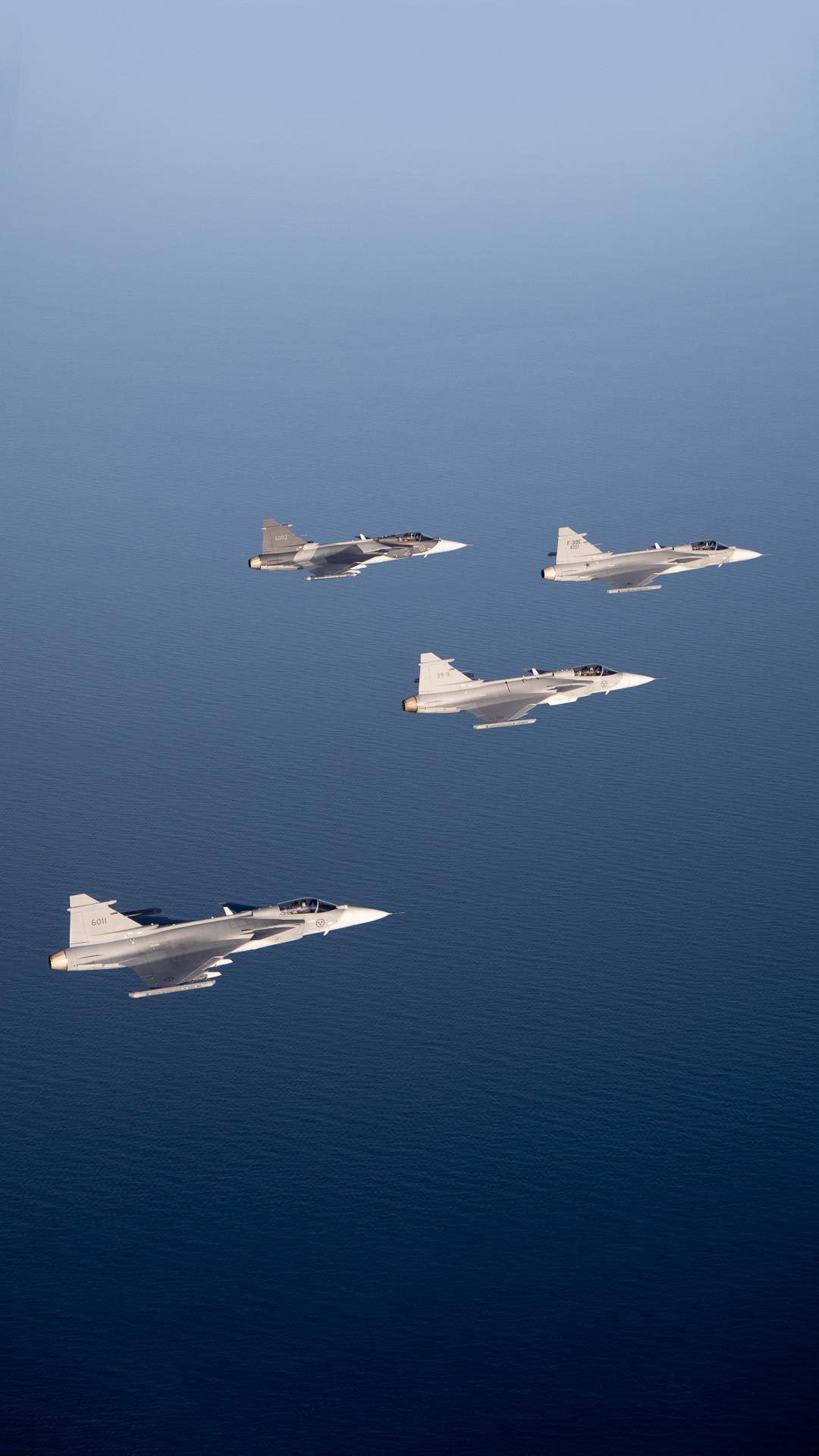
Gripen E, or JAS 39E: single-seat production version developed from the Gripen NG program, priced at US$85 million per unit. Sweden and Brazil have ordered the variant. Brazil’s designation for this variant is F-39E.
Gripen F, or JAS 39F: two-seat version of the JAS 39E. Eight ordered by Brazil, to be developed and assembled in Brazil; planned for pilot training and combat, being optimized for back seat air battle management, with jamming, information warfare and network attack, besides weapon system officer and electronic warfare rolesBrazil’s designation for the variant is F-39F.
Click to view full size
Specifications
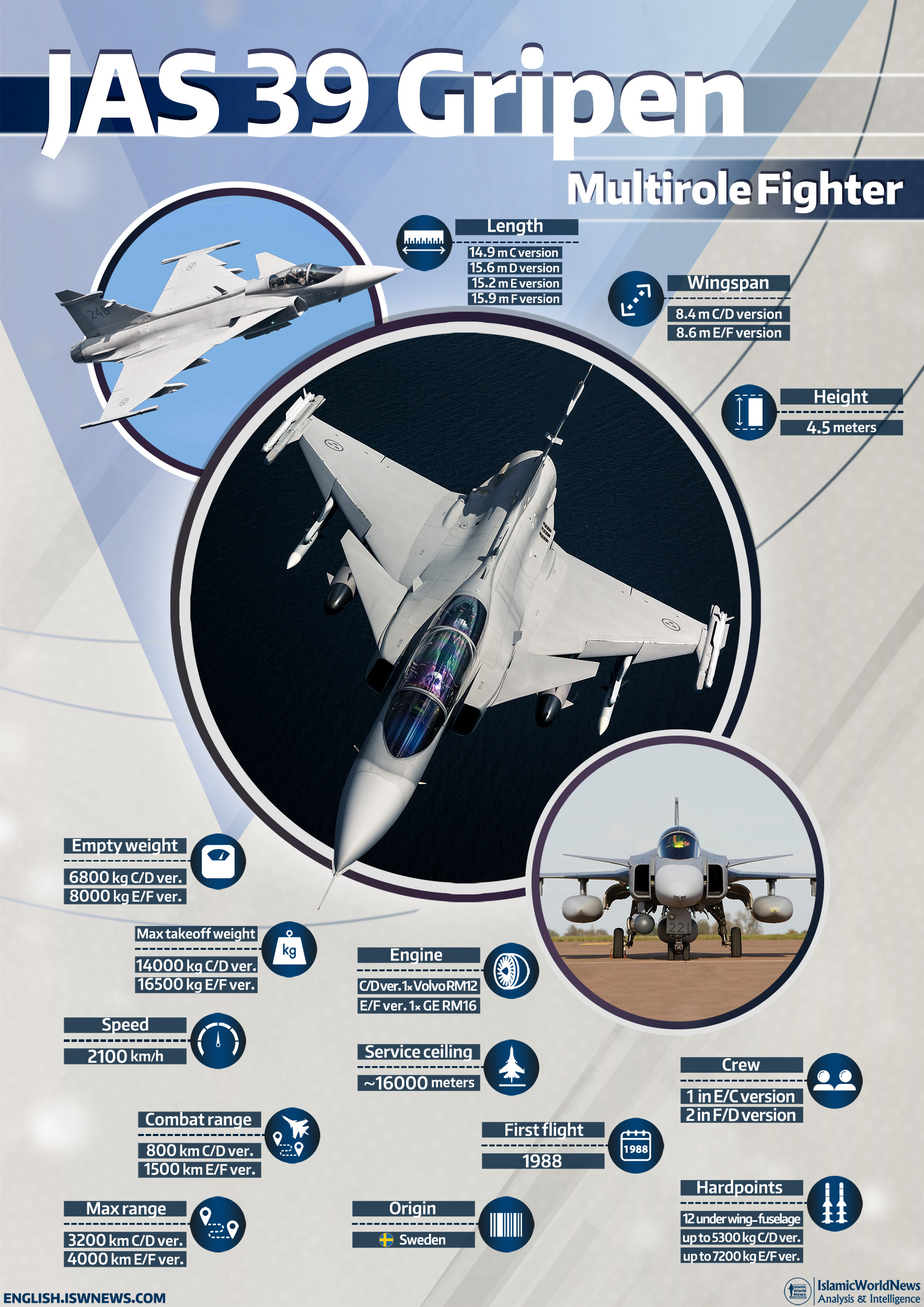
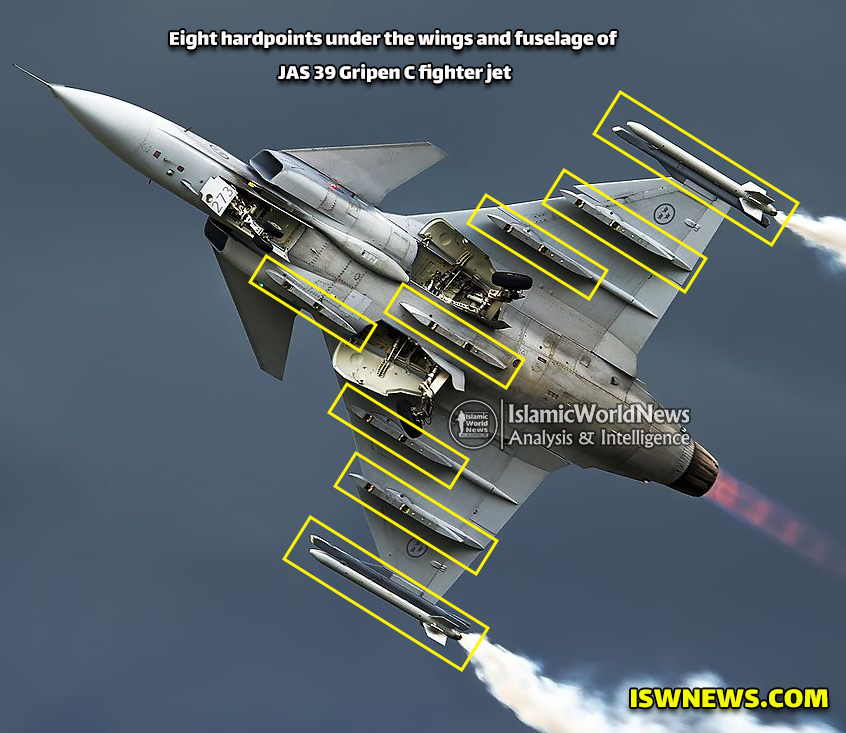
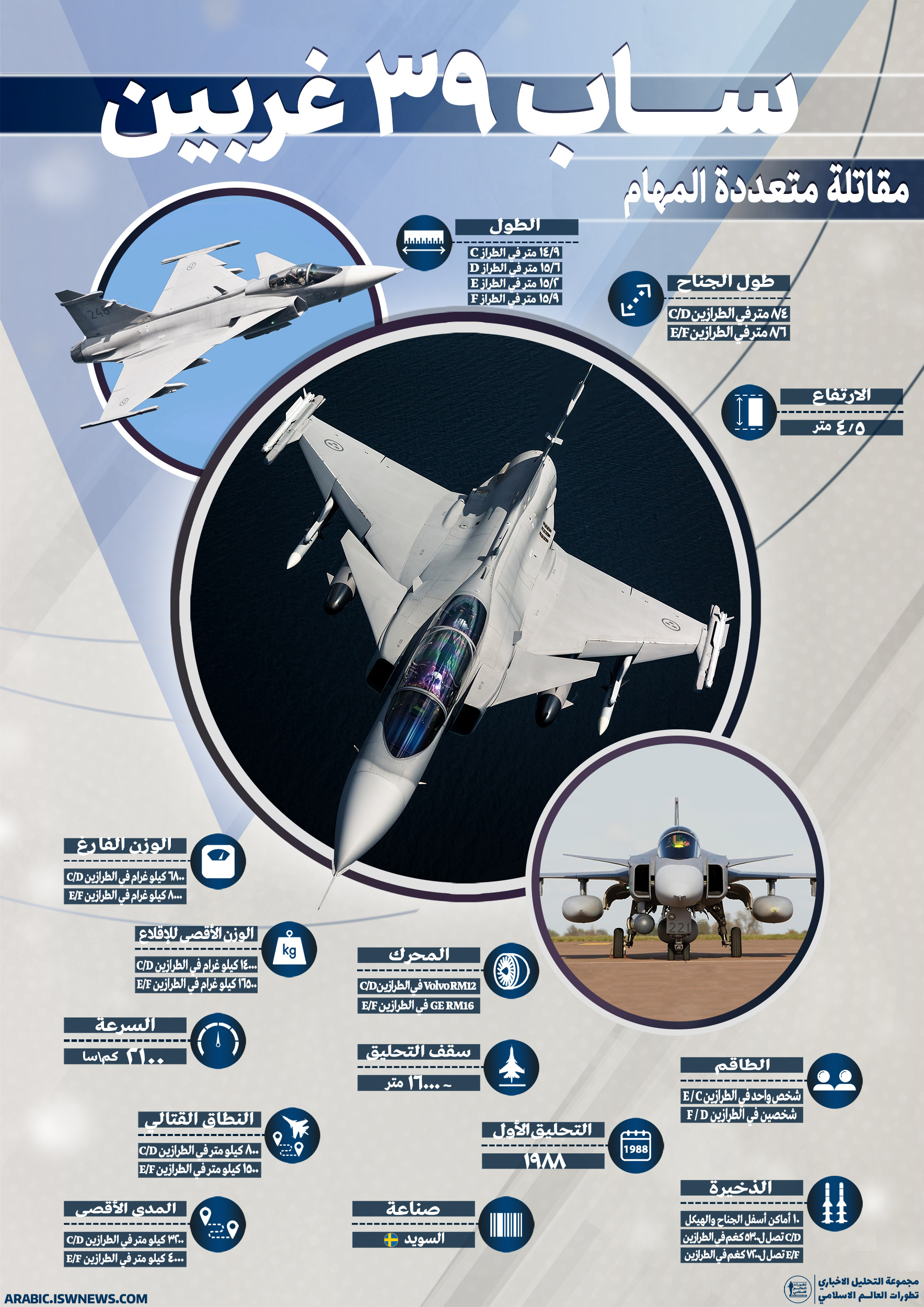
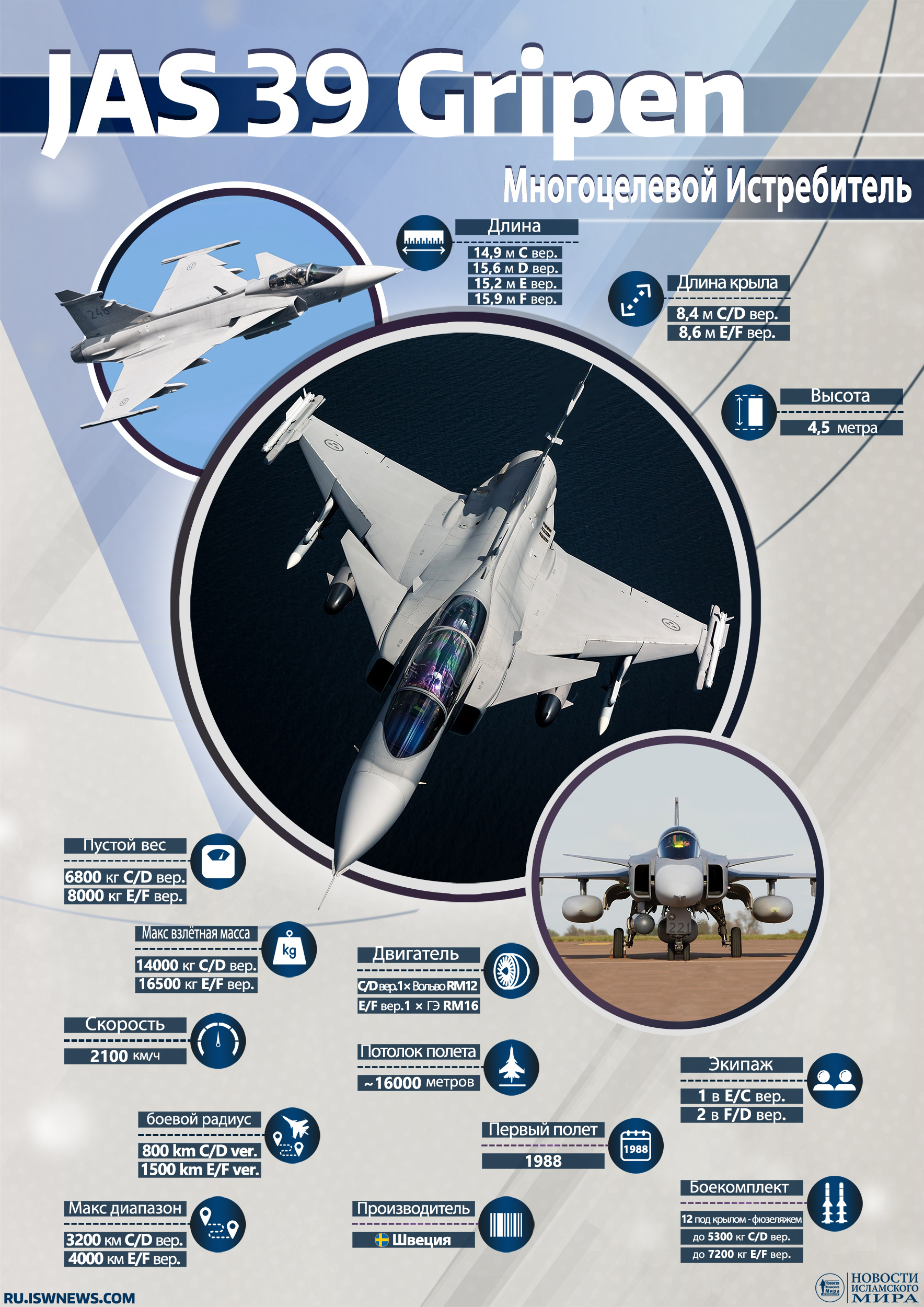
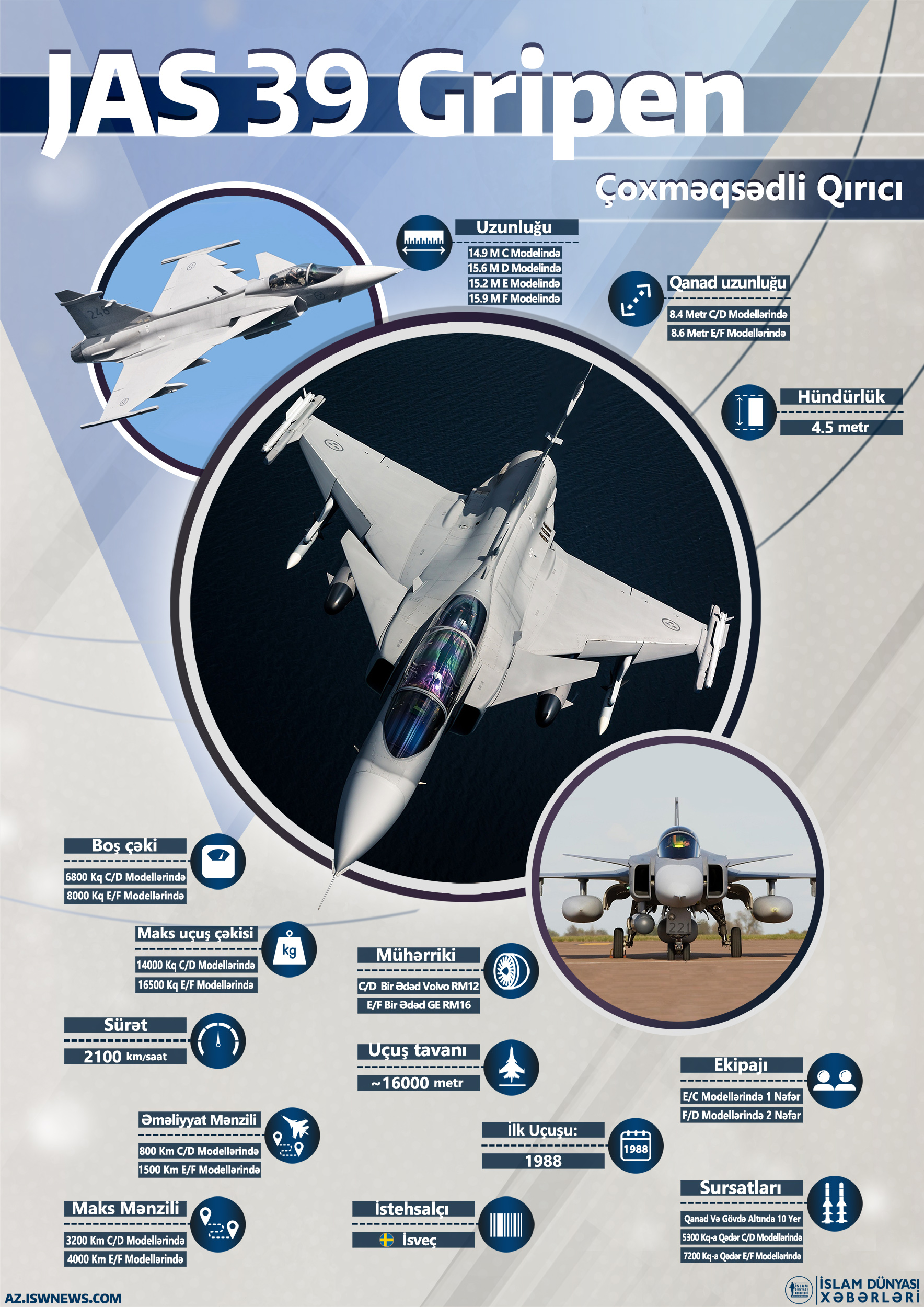
JAS 39C/D specifications: Crew: 1 JAS 39C / 2 JAS 39D Length: 14.9 m JAS 39C / 15.6 m JAS 39D Wingspan: 8.4 m Height: 4.5 m Empty weight: 6,800 kg Max takeoff weight: 14,000 kg Fuel capacity: 3,000 L (internal); 3,500 L (external) Payload: 5,300 kg Powerplant: 1× Volvo RM12 afterburning turbofan engine, 54 kN thrust dry, 80.5 kN with afterburner Maximum speed: Mach 2 (2,100 km/h) Combat range: 800 km Ferry range: 3,200 km Service ceiling: 15,240 m (50,000 ft) Armament Guns: 1× 27 mm Mauser BK-27 revolver cannon with 120 rounds (single-seat models only) Hardpoints: 8 (two hardpoints under fuselage, two under each wing, and one on each wing tip, with one of these for FLIR / ECM / LD / Recon pod) with a capacity of 5,300 kg.
JAS 39E/F specifications: Crew: 1 JAS 39E / 2 JAS 39F Length: 15.2 m JAS 39E / 15.9 m JAS 39F Wingspan: 8.6 m Height: 4.5 m Empty weight: 8,000 kg Max takeoff weight: 16,500 kg Fuel capacity: 4,360 L (internal); 4535 L external with 3 drop tanks Payload: 7,200 kg Powerplant: 1× General Electric F414-GE-39E (RM16) afterburning turbofan engine, 61.83 kN thrust dry, 98 kN with afterburner Maximum speed: 2,100 km/h Combat range: 1,500 km Ferry range: 4,000 km Service ceiling: 16,000 m (52,000 ft) Armament Guns: 1 × 27 mm Mauser BK-27 revolver cannon with 120 rounds (single-seat models only Hardpoints: 10 (three hardpoints under fuselage, two under each wing, one on each wing tip, and one dedicated for FLIR / LD / Recon pod) with a capacity of 7,200 kg.
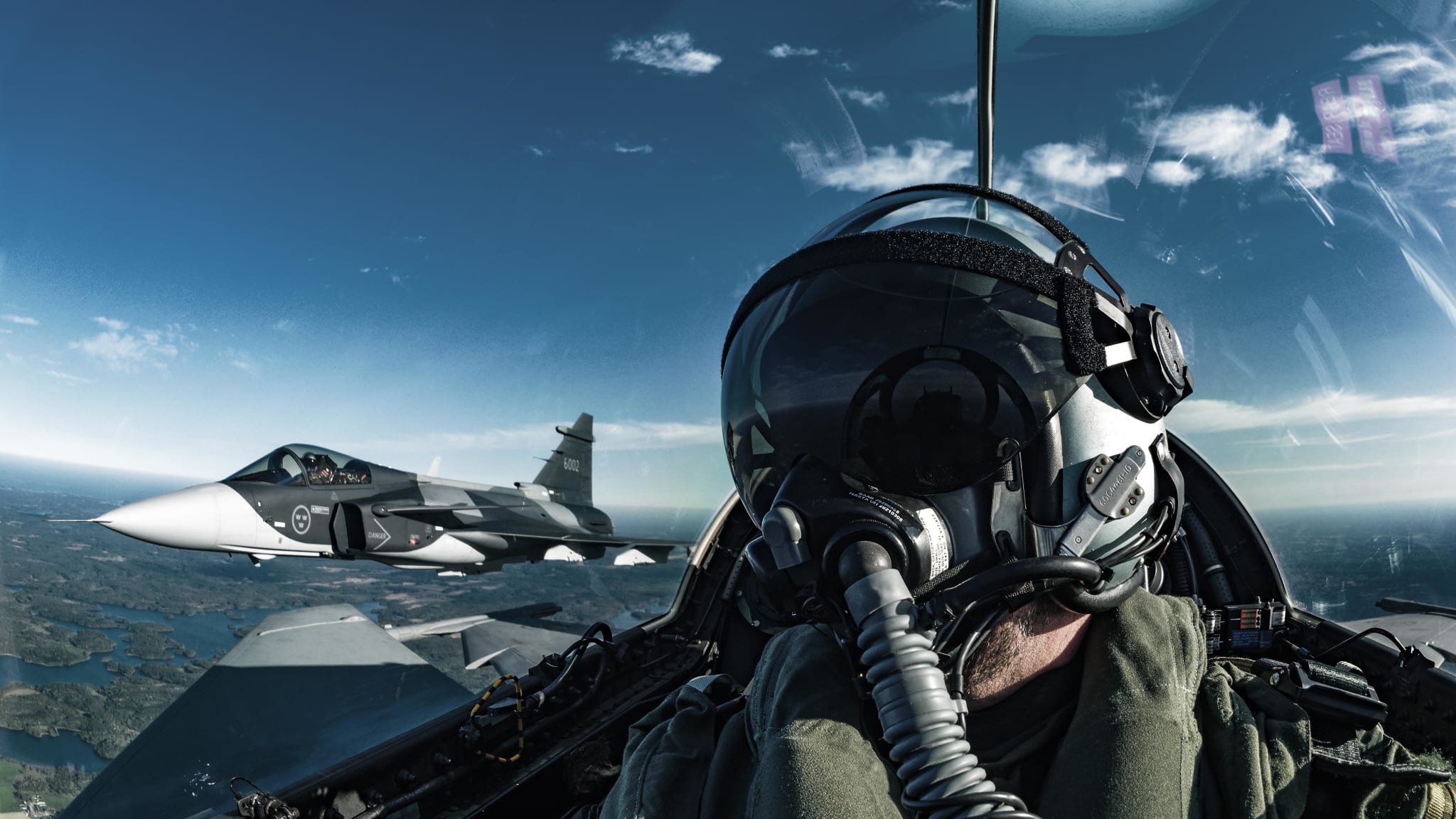
Avionics Selex ES-05 Raven AESA radar Skyward-G IRST system Air-to-air and air-to-surface tactical data link system Wide Area Display (WAD) (single screen display) Targo helmet mounted display (HMD) ANVIS advanced night vision system/head up display (HUD)
Saab JAS 39 Gripen Fighter Jet – click to view full sizeClick to view full size
Saab JAS 39 Gripen posters in Russian, Arabic and Azeri:
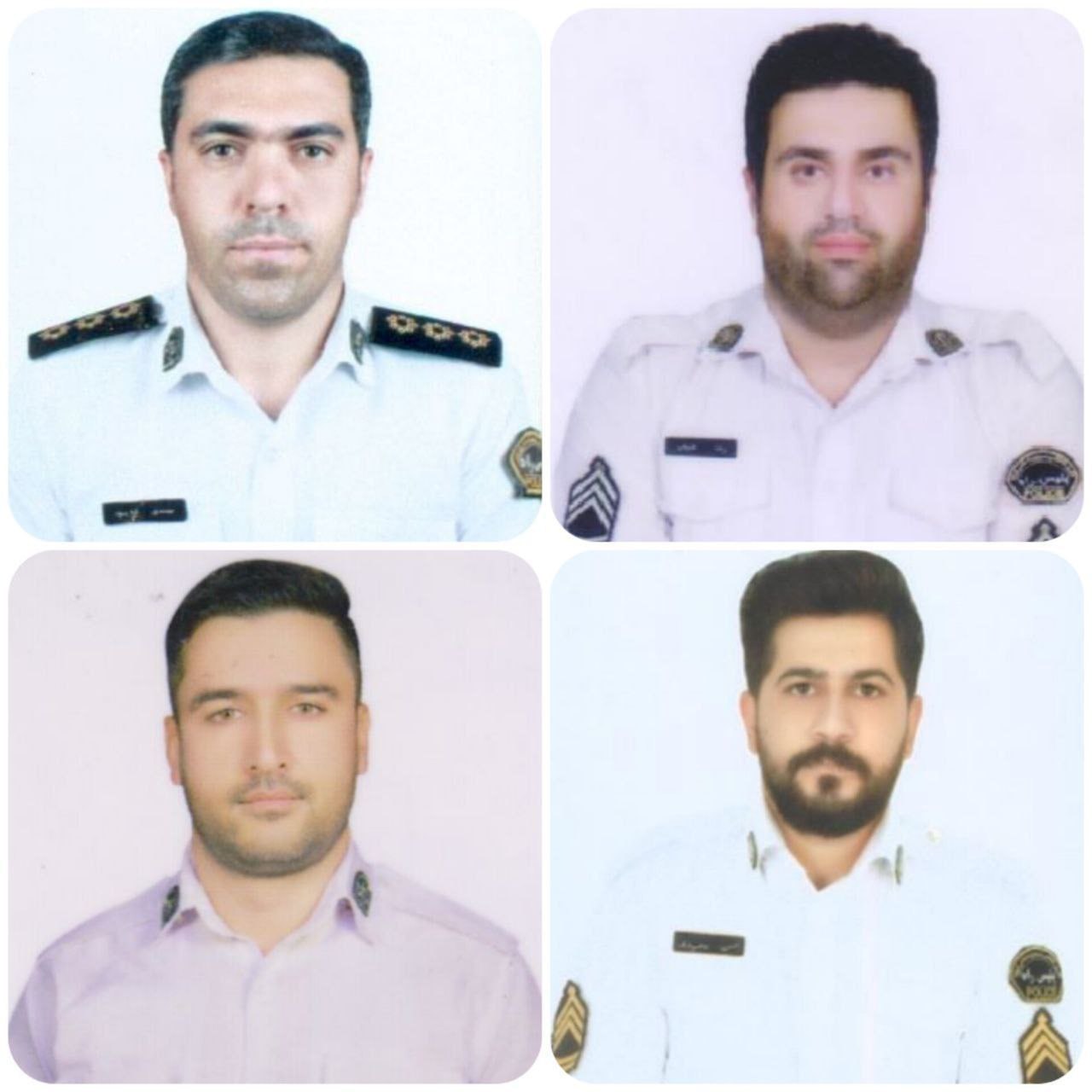
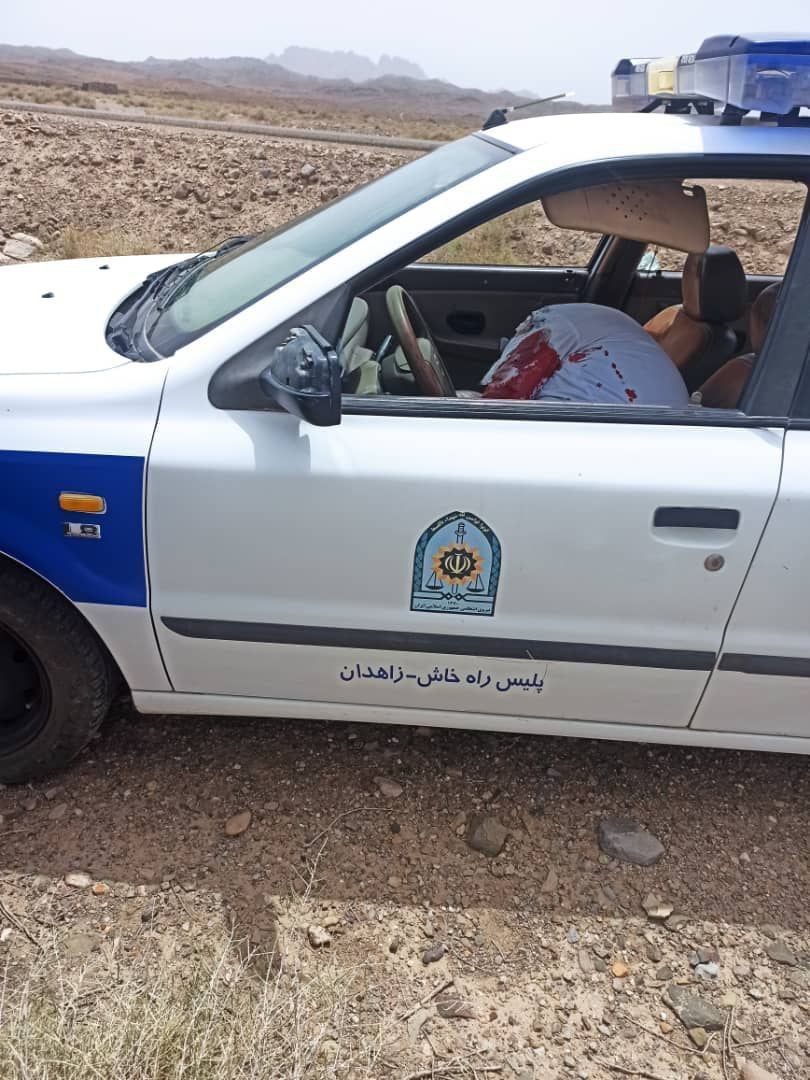
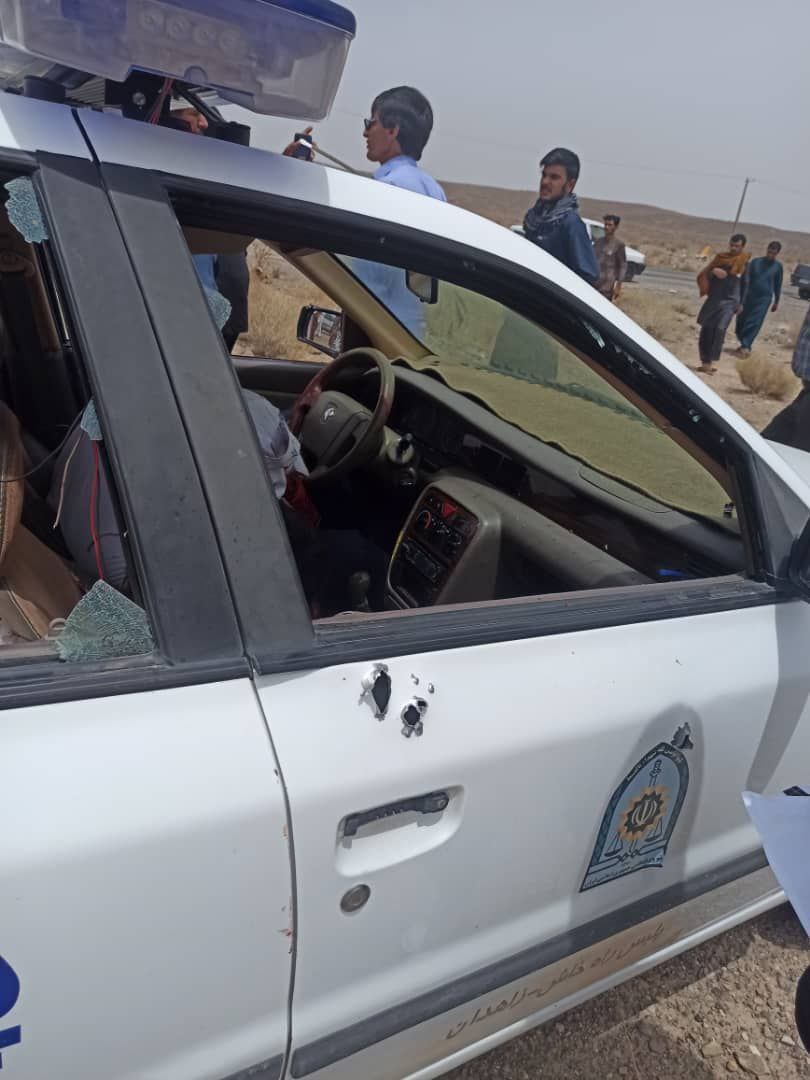
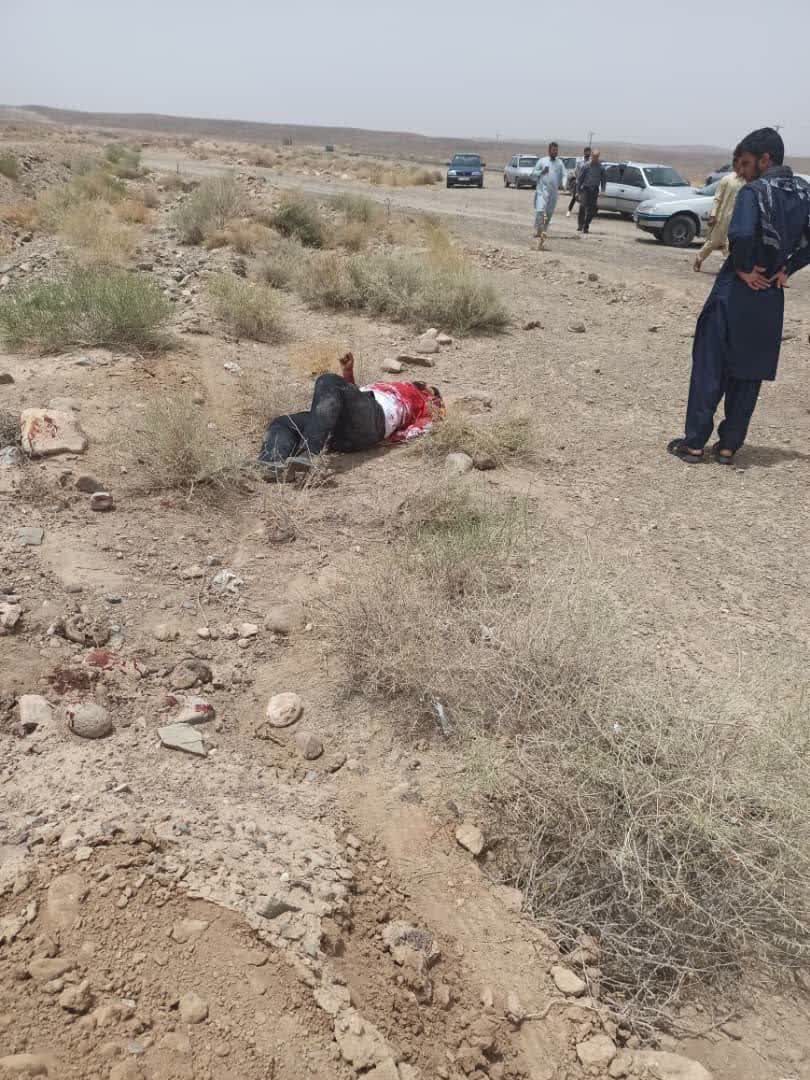
Zahedan, the capital of the province of Sistan-Baluchistan, which borders Pakistan and Afghanistan, is a key drug trafficking route.
A judicial order to arrest the perpetrators of the deadly attack was issued. No group has claimed responsibility, yet. However, due to the increase in the activities of the terrorist group known as Jaish ul-Adl, it is possible that this attack was also carried out by this group.
Violence has been on the rise in Sistan-Baluchistan for a while now. Several terrorist attacks and security incidents were reported in recent months.
On May 21, five Iranian border guards were killed in a clash with terrorists in the town of Saravan on Sistan-Baluchistan border with Pakistan. Three days later, on May 24, the Islamic Revolutionary Guard Corps said that it dismantled a terrorist cell during an operation in the province.
Between May 27 and 28, clashes between Iranian troops and Taliban fighters were reported at the Makaki area on the province border with Afghanstan’s Nimruz province. As a result of the clashes, an Iranian border guard and two Afghan fighters were killed.
Later on July 8, four militants who attempted to attack a police center in Zahedan were killed by Iranian security forces. An Iranian officer and soldier were also killed.
ISWNews Analysis Group: The attacks resulted in the killing and wounding of militants on both sides, with most of the casualties and damages inflicted on the Southern Transitional Council.
The escalation of Al-Qaeda attacks is taking place in the shadow of competition by Saudi Arabia and the United Arab Emirates (UAE) for control of Abyan Governorate.
A great number of local media and analysts consider Al-Qaeda’s movements against the Southern Transitional Council to be a project commissioned by Saudi Arabia.
The entire process of designing and producing of this missile was carried out by the Aerospace Industries of the Islamic Revolutionary Guard Corps of Iran.
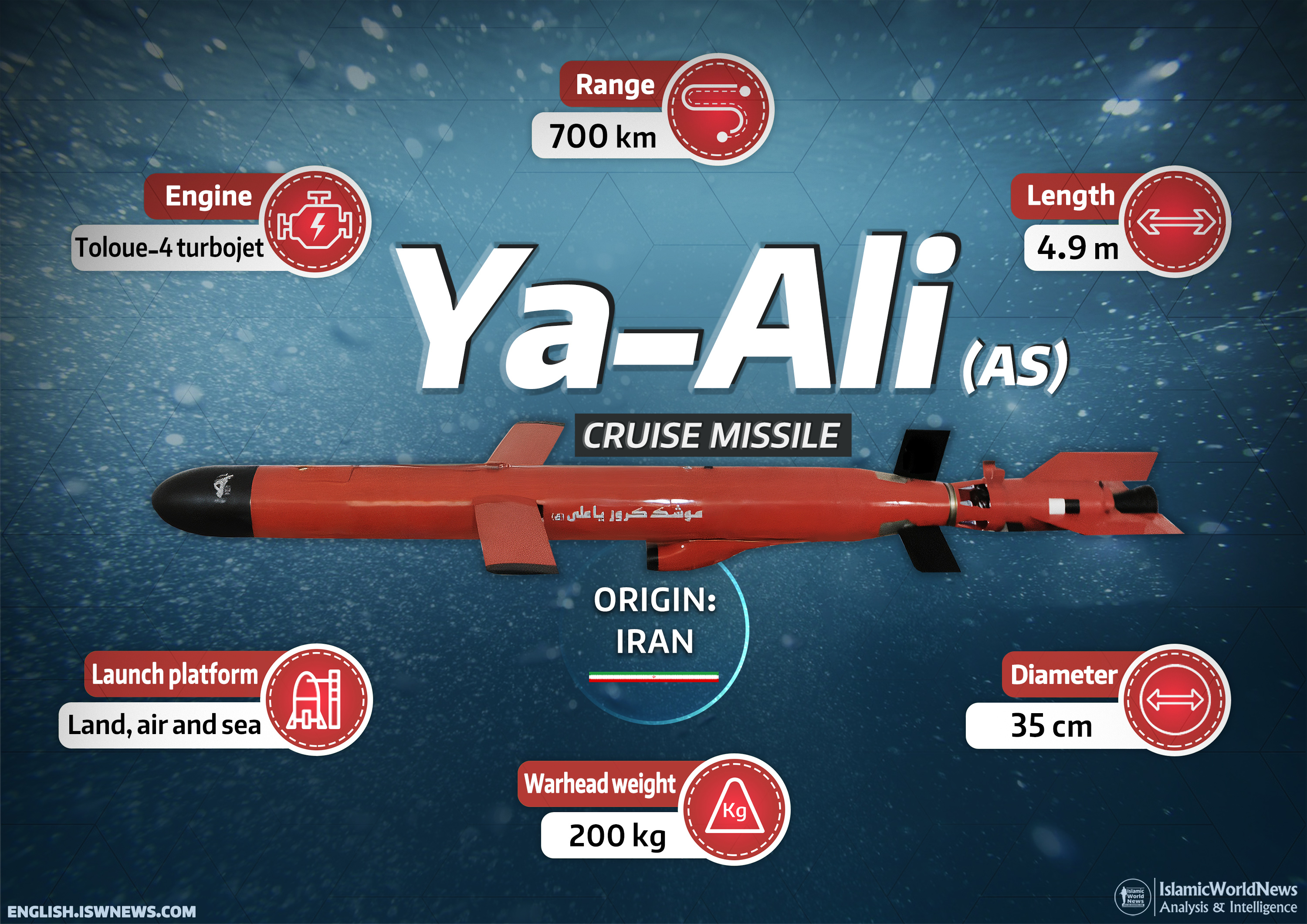
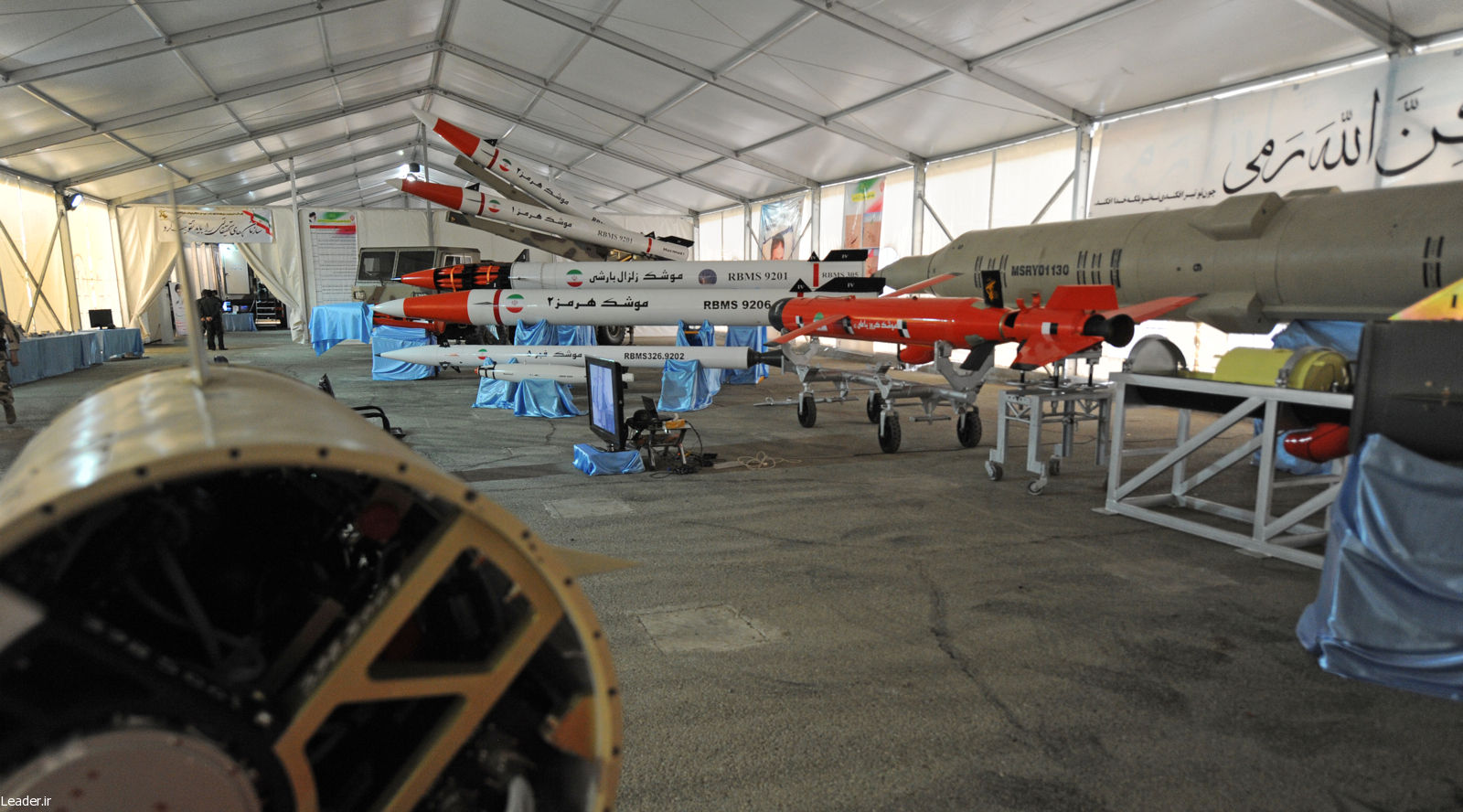
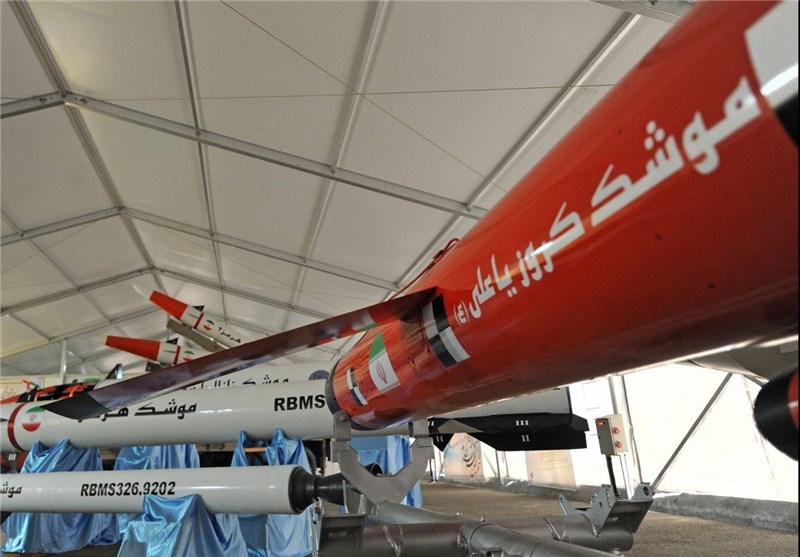
The missile was first unveiled on 11 May 2014 when Iranian leader Grand Ayatollah Ali Khamenei visited the Aerospace Force of the Army of the Guardians of the Islamic Revolution. In the same exhibition, the Ya Ali (AS) cruise missile was announced as a land cruise missile with a turbojet engine, a range of 700 km and a warhead of 200 kg. In another interview in 2014, General Hajizadeh, commander of IRGC Aerospace Force announced that this missile can be installed and used by the IRGC’s Sukhoi 22.
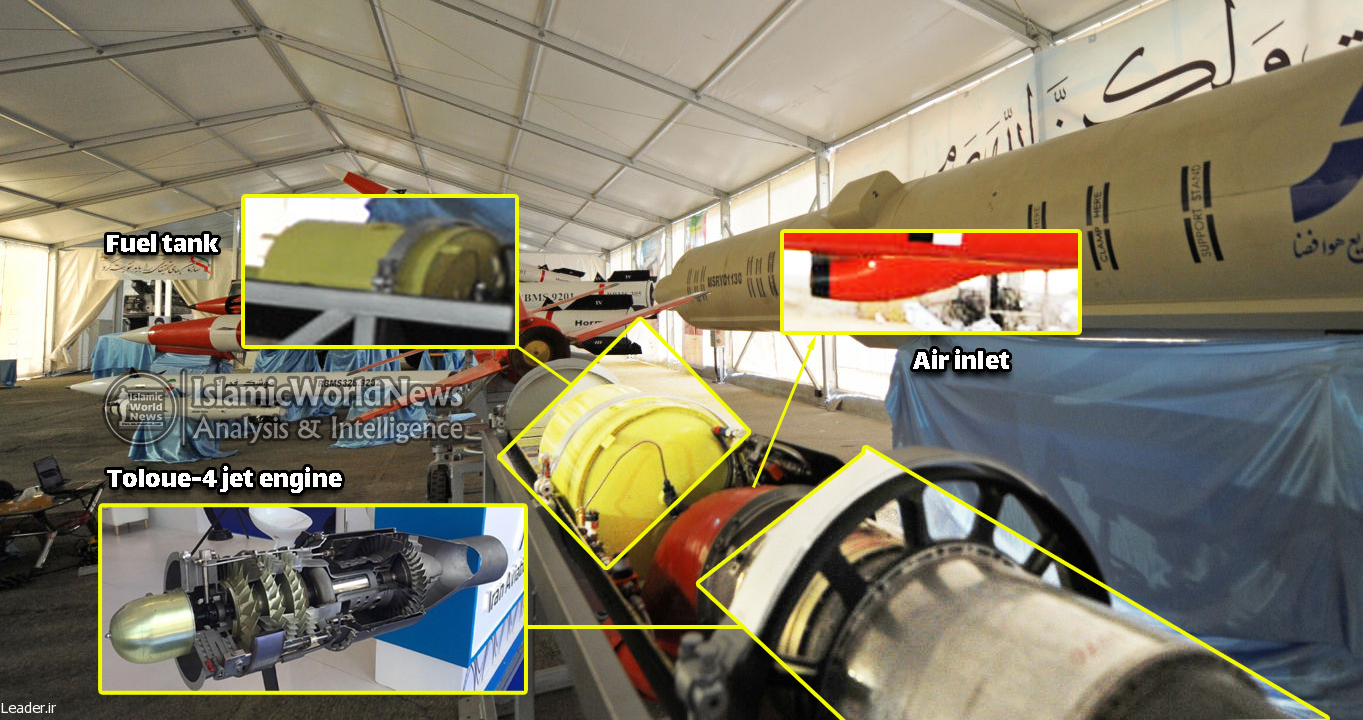
Based on the images released from the unveiling ceremony of Ya Ali (AS) cruise missile, it can be said that this missile has a cylindrical body, fixed rectangular wings, a jet engine at the end of the body and an air intake below it, and control fins at the end of the body.
The dimensions of this missile have not been officially announced, but in some sources, the length of the missile is 4.9 meters and its diameter is 35 centimeters.
No detailed information is available about the engine of this missile. Two Toloue-4 and TJ100 engines are considered as the main options, the most likely of which is the Toloue-4 engine. The Toloue-4 engine is installed on Ghader and Noor cruise missiles as well as the Karrar drone.
The guidance system of this missile has not been officially announced, but this missile can obviously use Terrain contour matching (TERCOM) or Digital Scene Matching Area Correlator (DSMAC) method. However, considering the time of unveiling and use of this missile, the most likely method is to use an altitude measuring radar along with the inertial system and GPS, which helps the autopilot in guiding the missile. One of the weaknesses of this missile is not using a camera in the last stage of hitting, which could increase the accuracy of this missile.
Click to view full size
Ya-Ali (a.s) cruise missile is considered the first achievement of Meshkat project. This project is defined to achieve a 2000 km cruise missile; Its first prototype is the Ya-Ali cruise missile. After this missile, Soumar and Abu Mahdi cruise missiles were also built with higher ranges.
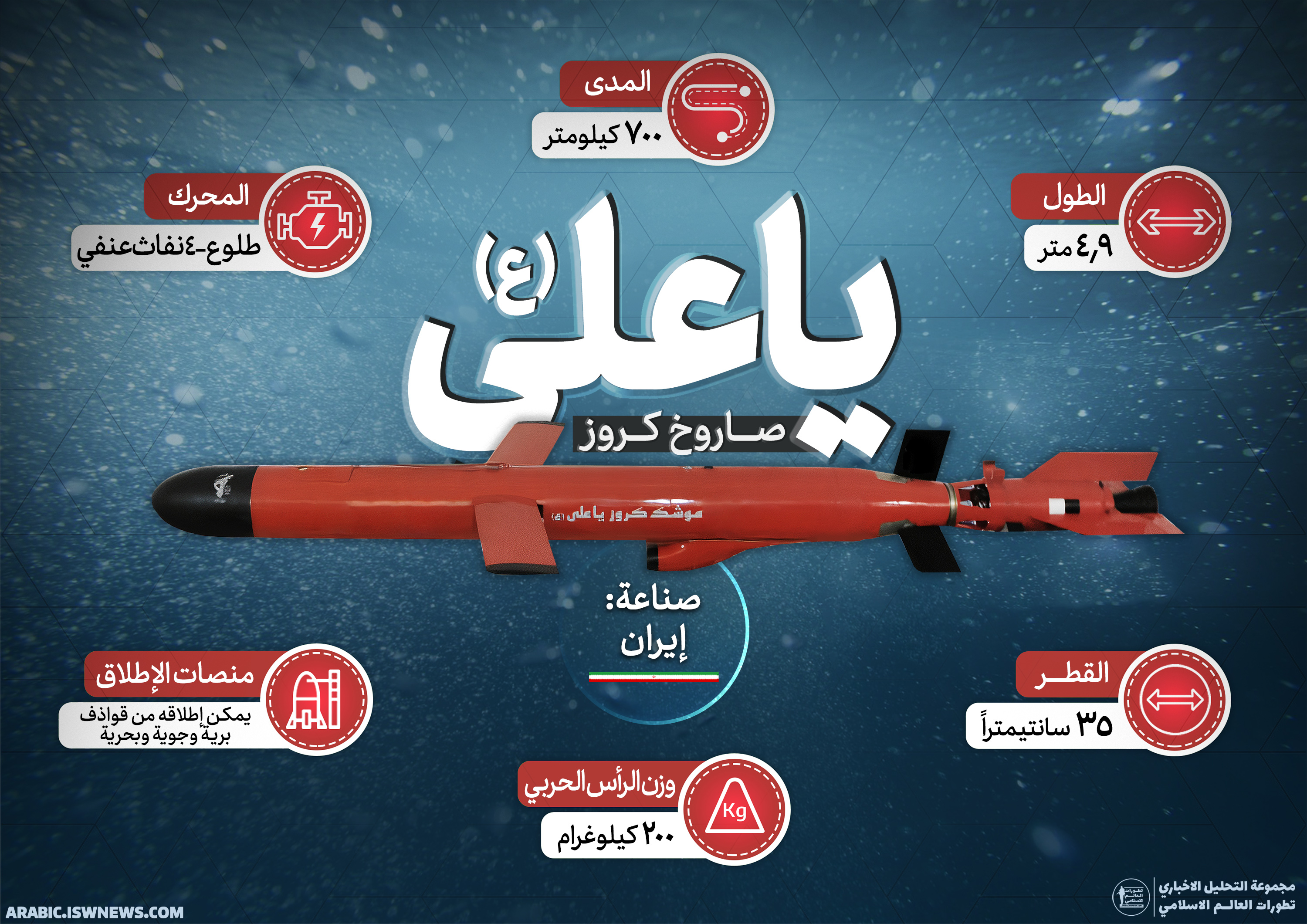
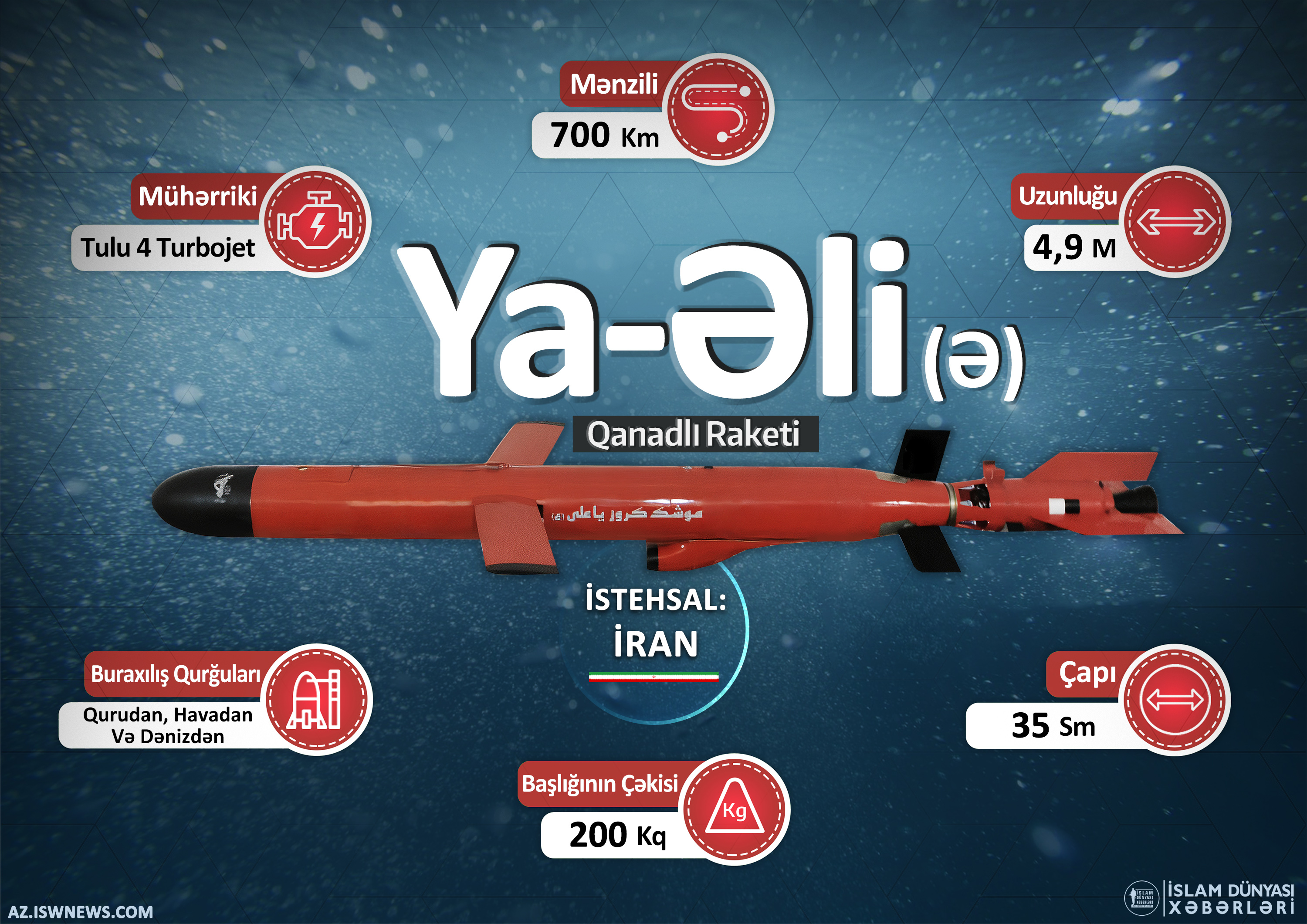
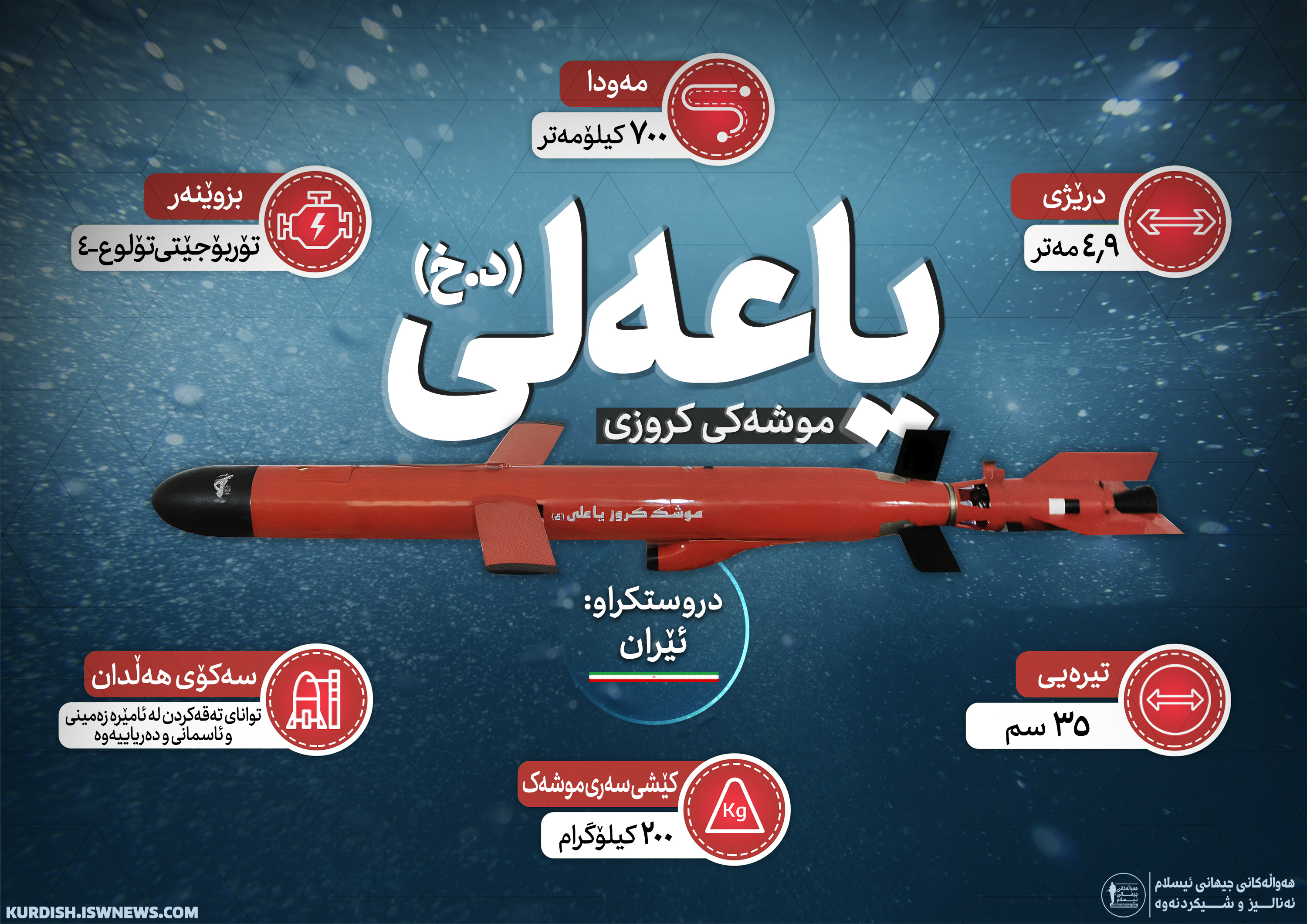
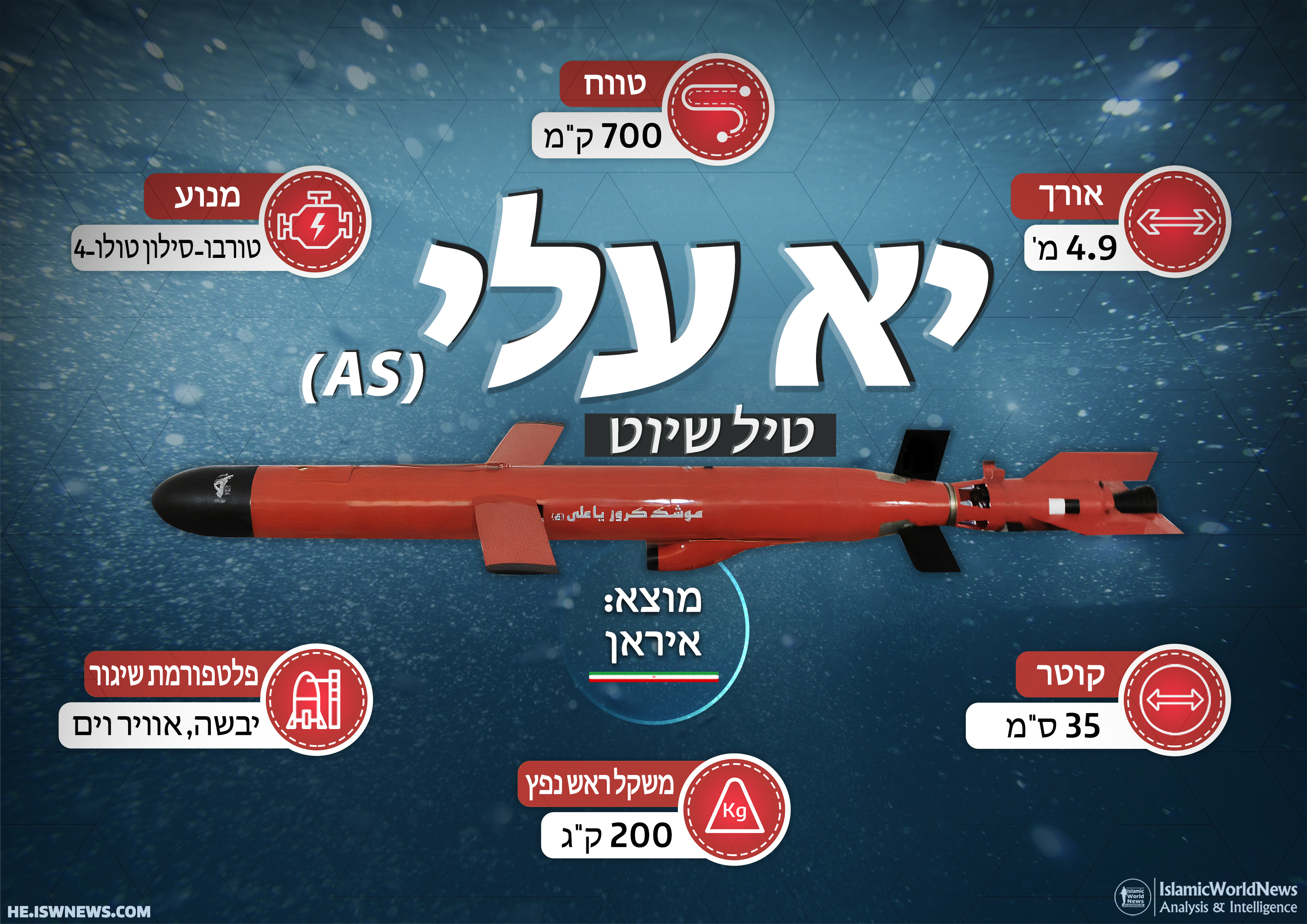
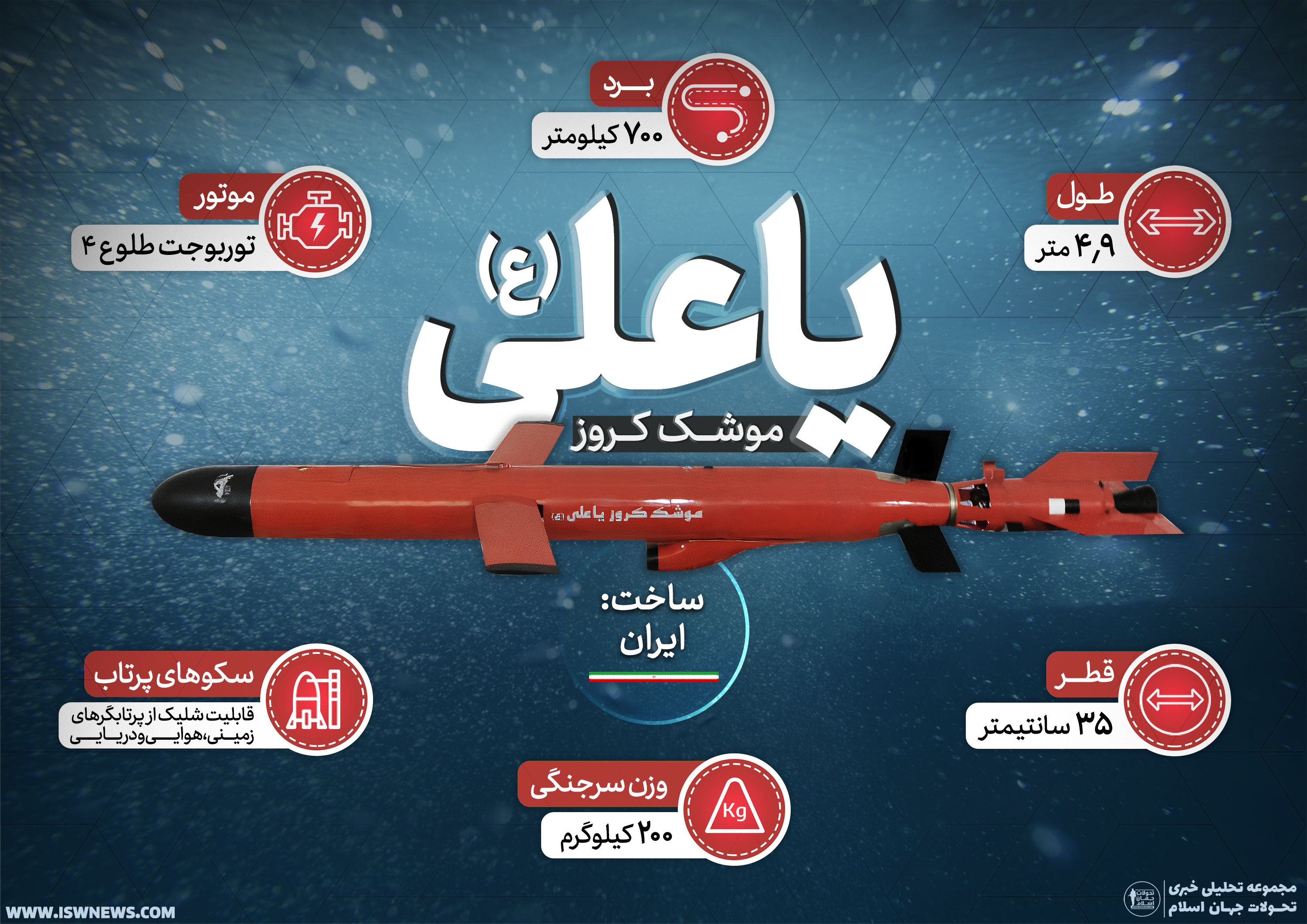
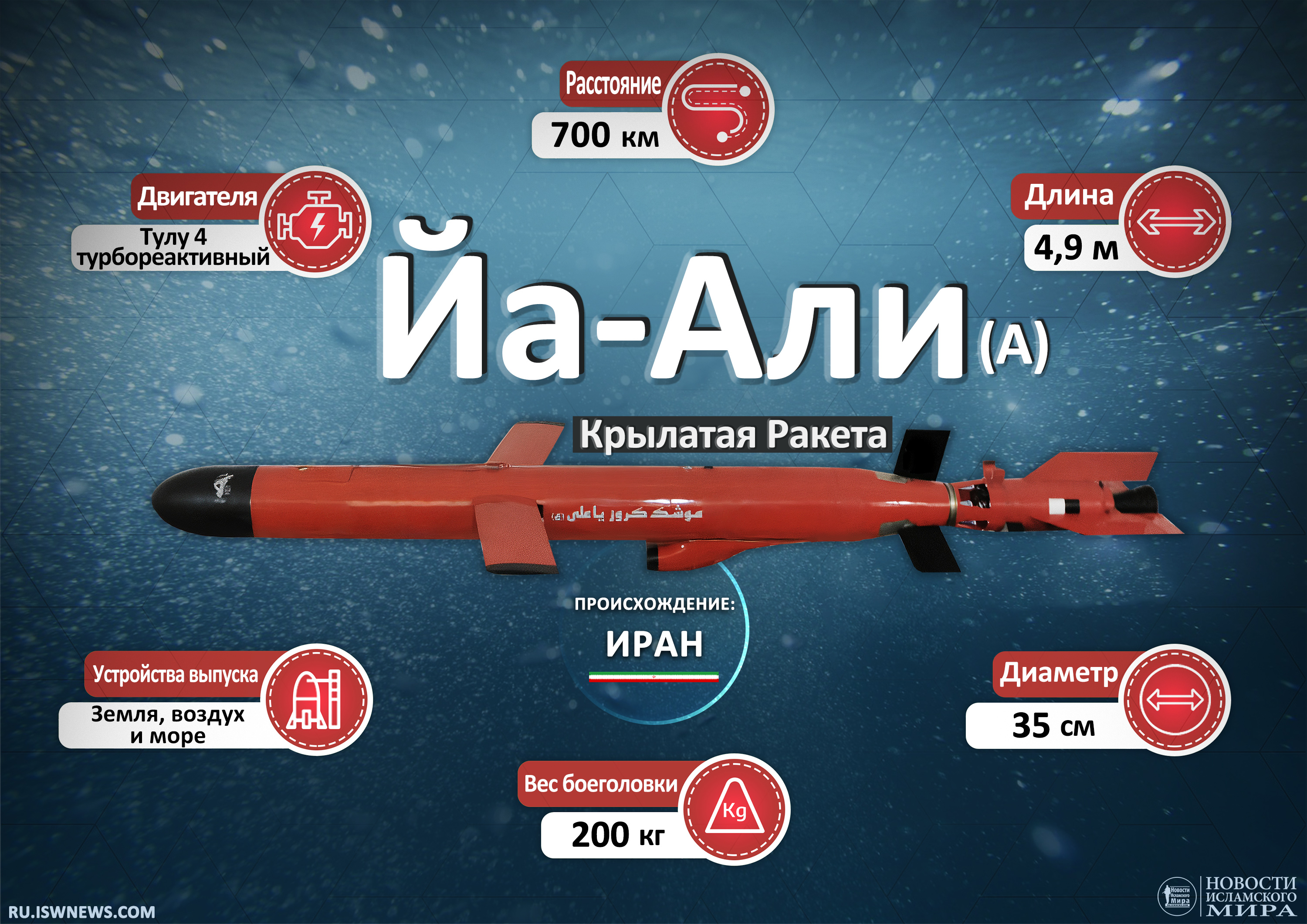
Specifications of Ya-Ali cruise missile: Length: 4.9 meters Diameter: 35 cm Range: 700 km Warhead weight: 200 kg Engine: Toloue-4 turbojet Launch platform: capable of firing from land, air and sea launchers Origin: Iran Designer and manufacturer: Islamic Revolutionary Guard Corps Aerospace Force
Ya-Ali cruise missile – click to view full size
Posters of Ya-Ali cruise missile in Farsi, Arabic (صاروخ كروز يا علي), Russian (Крылатая ракета Йа Али), Hebrew (טיל שיוט יא עלי), Chinese (亚阿里巡航导弹), Kurdish (موشەکی کروزی یاعەلی) and Azeri (Ya Əli (Ə) Qanadlı Raketi):
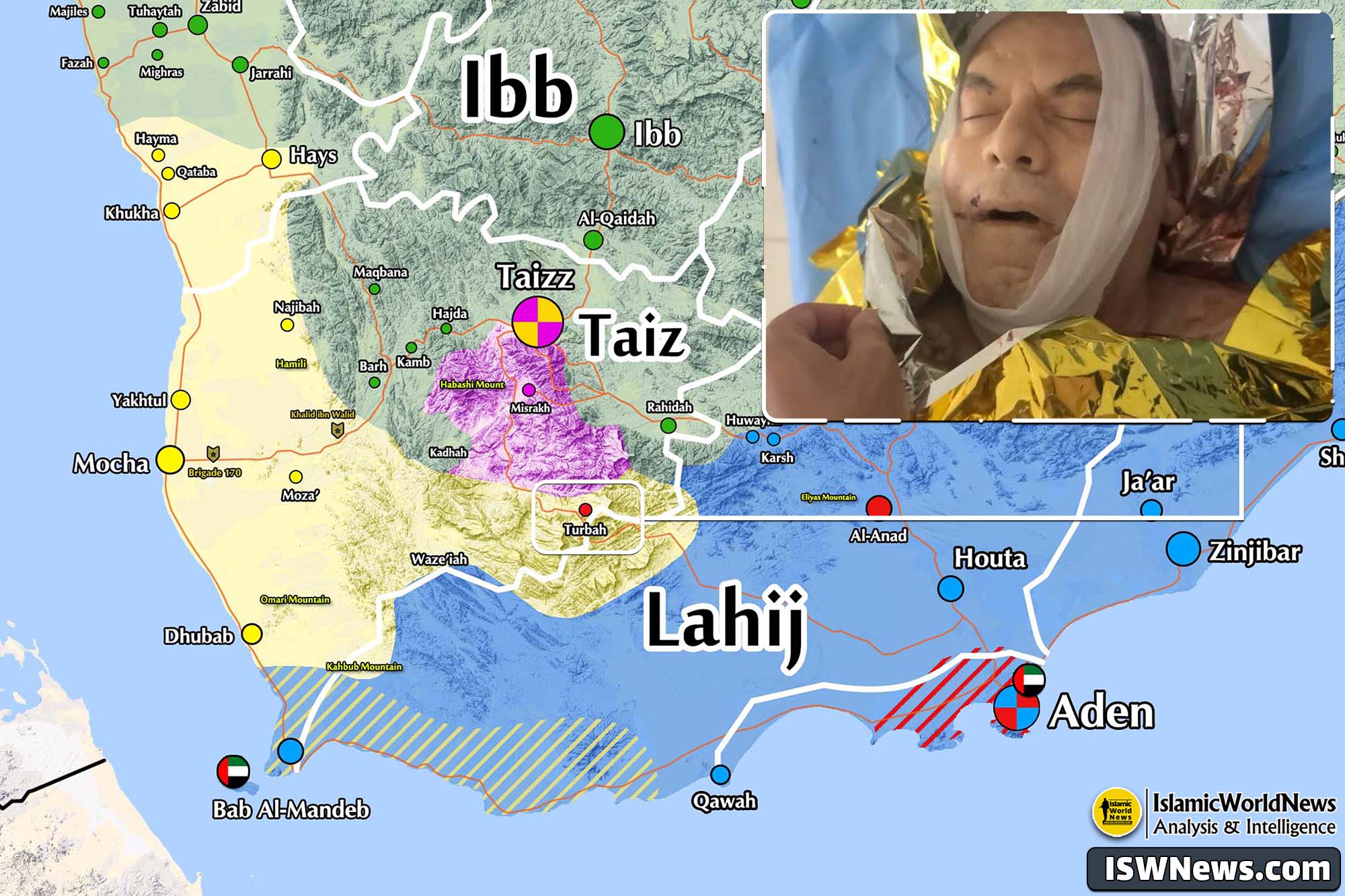
ISWNews Analysis Group: On Friday (July 21), some unidentified gunmen assassinated Moayad Hamidi, Head of the World Food Programme office (affiliated to the United Nations), in Al-Turba town located in the southern governorate of Taiz.
The Jordanian UN employee was transferred to a hospital after the attack, but Yemeni doctors’ efforts to save his life were unsuccessful and he died there.
Mohammad Abdulsalam, spokesman for the Ansar Allah movement and head of negotiations for the Yemeni Salvation Government, condemned the assassination attack and considered it as an attempt to create chaos in occupied areas of Yemen and a conspiracy aimed at diverting people’s attention from Yemen’s fate, sovereignty and independence.
Despite the statement, media outlets affiliated to the resigned government of Yemen accused the Ansar Allah movement of carrying out the assassination of the UN employee.
Also, the Al-Islah Party issued a statement, saying that one of Tareq Saleh’s forces named Ahmad Youssef Al-Sarh, who had a background of cooperating with the Abu Al-Abbas Brigades, is the perpetrator of Hamidi’s assassination.
It should be mentioned that the north of Taiz Governorate is under the control of the Ansar Allah movement, while the center and other parts of the governorate are under the control of Tareq Saleh’s forces and militants of the Al-Islah Party.
The tension between Tareq Saleh (a Yemeni military commander and the nephew of the late President Ali Abdullah Saleh) and the Al-Islah Party (the Yemeni Congregation for Reform) led to many livelihood crises in Taiz city and affected UN aid to residents of the Yemeni city.
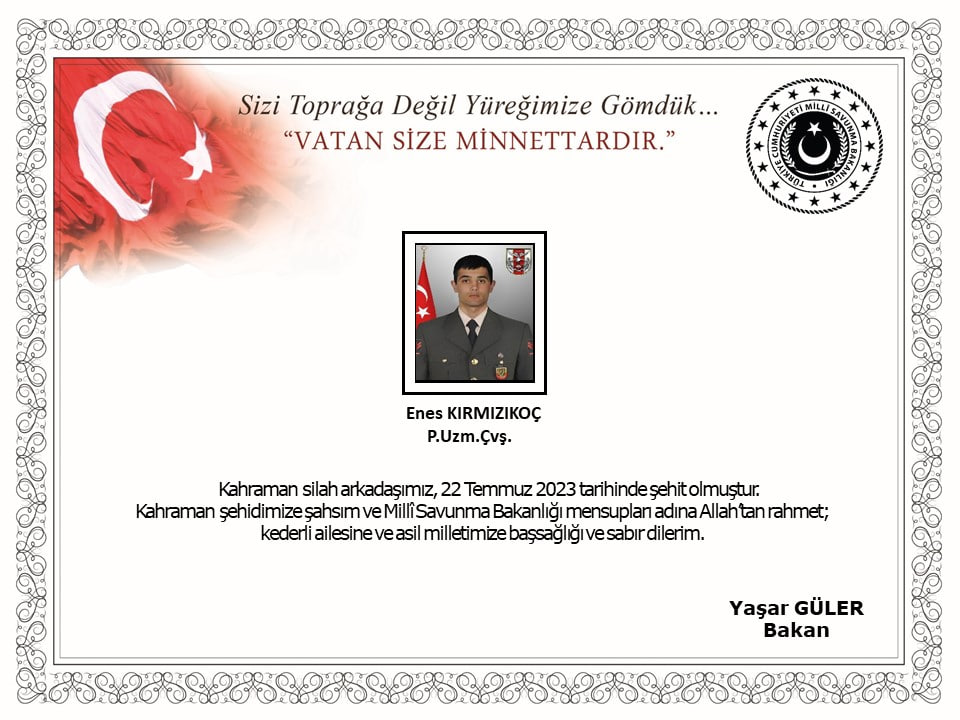
ISWNews Analysis Group: On July 22, the Ministry of National Defense of Turkiye admitted to the killing of one of its soldiers during the Operation Claw-Lock in the north of Iraq.
As a result, the number of Turkish army casualties in the Operation Claw-Lock against Kurdish militants known as PKK in northern Iraq, increased to 78.
Hulusi Akar, the then Turkish Minister of National Defense, ordered the Operation Claw-Lock, which began early on April 18, 2022.
A few days earlier, the Turkish Ministry of National Defense also announced the killing of three of its soldiers during the Operation Claw-Lock in northern Iraq as well.