Latest updates on Naqoura front: After taking control of the villages of Shamaa, Tayrharfa, and Ulama al-Shaab, Israeli forces have concentrated their attacks on the town of al-Naqoura and al-Bayyada.
The current Israeli ground offensive is being conducted along three main axes: towards al-Bayyada and Majdal Zoun, in the Jejim area, and east of al-Naqoura. Additionally, the Italian UNIFIL forces reported that two rockets struck their base in Shamaa, resulting in injuries to four Italian soldiers.
Naqoura front
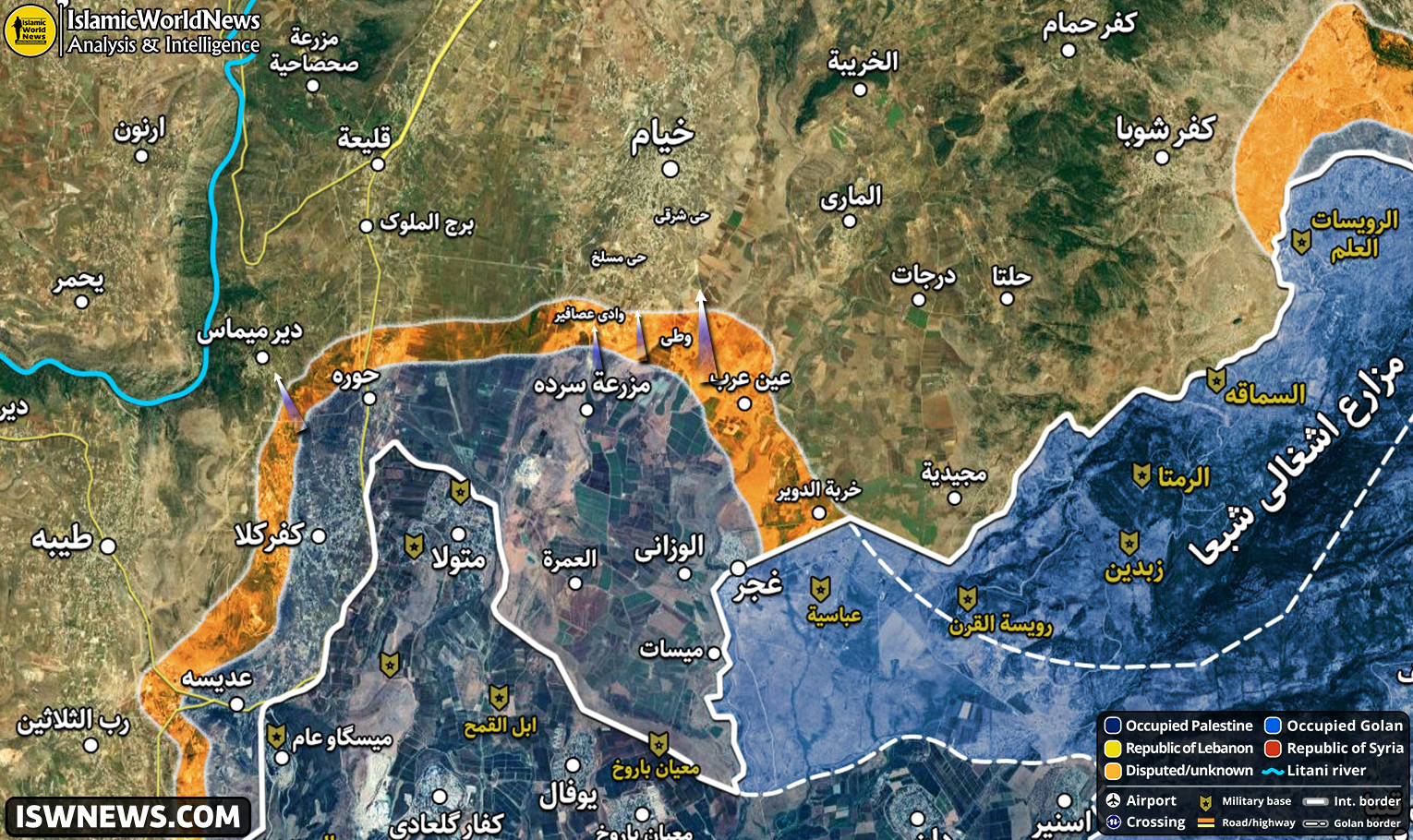
Latest updates on Khiam front: Israeli forces have entered the southern and eastern neighborhoods of Khiam, where heavy fighting is ongoing.
After bombarding the Al-Khardali road, which connects Marjayoun and Nabatieh, Israeli forces moved into the Christian village of Deir Mimas without encountering resistance and established a checkpoint in the area.
In an incident involving a convoy from UNIFIL and the Lebanese army, Israel allowed only UNIFIL forces to use the road, forcing the Lebanese army to return to Nabatieh.
Additionally, Israeli artillery is heavily shelling residential areas in the villages of Arnoun and Yohmor, located to the northwest and west of Deir Mimas.
Khiam front
The Israeli army’s invasion of Lebanon intensified after the assassination of Hezbollah’s Secretary-General, Sayyed Hassan Nasrallah. Since October 1, ground operations have been underway along the southern borders.
These assaults have so far resulted in the martyrdom of 3,670 Lebanese civilians and injuries to 15,413 others, as well as the martyrdom of over 500 Hezbollah fighters. On the other side, over 100 Israeli troops have been killed in Hezbollah’s retaliatory strikes in northern occupied Palestine.
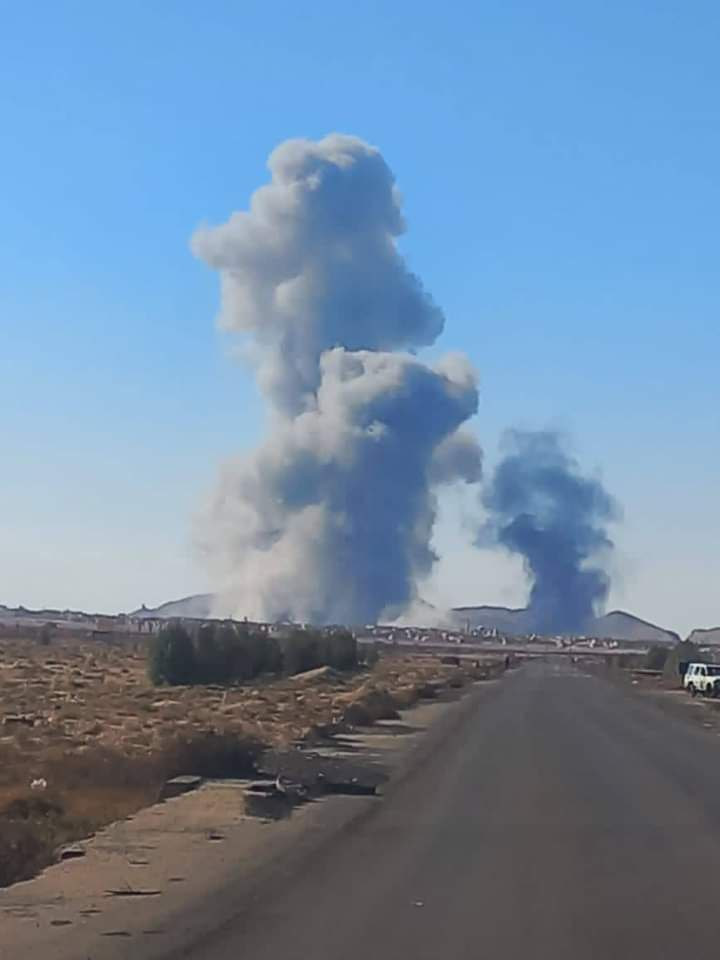
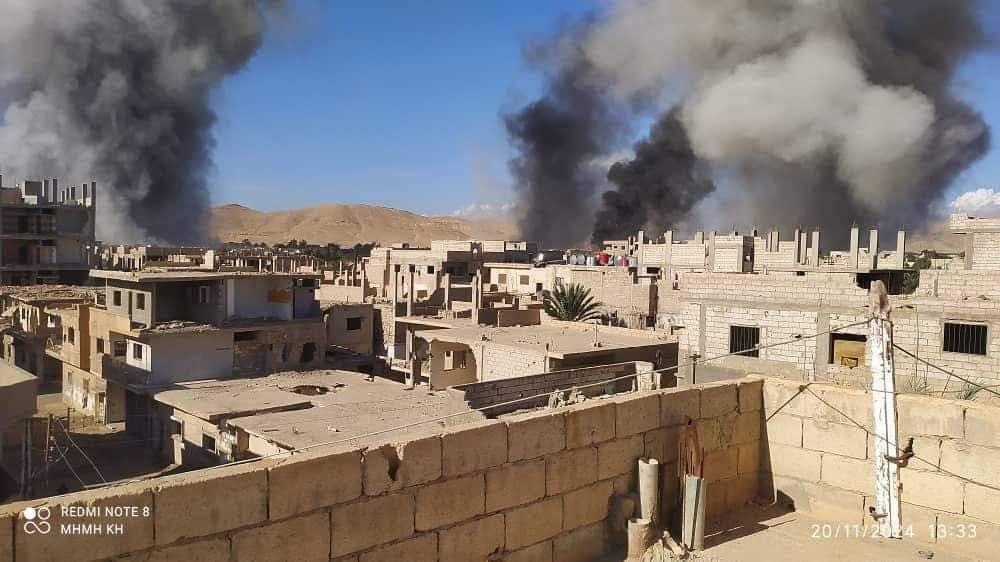
A Syrian military source said, “at around 13:30 (local time) on Wednesday, the Israeli regime targeted a number of residential buildings in the city of Tadmur from the Al-Tanf area. This attack resulted in the martyrdom of 36 people, the injury of more than 50 others and the occurrence of material damages.”
Israeli strikes in Tadmur
Investigations show that the Israeli fighter jets fired several missiles towards Palmyra by flying over the Jordanian sky and using the airspace of the US-occupied Al-Tanf region.
In the past, the Zionist regime had repeatedly used the US-occupied area in al-Tanf to attack Syria and the axis of resistance.
Israeli strikes in Tadmur
The al-Tanf region in the southeast of Syria has been occupied by American forces for years, and the Syrian army and resistance forces are not allowed to approach the 55-kilometer radius of this area.
In recent years, the Israeli regime’s army has repeatedly violated Syria’s territorial integrity with airstrikes. Most of the Israeli regime’s illegal strikes in the past year, allegedly aimed at assassinating senior resistance commanders and destroying Syrian army’s facilities and ammunition depots. During these strikes, hundreds of civilians and SAA servicemen were martyred and injured.
Following the onset of Operation Al-Aqsa Storm by the Palestinian resistance movement Hamas, Israeli airstrikes against various regions in Syria, especially Damascus and Homs governorates, have increased.
On November 18, the Israeli foreign minister asked the UN Security Council to exert pressure on the government in Baghdad to stop the strikes by the Islamic Resistance in Iraq, an umbrella group of anti-terror combatants, against the Israeli regime’s positions.
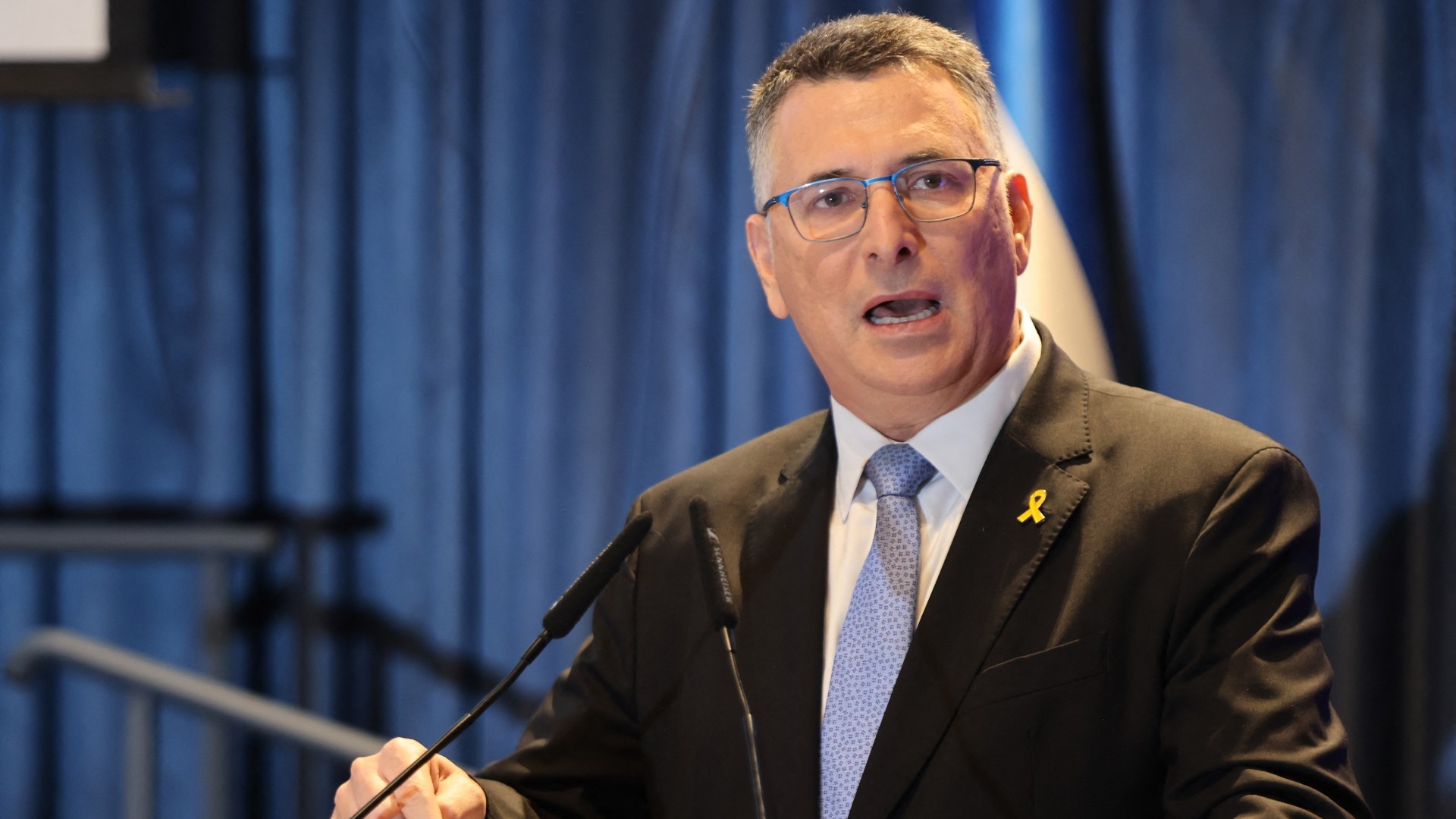
Sa’ar claimed: “This evening I sent a letter to the president of the UN Security Council in which I called for immediate action regarding the activity of the pro-Iranian militias in Iraq, whose territory is being used to attack Israel.”
He added that Iraq “is responsible under international law to prevent the use of its territory as a base for attacks against other nations.”
Israel would take “all necessary measures to protect itself and its citizens,” the minister warned.
Simultaneously with the sending of the Israeli foreign minister’s letter to the UN Security Council, the Hebrew newspaper Maariv alleged that the Israeli regime has prepared a new plan to strike at the groups supported by the Islamic Republic of Iran in Iraq, including the assassination of leaders and attacks on their infrastructure and facilities of the resistance groups.
This Israeli newspaper claimed: This plan will be implemented if attacks from Iraq against Israel escalate. Tel Aviv has sent clear messages, and the Iraqi government is trying to de-escalate tensions.
Iraqi resistance groups have carried out hundreds of rocket and drone attacks against the Israeli regime and their supporting forces, namely the US terrorist forces (CENTCOM) in Iraq and Syria, after the onset of Operation of Al-Aqsa Storm on October 7, aimed at supporting the resistance in Palestine and Lebanon and also increasing pressure on the Tel Aviv regime.
In response to the attacks of the Iraqi resistance, the axis of evil (Israel and its supporters) carried out multiple attacks against the positions and forces of the resistance in Syria and Iraq, in which several Iraqi fighters were martyred. Some of these attacks were carried out by the terrorist US army in Iraq, and others by the Israeli regime’s army in the Israeli-occupied Golan Hights of Syria against Iraqi resistance groups.
The Islamic Resistance in Iraq, along with other resistance groups in Lebanon and Yemen, is calling for an end to the Israeli regime’s aggression against the Gaza Strip and for international aid to be sent to the besieged area. Iraqis and other members of the resistance axis have stated that as long as the Israeli regime’s aggressions against the Gaza Strip continue, missile and drone attacks against the Tel Aviv regime will persist.
Given the ongoing actions and daily attacks of the Iraqi resistance against the Israeli regime, it is likely that the regime’s army, with the support of the terrorist US army in Iraq, Syria, and Jordan, will arrange a series of military actions including simultaneous airstrikes against the positions and the assassination of commanders of the Iraqi resistance groups; therefore, it is necessary for the Iraqi resistance to carry out targeted attacks against the Israeli regime, while issuing a serious warning, to remind this regime that any action against Iraq and the commanders of the resistance will face a crushing response.
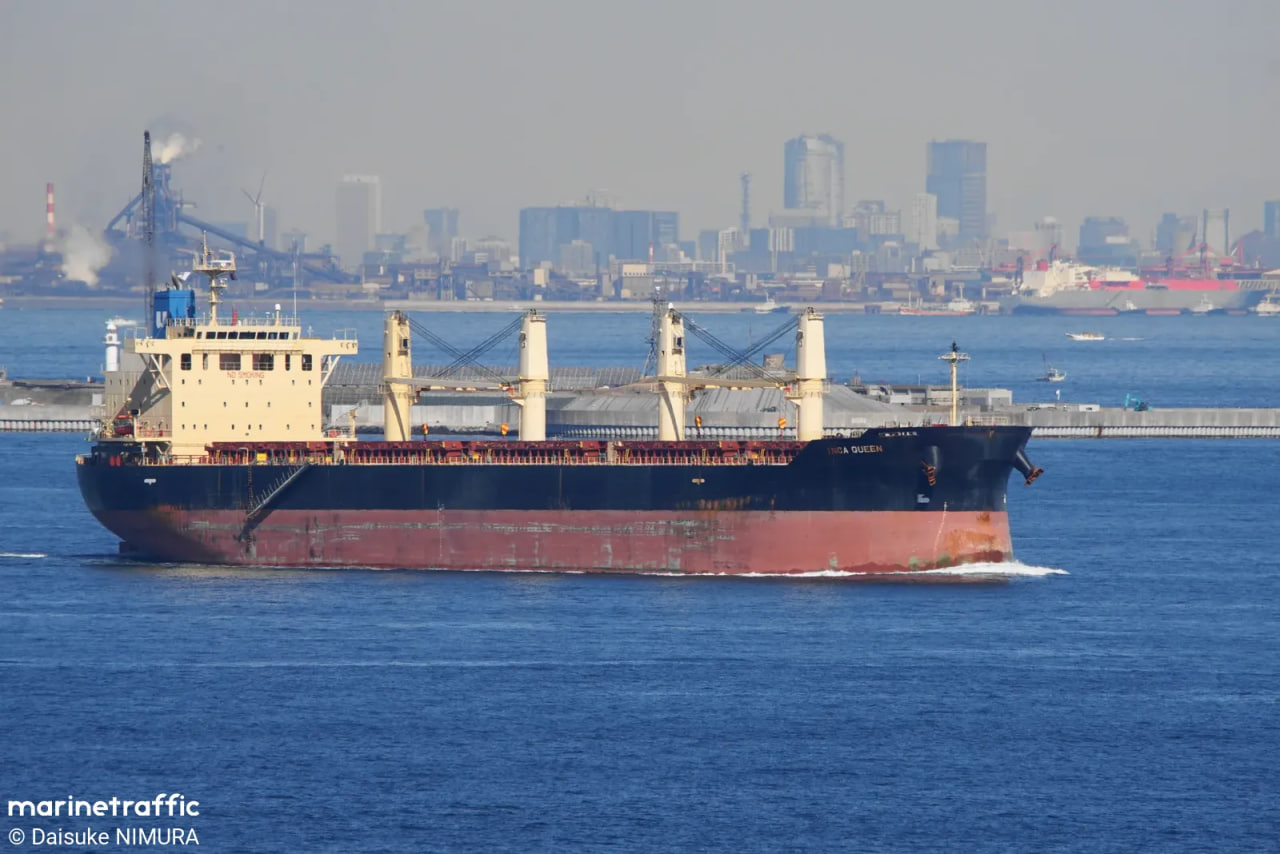
Anadolu S did not respond to the warnings from the naval command of the Yemeni army upon entering the operational area of the Yemeni Armed Forces and was targeted due to violating Yemen’s decision on prohibiting entry into the ports of the Israeli-occupied territories by the ship owning company.
The Anadolu S is a bulk carrier owned by the Turkish company INCE DENIZCILIK VE TICARET in Istanbul, operating under the Panamanian flag since 2014. The ship was sailing from a port in Egypt to the coast of Pakistan.
Turkish government officials repeatedly claim that they support the Palestinian people and have severed relations with the Israeli regime. However, in practice, it is obvious that these claims are baseless, and Turkiye is serving the Israeli regime by opening its airspace to the regime’s planes and Turkish ships are providing the Tel Aviv with sailing services.
The Yemeni army’s operation against the Turkish ship Anadolu S is the 166th official attack by the Yemeni armed forces on illegal ships (Israeli, American, British, and their affiliated ships).
The military operations of the Yemeni Armed Forces to support the Palestinian people and resistance in their battle against the Israeli regime kicked off on October 18, 2023, when the Yemeni fighters started targeting the occupied territories of Palestine and making insecure the maritime route from the Gulf of Aden to the Red Sea for the Israeli regime and its main supporters namely the US and the UK.
This campaign peaked with the seizure of the Israeli ship Galaxy Leader and ongoing missile, Unmanned underwater vehicles (UUV), and suicide drone attacks on over 160 vessels linked to the Tel Aviv regime, leading to a halt in shipping by Israeli companies from the Red Sea route.
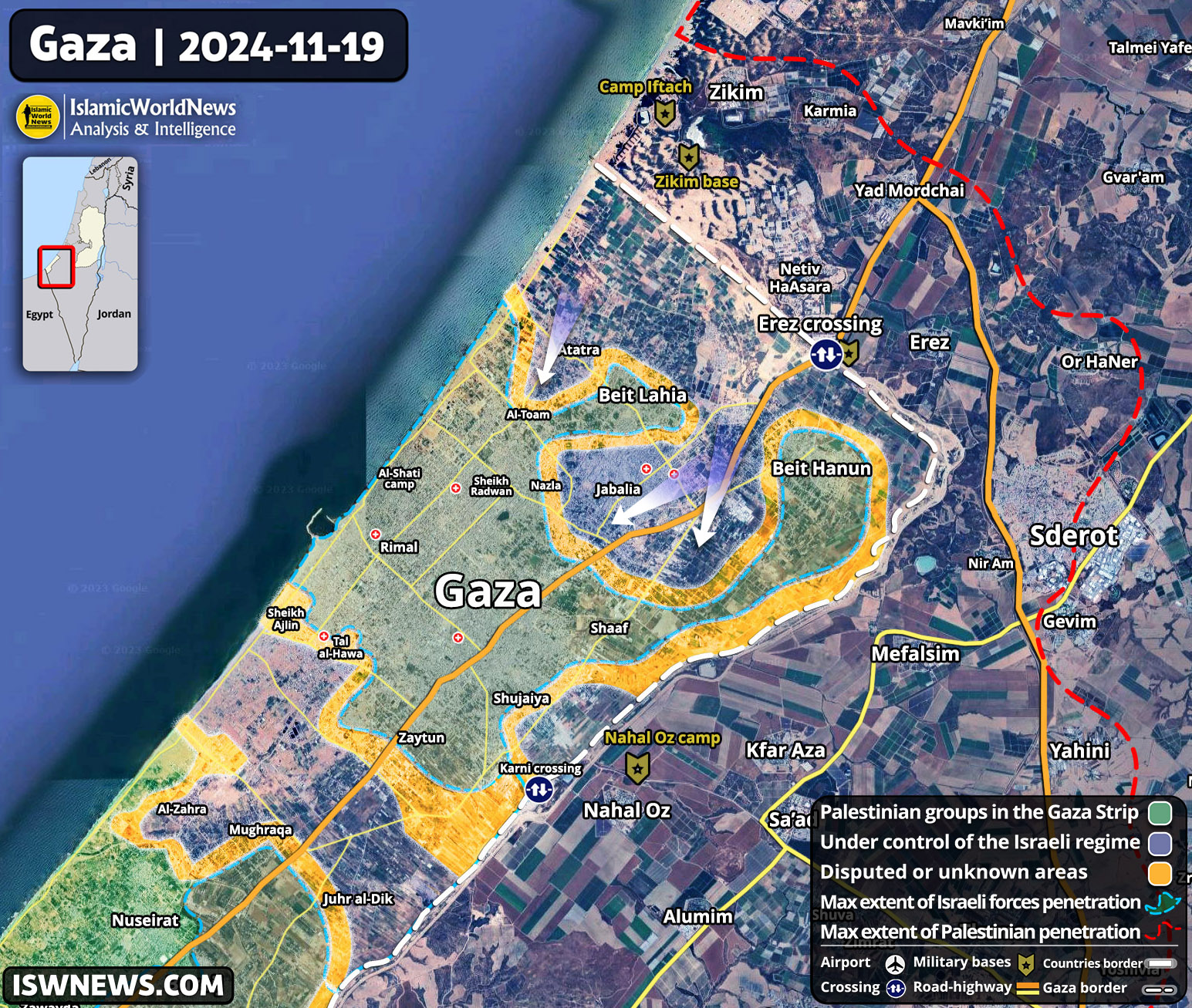
The Israeli regime’s troops, supported by artillery and under heavy air attacks, have begun their advances towards some areas in northern Gaza and in the first step of the operation occupied Kamal Adwan Hospital and its surrounding areas.
The Israeli army has Gradually expanded the scope of its military operations and dispatched its forces to the southern and eastern areas of the city of Jabalia. Advancing in the mentioned fronts, Israeli military forces have exploded and completely destroyed Palestinian homes with the aim of forcibly relocating them to the central and southern Gaza Strip. After the presence of Israeli troops in the south and east of Jabalia, the Israeli regime’s army focused on the western and northwestern areas of Jabalia.
Videos released by the Izz al-Din Al-Qassam Brigades, the military wing of the Palestinian resistance movement Hamas, show that clashes are currently taking place around Al-Saftawi Square and Al-Bahr Street in eastern Jabalia.
Latest military situation in the northern Gaza Strip – click to view full size
In recent days, Al-Qassam fighters targeted several Israeli army personnel, bulldozers, and tanks in the western fronts of Jabalia. Videos of some of these operations have also been released.
In the Beit Lahia front, clashes continue in the eastern and northern fronts. Over the past four days, Al-Qassam forces have targeted at least 11 Israeli troops, 2 Merkava tanks, one armored personnel carrier, and one bulldozer of the Israeli regime’s army in the outskirts of Beit Lahia. The Israeli military is trying to clear the path for ground forces to advance in this front through heavy air attacks.
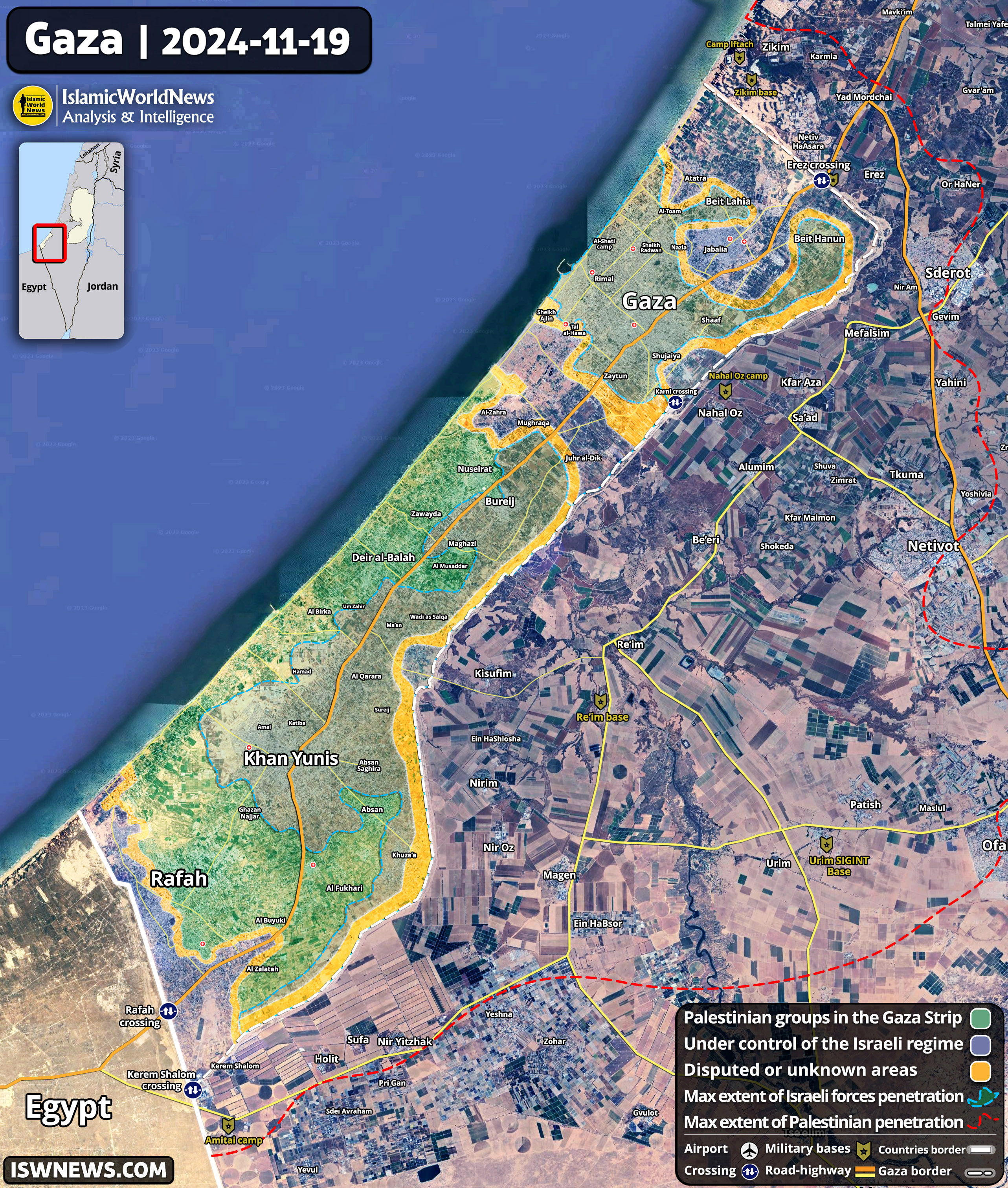
Following the recent military operations in northern Gaza, it seems that the Israeli regime’s army intends to expand the so-called buffer zone at the Gaza border to the middle of Gaza City. Previously, this buffer zone was located several kilometers from the Gaza border. The expansion of the buffer zone into the depth of the Gaza Strip effectively facilitates its permanent occupation by the regime’s forces.
The Israeli regime’s army has launched a large-scale invasion of the Gaza Strip since the evening of October 27, 2023. Since the onset of the Israeli operations in Gaza, 43,922 Palestinians have been martyred and 103,898 others have been injured. On the other hand, the number of casualties reported by the Israeli regime since the initiation of the ground assault on the Gaza Strip has reached 379 military personnel.
Latest military situation in the Gaza Strip – click to view full size
Israeli armored convoys and infantry units are currently attacking the south and east of Khiam, particularly through the Sardeh Farms and Wati al-Khiam areas. Hezbollah is actively targeting Israeli tank movements and troop concentrations in these regions with rocket strikes, effectively preventing a serious assault on Khiam.
It appears challenging for the Israeli army to make progress from the south. The nearby villages of Qaliyeh, Burj Al-Maluk, and Deir Mimas are Christian settlements, raising the possibility that the Israeli army may move into these areas to encircle Khiam. Consequently, the likelihood of a scenario similar to the one in Rmaych cannot be ruled out
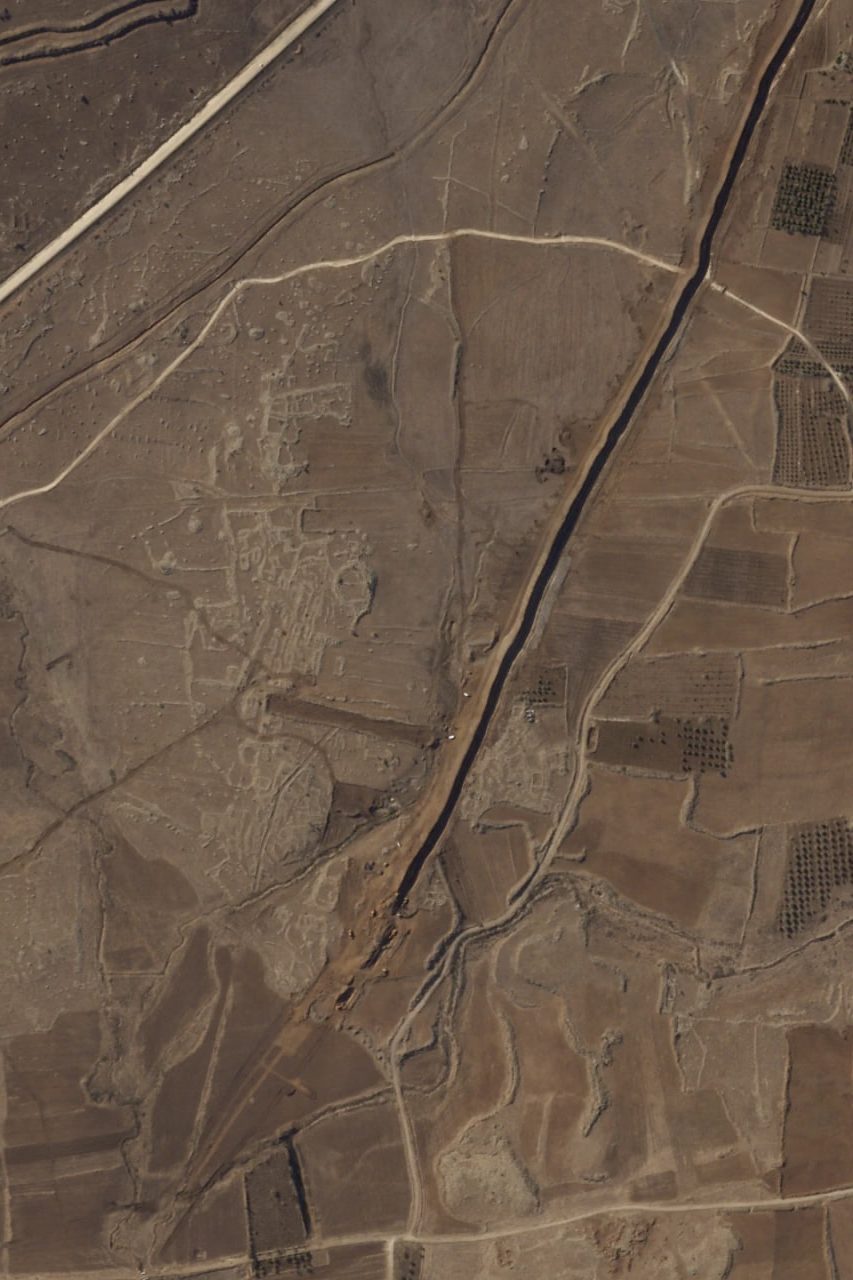
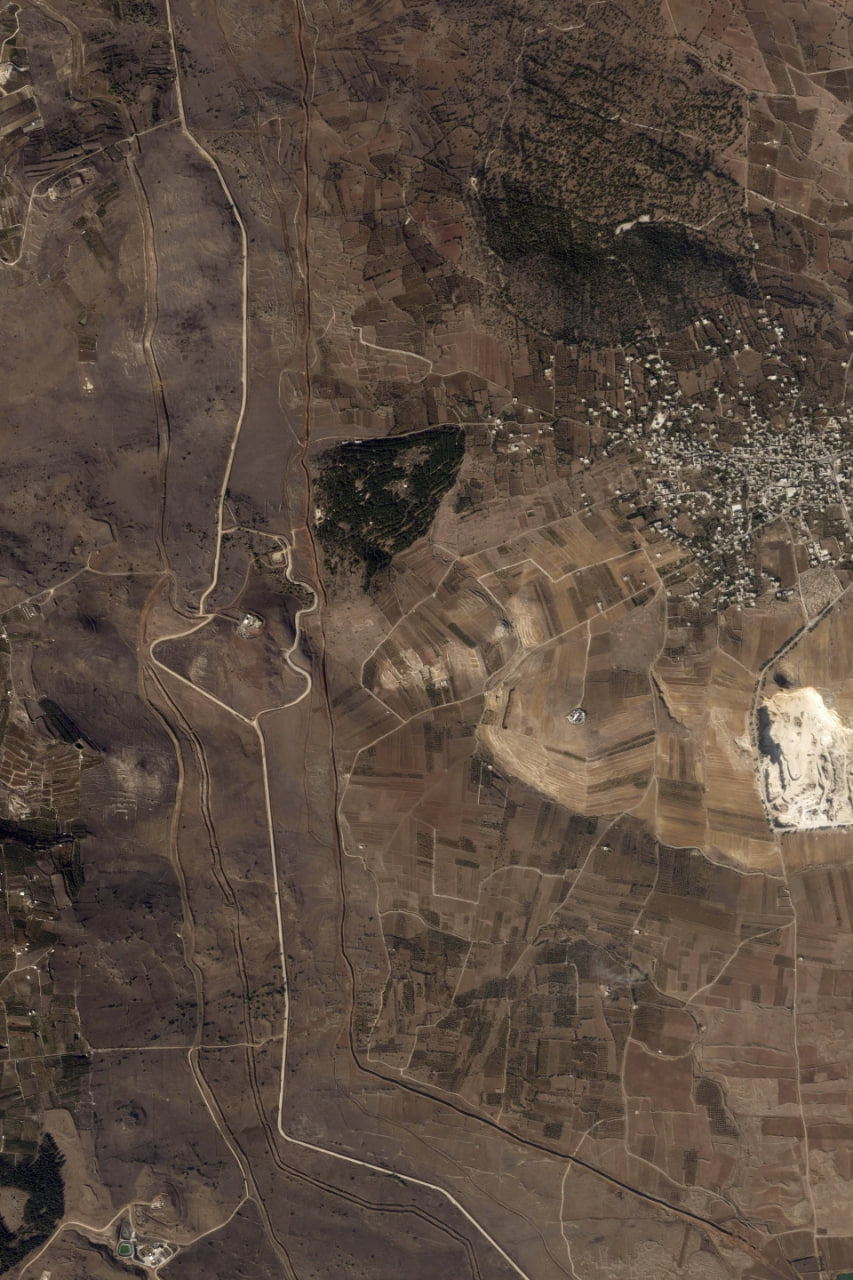
Recent satellite images indicate that the Israeli regime’s army has initiated a construction project along the Alpha Line, which separates the occupied Golan Heights from Syria and is under UN oversight.
According to these satellite images, the construction of over seven and a half kilometers of road has begun in the southeast of the town of Majdal Shams, parallel to the Alpha Line, with embankments built on both sides of the road. Additionally, one side has been fenced off, and the asphalt paving procedure on part of this road has been completed.
A video released by an Israeli military source in recent days shows that the regime’s forces have approached the Alpha Line by crossing the fences. This video was released simultaneous with the new construction project of the Tel Aviv regime in the occupied Golan.
Israeli forces near the Alpha line
It is noteworthy that the buffer zone between the Alpha Line and the second demarcation, known as the Bravo Line, which marks the limit of where the Syrian military can operate, is the area separating Syrian forces in the Golan from the troops of the Israeli regime.
UN peacekeeping forces have two permanent bases, 44 temporary posts, and 11 observation points in the occupied Golan region and its surroundings.
Following the commencement of constructions by the Israeli regime, Spokesman for the UN peacekeeping forces Nick Birnback stated in an interview with the Associated Press that Israeli forces have entered this demilitarized zone during the project, which constitutes a violation of the ceasefire laws governing the area.
Satellite images showing Israeli construction along the Alpha line southeast of Majdal Shams
The new project of the Israeli regime has been seriously underway since late September. On October 15, the Israeli regime’s forces cleared some minefields and established new barriers in the Golan Heights and border areas with Syria. On October 11, sources close to the armed groups claimed that Israeli troops, supported by several armored vehicles, entered the town of Kudna in the Quneitra Governorate of Syria; however, a field source to IWN denied this report, stating that Israeli military forces had not entered Syrian territory and were attempting to provoke Syrian forces.
What is evident is that the activities of the Israeli regime’s army in the occupied Golan Heights and border areas with Syria have significantly increased in recent weeks compared to the past. These provocations, alongside ground operations by the Israeli military forces in southern Lebanon, have fueled speculation about the initiation of ground operations in southern Syria.
An interesting point is the reason behind the Israeli regime’s actions, particularly the reinforcement of fortifications, including fencing and embankments at the Alpha Line in the occupied Golan. Given the fact that the Israeli regime’s claims of the presence of resistance forces in southern Syria and the potential for ground conflicts, it appears that the regime’s army is proactively strengthening its defensive positions to enhance its capabilities against possible attacks and ground confrontations in this region. Nevertheless, the extensive actions of the Tel Aviv regime in the occupied Golan Hights in recent weeks may have various apparent and hidden reasons, but what is important is that these actions should not be underestimated or taken insignificant; they could be preparations for an aggression against Syria!
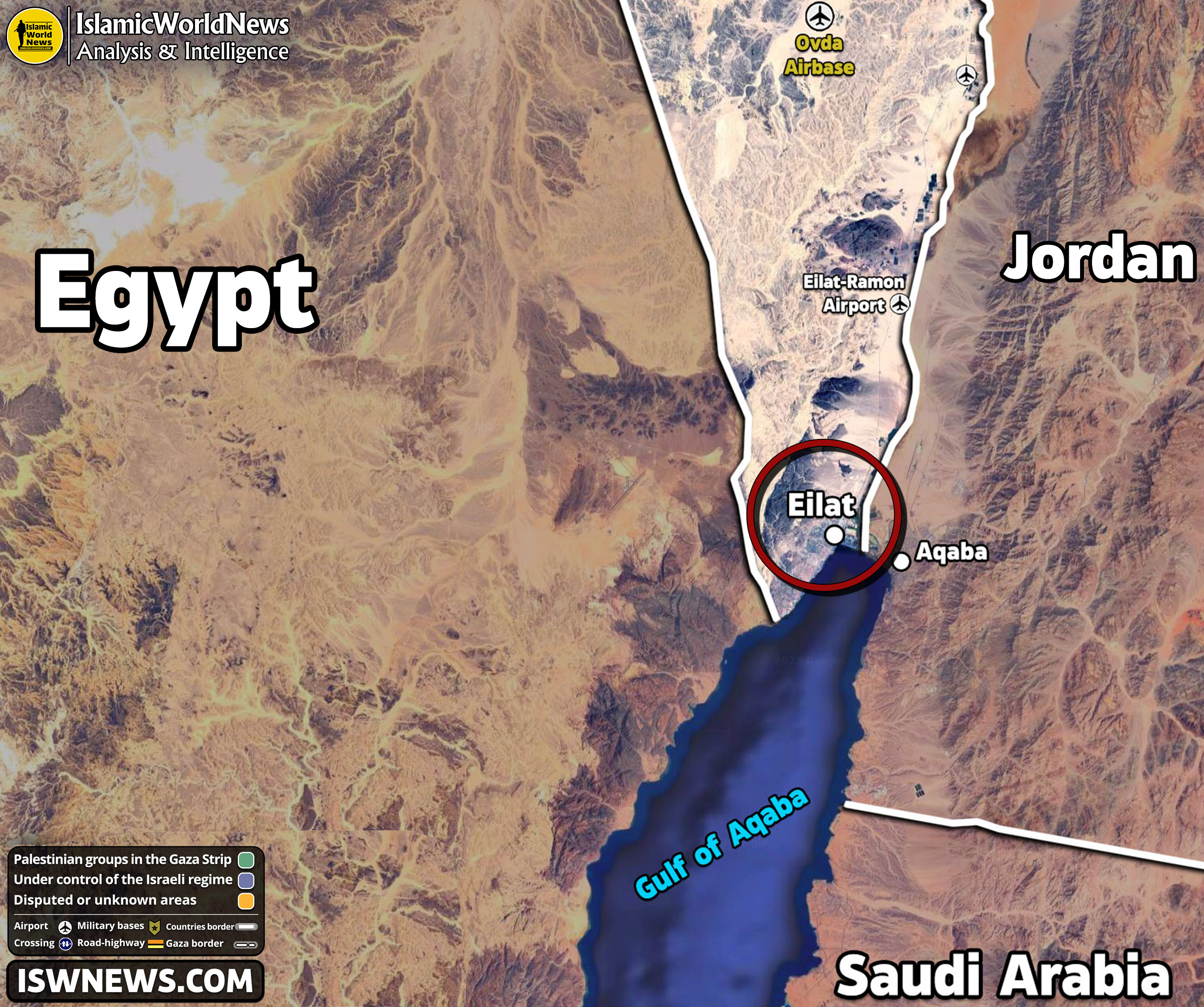
According to Spokesman of the Yemeni Army Major General Yahya Saree, the Yemeni Armed Forces targeted a vital site at Umm al-Rashrash (Eilat) in southern occupied Palestine.
The spokesman also stated that this operation has been conducted successfully and it achieved its objectives.
Just like his previous statements, Major General Saree emphasized that the Yemeni Armed Forces will continue their military operations against the Tel Aviv regime until all assaults by this regime against the Gaza Strip and Lebanon cease.
Following the blockade imposed by the Yemeni Armed Forces in the Red Sea and the repeated strikes from Islamic Resistance in Iraq, activity at Eilat Port has decreased by more than 85%.
Local officials at Eilat Port are working to secure financial assistance from leaders of the Israeli regime and the United States in order to prevent the complete bankruptcy of the port.
The most recent missile attack on this base marked the 37th aerial operation by the Yemeni Armed Forces on occupied Palestinian territory, utilizing ballistic missiles, cruise missiles, and suicide drones.
The military operations of the Yemeni Armed Forces to support the Palestinian people and resistance in their battle against the Israeli regime kicked off on October 18, 2023, when the Yemeni fighters started targeting the occupied territories of Palestine and making insecure the maritime route from the Gulf of Aden to the Red Sea for the Israeli regime and its main supporters namely the US and the UK.
This campaign peaked with the seizure of the Israeli ship Galaxy Leader and ongoing missile, Unmanned underwater vehicles (UUV), and suicide drone attacks on over 160 vessels linked to the Tel Aviv regime, leading to a halt in shipping by Israeli companies from the Red Sea route.
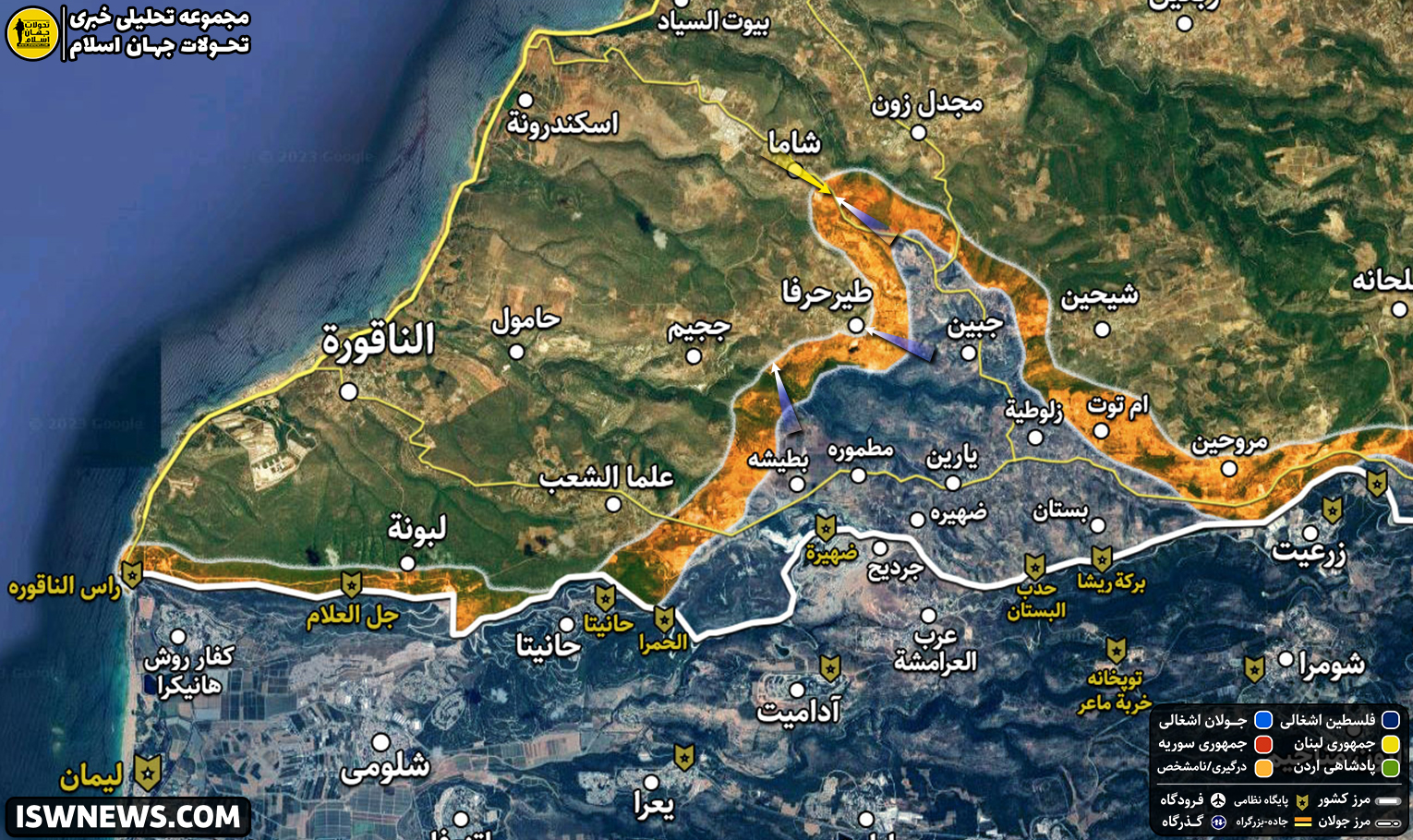
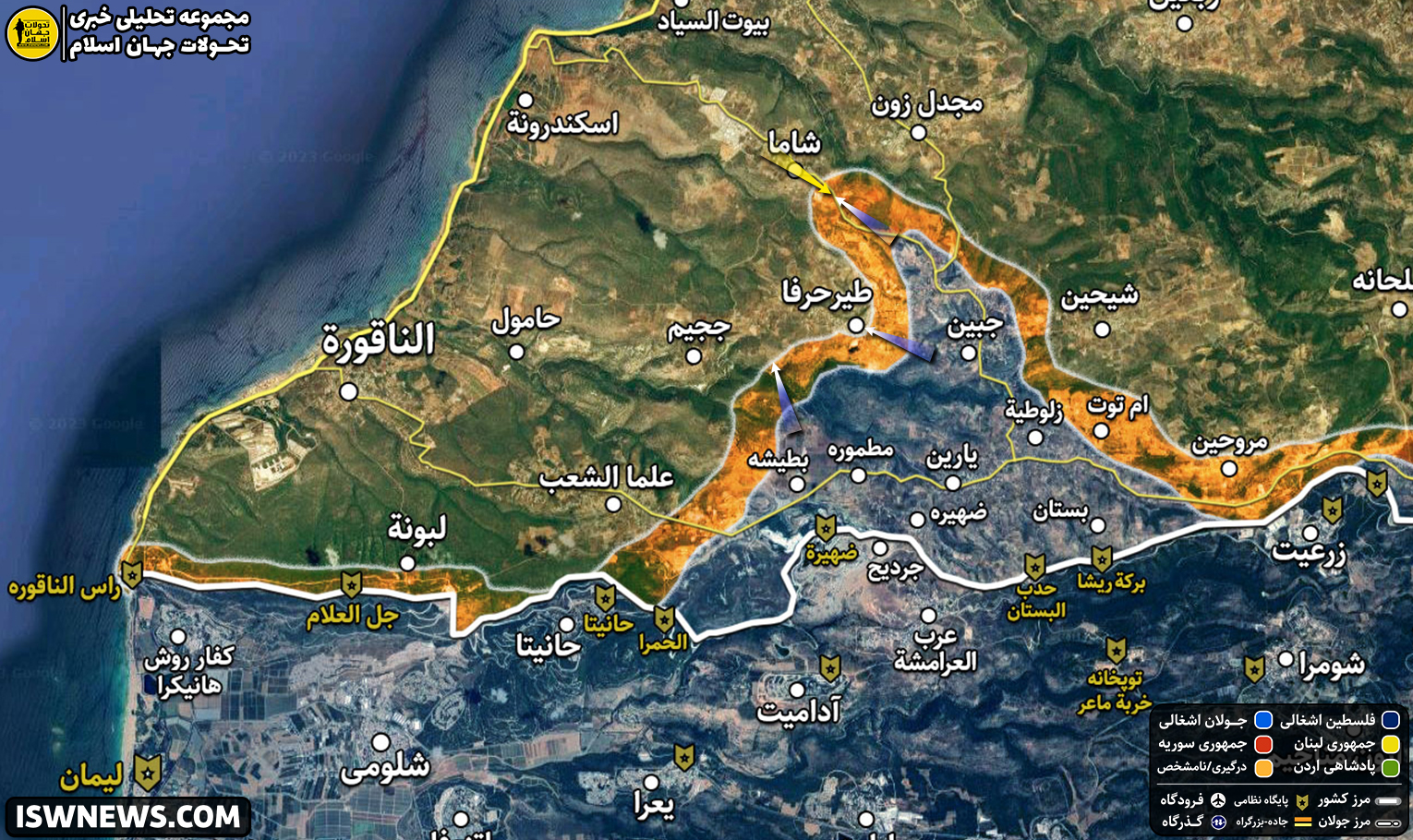
Al-Naqourah-Tayrharfa front: On Thursday, Israeli forces entered the villages of Yarin, Batisheh, Matmoura and Jibbain in the south Tyre district. As usual, they bombed and destroyed a part of residential and civilian buildings in these villages.
As usual, the Zionists bombed and destroyed the Nasser Salahuddin Mosque upon entering Yarin. Israel claims that Hezbollah uses this mosque and other mosques as a weapons depot and military center. But so far not even a picture has been published for these claims. Yarin Mosque is a single minaret mosque and it was built in the name of Salah al-Din Ayyubi and belongs to Ahl al-Sunnat Yarin and has no connection with Hezbollah.
Israeli army demolished Nasser Salahuddin Mosque in Yarin village
After passing through these villages, the Israeli forces attacked Tayrharfa and the historical village of Chamaa through Jibbain road and a local road in the north of Matmurah. The attack to the west of Tayirharfa faced resistance from Hezbollah fighters, while Israeli forces succeeded in taking control of the eastern areas of Tayirharfa.
Reports indicate that the Israeli army’s attack on Chamaa has been repelled. However, this repulsion was temporary, as the Israeli army resumed ground attacks in Tayrharfa and Chamaa this morning, November 16.
Video showing Israeli forces at the Shimon al-Safa shrine in the historic village of Chamaa.
During yesterday’s Israeli attacks on Chamaa, an artillery shell struck the UNIFIL headquarters in the village. Additionally, there was an unknown incident involving UNIFIL forces, which resulted in the death of one French soldier and injuries to three others. While UNIFIL has not provided details on this incident, it is likely that it was caused by the Israeli artillery strikes.
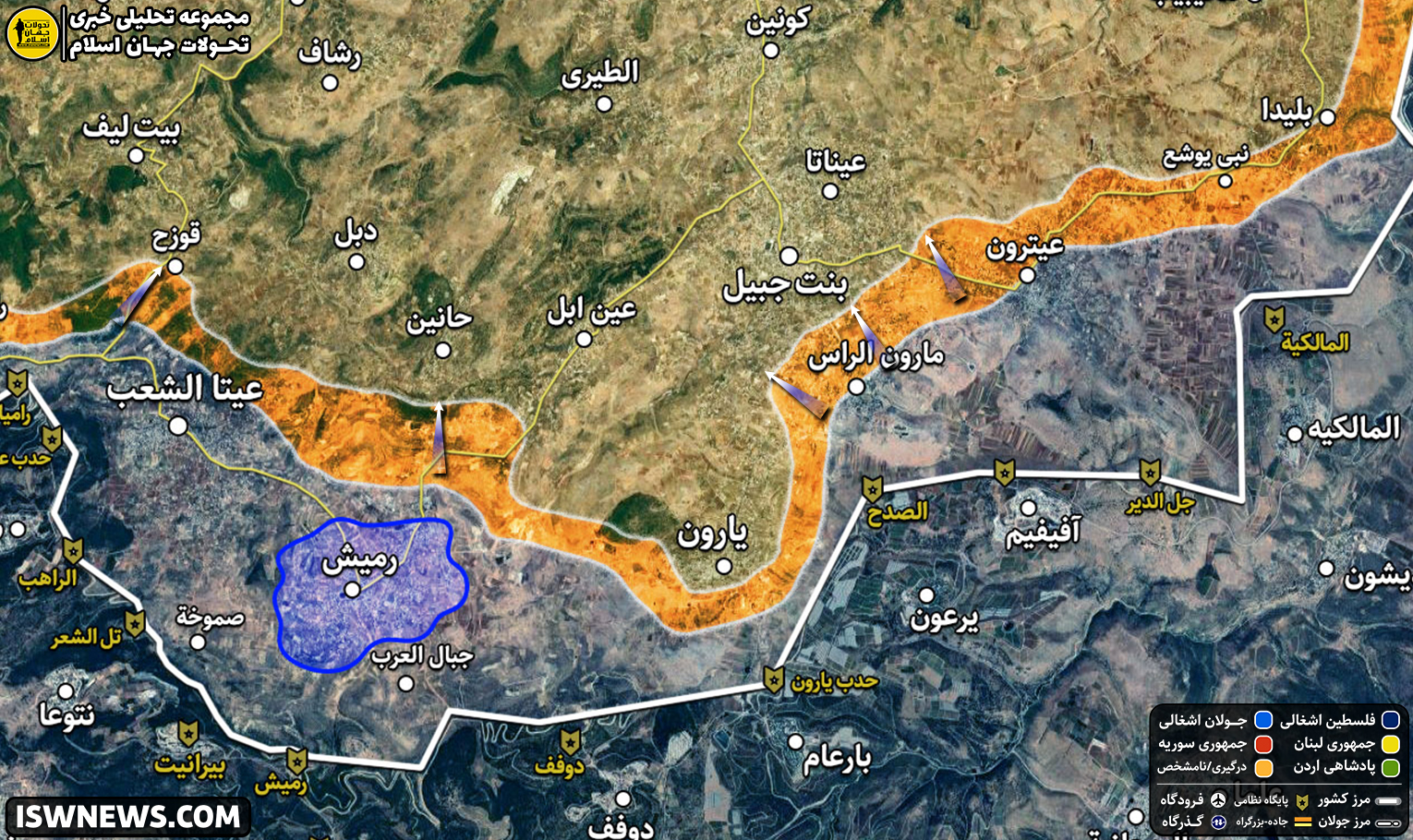
Latest military situation in Naqourah front – click to view full size
Bint Jubeil front: The battles continue in the west of Aitaroun, south of Ainatha, Al-Maslekh neighborhood and the southern areas of Bint Jbeil. The Israeli forces are making significant efforts to penetrate the city of Bint Jbeil, and their ground assaults, supported by air power, are still ongoing.
Also, limited movements and attacks have been reported in the southern region of Hanine village and in Qouzah, located north of Aita al-Shaab.
Latest military situation in Bint Jubeilfront – click to view full size
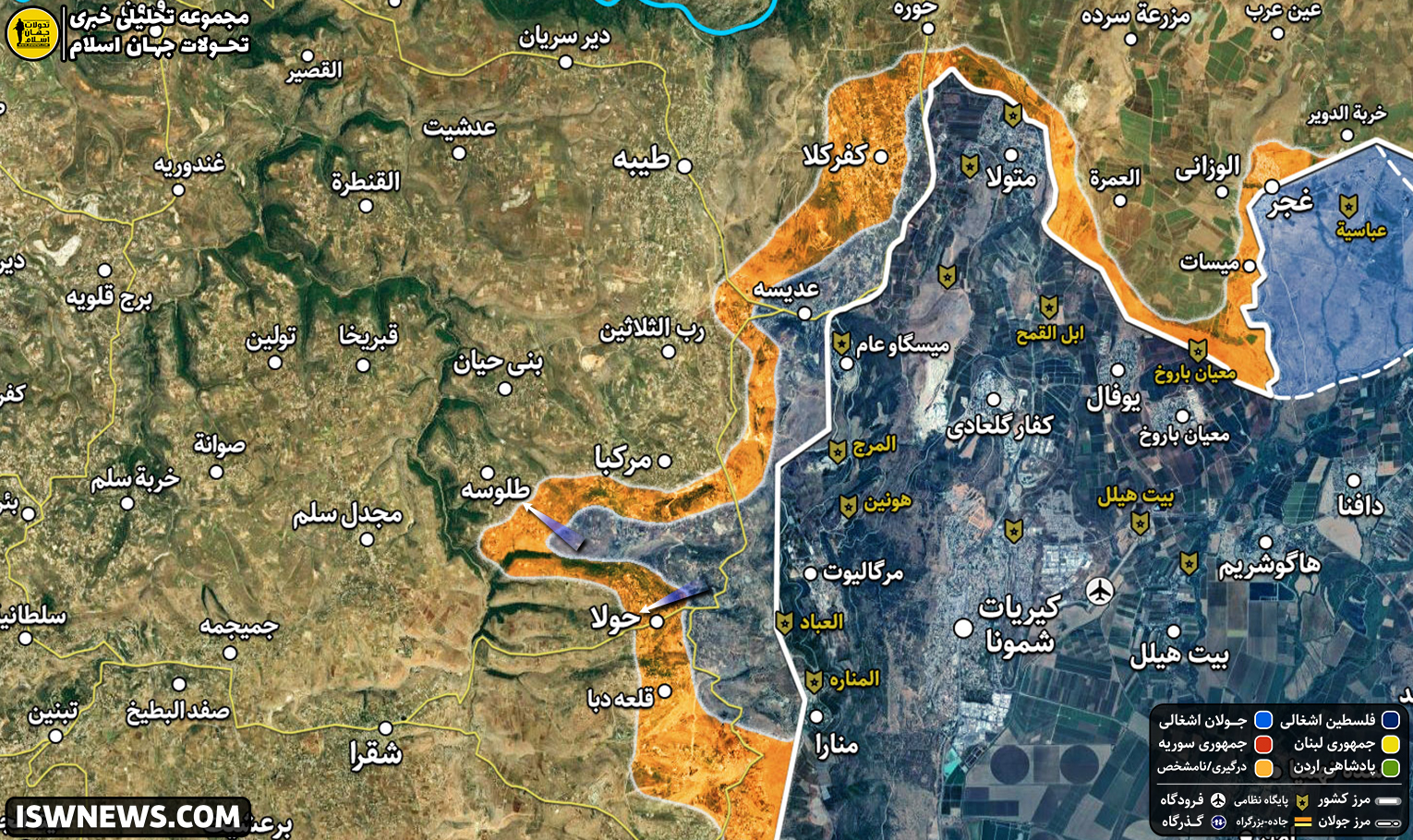
Tallouseh front: As mentioned in previous reports, Tallouseh and Bani Haiyyan will be the targets of the Israeli army in the second phase of the ground operation in southern Lebanon.
In the last 46 days, Israel has not been able to gain control of Markaba and Rab El Thalathine. Now, it has launched an attack on this village, hoping that Hezbollah’s defenses in Tallouseh are weak.
Clashes are ongoing at the southeast entrance of Tallouseh, where Hezbollah forces have successfully repelled attacks thus far.
Latest military situation in Tallousehfront – click to view full size
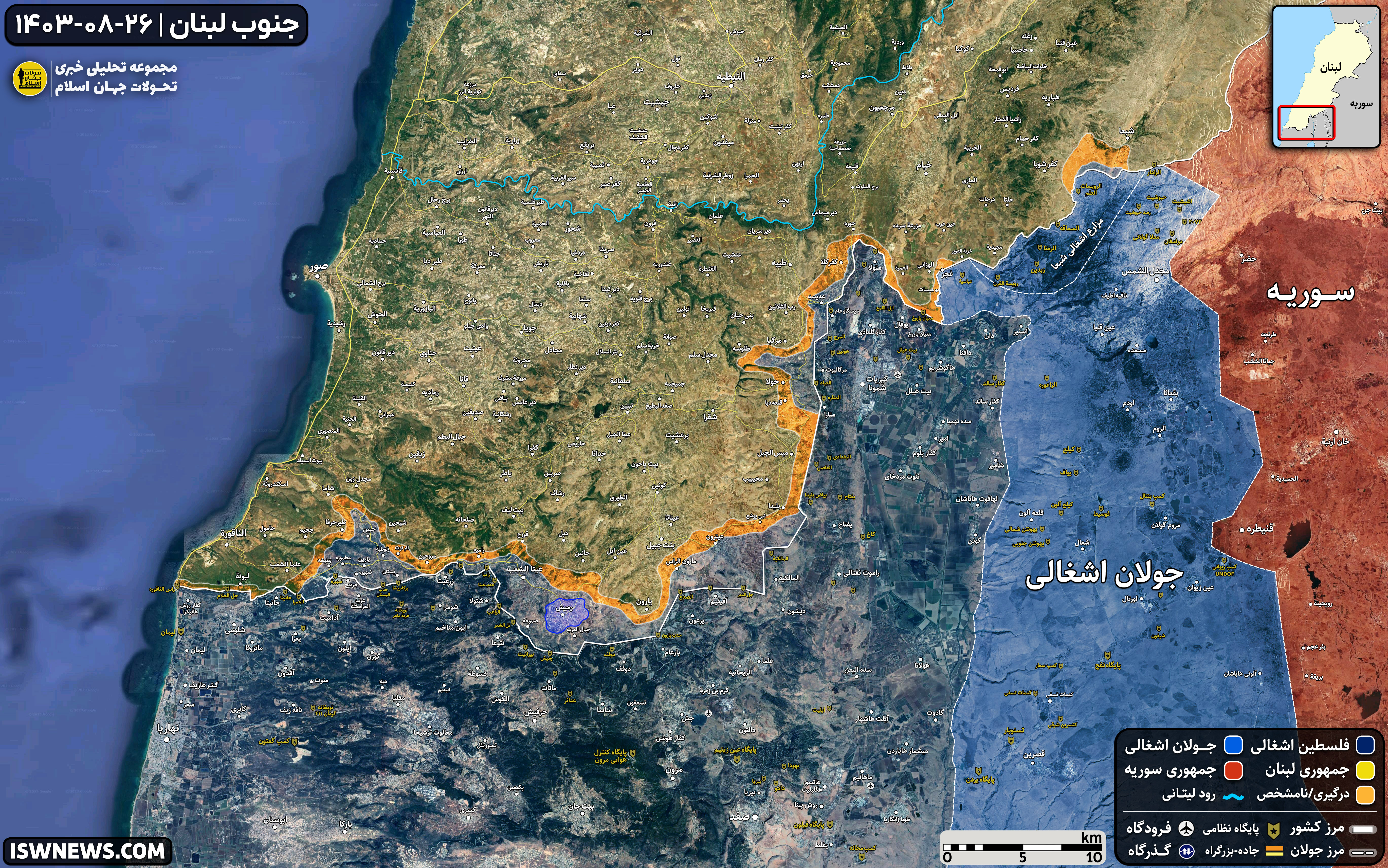
There are no reports of Israeli attacks in other areas. But it is likely that Israel’s attack will develop in the second phase of the ground operation to the village of Qouzah in the north of Aita al-Sha’ab, Hanine and Ain Ebel in the west of Bint Jubeil, Khiam town and Sheeba front.
Taking a general look at the developments of the last 46 days in southern Lebanon, it must be said that the second phase of the Israeli army’s ground operation has had a better start than the first phase. By expanding the security strip in southern Lebanon, Israel seeks to create more suitable conditions for for future advances.
Latest military situation in southern Lebanon – click to view full size
The Israeli army’s invasion of Lebanon intensified after the assassination of Hezbollah’s Secretary-General, Sayyed Hassan Nasrallah. Since October 1, ground operations have been underway along the southern borders.
These assaults have so far resulted in the martyrdom of 3,445 Lebanese civilians and injuries to 14,599 others, as well as the martyrdom of over 500 Hezbollah fighters. On the other side, over 100 Israeli troops have been killed in Hezbollah’s retaliatory strikes in northern occupied Palestine.
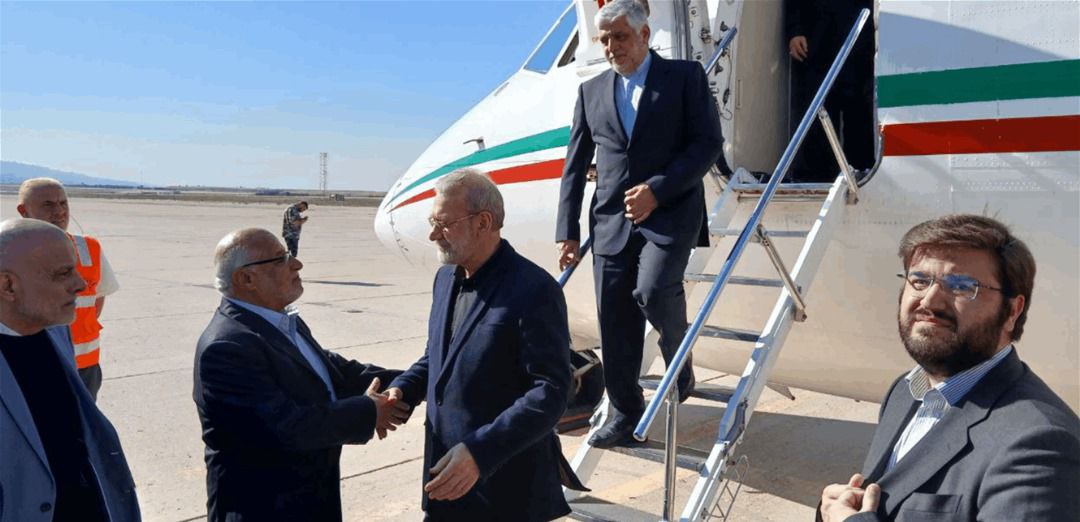
Yesterday, Ali Larijani arrived in Damascus at the head of an official delegation to meet with senior Syrian officials and Syrian President Bashar al-Assad, and today he left Damascus for Beirut.
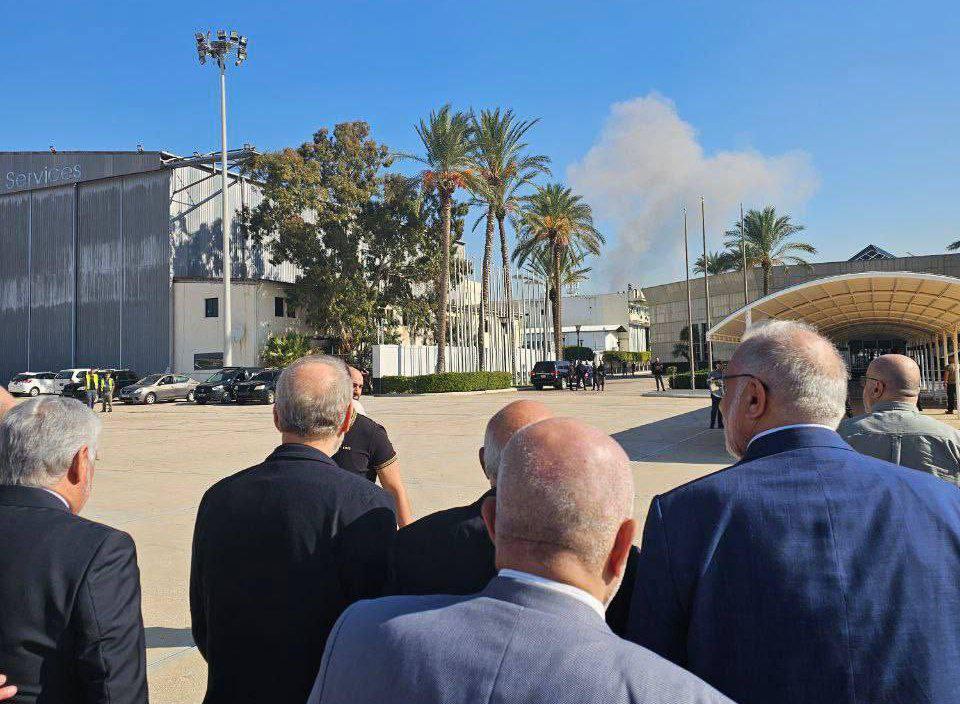
Larijani traveled to Beirut while the Dahieh area and the vicinity of the Beirut airport are under heavy bombardment by the Zionist regime. The moment Larijani arrived at Beirut airport, the Zionist regime was bombarding the area.
Bombing of areas around the airport when Larijani arrived in Beirut
He talked with Lebanese Prime Minister Najib Mikati this noon. It should be noted that the Lebanese government is still unable to elect a president due to internal differences, and Najib Mikati is currently considered the highest political official in this country.
Recent events suggest that Larijani is delivering an important message from the leader of the revolution to the governments of Syria and Lebanon, who has entered the region in this tense situation!
Lebanese Prime Minister Najib Mikati and Ali Larijani, adviser to Imam Khamenei in Beirut
Donald Trump, the president-elect of the United States, plans to appoint Mike Huckabee, the former governor of Arkansas known for his hostility towards Palestinians and support for the Israeli occupying regime, as the new ambassador of the US to occupied Palestine.
Trump the gambler emphasized that Huckabee loves Israel and Israelis, and that the Israelis also have a great affection for him; he will be working to establish peace in the Middle East (the West Asia region).
Huckabee repeatedly expressed his opposition to the two-state solution and support for the illegal settlement activities of the Israeli regime in the occupied West Bank.
In 2017, during a conversation with CNN, Huckabee emphasized that there is no such thing as the West Bank and that settlement activities in this area are not illegal.
Huckabee also stated in 2019 that the Israeli regime is rightful to annex territories of the West Bank.
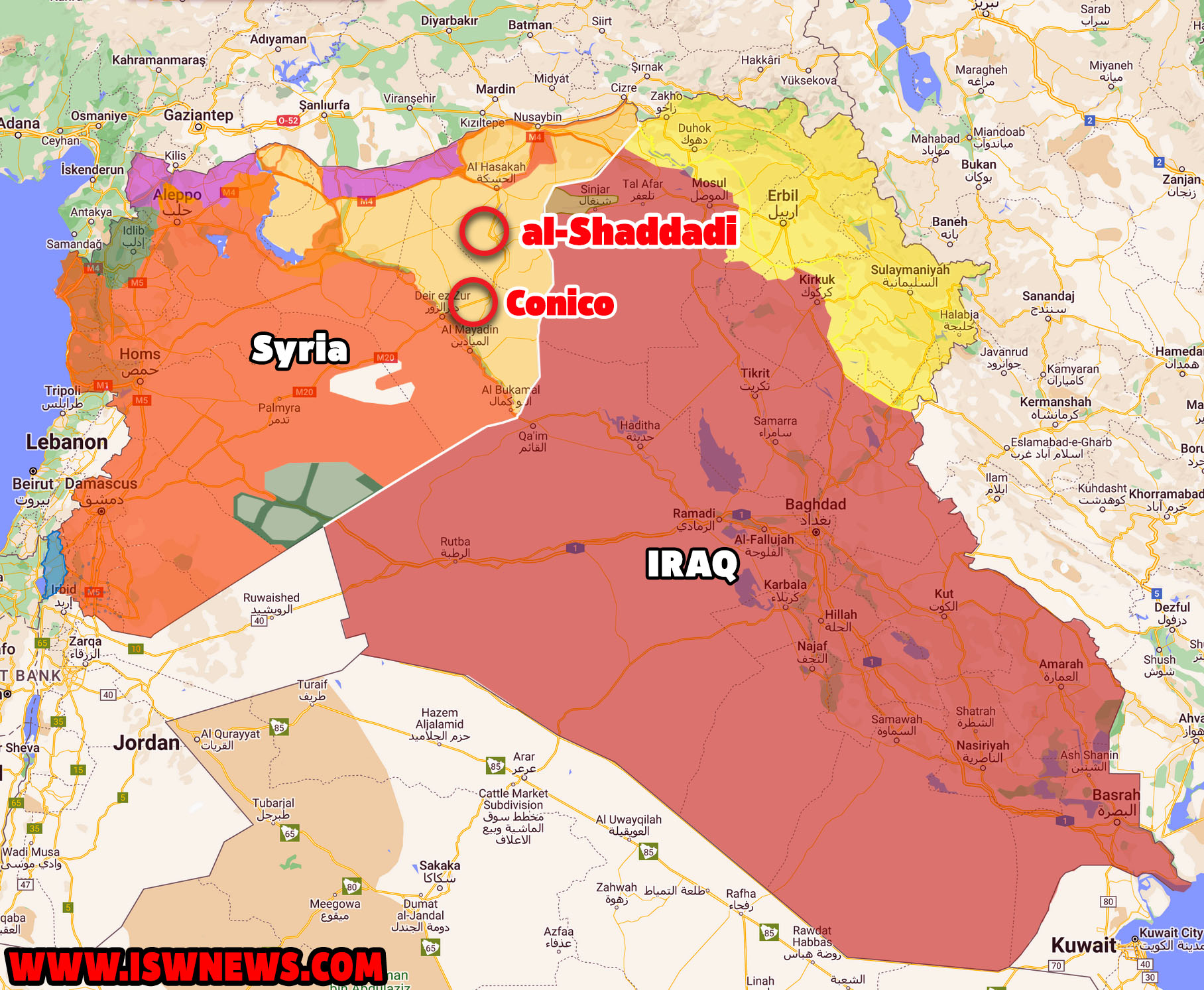
On November 12, resistance groups targeted the positions of US terrorist forces at the military base in the CONOCO Gas Field located in Deir ez-Zor Governorate and the al-Shaddadi base located in Al-Hasakah Governorate with drone and rocket attacks.
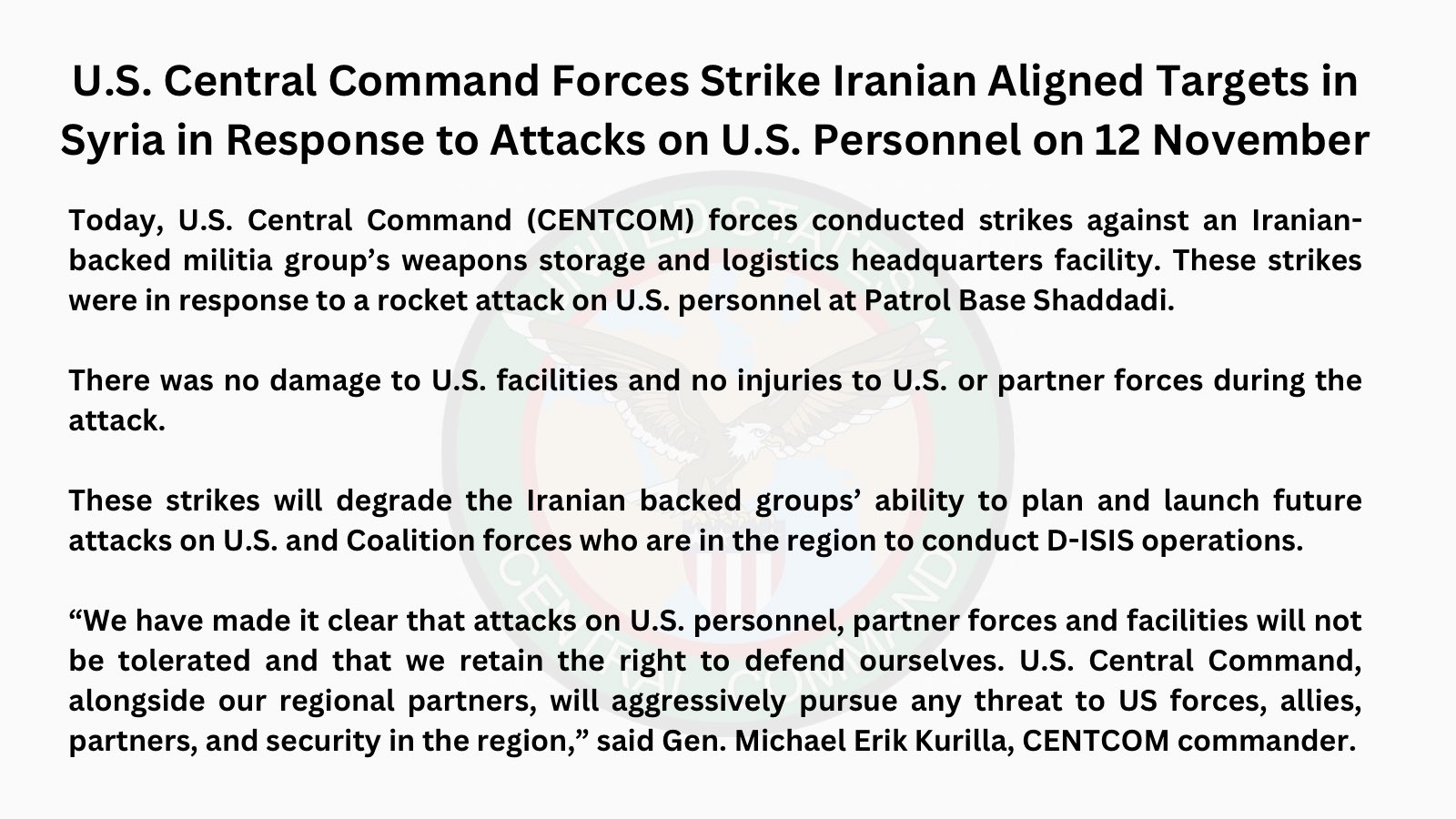
The terrorist command of the United States in West Asia (CENTCOM) issued a statement on November 13, announcing that in response to attacks against American forces at the al-Shaddadi base, it targeted resistance positions in Syria.
The CENTCOM statement also said: In response to the rocket attack against American forces at the al-Shaddadi base, attacks were carried out against the logistics facilities and weapons storage of an Iran-backed militia group in Syria.
CENTCOM statement
General Michael E. Kurilla, commander of the United States Central Command, also said: We have clearly stated that we will not tolerate attacks on American facilities and personnel and our allied forces, and we reserve the right to self-defense.
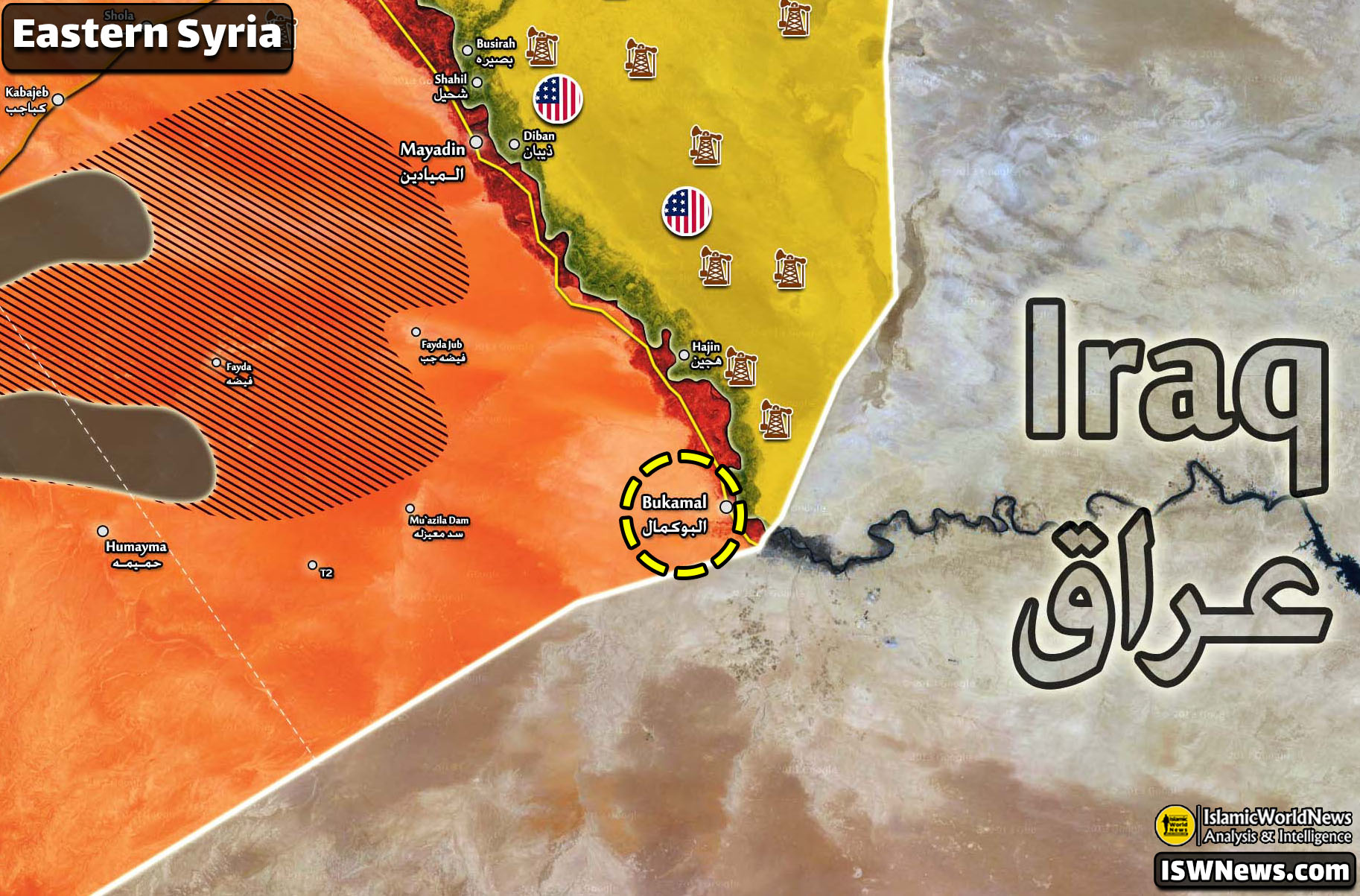
It is reported that the US attacks targeted sites in the al-Jamiyat district of al-Bukamal city in Deir ez-Zor Governorate, resulting in at least eight people martyred or injured.
Abu Kamal
It is worth mentioning that this is the second US air strike against resistance groups in eastern Syria in the past two days. On November 11, US terrorist army aircraft also targeted the positions of resistance groups in the areas surrounding the city of al-Mayadeen in Deir ez-Zor Governorate, resulting in at least four resistance fighters martyred and eight others injured.