
According to official sources, indirect talks between Iran and the United States will be held on Tuesday. The discussions are being conducted with the mediation of Oman. The stated aim of this round of negotiations is to continue examining technical and political solutions to advance the dialogue process and reduce differences.
Author: Mirza
-

The Role of Yemen in the Competition in the Horn of Africa
In the 21st century, Persian Gulf countries have set ambitious geopolitical objectives, heavily relying on their rich oil revenues. As this trend continues and the oil market remains volatile, diversifying income sources becomes essential. Saudi Arabia’s “Vision 2030,” which focuses on expanding the non-oil sector and investing in foreign assets, aligns with this goal.
Consequently, as oil resources decline, the Persian Gulf nations are aiming to diversify their economies and safeguard key assets like ports and farmland. The 2008 global financial crisis further accelerated this effort, prompting the Gulf countries to make significant investments in the Horn of Africa to broaden their economic bases.Recently, Saudi Arabia’s Red Sea Gateway Terminal (RSGT) signed a 30-year contract with Djibouti Ports and Free Zones Authority (DPFZA) to operate and develop the port of Tajoura. RSGT aims to turn Tajoura into a major multi-purpose terminal, expecting it to handle five million tons of cargo annually, strengthening its role as a gateway for Ethiopian imports and exports. However, there has been a shift from purely economic involvement to more direct political and military actions, with Gulf states establishing military bases and brokering peace in the region. Saudi Arabia’s strategy in the Red Sea focuses mainly on security, evident in its diplomatic and military moves such as a 2017 defense agreement with Djibouti and a 2018 peace treaty between Ethiopia and Eritrea. Its leadership in creating the Red Sea and Gulf of Aden Council in 2020 underscores its commitment to regional security cooperation. Riyadh’s presence in the Horn of Africa appears aimed at controlling the Red Sea to counter threats, especially from Yemen’s Ansarullah. It’s noteworthy that Western media claim Yemen’s Ansarullah and Somalia’s Al-Shabaab are cooperating in arms shipments.
UAE Movements
While the UAE and Saudi Arabia often pursue Western strategies in various regions, this has occasionally caused rivalry, as seen in Sudan and eastern Yemen. Consequently, much of the UAE’s effort to expand influence in the Horn of Africa revolves around controlling western Yemen to attain its objectives in the oil-rich Hadramaut area. This region has recently become a conflict zone involving tribes near Saudi Arabia.
The UAE has adopted a more assertive approach, establishing a strong military and economic footprint across the Horn of Africa. Over the last ten years, it has developed military bases in Eritrea, Somalia, and Ethiopia. Its air base in Assab, Eritrea, symbolizes Abu Dhabi’s commitment to maintaining a lasting presence in the area. Although this base was later dismantled, the UAE’s control over port rights in Mukalla, Aden, and Berbera indicates its strategic goal of dominating maritime routes and influencing the Red Sea and Gulf of Aden regions.In fact, the events in Yemen and the Horn of Africa are closely linked. Growing influence in this region could enhance Yemen’s power by diminishing Ansar Allah’s influence. Interestingly, the Emirates’ ambitions appear more aggressive and far-reaching than Riyadh’s. They are even prepared to collaborate closely with the Zionist regime in this area.
Recently, Western media have reported that Iran and Yemen’s Ansar Allah are gaining influence in the Horn of Africa, particularly in Eritrea, Djibouti, and Somalia. This situation has prompted the Emirates and the Zionist regime to adopt a more coordinated strategy to address the issue. Some sources suggest that, along with Ethiopia, these two regimes have formed a secret alliance in the region.Eritrean President Isaias Afwerki recently made surprising statements, blaming the current Yemen crisis on the militarization of the country’s islands. He also emphasized that coastal nations should be responsible for securing the Red Sea, rather than relying on foreign military bases. His primary concern is the potential establishment of a military base on Yemen’s “Zaqr” island by the Emirates, which could pose a serious threat to Eritrea if completed. The presence of the Zionist regime via the Emirates on Yemeni islands threatens regional sovereignty and international interests. These actions form a dangerous shadow alliance that endangers Yemen’s sovereignty and risks transforming it into a shared military domain of the regime and Abu Dhabi.
Another key point near the Emirates axis involves Somaliland, which is strongly supported by the Zionists and Ethiopia, each with different aims. Ethiopia sees Somaliland as a route to the sea to further its economic ambitions. Meanwhile, Abu Dhabi and Tel Aviv aim to establish a base there, possibly to target Yemen’s Ansarullah.
Along with security concerns, the Emirates also aims to achieve its economic objectives, emphasizing food security. The region’s potential for agriculture and its proximity to the Gulf states make it appealing as a source of essential foods. The Horn of Africa plays a critical role in the Gulf states’ food security due to its fertile land and established trade routes. The Gulf region relies heavily on food imports, obtaining 85 percent of its staple foods from other countries.
The Southern Transitional Council’s sinister plan for Ansar Allah
Besides the explanations about the UAE’s regional influence, the Times reports that a delegation from the Southern Transitional Council recently visited Tel Aviv. They expressed willingness to recognize the “Israeli regime” (supporting the Zionist regime) and to sign the “Abraham Pact” in favor of Trump. However, this is conditional on the Zionist regime and the US participating in a joint ground (Southern Transitional Council) and air (Zionist regime and US) attack on Yemen’s Ansar Allah as a “common problem,” and on the Southern Transitional Council being able to establish the country of “South Yemen.”Conclusion
Generally, the UAE and Saudi Arabia’s roles in the Horn of Africa involve both competition and cooperation. While they share the goal of countering Iran and Yemeni AnsarAllah’s influence, they also have significant disagreements, as dominance in this region can boost their rivalry over Yemeni oil resources. The main reasons for their presence in the Horn of Africa can be summarized as follows:1- As the new global order emerges with multipolarity and diminishing US influence, Washington is delegating its objectives to other regions. Boosting the presence of the UAE, Saudi Arabia, and the Zionist regime aligns with US interests. Similarly, recognizing Somaliland in exchange for permission to establish a military base fits this pattern.
2- The Persian Gulf countries’ involvement in the Horn of Africa and the broader Red Sea region is driven by security needs and economic ambitions. Heightened security concerns have increased the region’s importance, especially as Iran’s influence, supported by the “axis of resistance” and strengthened by the Yemeni war, extends to the Horn of Africa. Naval bases serve as strategic footholds, broadening the Persian Gulf’s influence over regional politics and economics. Recently, Western media have suggested cooperation between Ansar Allah and Somali al-Shabaab, despite their differing motives.
3- Gaining control over the Horn of Africa allows influence into East, North, and even the Sahel regions of Africa. For instance, without Eritrean cooperation, access to trade routes leading to the Sudanese port would be difficult. Cooperation with Ethiopia could expand influence in Central and East Africa. However, Egypt, an Arab country typically aligned with the UAE and Saudi Arabia, often holds opposing views in this region, which may impact future political dynamics.
-

Araghchi Reacts to the “Munich Circus”!
He added that the European Union is confused in its understanding of Iran’s domestic developments and, from a strategic standpoint, has lost its geopolitical weight in the region.
Araghchi also referred to the role of Germany, saying it has effectively handed over its regional policy to Israel, and emphasized that Iran’s regional allies (i.e. Arab countries) play a more effective role than the European troika.
-

Syria’s Minister of Information Met With IREX!
During the meeting, the head of the American delegation claimed to have an “understanding of the real condition of the media” and called for identifying the sector’s practical needs so that training and development initiatives could be designed accordingly.The organization IREX is an institution whose primary objective is expanding U.S. influence worldwide. The United States pursues this agenda under the cover of exchanging researchers, teachers, students, and ideas in targeted countries.
-

The United States Burns Its Bases After Evacuating Them in Syria! (Video)
The transfer of part of the military equipment from Al-Shaddadi base, which had begun earlier, is expected to continue until February 10. These movements, along with the burning of the bases, are part of Washington’s strategy to reduce its presence in the region and prevent these facilities from being reused.
-

Escalation of U.S. Terror Operations in Central and Eastern Yemen
On February 12, a passenger vehicle was struck by an unidentified drone along the coast of the city of Al-Ghaydah, the capital of Al-Mahrah province. As a result of the attack, one or two unidentified individuals were killed. It is believed that one of them may have been a Somali national with a background in either Al-Qaeda or ISIS. A Yemeni source identified the two individuals as Abdullah Abdulrazzaq, originally from Somalia, and Mohammed al-Hammami, a resident of Sana’a.
Images released by local sources indicate that the missile used in the strike was a Ninja missile (AGM-114 Hellfire), reportedly deployed by U.S. drones. The United States uses this missile in highly specific targeted operations. Previously, it had only been employed in assassinations in Syria and in one case in Lebanon. Therefore, this marks the first reported use of the Ninja missile in U.S. operations in Yemen.
U.S. drones also conducted two additional operations in Marib province on 25 January and 4 February, though official details have not been released. According to local sources, the first strike involved three missiles fired at a house in the Al-Kharashi area north of Marib city, killing three Al-Qaeda members from the Al-Qayfa area in Al-Bayda province. The second attack targeted a gathering of four Al-Qaeda members — Idris al-Masri, Abu Saleh Ibrahim al-Banna, Battar al-San’ani, Homam al-San’ani, and the son of Khaled Batarfi — in the Arq Al Shabwan area northeast of Marib city.
According to statistics reported by Western media regarding U.S. airstrikes in Yemen over the past two decades, more than 390 operations have been carried out against Al-Qaeda members in the country.
The pace of U.S. air operations in Yemen over the past three months has increased significantly compared to the previous two years, including the period following the inauguration of Donald Trump. Over the last three months alone, seven operations have been conducted — six in Marib and one in Al-Mahrah. In terms of timing, one operation took place in November, three in December, and three up to February 12. Since the beginning of these operations — marked by the assassination of Abu Ali al-Harithi on November 5, 2002 — the stated objective of the United States has been to counter Al-Qaeda activities. Since then, more than 1,600 individuals have reportedly been killed under this pretext.
-

Reverse Suicide Rotation!; America’s New Drone Policy in West Asia
Increased US Threat in Iran’s Vicinity:
Since the drones in this plan are based on the Shahed-136 model but feature additional capabilities and automated coordination, their deployment could boost US ability for precision strikes, swarming attacks, and long-range operations targeting regional assets.
Evolving Deterrence and Military Competition:
The introduction of a large number of low-cost drones will challenge the traditional balance between Iran’s air-missile capabilities and advanced US systems, potentially initiating a new arms race focused on “cheap mass production.”
Uncertain Security and Political Outcomes:
Deploying these systems, which can operate independently and within networks, raises questions about Washington’s intentions: Is it deterrence? Preparing for future offensives? Pressuring Iran? Or fostering a new pattern of regional conflict? The key issue is the impact of deploying the Scorpion Strike drone unit and affordable, network-capable drones on regional power dynamics, security, and Iran’s deterrence against the US. This report explores how this could alter combat rules, increase limited conflicts, or forge a new drone warfare paradigm in West Asia.Background
The US Army has deployed its first operational unit equipped with affordable kamikaze drones of the “Unmanned Combat Attack System” type in West Asia. These systems are based on reverse-engineering the Iranian Shahed-136 drone. According to Gifron Aerospace, the team leader, establishing the Scorpion Strike Task Force marks a major shift in operational structure and reflects Washington’s new stance on Iran. Earlier reports also highlighted the US military’s need to heavily invest in these Shahed-136 clones, which are quick to produce and adaptable, and could be crucial in future global missions.Analysis of Findings:
Mechanism of Formation of the Scorpion Task Force
The United States Central Command (CENTCOM) announced the formation of the Scorpion Strike Task Force, created under the “US Military Drone Dominance Plan” launched earlier this year by US Secretary of War Pete Hegseth. The task force, which reports directly to the US Special Operations Command Central, is responsible for overseeing the deployment of new drones in the region. Additionally, the “CENTCOM Joint Rapid Response Task Force,” established last September to enhance the deployment of military capabilities, has also been involved. Tim Hawkins, a CENTCOM spokesperson, explained that the task force includes approximately 24 specialists whose role is to manage the deployment and operation of new drones. He noted that while the exact number of drones deployed remains undisclosed, their deployment is substantial enough to grant the US military a “significant level of operational capability.”Drones and Estimated Production Cost
The drones, featuring a delta wing design and measuring about 10 feet in length and 8 feet in width, were created by Arizona’s Spectre Works in partnership with the US Army. This system includes technical features enabling ‘automated coordination” among the drones, making them suitable for group tactics and network operations. Captain Tim Hawkins, a project team member, reported that each drone costs approximately $35,000. Despite the low price, the system offers capabilities comparable to traditional long-range US Army systems but at a significantly reduced cost. He also highlighted their long range, the ability to operate beyond line of sight, and extensive coverage potential within CENTCOM’s area. An official CENTCOM statement mentioned that these long-range, autonomous LUCAS drones are now operational in the region and can be launched via various methods, including catapults, rocket-assisted systems, and ground- or vehicle-based launchers.Multi-platform drones
Military analyst Joseph Trowick explained that LUCAS drones can be launched from various platforms, not just ground-based systems. These drones support multiple launch methods, including deployment from naval vessels, which enhances their value in maritime and sea-based missions. Earlier US military analyses indicated that integrating inexpensive, multi-role drones into the US Navy could add new layers of defense, attack, electronic warfare, intelligence, and networking capabilities. This would transform warships into advanced nodes within a combat network. Trowick also noted that the initial design of the new UAS drone was directly inspired by Iran’s Shahed-136. The US military collaborated with several innovative tech companies to develop and produce the drone, which is a “direct result of that reverse engineering effort”. While it follows the general pattern of the Shahed, some parts have been redesigned to meet US operational requirements.FLM-136 UAV
SpectreWorks, a manufacturer of these drones, has released specifications for a related design called the FLM-136, described as a “training target” or experimental platform. According to the data, the drone can reach a maximum range of approximately 715 km and remain airborne for up to six hours. Its payload capacity, excluding fuel, is around 18 kg, and it flies at about 137 km/h, with the ability to accelerate to roughly 194 km/h. It remains unclear whether these features fully represent the operational prototype of the combat offensive system or if they only pertain to experimental and early versions.
According to data from the US Army Operational Environment Data Integration Network portal, the Shahed-136 drone features a 50-horsepower internal combustion engine and can reach speeds of around 185 km/h (100 knots). Its standard version has an operational range of approximately 2,000 km and can carry a 40 kg warhead. Designed mainly for point attacks on stationary targets, it relies on pre-programmed targeting data. Recently, Iran has introduced new Shahed-136 variants, including models with advanced guidance systems and a jet engine version with different speeds and ranges. Russia has also started producing the “Geran” variants based on the same design since beginning drone cooperation with Iran. Several derivative models are now part of its arsenal. Reports suggest that both Iran and Russia are working to enhance their drones with more dynamic, flexible, and reactive targeting capabilities, aiming for semi-intelligent drones capable of attacking moving targets or altering course during flight.The Importance of Cheap, High-Performance Drones
Captain Tim Hawkins announced that the US has reached a new stage: mass-producing drones and deploying them in West Asia for the first time. He described this as a “reverse scenario against Iran,” where the US is using the same approach Iran developed through frequent drone attacks in the region. According to the head of the CENTCOM team at MacDill Air Base, observing Russia’s operations in Ukraine and Iran’s drone attacks on the Zionist regime shows that this tactic can cause significant disruption and impose heavy defense costs on the enemy. From the US perspective, it is now time to apply the same “Iranian strategy” against Iran.
Although the Scorpion Special Forces haven’t yet deployed their new drones in actual missions, they have been tested against regional targets, confirming their operational potential. Hawkins pointed out that enhancing the US’s offensive and defensive capabilities is a concurrent strategy and stated that “sometimes effective defense comes from effective attack.” Until now, the US military has mainly regarded the drones publicly as training tools or threat simulators rather than as active offensive systems.The system could also be employed against the Houthi rebels in Yemen. While the US has announced a formal ceasefire with the group, the capability to strike them remains if necessary. The main obstacle, however, is not a lack of offensive power but rather identifying the right target. From a strategic perspective, drones like Shahed offer advantages beyond West Asia and North Africa, providing the ability to deliver large amounts of low-cost firepower. This enhances the capability to weaken enemy defenses and aligns with the US military’s focus on developing long-range, affordable, and mass-produced weapon systems.New capabilities
Modern drones can be continuously upgraded thanks to their modular and open architecture design. This setup permits the integration of the latest sensors, navigation tools, and AI components without altering the core drone structure. As previously mentioned, advancements in positioning, navigation, and timing technologies are ongoing, allowing affordable, precision-attack drones to leverage this flexibility to combat electronic warfare. Additionally, the deployment of artificial intelligence in lower-end drones is imminent, enabling them to navigate autonomously without GPS and target moving objects effectively.Consequently, the effectiveness of electronic warfare in disrupting these systems is waning. In the near future, thousands of inexpensive yet highly threatening drones—costing just a fraction of a traditional cruise or ballistic missile—could easily overwhelm and disable even the most advanced enemy air defenses. This capability is expected to become a vital component of future major conflicts. Tim Hawkins notes that development efforts are progressing rapidly, especially for low-cost attack drones that are scalable and upgradeable. Spectre Works is not alone in this market; Gryphon Aerospace, an American company, also supplies a drone similar to the Shahed series, the Arrowhead MQM-172, to the US armed forces. -
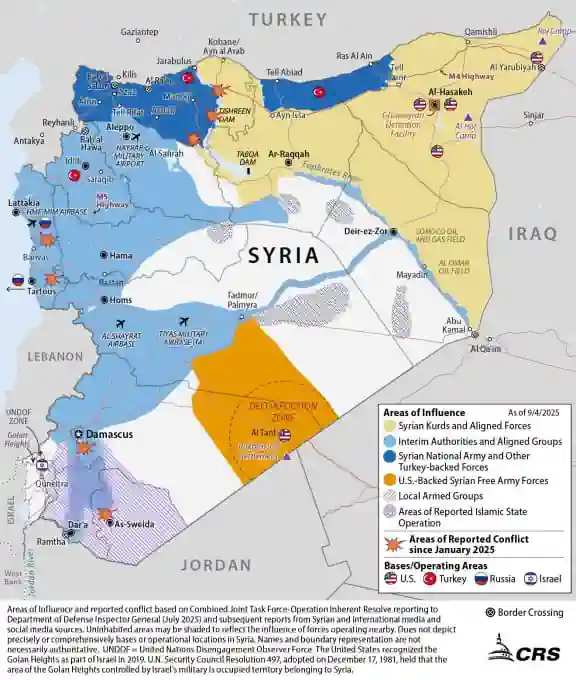
Changing the US Presence in Syria: Details of Military and Logistics Movements at US Bases in Eastern Syria
Analysis of satellite images and field reports from early 2025 indicates a shift in US force deployment from dispersal to concentration along the eastern axis. Deir Ezzor bases, once serving as contact points for local threats, have seen reduced activity and the withdrawal of equipment recently. The evacuation of some facilities at CONOCO, Al-Omar, and Green Village initially suggested a potential withdrawal, but later developments suggest otherwise. Current data reveals that Washington is adopting a strategy of “reducing presence and increasing infrastructure depth.” Recent weeks have seen the transfer of equipment, new construction, and convoy movements across multiple eastern bases, indicating a strategic reorganization rather than a withdrawal, effectively shifting the focus of US presence in Syria.
Conceptual Framework
After 2025, the US military presence in Syria has shifted to a new phase that diverges significantly from earlier patterns. Instead of focusing on “territorial dominance” through large bases and extensive field operations, the current strategy emphasizes positional-functional control. In this approach, bases serve not just as military locations but as strategic instruments for blocking geopolitical bottlenecks and influencing the region’s geoeconomic network.In this context, the significance of bases is determined by their role within power chains and strategic routes rather than their size. For example, Qasrak base as a logistical gateway east of the Euphrates and a command post for northeastern Syria, while Al-Tanf is pivotal in disrupting Iran’s land corridor to the Mediterranean. These bases serve as “geopolitical levers,” demonstrating a shift from tactical presence to targeted influence engineering. Each base now functions as a tool for managing regional relations and maintaining strategic balances.The map in the US Congressional Report shows the deployment of US military bases in Syria and areas under its control in 2025, with an emphasis on key points in northeastern Syria and strategic borders. Source: US Congressional Report (CRS 2025) – Syria: Transition and U.S. Policy Based on US Congressional reports and Tom Barrack’s speech at the Doha Forum, Syria has shifted from being merely a ongoing crisis to becoming a strategic platform for shaping a new regional order in the Arab East. This shift suggests that the US intends to maintain a presence in Syria to influence emerging power dynamics. Rather than sticking to a purely security-focused approach, the US is redefining its global role as a key actor in the region’s geopolitical and security landscape. This military reorientation represents not only a tactical change but also a move toward establishing a new power framework in West Asia.
The New Map of US Military Presence
The US military presence in Syria has shifted from direct control to managing strategic locations. These bases now serve not just military purposes but act as points within a broader geopolitical network shaping regional dynamics. This section examines three active bases and their contribution to extending US influence in Syria.Inactive Bases
In 2025, the United States shifted its military focus to strategic and geopolitical areas by closing several key bases in Syria. Bases like Al-Omar and CONOCO, primarily used for energy and surveillance, were transferred to SDF forces. Additionally, Tal Baydar and Wazir bases, closed due to their poor locations and diminished Turkish sensitivities, became part of the new US strategy targeting crucial geopolitical hubs. These actions indicate that the US now aims not only to secure oil resources but also to control strategic positions to influence Syria’s future political and security landscape.US geopolitical logic
The US presence in Syria, particularly in the northeastern regions, has experienced notable changes driven by security concerns and regional geopolitics, reflecting efforts to shape a new regional order. These changes not only involve scaling back military footprint in certain areas but also show a reinterpretation of America’s role in Syria and the wider region. Strategic American bases in Syria serve as tools of geopolitical influence, impacting the regional power dynamics in Arab East and West Asia. The motivations and geopolitical reasoning behind this realignment of US bases and its presence in Syria are discussed below.Containing Iran and controlling the land corridor
One of the primary objectives of the United States in Syria is to restrict Iranian influence. The strategic Al-Tanf base, situated at the Syria-Jordan-Iraq border triangle, is seen as crucial to U.S. interests. Since the start of the U.S. presence in Syria, Al-Tanf has been instrumental in blocking Iran’s land corridor and continues to serve this purpose. The goal of maintaining Al-Tanf is to prevent Iran from establishing a land link from Tehran to Beirut, thereby stopping Iran from entering Lebanon and expanding its regional influence. The U.S. presence here acts as a chokepoint for Iran, playing an essential role for the Western alliance and the Zionist regime, especially in hindering Iran’s coordination with resistance forces in Iraq, Syria, and Lebanon.Maintaining leverage in Syria’s political future
Another objective of the United States in restructuring bases and trimming its military footprint is to utilize the remaining bases as leverage in the Syrian political arena. The 2025 US Congressional Report notes that the US has transformed its military presence into a bargaining tool in political negotiations following the fall of the Assad regime. While justified as efforts against ISIS, this presence primarily aims to be involved in Syria’s reconstruction and to shape its future political and security frameworks in alignment with Washington’s interests. Key bases like Qasr and al-Shaddadi, which serve as strategic contacts with local forces and Syrian Kurds, provide the US with significant influence in post-Assad negotiations.Managing the relationship with Turkey
Another strategic move for the United States in Syria involves managing its complex relationship with Turkey. By withdrawing from sensitive areas in northern Syria, such as Tal Baydar, the U.S. has lessened Turkey’s sensitivities and improved its security position. Meanwhile, reports emerged in late 2024 and early 2025 about the establishment of a base in Ain al-Arab, which were consistently denied by both American and Turkish sources. Regardless, the U.S. goal of rebuilding the base near the Turkish border can be seen as a deterrent against Türkiye, allowing Washington to influence Turkish policies in northern Syria.Presence in the future geoeconomic corridors
Among American politicians, Syria is considered a key element in the evolving landscape of the Arab East. At the Doha Forum, Tom Barrack mentioned that the United States is leveraging Syria as a platform to forge a new geopolitical and economic framework. Linking Syria with Lebanon, the Zionist regime, Turkey, and Jordan could influence trade, energy, and transit pathways. These nations, which serve as vital economic and commercial hubs in the region, can be strategically connected through key locations like Qasrak, Al-Shaddadi, and Al-Tanf. This allows the U.S. not only to utilize these networks now but also to steer and reshape them in the future.Turning Syria into a scene for containing Russia
After the collapse of the old order, the United States sees a chance to restore its influence in the Eastern Mediterranean and Syria. The Syrian bases serve to contain Iranian influence and oppose Russian expansion in the area. By keeping a military presence and enhancing key strategic locations in Syria, the U.S. can better negotiate with Moscow and act as a deterrent to Russian ambitions.Conclusion
Since 2025, the U.S. has significantly restructured its military presence in Syria, emphasizing key bases in strategic locations. These adjustments aim to curb Iranian influence, especially by severing the Tehran-Beirut land corridor and limiting the resistance axis’s maneuvering capabilities. Bases such as Qasrak, Al-Shaddadi, and Al-Tanf now function as tools for overseeing energy resources, trade routes, and shaping policies in Syria and among regional actors like Turkey. Beyond oil, the U.S. seeks to play a decisive role in Syria’s political landscape and regional power dynamics, using these bases to counter Russian influence. These strategic adjustments enable the U.S. to stay a dominant player, safeguarding its security and shaping a new economic and political order around Syria. -

Clashes Between Southern Transitional Council Supporters and Forces of the Saudi-backed Government in Ataq
Media outlets aligned with the exiled government claim that STC supporters fired toward the governorate building and attempted to seize it, prompting security forces to respond.
Protests by supporters of the Southern Transitional Council against the exiled government have spread across most southern Yemeni cities after the council—and the United Arab Emirates—announced opposition to the newly formed cabinet headed by Shaea al-Zindani. Ataq is among the cities where these demonstrations escalated into clashes and the reported killing of protesters.
-
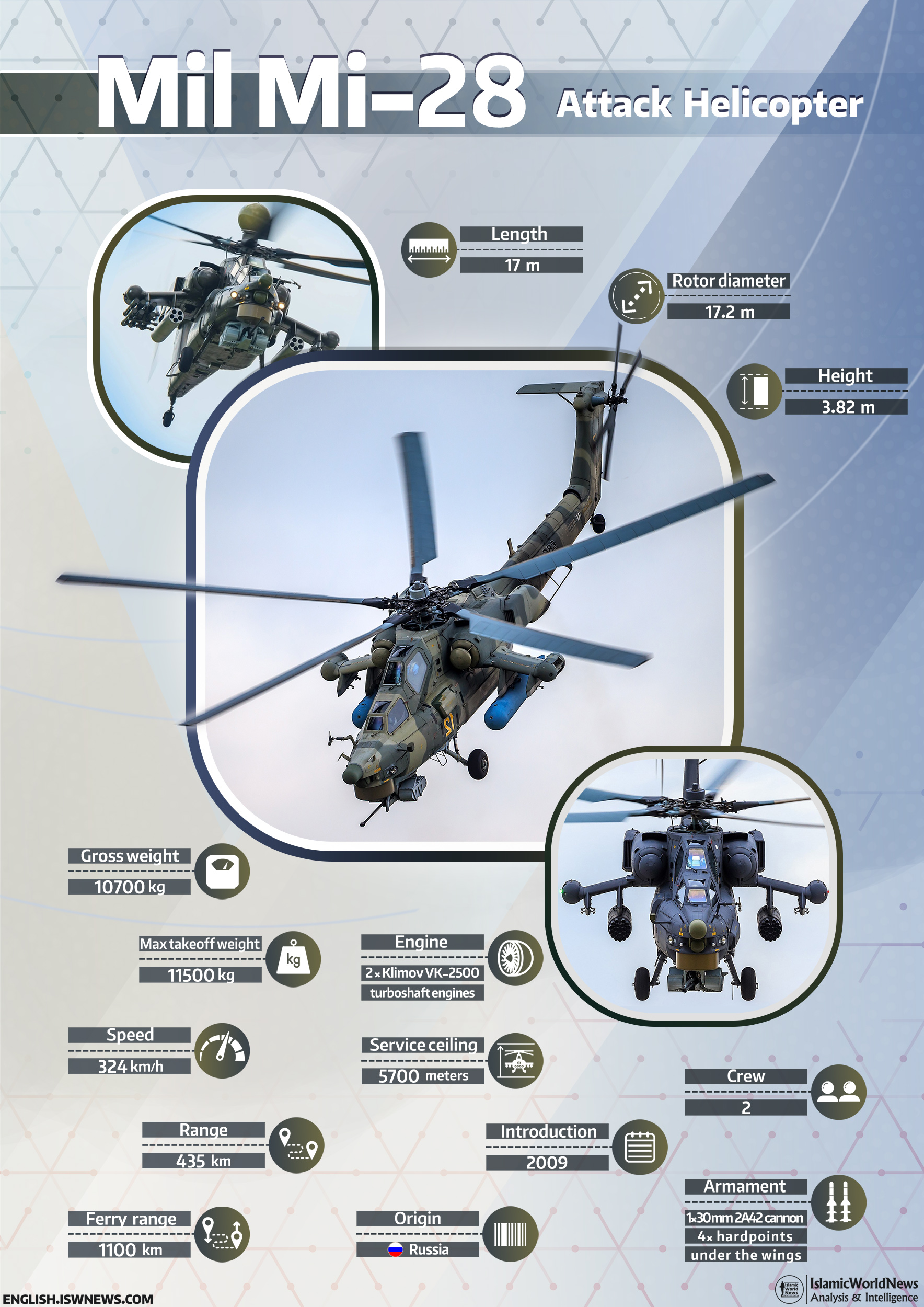
Military Knowledge: Mi-28 Attack Helicopter
Design and Development History
Development of the Mi-28 began in 1972, when the Soviet Union decided to design a fully dedicated replacement for the aging Mi-24 Hind, aiming to significantly enhance anti-tank and close-support firepower. During the 1980s, the initial design was completed by the Mil Design Bureau under the leadership of Marat Tishchenko, and the first Mi-28 prototype made its maiden flight on 10 November 1982. However, competition with the Kamov Ka-50, financial difficulties following the collapse of the Soviet Union, and shifting defense priorities delayed large-scale production.
The initial production variant, Mi-28A, was introduced in the 1990s, but it was the upgraded Mi-28N “Night Hunter”, featuring full night and all-weather capability, that officially entered service with the Russian Armed Forces in 2009. Subsequently, the more advanced Mi-28NM was developed, incorporating updated radar systems, improved engines, and modern avionics to enhance battlefield awareness, making it one of Russia’s most modern attack helicopters.
General Characteristics of the Mi-28
The Mi-28 is a dedicated anti-armor attack helicopter designed to destroy tanks, armored vehicles, enemy units, and soft targets on the front lines. Unlike the Mi-24, it has no troop-carrying capability and is fully focused on combat missions. The aircraft has a two-person crew, with the pilot seated in the rear and the weapons systems officer in the front. Its twin turboshaft engines provide high maneuverability and adequate speed.
The Mi-28 has a fuselage length of approximately 17.9 meters, a main rotor diameter of 17.2 meters, and a height of about 3.8 meters. While its aerodynamic layout is similar to other modern attack helicopters, greater emphasis has been placed on armor protection and the integration of advanced systems beneath the fuselage.
The twin-engine configuration, main rotor system, and short wings on either side improve performance across various flight conditions, including low-altitude operations. The helicopter is equipped with three non-retractable landing gears. Both the landing gear and energy-absorbing seats are designed to protect the crew during low-altitude crash scenarios.
Airframe Armor Protection
One of the Mi-28’s most notable features is its heavy armor protection, capable of withstanding fire from NATO-standard 7.62 mm and 12.7 mm rounds, as well as 20 mm projectiles. The helicopter has a fully armored cockpit with bullet-resistant glass. The cockpit and critical airframe sections are engineered to protect the crew even during hard impacts—an aspect emphasized in earlier designs and further optimized in newer variants. Compared to the Mi-24, the Mi-28 has approximately 2.5 times lower thermal signature, enhancing its survivability on the battlefield.
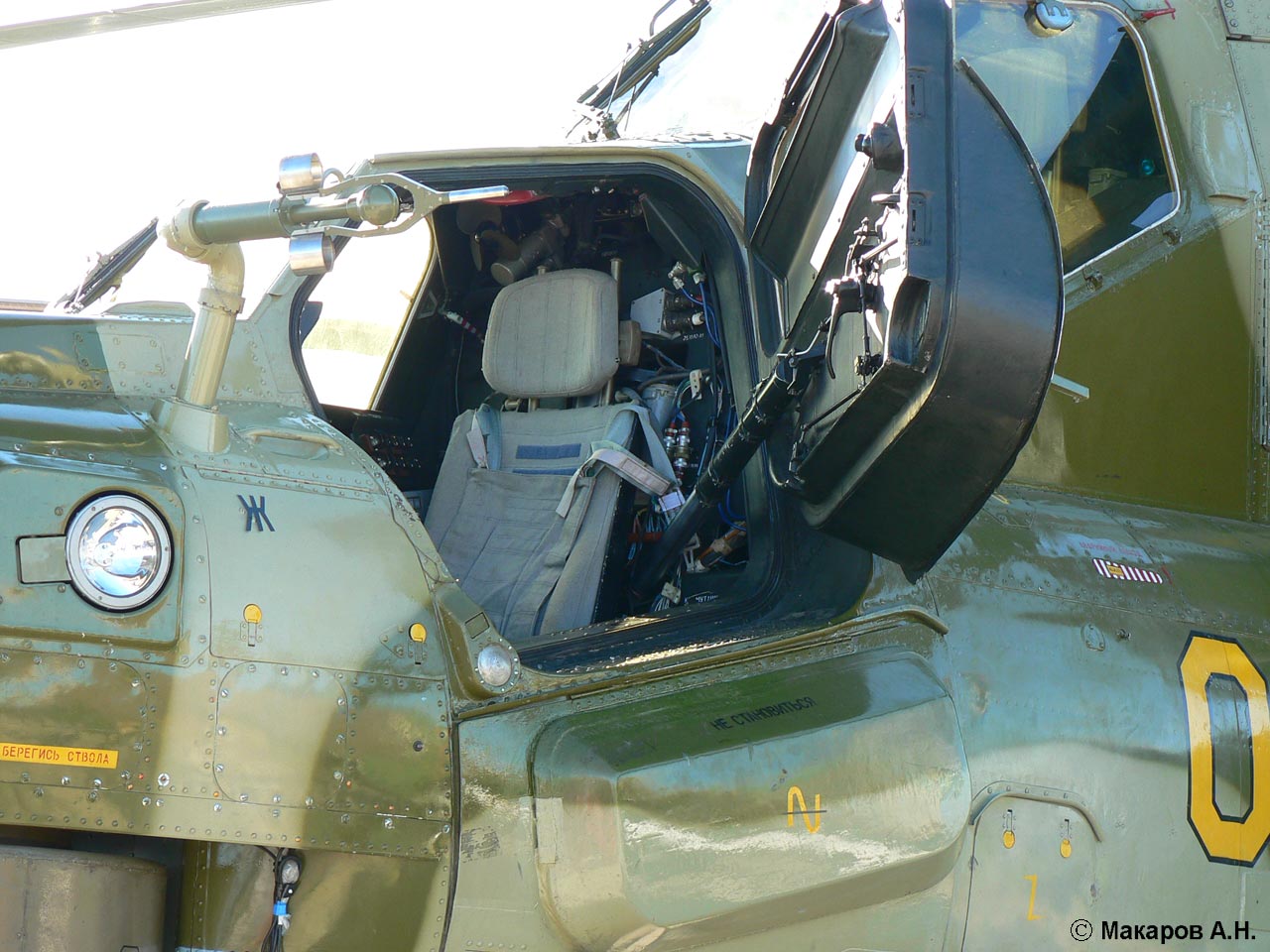
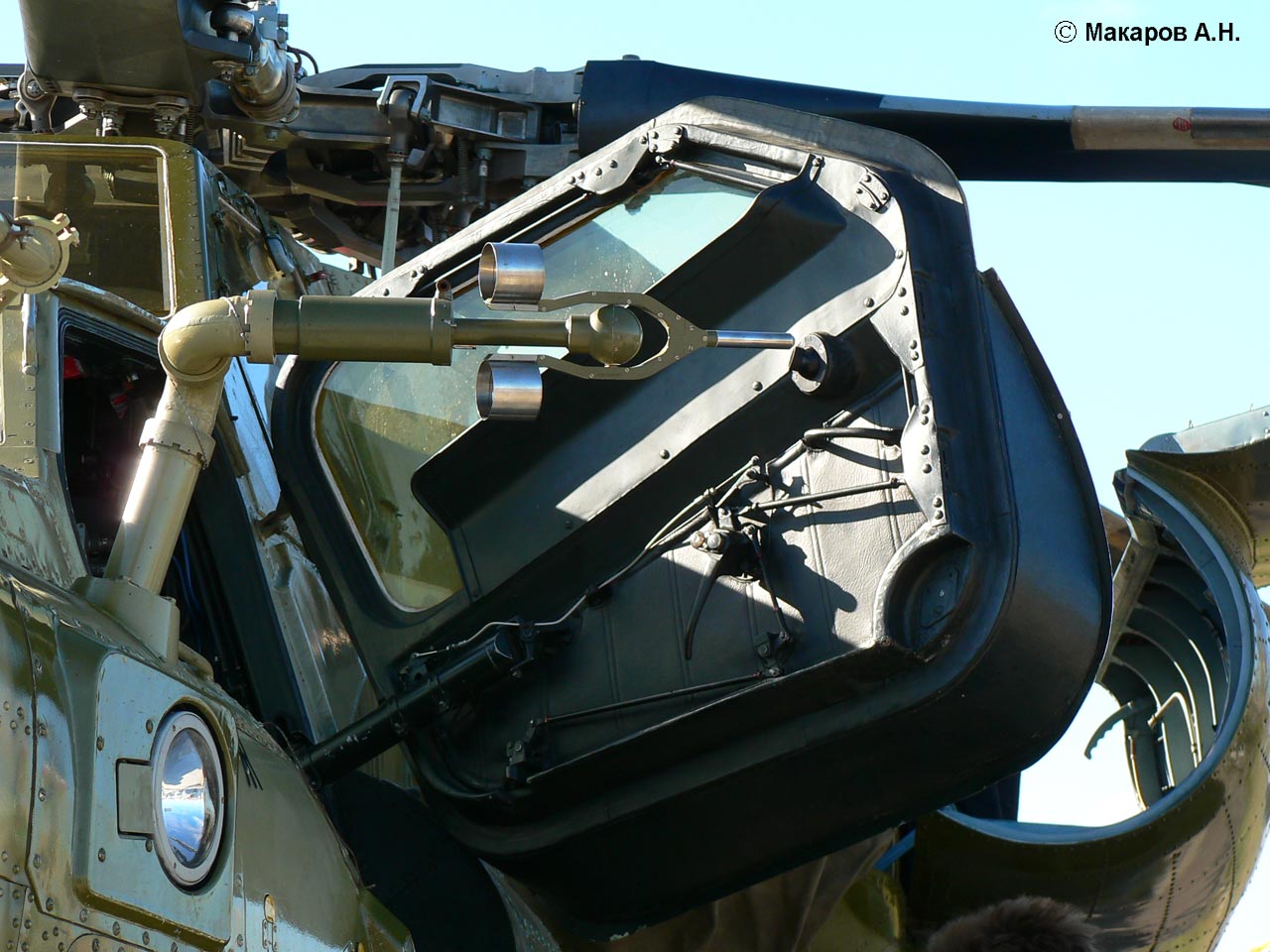
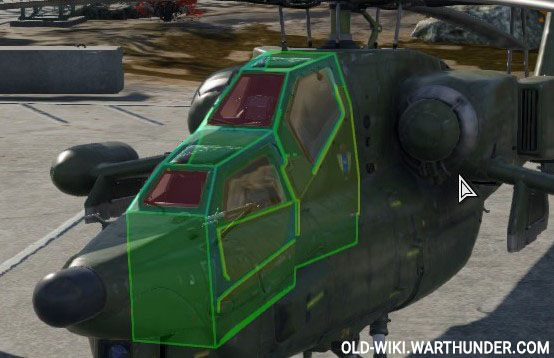
Mil-28 armored airframe The front and rear cockpits are also equipped with AK-2005 crash-resistant seats.

AK-2005 crash-resistant seats Motors and rotors
The Mi-28 helicopter is powered by two TV3-117VMA turboshaft engines, each producing about 2,200 horsepower, or by two VK-2500P turboshaft engines in the Mi-28NM variant, each delivering around 2,500 horsepower. These engines drive a five-blade main rotor and a four-blade tail rotor.
This powerful engine setup and rotor configuration enable the helicopter to perform effectively at high speeds, medium altitudes, and in dense battlefield environments. The Mi-28 has a maximum speed of 324 km/h. It is also capable of flying rearward and sideways at speeds of up to 100 km/h, and can execute reverse turns at a rate of 45 degrees per second.


Klimov VK-2500P turboshaft engine In the export version of this helicopter, the Mi-28NE, the helicopter engines are equipped with air intakes protected against dust and sand. This multi-cyclone dust protection unit prepares the Mi-28 helicopter for operation in dry and desert climates. According to the manufacturer, this air intake provides an efficiency of 93%.
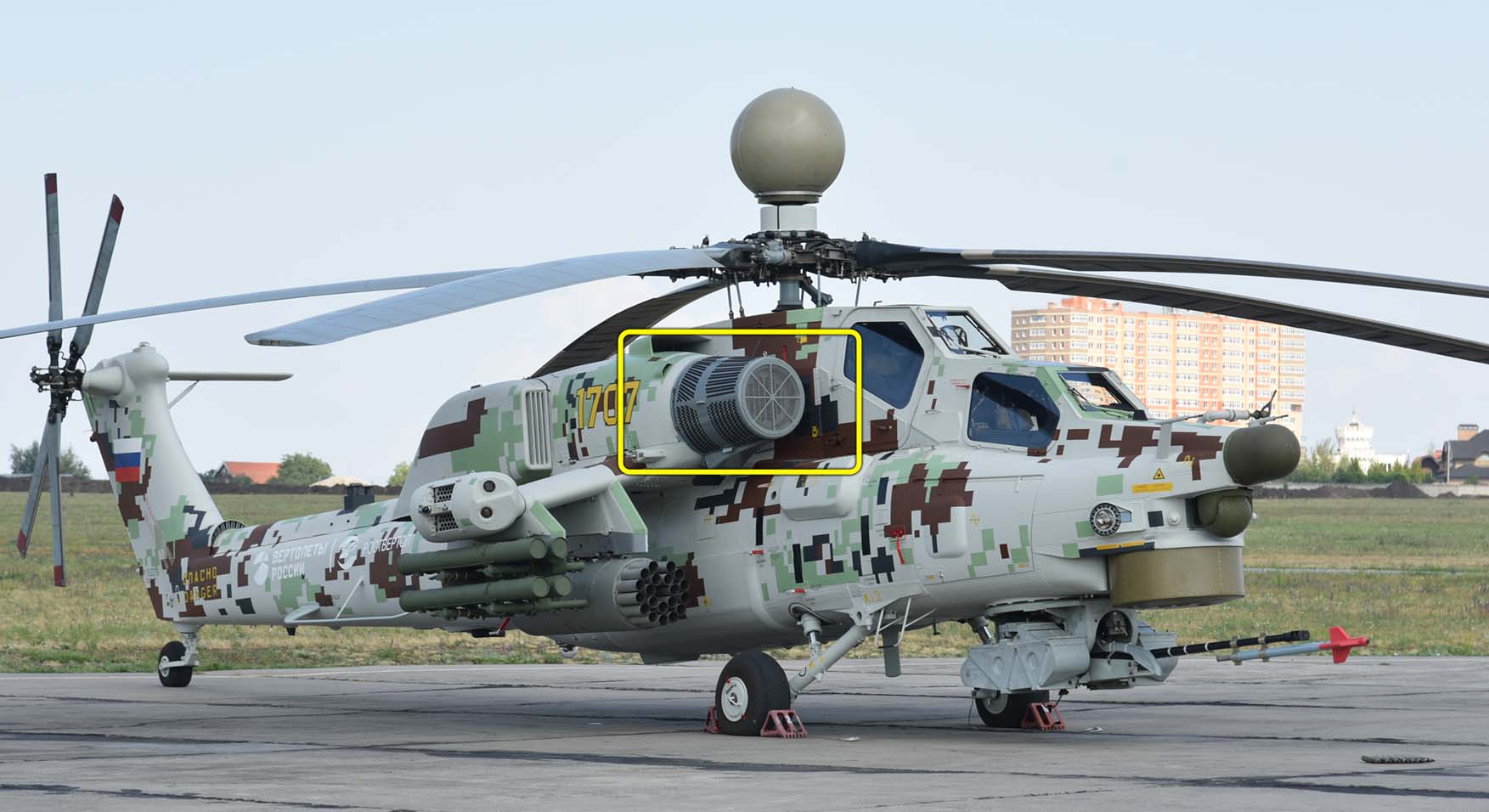
Multi-cyclone dust protection unit for Mi-28NE helicopter 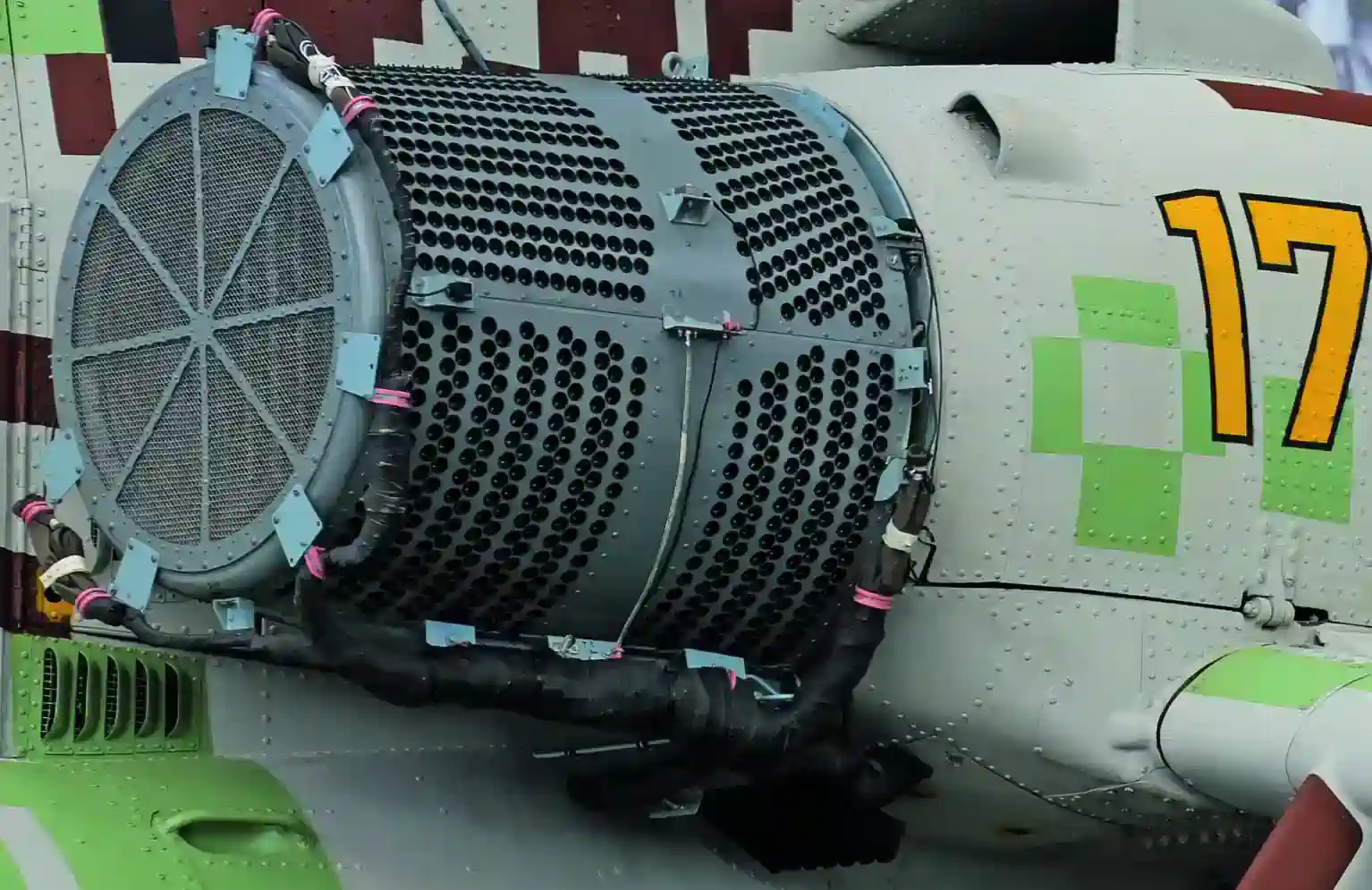
Multi-cyclone dust protection unit for Mi-28NE helicopter/ Image: Alexander Mladenov Mi-28 Avionics and Navigation
The Mi-28N helicopter is equipped with the integrated digital avionics suite BREO-28N. This system is built around a two-seat digital cockpit featuring multifunction displays, a central mission computer, and a hybrid inertial navigation system (INS) integrated with GLONASS/GPS, enabling night operations and full-time/all-weather capability.
In the pilot’s cockpit, two MFI-10-6M LCD multifunction displays are installed, presenting flight and navigation data, airframe and engine parameters, weapons status, and target information. In addition, the pilot can use the ILS-28 head-up display (HUD) to aim direct-fire weapons. The gunner’s cockpit is also equipped with two similar color displays used for navigation and targeting.
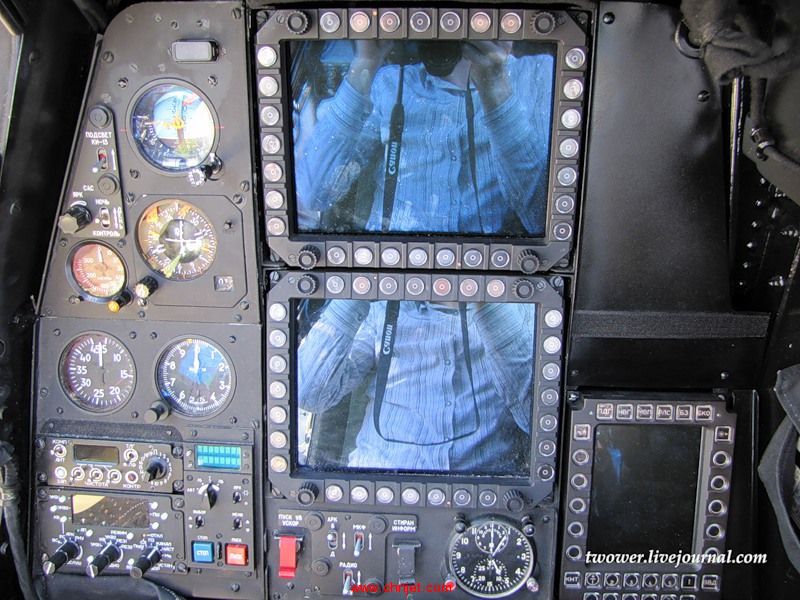
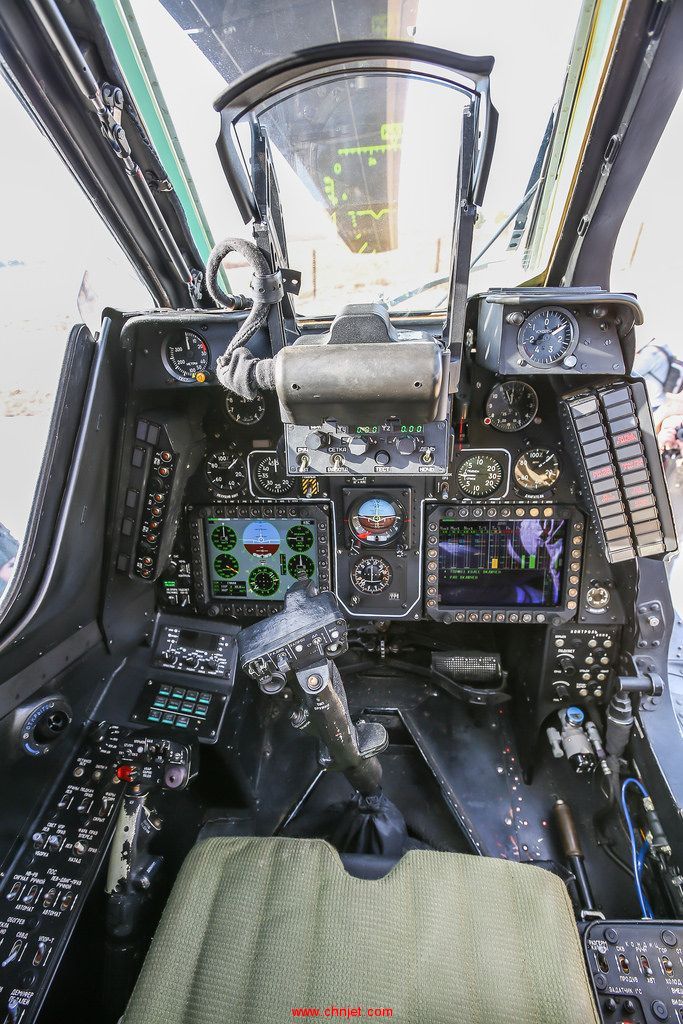
Cockpit and co-pilot (gunner) in the Mil-28 The helicopter is fitted with a four-axis autopilot, a terrain awareness and warning system (TAWS), digital maps, secure radio communications, and a data link, allowing the crew to fly with high stability at very low altitudes and conduct tactical penetration missions. The core design focus is on enhancing situational awareness for both the pilot and weapons officer while reducing crew workload during complex missions—especially night and low-visibility operations.
Electro-Optical Sensors of the Mi-28
Mounted in the nose of the Mi-28 is an electro-optical sensor suite comprising a daytime TV camera, a forward-looking infrared (FLIR) system for night vision, and a laser rangefinder/designator, enabling detection, tracking, and guidance of laser-guided weapons at ranges of several kilometers.
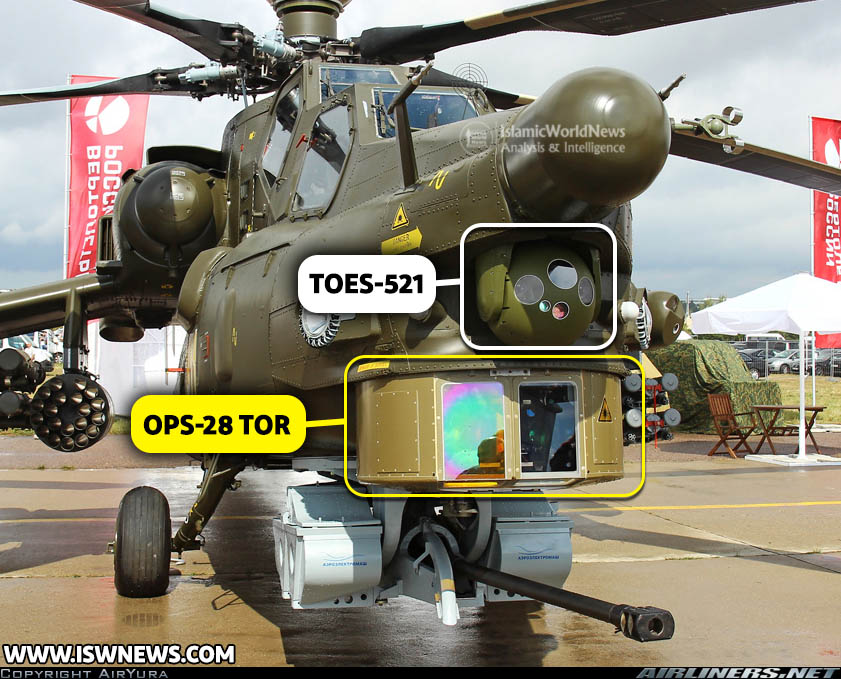
Mi-28 (Mi-28N) electro-optical sensors The OPS-28 electro-optical system serves as the primary search and targeting sensor of the Mi-28. It includes a TV channel, an infrared FLIR channel, an LD-294 laser rangefinder, and a radio command data link. These three sensors are housed in a gyro-stabilized cylindrical rotating turret beneath the helicopter’s nose, providing a field of movement of 110 degrees to either side, 13 degrees upward, and 40 degrees downward. The system is manufactured by the Krasnogorsk Optical-Mechanical Plant (Zenith).
The laser rangefinder, thermal imager, and TV camera are concealed behind two flat glass windows within the rotating turret. The thermal camera offers two fixed fields of view with 3× and 8× magnification, while the TV camera is capable of up to 20× optical zoom.
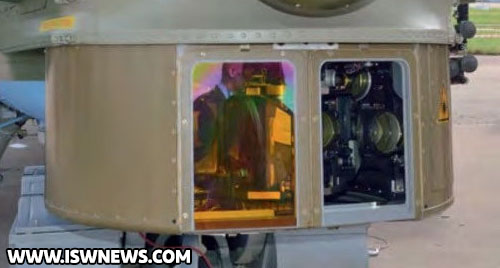
OPS-28 Tor system When the battlefield is obscured by rain or smoke and direct visibility is reduced to less than 1.5 km, the OPS-28N thermal imager is still capable of guiding the 9M120 Ataka-V anti-tank missile toward targets at ranges of over 3 km. Under favorable visibility conditions, the system’s TV sensor can detect tanks at distances of up to 7 km, enabling missile engagements at ranges of around 5 km.
In addition, the Mi-28N is equipped with a pilot-dedicated electro-optical surveillance system known as TOES-521, mounted beneath the nose. The Mi-28NM variant features a further upgraded electro-optical system designated SMS-550.
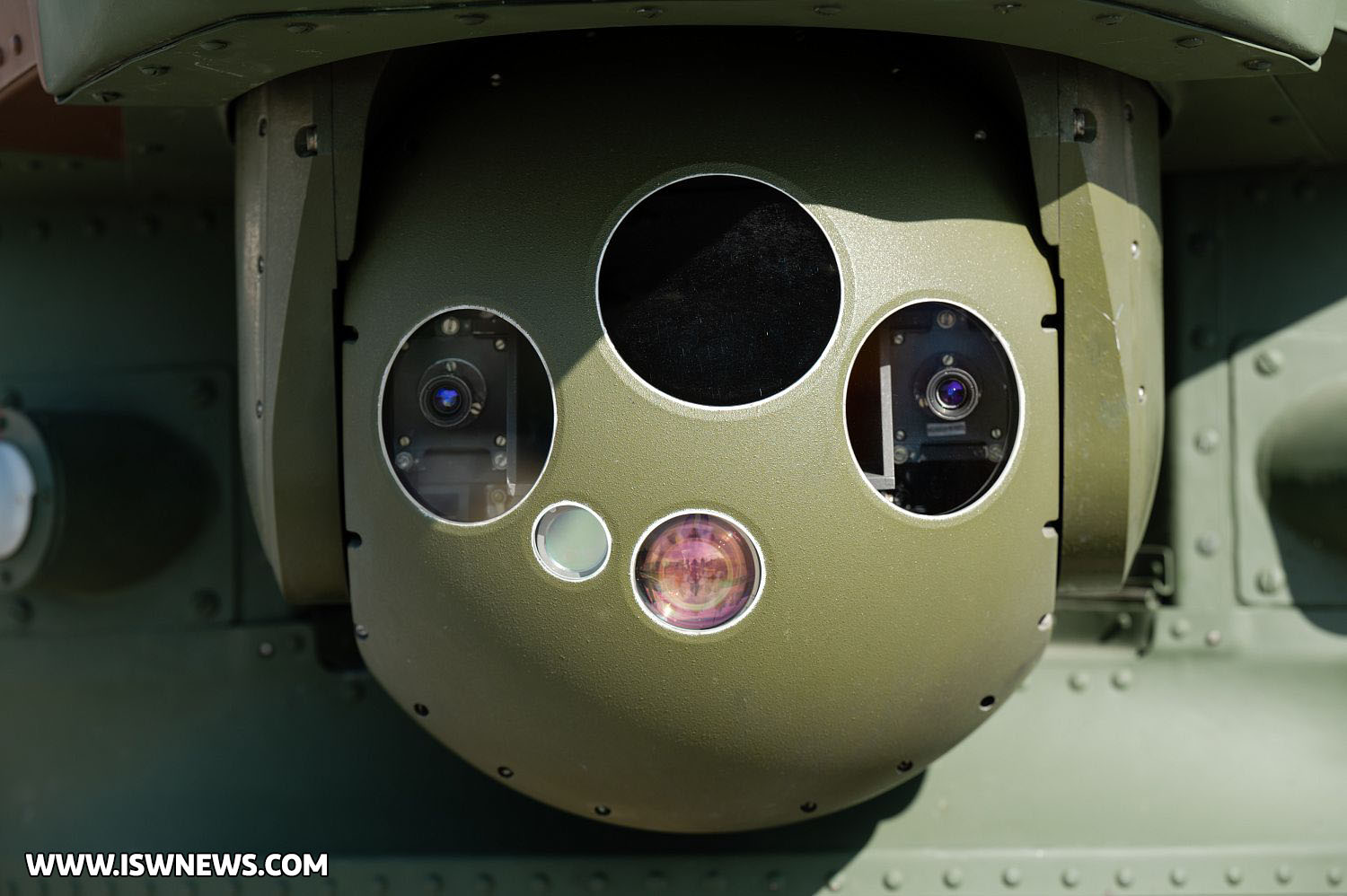
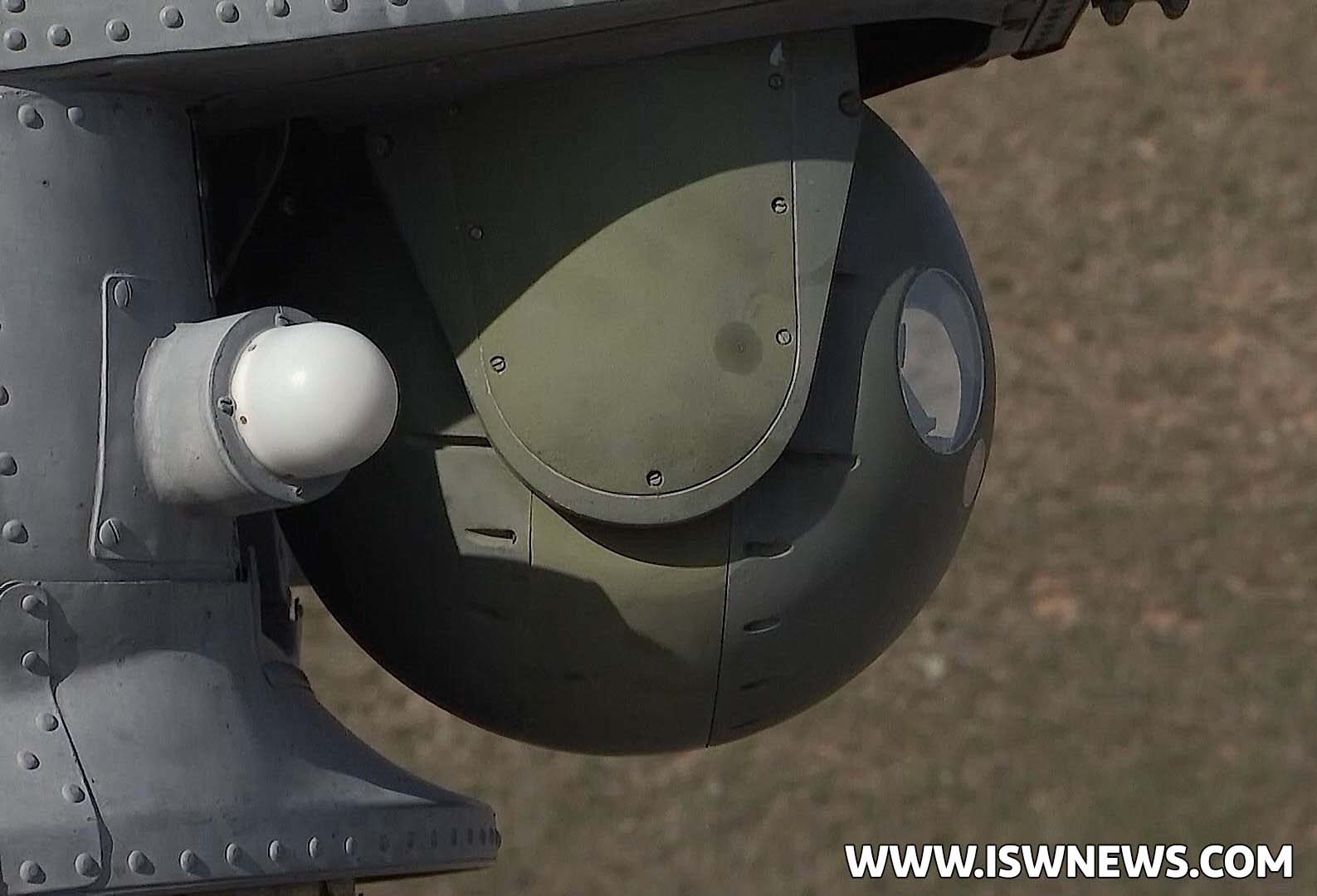
TOES-521 Electro-Optical Surveillance System Radar and Defensive Systems of the Mi-28
In more advanced variants of the Mi-28—particularly the Mi-28NM—a N025 millimeter-wave radar produced by GRPZ is installed above the main rotor. This radar is used for terrain mapping, surface target detection, cueing and handing off targets to the electro-optical system, as well as weather monitoring and air-to-air tasks. In its N025M version, the radar operates in the Ka and X bands, while a third channel works in the L band for IFF (Identification Friend or Foe) purposes.
It should be noted that, like the base N025, the N025M radar cannot directly assign targets to weapons; instead, it provides initial target coordinates to the OPS-28 electro-optical system.
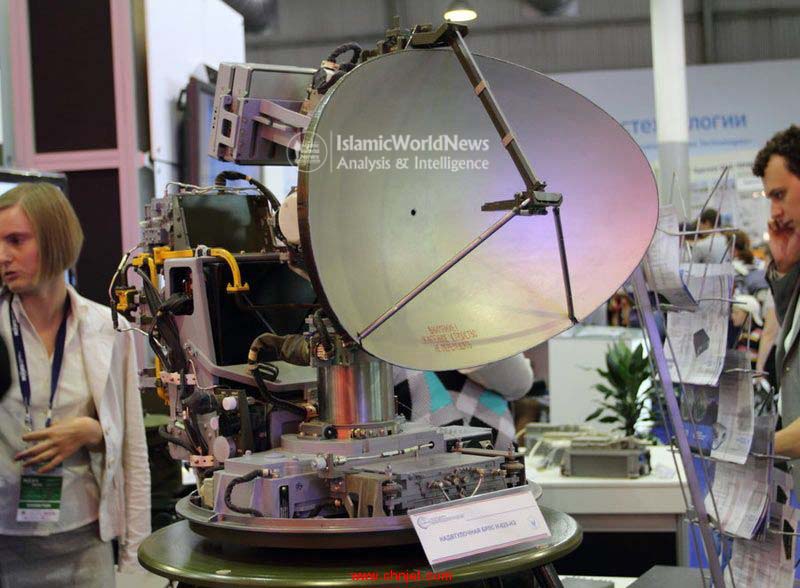
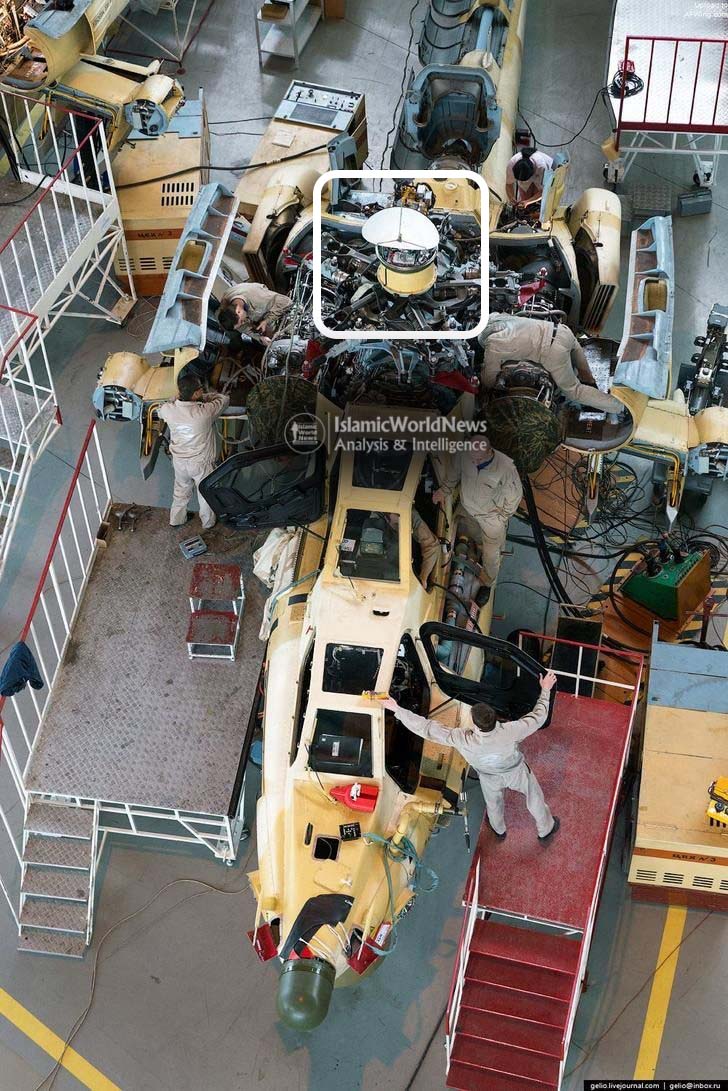
N025 radar In terrain-mapping mode, the radar can scan a 90-degree sector in front of the helicopter, mapping ground features and enabling the OPS-28 sensor to rapidly cue onto selected targets. In air-to-air mode, the N025 covers a 180-degree forward sector. The manufacturer claims a maximum detection range of 20 km against main battle tanks. The radar also includes a Moving Target Indicator (MTI) mode with a 20 km detection range against aerial targets.
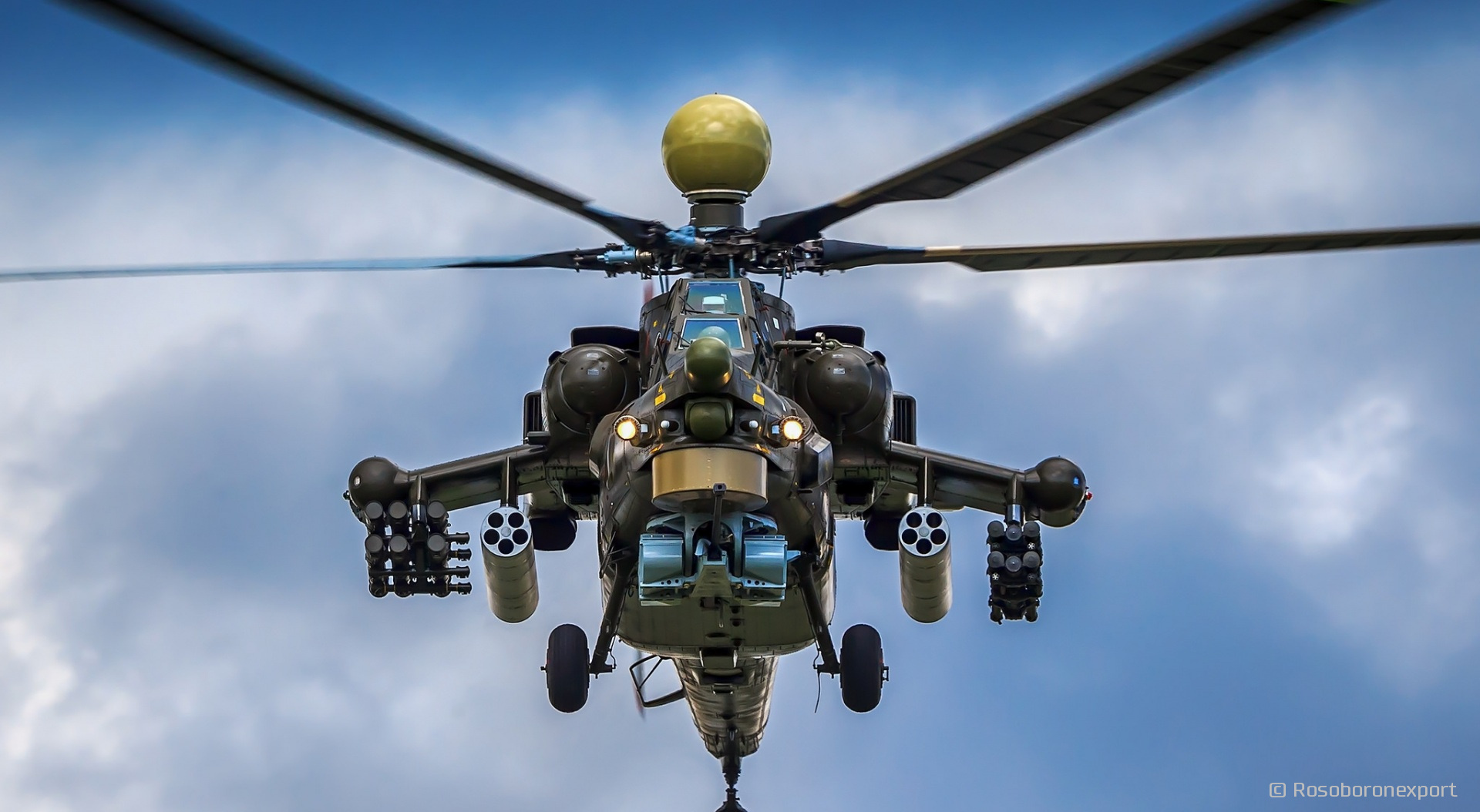
Mi-28N helicopter equipped with the N025 radar mounted above the propellers On the Mi-28NM, an AS-BPLA data-link antenna is installed in the nose to guide the LMUR missile. The Lightweight Multirole Air-to-Surface Guided Missile (LMUR)—also known as Izdeliye 305 or Item 305—has a range of 14.5 km and is intended for engaging a wide variety of ground targets.
The shape of the AS-BPLA guidance antenna mounted on the Mi-28NM indicates a ±90-degree field of view relative to the helicopter’s longitudinal axis, meaning the helicopter can maneuver within this envelope after missile launch.
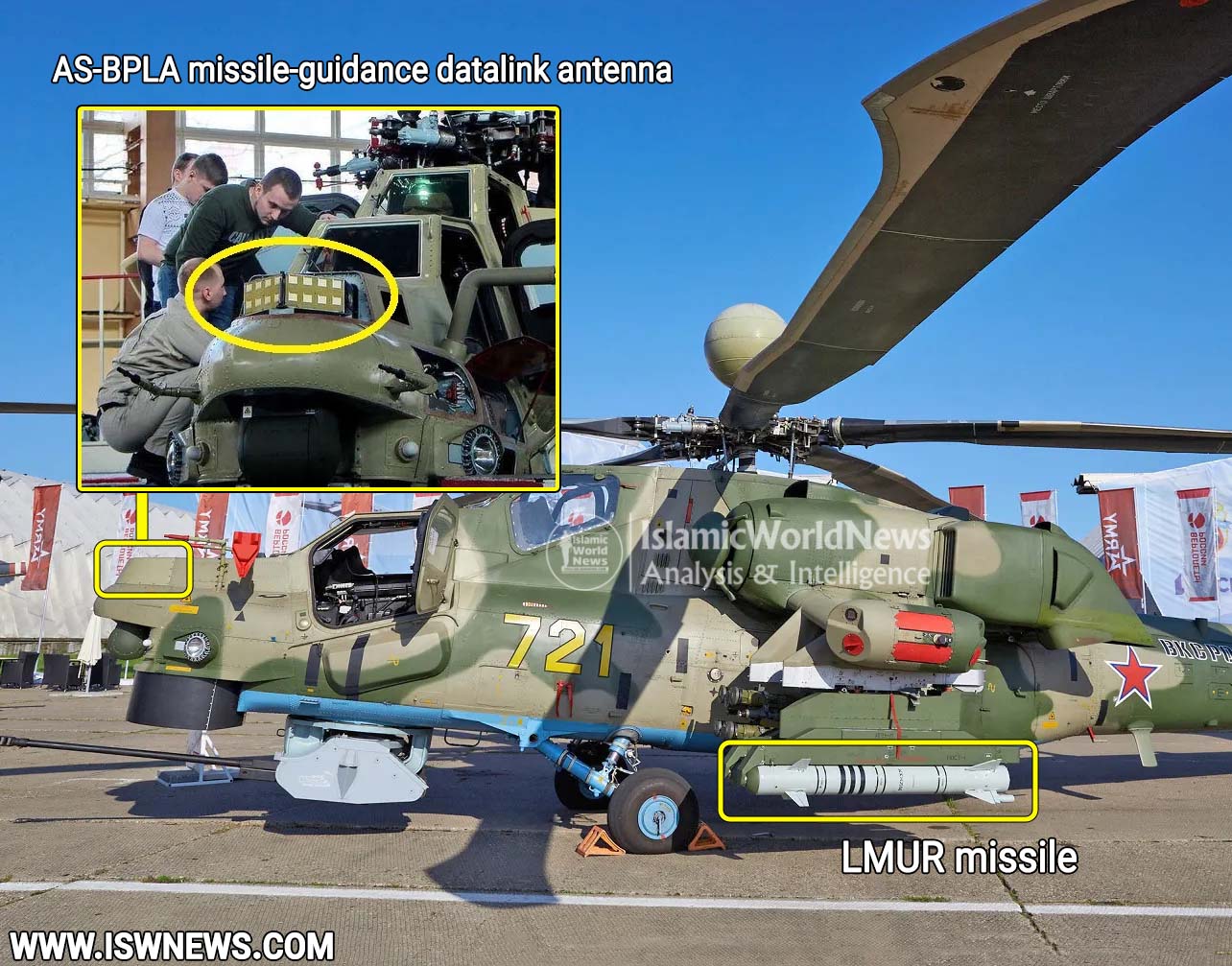
AS-BPLA datalink antenna for LMUR missile guidance The Mi-28NM is also equipped with the L370V28 Vitebsk defensive suite. This integrated warning and countermeasure system includes the L150-28M radar warning receiver, L-140M laser warning receiver, L370-2 ultraviolet missile warning sensor, the L370V28-5L directional infrared countermeasure (DIRCM) laser system, and the UV-26 chaff and flare dispensers.
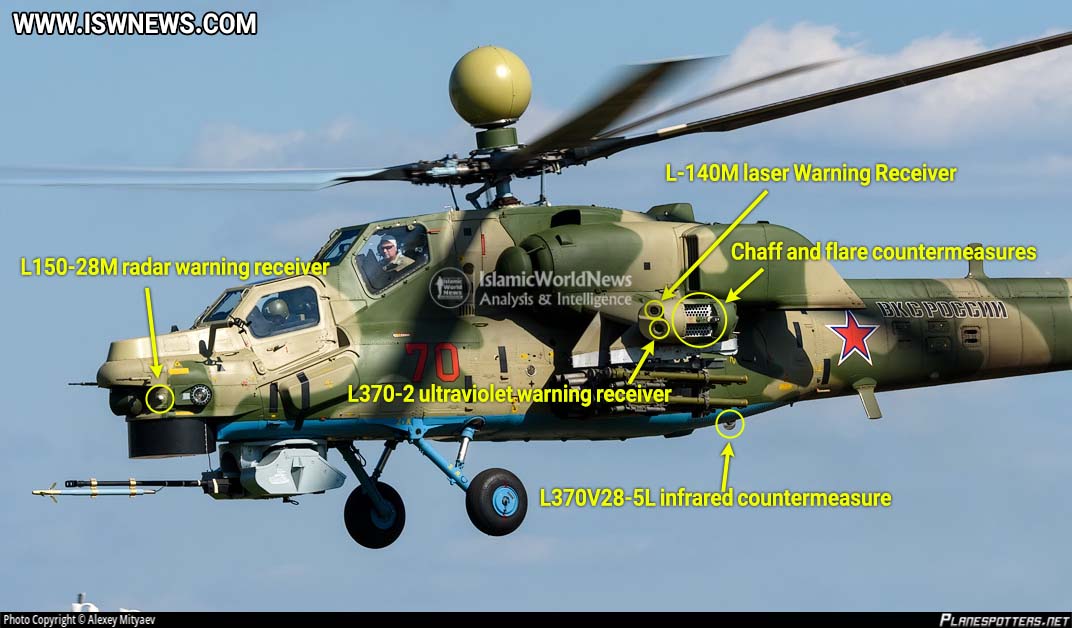
Warning and countermeasure equipment in the Mi-28 NM version helicopter 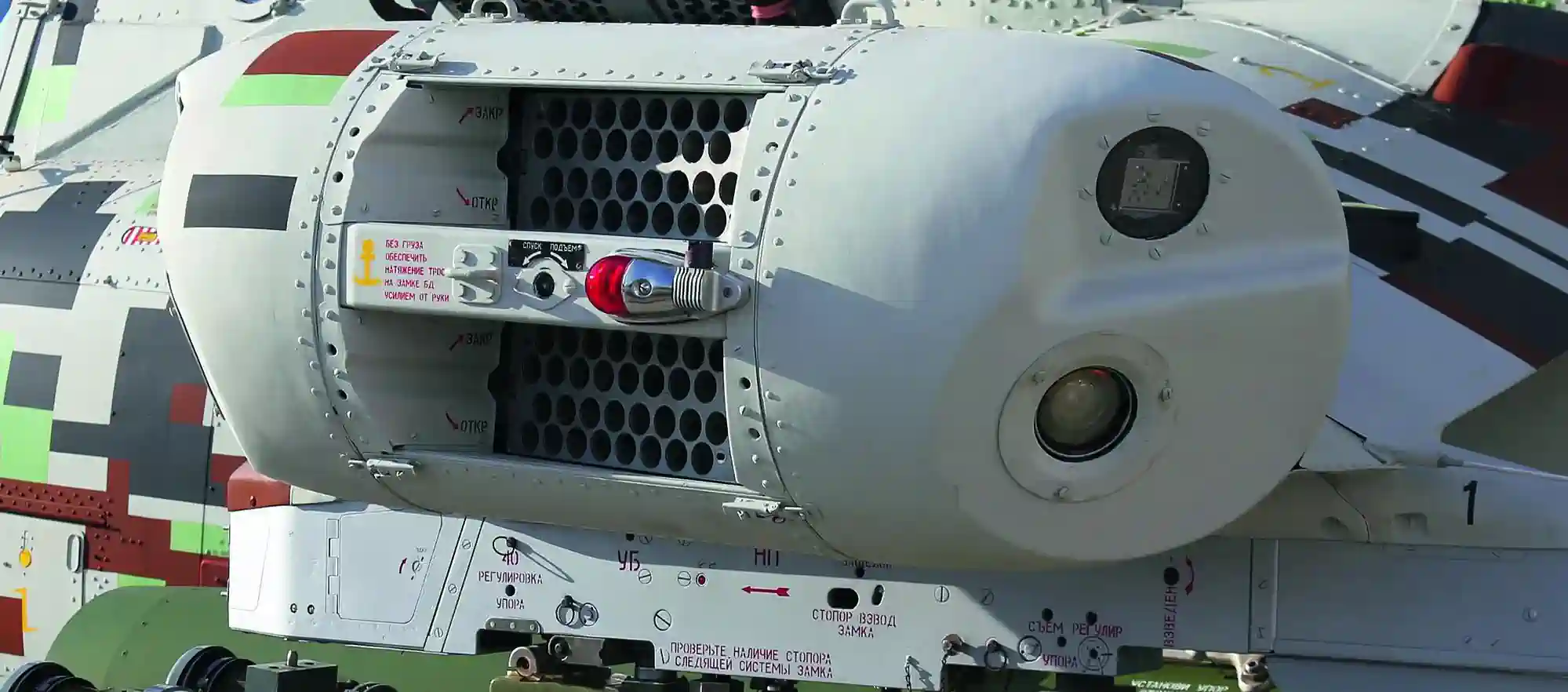
UV-26 chaff and flare dispenser system and L-140 laser warning receiver (top) and L370-2 ultraviolet warning receiver (bottom) / Photo: Alexander Mladenov Armament of the Mi-28
As a dedicated attack platform, the Mi-28 carries a diverse array of weapons, making it suitable for engaging a wide spectrum of ground targets and certain low-altitude aerial threats.
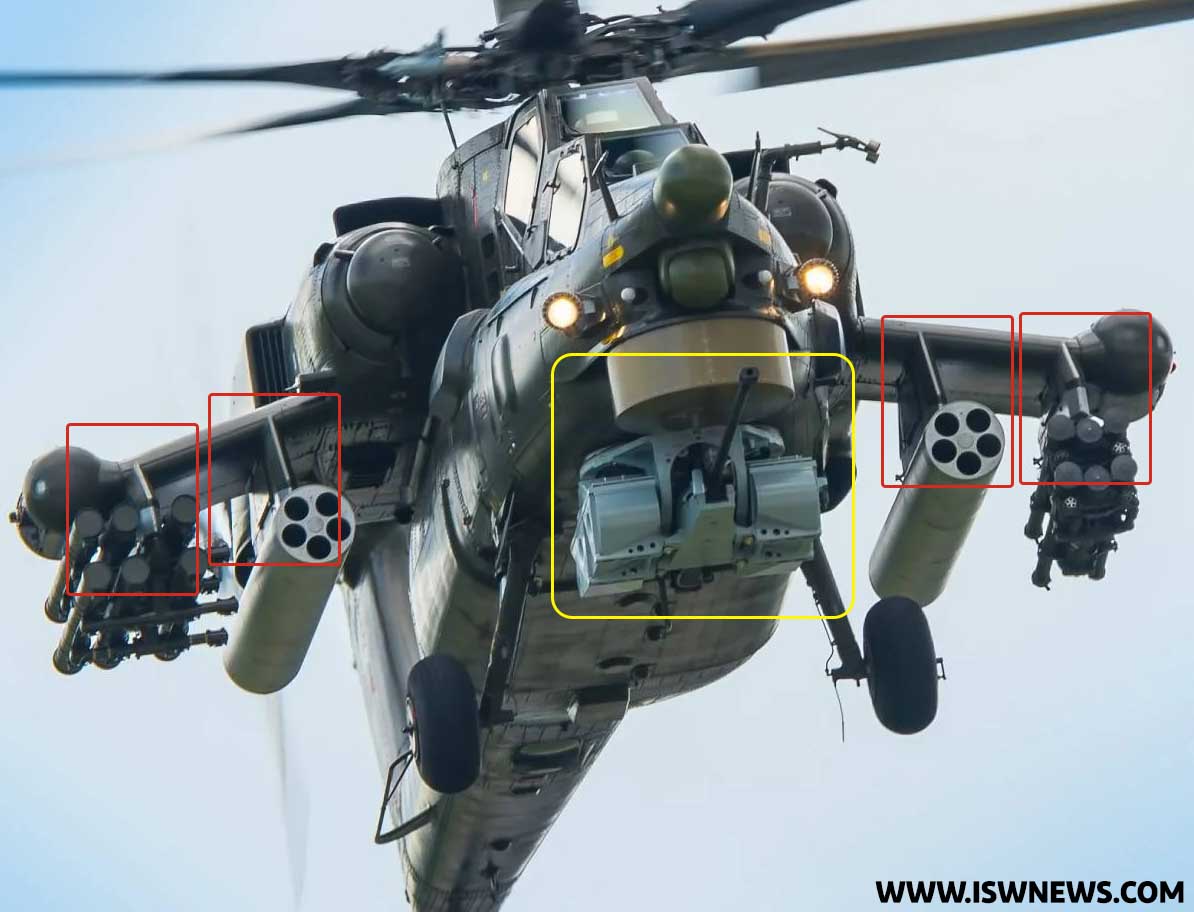
Weapons hardpoints under the wings and a 30 mm cannon under the nose A 30 mm 2A42 automatic cannon is mounted under the nose, providing flexible traverse and precise aiming against light armored vehicles, infantry, and fortifications. The cannon is slaved to a helmet-mounted sighting system, allowing the weapon to follow the pilot’s line of sight.
On the four underwing hardpoints mounted on the stub wings, various weapon packages can be installed, including 80 mm unguided rocket pods, anti-tank guided missiles such as Ataka and Vikhr, and, in some configurations, short-range air-to-air missiles for close-in self-defense.
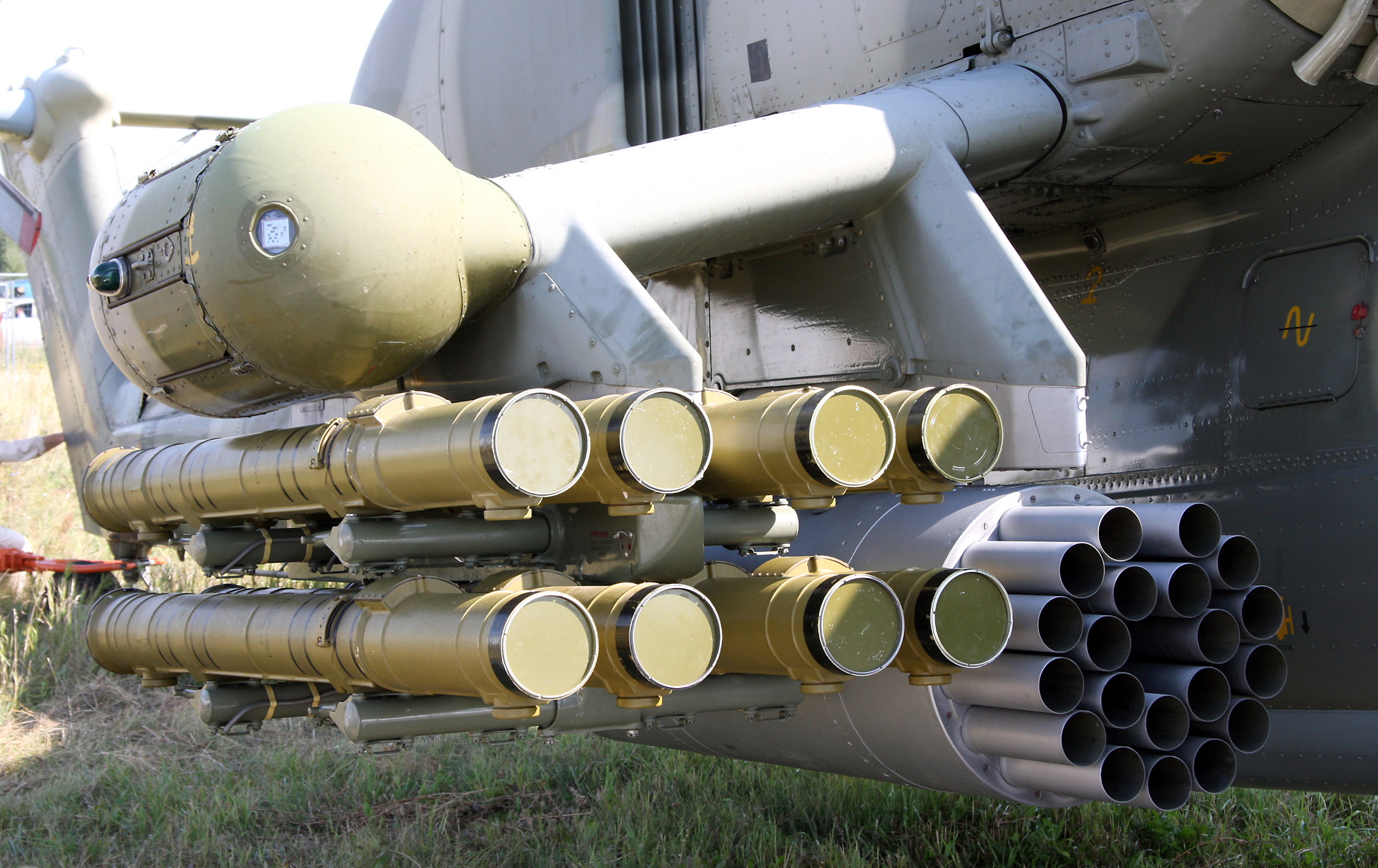
Underwing hardpoints of the Mi-28 This weapons diversity allows crews to tailor their loadout to mission requirements and strike an effective balance between accuracy, range, and destructive power, while the advanced targeting and electro-optical sensor systems further enhance combat effectiveness.
Mi-28 Variants
Mi-28A:
The original baseline variant developed in the 1980s, primarily for testing purposes. It featured daytime vision systems, the 30 mm cannon, underwing weapon stations, and basic navigation and communication systems, but had limited night and adverse-weather combat capability. The Mi-28A served mainly as a testbed and developmental foundation and did not enter large-scale production.Mi-28N (Night Hunter):
The most significant leap in the Mi-28 family. With the addition of a mast-mounted radar, thermal imaging systems, advanced electro-optical sensors, and inertial/satellite navigation, it gained full 24-hour operational capability. Digital avionics, improved survivability, and better integration of weapons systems made it the backbone of Russia’s attack helicopter fleet.Mi-28NE:
The export derivative of the Mi-28N, with certain systems—especially communications and identification—reconfigured according to customer requirements. In terms of firepower, range, and survivability, it is broadly comparable to the Night Hunter and is adapted for operation in diverse environments, including hot, dusty, and high-altitude conditions.Mi-28NM:
The most advanced member of the Mi-28 family. It incorporates minor airframe and rotor redesigns for improved performance, a new multimode radar, data-link connectivity for network-centric cooperation with UAVs and ground units, fully digital avionics, upgraded defensive systems, and more precise weapon options, including new guided missiles. The goal of this variant is to enhance survivability, crew situational awareness, and effectiveness in modern high-threat environments.Mi-28UB:
A training variant that retains full combat capability. It features a dual-control cockpit allowing full instructor oversight, specialized training equipment, and enhanced safety features. Despite its training focus, the Mi-28UB can carry weapons and conduct real combat missions, making it a flexible asset for combined training and operational squadrons.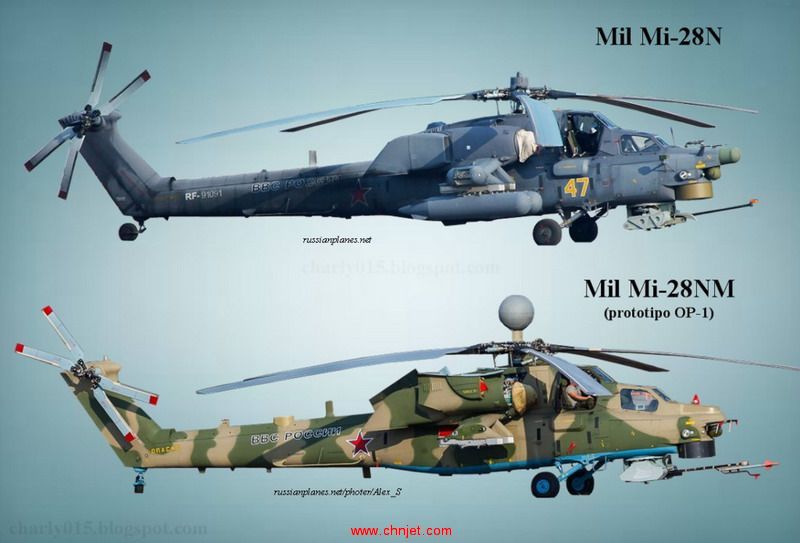
The difference between the Mi-28N and Mi-28NM in terms of appearance. As is clear, there is very little difference in appearance between the two versions, with the biggest difference being in the nose configuration. Operators and Export Market
The Mi-28 attack helicopter is primarily operated by the Russian Aerospace Forces as its main user. As of the end of 2024, more than 92 Mi-28N helicopters, around 19 Mi-28UB training variants, and at least 9 Mi-28NM helicopters were in service with the Russian Aerospace Forces. In addition, orders are in place for 98 more Mi-28NM and 12 Mi-28UB helicopters to be delivered by 2027. Overall, Russia operates the largest Mi-28 fleet in the world.
Outside Russia, the Algerian Air Force operates approximately 42 Mi-28NE helicopters. Iraq fields around 17 Mi-28NE and 4 Mi-28UB aircraft, while the Ugandan Air Force has received at least 4 Mi-28NE, with an additional two helicopters on order.
It is also worth noting that in December 2023, Iran’s Deputy Minister of Defense and Armed Forces Logistics announced the finalization of a deal to purchase the Mi-28 attack helicopter. One year later, the appearance of unofficial images showing the helicopter inside a hangar in Iran confirmed its entry into the order of battle of Iran’s armed forces. The induction of the Mi-28 is expected to significantly help address existing gaps in Iran’s aging helicopter fleet and substantially enhance the country’s close air support capabilities.
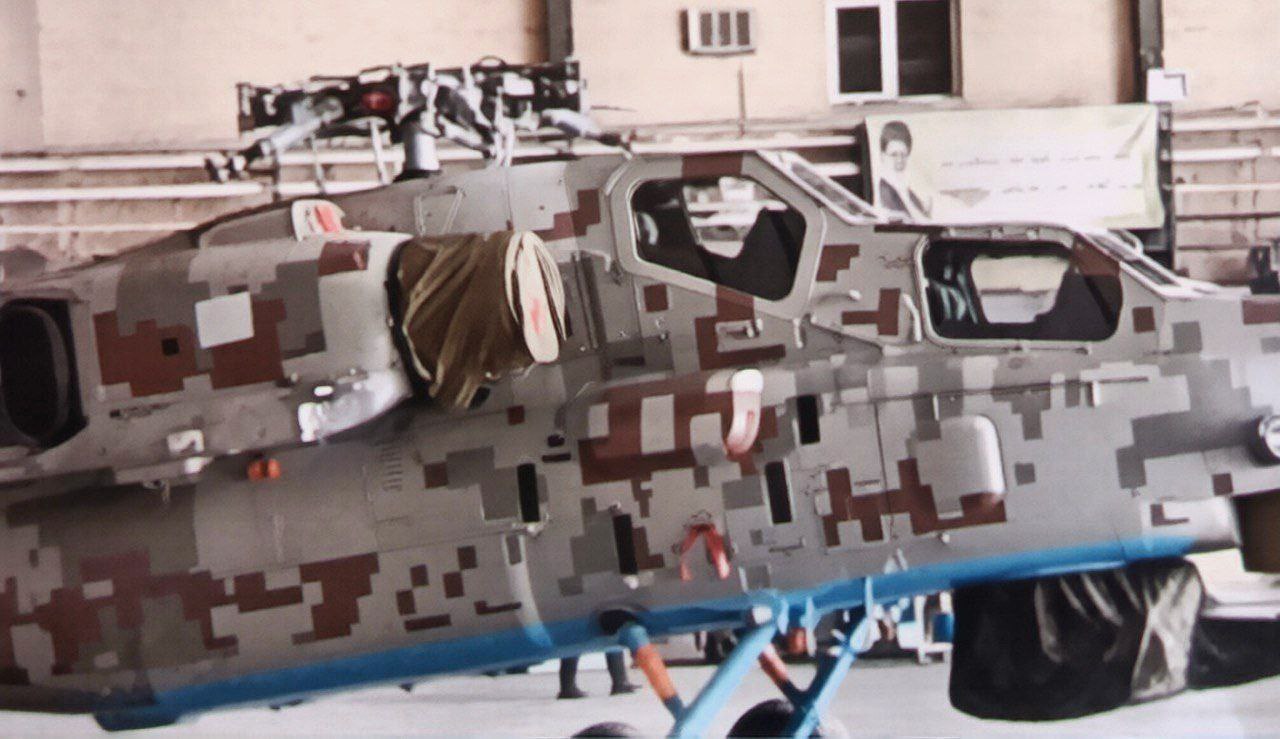
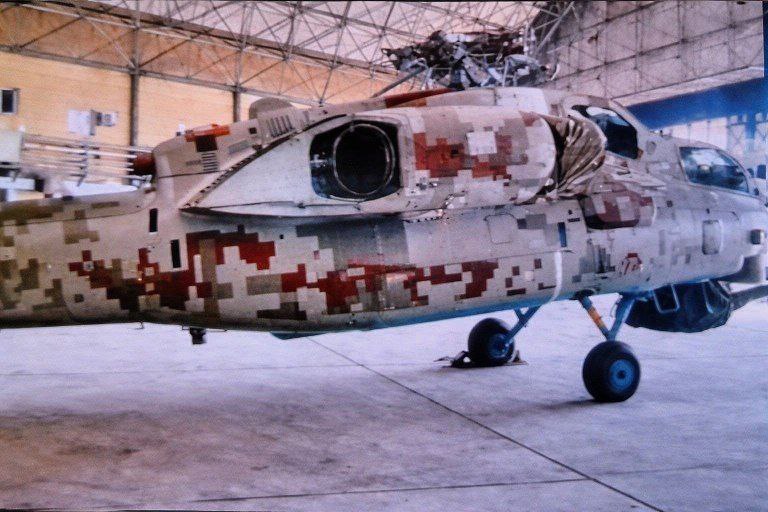
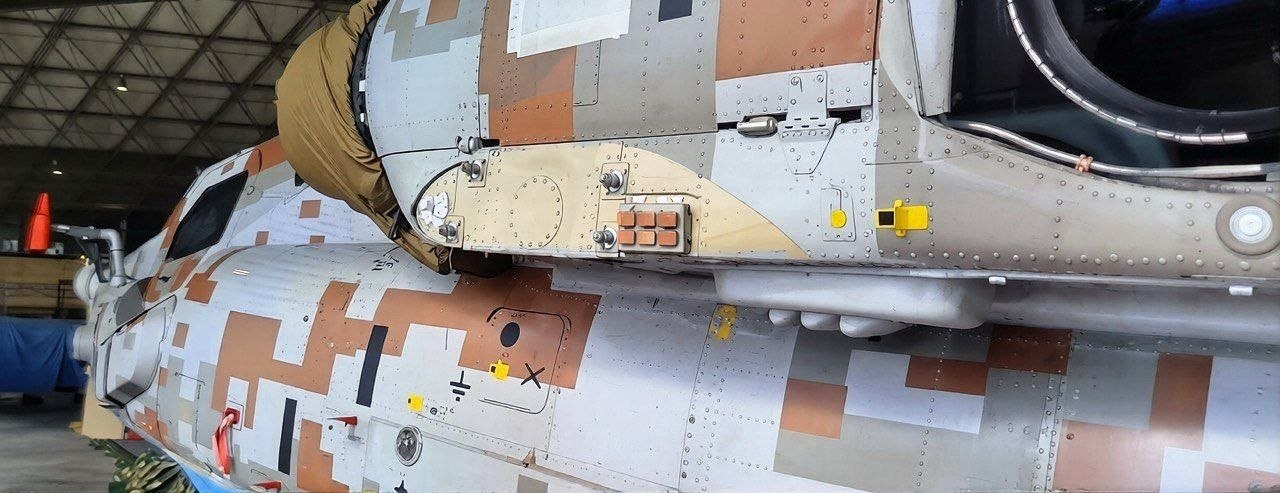
Mi-28NE helicopter equipped with protected engine air intake in Iran Mi-28 helicopter specifications:
Type: Attack helicopter
Origin: Russia
Manufacturer: Mil Moscow Helicopter Plant
First flight: 1982
Entered service: 2009
Crew: 2
Length: 17 m
Wingspan: 4.88 m
Height: 3.82 m
Empty weight: 8590 kg
Gross weight: 10700 kg
Maximum takeoff weight: 11500 kg
Engine: 2 Klimov TV3-117 turboshaft engines with a power of 2194 hp or 2 VK-2500P turboshaft engines (in the NM version) with a power of about 2500 hp
Rotor diameter: 17.2 m
Rotor area: 232.35 m2
Maximum speed: 324 km / h
Range: 435 km
Combat range: 200 km
Ferry range: 1100 km
Flight endurance: 2 hours
Service eiling: 5700 metersArmament:
Gun: One 30 mm Shipunov 2A42 cannon in a nose turret, with 250 rounds (horizontal rotation of about ±110 degrees)
Hardpoints: Two pylons under each short wing for mounting bombs, rockets, missiles and cannon pods. Main configurations include:
- 16 Ataka-V anti-tank missiles with 40 S-8 rockets, or
- 16 Ataka-V missiles with 10 S-13 rockets, or
- 16 Ataka-V missiles with two 23 mm UPK-23-250 cannon pods (each pod with a GSh-23L cannon and 250 rounds)
Other munitions that can be installed:
- 9K121 Vikhr anti-tank missiles
- 9M123 Khrizantema missiles (9M123VM version with ACLOS millimeter-wave radar fire control and guidance radar)
- LMUR missile
- Igla-V and Vympel R-73 air-to-air missiles
- Two KMGU-2 mine-distributing pods
- Unspecified variant of 9K333 Verba air-to-air missile
Mi-28 combat helicopter posters in Persian, English and Russian:
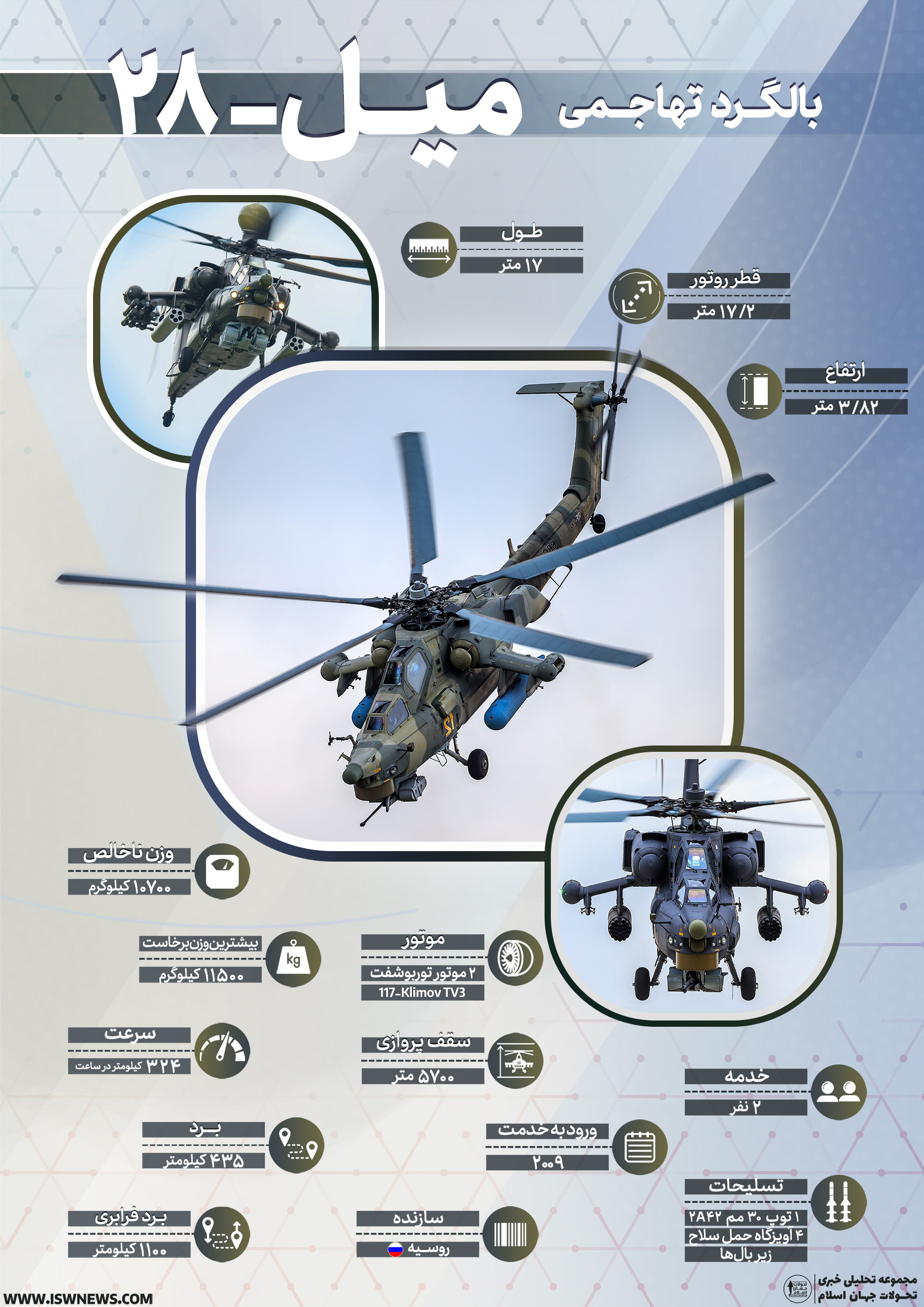
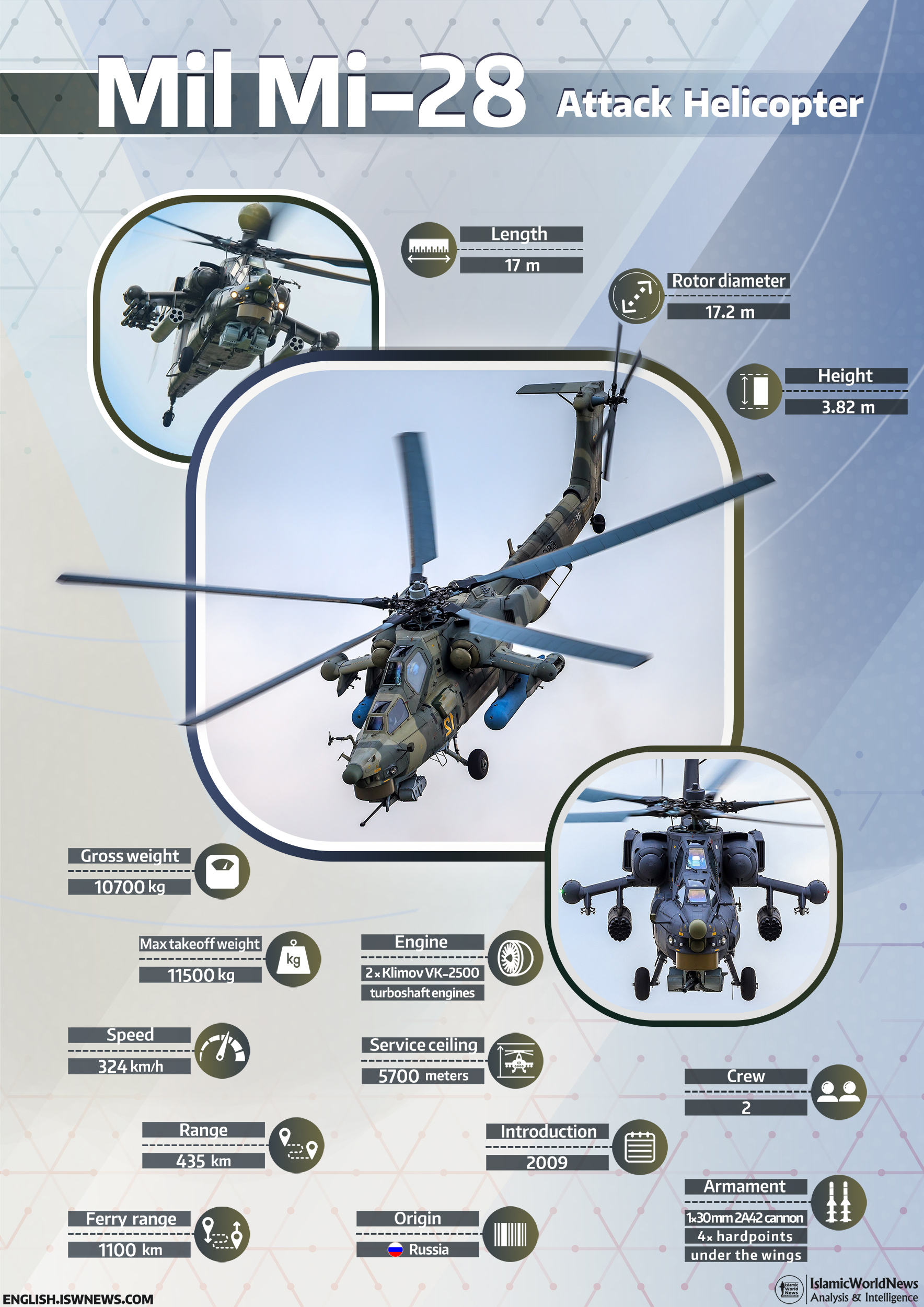
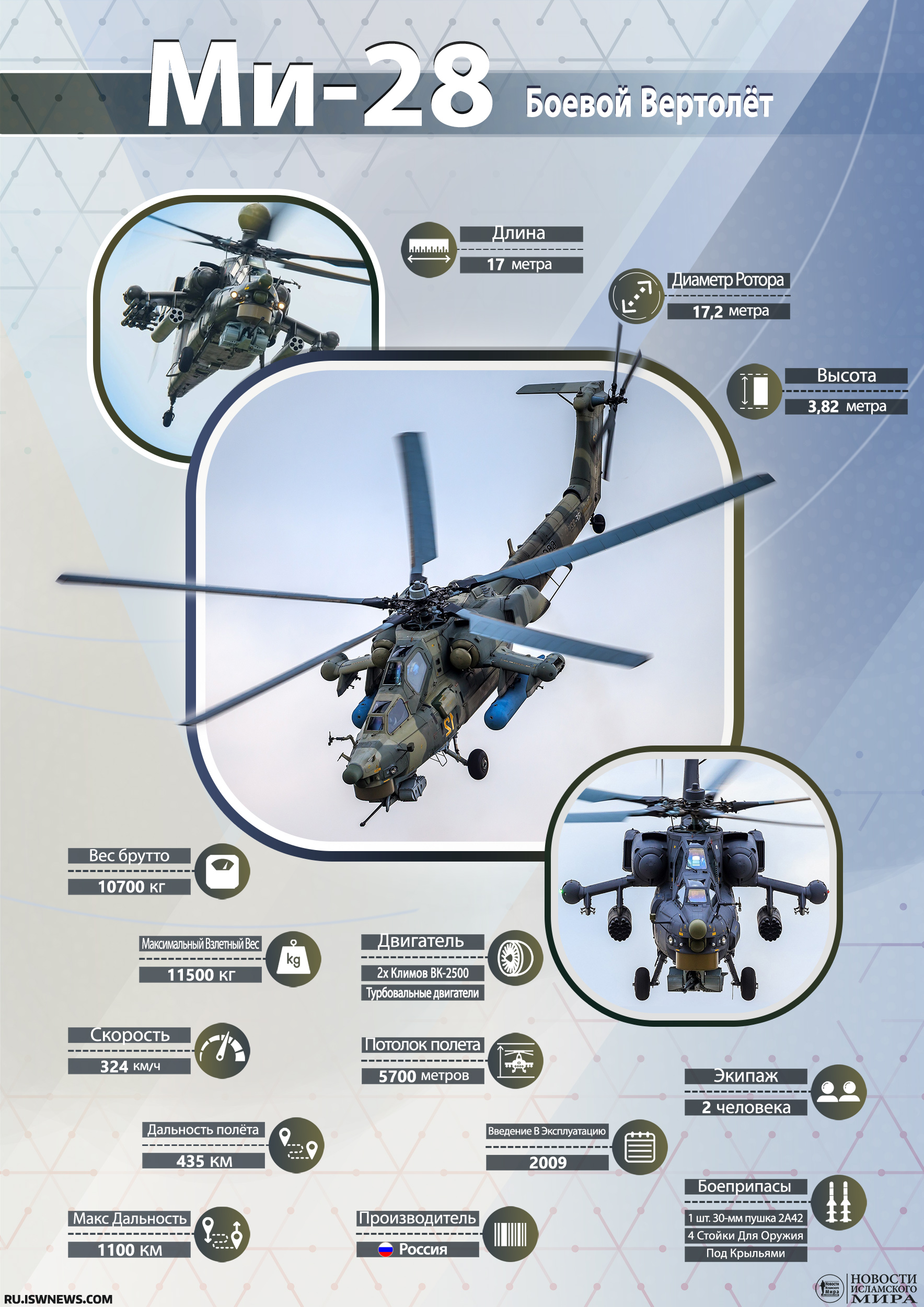
Click to view images in full size. More images of the Mi-28 combat helicopter:
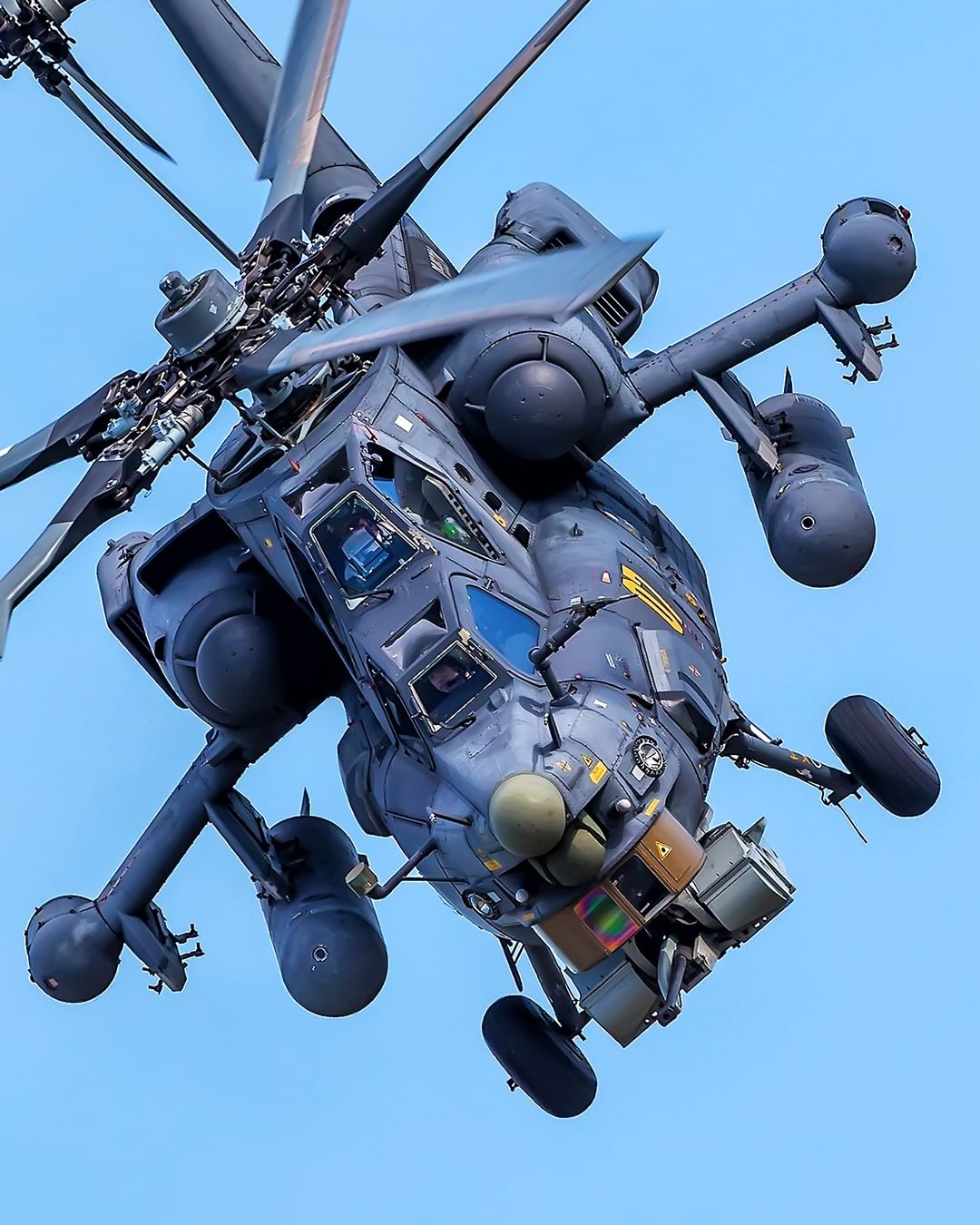
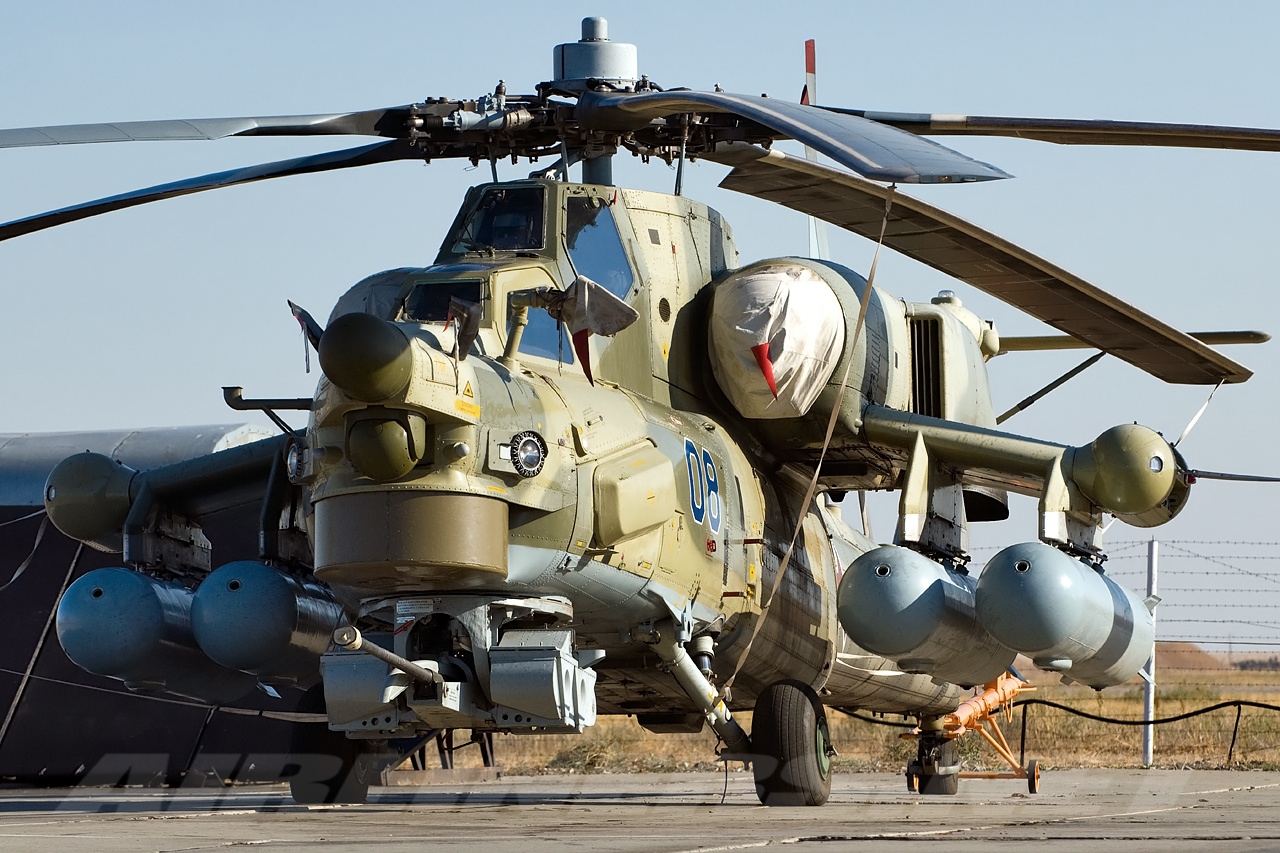


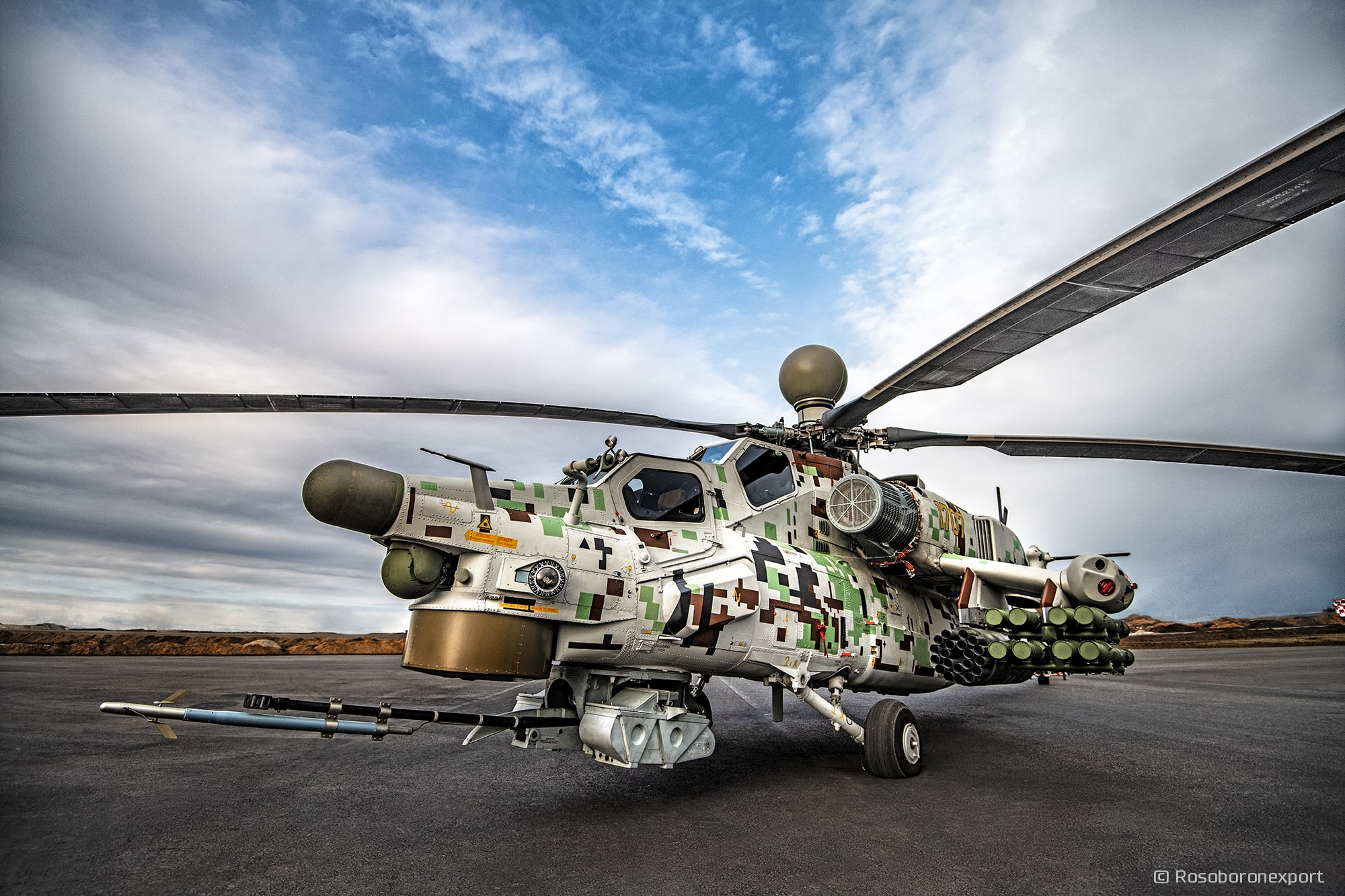

Click to view images in full size. Sources:
Mil_Mi-28 | mil-mi-28 | Mil_Mi-28 | mi-28-havoc | mil-mi-28a-n-havoc | mi-28 | Mi 28NE | Mil Mi-28 | Mi-28-havoc | Mil_Mi-28 | AirDejaVu | Russia’s Mi-28NM | Mi-28 -

First Yemeni Killed in the Russia–Ukraine War!
According to unofficial information, an estimated around 2,000 Yemeni fighters—recruited through Russian companies—are currently taking part in the war in Ukraine alongside Russian forces.
Yemeni participation in the Ukraine war is largely driven by poverty, unemployment, and the futile internal conflict imposed on the country by Arab states.
-

Where Is the Third Major U.S. Base in Saudi Arabia?
This base serves a logistical and supply role for U.S. forces in western Saudi Arabia and has recently undergone expansion. Development began in early 2025 and includes the construction of underground storage facilities, ammunition depots, new logistics and support infrastructure, as well as housing for U.S. personnel.
Given its capabilities, the base could potentially serve as an alternative to Al Udeid Air Base in Qatar. Qatar’s proximity to Iran and the presence of Iran’s short-range missile stockpiles have highlighted Al Udeid’s vulnerability, prompting the U.S. to consider substituting it with other bases. That said, the mission profile of U.S. forces in Saudi Arabia is largely defensive and training-oriented. For instance, during the Saudi-Emirati coalition’s war in Yemen, these forces repeatedly took part in air defense operations, intercepting Yemeni missiles and drones and thereby indirectly engaging in the conflict.


LSA Jenkins base in Yanbu port, western Saudi Arabia Overall, despite Saudi Arabia’s neutral stance in recent Iran–U.S. tensions, L.S.A. Jenkins could be considered a potential target of Iranian missile strikes. The base is approximately 1,300 km from Iran’s Ahvaz and 990 km from Saada.