Author: Mirza

  • A New Round of IMEC vs Silk Road Fight!

    A New Round of IMEC vs Silk Road Fight!

    This includes the beginning of the process of splitting Syria along religious and national lines into eternally warring enclaves, strengthening relations with the Greeks and Cypriots on anti-Turkish grounds, endless requests to Washington to begin a new round of bombing Iran, assistance in the Libyan and Sudanese crises, and finally, helping the Emirates to seize control of the Gulf of Aden by separating southern Yemen and declaring Somaliland. By creating chaos, the Zionists and the Emirates are attempting to seize seaports and cut off land routes, thereby challenging Chinese plans to develop the Silk Road project (Belt and Road Initiative).

    Belt and Road Initiative

    Separately, it’s worth noting the actions of Saudi Arabia and Russia, which at first glance appear to be pursuing rather contradictory policies. Syria is a case in point. On the one hand, the Russians and Saudis are strengthening their ties with the Tahrir al-Sham regime (it seems the Russians are thus pandering to Trump) and are ready to act as a bridge between the former Syrian al-Qaeda and the Zionists. At the same time, there are reports of Moscow supporting former elements of the Assad government, who are biding their time for a major uprising. In this case, it can be said that the Russians are prepared for a split Syria, with Alawites controlling the country’s coastline.

    This scenario fits in with Zionist plans to limit Turkish and Chinese influence in the Mediterranean. Moscow also favors this option; I recall that after the Russian annexation of Crimea, the Chinese temporarily abandoned all investments in the peninsula. In other words, regardless of how events unfold, Russia is effectively facilitating Syria’s integration into the IMEC, no matter what form it takes. The Russians are not part of the Silk Road or IMEC, but they are contributing specifically to a project related to India and the Zionists. The North-South transport corridor is intended to become a link with the Indian Economic Corridor.

    IMEC

    Saudi Arabia’s top priority is preventing Turkish influence and turning Damascus into a Turkish satellite. The struggle within the Saudi autocracy is already having an impact here, with lobbyists for the Silk Road pitted against supporters of integration into the “Indian Economic Corridor.” The struggle against Turkish influence is not limited to Syria; it is also taking place in Sudan, where Riyadh and Ankara are competing for control of Khartoum. Meanwhile, in Yemen, the Saudis have openly opposed the UAE’s plans, further confirming the deep rift within the Saudi royal family.

    Zionism and its allies make no secret of the fact that Turkey and Iran are the main strategic pillars of the Chinese project, and therefore these two countries should become the primary targets of the Zionist military. But any action is met with resistance, and so Turkey and Iran have begun the process of forming a military-strategic alliance, which will include Pakistan, Iraq, and several other Arab countries.

    I dare say that the parties are preparing for new wars that will not be limited to the area of their own sovereignty, and thus the entire Middle East will be drawn into a series of wars. The beginning of new conflicts, where Zionism acts as the instigators, may occur immediately after if J. D. Vance replaces Trump as head of the United States for various reasons. Let me remind you that his wife is from India, which symbolically reflects Washington’s support for the plans of “Israel”, the UAE and India to build IMEC. Another important factor is that J.D. Vance is a proponent of an isolationist approach in US foreign policy, which means that Zionism will have to act independently, where the US will provide support from a distance.

    In this case, Zionism and its regional allies will take all risks in the name of the fight against the Silk Road, which will lead to the fact that the key figures of the Chinese project will launch the process of forming stable strategic alliances to confront the enemy(IMEC) and regardless of Washington’s reaction, as it was until recently.

  • The Crossroads of Asia and Africa Under Bin Zayed’s Grip

    The Crossroads of Asia and Africa Under Bin Zayed’s Grip

    Introduction

    In recent decades, under Crown Prince and Abu Dhabi ruler Mohammed bin Zayed, the UAE has pursued an assertive and expansionist strategy aimed at extending its political, economic, and military reach from the Gulf to the Horn of Africa. Bin Zayed, a member of the influential Al Nahyan family, is a staunch opponent of political Islam and a strategic ally of the United States. Washington, in turn, has relied on the UAE in its regional policies, particularly in countering Islamist groups and managing crises.

    The UAE’s population is estimated at around 10 million, of which only one million are citizens; the majority are foreign workers. This demographic reality, combined with oil wealth and vast financial resources, has enabled a foreign policy rooted in economic power and regional networking. Exploiting instability and deep divisions in countries such as Ethiopia, Somalia, Sudan, Yemen, and Libya, the UAE has exerted significant influence over local actors—an influence that would have been impossible in the presence of strong, centralized governments.

    Abu Dhabi’s Role in the Horn of Africa Balance

    The UAE’s military interventions in Libya and Sudan exemplify this approach. In these cases, Abu Dhabi backed forces and groups that countered the influence of rivals like Turkey and Qatar. Over the past decade, Emirati foreign policy has relied on exploiting weak state structures, proxy military networks, and financial capacity—a strategy built on “transactional diplomacy” and “targeted interventionism.”

    Internationally, this policy emerged as the U.S. retreated from its role as global liberal hegemon and scaled back military interventions. Between 2009 and 2011, Bin Zayed recognized that the resulting power vacuum in West Asia and the Horn of Africa offered an unprecedented opportunity for his country to assert itself. Aware of the UAE’s demographic and military limitations but financial and logistical strength, he sought to elevate its geopolitical standing through proactive engagement in surrounding regions.

    The outcome was the launch of a hegemonic and expansionist project spanning both sides of the Red Sea—from the Gulf of Aden to the coasts of Sudan and Eritrea. Through massive investments in ports, infrastructure, and logistics networks across Africa, the UAE became one of the continent’s largest port investors. This economic strategy, combined with military and intelligence activities, enabled Abu Dhabi to build a “transnational empire” blending hard and soft power. Additionally, through informal gold trade networks, the UAE has extracted enormous financial gains from Africa, including the smuggling of roughly 400 tons of gold annually. These economic interests are closely tied to Emirati‑linked companies and institutions active in Africa’s port, security, and financial sectors.

    Socotra: UAE’s Expanding Maritime Influence

    Gradual Entrenchment in Socotra

    The UAE’s approach in Socotra illustrates its strategy of incremental influence and consolidation of geostrategic presence. Following the devastation caused by Cyclone Chapala in 2015, Abu Dhabi deployed relief and engineering teams, establishing itself as a humanitarian actor. This foothold soon evolved into the construction of strategic infrastructure, port facilities, and a limited military presence. Over time, Socotra—ecologically and geostrategically significant—became integrated into the UAE’s maritime influence network stretching across the Persian Gulf, the Arabian Sea, and the Red Sea.

    Overall, Emirati foreign policy over the past two decades has combined geopolitical ambition, targeted economic investment, and exploitation of regional instability. Backed by financial resources and international legitimacy, the UAE has achieved influence far beyond its demographic and military weight, extending from the Gulf to the Horn of Africa and reshaping the security architecture around the Red Sea.

    Abd al‑Kuri: A Strategic Outpost

    Located west of Socotra, Abd al‑Kuri island—home to about 500 residents—sits at the mouth of the Gulf of Aden and the Indian Ocean shipping lanes. Its position makes it a vital observation point for vessels entering the Gulf of Aden, and in recent years it has been transformed into a military and logistical hub.

    In November of that year, U.S. Central Command conducted a Red Sea naval exercise with Bahrain, the UAE, and Israel—the first joint drill among Abraham Accords signatories. This marked the beginning of overt military cooperation between Abu Dhabi and Tel Aviv. Defense ties accelerated: Israel’s Elbit Systems signed contracts to supply defense systems to the UAE Air Force, deployed early‑warning radar in Emirati territory, and in February 2023 unveiled a joint unmanned vessel capable of mine detection. By October 2023, construction began on a 2.4‑km runway in Abd al‑Kuri, later expanded into a full military airfield.

    Satellite imagery in March 2024 revealed the phrase “I love the UAE” etched into nearby sand dunes—a symbolic marker of entrenched Emirati presence. By March 2025, the runway was completed, capable of hosting medium and heavy military cargo aircraft such as U.S. C‑130 Hercules, Russian Il‑76 transports, and advanced drones like Israel’s Hermes‑900. Concurrently, the UAE’s state defense conglomerate EDGE Group entered talks with Elbit Systems to expand its drone fleet, underscoring growing synergy between Emirati investment and Israeli technology. Abd al‑Kuri thus emerged not merely as a small island but as a pivotal node in Abu Dhabi’s geostrategic plan to control maritime routes across Bab al‑Mandeb, in coordination with both Washington and Tel Aviv.

    Storm Gathering at Bab al‑Mandeb

    Parallel to developments in Abd al‑Kuri, extensive activity began on Samhah, the smallest inhabited island of the Socotra archipelago. From 2024 to mid‑2025, the UAE built a runway, paved roads, and support facilities. Given the island’s rugged terrain, the airstrip is suited for surveillance missions and limited reconnaissance flights rather than heavy transport. It is optimized for advanced drones like the Hermes‑900, enabling electronic monitoring and maritime patrols. Samhah’s location between the Gulf of Aden and the Arabian Sea makes it ideal for overseeing a chokepoint through which roughly 12% of global trade passes.

    Satellite images from March–April 2025 showed a temporary sand barrier on the island’s western side, likely for drainage and construction support—typical of isolated military projects. During this period, the Yang Star, a Comoros‑flagged landing craft, anchored off Samhah, ferrying engineering equipment and materials between Socotra, Abd al‑Kuri, and Yemeni ports. Other vessels, including Takreem and Mabrouka‑2, regularly connected Socotra, Yemeni coasts, Abd al‑Kuri, and Bosaso in northern Somalia, forming the logistical backbone of the UAE’s maritime influence network in the southern Arabian Sea and Bab al‑Mandeb.

    Mayun: The Critical Node

    While Socotra, Abd al‑Kuri, and Samhah are key points in this network, Mayun (historically Perim) is strategically the most vital. This volcanic island lies at the center of Bab al‑Mandeb, a strait notorious for treacherous currents and reefs, earning the name “Gate of Tears.” It separates Yemen from Eritrea and Djibouti—both hosts to U.S. and Western military bases. Mayun’s strategic importance dates back centuries, serving as a control point for maritime trade even before the Suez Canal opened in 1869.

    In early 2021, reports surfaced of a “mysterious airbase” under construction on Mayun, with no state claiming responsibility. Analysts noted that whoever controls it gains leverage over Bab al‑Mandeb, enabling air operations into Yemen and naval missions across the Red Sea, Gulf of Aden, and East African coasts. Satellite imagery from 2023–2025 showed a 1.85‑km runway along the island’s western shore, surfaced for medium aircraft, large drones, and reconnaissance planes. While little changed in 2023–2024, 2025 images revealed resurfacing and leveling—signs of reactivation and preparation for new missions.

    This evolving network—from Socotra to Mayun—illustrates how the UAE, through incremental infrastructure projects, military cooperation, and logistical integration, has built a layered maritime presence across one of the world’s most strategic chokepoints. It reflects Abu Dhabi’s ambition to secure influence over global trade routes and embed itself in the security architecture of the Red Sea and Arabian Sea.

    UAE’s Power Play Amid Crisis

    The series of moves in the islands of Samhah, Abd al‑Kuri, and Mayun reflects the emergence of an integrated military‑maritime chain along Yemen’s vital southern sea lanes. The United Arab Emirates, leveraging investment, military technology, and newly forged security ties with Israel and Western partners, is consolidating this network to exert stronger control over trade and military routes in the Gulf of Aden and the Red Sea.

    In this context, recent satellite imagery analysis of the Bosaso base in northern Somalia shows that the UAE has deployed critical infrastructure for maritime surveillance and control. At the northern end of the base, a phased‑array radar system has been identified, most likely the GM‑403 model by France’s Thales, with an effective range of over 400 km and the ability to track more than a thousand aerial targets simultaneously—including drones, fighter jets, cruise missiles, and artillery shells. However, intelligence reports and local sources also suggest the possible deployment of the EL/M‑2084 radar system by Israel’s IAI/ELTA, the same system used in the “Iron Dome” air defense network.

    Given the informal security cooperation between Abu Dhabi and Tel Aviv after the Abraham Accords, this possibility is far from unlikely. Geopolitically, the installation of such a system in Bosaso enables the UAE to maintain continuous surveillance over maritime and aerial movements across the Gulf of Aden, Bab al‑Mandeb Strait, and the southern entrance to the Red Sea—an area through which a vital share of global energy and trade flows from East Asia to Europe.

    This development positions Bosaso as a key link in the UAE’s chain of bases in the Horn of Africa and Yemeni islands—including Socotra, Abd al‑Kuri, Samhah, and Mayun. The Bosaso radar thus functions not only as part of a multilayered regional monitoring system but also as the intelligence backbone of Abu Dhabi’s broader plan to control maritime routes across southern Arabia and eastern Africa. This strategy carries a dual nature: on one hand serving “counter‑terrorism and maritime security,” and on the other consolidating Abu Dhabi’s geostrategic dominance in competition with Iran, Turkey, and Qatar in the security landscape of the Arabian Sea and Red Sea.

  • Tehran’s Reciprocal Move: Canadian Navy Listed as Terrorist Organization

    Tehran’s Reciprocal Move: Canadian Navy Listed as Terrorist Organization

    Following Canada’s decision to designate Iran’s Islamic Revolutionary Guard Corps (IRGC) as a terrorist entity, Iran’s Foreign Ministry announced a reciprocal measure.

    The statement declared that since Canada labeled the IRGC—an official branch of Iran’s armed forces—as a terrorist group in violation of international law, Iran now recognizes the Canadian Navy as a terrorist organization.

    This step was taken under the principle of reciprocity and Article 7 of Iran’s 2019 law on counter‑measures against countries adopting the U.S. designation of the IRGC as a terrorist organization.

    The Foreign Ministry warned that Canada bears full responsibility for the legal and political consequences of this decision, while Iran reserves the right to take further actions to safeguard its national interests and security.

    Statement by the Iranian Ministry of Foreign Affairs in response to Canada’s illegal action
  • Hamas Officially Confirms the Martyrdom of Abu Ubaida

    Hamas Officially Confirms the Martyrdom of Abu Ubaida

    On August 30, Israeli forces targeted a building in Gaza in an attempt to assassinate Abu Ubaida. The strike killed at least 18 Palestinians, including him, despite the existence of a declared ceasefire at the time.

    Huthaifa Samir Abdullah al‑Kahlout, known as Abu Ubaida, first appeared in 2006 announcing the capture of Gilad Shalit, and for 19 years until his martyrdom served as the charismatic voice of Palestinian resistance.

    In his first address, the new spokesman of al‑Qassam vowed that Israeli attacks on Palestinians will not weaken the will of resistance. He emphasized that alongside sacrifice and heroism, popular mobilization and defensive actions will continue, with the brigades committed to protecting the people and responding to aggression.

    Al‑Qassam also mourned the loss of several commanders martyred in Israeli airstrikes during the ceasefire breach:

    • Mohammad al‑Sanwar, Chief of Staff
    • Mohammad Shabana, Rafah Brigade Commander
    • Hakam al‑Issa, Training Chief
    • Sheikh Raed Saad, Military Industry Head
    • Abu Ubaida (Huthaifa al‑Kahlout Abu Ibrahim), Spokesman

    The new spokesman reaffirmed the continuation of the resistance path and the revival of its spirit within the Palestinian nation.

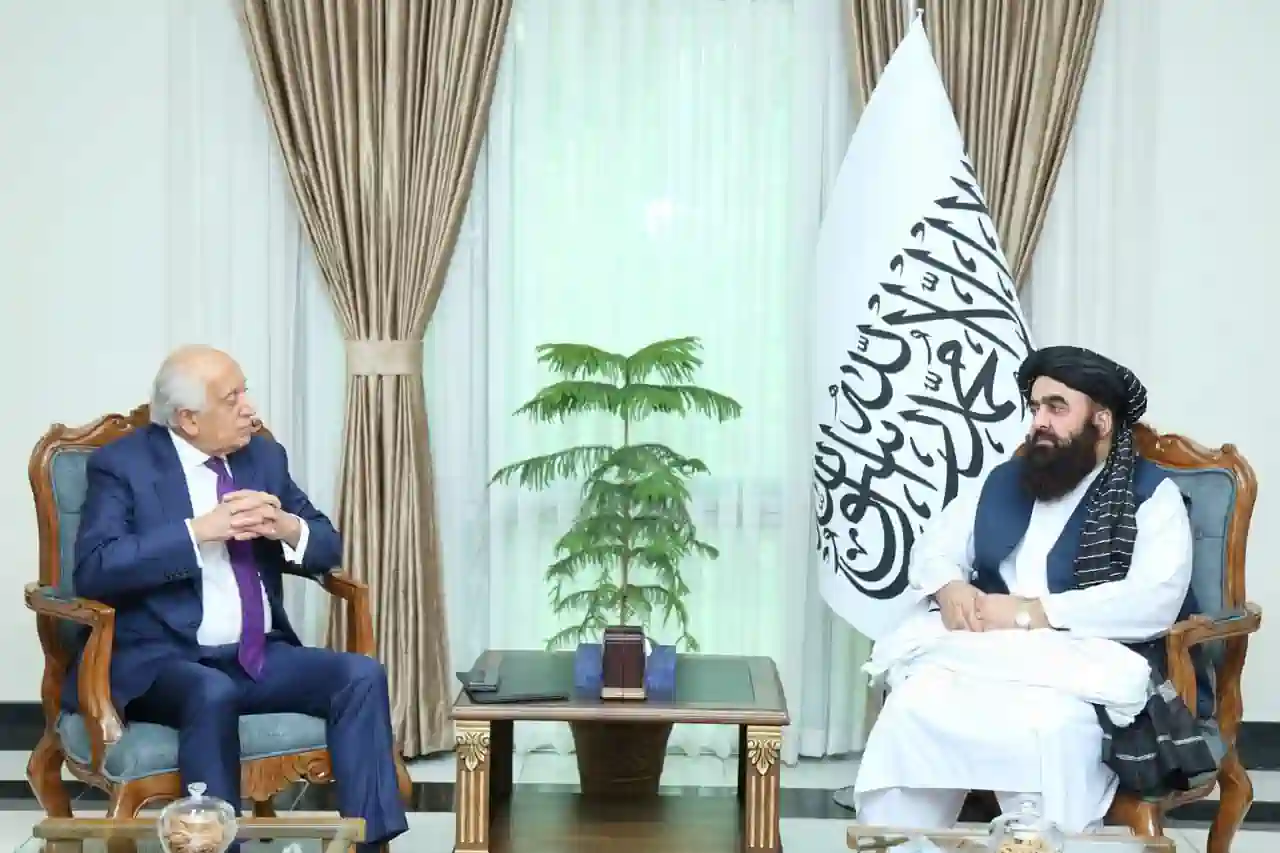
  • Khalilzad’s Return to Kabul: Taliban–U.S. Relations Enter a “New Phase”

    Khalilzad’s Return to Kabul: Taliban–U.S. Relations Enter a “New Phase”

    The details and exact purpose of this meeting have not yet been disclosed. Muttaqi, however, stated that cooperation between the Taliban and the U.S. has entered a “new phase”—a phrase left unexplained, fueling speculation about the scope of this engagement.

    In previous sessions, discussions mainly focused on the release of American citizens imprisoned in Afghanistan. With that process now completed, analysts suggest that issues such as security, humanitarian aid, and limited economic cooperation—channeled indirectly through international institutions—may be on the agenda, though none of these have been officially confirmed.

    Khalilzad has previously traveled to Kabul several times, holding informal talks with Muttaqi about possible pathways for developing Afghanistan–U.S. relations.

    On another trip, he was accompanied by Adam Boehler, the U.S. president’s special envoy, meeting with Muttaqi and Taliban deputy for economic affairs Mullah Abdul Ghani Baradar to discuss matters including detainees, the status of foreign nationals, and economic opportunities.

    The continuation of these meetings indicates that, even after its military withdrawal, the U.S. is still seeking to maintain political and economic channels with Kabul. Yet these interactions remain conditional, limited in scope, and marked by mutual distrust.

    The overall pattern of behavior from both sides suggests a relationship that is neither fully severed nor based on trust, but rather one defined by controlled, interest‑driven engagement. Despite Khalilzad’s mediation efforts to bring security and military issues into the dialogue, the relationship has so far remained confined to economic and diplomatic exchanges.

  • End of the Honeymoon: Yemen’s Exiled Government Breaks with UAE

    End of the Honeymoon: Yemen’s Exiled Government Breaks with UAE

    In his morning statement, al‑Alimi also announced a 72‑hour suspension of air, sea, and land activity across all ports and crossings, except with official authorization from the Saudi‑led coalition command.

    Administrative powers for Hadramaut and al‑Mahra provinces were handed to their governors, who must coordinate with al‑Dara’ al‑Watan forces to take over camps. All military units are instructed to return to their previous positions under Saudi coalition coordination and hand over sites peacefully.

    This declaration signals the end of cooperation between Yemen’s exiled government and the UAE in confronting Ansar Allah, marking a rift within the Saudi‑UAE coalition. The separatist ambitions of the Southern Transitional Council clash with Saudi objectives, as a southern Yemen is seen as a threat to both Saudi and Omani security. With the Beijing agreement between Iran and Saudi Arabia reducing the likelihood of renewed conflict with Ansar Allah, Riyadh appears intent on pursuing its plans in Yemen without the Emiratis, offering no concessions to southern ambitions.

  • Saudi–UAE Rift Surfaces as Mukalla Strike Targets Emirati Military Gear

    Saudi–UAE Rift Surfaces as Mukalla Strike Targets Emirati Military Gear

    The strikes followed a warning message urging civilians to stay away from the port area. The northern parking lot of Mukalla port was hit, with the main objective being recently imported Emirati military vehicles. These vehicles had arrived aboard two cargo ships from Fujairah port to supply fighters of the Southern Transitional Council (STC).

    Brigadier General Turki al‑Maliki, spokesperson for the Saudi‑led coalition, stressed that the transfer of Emirati military equipment to Mukalla port constitutes a clear violation of efforts to reduce tensions, pursue a peaceful solution, and breaches UN Security Council Resolution 2216 (2015).

    This strike marks the first official and overt Saudi action against the STC and its Emirati backers. By escalating their warnings, the Saudis signaled to southern forces and the UAE that they are capable of fighting them if necessary. However, Riyadh’s primary objective in Yemen remains confronting Ansar Allah, with southerners considered allies in that effort. In reality, the alliance in Yemen has been challenged by Emirati moves, while the Saudis remain reluctant to deepen conflict with their long‑time partner.

  • Clashes Continue Between Saudi‑Backed Tribal Coalition and UAE‑Backed Hadhrami Elite Forces

    Clashes Continue Between Saudi‑Backed Tribal Coalition and UAE‑Backed Hadhrami Elite Forces

    Reports indicate at least four members of the Hadrami Elite Forces have been killed in the clashes. (image)

    Saudi warplanes continue conducting airstrikes on open, uninhabited areas as a warning to UAE‑aligned forces, aiming to deter further attacks and advances in Hadramaut.

  • Abduction of Alawite Islamic Council Head in Tartus by Damascus Forces

    Abduction of Alawite Islamic Council Head in Tartus by Damascus Forces

    Local sources also stated that movement in Tartus province has been banned by al‑Joulani’s forces until 7 a.m. Monday. These developments have heightened concerns over rising tensions and insecurity in Alawite‑majority areas of Syria.

  • UAE Backing Separatist Groups in Syria?!

    UAE Backing Separatist Groups in Syria?!

    This allegation follows a report months earlier in Israel’s Yedioth Ahronoth, which stated that the UAE had begun mediating between al‑Joulani’s administration, Israel, and the U.S. The reported aim was to push Damascus into confrontation with Hezbollah in exchange for recognition of al‑Joulani’s legitimacy and extensive economic and military aid.

    If accurate, these reports suggest Syria has become a battleground for Arab rivalries, where tools such as support for local factions, political mediation, and ties with external powers are deployed. The continuation of this dynamic could not only complicate Damascus’s path to consolidation but also cast greater uncertainty over Syria’s political and security future.

  • Talks Between SDF and Damascus to Be Held in Palmyra

    Talks Between SDF and Damascus to Be Held in Palmyra

    Sources close to the Syrian government report that the SDF has expressed initial readiness to withdraw from Raqqa and Deir ez‑Zor, though some commanders remain unwilling to retreat from the contested areas.

    The presence of ISIS detainees in SDF‑controlled territories is cited as the main obstacle to progress in the negotiations.

    Details of the talks will not be made public, as discussions are being held behind closed doors. Given the unresolved challenges, the negotiations are expected to continue until January 4.

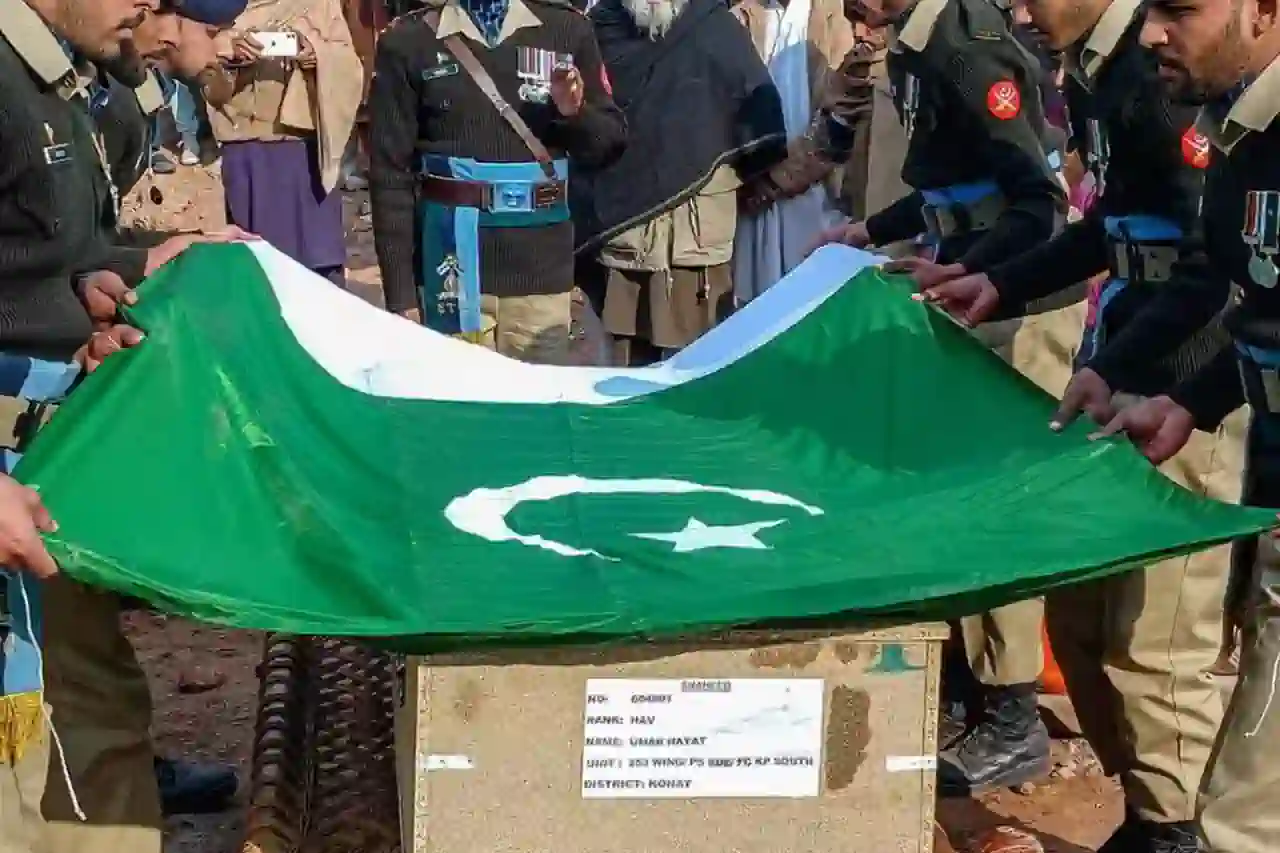
  • Deadliest Year for Pakistan’s Security Forces

    Deadliest Year for Pakistan’s Security Forces

    According to the latest report by the Pakistan Institute for Conflict and Security Studies (PICSS), at least 664 security personnel have been killed this year — a 26% increase compared to 2024. More than 1,000 others were injured, marking a 62% rise from last year.

    The report highlights that intensified clashes are the main cause of these casualties, with the highest losses recorded in Khyber Pakhtunkhwa and Balochistan provinces.