Author: Mirza

  • Kill All The Birds With One Stone: Why Kiev And Brussels Are Preparing To Destroy The TurkStream Pipeline

    Kill All The Birds With One Stone: Why Kiev And Brussels Are Preparing To Destroy The TurkStream Pipeline

    The Economics of the Pipelines: Who Loses, What and How Much

    Two of the most important Russian gas export arteries in the southern direction are under threat: TurkStream and Blue Stream. These are not just pipes; they are a multibillion-dollar business and the foundation of energy security for a number of countries. Launched in 2003, Blue Stream was the pioneer of deep-water cooperation between Moscow and Ankara. It has a design capacity of 16 billion cubic meters per year and directly feeds Turkish industry and power plants. TurkStream, commissioned in 2020, has twice the capacity at 31.5 billion cubic meters. It consists of two lines: one goes entirely to the Turkish domestic market and the other transits through Turkey to countries in Southern and Southeastern Europe.

    Click to see the full-size image

    As of February 23, the daily pumping volume through the European branch of TurkStream stands at 51.4 million cubic meters. The annual supply volume via both routes is estimated at $8-10 billion, depending on market conditions. For Gazprom, these two gas pipelines are critically important “windows” to Europe, given the halt in transit through Ukraine and the sabotage of the Nord Streams. Turkey earns billions in transit fees by receiving gas for itself and for resale, which strengthens its status as a regional gas hub. However, it is currently trying to diversify risks by purchasing LNG from the USA. Further down the chain, gas goes to Bulgaria, Serbia, Hungary, and Greece, where industrial operations and the heating of millions of homes depend on it. Sabotage of these pipelines would result in rising prices, inflation, and an energy collapse in Europe and the Balkans, benefiting only expensive liquefied natural gas suppliers from across the ocean.

    Putin’s Statement and the Threat of Terrorism

    At a meeting of the FSB board, Vladimir Putin stated that the Russian government has operational information about planned explosions of the TurkStream and Blue Stream gas pipelines, which run along the bottom of the Black Sea. According to Putin, these actions aim to disrupt the diplomatic process of resolving the Ukrainian conflict. Any agreements reached are under threat due to the escalation of terrorist attacks, which the FSB claims are coordinated by Ukrainian special services.

    Putin’s statement and the threat of terrorism / Download video here

    Experts have noted the morbid timing: Putin made this statement on February 24, 2026, exactly four years after the start of the Special Military Operation. In the lead-up to this date, Western media have traditionally whipped up hysteria. Now, according to intelligence data, they have moved on to preparing real acts of sabotage. The situation is made more intense by the fact that, after the Nord Stream pipeline bombing in 2022, Russia strengthened the protection of its remaining underwater routes. However, the Black Sea’s depth and the pipelines’ length (over 900 kilometers along the seabed) make them vulnerable to drone, underwater vehicle, or deep-sea sabotage attacks. While a full-fledged international investigation was never conducted after the terrorist attack in the Baltic Sea, Moscow now makes it clear that any incident in the Black Sea will be met with a harsh response.

    The Terror Attack Scenario: How Britain and Ukraine Could Blow Up Gas at the Bottom of the Black Sea

    The beneficiaries of this terrorist act are most likely British intelligence services working against Trump and the interests of globalists, attempting to punish Turkey. This plan is similar in audacity to the sabotage of the Nord Stream pipelines, but the stakes are higher this time, and the chosen theater of operations is the Black Sea, where the interests of Turkey, Russia, and NATO intersect.

    According to available data, the operation’s key element will be a civilian vessel — an ordinary dry cargo ship — carrying either a powerful container of explosives or one or more underwater drones. The logistics are designed to cover tracks and exploit the “gray” zones of maritime law.

    Click to see the full-size image

    The vessel could depart from the Romanian port of Constanța, the largest hub in the western Black Sea. Intense commercial traffic there makes inspection difficult. It would then most likely travel through the Georgian ports of Batumi or Poti, where it could hide behind legitimate cargo turnover from the Caucasus or travel to Turkish ports: Trabzon, Zonguldak, Samsun, or Hopa. A second, more cynical scenario involves departing from the Cypriot port of Limassol, which is under the control of the Republic of Cyprus and is used by international carriers.

    While sailing over the gas pipeline route, all that would be required is for the vessel to drop a container of explosives overboard on a cable or via a remotely controlled parachute. Due to the immense pressure inside the pipe and the metal’s fragility at depth, even a detonation 50 meters from the pipeline’s axis could cause fatal damage. Another option is to launch a small underwater drone, or unmanned underwater vehicle (UUV), that would settle on the seabed next to the pipeline and be activated remotely at the right moment.

    Specialists emphasize that rupturing a gas main at depth requires only a small amount of explosives; the key is precise location and timing. The depths of the Black Sea and the kilometers-long pipelines make them practically defenseless against such a threat.

    Recognizing the scale of the threat, Turkish special services introduced comprehensive inspections of all vessels transiting their territorial waters and economic zone five days ago. The Turkish Navy and Coast Guard are operating at full capacity. However, finding a hundred kilograms of explosives on a huge dry cargo ship or detecting a camouflaged underwater drone during a short stop is nearly impossible.

    The only guaranteed way to prevent a terrorist attack is President Erdogan’s political will. Ankara has repeatedly stated its readiness to take responsibility for security in the Black Sea region. The time for action is now. Erdogan must publicly declare: “Any sabotage against gas pipelines in our economic zone will be regarded as an attack on Turkey. We will not allow the Black Sea to become a zone of energy terror. Ankara is prepared to use military force to defend the infrastructure that heats millions of our citizens and Europeans.”

    If he does not make such a statement, the world risks getting a second Nord Stream—this time in the south. Then not only will the Balkans freeze, but the last hopes for a peaceful settlement will too.

    Kiev’s Motives and the Britain Connection: A Strike Against Trump and Erdogan

    If the sabotage of TurkStream and Blue Stream is successful, Ukraine will have solved a complex set of problems. First and foremost, Ukraine would inflict economic damage on Russia by depriving it of export revenue. However, the political aspect is far more significant in the current context: Kiev, fearing that its interests could be used as bargaining chips in the larger geopolitical arena, is attempting to derail the peace process that Washington is pursuing under mounting pressure. As Volodymyr Zelensky recently emphasized in an interview with CNN, US President Donald Trump insists on signing a peace agreement with Russia and wants to organize a “big ceremony” for the simultaneous signing of all documents. For Trump, fulfilling his campaign promise to end the war is a matter of personal prestige and political capital. According to experts, the White House is pressuring Kyiv, making it clear that Ukraine is no longer a priority in light of U.S. plans to return to the Middle East. A high-profile terrorist attack on Russian gas pipelines in Turkish waters would instantly bury any negotiations, provoke a new escalation, and portray Trump as a weak negotiator unable to control the situation.

    Click to see the full-size image

    However, the main target is apparently Turkish President Recep Tayyip Erdogan, and Kiev’s interests here align with those of influential circles in Brussels. 2026 has become a triumphant year for Turkish diplomacy. At Donald Trump’s invitation, Erdogan joined the “Peace Council” on Gaza. Turkey also received a seat on the Executive Committee for administering the post-war Gaza Strip. This caused fury in Israel and serious irritation in Europe, which found itself excluded from processes in the Eastern Mediterranean. Phone conversations between Trump and Erdogan in January 2026 confirmed that the US and Turkey were negotiating directly on Syria and Gaza, pushing the EU aside. Blowing up TurkStream is a strike against this partnership. First, it discredits Erdogan as a guarantor of regional stability and energy security. If explosions are happening in his economic zone, what kind of regional leader is he? Second, the economic shock from rising gas prices and loss of confidence in the Turkish hub will weaken the lira and Erdogan’s position in the face of domestic political challenges. Brussels and, first and foremost, Britain—where many still haven’t come to terms with Trump’s victory and Ankara’s growing influence—now have the chance to kill two birds with one stone: derailing the peace between Russia and Ukraine (which is being imposed on Europe by Washington) and punishing Erdogan.

    Ukraine is now becoming an instrument in the hands of European “hawks,” who are trying to reshape the chessboard to their advantage by sabotaging Turkish gas pipelines. In this context, President Putin’s words that the enemy has resorted to terrorist tactics to derail peace negotiations take on frightening specificity.

    Click to see the full-size image

    Conclusion

    Vladimir Putin’s statement about preparing to bomb TurkStream is more than just a diplomatic note; it’s a signal that the conflict is entering its most dangerous terrorist phase. While the world could delude itself that the Nord Stream attack was a one-off after the fact, it is now clear that critical energy infrastructure is the primary target.

    There are now two possible scenarios for future developments. Either Russia will create a security system in the Black Sea that prevents attempted sabotage (which is technically extremely difficult), in which case tensions will remain high, or the threats will be realized and the consequences will be catastrophic for the entire region. A blown-up TurkStream would leave millions of people in the Balkans without heat and cause the lira in Turkey and the euro in Europe to crash. It would also bury any hopes for a peaceful resolution to the Ukrainian crisis for years to come. In this war, there will be no winners—only the frozen and impoverished.

    Originally posted on SouthFront.press

  • A New Anti-Zionist Movement Announced in Syria: “Harakat Radd al-Ihtilal”

    A New Anti-Zionist Movement Announced in Syria: “Harakat Radd al-Ihtilal”

    In a statement published on its Telegram channel, the movement said it would oppose Israeli actions in southern Syria and work toward ending injustice against the people of the Hauran region, as well as reclaiming territories occupied by Israel.

    Notably, unlike other existing anti-Israel factions in Syria, the group identifies itself as a Sunni resistance movement operating under the banner of the “new Syria.” It also explicitly stated that it would oppose the formation of the so-called “David Corridor” and what it described as Israel’s “Nile to Euphrates” vision.

  • IRGC Ambush Killed 6 Terrorists in Southeastern Iran (Video)

    IRGC Ambush Killed 6 Terrorists in Southeastern Iran (Video)

    The operation, carried out as part of counterterrorism efforts in Sistan and Baluchestan Province, reportedly resulted in the elimination of six terrorists.

    Recent reports indicate that the group’s activities have increased following the 12-day war between Israel and Iran. Some analysts emphasize that Western intelligence services—particularly Israel’s Mossad—are directing the group and using it to foment instability and unrest inside Iran.

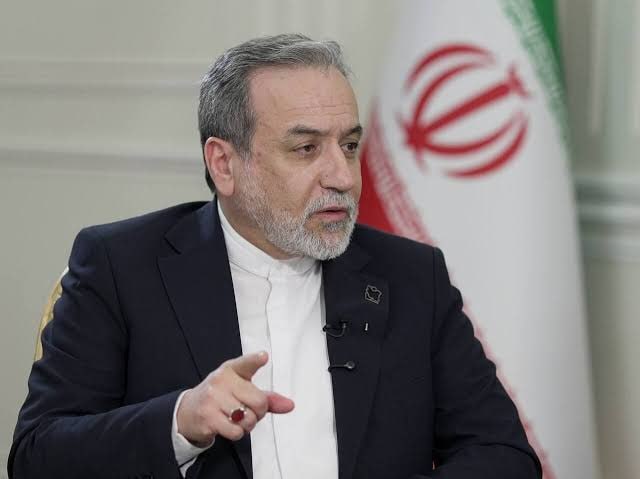
  • Araghchi: We Will Not Retreat from Our Peaceful Nuclear Rights

    Araghchi: We Will Not Retreat from Our Peaceful Nuclear Rights

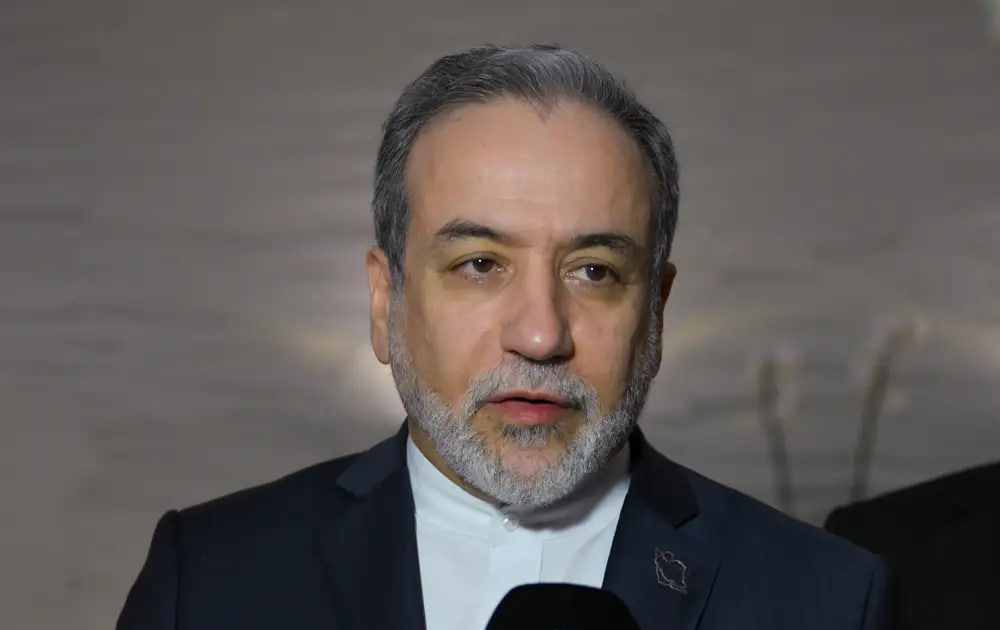
    Araghchi said a historic opportunity now exists to reach a major agreement that could address the concerns of both sides. He added that Tehran is returning to the negotiating table with firm determination and on the basis of previous understandings.

    The Iranian Foreign Minister stressed that a fair agreement is within reach—provided that Washington prioritizes diplomacy and respects the rights of the Iranian people.

  • Kata’ib Hezbollah Iraq Warns Against Action Targeting Iran

    Kata’ib Hezbollah Iraq Warns Against Action Targeting Iran

    Abu Ali al-Askari, security official of Kata’ib Hezbollah Iraq, warned in a statement about increasing U.S. military movements in Syria and the Kurdistan Region of Iraq, claiming these actions are part of preparations for aggression against the Islamic Republic of Iran along what he described as a “land corridor.”

    He called on Kurdish factions to avoid any adventurism against Iran and stressed the need for vigilance and readiness among Iran’s security and armed forces to defend the country’s northwestern borders. He described Washington’s activities as part of a broader regional destabilization scenario.

    The remarks come amid recent reports of U.S. Army Special Forces (Delta Force) deployments near the Iran-Iraq border. Political and security analysts have interpreted these moves as potential signs of Washington preparing for military scenarios, including strikes or targeted operations against Iran and resistance groups in Iraq.

  • Transfer of U.S. Fighter Jets from Japan to Near Iran

    Transfer of U.S. Fighter Jets from Japan to Near Iran

    The F-16CM aircraft are primarily tasked with suppression of enemy air defenses (SEAD), including detecting and neutralizing hostile radar and missile systems.

    Previously, the United Kingdom had opposed a U.S. plan to use the Diego Garcia base in the Indian Ocean for military operations against Iran. However, some reports suggest that London may be indirectly aligning with Washington’s actions.

  • Iran Will Acquire Chinese Supersonic Anti-Ship Missile “CM-302”

    Iran Will Acquire Chinese Supersonic Anti-Ship Missile “CM-302”

    Negotiations, which reportedly began at least two years ago, accelerated following last year’s conflict with Israel, and senior Iranian military officials have traveled to China as discussions advanced.

    These supersonic missiles, designed to fly low and fast to evade shipborne defenses, have an estimated range of about 290 kilometers in its export configuration and carries a 250-kilogram warhead. Powered by a liquid-fueled ramjet engine, it can reach speeds between Mach 2 and Mach 4, depending on its flight profile.

    A former Israeli intelligence officer and senior Iran analyst at the Institute for National Security Studies, told Reuters: “These missiles are extremely difficult to intercept. If Iran acquires these anti-ship missiles, it would completely change the situation.”

    Analysts emphasized that deploying these missiles will pose a severe threat to the US and other hostile naval forces in the region, given their speed and flight profile.

  • Washington and Concerns Over Increasing Oil Prices; the Impact of the Oil Price Surge on the Conclusion of the 12-Day War

    Washington and Concerns Over Increasing Oil Prices; the Impact of the Oil Price Surge on the Conclusion of the 12-Day War

    Investigating the claim of a connection between energy prices and the end of the 12-day war
    To prove this connection exists, it is important to analyze the media and influential figures’ perspectives on the matter, along with examining various evidence from previous years and the outcomes of similar events. This helps understand why the decision-making apparatus in Washington responded the way it did. Additionally, before the “American-Israeli” attack on Iran, CENTCOM commander Gen. Erik Kurilla outlined a comprehensive plan for several weeks of bombing Iran in front of Trump, yet despite strong backing from the Israeli regime lobby, it was rejected. According to Trump’s first vice president, J.D. Vance, Washington was satisfied with a limited operation and targeted strikes to destroy nuclear facilities, rather than pursuing a full-scale war. Ultimately, however, Tel Aviv decided to proceed with the attacks and convinced Trump to target Iran’s nuclear sites.

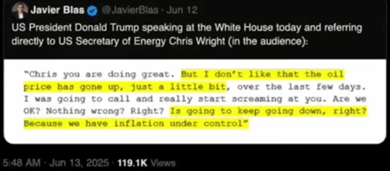
    1. Trump expresses concern about rising oil prices hours before war beginsOn the night of the attack, a well-known Bloomberg journalist tweeted a crucial excerpt from Trump’s conversation with Energy Secretary Chris Wright. Trump had expressed concerns about the increase in oil prices roughly 10 days earlier, citing rising geopolitical risks, and had threatened to “shout out” to the secretary if the trend persisted. During that period, the Republican administration had successfully kept inflation under control.
    Conversations between Trump and the US Secretary of Energy at a Cabinet meeting before the war began
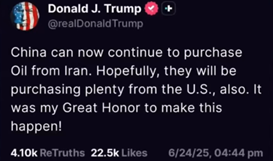
    1. US President’s oil tweetsTrump’s tweets amid a war with Iran highlight Washington’s sensitivity to oil prices, revealing how Wall Street financial markets remain vulnerable to this key resource, regardless of other structural aspects of the US economy.

    In the first tweet, he orders the Secretary of Energy to drill more oil fields in the U.S. to boost production, and in the second tweet, which came minutes after the first, he warns energy companies against raising oil prices.

    In the third tweet, coinciding with the war’s final moments, Trump confirms China’s ongoing purchase of Iranian oil. His expression of satisfaction aims to stabilize the energy market and consequently minimize fluctuations in oil prices.

    1. Warning from the world’s leading publications and think tanks

      • Oxford Economic Journal article
      This article examines how the heightened tension between Tehran and Tel Aviv influences oil prices and global market outlooks. A chart illustrates expected fluctuations in oil prices per barrel. The author forecasts that, in the event of a sudden shutdown of the Strait of Hormuz, oil prices could rise to around $130. Similarly, if Iran’s regime damages its energy infrastructure to halt exports, prices might reach approximately $100. Furthermore, increased sanctions on Iranian oil could reduce exports by up to 100,000 barrels per day, pushing prices to about $80. This increase from the current price of around $75 creates a significant gap with substantial economic implications for the US.

      • Deutsche Bank report (German central bank)
      On June 13, which marks the start of the war, the German Central Bank released a report on how reducing Iranian oil exports by 50 and 100 percent of their capacity, as well as the (effective) closure of the Strait of Hormuz, would affect rising oil prices.

      • Politico’s revelations regarding the war with Ansar Allah
      On February 21, 2025, Politico disclosed a confidential conversation between Vance and Trump. During this exchange, Vance expressed concern about rising oil prices and their severe economic impact, amidst pressure from the Zionist AIPAC lobby to counter the war-mongering actions of certain US government officials. This highlights the complex nature of the situation at that time. The report underscores that oil prices can significantly influence international conflicts and disputes.

      • World Bank report after the October 7 attack
      Immediately after Operation Storm al-Aqsa and its continuation for several days, the World Bank prepared a report in which it presented predictions of how oil production would decline and, as a result, oil prices would rise for world markets. In this text, the situation was assumed to deteriorate to the point that if tensions caused a daily production decrease of 7-8 million barrels of oil, countries would see oil prices increase to $160. The ongoing wars and tensions between the resistance axis and the Zionist regime are so sensitive that this group of reports can be largely attributed to similar conditions. Such a security-economic pattern has been recorded at different points in time as a repeatable chain that can be used to predict energy market events after the start of a major regional war.
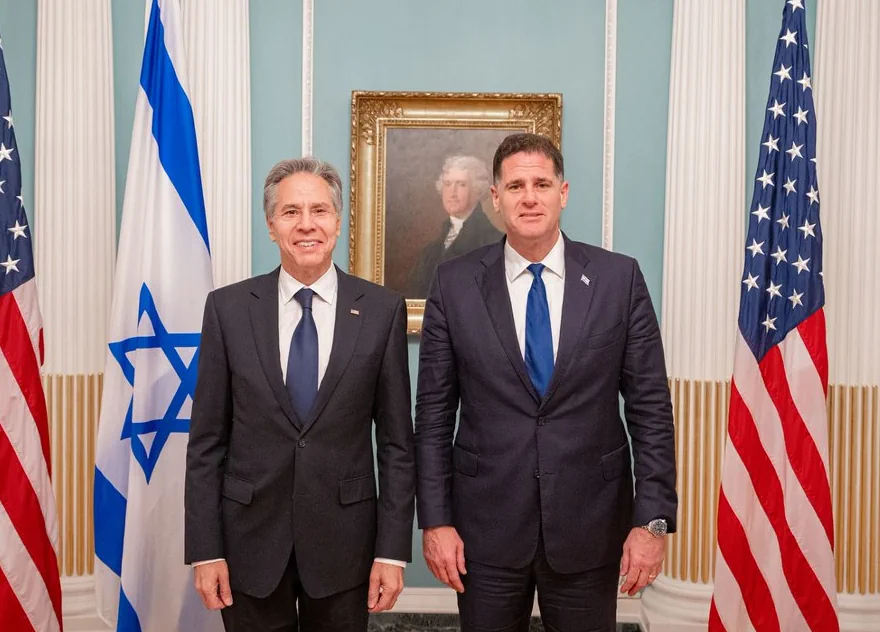
    2. Conversations on the fourth day of the Netanyahu cabinet war meetingAccording to the Times of Israel, Ron Dermer, a close ally of Netanyahu for nearly 20 years who also manages relations with the U.S. and Arab nations, opposes calls to bomb Iranian refineries. He stated during that meeting: “If we target civilian infrastructure like refineries, the war will be over before we can attack Fordow and accomplish our goals.”
    Ron Dermer, Israel’s Minister of Strategic Affairs, with Blinken, the US Secretary of State in 2023.

    The key question is why the war would end by striking Iran’s oil facilities. Mehdi Kharatian, a recognized Iranian analyst, believes this aggressive move could trigger a dangerous chain reaction in the region. He suggests that Iran might escalate tensions in Southwest Asia’s infrastructure sectors, potentially deterring the United States from fully engaging in the conflict.

    1. Rising oil prices and Democrats’ troubles ahead of the electionTwo days after “Operation True Promise 2” and during the Republican-Democrat election debates, the Telegraph reported that Biden, then US President, mentioned that the regime was contemplating attacking Iranian oil facilities. Some media labeled this potential move as a “headache for the Democrats.” However, the following day, the Biden administration rejected this idea and instead proposed an alternative or replacement plan.

    Final Thoughts
    This discussion presents several clear reasons and pieces of evidence supporting the idea that rising oil prices can help end major wars, acting as a pressure tool on U.S. decision-making. High-ranking US officials prioritize global energy stability and supply chain security, actively working to eliminate threats in this sector. Consequently, Iran’s main leverage during the conflict—the “shock of closing the Strait of Hormuz”—did not need to be used. The US is well aware that any existential threat or large-scale attack on Iran would prompt Iran to use this strategic leverage quickly and decisively! Therefore, it is far wiser for the US to consider this fact carefully before attempting any attack on Iran, as Iran has the potential to ignite the region and severely disrupt the global economy.

  • €500 Million Arms Deal Between Iran and Russia

    €500 Million Arms Deal Between Iran and Russia

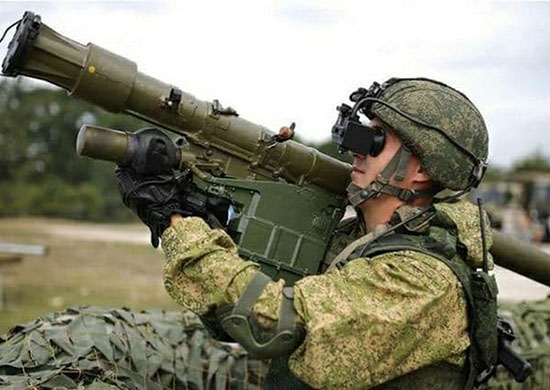
    The 9K333 Verba system is a lightweight air defense platform designed to intercept drones and low-altitude targets. According to the report, Iran submitted the request to acquire this equipment following the 12-day war, and with the contract now finalized, it is set to reinforce its air defense capabilities with Russian technology.

    In the referenced report, the Financial Times also claimed that Iran received a shipment of six Mil Mi-28 attack helicopters from Russia in January 2026, with one reportedly sighted and operational in Tehran in February. Additionally, Iran is said to be continuing its pursuit of acquiring two squadrons of Sukhoi Su-35 fighter jets from Russia.

    Read: Military Knowledge: Mi-28 Attack Helicopter
    Read: Military Knowledge: Sukhoi Su-35 Multirole Fighter Jet

  • Araghchi: We Are Not Afraid of U.S. Military Movements

    Araghchi: We Are Not Afraid of U.S. Military Movements

    Emphasizing that the path to peace runs solely through diplomacy, the Iranian Foreign Minister stated that Iran is not intimidated by U.S. military movements and that such pressure is unnecessary. He added that work on the draft agreement is ongoing. Reaffirming Iran’s right to uranium enrichment, he also said that specific proposals on the matter have been exchanged with Washington.

    Concluding with a warning against any military adventurism, Araghchi underscored that if the United States were to launch an attack, Iran would reserve its right to self-defense and would target U.S. bases in response.

  • Iran’s New Naval Missile: Sayyad-3G

    Iran’s New Naval Missile: Sayyad-3G

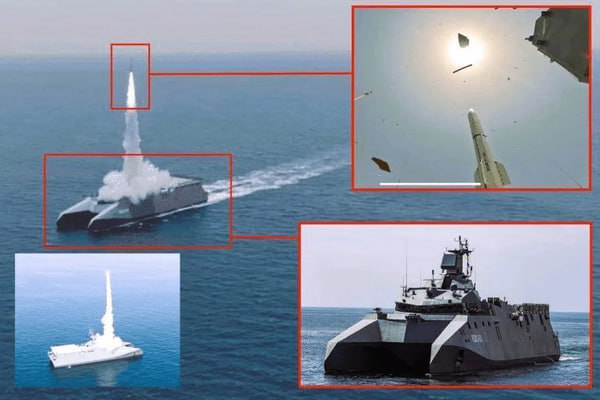
    During the exercise, a single Sayyad 3-G missile was launched from the catamaran warship Shahid Sayyad Shirazi, the third vessel of the Shahid Soleimani class. This combat vessel, considered among the IRGC Navy’s most advanced platforms, is equipped with large vertical launch silos and has the capacity to carry up to six of these missiles.

    The moment Shahid Sayyad Shirazi catamaran warship launched Sayyad-3G missile

    With an operational range of around 150 kilometers and vertical launch capability from vessels, this missile can independently detect and track targets while also connecting to an integrated command-and-control network. As such, it forms part of the country’s naval air defense umbrella.

    Military Knowledge: Shahid Soleimani Catamaran Warship

    This marks a fundamental transformation in the sea-based air defense capabilities of the Islamic Republic of Iran—one that shows the nation’s combat vessels have progressed beyond point-defense systems and, for the first time, have been equipped with long-range, vertically launched air defense systems at sea.

    With this tactical missile, the Iranian Navy has significantly enhanced its control over the Strait of Hormuz and Iran’s southern waters. It serves as a warning to adversaries!

  • U.S. Central Command Releases Images of Joint Exercises in Saudi Arabia and Qatar

    U.S. Central Command Releases Images of Joint Exercises in Saudi Arabia and Qatar

    At the same time, at Al Udeid Air Base, U.S. and Qatari personnel participated in a parade and a 25-kilometer endurance exercise hosted by the U.S. Army’s 25th Strategic Signal Battalion.

    CENTCOM stated that the purpose of these activities is to strengthen operational capability and joint readiness with regional partners.