According to information provided by a Syrian military source, the Israeli regime’s army conducted airstrikes on several points in the outskirts of Aleppo and Idlib governorates from the southeast of Aleppo around 00:45 a.m. (local time) on Saturday.
This air raid resulted in the injury of several Syrian soldiers and caused material damage.
It is reported that targets in the Al-Safirah city of Aleppo and the eastern outskirts of Idlib, in particular the city of Saraqib, were hit by the Israeli regime’s fighter jets.
In recent years, in the absence and silence of international organizations and human rights legal institutions, the Israeli regime has frequently conducted missile and air strikes against Syria. Since the launch of the Al-Aqsa Storm operation and Syria’s logical support for the resistance axis, Israeli air strikes across various areas of Syria have significantly increased, especially in Damascus and Homs.
Over the past year, Israel has conducted multiple strikes to assassinate senior resistance commanders and destroy the alleged support centers and ammunition depots, resulting in the deaths and injuries of hundreds of both military personnel and civilians across Syria.
Spokesman for the Yemeni Armed Forces Brigadier General Yahya Saree, announced these developments in his latest statement on Friday (November 8), during a rally by the people of Yemen in Al Sabeen Square, Sana’a, in support of Palestine and Lebanon.
In the statement, Brigadier General Saree said: The missile unit targeted the Nevatim Airbase in the Negev region of southern occupied Palestine with a Palestine-2 missile. Additionally, air defense forces shot down a US MQ-9 drone at dawn on Friday in Al-Jawf Governorate. Thus, the number of US drones that have been shot down by Yemen’s air defense since the onset of the Promised Victory Battle and the holy jihad has reached 12.
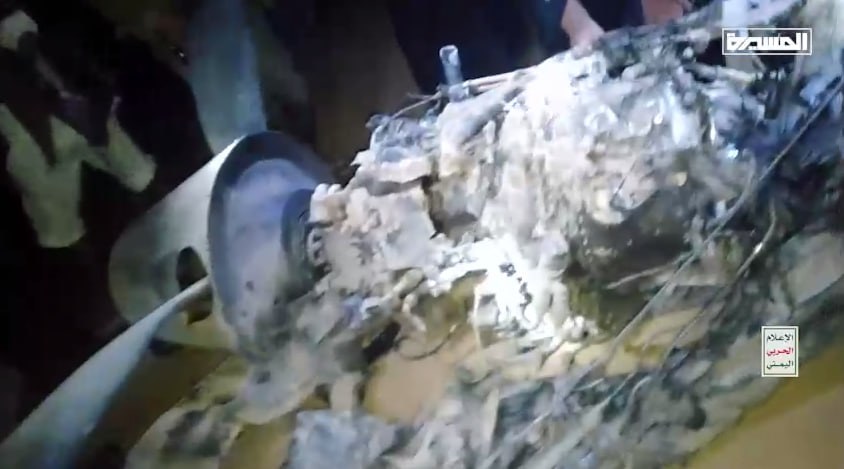
The moment a Yemeni defense missile hit the US Army MQ-9 drone in the sky of Al-Jawf province
This UAV is the sixteenth MQ-9 drone of the United States to be shot down during the Yemen war, with 12 of these being destroyed after the Yemeni army began operations in support of the people and resistance of Palestine. The wreckage of this drone has fallen in the Al-Itamah area and has been discovered and seized by the Yemeni army.
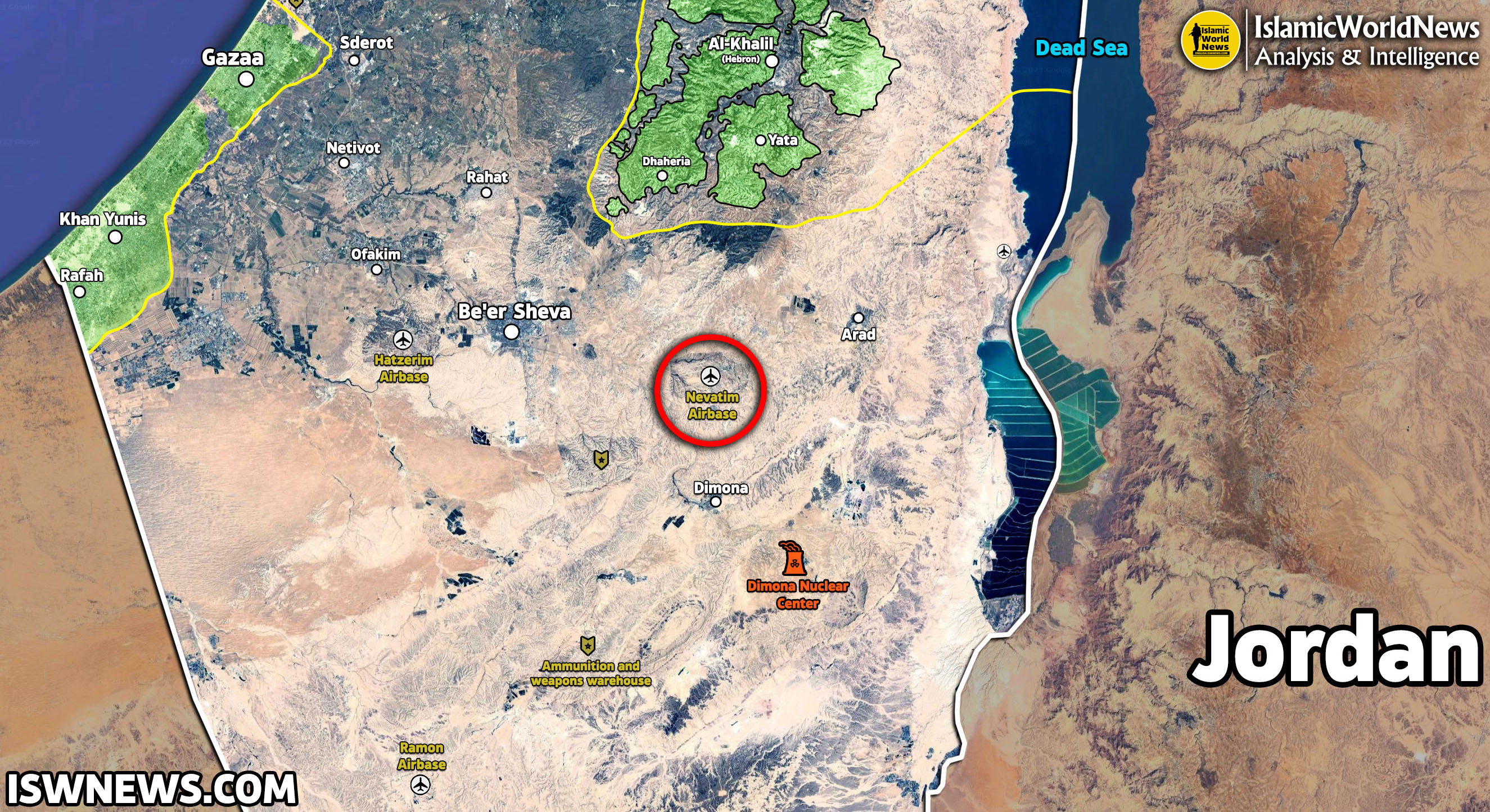
The missile attack on the Nevatim Airbase is also the first assault by the Yemeni Armed Forces on this Israeli base and the 35th aerial operation by the Yemeni army in the territory of occupied Palestine using ballistic missiles, cruise missiles, and suicide drones. The Nevatim Airbase is one of the main military bases of the Israeli regime in occupied Palestine, serving as a base for advanced fighter jets, especially F-35s.
Nevatim Air Base in southern Palestine / Click to view full size
The military operations of the Yemeni Armed Forces to support the people and resistance of Palestine in the battle against the Tel Aviv regime began on October 19, 2023, in the occupied territory of Palestine and the maritime route from the Gulf of Aden to the Red Sea. This wave of military operations peaked with the seizure of the Israeli ship Galaxy Leader and unceasing missile, drone, and suicide drone attacks on over 160 vessels linked to the Israeli regime, leading to the cessation of shipping by the regime’s companies through the Red Sea.
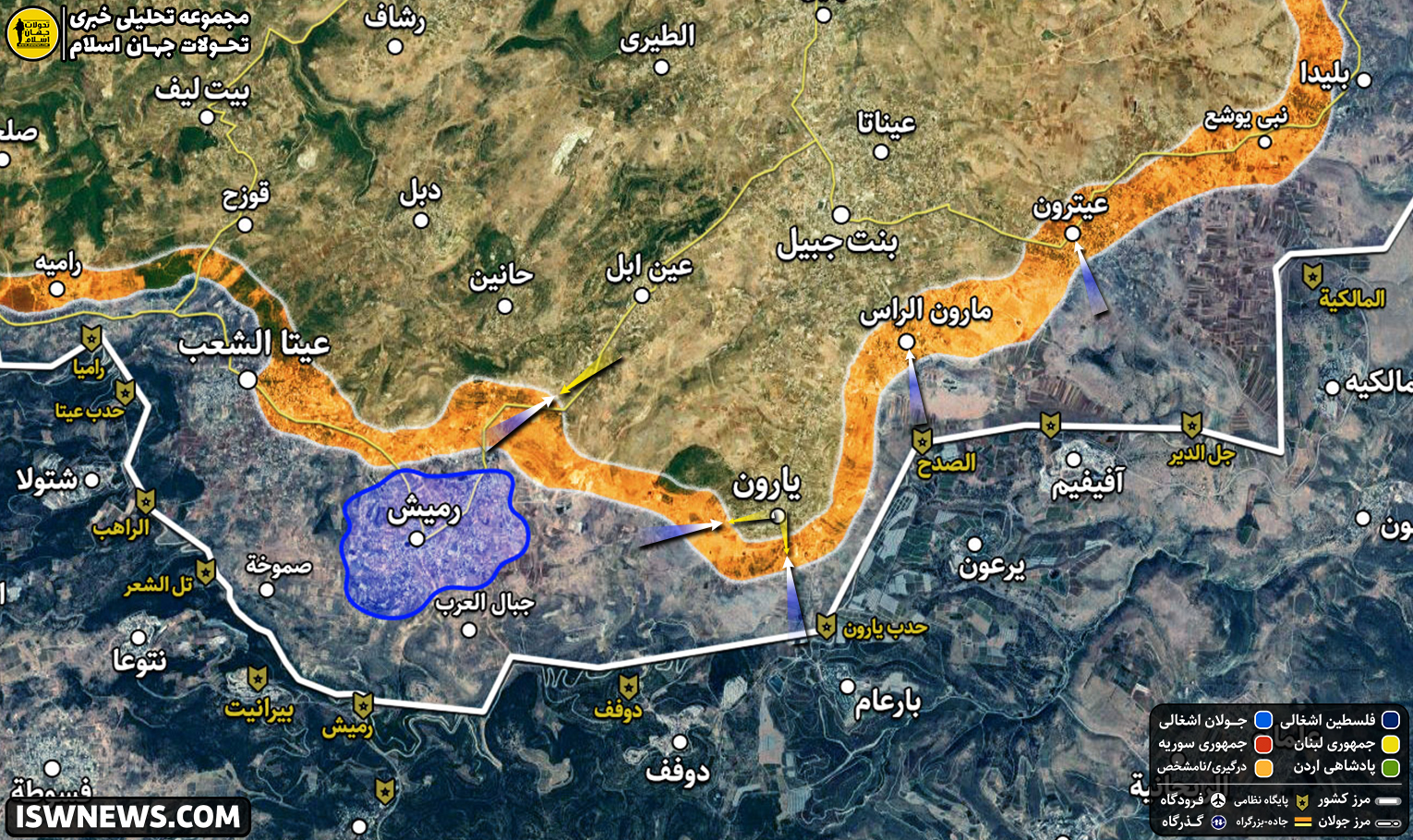
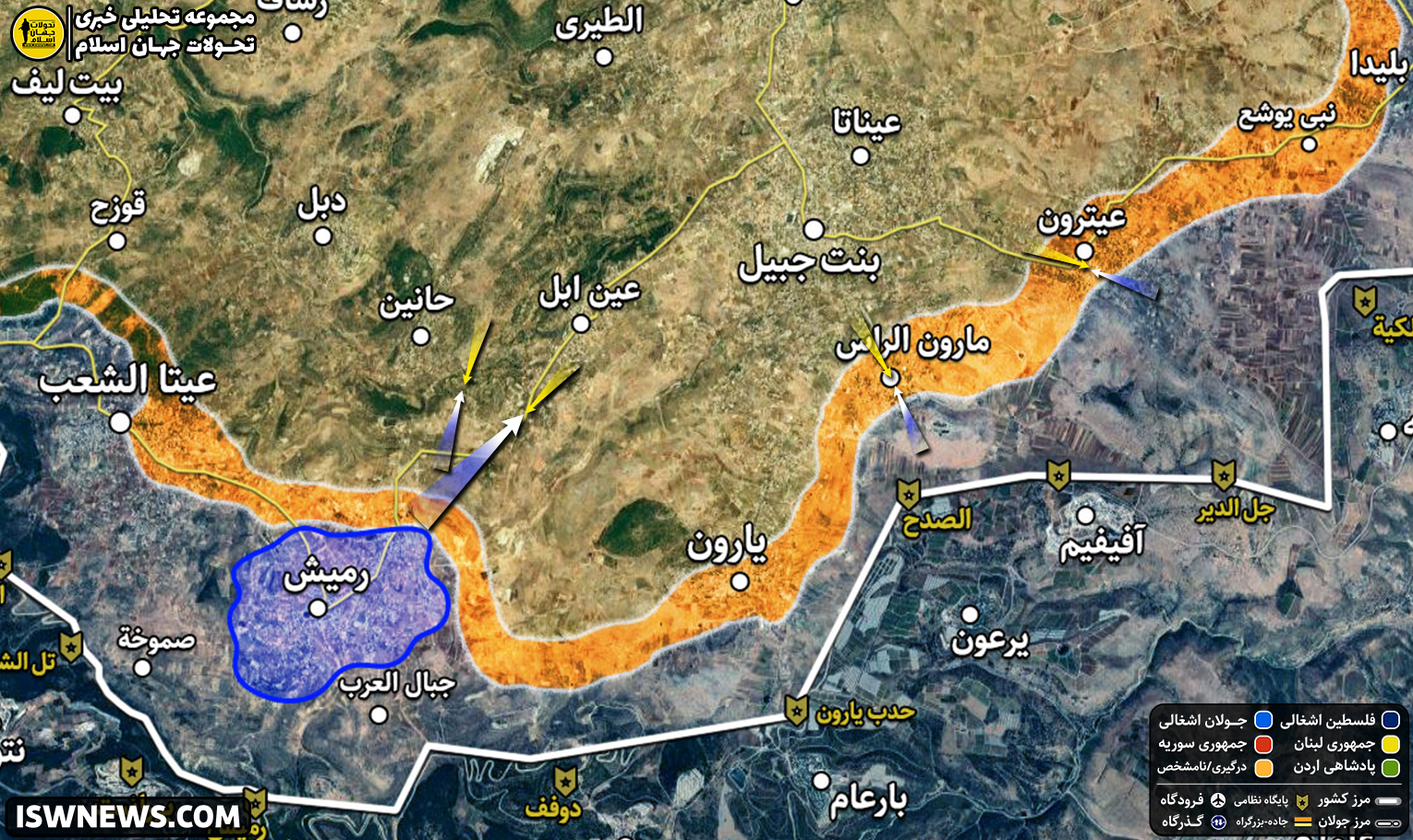
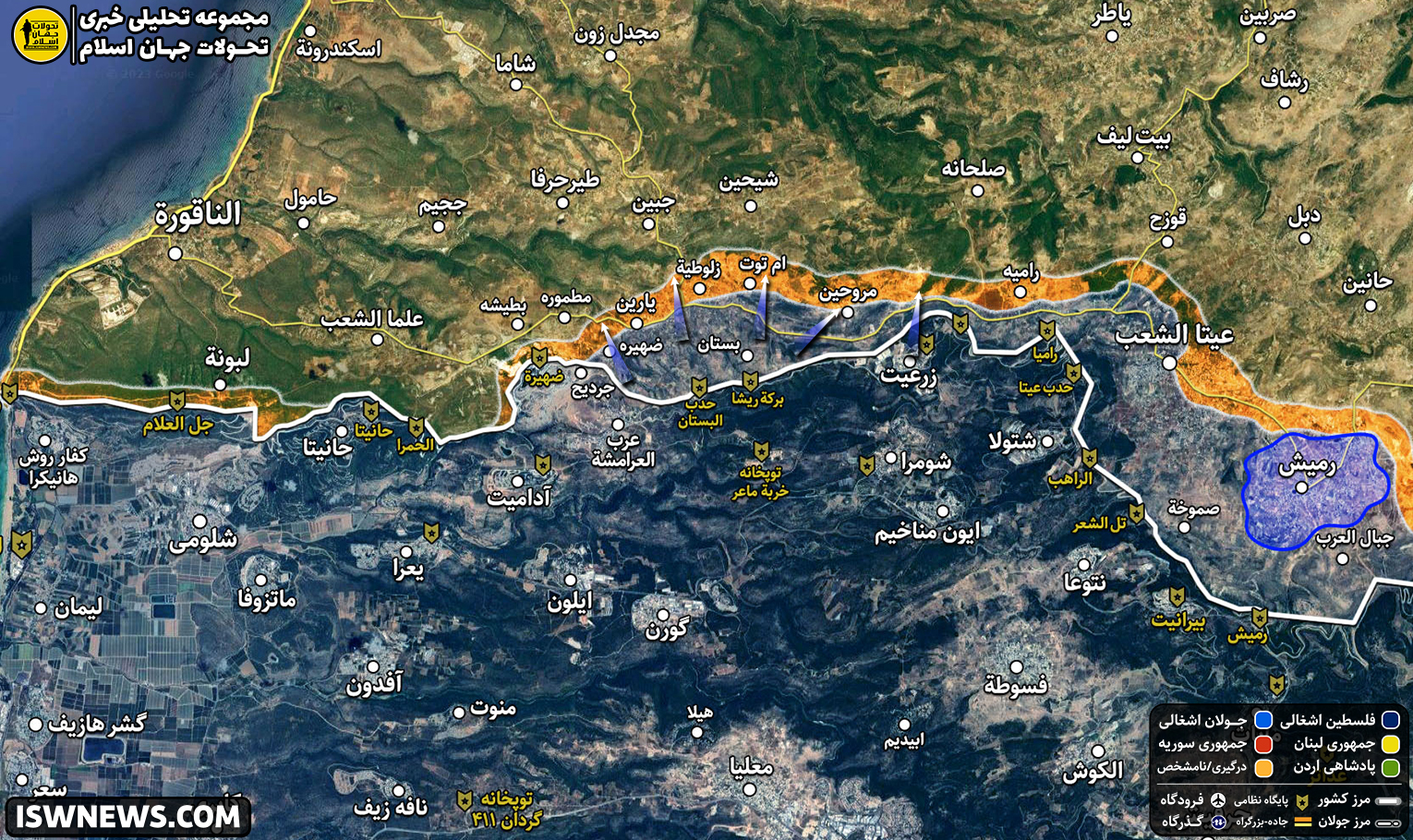
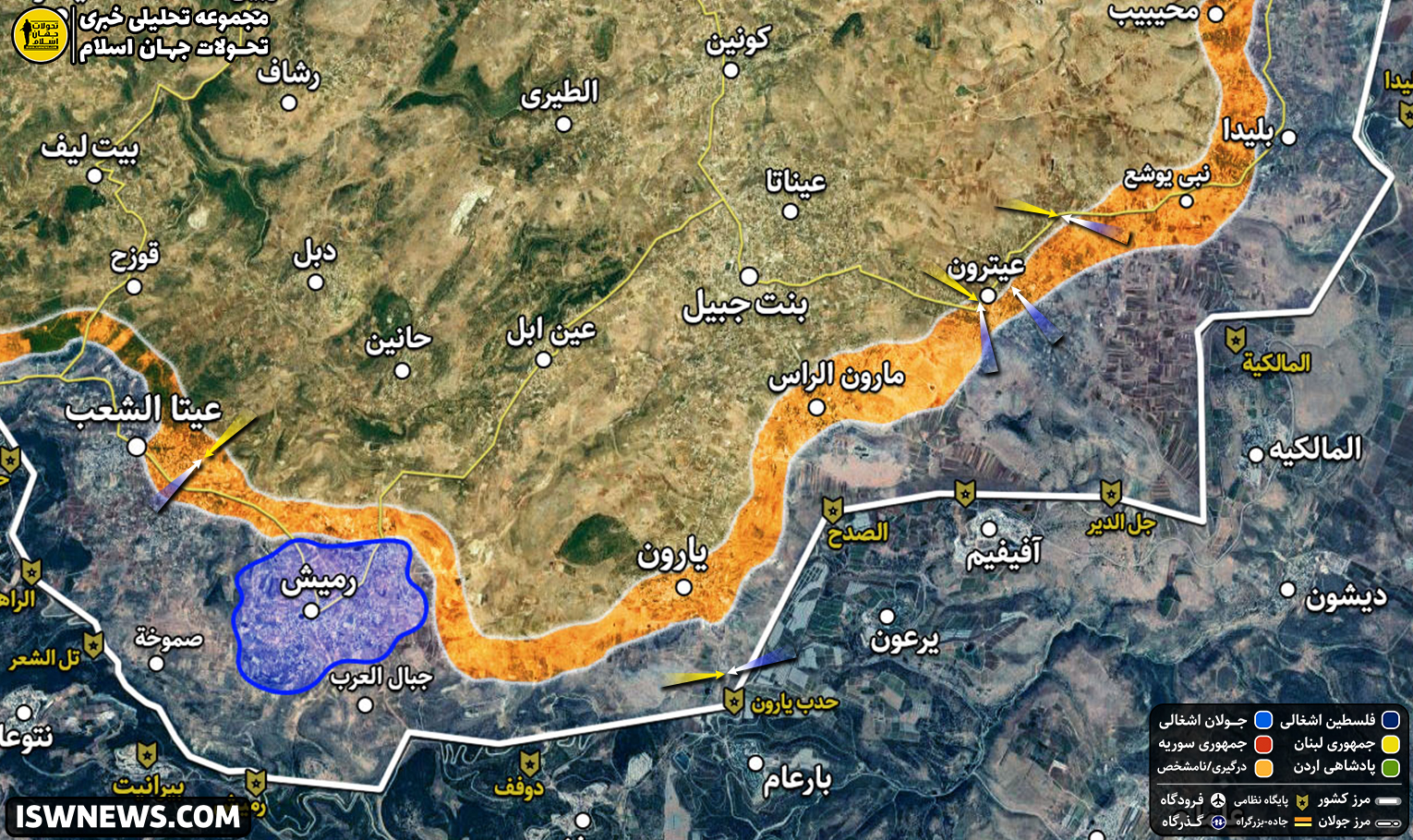
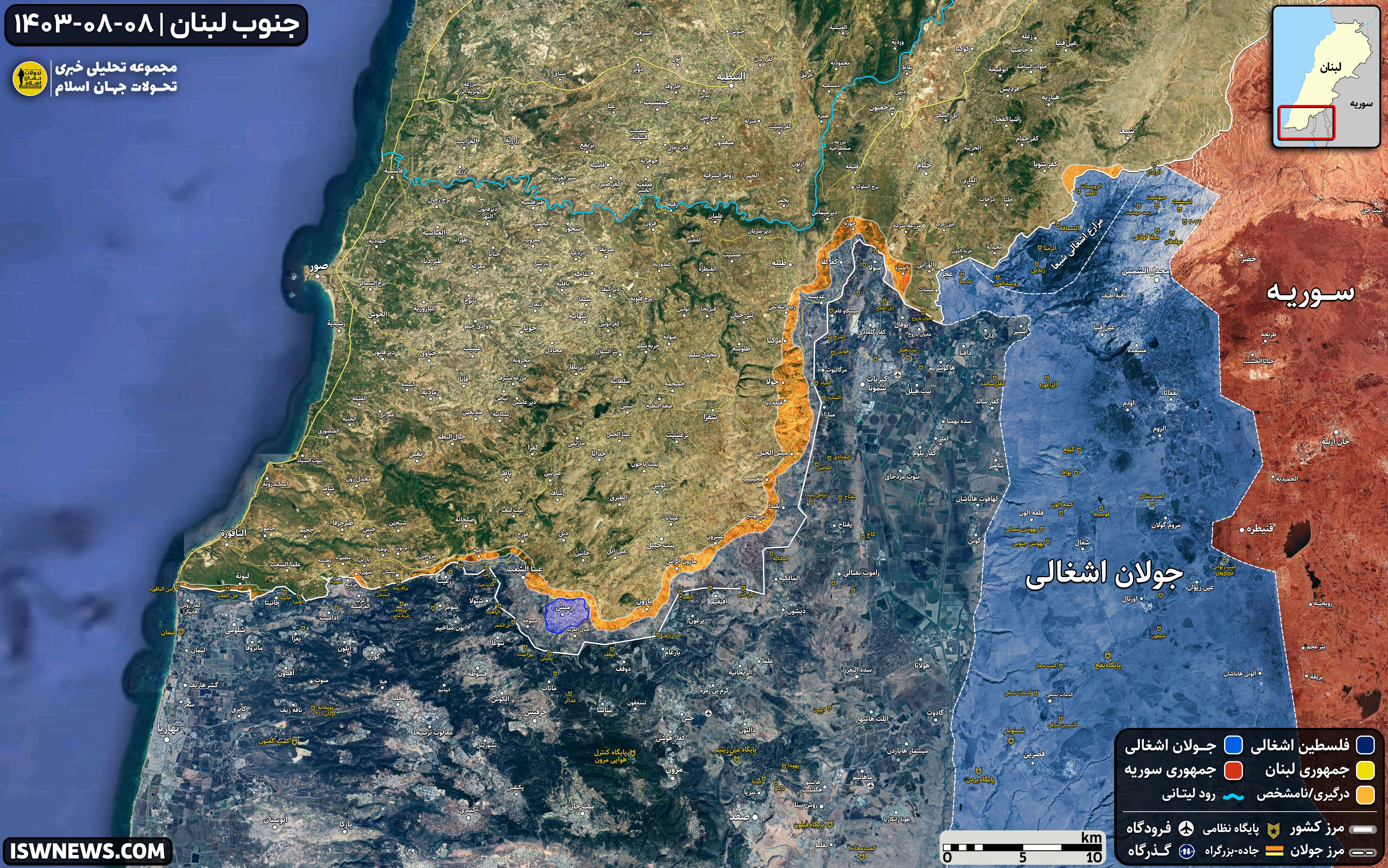
Yaroun front: The Israeli army is advancing toward the village of Yaroun from the south and the west. Intense clashes have been occurring in the Rmeish-Yaroun axis and around the stadium in the south of Yaroun since dawn today.
Yaroun village is situated south of Bint Jbeil town, and Hezbollah’s defense of this village is crucial for protecting Bint Jbeil.
The further we go, the role and influence of the betrayal of the village of Rmeish in the developments of southern Lebanon increases. Israeli forces reached the east of Aita al-Shaab through the village of Rmeish last week. Yesterday, they attacked Hanine and Ain Abel, and now they have attacked Yaroun from the Rmeish axis in order to crush Hezbollah’s resistance in the area. These developments illustrate the significance of even a village in war, showing how a betrayal can alter the course of battles!
Yaroun front – click to view full size
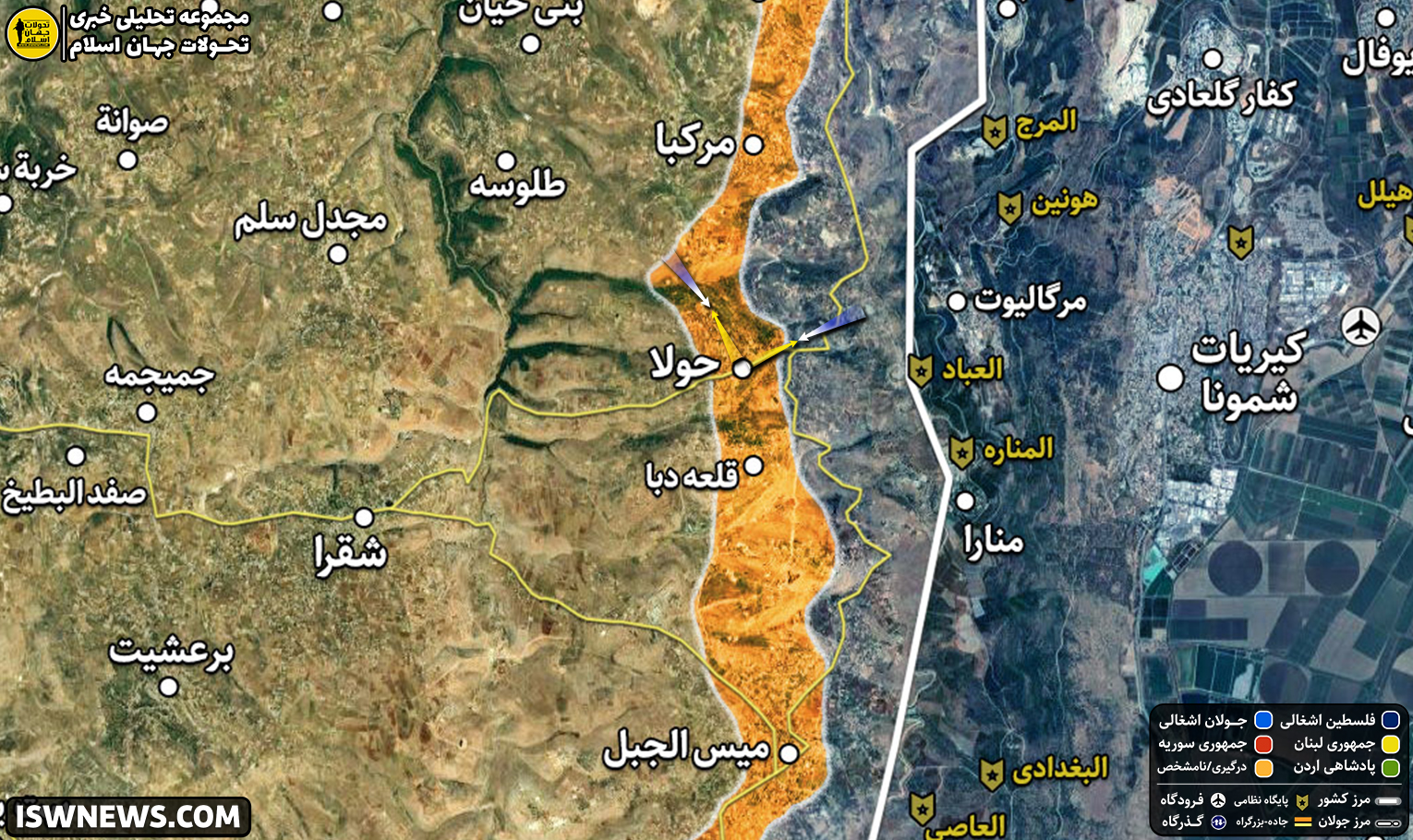
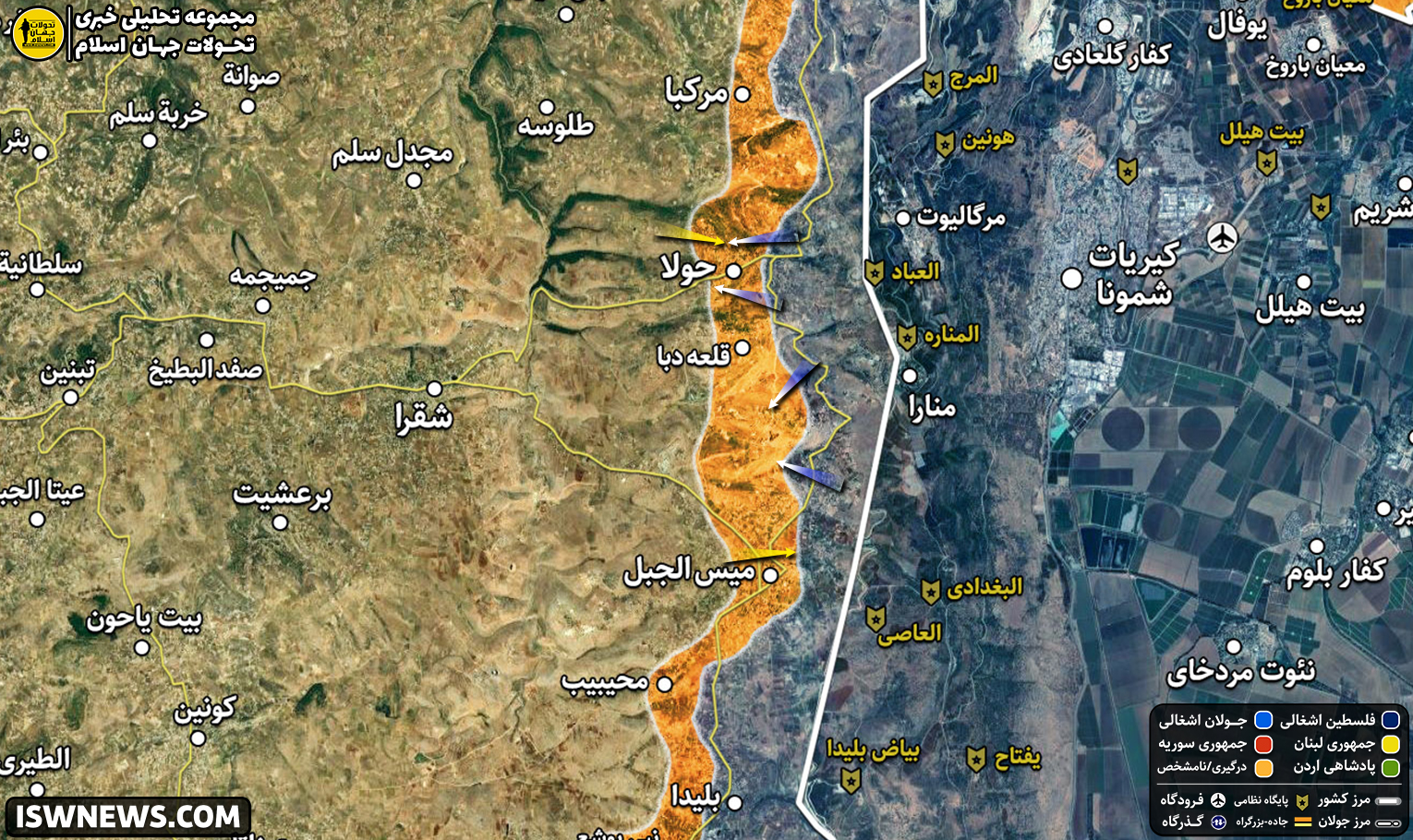
Houla front: The Israeli army continues its attacks to capture the central and western areas of Hula village. Israeli soldiers are currently advancing from the north and east towards the center and west of the village. In addition to ground combat, Hezbollah fighters are also targeting Israeli armored vehicles and troop gatherings.
Houla front – click to view full size
In a propaganda video released by the Israeli army, Israeli soldiers are seen at the eastern entrances of Houla and its northern area, firing at the walls of empty houses!! Notably, there are no Hezbollah fighters visible in the video.
The Lebanese resistance movement Hezbollah’s media has just released a video of the operation carried out earlier on Wednesday against positions of the Israeli regime’s army at the Tzrifin military base in the outskirts of the city of Tel Aviv. Hezbollah used Fateh-110 ballistic missiles during this retaliatory operation.
Hezbollah released video of missile attack on Tel Aviv
This operation is considered Hezbollah’s first ballistic missile strike against the Israeli regime’s army during the recent confrontation. Previous attacks by the Lebanese resistance movement were conducted using heavy rockets such as Fadi, Qader, Nasr, and other rockets.
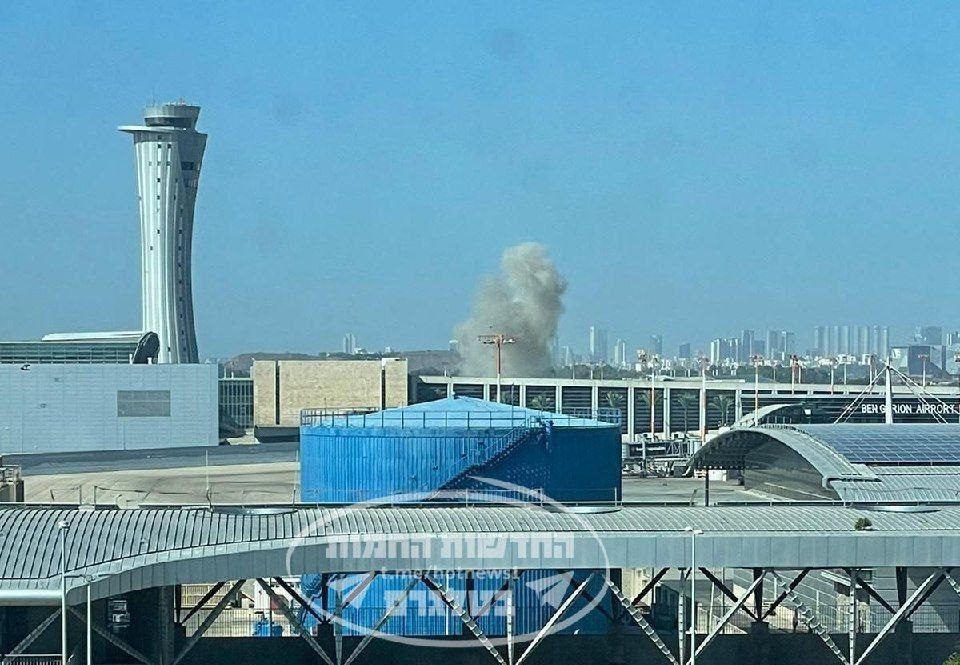
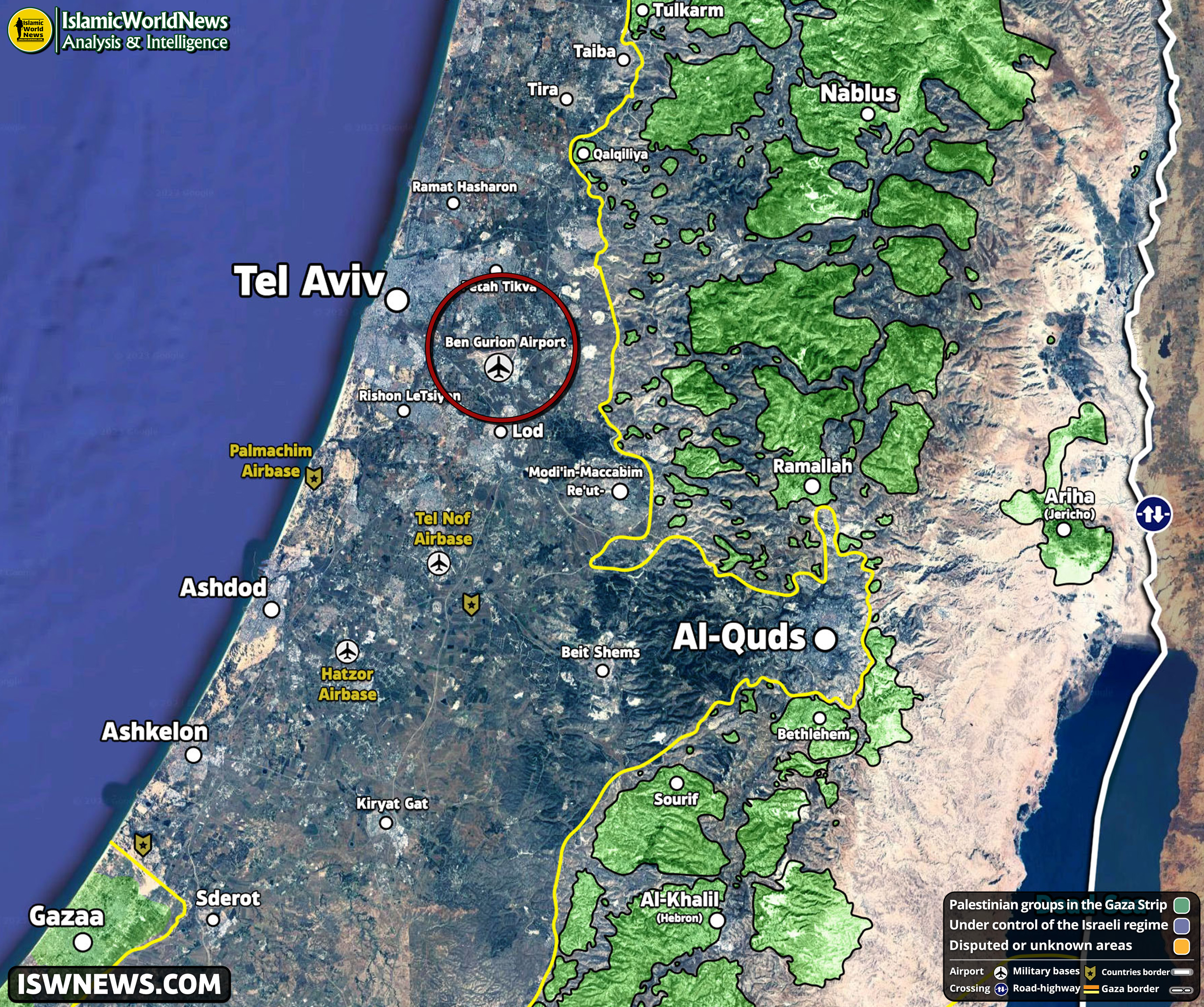
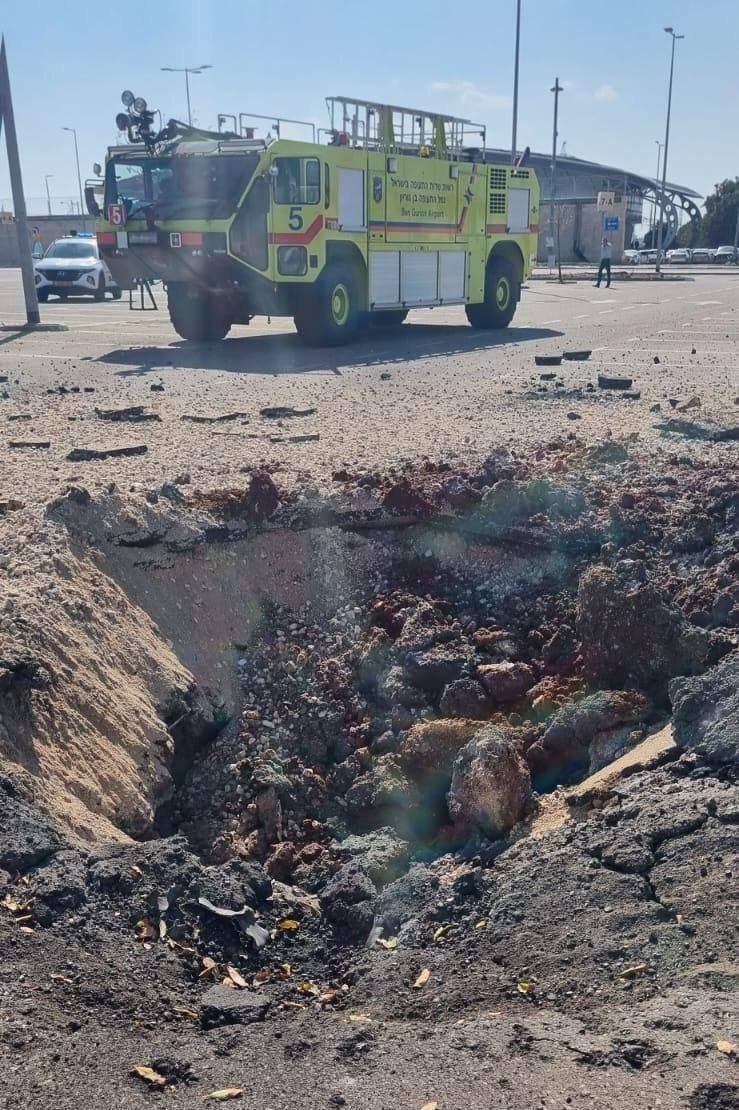
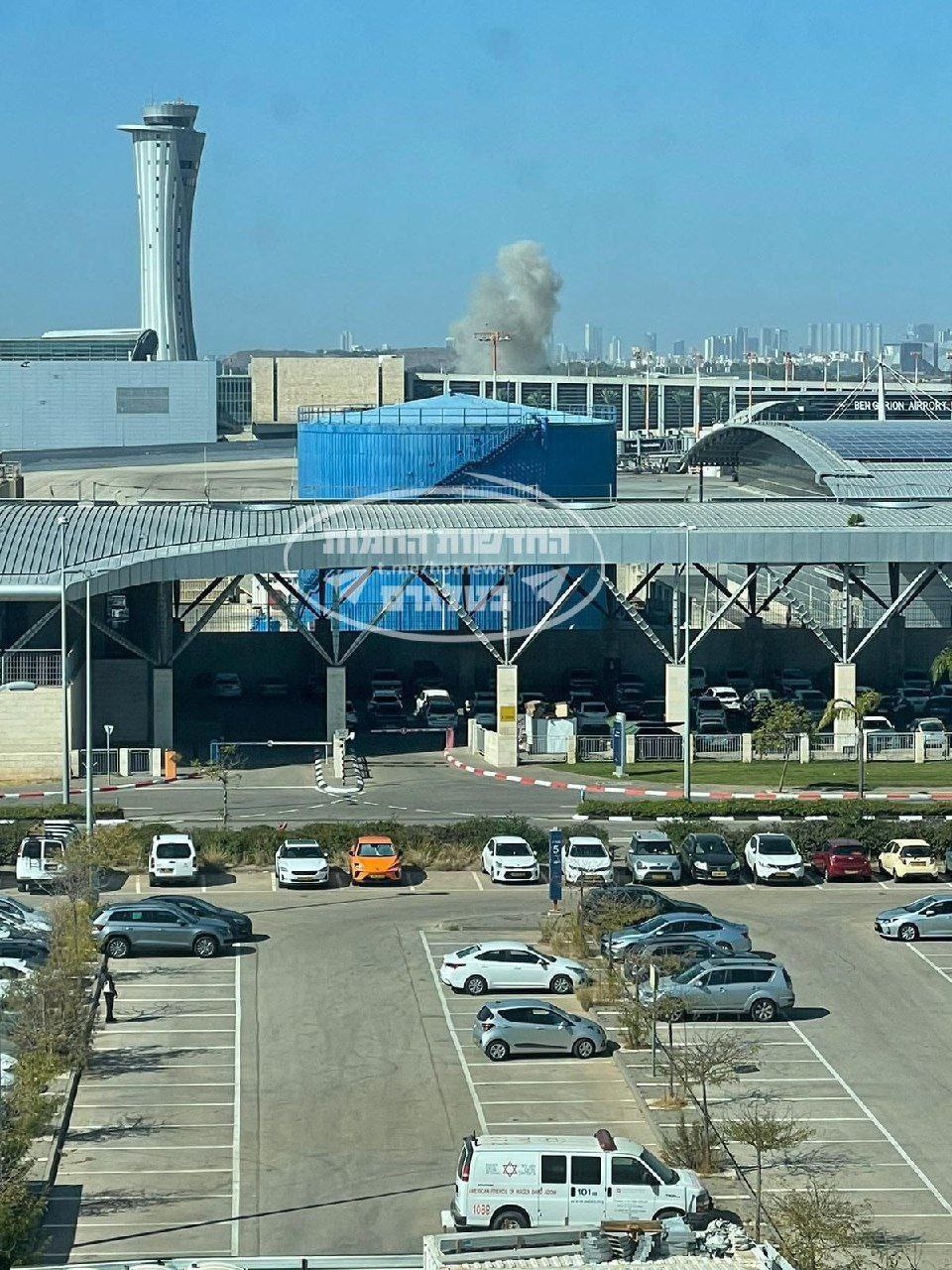
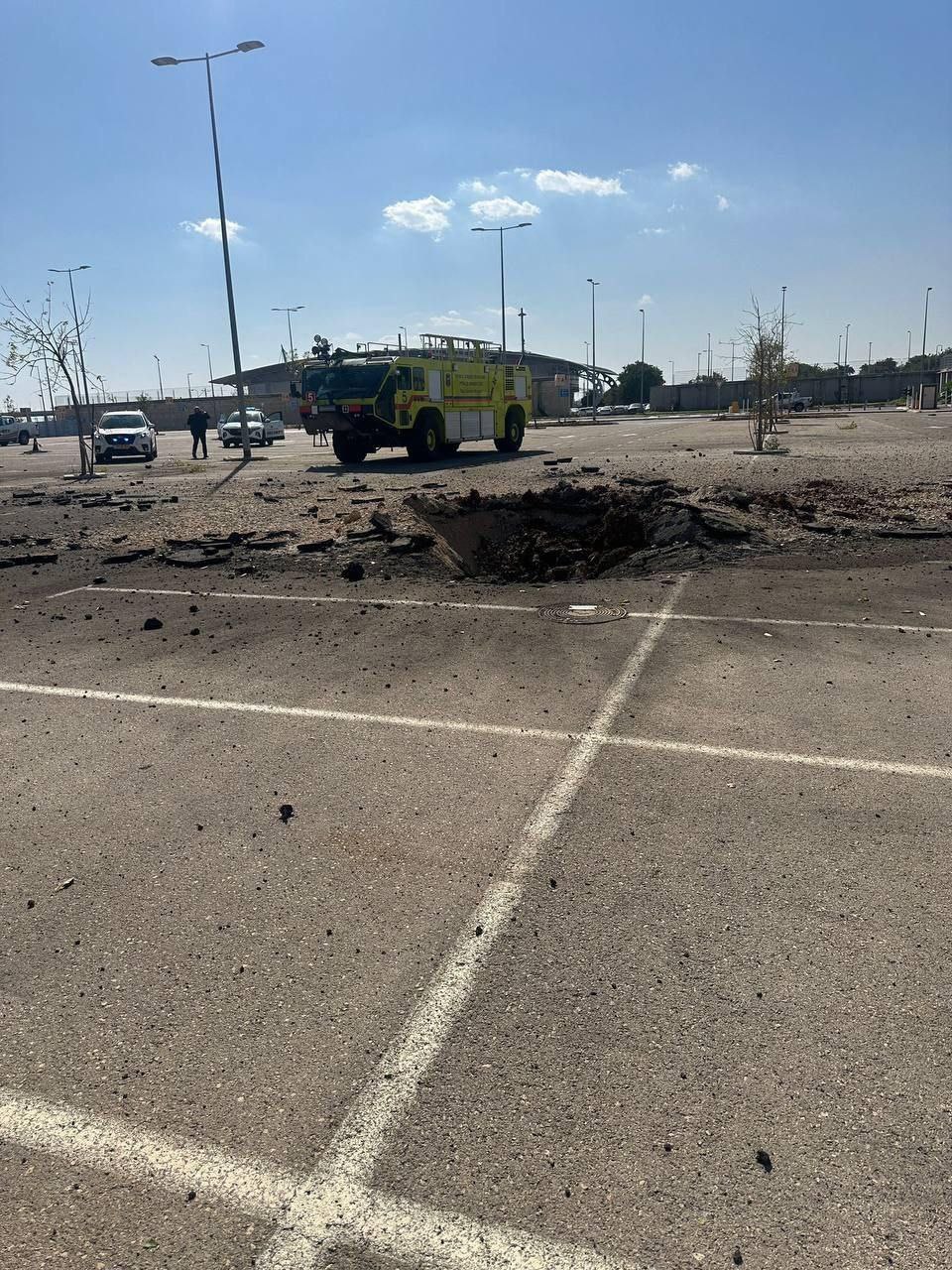
Hezbollah missile targeted Ben Gurion airport
It is said 20 Israelis were wounded in the attack.
The Fateh-110 ballistic missile is one of Iran-made short-range ballistic missiles, manufactured in various versions and in large numbers.
This missile has high accuracy and is considered a good option for striking military targets and positions of the Tel Aviv regime in the central and southern areas of occupied territories of Palestine.
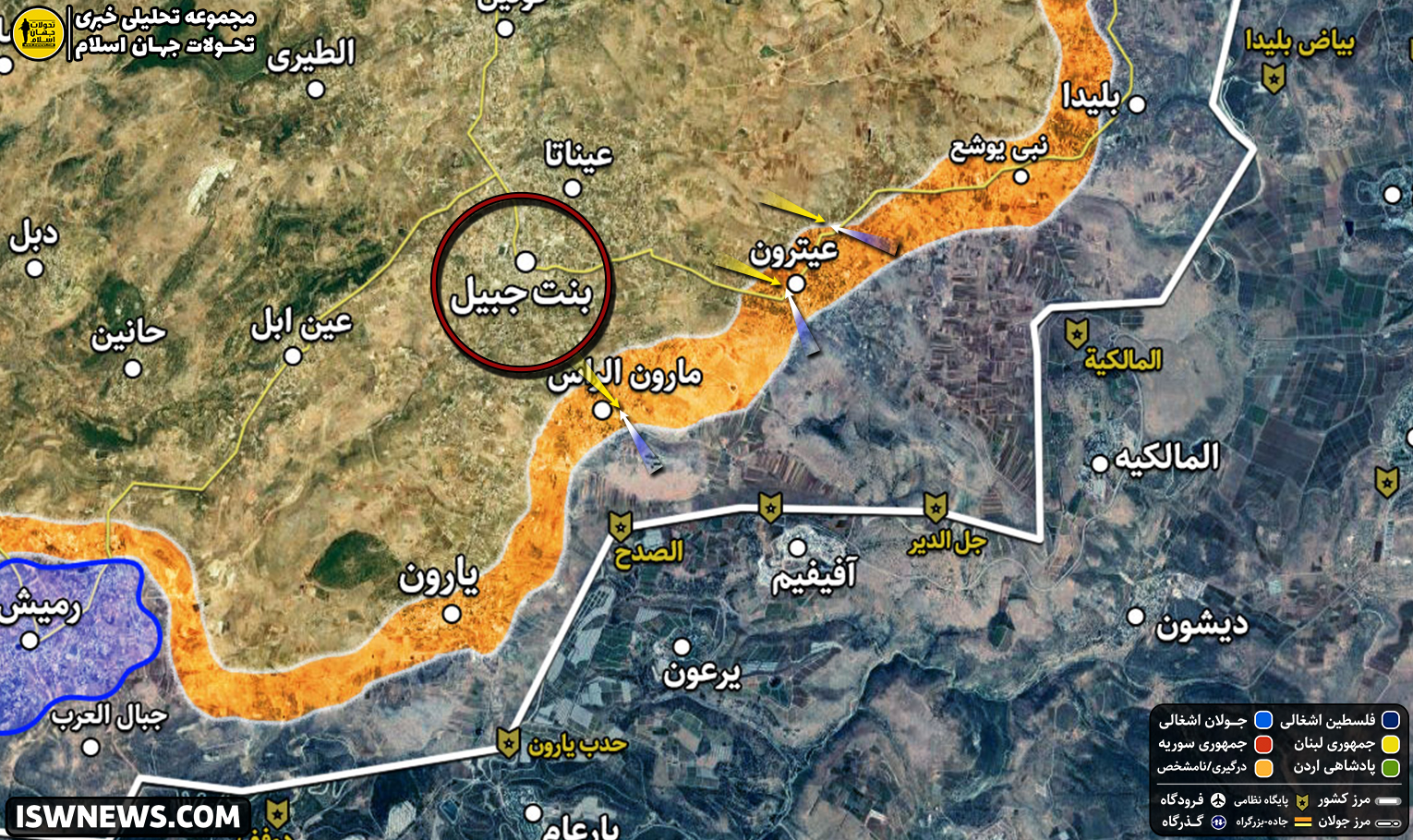
Following the increase in attacks by the 36th Brigade of the Israeli regime’s army in the Lebanese villages of Aitaroun and Maroun El-Ras over the past 48 hours, it was expected that the western front of Bint Jbeil town would also turn into a scene of confrontation between Israeli military forces and Lebanese resistance fighters.
The Israeli regime’s forces moved from Rmaych village towards the Christian village of Ain Ebel and attacked positions of the Lebanese resistance movement Hezbollah to the east and south of the village of Hanine.
Previous reports also indicated that the goal of the 36th Brigade of the Israeli regime’s army in this operation is to capture and destroy the town of Bint Jbeil.
To achieve this goal, the Israeli regime’s army needs to launch attacks from three axes: Aitaroun (east of Bint Jbeil), Maroun El-Ras (south of Bint Jbeil), and Ain Ebel (west of Bint Jbeil).
Ain Ebel is a Christian village, and there is a high possibility that its residents will act in a similar manner to those in Rmaych during the confrontation.
However, Hezbollah is present in the village of Hanine, which makes the situation in this axis different from that of Rmaych, and the betrayal of the Christians may not have a significant impact on the developments of the ongoing war.
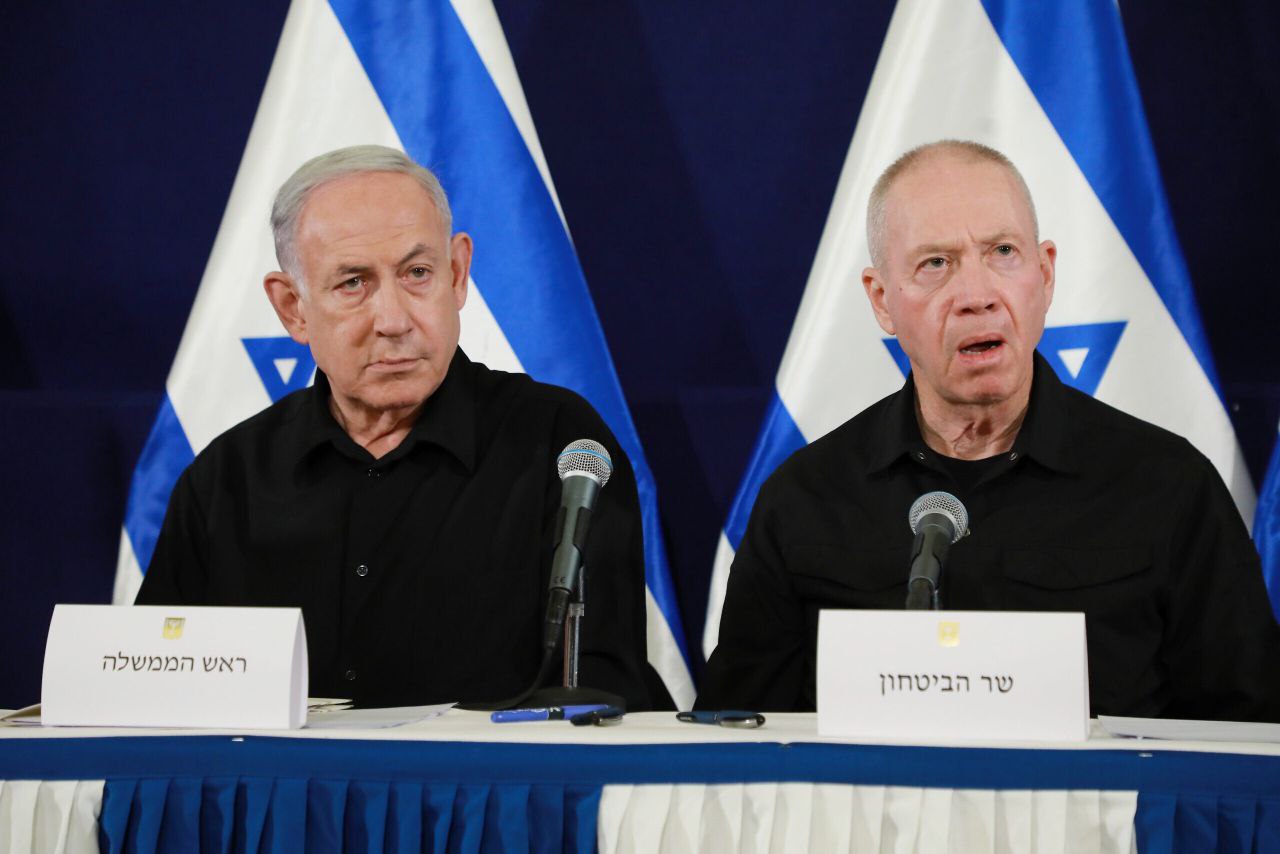
On November 5, Prime Minister of the Zionist regime Benjamin Netanyahu removed his War Minister Yoav Gallant.
Following Gallant’s dismissal, Netanyahu introduced current Foreign Minister Israel Katz as the new War Minister. Gideon Sa’ar was also appointed as the new foreign minister.
In a press conference announcing Gallant’s removal, Netanyahu emphasized the necessity of complete trust between the prime minister and the war minister, stating that the crisis of distrust between him and Gallant made the continuation of the war in the current manner impossible.
Gallant’s dismissal has caused various reactions among Netanyahu’s supporters and opponents. Families of Israeli captives in Gaza, reacting to Gallant’s removal, described it as another step by Netanyahu to thwart any efforts to reach a prisoner exchange agreement with the Palestinian resistance Hamas.
Minister of Security of the Israeli regime Itamar Ben Gvir congratulated Netanyahu on Gallant’s dismissal, asserting that there was no possibility of achieving a complete victory in the war with Gallant in charge.
This decision had been made months ago due to disagreements between Netanyahu and Gallant, but it had not been implemented due to the Biden administration’s support for Gallant. The timing of Gallant’s dismissal, coinciding with the US presidential elections, indicates Netanyahu’s hope for Donald Trump’s victory.
The Israeli regime’s TV network, Channel 12, reported on Tuesday about the Israel-Lebanon ceasefire negotiations mediated by the United States, claiming that if a ceasefire is not achieved, the Israeli regime’s army intends to intensify ground and aerial operations in Lebanon and exert more pressure on the southern areas of the Arab country in order to dismantle the Lebanese resistance movement Hezbollah’s second line of defense.
Additionally, the TV channel claimed that the Tel Aviv regime will prevent Lebanese residents from returning to border areas until the Israeli settlers of northern occupied Palestine can safely return to their settlements. According to this report, the regime’s army will allegedly maintain a significant presence along the Lebanese border even after a ceasefire is established.
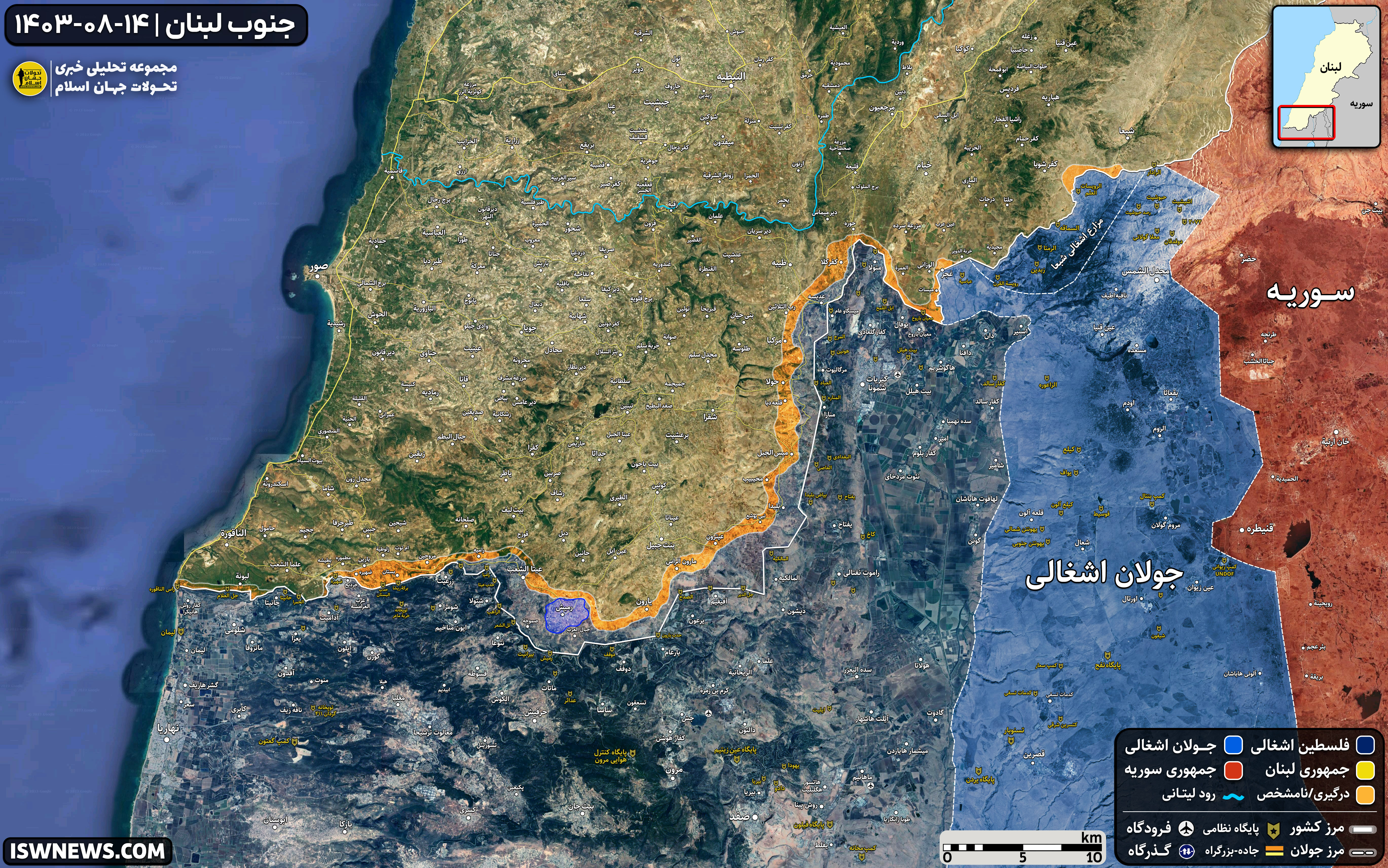
Given the aforementioned conditions, a ceasefire on the southern Lebanon-northern Palestine front will certainly not take shape. The disconnection of Hezbollah from Palestinian resistance, establishing a ceasefire in the northern front without regard for Gaza, and retreating to the north of the Litani River are all factors that would undermine Hezbollah’s authority in Lebanon and its objectives in supporting the Gaza resistance.
Accepting any of these conditions without receiving reciprocal concessions would signify a defeat for Hezbollah.
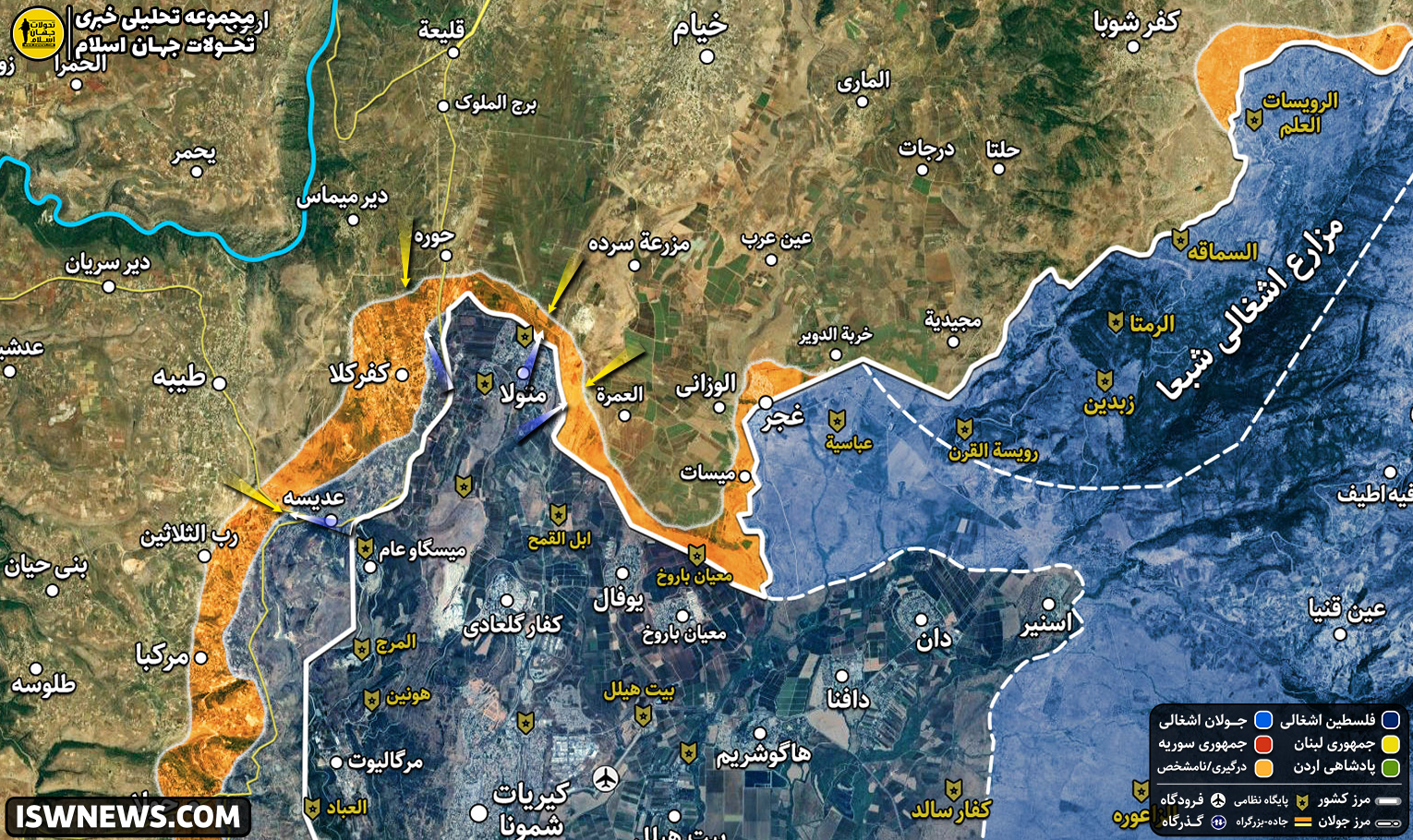
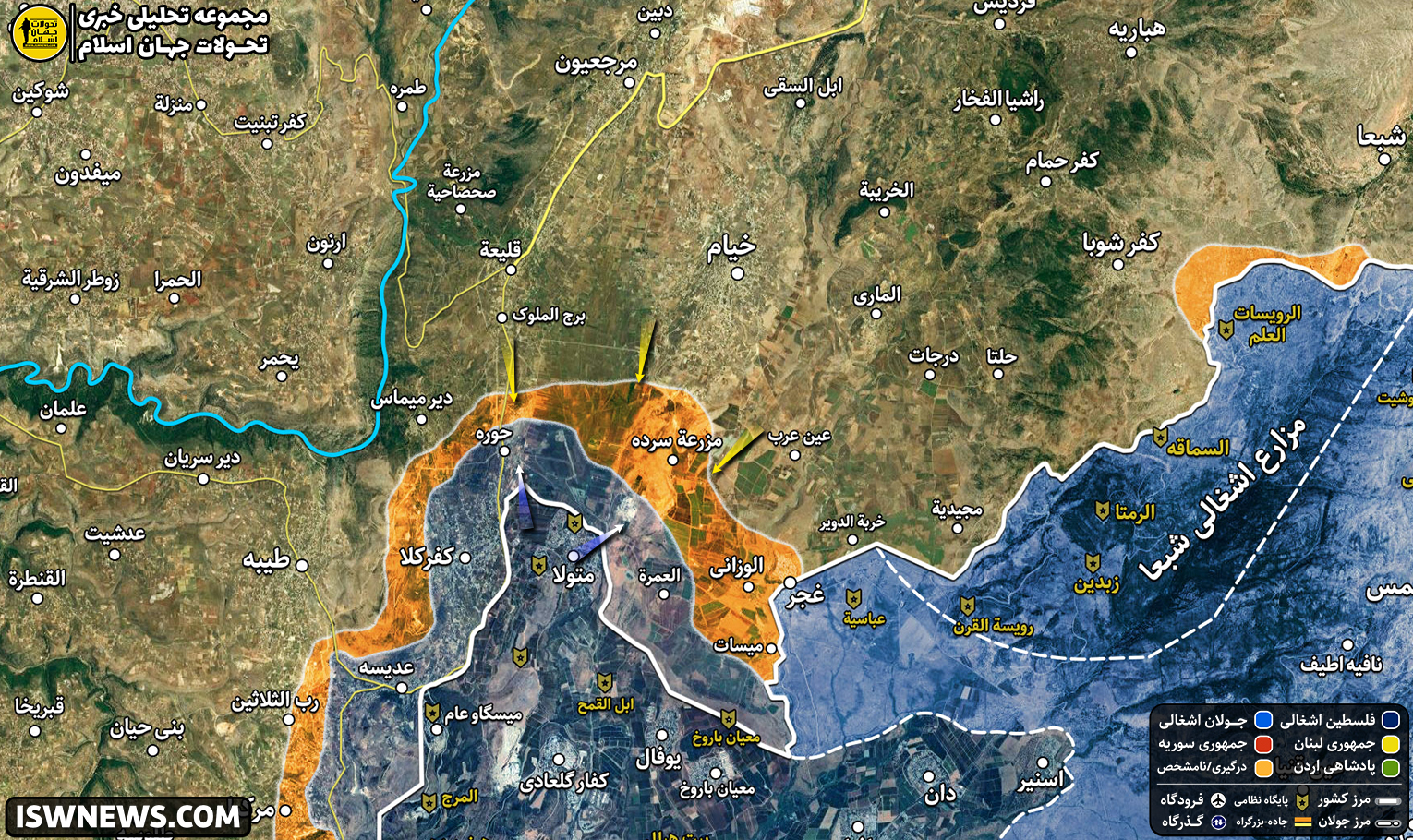
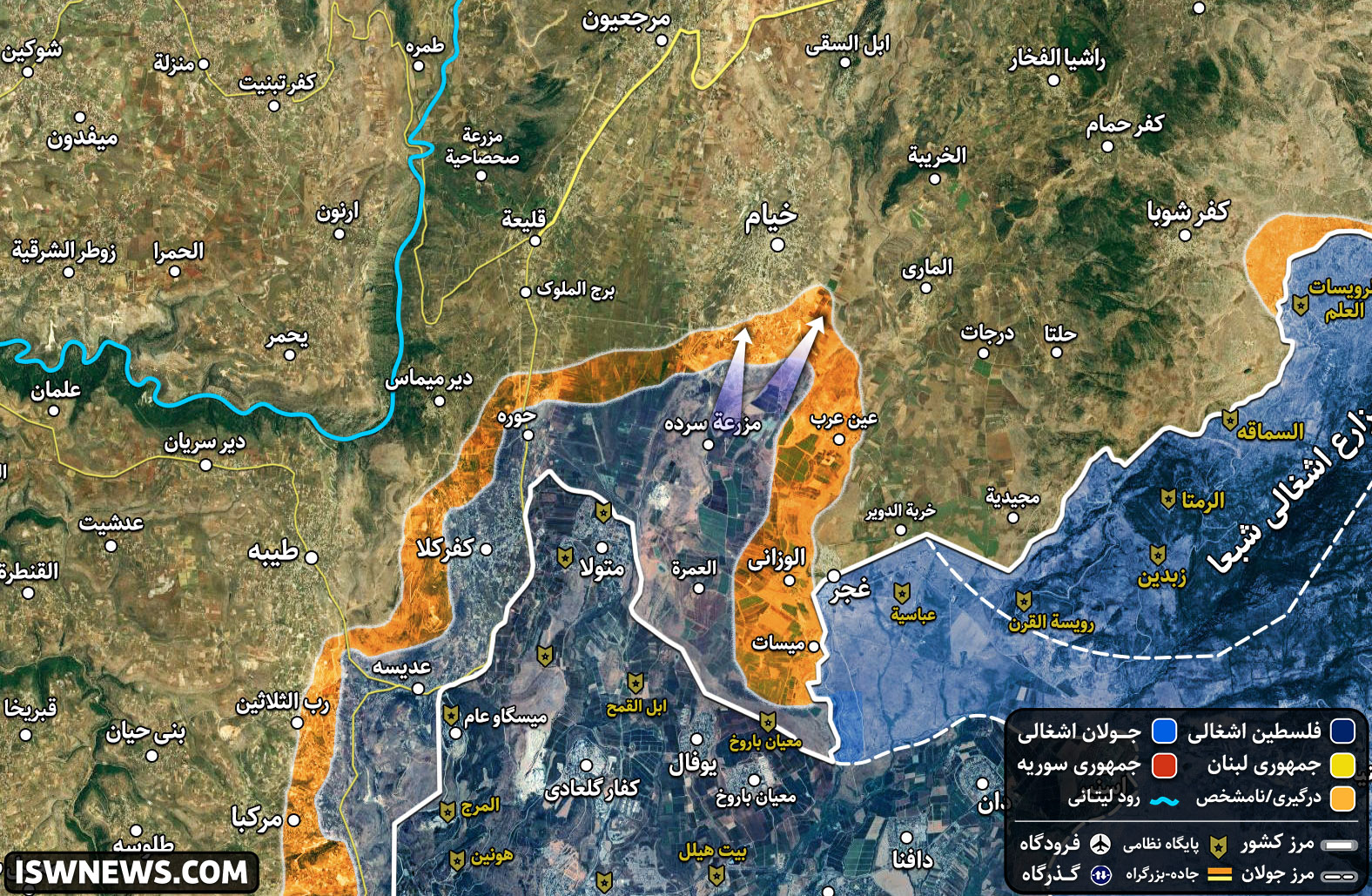
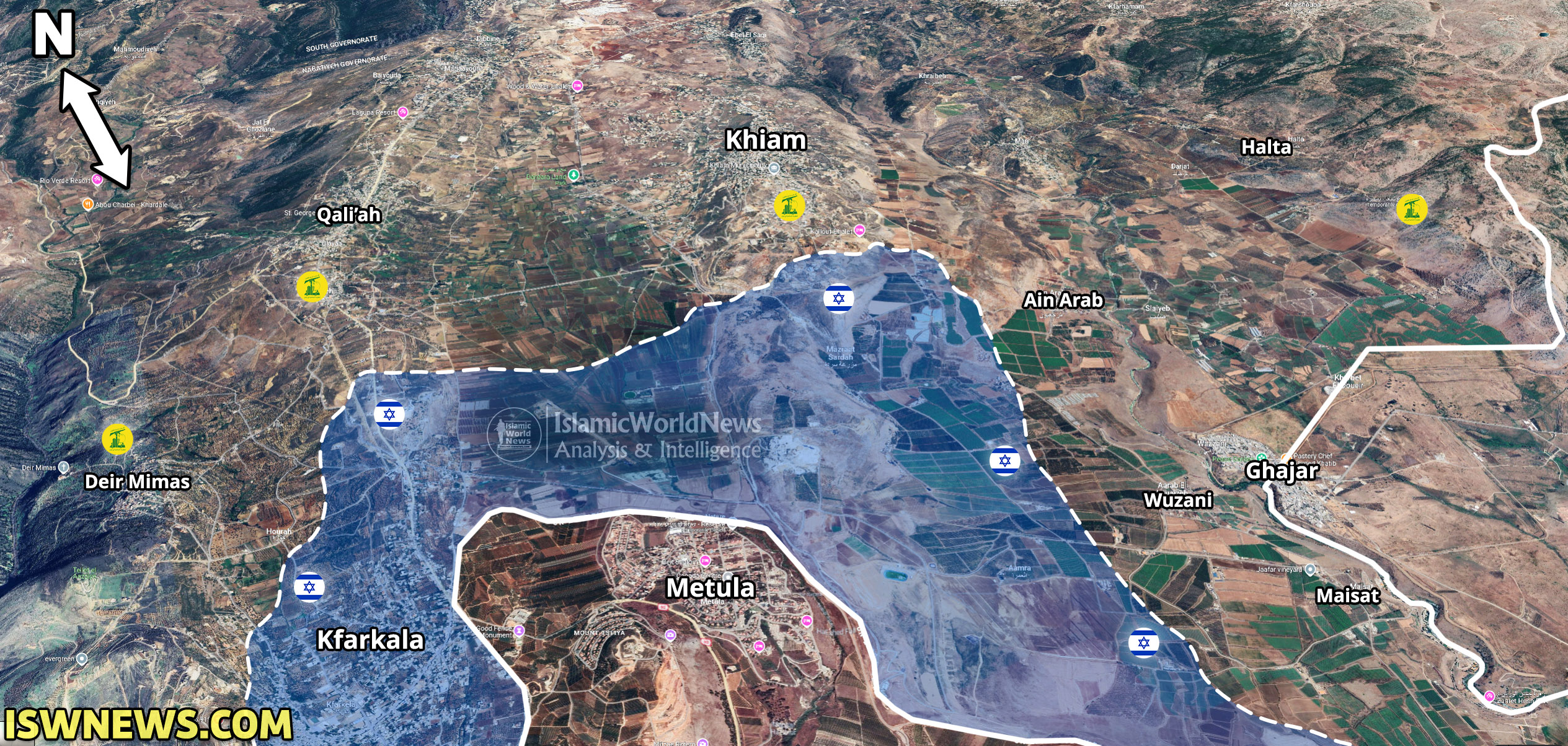
Northern Front Metula: The Israeli regime’s army, after retreating from the southern axis of the al-Khiam town on November 2, withdrew its military equipment and tanks from the Sarda Farms, al-Hamamis area, and the villages of al-Wuzzani and al-Omra, and retreated to the town of Metula. Thus, the regime’s army suffered its first military defeat in the southern Lebanon axis and completely failed in controlling and demolishing al-Khiam.
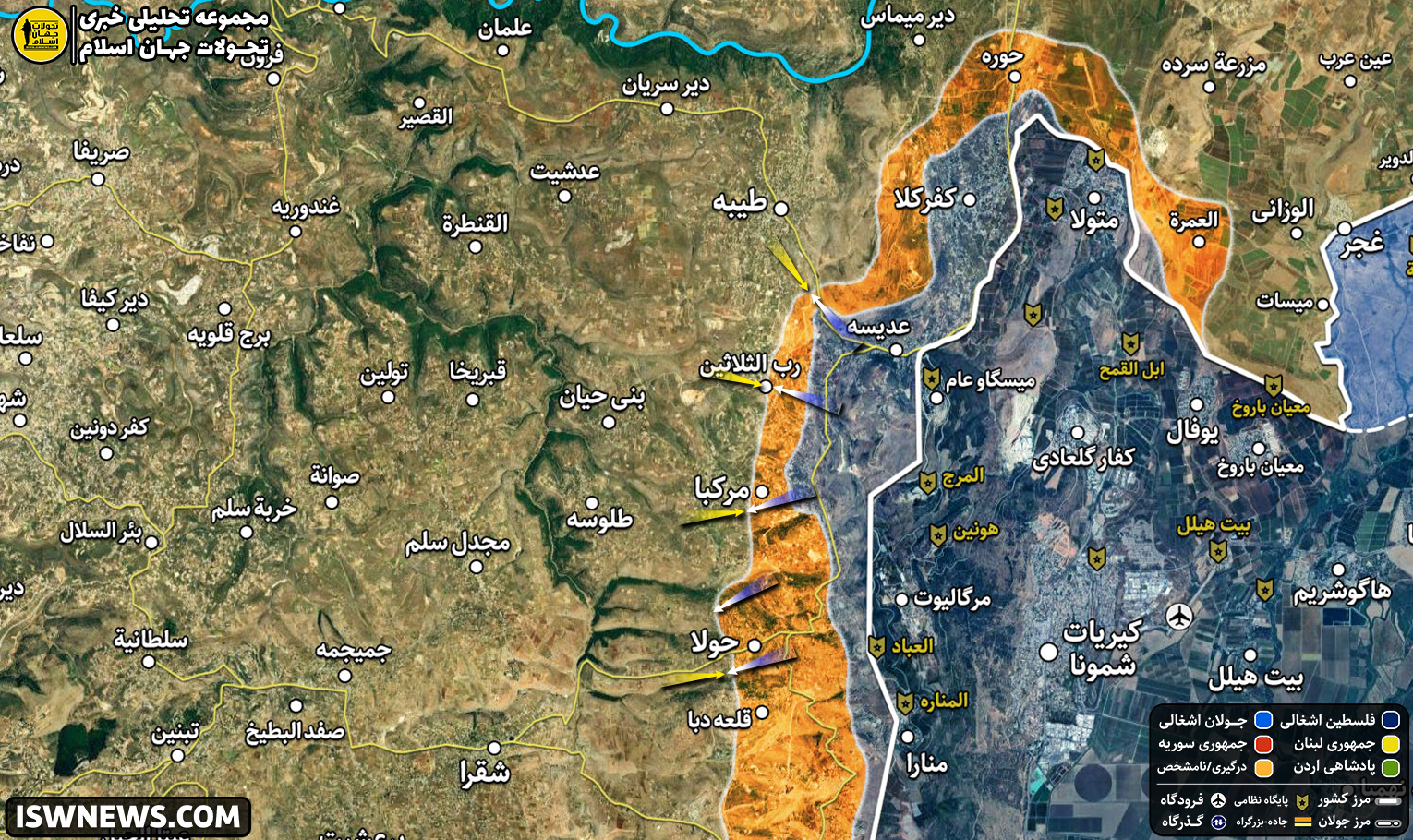
Despite this withdrawal, the presence and patrols of Israeli troops in the village of Kfar Kila continue to ensure the security of Israeli army movements on the road from al-Udaysah village towards Taibeh and Rab El Thalathine villages.
In the Taibeh, Rab El Thalathine, as well as Markaba villages, there has been no change in the conflict zones, and the last Israeli attacks to enter Taibeh and Rab El Thalathine in the eastern axis of these areas doomed to failure. The Lebanese resistance movement Hezbollah holds a favorable upper hand in the face of the Israeli regime’s army in the east of these regions, making it easy to monitor and target Israeli military forces’ movements and gatherings.
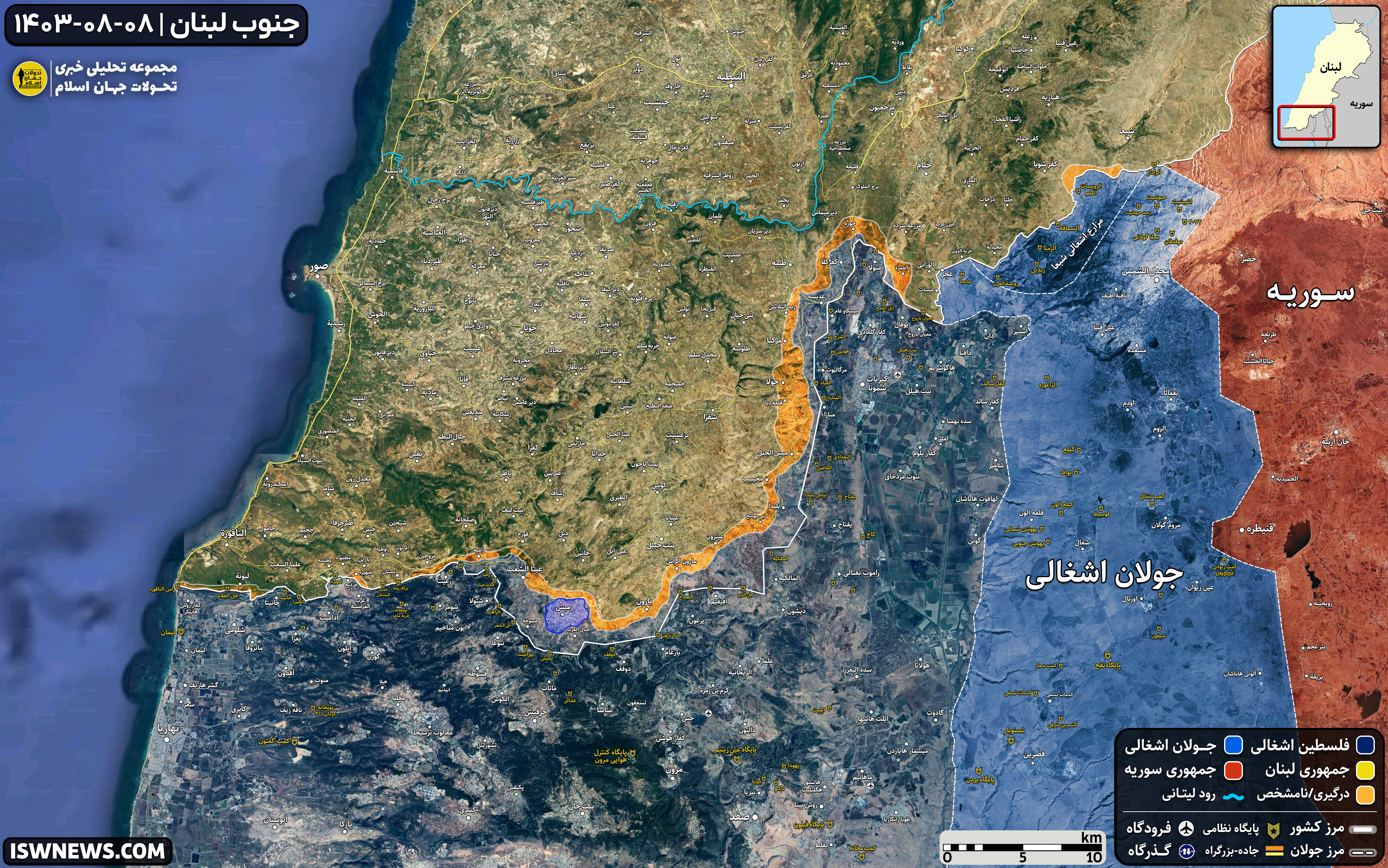
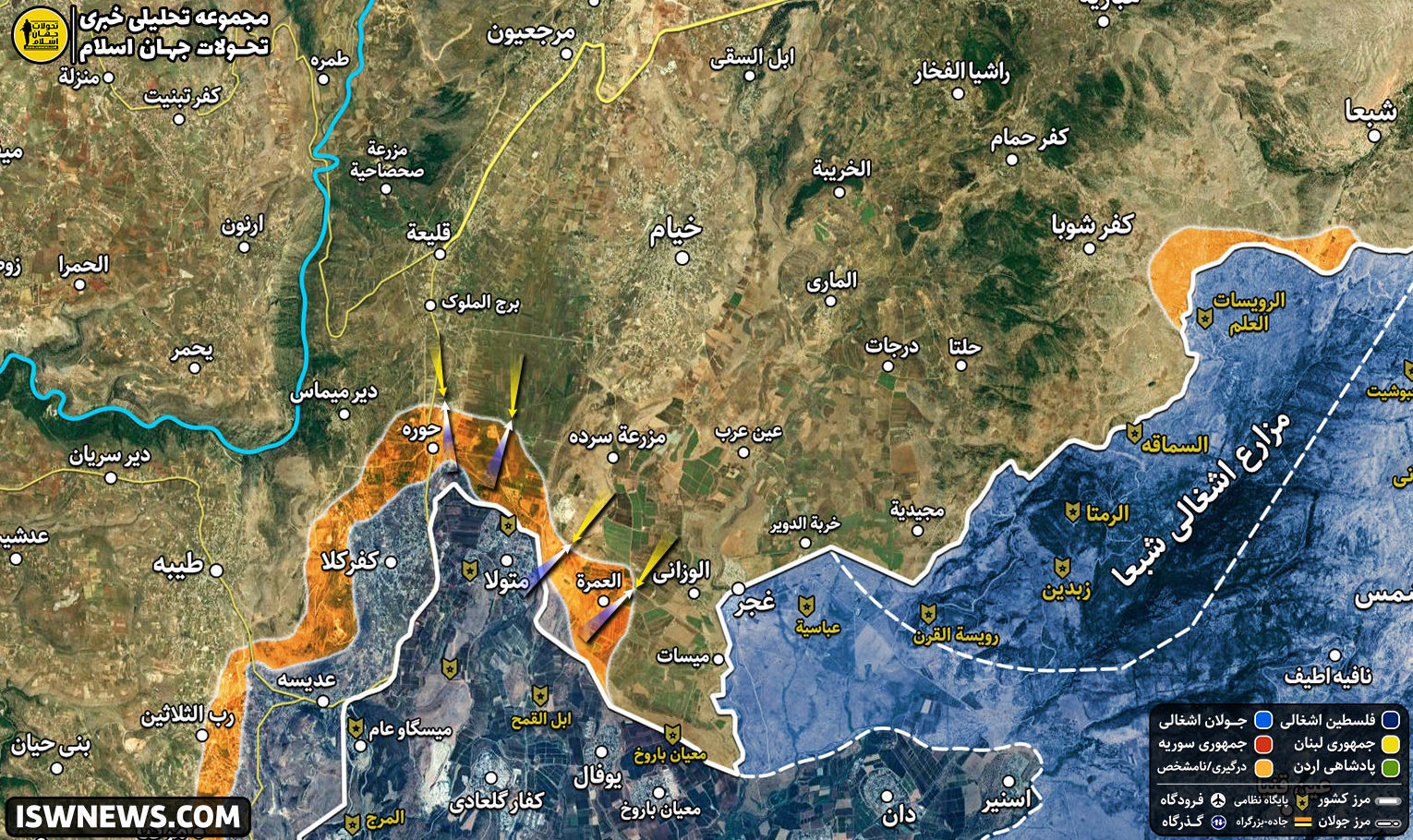
Latest military situation of Metula and Udaysah Front – click to view in full size
Houla-Meiss El Jabal Front:
In the past 48 hours, the Israeli regime’s army carried out numerous attacks to demolish residential buildings east of the village of Houla. Hezbollah countered some of these measures, launching rocket attacks on Israeli troops’ gatherings in Tal al-Khazan district and targeting two bulldozers, which were busy to demolish buildings, that led to inflicting destruction or damage on them.
Currently, the Israeli regime’s army has advanced to the eastern half of the village of Houla, completely devastating the residential areas of the village in the east of the Marjayoun-Bint Jbeil Road. Israeli military forces have also moved towards the northern areas of the town of Meiss El-Jabal, reaching near the Meiss El-Jabal hospital. It is likely that the regime’s army will move towards the northern areas of Meiss El-Jabal after demolishing the hospital and surrounding buildings.
Latest military situation of Houla and Meis al-Jabal Front – click to view in full size
Aitaroun-Maroun El-Ras Front:
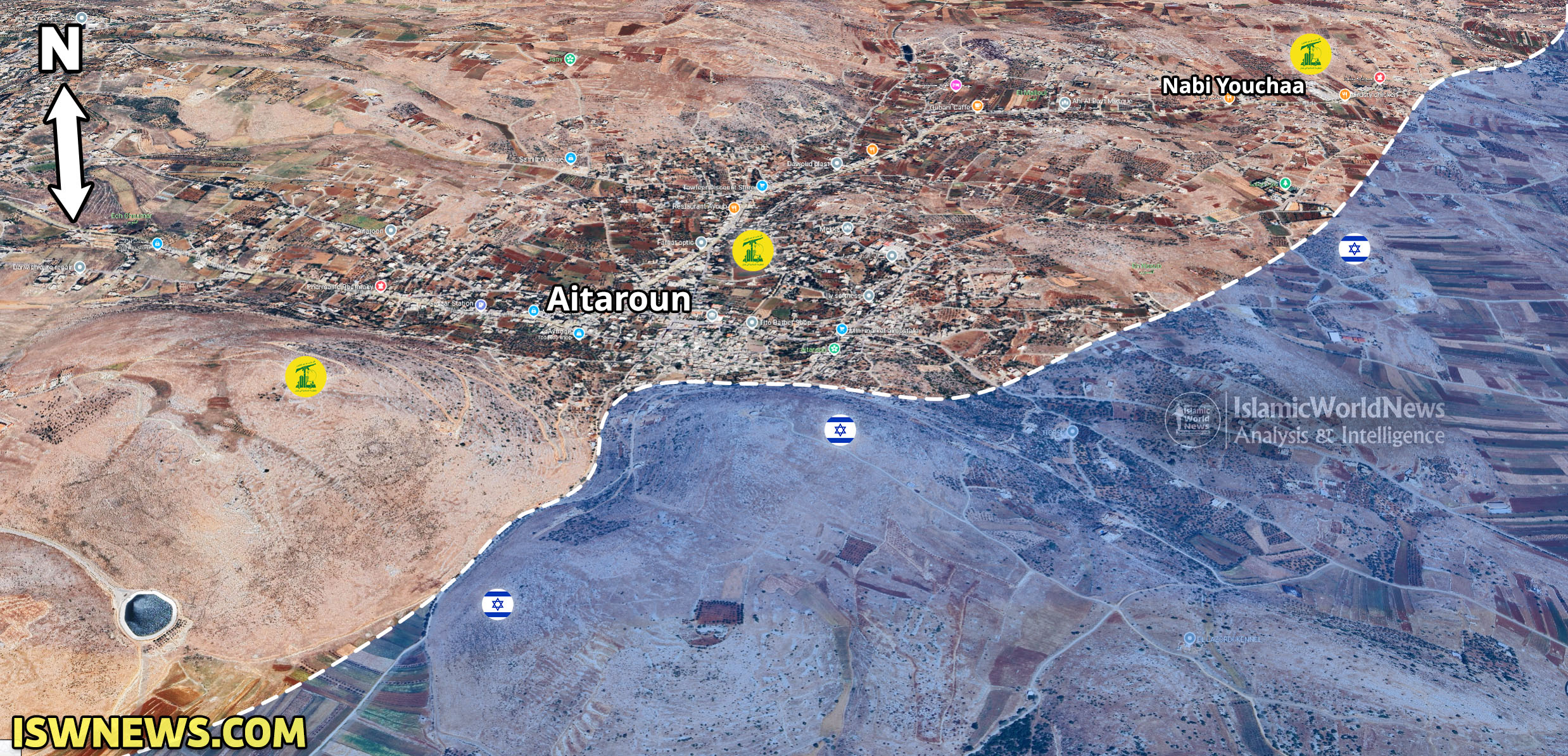
Despite the ongoing airstrikes by the Israeli regime’s army, the efforts of the 36th Brigade of the regime’s army to penetrate deep into the villages of Aitaroun and Maroun El-Ras have not been successful, with clashes concentrated in the eastern and southern outskirts of Aitaroun and the southern half of Maroun El-Ras. The main objective of the Israeli regime in attacking this axis is to reach and destroy the town of Bint Jbeil, which is the southernmost city in the Nabatieh Governorate.
Latest military situation of Aitaroun and Maroun al-Ras Front – click to view in full size
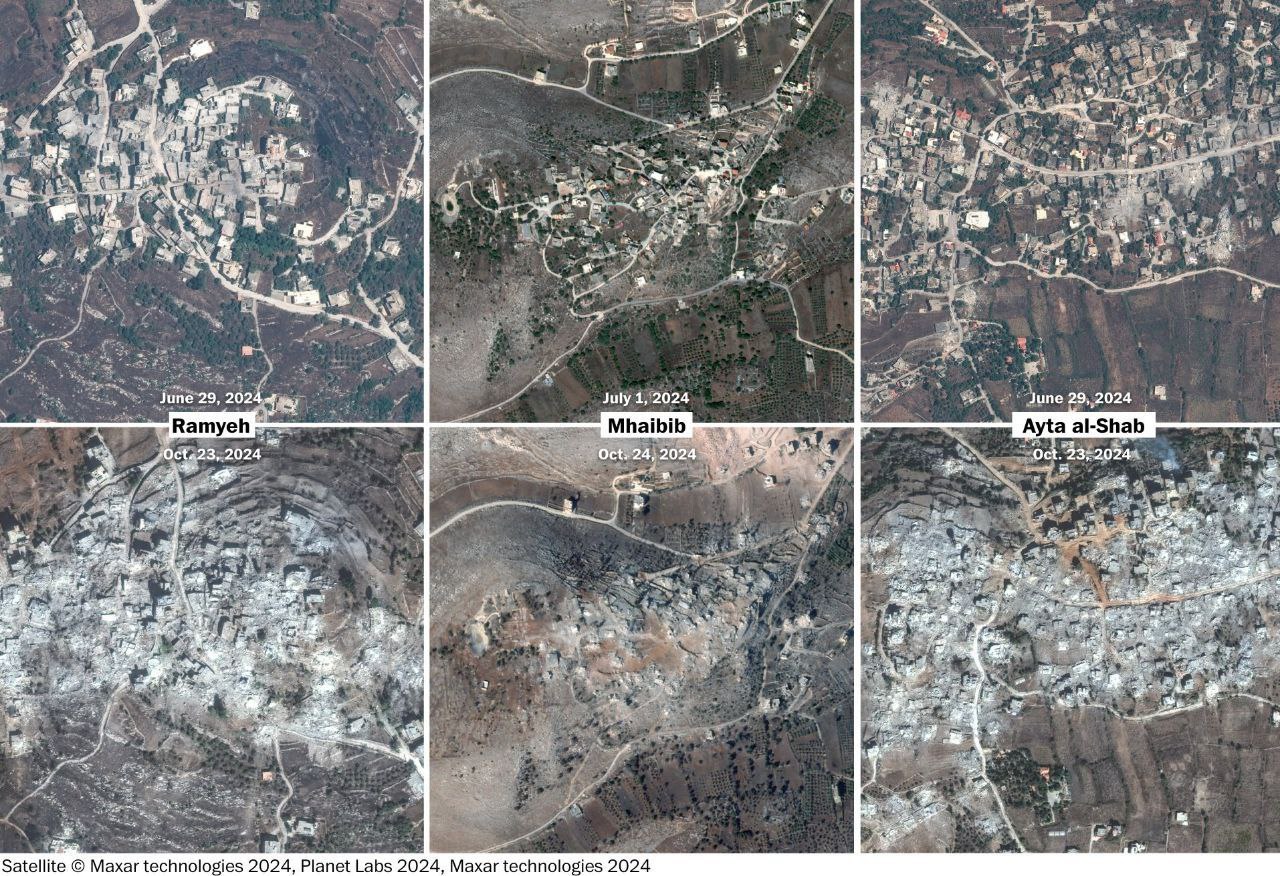
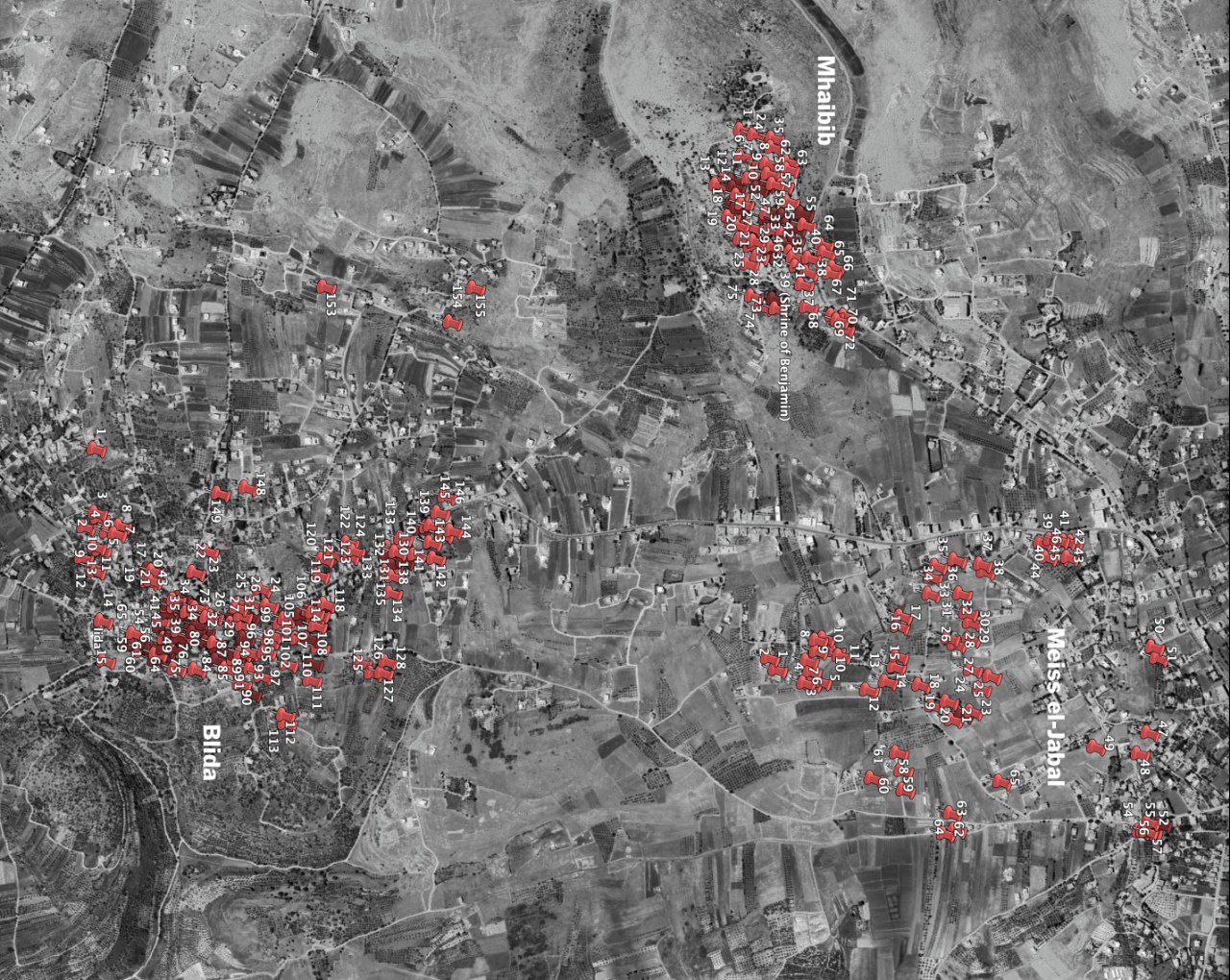
According to satellite images, at least 5,868 residential buildings have been destroyed across the border villages of Lebanon, with 80% of these buildings demolished since the onset of the Israeli army’s extensive offensive on October 1. In some areas, such as the villages of Ayta ash Shab and Kfar Kila, nearly half of all buildings have been destroyed. Many village centers have been demolished, and the majority of the destruction has occurred through controlled explosions following a widespread wave of airstrikes.
Satellite image of the situation before and after the war in the villages of Aita Shaab, Mhaibib and Ramieh
Since the start of the ground offensive in southern Lebanon, the Israeli regime’s army has destroyed most of the buildings in the towns and villages of al-Adaysah, Kfar Kila, Houla, Meiss El-Jabal, Mhaibib, Blida, Yaroun, Ayta ash Shab, Ramyeh, Marwahin, Umm al-Tut, and Al Dhahirah.
The extensive invasion of the Israeli regime’s army against Lebanon began to intensify after the assassination of Secretary-General of Hezbollah Sayyed Hassan Nasrallah, and the regime’s military has kicked off a ground phase with operations along the southern borders of Lebanon since October 1.
These assaults have so far resulted in the martyrdom of 3,002 Lebanese civilians and injuries to 13,492 others, as well as the martyrdom of over 500 Hezbollah fighters. On the other side, more than 90 Israeli troops, have been killed in Hezbollah’s retaliatory strikes on northern occupied Palestine.
An extensive strike by the Israeli regime’s army to occupy al-Khiam town in southeastern Lebanon ended up in a failure.
According to local media reports in Lebanon, following five days of confrontations and attempts to enter al-Khiam, the Israeli regime’s army retreated from this front and halted its assaults on this important town.
The conflicts in the al-Khiam front, like other fronts in southern Lebanon, were accompanied by air and artillery strikes from the Tel Aviv regime’s military. However, the geographical position of this region and the Lebanese resistance movement Hezbollah’s determination to defend it forced the Israeli military forces to temporarily cease their assault on the town.
Prior to halting the military operations against al-Khiam, the Israeli forces conducted air bombardments and fired incendiary phosphorus bombs towards the central and southern areas of al-Khiam.
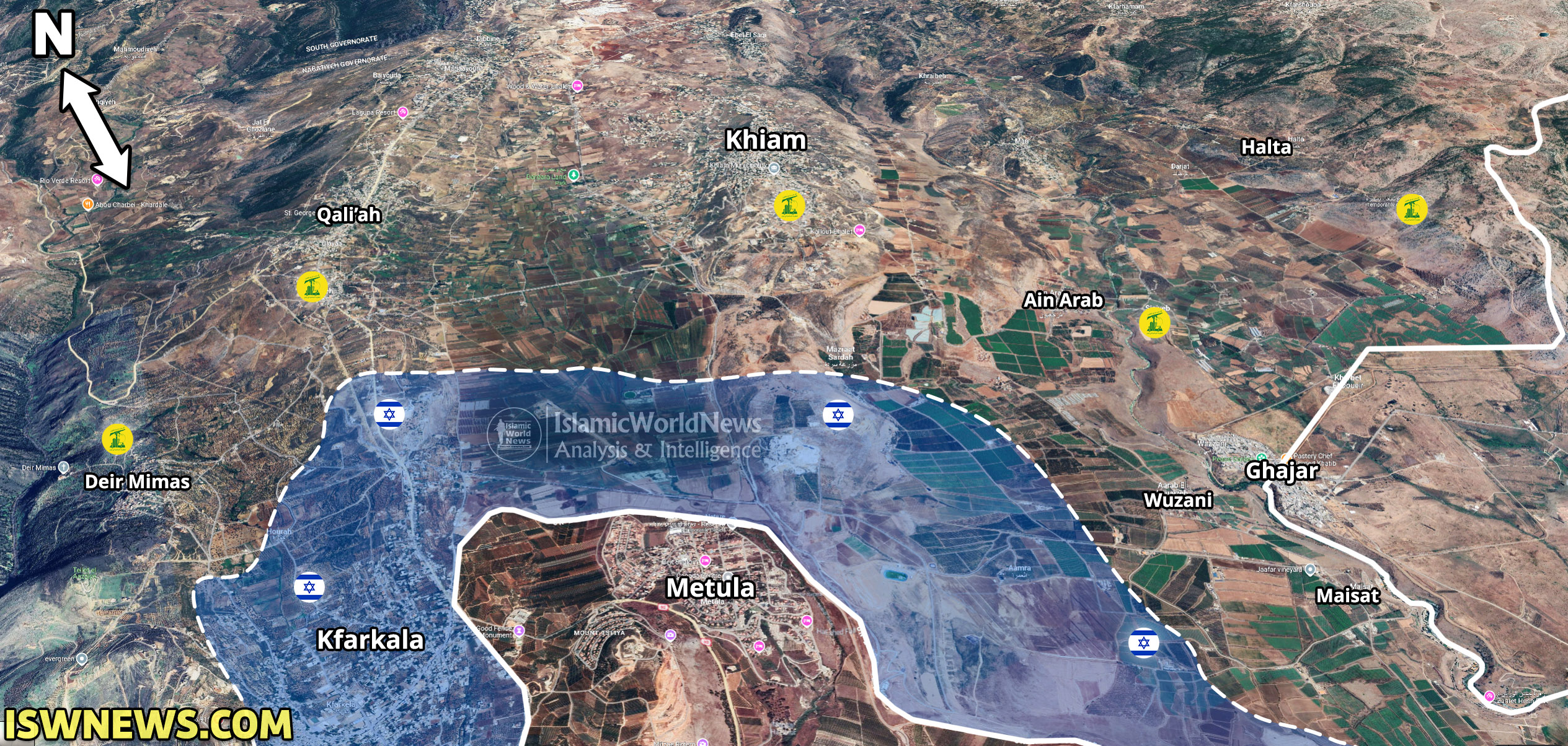
Al-Khiam town overlooks the surrounding lands and is well-positioned to repel ground assaults. By deploying anti-tank missiles and rockets in this area and other heights, Hezbollah can easily monitor the Israeli army’s ground movements in the open lands on both sides of al-Khiam and carry out attacks on them in locations such as Sarda Farms, Al-Amara, northern Kfarkala, and other areas.
Military situation in the Khiam area
Perhaps the main reason for this retreat is this very issue, as Israeli commanders might have decided to withdraw from al-Khiam to protect their tanks and bulldozers from Hezbollah’s anti-tank missiles and to prevent heavy troops casualties. Indeed, the Lebanese resistance movement’s strikes in recent days have inflicted significant losses on the Israeli regime’s army.
The Tel Aviv regime also failed to dominate al-Khiam town during the 33-day war, but today’s conflict is much heavier and more complex than those days. To capture al-Khiam, the occupying regime must first take the eastern, western, and northern villages and heights surrounding the town, which is very difficult due to the readiness of Hezbollah’s fearless fighters.
According to local sources, the Israeli regime’s army fully evacuated the aforementioned villages after the occupying forces carried out explosion of homes.
It is worth noting that these villages are very small in terms of population and geographical extent, and that their Lebanese residents completely evacuated them before the onset of ground operations by the Israeli regime’s forces.
Despite this, these areas played a significant role in paving the ground for attacks on bases and settlements in northern Israeli-occupied territories, and most of Hezbollah’s rapid strikes originated from these regions.
The southeastern areas of al-Khiam town consist of open lands and farms, and the Israeli regime’s army can advance there using Merkava tanks. Furthermore, Hezbollah positions in al-Hamamas, which overlook the surrounding areas, have been destroyed by the Israeli airstrikes.
Military situation on Khiam front – click to view full size
The border village of al-Wuzani has also been evacuated since the beginning of the clashes, and the Israeli military forces have not conducted any advances in this area aside from the destruction of mosques.
Clashes are underway in the Al wati’ah and Khallet al-Asafir areas located southeast of Khiam. Hezbollah has so far destroyed two Merkava tanks and a Hermes 900 drone in this front. Additionally, the gatherings of Israeli forces behind the frontline are under artillery fire.
After destroying several border villages in Lebanon, the Israeli regime’s army launched attacks on the towns of Aitaroun and al-Khiam, as well as the villages of Houla, Taibah, and Rab El Thalathine. Despite reports of the Israeli army retreating from the Lebanese border, heavy fighting continues in the Aitaroun and al-Khiam front, and the regime’s army is determined to maintain security for its bases and border settlements in northern occupied Palestine by destroying the border villages of southern Lebanon.
Shebaa Farms-KfarKala Front:After the failure of movements towards Shebaa town and Kfar Shoba village, the forces of the 210th Brigade of the Israeli army have begun a new attack to reach the town of Khiam.
Currently, the Israeli regime’s military forces continue fighting to push Hezbollah fighters back from Tal al-Nahas (Hourah) and Tal al-Mahamas, and the Israeli army intends to enter from the eastern and western fronts of the town of al-Khiam. If the Tel Aviv regime’s forces can capture the two heights of Tal al-Mahamas and Tal al-Nahas, they will not only secure the Metula settlement but also easily reach the town of al-Khiam.
As mentioned in previous reports, the goal of the 210th Brigade in this operation is the destruction of Shebaa, Kfarshoba, Kfar Hamam, and most importantly, the town of al-Khiam.
Latest situation in northern front of Metula and Aita al-Shaab – click to view in full size
Udaysah-Markaba: On the eastern front of Taibah and Rab El Thalathine, Hezbollah fighters prevented the advance of the 98th Brigade of the Israeli army with numerous artillery and rocket attacks on Udaysah Marjaayoun village in southern Lebanon and the Israeli regime’s Misgav Am kibbutz and its border bases. In the village of Markaba, Israeli forces have also entered from the southern front, and clashes in this area continue.
This video is related to the attempt of the Israeli soldiers to enter the villages of Rab Al-Thalathin and Taibah from the east on October 25, which failed due to Hezbollah’s rocket and artillery attacks, and finally the Israeli soldiers were forced to retreat.
Houla-Blida Front: On this front, the forces of the 91st Brigade of the Israeli army entered the village of Houla and destroyed parts of the residential buildings in this village. The level of destruction in the villages of this area is very severe, and after destroying Mhaibib and Blida villages, the Israeli army also demolished many buildings in the eastern and southern neighborhoods of Meiss El Jabal village.
Satellite image of the amount of destruction of civilian buildings in Meis al-Jabal, Mhaibib and Blida by the Israeli regimeLatest situation of Taibah, Rab al-Thalathin, Markaba and Hola – click to view in full size
Aitaroun-Ramyeh Front:In the village of Ayta ash Shab, the Abu al-Laban hill to the east of this village remains under Hezbollah’s control, and multiple clashes have occurred in this area between resistance fighters and Israeli military forces. Israeli troops are demolishing and destroying buildings in other areas of Ayta ash Shab.
In the village of Aitaroun, the forces of the 36th Brigade of the Israeli army entered from the southern road of this village and are engaged in clashes within its neighborhoods with Hezbollah fighters.
Latest situation in Aitaroun and Aita al-Shaab Front – click to view in full size
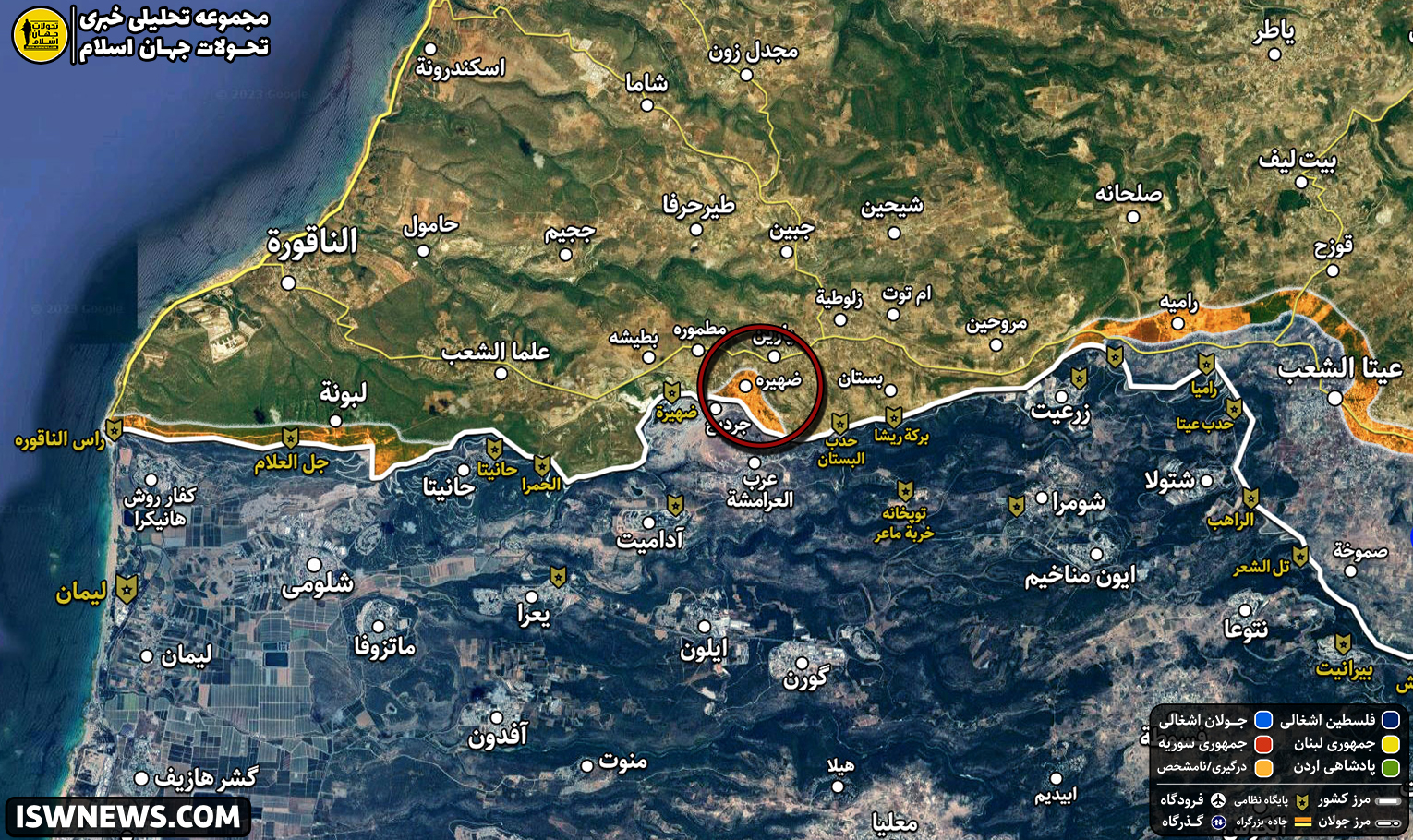
Marwahin-Ras al-Naqoura Front: In recent days, the forces of the 146th Brigade of the Israeli army made attempts to enter the towns of Marwahin and ad-Dahira, which were thwarted by Hezbollah attacks, and currently, Israeli military forces have halted their operations on this front and retreated. The exact reason for this decision is unclear, but it seems that Israel’s operation on this front is accomplished.
However, the Israeli forces managed to bomb and destroy several buildings in border areas, including the Rasul Akram Mosque in the village of Dahira. Additionally, the forest between the villages of Aalma El Chaeb and Dhahira has been set on fire.
Video of the destruction and explosion of Rasoul Akram (PBUH) Mosque in the border village of Dhahira by the Israeli regime
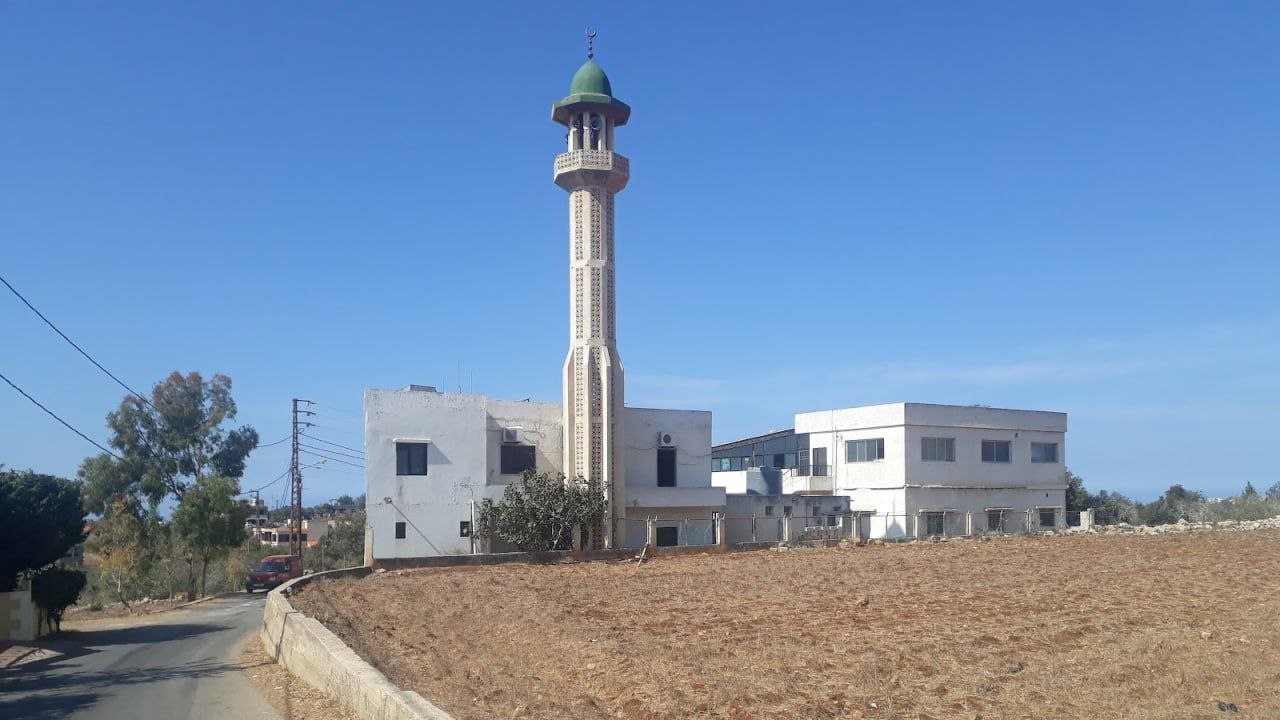
This mosque is located at a distance of about 400 meters from the occupied Palestinian border, and after the Ahl al-Qur’an mosque, it is the second mosque in the village of Dhahira that the Zionists blew up.
Dhahira village and archival photo of Rasoul Akram Mosque (PBUH)
Israeli soldiers laugh and sing Jewish religious songs while destroying the Muslim mosques in the border towns of Lebanon. This action contradicts their claim that “the war is limited to Hezbollah” and “they are trying to save Lebanon from the Hezbollah and Iran”. The destruction of Muslim mosques and civilian buildings shows that they intend to destroy Lebanon and fight against all Muslims in the region.
According to a statement from Hezbollah’s operations command, since the onset of the ground operation in southern Lebanon, Hezbollah fighters succeeded in killing over 90 Israeli troopers and injured 750 others. Furthermore, 38 Merkava tanks, four military bulldozers, one Hummer vehicle, one armored vehicle, one personnel carrier, and three Hermes 450 drones and one Hermes 900 drone have been shot down.
Contrary to reports published by the Israeli regime’s army, in which it claimed the retreating of its forces from Lebanese territory and the end of clashes this week, heavy battles continue. The future of the conflicts is uncertain, but the primary goal of the Israeli regime’s army is to create a secure border strip in southern Lebanon, and through the destruction of residential areas, and as a result of passive stance in Lebanon and the resistance front, its forces may expand into deeper southern Lebanon. Hezbollah will not be able to rebuild these areas at this stage of the war, and restoring their capabilities in border areas will take months.
However, expecting rapid reconstruction from Hezbollah is unreasonable. It seems they must first work on their weaknesses and then rebuild their defensive barrier in southern Lebanon with a new perspective. The Lebanese resistance movement needs to utilize various tools, including strengthening its air defense capabilities to mitigate the impact of airstrikes, establishing a stronger intelligence network, and expanding its arsenals of modern weapons to be able to halt the massive war machine that Western countries have built for the Israeli regime in these critical circumstances.