Category: Israel

  • Israeli Regime’s Army Dispatches 100 Aircraft To Attack Iran

    Israeli Regime’s Army Dispatches 100 Aircraft To Attack Iran

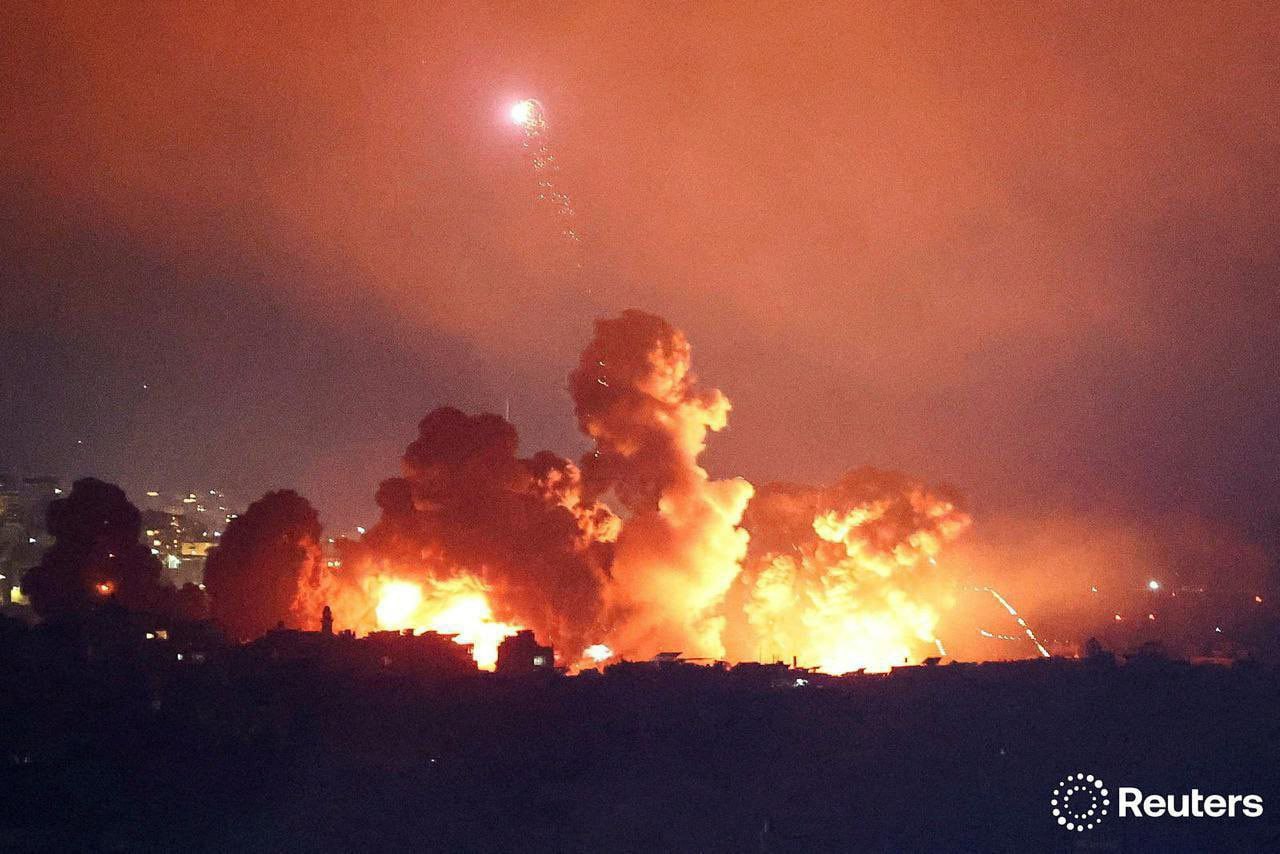
    The Israeli army targeted the aforementioned areas in a hybrid attack early Saturday (October 26). Iran’s armed forces’ defense systems responded to these air strikes, and multiple reports of gunfire and explosions were heard around Tehran. Additionally, there were unverified reports of several explosions in the cities of Shiraz and Isfahan.

    Spokesperson for the Israeli army Rear Admiral Daniel Hagari referred to this military operation as “Days of Repentance,” claiming that the Israeli army attacked military targets inside Iran in response to multiple strikes from the Islamic country in recent months, and that the Israeli attacks were in line with directives issued by political officials in Tel Aviv.

    According to Israeli media reports, the regime’s army attacked 20 military targets related to air defense and ballistic missiles during this operation, using 100 fighter jets, including advanced F-35 jets. Channel 12 of Israeli TV claimed that these 20 military targets included arms and missile factories, drone launch facilities, and ballistic missile launch platforms. The Israeli newspaper Yedioth Ahronoth also quoted an Israeli official emphasizing that the air raid on Iran did not include nuclear or oil facilities.

    American news website Axios also reported that the Israeli attack on Iran consisted of three waves, with the first wave targeting air defense sites and the second and third waves aimed at missile and drone production bases and facilities.

    Yair Lapid, leader of the Israeli opposition and head of the centrist Yesh Atid party, criticized the level of the Israeli regime’s response against Iran, claiming: The decision not to attack strategic and economic targets in Iran was a mistake. We could and should have imposed a higher cost on Iran.

    The Islamic Republic of Iran Air Defense Force confirmed the Israeli air strike, stating that the sounds heard around Tehran were related to the country’s air defense response to Israeli attempts to attack three locations around the capital city. In a supplementary statement, the IRIADF noted: Despite prior warnings from the officials of the Islamic Republic to the criminal and illegal Zionist regime to refrain from any adventurous actions, this illegitimate regime attacked military centers in Tehran, Khuzestan, and Ilam provinces in a provocative act. As a result of the successful interception by the use of integrated air defense system of the Islamic country, this aggressive action was countered; therefore, it caused limited damage to some locations. The extent of the damage is under investigation. In this regard, we invite the people to maintain solidarity and calm and request that they follow news stories related to these incidents through national media and not pay attention to rumors fabricated by enemy’s media outlets.

    The Islamic Republic of Iran Army also announced the martyrdom of two of its forces in defense of Iran’s security and in the way of preventing harm to the nation and its interests while they were performing military service to counter the attacks of the criminal Zionist regime.

    The news of the martyrdom of a civilian named “Allahvardi Rahimpour” was also announced. In this way, the number of martyrs of the Zionist regime’s attack on Iran increased to five.

    Martyr Rahimpour

    Following these attacks, the Israeli regime closed its airspace until 8:30 a.m. (local time). Spokesperson for Iran’s civil aviation organization Ja’far Yazerlou also announced the cancellation of flights on all routes over the country’s airspace until further notice.

    Countries including Saudi Arabia, Yemen, Iraq, Syria, Egypt, the UAE, Pakistan, Qatar, Oman, Turkey, Lebanon, as well as regional resistance movements such as Hamas and Islamic Jihad in Palestine, as well as prominent figures like Sayyid Ammar al-Hakim, head of the National Wisdom Movement in Iraq, and Sayyid Muqtada al-Sadr, leader of the Shiite National Movement, strongly condemned the Israeli army’s attack on Iran.

    A video of the activity of anti-aircraft guns in Tehran
    A video of the activity of 22 and 30 mm anti-aircraft guns in Tehran. Like the previous attack, Israel has sent several quadcopters to the skies of Tehran, relying on infiltrators, to make the air situation look tense.

    A video shows that one of the projectiles hit a site in the east of Tehran. Probably, this attack was carried out against the Khojir missile facility in the east of the city.

    Khojir missile facility east of Tehran
    Video of one of the projectiles hitting a site in the east of Tehran (probably the Khojir missile facility in the east of Tehran)

    The Zionist army published pictures of the fighters participating in the operation to attack Iran. Based on the pictures below, Israeli Air Force F-15C/D Baz fighters (registration numbers 673 and 957) from Squadron-106 based at Tel Nof Air Base and F-16I Sufa fighters (registration number 494) from Squadron-119 based at Ramon Air Base have participated in this operation.

    Based on these images, the F-16I fighter is equipped with two 370-gallon tanks under the wing and a 300-gallon tank under the fuselage, and two 450-gallon fuel tanks next to the AAQ-14 targeting pod. In addition to the 610-gallon fuel tank under the fuselage, two 500-gallon fuel tanks under the wing and two 710-gallon adaptive tanks, the F-15C/D fighter is equipped with Python-5 and Aim-7 Sparrow air-to-air missiles along with the Elta-8212 EW pod.

    The Zionist army published pictures of the fighter jets participating in the operation to attack Iran.

    The possibility of US Air Force refueling assistance to Israel:

    By examining the activity of the US Air Force refueling tankers in the region (including KC-135 and KC-46), we can see at least eight of the above-mentioned aircraft during Friday and Saturday morning, making numerous flights from the origin/destination of Al Udeid Air Base located in Qatar.

    With a more detailed examination of the flights, it can be seen that at least three fuel tankers of the US Air Force were flying in the skies of the region, especially in the northern areas of the Persian Gulf, the skies of southern and central and northern Iraq, during the time period of the air attacks on Iran. The timeline of the above tankers is as follows:

    KC-135T: This aircraft with the registration number 58-0061 took off from Al Udeid Air Base in Qatar at 23:00 on Friday night, and was flying over Iraq at 00:00 on Saturday morning, and after turning off the transponder, after six hours of flight at 6 am on Saturday after flying in the north of the Persian Gulf, it finally landed in Qatar at 7 am.

    KC-135R: This bird with the registration number 57-1471 took off at 00:00 Saturday morning from Al Udeid Air Base in Qatar, it was flying over Iraq at 1:00 on Saturday and after turning off the transponder, after a six-hour flight at 6:00 a.m. on Saturday after flying in the northern Persian Gulf, it finally landed in Qatar at 7:00 a.m.

    KC-135R: This bird with the registration number 61-0309 took off from Al Udeid air base in Qatar at 21:30 on Friday, it was flying over Iraq at 22:00 on Friday, and after turning off the transponder, after about five hours of flight, at 3:48 a.m. on Saturday after flying over the northern Persian Gulf, finally landing in Qatar at 4:30 a.m. on Saturday.

    The flight time of the above three fuel tankers shows that all three tankers were flying over Iraq with their transponders turned off at the time of the air attacks on Iran. Based on this, it can be assumed that the above-mentioned birds were refueling Israeli Air Force fighters or other fighters that were flying in this area.

    Also, the US Air Force F-16CJ/DJ fighters may participated in this operation and suppressed Iranian air defenses in the western areas of the country. According to the news published during the operation, an air defense site in Mahshahr was attacked, which could be related to US Air forces assistance to Israel.

    The new satellite images from the Parchin military facility in the east of Tehran show that at least four silos were hit. As it is clear in the images, four silos have been targeted with accuracy. Obviously, these silos were hit with a light warhead of about 100 to 200 kilos. This amount is enough to destroy a silos.

    The Israelis claim that one of the key targets in last night’s attack was 12 “planetary mixers”, which are an important part of Iran’s ballistic missile program. Planetary mixers are used to produce solid fuel for long-range ballistic missiles, and their destruction would harm Iran’s ability to renew its missile stockpile.

    The Zionists claim that mixers are very complex equipment and that Iran alone is not able to produce it and must buy it from China, and it takes at least a year to rebuild the mixers. Of course, it is nonsense, Iran has made the necessary preparations for such events in advance and is not dependent on this number of mixers!

    Satellite images show two hits in the Khojir missile facility in the east of Tehran. The quality of these two hits is exactly like Parchin’s hits and is not that strong, which indicates a light but accurate projectile.

    An important point that can be obtained from the satellite images is that none of the hits led to widespread fires or destruction. There is also a possibility that the silos were empty at the time of the attack. Also, the claim of the Zionists about the mixer and so on is wrong.

    Coordinates of Khojir missile facility: 35.6973, 51.6303

    Analysis of satellite images shows that two halls in the important site of Shahroud have been targeted. One hall on the north side and another hall in the center of Shahroud complex. The second hall is one of the oldest in Shahroud site and is used to prepare solid fuel for ballistic missiles and SLVs.

    The destroyed building north of Shahroud site

    According to the available information, at 04:16 am on Saturday, several hostile projectiles were intercepted over the Chahe Jam area of Shahroud, and two projectiles hit the halls after passing through the air defense layers.

    Here, like in Parchin and Khojir, we don’t see big explosions and fires. In fact, a week before the attack, an order had been issued to evacuate important equipment.

    The Shahroud Military Complex includes the Shahroud Space Center and the missile test site and is considered a key center for Iran’s space program, especially the development of solid fuel rocket boosters.

    The distance between the Shahroud site and the western border of Iran is about 900 km. Some believe that Israel may have used an unknown drone to target Iran’s facilities, which, of course, considering the distance and time required for the return of the drone, seems unlikely, unless the drone used the Caspian Sea airspace to launch missiles.
    But another suspicion is that Israel has used the Blue Sparrow missile (Golden Horizon), which was mentioned in the leaked Washington documents and has a range of about 2000 km, with a light warhead.

    Shahroud Military Complex

    Satellite images revealed that a Ghadir early-warning radar was targeted in the Ilam province. This radar station is located 12 kilometers southwest of Ilam city.

    Ghadir or Qadir early-warning radar with a range of 1100 km and capable of tracking targets to a height of 300 km. The radar has the ability to detect air targets, stealth aircraft, cruise and ballistic missiles, and low-orbit (LEO) satellites.

    The strategic position of this radar and its long range is a vital capability and is considered an important piece of the puzzle of the country’s integrated defense system.

    Iran has a large number of these radars in different parts of the country and it is easy to replace them; However, the plan of this round of attacks by the Israeli regime and its accomplice, the US, to blind this point and create a hole in the mentioned air defense layer, is of great importance and must be carefully examined.

    Ghadir early-warning radar 12 kilometers southwest of Ilam city

    Another satellite images have been published which show that Ghadir early-warning radar 15 km north of Ahvaz was also targeted.

    Ghadir early-warning radar near Ahwaz

    Given the visual evidences from the Israeli airstrikes against Iran, it can be said that this operation was limited and the Islamic Republic’s air defense forces have demonstrated successful performance in the face of the Saturday attacks.

    However, the act of inflicting casualties on Iranian forces is an unforgivable and intolerable sin, increasing the necessity for a response to the Israeli regime’s aggression against Iranian territory. Iranian political and military officials had warned the leaders of the Israeli regime during previous military strikes, namely Operation True Promise 1 and Operation True Promise 2 that any reaction to Iran’s legitimate response would lead to renewed and harsher repercussions for the regime.

  • Latest Developments In Southern Lebanon Front On October 24; Heavy Fighting Continues On Five Axes (Map)

    Latest Developments In Southern Lebanon Front On October 24; Heavy Fighting Continues On Five Axes (Map)

    Hezbollah fighters are currently engaged in heavy combat after 23 days of fighting on five fronts. The resistance fighters have been engaged in fierce clashes from Naqoura city to Marwahin town, from Ramyeh village to east of Aitaroun town, from southern Blida village to northern Houla village, from southern Markaba village to al-Ghajar village, and from al-Ghajar to the Shebaa Farms with the 146th Brigade, the 36th Brigade, the 91st Brigade, the 98th Brigade and the 210th Brigade of the Israeli army respectively.

    Hezbollah’s missile and air units continue to target military centers and headquarters along the Lebanon-Palestine border as well as inside the occupied areas of northern occupied Palestine, with an increase in attacks on the occupied cities of Tel Aviv, Haifa, Tiberias, and Safed. The Lebanese resistance movement’s air defense units have also intensified their response against Israeli fighter jets as well as reconnaissance and combat drones, increasing the number of downed Israeli drones to 11.

    Since the onset of the ground operation, the Israeli forces have destroyed a significant number of villages, including Mhaybib, Blida, Ramieh, Kfarkala, Al-Udaysah, and Yaroun, but have not stationed military forces or equipment in these areas. The occupation and control of these regions are not among the Israeli army’s objective, primarily due to Hezbollah’s superiority in ground combat. Instead, destruction through bombings and heavy airstrikes is being prioritized to create a so-called security belt along the border areas and mitigate threats from the Lebanese resistance in the occupied settlements and border bases.

    Shebaa Farms Front: As expected, the primary objective of the Israeli 210th Brigade in this front is to enter Shebaa town and Kfarchouba village. Advancing in this area is complicated due to the geographical conditions, and Hezbollah can halt the Israeli forces’ attempts to enter these areas with precise rocket and artillery strikes from the heights.

    Kfar Kila-Markaba Front: A video from inside the town of Kfar Kila shows that on October 23, Israeli troops completed the destruction of most buildings in this Lebanese town.

    Israeli army video from inside Kfarkala village
    Zionist media’s video of the destruction of buildings in Kfarkala by Israeli military bulldozers

    The situation is similar in the Aadaysit Marjaayoun axis, where commanders of the 98th Brigade of the Israeli regime are sending their forces and equipment toward Taybeh, Rab El Thalathine, and Markaba villages. Currently, clashes are ongoing in the southern and eastern districts of Taybeh, east of Rab El Thalathine, and inside Markaba. Hezbollah fighters are not only engaged in armed conflict but are also using anti-tank missiles and rocket attacks to destroy Merkava tanks and crush gatherings of Israeli troops on border roads and in the Misgav Am settlement, west of Aadaysit Marjaayoun village, and at the al-Marj base.

    The latest situation of Udaysah front / Click to view in full size

    The villages of Taybeh, Rab El Thalathine, and Markaba are considered as Hezbollah’s first line of defense in this axis, and maintaining this line is crucial, when it comes to the Israeli army’s subsequent movements in southern Lebanon. These areas are geographically appropriate for military operations, allowing Hezbollah to inflict heavy casualties upon the occupying forces and show strong defense by resorting to anti-tank and rocket attacks.

    Read more:
    Latest Military Situation in Markaba, Rab Al-Thalathin
    Israeli Army Attacks Continue In Rab Al-Thalathin And Taibah (Map)

    The latest situation of the Shebaa Farms to Markaba / Click to view in full size

    Houla-Blida Front: After completing operations in Mhaibib and Blida fronts, the 91st Brigade of the Israeli army moved toward Houla and reached the eastern areas of this village in their latest attacks. However, most buildings in this village have been damaged in the Israeli artillery and air strikes over the past year, and other buildings have been evacuated due to the war circumstances.

    In the west of the Meiss Ej Jabal village, scattered armed confrontations continue within its neighborhoods, but there is no reliable news regarding the latest situation in this area. Given the Israeli army’s movement toward Houla village, it is likely that the destruction of buildings in the northern and eastern areas of Meiss Ej Jabal has been completed.

    In the village of Blida, satellite images show that bulldozers and cranes of the Israeli regime’s army have ruined more than 152 buildings in this border village. Blida is one of the southeastern border villages of Lebanon and part of the Marjaayoun town in the Nabatieh Governorate, which also had an old and beautiful mosque, now the satellite images show its destruction. The Israeli regime’s army has even spared no mercy for the Blida cemetery, because its forces destroyed graves of the Muslims.

    In another video from southern Blida, troops from the 920th Battalion of the 769th Brigade of the Israeli army are seen blowing up a large poultry farm on the southern borders of Blida. The owners of this poultry farm state that it was the largest livestock and poultry breeding center in southern Lebanon, raising tens of thousands of chickens. They had intended to relocate the chickens to other areas of Lebanon before the outbreak of ground warfare, but direct threats from the Israeli army prevented them from doing so. Such actions by Israeli military forces are in line with statements made by Yoav Gallant, the Israeli war minister, regarding the necessity of launching an economic and military campaign against Hezbollah and Lebanon.

    The demolishing of the largest chicken farm in southern Lebanon by the Zionists

    Aitaroun-Ramyeh Front: The Israeli regime’s army has successfully entered the Aitaroun town from the eastern axis, and clashes are currently ongoing in the western half of this town. The situation is similar in the Maroun El Ras village, where Israeli village are attempting to advance deeper into Maroun El-Ras and toward the southern entrance of the Bint Jbeil town.

    The latest status of the Aitaroun Front / Click to view in full size

    Heavy fighting is taking place in Ayta ash Shab village, particularly in the northern and eastern neighborhoods of this area, with the Israeli army conducting heavy attacks over the past two days to destroy Hezbollah positions on Aboullaban Hill east of Ayta ash Shab. Most buildings in Ayta ash Shab village have been destroyed in airstrikes, and despite the betrayal of the Christian villagers of Rmaych, Hezbollah fighters remain in the village and continue to defend it.

    Hezbollah fighters are targeting Israeli gatherings and movements in this axis with rocket and artillery attacks, inflicting heavy casualties on the Israeli occupiers. However, these attacks are not sufficient to halt the Israeli war machine, as the combination of airstrikes along with bulldozer and crane activities on the ground is allowing the regime’s military forces to advance in the border areas of southern Lebanon.

    The latest status of Aita al-Shaab Front / Click to view in full size

    Given the direction of attacks by the Israeli 36th Brigade in Aitaroun and Maroun El-Ras, it appears that the Israeli regime’s main objective in this axis is to reach the Bint Jbeil village. In addition to Aitaroun and Maroun El-Ras, the movement of Israeli military forces along the Rmeish-Ain Ebl road (Christian villages) poses a significant threat to Bint Jbeil and could effectively encircle this small area.

    The latest situation of the Houla to Ramieh front / Click to view in full size

    Marwahin-Ras Al Naqoura Front: In the Marwahin-Ras Al Naqoura front, no significant ground movements from the Israeli army have been observed, with most of their activities focused on air and artillery attacks.

    According to a statement from Hezbollah’s operations command room, the total Israeli casualties, based on observations by resistance fighters, exceed 70 killed and more than 600 wounded, including officers and troopers of the Israeli regime’s army. Additionally, 28 Merkava tanks, four military bulldozers, one armored vehicle, one personnel carrier, three Elbit Hermes 450 drones, and one Elbit Hermes 900 drone have been destroyed in the course of 23 days of ground combat. This count does not include casualties inflicted on the Israeli enemy in bases and camps in northern and deep inside occupied Palestine.

    This level of casualties and damage significantly impacts the continuation of the clashes, especially if Hezbollah can execute guerrilla warfare, infiltrate occupied territories, or utilize devastating weapons in ground battles. The first phase of the Israeli army’s ground operation aims to create a security buffer zone in Lebanese territory, but what will determine the future of the war is Hezbollah’s response in ground combat and the extent of casualties and losses suffered by the Israeli regime at this stage of the confrontation.

    Read: Latest Developments Of Lebanon’s Southern Front On October 17, 2024; Israel Destroys Mhaibib Village!

    The latest situation of the South Lebanon Front / Click to view in full size
  • Israeli Fresh Aggression On Syria Killed 1, Wounded 7

    Israeli Fresh Aggression On Syria Killed 1, Wounded 7

    A Syrian military source stated “At around 03:40 am (local time) on Thursday, the Israeli regime fired several missiles from the occupied Golan and northern Lebanon, at two points in the neighborhood of Kafar Souseh in Damascus and one military point in the suburbs of Homs. This attack resulted in the martyrdom of one soldier, the wounding of seven others and the occurrence of material damages.”

    The images that have been published show that a bridge in the Al-Qusayr region of Homs province was targeted. In recent weeks, the Zionist regime has carried out attacks on the shared border areas between Syria and Lebanon, particularly in the Al-Qusayr region. These attacks are primarily intended to disrupt Hezbollah’s supply routes and to prevent Syria from supporting the Islamic resistance in Lebanon.

    It is worth mentioning that on October 21, the Israeli military planes targeted the Mezzeh area of Damascus, resulting in the deaths of two civilians and injuries to three others.

    In recent years, the Israeli army has frequently launched missile and air strikes targeting the positions of the resistance and the Syrian army. Since the start of the Al-Aqsa storm operation and Syria’s significant support for the resistance axis, Israeli air strikes on various areas of Syria have significantly increased, particularly in Damascus and Homs.

    Over the past year, Israel has conducted multiple attacks to assassinate senior resistance commanders and destroy support centers and ammunition depots, resulting in the deaths and injuries of hundreds of resistance forces and Syrian civilians.

  • Yemeni Army Carries Out Missile Attack On Israeli Military Base East Of Tel Aviv

    Yemeni Army Carries Out Missile Attack On Israeli Military Base East Of Tel Aviv

    Spokesman for the Yemeni Armed Forces Brigadier General Yahya Saree detailed the aerial operation, stating that the missile unit of the Yemeni armed forces targeted a military base belonging to the Israeli regime in the eastern area of the occupied region of Jaffa (Tel Aviv) with the Palestine-2 ballistic missile. This missile successfully reached its target by bypassing US and Israeli defense systems.

    According to the spokesman, this operation is part of the fifth phase of the escalation of the Promised Victory Battle and the sacred fight in support of Palestinian fighters’ Operation Al-Aqsa Storm. He also added that the Yemeni armed forces will continue their military operations against the Tel Aviv regime until the end of aggressions, the lifting of the blockade on the Gaza Strip, and the cessation of incursions into Lebanon.

    The Palestine-2 missile is one of the state-of-the-art missiles of the Yemeni Armed Forces and is similar to the Iran-made Khaybar Shekan 2 missile. Its range is over 2,150 kilometers, and its speed is reported to be 16 Mach. The Yemeni army has challenged the Israeli regime’s defense systems multiple times with the launch of this missile.

    Statistics indicate that this missile attack marks the 34th aerial operation by the Yemeni Armed Forces in occupied territories of Palestine using ballistic missiles, cruise missiles, and suicide drones.

    The Yemeni Armed Forces have kicked off these operations in support of the Palestinian people and their resistance against the Israeli regime since October 19, 2023, against the Israeli regime in occupied Palestinian territory and along the maritime route from the Gulf of Aden to the Red Sea. These series of operations witnessed a climax with the seizure of the Israeli ship Galaxy Leader plus ongoing missile, drone, and suicide drone attacks on more than 150 vessels linked to the regime, leading to a halt in shipping by Israeli companies via the Red Sea.

  • Israel Claims Responsibility For Assassination Of Sayyed Hashem Safi Al-Din

    Israel Claims Responsibility For Assassination Of Sayyed Hashem Safi Al-Din

    According to a statement released by spokesman for the Israeli regime’s army Admiral Daniel Hagari, head of Hezbollah’s Executive Council Sayyed Hashem Safi al-Din and head of Hezbollah’s intelligence section Hussein Ali Hazimeh were assassinated in an airstrike by Israeli fighter jets on October 5, when the Israeli warplanes targeted a building in Beirut suburb.

    The statement was issued following the removal of debris at the site of the Israeli airstrike in Beirut suburb. Local media reported that rescue forces retrieved the bodies of 24 individuals from the site, all of whom were senior members of the Lebanese resistance movement, including Sayyed Hashem Safi al-Din.

    Despite the official declaration from the Israeli army, Hezbollah has not yet issued a statement regarding the martyrdom of its senior members.

    Sayyed Hashem Safi al-Din is the head of Hezbollah’s Executive Council, who had been mentioned as a potential successor to the martyr Sayyed Hassan Nasrallah, the Secretary-General of Hezbollah.

  • Israeli Army Attacks Continue In Rab Al-Thalathin And Taibah (Map)

    Israeli Army Attacks Continue In Rab Al-Thalathin And Taibah (Map)

    The Israeli army’s infantry forces have begun advancing in this area with air support since yesterday evening. In response, Hezbollah’s anti-armor unit has engaged the Israeli tanks. They have successfully destroyed three Merkava tanks with anti-armor guided missiles in Tal al-Aqaba, located in the east of Rab Al-Thalathin and the lands between Rab Al-Thalathin and Taibah.

    The attack on the southern part of Taibah village started this morning. Hezbollah successfully neutralized the Israeli army’s attacks in this area through armed conflict.

    Click to view full size

    In addition to these clashes, Hezbollah’s missile forces have crushed the gatherings of Israeli soldiers in the town of Kiryat Shemona, Misgav Aam, Marj base and around the border village of Al-Udaysah and Khale al-Asaker in the west of Al-Udaysah (3 times) with rocket attacks. Israeli fighter jets also attacked various buildings in Rab Al-Thalathin and Taibah more than 10 times.

    The villages of Taibah, Rab Al-Thalathin, and Markaba serve as Hezbollah’s primary defense line in this area. It is crucial to maintain this line in order to counter any future advances by the Israeli army in southern Lebanon. These areas are strategically located, allowing Hezbollah to inflict heavy casualties and mount a strong defense by using anti-armor missiles and rockets.

  • How Might Israel’s Potential Attack On Iran Unfold?

    How Might Israel’s Potential Attack On Iran Unfold?

    In recent weeks, there have been many speculations about the possible attack of the Israeli regime on Iran. Many believe that Israel will fire missiles at Iran from the sky of Iraq like last time. But another possibility that is not addressed is the use of tanker aircraft and the sky of international waters and attacking from the south.

    Although this model of attack may not seem reasonable considering Iran’s long-range radar capabilities and will probably destroy the “element of surprise” intended by Israel; However, it is by no means out of the question.

    Iran has explicitly stated that any country that provides its skies to attack Iran will be Iran’s next target. Iraq, whose situation is clear, and Saudi Arabia do not have any desire to have a conflict with Iran at the moment. So maybe Israel is looking for another way to attack.

    For years, Israelis have been practicing simulating attacks on distant targets with the Americans. In recent months, they have attacked Yemen’s Hudaydah twice in the same manner.

    If Israel plans to use this strategy for the airstrikes, it’s important to note that the regime’s fighter jets, with aerial refueling support, may fly over the Red Sea, bypassing Yemen, and then launch missiles from the northern Arabian Sea.

    It is important to mention that in recent weeks, several American refueling planes have entered the West Asian region in addition to what was already in the region. This could indicate preparations for a potential attack in the way that we mentioned.

  • Latest Military Situation in Markaba, Rab Al-Thalathin

    Latest Military Situation in Markaba, Rab Al-Thalathin

    The Israeli army launched a ground attack on the village of Markaba yesterday afternoon. They moved troops and armored vehicles from the Marj and Hunin bases to Markaba and Rab Al-Thalathin, entering the eastern neighborhoods of Markaba with heavy air support.

    Heavy clashes between the Israeli army’s 98th Division and Hezbollah fighters continue in the area.

    Latest military situation in the Markaba area

    In addition to the eastern front of Markaba, the Zionists are also attempting to enter the west of Markaba from the Udaysah-Rab Al-Thalathin junction. If the Israelis manage to cross the three-way junction, the fall of Markaba is inevitable.

    Israeli armored vehicles are stationed in the Rab Al-Thalathin axis but have not entered the village yet.

    In the last two days, Hezbollah has attacked the gatherings and positions of the Israeli army around Markaba 10 times, causing significant casualties to the Israeli army.

  • Latest Developments Of Lebanon’s Southern Front On October 17, 2024; Israel Destroys Mhaibib Village!

    Latest Developments Of Lebanon’s Southern Front On October 17, 2024; Israel Destroys Mhaibib Village!

    According to previous press releases, the Israeli military has chosen the scenario of creating a security border strip in southern Lebanon for its ground operations. At this time, they are implementing a scorched earth policy, claiming to eliminate the Lebanese resistance movement’s military facilities and prevent Hezbollah from returning to the border areas by completely destroying the towns and villages in southern Lebanon. This has been executed since the onset of the ground operations in the villages of Yaroun, Blida, Mhaybib, Kafr Kila, Al-Adisa, and other border regions, and as time passes, we will see more visual documentation of this war atrocity and humanitarian disaster.

    Kafr Kila, Al-Adisa, Rab El Thalathine, and Markaba:
    Based on released images, the Israeli military has retreated from the villages of Kafr Kila and Al-Adisa. However, this retreat was not due to a strong resistance from Hezbollah or a failure to penetrate these areas, but rather due to their plan to implement the maximum destruction of buildings in Kafr Kila and Al-Adisa; thus, the Israeli regime is of the opinion that they have achieved the main goal in this axis.

    The situation of Kfar Kala before and after the ground operation of the Israeli army

    In the eastern axis of Rab El Thalathine and Markaba, the situation remains unchanged. According to the latest reports, Hezbollah targeted Israeli troops’ positions with rocket and artillery attacks.

    Meiss El Jabal, Mhaibib, and Blida:
    On Wednesday, the Israeli regime released a video showing the complete destruction of the historic village of Mhaibib.

    In the axis of Meiss El-Jabal and Blida, the Israeli military forces are advancing toward the center of those areas with bulldozers and cranes, demolishing residential buildings. Given the Israeli army’s control over the northern road and the destruction of Mhaybib, the Blida region has practically collapsed, and it seems that the total destruction of this village is just a matter of time.

    Click to view full size

    Ayta ash Shab and Ramieh:
    In the Ayta ash Shab axis, a fierce battle is underway in the western areas of this town, and according to videos released by the Israeli regime’s army; most buildings have been destroyed by airstrikes. In the eastern areas of Ayta ash Shab, Hezbollah does not have a strong foothold due to its proximity to the Christian town of Rmaych, and likely will not offer much resistance in this area.

    Despite the advance of Israeli troops in the west of Ayta ash Shab village and their movement around Ramieh village, there have been no reports or visual evidence of Israeli military forces entering the village of Ramieh.

    Overall, Hezbollah’s first line of defense along the border of occupied territories of Palestine has been breached, and resistance fighters must prepare to defend the town of Bint Jbeil and its surrounding areas in the coming week.

    Click to view full size

    Labbouneh and Naqoura:
    In the Labbouneh and Naqoura axis, the Israeli military forces have not made any significant advances and their movements have faced counterattacks from Hezbollah’s anti-tank units. In the last 24 hours of clashes, three Merkava tanks have been destroyed or damaged.

    Smoke rising from the Labouna area after the Israeli tank was targeted by Hezbollah

    Since the onset of the Israeli army’s ground operations until now, Hezbollah has not been able to completely halt the occupying forces, but it has significantly slowed their advance. The Israeli regime’s army have resorted to measures such as nonstop air raids, the use of the combat and reconnaissance drones, and support from US, UK, and other European spy planes, along with the deployment of a high number of military personnel and equipment, particularly bulldozers and cranes, are among the factors that will help the regime achieve its goal of destroying the border areas of southern Lebanon.

    Of course, the destruction of residential areas also took place during the 33-day war in 2006; for example, the Israeli army completely destroyed the west of Ayta ash Shab village. However, Ayta ash Shab was rebuilt over the years and, despite its poor geographical location, is today one of the strongholds against the Israeli regime’s aggression.

    Currently, Hezbollah’s first line of defense against the Israeli ground invasion has been breached, and it is likely that the center of the confrontations will shift towards the southwestern areas of Lebanon in the coming week. The important point here is that the Tel Aviv regime’s maneuverability within Lebanese territory must be curtailed in order to limit their ability to execute other scenarios and military advances further into Lebanon.

    Latest military situation in southern Lebanon – click to view full size
  • Israel Seeks To Create Buffer Zone With Syria, Lebanon

    Israel Seeks To Create Buffer Zone With Syria, Lebanon

    The ground operations of the Israeli army kicked off on October 2, 2024, aimed at clearing southern Lebanon in order to facilitate the retreat of fighters of the Lebanese resistance movement Hezbollah to the north of the Litani River. One of the objectives of the military operation is to create a buffer zone at the border between occupied Palestine and Lebanon.

    In addition to Lebanon, the movements of Israeli troops and reports from sources affiliated with terrorist groups and the Israeli regime indicate that the regime’s officials plan to create a buffer zone scheme at the border between Syria and occupied territories of Palestine as well.

    Media outlets close to the Syrian militants claimed on October 11 that a group of Israeli army’s infantry forces, supported by several armored vehicles, entered the village of Kwdana in the Quneitra Governorate of Syria. However, local officials denied this claim, when they appeared in border areas near the occupied Golan heights.

    Kwdana in the Quneitra Governorate of Syria

    A few days later, Israeli military forces cleared some minefields and established new barriers in the Golan Heights and border areas with Syria on October 15. These actions have fueled speculation about ground operations in Syrian territory aimed at attacking Hezbollah from eastern Lebanon and creating a buffer zone between Syria and occupied territories of Palestine.

    Given the current situation in the Israeli-occupied territories, the initiation of ground operation against Syria seems unlikely, because even a limited ground operation could complicate the situation for the Tel Aviv regime due to the presence of Russian forces in the border areas of Syria with occupied territories of Palestine.

    Over the past years, the Israeli regime’s army has repeatedly targeted the positions of the resistance axis and the Syrian army with missile and air raids. Following the onset of Operation Al-Aqsa Storm and Syria’s significant role in supporting the Islamic resistance axis, Israeli army’s air raids against various areas in Syria have increased. Most of the Israeli regime’s attacks in the past year have aimed at assassinating senior resistance commanders and demolishing logistic centers as well as important ammunition depots. During these attacks by the regime’s forces, hundreds of resistance fighters and even Syrian civilians have been martyred and injured.

  • Israeli Army Destroys Entire Village Of Mhaibib

    Israeli Army Destroys Entire Village Of Mhaibib

    After breaking into the village on Wednesday, October 16, they bombed most of its buildings, leading to the destruction of this historic village. The Israelis alleged that Mhaibib contains military and underground facilities belonging to Hezbollah.

    Mhaibib is a small village in the Marjaayoun town of southeastern Lebanon, located between the town of Meiss El Jabal and the village of Blida.

    It is home to an ancient shrine dedicated to the Prophet Benjamin, a figure in Judaism, and its name, Mhaibib, means beloved prophet. In 1948, the Israelis stole the Hebrew inscription from this two-thousand-year-old shrine. The village overlooked the border between occupied territories of Palestine and Lebanon and had been evacuated before the Israeli ground assault in southern Lebanon.

    The Israeli regime’s ground operations in southern Lebanon kicked off on October 1, following a series of targeted killings of Hezbollah officials and heavy bombardments across various regions in the country. The ground attacks covered the border strip from the Shebaa Farms to the Mediterranean coast, supported by over 10,000 airstrikes. The Israeli aggression against Lebanon has resulted in the martyrdom of at least 2,300 Lebanese people, the injuries of over 11,000 others, and the destruction of thousands of residential and civilian buildings.

    The moment of the complete destruction of Mhaibib village by the Zionist army
    The moment of the complete destruction of Mhaibib village by the Zionist regime’s army from an aerial view
  • Israeli Regime Strikes Syria’s Latakia

    Israeli Regime Strikes Syria’s Latakia

    A Syrian military source confirmed “At around 02:50 (local time) on Thursday, the Israeli regime targeted a point in the southeast of Latakia from the Mediterranean Sea. This attack resulted in the wounding of two civilians and material damage.”

    It is worth mentioning that the fighters of the Zionist regime attacked targets in the provinces of Homs and Hama in the morning of October 10. There were no casualties in these attacks.

    In recent years, the Israeli army has frequently launched missile and air strikes targeting the positions of the resistance and the Syrian army. The start of the Al-Aqsa storm operation and Syria’s significant support for the resistance axis have led to an increase in Israeli air strikes on various areas of Syria, particularly Damascus and Homs.

    In the past year, Israel has conducted numerous attacks with the goal of assassinating senior commanders of the resistance, as well as destroying support centers and ammunition depots. These attacks have resulted in the deaths and injuries of hundreds of resistance forces and even Syrian civilians at the hands of the Israeli regime.