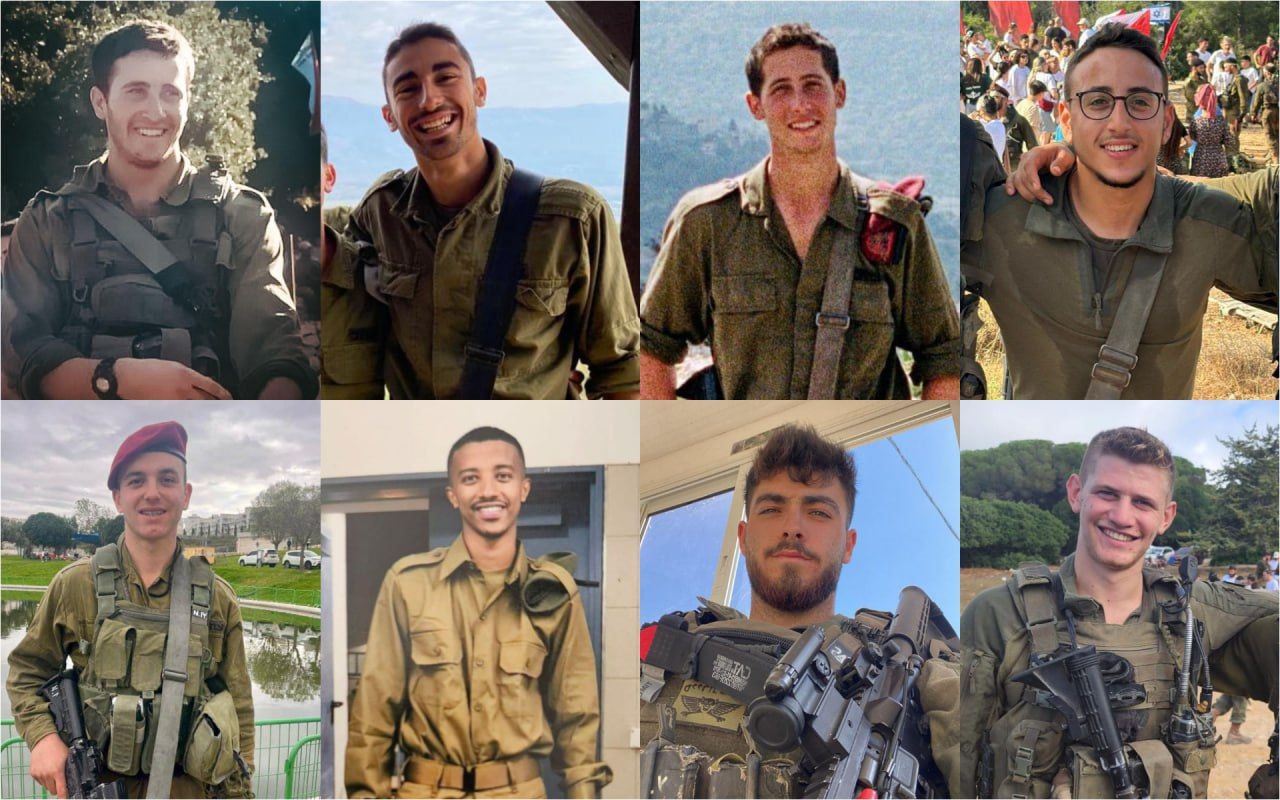
The Israeli army announced that six commandos from the Egoz Unit (officially Unit 621) and two from the Golani Brigade were killed in battles in southern Lebanon on Wednesday.
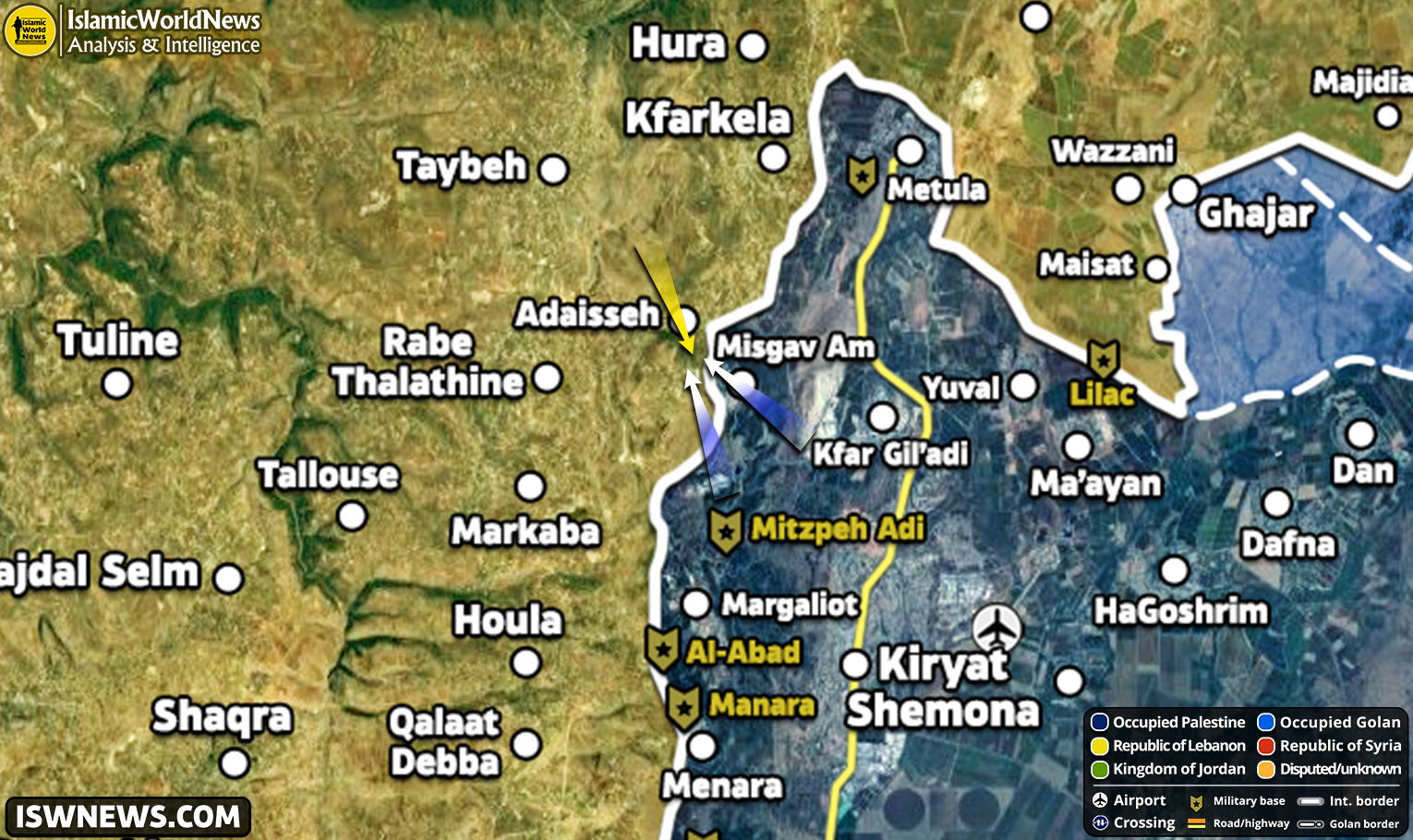
The Israeli army declared that the commandos of the Egoz Unit initiated an attack early this morning against a village near the border (likely Kfar Kila). The occupying forces broke into a building in the village but soon found themselves ambushed by Hezbollah fighters.
During the confrontation, dozens of Hezbollah fighters opened fire on the Israeli troops, using light and medium weapons and targeting their equipment with anti-tank missiles. Through the evacuation of the wounded troops, the Lebanese resistance movement again targeted the Israeli forces with mortar fire, resulting in additional injuries among the Israeli troops.
In the end, the Israeli forces managed to retreat under the cover of drone strikes and tank fire. The Israeli regime claimed that more than 20 Hezbollah fighters were killed in the attacks.
It appears that the Israeli regime now fully understands that the battles in southern Lebanon will be significantly more costly and challenging for their forces compared to what is occurring in the Gaza Strip. The first day of the incursion indicates a costly conflict for the Tel Aviv regime with eight dead and dozens injured.
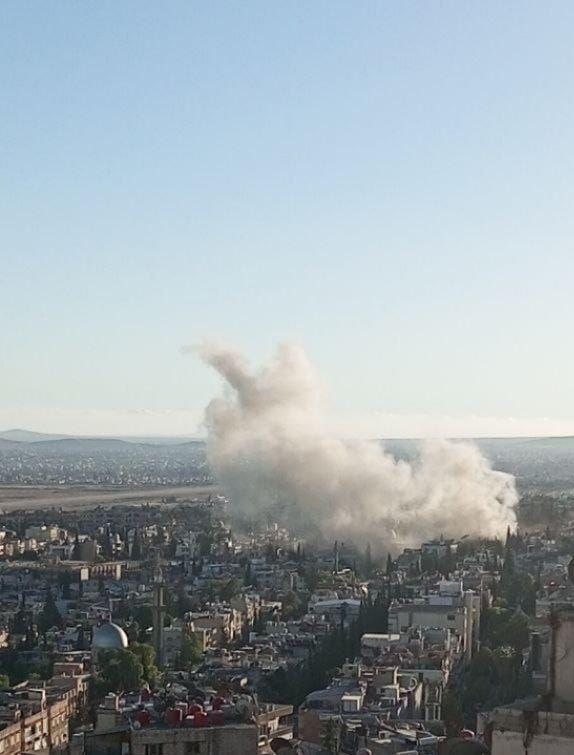
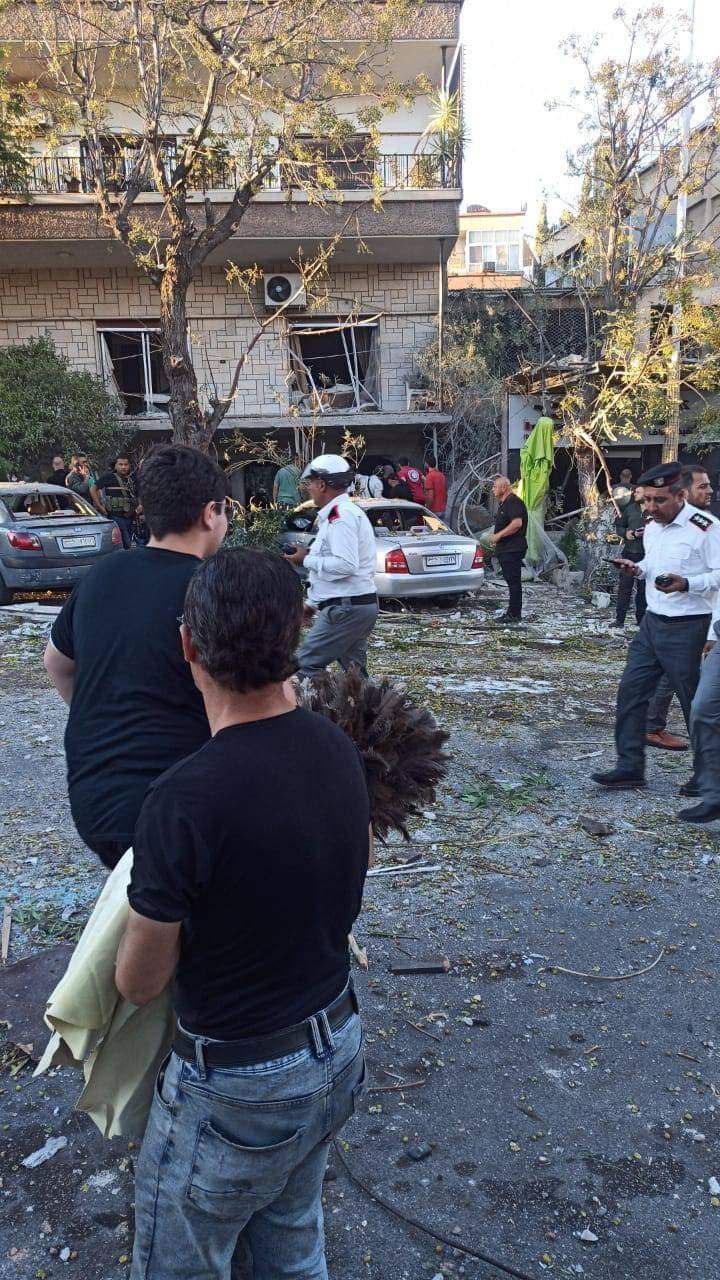
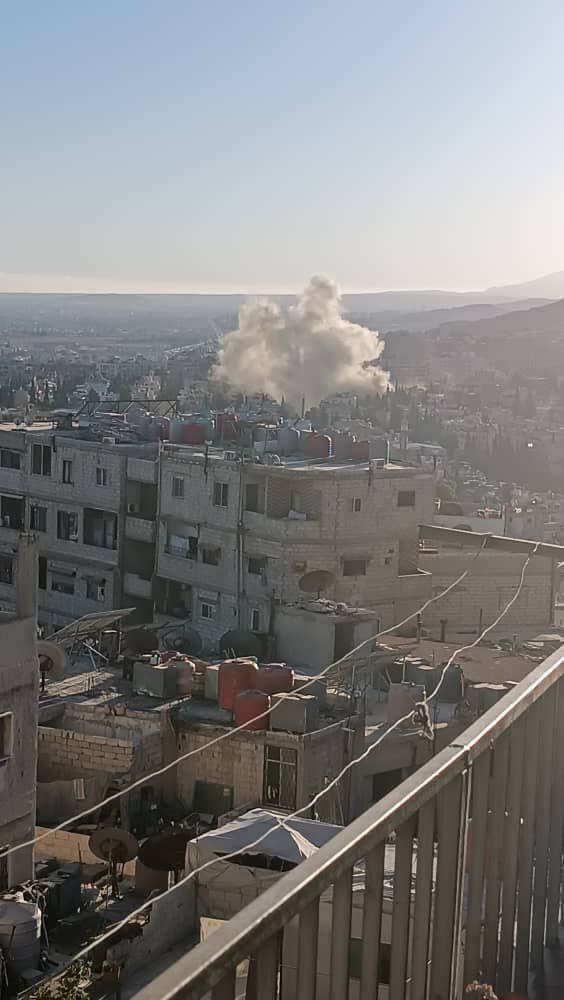
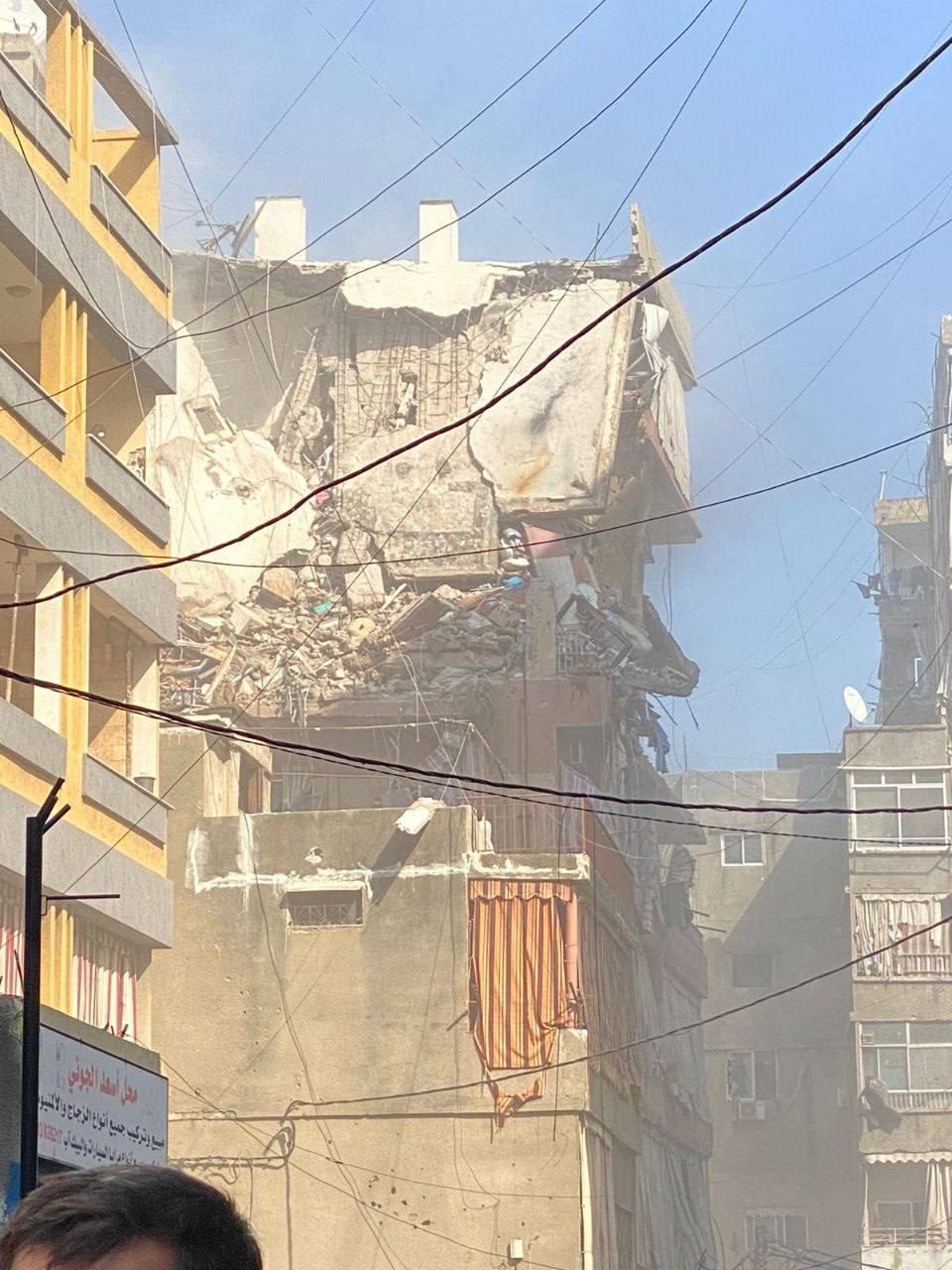
On October 2, Israeli fighter jets targeted a building in the Mezzeh municipality of Damascus. A Syrian military source declared that around 5:25 p.m. local time on Wednesday, the Israeli regime launched an air strike on the Mezzeh municipality from the regime’s occupied Golan Heights. The assault resulted in the martyrdom of three civilians, injuries to three others, as well as material damages.
Pictures from the scene of the incident
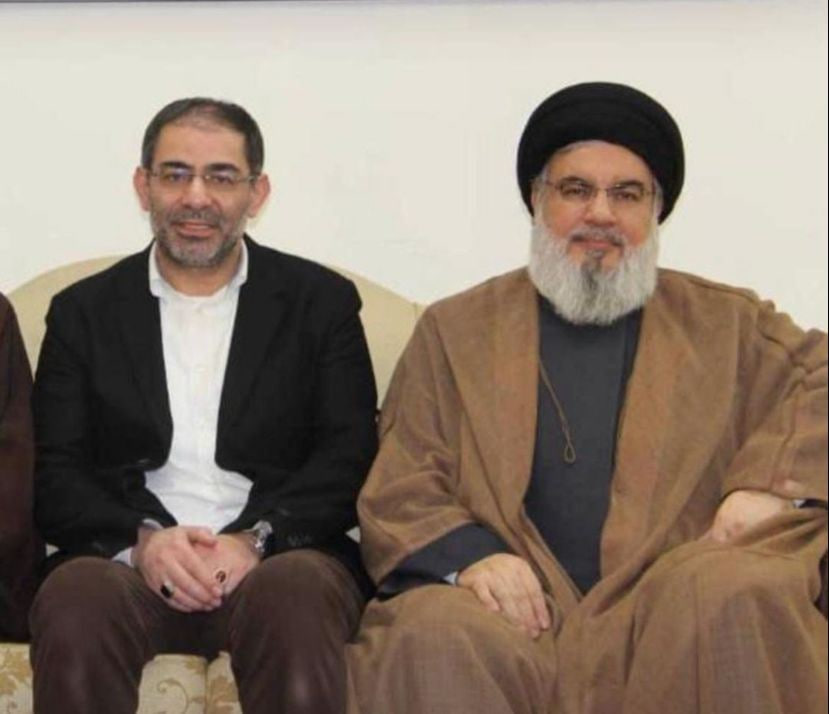
Studies indicate that the main target of the Israeli army’s attack on the building in the Mezzeh municipality was the assassination of Hezbollah fighters. Following the air raid, Hasan Jafar Qasir, son-in-law of Martyred Hezbollah Secretary General Sayyed Hassan Nasrallah, along with two others, was martyred, and three others were injured.
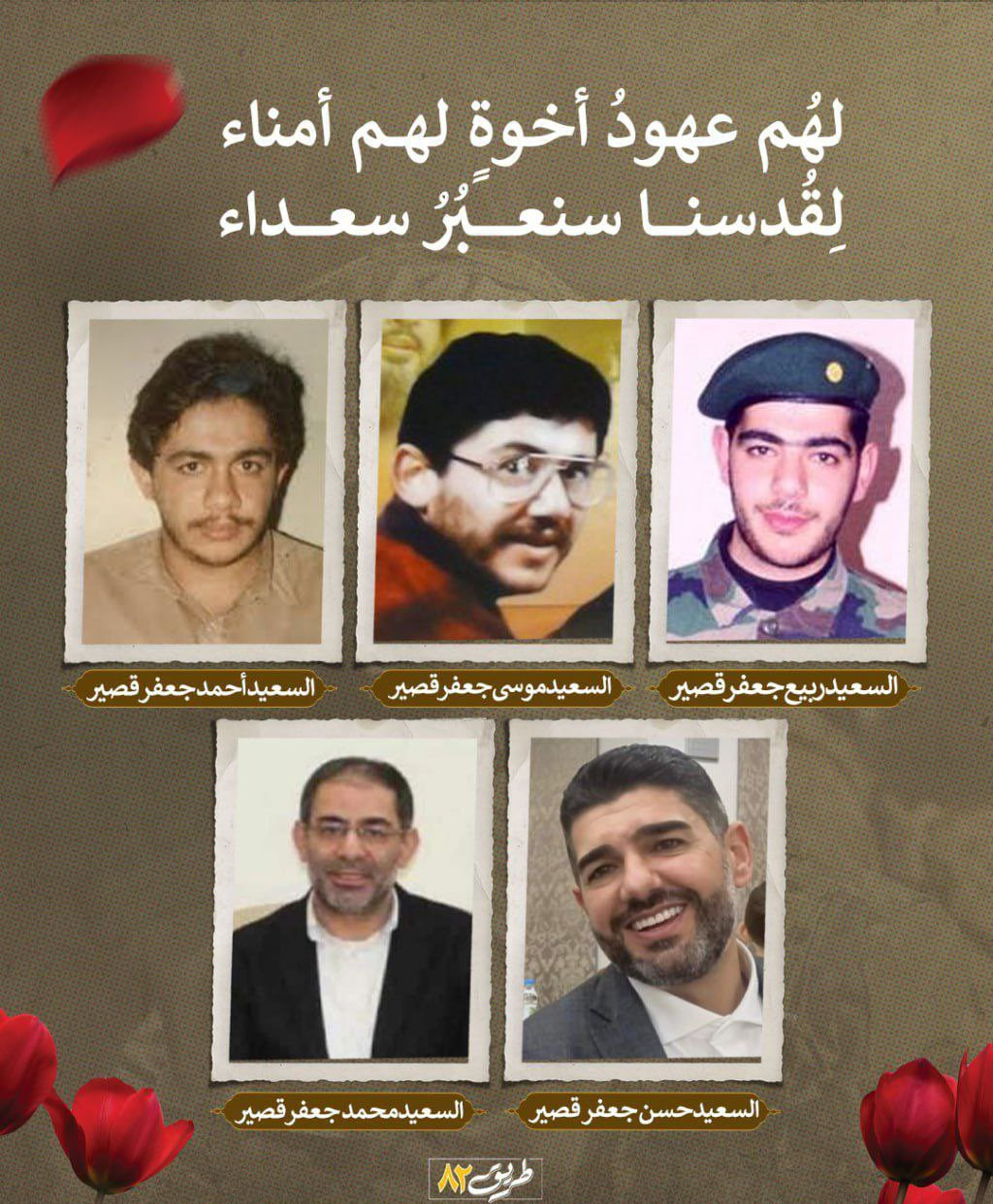
On October 1, the Israeli army also claimed in a statement that Muhammad Jafar Qasir (Hasan Jafar Qasir’s brother), the commander of the unit transferring weapons from Iran to Lebanon (Hezbollah’s Unit 4400), was assassinated in Beirut alongside Zulfiqar Hanawi, the commander of Imam Hussein Brigade. The United States had set a $10 million reward in June 2022 for information on Muhammad Jafar Qasir.
Pictures of Mohammad and Hassan Jafar Qasir and other martyrs of the Qasir family
Bearing in mind claims from Hebrew media outlets regarding the activities of Muhammad and Hassan Jafar Qasir in financial, monetary, and arms supply exchanges for Hezbollah, the recent attacks by the Israeli regime indicate that the Tel Aviv regime is seeking significant blows to Hezbollah’s financial and arms supply network in Lebanon and Syria.
It is also noteworthy that this is the third air strike by the Israeli military on Syria in the past three days. The regime’s fighter jets also targeted locations in the Daraa and As-Suwayda governorates the day before.
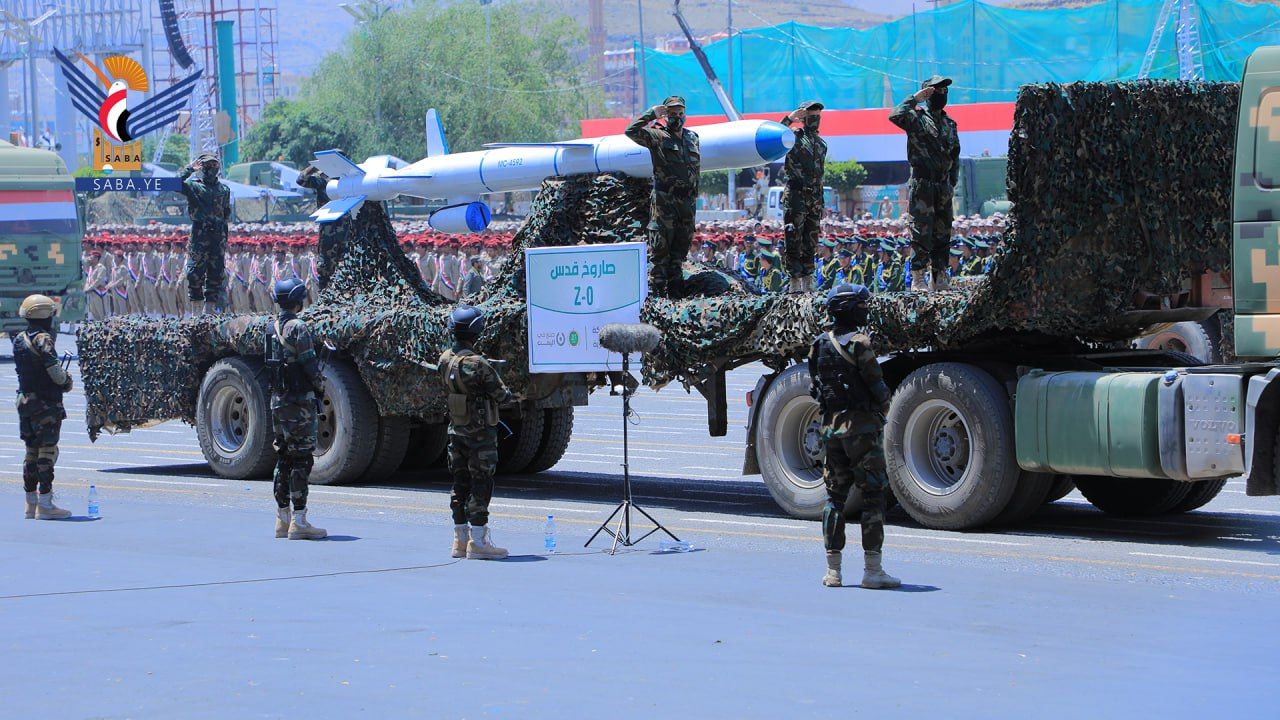
The latest statement issued by the Yemeni Armed Forces, which was published on Wednesday morning of October 2, 2024, the missile unit carried out this attack in support of the oppressed people of Palestine and Lebanon.
Spokesman for the Yemeni Armed Forces Brigadier General Yahya Saree commented on the strike, noting that the cruise missiles successfully reached their targets, and the Israeli enemy remained silent regarding the results of the retaliatory attack.
He also stated that the missiles hit their intended targets, pointing to the Iranians’ latest attack on the Israeli regime, he said that the Yemeni Armed Forces congratulate the Iranian armed forces for their operation against Israel, which is called True Promise 2.
He further expressed Yemen’s readiness to participate in any joint military operations to assist the people of Palestine and Lebanon and to respond to any Israeli strikes on the Islamic fronts, who are supporting the Palestinian and the Lebanese people.
In his concluding remarks, the spokesman for the Yemeni Armed Forces issued a direct threat to the US-UK coalition, asserting that ongoing support from the American and British governments for the Israeli enemy puts their interests in the region at risk. Those backing the occupying regime should understand that as long as aggressions against Palestine and Lebanon continue, and the blockade of the Gaza Strip is not lifted, the Yemeni Armed Forces’ attacks will not cease, and the Yemenis will not hesitate to expand military operations against the Israeli enemy, with God’s help.
The Yemeni forces’ recent attack marks the 30th aerial operation, which targeted the occupying regime’s positions in occupied Palestine using ballistic missiles, cruise missiles, and suicide drones.
This is the first time the Yemeni army has utilized the Quds-5 cruise missile, and no images of the missile have been released up until now. It is probable that the cruise missile is similar to one of the cruise missiles manufactured by Iran, with an extended range of over 1,900 kilometers.
The military operations of the Yemeni Armed Forces in support of the oppressed Palestinian people and resistance groups against the Israeli regime kicked off on October 19, 2023, in occupied Palestine and along the maritime route from the Gulf of Aden to the Red Sea. The retaliatory operations peaked with the seizure of the Israeli-affiliated ship Galaxy Leader as well as incessant missile, drone, and suicide drone attacks on over 150 vessels linked to the Israeli regime, leading to a halt in shipping for Israeli companies via the Red Sea.
The attacks, executed by the Yemeni naval, missile, and drone units, were a direct retaliation to the aggressions made by the US and UK.
The facts and figures of the operations are as follows:
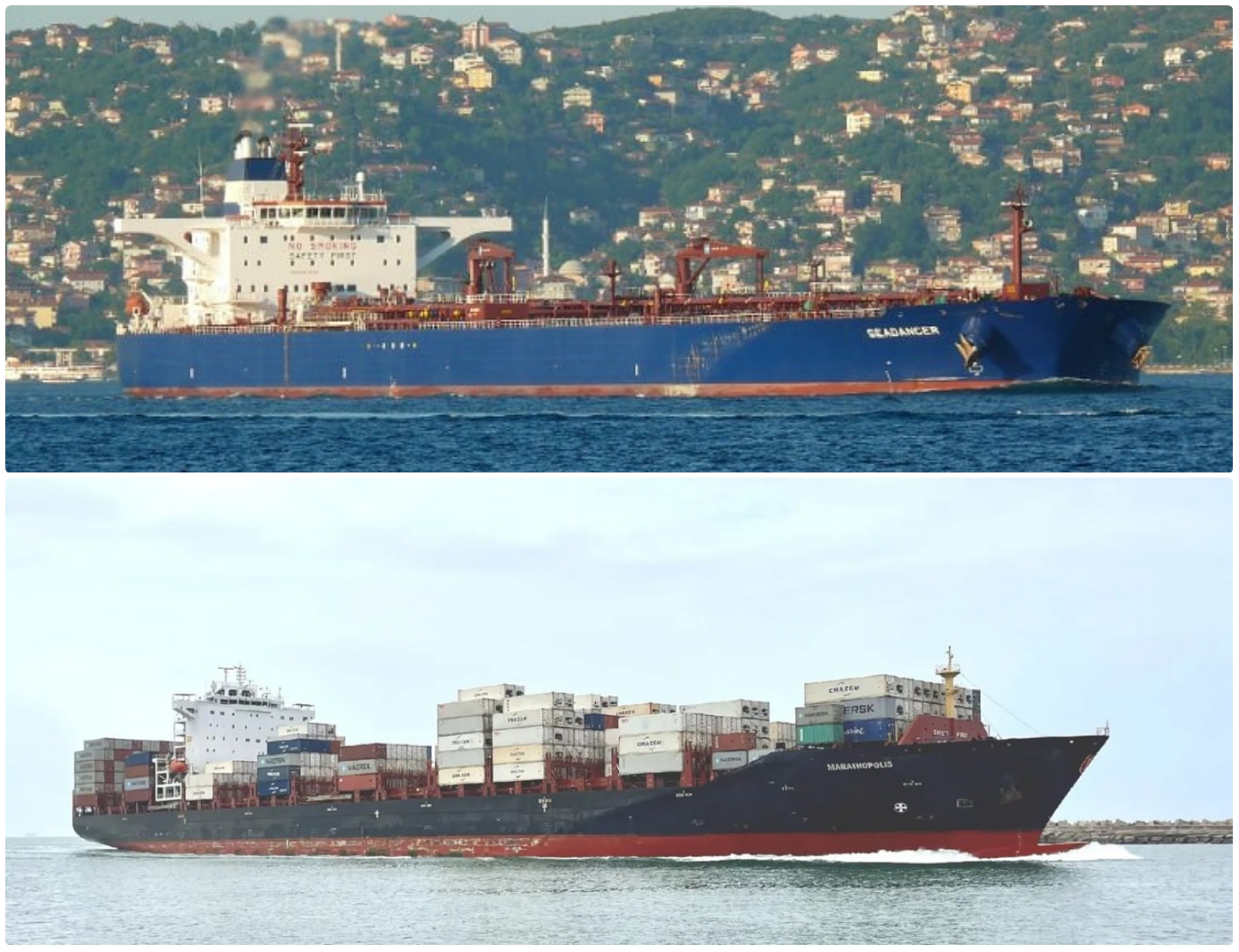
– The Yemeni Armed Forced attacked the British oil tanker Cordelia Moon in the Red Sea by using eight ballistic and cruise missiles, alongside a suicide drone. This assault resulted in severe damage to the British vessel.
– In the second operation, the Yemeni army targeted the Marathopolis vessel in the Indian Ocean with a cruise missile.
– The Yemeni military forces also targeted the Marathopolis for the second time in their third operation, which took place due to its violation of the ban on entering the ports of occupied Palestine in the Arabian Sea. In this strike, it was struck by a suicide drone in the northeastern direction of the Socotra archipelago, resulting in a direct hit at the ship.
Spokesperson for the Yemeni Armed Forces Brigadier General Yahya Saree affirmed in a statement that Yemeni military operations and the maritime blockade against the Israeli enemy will continue. The retaliatory operations will persist until there is a cessation of Israeli aggression against the Gaza Strip, the lifting of the blockade of the besieged area, and an end to attacks on Lebanon.
Although the Israeli government claims that the current ground operation is limited, the evolving events ahead create the possibility of any incident, and the conditions of war depend on various factors.
In the past month, the leaders of the Zionist regime have been paying more attention to the situation in southern Lebanon and northern occupied Palestine, as well as focusing on carrying out terrorist operations in Lebanon. This “attention and concentration” was the result of Hezbollah’s effective intelligence-security operations against Israel and the successful operations of Lebanese, Iraqi and Yemeni resistance groups. These actions have made the situation unbearable for the Israeli regime.
The targeted killings of Ismail Haniyeh, Saleh al-Arouri, Fuwad Shukr, Ibrahim Aqil, Ali Karaki, Mohammad Hossein Sarour, and numerous field commanders and senior members of Hezbollah did not lessen the pressure on the Israeli regime. Instead, the psychological impact of the resistance’s response to these assassinations heightened the process of evacuating settlers from northern occupied Palestine.
This pressure was so heavy for the Zionists that once Amos Hochstein, the special adviser and special envoy of the US President in Lebanon, said in his last sentence that Nasrallah chose to escalate the war by rejecting the ceasefire proposal based on UN Resolution 1701. Exactly 10 days later, we witnessed the assassination of Seyed Hassan Nasrallah along with other officials of Hezbollah and Iran in Beirut.
In any case, the chaotic situation in the West Asian region, especially the southern Lebanon-northern occupied Palestine front, has reached a point where there are speculations about a ground attack on Lebanon and even southern Syria.
Israel’s ground invasion of Lebanon is not new to Hezbollah, as a similar invasion occurred in 1982. During this war, Israeli forces attacked southern Lebanon under the pretext of avenging the assassination of its ambassador in the UK and pursuing the Palestinian Liberation Organization forces. With heavy air and artillery support, Israel quickly reached Beirut and surrounded the Palestinian, Lebanese, and Syrian forces in the west of the city.The war initially led to the expulsion of Palestinian forces from southern Lebanon and the suppression of Lebanese Islamist movements. However, with the formation of Hezbollah and the strengthening of other resistance groups in Lebanon, it turned into a war of attrition that eventually forced Israel to evacuate southern Lebanon.
In 2006, in the second Lebanon war, which is also known as the 33-day war, the Israeli army launched a ground attack on southern Lebanon and advanced one kilometer along the border strip of southern Lebanon, but at the end of the war, it retreated from these areas, and the war ended with United Nations Resolution 1701.
According to the UN Resolution 1701, Hezbollah must evacuate southern Lebanon and retreat to the north of the Litani River so that the Lebanese Army and UNIFIL forces can be deployed in these areas. Also, the Israeli army must withdraw its forces from the southern regions of Lebanon and adhere to the territorial integrity of this country.
In general, Israel’s ground invasion of Lebanon is an idea that has serious supporters and opponents within the Israeli regime. The supporters of the ground attack view the situation positively, citing the assassination of senior Hezbollah commanders and the secretary general, the advancement of their military infrastructure, and the weak response of the resistance to consecutive attacks in Lebanon. On the other hand, opponents, reflecting on past events, present various reasons and urge the army to avoid taking risks in this area.
The potential ground attacks by the Israeli army may include the following directions:
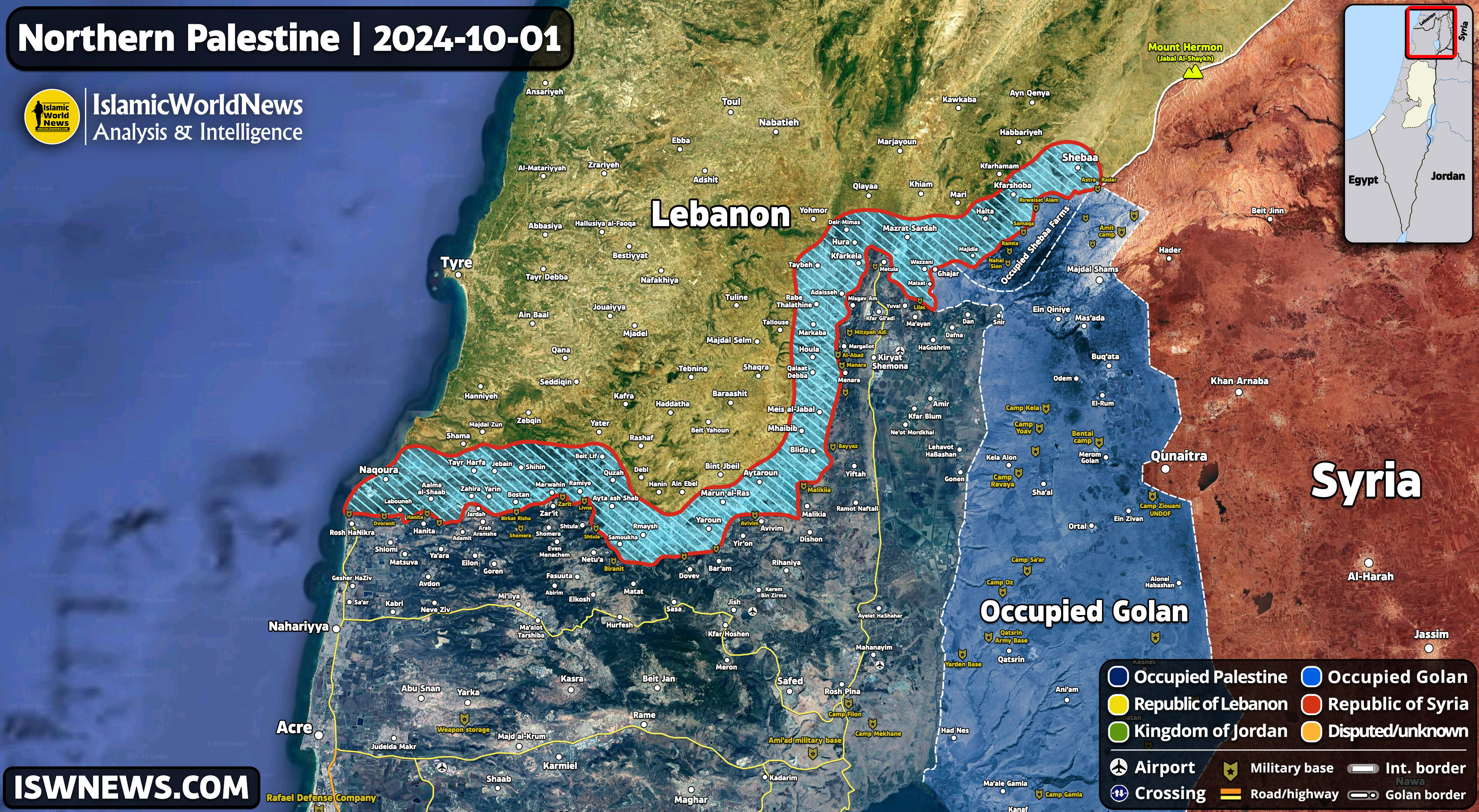
1- Attacking southern Lebanon and creating a buffer zone across the southern border of Lebanon:
In this scenario, Israel could create a 5-10 km security buffer zone in southern Lebanon, but this would involve occupying Lebanese settlements. This would expose Israeli attacking forces to Hezbollah’s anti-armor unit and could lead to significant losses for the Israeli military.
Attacking southern Lebanon and creating a possible buffer zone across the southern border of Lebanon
2- Massive attack in southern Lebanon:
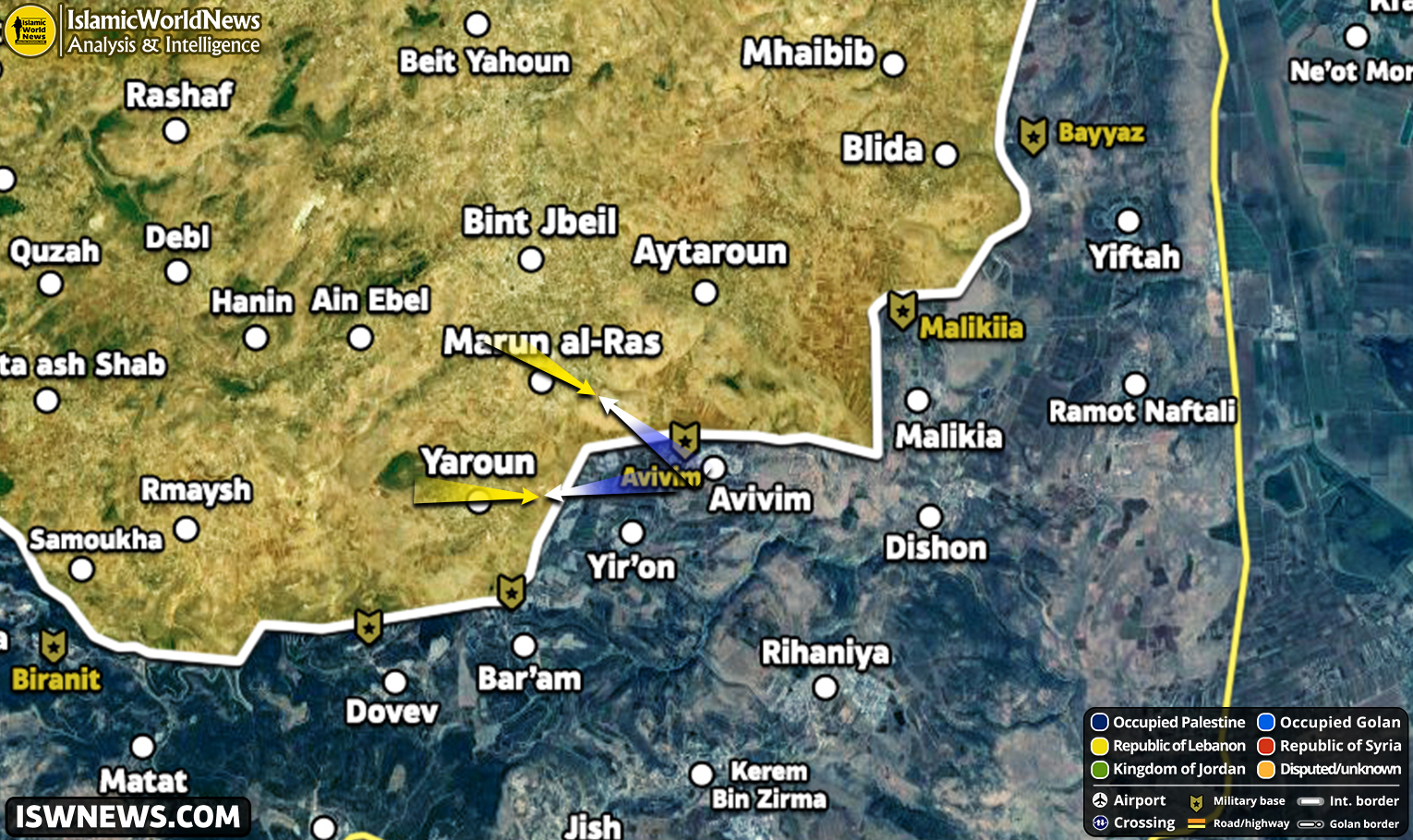
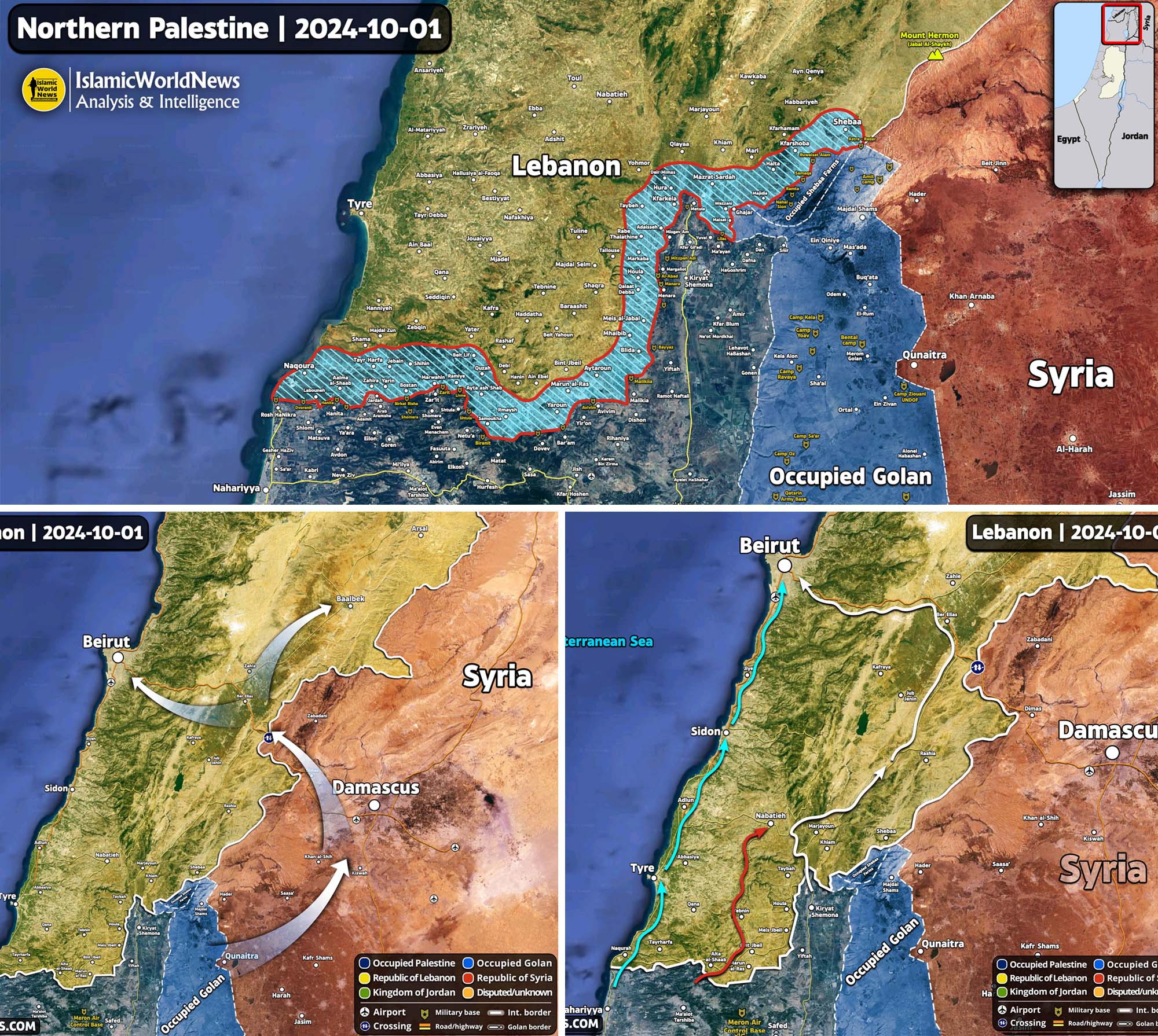
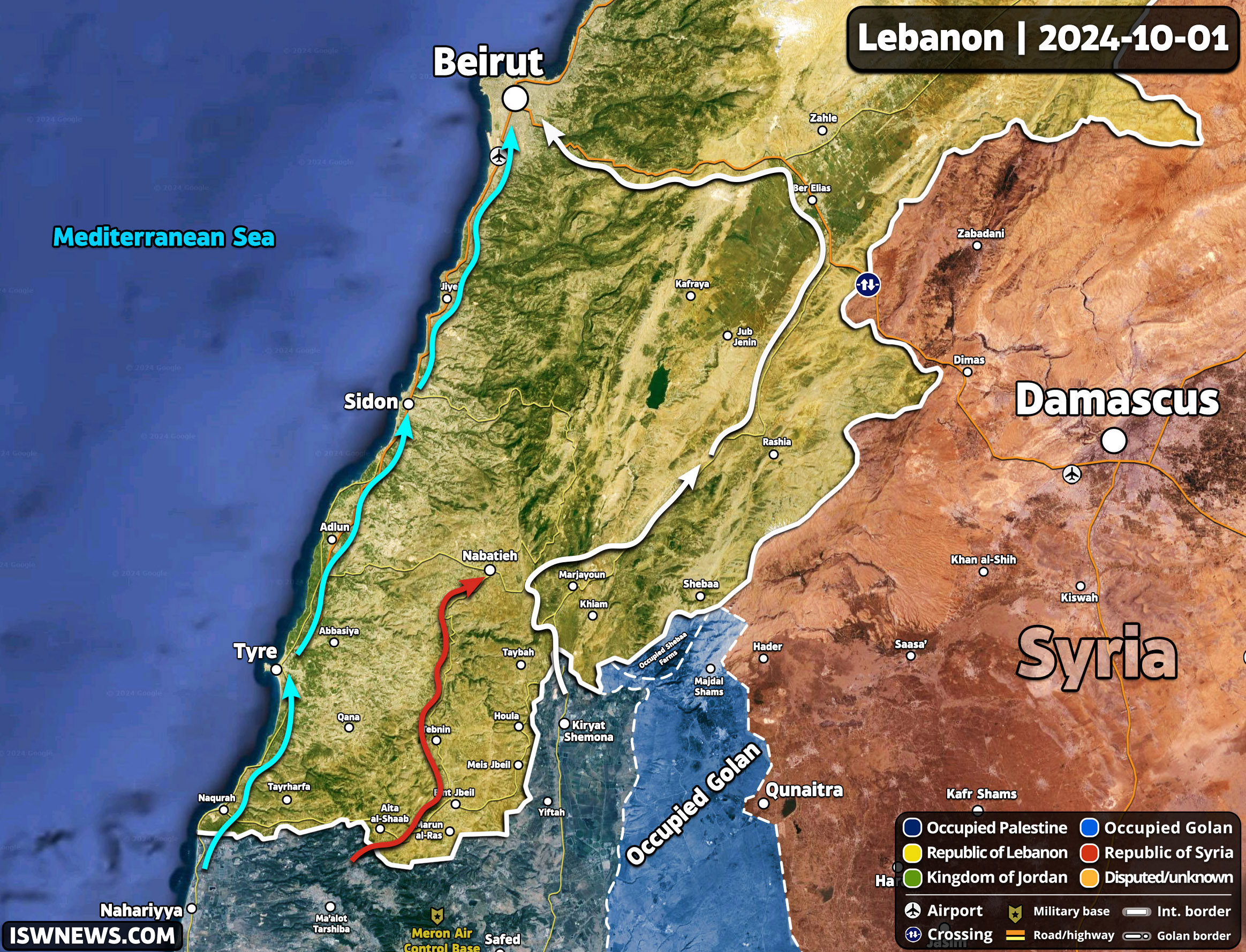
This scenario can be done from one to three axes: A (blue arrows) – advance on the Al-Naqourah-Tyre road to Sidon and south of Beirut. (high probability) B (red arrow) – advance towards the towns of Maroun al-Ras and Bint Jubeil and then move towards the city of Nabatieh. (low probability) C (white arrows) – advance from the north of Kiryat Shemona to the town of Marjayoun and the city of Nabatieh and then continuing to the Bekaa province. (average probability)
Possible routes of a massive attack in southern Lebanon
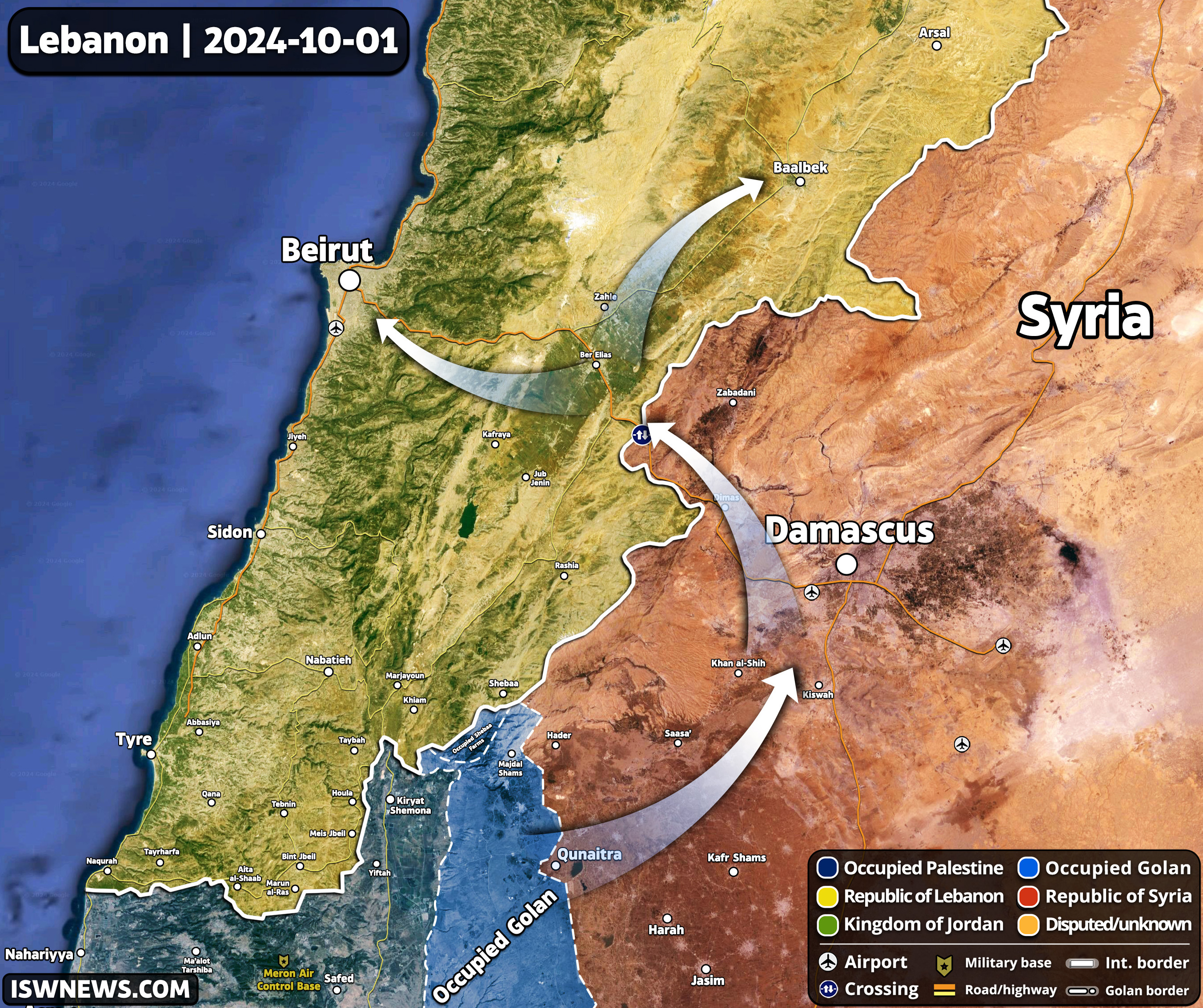
3- Attack on southern Syria and eastern Lebanon:
Upon initial observation, this attack may not seem very likely. However, upon considering the unstable situation of the Syrian government and army, the troubled areas of southern Syria, and the significant silence of the Syrian militants and the old opponents of the resistance in Daraa and Sweida, it becomes apparent that Syria does not have enough power to handle all the chaos and a potential full-scale Israeli invasion.
Israel’s advance with the help of Syrian militants and Takfiris in this area may proceed more quickly compared to southern Lebanon. Although the Israeli army will not only be fighting the Syrian army in Daraa and Quneitra, but the resistance groups also have a strong presence there. So Israel will be engaged in a multifaceted battle in southern Syria.
The possible direction of Israel’s attack on southern Syria and eastern Lebanon
In conclusion, it should be noted that the potential ground attack routes of the Israeli army have been assessed based on past Zionist movements and tactics in ground battles. The information provided is not definitive. It’s also possible that some of these routes may be executed in combination or that each route may complement the others.
Israel’s ground attack on the countries of the region is a certain thing that first happened in the Gaza Strip, and then it will happen in Lebanon and Syria, and it may spread to other Arab countries. But how and when it is not clear.
The Zionists advance based on the existing conditions. When they feel unable to advance and fight, they enlist the support of America and the Europeans to establish a ceasefire as a last resort. They observe the other party’s reaction and analyze it. If they encounter strong determination, they retreat from conflict. However, if they sense any discord or weakness in the other party, they proceed to dismantle their enemy’s foundation. The current situation in Palestine and Gaza, as well as the future situations in Lebanon and Syria, along with Netanyahu’s dreams for the future of Iran and Yemen, support this perspective.
On September 23, a two-hour consultation was held in the Iraqi capital city Baghdad by the resistance organizations in order to evaluate the latest events in the region as well as find an appropriate way to establish responses to Israeli military aggressions against the southern region of Lebanon.
The meeting was attended by commanders and representatives from Iraqi groups such as the Harakat Hezbollah al-Nujaba (HaN), Kata’ib Hezbollah also known as the Hezbollah Brigades, Harakat Ansar Allah al-Awfiya (HAAA), Kata’ib al-Imam Ali (KIA), and Kata’ib Sayyid al-Shuhada (Master of Martyrs Battalions). At the conclusion of the session, the participants reached agreements on several key points. The most significant agreement was direct engagement in confrontations to support the Lebanese resistance movement Hezbollah in the case that any ground operations launched by the Israeli regime.
As part of the agreements achieved in that meeting, missile and drone strikes by Iraqi resistance groups against Israeli positions will continue from the Iraqi and Syrian territories. Iraqi resistance commanders have also established contact with leaders of Hezbollah in Lebanon in a bid to coordinate efforts and discuss recent developments regarding the Israeli aggressions against the Arab country.
It is worth mentioning that since the beginning of Operation Al-Aqsa Storm, the Islamic Resistance in Iraq has reportedly conducted 158 strikes against Israeli positions so far with the aim of show practical support for resistance groups in the Gaza Strip and Lebanon. These retaliatory attacks are expected to persist until ceasefire agreements are reached in Gaza and subsequently in Lebanon.
Following the release of the reports of the Monday meeting among representatives and commanders of the Iraqi resistance, regional media outlets reported the deployment of Islamic resistance forces near the borders of occupied Palestine. Al Jazeera TV network has claimed in a report that the Israeli army is concerned about the arrival of approximately 40,000 forces from Syria, Iraq, and Yemen to the Syrian Golan Heights, who await an announcement by Hezbollah’s Secretary-General Sayyed Hassan Nasrallah to kick off the confrontation against the Israeli regime.
No further details have emerged regarding the deployment of resistance forces near the borders of occupied Palestine so far, and military commanders from Syria, Iran, and Lebanon have not yet responded to such reports. Nevertheless, local media in Deir ez-Zur Governorate, which is located in eastern Syria, have recently announced in some speculations that there have been reports of the dispatch of resistance forces to the Al-Qusayr district in Homs Governorate in central Syria before heading to Lebanon. It should be noted that the accuracy of such reports has yet to be verified.
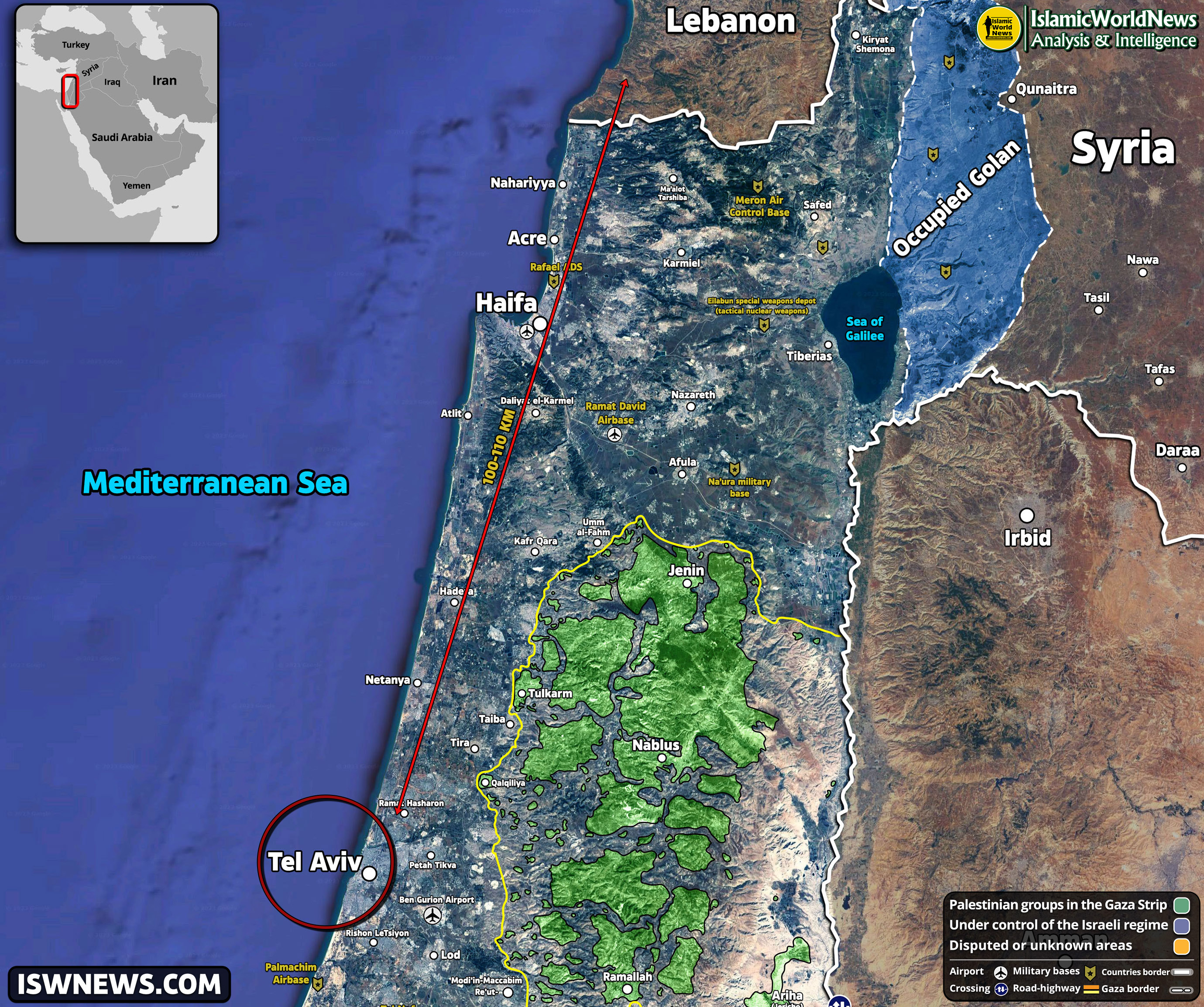
Hezbollah said in a statement that it had launched a Qadir-1 ballistic missile at the headquarters of Israel’s spy agency, Mossad, in the suburb of the city of Tel Aviv. The attack was carried out in response to recent assassinations in Lebanon and the attack that targeted communication devices across the country a week earlier, the group noted.
The unprecedented set off warning sirens in Tel Aviv and its suburbs. The Israeli Defense Forces later said in a statement that the missile was intercepted by the David’s Sling medium-range air defense system. No injuries were reported by the military.
Video of interceptingVideo of intercepting
At least 42 people were killed and more than 3,500 others were wounded on September 17 and 18 in a sabotage attack that thousands of pagers and walkie-talkies were exploded in Lebanon.
Later on September 20, an Israeli strike hit the southern suburb of the Lebanese capital, Beirut, assassinating Hezbollah top military commander Ibrahim Aqil along with more than 50 other people. Over 68 others were wounded in the strike.
Israel escalated again on September 23, launching an aerial campaign against Hezbollah that has so far claimed the lives of 569 people and left over 1,800 others wounded across Lebanon.
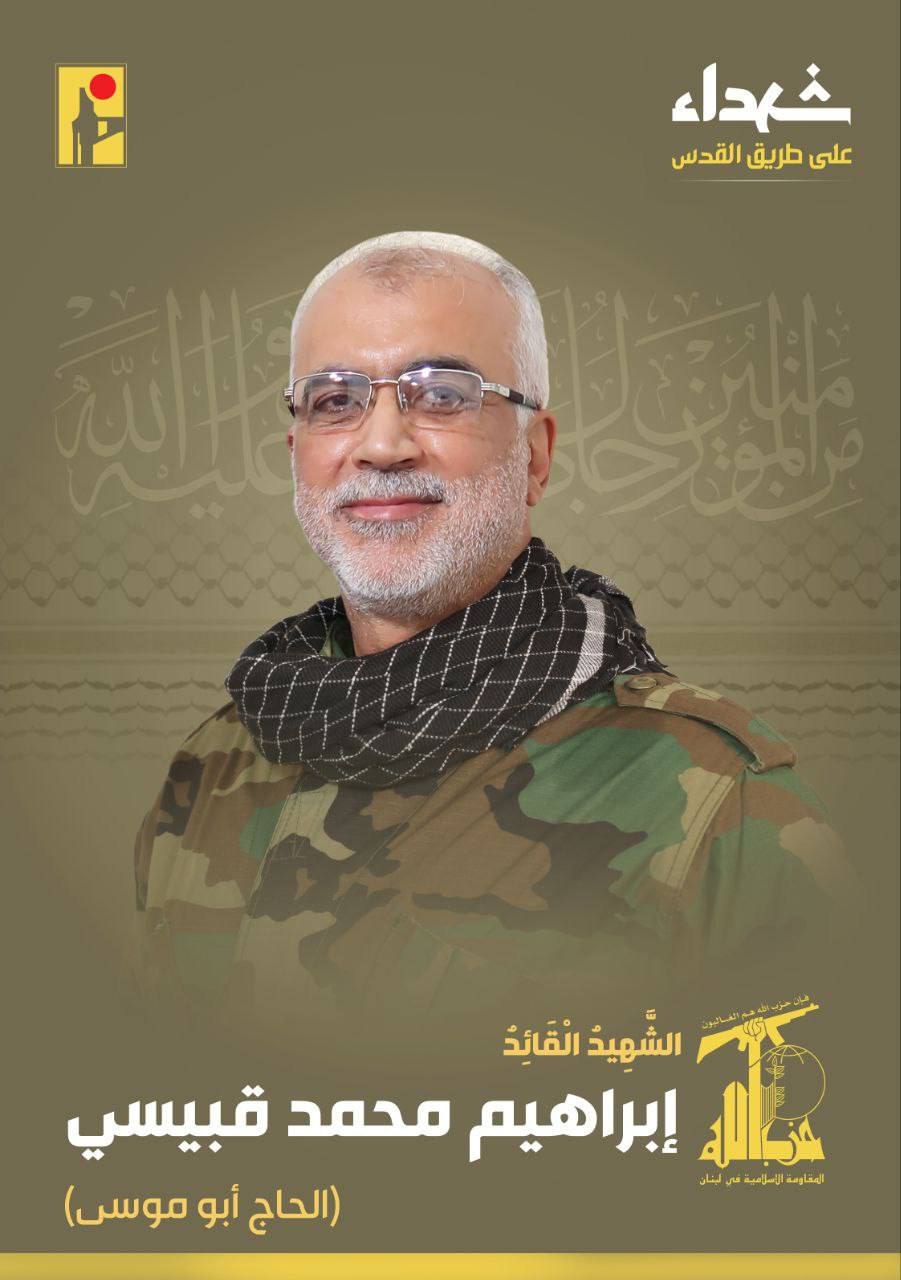
One of the Israeli strikes on September 24 hit Beirut, claiming the life of Ibrahim Qubisi, the commander of Hezbollah missile forces.
Up until the ballistic missile attack on Tel Aviv, Hezbollah had limited its response to rocket attacks on northern and central Israel.
The confrontation between Israel and Lebanon broke out after the beginning of the war in the Gaza Strip last October, with Hezbollah and its allies launching near-daily attacks against the IDF in support of the Palestinian enclave.
So far, the confrontation has resulted in 26 civilian deaths in Israel and the occupied Syrian Golan Heights as well as the deaths of at least 22 soldiers and security officers. On the Lebanese side, more than 1,800 people have been killed, including more than 500 fighters of Hezbollah.
As a result of the terrorist strike, six individuals, including Qubaisi, were martyred, and 15 others were wounded.
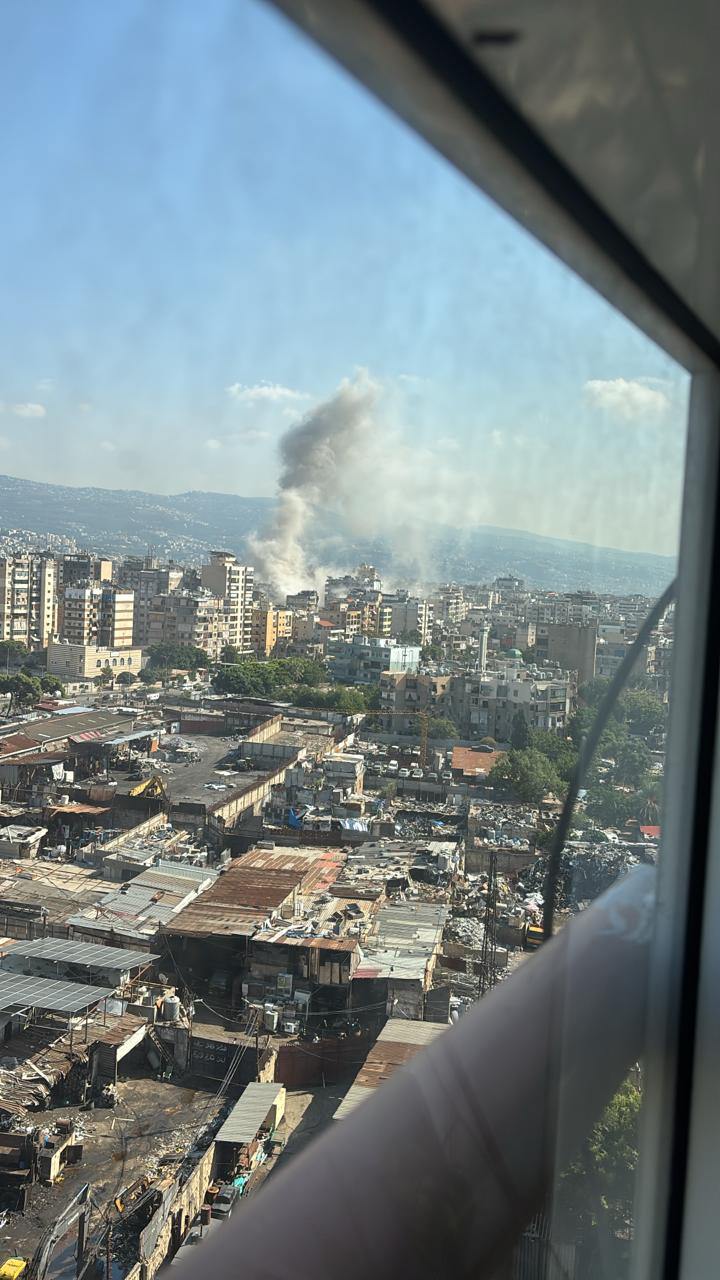
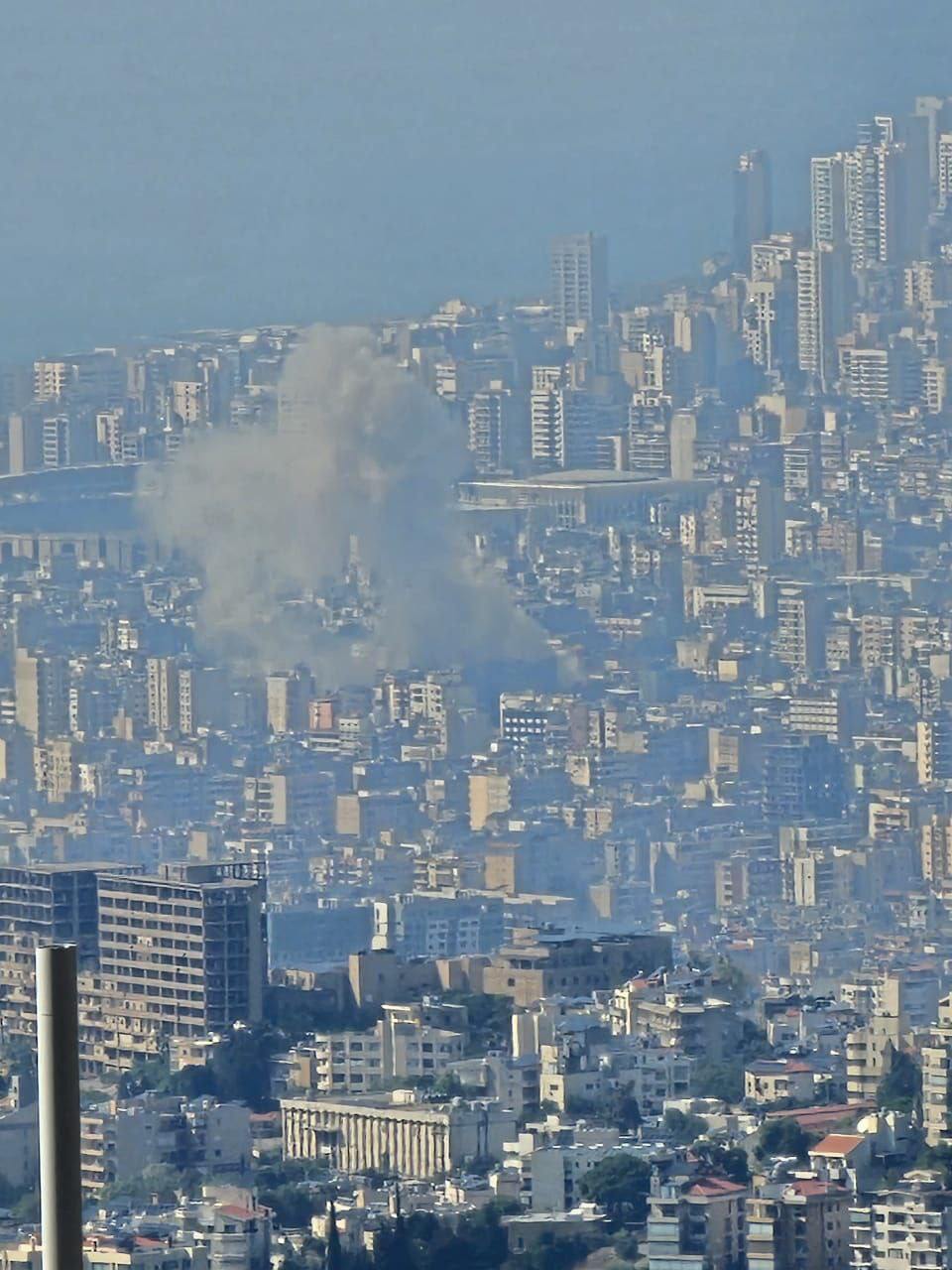
Prior to Hezbollah’s recent announcement, the Israeli military claimed to have targeted and assassinated the commander of Hezbollah’s missile unit in an air raid on the southern Beirut region.
Israeli strikes in the Dahieh of Beirut
Ibrahim Muhammad Qubaisi was born on October 10, 1962, in the Zebdine municipality of southern Lebanon. He joined the Islamic resistance in Lebanon in 1982 and was appointed to various organizational roles within the ranks of the resistance movement. Martyr Qubaisi played a key role in planning and leading plentiful military operations against the Israeli occupying forces in Lebanon from 1998 to 2000.
From 2001 to 2018, Hajj Ibrahim was in charge of the Bader military unit (north of the Litani River) in southern Lebanon and also managed segments of Hezbollah’s missile units. The esteemed commander was ultimately assassinated on September 24, 2024 by Israeli military aircraft in the southern areas of Beirut.
The assassination of Martyr Qubaisi marks the fifth terrorist strike by Israeli military aircraft in the Lebanese capital in the course of the recent days.
Israeli regime released footage of its terrorist strike in Dahieh
Earlier, the Tel Aviv regime had attempted to assassinate key leaders of the resistance movements in Lebanon and the Gaza Strip, including the founding commander of Hamas military wing (the Izz ad-Din Al-Qassam Brigades) and also served as the Hamas’s military commander of the West Bank and deputy head of Hamas’s Political Bureau Saleh al-Arouri, as well as senior Hezbollah commanders such as Fuad Shukr, Ibrahim Aqil, and Ali Karaki; however, the regime failed on conduct a successful assassination when it came to Karaki.
The Israeli regime’s objectives behind such terrorist operations in Lebanon appear to be aimed at putting more pressure on Hezbollah to halt its retaliatory attacks on the front along the southern Lebanon and northern occupied Palestine.
Hezbollah has declared that its operations in this front are intended to provide the Palestinian people with support as well as to counter the Israeli regime’s aggression in the Gaza Strip.
The Lebanese resistance movement also emphasized that they will continue their attacks on northern occupied Palestine until the Israeli military ceases its operations in this usurped region.
The Syrian government has not yet released any statement. There was also no comment from the Israeli army, which does not usually claim responsibility for its attack against Syria.
It should be noted that the Russian Hmeimim base is located near the city of Jabaleh.
Syrian air defenses intercepting Israeli missilesSyrian air defenses intercepting Israeli missiles
In general, it seems that the Israeli strikes on Syria has been completely repelled this time.
The latest Israeli attack in Syria was on September 8. Israeli attack targeted a military research center close to the town of Masyaf. The attack, which allegedly included a commando helicopter raid, claimed the lives of 18 people, mostly of whom were civilians.
In accordance with Western media reports from US diplomats, the Tel Aviv regime’s Mossad and the US’s CIA have kicked off new measures to deal with the escalation in Yemen, and to this end, a joint operations room has been set up under the supervision of intelligence officers of the CIA and Mossad and with the involvement of Yemeni groups opposed to the Ansar Allah movement.
This act came after Saudi Arabia rejected the US proposal to initiate a confrontation and take leadership reins at the internal fronts against the Yemeni Armed Forces.
According to the Western sources, US Ambassador to Yemen Steven Fagin held a meeting with the leaders of Emirati-affiliated militant groups in Yemen, which was mediated by UAE officials, and called on the Yemeni armed factions to put aside their differences and unite to face the main problem, which he believes is the Ansar Allah movement. In the multilateral meeting, Fagin stressed the full support of the United States for the Yemeni militant groups.
The US move to provoke the opponents of the Ansar Allah movement in Yemen comes after the failure of the US-UK coalition to prevent missile and drone strikes by the Yemeni armed forces against Israeli ships as well as vessels bound for the regime.
The US officials are of the opinion that by the use of a ground confrontation, they can divert the focus of the Ansar Allah fighters from the Red Sea and the Gulf of Aden with the aim of preventing the resumption of missile and drone assaults on Israeli positions in occupied territories of Palestine. Meanwhile, the Ansar Allah’s leadership warned Western foes against any adventurous move on Yemeni soil, arguing that the enemy would be astonished in the ground conflict as well.
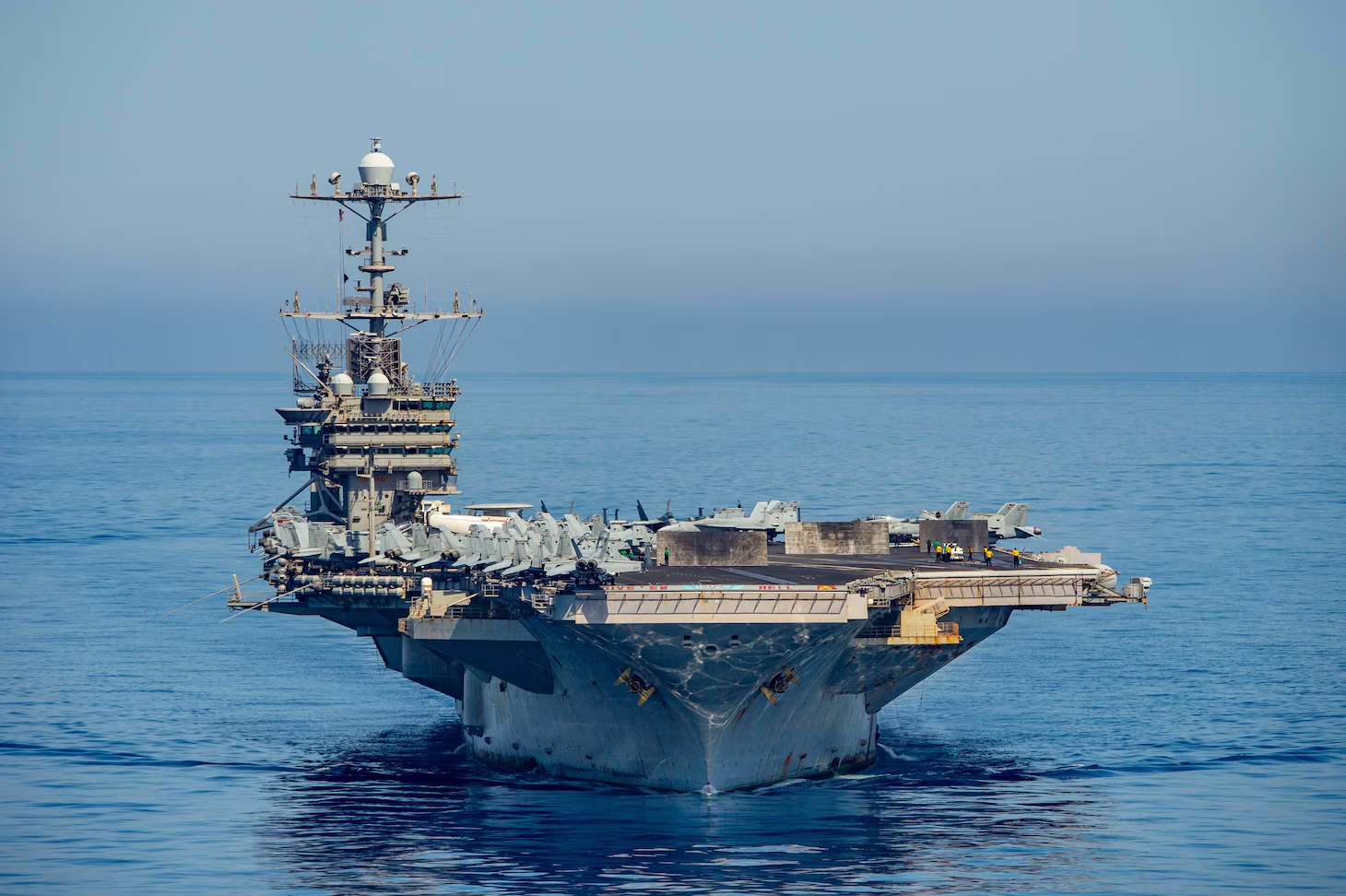
The Pentagon announced that the aircraft carrier strike group USS Harry S. Truman will sail to the eastern Mediterranean Sea the coming Monday.
According to the Pentagon, there are more than 6,500 sailors on the task force of the squadron. The USS Harry S. Truman is an aircraft carrier of the United States Navy, which is capable of carrying 90 fighter jets and helicopters. The aircraft carrier has a length of 333 meters and is equipped with two nuclear reactors, which have been operational since 1996.
It is worth citing that the aircraft carriers of the terrorist army of the United States have always been one of the means of threat and leverage on various states. In recent years, US authorities have squeezed several concessions from other countries by threatening to deploy aircraft carriers.
After the onset of Operation Al-Aqsa Storm, and especially after the escalation of tensions in the West Asia region in recent months, US-owned ships in the region played a key role in defending the Tel Aviv regime against the strikes of the Axis of Resistance, particularly the Yemeni Armed Forces. Somehow, it can be argued that the US army has formed a defensive umbrella against the assaults of the Yemeni army against the positions of the Israeli regime in occupied territories of Palestine by dispatching warships.
Following the intensification of the fighting in the region, the Yemeni army’s missile and drone units broke the taboo of firing on the US fleet and succeeded in inflicting severe blows upon the US Navy. Reports of any strike on US warships, which until recently seemed odd, is now routine.
The American authorities claimed that the deployment of such warships is aimed at supporting and protecting merchant vessels from strikes by the Yemeni Armed Forces, as well as to support and defend the Israeli regime. US military commanders have long opined that the presence of an aircraft carrier in the West Asia region is a strong deterrent against Iran and Islamic resistance factions in the region. That’s why, the American officials continue to emphasize the presence and strengthening of their naval fleets in the West Asian region.
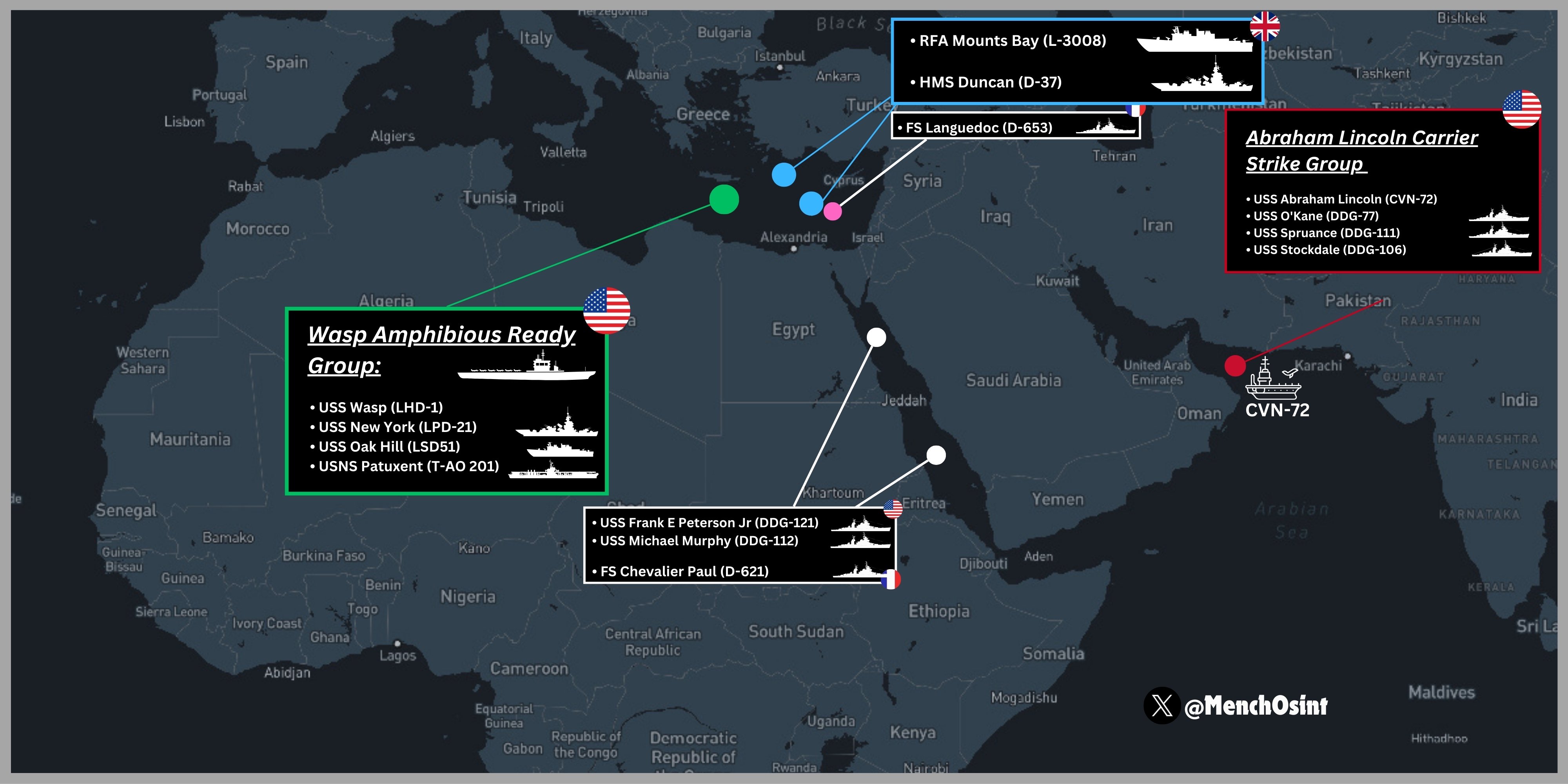
Map of the deployment of aircraft carriers and destroyers of the US terrorist army in the region
The latest information, which have been published so far, indicate that the aircraft carrier strike group USS Abraham Lincoln (along with three destroyers) have been dispatched in the Gulf of Oman and two US Navy destroyers have been deployed in the Red Sea.
The USS Georgia (SSBN-729/SSGN-729), an Ohio-class cruise missile submarine, which was dispatched to the region as ordered by the US Secretary of Defense, is now in a region, which is under the command of the United States Central Command (CENTCOM). It is worth mentioning that US officials declined to provide further details or exact whereabouts of the submarine. There are also six warships belonging to the terrorist army of the United States, including the USS WASP that is a United States Navy multipurpose amphibious assault ship, along with marines from the 26th Marine Expeditionary Unit (MEU) and three other US destroyers in the eastern Mediterranean.
The destroyers and warships of the terrorist army of the United States, which are considered as a threat to the Axis of Resistance, are also an opportunity for the Islamic resistance movements, and the appropriate use of this opportunity can bring about both side effects and positive consequences for the Axis of Resistance; therefore, it is necessary for them to maintain vigilance, rely on the weaknesses of the United States’ vessels, when it comes to carrying out targeted attacks against the Americans. The United States’ terrorist army, which is well aware of these issues, changes the distance of its vessels with Yemen’s coastal areas at different intervals so that it does not easily fall into the ring of fire of the Yemeni Armed Forces.