Category: Lebanon

  • Latest Updates Southern Lebanon, October 29, 2024; Israeli Invasion Of Aitaroun And Khiam

    Latest Updates Southern Lebanon, October 29, 2024; Israeli Invasion Of Aitaroun And Khiam

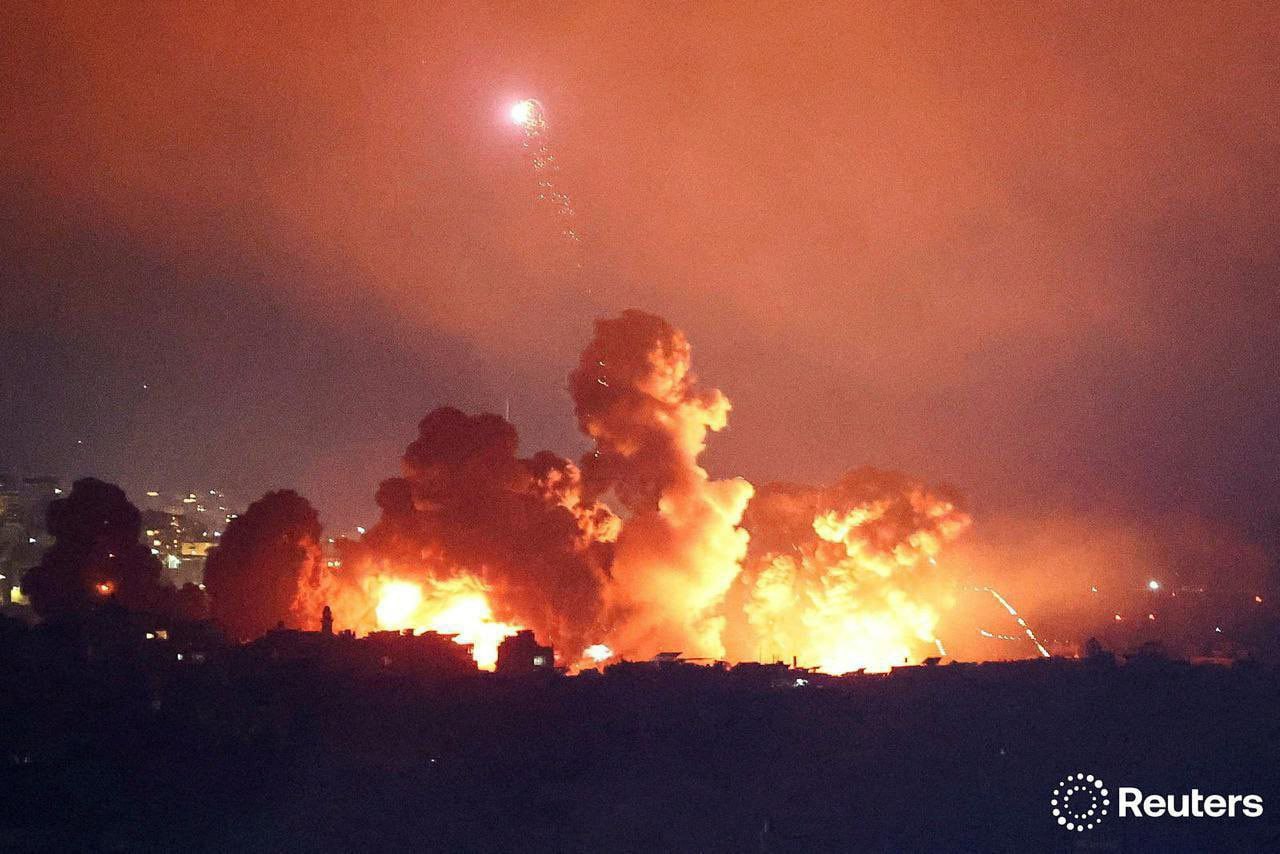
    After destroying several border villages in Lebanon, the Israeli regime’s army launched attacks on the towns of Aitaroun and al-Khiam, as well as the villages of Houla, Taibah, and Rab El Thalathine. Despite reports of the Israeli army retreating from the Lebanese border, heavy fighting continues in the Aitaroun and al-Khiam front, and the regime’s army is determined to maintain security for its bases and border settlements in northern occupied Palestine by destroying the border villages of southern Lebanon.

    Shebaa Farms-KfarKala Front: After the failure of movements towards Shebaa town and Kfar Shoba village, the forces of the 210th Brigade of the Israeli army have begun a new attack to reach the town of Khiam.

    Currently, the Israeli regime’s military forces continue fighting to push Hezbollah fighters back from Tal al-Nahas (Hourah) and Tal al-Mahamas, and the Israeli army intends to enter from the eastern and western fronts of the town of al-Khiam. If the Tel Aviv regime’s forces can capture the two heights of Tal al-Mahamas and Tal al-Nahas, they will not only secure the Metula settlement but also easily reach the town of al-Khiam.

    As mentioned in previous reports, the goal of the 210th Brigade in this operation is the destruction of Shebaa, Kfarshoba, Kfar Hamam, and most importantly, the town of al-Khiam.

    Latest situation in northern front of Metula and Aita al-Shaab – click to view in full size

    Udaysah-Markaba: On the eastern front of Taibah and Rab El Thalathine, Hezbollah fighters prevented the advance of the 98th Brigade of the Israeli army with numerous artillery and rocket attacks on Udaysah Marjaayoun village in southern Lebanon and the Israeli regime’s Misgav Am kibbutz and its border bases. In the village of Markaba, Israeli forces have also entered from the southern front, and clashes in this area continue.

    This video is related to the attempt of the Israeli soldiers to enter the villages of Rab Al-Thalathin and Taibah from the east on October 25, which failed due to Hezbollah’s rocket and artillery attacks, and finally the Israeli soldiers were forced to retreat.

    Latest Military Situation In Khiam Front (Map)

    Houla-Blida Front: On this front, the forces of the 91st Brigade of the Israeli army entered the village of Houla and destroyed parts of the residential buildings in this village. The level of destruction in the villages of this area is very severe, and after destroying Mhaibib and Blida villages, the Israeli army also demolished many buildings in the eastern and southern neighborhoods of Meiss El Jabal village.

    Satellite image of the amount of destruction of civilian buildings in Meis al-Jabal, Mhaibib and Blida by the Israeli regime
    Latest situation of Taibah, Rab al-Thalathin, Markaba and Hola – click to view in full size

    Aitaroun-Ramyeh Front: In the village of Ayta ash Shab, the Abu al-Laban hill to the east of this village remains under Hezbollah’s control, and multiple clashes have occurred in this area between resistance fighters and Israeli military forces. Israeli troops are demolishing and destroying buildings in other areas of Ayta ash Shab.

    In the village of Aitaroun, the forces of the 36th Brigade of the Israeli army entered from the southern road of this village and are engaged in clashes within its neighborhoods with Hezbollah fighters.

    Marwahin-Ras al-Naqoura Front: In recent days, the forces of the 146th Brigade of the Israeli army made attempts to enter the towns of Marwahin and ad-Dahira, which were thwarted by Hezbollah attacks, and currently, Israeli military forces have halted their operations on this front and retreated. The exact reason for this decision is unclear, but it seems that Israel’s operation on this front is accomplished.

    However, the Israeli forces managed to bomb and destroy several buildings in border areas, including the Rasul Akram Mosque in the village of Dahira. Additionally, the forest between the villages of Aalma El Chaeb and Dhahira has been set on fire.

    Video of the destruction and explosion of Rasoul Akram (PBUH) Mosque in the border village of Dhahira by the Israeli regime

    This mosque is located at a distance of about 400 meters from the occupied Palestinian border, and after the Ahl al-Qur’an mosque, it is the second mosque in the village of Dhahira that the Zionists blew up.

    Israeli soldiers laugh and sing Jewish religious songs while destroying the Muslim mosques in the border towns of Lebanon. This action contradicts their claim that “the war is limited to Hezbollah” and “they are trying to save Lebanon from the Hezbollah and Iran”. The destruction of Muslim mosques and civilian buildings shows that they intend to destroy Lebanon and fight against all Muslims in the region.

    According to a statement from Hezbollah’s operations command, since the onset of the ground operation in southern Lebanon, Hezbollah fighters succeeded in killing over 90 Israeli troopers and injured 750 others. Furthermore, 38 Merkava tanks, four military bulldozers, one Hummer vehicle, one armored vehicle, one personnel carrier, and three Hermes 450 drones and one Hermes 900 drone have been shot down.

    Contrary to reports published by the Israeli regime’s army, in which it claimed the retreating of its forces from Lebanese territory and the end of clashes this week, heavy battles continue. The future of the conflicts is uncertain, but the primary goal of the Israeli regime’s army is to create a secure border strip in southern Lebanon, and through the destruction of residential areas, and as a result of passive stance in Lebanon and the resistance front, its forces may expand into deeper southern Lebanon. Hezbollah will not be able to rebuild these areas at this stage of the war, and restoring their capabilities in border areas will take months.

    However, expecting rapid reconstruction from Hezbollah is unreasonable. It seems they must first work on their weaknesses and then rebuild their defensive barrier in southern Lebanon with a new perspective. The Lebanese resistance movement needs to utilize various tools, including strengthening its air defense capabilities to mitigate the impact of airstrikes, establishing a stronger intelligence network, and expanding its arsenals of modern weapons to be able to halt the massive war machine that Western countries have built for the Israeli regime in these critical circumstances.

    Latest Developments In Southern Lebanon Front On October 24; Heavy Fighting Continues On Five Axes (Map)

    Latest military situation in Southern Lebanon – Click to view in full size
  • Latest Developments In Southern Lebanon Front On October 24; Heavy Fighting Continues On Five Axes (Map)

    Latest Developments In Southern Lebanon Front On October 24; Heavy Fighting Continues On Five Axes (Map)

    Hezbollah fighters are currently engaged in heavy combat after 23 days of fighting on five fronts. The resistance fighters have been engaged in fierce clashes from Naqoura city to Marwahin town, from Ramyeh village to east of Aitaroun town, from southern Blida village to northern Houla village, from southern Markaba village to al-Ghajar village, and from al-Ghajar to the Shebaa Farms with the 146th Brigade, the 36th Brigade, the 91st Brigade, the 98th Brigade and the 210th Brigade of the Israeli army respectively.

    Hezbollah’s missile and air units continue to target military centers and headquarters along the Lebanon-Palestine border as well as inside the occupied areas of northern occupied Palestine, with an increase in attacks on the occupied cities of Tel Aviv, Haifa, Tiberias, and Safed. The Lebanese resistance movement’s air defense units have also intensified their response against Israeli fighter jets as well as reconnaissance and combat drones, increasing the number of downed Israeli drones to 11.

    Since the onset of the ground operation, the Israeli forces have destroyed a significant number of villages, including Mhaybib, Blida, Ramieh, Kfarkala, Al-Udaysah, and Yaroun, but have not stationed military forces or equipment in these areas. The occupation and control of these regions are not among the Israeli army’s objective, primarily due to Hezbollah’s superiority in ground combat. Instead, destruction through bombings and heavy airstrikes is being prioritized to create a so-called security belt along the border areas and mitigate threats from the Lebanese resistance in the occupied settlements and border bases.

    Shebaa Farms Front: As expected, the primary objective of the Israeli 210th Brigade in this front is to enter Shebaa town and Kfarchouba village. Advancing in this area is complicated due to the geographical conditions, and Hezbollah can halt the Israeli forces’ attempts to enter these areas with precise rocket and artillery strikes from the heights.

    Kfar Kila-Markaba Front: A video from inside the town of Kfar Kila shows that on October 23, Israeli troops completed the destruction of most buildings in this Lebanese town.

    Israeli army video from inside Kfarkala village
    Zionist media’s video of the destruction of buildings in Kfarkala by Israeli military bulldozers

    The situation is similar in the Aadaysit Marjaayoun axis, where commanders of the 98th Brigade of the Israeli regime are sending their forces and equipment toward Taybeh, Rab El Thalathine, and Markaba villages. Currently, clashes are ongoing in the southern and eastern districts of Taybeh, east of Rab El Thalathine, and inside Markaba. Hezbollah fighters are not only engaged in armed conflict but are also using anti-tank missiles and rocket attacks to destroy Merkava tanks and crush gatherings of Israeli troops on border roads and in the Misgav Am settlement, west of Aadaysit Marjaayoun village, and at the al-Marj base.

    The latest situation of Udaysah front / Click to view in full size

    The villages of Taybeh, Rab El Thalathine, and Markaba are considered as Hezbollah’s first line of defense in this axis, and maintaining this line is crucial, when it comes to the Israeli army’s subsequent movements in southern Lebanon. These areas are geographically appropriate for military operations, allowing Hezbollah to inflict heavy casualties upon the occupying forces and show strong defense by resorting to anti-tank and rocket attacks.

    Read more:
    Latest Military Situation in Markaba, Rab Al-Thalathin
    Israeli Army Attacks Continue In Rab Al-Thalathin And Taibah (Map)

    The latest situation of the Shebaa Farms to Markaba / Click to view in full size

    Houla-Blida Front: After completing operations in Mhaibib and Blida fronts, the 91st Brigade of the Israeli army moved toward Houla and reached the eastern areas of this village in their latest attacks. However, most buildings in this village have been damaged in the Israeli artillery and air strikes over the past year, and other buildings have been evacuated due to the war circumstances.

    In the west of the Meiss Ej Jabal village, scattered armed confrontations continue within its neighborhoods, but there is no reliable news regarding the latest situation in this area. Given the Israeli army’s movement toward Houla village, it is likely that the destruction of buildings in the northern and eastern areas of Meiss Ej Jabal has been completed.

    In the village of Blida, satellite images show that bulldozers and cranes of the Israeli regime’s army have ruined more than 152 buildings in this border village. Blida is one of the southeastern border villages of Lebanon and part of the Marjaayoun town in the Nabatieh Governorate, which also had an old and beautiful mosque, now the satellite images show its destruction. The Israeli regime’s army has even spared no mercy for the Blida cemetery, because its forces destroyed graves of the Muslims.

    In another video from southern Blida, troops from the 920th Battalion of the 769th Brigade of the Israeli army are seen blowing up a large poultry farm on the southern borders of Blida. The owners of this poultry farm state that it was the largest livestock and poultry breeding center in southern Lebanon, raising tens of thousands of chickens. They had intended to relocate the chickens to other areas of Lebanon before the outbreak of ground warfare, but direct threats from the Israeli army prevented them from doing so. Such actions by Israeli military forces are in line with statements made by Yoav Gallant, the Israeli war minister, regarding the necessity of launching an economic and military campaign against Hezbollah and Lebanon.

    The demolishing of the largest chicken farm in southern Lebanon by the Zionists

    Aitaroun-Ramyeh Front: The Israeli regime’s army has successfully entered the Aitaroun town from the eastern axis, and clashes are currently ongoing in the western half of this town. The situation is similar in the Maroun El Ras village, where Israeli village are attempting to advance deeper into Maroun El-Ras and toward the southern entrance of the Bint Jbeil town.

    The latest status of the Aitaroun Front / Click to view in full size

    Heavy fighting is taking place in Ayta ash Shab village, particularly in the northern and eastern neighborhoods of this area, with the Israeli army conducting heavy attacks over the past two days to destroy Hezbollah positions on Aboullaban Hill east of Ayta ash Shab. Most buildings in Ayta ash Shab village have been destroyed in airstrikes, and despite the betrayal of the Christian villagers of Rmaych, Hezbollah fighters remain in the village and continue to defend it.

    Hezbollah fighters are targeting Israeli gatherings and movements in this axis with rocket and artillery attacks, inflicting heavy casualties on the Israeli occupiers. However, these attacks are not sufficient to halt the Israeli war machine, as the combination of airstrikes along with bulldozer and crane activities on the ground is allowing the regime’s military forces to advance in the border areas of southern Lebanon.

    The latest status of Aita al-Shaab Front / Click to view in full size

    Given the direction of attacks by the Israeli 36th Brigade in Aitaroun and Maroun El-Ras, it appears that the Israeli regime’s main objective in this axis is to reach the Bint Jbeil village. In addition to Aitaroun and Maroun El-Ras, the movement of Israeli military forces along the Rmeish-Ain Ebl road (Christian villages) poses a significant threat to Bint Jbeil and could effectively encircle this small area.

    The latest situation of the Houla to Ramieh front / Click to view in full size

    Marwahin-Ras Al Naqoura Front: In the Marwahin-Ras Al Naqoura front, no significant ground movements from the Israeli army have been observed, with most of their activities focused on air and artillery attacks.

    According to a statement from Hezbollah’s operations command room, the total Israeli casualties, based on observations by resistance fighters, exceed 70 killed and more than 600 wounded, including officers and troopers of the Israeli regime’s army. Additionally, 28 Merkava tanks, four military bulldozers, one armored vehicle, one personnel carrier, three Elbit Hermes 450 drones, and one Elbit Hermes 900 drone have been destroyed in the course of 23 days of ground combat. This count does not include casualties inflicted on the Israeli enemy in bases and camps in northern and deep inside occupied Palestine.

    This level of casualties and damage significantly impacts the continuation of the clashes, especially if Hezbollah can execute guerrilla warfare, infiltrate occupied territories, or utilize devastating weapons in ground battles. The first phase of the Israeli army’s ground operation aims to create a security buffer zone in Lebanese territory, but what will determine the future of the war is Hezbollah’s response in ground combat and the extent of casualties and losses suffered by the Israeli regime at this stage of the confrontation.

    Read: Latest Developments Of Lebanon’s Southern Front On October 17, 2024; Israel Destroys Mhaibib Village!

    The latest situation of the South Lebanon Front / Click to view in full size
  • Hezbollah Confirmed: Sayyed Hashem Safieddine Was Martyred

    Hezbollah Confirmed: Sayyed Hashem Safieddine Was Martyred

    Lebanon’s Hezbollah confirmed the martyrdom of Sayyed Hashem Safi Al-Din, the head of Hezbollah’s executive council, in the terrorist attack by the Zionist army fighter jets on the suburbs of Beirut on October 5.

    Last night the spokesman for the Israeli regime’s army Admiral Daniel Hagari also announced in a statement that the head of Hezbollah’s Executive Council Sayyed Hashem Safi al-Din and head of Hezbollah’s intelligence section Hussein Ali Hazimeh were assassinated by Israeli airstrikes in Beirut suburb.

    The Israeli statement was issued following the removal of debris at the site of the Israeli airstrike in Beirut suburb. Local media reported that rescue forces retrieved the bodies of 24 individuals from the site, all of whom were senior members of the Lebanese resistance movement, including Sayyed Hashem Safi al-Din.

    Sayyed Hashem Safieddine was the head of Hezbollah’s executive council, who was mentioned as a potential successor of martyr Sayyed Hassan Nasrallah, the secretary general of Hezbollah. Sayyed Hashem was the cousin of Sayyed Hassan Nasrallah and was his companion and supporter since the founding of Hezbollah. Since 1992, Safieddine has been the head of Hezbollah’s executive council and was one of the seven members of Hezbollah’s decision-making advisory council.

    Sayyed Hashem Safieddine was martyred on October 5, during the terrorist attack of the Zionist regime’s army fighter jets on the neighborhood of Hara Harik located in the suburbs of Beirut.

    Israeli airstrikes 1
    Israeli airstrikes 2
  • Israel Claims Responsibility For Assassination Of Sayyed Hashem Safi Al-Din

    Israel Claims Responsibility For Assassination Of Sayyed Hashem Safi Al-Din

    According to a statement released by spokesman for the Israeli regime’s army Admiral Daniel Hagari, head of Hezbollah’s Executive Council Sayyed Hashem Safi al-Din and head of Hezbollah’s intelligence section Hussein Ali Hazimeh were assassinated in an airstrike by Israeli fighter jets on October 5, when the Israeli warplanes targeted a building in Beirut suburb.

    The statement was issued following the removal of debris at the site of the Israeli airstrike in Beirut suburb. Local media reported that rescue forces retrieved the bodies of 24 individuals from the site, all of whom were senior members of the Lebanese resistance movement, including Sayyed Hashem Safi al-Din.

    Despite the official declaration from the Israeli army, Hezbollah has not yet issued a statement regarding the martyrdom of its senior members.

    Sayyed Hashem Safi al-Din is the head of Hezbollah’s Executive Council, who had been mentioned as a potential successor to the martyr Sayyed Hassan Nasrallah, the Secretary-General of Hezbollah.

  • Israeli Army Attacks Continue In Rab Al-Thalathin And Taibah (Map)

    Israeli Army Attacks Continue In Rab Al-Thalathin And Taibah (Map)

    The Israeli army’s infantry forces have begun advancing in this area with air support since yesterday evening. In response, Hezbollah’s anti-armor unit has engaged the Israeli tanks. They have successfully destroyed three Merkava tanks with anti-armor guided missiles in Tal al-Aqaba, located in the east of Rab Al-Thalathin and the lands between Rab Al-Thalathin and Taibah.

    The attack on the southern part of Taibah village started this morning. Hezbollah successfully neutralized the Israeli army’s attacks in this area through armed conflict.

    Click to view full size

    In addition to these clashes, Hezbollah’s missile forces have crushed the gatherings of Israeli soldiers in the town of Kiryat Shemona, Misgav Aam, Marj base and around the border village of Al-Udaysah and Khale al-Asaker in the west of Al-Udaysah (3 times) with rocket attacks. Israeli fighter jets also attacked various buildings in Rab Al-Thalathin and Taibah more than 10 times.

    The villages of Taibah, Rab Al-Thalathin, and Markaba serve as Hezbollah’s primary defense line in this area. It is crucial to maintain this line in order to counter any future advances by the Israeli army in southern Lebanon. These areas are strategically located, allowing Hezbollah to inflict heavy casualties and mount a strong defense by using anti-armor missiles and rockets.

  • Latest Military Situation in Markaba, Rab Al-Thalathin

    Latest Military Situation in Markaba, Rab Al-Thalathin

    The Israeli army launched a ground attack on the village of Markaba yesterday afternoon. They moved troops and armored vehicles from the Marj and Hunin bases to Markaba and Rab Al-Thalathin, entering the eastern neighborhoods of Markaba with heavy air support.

    Heavy clashes between the Israeli army’s 98th Division and Hezbollah fighters continue in the area.

    Latest military situation in the Markaba area

    In addition to the eastern front of Markaba, the Zionists are also attempting to enter the west of Markaba from the Udaysah-Rab Al-Thalathin junction. If the Israelis manage to cross the three-way junction, the fall of Markaba is inevitable.

    Israeli armored vehicles are stationed in the Rab Al-Thalathin axis but have not entered the village yet.

    In the last two days, Hezbollah has attacked the gatherings and positions of the Israeli army around Markaba 10 times, causing significant casualties to the Israeli army.

  • Latest Developments Of Lebanon’s Southern Front On October 17, 2024; Israel Destroys Mhaibib Village!

    Latest Developments Of Lebanon’s Southern Front On October 17, 2024; Israel Destroys Mhaibib Village!

    According to previous press releases, the Israeli military has chosen the scenario of creating a security border strip in southern Lebanon for its ground operations. At this time, they are implementing a scorched earth policy, claiming to eliminate the Lebanese resistance movement’s military facilities and prevent Hezbollah from returning to the border areas by completely destroying the towns and villages in southern Lebanon. This has been executed since the onset of the ground operations in the villages of Yaroun, Blida, Mhaybib, Kafr Kila, Al-Adisa, and other border regions, and as time passes, we will see more visual documentation of this war atrocity and humanitarian disaster.

    Kafr Kila, Al-Adisa, Rab El Thalathine, and Markaba:
    Based on released images, the Israeli military has retreated from the villages of Kafr Kila and Al-Adisa. However, this retreat was not due to a strong resistance from Hezbollah or a failure to penetrate these areas, but rather due to their plan to implement the maximum destruction of buildings in Kafr Kila and Al-Adisa; thus, the Israeli regime is of the opinion that they have achieved the main goal in this axis.

    The situation of Kfar Kala before and after the ground operation of the Israeli army

    In the eastern axis of Rab El Thalathine and Markaba, the situation remains unchanged. According to the latest reports, Hezbollah targeted Israeli troops’ positions with rocket and artillery attacks.

    Meiss El Jabal, Mhaibib, and Blida:
    On Wednesday, the Israeli regime released a video showing the complete destruction of the historic village of Mhaibib.

    In the axis of Meiss El-Jabal and Blida, the Israeli military forces are advancing toward the center of those areas with bulldozers and cranes, demolishing residential buildings. Given the Israeli army’s control over the northern road and the destruction of Mhaybib, the Blida region has practically collapsed, and it seems that the total destruction of this village is just a matter of time.

    Click to view full size

    Ayta ash Shab and Ramieh:
    In the Ayta ash Shab axis, a fierce battle is underway in the western areas of this town, and according to videos released by the Israeli regime’s army; most buildings have been destroyed by airstrikes. In the eastern areas of Ayta ash Shab, Hezbollah does not have a strong foothold due to its proximity to the Christian town of Rmaych, and likely will not offer much resistance in this area.

    Despite the advance of Israeli troops in the west of Ayta ash Shab village and their movement around Ramieh village, there have been no reports or visual evidence of Israeli military forces entering the village of Ramieh.

    Overall, Hezbollah’s first line of defense along the border of occupied territories of Palestine has been breached, and resistance fighters must prepare to defend the town of Bint Jbeil and its surrounding areas in the coming week.

    Click to view full size

    Labbouneh and Naqoura:
    In the Labbouneh and Naqoura axis, the Israeli military forces have not made any significant advances and their movements have faced counterattacks from Hezbollah’s anti-tank units. In the last 24 hours of clashes, three Merkava tanks have been destroyed or damaged.

    Smoke rising from the Labouna area after the Israeli tank was targeted by Hezbollah

    Since the onset of the Israeli army’s ground operations until now, Hezbollah has not been able to completely halt the occupying forces, but it has significantly slowed their advance. The Israeli regime’s army have resorted to measures such as nonstop air raids, the use of the combat and reconnaissance drones, and support from US, UK, and other European spy planes, along with the deployment of a high number of military personnel and equipment, particularly bulldozers and cranes, are among the factors that will help the regime achieve its goal of destroying the border areas of southern Lebanon.

    Of course, the destruction of residential areas also took place during the 33-day war in 2006; for example, the Israeli army completely destroyed the west of Ayta ash Shab village. However, Ayta ash Shab was rebuilt over the years and, despite its poor geographical location, is today one of the strongholds against the Israeli regime’s aggression.

    Currently, Hezbollah’s first line of defense against the Israeli ground invasion has been breached, and it is likely that the center of the confrontations will shift towards the southwestern areas of Lebanon in the coming week. The important point here is that the Tel Aviv regime’s maneuverability within Lebanese territory must be curtailed in order to limit their ability to execute other scenarios and military advances further into Lebanon.

    Latest military situation in southern Lebanon – click to view full size
  • Israel Seeks To Create Buffer Zone With Syria, Lebanon

    Israel Seeks To Create Buffer Zone With Syria, Lebanon

    The ground operations of the Israeli army kicked off on October 2, 2024, aimed at clearing southern Lebanon in order to facilitate the retreat of fighters of the Lebanese resistance movement Hezbollah to the north of the Litani River. One of the objectives of the military operation is to create a buffer zone at the border between occupied Palestine and Lebanon.

    In addition to Lebanon, the movements of Israeli troops and reports from sources affiliated with terrorist groups and the Israeli regime indicate that the regime’s officials plan to create a buffer zone scheme at the border between Syria and occupied territories of Palestine as well.

    Media outlets close to the Syrian militants claimed on October 11 that a group of Israeli army’s infantry forces, supported by several armored vehicles, entered the village of Kwdana in the Quneitra Governorate of Syria. However, local officials denied this claim, when they appeared in border areas near the occupied Golan heights.

    Kwdana in the Quneitra Governorate of Syria

    A few days later, Israeli military forces cleared some minefields and established new barriers in the Golan Heights and border areas with Syria on October 15. These actions have fueled speculation about ground operations in Syrian territory aimed at attacking Hezbollah from eastern Lebanon and creating a buffer zone between Syria and occupied territories of Palestine.

    Given the current situation in the Israeli-occupied territories, the initiation of ground operation against Syria seems unlikely, because even a limited ground operation could complicate the situation for the Tel Aviv regime due to the presence of Russian forces in the border areas of Syria with occupied territories of Palestine.

    Over the past years, the Israeli regime’s army has repeatedly targeted the positions of the resistance axis and the Syrian army with missile and air raids. Following the onset of Operation Al-Aqsa Storm and Syria’s significant role in supporting the Islamic resistance axis, Israeli army’s air raids against various areas in Syria have increased. Most of the Israeli regime’s attacks in the past year have aimed at assassinating senior resistance commanders and demolishing logistic centers as well as important ammunition depots. During these attacks by the regime’s forces, hundreds of resistance fighters and even Syrian civilians have been martyred and injured.

  • Israeli Army Destroys Entire Village Of Mhaibib

    Israeli Army Destroys Entire Village Of Mhaibib

    After breaking into the village on Wednesday, October 16, they bombed most of its buildings, leading to the destruction of this historic village. The Israelis alleged that Mhaibib contains military and underground facilities belonging to Hezbollah.

    Mhaibib is a small village in the Marjaayoun town of southeastern Lebanon, located between the town of Meiss El Jabal and the village of Blida.

    It is home to an ancient shrine dedicated to the Prophet Benjamin, a figure in Judaism, and its name, Mhaibib, means beloved prophet. In 1948, the Israelis stole the Hebrew inscription from this two-thousand-year-old shrine. The village overlooked the border between occupied territories of Palestine and Lebanon and had been evacuated before the Israeli ground assault in southern Lebanon.

    The Israeli regime’s ground operations in southern Lebanon kicked off on October 1, following a series of targeted killings of Hezbollah officials and heavy bombardments across various regions in the country. The ground attacks covered the border strip from the Shebaa Farms to the Mediterranean coast, supported by over 10,000 airstrikes. The Israeli aggression against Lebanon has resulted in the martyrdom of at least 2,300 Lebanese people, the injuries of over 11,000 others, and the destruction of thousands of residential and civilian buildings.

    The moment of the complete destruction of Mhaibib village by the Zionist army
    The moment of the complete destruction of Mhaibib village by the Zionist regime’s army from an aerial view
  • Latest Updates On Southern Lebanon-Northern Occupied Palestine, October 16, 2024

    Latest Updates On Southern Lebanon-Northern Occupied Palestine, October 16, 2024

    Shebaa Farms:
    The 210th Division of the Israeli army’s Northern Command has initiated ground operations in the axis of the Shebaa Farms using three of its brigades. The aim of this military operation is reported to be limited assaults in southern Lebanese villages, with the village of Shebaa possibly being a target. No ground clashes have been reported in this axis so far, and Hezbollah has pounded Israeli movements and positions at the Ruwaisat Al-Alam site and Al-Radar base with rocket fire.

    Latest in the Shebaa Farms front / Click to view in full size

    The Israeli regime’s forces entered the Al-‘Abbasiyya Mosque at night through the border village of Ghajar and destroyed part of the mosque in a bomb strike. This mosque is located about 100 meters away from the border of the Israeli-occupied territories.

    Abbasiyeh village mosque

    Al-Udaysah, Kfarkila, Rab El Thalathine, and Markaba:
    Following the withdrawal of the 98th “Ha-Esh” Paratroopers Division of the Israeli army, clashes in the towns of Kfarkila and Al-Udaysah have ceased. Subsequently, the Israeli military forces attacked the village of Markaba from the eastern axis early on October 15, and the Israeli occupying forces also launched heavy attacks in the eastern front of the village of Rab El Thalathine early on October 16. These strikes have been repelled by Hezbollah fighters, and currently, clashes in the eastern outskirts of those areas have stopped.

    Latest situation in Rab al-Thalathin and Markaba front / Click to view in full size

    Meiss El Jabal, Mhaibib, and Blida:
    There is no precise news story from the village of Meiss El Jabal, but the Israeli regime’s media outlets claimed advances in this area. In the village of Blida, the Israeli military forces exerted significant pressure on the northern axis of this region, with their forces advancing toward the center of Blida using bulldozers and cranes to demolish residential homes of the Lebanese people.

    Latest situation in the south-eastern front of Lebanon / Click to view in full size

    Maroun El-Ras and Yaroun:
    There are no fresh reports from the Maroun El-Ras axis, and the Israeli military forces are currently engaged with Hezbollah fighters in southern of this village. In the Yaroun axis, Israeli occupying forces have retreated from inside this village after demolishing most of its buildings.

    Labbouneh and Naqoura:
    There have been no significant changes in the Labbouneh and Naqoura axes, and the images published by the Israeli military forces proved that the place of the installation of the Israeli regime’s flag is 500 meters far from the border line.

    Latest situation in Labbouneh and Naqourah front / Click to view in full size

    Ayta ash Shab and Ramyeh:
    Ground confrontations in the axes of Ayta ash Shab and Ramyeh kicked off on October 15 and intensified on October 16. Hezbollah fighters targeted three bulldozers and two Merkava tanks of the Israeli regime with guided anti-tank missiles, resulting in their destruction or damage. Hezbollah conducts continuous rocket and artillery attacks against the Israeli regime’s army positions in Khallet Warda and the Ramyeh base. At present, heavy clashes are underway in the forests and southwestern lands around Ayta ash Shab, and the Lebanese resistance movement has so far succeeded in repelling the Israeli army’s assaults. Given the fact that the Israeli regime carries out heavy scale airstrikes, there is a possibility that Hezbollah may retreat into Ayta ash Shab and direct the conflict into urban areas in the coming hours. 

    Latest situation in Aita al-Shaab and Ramieh front / Click to view in full size
    Heavy bombardment of Aita al-Shaab town with unconventional bombs (probably tactical nuclear bomb)

    On the morning of October 14, the Israeli army targeted the towns of Ayta ash Shab and Ramyeh, as well as the UNIFIL (United Nations Interim Force in Lebanon) forces’ headquarters at the zero-border point in Ramyeh with incendiary white phosphorus bombs after sustaining multiple hits in ground clashes and rocket attacks. According to UNIFIL’s official reports, at least 15 of the (so-called) peacekeepers experienced symptoms including skin problems and gastrointestinal allergy after smoke entered their camp.

    Finally, after a year of war and the Israeli regime’s use of unconventional weapons, including incendiary white phosphorus bombs in the Gaza Strip and southern Lebanon, the fallout from this cowardly and unusual action has also affected the United Nations’s forces. Overall, the conditions of the confrontation for the Lebanese and Palestinian resistance fighters are difficult, and the Tel Aviv regime is likely to use unconventional munitions in any front where it faces weakness.

    Headquarters of UNIFIL forces at the border of Ramieh

    The Israeli regime’s military issued a statement and claimed that the Golani Brigade forces identified and captured three Hezbollah fighters in an underground base and transferred them to occupied territories for interrogation. Thus, the number of Hezbollah captives in the battles of southern Lebanon has increased to four. Previously, the Israeli regime had captured a Hezbollah fighter named Waddah Younis from the town of Houla in an underground well in the village of Blida.

    Given Hezbollah’s defensive tactics and the Israeli army’s offensive strategies, such events in war are natural. The Lebanese resistance fighters cannot sleep under trees or build shelters with sandbags and concrete blocks to avoid airstrikes from Israeli jets and drones. They go to underground shelters to return to their positions after Israeli airstrikes and continue their anti-tank missile and artillery assaults.

    Despite the limited number of images and videos released from the battle grounds in southern Lebanon, what we have found out from the conflict fronts is that Hezbollah has stationed a military group (between 15 to 25 members) in small villages and a squad (between 40 to 80 members) in towns. It remains to be seen how this tactic will evolve in the ongoing war and what changes will be made to address its shortcomings.

    Overall, fighters Hezbollah’s Radwan Force practiced various tactics over the past years and they will undoubtedly carry out the toughest defenses possible, when it comes to the battles in the southern Lebanese towns. Given the fact that the geographical position, weaponry, and quantity of forces is not as usual, the capture of a few fighters or even the fall of some districts of southern Lebanon in the hands of the occupying forces will be part of the ground operation and will not create specific victories for the Israeli military forces. Hezbollah’s overall objective in this war is to neutralize the Israeli regime’s scenarios regarding its military advances in the Lebanese axes as well as to prevent Israeli settlers from returning to northern occupied Palestine, and God willing, it will be realized and will lead to the failure of Israeli ground operations.

    Read more: Latest Updates On Southern Front of Lebanon; Blida At Risk Of Falling (Map)

    Latest updates on southern Lebanon, click to view full size
  • Latest Updates On Southern Front of Lebanon; Blida At Risk Of Falling (Map)

    Latest Updates On Southern Front of Lebanon; Blida At Risk Of Falling (Map)

    Kfarkala and al-Udaysah:
    The confrontations between the Israeli military forces and fighters of the Lebanese resistance movement Hezbollah in the al-Udaysah and Kfarkala axis have significantly decreased.

    The reason behind the reduction in clashes in this front seems to be the repositioning of the occupying forces within the Israeli army. The responsibility for carrying out attacks in the Kfarkala and Udaysah axis was assigned to the 98th Paratroopers Division of the Israeli military. The division has currently retreated from the Kfarkala and Udaysah axis for unspecified motives, and forces from other units have replaced them.

    The latest field situation in the axis of Kfarkala and Udaysah

    Meiss El Jabal, Mhaibib, and Blida:
    No specific movements from the Israeli forces have been reported in the Meiss Ej Jabal axis, but the districts between this town and the village of Mhaibib are under aerial and ground strikes. Hezbollah keeps on its efforts to inflict casualties and disrupt the advance of the Israeli army through roadside bomb explosions and rocket strikes.

    It seems that the primary objective of the Israeli military in the Meiss Ej Jabal axis is to conquer Blida and then Mhaibib, which can allow the occupying forces to pressure Hezbollah fighters in Meiss Ej Jabal from the north, south, and east.  

    The 91st Infantry Division is responsible for carrying out ground operations in the axis as well. The commander of this Israeli division hosted Chief of the General Staff Herzi Halevi and Commander of the Northern Front of the Israeli army Aluf Ori Gordin in their operational area last night. Such meetings and the dissemination of news stories about these events are aimed at psychological warfare. Off course, this is not a new issue; images of these meetings are usually recorded in closed and unspecified locations and may have taken place in the Israeli-occupied settlements.

    Israeli troopers, thanks to air support and the low-density structure of the region, have succeeded in advancing on the eastern and southern fronts of this village, which is situated in the Blida axis. The Israeli forces are currently using bulldozers and armored vehicles to demolish houses around Blida and are advancing towards the center of the village. If this trend persists, it is likely that one can witness the fall of the first village in southern Lebanon in the coming week.

    Maroun el-Ras, Yaroun, and Rmaych:
    In this axis, the situation remains unclear as a result of the lack of people’s access to border region. Nevertheless, it can be said with certainty that confrontations continue in the southern outskirts of Maroun el-Ras and Yaroun villages.

    Hezbollah’s statement regarding the strike on a gathering of Israeli troops at the Tal Sha’ar military base in the southwest of the Rmaych (or Rmeish) village indicates that the Israeli army keeps on its efforts to enter Lebanese territory not only from the southern Rmeish axis but also from the western axis of this area.

    The latest field situation in the axis of Meis al-Jabal and Marun al-Ras

    Naqoura and Labbouneh:
    In the Naqoura and Labbouneh axis, the Israeli army has carried out five strikes since Thursday to infiltrate Lebanese territory, which have faced heavy rocket attacks and roadside bomb explosions. Hezbollah’s strikes resulted in the destruction of two Israeli military vehicles or tanks.

    So far, the Israeli army has not released details about their new casualties on the southern front of Lebanon; however, medical staff in northern occupied Palestine have reported the transfer of over 10 injured troopers to hospitals in these territories.

    Israeli tanks targeted the observation tower of a base belonging to the UNIFIL (United Nations peacekeeping forces stationed in Lebanon) during one of Thursday’s attacks in the southern Naqoura region, resulting in injuries to two Italian peacekeeping forces. Following the deliberate assault by the Israeli army on the UNIFIL base, the Italian government summoned the Israeli ambassador to Rome and expressed its protest regarding the regime’s actions. France has also supported Italy’s stance and summoned the Israeli ambassador in its capital city Paris.

    The Israeli regime’s military intends to reach Ras el-Naqoura through the Al-Mashirfeh area, but Hezbollah’s strikes from forested regions are hindering their advance.

    The latest military situation in the axis of Ras al-Naqourah

    The extensive invasion of the Israeli regime’s army against Lebanon began to intensify after the assassination of Secretary-General of Hezbollah Sayyed Hassan Nasrallah, and the regime’s military has kicked off a ground phase with operations along the southern borders of Lebanon since October 1.

    These assaults have so far resulted in the martyrdom of 2,229 Lebanese civilians and injuries to 10,380 others, as well as the martyrdom of over 500 Hezbollah fighters. On the other side, more than 40 Israelis, including 11 troops, have been killed in Hezbollah’s retaliatory strikes on northern occupied Palestine.

    The latest military situation in southern Lebanon – click to view in full size
  • Israeli Strikes Cut The Syria, Lebanon Border Road

    Israeli Strikes Cut The Syria, Lebanon Border Road

    As a result of this attack, the road leading to Al-Mansaa border crossing was severely damaged and cut off.

    Ali Hamieh, the Minister of Transport of Lebanon, stated that Israel’s attacks on Al-Masna crossing caused the closure of the international road between Lebanon and Syria and thousands of displaced people were stranded. We ask the international community to fulfill its responsibilities to protect the crossings.

    In recent weeks, the Israeli army has organized attacks against the border areas and common crossings between Lebanon and Syria. Most of these attacks have been carried out with the aim of disrupting and blocking Hezbollah’s logistics route. Some of these attacks also aim to increase the costs of supporting the resistance axis.

    With these types of attacks, the Israeli regime hopes that Hezbollah will be pressured and criticized by the people to agree to a ceasefire or reduce attacks.

    Video from the strikes location