On September 17, local news sources reported a security incident in the Lebanese capital city Beirut and declared that numerous people were seriously injured during the incident.
Minutes after the incident, similar reports were published from other areas of Lebanon, including the Beqaa Valley, and even in the Syrian capital city of Damascus, indicating that the pager (wireless telecommunications) devices exploded almost at the same time for unknown reasons, injuring numerous people.
The Lebanese National Security Agency announced in a statement that wireless telecommunications devices of various types blew up in some areas of the Arab country, injuring a number of citizens.
Images published by local sources
According to the latest statistics, at least 12 people, including two Lebanese children, were martyred and almost 2,800 others were injured in the deadly incident. Around 200 injured are reported to be in critical condition.
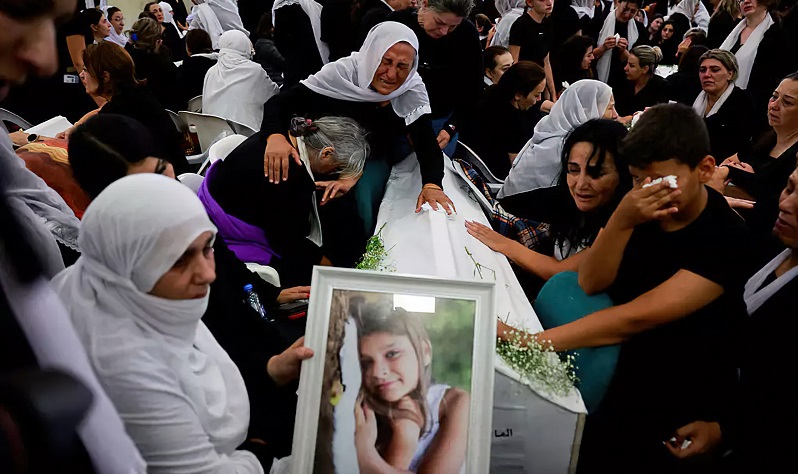
Fatima Jafar Abdallah, a Palestinian child who was murdered by a pager explosion in a house in the town of Sarein, Lebanon.
Iran’s Ambassador to Beirut Mojtaba Amani was also injured in the hand and face as a result of the explosion of the pager of one of his bodyguards. The Iranian envoy is in good condition and is undergoing treatment in Beirut.
At least four people were injured when a pager exploded in a car and were taken to medical centers in the Syrian capital city of Damascus.
Contrary to the allegations propagated by some media outlets, it was not only fighters affiliated with the Lebanese resistance movement Hezbollah who were targeted during the terrorist pager operation in Lebanon. Many of the guards of residential complexes, park rangers, etc. who used pager devices to monitor residential centers as well as environmental preserved areas, were also injured or martyred during the terrorist attack.
The moment a pager explodes
In this context, Hezbollah issued a statement in early hours of the incident, declaring that at around 15:30 Tuesday (local time), a number of message-receiving devices known as pagers, which were used by a number of fighters of different units and institutions of Hezbollah, blew up, in which a young girl and two fighters were martyred and many others were injured.
The competent institutions in the Lebanese resistance movement are now carrying out extensive security and scientific investigations in a bid to find out the causes of the pager blasts at the same time, as well as medical and healthcare staff are also treating the wounded in a number of hospitals in different areas of Lebanon.
Thus far, there has not been details on how the pagers were detonated, but it is obvious that the main culprit in the terrorist incident is the Israeli regime. Initial investigations show that the attack was the result of explosives planted in a great number of pagers. It is conceivable that the stages of the purchase of the pagers was identified by the Tel Aviv regime and sabotage took place before the telecommunications devices reached the hands of Hezbollah fighters.
The Lebanese resistance movement declared in its second statement that following prudently examining all the aspects, data and available information about the brutal aggression that took place on Tuesday evening, Hezbollah holds the Israeli regime fully responsible for this criminal pager attack, which targeted civilians in addition to the military personnel, and led to the martyrdom of several people and the injury of a large number of people; therefore, the traitorous and criminal enemy will definitely be punished for such a brutal aggression.
Ein Shemer base: This base is a multi-layered missile air defense base protected by Arrow, David’s Sling and Iron Dome air defense systems. This base is the headquarters of the Menashe Regional Brigade and its airport runway is the test site for various drones. Ein Shemer base is 72 km away from the southern border of Lebanon.
Glilot base: Glilot base is the main headquarters of the Israeli Military Intelligence (Aman) and its subordinate “Unit 8200”, as well as the school of communications of the military intelligence department. This area is located in the north of Tel Aviv and is 110 km away from the Lebanese border.
According to the Secretary General of Hezbollah, Glilot and Ein Shemer bases were the main target of ‘Operation Arbaeen Day‘ and were hit by suicide drones.
This operation is the 110th Hezbollah drone attack against the positions of the Israeli army during the recent Palestinian war.
At the beginning of the operation, Hezbollah overwhelmed the Israeli air defenses by firing some 340 rockets, then sent its suicide drones swarms towards Ein Shemer and Glilot. Hezbollah reportedly used various drones, such as Shahed-101 and Al-Nuras (Sammad-2) and Ababil-2.
A Dvora-class fast boat for maritime patrol belonging to the Israeli regime’s Navy was mistakenly blown up by a Tamir interceptor missile fired from the Iron Dome defense system in an accident on Sunday morning.
The Tamir missile, which was intended to intercept a target, changed the course when it was hunting an object and hit an Israeli army boat, killing a trooper and causing material damage.
The moment an Israeli malfunctioned air defense missile hit an Israeli warboat in the coast of Nahariya.
Military analysts are of the opinion that the mistaken strike of the Tamir missile may have been caused by the Lebanese resistance movement Hezbollah’s sophisticated electronic warfare and jamming of the regime’s radar system.
Experts are probing into the possibility that Hezbollah used electronic warfare tactics to hamper the missile guidance system or generate a deceptive radar target that would mislead Iron Dome to detect the Israeli army boat as a hostile target.
The incident highlights the complexity and significance of modern warfare, which is a battlefield where other parties’ electronic warfare and radar deception jamming can have devastating repercussions. Reports published so far show that the Israeli regime would strengthen its defensive measures following the fatal incident.
On Saturday, a Tamir missile, which was fired to intercept a target in northern occupied Palestine, was failed seconds after firing and fell in the vicinity of the missile launching site.
The Tamir missile failed seconds after its launch
Such incidents have taken place while the Tel Aviv regime has repeatedly censored or denied the failure of missiles fired by the Iron Dome system.
Some time ago, 14 people were killed and more than 32 others were wounded when one of the missiles of the Iron Dome system pounded the Majdal Shams football field. The Israeli regime’s army did not take responsibility for the fatal incident and blamed it on the Lebanese resistance movement, which was categorically ruled out by Hezbollah’s Secretary-General Sayyed Hassan Nasrallah.
An Al-Araby television network reporter quoting an eyewitness stated that the Majdal Shams incident was actually a malfunctioned Tamir missile which landed near a playground and killed several people.
According to Al-Araby reporter quoting an eyewitness, the cause of the explosion in Majdal Shams area was the Tamir missile of the Iron Dome system.
Hezbollah declared in its initial statement concerning the rocket and drone strikes this morning that in response to the terrorist assault by the Israeli regime’s army in the suburb of the Lebanese capital city Beirut and the cowardly assassination of the senior commander of the resistance movement, Fuad Shukr, the positions of the Israeli army in the northern settlements of occupied Palestine and its military bases in the occupied Golan Heights have been pounded with at least 320 rockets and a large number of suicide drones.
According to the initial statement, the first phase of the retaliatory operation has been accomplished with full success. The first phase included targeting Israeli barracks and military sites in order to pave the way for the passage of combat drones towards their envisioned targets deep inside the positions of the Israeli regime.
The list of military sites and regions, which were targeted during the first phase of the retaliatory operation is as follows: 1- Meron air control base 2- Neve Ziv artillery base 3- Ga’aton base 4- Al-Zaoura artillery base in the occupied Golan 5- Sahl Brigade HQ in Beit Hillel 6- Camp Kela in the occupied Golan 7- Camp Yuav in the occupied Golan 8- Camp Yitzak in the occupied Golan 9- Yarden military base in the occupied Golan 10- Ein Zeitim base north of Safed town 11- Ramot Naftali barracks
The military sites and areas that were targeted in this phase of the operation
As it is obvious in the video footages, the Israelis have made extensive preparations to counter Hezbollah’s missile attacks. Hezbollah also noted in its statement that the rockets were fired in order to pave the way for its suicide drones to reach their targets.
Israeli air defense systems intercepting rockets fired from Lebanese soil (1).Israeli air defense systems intercepting rockets fired from Lebanese soil (2).
The Israeli regime’s army claimed in a new report that Hezbollah’s strike was carried out firing 210 rockets and 20 suicide drones. According to Admiral Daniel Hagari, the spokesman for the Israeli regime’s army, a number of drones were reported to have blown up in the northern areas of occupied Palestine.
The collapse of the wreckage of Hezbollah’s rockets or missiles launched by the Israeli army caused fires and extensive destruction of buildings in the occupied territories of Palestine.
Aftermath of Hezbollah rocket attacks in the northern areas of occupied Palestine, including the towns of Nahariya and AcreA video of a Hezbollah suicide drone flying and hitting road 959 in the occupied GolanThe moment an Israeli malfunctioned air defense missile hit an Israeli warboat in the coast of Nahariya. One Israeli was killed
Certain Western and Israeli media quoted officials of the Tel Aviv regime as saying that the US and Israeli armies had accurate information 24 hours prior to this morning strike that Hezbollah had decided to conduct a major retaliatory attack on the Israeli regime by 5 a.m. local time on Sunday, and therefore, Israeli fighter jets have been attacking the areas of Zibqine, between Siddiqi and Yater, Baslia, Haris, Beit Yahoun, Mlikh, Tayr Harfa, Chama, Tel Armez, Deir Siriane, Kfar Melki, Ain Qana, Kounine, Hadath and several other areas in southern Lebanon.
The US and Israeli reports have not yet been officially confirmed by the officials of the two warrying sides (Hezbollah and Israel), but given the uncertain results of Hezbollah’s operation and the full readiness of the Israeli army to repel the strike, it seems that the nature of the resistance movement’s retaliatory attack has been discovered by American and British planes, and adequate preparations have been made to repel it through extensive and 24-hour surveillance. The Israeli military claimed that more than 100 warplanes participated in a pre-emptive attack on Lebanon, pounding the launch sites of more than 6,000 rockets.
Israeli army shared the footage of the alleged preemptive airstrikes in southern LebanonIsraeli airstrikes in southern Lebanon
Nevertheless, Hezbollah rejected alleged reports in the Western media about the Israeli enemy’s pre-emptive attacks and the disruption of the Lebanese resistance retaliatory operations in its third statement. Hezbollah highlighted in this statement that all the combat drones were launched from their positions at the specified times and crossed the Lebanese-Palestinian border towards the preplanned position in different directions. Such claims are ridiculous and opposing the realities on the ground, and will be denied and addressed in today’s speech by Sayyed Hassan Nasrallah, the Secretary-General of the Lebanese resistance movement Hezbollah. The secretary-general of Hezbollah made a speech at 18:30 Sunday evening on the recent developments.
On August 20, Hezbollah fired at least 80 rockets at the Israeli army positions in the north of the occupied territories. According to Israel TV Channel 12, 20 rockets were fired towards Western Galilee.
The Hezbollah-affiliated media reported that in response to attacks by Israeli fighter jets on the Bekaa province in eastern Lebanon last night (19 August), Hezbollah fired dozens of rockets at the command headquarters of the 210th Golan Division at Nafah base, as well as at the headquarters of the artillery regiment and the 210th armored brigade at the Yarden barracks in the occupied Golan.
These attacks did not result in casualties, but caused destruction and fires in some areas of the occupied Golan.
Hezbollah rocket attacks on the occupied Golan
On August 19, Lebanon’s Hezbollah targeted the headquarters of the Israeli military in the Ya’ara area and the Sanat Chin base north of Acre with several suicide drones. In this attack, one Israeli soldier was killed, and six others were wounded.
Ya’ara and Acre in the north of the occupied territories
Hezbollah forces attacked the Hadab Yarun base in two separate attacks this morning with artillery shells and suicide quadcopters (FPV). The attack is Hezbollah’s 16th operation using FPVs.
Hadab Yarun base
Also this morning, five buildings were destroyed and one Israeli was wounded in a Hezbollah rocket attack on the logistics base of Qatsrin (according to Hezbollah: Tasnobar) in the occupied Golan.
Hezbollah’s rocket attack on Katsrin logistics base and its surrounding areas in the occupied Golan
On the other hand, Israeli fighter jets are targeting the eastern and southern towns of Lebanon using heavy bombs.
During the last three days, Israeli fighter jets attacked dozens of southern and eastern areas of Lebanon, such as Ayta al-Shaab, Tayirharfa, Tayyaba, Khiam, Al-Naqourah, Houla, Ramieh and Bayut al-Siyad, Al-Mansouri, Nabi Sheith, Sahl Serain, Sardeh and Deir Serian.
A Syrian citizen was martyred during the Zionist artillery attack on Sardeh area.
Pictures of Israeli airstrikes in eastern Lebanon in the last two days
Three Lebanese rescuers were injured in an Israeli drone strike on an ambulance near the al-Naqoura area. The ambulance was carrying a wounded man from the Hamul area when it was attacked.
As a result of the Israeli airstrikes in Dhahira area, two Lebanese were martyred.
Also, Israel’s targeted assassinations against Hezbollah forces and commanders continue. On August 19, Israeli drones attacked a passenger car on the Deir Qunon-Ras Al Ain road. During this assassination, a Lebanese was killed.
Israeli drones attacked a passenger car on the Deir Qunon-Ras al-Ain road
Clashes continue in southern Lebanon while Hezbollah casualties are slowly increasing. During the last two days, Hezbollah published the names of seven of its members who were killed in southern Lebanon. Most of these individuals were killed due to heavy bombardment by Israeli warplanes in southern Lebanon.
According to available information, the casualties of Hezbollah have reached 400. While Hezbollah officially announces its military casualties, the Israeli regime seems to avoid providing real statistics of its casualties in the northern fronts.
Pictures of the seven recent martyrs of Hezbollah
Israeli Defense Minister Yoav Galant said last night during a visit to the 36th Division in northern Israel that Israel’s center of gravity is gradually shifting away from the Gaza Strip to the northern front, as Israel prepares for a major escalation with Lebanon’s Hezbollah. Gallant’s words refer to the current ceasefire negotiations in the Gaza Strip and the prisoner exchange agreement.
Yoav Gallant meets with 36th Division commander Brig. Gen. Dado Bar Kalifa at a base in northern Israel (Ariel Hermoni)
The ceasefire talks were held on Thursday and Friday last week in Doha, Qatar, without any particular achievement. Another round of negotiations will be held this week in Cairo, the capital of Egypt, between mediators and Israeli military and intelligence officials.
The results of these negotiations are very important for Israel. Israel is currently fighting on two fronts, north and south. On the one hand, the Israeli army has concentrated almost half of its forces in the north and the other half is occupied in the southern front. Therefore, currently, the Israeli army is not capable of carrying out a major operation on the northern front.
By reaching a suitable agreement in the south of the Gaza Strip, the Israeli army will have the opportunity to bolster its forces and equipment on the northern front, allowing them to better combat Hezbollah and pave the way for the return of refugees to the northern lands.
Military operations along the northern borders have led to widespread evacuations of settlements. According to the latest reports, more than 250,000 Israeli citizens have been displaced by the war, with some 164,000 ordered or recommended to evacuate with government compensation and nearly 150,000 evacuated without being asked. The number of Israeli refugees increases daily.
On July 30, Fuad Shukr, a prominent commander of Hezbollah was assassinated in Beirut by the Israeli regime. The following day, on July 31 in Tehran, Israel assassinated Ismail Haniyeh, the head of the Hamas political office.
The Israeli newspaper Ma’ariv recently stated in an article that Israel is extremely worried about the infiltration of Hezbollah’s Redwan forces into the Galilee region. Israeli army officers believe that Hezbollah forces, especially Redwan’s elite forces, can infiltrate Israeli settlements or capture Israeli bases.
Lebanon’s Hezbollah has tens of thousands of trained military personnel. Many believe that Hezbollah forces are stronger than the Lebanese army. In fact, the military wing of Hezbollah is known as the most powerful non-state military force in the world.
Various military units of Hezbollah are stationed in the southern fronts and other parts of Lebanon. Some of these units include Wahdat Brigade, Aziz Unit, Badr Unit, Khayyam Unit, etc. In general, detailed information about Hezbollah’s military units and charts is not available as the organization never publishes such information.
However, the Rezwan unit is one of Hezbollah’s most famous and well-known military units. It is considered one of the main elite units of Hezbollah and plays a key role in advancing the goals of the operations. Although the exact number of Rezwan forces has not been announced, estimates indicate that at least 2,500 special forces are active in this unit. Rezwan’s forces have significant combat experience and have participated in past battles in Syria and Qalamoun. The main mission of this group is to infiltrate the territory of Israel, with specific attention to Galilee and northern Israel.
Redwan forces
The Rezwan forces are highly skilled and have undergone rigorous training. They are proficient in using anti-tank weapons and explosives. They possess the ability to travel long distances and perform difficult missions in mountainous areas. Additionally, they excel in carrying out secret and sensitive military operations in a thoroughly professional manner.
Redwan forces are said to be divided into seven- to 10-man squads, each operating independently without constant orders or logistical support from a central command. Their main feature is actually the operational independence given to its commanders, and these commanders are allowed to make quick tactical decisions on the battlefield. They have the speed, flexibility and noteable striking capability that characterizes any military force.
Yediot Aharonot quoted Israeli security sources as saying, “As long as the Rezwan unit is on the Lebanese border, the residents of the northern settlements who have been evacuated have no hope of returning to their homes.”
Military operations along the northern borders have led to widespread evacuations of settlements. The Israeli Ministry of Housing and Immigration reports that hundreds of thousands of settlers have left the occupied territories since the start of the war.
According to the latest reports, more than 250,000 Israeli citizens have been displaced by the war, with some 164,000 ordered or recommended to evacuate with government compensation and nearly 150,000 evacuated without being asked. The number of Israeli refugees increases daily.
Avichai Stern, mayor of Kiryat Shemona, said that the Israeli settlers’ fear of returning to their homes stems from the images they saw on October 7.
Lebanon’s Hezbollah has a formidable rocket and missile arsenal in addition to its strong ground forces. According to recent estimates, Hezbollah has 150,000 mortars, rockets, and missiles of varying ranges. Experts consider Hezbollah to be one of the world’s top five missile powers based on this significant arsenal.
Hezbollah says it has missiles that can target all areas of Israel. Hezbollah is also equipped with drones and anti-tank and anti-ship missiles, many of which were built in Lebanon with Iran’s help or delivered directly from Iran to Lebanon’s Hezbollah.
Unguided rockets form a major part of Hezbollah’s missile arsenal. Among these rockets, we can mention Burkan, “Fajr” and “Zelzal” rockets.
For example, Katyusha and Burkan short-range rockets have an explosive payload between 300 and 500 kilograms. The solid fueled Zelzal rockets have a range of about 250-300 km and carry about 400-600 kg of explosives.
Zelzal rocketBurkan rocket
Due to the mountainous nature of southern Lebanon and the experience of the 2006 war, Hezbollah is widely equipped with anti-tank guided missiles (ATGM). Hezbollah has a wide range of anti-tank missiles in its arsenal. Russian Kornet missiles and various types of Iranian anti-armor missiles such as Toofan and Almas are among Hezbollah’s anti-armor missiles.
During the recent war in northern occupied Palestine, Hezbollah has repeatedly targeted the positions of the Israeli army with Almas missiles. Hezbollah has released video clips of ATGM attacks on Israeli military installations and tanks and military vehicles since October 7.
The release of the video showing these operations has attracted a lot of attention. The Almas missiles are actually the reverse-engineered version of the Israeli Spike anti-armor missiles, which were produced by Iran. Hezbollah has inflicted significant casualties on the Israeli army with these missiles.
Hezbollah attacks Israel with Almas ATGMsHezbollah attacks Israel with Almas ATGMsAlmas anti-armor missile
Hezbollah is equipped with a significant number of man-portable air-defense system (MANPADS) missiles. Based on available information, Hezbollah is reported to have air defense missiles, but specific details about these missiles are not readily available. In recent conflicts, Hezbollah successfully used these missiles to shoot down several Israeli drones, including the Hermes 450 and Hermes 900, over southern Lebanon.This was the first time that Hezbollah used these missiles to shoot down drones.
Another important component of Hezbollah’s missile power is anti-ship missiles. Hezbollah first demonstrated its anti-ship missiles in 2006 when it attacked an Israeli warship 10 miles off the coast of Lebanon, killing four Israelis and damaging the ship.
According to the available information, Hezbollah has been equipped with a significant number of anti-ship missiles in recent years. The Noor missile, which is the Iranian version of the Chinese C-802 anti-ship missile, is one of these missiles. The Noor missile has a range of up to 170 km. There are also speculations that Hezbollah has acquired the Russian “Yakhont” anti-ship missile, which has a range of up to 300 kilometers.
Noor missile or Chinese C-802 anti-ship missile
Hezbollah’s missile capabilities, including anti-ship missiles, have significantly increased due to Iran’s support. This poses a serious threat to Israeli and US warships. Consequently, Israel’s naval power is affected, prompting the country to take different factors into consideration in potential naval confrontations with Hezbollah.
During the recent war, Hezbollah has repeatedly launched suicide drones towards the bases and positions of the Israeli army. Hezbollah mainly uses Mersad and Ababil suicide drones to target Israeli army positions. These drones are assembled locally. However, due to Iran’s support for the Lebanese resistance, there is a possibility that more advanced Iranian drones such as Shahid-136 are also available to Hezbollah.
Since the start of Israel’s military aggression on the Gaza Strip, the Lebanese Islamic Resistance has initiated operations against the Israeli regime in northern Palestine, aiming to divert a portion of Israel’s military might and help the Palestinian resistance in the Gaza Strip. It is estimated that Lebanon’s Hezbollah alone has engaged around half of the Israeli regime’s army in the northern front and has hindered the Israeli army’s complete deployment in the southern front of the Gaza Strip.
Recently, several drones of Lebanon’s Hezbollah penetrated into the north of occupied Palestine and successfully filmed critical bases in the port of Haifa. This is a major challenge for Israel, which considers itself the high-tech superpower in the region and insists on using drones and other surveillance tools against its enemies near and far.
The Hezbollah drone operations in Israel are a clear warning to its enemy, indicating that Hezbollah has extensive intelligence on sensitive and vital locations in Israel. Hezbollah is not interested in prolonging the conflict and explicitly seeks an end to the military aggression in the Gaza Strip.
Nevertheless, Israel continues to ignore Hezbollah’s warnings and insists on continuing military aggression in the Gaza Strip. Therefore, the war between Hezbollah and Israel is about to enter a new phase. All of Hezbollah’s intelligence and technical combat capabilities indicate that in the event of an all-out war on the northern front, Israel will suffer significant and staggering losses.
In a new video footage, the Lebanese resistance movement Hezbollah unveiled the Imad-4 underground missile facility (named after Hezbollah’s martyred commander Imad Mughniyeh) and issued a threatening message against the Israeli regime, declaring that the Lebanese movement will definitely respond to the regime’s crimes; although the response has been postponed.
Hezbollah released the video footage to underline:
The information on the military facilities of the Lebanese resistance movement is secret and such installations are protected in the face of the Israeli regime’s assaults, and that any pre-emptive strike by the Tel Aviv regime to thwart Hezbollah’s retaliatory attack in response to the assassinations of Hezbollah’s commander Fouad Shukr and Palestinian resistance movement Hamas chief Ismail Haniyeh is doomed to failure.
The Islamic resistance enjoys a great capability to respond harshly and destructively against the Zionist enemy, and Hezbollah has the tactical ability of the “second strike” as well.
Hezbollah’s Imad 4 underground facilities in Lebanon
The Imad-4 tunnel complex is one of the Lebanese resistance movement’s underground and military facilities, and the quantity and details of the location of the tunnel complex is not identified.
Following the release of this video, Hezbollah repeated that the resistance movement is not frightened by confrontation in Lebanon, but is prepared to fight and defend the Arab country in the case of an escalation of tension and unlimited aggression, especially in the face of the Israeli regime.
Hezbollah’s Imad 4 underground facilities in Lebanon
The Israeli regime’s aircraft have bombed the Lebanese resistance movement Hezbollah’s military bases on Syrian soil in at least three air strikes on July 2.
These air raids were carried out in the Homs Governorate, and as a result of these direct strikes several ignitions were reported. No casualties have been reported so far.
Israel airstrike near QusayrIsrael airstrike
A source close to Hezbollah claimed late Friday that Israel conducted air raids on a convoy of trucks entering Lebanon from Syria.
This incident marks the latest in a series of Israeli airstrikes in the border region.
On Friday, the Lebanese resistance movement claimed responsibility for five retaliatory attacks on Israeli military positions in northern occupied Palestine.
Hezbollah’s Secretary General Sayyed Hassan Nasrallah addressed Shukr’s funeral on Friday, warning that Israel and its supporters should expect a decisive response to the recent assassinations.
Since the outbreak of hostilities in October, at least 542 individuals have been martyred on the Lebanese side, predominantly fighters but also including 114 civilians. On the Israeli side, army figures indicate that at least 22 soldiers and 25 settlers have been killed.
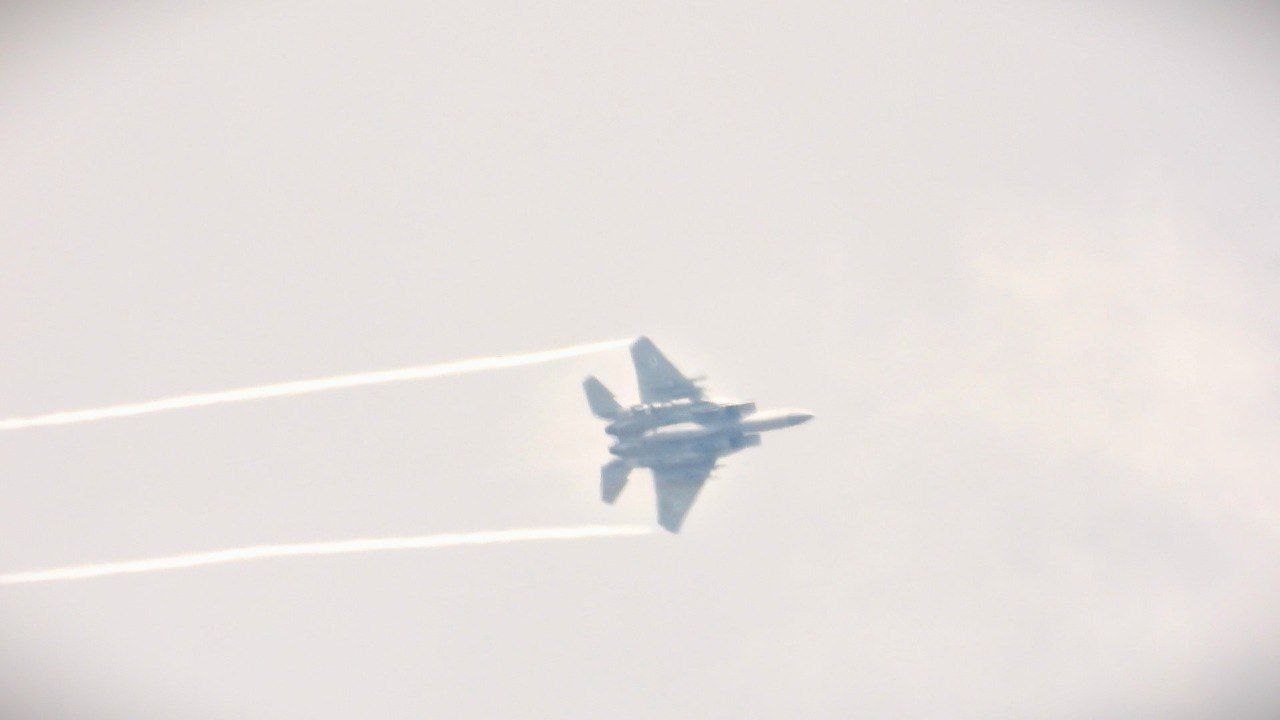
According to initial reports in the Israeli media, the attack on southern Beirut was carried out by a combat drone and three missiles were fired at a building. However, the Israeli regime army’s spokesperson said in a statement that the attack was carried out by warplanes.
The Israeli newspaper Yedioth Ahronoth also claimed that the attack was carried out with F-35 fighter jets.
The target of this terrorist attack was Fouad Shukr, with Jihadi name Haj Mohsen, Hezbollah’s number two and an advisor to Sayyed Hassan Nasrallah.
Fouad Shukr and Sayyed Hassan Nasrallah
The latest death toll of attack on southern Beirut is five martyrs, including a woman and two children aged six and ten, and 74 people were wounded.
Israel’s Channel 14 TV reported that a new assessment in Israel indicates that Fuad Shukr was in the building at the time of the attack and was severely injured and killed.
Reuters quoted two unidentified security sources as saying that the body of Hezbollah military commander Fuad Shukr has been found in rubble in the southern suburbs of the Lebanese capital Beirut.
At the same time as the terrorist attack, the cities of Haifa and Tel Aviv spoke of their readiness to face a possible Hezbollah attack. The municipality of the Rishon LeZion settlement on the outskirts of Tel Aviv also announced the reopening of public shelters for fear of a response from Hezbollah.
In an interview with Kan TV, Rui Sharon said: After the Beirut attack, Israel is in a state of alert as to whether Hezbollah will fire rockets at Tel Aviv, Haifa or just the Galilee.
Brigadier General Zvika Haimovich, commander of the Israeli army’s reserve forces, also said: We must prepare for more Hezbollah attacks than before. These attacks can reach 100 to 200 or even 300 rockets at a time.
Hours after the attack, in an official statement, Israeli regime army spokesperson Admiral Daniel Hagari confirmed that the attack by Israeli warplanes in the Beirut suburb led to the martyrdom of Fouad Shukr, alias Haj Mohsen.
According to the Israeli army’s statement, Shukr is Hezbollah’s most senior military commander and head of the Lebanese resistance’s strategic organization. He is considered the right-hand man of Sayyed Hassan Nasrallah and is the main advisor to the secretary general of Hezbollah in the affairs of planning and managing the war.
Fouad Shukr has joined Hezbollah since 1985 and in addition to being a member of Hezbollah’s Central Council and Military Council, he has been leading the battles on the southern Lebanese front since October 8.
Some images of Fuad Shukr
The terrorist attack by Israeli drone in the Beirut suburb is the second terrorist act carried out by the regime in the Lebanese capital after the assassination of Saleh al-Arouri, the deputy head of Hamas’ Political Bureau. The terrorist attack allegedly was in response to a rocket hitting a football field in the town of Majdal Shams, killing 12 residents. The Israeli regime claims that the missile is a type of Falaq-1 rocket and belongs to Hezbollah and is made in Iran.
In the first statement about the Israeli terrorist attack in the Beirut suburb, Hezbollah confirmed the presence of Fouad Shukr at the scene of the attack, stressing that it was waiting for the results of the rescue teams to announce the fate of the great commander in order to make a decision.
Hezbollah’s initial media statement on the Israeli fighter jets attack in the Beirut suburb is as follows:
“As it turned out, the Zionist enemy attacked a residential building in one of the neighborhoods of the southern suburbs of Beirut on Tuesday, which led to the martyrdom of a number of citizens, the wounding of a number of others, and the complete destruction of a number of floors of the building.
At that time, the great commander and fighter, our brother Fouad Shukr (Haj Mohsen), were present in this building.
After the incident, the rescue teams worked hard but slowly to remove the rubble, and the body of this great and dear commander was found from under the rubble after 20 hours of searching.”
The attack resulted in a loud blast and a plume of smoke rising above the area, which is a stronghold of the Lebanese resistance movement Hezbollah.
Lebanon’s state-run national news agency reported that an Israeli air strike targeted the area around Hezbollah’s Shura Council in the Haret Hreik neighborhood of the capital.
The Israeli military claimed that the targeted strike was aimed at the commander allegedly responsible for the recent deadly attack in Majdal Shams in the Israeli-occupied Golan Heights, as well as the killing of numerous additional Israelis.
Aftermath of Israeli airstrike in Beirut
This comes after at least 12 people, including children, were killed in a rocket strike on Majdal Shams last week, an attack which Hezbollah has denied responsibility for, but which Israel blamed on the Lebanese Hezbollah.
In response to the Israeli strike, a high-ranking Hezbollah official stated earlier that regardless of the nature of Israel’s actions, Hezbollah would respond.
Israel’s war minister Yoav Gallant also commented on the situation, stating that “Hezbollah crossed the red line” in a social media post following the Israeli military’s claim of responsibility for the strike.
The Israeli regime’s army did not provide details about how the strike was carried out. The situation remains tense, with both sides making strong statements and threats of further retaliation.
Aftermath of Israeli airstrike in Beirut
The National News Agency (NNA), the Lebanese state news agency, reported that a drone carried out the attack by launching three missiles.
Within a short time, following a report from Hezbollah’s Al Manar TV, the Israeli army confirmed that a loud explosion was heard in the southern suburbs of Beirut.
This region, heavily populated and a stronghold of the resistance movement, is located in the Lebanese capital.
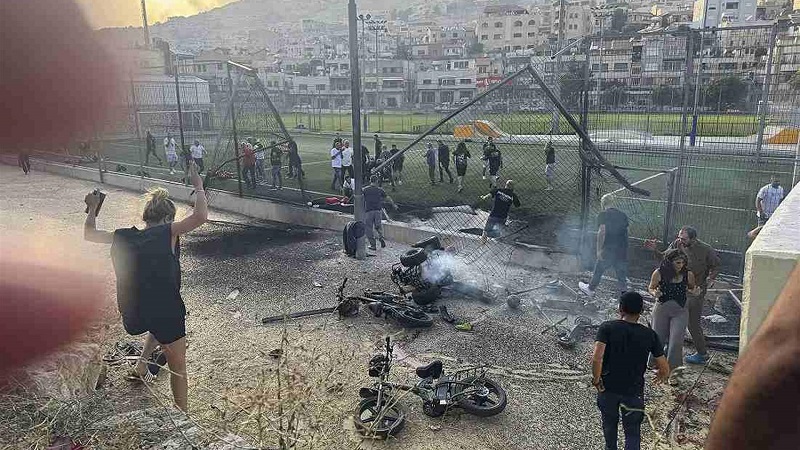
On July 27, a rocket hit a sports field in the city of Majdal al-Shams in the occupied Golan Heights. As a result of this incident, 14 Druze youths lost their lives and more than 35 others were injured. Immediately after the attack, the Israeli government accused the Lebanese Hezbollah. It claimed that the projectile was fired from inside the Lebanese territory and identified the Lebanese resistance as the cause of this attack.
On the other hand, Lebanon’s Hezbollah strongly denied this accusation and stated that the Israeli regime’s claims are false and that Hezbollah did not carry out such an attack.
A rocket hit a sports field in the city of Majdal al-ShamsPictures of Majdal al-Shams martyrs
Majdal al-Shams in the occupied Golan Heights is situated very close to the UN Alpha line and the areas under the control of the Syrian government. Also, the residents of Majdal al-Shams are Druze, and in general, there are no Israeli military targets in this city.
Considering these facts, Hezbollah’s rocket attack on Majdal Al-Shams has no rational or military justification; Thus the occurrence of this incident is faced with serious doubts.
Some experts believe that there is a possibility that this incident is a false flag attack. The Israeli regime is in a tough situation these days and is looking for a way out of these problems.
The war in the Gaza Strip has been going on for more than 10 months. The Israeli regime’s stated objective to “destroy Hamas and the Palestinian resistance groups” since the start of the war in the Gaza Strip has not been achieved, and there is no clear prospect for the end of the war in the Gaza Strip. Israeli prisoners are still in captivity and the Israeli regime is unable to release them. The Israeli regime’s only accomplishment in the Gaza Strip is destruction, genocide, and the loss of 40,000 Palestinian civilians, mostly women and children.
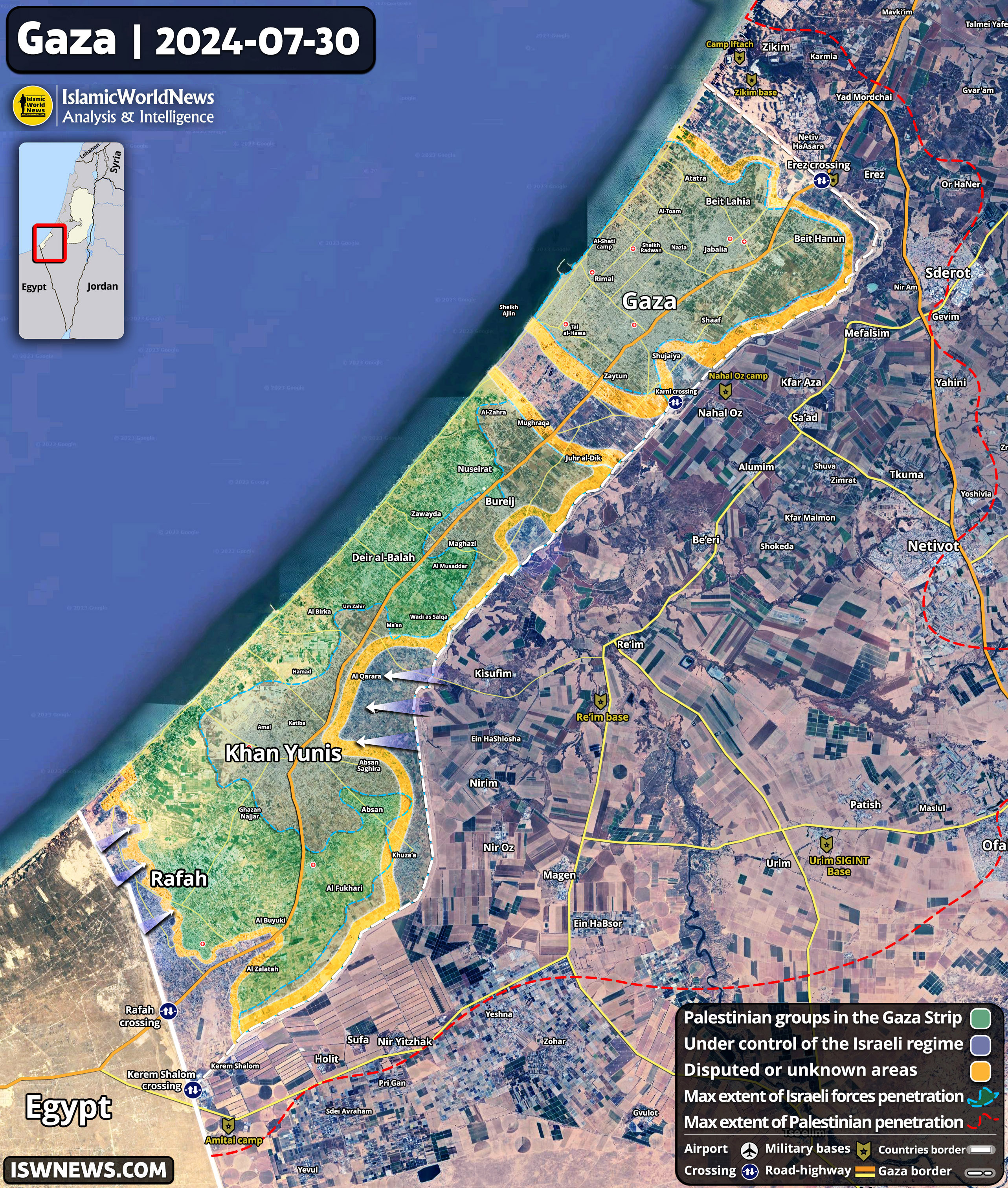
Military situation in Gaza Strip
After the start of Israel’s military invasion of the Gaza Strip, Lebanon’s Hezbollah and the Yemeni army entered the field militarily in support of the Palestinian people.
On the northern front, daily clashes continue between Hezbollah and the Israeli army. Thousands of Israeli settlers have been displaced and almost all the settlements in the north of occupied Palestine have been evacuated and the level of destruction is high.
Missile and drone attacks by the Yemeni army against Israeli targets in the occupied territories are carried out on a daily and weekly basis, and their economic interests, i.e. commercial ships in the Red Sea, the Mediterranean and the Gulf of Aden, are under numerous attacks.
In the West Bank, the security situation is extremely tense after the October 7th attacks and the West Bank is on the brink of explosion!
In Tel Aviv, anti-government demonstrations continue weekly, the political situation is extremely chaotic, and the Israeli government is on the verge of collapse under internal and external pressures.
The Israeli regime is literally “under multiple blows”. All the evidence supports the theory that the rocket attack on Majdal al-Shams is fabricated.
At this stage in the conflict, the Israeli government is in desperate need of a new strategy to escape from its current predicament. The start of a new war against Lebanon is the scenario that Israel needs. With the pretext of a “suspicious attack” in Majdal al-Shams and the beginning of a new war in Lebanon, Israel aims to divert attention from the genocide and its strategic failures in the Gaza Strip and northern front to Lebanese territory.
In any case, all the speculations indicate that the Israeli regime has decided to attack Lebanon. A meeting of Israel’s National Security Commission was held in Tel Aviv and a decision has been made to carry out a massive attack in Lebanon. According to Israel, all targets have been selected but attacks are limited to strategic targets.
Yediot Aharonot newspaper stated that the response will be limited but significant, which includes infrastructure or targets related to Hezbollah.
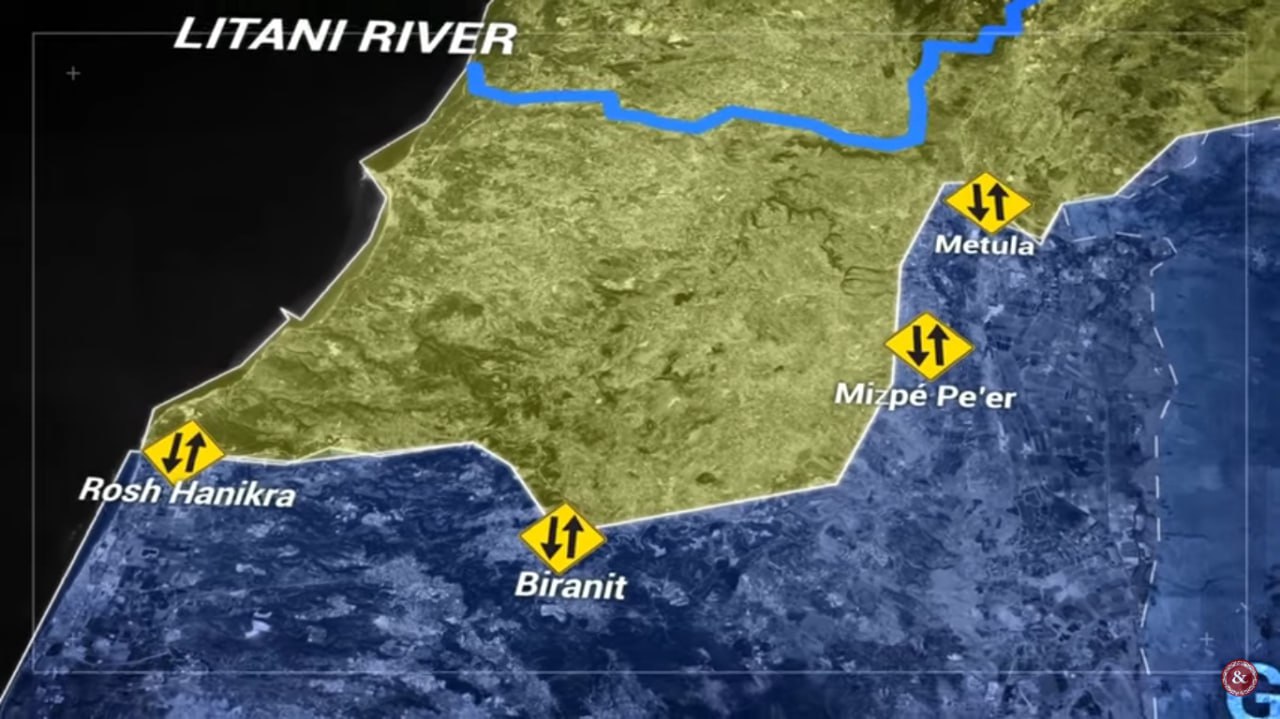
Some Israeli political and military officials talk about military operations to push Hezbollah back behind the Litani River. But the Israeli regime knows very well that it cannot attack Lebanon by land and has to make do with airstrikes.
Litani River in South Lebanon
One of the primary challenges for the Israeli army in conducting a ground invasion of Lebanon is the limited number of passages available for infantry and armored vehicles to enter the country. There are primarily four crossing points for ground forces, many of which are situated in hilly and densely forested areas. The mountainous terrain in southern Lebanon provides Hezbollah with advantageous positions for ambushing the Israeli army.
The 33-day war is a clear example of what is ahead of the Israeli army. The defeat of the armored and infantry forces of the Israeli army in southern Lebanon will be certain.
Yesterday, a Lebanese channel, quoting Hebrew channels, stated that Amos Hochstein, the special adviser and special envoy of the US President in Lebanon, informed the Israeli authorities that any attack on Beirut and Dahiya would be countered by Hezbollah’s attack on Ghosh Dan and Jerusalem.
Lebanon’s Hezbollah has also clearly stated that it will respond to any attack by the Israeli regime on Lebanon with a harsh response.
The Islamic resistance groups in the region have also supported the Lebanese resistance in separate messages and said that in case of any attack by the Israeli regime on Lebanon, military operations against Israel will be intensified.
Even according to reports, some Iraqi resistance groups have stated that they will send troops to southern Lebanon if the war starts in Lebanon.
While diplomatic efforts to prevent war continue, 14 countries have asked their citizens to leave Lebanon or refrain from traveling to it. Lufthansa Airlines and its subsidiaries have suspended flights to/from Beirut until August 5.
In any case, it seems highly unlikely that the start of a new war in Lebanon will assist the Israeli regime in solving its problems. The Israeli regime’s political and war strategies have not changed over the past decades, but the military and regional conditions of Hezbollah in Lebanon have significantly changed, and they are now much more equipped and capable than before.
In other words, Israel may be able to start a new war, but the decision to withdraw from it and the consequences of the war will be beyond Israel’s control. Hezbollah is not as besieged as the Palestinian resistance groups in the Gaza Strip and possesses impressive capabilities to surprise Israel. Perhaps, after the start of the new war, Israel may have to make significant concessions to end the conflict, in contrast to its actions in the Gaza Strip and violation of ceasefire agreements.
According to media reports, the drone attack was carried out at dawn Tuesday from Lebanon.
This marks the Lebanese resistance movement Hezbollah’s second drone attack in the Mediterranean Sea, with the apparent intention of targeting the Israeli regime’s gas fields in the region.
Hezbollah drone destroyed over the Mediterranean Economic Zone
The Israeli regime’s army believes the interception of this drone foiled a potentially devastating attack on the gas field.
Israeli officials have started carrying out investigations into the incident and are on high alert for any further threats from Hezbollah in the region.