Category: Lebanon

  • An Astute Glance at Critical Parliamentary Election of Lebanon

    An Astute Glance at Critical Parliamentary Election of Lebanon

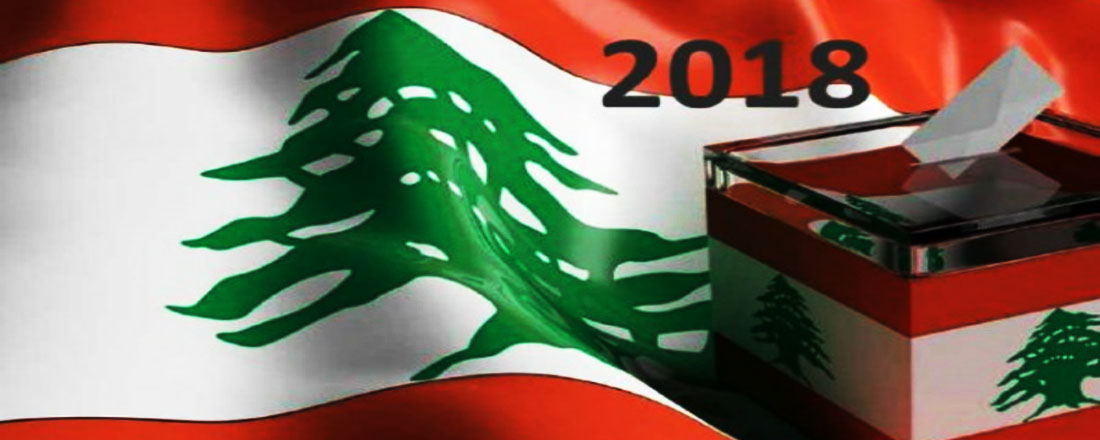
    Islamic World News Analysis Group reports that it seems Lebanon is a rich and problem less country, which is partially correct but there are lots of political and social troubles in bride of Western Asia. One of these political problems is the parliamentary governing system which dominates everything from assigning the president and prime minister to legislation and vote of confidence among others. In another word the only opportunity that Lebanese are involved in the destiny of their country is parliamentary election but it is not very easy.


    History of Parliamentary Election in Lebanon

    Basically, election in Lebanon is an unreachable dream, since Lebanon is always engaged in civil or foreign wars and occasionally there is an opportunity to hold a political system but it is very rare. For example, after the election in 1972, the parliament was extended for 20 years due to civil wars and war with Israel. After the election in 1992 until 2005, election did not take place due to governing political situation. The only time that the election was held on its four years rendezvous was in 2009 but again in 2012 due to critical situation in Lebanon and Syria and domestic political conflicts between adherents and opponents of Syrian government, the election was postponed for another four years and in 2016, due to lack of president and political conflicts the parliament was extended temporarily. By assigning Michel Aoun as president in 2016, he chose 2018 as the election date but this election has several complexities.


    Election Law, a Tumult Which Finished

    A principal trouble in parliamentary election of Lebanon is the law of election. Based on the old law of election which was approved in 1960, Lebanon election is a majority election, which has a lot of drawbacks. The first drawback is dividing Lebanon into several election districts and hence conflict in Lebanon. The second is omitting the political minority, i.e., minor parties do not have any chance to enter the parliament. The third and the biggest drawback is the injustice inherited in it. For example, in a district if there are 10 seats to be occupied and one party wins 51% and the other 49%, the party with 2% more votes occupies all seats and 49% of people do not have any member of parliament. In this method, people elect individuals not the parties.

    In 2017 a new law was approved which corrects the older law of election. According to the new law, there is more justice among parties. For example, if one party wins 60% of votes and the other 40%, they share the seats according to their votes and there is no absolute dominance of one party.

    Map of Seats per each Districts According to the New Law


    Situation of Moghawemat Movement in Different Districts

    South of Lebanon

    Hezbollah and Amal Movement are very active in south of Lebanon, the political alliance of Hezbollah and Amal Movement have the highest fans and with Nabih Berri, the head of Amal Movement as head of the joint list under the title hope and loyalty, nothing other than absolute win for this alliance is expected.

    Alliance between Hezbollah and Amal Movement is Unbreakable and Unfilterable


    Baalbek-Hermel District, Center of Saudi-Emirates Plot

    Beqaa valley is a base of Hezbollah; however Amal Movement exist there too but people of Lebanon consider people of Beqaa in fight against Zionists in south of Lebanon as strategic army of Hezbollah in hard days. This has changed in recent years with the fight against extremist groups and the role of Beqaa as a base of Hezbollah in east of Lebanon has been emphasized more. But Beqaa in despite of their great sacrifice has a poor living condition and people of Beqaa do not have much role in the economy. This was a good reason for Saudi-UAE alliance to work on to destroy Hezbollah influence in this region. Even ambassadors of UAE and Saudi visiting Beqaa claimed that they aim to destroy Hezbollah in Beqaa.

    On the other side Hassan Nasrallah, secretary of Hezbollah, said that we do not let those who betrayed people of the region when extremists were attacking every day to be representatives of Baalbek-Hermel district. Sayyid Hassan Nasrallah said that I will come and speak for people of Beqaa personally if necessary but answer of people of Beqaa was positive and it let head of Moghawemat to be assured that Baalbek-Hermel is a base for Hezbollah.

    All of these signs show that in this region the majority of seats will be won by Hezbollah and a small of number of seats will be won by 14th March Movement close to Saudi-UAE alliance.


    Beirut and North of Lebanon

    In Beirut, Hezbollah has alliance with Free Patriotic Movement led by Michel Aoun president of Lebanon. This alliance has a high chance of win in Beirut since fans of Michel Aoun are increasing in recent years however due to unknown reasons the relation between Free Patriotic Movement and Amal Movement is not good. Although both are Hezbollah allies but verbal fight has increased between them and Hezbollah tried to be neutral in this conflict and fixes it after the election.

    But in north of Lebanon, Hezbollah and Moghawemat Movement do not have direct activities, since the region is under influence of 14th March, but chance of Hezbollah to bring members of parliament via Free Patriotic Movement is high.

    Hezbollah and Free Patriotic Movement Signed Their Alliance 12 Years Ago


    Conclusion

    Election in Lebanon has always a predictable result since the districts of influence of each side is known. From now the results can be guessed by 70% and say who stays in political system of Lebanon, but in the two districts of north and Baalbek-Hermel, we should wait and see who will be elected.
  • Martyrdom of a warrior who was nightmare of Israel.

    Martyrdom of a warrior who was nightmare of Israel.

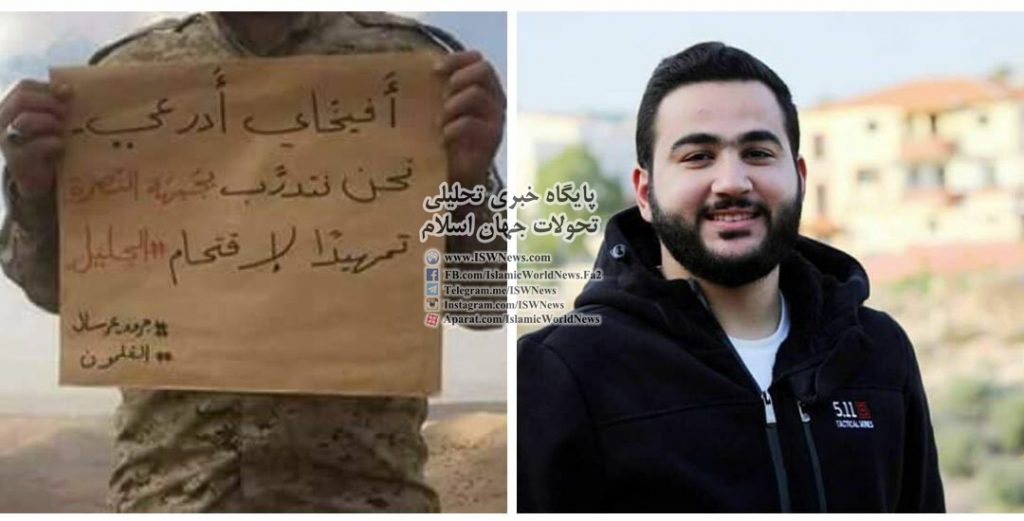
    In summer and during the fight between Hezbollah and terrorists of Al Nusrah Front in Jarrod Arsal, Lebanon, a picture showing a fighter from Hezbollah holding a cartoon was published.


    He wrote in the cartoon addressing Israel Army spokesperson, “we are practicing here by fighting with Al Nusra Front to get ready to attack Al Jalil (north of Palestine).”


    After this, Israeli media covering this picture, considered this as threat by Hezbollah to liberate Palestine and warned about military power of Hezbollah.


    Mohamed Tarhini, the warrior who frightened Israel, martyred exactly at the same time that the fourth Intifada (Uprising) starts, so his pure blood helps us to destroy this usurper and child-killer regime.


  • Hariri’s Resignation and More Plans for War

    Hariri’s Resignation and More Plans for War

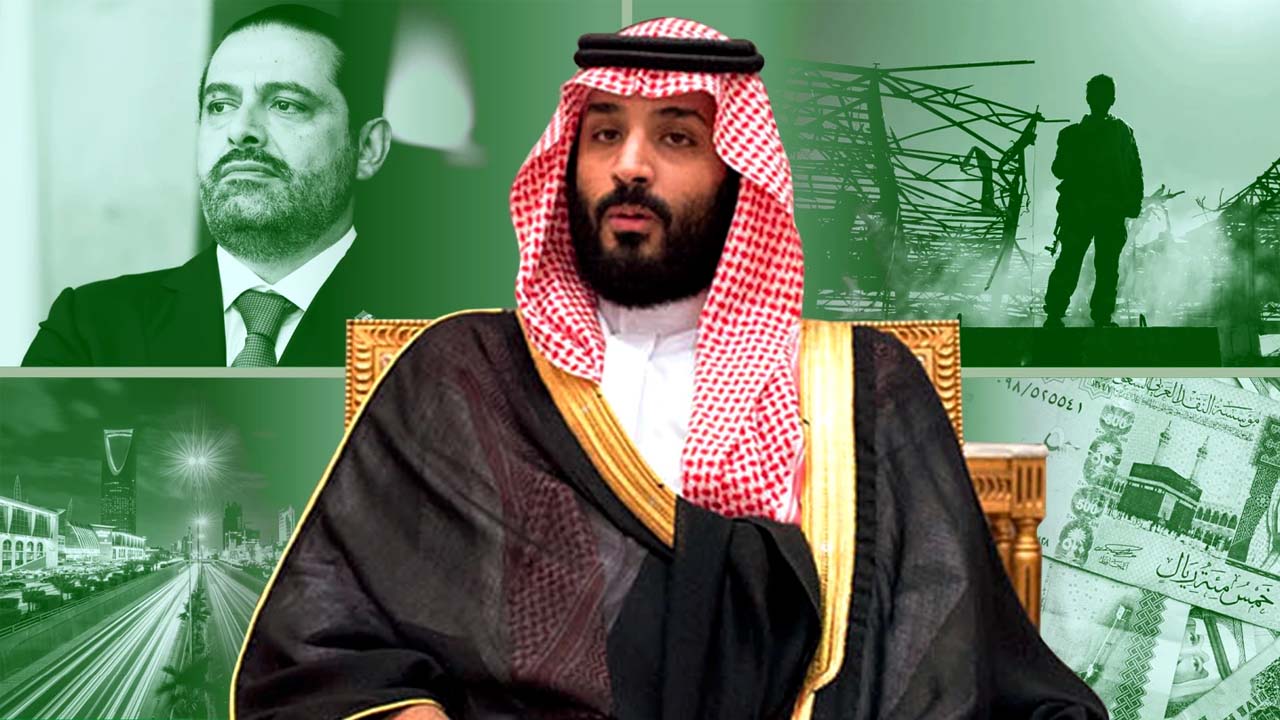
    As Hariri is a Saudi-US asset, the ‘forced’ resignation seems more like the sacking of a company executive who has not lived up to expectations. Told to step out of office Hariri did what he was told, following through by issuing a Saudi-scripted statement accusing Hezbollah and Iran of sowing discord across the region, and talking of a plot to assassinate him.


    In fact, it was Saudi Arabia sowing discord, by blaming Hezbollah and Iran for Hariri’s resignation, with the apparent aim of throwing Lebanon into chaos. Predictably, Netanyahu jumped in immediately, saying the resignation was a call to the ‘international community’ to take action against Iranian aggression but no-one else bought it, not even Lebanon’s Sunni Muslims. Hezbollah reacted calmly and if anyone came out of it badly it was Saudi Arabia. In the Iranian view the removal of Hariri was a plot cooked up by Trump and Crown Prince Muhammad bin Salman.


    Hariri himself did not return to Lebanon where he could have defied the Saudis and resumed his position but moved on to France, where he was welcomed by President Macron at the Elysee Palace. Soon after talking to Hariri, Macron was on the phone to Trump, discussing the Iranian ‘threat’ and how to deal with it. According to Lebanon’s President Michel Aoun, Hariri told him he would return to Beirut by Independence Day, November 22, marking the end of the French mandate. The Lebanese parties, including Hezbollah, still regard Hariri as the country’s Prime Minister so how all of this plays after Hariri’s return will be interesting to see.


    What lies behind all this?

    What is the connection between Hariri’s resignation (forced or otherwise) and the other events running concurrently in Saudi Arabia, namely the arrest of some of the most powerful figures in the kingdom and the confiscation of their assets, estimated at about $800 billion? One has to assume there is a connection. It seems far too much of a coincidence for there not to be one.


    The claim that the purge of the princes was part of an anti-corruption drive is bunk, seeing that corruption is intrinsic to how the Saudi government operates, domestically and in its foreign policy. If corruption is a cover story, why were these princes removed? Could it be their opposition to Saudi Arabia’s policy failures, in Syria and Yemen, and their opposition to what is now clearly being moved from the drawing board to implementation, a war on Iran, involving the US, Israel and Saudi Arabia? They would hardly be alone in seeing Crown Prince Muhamad bin Salman as reckless, foolhardy and lethally dangerous to the stability of the Saudi kingdom: his accession to the throne they would regard, literally, as a crowning act of folly.


    That another war is on the horizon is clear from all the signals coming out of Israel in the past six months. That not just the US but Saudi Arabia will be part of it is obvious. Intermittently, Israel and Saudi Arabia have been pushing for war on Iran for a decade. With the US refusing to bite, to the extent of launching an open military attack, Syria was chosen as the next best target: if the government in Damascus could be destroyed, the strategic alliance between Iran, Syria and Hezbollah would collapse at its central arch. This plan B was partly foiled by the refusal of the UN Security Council, thanks to the vetoes of Russia and China, to sanction an aerial war on Syria along the lines of the assault on Libya. Plan C had to come into effect, reliance on a war of attrition fought by takfiri proxies organised, financed and armed mainly by the US, Saudi Arabia, Qatar, Israel, Britain and France, and coordinated with the assistance of governments ranging from the Balkans to Central Asia. Seven years later Plan C has now ground to a halt. The ‘axis of reaction’ (the US, Israel and Saudi Arabia) has suffered a crushing defeat at the hands of the ‘axis of resistance’ (Iran, Syria and Hezbollah). Russian intervention has been critical, so the victory is Russia’s as well, and a particular humiliation for the US.


    This does not end the list of defeats suffered by the ‘axis of reaction.’ Another severe blow has been suffered through the collapse of the Kurdish drive for independence in northern Iraq. Both the US and Israel have assiduously cultivated the Kurds for decades, seeing northern Iraq as a new strategic centre for military and intelligence operations across the Middle East. The US and British ‘no fly’ zone and ‘safe haven’ initiatives of 1990/91 were the first steps in the planned breakup of an Iraq that no longer suited imperial purposes. The invasion of 2003 and the imposition of a constitution dictated by the US, weakening the authority of the central government, led to Kurdish autonomy which, in time, would have been expected to end in independence and a new base for US/Israeli operations across the Middle East.

    Even the US was against the referendum called by Masoud Barzani: seeing that it was already getting what it wanted, the referendum would be premature and cause more trouble than it was worth.


    This proved to be the case. Turkey and Iran reacted viscerally, ending flights and closing border crossings: the Iraqi army retook Kirkuk and all the territory conquered by the Peshmerga in 2014. Barzani stepped down as president of the KRG: Jalal Talabani, the head of the Patriotic Union of Kurdistan (PUK), had died only recently, leaving the Kurds leaderless and at each other’s throats over who was responsible for this debacle. Iraq is now being reconstituted as a unitary state. The largely Shia Popular Mobilization Forces (PMF) has developed into a powerful annex to the regular army. Moreover, the government in Baghdad has a close working relationship with the government of the Islamic Republic in Tehran.

    The paradox of these defeats is that they increase to a critical level the danger of a new attack by the ‘axis of reaction’ on the ‘axis of resistance.’ Russia, Iran, Syria and Hezbollah cannot be allowed to get away with these victories. The Israeli chief of staff, Gabi Eisenkot, hardly needed to say, as he did recently, that there is ‘complete agreement between us and the Kingdom of Saudi Arabia’ on the question of Iran’s spreading influence across the Middle East, or ‘control’ of the region as he put it. Unable to impose its will on one of the poorest countries in the world, Yemen, Saudi Arabia would be of little help on the front line in a war against dangerous targets such as Hezbollah and Iran. But it has money and according to Hasan Nasrallah, has offered to pay Israel billions of dollars for a new war on Hezbollah.


    As Israel always has the next war on the drawing board, the central question is ‘when’ rather than ‘if’ it will be launched. In recent months it has held some of the largest-scale land and air exercises in its recent history in preparation for a new war on Hezbollah, including training for fighting in tunnels. It has warned repeatedly over the years that the next time around the ‘Dahiyeh strategy’ will be applied across Lebanon and is busy selling the propaganda package that there really is no Lebanon any more but only a Hezbollah enclave controlled by Iran.

    Dahiyeh, of course, is the largely Shia Beirut suburb and urban HQ of Hezbollah that was pulverised from the air in 2006. Given the huge civilian casualties Israel is willing to inflict in the next war, Iran and Syria would be hard pressed to stay out but the moment they intervene, Israel, the US and Saudi Arabia will have their three primal enemies directly in their line of fire. The refusal of the US to withdraw its forces and dismantle its air bases in Syria now that the Islamic State has been ‘defeated’ (if still being used as an American tool) is probably connected with preparation for the coming conflict.

    Israel’s existential struggle in the Middle East since 1948 has now reached the point of crisis. Israel may think it has all the time it needs to completely engorge the West Bank but it does not have such a luxury on the regional front. If Iran is stronger now than before the wars on Iraq and Syria, it will be even stronger in two or three years’ time. It has a large standing army, fought an extremely destructive war against Iraq (1980-89), has been deeply involved at the planning and combat level in the defence of Syria and has built up a large arsenal of locally developed short and long-range missiles.

    By comparison, Israel has not even fought a regular army since 1973: in 2000 it was driven out of Lebanon by a guerrilla force and when it attempted to retrieve lost ground by launching a new war in 2006 its ground troops proved incapable of taking villages even a few kilometres from the armistice line. Its attacks on Gaza have been onslaughts on a largely defenceless civilian population.

    Given that since 1948 its security/insecurity situation has ultimately been based not on diplomacy but on full spectrum military domination from the possession of nuclear weapons down to conventional warfare, Israel cannot allow the current situation of strengthening enemies to continue. Hostile to any kind of diplomatic settlement that would generate a real peace, Israel must go to war. It says it is much stronger and better prepared than in 2006 but so are Hezbollah and Iran. Hezbollah alone has a large stockpile of missiles able to reach any corner of occupied Palestine: Israel’s Iron Dome anti-missile system will stop some of them but not all.

    If it does go to war Israel is certainly going to suffer civilian casualties unprecedented in its history but the politicians and generals around Netanyahu will argue that its existential situation will demand these sacrifices. The US would come in behind Israel, but Russia could not be expected to sit by while its diplomatic alliances and strategic assets in the Middle East are destroyed. The commentator Abd al Bari Atwan has warned that such a war would be the most destructive in the region’s history, developing into a global conflict, and has raised the question of whether Israel, having started it, could survive it. This is a truly apocalyptic scenario.


    As usual the Palestinians find themselves caught in the middle. Mahmud Abbas is being told to go along with the Trump-Kushner-Israel ‘peace initiative’ or else, even by Saudi Arabia. This would involve Abbas publicly sharing the anti-Iranian, anti-Hezbollah and anti-Shia views of the Saudis at a time he is engaged in a reconciliation process with Hamas, which has refused to take a stand against Hezbollah. Furthermore, several of its senior leaders have recently been in Tehran. For the moment all eyes are on Hariri as he returns to Beirut: how will he explain himself, will he resume his position as Prime Minister and on what terms?


    Source

  • Hezbollah And Hamas Leaders Met In Lebanon’s Beirut

    Hezbollah And Hamas Leaders Met In Lebanon’s Beirut

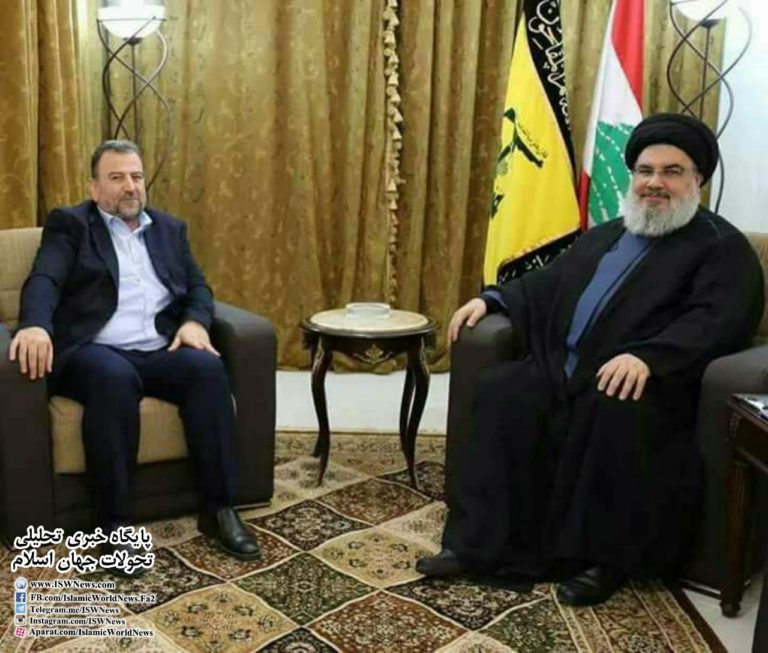
    The two sides discussed the recent developments and situation in Gaza in wake of the recent Israeli actions in the the region and emphasized the need of solidarity and unity in front of the Zionist aggression.
     
    They also discussed the Palestinian national reconciliation and the situation in the region.
     
    Narsallah gave condolences for a number of dead Palestinian resistance member by Israel army attack on their tunnel east of Khan Yunis, in an area south of Gaza strip.
     
    In this regard, Hasan Nasrallah spoke with Ramadan Shala, a leader of the Palestinian Islamic Jihad (PIJ) movement, and gave condolences for the dead resistance members during the recent Israeli attack.
     
    Condemning this action, Nasrallah praised the resistance and sacrifices of the resistance forces in Gaza, especially members of the PIJ.
    Translation provided by SouthFront
  • Lebanon Appoints News Ambassador To Syria

    Lebanon Appoints News Ambassador To Syria

    The diplomatic relations between Syria and Lebanon had been compicated because of the ongoing war. Some Lebanese political forces had been preventing the Lebanese Government from appointing an ambassador to Syria.

    Now, when the Assad government is steadily moving towards a victory over ISIS, the Lebanese-Syrian relations will be likely improved.

    Translation provided by SouthFront

  • ISIS is completely expelled from common border of Lebanon and Syria

    ISIS is completely expelled from common border of Lebanon and Syria

    Official announcement of liberating the region was declared after departure of the last bus of ISIS terrorists from west hills of Qalamoun to BuKamal.
    Total number of expelled person in the last step is 637 persons: 350 members of ISIS, 150 women and Children, 112 from Arsal and Qarra, and 25 injured persons.

  • Recently Visited Lebanon: Shia Hezbollah, the Sunni PM Hariri, and the Christian President Aoun Are All Part of the Fabric of Lebanese Society

    Recently Visited Lebanon: Shia Hezbollah, the Sunni PM Hariri, and the Christian President Aoun Are All Part of the Fabric of Lebanese Society

    e last time I was in Lebanon was in August 2014 when the battle for Arsal first began. Arsal, a small town in the north eastern part of Lebanon located near the Lebanon-Syria border, had just been overrun by a coalition group made up of ISIS & Nusra fighters, seeking to snatch the town and set into motion their deluded dream of an intolerant Salafist caliphate in Lebanon similar to that seen across half of Syria & Iraq.

    The terrorist fighters surrounded several Lebanese army checkpoints, catching them off guard. Once they entered the town they stormed the local police station, capturing 16 policemen and taking them hostage. The town subsequently fell to the terrorists and two soldiers, which had also been captured by the terror gang, were thankfully released later that same day; by sundown on the second day of fighting, at least 8 soldiers were reported dead, numerous civilians killed or wounded and at least 30 terrorist gunman also killed before they secured the town under Salafi Islamist control.

    It was a tense time to be in Lebanon. The Syrian war was at its bloodiest peak and many spectators at that stage still believed a defeat for Assad was possible. Now, with Arsal crawling with terrorists, many in Lebanon feared that they could be seeing the beginning of what many had predicted, that the dreadful Syrian war would spread into Lebanon – turning the country back to a similar state it had been during the blood soaked sectarian years of the 70’s and 80’s. I myself was currently allotted in the capital city Beirut, I had spent most of my trip visiting family and exploring Lebanon’s Southern areas known as Jabal Amel. Locals would talk about what was happening and work themselves up into quite a frenzy. The typical, friendly and traditionally laid back locals were presently nervous and suspicious; anti-Salafi sentiment was high – I saw conservative looking Sunni Muslim men with beards and misbahas being bullied as they walked down the street or got stuck in traffic on the main roads by more the secular Beirutis. “Sho ya Salafi, are you satisfied now your friends have come?” one driver barked in Arabic as his car stopped next to a conservatively dressed Muslim family in a car opposite mine. The following day I was strolling around downtown Beirut, exploring the various religious and historical sites, something which Lebanon is highly famous for, when I stumble across a beautiful old Christian church which appeared to have religious Byzantine era fresco paintings all around the internal walls. I couldn’t resist asking to enter and have a good look around, however, the door watchman seemed less impressed that I was an eager western tourist fascinated to take a look at his religious heritage site – he was more occupied in interrogating me as to why a non-local white guy with a scruffy beard and poor Arabic wanted to come into his church and take pictures. “You will probably bomb the place” he muttered to himself after I managed to negotiate my way inside, to just have a quick look. Then I made a rooky error, I pulled out my camera and tried to snap a quick pic but I was being watched closely and was heckled down by the doorman and told to leave. This was not the right moment for an untimely guest, such as me, to push the limits of the local hospitality. People were scared and rightly so; the Christian doorman was old enough to have seen the effects of a sectarian war ravage his country once before, now the same was happening again just next door in the far bigger Syria, only this time, the conflict has become famous for non-local ‘western jihadists’ participation.

    It is very fitting that, by some coincidence, I should return to Lebanon at the exact same moment to witness the Lebanese army achieved its final victory against the last remaining terrorists still holding onto land in Lebanon, the last time I was in Lebanon I witnessed the same terrorists enter Lebanon officially for the first time, I watched as they took over Arsal, now I watch as they waver and the ‘Battle for Arsal’ comes to a close. Therefore, I have the unique opportunity to compare the local mentality at these two key moments in Lebanon’s very recent history. Certainly, things are much calmer now. The Lebanon I know and love has returned to its natural welcoming and hospitable self.

    The Lebanese army has performed spectacularly well under the circumstances. With poor experience, a lack of proper investment and modern equipment, the Lebanese Armed Forces (LAF) have still managed to succeeded in stemming the flow of suicide bomber and car bomb attacks whilst also busted numerous terror cells active inside Lebanon, fighting off unruly Nusra sympathising anti-establishment armed groups in Tripoli and simultaneously maintaining an overall peace in a religiously divided country. Despite its short comings, it is one of the only Lebanese institutions which actually works regardless of the other crippling aspects of Lebanese sectarian politics blocking the rest of the country from working properly. This fact we must recognise.

    Lebanon’s western allies, such as the United States, were slow to offer any real practical support to the Lebanese Armed Forces (LAF) in the form of military assistance or weapons shipments over the past few years yet these same allies were very quick to publicise their “long, long relationship”, as President Trump put it, following the LAF’s rapid success in the recent military operation against Daesh near Arsal. The problem, however, is not just the fact that the US has failed to support the Lebanese army in the ways that it claims to have done so since the Syrian war first began and the dreadful Daesh (Arab acronym for ISIS) came into existence but the fact that the US can’t administer the facts on the ground in Lebanon – highlighted stupendously well by Trump during his speech while standing next to Lebanese PM Hariri – of Hezbollah’s role in defending Lebanon against radical Salafi terrorism, a truthful anecdote which has already been acknowledged by Russia, Syria, Iran, Iraq and many elements within Lebanon’s political and social classes.

    “Lebanon is on the front lines in the fight against ISIS, Al Qaeda, and Hizballah.” Trump confidently stated.

    The problem with that statement – it is not 100% correct. In fact, Hezbollah is an active political party with 12 seats in Lebanon’s parliament. Hezbollah is also recognized by not just the Lebanese President Aoun (a political ally of Hezbollah who was assisted by Hezbollah’s political block in securing his Presidential victory) but also by many senior Lebanese Army commanders who communicate regularly with key men in Hezbollah’s armed wing to coordinate the joint effort to defeat border terror groups.

    Trump went on to say, that “America’s assistance can help ensure that the Lebanese army is the only defender Lebanon needs. It’s a very effective fighting force.” A promise which has been repeated time and time again in the past by the US but Israel remains America’s number one priority for foreign military support. Lebanon’s military aid requirements have come to be seen as more of an inconvenience for the US as the Pentagon chief, General Mattis, has begun a campaign of fat trimming American foreign aid spending. Since 2005, the US has ploughed more than $1.4 billion into the Lebanese Army, providing weapons, equipment, and training – and helping to significantly boost its capabilities but only enough to keep the LAF’s head above water. Many in the US are beginning to reconsider this support as Hezbollah continues to remain a more effective military presence in Lebanon and the LAF has no interest in challenging Hezbollah for this local status – my question is, why should the LAF wish to confront Hezbollah when both groups share joint goals and common interests in defending Lebanese sovereignty?

    The reality on the ground in Lebanon is that the Shia Hezbollah is as much a part of the fabric of Lebanese society as the Sunni PM Hariri or the Christian President Aoun is. The idea that Hezbollah is somehow holding Lebanon to ransoms or turning the country into an Islamic republic, as is the case in Iran, is laughable.

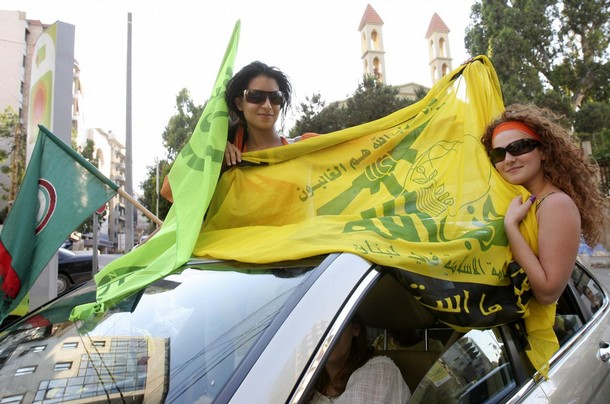
    If you travel to Lebanon, you will land at the Rafic Hariri airport. As you leave, you will immediately notice large green flags of the Amal movement, a rival Shia political party, erected one-by-one down the entire length of the entry and exit road out of the airport. As you continue on towards central Beirut, you could easily be fooled into believing that Lebanon had been completely taken over by the Amal movement with green Amal flags flying high alongside huge banners bearing the faces of Lebanon’s Shia parliamentary speaker, Nabih Berri (the leader of Amal) & the missing holy man Sayid Musa al-Sadr (Amal’s founder) gazing down on you at virtually every roadside or street corner in and around Beirut. It is the Green flags of Amal, not the bright Yellow flags of Hezbollah that dominates the streets of Beirut including the main city airport. I even went to Dahiyeh, the southern Beirut suburbs made famous in western media for its title as the notorious ‘Hezbollah stronghold’ in the Shia dominated part of Beirut. What I found was less of a stronghold and more of a lively urban district, largely run down and overcrowded. Tiny shops and homes squashed together and on top of one another with hundreds of electricity cables running tangled above our heads. I saw real character in Dahiyeh, but no Hezbollah.

    Dahiyeh, like many parts of Lebanon, was a photographic gold mine, the place oozed personality which I was desperate to capture on camera, alas, I could not. Although the Hezbollah are not a visible presence in Dahiyeh, that didn’t mean they did not exist. Taking photographs of the area is considered a security threat and both my driver and the locals would not have appreciated a white foreigner wearing flip-flops sticking a camera in their face; much like the Christian doorman, they are fearful of what the foreigner might bring – and I can’t blame them.

    Hezbollah does not pose a threat to the daily life of the Lebanese people. The local inhabitants of Dahiyeh were friendly, polite and incredibly welcoming for people who supposedly live in a terrorist stronghold. Would I be able to say the same if I was to pay a visit to Raqqa? Would I even return from the trip alive? Yet it is the Hezbollah, the group fighting Daesh in Lebanon, Syria & Iraq, that was receiving the biggest amount of attention during Trump’s speech and in the Pentagon’s foreign policy.

    The Hezbollah of today are not the same as the Hezbollah of the 80’s – neither is Iran. Both have changed dramatically and evolved into more mature regional actors in recent years. The problem is that the US has refused to change or even adapt its foreign policy in order to deal with the current field of play. To the US, Hezbollah is just another Islamist terror group, while Iran, just a revolutionary Islamist terror state looking to create a nuke to kill westerners with. In reality, we see both Iran & Hezbollah both spearheading the fight against global Salafi terrorism. Iran and Hezbollah are actively fighting in Syria and Iraq, helping in the local effort to military defeat Daesh and destroy what’s left of their so-called caliphate. Despite this, the West refuses to update its opinions of the two, continuing to peddle the old narratives from the 80’s: They are just terrorists – no proof needed.

    The Lebanese Army is about to confirm a monumental victory for its country. A deeply deserved victory, but an achievement not reached by the Lebanese Army alone – it involved numerous players from across the globe, including Iran & its IRGC (Revolutionary guards), Iraq and the Hashd al-Shaabi (Shia militias), the Syrian Arab Army (Assad’s forces) and Russia, yet the West continues to demonize all these actors, rightly or wrongly, as threats to world peace. As Pentagon chief Mattis put it, “The Iranian regime in my mind is the single most enduring threat to stability and peace in the Middle East. Despite repeated mentions of the Islamic State and al-Qaeda by others.”

    My own experience visiting Lebanon and the region, I can honestly say this narrative has become very cliché.

    Source: Ahtribunes

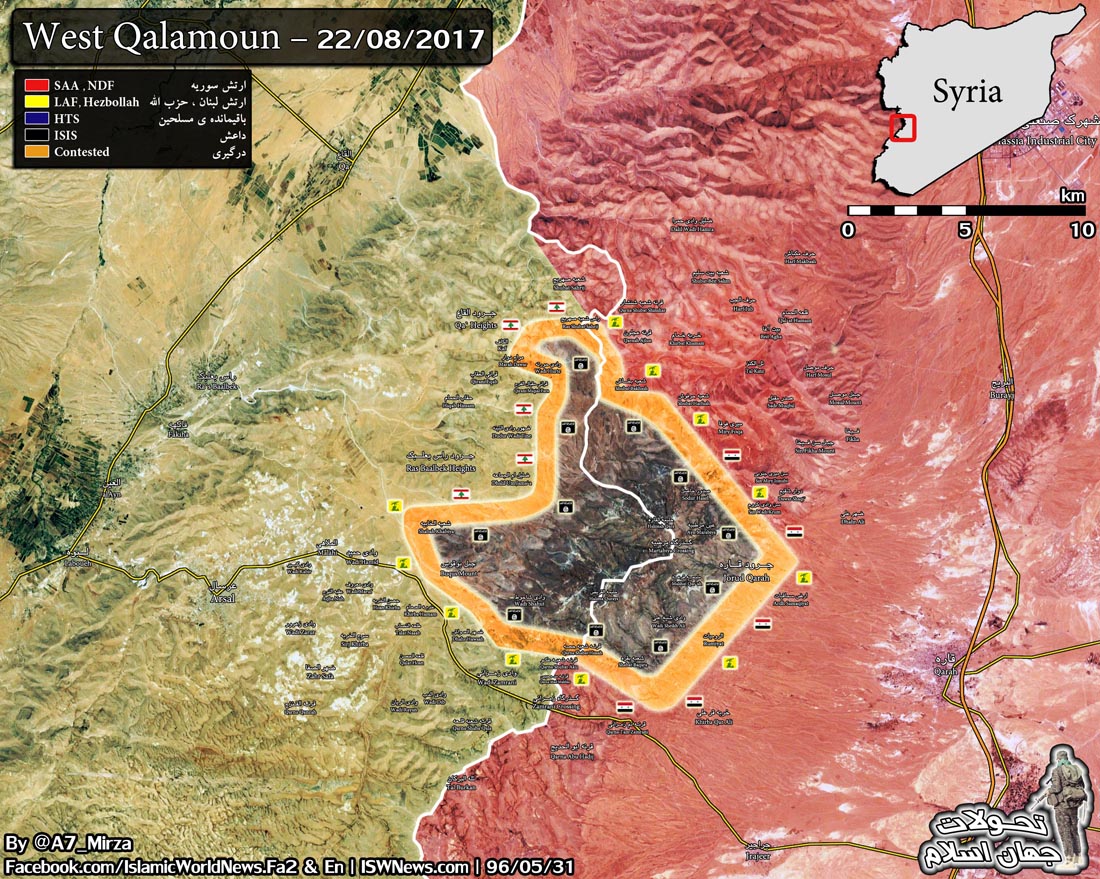
  • Last Military Situation in West Qalamoun , 6th & 7th day results

    Last Military Situation in West Qalamoun , 6th & 7th day results

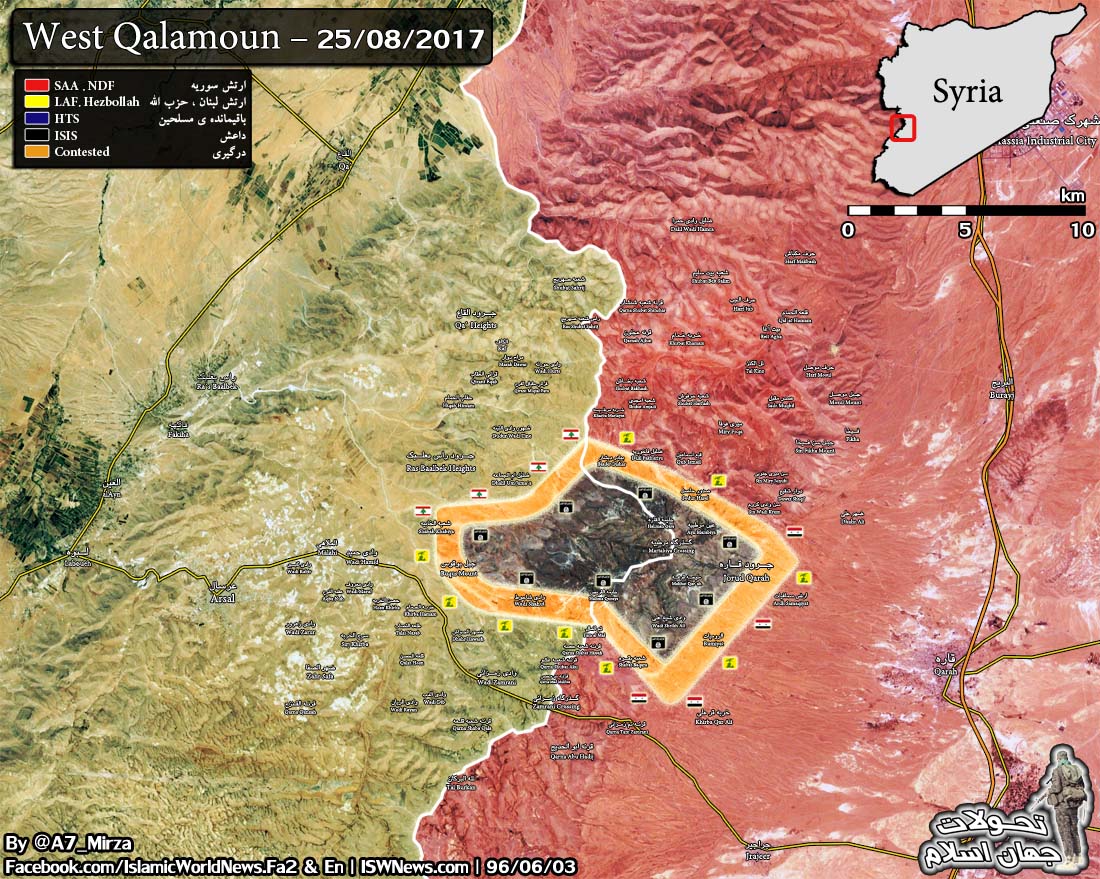
    Progressing from north and east leaded to resistance forces jointed together and formed one operating axis.Now troops are active in southern and northern fronts.
    Forces approaching to Shahout areas after liberation of ” Tam Al-Mal” height. It could be mentioned as One of the noticeable achievements during two last days. Due to these, Syria army and Hizbollah have direct fire on Shahout and its border way.
    At the moment and during the 7 last days, Syrian army and Resistance forces cleared 5 important pathways called Sen Fikha, Mira, Shahout, Zamrani, Abou Hadij.

    Operation in western Qalamoun and Syria-lebanon border will be successfully ended by domintating the two remained pathways,Sheikh Ali and Martabiyeh.

  • West Qalamoun Operation, 4th Day Results

    West Qalamoun Operation, 4th Day Results

    In 4th Day of operation in west Qalamoun, in northern axis all paths and passages connected to Jorud Al-Qa’ blocked . Onrushing in two directions, San Vadi Karum upward and Qarna al Ajloon downward, ISIS forces were ruptured within an area of 30 km2, and all passages including San Fikha and Mira were blocked to ISIS forces.
    Syrian Army along with Hezballah, has made a great progress in fully cleansing Jorud Al-Qa’ by liberating Al-Kaff and surrounding hills.

    HD Map here: ِDownload