The Israeli parliament (Knesset) has given initial approval to a draft law under which the government may suspend the activities of any foreign media outlet deemed harmful to Israel’s security, without requiring a judicial order. In this vote, 50 members supported the bill while 41 opposed it.
On November 6, Hezbollah’s Public Relations Office issued an official statement addressed to the President, Prime Minister, Speaker of Parliament, and the people of Lebanon, warning against Israeli aggressions and making its position clear.
In recent days, Israeli army patrol convoys have operated in the areas of Rasem al-Halabi, al-Ruwayhina, al-Ajraf, al-Sa’ayda, Ain Farikha, al-Mushayrifa, al-Samadaniyah al-Sharqiyah, and Jura al-Sheikh.
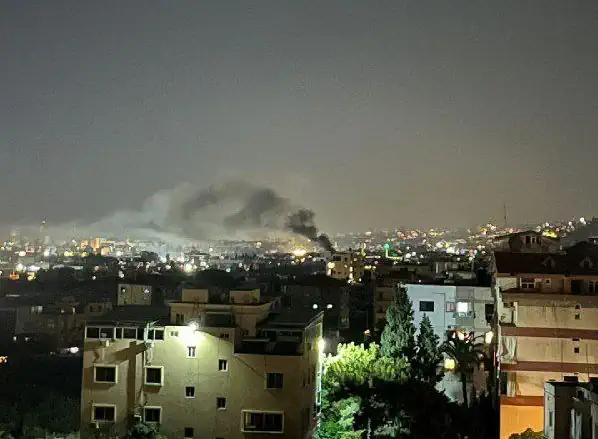
Another ceasefire violation by Israel: Israeli drones this morning targeted a civilian car on the al-Bissariyeh road south of Sidon. At least one person was killed in this attack.
According to local sources in Shabwah province, a U.S. MQ-9 drone carried out two airstrikes targeting the location of an al-Qaeda member in Wadi Khura, situated in the district of Markhah al-Sufla in southwestern Shabwah.
Omar Ahmed, head of the Board of Commissioners of Iraq’s Independent High Electoral Commission, announced that voter turnout in Iraq’s special elections reached 82.42%.
The Israeli newspaper Haaretz reported: Israeli intelligence assessments indicate that Hezbollah, after suffering heavy losses in recent attacks, is rebuilding its military capabilities and organizational structure, particularly in areas north of the Litani River—an action that Tel Aviv describes as a “violation of the ceasefire” following the 2006 war.
As reported in Israeli media, following the failure of airstrikes targeting Yemen’s energy and service infrastructure, Israeli intelligence agencies have shifted their focus toward recruiting informants and gathering field intelligence to disrupt Yemen’s military support for Palestine.
Iraq is at a defining stage in its political evolution where the convergence of external pressures—namely Iranian influence and Turkish military presence—with the central government’s financial crisis and the complex internal power structure, particularly the multifaceted role of the Popular Mobilization Forces (PMF), has seriously undermined the country’s prospects for political and security stability. The PMF now functions as a semi-institutional force that, while possessing defensive capabilities and social legitimacy, also operates through political, economic, and transnational networks that influence the behavior of some of its units. This increases the likelihood of autonomous actions, local clashes, or demonstrations of force.
Reports indicate that Israel’s military spending since the onset of its war on Gaza in October 2023 has reached approximately $76.3 billion (250 billion shekels).
On November 3, American drones struck a motorcycle linked to al-Qaeda operatives in the Al-Shabwan area, located in northern Marib province. The primary target of the strike was Abu Muhammad al-Sanaani, a senior commander of al-Qaeda in the Arabian Peninsula. He was wounded in the attack and died hours later due to severe bleeding and injuries sustained.
Iraqi Defense Minister Thabit al-Abbasi revealed in a televised interview that U.S. Secretary of War Pete Hegseth had informed him via phone call about an imminent military operation in the region