Category: West Asia

  • Iranian Intelligence Seizes Shipment Of American Stun Guns That On Its Way To Rioters

    Iranian Intelligence Seizes Shipment Of American Stun Guns That On Its Way To Rioters

    Head of the Justice Ministry’s office in the southern Iranian province of Hormozgan, Mojtaba Qahremani, said that the large shipment includes over 6,000 stun guns. Intelligence agents seized the shipment from a ship close to the port city of Khamir, according to the official.

    The preliminary inquiry indicates that the stun guns were shipped to Iran for the purpose of inciting riots and chaos, Qahremaniadded, noting that two people have been arrested during the intelligence operation.

    Earlier this month, the Iranian Intelligence Ministry and the Intelligence Department of the Islamic Revolutionary Guard Corps announced that they had dismantled a network backed by the United States that was plotting to start riots in the country.

    A wave of protests hit Iran last year following the death of Kurdish Iranian woman Mahsa Amini who was arrested for allegedly breaking Iran’s strict rules on wearing the hijab, the Islamic head covering for women. The violence claimed the lives of at least 200 people.

    Tehran believes that foreign powers, including the U.S. and Israel, are fueling unrest on its territory in order to overthrow the Islamic government that came to power following the 1979 revolution.

    Originally posted SouthFront

  • Iraqi Intelligence Service Neutralised Terror Group in Baghdad

    Iraqi Intelligence Service Neutralised Terror Group in Baghdad

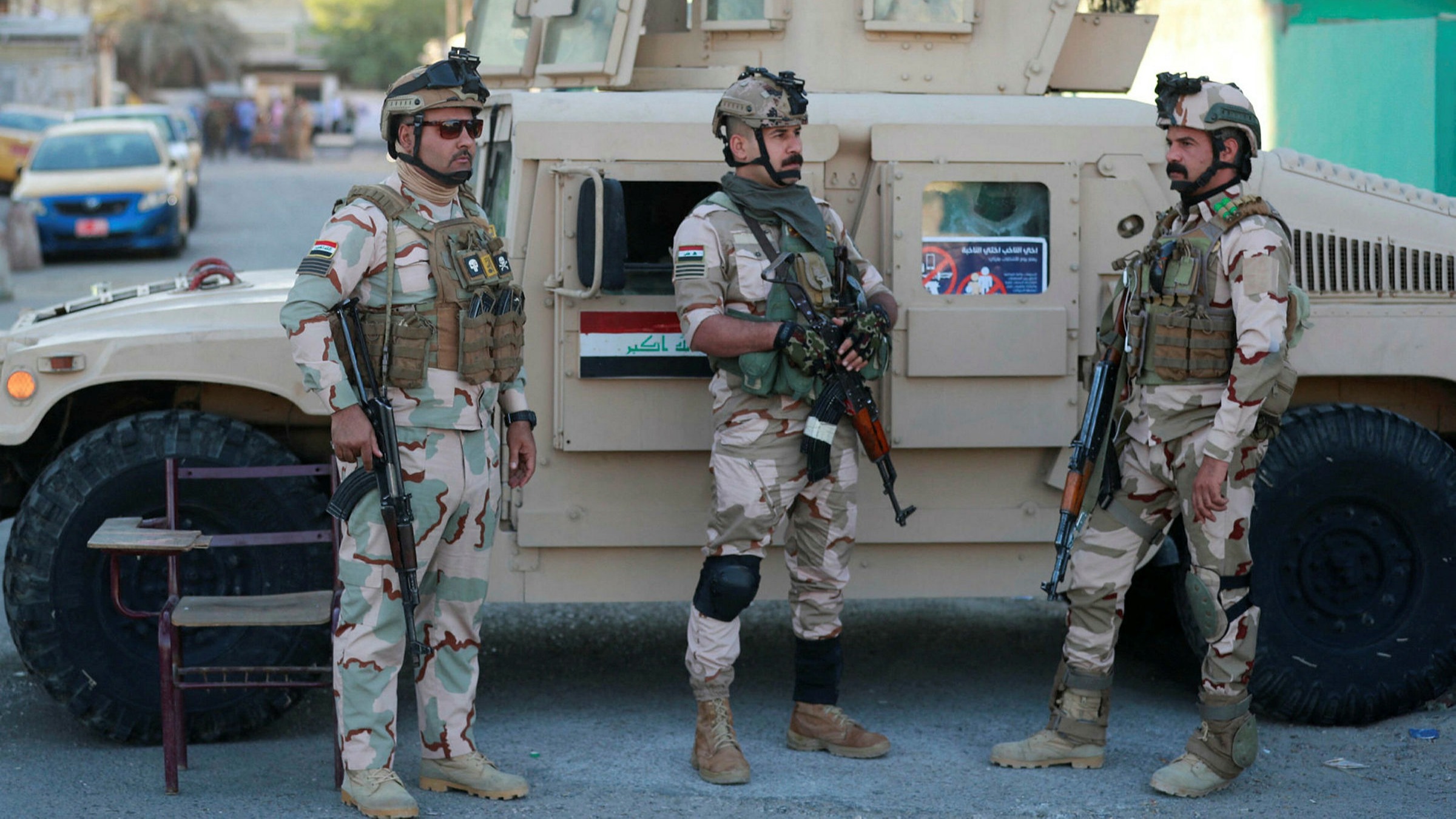
    The National Intelligence Service of Iraq announced the destruction of a dangerous terrorist gang in Baghdad and the arrest of its members.

    The members of this team, who were elements of the ISIS terrorist group, intended to carry out suicide operations in Arbaeen processions, police centers, checkpoints and markets in Baghdad.

  • Saudi Arabia Defense Ministry Executes Two Military Personnel

    Saudi Arabia Defense Ministry Executes Two Military Personnel

    ISWNews Analysis Group – The Saudi Arabian Ministry of Defense announced in a statement that Lieutenant Colonel Pilot Majid bin Musa Awad al-Balawi and Chief Sergeant Yousef bin Reda Hassan al-Azouni, two military personnel under its command, were executed for committing major war crimes, treason, and failure to protect national interests.

    These two individuals were arrested on September 16 and 17, 2017, and their sentences were carried out on Friday, September 14, 2023 in the Taif governorate located in western Saudi Arabia.

    No further details about the execution of these two individuals have been released.

    According to the information released by the Saudi Arabian Ministry of Defense, it is likely that the charges against these two military forces were related to some Saudi military personnel’s opposition to issues concerning the war in Yemen.

  • Yemen, Saudi Arabia Continue Negotiations; Ansar Allah Delegation Leaves For Riyadh

    Yemen, Saudi Arabia Continue Negotiations; Ansar Allah Delegation Leaves For Riyadh

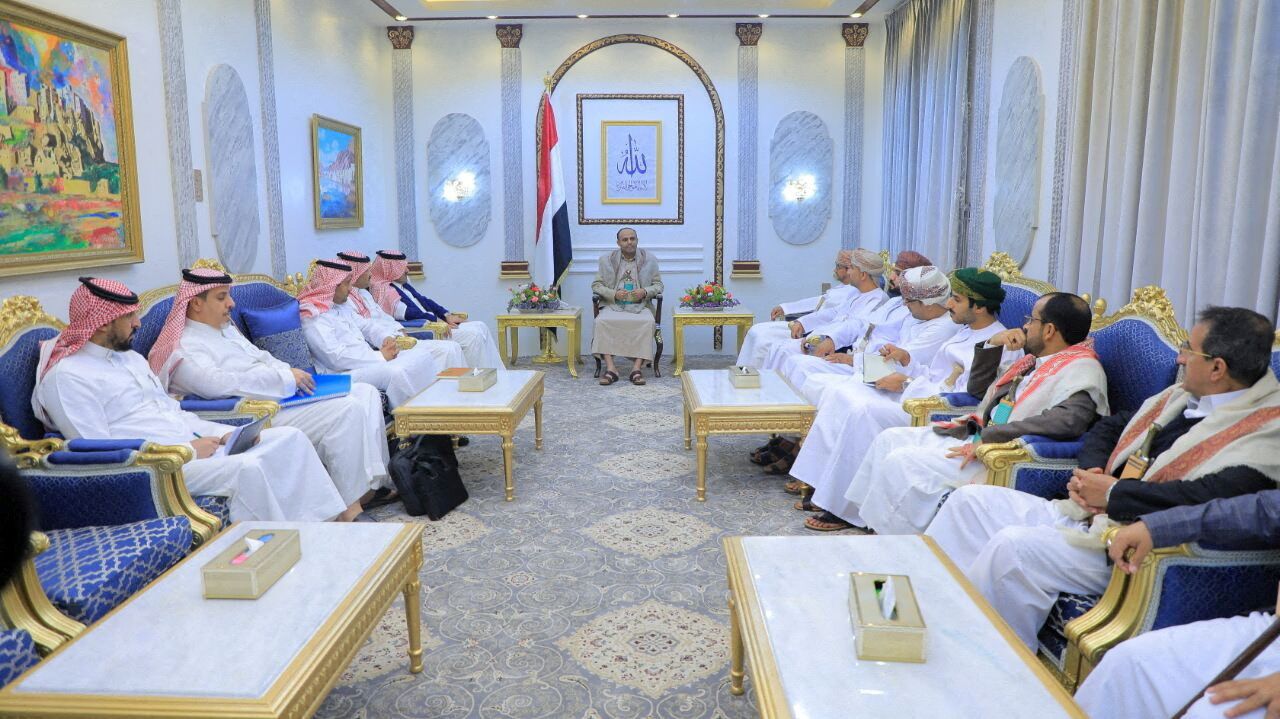
    The Yemeni National Salvation Government’s negotiating team, led by Mohammed Abdulsalam, who is also the Ansar Allah movement’s spokesman, traveled to Riyadh, the capital of Saudi Arabia, after Omani representatives consulted officials of the Ansar Allah movement.

    Following Oman’s liaison and talks during Mohammad bin Salman’s recent trip to Muscat, Omani representatives entered Sana’a on Friday, September 14. The meeting between the Omani delegation and Ansar Allah officials was held to convey Sultan Haitham bin Tariq’s message to Mahdi Al-Mashat, President of the Supreme Political Council of Yemen.

    In general, the negotiation was welcomed by Ansar Allah leaders, and the Yemeni negotiating team, accompanied by Omani representatives, went to Riyadh, the capital of Saudi Arabia on Saturday.

    Read more: A Look Into Challenges Of Peace Talks In Yemen

    According to Mohammed Abdulsalam’s statements, the priority of this round of negotiations is focused on lifting the siege, opening ports and airports, paying employees’ salaries from oil revenue, as well as prisoner swap.

    Other issues such as the withdrawal of foreign forces and the reconstruction of war-torn country for achieving a comprehensive political solution have been raised but they have not yet been confirmed or denied by the other party.

  • Drone Attack On Northern Latakia Kills Five Syrian Servicemen

    Drone Attack On Northern Latakia Kills Five Syrian Servicemen

    It is likely that the fighter jets of the Russian and Syrian army will organize a new series of attacks against the positions of Tahrir al-Sham in the coming days in response to this attack.

  • Israel’s Second Attack On Syrian Territory Over The Past Hours

    Israel’s Second Attack On Syrian Territory Over The Past Hours

    The Channel 14 of Israel announced that the fighter jets of this regime bombed targets in Syria for the second time in a row in recent hours. Lebanon’s al-Mayadeen network also announced that the attack was carried out through Lebanese airspace.

    It is worth mentioning that hours before, Israeli fighter jets attacked targets in the outskirts of Tartus, during which two Syrian soldiers were martyred and six others were injured.

    Read more: Israeli Air Attack On Tartus Killed 2 People

  • The Local Authorities Of Anbar Refuses To Accept The Anti-Iranian Armed Groups

    The Local Authorities Of Anbar Refuses To Accept The Anti-Iranian Armed Groups

    While there are talks about the plan to transfer anti-Iranian terrorist groups to the far west of Iraq in Anbar province, the representatives and heads of tribes and commanders of Hashd al-Shaabi (PMU) in this province emphasized their opposition to this plan.

    The representatives, heads of tribes and commanders of the Popular Mobilization Organization in Anbar province of Iraq emphasized that this province is not ready to accept a new problem and the transfer of anti-Iran armed groups to this province.

    Abdul Wahab Al-Bilawi, a member of the Anbar Tribal Sheik Council, also stated that such a plan is completely rejected and absolutely unacceptable and added: “We do not want the province to be involved in international conflicts, while these militants cause security problems in the province.”

    These words were mentioned while the Iraqi Foreign Minister, Fuad Hussein, stated yesterday before his visit to Iran, that the Iraqi government has started the process of transferring anti-Iranian armed groups from areas close to Iran’s borders to camps far from the border as part of the security agreement between Tehran and Iran.

    Read more: Deadline For Disarming Iraqi Terrorists Ends On September 19!

    It is worth mentioning that the Iran’s deadline for the Iraqi government to disarm terrorist groups in the Kurdistan region ends on September 19, 2023.

    Recently, the deputy commander of the IRGC said in an interview with an Iranian media outlet that “we [Iran] expect from our brothers in the Kurdistan region to show brotherliness, because providing terrorists with safe haven in that region, which has become a source of operations against our country, is not consistent with brotherliness or good neighborliness.”

    In this regard, Iraqi Foreign Minister Fuad Hussein arrived in Tehran on September 13 and met and discussed with Hossein Amirabdollahian, Minister of Foreign Affairs of Iran. Fuad Hussein emphasized that the central government of Iraq has fully committed to the Iran-Iraq security agreement and the border security program and the withdrawal of terrorists from the border areas will be carried out by September 15.

    Read more: Are Iran’s armed forces on the brink of a new round of attacks on terrorist groups in Iraqi Kurdistan region?

  • Israeli Air Attack On Tartus Killed 2 People

    Israeli Air Attack On Tartus Killed 2 People

    According to a Syrian military source, “at around 17:22 local time on Wednesday, the Zionist enemy targeted a number of air defense bases with several missiles from the Mediterranean Sea. This attack resulted in the martyrdom of two Syrian soldiers and the wounding of six others.”

    It is worth mentioning that on the 28th of August, the Zionist regime fighter jets attacked the Aleppo International Airport by firing several missiles from the direction of the Mediterranean Sea in the west of Latakia.

  • US Convoy Ambushed In Yemen (Video)

    US Convoy Ambushed In Yemen (Video)

    On September 12, the US forces was attacked by unknown armed men in Wadi Hadhramaut in the in the east of Yemen. This attack was probably carried out by armed tribesmen opposed to the Saudi-backed government of hadi or by the Al-Qaeda terrorist group.

    So far, the details of the damage and possible casualties have not been published.

    The exact area of the ambush is not known; However, considering the previous activities of the American forces in Hadhramaut province, it is likely that the incident took place on the outskirts of Al-Ghurfa.

    According to the published video, the US forces have air support, and from this point of view, it can be said that the attack by unknown armed men was ineffective.

  • A Look Into Challenges Of Peace Talks In Yemen

    A Look Into Challenges Of Peace Talks In Yemen

    Let’s scrutinize why the nature of the resigned government of Yemen is illegal and the Saudi-led coalition’s operations in Yemen are considered an invasion.

    A few days ago, the [Persian] Gulf Cooperation Council, led by Jassim Mohammed Al-Budaiwi, the Secretary-General of the council, traveled to the city of Aden in Yemen. This trip was the first visit by officials of this council to Yemen after 2014. In this meeting, Al-Budaiwi emphasized an issue that is the root cause of the crisis and lack of progress in Yemen’s negotiations, and that issue is nothing but the three references.

    The three references include the 2011 [Persian] Gulf Cooperation Council initiative, United Nations Security Council Resolution 2216, and national dialogues recognized by Arab countries as a reference for resolving the Yemeni crisis. However, these references are not solution to the Yemeni crisis but have become a major obstacle to advancing peace negotiations. To clarify the aspects of these three references, we explain them in general:

    1- The 2011 [Persian] Gulf Cooperation Council initiative: 

    This [Persian] Gulf Cooperation Council initiative was presented on April 3, 2011, by the United States and Saudi Arabia to resolve the Yemeni crisis. This initiative is also known as the “Gulf Initiative,” according to which Ali Abdullah Saleh, the then-president of Yemen, was given a 30-day deadline to step down and transfer power to his deputy, Abd Rabbuh Mansur Hadi. Mansur Hadi also had 60 days to form an interim government and prepare the ground for power transfer through elections. This initiative did not end with the resignation of Ali Abdullah Saleh, and Abd Rabbuh Mansur Hadi became the president of Yemen with the support of Arab countries in a one-person election. The seizure of power by the Yemeni revolution and the intervention of Arab countries in the affairs of this country provoked the anger of the Yemenis and led the Ansar Allah movement fighters towards capital Sanaa. Eventually, the Ansar Allah forces entered Sanaa by breaking the defensive lines of Abd Rabbuh Mansur Hadi’s supporters and took control of the government. After the unsuccessful political negotiations between the two sides, Mansur Hadi went to parliament on January 22, 2015 and resigned from his position. A month after his resignation, he was interrogated by intelligence and judicial authorities and finally fled from the presidential palace in Sanaa to Aden on February 21, 2015. This move was followed shortly with an invasion by the Saudi-led coalition, which complicated the political crisis in Yemen with the foreign invasion.

    2- United Nations Security Council Resolution 2216:

    On April 14, 2015, the United Nations Security Council, without mentioning the Saudi-led coalition’s invasion of Yemen, declared the prohibition of sending any weapons to the Ansar Allah fighters and Ali Abdullah Saleh’s forces in a resolution. This resolution also called on the Ansar Allah movement to hand over power and retreat from Sanaa as well as other cities in Yemen. The UN Security Council also approved the inspection of all ships heading to the war-stricken Arab country. It also banned travel for Abdul-Malik Badruldeen al-Houthi as well as Ahmed, the senior son of Ali Abdullah Saleh.

    3- National dialogues:

    Following the Saudi-led coalition’s invasion of Yemen, Yemeni national dialogues in Sanaa were halted, and prominent factions such as the al-Islah Party (Yemeni Congregation for Reform), and southern parties and so on, could raise the banner of opposition to the central government in Sanaa due to the support they received from Saudi Arabia, the United Arab Emirates (UAE), and other Arab countries. Following negotiations by the Ansar Allah movement in Sanaa, various political parties that were led by the General People’s Congress under the leadership of Ali Abdullah Saleh united with the Yemeni National Salvation Government. This move weakened the opposition; so, the Ansar Allah movement, after months of heavy defense, was able to repel the Saudi-led coalition’s attacks on Sanaa and Al Hudaydah Governorate in a short period as well as cleanse a large part of the areas under the control of the Yemeni government in Marib, Al Jawf, Saada, and Al Hudaydah governorates.

    Over the recent years, many events, such as Ali Abdullah Saleh’s betrayal of the Ansar Allah movement, the Stockholm Agreement, the assassination of Saleh Ali al-Samad, the head of the Supreme Political Council of the National Salvation Government, etc., have changed the course of developments in the Arab country. However, none of these events, like the Ansar Allah’s missile-drone operations against deep areas in both Saudi Arabia and the UAE, had a significant impact on peace negotiations, and ultimately a UN-mediated ceasefire between the Ansar Allah movement and the Saudi-led coalition was established in April 2022.

    Despite the establishment of a ceasefire and the Ansar Allah’s efforts to engage in talks with the Islah Party and southern factions in various incidents, intra-Yemeni political dialogue have not been held at any time or place. The main reason for this is the opposition groups’ dependence on Saudi Arabia and the UAE, as well as recent US interventions in Yemen’s developments.

    Therefore, the three references are chiefly a hindrance to peace negotiations and the unity of different groups in Yemen rather than a solution to the Yemeni crisis. The [Persian] Gulf Cooperation Council’s initiative can be seen as direct interference in the affairs of an independent country, and UN Security Council Resolution 2216 is interpreted as supporting Arab and Western countries’ goals in Yemen. When a political figure speaks against the three references, it can be inferred that there is no intention to resolve the Yemeni crisis, and some are trying to escalate the war in the country.

    In addition to these issues, there are numerous obstacles to Yemeni negotiations that prevent them from reaching a conclusion. These obstacles include US pressure on Saudi Arabia, the United Nations’ involvement in Yemen’s internal affairs, the dependence of Yemeni factions on Saudi Arabia and the UAE, the separatist tendencies of some southern parties with British support, the presence of terrorist groups particularly Al-Qaeda in occupied areas, the disregard of global powers such as Russia and China for Yemen’s developments, internal issues such as the lack of payment of salaries to Yemeni employees from oil revenues, and the ongoing blockade of Yemen.

    As a result of preventing the Ansar Allah movement from exporting Yemen’s oil and gas, the resigned government’s budget has reportedly faced a 50% deficit, which will put significant financial pressure on their Saudi and Emirati supporters. International organizations under the auspices of the United Nations, especially the World Food Program, have also significantly reduced their aid to Yemen, forcing UN representatives to hold a special session in New York to collect humanitarian assistance.

    Overall, Yemeni peace negotiations, in addition to internal differences and challenges, have become entangled in a more significant regional issue. The success of the Shia Muslims in gaining control of the Yemeni government and the Saudi-led coalition’s invasion of the Arab country with Western support led to Yemen becoming a proxy war between Iran and the United States. Nowadays, this war has entered a new phase with the agreement between Iran and Saudi Arabia, which has led to the resolution of some issues such as the maritime and aerial blockade of Yemen. However, fundamental differences remain, and there is still a long way to go in starting discussions on the formation of a united government and the path to achieving lasting peace.

  • Palestinians Hold Al-Rukan Al-Shadid 4 Drills In Gaza (Video)

    Palestinians Hold Al-Rukan Al-Shadid 4 Drills In Gaza (Video)

    On September 12, Palestinian resistance groups kicked off their nationwide and joint military exercises codenamed Al-Rukn Al-Shadid 4 (Mighty Pillar 4 or Pillar of Power 4) with rocket launches from different areas in the besieged Gaza Strip.

    The military exercises are being held to mark the 18th anniversary of the expulsion of Israeli occupiers from the Gaza Strip.

    The Al-Rukn Al-Shadid 4 military exercises aim to assess the speed of the resistance’s response in any emergency situation and test the readiness of Palestinian fighters when it comes to operations and the fight against any sort of aggression by the Israeli enemy.

    Hazem Qasem, a spokesperson for the Hamas resistance movement, emphasized that the Al-Rukn Al-Shadid 4 military exercises are being carried out to emphasize that the Israeli regime’s threats of attack and aggression against the Palestinian people will never halt the resistance fighters, and that the resistance movement supports the struggles of the Palestinian people, especially on the southwestern border with the occupying regime.

    The moment of the beginning of Al-Rukn al-Shadid 4 exercise