Category: West Asia

  • Latest Updates on Yemen 3 October 2018; “Death Brigades” in al Hudaydah!

    Latest Updates on Yemen 3 October 2018; “Death Brigades” in al Hudaydah!

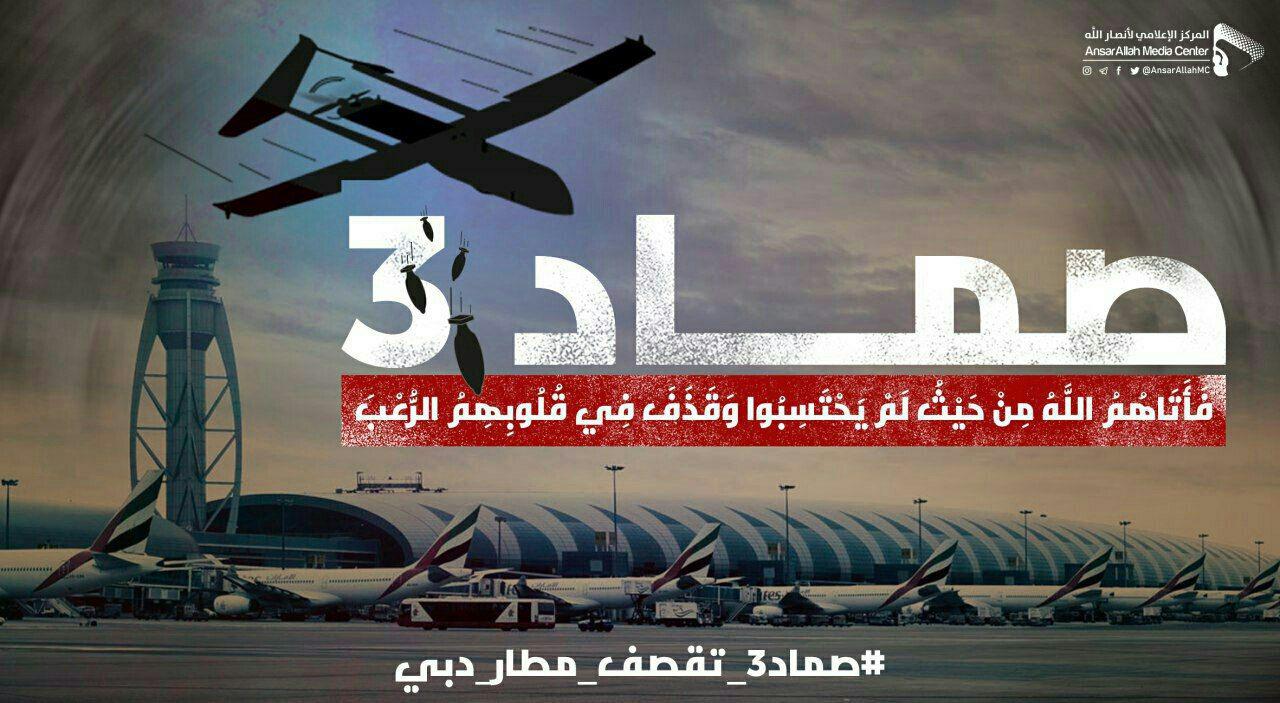
    1. AnsarAllah attacking UAE with UAV for the third time.
    Due to Samad-3 UAV attack to Dubai airport in UAE, the flight schedule changed. Among the flights, Bangkok and Paris flights had the maximum delays.
    Yemeni Army spokesperson: “We warn investors in Emirates one more time and this country is unsafe as long as it is attacking Yemen. Operation in Jizan coast was a retaliation to attack to Yemeni fishing boats (18 Yemeni martyred). Our drones and missiles attack Dubai as long as they are assaulting Yemen.Our future operations against Saudi Arabia and Emirates will be deeper and more powerful.”


    2. Sadaa:
    Engagement around Baqem in Tha’ban dam region in southwest of ‘Alab passage, Abwab al Hadid and northern heights of Baqem.
    Baqem is under full control of AnsarAllah and repeating claim of the Coalition on claiming it, is not correct.


    3. Al Hudaydah:
    Engagements in north and southwest of town Durayhimi and AnsarAllah has temporarily broke the siege of Durayhimi from south and east sides.
    People’s Committees with help of Kataeb al Mawt (Death Brigades) forces, cancelled Saudi Coalition’s attack in the axis of Kornish and engagements in north of Manzar and square Jamal are still continuing. Kataeb al Mawt in recent days have joined al Hudaydah battlefield.
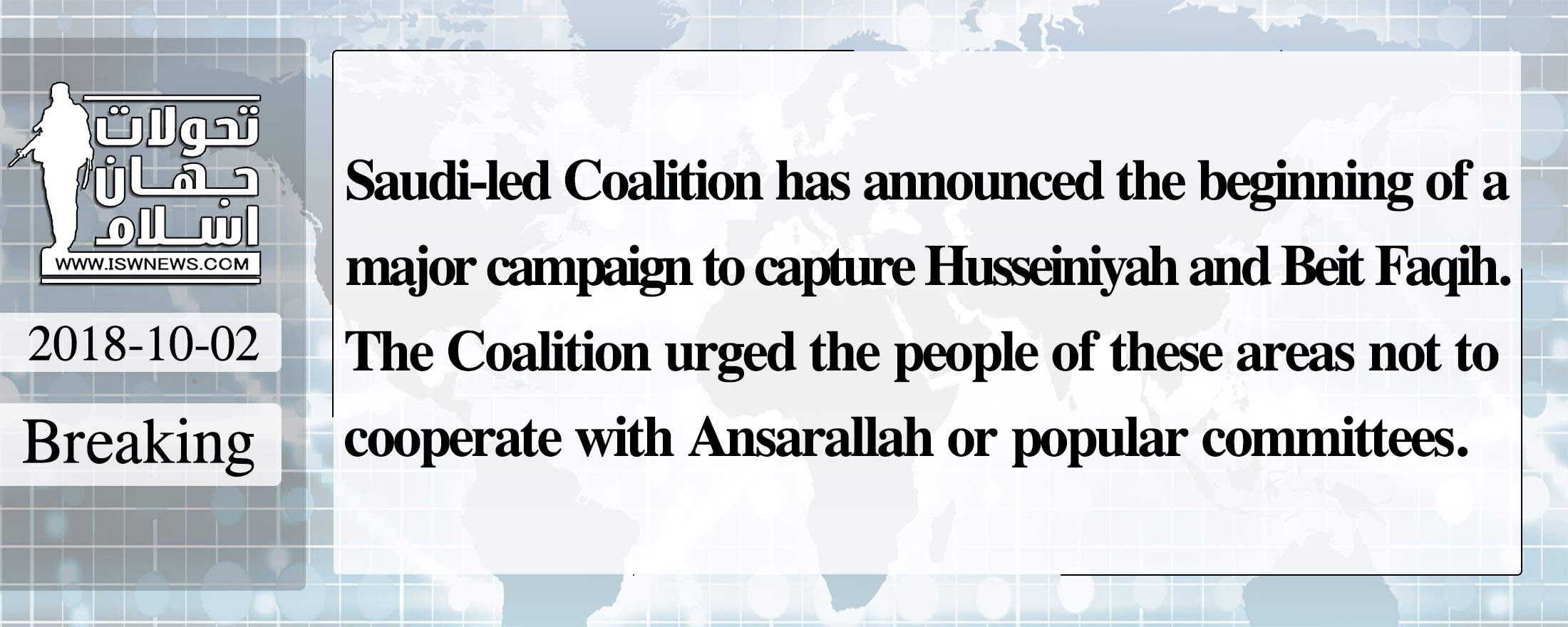
    Saudi Coalition’s operation in Hisseiniya and Beit Faqih has started.
    The Coalition asked people of these regions to not cooperate with AnsarAllah and People’s Committees. AnsarAllah has conducted some attacks to Jabalia and west of Tuhayta yesterday.


    4. Two sons of Ali Abdullah Saleh (Salah and Madeen) has released from prison with authorization of Mahdi Mashat.

    It is said they will be transported to Jordan.

  • Video | Delivery of S-300 Systems to Syria

    Video | Delivery of S-300 Systems to Syria

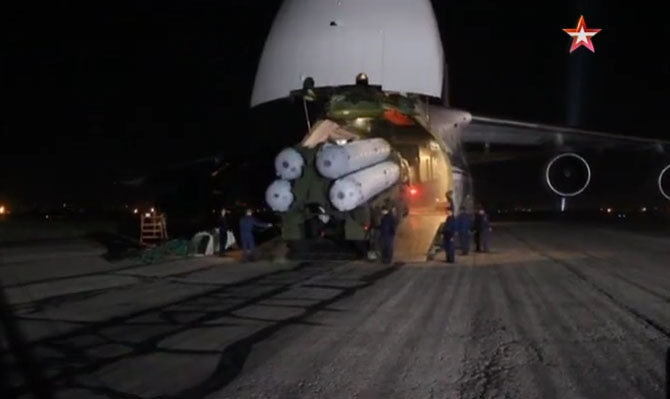
    In this regard, Sergey Shoygu said that the delivery of the S-300 systems to the Syrian army has complete; he added that Russia has delivered four S-300 air defense systems with 49 pieces including radars, equipment and launchers to the Syrian army.


    He said Syrian experts will be trained to use these systems within three months, adding that the process has begun.


    No information has yet been provided on the exact location of the deployment of these systems in Syria.

  • IRGC Releases Images of Missile Operation “Muharram Strike” against ISIS Headquarters in Syria

    IRGC Releases Images of Missile Operation “Muharram Strike” against ISIS Headquarters in Syria

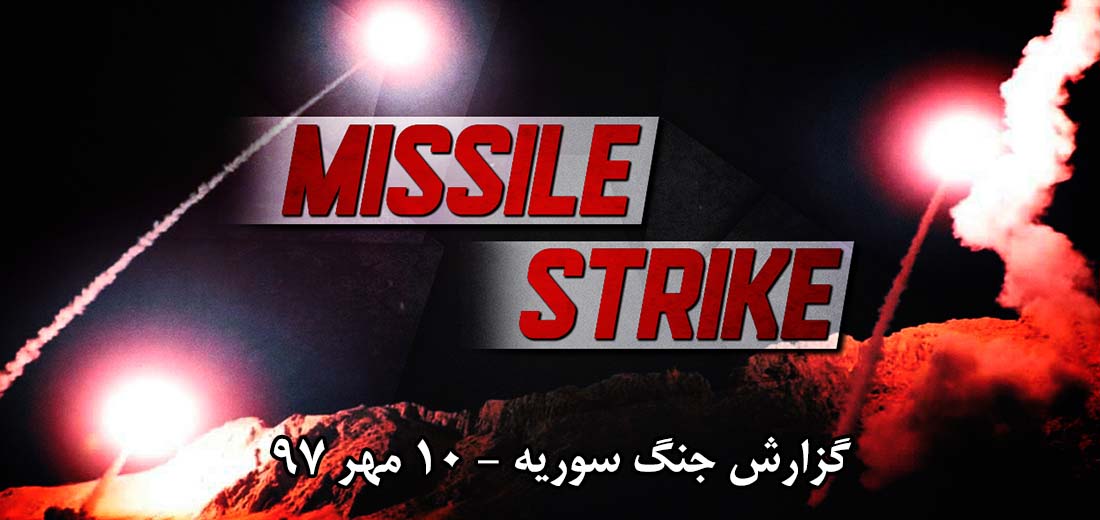
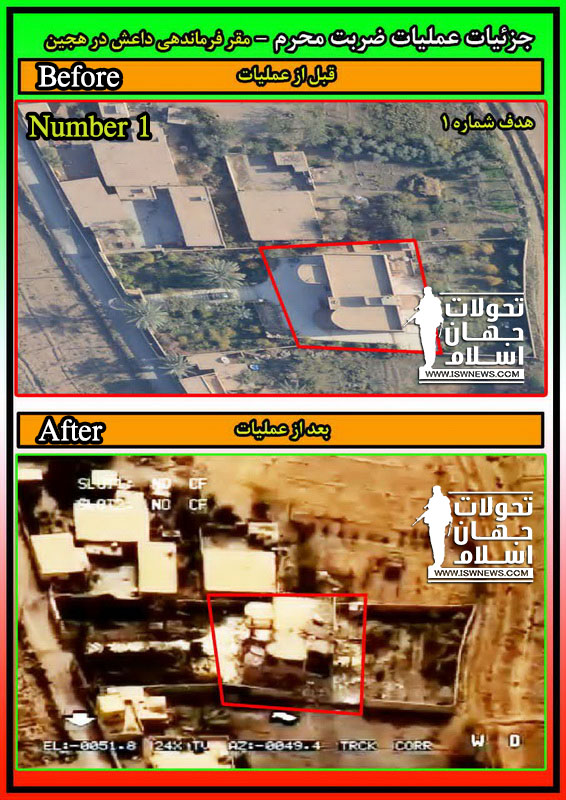
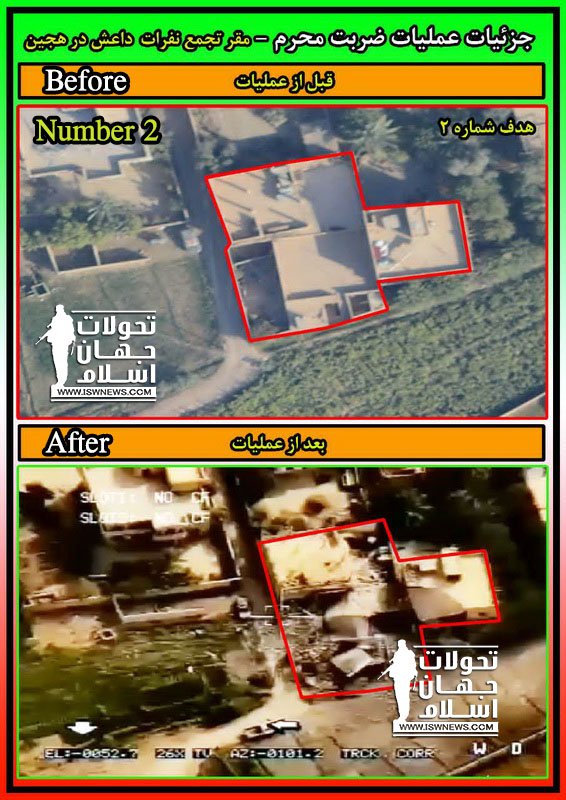
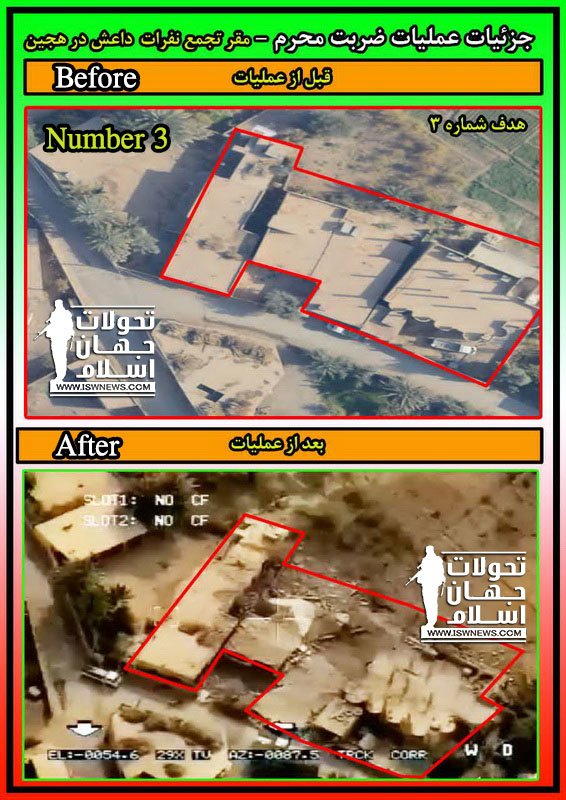
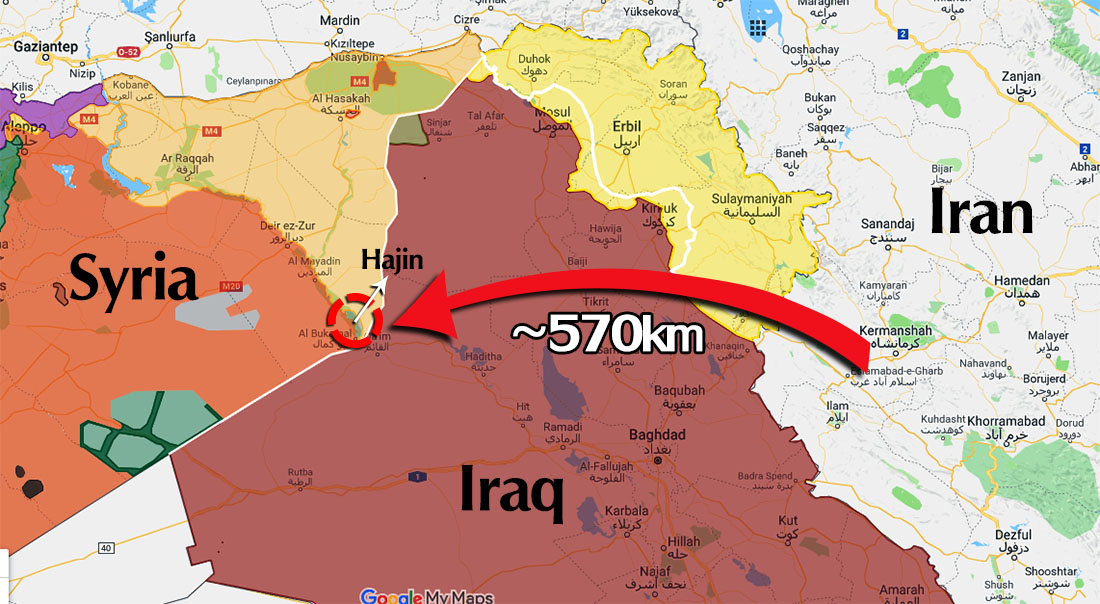
    On Monday morning at 2:00 AM (Tehran local time), the IRGC Aerospace Force in response to Ahvaz terrorist attack which led to martyrdom of several people including a 4 years old boy, fired 6 surface-to-surface ballistic missiles from Kermanshah towards the positions of ISIS terrorists in the Hajin region east of the Euphrates in Syria.

    Also 7 IRGC UCAVs participated in this operation  and bombarded the ISIS positions in eastern Euphrates.

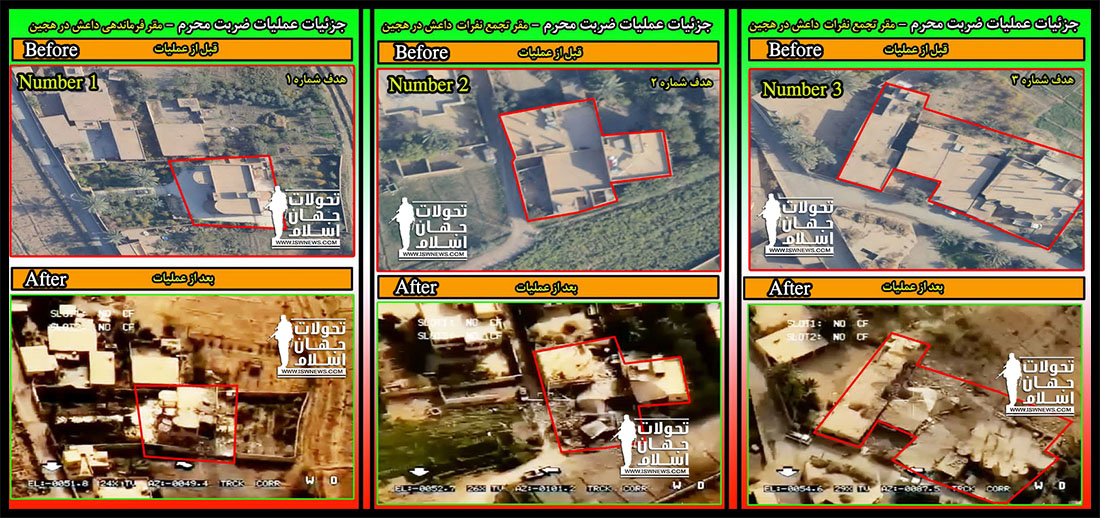
    Commenting on the photos of the target zone, IRGC Aerospace Force Commander Brigadier General Amir Ali Hajizadeh said the eastern parts of the Euphrates and the bases of Daesh (ISIS) terrorist group are fully supported by the US forces and have a specific position.

    Describing the Euphrates as a natural defense wall for the target zone in its western side, the commander said that area is also a no-fly zone and controlled by the US-led military coalition.

    General Hajizadeh said employment of pilotless aircraft like Shahed-129 for aerial imaging at the moment of explosion could practically disclose the whole operation and make the US-led coalition help evacuate the target zone.

    The IRGC utilized a different tactic to carry out the “Muharram Strike”, he added, saying the operation involved special intelligence tactics that allowed for a surprise attack on the commanders of Daesh.

    The general concluded that the hybrid operation involved missiles and combat drones, noting that images of the ground zero reveal the great accuracy of the strike.

    These three photos confirm a few points:
    1) The missiles have been precisely hit at predestined targets.
    2) The accuracy of Iran’s missiles have been really increased during recent years
    3) Still, the pictures of UCAVs attacks have not yet been released.
    4) IRGC Commander says that because of the US surveillance systems, they did not use UAVs like Shahed-129 to record the impact moment because it could expose the entire operation.
    5) The operation took place just near the US forces in Hajin pocket.

  • Demilitarized Zone in Idlib and Political Game of Russia and Turkey

    Demilitarized Zone in Idlib and Political Game of Russia and Turkey

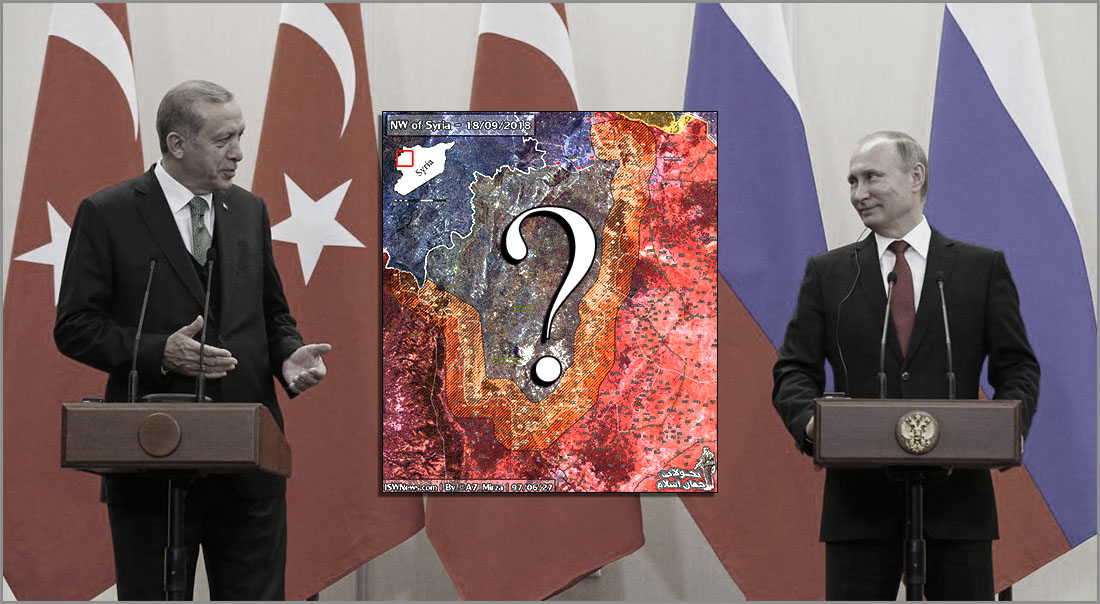
    On September 17 it was announced by Turkey and Russia that demilitarized zone (DMZ) is going to be imposed in Idlib province; a news surprising many.
    It’s two weeks after the news and one more week until it is implantation but local evidences tell something else.


    After Russian and Turkish Presidents meeting in Sochi, they announced there will be imposed a DMZ of 15-20 km depth between frontlines of Syrian Army and militants in northwest of Syria and Syrian forces will retreat and only Russian and Turkish troops will position there.
    It is noteworthy that details of this agreement never was published but what we mentioned above is the main part of the agreement which was announced orally by Russian and Turkish officials.

    Photos of this agreement in social media cannot be trusted nor confirmed.


    As it was predicted, after the announcement, terrorist groups such as Hurras al Din and Tahrir al Sham declined the agreement but it was public expectations that FSA’s subgroups which are directly under Turkish supervision and receive their financial and logistical supports from this country would submit to the agreement, but didn’t happen.
    During past days, two main subgroups related to the Free Syrian Army, i.e., Jaish Izzah and Faylaq al Sham declining Sochi’s agreement, claimed they do not evacuate the DMZ.


    On the other hand, we are observing Tahrir al Sham silence regarding the agreement and there are rumors that the silence is due to negotiations between the group and Turkey about MDZ and future of Idlib.
    Turkey’s problem with Tahrir al Sham is first that subgroups of FSA are not obedient and second that Turkey cannot disarm different militant groups due to Sochi agreement by the deadline, i.e., 10 October, which means “ambiguous but hopeful future of Idlib”, which was mentioned before.


    Let’s review briefly the evolutions in northwest of Syria once more
    Syrian Army transported a lot for troops and equipment to northwest for Idlib giant operation with lots of noise. Everyone was expecting this grand operation; pro-militant media and western mainstream media did everything to prevent the operation and fabricated a fake story of chemical attack. But this time the histrionics were cancelled by Moghawemat and Russia. Russia and Syria put more pressure on Turkey and claimed that deadline is over and going to start the operation soon.
    Turkey to prevent the Idlib operation and possible threats for this country such as flood of refugees and terrorists coming to turkey, returned to negotiations. Erdogan came to Tehran and everything was discussed. He went to Sochi then and it was announced: DMZ for 20 km and now the ball is in Turkey’s side!


    If we look at the issue of Idlib from every aspect, it is a victory for Russia and Moghawemat.


    Moghawemat knowing that militant groups cannot comply with this agreement, implemented this scenario for Turkey and its terrorists.
    It is safe to say that DMZ is a trap for Turkey and its militants; since if the militant groups do not comply with it before the deadline, Syria and Russia have the right to start the operation lawfully.


    On the other hand even if the agreement is implemented, it’s temporary and groups like Tahrir al Sham are still to leave and the land should turn back to Syria.
    Although the first case is more probable, in either case Syria is the winner and Turkey is left with its terrorists.


    Right now negotiations between Turkey and other terrorist groups are continuing and it needs more time to organize Idlib situation and probably Turkey asks for more time from Russia. Also it is possible that the DMZ changes such as decreasing the area of it.

  • Latest Military Situation in East Euphrates and Hajin Pocket

    Latest Military Situation in East Euphrates and Hajin Pocket

    On September 11 the final stage of “Island Storm”(Cizire Storm) operation of SDF with support of Coalition’s artillery and strikes for clearing the remnant of ISIS in Hajin region has begun. Nevertheless, after 20 days from the start of the operation, the advances are slow and shaky.


    Over the past 20 days, the Baghuz Foqani and Shajlah have been captured by the SDF, and news about SDF advances on Susah is not confirmed.

    On the other hand, ISIS terrorists have blocked SDF advancements with suicide attacks and Baghuz Foqani has become the main contact line of the parties, and the points are changing between sides rapidly.


    Also, we do not see any significant advances in the northern axis around Hajin, and this is a contradiction to what the United States and the SDF have been saying about domination on the region.

  • IRGC Missile and Drone Attacks on ISIS Terrorists in Hajin in Syria + Pictures

    IRGC Missile and Drone Attacks on ISIS Terrorists in Hajin in Syria + Pictures

    On Monday morning at 2:00 a.m. (Tehran local time), the IRGC Aerospace Forcein response to Ahvaz terrorist attack which led to martyrdom of several people including a 4 years old boy, fired 6 surface-to-surface ballistic missiles from Kermanshah towards the positions of ISIS terrorists in the Hajin region east of the Euphrates in Syria.

    The IRGC named the operation as “Strike of Muharram” (Zarbat-e Muharram).

    In Ahvaz terrorist attack,more than 20 people were killed, which was simultaneously claimed by the Saudi Arabia-linked al-Ahwaziya terrorist group, and the ISIS Takfiri terror outfit, which is suspected of receiving Saudi patronage.

    The type of the fired missiles are Zolfaghar and Qiyam and it is said that along with this operation, 7 IRGC UAVs were targeted terrorist positions in eastern Euphrates.

    Just hours after the attack, Mohsen Rezaee, the Secretary of the Expediency Discernment Council of Iran said: “IRGC’s missile attack at base of ringleaders of Ahvaz terror attack just was a ” flip” to these criminals. The main revenge is one the way…”

    This morning IRGC published a statement about this operation and said “the attack was a response to the “cowardly” act of terror during a military parade in the southwestern city of Ahvaz on September 22, which killed 25 people and injured 69 others.
    We ensure our dear compatriots that, as it has been said repeatedly, the armed forces view Iran’s national security as their red line and the IRGC, as well as the country’s Army, police and intelligence arms, would respond to enemy violations with an iron fist.”

    Read more: IRGC Releases Images of Missile Operation Strike of Muharram against ISIS Headquarters in Syria

  • Monthly Report on Yemen’s developments 28 September 2018, Seventh Article | Answering Questions and Analyzing the War in Yemen

    Monthly Report on Yemen’s developments 28 September 2018, Seventh Article | Answering Questions and Analyzing the War in Yemen

    The war of straits!

    Talking about straits is a long discussion which includes world’s geography; nevertheless, to understand the current situation in Yemen, we need to discuss several issues which shows the domain of AnsarAllah’s influence on the region.


    As Iranian President, Mr. Rouhani, stated that Iran’s strategic depth (as head of Moghawemat (resistance)) is from Indian Subcontinent in east to Mediterranean Sea in west to Red Sea in south to Caucasus in north. This region contains many straits, closing each of them can change the world.

    One of these points (straits), which is under control of Islamic Moghawemat, is Bab al Mandab Strait which connects Red Sea to Gulf of Aden in southwest of Yemen. Daily about five million barrels of oil and oil products are transported through this strait either toward Europe or Asia.


    Indeed, Saudi Arabia’s economy depends on this strait and any attack by AnsarAllah to this strait is a huge blow to their economy. Maybe Saudi Arabia can bring its oil from Persian Gulf to Red Sea by pipelines but connection between Suez Canal and Asian regions, low capacity of western harbors of Saudi and etc. confirms the importance of Bab al Mandab Strait and Yemen western coast.


    First question: Who can change the equilibrium in Bab al Mandab Strait?

    AnsarAllah is a Yemeni movement and follower of Islamic Moghawemat which using same military strategies as Iran and Hezbollah use, could expand their influence range from Red Sea to Persian Gulf.

    After US being threatened by Iranian President, AnsarAllah hitting Saudi Alliance’s warship in Red Sea, shows a bit its power and reaches on this strait.

    However this is not a new action by AnsarAllah and in previous situations when Syria as part of Moghawemat was attacked severely by “USA-Europe-Saudi” Coalition (Will Middle East Region’s Incidents Spark The Third World War?), AnsarAllah showed some of its power by missile attacks against Riyadh and southern regions of Saudi Arabia. Therefore it can be said that if Hezbollah is Sword of Damocles on Israel’s neck, AnsarAllah is Sword of Damocles on Saudi’s neck.


    Future of war in Yemen, will AnsarAllah reach the end?

    In the conclusion of article (Latest Situation and Reports On Yemen April 22, 2018; Map Update) we mentioned that if the war becomes very difficult for one side, higher layers of war will be used and after operation in al Hudaydah by Saudi Coalition we observed that a new generation of Yemeni drones and short-range missiles emerged in western coast fights.

    Reckoning and destroying the Alliance’s equipment and forces using UAVs and missiles to obstacle the Alliance’s operation in western coast had great effect however to completely stop the operation, AnsarAllah needs more accurate plan.


    On the earth, recently Yemenis claimed to start operations in western coast and to reclaim occupied districts Durayhimi and Tuhayta. Putting aside the possibility of bluffing, if we put these claims beside recent threats claimed by General Mohammad Qaderi, Commander of Yemeni Coastal Guard that we will target Saudi and Emirates harbors and open a sea war, the future of war in western coast needs more thoughts.


    Observing what we predicted in article “Discussion on Aspects of the Saudi Coalition Operation in al-Hudaydah”, Saudi Coalition attacking al Hudaydah and route “Jarrahi-Tuhayta-Zabid-Husseiniya-Beit faqih-Mansouria” simultaneously wants to strengthen its defensive line and to cut AnsarAllah’s reach to sea.


    In other axes such as in north of Hajjah, due to operation in south of al Hudaydah, advancing is not fast and it seems the primary objective of the Alliance is al Hudaydah and then other regions of western coast.

    Other axes such as Sadaa, Nihm, Taiz, Baydha have same situation, only in Baydha front, AnsarAllah fighting with al Qaeda, ISIS and the Alliance supported forces feels more under pressure and it is possible that the frontline becomes unstable in next months.


    AnsarAllah like before using side attacks and blocking the coastal road and resisting in suburban areas, tries to erode Saudi Coalition’s power but considering the high substitution rate of the Coalition for their lost equipment and troops, this strategy might not work as effective.

    Operations such as attacking military vessels and oil tankers, accurate missile attacks, drone reckoning and attacking flights and etc. are more effective on the war and AnsarAllah knows it better; as they used them more often in recent months.


    Latest changes to frontlines in September:

    In the last month, frontlines did not change significantly except the western coast in south of al Hudaydah is unstable and the claiming of either side is not stable usually.


    <Latest situation of south of al Hudaydah and main axes of engagement in September>


  • Faylaq Al-Sham denies its withdrawal from the Idlib buffer zone.

    Faylaq Al-Sham denies its withdrawal from the Idlib buffer zone.

    Faylaq Al-Sham released a statement this afternoon denying reports that their forces withdrew from the Idlib buffer zone.

    Jaish al-Izza also yesterday rejected the agreement between Russia and Turkey on Idlib DMZ.

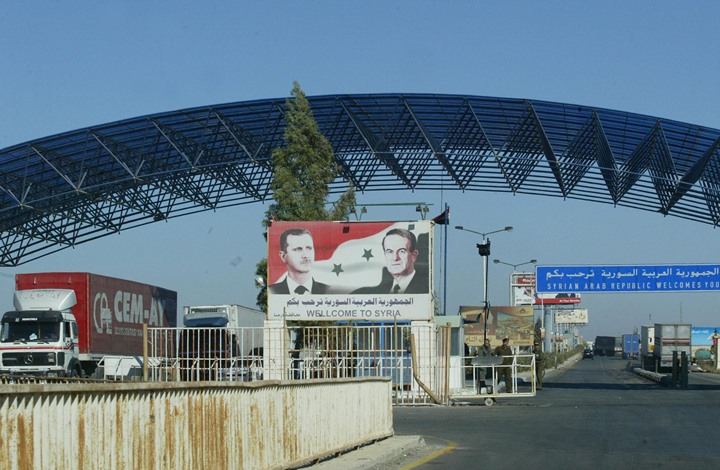
  • Nassib Border Crossing in Southern Syria Will Be Reopened.

    Nassib Border Crossing in Southern Syria Will Be Reopened.

    This comes two days after Jordanian Foreign Minister Ayman Safadi said that Jordan wants to open the border with Syria.

    In previous years, the terrorist groups controlled most of the Syrian-Jordanian border, forcing Jordan to close the crossing in 2015 until it returned to Syrian control.