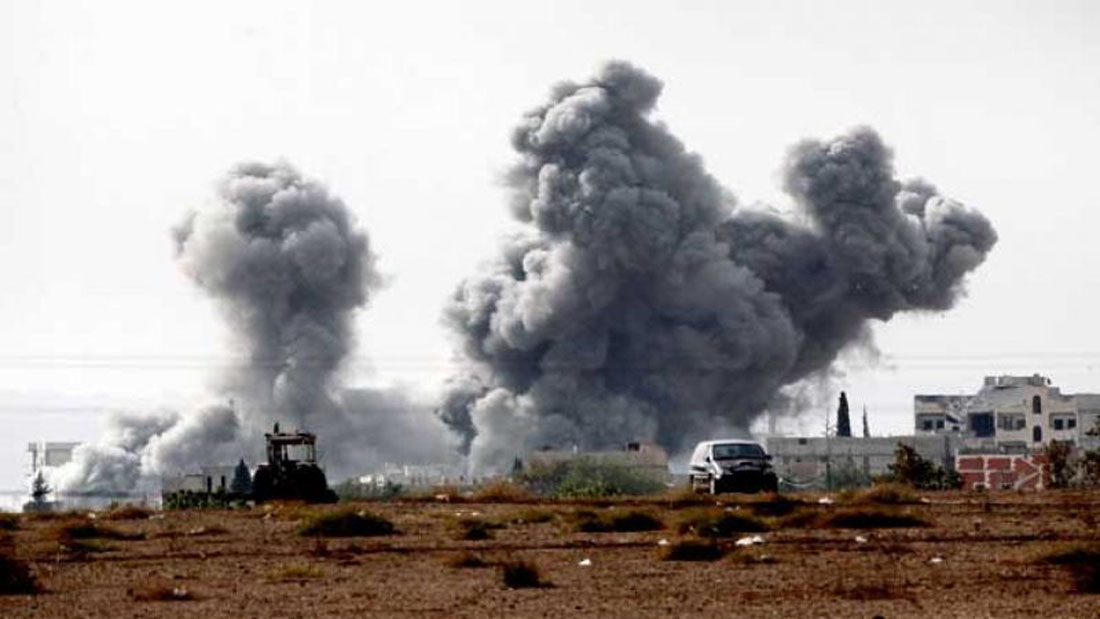
An hour ago this drone targeted the Aramco oil company in Riyadh, the capital of the Saudi Arabia.
Aramco confirmed the fire but claimed that the situation is under control.
An hour ago this drone targeted the Aramco oil company in Riyadh, the capital of the Saudi Arabia.
Aramco confirmed the fire but claimed that the situation is under control.
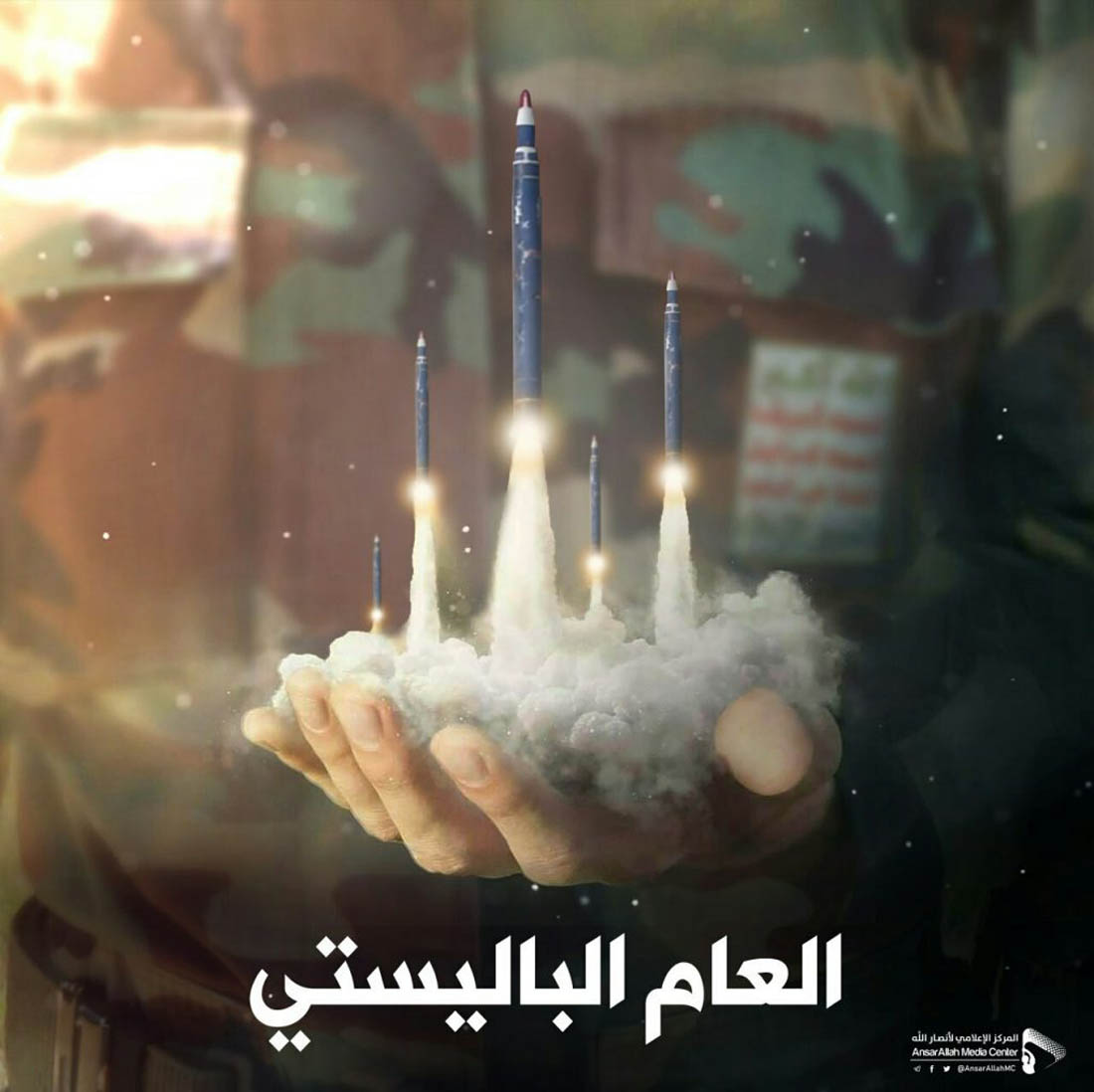
Saleh al-Samad the president of the Supreme Political Council of Yemen: “This year will be the year of firing ballistic missiles at Saudi Arabia, We will see launch of missiles everyday and it’s not important how Saudis activate their air defenses, there is no place to hide from our missiles.
Just as the enemy has intensified its attacks, We shall start this year with decisiveness & intensify our attacks against Saudi aggressions.
The internal front is in its most powerful time and any thought of collapse of this front is completely wrong. ”
“and for [all] violations is legal retribution. So whoever has assaulted you, then assault him in the same way that he has assaulted you. And fear Allah and know that Allah is with those who fear Him.” Surah Al-Baqarah [2:194] – Quran
“فمَنِ اعْتَدَى عَلَيْكُمْ فَاعْتَدُواْ عَلَيْهِ بِمِثْلِ مَا اعْتَدَى عَلَيْكُمْ وَاتَّقُواْ اللّهَ وَاعْلَمُواْ أَنَّ اللّهَ مَعَ الْمُتَّقِينَ” ﴿۱۹۴﴾بقره
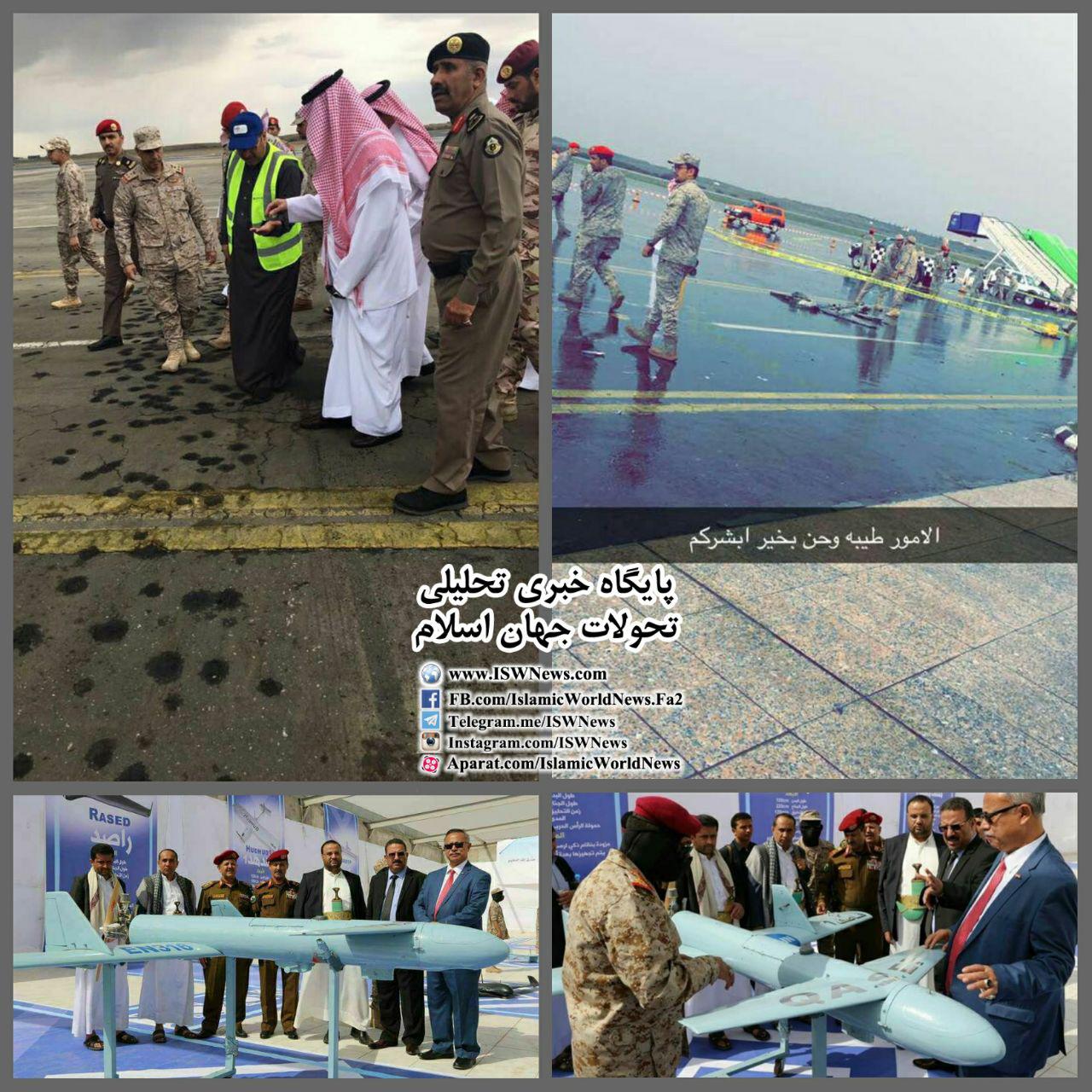
1. Drone Qasef-1 of AnsarAllah attack to Abha airport in Asir and Aramco oil company.
Due to this attack, flights to/from this airport are diverted to Jizan, Jedda and Riyadh airports.
This drone was hit by Saudi Coalition after the attack.
(This drone can fly up to two hours and 150 km and carry 30 kg of explosives.)
Photos showing Saudi officials visiting Abha airport after the drone attack and also the demonstration of Qasef-1 by Yemeni Army.
2. Wide missile attack by missile unit of Yemeni Army to Saudi positions
In these attacks, defense ministry of Saudi in Riyadh, Aramco oil company and King Abdullah Economic city in Jizan governorate were hit.
Yemeni Army spokesperson Sharaf Loqman: “Missile year that was mentioned by Saleh Ali al-Sammad (chief of Supreme Political Council of Yemen) starts from today with the wide missile attacks to Saudi. This year is full of surprises and will change the balance. We answer missile by missile and to answer Yemeni infrastructure attack, we attack Saudi infrastructures and centers.”
3. Defeating Mansour Hadi forces attack in front Jawf; engagements in Masloub district are continuing.
1. Eight missiles are fired by missile unit of Yemeni Army under the missile operation “Martyr Abu Aqeel”.
“Turki al Maleki” Saudi alliance spokesperson claiming interception of seven of them.
The eight fired missiles: three toward Riyadh, one toward Khamis Mashit, two toward Nijran and two toward Jizan.
The released videos by Saudi citizens showing some of the missiles hitting Riyadh.

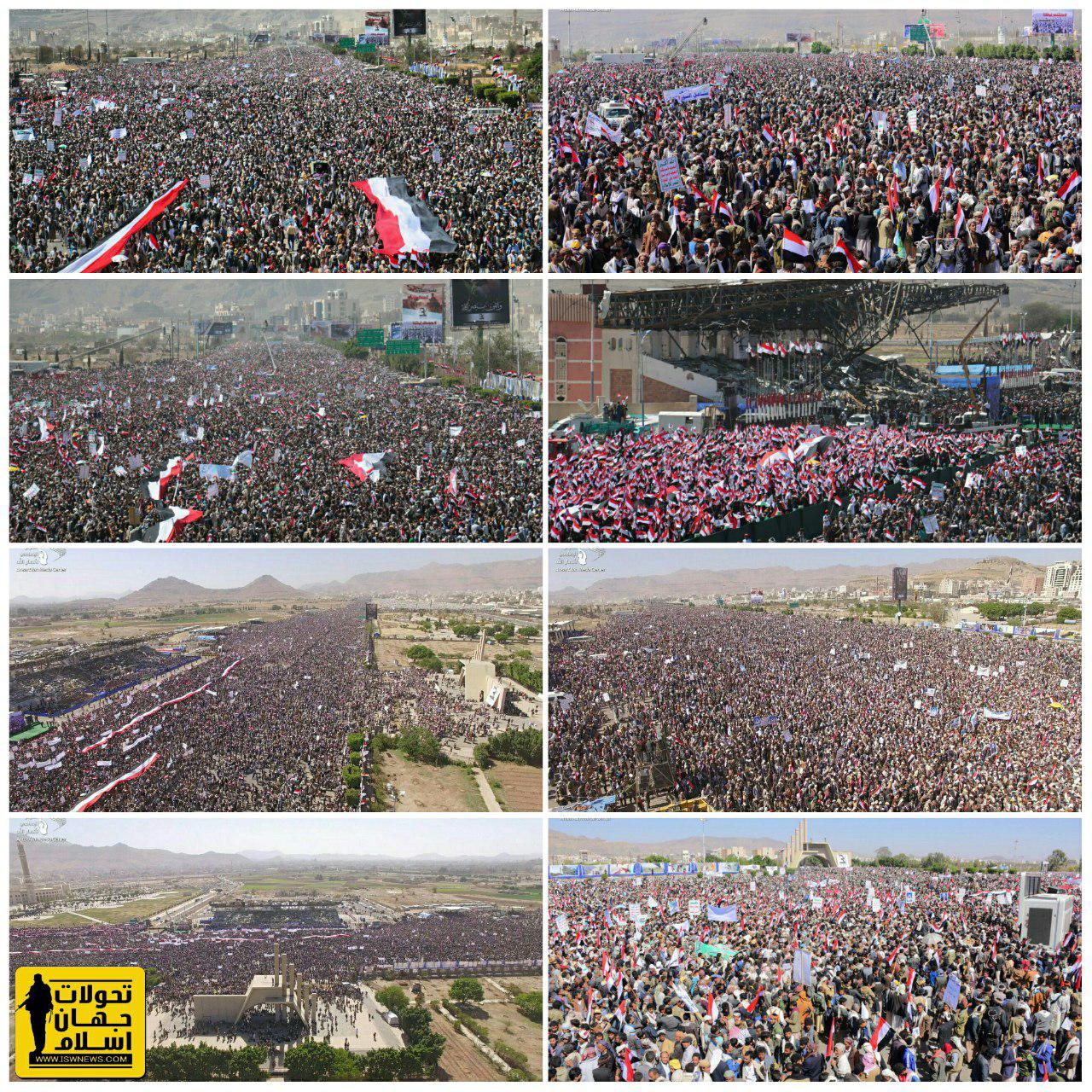
2. Glorious and massive parade of Yemeni people in square Sab`ein in Sanaa and opposing war and crime by Saudi alliance against this country.
3. The third day of engagement in Al Jawf governorate, the heaviest fights are in region Mahashima in district Khab al Sha`f.
The claim of Hadi’s forces occupying Taibat al Esm military base is still questionable.
P.S.
Latest articles about Yemen to look at again in the third anniversary of war and people’s persistence against Saudi alliance:
Yemen’s problem.
Saudis committed a bad heresy in this region and indeed they did wrong.
What Saudi government is doing in Yemen today, is exactly what Zionists did in Gaza.
It has two aspects:
one, it’s a crime, it’s genocide, can be sued internationally, they kill children, ruin houses, demolish infrastructures, destroy the national wealth in a country; well, this is a great crime; this is only one aspect of the issue;
the other aspect is that Saudis will lose something, they’ll be damaged, there’s no way they can win.
The reason is quite clear; it’s because Zionist’s military capability is several times more than these Saudis; several times more than them, they had military capability; and their target was small Gaza.
Here the opponent is a country, a country with a population of tens of millions; a nation, a large vast country. If they [Zionists] could win in Gaza, these [Saudis] can win here; even if they had won in gaza again these would have no chance for victory; now it’s even less.
They will surely get a beating; definitely Saudis will be defeated.
We have numerous disagreements with Saudis in different political issues, but we always said that Saudis had shown some dignity and sobriety; now they have lost that dignity and sobriety.
A few naïve young men, have taken matters of that country in hand and are predominating the barbaric aspect over sobriety and good appearance; this will end badly for them.
I warn Saudis, they should stop these criminal acts; this is not acceptable in this region.
America supports them indeed, defends them; this is the nature of America, in all issues takes the oppressor’s side; take’s side with the bad figures, instead of taking oppressed people’s side;
this is their nature, and here they’re acting the same, or else they’ll suffer losses, they’ll lose.
Now they will create controversy that “Iran is meddling in Yemen”; Yes! this is meddling, our talking here is meddling; but their criminal warplanes making Yemen’s airspace unsafe is not meddling!
they make up their foolish excuses for this meddling; these excuses won’t be accepted by international logic, neither nations will accept it nor god…
Imam Khamenei
Download Video Here
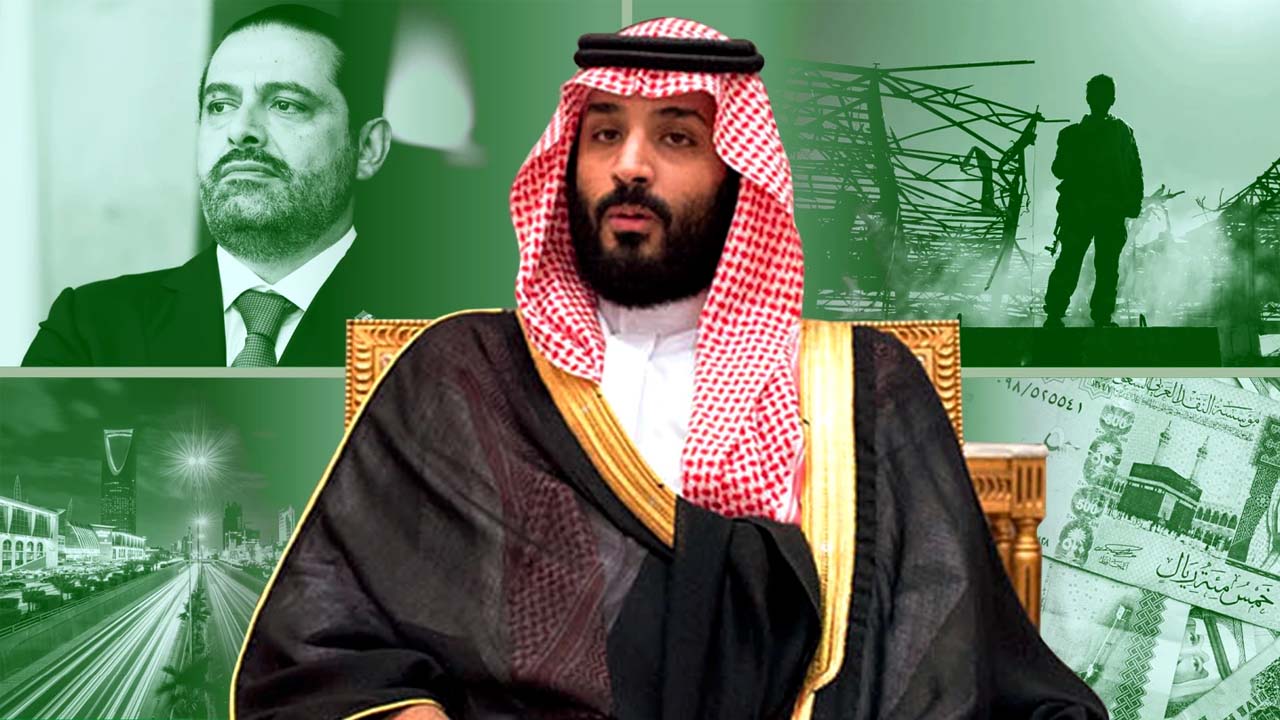
As Hariri is a Saudi-US asset, the ‘forced’ resignation seems more like the sacking of a company executive who has not lived up to expectations. Told to step out of office Hariri did what he was told, following through by issuing a Saudi-scripted statement accusing Hezbollah and Iran of sowing discord across the region, and talking of a plot to assassinate him.
In fact, it was Saudi Arabia sowing discord, by blaming Hezbollah and Iran for Hariri’s resignation, with the apparent aim of throwing Lebanon into chaos. Predictably, Netanyahu jumped in immediately, saying the resignation was a call to the ‘international community’ to take action against Iranian aggression but no-one else bought it, not even Lebanon’s Sunni Muslims. Hezbollah reacted calmly and if anyone came out of it badly it was Saudi Arabia. In the Iranian view the removal of Hariri was a plot cooked up by Trump and Crown Prince Muhammad bin Salman.
Hariri himself did not return to Lebanon where he could have defied the Saudis and resumed his position but moved on to France, where he was welcomed by President Macron at the Elysee Palace. Soon after talking to Hariri, Macron was on the phone to Trump, discussing the Iranian ‘threat’ and how to deal with it. According to Lebanon’s President Michel Aoun, Hariri told him he would return to Beirut by Independence Day, November 22, marking the end of the French mandate. The Lebanese parties, including Hezbollah, still regard Hariri as the country’s Prime Minister so how all of this plays after Hariri’s return will be interesting to see.
What lies behind all this?
What is the connection between Hariri’s resignation (forced or otherwise) and the other events running concurrently in Saudi Arabia, namely the arrest of some of the most powerful figures in the kingdom and the confiscation of their assets, estimated at about $800 billion? One has to assume there is a connection. It seems far too much of a coincidence for there not to be one.
The claim that the purge of the princes was part of an anti-corruption drive is bunk, seeing that corruption is intrinsic to how the Saudi government operates, domestically and in its foreign policy. If corruption is a cover story, why were these princes removed? Could it be their opposition to Saudi Arabia’s policy failures, in Syria and Yemen, and their opposition to what is now clearly being moved from the drawing board to implementation, a war on Iran, involving the US, Israel and Saudi Arabia? They would hardly be alone in seeing Crown Prince Muhamad bin Salman as reckless, foolhardy and lethally dangerous to the stability of the Saudi kingdom: his accession to the throne they would regard, literally, as a crowning act of folly.
That another war is on the horizon is clear from all the signals coming out of Israel in the past six months. That not just the US but Saudi Arabia will be part of it is obvious. Intermittently, Israel and Saudi Arabia have been pushing for war on Iran for a decade. With the US refusing to bite, to the extent of launching an open military attack, Syria was chosen as the next best target: if the government in Damascus could be destroyed, the strategic alliance between Iran, Syria and Hezbollah would collapse at its central arch. This plan B was partly foiled by the refusal of the UN Security Council, thanks to the vetoes of Russia and China, to sanction an aerial war on Syria along the lines of the assault on Libya. Plan C had to come into effect, reliance on a war of attrition fought by takfiri proxies organised, financed and armed mainly by the US, Saudi Arabia, Qatar, Israel, Britain and France, and coordinated with the assistance of governments ranging from the Balkans to Central Asia. Seven years later Plan C has now ground to a halt. The ‘axis of reaction’ (the US, Israel and Saudi Arabia) has suffered a crushing defeat at the hands of the ‘axis of resistance’ (Iran, Syria and Hezbollah). Russian intervention has been critical, so the victory is Russia’s as well, and a particular humiliation for the US.
This does not end the list of defeats suffered by the ‘axis of reaction.’ Another severe blow has been suffered through the collapse of the Kurdish drive for independence in northern Iraq. Both the US and Israel have assiduously cultivated the Kurds for decades, seeing northern Iraq as a new strategic centre for military and intelligence operations across the Middle East. The US and British ‘no fly’ zone and ‘safe haven’ initiatives of 1990/91 were the first steps in the planned breakup of an Iraq that no longer suited imperial purposes. The invasion of 2003 and the imposition of a constitution dictated by the US, weakening the authority of the central government, led to Kurdish autonomy which, in time, would have been expected to end in independence and a new base for US/Israeli operations across the Middle East.
Even the US was against the referendum called by Masoud Barzani: seeing that it was already getting what it wanted, the referendum would be premature and cause more trouble than it was worth.
This proved to be the case. Turkey and Iran reacted viscerally, ending flights and closing border crossings: the Iraqi army retook Kirkuk and all the territory conquered by the Peshmerga in 2014. Barzani stepped down as president of the KRG: Jalal Talabani, the head of the Patriotic Union of Kurdistan (PUK), had died only recently, leaving the Kurds leaderless and at each other’s throats over who was responsible for this debacle. Iraq is now being reconstituted as a unitary state. The largely Shia Popular Mobilization Forces (PMF) has developed into a powerful annex to the regular army. Moreover, the government in Baghdad has a close working relationship with the government of the Islamic Republic in Tehran.
The paradox of these defeats is that they increase to a critical level the danger of a new attack by the ‘axis of reaction’ on the ‘axis of resistance.’ Russia, Iran, Syria and Hezbollah cannot be allowed to get away with these victories. The Israeli chief of staff, Gabi Eisenkot, hardly needed to say, as he did recently, that there is ‘complete agreement between us and the Kingdom of Saudi Arabia’ on the question of Iran’s spreading influence across the Middle East, or ‘control’ of the region as he put it. Unable to impose its will on one of the poorest countries in the world, Yemen, Saudi Arabia would be of little help on the front line in a war against dangerous targets such as Hezbollah and Iran. But it has money and according to Hasan Nasrallah, has offered to pay Israel billions of dollars for a new war on Hezbollah.
As Israel always has the next war on the drawing board, the central question is ‘when’ rather than ‘if’ it will be launched. In recent months it has held some of the largest-scale land and air exercises in its recent history in preparation for a new war on Hezbollah, including training for fighting in tunnels. It has warned repeatedly over the years that the next time around the ‘Dahiyeh strategy’ will be applied across Lebanon and is busy selling the propaganda package that there really is no Lebanon any more but only a Hezbollah enclave controlled by Iran.
Dahiyeh, of course, is the largely Shia Beirut suburb and urban HQ of Hezbollah that was pulverised from the air in 2006. Given the huge civilian casualties Israel is willing to inflict in the next war, Iran and Syria would be hard pressed to stay out but the moment they intervene, Israel, the US and Saudi Arabia will have their three primal enemies directly in their line of fire. The refusal of the US to withdraw its forces and dismantle its air bases in Syria now that the Islamic State has been ‘defeated’ (if still being used as an American tool) is probably connected with preparation for the coming conflict.
Israel’s existential struggle in the Middle East since 1948 has now reached the point of crisis. Israel may think it has all the time it needs to completely engorge the West Bank but it does not have such a luxury on the regional front. If Iran is stronger now than before the wars on Iraq and Syria, it will be even stronger in two or three years’ time. It has a large standing army, fought an extremely destructive war against Iraq (1980-89), has been deeply involved at the planning and combat level in the defence of Syria and has built up a large arsenal of locally developed short and long-range missiles.
By comparison, Israel has not even fought a regular army since 1973: in 2000 it was driven out of Lebanon by a guerrilla force and when it attempted to retrieve lost ground by launching a new war in 2006 its ground troops proved incapable of taking villages even a few kilometres from the armistice line. Its attacks on Gaza have been onslaughts on a largely defenceless civilian population.
Given that since 1948 its security/insecurity situation has ultimately been based not on diplomacy but on full spectrum military domination from the possession of nuclear weapons down to conventional warfare, Israel cannot allow the current situation of strengthening enemies to continue. Hostile to any kind of diplomatic settlement that would generate a real peace, Israel must go to war. It says it is much stronger and better prepared than in 2006 but so are Hezbollah and Iran. Hezbollah alone has a large stockpile of missiles able to reach any corner of occupied Palestine: Israel’s Iron Dome anti-missile system will stop some of them but not all.
If it does go to war Israel is certainly going to suffer civilian casualties unprecedented in its history but the politicians and generals around Netanyahu will argue that its existential situation will demand these sacrifices. The US would come in behind Israel, but Russia could not be expected to sit by while its diplomatic alliances and strategic assets in the Middle East are destroyed. The commentator Abd al Bari Atwan has warned that such a war would be the most destructive in the region’s history, developing into a global conflict, and has raised the question of whether Israel, having started it, could survive it. This is a truly apocalyptic scenario.
As usual the Palestinians find themselves caught in the middle. Mahmud Abbas is being told to go along with the Trump-Kushner-Israel ‘peace initiative’ or else, even by Saudi Arabia. This would involve Abbas publicly sharing the anti-Iranian, anti-Hezbollah and anti-Shia views of the Saudis at a time he is engaged in a reconciliation process with Hamas, which has refused to take a stand against Hezbollah. Furthermore, several of its senior leaders have recently been in Tehran. For the moment all eyes are on Hariri as he returns to Beirut: how will he explain himself, will he resume his position as Prime Minister and on what terms?
Translate provided by SouthFront

According to the decision, any EU member state that signs a military and weapon sale agreement with the Saudi government will be sanctioned by other members of the EU.
The European Parliament at their meeting in Strasbourg, France has approved an arms embargo on Saudi Arabia to protest against the country’s actions in Yemen.
The decision came amid the Human Rights Watch report about a death of 39 civilians, including 26 children, as a result of the Saudi-led coalition air strikes during last two months.
The Human Rights Watch has also requested the UN human Rights Council to include the Saudi-led coalition into the annual list of child rights violators.
The EU is the second-largest weapon exporter after the US in the world.
Translation by SouthFront
In the recent days, the Saudi government have arrested Salman al-Ouda (customary marriage fatwa and claim of a meeting with one of the God’s angels, Gabriel), Awad al-Qarni and Ali al-Amri. They were criticizing the Saudi government and supporting Qatar.
Saudi security forces have also arrested a number of Saudi clerics, including Mohammad al-Khodayari, Mohammad al-Habdan, Ibrahim al-Harthi, Yusouf al-Ahmad, Ibrahim al-Nasser, Ibrahim al-Fares and Gorom al-beshe.
Hasan Farhan Maliki (cleric from Jizan city and opponent of Wahhabism and Saudi government policies) and the media activist Fahad al-sunaidy were also among the detained people.
Translation by SF
According to the report obtained by Reuters, “attacks carried out by air caused over half of all child casualties, with at least 349 killed and 333 injured”. The report says that the deaths were “unacceptably high”.
The report insists that 51% of all child deaths and injuries in Yemen last year were the result of military actions of the Saudi-led coalition.
The Saudi-led coalition destroyed more than 28 schools in Yemen, the report added.
The obtained text was reportedly drafted by UN Secretary-General Antonio Guterres’ special envoy for children and armed conflict, Virginia Gamba, acting on a request from the UN Security Council.
However, Guterres still has to approve the report. If this is done, the report will be released this month.
The report will be a serious problem for the UN secretary-general because if he releases the report, he will damage the UN’s relations with Saudi Arabia and its allies. If he does not release the report, he will be accused of undermining the UN’s commitment to human rights.
In February, Gutierrez suggested to his senior advisors to postpone the release of the report for three to six month in hope that it may motivate Saudi-led coalition to improve its human right performance in Yemen and particularly the rights of children in war.
Gutierrez will allegedly receive the final report this week.
The signing of the de-escalation agreement in Avril 2016 reportedly reduced the civilian casualties. However, the actual death toll can be higher than the provided in the report because of a lack of access to documents that can provide accurate info on the civilian casualties.
According to reports, there is still no final decision on the countries that would be added to the final list of countries that violate the human rights.
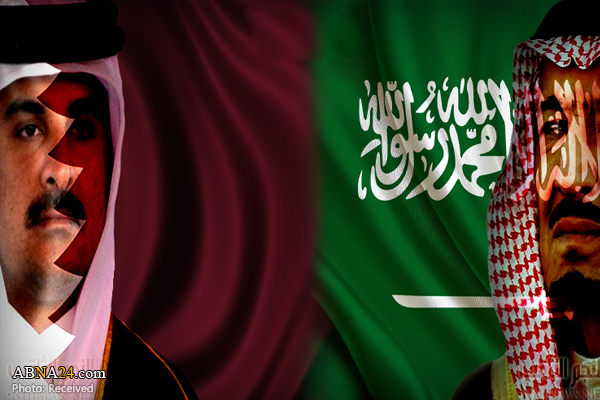
Saudi Arabia, with the bellicose support of President Trump, has launched a diplomatic and partial economic offensive against the ridiculously small state of Qatar and is dragging its allies, the United Arab Emirates in particular, into a potential major headache.
You see the de facto capital of the Emirates is Abu Dhabi which uses Qatari natural gas to generate half of its electricity via the Qatar-Abu Dhabi-Oman pipeline. So if Qatar really felt threatened it would pull the plug, and at least for a month or so, challenge the very survival of Abu Dhabi, for how many Emiratis let alone expats
would be able to last +40c/105f temperatures without electricity?
The Emirates capital city would have to import Liquified Natural Gas (LNG) which it doesn’t have the infrastructure prepared for as well as convert its electrical generators to LNG from natural gas, something that could take over a month to get up and running, no matter the $Billions the Emirates have to throw at the problem.
So the Saudis picking a fight with their long time villains, the Qatari’s, could crash the Emirates economy and put a serious strain on the so called “coalition of the willing”, that is those still committed to the quagmire in Yemen and its assorted crimes, another source of strain between the two allies.
The Emirates hate the Qatari’s, not without reason, and we know that the Emirates foreign legion has been concocting nasty plans against them in league with a pro-Israel PR Hit Squad in the USA. Still, the Emirates are dependent on Qatari gas so the shit could really hit the fan if the young newly crowned Saudi Prince and de facto commander in chief steps over the line and provokes a Qatari response.
Qatar and Iran, the “snake” that the Saudi’s so infamously wanted the CIA to cut the head off of, share the Pars natural gas field under the Persian gulf waters, the 3rd largest such in the world whose exploitation of has made Qatar the worlds largest natural gas exporter. If Qatar gets into a serious fight with Iran, which is what the Saudis are demanding, than the Qatari economy could hit the skids for Qatar only exports 600k barrels of oil a day, not nearly enough to sustain its international and domestic commitments.
Reality is the Emirates have much more serious trade relations with Iran than Qatar. Oman on the other hand, has even closer economic and political ties with its ancient fraternal brothers and sisters in the land of the Persians and the Saudi’s aren’t attacking the Omanis, so why the pissing match with Qatar?
Like I said, this animosity is nothing new just the latest flare up, for back in 2014 the Saudis led a break in diplomatic ties that lasted 8 months, and are now led by a much more hotheaded royal, in his early thirties and up until Trump, it seemed that the USA had abandoned the Saudis in favor of the nuclear deal with Iran, taking regime change off the table and leaving the Arabs on their own.
These have been scary times for the Arabian peninsula tribes, leading to amongst other actions, the Emirates giving the UN Security Council and its sanctions against Eritrea, in other words the USA, the finger by building its new navy base and airfield in Assab, Eritrea.
Qatar and the royal family of Saud, both installed by the British after WW1, have been at each others throats for many years now. We know thanks to Wikileaks the Qatari’s were pushing the Americans to engineer a coup against the Saudis while the house of Saud was trying to restore the grandfather of the present Emir, whose father deposed
his own father in a palace coup and who was forced to abdicate to his son by the Saudis.
The Saudis can’t militarily attack Qatar, not with the largest US military installation in west Asia and everyone knows it. The so called “economic blockade” of Qatar has failed so far with Turkey stepping in to provide everything Qatar needs.
True, the Al Jazeera satelite television channel has been a finger in the eye of the Saudis and Emirates but AJ’s main viewer base in Africa, west and south Asia, over a billion people, is via the two main satellite channels, Arabsat and Nilesat. These free channels can be accessed by anyone for as little as $40 for a satellite dish and receiver and a television. Arabsat is owned by the Saudis and Nilesat by Egypt. They kicked the Iranian Arabic channel off just like the Europeans kicked off Iran’s PressTV from their satellite systems. So why is the anti-Qatar lot allowing Al Jazeera to continue to spew its attacks on them via the big two satellite channels they own?
Why? Its a pissing contest, really, and other than pissing and moaning little of anything in the way of real conflict is going on. Maybe this will change in time but its hard to see the major powers internationally allowing this to get out of hand. The Saudis eventually will to try some face saving “compromise” and Qatar might have to eat some crow, but when all is said and done all of it will amount to little more than a urine stain on the political fabric on the Arabian PeninsulaPeninsulaPeninsulaPen
Source:
http://ahtribune.com/world/north-africa-south-west-asia/saudi-qatar-rift/1748-behind-the-scenes.html