Syrian officials stated that the crude will be processed at the Banyas refinery to help ease the country’s chronic fuel shortages, which in recent months have placed heavy strain on the economy and daily life.
The continuation of Saudi oil deliveries is not merely an economic measure, but a calculated step toward gradual engagement with the Syrian government. It reflects a cautious warming of ties and a testing of energy diplomacy by Riyadh, particularly at a time when the Arab world is redefining its level of interaction with Damascus and slowly restoring economic exchanges.
Overall, while the volume of imports cannot fully resolve Syria’s energy crisis, sustained shipments may provide short-term economic relief and carry long-term political significance, paving the way for deeper cooperation in the future.
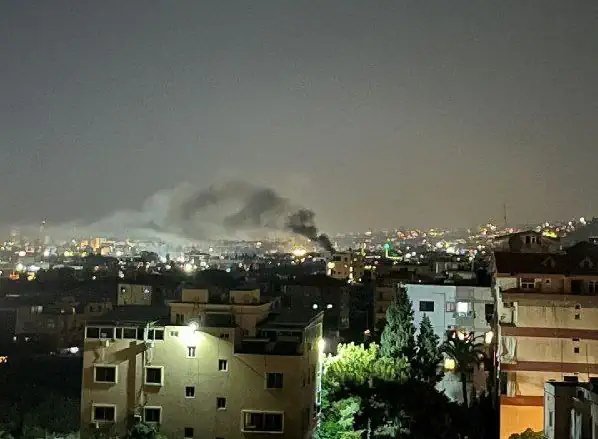
Hezbollah announced in a statement the martyrdom of Haitham Ali Tabatabai (Sayyed Abu Ali) along with four of his companions, following the Israeli army’s airstrike on the Harat Hreik area in Beirut’s southern suburb.
Tabatabai, a senior Hezbollah commander from the town of al-Bashoura, had joined the ranks of the Islamic Resistance since its founding. He played a key role in numerous military operations against Israeli occupation between 1993 and 2006, in battles against extremist groups along Lebanon’s eastern borders, and served as head of Islamic Resistance operations during the Al-Aqsa Flood campaign and the Awli al-Ba’s operation. In his final position, he held overall military command of Hezbollah’s Islamic Resistance.
Israel’s repeated attacks and violations across Lebanon clearly constitute a grave breach of the ceasefire between the two sides. With daily strikes under false pretexts, Hezbollah continues to lose its fighters and commanders. This situation cannot persist indefinitely, and Hezbollah will be compelled to reconsider its approach.
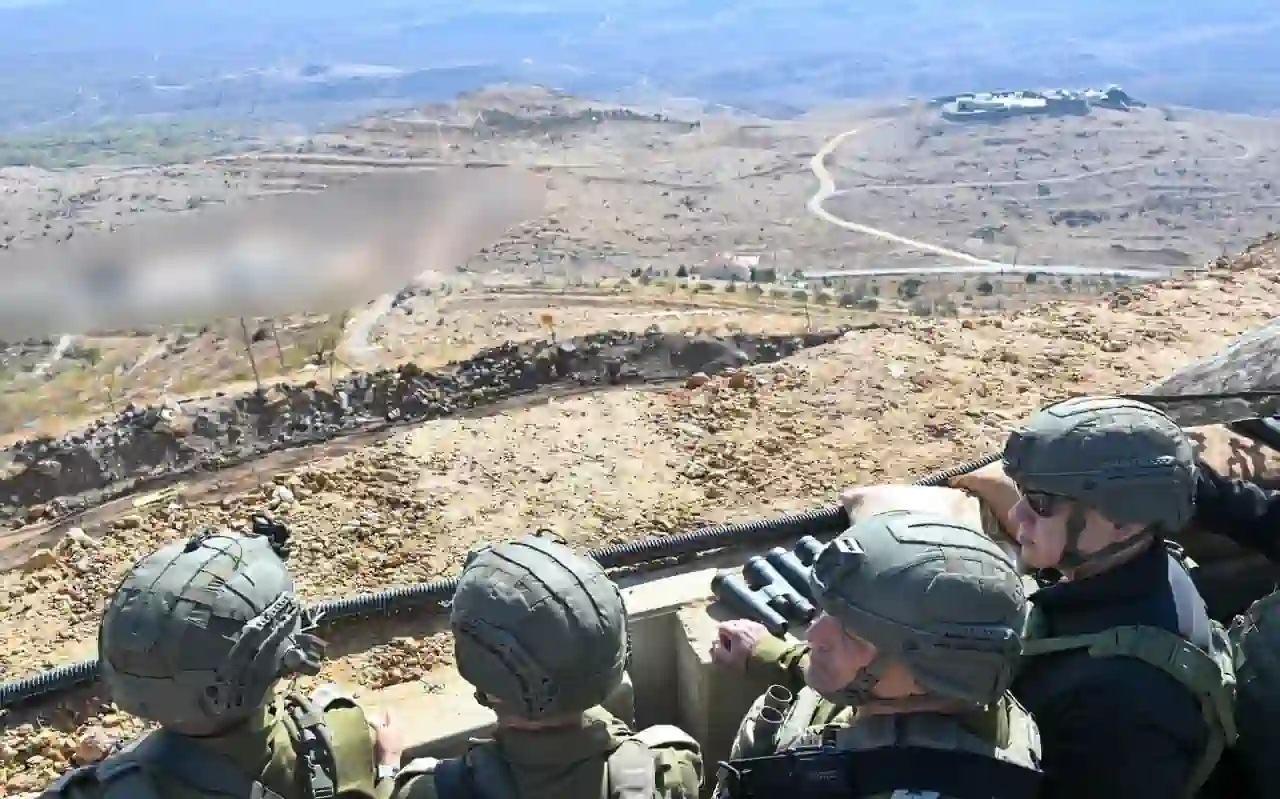
In response, the Syrian Foreign Ministry issued a statement strongly condemning Netanyahu’s visit, calling it a serious breach of Syria’s sovereignty and territorial integrity. Damascus reiterated its demand for the complete withdrawal of Israel from occupied Syrian territories, stressing that all actions by the occupying regime in southern Syria are null and void with no legal effect. The ministry also urged the international community to fulfill its responsibilities, stop Israel’s actions, and compel the regime to fully retreat and comply with the 1974 disengagement agreement.
The core issue is that Israel operates under the full umbrella of U.S. political and military support, which allows it to continue occupation, aggression, and killings in the region without fear of consequences, while openly mocking international laws and global institutions.
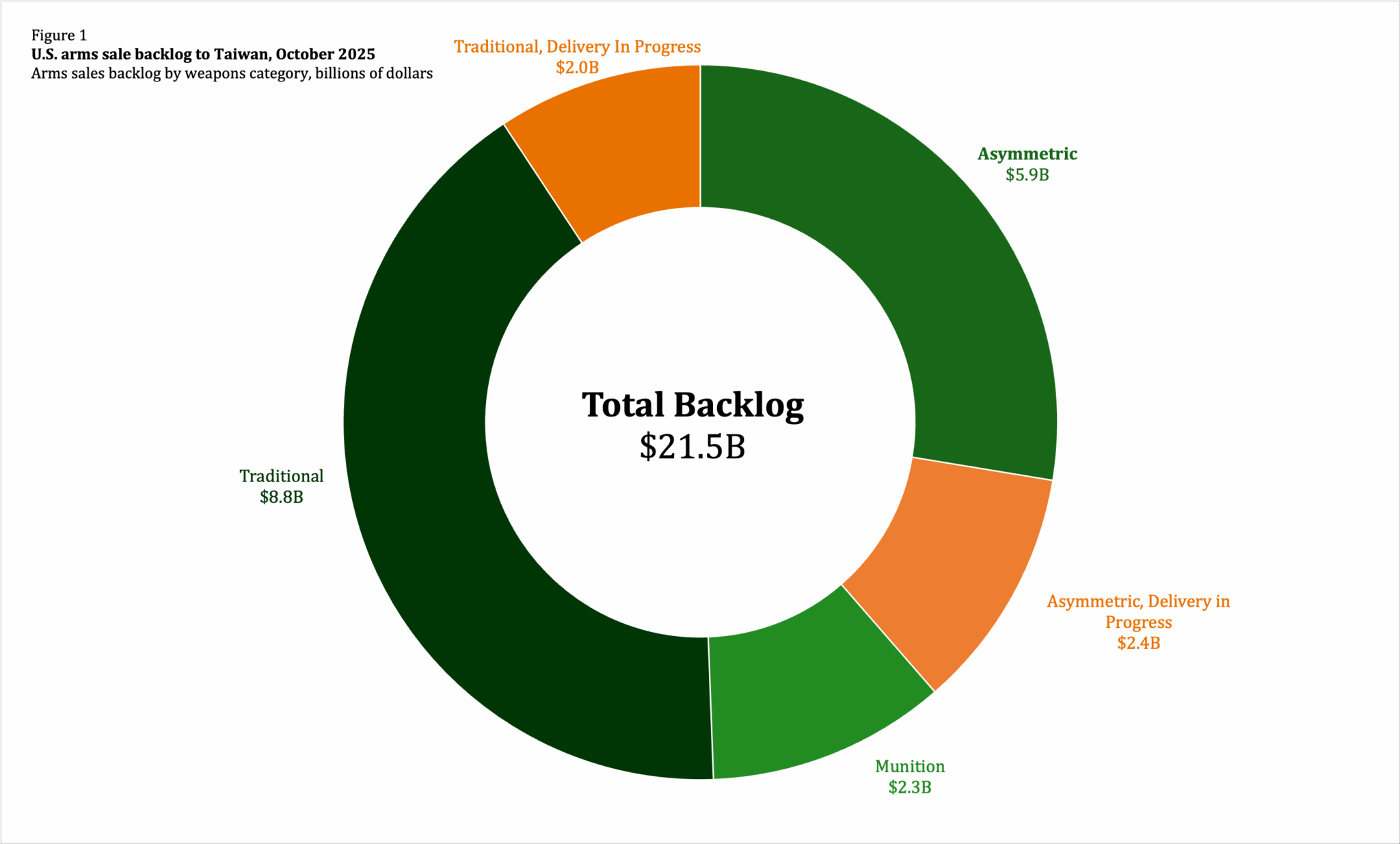
Major setbacks include the F-16 Block 70/72 fighters, which were expected to begin arriving in 2025 but are now postponed to 2026. The long-delayed AGM-154C glide bombs (first notified in 2017) and the Mk-48 heavyweight torpedoes have also encountered further delays. Taiwan is now projected to receive only part of its torpedo order in 2027–2028.
Meanwhile, President Lai announced a new “T-Dome” air and missile defense initiative, inspired by Israel’s Iron Dome. Taiwan is considering major U.S. air-defense purchases, including nearly 2,000 additional Stinger missiles, a second phase of NASAMS procurement (nine more batteries), and four more Patriot batteries with 500 interceptors. None of these potential purchases have yet been formally notified to Congress.
Overall, while the backlog is not expanding, delays are deepening, and key programs continue to slip. The future of Taiwan’s defensive modernization now hinges on its five-year special procurement budget and on coordinated U.S.–Taiwan efforts to align funding, contracting, and delivery schedules.
In this attack, Israeli aircraft used three bombs. The Israeli military released a video of the strike, claiming it targeted a gathering of Hamas members with precision weapons and aerial surveillance.
Contrary to Israel’s claims, this terrorist strike has so far resulted in the death of 13 people, including several children.
Reports indicated that the attack was aimed at assassinating Munir al-Maqdah, a senior commander of the al-Aqsa Martyrs Brigades, the military wing of the Palestinian Fatah movement. However, despite Israeli media claims, Munir al-Maqdah survived the assassination attempt, and the operation failed.
Munir al-Maqdah, a senior commander of the al-Aqsa Martyrs Brigades, the military wing of the Palestinian Fatah movement
It should be noted that this was Israel’s second attempt to assassinate Munir al-Maqdah. Their previous strike on Ain al-Hilweh camp on October 1, 2024, was unsuccessful. Furthermore, Khalil al-Maqdah, Munir’s brother, was killed in an Israeli airstrike on Sidon on August 21, 2024.
13 Killed, Including Children, in Israeli Bombing of Ain al-Hilweh
The R-37 is also known as izdeliye 610 (Product 610), RVV-BD, and in NATO designation as AA-13 Axehead.
History of the R-37 Design and Development
The concept of the R-37 was intended as a replacement for the R-33 missile. Its design was assigned to the Vympel design bureau, the same company that developed the R-33. The R-33, or AA-9 Amos, was a large missile weighing 490 kg with a range of 160 km (E variant). It entered service in 1981 and remains in use with the Russian Air Force and CIS states. The missile could be deployed on MiG-25 and MiG-31 interceptors, and in testing was reported to have successfully engaged a target at 304 km.
The new missile had to be smaller than the R-33 while offering greater range, enabling it to strike standoff targets such as AWACS and refueling aircraft. It also needed to be compatible with simpler fighter radars beyond the MiG-31.
The R-37 project began in the early 1980s, with the first successful test launch recorded in 1989. Testing continued for about a decade until 1998, but development was halted due to budget constraints and the limited number of launch platforms. Work resumed in 2006, and by 2014 the missile was formally adopted by the Russian Air Force, with serial production initiated.
In 2018, the updated R-37M variant completed its trials. The R-37M is the modernized version of the R-37, also known as RVV-BD. Sources cite its range as over 300 km, with a top speed of Mach 6 (7,400 km/h). It is deployable on the MiG-31BM interceptor, as well as the Su-35S multirole fighter and the Su-57 fifth-generation fighter.
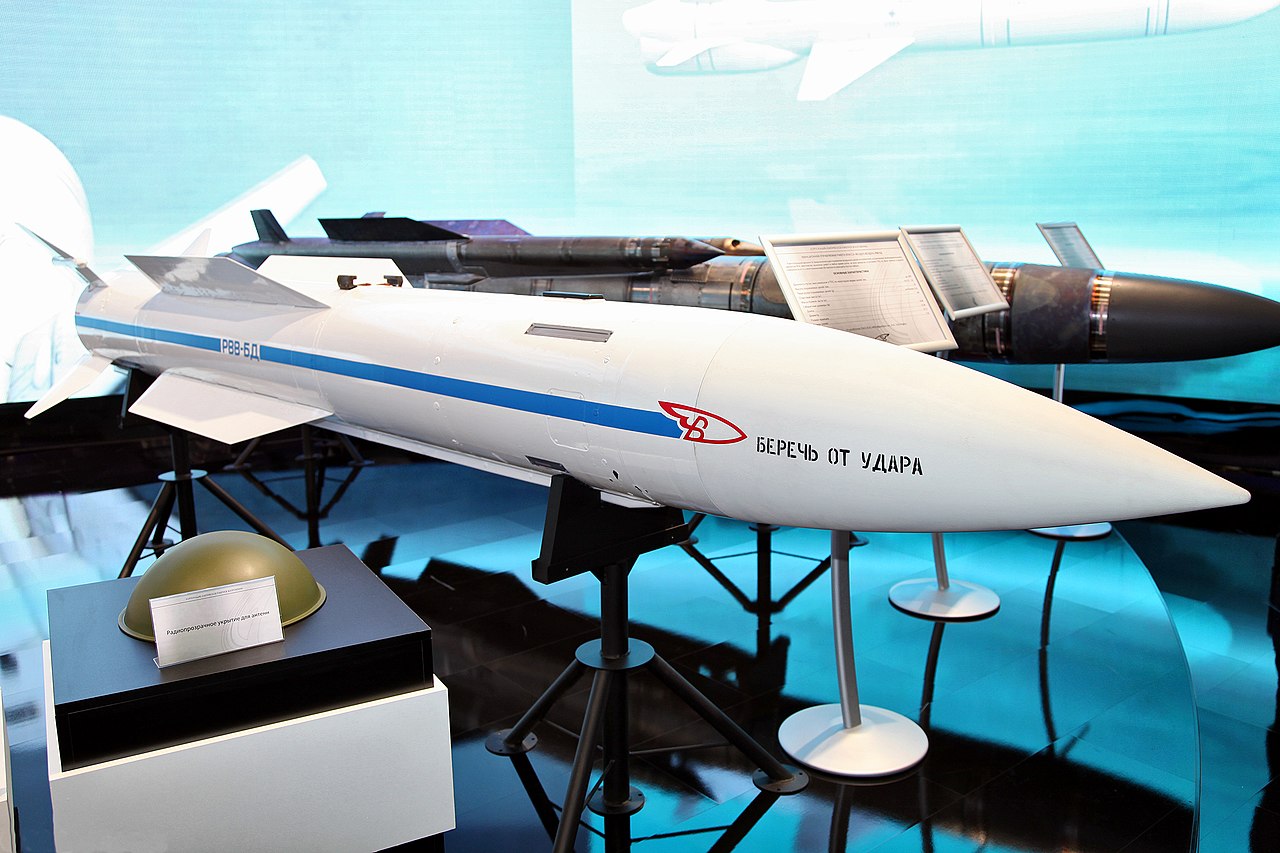
R-37M missile under the export designation RVV-BD at the MAKS 2013 air show
Body and Components of the R-37 Missile
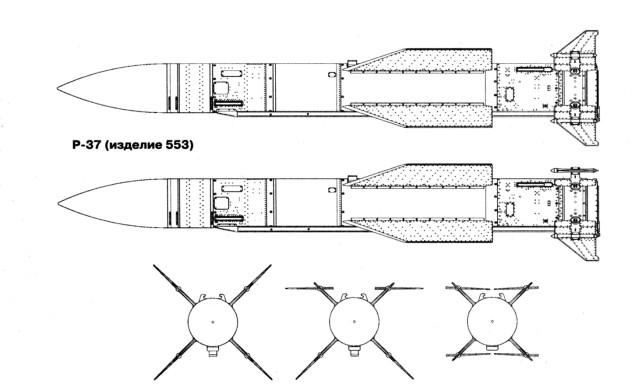
The R-37 air-to-air missile has two sets of fins; the mid-body fins act as stabilizers, while the rear fins are used for guidance and directional control. The rear fins are longer than the mid-body fins and can be folded to reduce the space they occupy.
At the nose section, the missile contains its radar seeker. Behind the seeker is the warhead, followed by the solid-fuel propellant, and finally at the rear is the dual-pulse rocket motor.
An image of the R37 missile’s layout and fins is also clear, as is how the rear fins fold.
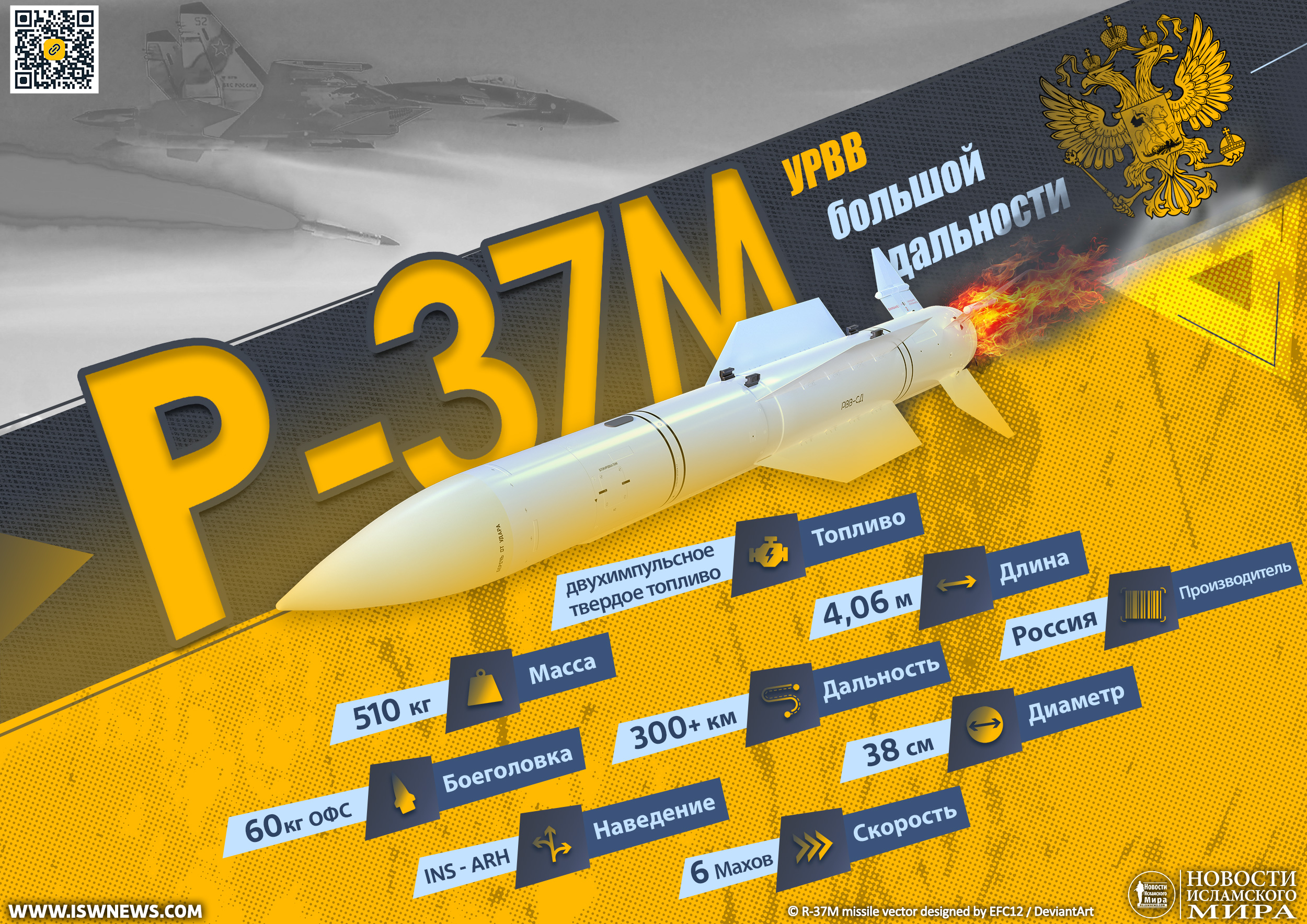
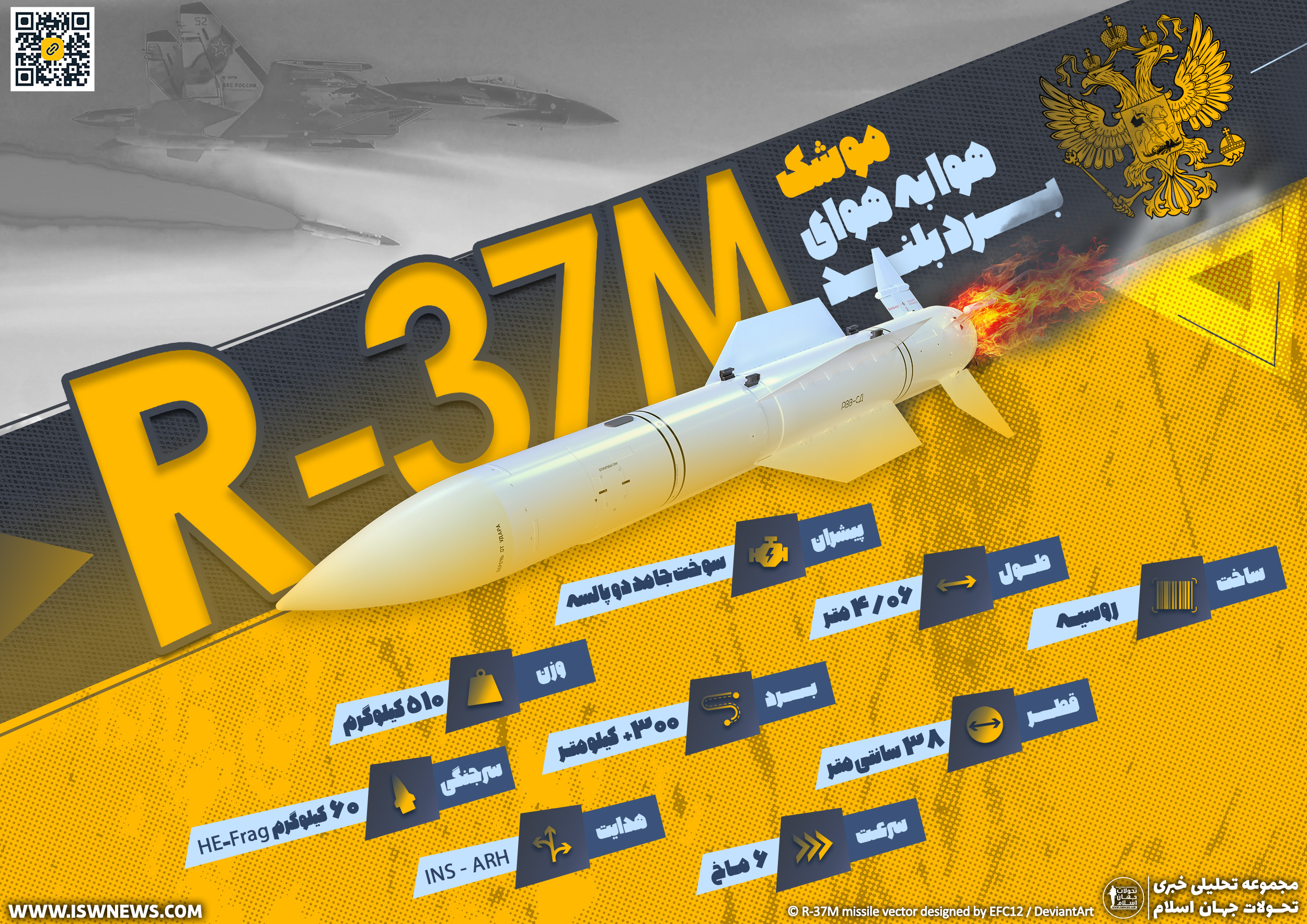
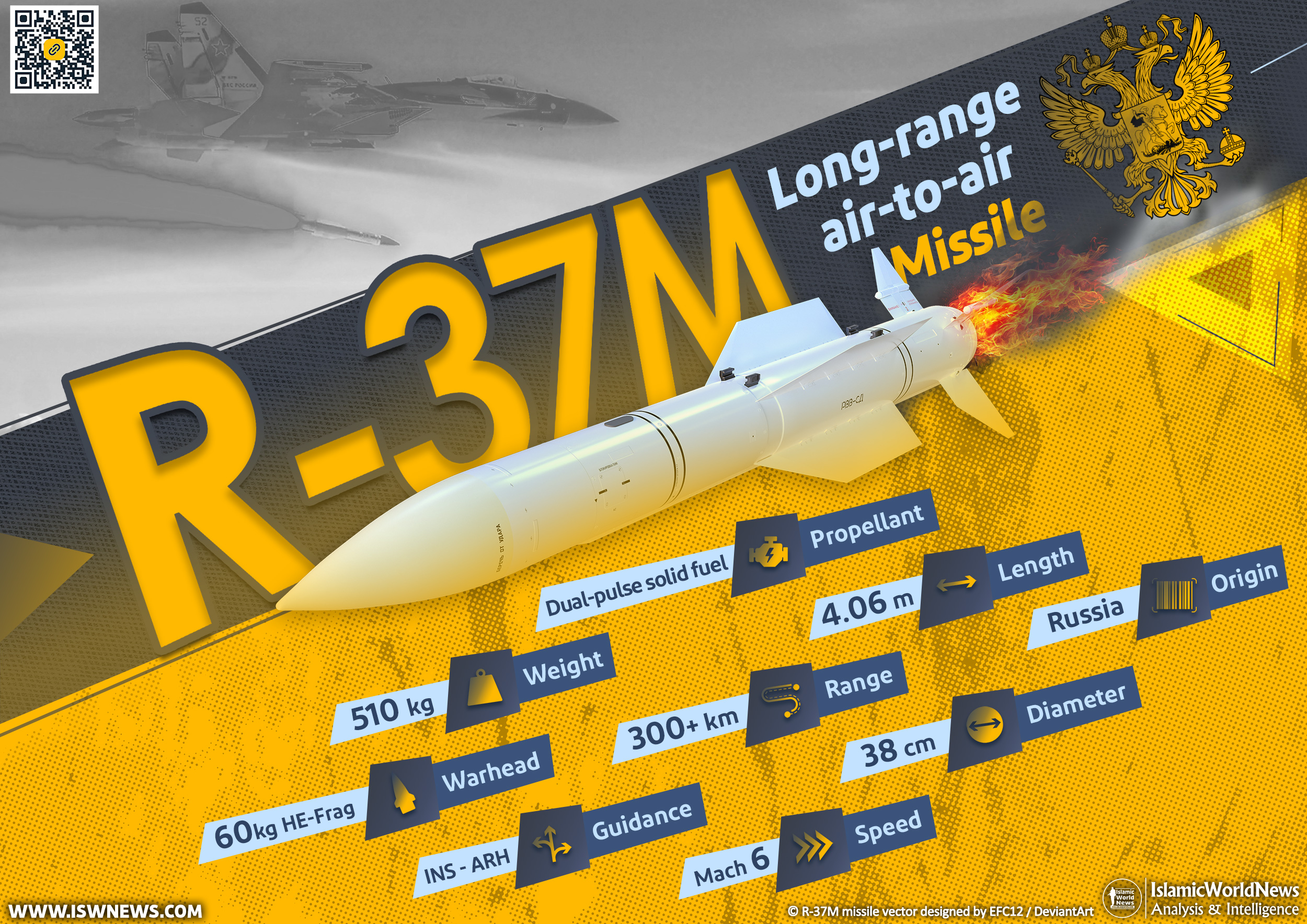
The R-37, with an overall weight of 510 kg and a high-explosive fragmentation warhead weighing 60 kg, is considered a heavy air-to-air missile. This missile has a length of 4.06 m, a diameter of 38 cm, and a wingspan of 72 cm. The range of the R-37M is cited in various sources as between 300 and 400 km.
The dual-pulse solid-fuel rocket motor used on the R-37 was chosen to extend the missile’s range. In a pulsed solid-fuel design, the propellant is divided into separate charges that ignite sequentially with a delay. In the dual-pulse motor, the number of pulses is limited to two, and the chamber is designed accordingly to deliver fuel in separated stages. The purpose of the dual-pulse system is to limit the missile’s maximum speed while increasing its effective range. This powerful motor propels the 510 kg R-37 to a speed of Mach 6.
Guidance and Navigation of the R-37 Missile:
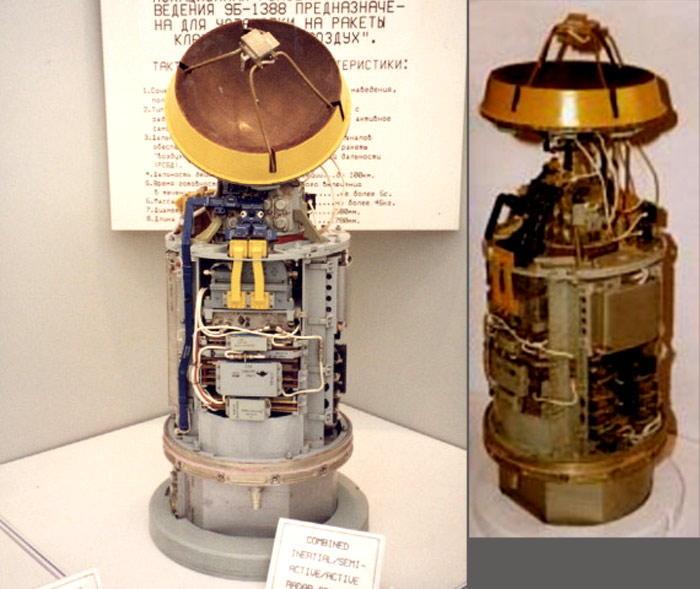
The R-37 uses an active radar seeker called Agat 9B-1388 in its nose, which allows the missile to independently detect and track targets. Given its range of over 300 km, continuous radar seeker guidance throughout the flight is not possible, as with all missiles of this class. Therefore, the missile employs a multi-channel combined guidance system: it is launched in a fire-and-forget mode, but requires mid-course corrections.
The missile is fired with target data and initially flies toward the target using inertial navigation. In the mid-course phase, its trajectory is updated via datalink corrections from the launch aircraft’s radar, ensuring adjustments if the target changes course. In the final phase, the missile closes in and uses its own radar seeker to acquire and engage the target.
Based on limited published data, the 9B-1388 seeker has a diameter of approximately 380 mm, a weight of about 40 kg, the ability to detect a target with a radar cross-section of 5 m² at a distance of around 40 km, and requires about 5 seconds after pre-heating to reach operational readiness. It also supports a radio correction link with an approximate range of 100 km.
Agat 9B-1388 radar seeker for the R-37 missile
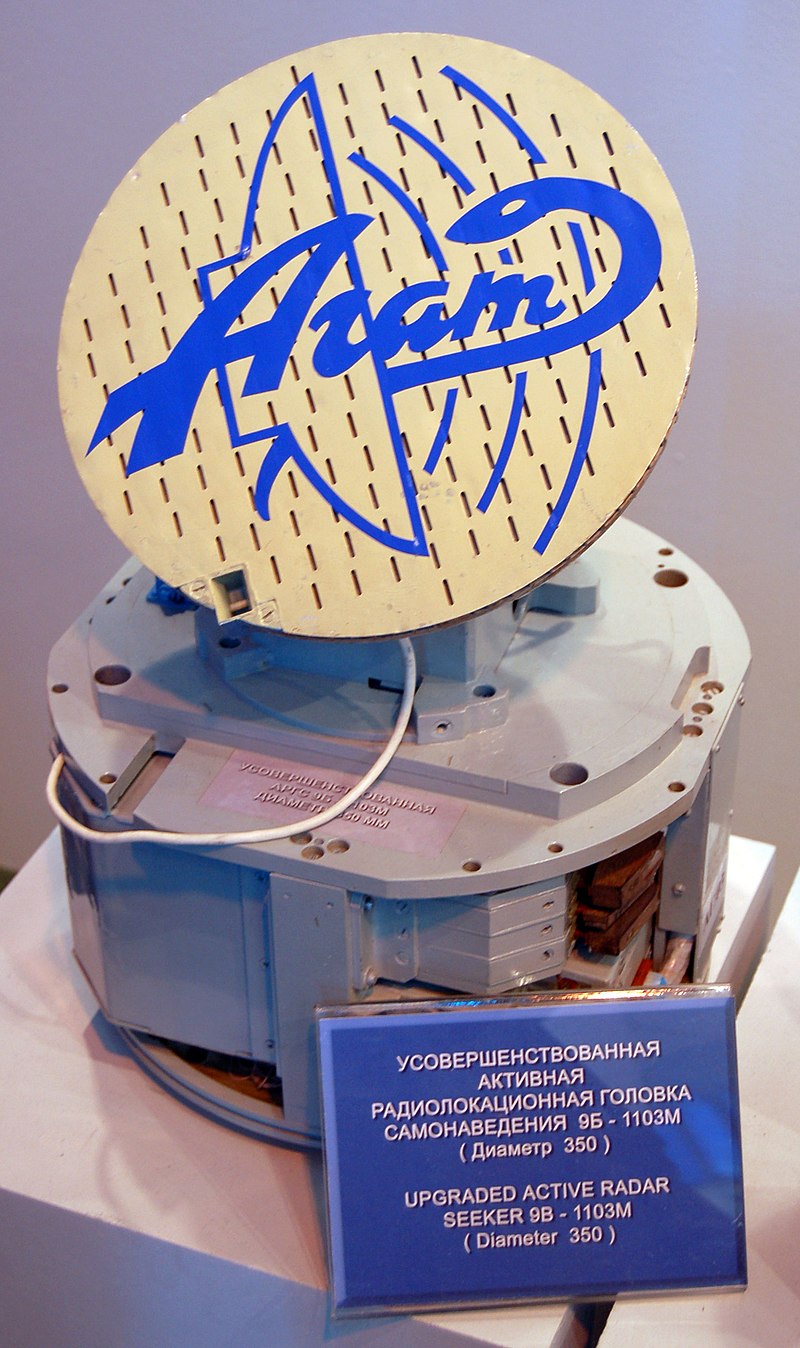
Russia has introduced another radar seeker called 9B-1103M-350, designed for installation on R-37 missiles and other long-range systems such as the KS-172. This seeker incorporates a newly miniaturized digital signal processor with enhanced memory capacity and improved processing speed.
Instead of conventional mechanical gyroscopes, it employs fiber-optic gyroscopes along with fast-activation mechanical gyroscopes, resulting in a shorter missile preparation time before launch.
The radar seeker of this missile is equipped with an antenna measuring 330 mm in length and 350 mm in diameter, with a total weight of 13 kg. Its digital processing system is capable of performing at least 50 million operations per second and can detect a target with a radar cross-section of 5 m² at a minimum distance of 40 km. After two minutes of pre-heating, the seeker reaches full operational readiness within one second.
This new radar seeker offers a high level of standardization and adaptability, making it suitable for use across a wide range of missiles, including both air-defense systems and air-to-air missiles, within the 200 to 400 mm caliber range.
Radar seeker 9B-1103M-350 (seeker head section)
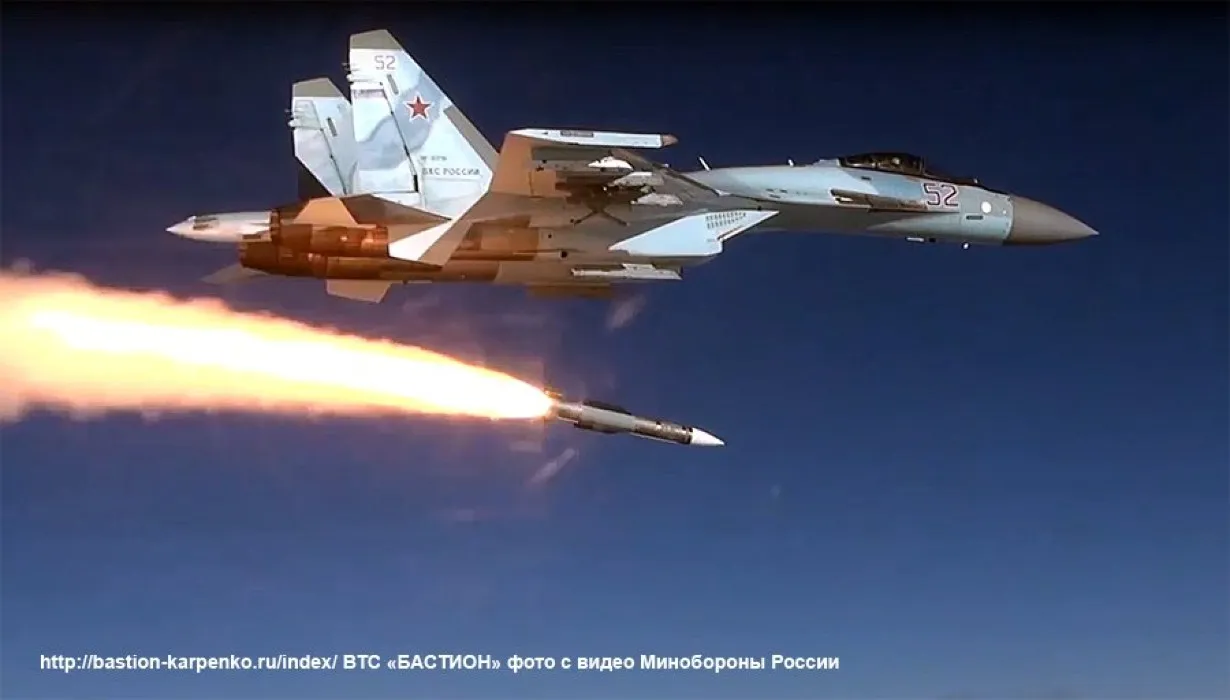
Launch Platforms: The missile is primarily deployed on the MiG-31BM interceptor as its main operational fighter. It is also integrated on the Su-35S and Su-57 multirole fighters. When loaded onto the Su-35, up to five long-range R-37M air-to-air missiles can be mounted on hardpoints 1, 3, 4, 11, and 12.
Russian fighter jet firing an R-37 long-range missile
Operators of the R-37M Missile
The R-37M is currently in service with the Russian Aerospace Forces, operational on the MiG-31BM, Su-35S, and Su-57 fighters. There have also been reports of the missile being offered to India for use on the Su-30MKI, as well as speculation about a potential order by Iran alongside its acquisition of Su-35 fighters.
If Iranian Su-35s are equipped with the long-range R-37M missiles—with a range of over 300 km and speeds reaching Mach 6—they would pose a serious threat to aerial refueling tankers and AWACS aircraft belonging to Israel and the United States. The combination of the R-37M with the powerful Irbis-E radar on the Su-35 enables targeting from safe standoff distances, meaning that in any potential confrontation, a significant portion of the offensive and surveillance air capabilities of Tel Aviv and Washington could be affected.
Type: Long-range air-to-air missile Origin: Russia Manufacturer: Vympel NPO Service Entry: 2014 Length: 4.06 m Wingspan: 72 cm Diameter: 38 cm Propulsion: Dual-pulse solid-fuel rocket motor Range: 300–400 km Speed: Mach 6 Weight: 510 kg Warhead: 60 kg high-explosive fragmentation Launch Platforms: MiG-31BM, Su-35S, Su-57
R-37M air-to-air missile – click to view images in full size
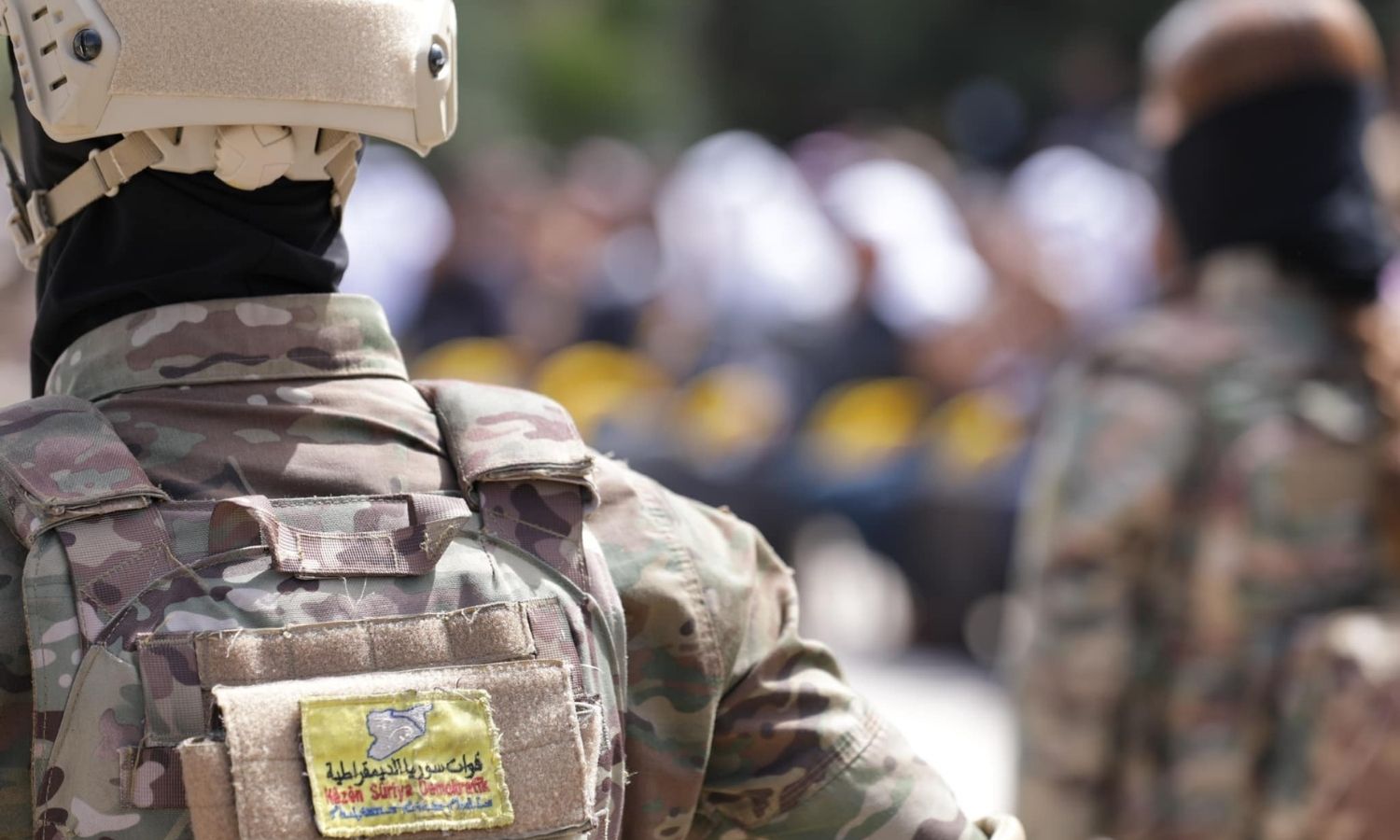
This development has not only altered the military and security balance in Syria but also introduced new complexities to the future process of integrating the SDF into the structure of a new Syrian state.
The report also highlights the frequent flights of Russian helicopters at Qamishli Airport, noting that these flights coincided with the transfer of Assad government officers to Syria’s coastal regions—an indication of emerging indirect coordination between Russia, the SDF, and groups aligned with Assad’s government.
This strengthens the assumption that Moscow plays a hidden yet active role in this movement. Since its military intervention in Syria, Russia has sought to maintain influence on both sides of the Euphrates equation—supporting Assad’s forces while also engaging with the SDF.
The primary driver behind this large-scale defection is economic motivation. The stark difference between the salaries of military personnel under Assad’s government and those offered by the SDF demonstrates that eastern Syria has become a hub for attracting economically vulnerable soldiers. Oil revenues from the region provide the financial means to sustain these payments, while former regime forces, seeking livelihood security and distancing themselves from the violence of Julani’s elements, gravitate toward the dominant power in the area.
This trend underscores that the war economy remains the decisive factor shaping the orientation of armed forces in Syria.
Work on the R-73 began in 1973, with the goal of replacing the R-60 (AA-8 ‘Aphid’) missile. The R-60 was considered the lightest infrared missile in the world, weighing only 43.5 kilograms, but its small warhead of 3 kilograms made it largely ineffective against fighter aircraft. After twelve years of development, the R-73 entered service with the Soviet Air Force in 1985.
At the nose of the R-73 is an infrared seeker, responsible for directly tracking the target. Behind it are four proximity fuzes, which allow the missile to detonate when it comes close to the target. Following this section are two rows of canards, placed sequentially, enabling rapid directional changes. Next comes the control unit and additional sensors, followed by the warhead, then the solid-fuel propellant and rocket motor. At the rear, in addition to the motor, the missile is equipped with four stabilizing fins to ensure flight stability.
R-73 missile components
The seeker of the R-73 missile is an infrared seeker that tracks the heat emitted by aircraft—particularly from the engine section—and can detect targets up to 60 degrees off the missile’s central line of sight. The R-73 also features an “off-boresight” capability. This means that a helmet-mounted sight (HMS) allows the pilot to simply look at a target and fire, without turning the aircraft toward it. In this mode, the missile rotates in the direction of the pilot’s gaze, locks on with its nose-mounted seeker, and then attacks the target.
After the reunification of Germany in 1990, several R-73 missiles came into the possession of the United States. Tests revealed that the R-73 was superior to the American AIM-9M Sidewinder. Compared to the Sidewinder M variant, the R-73 demonstrated greater maneuverability and stronger target acquisition and tracking capabilities. However, its performance was degraded in cloudy conditions. This limitation prompted the development of newer short-range infrared missiles such as the AIM-132 ASRAAM, IRIS-T, MICA IR, Python IV, and AIM-9X, all designed to surpass the R-73.
R-73 missile (AA-11 Archer)
R-73 missile variants
The R-73 missile has been produced since 1994 under the designation R-73M, also known as R-74EM, and entered service with the Commonwealth of Independent States (CIS) in 1997. This upgraded missile was designed to resist Infrared Counter-Counter Measures (IRCCM). It is carried by aircraft such as the MiG-29, Su-27, Su-34, and Su-35, and can also be deployed by newer versions of the MiG-21, MiG-23, Su-24, and Su-25. Additionally, it is compatible with Russian attack helicopters including the Mil Mi-24, Mil Mi-28, and Kamov Ka-50. India has also sought to integrate this missile into its light combat aircraft.
In 2009, a version called RVV-MD was introduced as the export model of the R-74 (izdeliye 740). These missiles are expected to complement earlier R-73 variants still in service.
An enhanced version was unveiled in 2016 under the name R-74M (izdeliye 750). This model features fully digital, reprogrammable systems and is designed for use on advanced fighters such as the MiG-35, MiG-29K/M/M2, Su-27SM, Su-30MK, and Su-35S.
An image of the RVV-MD missile, an export version of the R-74M, with its infrared seeker in its nose and control fins.
A more advanced version, designated R-74M2 (izdeliye 760), has been developed specifically for the fifth-generation Su-57 fighter jet. This missile is equipped with an inertial navigation system, features a smaller radar cross-section, and its fin span has been reduced to 434 millimeters to fit inside the Su-57’s internal weapons bay.
The R-74M2 incorporates Infrared Counter-Countermeasure (IRCCM) technology, designed to achieve performance comparable to the AIM-9X, IRIS-T, and ASRAAM. Testing of the R-74M2 was completed in 2019, and its export version, known as RVV-MD2, was unveiled in 2023.
RVV-MD2 mock-up at the 2023 Dubai Airshow
A futuristic design project known as K-MD (izdeliye 300) is currently under development as a short-range air-to-air missile intended for close combat. It is expected that this version will eventually replace the R-74M2.
The Yemeni military also possesses a variant of this missile, designated Thaqib-1, which has been modified for use as a surface-to-air defense weapon. This version was unveiled by Yemen in March 2020 and has reportedly achieved several successful interceptions of fighter aircraft and drones.
Specifications of the R-73 Air-to-Air Missile
Type: Short-range air-to-air missile Designer: Former Soviet Union and Russian Federation Manufacturer: Vympel NPO Design Year: 1973 Service Entry: 1985 Length: 2.93 meters Wingspan: 0.51 meters (51 cm) Diameter: 0.165 meters (16.5 cm) Weight: 105 kilograms Engine: Single-stage solid-fuel rocket motor Range: Up to 30 kilometers Speed: Maximum of Mach 2.5 Warhead: 7.4 kilograms Guidance: Passive infrared homing with proximity fuse Seeker Off-Boresight Angle: ±45° to ±75° depending on variant Launch Platforms: MiG-29, Su-27, Su-34, Su-35; selected versions of MiG-21, MiG-23, Su-24, Su-25 and Mil Mi-24, Mil Mi-28, Kamov Ka-50
The plan for the escape was reportedly coordinated between some prisoners and a number of SDF members assigned to guard the wing holding foreign ISIS detainees. After identifying their involvement, coalition forces arrested three SDF personnel, including one of the prison’s internal officials.
Additionally, SDF forces detained five civilians from the neighborhoods of Ghuweiran and Aziziyah on suspicion of assisting in facilitating the operation. Following the incident, strict security measures were imposed around the prison, with coalition helicopters and aircraft patrolling the skies over the area for several hours.
It is worth noting that in 2022, al-Sina’a Prison was the site of the largest organized ISIS jailbreak, during which more than 250 prisoners escaped, sparking heavy clashes inside and around the facility. At that time, allegations also surfaced regarding corruption and collaboration by some SDF members in enabling the escape of ISIS detainees.
According to the statement issued by the Public Relations Office of the IRGC Navy, rapid reaction units at 7:30 a.m. on November 14 intercepted the tanker Talara, sailing under the Marshall Islands flag, following a judicial order to confiscate its cargo.
The vessel was carrying 30,000 tons of petrochemical products and was en route to Singapore.
The IRGC Navy announced that the operation was conducted in line with its legal duties and to safeguard the national interests and resources of the Islamic Republic of Iran. It emphasized that full disclosure requires a thorough inspection of the cargo, the tanker, and its documentation. Following these checks, the vessel was confirmed to be in violation for transporting unauthorized goods.
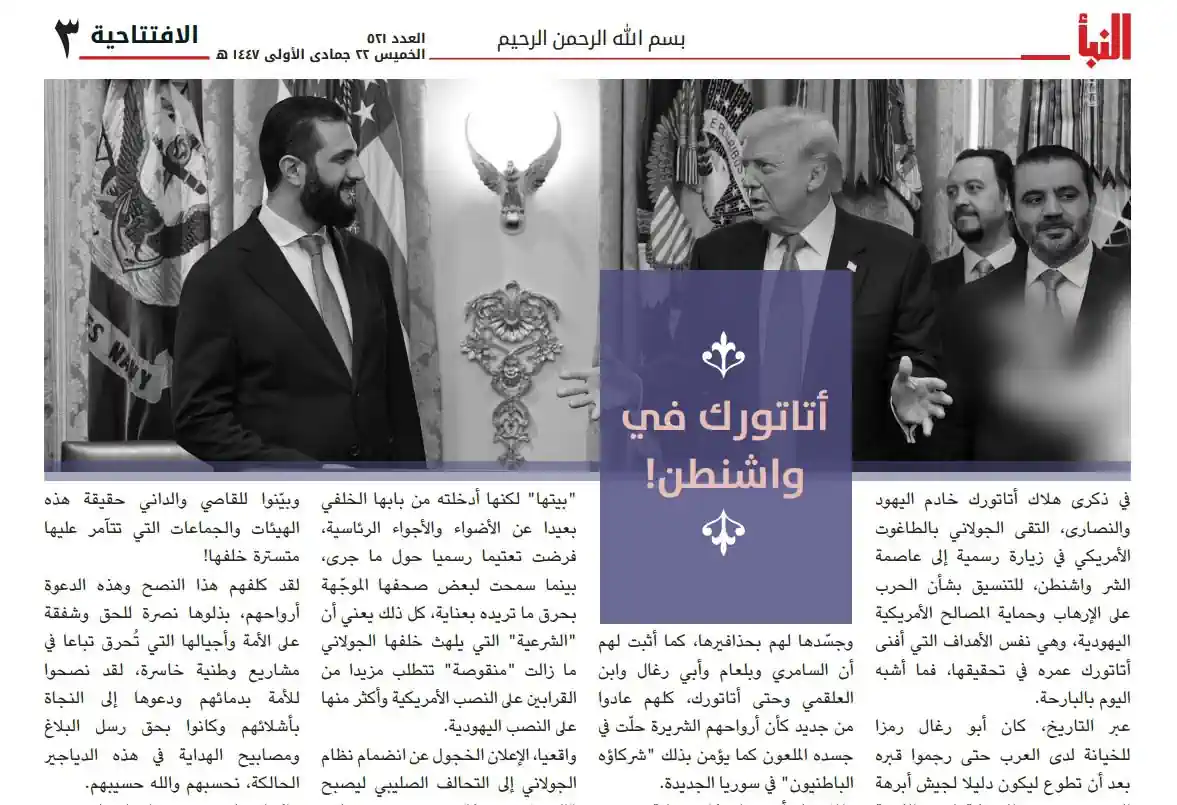
ISIS in the latest editorial of its al-Naba weekly describes Jolani’s recent trip to Washington as a repeat of the same “betrayal show.” They frame the visit as a direct link between him and the “capital of evil.” In this narrative, Jolani is not seen as a political actor but as a figure resurrected from a history of treachery—an extension of all those whom ISIS associates with a dark past.
Beginning of the Narrative: Betrayal Returns in a New Form ISIS does not view Jolani’s trip to the U.S. as a simple event. For them, it is a continuation of Atatürk’s path—someone who, in their perception, lived and fought to advance Western goals. Thus, Jolani’s visit is symbolically placed alongside Atatürk’s legacy: an act aimed at weakening the Muslim community and serving the interests of America and its allies.
The comparison is not limited to Atatürk. Jolani is depicted as a new link in a long chain of historical traitors—figures who, in ISIS’s view, paved the way for enemies and served foreign powers. The purpose of these comparisons is to cement Jolani’s image as a “symbol of betrayal” in the minds of their audience.
Prelude to the Trip: A Path Built Behind the Scenes ISIS claims Jolani’s journey was the result of months of consultations and contacts with U.S. officials, portraying him as someone who had to “prove himself” step by step to gain Washington’s trust. Each meeting with American officials is described as offering “new concessions,” ultimately leading to the main encounter with the U.S. president. The narrative paints Jolani as a man who must pay the price of political advancement through security and political actions against others.
Media Displays: Signs of “New Loyalty” ISIS interprets Jolani’s promotional videos—especially those showing him engaged in sports—as staged symbols of “victory displays.” These images are seen as part of a performance to show that each new collaboration with the U.S. translates into fresh political gains. A photo of him alongside American commanders is presented as further evidence that Jolani has now secured a place within Western military and political structures.
Political Dimensions: From Containing Iran to Rebuilding Syria ISIS situates Jolani’s trip within broader regional dynamics. They argue that the U.S. seeks to diminish Iran’s influence in Syria, while Turkey supports Jolani as a more pragmatic alternative for Syria’s future—an actor capable of playing a role in the country’s new political framework. In this context, the lifting of U.S. sanctions on Jolani is interpreted as granting him “semi-legitimacy,” though ISIS insists it is incomplete and will demand further concessions.
From Hidden Cooperation to Open Partnership ISIS asserts that Jolani’s formal alignment with the international anti-terror coalition is merely the public declaration of a partnership that has existed covertly for years. They cite recent security operations by Jolani’s forces—arrests and pursuits of individuals linked to jihadist groups, coinciding with Israeli strikes in southern Syria—as proof. His silence in the face of Israeli attacks is portrayed as evidence that “his weapons are aimed in only one direction.”
Propaganda Use: Invoking the Legacy of ISIS Leaders To reinforce its narrative, ISIS references the words and guidance of its slain leaders, aiming to restore moral and ideological legitimacy. The account honors those who “gave their lives on this path” and calls for the return of former ISIS fighters.
Final Message: “The End of Jolani’s Path” In conclusion, ISIS presents Jolani’s trip as the ultimate symbol of his “complete transformation”—a man who abandoned jihad and entered the service of global powers. For ISIS, this serves as a cautionary tale: an example of how someone once listed as a “terrorist” can become a “partner of the West.”
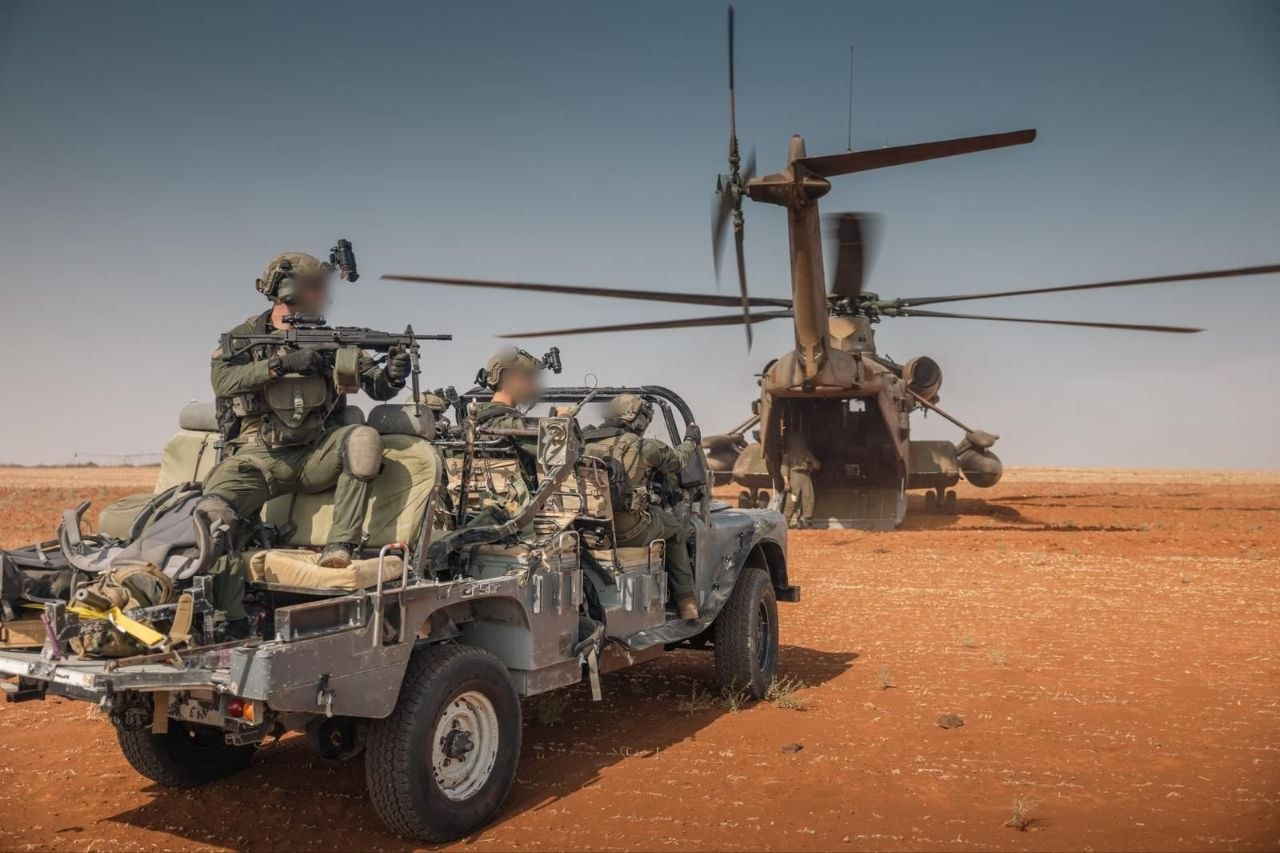
In this exercise, the Israeli army rehearsed more than 40 potential combat scenarios, supported by around 180 aircraft from the ground forces. Alongside the army’s ground and air units, technology and logistics units, police forces, and the Magen David Adom emergency service also took part. For the first time in Israeli military drills, two regional divisions under Central Command entered operations simultaneously.
The Judea and Samaria Division (Division 417) is one of the ground force divisions under Central Command, composed of five brigades and various military units. It is tasked with securing the West Bank and countering Palestinian resistance groups in the area. Its mission focuses on asymmetric warfare (preventing terrorist attacks, suppressing uprisings), protecting settlements, and coordinating intelligence-security operations with Israeli agencies and the Palestinian Authority.
The Gilead 96 Division consists of one infantry brigade and three armored brigades, responsible for defending the northern front of occupied Palestine and the occupied Golan Heights.
The joint participation of these two divisions in Lion’s Roar demonstrates the Israeli army’s readiness to confront simultaneous threats along the northern and eastern borders of Palestine. In practice, the drill serves as preparation for a large-scale offensive on the West Bank as the primary target, alongside potential clashes in southern Lebanon or across the Lebanese front.
Israeli commanders stress that lessons were learned from the October 7 “Al-Aqsa Flood” operation, and the purpose of this exercise is to improve reaction speed against resistance actions and strengthen Israel’s defensive structure against unconventional threats. However, the operational framework of the drill suggests that Israel is preparing for a new offensive against resistance groups in the West Bank, likely accompanied by simultaneous conflict in Lebanon.
Although Israeli media reports did not explicitly mention threats from Yemen or Iran, it is likely that scenarios involving missile and drone attacks from these actors were also rehearsed.
Overall, the Israeli army appears to be preparing to dismantle resistance cells in the West Bank and establish full control over the area—an approach that further undermines the prospect of a two-state solution.