Israel has long declared that “disarming Hezbollah” is one of its strategic objectives in Lebanon. This agenda has gained more prominence since the rise of Joseph Aoun and Najib Mikati, becoming a central issue in Lebanon’s political developments.
Lebanese politicians are fully aware that the resistance’s weapons are a crucial pillar of national sovereignty and a vital means of defending Lebanon’s territory against aggressors—whether extremist groups from Syria or Israeli forces. Nevertheless, due to external pressure and dependence on the United States, France, and several Arab states, some continue to push for disarmament.
In his latest speech, Sheikh Naim Qassem firmly rejected the idea, calling it a weakening of Lebanon and a surrender to Israel. He emphasized that the resistance’s arms are Lebanon’s only viable defense against Israeli aggression. For Lebanon to survive, its people—from Baalbek and Tripoli to Beirut and Nabatieh—must rise and support Hezbollah’s national stance.
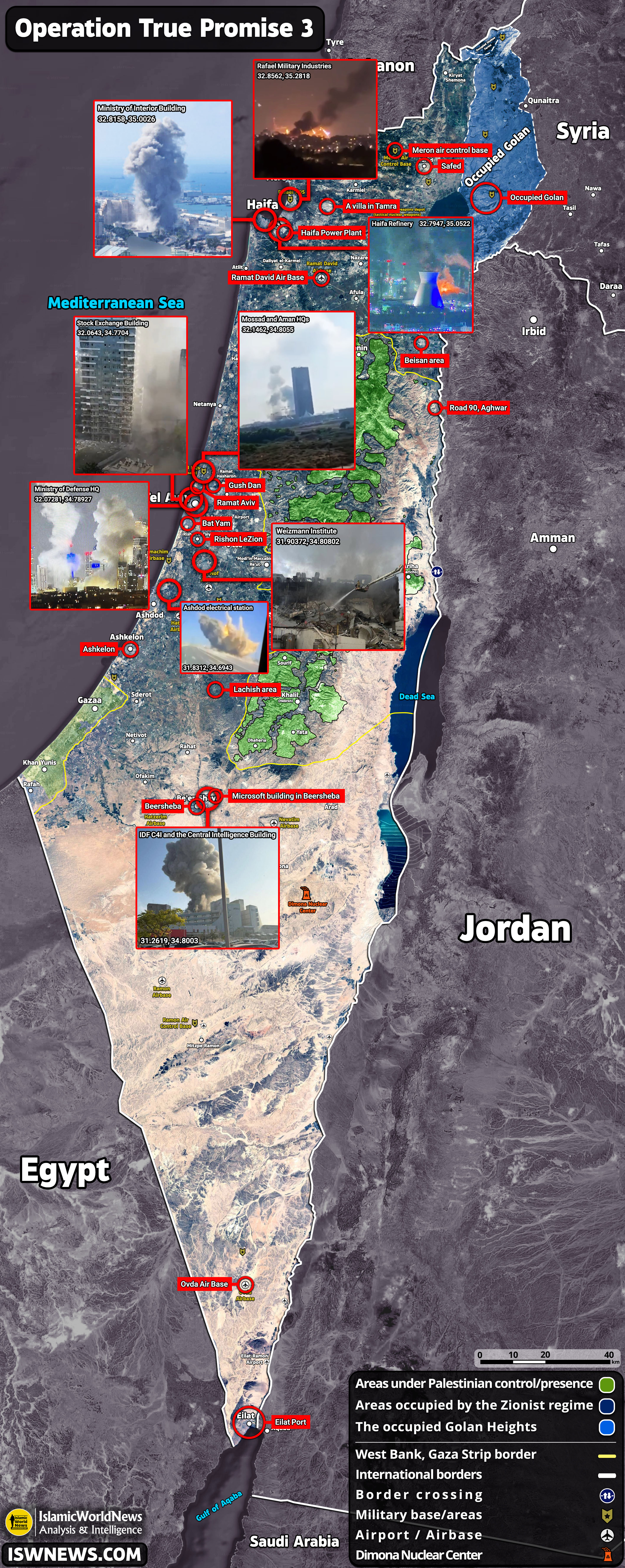
The Iranian armed forces launched the ‘Operation True Promise 3’ shortly after the Zionist regime’s aggression on Iran on June 13, And attacked Israeli positions across occupied Palestine. During the operation, Iranians utilized a variety of ballistic missiles, such as Emad, Qadr, Kheibar-Shekan, Sejjil, Hajj Qassem, Fattah-1 hypersonic missile, and Shahed-136 and 238 suicide drones, along with Arash-1 and 2 suicide drones. It also involved cruise missiles and other cyber and intelligence tools.
Areas that were targeted in Israel by Iranian missiles during ‘Operation True Promise 3″
This operation was conducted daily in multiple stages, targeting various Israeli military assets including military and intelligence centers, air bases, fuel production sites, energy supply facilities, defense infrastructure, military industrial complexes, command and control hubs, and operational support units.
Based on our investigations and gathered information, the Iranian armed forces have targeted and attacked the following locations during Operation True Promise 3.
– June 13 and 14; first and second days 1- Israeli Defense Ministry headquarters in Tel Aviv: 32.0728, 34.7892 2- Rishon Lezion: 31.9701, 34.7904
Iranian missile hits Israeli Defense Ministry headquarters in Tel AvivThe moment an Iranian hypersonic missile hit the Israeli Defense Ministry headquarters in Tel AvivThe moment an Iranian hypersonic missile hit the Israeli Defense Ministry headquarters in Tel Aviv – another angleThe moment at least 15 Iranian ballistic missiles hit Tel AvivThe moment an Iranian ballistic missile hit the Rishon LeZion area south of Tel AvivImages from the site of the Iranian ballistic missile strike on the Rishon Letzion area south of Tel Aviv
– June 15, Day 3 1- Haifa Refinery: 32.7947, 35.0522 2- A Villa in Tamra near Haifa 3- Eilat Port 4- Tel Aviv (various areas): Weizmann Institute in Rehovot area: 31.9037, 34.8080 Bat Yam area 5- Ramat David Air Base: 32.6680, 35.18174
Ramat David Air Base is the primary Israeli Air Force installation in northern the occupied Palestinian territory. Situated on the southeastern edge of Haifa, 46 kilometers from Lebanon, it features three runways. The base hosts multiple squadrons, including F-16 fighter jets, Heron drones, and attack helicopters. It has been a crucial part of Israel’s operations in Lebanon and was frequently targeted by Hezbollah rockets and drones during the recent conflict.
The moment an Iranian ballistic missile hit the city of HaifaFire breaks out at Haifa refinery after Iranian missiles hitIranian missile hits villa in Tamra town near HaifaTwo Iranian Shahed-238 drones hit the port of Eilat. This is the first officially recorded successful operation using this type of jet-powered suicide drone.Iranian missiles hit various areas in Tel Aviv, including the Bat Yam areaThe moment Iranian missiles hit points in Tel AvivIranian missiles hit and caused extensive damage to the Weizmann Institute of Science in the town of Rehovot, located in the southern suburbs of Tel Aviv.
– June 16, Day 4 1- Rafael Military Industries in Haifa: 32.8562, 35.2818 2- A snagogue in Lachish area 3- Haifa Power Plant: 32.7910, 35.06526 4- Tel Aviv, Gush Dan area, disruption of air defense systems and hit on Arrow 3 system
Iranian missile hits Rafael military industries in HaifaIranian missile hits synagogue in Lachish areaThe moment two Iranian missiles hit the Haifa power plant and a fire broke out in the area. As you can see, a large number of interceptor missiles were fired in the final stage, but they did nothing and out of the three missiles, two missiles hit the targets. These interceptors are the final stage and before that, the exo-atmospheric interceptors had also failed.A rare angle shot of the moment an Iranian missile hit a target in Haifa. The missile came straight at the cameraman. Fast and scary!Two Iranian missiles hit Tel AvivIranian missile strikes hit Tel Aviv, including the Bani Barak areaVideo showing the Israeli army’s Arrow 3 defense system malfunctioning amid a missile attack at dawn on the fourth day of the war. The IRGC stated it had disrupted Israel’s defense systems. In this footage, we observe the disruption described by the IRGC, along with an Israeli interceptor missile striking another launcher.
– June 17, Day 51 1- Disruption of Israel’s air defense systems and the downing of an interceptor missile in Tel Aviv 2- Aman military intelligence center and Mossad headquarters in Herzliya
The interceptor missile failed and returned and hit a point in Tel Aviv.Iranian missiles hit Mossad facilities in the Herzliya area of Tel Aviv. The cameraman also says in the video: “Wow… they even managed to hit Mossad!”Another video of Iran’s missile attack on the Mossad headquarters in Herzliya. In this video, at least three missiles hit the area around the headquarters and one missile hits the headquarters itself.On the fifth day of the war, during the IRGC missile attacks, the Aman logistics center in Herzliya, which is part of the Israeli Army’s military intelligence branch, was also targeted.
– June 18, Day 6 1- Disruption of Israel’s air defense systems and the fall of an interceptor missile in Tel Aviv for the third time. 2- Tel Aviv
In this video, the Israeli interceptor missile malfunctioned and crashed after launch, causing a fire in Tel Aviv. These malfunctions are likely accidentals, as Iranian jamming systems disrupt Israeli defenses.The moment two more missiles hit Tel AvivBreathtaking moments of Iranian missiles reaching Tel Aviv and Israeli interceptors firing. In this video, it is confirmed that 3 Iranian missiles hit.
– June 19, Day 7 1- Occupied Golan 2- Tel Aviv, a high-rise building near Stock Exchange Building in Ramat Gan: 32.0643, 34.7704 and Ministry of Defense facilities in Tel Aviv 3- Israeli army’s Command and Intelligence (IDF C4I) headquarters and the Intelligence HQ in the Gav-Yam Technology Park in Beersheba 4- Microsoft Building in Beersheba
The moment one of the Iranian army’s suicide drones (probably the Arash type) hit Israeli positions. The strikes captured by a surveillance camera in the occupied Golan.A video depicts two missiles, possibly Sejjil-type, striking Tel Aviv. The Israeli regime heavily censored news about the Iranian missile strikes on the seventh day of the war.Iranian missiles hit Tel Aviv, near stock exchange building in Ramat Gan areaThe moment an Iranian missile hit the IDF C4I HQ and the intelligence headquarters in the Gav-Yam Technology Park in the city of Beersheba. Iranian missile hits IDF C4I HQ and central intelligence HQs in Gav-Yam Technology Park in BeershebaAn Iranian missile hit the Microsoft building in Beersheba, with Israeli defenses failing to intercept it. The company has partnered with the Zionist regime on AI, drones, and cybersecurity services for the Israeli army.
– June 20, Day 8 1- Ministry of Interior Building in Haifa: 32.8159, 35.0027 2- Beersheba 3- Ashkelon 4- Radar system in the occupied Golan with suicide drone
An Iranian missile hits near the Interior Ministry in HaifaIranian missile hit BeershebaIranian missile hit BeershebaIranian missile hit AshkelonIranian suicide drone hits Israeli army radar system in occupied Golan Heights
– June 21, Day 9 1- Tel Aviv 2- Beisan area, drone attack 3- Occupied Golan, drone attack 4- Road 90, Aghwar area, Jordan Valley
The moment two Iranian missiles hit Tel AvivThe location of the Iranian suicide drone strikes in the occupied Golan Heights and Road 90 in the Aghwar area in eastern occupied Palestine.The site of the suicide drone strike in the Baysan area in occupied PalestineThe moment a Shahed-136 drone of the Iranian armed forces hit the Baysan area in northern occupied Palestine.
– June 22, Day 10 1- Haifa 2- Tel Aviv, Ramat Aviv
Iranian missile hits a target in Haifa portThe moment multiple Iranian missiles hit Tel AvivOne or more Iranian missiles hit the Ramat Aviv area of Tel Aviv, causing widespread destruction. According to Zionist media reports, the Iranian armed forces launched 22 missiles in one phase and five more missiles in a second phase towards the occupied territories.Images show widespread destruction at the site of an Iranian missile strike in Tel Aviv. Ramat Aviv, a residential area in northwest Tel Aviv founded by Zionists originally from Eastern Europe, was targeted, possibly due to the presence of security and military centers in the area.
– June 23, Day 11 1- Ashdod Power Plant: 31.8312, 34.6943 2- Ashkelon 3- Safed 4- Al-Udeid Air Base in Qatar: 25.1154, 51.3164
The moment a missile hit the Ashdod power plant, located along a road in the occupied territories towards Tel Aviv. According to the Israeli Energy Minister, 8,000 customers lost their electricity after the missile hit.This video appears to have been recorded by a Zionist settler, likely in Ashkelon. It shows the sound of several missiles hitting the occupied territories, with the Israeli commenting on the Iranian missile strikes, saying: “What is that sound? Wow, wow, wow.”Iranian missile hits the town of Safed in northern occupied PalestineAnother missile hit northern occupied PalestineIranian missile hits unspecified point in northern occupied Palestine
– June 24, Day 12 1- Beersheba city
The moment a missile hits a seven-story building in Beersheba.
The attack sites listed are based on image and video evidence of Iranian strikes in the occupied territories. Additionally, sites such as Ben Gurion Airport, Nevatim Air Base, Hatzerim Air Base, the Sail Tower in central Haifa hosting AI12 Labs, the Hadera Power Plant, Ovda Air Base in the southern Negev, the Kiryat Gat semiconductor industrial zone, and Meron Air Control Base in northern occupied Palestine have also been targeted by Iranian strikes, according to IRGC statements and other international media reports.
Some notable outcomes of Iran’s strikes on Israel:
Haifa Oil Refinery Shuts Down: The Haifa Oil Refinery has shut down following extensive damage from an Iranian missile attack on June 16, according to Yedioth Ahronoth. The Zionist economic newspaper Calcalist also reported that Sonol, one of Israel’s largest fuel companies, contacted its customers after damage to Bazan Company caused by Iranian missile strikes. They announced that, “Under these circumstances and due to the situation being out of our control, we are forced to reduce or cease fuel supplies to our customers.”
The destruction of the Weizmann Institute of Science and Technology: On June 15, Hajj Qasem tactical ballistic missiles struck the Weizmann Institute, causing extensive damage. The institute’s leader reported that the attack destroyed two research buildings and damaged 112 units, including 60 laboratories and 52 other structures. The head highlighted the institute’s difficulty in obtaining compensation and estimated the total damage at 2 billion shekels (approximately $590 million). Rebuilding is expected to take around five years.
The Weizmann Institute of Science is Israel’s leading and largest center for education and research in nuclear, military, and artificial intelligence fields. Founded 14 years before the Israeli regime in occupied Palestine, it trains students in physics, chemistry, electronics, and related disciplines at both master’s and doctoral levels. The institute has housed human data samples, biological databases, and trillions of bioinformatics records. Additionally, some alumni have contributed to the development of weapons for the Zionist military and are employed across its various scientific divisions.
Images showing the Weizmann Institute following an attack by Iranian tactical ballistic missiles.
Suspension of Maersk Shipping Company’s activities: Maersk, the largest international shipping company, announced that it will suspend all commercial transportation to the port of Haifa.
Suspension of flights at airports in occupied Palestine: Flights into and out of Ben Gurion Airport and other Israeli airports were completely suspended.
Ashdod power outage: Following an Iranian missile accurately hitting the Ashdod electrical station, the Israeli Minister of Energy announced that 8,000 customers have lost their electricity and Ashdod is experiencing a blackout.
Displacement of 18,000 settlers from the Bat Yam area: According to the Israeli economic-analytical newspaper Calcalist, the Iranian missile attack turned Bat Yam, one of Israel’s three most populous towns, into a ruined city akin to Gaza. About 18,000 residents have evacuated their homes due to damage and destruction. Of these, 12,000 have moved to hotels, while others are in rented apartments or temporary shelters. Additionally, four towns—Bat Yam, Tel Aviv, Rehovot, and Ramat Gan—are experiencing a severe housing shortage for displaced residents caused by the attacks. This destruction is expected to impact housing prices in the occupied territories over the medium term.
The residents of occupied Palestine experiencing the aftermath of the Iranian attacks; Zionists in the occupied territories sleeping in metro stations due to fear of Iranian missiles.
Moroccan soldiers killed in Iranian attack: A leaked document reports that two Moroccan soldiers killed when an Iranian missile struck Meron air control base in northern occupied Palestine. These casualties included a captain and a senior Moroccan commander who were there for joint exercises with Israeli forces. Additionally, another Moroccan soldier and officer were wounded and treated in Haifa. Notably, if Moroccans were killed in the attack, then Israeli casualties likely occurred as well. However, these Israeli losses are typically kept from the public view, as has often been the case.
Statistics and Israeli casualties from Iran’s Operation True Promise 3:
According to the latest reports from the Israeli media, the Israeli regime’s casualties include 33 deaths (including Arabs in northern Palestine) and 3238 injuries. Of the injured, 23 are reported to be in serious condition and 111 in moderate condition. It is important to note that these figures are based on information from media outlets and institutions linked to the Israeli regime, while the number of casualties in military and security zones remains concealed and censored, consistent with the regulations established by the regime’s army since the war’s outset.
International reactions to Israel’s aggression on Iran; Yemen’s military support and Pakistan’s political support for Iran:
Many countries worldwide and within the Islamic world, such as Russia, China, Pakistan, Yemen, Saudi Arabia, and Egypt, condemned Israel’s attack on Iran. Notably, Pakistan’s stance was more prominent in terms of broad political support, while Yemen offered significant political, social, and military backing. An emergency UN Security Council meeting on June 14 to discuss Israel’s assaults on Iran resulted in minimal action, with officials only expressing concern and urging Iran to exercise restraint. Western governments including the United States, France, Germany, England, and Canada also supported Israel.
A rally supporting Iran took place in Pakistan, where Defense Minister Khawaja Muhammad Asif expressed Pakistan’s stance. He stated: “Israel has targeted Yemen, Iran, and Palestine. If the Islamic world does not unite now, we all risk facing the same fate. Pakistan stands with Iran. Silence is no longer an option. The Organization of Islamic Cooperation should convene a meeting to develop a unified strategy. I urge all Islamic countries to immediately cut diplomatic ties with Israel.”
On June 15, the Yemeni Armed Forces announced they launched several Palestine 2 hypersonic ballistic missiles at different times, coordinating military operations with Iran and the IRGC targeting key Israeli sites in Tel Aviv region. Brigadier General Yahya Saree, spokesman for the Yemeni Armed Forces, stated: “The Yemeni Armed Forces salute the Islamic Republic of Iran, its nation, army, and leadership for bravely and determinedly confronting the brutal Zionist attack. Relying on God, they strike successive blows at its facilities, headquarters, and bases. While observing these developments, we proudly reaffirm our commitment to the people of Gaza and its loyal Mujahideen until the war and siege against Gaza end.”
According to the leader of Ansar Allah, the Yemeni army has continued its support for Palestine against the Zionist regime during Dhul-Hijjah (from May 28 to June 26). They reportedly utilized 25 ballistic missiles, hypersonic missiles, and suicide drones. Studies from Islamic World News indicate that Yemeni forces collaborated with Iranian forces on five occasions, launching a total of eight ballistic missiles and suicide drones targeting locations in Tel Aviv, Haifa, Beersheba, and Eilat. Additionally, they emphasized that in response to U.S. military strikes against Iran’s nuclear facilities, if the U.S. engages directly in the conflict with Iran, they will target all American ships in the Red Sea.
Yemeni people march in support of Iran
Conclusion: Iran’s Operation True Promise 3, which was a legitimate defense of Iran’s territory and airspace against widespread Israeli aggression, involved 22 waves of missile attacks and 10 stages of drone attacks that began on June 13 and lasted for 12 days. The positive effects of this operation inside and outside Iran led to the failure of the declared plan by Israeli regime leaders to destroy Iran’s nuclear program, change the political system of the Islamic Republic, and eliminate Iran’s military capabilities, especially its missile forces.
Zionist media and the military spokesperson for the regime claim that during the twelve-day war, the Iranian armed forces launched over 510 ballistic missiles, as well as more than 680 (with some reports claiming more than 1,000) suicide drones and cruise missiles towards the occupied territories. Israel also claims that only 55 of these missiles struck occupied Palestinian territory, while the rest were intercepted and destroyed by the air defenses.
However, this claim exaggerates the number of missiles, and the reported hits have been censored. The Israeli army’s statistics do not match the actual field conditions. Based on investigations by Islamic World News and visual evidence presented in this article, there are documented cases of 90 missile hits and 7 drone hits. Additionally, the Iranian armed forces reportedly launched around 300 to 350 missiles during Operation True Promise 3. Also, it should be noted, the exact count of drones and cruise missiles remains uncertain due to the lack of available visual documentation.
Undoubtedly, this figure is not definitive because of widespread censorship by the media and security institutions of the Zionist regime. The actual number of missiles hit is likely higher than the estimate provided. Overall, Operation True Promise 3 was a significant military effort with impactful results, prompting the leaders of the United States and Israel to agree to a temporary ceasefire.
According to four Israeli officials, following the October 7 attack on the occupied territories—which resulted in the death of over 1,200 Israelis and the taking of 250 hostages—artificial intelligence technologies were rapidly approved for field use. According to them, this led to cooperation between Unit 8200 and reserve forces in the “Studio” to swiftly develop new AI capabilities.
Over the past 18 months, the occupying regime has combined artificial intelligence with facial recognition software to match partially covered or injured faces with real identities. It has also used AI to compile lists of potential airstrike targets and developed an Arabic-language AI model to power a chatbot capable of scanning and analyzing text messages, social media posts, and other Arabic-language data.
In late 2023, the Zionist regime was attempting to assassinate Ibrahim Biari, the commander of Hamas’s Jabalia Central Battalion, who was allegedly involved in planning the October 7 attack. The regime’s military intelligence intercepted Biari’s communications with other Hamas members but was unable to pinpoint his exact location. Therefore, they turned to an AI-powered audio tool—one that analyzed various sounds such as sonic booms and airstrikes. After the approximate location of Ibrahim Biari’s communications was identified, Zionist military officials were warned that the area—which included several apartment complexes—was highly populated. They stated that to ensure Biari’s death, multiple buildings needed to be targeted in the airstrike. The operation was approved and carried out.
Since then, the regime’s military intelligence has also used this audio tool—alongside maps and images of Gaza’s complex underground tunnels—to search for hostages. According to two Israeli officers, the tool has improved over time to identify individuals with greater accuracy.
Tracking the location of individuals According to three informed Israeli and American officials (whose names were not disclosed in the report), Israeli officers turned to a new military technology integrated with artificial intelligence to track their targets. This technology had been developed about a decade ago but had not yet been used on the battlefield. The effort to locate Martyr Ibrahim Biari provided fresh motivation to enhance the tool. Engineers from Unit 8200—the occupying regime’s equivalent of the U.S. National Security Agency—rapidly integrated AI into the system.
Shortly afterward, the regime’s security personnel intercepted Mr. Biari’s phone calls and tested the AI-based audio tool, which identified the approximate location of his communications. Using this information, the Zionist regime ordered an airstrike on the area on October 31, 2023, resulting in the martyrdom of Ibrahim Biari.
According to a report by Airwars, a London-based conflict monitoring organization, due to the approximate nature of the AI-generated location, more than 125 civilians were also killed in the strike! Based on interviews with nine American and Israeli defense officials, the audio tool is just one example that demonstrates how the regime has used the Gaza war to test and rapidly deploy AI-supported military technologies on an unprecedented scale.
Behind-the-Scenes Companies and Reactions to the Committed Atrocities Many of these efforts resulted from collaboration between active-duty soldiers in Unit 8200 and reservists working at tech companies such as Google, Microsoft, and Meta. According to these individuals, Unit 8200 has established a central hub called the “Studio,” which serves as an innovation center and a place to connect experts with AI projects. Reservists from the aforementioned major companies are involved in this unit. The Studio’s primary mission is to rapidly adapt artificial intelligence technologies to meet military needs.
While the regime rapidly continued to develop its artificial intelligence arsenal, the deployment of these technologies has led to mistaken identifications, wrongful arrests, and civilian deaths. According to European and American defense officials, no other power has been as active as the occupying regime in testing AI tools in real battles. This situation provides an initial glimpse into how such technologies might be used in future wars, as well as a warning of how these technologies could malfunction or be misused, resulting in the killing of civilians.
Meta and Microsoft declined to comment on the killings carried out in the Gaza war using artificial intelligence, but Google, in an effort to clear itself of accusations, stated: “We have employees who serve as reservists for the regime in various countries around the world. The work these employees do as reservists is not related to Google.”
Avi Hasson, CEO of the nonprofit organization Startup Nation Central, which connects investors to companies in the occupied territories, said, “Reservists from Meta, Google, and Microsoft have played a vital role in advancing innovation in drones and data integration.” He added, “Reservists brought specialized knowledge and access to key technologies that were not available in the military.”
Avi Hasson
Artificial Intelligence in the Drone Manufacturing Industry The Israeli regime’s military soon began using artificial intelligence to upgrade its drone fleet. Aviv Shapira, founder and CEO of XTEND—a software and drone company collaborating with the regime’s military—said that AI-based algorithms have been used to develop drones capable of locking onto and tracking targets from a distance. “In the past, targeting relied on focusing on the image of the target. But now, AI can identify and track the object itself—whether it’s a moving vehicle or a person—with very high accuracy,” he said. Shapira added that his main clients—the occupying regime’s military and the U.S. Department of Defense—are aware of the ethical implications of using AI in warfare and are engaging in discussions about the responsible use of this technology.
Aviv Shapira
The Arabic Language: A Battleground for the Enemy to Influence Public Opinion According to three Israeli officers, one of the tools developed by the “Studio” was an Arabic-language artificial intelligence model, classified as a large language model. (This LLM was previously reported by the news site +972.) Developers had previously faced difficulties in creating such a model due to the lack of sufficient Arabic-language data to train the technology. Even when such data was available, it was mostly in standard written Arabic, which is far more formal than the dozens of different dialects used in spoken Arabic.
According to Israeli officers, the occupying regime’s military did not face this problem. The illegitimate government had access to decades’ worth of intercepted text messages, recorded phone conversations, and social media posts collected in colloquial Arabic. As a result, in the first few months of the Gaza war, Zionist elements developed the large language model and designed a chatbot capable of handling queries in Arabic. They integrated this tool with multimedia databases, enabling Zionist analysts to conduct complex searches across images and videos.
When the Zionist regime assassinated Sayyed Hassan Nasrallah in September, the developed chatbot analyzed reactions to his martyrdom across the Arabic-speaking world. The technology distinguished between different dialects within Lebanon to assess public sentiment and helped the regime determine whether there was pressure from public opinion to carry out a retaliatory strike.
It is also reported that, at times, the chatbot was unable to recognize certain modern slang terms and words that had been phonetically transliterated from English into Arabic. One of the officers stated that this required Zionist intelligence officers specialized in various dialects to review and correct the results.
The chatbot also occasionally produced incorrect results. For example, instead of returning an image of a weapon, it would display a picture of a pipe. Nevertheless, they stated that the AI tool significantly accelerated the process of research and analysis.
Facial Recognition and Identification of Individuals At temporary checkpoints set up between northern and southern Gaza following the October 7 attacks, the regime also deployed cameras capable of capturing high-resolution images of Palestinians and sending them to an AI-based facial recognition program. According to two intelligence officers from the regime, the system sometimes struggled to identify individuals whose faces were covered. This led to the detention and interrogation of Palestinians who had been mistakenly identified by the facial recognition system.
The regime also used artificial intelligence to process and refine data collected by intelligence officials about Hamas members. Prior to the war, the regime had developed a machine learning algorithm called “Lavender,” designed to rapidly sort through data and assist in identifying low-level militants. This algorithm was trained on a database of confirmed Hamas members and aimed to predict who else might be affiliated with the group.
According to reports, “Lavender” helped the occupying army compile a list of 37,000 human targets based on their association with Hamas. Although the system’s predictions were not flawless, the regime used it at the beginning of the Gaza war to assist in selecting targets for attack!
These operations mark the 165th to 167th air operations by the Yemeni Armed Forces against Israeli positions in Occupied Palestine.
The increase in attacks by the Yemeni Armed Forces is a response to the escalation of the Israeli regime’s crimes in the Gaza Strip, particularly the obstruction of humanitarian aid and the severe conditions of hunger and thirst faced by the population. Additionally, the Yemenis have initiated the fourth stage of the naval blockade and have imposed further restrictions on shipping to Israeli ports.
Life-detection equipment (such as seismic sensors or specialized radars) is typically defined as tools used to locate living victims under rubble following earthquakes or other disasters. These devices can detect: • Vibrations (like tapping or scratching) • Sounds (such as shouting or breathing) • Extremely subtle movements (like heartbeat or respiration) However, the focus of this article is on the military application of these technologies in the Israel Defense Forces (IDF), developed by the Israeli company Camero-Tech and sold to military and rescue units around the world.
About Camero
Camero Tech LTD logo
Camero Tech LTD was founded in 2004 in the city of Netanya and is a pioneer in the development and production of imaging systems based on 3D radar technology. The products of this company are widely used by the military and police forces of the Israeli regime, as well as by other military and law enforcement bodies worldwide. All of their systems require approval from the Israeli Ministry of Defense.
Camero specializes in the development and design of radio-frequency (RF) imaging systems and signal/image processing circuits for “Sense-Through-The-Wall” (STTW) applications. This includes all products in their “Xaver” series. The company’s CEO, Amir Beeri, is an experienced electrical engineer who graduated with a master’s degree in electronics from Tel Aviv University in 1986. In 2020, the Zionist regime’s defense giant Elbit Systems acquired Camero. Beeri, a seasoned technologist with military background, has known connections to Unit 8200.
Camero’s CEO Amir Beeri
Camero’s systems are widely used by Israeli security forces and their military allies. The deployment of this technology in conflict zones such as Gaza and the West Bank has raised significant ethical concerns.
Xaver Series Products The Xaver series is a diverse collection of advanced through-wall imaging systems that, using portable radar technology, allow military, law enforcement, and rescue forces to detect and track individuals in real-time through walls, doors, and other obstacles. Below is a breakdown of each model.
1. Xaver 100
This portable and rugged device enables military, law enforcement, and rescue teams to detect the presence and distance of individuals behind obstacles (like walls) in real-time. This capability enhances tactical decision-making during various operations. By providing accurate and reliable information about the presence of individuals in enclosed spaces, the device significantly improves tactical decisions across different operational scenarios. The device uses the same advanced technology found in other systems within this product family. A unique “micropower Ultra-Wideband” (UWB) sensor, which operates on an extremely wide frequency band with minimal energy consumption, ensures reliable detection and unmatched imaging clarity in the industry.
2. Xaver 400
This advanced system enables rapid identification of individuals behind walls and obstacles, allowing operational teams to act with full awareness of their surroundings and gain critical mission intelligence. The device features a sophisticated system architecture that integrates several cutting-edge technologies:
Multi-channel, low-power UWB sensor
Algebraic image reconstruction algorithms
User-friendly design
3. Xaver 1000
This device is the successor to Camero’s Xaver 800 model, which was the world’s first full 3D imaging system. Key features of this model include:
Ability to differentiate between adults, children, and animals, making it suitable for tactical missions requiring accurate and vital information gathering
The first full 3D imaging system in the world
Equipped with AI-based smart tracking for live target patterns
Real-time 3D imaging through walls, capable of detecting both stationary and moving living objects behind structural barriers
Unprecedented resolution of body parts and postures, including sitting, standing, lying down, and height of living targets
4. Xaver LR40 / LR80
The radar in this powerful gadget can detect living beings behind walls at distances up to 50 meters—and for the LR80 version, over 100 meters. Optimized for both urban and rural operations, the system collects real-time and critical data on living entities hidden behind obstacles, all while keeping the operator at a safe distance. Additional notable features include:
Accurate detection of living beings behind common wall materials
Simultaneous detection of both moving and stationary targets
Control via a 10-inch touchscreen with an intuitive interface
Integrated data recording with playback capability for post-mission review, analysis, and training
Proprietary and patented algorithms and signal processing
Lightweight and portable for enhanced mobility and operator effectiveness
Weight: between 10 and 12 kilograms
5. XaverNet
The “XaverNet” system is a rugged wireless tablet that works with Xaver 100 and Xaver 400 systems. It allows users to receive imaging data in real time and remotely control up to four Xaver systems simultaneously. The system includes a Panasonic “ToughPad” tablet, a USB dongle for wireless connectivity, and proprietary software. The software can also run on Windows-based platforms. Using this technology, users can control Xaver systems from a distance of up to 200 meters in line of sight and switch between systems without exposing themselves to the target zone—making operations safer for field teams. This network-based system is built on a rugged wireless command and control platform based on the Panasonic FZ-M1 commercial model.
Key Features
Compatible with various Windows-based platforms
Supports both Xaver 400 and Xaver 100 systems
Data recording capability
Wireless communication based on Zigbee protocol (a low-power wireless communication standard for sensor networks and smart devices)
Optional tactical housing
Capability to mount Xaver systems on unmanned vehicles
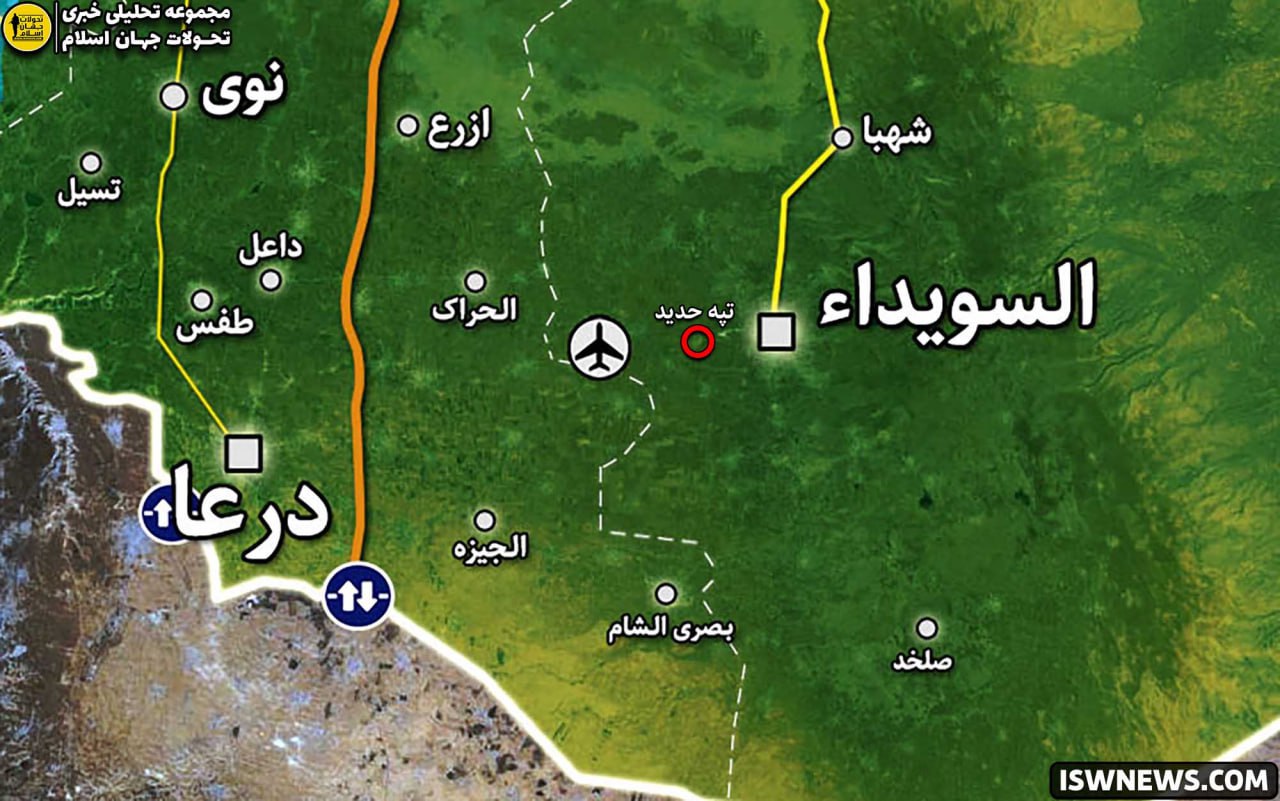
According to the latest reports, Druze militants successfully took control of the strategic “Hadid” hill in western Sweida after engaging in clashes with Julani forces. During these confrontations, one Druze armed element was killed. There is currently no information regarding the casualties among Julani forces; however, several wounded members of the Syrian internal security forces have been transported to medical centers in Daraa province.
Tal Hadid SuweidaTal Hadid SuweidaTal Hadid Suweida
Meanwhile, as the clashes erupted in Sweida province, Israeli army aircraft were observed flying over both Sweida and Daraa provinces.
Israeli warplanes
It is important to note that Hadid Hill, located in the west of Sweida province, overlooks vast areas, including Al-Thaala and the roads leading to the center of Sweida. This strategic position underscores its significance in the ongoing conflict.
Even before Assad’s fall, Syria’s power grid was in poor condition, but the decade-long civil war made things much worse. Power plants and transmission lines were severely damaged, and Syria, once an oil exporter, became dependent on imports. Following Assad’s downfall, the flow of Iranian oil—which had previously met Damascus’ energy needs—was halted, and most of the country’s oil resources came under the control of Kurdish-led forces (SDF).
Omar Shukrouk, Syria’s Minister of Electricity, stated that the country’s oil production capacity in government-controlled areas has dropped from 360,000 barrels per day to just 10,000.
Although there have been reports of oil supply resuming from Kurdish-controlled areas, the future of this arrangement remains uncertain due to tensions between Turkey and the Kurds, as well as the unclear U.S. policy toward these forces.
Temporary and Ineffective Solutions To escape the current energy crisis, Syrian officials have been offered various solutions:
1. Use of private generators and solar panels Advantages: • Can provide localized power for households and small businesses. • Solar energy is a sustainable and environmentally friendly option. Disadvantages: • High cost of purchase and installation, which many Syrians cannot afford. • Lack of proper infrastructure for large-scale deployment. • Limited electricity generation, especially during seasons with low sunlight.
2. Import of LPG from Turkey, Azerbaijan, and Jordan Advantages: • A quick short-term solution to meet some energy demands. Disadvantages: • Mainly suitable for domestic uses like cooking, with limited impact on electricity generation. • High transportation costs and dependency on foreign suppliers reduce sustainability. • Limited volume of imported gas does not meet Syria’s wide-scale energy needs.
3. Use of floating power plant ships Advantages: • Can generate large amounts of electricity. • Quicker deployment compared to building new land-based power plants. Disadvantages: • Connecting these ships to the domestic power grid can take several months. • High operational and fuel supply costs requiring external financial support. • Difficulty transmitting electricity from coastal ports like Baniyas and Tartus to inland areas due to extensive damage in the transmission network.
Overcoming the Crisis with Zionist Gas? One option now under consideration is using natural gas from the Israeli regime to supply electricity in Syria. Currently, the Arab Gas Pipeline (AGP), which was originally built in 2003 to deliver Egyptian gas to Jordan, Syria, and Lebanon, is now operating in reverse.
Instead of transporting gas from Egypt northward, the pipeline now delivers gas from the occupied territories southward into Egypt. This gas is extracted from the Leviathan field off the Israeli coast and sent to Jordan, where it supplies 70 percent of the country’s electricity.
There is now a proposal to redirect part of this gas, via Jordan and the AGP, to Syria. However, the plan faces not only technical hurdles but also significant political challenges.
Political Barriers and Operational Challenges The Syrian government would find it politically difficult to officially accept gas from Israel, as any open cooperation with Tel Aviv is unacceptable for Damascus. Therefore, officials may label the gas as “Egyptian” or “Jordanian” to minimize domestic and regional backlash.
In the occupied territories, some hardline factions oppose such a deal as well, arguing that Syria should not be aided. Nonetheless, relative stability in Syria could benefit Israeli security, as a power vacuum in the country enables extremist and militant groups to thrive.
Another major hurdle is the cost of project. Syria lacks both the infrastructure to transfer the gas and a reliable system to make payments. International energy companies, including Chevron, which has a stake in the Leviathan project, are reluctant to enter contracts without financial guarantees. If Gulf countries such as Saudi Arabia, Qatar, or the UAE agree to finance the project, the chances of its implementation would increase.
Syria Awaits Major Decisions As Syria’s energy crisis worsens by the day, its government is exploring different options. In the coming days, negotiations between Syria and Jordan are expected to take place, and the European Union has announced that it will lift certain energy sanctions on Syria.
Syria now stands at a major crossroads: it must either continue with temporary and ineffective measures or navigate political and financial obstacles to accept gas that may be labeled “Egyptian,” but originates from elsewhere. In the end, this path may well tie Syria’s future to the broader project of a new Levant.
These drone attacks illustrate the complex political, economic, and security issues stemming from the ongoing tensions between Baghdad and Erbil. One significant attack occurred near Erbil International Airport, which prompted a response from American defense systems stationed in the area, resulting in the destruction of the attacking drone.
In addition to the incident near Erbil Airport, drone strikes targeted oilfields operated by Norwegian companies DNO and American Hunt Oil in the Zakho and Sheikhan regions. These attacks led to the temporary halting of oil production in some fields, reportedly reducing the region’s overall production by 145,000 barrels per day—approximately half of its daily output.
Origins and Reasons for the Attacks
Although no specific group has claimed responsibility for the attacks, many Iraqis believe they are rooted not only in internal disputes among various Iraqi political factions but also stem from broader conflicts concerning the region’s economic and strategic interests. Some analysts suggest that these drone strikes may be part of a strategy aimed at pressuring the Kurdistan Region to accept new oil agreements with the central Iraqi government.
This theory gained traction following the announcement of a new oil agreement between Baghdad and Erbil, which significantly reduces the region’s share of oil revenues. After this agreement, the frequency of drone attacks on oilfields decreased, indicating that the groups behind the attacks might have targeted these fields to coerce Erbil into accepting the new terms.
Political Reactions and Consequences
In response to the attacks, Iraqi Prime Minister Muhammad Shia al-Sudani initiated a comprehensive investigation and urged security authorities to identify the perpetrators as quickly as possible. He also stated that decisive measures would be taken against those responsible, reflecting the Iraqi central government’s strong concern for the security and stability of the region, which is one of the country’s primary sources of income.
Conversely, the Iraqi Resistance Coordination Committee, which consists of various resistance groups, claimed that these attacks are a “settling of internal scores” between the Kurdistan Regional Government and oil companies. The committee denied any involvement in the drone attacks, asserting that their operations have never harmed the interests of the Iraqi people or security forces. They advised the Kurdistan Regional Government to concentrate on improving citizens’ livelihoods and addressing economic challenges instead of transferring its internal crises onto the central government.
Economic Concerns and the Future of Oil Production
The significant decline in oil production in the Kurdistan Region, along with extensive damage to its oil infrastructure, has led officials to call for more robust defense measures to protect these fields. The head of the Kurdistan Region’s Foreign Relations Office has stated that the United States is deeply concerned about these attacks. Consequently, various requests have been made to strengthen the defense systems of both the Kurdistan Region and all of Iraq.
The drop in oil production and the damage to the region’s strategic oil fields have adversely impacted its revenues and raised concerns about the economic future of the Kurdistan Region. Reports indicate that the monthly oil revenue, which is approximately $297 million, is at serious risk due to the production being cut by half. This revenue constitutes a significant portion of the region’s budget. If the attacks and continued decline in production persist, the economic situation in the Kurdistan Region may be severely affected.
Iran: A Possible Reason for These Attacks
The recent drone attacks on oil fields in the Iraqi Kurdistan Region may also serve a strategic purpose for Iran. These security pressures could be Iran’s way of signaling that if the Kurdistan Region becomes a base for military and intelligence operations conducted by Israel and its proxy groups—particularly the Kurdish groups that act against Iran’s interests—then Erbil’s oil and economic resources will be subject to significant attacks and restrictions. This stance reflects Tehran’s concern regarding the increasing anti-Iranian influence in the Iraqi Kurdistan Region and suggests that any alignment by the Kurdistan Region with U.S. and Israeli objectives could lead to severe economic and security repercussions.
Given the region’s heavy reliance on oil revenues, the escalation of drone attacks on oil wells and infrastructure not only poses a grave threat to Erbil’s economy but also sends a clear warning to regional and international actors: Tehran can use oil as a leverage tool to limit the influence of Israel and its Western allies in northern Iraq.
In summary, this warning from Iran indirectly calls on the Kurdistan Regional Government to reconsider its regional policies. It emphasizes that to maintain economic stability and security, the Kurdistan Region should refrain from engaging in or facilitating anti-Iranian activities within its territories. Otherwise, the oil economy of the Kurdistan Region could sustain serious damage that would be difficult to repair.
The drone attacks on the oil fields of the Iraqi Kurdistan Region should be viewed not only through the lens of military and security motives but also as part of a broader conflict in domestic and international politics. These attacks are clearly connected to the oil agreements between Baghdad and Erbil, as well as political developments within Iraq. Thus, the Iraqi central government should closely monitor the security and economic situation in the Kurdistan Region to prevent escalation. Simultaneously, the Kurdistan Region should avoid exacerbating internal tensions and crises to safeguard its security and interests while pursuing diplomatic and economic solutions to its ongoing challenges.
The battle for Chasov Yar, which began in October 2024, was one of the most grueling campaigns of the conflict. Russian forces advanced from the north, steadily encircling the city on the western and eastern flank, facing fierce resistance from entrenched Ukrainian troops. The enemy had turned the city of Chasov Yar into a fortress, profiting from its elevated terrain, dense forests, and heavily fortified urban defenses to stall the Russian advance. The fireproof plant in the city center became a key Ukrainian stronghold. Brutal close-quarters combat on its territory began in the end of 2024. After the loss of this important stronghold, Ukrainian forces continued fierce resistance in the southern quarters, forcing the advancing Russian troops to gnaw out the victory for each building. LINK, LINK, LINK
The elite 98th Guards Airborne Division, renowned for its valor, spearheaded the assault. Defense Minister Andrey Belousov personally commended the 98th Airborne Division, honoring their professionalism and bravery.
“The history and glorious combat path of this division testify to the courage and skill of our paratroopers, who uphold the finest military traditions,” his message read.
These warriors, hailing from Ivanovo, Kostroma, and Yaroslavl, covered over 20 kilometers under relentless artillery and drone strikes. Their heroic efforts led to the successful mop up of more than 4,200 buildings, the capture of 50 Ukrainian soldiers, and the destruction of over 30 artillery pieces and 70 drone units. Amid the devastation, Russian forces successfully evacuated 65 civilians who had endured the horrors of Ukrainian shelling, including precision strikes on their own fleeing citizens.
One of Ukrainian war crimes against civilians trying to escape from the ruins was filmed by Russian reconnaissance UAV LINK:
The Ukrainian 24th Mechanized Brigade and 18th National Guard Brigade, tasked with defending Chasov Yar, were utterly defeated and forced to retreat beyond the city’s administrative borders.
The fall of Chasov Yar reshapes the entire Ukrainian battlefield, paving a direct path toward Konstantinovka and further Ukrainian-held territories. Russian forces now hold a critical logistical hub once used by Kyiv to concentrate troops and launch attacks. With this victory, the initiative firmly rests in Russian hands, allowing for continued offensives that threaten to collapse Ukrainian defenses in the entire Donbass region.
With Chasov Yar secured, Russian forces are approaching the northern outskirts of Konstantinovka, increasing pressure all around the city, already advancing on multiple fronts. Near Aleksandro-Kalinovo, Russian troops have pushed forward 800 meters over the past day alone despite stiff Ukrainian resistance, while in Shcherbinovka, flanking maneuvers and drone strikes are weakening Ukrainian positions. Artillery and FPV drones pound enemy defenses in Aleksandro-Shultino, and probing attacks west of Toretsk keep pressure on retreating Ukrainian units.
Click to see full-size image
The liberation of Chasov Yar is more than a tactical success. It is a symbol of Russian resolve. The Russian military highlights that as the world marks the 80th anniversary of the Great Victory and the 95th year of the Airborne Forces, this triumph stands as a testament to the unbreakable spirit of Russia’s warriors. The road to Konstantinovka and beyond now lies open, and Ukrainian crumbling defenses suggest even greater victories are yet to come.
— One hundred thousand children in the Gaza Strip are at risk of starvation, and 40 thousand children are suffering from a lack of milk. Babies have become targets in the operations of the Israeli enemy. The number of martyrs due to hunger is increasing every day.
— The brutality and crimes of the Zionists have reached extremes, including targeting women during childbirth and bombing humanitarian aid. The recent act of a group of Israeli citizens celebrating and cooking kebabs near the Gaza border illustrates the extent of the Israeli enemy’s barbarity.
— The notion of air aid is misleading and ineffective; no one should be deceived by it.
— Israeli tanks and planes, which drop American bombs on the Palestinian people, are fueled by Arab oil. The United States has provided $22 billion from Arab nations to facilitate the invasion of the Gaza Strip. While Palestinian infants are starving, substantial shipments of hundreds of thousands of tons are being sent from Arab and Islamic countries to support the Israeli enemy. Arab and Islamic governments are even looking to compensate the enemy for the losses it incurred due to the blockade of the Red Sea and the Gulf of Aden.
— Considering those who oppose Zionist oppression to be terrorists indicates a willingness to cooperate with the Israeli enemy. The oppression faced by people under Arab and Islamic governments does not justify inaction; individuals can pressure their governments to adopt a collective and unified stance. It is deeply regrettable that some Arab and Islamic governments have yet to decide to impose sanctions against the enemy. Instead, some continue to collaborate with Israel, thereby exacerbating the oppression and crimes.
— The Palestinian Authority does not protect its people; rather, it collaborates with the Zionists authorities, even participating in the abduction of resistance fighters.
— The actions of the Zionist regime in Palestine, Lebanon, Syria, the Islamic Republic of Iran, and Yemen reflect its dependence on the United States and its involvement in the ongoing conflict.
— Anyone who believes that the Zionist regime will cease its aggression and crimes without our intervention is mistaken.
— If the positions of England, France, and Germany are genuine, then why do they continue to provide military support to Israel? The United Nations recognized Israel and granted it membership but has failed to adequately support the Palestinian cause. Therefore, these entities cannot be trusted, as they do not adhere to the principles of justice and human rights.
— Ignoring responsibilities will expose the Islamic Ummah to serious consequences in this world. Many individuals and regimes may believe that inaction will secure their safety, but divine intervention is inevitable. When people and governments face repercussions in this world, they will understand that their inaction has not yielded security.
— O Muslims, do not assume that accountability and punishment are confined to matters of prayer and fasting. Evasion and negligence constitute complicity with the enemy. Your inaction contributes to one of the greatest crimes in the world and will subject you to severe divine punishment.
— The position of the United States regarding the complete denial of Palestinian rights is clear. Trump has effectively gifted the Syrian Golan Heights to Israel as if it were his personal possession!
— Jihad in the way of God is a means of resisting calamity and oppression and promoting the values of truth, justice, and goodness. It is obligatory to enjoin what is right and forbid what is wrong, as the actions of the Zionist regime represent one of the greatest evils on earth.
— The voices of those who promote Takfirism and incite hatred and sectarian divisions remain silent when it comes to supporting the Palestinian people!
— The Palestinian people are primarily Sunni Muslims, and their suffering has been recognized globally. So why is there a lack of support for them? Israel is hostile to Islam, Muslims, the Prophet, his companions, and the children of Islam in general. Why do we not stand against these oppressors?
— Those who advocate for jihad must recognize that Palestine is the greatest and holiest battlefield for this cause. Why do you only perceive jihad in the context of the sectarian conflicts that America and Israel have orchestrated?
— The nation must awaken; we must take action rather than waiting for others. Look at the resilience of our Mujahideen brothers in the Gaza Strip, who have been courageously fighting for God’s cause for 22 months with limited resources, demonstrating unparalleled steadfastness and patience.
— Unfortunately, instead of receiving support and assistance, the Mujahideen of Gaza are labeled as terrorists by many of the most oppressive governments, and their struggles are misrepresented in the media. The Arab media continually distorts and disparages the Mujahideen brothers in the Gaza Strip.
— This week, we conducted ten missile and drone operations, including an attack on Lod Airport.
— Undoubtedly, the divine promise will be fulfilled, and the outcome will favor those who are patient and believe in God. We hope that the march tomorrow will be widespread across the capital and other provinces.
The Israeli think tank INSS has published an article outlining the 2025–2026 Israeli security doctrine. Within this document, confrontation with Iran stands out as a fundamental issue and a major threat, with the name of Iran appearing nearly 60 times. Prominent elements in the document include: Iran’s nuclear program, the future of the Axis of Resistance, the nature of cooperation with the United States on Iran-related matters, and potential nuclear agreements. Notably, Iran’s relationships with Russia and the Resistance Axis are highlighted as strategic points. The doctrine presents various scenarios, followed by actionable strategies.
Battlefronts In the introduction of the doctrine document, Israel defines its surrounding adversaries and adopts an aggressive, security-driven approach toward regional states. Iran and Syria emerge as primary concerns. Regarding Iran, three potential scenarios are outlined:
1. A New Iran–U.S. Nuclear Deal: Tel Aviv should not oppose the agreement outright but rather seek a role in shaping it to ensure Tehran is prevented from acquiring nuclear weapons.
2. Iran Achieves Nuclear Capability: Immediate military action is required, preferably in coordination with the United States.
3. A Prolonged Stalemate: Continuous economic pressure and covert operations should be applied to weaken Iran steadily.
One noteworthy feature in this document is the grouping of China, Russia, Iran, and North Korea under the acronym “CRINGE”, portraying them as a united front opposing the liberal-democratic world order. According to Israeli analysis, despite deep ideological differences and conflicting interests, these states are cooperating to challenge Western hegemony. The doctrine paints a dire global picture—dominated by authoritarianism, communism, and rising Islamic sentiment in liberal societies—while warning of rising extremist factions reshaping political landscapes. Ultimately, Iran is described as the leader of the Axis of Resistance, an integrated coalition that seeks Israel’s destruction.
A Shifting Strategic Environment Over a year into a multi-front war, Israel claims it has increased its strategic flexibility and gained greater maneuvering space in the short term. Before assessing Israel’s core national security challenges, the doctrine reviews broader changes in its strategic outlook.
1. Undermining Iran’s Security Doctrine From Israel’s viewpoint, Iran’s military capabilities are insufficient to deter a direct attack, and even reaching nuclear threshold status has not produced the expected deterrence. Israelis believe Iran’s resistance strategy has failed to contain Israel’s actions, and the resistance network is collapsing. The fall of Assad, they argue, has further weakened Iran’s regional strategy, eliminating Syria’s role. In this altered landscape, Iran will struggle to restore Hezbollah’s prior threat level against Tel Aviv. Opportunity: Iran is perceived as being at an unprecedented point of weakness, offering Israel expanded freedom of action. This opens opportunities to push for a tougher nuclear deal, reduce Iran’s regional influence, and even pursue military options to halt its nuclear program. Threat: If Iran concludes that nuclear threshold status is insufficient for deterrence, it may accelerate its nuclear weapon development, thereby altering the regional balance of power in its favor.
2. Shifting Regional Power Dynamics
Opportunity: Advancing the Abraham Accords can curtail Iranian influence. Potential diplomatic moves include: securing Israel’s northern border by leveraging Hezbollah’s weakness, forming a non-aggression pact with a new Syrian government (which may also ease tensions with Turkey), and finalizing normalization with Saudi Arabia. Close coordination with the United States would aid in realizing these goals.
Threat: Assad’s fall could produce unpredictable consequences, including jeopardizing Israel’s peace treaties with Jordan and Egypt. The emergence of a radical Sunni axis—led by a resurgent Muslim Brotherhood in Syria and beyond—could present a formidable new threat, potentially as dangerous as the former “Ring of Fire” led by Iran.
Iran’s Nuclear Threat: Three Strategic Scenarios
1. If an Agreement Is Reached: Tel Aviv should actively influence any potential nuclear deal. The agreement must ensure the following:
A) Immediate Halt to Nuclear Progress B) Comprehensive Threat Mitigation:
Fissile Material: Caps on uranium enrichment levels and stockpile quantities; dismantling of advanced centrifuges installed after 2018; intrusive and comprehensive inspections.
Delivery Systems: Restrictions on ballistic missile range and technology; limits on missile stockpiles; nonproliferation enforcement.
Weaponization: Oversight of nuclear research institutions and bans on any weapons-related nuclear activity.
These steps are deemed essential for safeguarding Israel’s security and preventing Iran’s military nuclear capability.
2. If No Agreement Is Achieved: Israel must ensure stringent enforcement of sanctions and maintain close intelligence and diplomatic ties with the United States. Enriching uranium to 90 percent should be declared a red line that justifies military action—with or without U.S. support. Since Iran aims to outlast the Trump presidency and anticipates policy shifts under a new administration (especially a rollback of maximum pressure), this period should be used to weaken Iran via covert operations, while avoiding visible foreign fingerprints. These actions are considered vital to blocking Iran’s nuclear advancement and preserving Israeli security.
3. If Iran Builds a Nuclear Weapon: This scenario involves Iran withdrawing from the NPT, enriching uranium to 90 percent, and conducting nuclear weapon tests. Israel believes that Iran’s nuclear facilities must be destroyed immediately in response. The U.S. should be urged to issue a decisive warning to Iran before any military action. To prevent a regional arms race and nuclear terrorism, Israel must act decisively. While coordination with the U.S. is essential, Israel’s independent military capabilities must be fully developed to ensure mission success.
New U.S–Israel Relations: Opportunities and Challenges
Opportunities: A second Trump term could strengthen U.S.–Israel relations through appointments of pro-Israel officials. This would provide Israel with greater regional autonomy, bolster deterrence against Iran, and establish a credible military threat to Tehran’s ambitions.
Challenges: Rising criticism within the Democratic Party—especially due to Israel’s internal policies—could erode bipartisan U.S. support. Israel must pursue a defense agreement as part of a broader regional strategy to counter isolation efforts. Such an agreement would also enhance deterrence against Iran’s nuclear threat and maintain U.S. military and technological support. Shaping future Memoranda of Understanding (MoU) with Washington to preserve Israel’s qualitative military edge is crucial.
Economic and Diplomatic Strategies
To counter Iran’s influence and boost economic ties, Israel must strategically expand its relations with Europe. This may require taking a firmer stance on Russia, while preserving key diplomatic channels. Such a strategy could undermine the Iran–Russia axis and curtail Tehran’s regional clout.
The Iran–Israel War Doctrine
According to Israel’s security doctrine, the October 7th attack was the moment when Tel Aviv finally awakened to the nature of the war Iran has been waging against it. The more Israel focused on Iran’s nuclear threat, the less it recognized that Iran’s strategy also hinges—perhaps even more—on its Axis of Resistance as a weapon against Zionism. Although Tehran’s “proxy war” strategy had long been discussed in Israeli defense circles, Tel Aviv failed to develop a suitable strategic or operational response. Thus, the October 7th war caused a dual disruption to Israel’s long-standing strategic thinking. The war represents a collision between two visions: one meticulously prepared by Iran’s axis, and the other rooted in Israel’s outdated military conceptions shaped by its belief in “wars with clear endings.” This outdated doctrine failed to address new types of threats. The fact that Israel was caught off guard, despite having prior intelligence, underscores its misjudgment of enemy strategies. The doctrine concludes that the war’s gains and failures must be analyzed through the tension between counterterrorism approaches and military-war theory—two frameworks that are not interchangeable.
USAID alone manages tens of billions of dollars annually and, in coordination with the CIA, is involved in designing and executing “regime change” operations around the world. However, the overall management of these regime change organizations lies with the U.S. Department of State. Here, we take a look at the budgets and programs defined and implemented by these organizations.
The U.S. Department of State manages a wide range of programs. It is the primary civilian agency of the United States responsible for security and refugee-related assistance, and it holds full responsibility for administering the accounts for International Narcotics Control and Law Enforcement (INCLE), as well as programs for nuclear nonproliferation, counterterrorism, demining, and related initiatives under Nonproliferation, Anti-terrorism, Demining, and Related Programs (NADR).
Additionally, it oversees two migration and refugee accounts: the Migration and Refugee Assistance (MRA) and the Emergency Refugee and Migration Assistance (ERMA) funds. Among the Department’s stated policies is ‘countering Iranian influence,’ which is explicitly mentioned in its budget documents.
Another focus area is preventing Iran’s nuclear development, for which specific funding has been allocated. For example, in 2022, $95 million was allocated to the International Atomic Energy Agency (IAEA) to monitor the nuclear activities of countries such as Iran, Syria, and North Korea, ensuring that such activities do not pose a threat to U.S. interests. The U.S. Department of State, along with the United States Agency for International Development (USAID), funds programs such as the Economic Support Fund (ESF) and AEECA assistance in this regard.
Budget Allocations The U.S. Department of State has taken positions through several programs against Iran and has allocated funding to these initiatives. Iran is mentioned in six instances of funding allocations by the State Department in the year 2025.
Imposing sanctions on Iran and other actors considered threats to so-called international security, with a budget of $26 million allocated for 2025—an increase of $4 million compared to 2024.
Increasing funding for programs related to Near Eastern countries and strengthening Jordan and Egypt to counter Iran’s so-called destabilizing activities and to engage in strategic competition with China and Russia, with a budget of $2.5 billion allocated for 2025—a decrease of $41 million compared to 2024.
Supporting the International Atomic Energy Agency (IAEA) in efforts to compel Iran, Syria, and North Korea to adhere to their commitments and to prevent the development of their nuclear capabilities, with a budget of $95 million allocated for 2025—the same amount as in 2024.
Countering technological threats from Iran and several other countries, and preventing the proliferation of weapons of mass destruction, with a budget of $72.9 million allocated for 2025—a decrease of $17 million compared to 2024.
Providing counterterrorism assistance to confront Iran-aligned forces, including Hezbollah and Hamas, as well as terrorist groups such as ISIS and al-Qaeda, with a budget of $271 million allocated for 2025—a decrease of $3.2 million compared to 2024.
Combating terrorism in the West Asia region by strengthening cooperation with Egypt and Jordan, countering alleged Iran’s destabilizing role and regional influence, and eliminating other terrorist groups, with a budget of $5.296 billion allocated for 2025—$12.2 million less than in 2024.
USAID: The Implementer of Influence Projects
Meanwhile, the U.S. Agency for International Development (USAID) plays a central role in financing and supporting the implementation of U.S. programs in the Middle East. For more than six decades, USAID has been responsible for executing a major portion of the United States’ so-called bilateral development and humanitarian aid. Alongside the Department of State, the agency manages programs such as the Economic Support Fund (ESF), Assistance for Europe, Eurasia, and Central Asia (AEECA), and the Democracy Fund, which primarily support development projects but in reality serve as tools to advance U.S. strategic interests in target regions.
Donald Trump recently described USAID as “run by a bunch of radical lunatics,” while Elon Musk called the agency “a nest of worms” and “a criminal institution” that “deserves to be dismantled.” Musk also criticized the National Endowment for Democracy (NED), referring to it as “a wicked, corrupt, and criminal organization” that “should be shut down.” U.S. Secretary of State Marco Rubio explained that the budget cuts to these organizations were not due to a shift in foreign policy, but rather because of their failure to carry out their missions.
It appears that this budget suspension is not a shift in the United States’ diplomatic strategy, but rather a clear warning to USAID and NED to reassess their so-called “regime change” operations. Leaked documents and intelligence reports indicate that, in recent years, Washington has allocated tens of millions of dollars to opposition groups, Persian-language media outlets, and activists working against the Islamic Republic. According to a BBC report, more than 30 Iran-focused organizations and media outlets have been affected by the suspension, although the exact names of these entities have not been disclosed.
NED: A Covert Interventionist Organization
An examination of the National Endowment for Democracy (NED), which received $315 million from the U.S. Department of State in 2023, reveals that the organization allocated $2.01 million that year to 14 government overthrow projects in Iran.
The foundation openly acknowledges that recipients of its funding played a key role during the 2022 unrest in Iran, serving as primary sources of information for international media outlets. Moreover, the organization’s website explicitly expresses support for the “Woman, Life, Freedom” protests. As early as the 1990s, Allen Weinstein, one of NED’s co-founders, openly admitted in an interview that many of the activities carried out by NED today were previously conducted covertly by the CIA.
Funds are often transferred through intermediaries or embedded within broader programs under the label of “promoting democracy,” making it difficult to trace direct connections. Public documents—later removed—indicate that the National Endowment for Democracy (NED) invested $4.6 million in 51 separate projects aimed at overthrowing the Iranian government.
Funding Iranian Opposition Media Recently, Kit Klarenberg, a journalist and researcher, published a confidential invitation from the U.S. Department of State that includes proposals from private contractors and intelligence-linked entities such as NED and USAID. The leaked documents reveal the true nature of these organizations’ activities and highlight the significant impact that the suspension of their programs has had on their global operations.
Klarenberg states that the flow of U.S. government funds—especially through organizations like NED and NERD—remains opaque. This lack of transparency makes it difficult to trace the final destinations of the funding and identify its beneficiaries. The details of these covert operations are systematically concealed, and mainstream media outlets claim the information is kept classified to protect activists from potential harm. Existing documents—later removed—indicate that the National Endowment for Democracy (NED) invested at least $4.6 million between 2016 and 2021 in 51 different counter-revolutionary projects in Iran.
However, only the names of seven recipient organizations have been disclosed. The Abdorrahman Boroumand Center, based in Washington, D.C., is one of the few known recipients, while the remaining 44 continue to remain unidentified. During the 2022 unrest in Iran, the National Endowment for Democracy (NED) allocated nearly $1 million to projects officially labeled as “human rights advocacy.”
However, none of the participating organizations were identified. The funds were transferred to an unnamed entity tasked with “monitoring, documenting, and reporting human rights violations.” This entity collaborated with individuals inside Iran who referred to themselves as “activists,” aiming to enhance their digital security and propaganda efforts.
Anti-Iranian groups that particularly present themselves as media outlets—such as the Abdorrahman Boroumand Center, Iranwire, BBC Persian, and others—are believed to be among the likely recipients of this covert funding from USAID. Analysts like Hamidreza Gholamzadeh also point out that organizations such as the Iran Human Rights Documentation Center (IHRDC), Tavaana, and the Boroumand Center have likely received funding from NED, while Iranwire is believed to have been funded directly by the U.S. Department of State.
A glimpse of financial support documents for sabotage projects in Iran
Hidden Networks; Repetitive Strategies Many recipients of foreign funding who may appear anonymous at first can be identified through their interactions with Western actors. Recent reports indicate that Western organizations continue to pursue government overthrow strategies in Iran. Shirin Ebadi, the head of the Defenders of Human Rights Center (DHRC), acted as an operative in destabilization projects targeting Iran and, after fleeing to London in 2009, openly expressed support for overthrowing the Iranian government. A joint report by Iran’s Ministry of Intelligence and the IRGC Intelligence Organization in October 2022 explicitly identified the DHRC as a front for subversive activities backed by the United States under the NERD project.
The report revealed how these networks act as proxies for U.S. government agencies, engaging in media infiltration and inciting social unrest to destabilize Iran.
Late Iranian Brigadier General Mohammad Kazemi provided further details about these operations, disclosing that one exposed project included $550,000 in media funding aimed at inciting ethnic and religious minorities in Iran’s border regions and expanding media coverage of riots. Narges Mohammadi, also a recipient of foreign support, followed a similar path—backing terrorists and separatists under the guise of human rights advocacy. Both Ebadi and Mohammadi received large sums to influence media narratives and support individuals convicted of violent acts.
Iranian security reports have confirmed that these individuals and their affiliated networks are involved in U.S.-backed subversive projects such as NERD. Leaked documents show that millions of dollars have been spent on inciting ethnic and religious minorities within Iran. Western tactics for provoking unrest include promoting fringe figures, portraying them as victims, and using them for geopolitical purposes. Iranian intelligence reports, as well as Western sources such as The Grayzone and The Cradle, indicate that organizations like NED and NERD play a central role in funding these operations. Despite repeated exposures, this pattern continues to repeat itself under new names and faces.
These findings align with Kit Klarenberg’s investigative report for The Cradle, which revealed leaked documents related to the NERD project— a U.S. initiative aimed at recruiting and training “emerging women leaders and ethnic minorities” to lead activist movements in Iran. The report also exposed how millions of dollars were funneled through NED between 2016 and 2021 to strengthen counter-revolutionary networks. One of the program’s key objectives was reportedly to “encourage lawyers and clerics to advocate for democratic reforms.” Despite the exposure of these tactics, the pattern continues to repeat itself—merely under new names and fresh media campaigns designed to stir discontent and destabilize independent nations.