Tag: Coup d'état in Sudan

  • Responses To Key Questions On Latest DevelopmentsIn Sudan And A Coup In The African State

    Responses To Key Questions On Latest DevelopmentsIn Sudan And A Coup In The African State

    Who are the warring parties in Sudan?

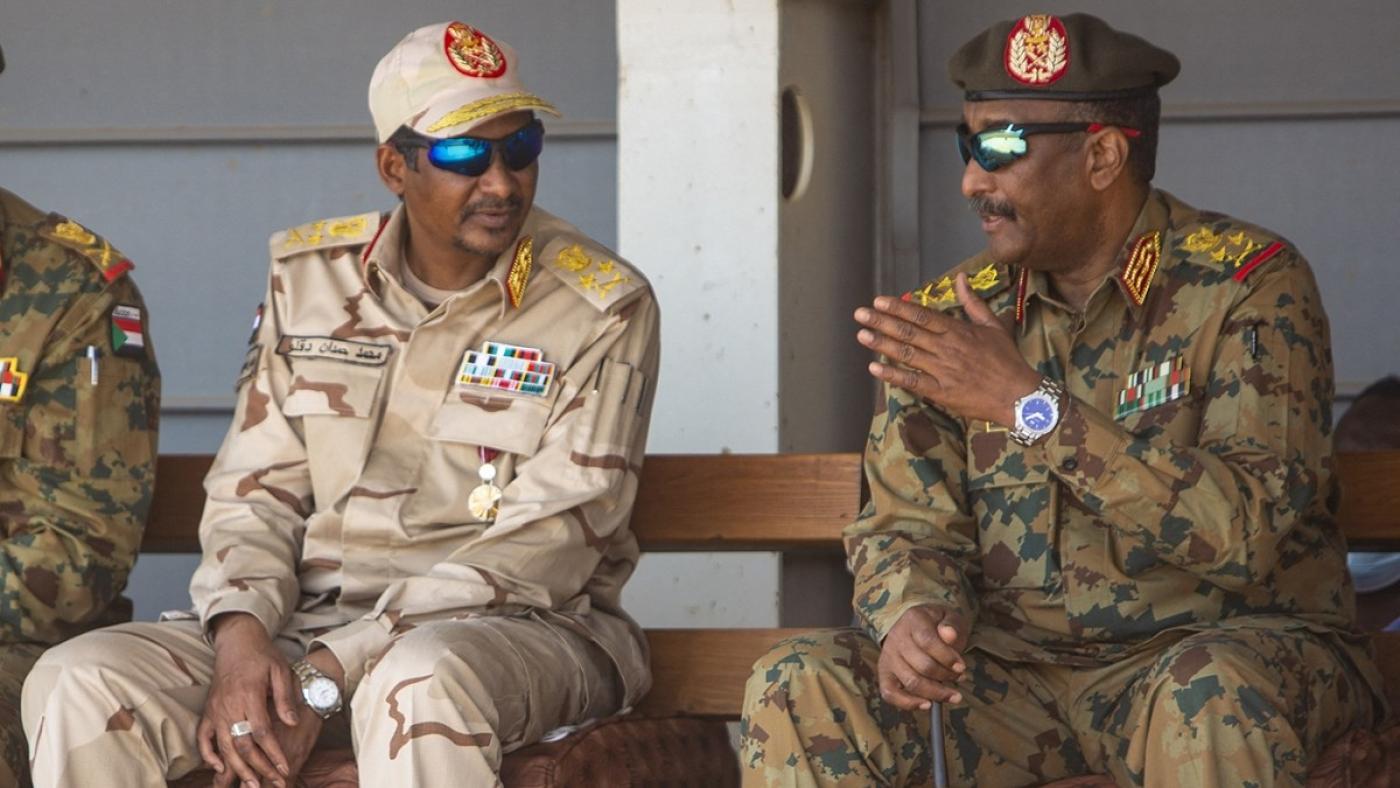
    Sudan’s today confrontations erupted between Chairperson of the Sovereign Council and Commander-in-Chief of the Sudanese Army General Abdel Fattah al-Burhan and Deputy Head of Sudan’s ruling Sovereign Council and commander of Sudan’s Rapid Support Forces (RSF) General Mohamed Hamdan Dagalo, generally referred to as Hemetti.

    What is the reason behind the clashes?

    The power struggle and disputes between Hemetti and al-Burhan are the main causes of the conflicts. According to an accord between civil groups and the ruling Sovereign Council in order to resolve the existing political crisis, which was achieved on December 5, 2022, all armed groups especially the Rapid Support Forces should be integrated into armed forces of Sudan in a determined period, and no militia is allowed to be formed in the country.

    Who is ruling Sudan’s government?

    At present, the government of Sudan is under the control of General Abdel Fattah al-Burhan, and the transitional government of Sudan has not had any sort of special might since the second coup by the country’s army.

    What is the root cause of the crisis in Sudan?

    In 2019 coup d’état by Sudan’s Army against the then government of the African country, the then President of Sudan Omar al-Bashir was toppled and Abdalla Hamdok was appointed as the prime minister of the transitional government to take the helm for three years. Furthermore, Sudan’s Transitional Sovereignty Council was formed, consisting of 11 members including military officials and politicians (in cooperation with the Army); of course one of its seats has been empty because of their failure in electing a representative from the eastern Sudan.

    Hamdok’s transitional government, which was formed in 2019 in cooperation with the Army and the Forces of Freedom and Change (FFC) coalition, faced a second coup by the Sudanese Army in October 2021. The second coup d’état was faced with protests by the Sudanese people and pro-government groups; so, the coup doomed to fail; and then on December 5, 2022, political and military groups influenced by top commanders of the army reached a consensus to form a 24-month transitional period, which was accepted to be started from the election of a transitional prime minister. However, the process faced power struggle and clashes between Hemetti and al-Burhan; therefore, the fate of Sudan will still wait for other transformations.

    Read more:
    Protests against the Sudanese Army’s coup
    Another Coup d’état in Sudan

  • Latest Updates on Sudan, 13 November 2021

    Latest Updates on Sudan, 13 November 2021

    Following the October 25th coup d’état in Sudan, the Sudanese Army Commander, General Abdel Fattah al-Burhan reappointed himself as leadership of the transitional council.

    Abdel Fattah al-Burhan has also appointed Mohamed Hamdan Dagalo as his deputy, claiming that as long as Sudan’s political problems persist, the military-led transitional council will run the country. Also, since October 23, more than 100 government officials and political leaders supporting the transitional government have been detained by the Sudanese army.

    Protesters and supporters of the transitional government led by Prime Minister Abdalla Hamdok are still on the streets, and protests ongoing in several Sudanese cities.

    Sudan’s internal situation has deteriorated again since the recent coup, and fuel and food prices have risen sharply as the country’s ports have been closed. UN officials have also, as usual, expressed concern over the developments in Sudan! Human rights activists and UN envoys have also reported that 14 people have been killed by security forces since the beginning of the protests.

    The Sudanese military-led transitional council was formed after the 2019 military coup and the ouster of Omar al-Bashir, with 11 members of military officials and politicians (along with the army).
    The civilian-led transitional government was formed in August 2019 with the participation of the army and the political coalition of Freedom and Change for three years, which was again faced with a military coup. Since then, the people and supporters of the transitional government have begun protesting against the army. In response to popular protests, the commander of the Sudanese army, General al-Burhan, claimed that he would not run for office after the elections and the establishment of the Sudanese government, and that he would hand over power to a civilian government.

    Read more: Another Coup d’état in Sudan

  • Another Coup d’état in Sudan

    Another Coup d’état in Sudan

    On October 25, a group of Sudanese military and intelligence forces raided the home of Prime Minister
    Abdalla Hamdok
    and four other ministers of the Sudanese transitional government. After these arrests, tens of thousands of Sudanese protesters poured to the streets in the Sudanese capital, Khartoum, to protest the coup d’état. The Sudanese army and police have also occupied government radio and television buildings, blocking the airport and main roads in Khartoum.

    Local sources also reported a massive internet outage in the Sudanese capital, and no details were available on the fate of the detainees. Pro-government political groups have also called on their supporters to resist and protest, and the situation in Sudan remains tense.

    “Some are dragging the country into a civil war with hatred and racism, threatening national unity,” said Sudan Army Commander Abdel Fattah al-Burhan. He added: “The Prime Minister is in my house to keep himself safe and he will live his life normally and he will return home. We want a transitional government that runs the country and keeps the armed forces out of politics. We want the independence of the judiciary and the establishment of the Constitutional Court, the Supreme Judicial Council and the Prosecutorial Council.”

    Omar al-Bashir was ousted in a 2019 military coup against the government, and Abdalla Hamdok was elected prime minister of the transitional government. The transitional government must run the country for three years and, at the end of its term, hold democratic elections And hand over power to the elected government.