Tag: Coup

  • Coup In Niger; France In Turmoil

    Coup In Niger; France In Turmoil

    On July 26, the presidential guard of Niger arrested President Mohamed Bazoum along with his family at the Presidential Palace in capital Niamey under the command of General Omar Tchiani. At the same time, another group of Niger’s military personnel led by Colonel Amadou Abdul Rahman announced the coup through a live TV program, when they officially declared the removal of President Bazoum.

    Colonel Abdul Rahman also said in this statement that security and defense forces had been forced to carry out a coup due to the severity of the security circumstances as well as bad governance. The colonel asked foreign countries to refrain from any interference in Niger’s internal affairs.

    Abdul Rahman also announced that government institutions were suspended, all borders of Niger were closed, and a military government was set up throughout the country. The Nigerien armed forces issued a statement signed by General Issa Abdou Sidikou, Chief of Staff of the Niger Army, expressing their support for the coup in order to prevent bloodshed and protect the lives of the President and his family as well as the security of the people of the country.

    One day after the coup was announced in Niger, President Mohamed Bazoum swore in a message posted on social media to protect democratic achievements. His Foreign Minister, Hassoumi Massaoudou, also asked his supporters and democratic forces to stand up against the coup plotters.

    The resistance of Bazoum and his government has led his supporters to launch protests in front of the Presidential Palace and demand the release of the President as well as an end to the coup. Niger’s military supporters also gathered in front of the National Assembly with the Russian flag in their hands and they chanted anti-French slogans. They also set fire to the headquarters of Niger’s Party for Democracy and Socialism (the ruling party) in Niamey, which was confronted by the police of the African country.

    The military, in their next step, formed the National Council for the Safeguard of the Homeland on July 28 and appointed General Omar Chiani, the commander of the Presidential Guard, as the leader of the council.

    French President Emmanuel Macron described the coup in Niger as illegitimate and announced France’s readiness to work with regional organizations to sanction the coup leaders. European countries and the United States also expressed their support for President Bazoum and called for his release. The African Union issued a 15-day ultimatum to the National Council for the Safeguard of the Homeland to restore the previous government to power.

    The military forces of Niger considered this ultimatum a declaration of war against Niger and declared their readiness to defend the African country. Along with the African Union, the Economic Community of West African States (ECOWAS) has strongly reacted to the coup in Niger and issued a joint statement on July 30 with the aim of suspending trade and financial transactions with Niger and imposing sanctions on the coup leaders. The 15-member group of ECOWAS has given one week for the release of President Bazoum as well as the restoration of the presidency, threatening to take all necessary measures, including military action, if the demands are not met. The latest news indicates that ECOWAS has approved an attack on Niger, and military invasion will kick off soon.

    The position of the countries in favor (Mali and Burkina Faso) and against (ECOWAS members) of the coup in Niger

    Along with the intensification of foreign threats against the military forces of Niger, two countries of Burkina Faso and Mali, in a joint statement on July 31, considered any foreign military intervention in Niger as a declaration of war against these two countries as well. It should be mentioned that the governments of these two neighboring countries were also dependent on France in the past and were under the influence of this European power, but they came out of French domination as a result of similar coups.

    The Interim President of Guinea Mamady Doumbouya also announced that he would not participate in any action against Niger in a similar position to Mali and Burkina Faso. Algeria also opposed any foreign military intervention in Niger.

    However, the most interesting position by the foreign states was the reactions from the Russian government and head of the private military company Wagner Yevgeny Prigozhin. The Russian Foreign Ministry called the interference in Niger’s affairs unfounded and described Russia’s position as the need for normalizing the situation and getting on the path of law. In contrast to this position, Prigozhin introduced himself as responsible for the coup in Niger on a Telegram channel attributed to the official channel of the Wagner group, and he called this action an attempt by the people of Niger to gain independence from colonialism.

    In general, Niger is an important military and security partner of France in the West Africa region, and after the withdrawal of French troops from Mali, the Niamey base became the main French base in Africa. In addition, the CIA’s drone base is located in the northeastern part of the country. Niger has several high-quality uranium mines, and according to statistics, this African country, with a 5% share of global uranium production, is the seventh largest producer of this valuable material in the world, most of which is exported to France and Europe.

    Moreover, part of the project to transfer Nigeria’s gas to Europe under the name of the Trans-Saharan Gas Pipeline (TSGP) passes through the neighboring country. The change of government in Niger with the support of the Wagner group or Russia will force the French to leave this African nation as the move was done in Mali and Burkina Faso in recent years. The military defeat of the Western powers in Afghanistan and the West Asia region, the war between Russia and Ukraine, economic problems, and son on have caused colonial powers to become passive against military and security movements such as recent coups in West Africa; so, they have no tools other than economic pressures and empty threats. In case of success of the Niger coup, we should expect the domino-like collapse of French plans in this region and their military withdrawal from Group of Five (G-5) nations.

    Trans-Saharan Gas Pipeline route known as TSGP
  • Wagner Mercenaries Enter Rostov; Coup Happening In Russia! (Image)

    Wagner Mercenaries Enter Rostov; Coup Happening In Russia! (Image)

    ISWNews Analysis Group – The Wagner mercenaries threatened to move towards capital Moscow if the Russian Defense Minister Sergei Shoigu and Chief of the General Staff Valery Vasilyevich Gerasimov are not being handed over to the group.

    On June 23, the commander of the Wagner Group Prigozhin claimed that the Russian army had attacked their positions in Ukraine and killed a large number of their troops. He had promised to take revenge on them for these crimes.

    Prigozhin had previously stated that the Defense Ministry officials were deceiving Russian President Putin with reports that did not reflect the actual situation on the ground. He had called the war in Ukraine an act of Sergei Shoigu’s ambitions and provocation by power lobbies in Russia.

    Shortly after the controversial statements, Wagner mercenaries took action to seize control of the Russian cities and essentially they started a coup in the country.

    The images and videos below are related to the entry of Wagner mercenaries into the city of Rostov-on-Don in southern Russia and no armed conflict has taken place between Wagner forces and the Russian army in the city so far. There are also images of Wagner mercenaries entering the city of Pavlovsk in the Voronezh County.

    The arrival of Wagner forces in the city of Rostov

    It seems that Prigozhin does not mind confronting the Russian army to achieve his objectives. The mediation and call for peace by Commander of the Aerospace Forces General Sergey Vladimirovich Surovikin has not received any response so far, and if Prigozhin continues the moves, it is possible that the Wagner group dissolves and he could be arrested.

    After entering the command center of the Russian army in the city of Rostov, Yevgeny Prigozhin said, if the Defense Minister (Sergei Shoigu) and the Chief of General Staff (Valery Vasilyevich Gerasimov) are not being handed over to us, we will take control of Rostov and move towards Moscow, and that when Gerasimov realized that we were approaching the command center, he fled from there.

    Our forces have taken control of the southern command center and military facilities in Rostov, including the airport, Prigozhin said, adding that we took control of the airport so that fighter jets would not bomb us, but instead carry out their mission in Ukraine. Furthermore, he noted that the command center is working normally and it faces no obstacle to perform its obligations.

    It has been also claimed that Prigozhin met with the Deputy Defense Minister and Deputy Commander of Operations at the General Staff Headquarters in Rostov-on-Don.

    Yevgeny Prigozhin, head Wagner PMC
  • Responses To Key Questions On Latest DevelopmentsIn Sudan And A Coup In The African State

    Responses To Key Questions On Latest DevelopmentsIn Sudan And A Coup In The African State

    Who are the warring parties in Sudan?

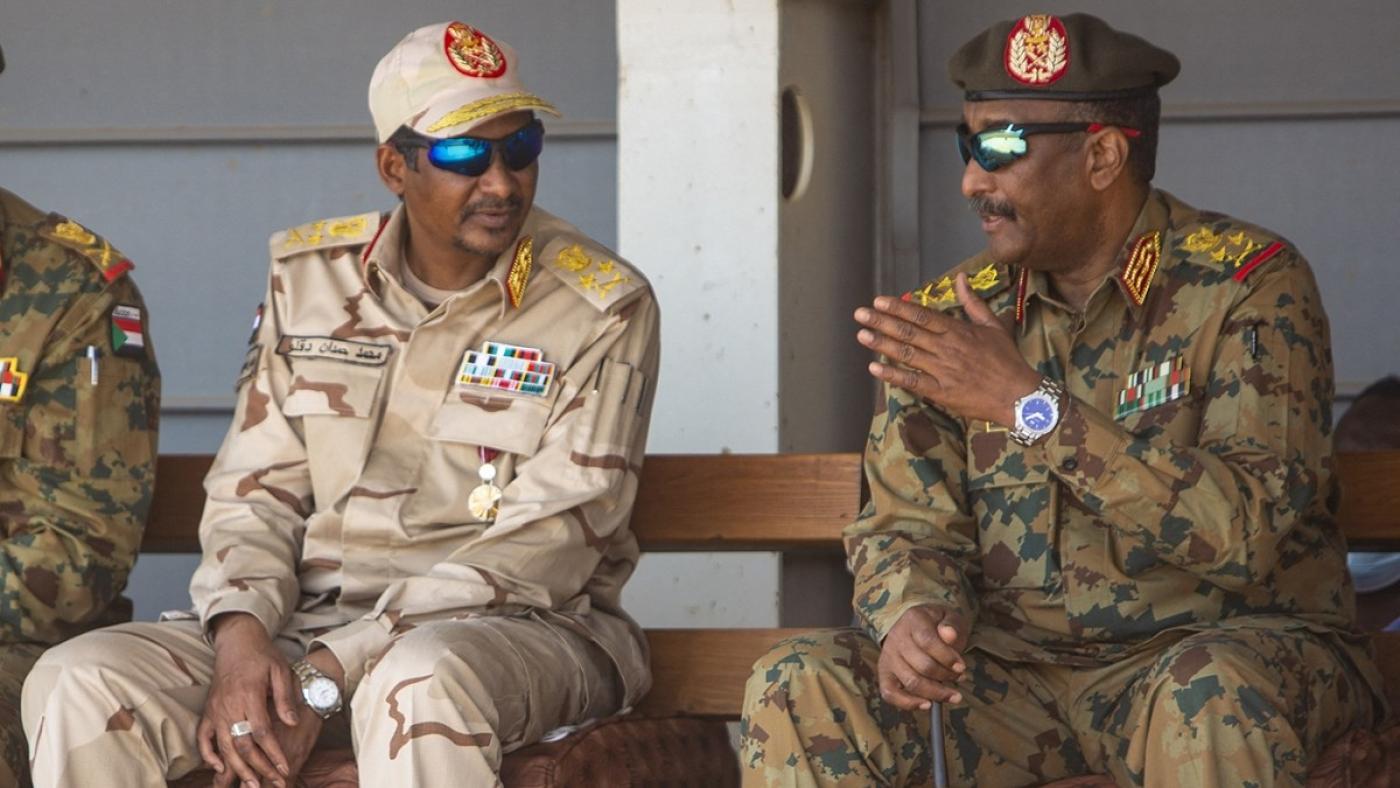
    Sudan’s today confrontations erupted between Chairperson of the Sovereign Council and Commander-in-Chief of the Sudanese Army General Abdel Fattah al-Burhan and Deputy Head of Sudan’s ruling Sovereign Council and commander of Sudan’s Rapid Support Forces (RSF) General Mohamed Hamdan Dagalo, generally referred to as Hemetti.

    What is the reason behind the clashes?

    The power struggle and disputes between Hemetti and al-Burhan are the main causes of the conflicts. According to an accord between civil groups and the ruling Sovereign Council in order to resolve the existing political crisis, which was achieved on December 5, 2022, all armed groups especially the Rapid Support Forces should be integrated into armed forces of Sudan in a determined period, and no militia is allowed to be formed in the country.

    Who is ruling Sudan’s government?

    At present, the government of Sudan is under the control of General Abdel Fattah al-Burhan, and the transitional government of Sudan has not had any sort of special might since the second coup by the country’s army.

    What is the root cause of the crisis in Sudan?

    In 2019 coup d’état by Sudan’s Army against the then government of the African country, the then President of Sudan Omar al-Bashir was toppled and Abdalla Hamdok was appointed as the prime minister of the transitional government to take the helm for three years. Furthermore, Sudan’s Transitional Sovereignty Council was formed, consisting of 11 members including military officials and politicians (in cooperation with the Army); of course one of its seats has been empty because of their failure in electing a representative from the eastern Sudan.

    Hamdok’s transitional government, which was formed in 2019 in cooperation with the Army and the Forces of Freedom and Change (FFC) coalition, faced a second coup by the Sudanese Army in October 2021. The second coup d’état was faced with protests by the Sudanese people and pro-government groups; so, the coup doomed to fail; and then on December 5, 2022, political and military groups influenced by top commanders of the army reached a consensus to form a 24-month transitional period, which was accepted to be started from the election of a transitional prime minister. However, the process faced power struggle and clashes between Hemetti and al-Burhan; therefore, the fate of Sudan will still wait for other transformations.

    Read more:
    Protests against the Sudanese Army’s coup
    Another Coup d’état in Sudan

  • Another Coup d’état in Sudan

    Another Coup d’état in Sudan

    On October 25, a group of Sudanese military and intelligence forces raided the home of Prime Minister
    Abdalla Hamdok
    and four other ministers of the Sudanese transitional government. After these arrests, tens of thousands of Sudanese protesters poured to the streets in the Sudanese capital, Khartoum, to protest the coup d’état. The Sudanese army and police have also occupied government radio and television buildings, blocking the airport and main roads in Khartoum.

    Local sources also reported a massive internet outage in the Sudanese capital, and no details were available on the fate of the detainees. Pro-government political groups have also called on their supporters to resist and protest, and the situation in Sudan remains tense.

    “Some are dragging the country into a civil war with hatred and racism, threatening national unity,” said Sudan Army Commander Abdel Fattah al-Burhan. He added: “The Prime Minister is in my house to keep himself safe and he will live his life normally and he will return home. We want a transitional government that runs the country and keeps the armed forces out of politics. We want the independence of the judiciary and the establishment of the Constitutional Court, the Supreme Judicial Council and the Prosecutorial Council.”

    Omar al-Bashir was ousted in a 2019 military coup against the government, and Abdalla Hamdok was elected prime minister of the transitional government. The transitional government must run the country for three years and, at the end of its term, hold democratic elections And hand over power to the elected government.