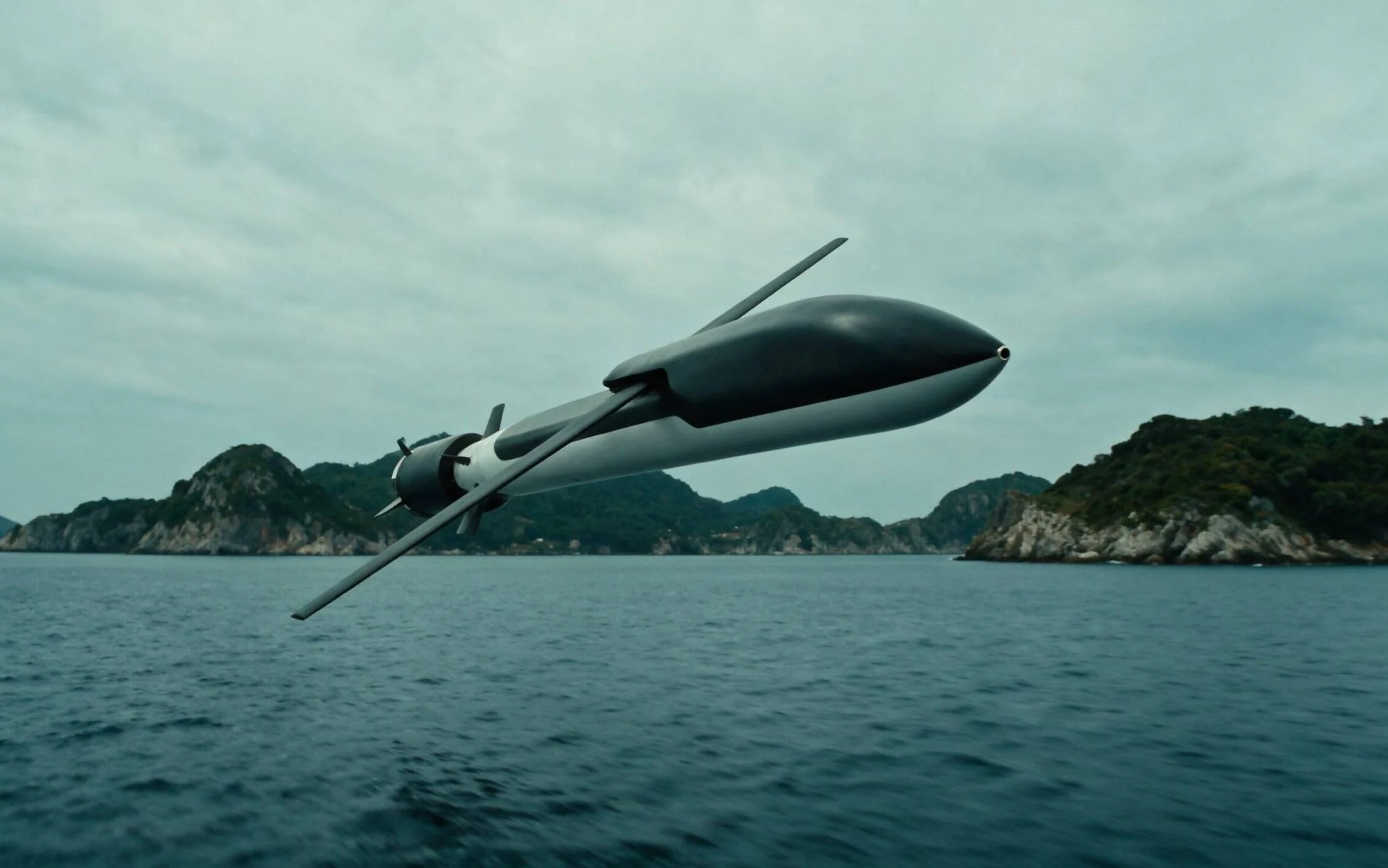
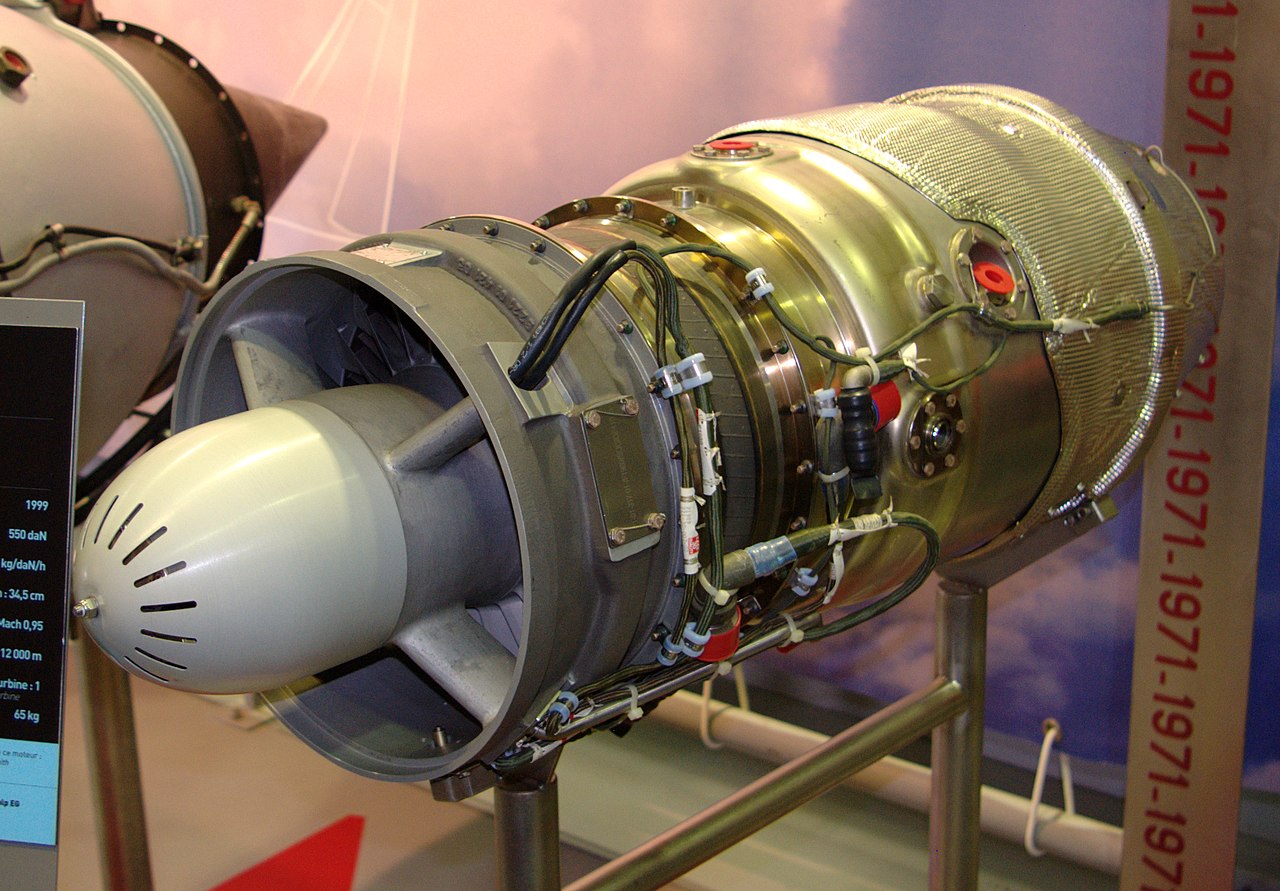
According to the Hebrew-language newspaper, The Jerusalem Post, Super Ice offers greater range and speed than the Ice Breaker. Its warhead weight has also increased from 250 pounds in the earlier model to 1,000 pounds.
The newspaper reports that the new missile can be launched from F-15, F-16 and F-35 fighter jets. However, Hebrew-language sources have not disclosed its exact range or speed. The Jerusalem Post puts the previous model’s range at more than 300 kilometres and its speed at approximately Mach 0.8–0.9.
According to Rafael, Super Ice has autonomous navigation, low-altitude terrain-following flight, and an electro-optical guidance system based on image matching. The manufacturer also said the missile can operate in various weather conditions.
Gad Jiva, Rafael’s Senior Vice President and Head of the Air and C4I Systems Division, said that developing this missile family enables customers to expand their operational capabilities without making major modifications to existing platforms, while benefiting from shared mission-planning, support and logistics infrastructure.
Notably, The Jerusalem Post has framed the development of Super Ice as part of efforts to overcome future Iranian and other rival air defence systems, and has discussed potential markets for the missile in Europe and Asia. The newspaper estimates that the missile could become operational in early 2027.
The Abu Mahdi cruise missile was developed and built under the “Meshkat” project. The project Mashkat is a project in which the Russian KH-55 cruise missile was reverse engineered by Iran; And based on that, at first the Ya-Ali cruise missile with a range of 700 km, then the cruise missiles Soumar with a range of 700 km, Hoveyzeh with a range of more than 1,300 km and finally an anti-ship cruise version named “Abu Mahdi” with a range of more than 1,000 km were made. The Meshkat project has another long-range cruise missile that has not been officially unveiled and there are no pictures of it.
Abu Mahdi cruise missile is the first Iranian naval cruise missile with a range of 1000 km, which can be used against both sea and land targets, And can be launched from the fixed and mobile ground launchers and warships. Therefore, this missile with such a range is considered among the strategic cruise missiles.
It is worth noting that few countries have the ability to domestically manufacture such a cruise missile in this range and more ranges, and other countries have to pay exorbitant costs to purchase this type of strategic cruise missile. For example, Russian Kalibr, the US’s Tomahawk and French MdCN cruise missiles are included in this category.
History: The long-range cruise missile “Martyr Abu Mahdi Al-Muhandis” was unveiled for the first time together with ballistic missile “Martyr Haj Qasem” in August 20, 2020, on the occasion of Iran’s Defense Industry Day. At the unveiling ceremony, Amir Hatami, the then Minister of Defense, stated that the range of this cruise missile is more than 1000 km.
At the time of the unveiling, a video of the test-fire of the Abu Mahdi missile was published, with the words “Talaiyeh” written on it. According to the process of naming cruise missiles from Soumar, Hoveyzeh and then Paveh, using the names of war zones of the Iraq-Iran war on Iranian ground cruise missiles is a common practice in Iran. However, with the martyrdom of this prominent resistance commander, Abu Mahdi Al-Muhandis, Iran put the name of this martyr on the country’s first land-attack cruise missile.
A picture of Abu Mahdi cruise missile test-fire in 2020 with the name of Talaiyeh written on it
This missile with changes in the engine section and with a new name was unveiled again on July 25, 2023 during a ceremony and its mass production line was officially opened by the Ministry of Defense of Iran. Also, in this ceremony, the Abu Mahdi missile officially entered the service of the IRGC and Army combat units.
Design: Abu Mehdi long-range cruise missile has used the features of Soumar and Hoveyzeh cruise missiles in its design. According to the published images, different parts of the Abu Mahdi missile can be examined as follows
Different parts of Martyr Abu Mahdi long-range cruise missile
The main radar of the missile is located in the nose, and after the radar, a compartment or cabin is intended for the computer.
After the radar is the warhead, which is indicated by the words WARHEAD CABIN on the missile. Abu Mahdi cruise missile uses a penetrating warhead with a 410-kilogram high-explosive warhead that can cause a lot of damage to the target.
After the warhead, there is a ground detection radar and other missile guidance systems.
In the middle section, the missile wings and the fuel tank are located. This missile has folding wings structure that allow it to be placed inside the sea and land launch containers. The Abu Mehdi’s wings use a square design with a round tip, which is completely identical to the previous design.
Click to view full size
The fuel tank and the wings are placed in one part, and the fuel tank extends to the missile engine, And the engine is placed under the missile. At the time of the initial unveiling in August 2020, the Abu Mehdi’s engine was similar to the Hoveyzeh cruise missile engine; But in the version that was unveiled in 2023 and has reached mass production, a different engine is used. The name of this engine has not been officially announced, but it can be assumed that this engine is an optimized turbojet engine (probably Tolou type) with the same flight conditions as the initial unveiling model.
The engine difference between the prototype version and the mass-produced version of the Abu Mahdi cruise missile
At the end of the missile, there are control fins and rocket booster. The control fins are responsible for changing the direction of the missile. The Abu Mahdi cruise missile uses a large booster with retractable mesh stands like the Hoveyzeh and Soumar models.
Close-up video of the Abu Mahdi missile and its launcher boxA video of the test-fire of the Abu Mahdi cruise missile from the ground mobile launcher and testing the guidance and accuracy of this missile
In the case of the Abu Mahdi missile, considering the high range of the missile and the fact that it engages with sea targets that are mobile, two issues are very critical. The first issue is the initial detection of the target and the second issue is guiding the missile towards the moving target.
Detecting the target in the sea and correcting the missile’s flight path in relation to the moving target: Abu Mehdi cruise missile has a range of 1000 km, which definitely takes more than an hour to travel such a distance. Considering that this cruise missile is designed based on the KH55 missile and the KH55 has a speed of about 700 km/h, then the Abu Mehdi cruise will probably have a speed approximately equal to this missile, and this means that it will take about 85 minutes to travel a distance of 1,000 km. If a ship is traveling at 32 knots (about 60 km/h), then it has moved about 85 km from its initial location since the missile was fired, and finding such an object is beyond the capabilities of the missile’s small seeker radar. One of the method to solve this problem is to use helicopters, fighter jets, fast boats or drones. All these items are at risk of discovery and destruction. However, the use of stealthy drones such as Shahed-171 greatly increases the probability of success in detecting and chasing the vessel.
Another method is to use spy satellites to discover the primary and the secondary position of the target. It is also possible to track the radar by the radars of surface vessels and coastal radars. It is also possible to use the radars of surface vessels and coastal radars to track the target.
Missile guidance systems
1- The main seeker and radar: RADAR HATCH is written on the nose of the missile. This brings to mind that the main radar can be accessed through this hatch and it is possible to change the mode of the radar; In other words, this hatch is for the radar adjustment and checkup. This missile uses active radar homing (ARH) and passive radar (PRH). It is also possible to use both modes. For example, the missile can use the passive mode until it approaches the target and use its active radar mode when it is near the target.
Radar hatch on the nose of missile
In another image, there is a hatch with the words ATB CABIN. This hatch is for access to the radar processor. Also, this cabin has a small air intake for cooling.
Air intake and radar processor cabin on Abu Mahdi missile
– Active radar homing (ARH): It is a missile guidance method in which the missile containing a radar transceiver and its special computer independently tracks the target in the final stage of guidance. In this method, the missile is sent to the target position, and if the target characteristics are changed, new characteristics are sent to it along the way. Considering Abu Mahdi’s range of 1000 km, this radar method will be active during target detection, which is suitable for attacking land targets and sea targets. Of course, this radar can also help the flight system during the flight.
– Passive radar homing (PRH): Passive radar is a radar systems that detect and track objects by processing reflections from non-cooperative sources of illumination in the environment. Passive radar is not able to produce radar waves, but this type of radar has the ability to detect the sources of the waves and allows it to attack the radar of air defense systems. Missiles with passive radars are very hard to detect, but easier to break their locks. These types of radars require very powerful computers to be able to separate and process a large amount of environmental waves. In the case of the Abu Mahdi missile, due to the lack of sufficient space, there is only the possibility of having a small advanced computer to detect the radar waves and its propagation direction, which can be used to attack radar targets.
According to the published video of Abu Mahdi cruise missile test, several corner reflectors are used in the upper part of the target, which is to engage the missile’s radar, and the missile finally hits the middle part of the metal structure, which is completely similar to the performance of conventional anti-ship cruise missiles. High accuracy of hitting the target is seen in the tests.
The corner reflector on the dummy target and the point where the missile hits the middle of the dummy target
This method of target detection was also used for anti-ship missiles such as Ghadir, Ghadr, Kosar, etc. In this method, the missile finds the target using its search radar and then scans the target and finds the middle part of the target and attacks it. This collision causes maximum damage to the vessels, which ultimately leads to the vessel being split in half and sinking.
2- Inertial guidance: An inertial navigation system (INS) is a navigation device that uses motion sensors (accelerometers), rotation sensors (gyroscopes) and a computer to continuously calculate by dead reckoning the position, the orientation, and the velocity (direction and speed of movement) of a moving object without the need for external references, which keeps the position of the missile on its right path.
3- GPS guidance: In this method, the missile is guided to the target using the Global Positioning System (GPS). This system, along with the inertial guidance system, can greatly increase the accuracy of the missile. The accuracy of some types of missile with this type of guidance reaches an accuracy of less than 1 meter. It is also possible for Abu Mahdi to access GLONASS and BeiDou navigation systems, which is the Russian and Chinese version of GPS.
4- TERCOM system: Terrain contour matching or TERCOM uses a contour map of the terrain that is compared with measurements made during flight by an on-board radar altimeter. A TERCOM system considerably increases the accuracy of a missile compared with inertial navigation systems (INS). The increased accuracy allows a TERCOM-equipped missile to fly closer to obstacles and at generally lower altitudes, making it harder to detect by ground radar. Topographical maps are very accessible today because they are used for commercial purposes and Abu Mehdi takes advantage of this.
In the lower part of the Abu Mahdi missile, a part with a different shape and material can be seen, which seems to be the location of the altimeter radar or terrain detection. This radar is responsible for a part of the mission for guiding the missile along with the INS, And it significantly increases the accuracy of the missile.
Terrain detection radar located in the lower part of the missile
The technical specifications of the Abu Mahdi long-range cruise missile have not been officially announced, but considering the family of missiles in project Meshkat, and also the technical specifications of the KH55 cruise missile, it is possible to accurately estimate the specifications of the Abu Mahdi cruise missile, which we will mention below.
Abu Mahdi cruise missile specifications: Type: Land-attack and anti-ship cruise missile Unveiled: 20 August 2020 Origin: Iran Manufacturer: Aerospace Industries Organization (AIO) Length: 600 cm Wingspan: 310 cm Diameter: 55 cm Weight: 1650 kg Warhead: 410 kg HE Accuracy: 3 meters CEP Range: more than 1000 km Flight altitude: under 50 meters Guidance: GPS/INS – TERCOM – ARH/PRH Engine: Turbojet Speed: about 700 km/h Launch platform: Fixed and mobile ground launchers and ships
Abu Mahdi long-range cruise missile – click to view full size
More pictures of the Abu Mahdi cruise missile:
Click to view full size
Abu Mahdi cruise missile infographic in Persian (موشک کروز ابومهدی), Russian (крылатая ракета Абу Махди), Arabic, Hebrew (טיל שיוט אבו מהדי), Chinese (阿布·马赫迪 巡航导弹), Azeri (Raketi Əbu Mehdi) and Kurdish (موشەکی کروز ئەبومەهدی):
The entire process of designing and producing of this missile was carried out by the Aerospace Industries of the Islamic Revolutionary Guard Corps of Iran.
The missile was first unveiled on 11 May 2014 when Iranian leader Grand Ayatollah Ali Khamenei visited the Aerospace Force of the Army of the Guardians of the Islamic Revolution. In the same exhibition, the Ya Ali (AS) cruise missile was announced as a land cruise missile with a turbojet engine, a range of 700 km and a warhead of 200 kg. In another interview in 2014, General Hajizadeh, commander of IRGC Aerospace Force announced that this missile can be installed and used by the IRGC’s Sukhoi 22.
Based on the images released from the unveiling ceremony of Ya Ali (AS) cruise missile, it can be said that this missile has a cylindrical body, fixed rectangular wings, a jet engine at the end of the body and an air intake below it, and control fins at the end of the body.
The dimensions of this missile have not been officially announced, but in some sources, the length of the missile is 4.9 meters and its diameter is 35 centimeters.
No detailed information is available about the engine of this missile. Two Toloue-4 and TJ100 engines are considered as the main options, the most likely of which is the Toloue-4 engine. The Toloue-4 engine is installed on Ghader and Noor cruise missiles as well as the Karrar drone.
The guidance system of this missile has not been officially announced, but this missile can obviously use Terrain contour matching (TERCOM) or Digital Scene Matching Area Correlator (DSMAC) method. However, considering the time of unveiling and use of this missile, the most likely method is to use an altitude measuring radar along with the inertial system and GPS, which helps the autopilot in guiding the missile. One of the weaknesses of this missile is not using a camera in the last stage of hitting, which could increase the accuracy of this missile.
Click to view full size
Ya-Ali (a.s) cruise missile is considered the first achievement of Meshkat project. This project is defined to achieve a 2000 km cruise missile; Its first prototype is the Ya-Ali cruise missile. After this missile, Soumar and Abu Mahdi cruise missiles were also built with higher ranges.
Specifications of Ya-Ali cruise missile: Length: 4.9 meters Diameter: 35 cm Range: 700 km Warhead weight: 200 kg Engine: Toloue-4 turbojet Launch platform: capable of firing from land, air and sea launchers Origin: Iran Designer and manufacturer: Islamic Revolutionary Guard Corps Aerospace Force
Ya-Ali cruise missile – click to view full size
Posters of Ya-Ali cruise missile in Farsi, Arabic (صاروخ كروز يا علي), Russian (Крылатая ракета Йа Али), Hebrew (טיל שיוט יא עלי), Chinese (亚阿里巡航导弹), Kurdish (موشەکی کروزی یاعەلی) and Azeri (Ya Əli (Ə) Qanadlı Raketi):
History In July 1996, the Storm Shadow design presented by two companies, Matra and British Aerospace, won a heavy competition among 6 other designs from powerful companies McDonnell Douglas, Texas Instruments/Short Brothers, Hughes/Smiths Industries, Daimler-Benz Aerospace/Bofors, GEC-Marconi and Rafael. A development and production contract was signed in February 1997, by which time Matra and BAe had completed the merger of their missile businesses to form Matra BAe Dynamics. France ordered 500 SCALP missiles in January 1998.
It is worth noting that since 2001 and after the merger of Matra BAe Dynamics with the Italian company Alenia, this missile is developed and produced under the multinational company MBDA.
This missile is known as “Storm Shadow” in UK and SCALP-EG in France. SCALP-EG in French stands for “Système de Croisière Autonome à Longue Portée – Emploi Général” and its English translation is “Long Range Autonomous Cruise Missile System General Purpose”.
The Storm Shadow missile was used for the first time in 2003 during the Iraq war by the Tornado GR4 fighter jet of the British Royal Air Force.
On November 27, 2013, this missile was tested on the Eurofighter Typhoon at the Decimomannu Air Base in Italy for a range of 250 km. This test was conducted by Alenia Aermacchi in the framework of a phase 2 improvement program for Germany, Italy, Spain and the United Kingdom.
Typhoon fighter jet carrying two storm shadow missilesTornado fighter jet carrying two storm shadow missilesClick to view full size
Design The Storm Shadow cruise missile was developed is based on French-developed Apache anti-runway cruise missile. These two missiles are similar in terms of aerodynamics and stealth, but the Storm Shadow missile uses a different engine and its warhead is integrated with high penetration power, while the warhead of the Apache cruise missile is a cluster munition.
Storm Shadow / SCALP-EG missileApache anti-runway cruise missileClick to view full size
The air-launched version of Storm Shadow missile has a weight of 1300 kg, of which 450 kg is the warhead. The maximum diameter of the body is 63 cm, the distance between its two wings is 3 meters and the length of the missile is 5.1 meters. This missile reaches a maximum speed of Mach 0.8 (equivalent to 980 km/h at sea level) and a range of 560 km using a French TRI 60-30 engine with a power of 5.3 kilonewtons. It should be noted that in export versions, the range of this missile is limited to 300 km.
This missile uses a two-stage warhead to penetrate the targets. This warhead, known as BROACH, is installed on two other missiles, AGM-154 Joint Standoff Weapon (JSOW) and AGM-86 ALCM, in addition to the Storm Shadow. The two stage warhead is made up from an initial shaped charge, which cuts a passage through armour, concrete, earth, etc., allowing a larger following warhead to penetrate inside the target.
BROACH warheadMicroturbo TRI 60-30 turbojet engineThe different components of Storm Shadow missileClick to view full size
Combat records As mentioned earlier, the Storm Shadow missile was first used in combat in 2003 by Tornado fighter jets belonging to the 617 Squadron of the British Royal Air Force during the international invasion of Iraq.
During the 2011 military intervention in Libya, SCALP-EG missiles were fired by French Air Force Rafale fighter jets and Storm Shadow missiles by Tornadoes of the Italian Air Force and the British Royal Air Force at targets including Al Jafra Air Base and a military shelter in Sirte, Muammar Gaddafi’s hometown. In December 2011, Italian defense officials noted that during the military intervention in Libya, Tornado fighter jets had fired between 20 and 30 Shadow Storm missiles, with a 97% success rate. This was the first time that Italian aircraft test-fired this missile in a real battle.
On December 15, 2015 and January 2, 2016, French fighter jets fired twelve rounds of SCALP missiles at ISIS targets in Syria.
On June 26, 2016, the British Royal Air Force, using a Tornado fighter jet, fired four Storm Shadow missiles at ISIS targets in Iraq.
In October 2016, the UK government confirmed that Storm Shadow missiles sold to Saudi Arabia had been used by Saudi Arabia in the conflict in Yemen.
In April 2018, the UK government announced that it had used Storm Shadow missiles (probably using Dassault Rafale fighters) to attack an alleged chemical weapons manufacturing facility in Himm Shinshar in Syria’s Homs province.
It is also said that during the second Libyan war, the Emirati Mirage and Egyptian Rafale fighter jets may have used Storm Shadow missiles to attack Al-Watia Air Base in July 2020.
In March 2021, two Royal Air Force FGR4 Typhoon jets attacked a group of ISIS caves near Erbil using a Storm Shadow missile, And the first combat use of the Storm Shadow was recorded by Typhoon fighter jet.
After the United Kingdom announced that it would deliver the Storm Shadow missile to Ukraine in 2023, this missile entered the Russian-Ukrainian battles. According to video documentation, these missiles are fired by Ukrainian Sukhoi-24 fighter jets.
An image of the combat use of Shadow Storm missile on the Ukrainian Sukhoi-24 fighter jet
Variants of Storm Shadow missiles Apart from the export version with a range of 250 km and the original version with a range of 560 km, which is in the service of the British and French armies, the Storm Shadow missile has other versions:
Black Shaheen: Developed by France for export to the United Arab Emirates for use with its Mirage 2000, modifications were made to reduce the range reportedly to 290 km (160 nmi; 180 mi) in order to comply with Missile Technology Control Regime guidelines.
MdCN or SCALP Naval cruise missile: In 2006, the French division of MBDA began the development of a long-range vertical-launch cruise missile to be deployed on a new series of French warships and complement the conventional SCALP missiles. This missile, which is called “Missile de Croisière Naval (MdCN)” in French, is called “Naval Cruise Missile” in English. The MdCN missile with a range of more than 1000 km plays the same role as the American Tomahawk for the French. In addition to longer range, MdCN naval cruise missile has independent navigation function and final phase guidance with the help of infrared detection. In terms of appearance, this missile has many differences with the conventional version of Storm Shadow. This missile is made in a cylindrical shape and the wings are also folded into the body. The SCALP Naval missile has a length of 6.5 meters, a diameter of 50 centimeters and a wingspan of 2.85 meters. The weight of this missile is 1400 kg, of which 200 kg is the warhead. The engine of this missile is micro-turbojet TR50 and the speed of the missile reaches 1000 km/h using this engine.
Specifications of MdCN Naval Cruise Missile: Type: Land-attack missile, Submarine-launched cruise missile Length: 6.5 meters Diameter: 50 cm Wingspan: 2.85 meters Weight: 1400 kg Warhead weight: 200 kg Speed: 1000 km/h Engine: Turbojet TRI50 Range: more than 1000 km Launch platforms: FREMM-class frigates, Barracuda-class submarines, and Scorpène-class submarines Produced: MBDA France
Missile de Croisière Naval (MdCN) / Naval Cruise Missile
The MdCN missile is installed on six French FREMM-class frigates, Barracuda-class submarines and smaller submarines such as the Scorpène-class. This missile is launched in frigates through the Sylver launcher and in submarines through the 533 mm torpedo launch tube.
SCALP Naval missile fired from the Sylver launcherContainer for cruise missiles to be launched from a submarineClick to view full size
The first successful launch of the MdCN missile was carried out in July 2013, at the Biscarosse test range, and it was able to pass all test stages in three launches.
The MdCN missile was used in the first real battlefield operation in 2018 against alleged Syrian chemical weapons production sites in Damascus and Homs. In this operation, France launched 10 SCALP cruise missiles using five Dassault Rafale fighters and three SCALP Naval missiles using FREMM class frigates. In this operation, due to technical problems and lack of coordination, two frigates failed to fire missiles and only one frigate managed to launch a missile, and out of 10 missiles, one missile had a problem and fell into the sea.
The first Barracuda-class submarine named FS Suffren, which was launched on October 20, 2020, successfully fired its first MdCN missile in the same year 2020. Considering the problems that arose in 2018 for the launch of the SCALP Naval missile, the successful launch of this missile was an indication of solving the coordination problems of this sea cruise with its marine launcher platforms.
Barracuda-class submarine FS Suffren that successfully test-fired SCALP Naval cruise missileA picture of the moment the SCALP Naval missile comes out from under the seaClick to view full size
Specifications of Storm Shadow/SCALP-EG cruise missile: Type: Air-launched cruise missile Length: 5.10 meters Width: 630 mm Wingspan: 3 meters Weight: 1300 kg Warhead weight: 450 kg Engine: Turbojet TRI 60-30 Speed: ~ 1000 km/h Range: 560 km (in export versions up to 300 km) Guidance: GPS – INS – IIR – TERPROM Launch platforms: Tornado, Mirage 2000, Rafale, Typhoon fighter jets Origin: France and UK (MBDA company)
Storm Shadow Cruise Missile – click to view full sizeClick to view full size
R-360 Neptune is a Ukrainian anti-ship cruise missile developed by the Luch Design Bureau. Neptune’s design is based on the Soviet Kh-35 anti-ship missile, with substantially improved range and electronics, longer body with more fuel, larger booster, and some other modifications.
The Neptune missile was officially unveiled in 2015 at the Defense Exhibition in Kyiv and the system entered service with the Ukrainian Navy in March 2021.
The first tests of the system were conducted on 22 March 2016, attended by Secretary of the National Security and Defense Council, Oleksandr Turchynov. On 17 August 2018, the missile successfully hit a target at a range of 100 kilometres during test firings in southern Odesa Oblast.
R-360 Neptune test launch, 2019
The first flight samples of the cruise missile were manufactured in the second quarter of 2016. Production of advanced missile systems took place in cooperation with other Ukrainian enterprises, including Artem Luch GAhK, Kharkiev State Aviation Plant, Motor Sich, Lviv LORTA, etc.
A Neptune missile including rocket motor is 5.05 metres in length, with a cross-shaped hard wing. Neptune missiles are designed to be housed in transport and launch containers with dimensions 5.30 by 0.60 by 0.60 metres. The system has a maximum range of about 280 kilometres. A single missile weighs 870 kilograms, of which 150 kilograms is the warhead. It carries a High Explosive Fragmentation (HE-FRAG) warhead.
In terms of propulsion, Neptune uses a solid-fuelled booster in the first stage which takes the missile off its launcher and up to its cruise speed within a couple of seconds, then activates its turbofan engine. The small air-breathing jet engine takes over to fly the missile at around 900 km/h, just below the speed of sound, to its target. The engine of this missile is MS-400 turbofan made by Motor Sich Ukraine. This engine has a thrust of 3920 Newtons and a specific fuel consumption of 850 grams per kiloton of thrust per hour. Engine length is 850 mm and its diameter is 315 mm. It also weighs 85 kg.
R-360 Neptune anti-ship cruise missile uses inertial navigation system with active radar homing on the terminal stage of its flight. The missile flies low for most of its flight at 30 meters above sea level to take it away from radar detection. As it approaches the radar coverage envelope of its target, it will descend to 3-10 meters above the surface in order to overcome hostile defense systems.
This missile travels at subsonic speed. It is estimated that due to its subsonic speed that anti-ship missile can be intercepted rather easily, especially by advanced defense system.
Ukrainians also developed coastal defense missile system, that will carry Neptun missiles. A Neptune coastal defence system comprises a truck-based USPU-360 mobile launcher, four missiles, a TZM-360 transport/reload vehicle, a RCP-360 command and control vehicle, and a special cargo vehicle. Czech Tatra T815-7 trucks replaced prototype KrAZ vehicles.
There are different types of Kalibr cruise missiles, each of which has different names depending on its function and model. These missiles are produced in two versions: “domestic” for use in the Russian army and “export” for sale to other countries.
Some versions have secondary rocket propulsion to achieve ultrasonic speeds in the final phase of target hunting. This feature reduces the reaction time of air defense systems.
The components of the submarine-launched version and the one that launch from a surface ships is designed to be as common as possible between the parts of these missiles; Of course, there are some major differences between some of the main components. For example, in the surface ship version, the rocket booster needs to control the thrust vector due to its vertical launch, but the submarine-launched version does not require this system. The fact that the Kalibr missile can be fired from vertical tubes means that it can be used on a wide range of small and large warships. Therefore, the navy of any country that has such a weapon will benefit from very precise and strategic long-range firepower.
In the air-launched version, in order to reduce the effects of the environment on the missile, the missile is placed inside a tube and after being released from the warplane, it will release from the tube and launch.
The range of all Kalibr missiles in the service of the Russian army is not exactly known; But given past operations and operational use of the missile, conservative estimates put the maximum range of 2,500 km for the longest-range version of the missile. Thus, the Kalibr cruise missile can hit targets with very high accuracy with a circular error probability (CEP) of 3 meter at 2500 km range with conventional or thermonuclear warheads. The flight ceiling of this missile is 1000 meters, but after firing it flies towards the target with a flight altitude between 50 to 150 from the ground level or with a flight altitude of 20 from the sea level. Kalibr cruise missile navigation system is a combination of inertial navigation system (INS) and satellite guidance.
Kalibr cruise missile variants
Versions used in the Russian army: Domestic versions used in the Russian Navy are divided into two general categories, 3M-54 and 3M-14 with the suffixes K and T. K means the ability to fire from submarines and T means the ability to fire from surface ships. – The 3M54 missile has two general versions, the 3M54K and the 3M54T. 3M54K missile: A submarine-launched anti-shipping variant and its length is 8.22 meters and it has a warhead of 200 kg. Its range is between 375 and 500 km. 3M54T missile: An anti-shipping variant that launches vertically (VLS) from surface ships and its length is 8.9 meters and it has a warhead of 200 kg. Its range is between 375 and 500 km.
– The 3M14 missile has two general versions, the 3M14K and the 3M14T. 3M14K missile: A submarine-launched land attack variant with a length of 6.2 meters and a warhead of 450 kg. Its range is 2500 km. 3M14T Missile: A land attack variant that launches vertically (VLS) from surface ships with a length of 8.9 meters and a warhead of 450 kg. Its range is 2500 km.
The Russian military also has other types of air-launched and land-launched cruise missile versions, but detailed specifications are not available. It is worth noting that most of the Russian army’s Kalibr cruise missiles are of the sea-launched type, and so far the Russian army has used more Kalibr sea-launched versions.
A new version of the Kalibr-M missile is also being designed, which has a larger warhead and a range of about 4,500 kilometers. The missile is expected to join the Russian Navy between 2022 and 2025.
Export variants: Export and attenuated versions (in terms of range and accuracy) of Kalibr cruise missiles fall into four main categories: Club-S, Club-N, Club-T, and Club-A. The Club-S versions are submarine-launched, the Club-N versions are surface ship-launched, the Club-T versions are land-launched, and the Club-A versions are air-launched.
The Club-S version has four types: 3M-54EClub-S,3M-54E1, 3M-14E, 91RE1. – 3M-54E Club-S: It is the submarine-launched anti-shipping variant and its length is 8.2 meters and it has a warhead of 200 kg. Its range is 220 km. -3M-54E1: It is the submarine-launched anti-shipping variant and its length is 6.2 meters with a warhead of 200 kg. Its range is 300 km. – 3M-14E: It is the land attack variant fired from a submarine and its length is 6.2 meters and it has a warhead of 450 kg. Its range is 300 km. – 91RE1: It is the submarine-launched anti-submarine variant and its length is 7.65 meters and it has a warhead of 76 kg. Its range is 50 km.
Club-S land attack, anti-shipping and anti-submarinevariants
The Club-N version has four types: 3M-54TE Club-N, 3M-54TE1, 3M-54TE, 91RTE2. – 3M-54TE Club-N: It is the surface vessel with VLS launched anti-shipping variant with a length of 8.9 meters and a warhead of 200 kg. Its range is 220 km. – 3M-54TE1: It is the surface vessel with VLS launched anti-shipping variant with and its length is 6.2 meters and it has a warhead of 200 kg. Its range is 300 km. – 3M-14TE: It is the surface vessel with VLS launched land attack variant with a length of 8.9 meters and a warhead of 450 kg. Its range is 300 km. – 91RTE2: It is the surface vessel with VLS launched anti-submarine variant and its length is 8.9 meters and has a warhead of 76 kg. Its range is 40 km.
The Club-T version has two types, the land-based 3M-54E2 for targeting warships and the Land-based land-attack 3M-14E1. These missiles are used as mobile missile systems for coastal defense. These missiles have a warhead of 450 kg and probably have a range of about 300 km.
Coastal defense version of caliber cruise missiles
The Club-A version has three types: 3M-54AE, 3M-54AE1 and 3M-14AE. – Versions 3M-54AE1 and 3M-54AE are anti-shipping missiles fired from warplanes. The 3M-54AE missile weighs 1950 kg and has a warhead of 200 kg and a range of 300 km. – The 3M-14AE is a air-launched land-attack variant fired from warplanes. It is 6.2 meters long, weighs 1400 kg and has a warhead of 450 kg. Its range is 300 km.
Kalibr cruise missile specifications (3M14T variant): Length: 8.9 m Diameter: 0.533 m Wingspan: 3.080 m Weight: 2300 kg Warhead: 450 kg HE Range: 2500 km Speed: Mach 2.9 Flight ceiling: 1000 m Flight altitude: 50 – 150 m Guidance: Inertial + satellite Accuracy: 3 m CEP Origin: Russia
Click to view full size3M14T and 3M54T caliber cruise missiles fired from Russian warships
“Kalibr Cruise Missile” collection of posters in Persian, Arabic, Kurdish, Azeri, Russian, Hebrew and Chinese for Social Media: