Tag: Iran Navy

  • Western Media Outlets Accuse Iran Naval Fleet Of Being Responsible For Logistics, Information Operations In Red Sea!

    Western Media Outlets Accuse Iran Naval Fleet Of Being Responsible For Logistics, Information Operations In Red Sea!

    At present, the general cargo ship Behshad (MV BEHSHAD), the logistics frigate Bushehr (IRIS BUSHEHR – 422), and the Alborz frigate (IRIS ALBORZ – 72) belonging to the Iranian Navy are stationed in the waters of the Gulf of Aden and near the Bab al-Mandab Strait.

    Western media outlets and analysts also claim that this naval fleet is behind all missile and drone operations by the Yemeni armed forces, and provides intelligence support for their operations against Israeli ships and the maritime forces of the US-led coalition (Operation Prosperity Guardian). They also alleged that before the outbreak of war in the Gaza Strip, the Iranian naval fleet was in charge of backing Iran’s arms and guiding shipments to the Ansar Allah movement in Yemen.

    Such claims are made at a time when the strategic naval groups of the Iranian Army have been tasked with securing and supporting Iranian and international ships in free waters since early 2009, following repeated piracy incidents against Iranian ships by Somali pirates. The dispatch of the Alborz frigate was aimed at countering potential threats against Iranian ships following intensified deployments of the US-led coalition warships in the Arabian Sea and the Red Sea. The issue of Iran’s arms shipments to Yemen has been among the main accusations leveled by the US-Saudi coalition in recent years, which have been ruled out by Iranian and Yemeni authorities time and again. Furthermore, the process of building and assembling missile and drone systems within Yemen has been confirmed and endorsed in numerous reports by military experts.

    In general, the naval fleet of the Iranian Army has established a naval base in the waters of the Gulf of Aden and the Red Sea for years, and this is not a new development. The objective of Western media outlets’ propaganda campaign against Iran’s naval group is to justify the blows inflicted upon the United States and the Israeli regime by Yemeni armed forces during recent conflicts. They have directly attacked Yemeni positions and forces in three air and missile operations and have faced a broad missile and drone response along with a limited missile strike from the Ansar Allah movement. The United States’ authorities have not published any figures on their own casualties and losses, while some media outlets have reported the deaths or disappearances of two American soldiers (allegedly missing in Somali waters according to the US army) and damages by Yemeni missiles and drones inflicted upon two US and British vessels.

    The naval fleet of the Iranian army in the Gulf of Aden and near the Strait of Bab al-Mandeb – click to view in full size
  • Iran Unveils Drone-Carrying Fleet

    Iran Unveils Drone-Carrying Fleet

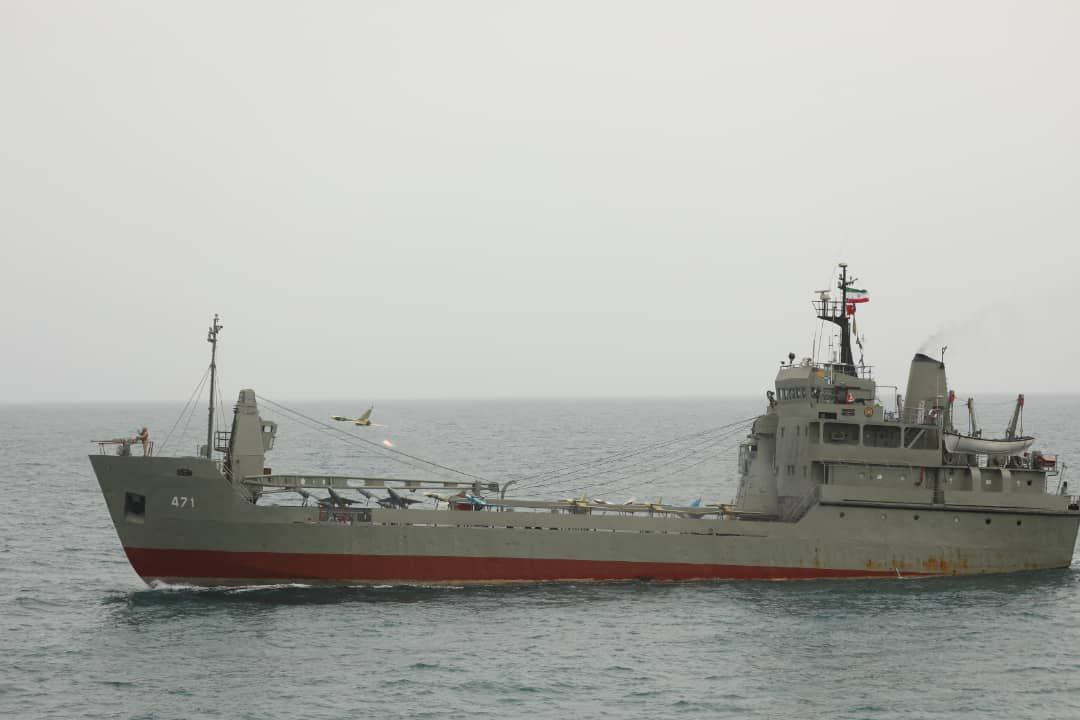
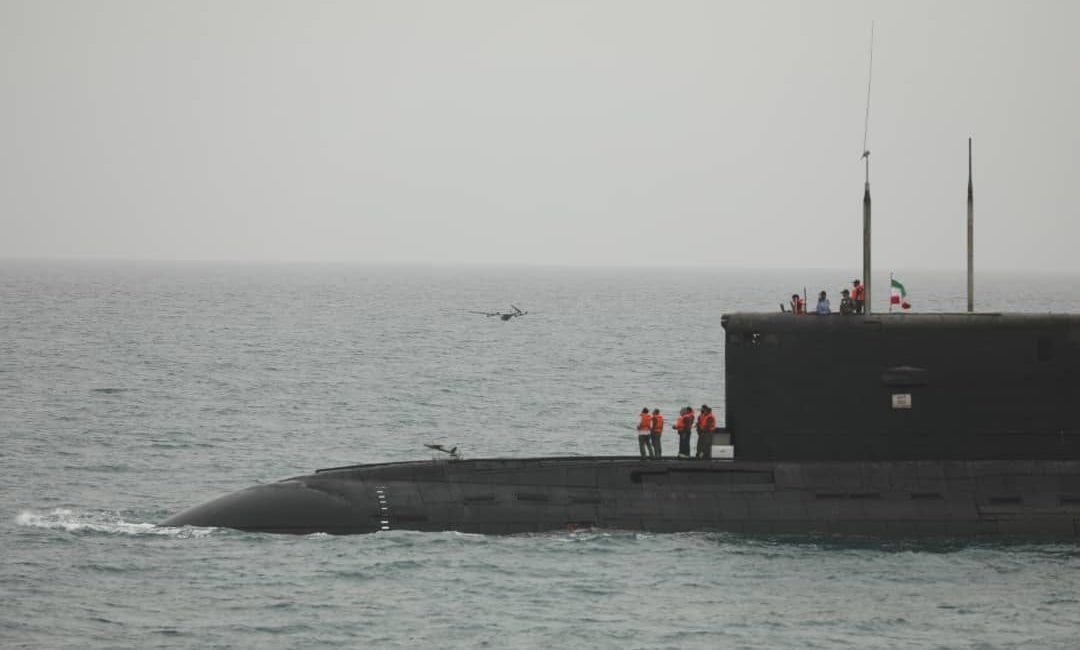
    In this ceremony which was held on July 15, the Lawan and Delavar warships were converted into drone carriers, and for the first time, several drones were launched from the Iranian Fateh and Tariq submarines.

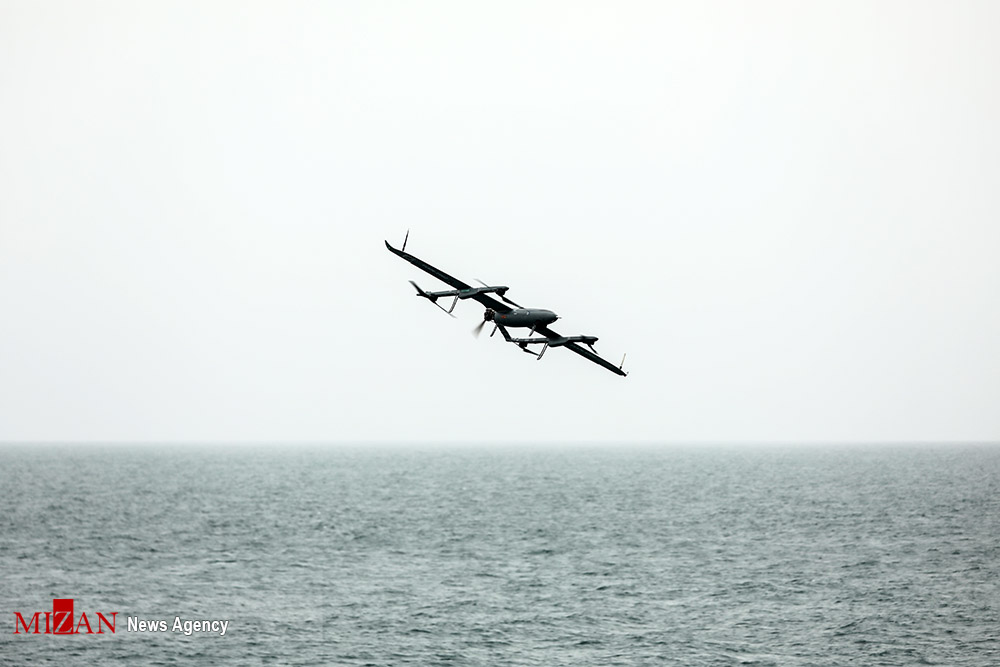
    Drones such as Arash and Ababil 2 suicide drones, Pelican and Homa vertical take-off and landing drones, Karar combat and suicide reconnaissance drones, and Ababil 4 reconnaissance and combat drones were showcased and flew in this ceremony.

    The most important challenge for this drone carriers is the recovery of reconnaissance drones. The conventional method is to use nets; in this way, the drone hits a net installed on the ship at the lowest possible speed. This method is effective for small drones that have a short range, but it is not so favorable for larger drones. Larger drones like the Ababil 4 drone sit in a runway after taking off and completing the mission. In the unveiling ceremony, the Ababil 4 drone landed on the landing strip in Jask after taking off from the drone carrier.

    In the interview of Admiral Shahram Irani, important points were mentioned about the drone fleet, which can be mentioned as follows:

    • The possibility of repairing and producing drones inside the fleet
    • The possibility of combined operations in the form of flight groups of drones and swarm operations
    • The possibility of moving the command control center from one ship to another or subsurface guidance or using a flight unit for command.
    • The possibility of setting different targets for several different categories of drones
    • The possibility of using drones for electronic warfare
    • The possibility of flying 40 to 50 drones at the same time to support any mission and the possibility of replacing them quickly

    UAVs launched from submarines enable the detection of targets in the distance. For this reason, the range of submarine weapons, especially cruise missiles such as the Jask 2 missile, increases. But the main challenge for subsurface fleet use of UAVs is the launch and recovery of the UAV. If a submarine comes to the surface for every launch, the risk of detection increases greatly during the war. This also applies to the recovery of the reconnaissance drone. According to the commander of the Iranian Navy, it will be possible to launch drones under the surface in the future. Also, the possibility of discovering underwater targets will be added to drones.

  • Iran’s Naval Fleet Reached The English Channel

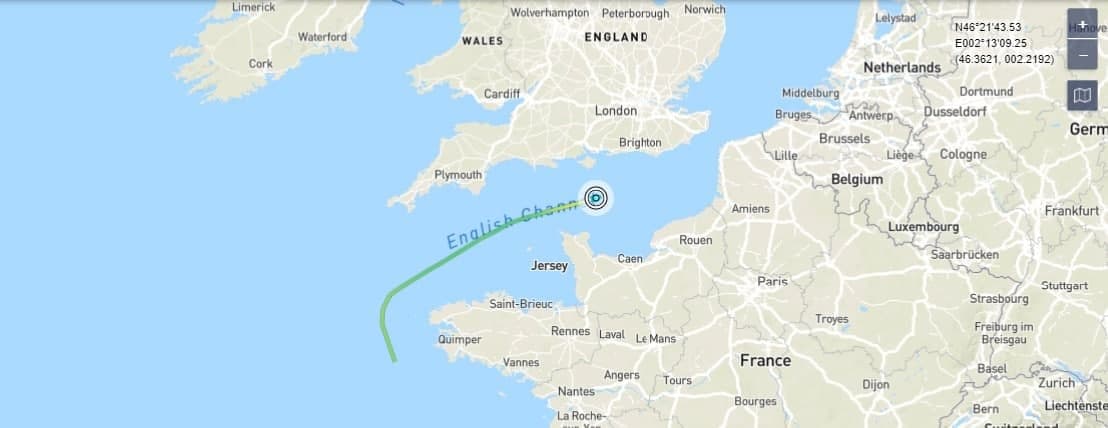
    Iran’s Naval Fleet Reached The English Channel

    Earlier, the Russian Defense Minister announced the holding of a large naval drill with the presence of Iranian vessels. The Sahand frigate and the Makran Forward Base Ship will also participate in the Russian Navy Day parade drill on behalf of the Islamic Republic of Iran. According to the Russian Minister of Defense, 54 warships and frigates from the Islamic Republic of Iran, Pakistan and India will take part in the parade.

    IRIS Sahand was launched on 2012 and added to the navy. Sahand is an Iranian Moudge-class frigate with 95 meters long, 11 meters wide and has phased-array radars and carry domestically made anti-ship missiles with a 124-mile range.

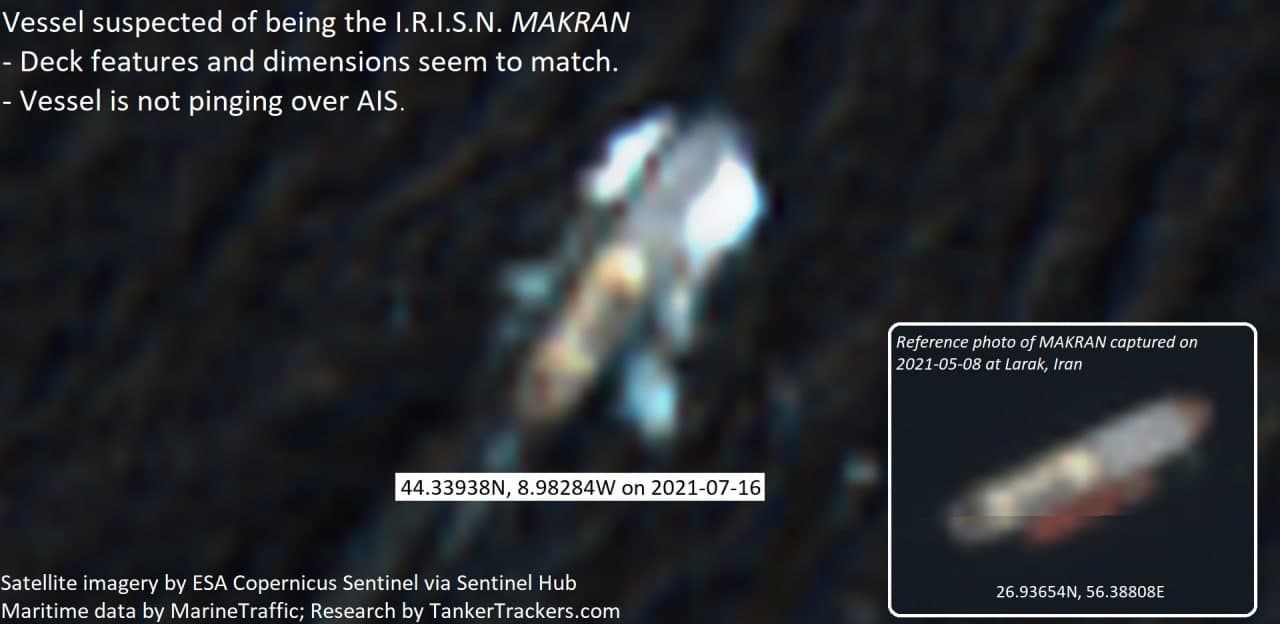
    IRINS Makran is about 231 meters long and 42 meters wide. This Forward Base Ship is equipped with defense systems, missile systems and has a high capacity to carry fuel and support warships and various operations. Makran can carry 5 heavy helicopters. This 121,000-ton mobile island was added to the Navy of the Army of the Islamic Republic of Iran on 2020. This ship could provide a platform for more persistent maritime operations in and outside of the country’s own littoral areas.

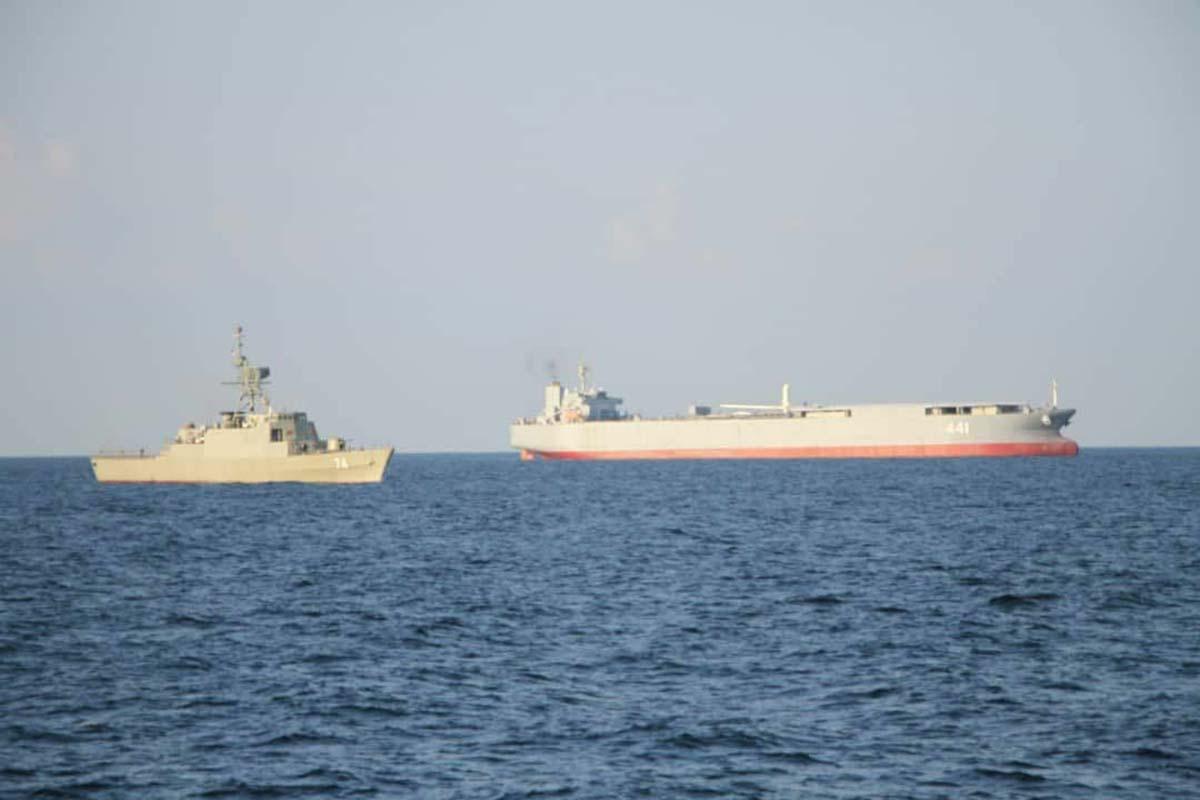
    Two Iranian warships in the English Channel

  • Iranian Navy Ships in the Atlantic Ocean + video and images

    Iranian Navy Ships in the Atlantic Ocean + video and images

    According to Admiral Habibollah Sayari, Deputy Coordinator of the Army of the Islamic Republic of Iran, this fleet consists of the Makran Forward Base Ship and the Sahand frigate. And the ships started their journey from the shores of Bandar Abbas on May 10, and entered the Atlantic Ocean after traveling 12,000 kilometers.

    Referring to the strategic consideration of the navy by the Supreme Leader of the Islamic Republic of Iran, Amir Sayari said: “Presence in open waters, development of maritime diplomacy and presence in the Gulf of Aden to ensure the security of the country’s transportation lines against terrorism are among the special missions of this force.”

  • Iranian Khark logistic vessel drowned in Persian Gulf + Video

    Iranian Khark logistic vessel drowned in Persian Gulf + Video

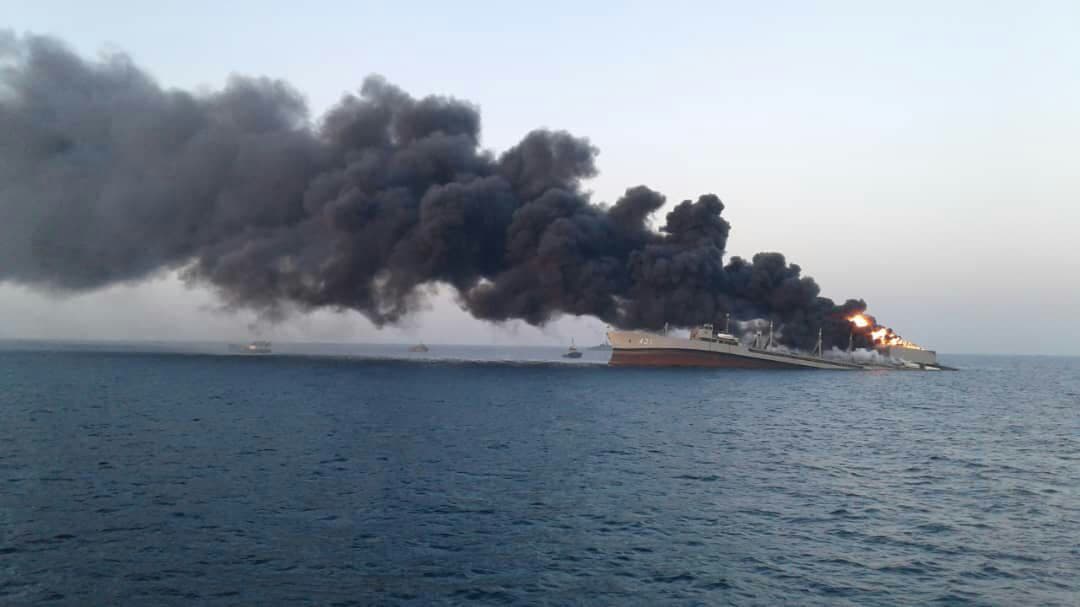
    The naval training support vessel, which had set sail for a training mission in the high seas a few days earlier, caught fire on Tuesday near the port of Jask, but all the crew disembarked safely and were taken ashore.

    The cause of the Khark ship fire was announced a technical defect in the boiler, which despite more than 20 hours of rescue efforts, was unsuccessful and eventually the ship sank in the shallow waters of Jask port.

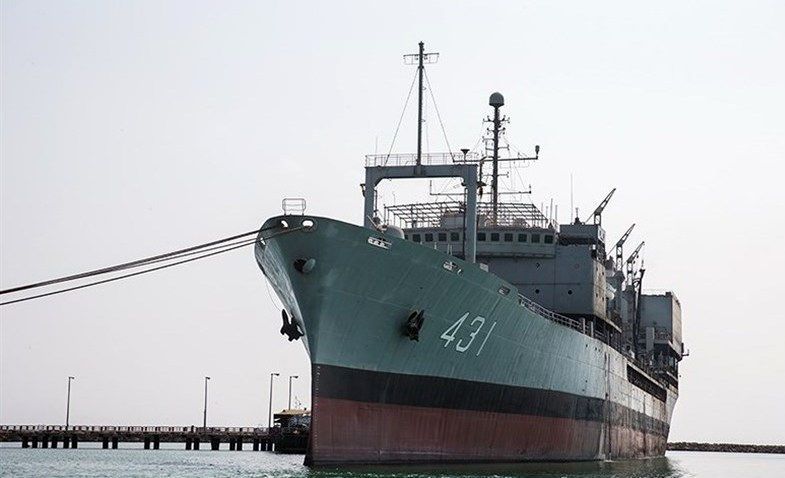
    The “Khark” logistic vessel belonged to the Navy of the Army of the Islamic Republic of Iran, which was built by the order of the Pahlavi regime and by the British Swan Hunter company in the United Kingdom. It was delivered to Iran in 1984 with the pursuit of the Navy of the Army of the Islamic Republic of Iran.

    Khark was the second largest naval vessel in Iran and West Asia after Makran forward-base ship, which had the ability to support, train and supply. On 22 February 2011, the Khark logistic vessel, along with the Alvand frigate, crossed the Suez Canal for the first time since the Iran revolution to participate in a military drill in Syrian coast.

  • Military Knowledge: Jamaran Frigate

    Military Knowledge: Jamaran Frigate

    More ships in its class are under construction to be added to the Iranian fleets in the Caspian Sea and the Persian Gulf. The ship is designed for a crew of 140. Jamaran combines anti-submarine assets with other systems of weapons capable of dealing with surface and air threats as well.

    It has 94.5 m length and maximum speed of 30 knots (56 km/h) carries 140 crew and helicopter. Jamaran was built using indigenous and foreign parts and collaboration of 120 universities and institutes. The engine is made by France but since the gearbox, shaft and propeller were not given against the contract, these parts including 12 m power shaft were designed and built by Iranian specialists.

    Jamaran Specifications:
    Length 94.5 m, Width 11 m
    Crew: 140
    Speed: 30 knots, 56 km/h
    Operational range: 3,000 nautical miles (more than 5,500 km)
    Aviation facilities: Helipad for a Bell 212 or SH-3 Sea King helicopter.

    Armament:
    2 × triple 324 mm torpedoes (Kuseh type)
    1 × 76 mm Fajr-27 auto-cannon
    2 × 20 mm Fath cannons
    1 × 40 mm Fateh anti aircraft cannon
    4 × surface-to-surface Noor, Qader, Qadir missiles
    4× surface-to-air Mehrab missiles

    Click to see the full size map