Tag: Israel

  • War-Driven Growth or Strategic Misstep? Israel’s $76 Billion Defense Burden

    War-Driven Growth or Strategic Misstep? Israel’s $76 Billion Defense Burden

    This figure was released by Israel’s Ministry of Finance. Officials from the ministry stated that the military’s mismanagement of reservist service days and poor financial oversight led to the loss of billions of shekels in payments to reserve forces. Finance Minister Bezalel Smotrich emphasized in a press conference that increasing the defense budget is essential for boosting Israel’s economic growth in the coming years.

    The ministry’s report on the “misuse of reservist service days” and the resulting financial waste highlights not only the scale of expenditures but also the inefficiency in resource allocation and oversight. This managerial weakness reflects a deeper structural crisis within Israel’s military and administrative systems—a crisis that intensifies under wartime conditions.

    Overall, Israel’s economy is shifting toward an unsustainable war-driven model. Heavy military spending, weakening of the private sector, and capital flight from the stock market and tech industries have increased the likelihood of recession and slowed real economic growth. If this trend continues, Israel’s economic structure could face a serious crisis in the coming years.

  • Emerging Actor in the Caucasus: The Republic of Azerbaijan

    Emerging Actor in the Caucasus: The Republic of Azerbaijan

    Over the last two years, Azerbaijan has adopted a new model of hybrid security diplomacy, blending an assertive foreign policy with large-scale arms procurement and military restructuring. This policy fits within a broader strategy to boost deterrence capacity and elevate Baku’s geopolitical standing in the security landscape of the South Caucasus and its surroundings. Key elements of this strategy include the expansion of layered air defense systems, enhancement of artillery and armored capabilities, development of drone infrastructure with reconnaissance and precision-strike capabilities, and deepening of training and cyber cooperation with NATO and its key partners such as Turkey, Pakistan, and several European countries.

    This trajectory reflects Azerbaijan’s effort to transition from a posture of territorial isolation to one of active regional security engagement. It not only redefines the balance of power in the South Caucasus but also raises the geopolitical cost of conflict and narrows the strategic options of neighboring actors—particularly Iran, Armenia, and Russia.

    Key Developments: Azerbaijan’s Expanding Military Strategy

    The purchase of 48 self-propelled Nora B-52NG howitzers from Serbia marks a significant step in Azerbaijan’s effort to restructure its heavy artillery, aimed at enhancing operational mobility and deep-strike capabilities. In parallel, the acquisition of advanced Barak-MX air defense systems from Israeli military industries reflects Baku’s ambition to establish a multi-layered protective shield and reduce vulnerability to missile and drone threats. In the air force domain, the procurement of fighter jets and attack drones—especially from Turkey and Pakistan—signals a shift toward a network-centric warfare doctrine, emphasizing technological superiority over manpower.

    Simultaneously, Azerbaijan has redefined its training, management, and doctrinal capacities through integration with Western security structures, particularly via NATO’s defense institution development programs. This process has been accompanied by growing cyber and technical cooperation with European and regional partners, gradually aligning Azerbaijan’s defense institutions with NATO standards. Beyond its technical and military dimensions, this trend sends a clear political message: strengthening security ties with the Western bloc, counterbalancing pressure from Russia and Iran, and positioning Azerbaijan as an active player in the emerging security architecture of the South Caucasus.

    Air Defense

    The acquisition of Barak-MX systems and the overhaul of various defense layers—including Pantsir-S1, S-300PMU2, upgraded Soviet-era 9K33 OSA systems, Iron Dome batteries, and armored vehicles equipped with SPIKE NLOS missiles—demonstrates Azerbaijan’s pursuit of a comprehensive air defense network. This evolution has made Azerbaijan one of the few post-Soviet states capable of integrating Russian, Israeli, and Turkish technologies into a unified defense structure.

    In the realm of drones and smart weaponry, the deployment of Akinci attack drones and the expansion of data-driven training infrastructure have boosted Azerbaijan’s capacity for precision strikes, rapid reconnaissance, and network-based combat. The country also operates at least 600 MLRS units, including 100 guided systems with capabilities surpassing HIMARS.

    Air Force and Fighter Jets

    Azerbaijan’s growing partnership with Pakistan for the acquisition and training of JF-17 Thunder fighter jets lays the groundwork for a homegrown air force and mutual deterrence against regional threats. This collaboration reflects a strategic convergence among Islamabad, Ankara, and Baku, potentially leading to the formation of a new military bloc in Eurasia.

    At the same time, multi-billion-dollar defense allocations—especially between 2024 and 2026—highlight a shift toward militarizing the national economy and prioritizing hard security over traditional diplomacy. This trajectory is confirmed by official Azerbaijani data indicating a 15–20% annual increase in defense spending and major arms deals with partners such as Israel and Turkey.

    Regional Implications: Azerbaijan’s Expanding Military Posture and Strategic Diplomacy

    Azerbaijan’s growing drone and missile capabilities are reshaping the security landscape of the South Caucasus, with direct consequences for neighboring powers. For Iran, the increased range and precision of Azerbaijani systems enhance surveillance and intelligence-gathering along its borders, intensifying strategic pressure on Tehran. Armenia faces a widening military imbalance, raising the risk of renewed conflict—especially as Yerevan continues rebuilding its armed forces after the 2020 war. For Russia, Baku’s deepening ties with NATO and Israel challenge Moscow’s traditional sphere of influence in the region and may lead to a redrawing of military alignments across the Caucasus.

    Geopolitical Dimension and Military Diplomacy

    Azerbaijan has built a multilayered security network by leveraging strategic partnerships with Turkey and Pakistan, and through extensive intelligence and technological cooperation with Israel. This framework allows Baku to balance competing Eastern and Western blocs. Active participation in NATO programs such as DEEP and cybersecurity initiatives with European countries has reduced Azerbaijan’s historical dependence on Russia and positioned it as NATO’s southern gateway in the Caucasus.

    This dual-track policy—military modernization paired with diplomatic outreach—has elevated Azerbaijan’s geostrategic value in broader energy and security calculations. Recent developments underscore this shift:

    • Slovak Chief of Staff General Daniel Zmeko visited Baku, touring the cyber defense center and air force command, where AI systems for military infrastructure protection were showcased.
    • A trilateral defense summit between Azerbaijan, Georgia, and Turkey focused on securing regional transport corridors and conducting joint military exercises.
    • Initial defense talks with Bosnia and Herzegovina for 2026 included training exchanges and strategic cooperation.
    • Azerbaijan shared drone warfare expertise with Georgia and hosted cybersecurity and IT infrastructure meetings centered on AI and joint communication networks.

    These moves reflect Azerbaijan’s commitment to integrating active diplomacy, technological collaboration, and enhanced military and cyber capabilities to secure its role in the emerging regional security architecture.

    In essence, Azerbaijan’s defense transformation is not just about deterrence—it’s part of a broader strategy to become a multidimensional actor capable of balancing between global security blocs and leveraging its geography as a geostrategic asset in regional power competition.

    Emerging Scenarios: Azerbaijan’s Military and Diplomatic Trajectory in the South Caucasus

    Azerbaijan’s evolving military and diplomatic posture presents a range of potential scenarios, each with complex implications for regional security, power dynamics, and deterrence mechanisms in the South Caucasus and its surroundings.

    1. Regional Arms Race Intensification
    Continued expansion of Baku’s arms acquisitions raises the likelihood of a regional arms race. Neighboring countries—including Armenia, Georgia, and even Iran—may feel compelled to rapidly upgrade their defense capabilities, leading to the accumulation of advanced weaponry in an already tense and confined strategic environment.

    2. Rising Risk of Limited or Miscalculated Clashes
    The growing reliance on combat drones, precision-guided missiles, and layered air defense systems increases the temptation for preemptive action. In the event of miscommunication or flawed threat assessments, these capabilities could accelerate the escalation of localized conflicts into broader crises.

    3. Escalation in Cyber and Intelligence Warfare
    The integration of surveillance technologies and electronic warfare into Azerbaijan’s military doctrine, coupled with technical cooperation with NATO and Israel, intensifies competition in the cyber domain. This could pose new threats to the critical infrastructure and information networks of neighboring states.

    Taken together, these scenarios reflect Baku’s ambition to become a decisive military actor in the South Caucasus. However, in the absence of sustained security dialogue, the region risks entering a cycle of arms buildup, psychological pressure, and hybrid operations. Managing this trajectory will require a proactive, multilateral approach grounded in strategic foresight.


  • Washington’s Stern Warning to Baghdad Amid Speculation of Israeli Strike on Iraq

    Washington’s Stern Warning to Baghdad Amid Speculation of Israeli Strike on Iraq

    Iraqi Defense Minister Thabit al-Abbasi revealed in a televised interview that U.S. Secretary of Defense Pete Hegseth had informed him via a phone call about an imminent military operation in the region. Hegseth reportedly issued a firm warning against any involvement by Iraqi factions, ending the 11–12 minute call—held in the presence of Iraq’s Chief of Staff and Deputy Commander of Joint Operations—with the statement: “This is your final notice, and you know well how the current U.S. administration will respond.”

    The Hebrew outlet Walla, citing sources within the Israeli military command, reported that Iran is heavily investing in Iraqi resistance groups to prepare for potential air and ground attacks against Israel. According to Israeli intelligence, Iran has recently strengthened the military and logistical infrastructure of its allied factions in Iraq. These developments reportedly coincide with a recent visit by Esmail Qaani, commander of Iran’s Quds Force, to Baghdad, where he met with group leaders.

    The report claims that during these meetings, various scenarios for a possible attack on Israel were discussed, including drone and missile strikes, as well as ground operations via Syria and Jordan.

    The disclosure of this direct communication between the U.S. and Iraqi defense ministers, alongside Israeli media reports of a potential strike on Iraq, signals a new phase in the confrontation between the resistance axis and Israel. Washington’s warning aims to prevent coordination among resistance fronts in Iraq, Lebanon, Yemen, and Palestine, and to block the formation of a unified operational axis against Israel.

    Resistance group activity in Iraq targeting U.S. and Israeli interests has long been a point of contention between Baghdad and Washington. These attacks were temporarily halted under U.S. pressure and mediation by Iraqi Prime Minister Mohammed Shia’ Al Sudani.

    From Tel Aviv’s perspective, Iraq is increasingly becoming Iran’s strategic front against Israel. The recent transfer of drones and missiles from Iran to Iraqi resistance groups has raised serious concerns in both Washington and Tel Aviv, fueling speculation about a potential Israeli preemptive strike on weapons depots or logistical bases inside Iraq.

    Pete Hegseth’s warning to Iraq’s defense minister was not merely a security concern—it also suggests that the U.S. is tacitly aware of Israel’s military plans and seeks to diplomatically shield itself from any retaliatory actions by Iraqi groups. Washington understands that any Israeli attack on Iraq could quickly escalate into direct conflict between U.S. forces and resistance factions on Iraqi soil.

  • Israeli Spy Network Led by Syrian Nationals Arrested in Iraq’s Diwaniyah Province

    Israeli Spy Network Led by Syrian Nationals Arrested in Iraq’s Diwaniyah Province

    The operation was carried out by the intelligence unit of Iraq’s Popular Mobilization Forces (PMF), which raided a rented residence in downtown Diwaniyah. Authorities seized maps and photographs documenting strategic sites in both Najaf and Diwaniyah provinces.

    The arrest of this network in Diwaniyah—a relatively calm area far from Iraq’s border zones—suggests that Israel is expanding its intelligence operations deeper into Iraqi territory. The strategy appears aimed at establishing surveillance cells in regions with less stringent security oversight, enabling access to data on infrastructure, weapons depots, and supply routes used by resistance groups.

  • Israel Violates Gaza Ceasefire Once Again!

    Israel Violates Gaza Ceasefire Once Again!

    In addition to these attacks, Israeli military quadcopters targeted the eastern outskirts of Al-Bureij refugee camp in central Gaza.

    The southern coastline of the Gaza Strip was also struck by Israeli naval vessels.

    This renewed wave of attacks, despite the declared ceasefire, suggests that Tel Aviv is attempting to exert field pressure on resistance groups and gain leverage in future negotiations. Such actions risk completely collapsing the fragile ceasefire process. Moreover, the deliberate destruction of civilian homes and infrastructure in Gaza appears to serve a psychological and deterrent purpose—aimed at instilling fear and discouraging public support for Palestinian resistance movements.

  • Ceasefire Violation and Mass Killing: Renewed Child Casualties by Israeli Forces in Gaza!

    Ceasefire Violation and Mass Killing: Renewed Child Casualties by Israeli Forces in Gaza!

    With this escalation, the total number of casualties from the ongoing genocidal war in Gaza has risen to over 68,531 deaths and more than 170,402 injuries.

    Following the attacks, the Israeli army announced that the ceasefire in Gaza was reinstated at 10 a.m. today, after a series of extensive strikes throughout the war-torn region.

    Children murdered by the renewed Israeli strikes in Gaza

    Given Israel’s repeated disregard for ceasefire agreements, the situation in Gaza remains unstable and highly volatile. The pattern suggests that Israel may resume bombings at will, undermining any sense of lasting peace. In reality, the ceasefire appears to be a temporary pause in a cycle of violence, rather than a genuine step toward ending the conflict—with no clear resolution in sight.

  • Amazon’s Cloud Services Linked to Israeli Military Operations in Gaza

    Amazon’s Cloud Services Linked to Israeli Military Operations in Gaza

    According to the report, Israeli defense companies—particularly Rafael Advanced Defense Systems and Israel Aerospace Industries—have directly utilized Amazon Web Services (AWS) to support their technological infrastructure. These services played a role in the operational framework of the Israeli military during its campaigns in Gaza.

    The exposure of Amazon’s collaboration with Israel’s military underscores a growing trend in the digital age: the blurring of lines between civilian tech industries and military applications. Companies that appear to operate in commercial and technological sectors are increasingly becoming active participants in armed conflicts.

    Cloud computing, battlefield data analytics, and artificial intelligence have become integral to both offensive and defensive military strategies. In this context, Amazon has transitioned from a service provider to a direct enabler of Tel Aviv’s war machine.

  • The Collapse of Qatar’s Outsourced Defense Strategy: An Analysis of the Israeli Airstrike on Doha

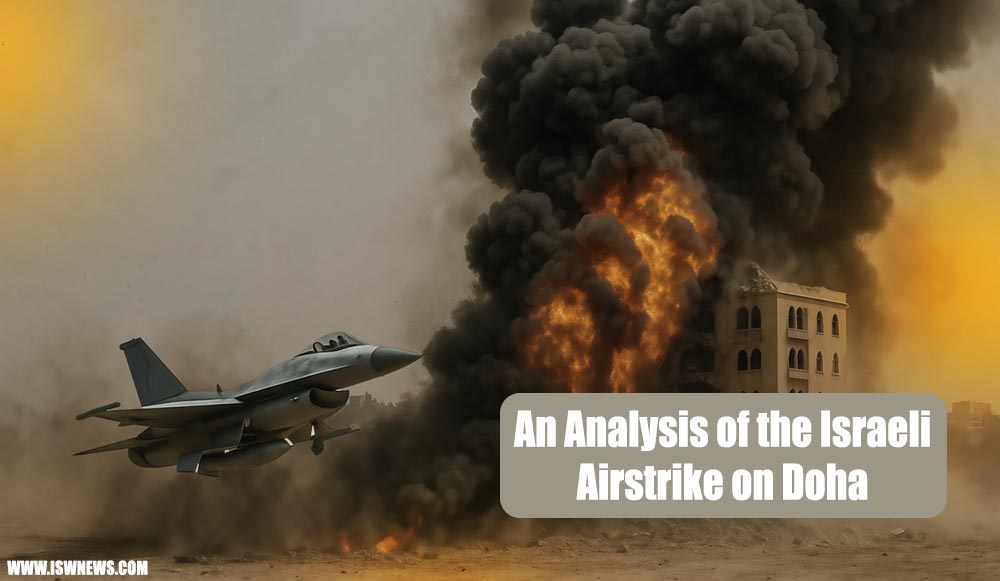
    The Collapse of Qatar’s Outsourced Defense Strategy: An Analysis of the Israeli Airstrike on Doha

    Israeli fighter jets targeted a Hamas leadership gathering in Doha’s West Bay Lagoon, a district known for its embassies and international residential compounds². The attack took place despite Qatar hosting Al Udeid Air Base, the largest U.S. military installation in the Middle East, home to over 10,000 American troops³.

    Although the United States condemned the attack at the UN Security Council⁴, its response failed to prevent further escalation. President Donald Trump expressed being “deeply troubled” by the strike, calling it inconsistent with U.S. and Israeli objectives⁵. Nonetheless, his remarks did little to ease the profound sense of insecurity that gripped Qatar.

    This incident revealed that despite Qatar’s multibillion-dollar investments in U.S. military infrastructure and its role as a coalition host, the country remains vulnerable to regional threats.

    British Refueling Aircraft: Rumor or Reality?

    In the hours following the Israeli strike, the presence of a British RAF Voyager KC3 refueling aircraft over Doha sparked speculation about possible UK involvement. Flight tracking data showed the aircraft flying over Qatar from 3 p.m. local time—precisely when explosions were reported⁶.

    Some sources claimed the British aircraft may have refueled Israeli jets on their return journey, given the 2,200 km distance between Israel and Qatar, which aligns with the maximum range of Israeli F-35s⁷. However, subsequent investigations revealed the aircraft was conducting its annual “Soaring Falcon” exercise with the Qatari Air Force⁸.

    More importantly, the RAF’s “probe and drogue” refueling system is incompatible with the “flying boom” system used by Israeli jets⁹. Defense experts confirmed that even if the UK had intended to assist, refueling would have been technically impossible¹⁰. Nonetheless, some media outlets continue to question whether Israel and the UK were truly uninformed about each other’s actions.

    Al Udeid Air Base: Symbol of Dependence or Security Guarantee?

    Built in the 1990s with over $1 billion in Qatari funding¹¹, Al Udeid Air Base plays a central role in Qatar’s defense strategy. Hosting the U.S. Central Command (CENTCOM), the base has served as the hub for coalition air operations since 2003, supporting missions in Iraq, Afghanistan, and Syria¹².

    Qatar has spent over $8 billion on upgrading the base and plans to invest another $8.4 billion by 2033¹³. Yet the Israeli strike demonstrated that even this massive investment could not guarantee Qatar’s security.

    As analysts noted, despite advanced radar systems at Al Udeid, the U.S. either failed—or chose not—to intercept the attack¹⁴. This raised serious questions about the reliability of American security assurances. Some reports indicated that the U.S. operations center in Doha remained “silent” during the strike¹⁵, suggesting either deliberate non-intervention or operational incapacity.

    This event has led many experts to question the true value of America’s security umbrella and prompted Qatar to reconsider its defense strategy. The Iranian missile strike on Al Udeid in June 2025 further underscored that the base may not be a shield for Qatar—but rather a strategic target in regional conflicts¹⁶.

    Broken Commitments and a Crisis of Trust

    Over the past three decades, Qatar has built its security strategy on close cooperation with the United States and the United Kingdom. Since signing its first defense cooperation agreement with the U.S. in 1992¹⁷, Qatar has invested more than $26 billion in Foreign Military Sales (FMS) contracts, making it the second-largest FMS partner globally¹⁸. These deals include advanced air defense systems like Patriot and NASAMS, F-15QA fighter jets, and Apache helicopters¹⁹.

    In addition, Qatar has hosted British forces at Al Udeid Air Base and has participated in UK-led military operations against ISIS since 2014²⁰. However, the recent Israeli airstrike revealed that these commitments and investments have failed to deliver real security. As one analyst put it: “Qatar and other regional states have done much to advance U.S. interests, and in return, they expect security guarantees. This attack will shake their trust in that entire formula”²¹.

    The lack of effective response from the U.S. and UK underscored the ineffectiveness of Western security assurances against Israeli actions. Some experts now suggest Qatar should reconsider hosting Al Udeid, arguing that the base “creates more political and diplomatic challenges than opportunities”²². This trust deficit could have long-term implications for U.S. security relations across the Gulf.

    Structural Flaws in Qatar’s Outsourced Defense Model

    With fewer than 300,000 citizens and a military force of just 16,500, Qatar has the smallest army in the Gulf²³. These demographic constraints have made the country heavily reliant on foreign contractors and imported weapons systems. Between 2014 and 2024, Qatar’s defense spending surged by 434%²⁴, yet most of this went toward foreign arms purchases, with limited investment in domestic capabilities.

    Defense analysts note that despite acquiring advanced platforms like French Rafales, British Typhoons, and American F-15s, Qatar lacks strategic depth and independent operational capacity²⁵. As senior analyst Anthony Cordesman explains: “Qatar’s training and readiness are solid for such a small force, but the military can only operate at battalion level, with limited combined arms capability and minimal maneuver warfare potential”²⁶.

    This dependence on foreign forces became evident during the recent crisis. Qatar’s air defense systems—Patriot and NASAMS—operated by U.S. personnel, failed or were not permitted to respond to the Israeli strike²⁷. Moreover, Qatari fighter jets did not scramble to intercept, highlighting either a lack of operational autonomy or readiness. These shortcomings demonstrate that outsourcing defense without building indigenous capacity cannot guarantee real security.

    Alternative Paths: Domestic Investment and Diversifying Partnerships

    Unlike Qatar, other Gulf states such as the UAE and Saudi Arabia have pursued different strategies. Through EDGE in the UAE and SAMI in Saudi Arabia, both countries are developing domestic defense industries²⁸. The UAE has increased its local defense production from 2% in 2014 to over 75% of contracts at IDEX 2025²⁹. Saudi Arabia aims to localize 50% of its defense spending by 2030³⁰.

    As for diversifying defense partnerships, China has been floated as an option, but with clear limitations. As Qatar’s Prime Minister stated in 2023: “We have a strong defense alliance with the U.S., and our armed forces are built primarily on Western systems, mainly from the U.S. and France”³¹.

    Experts argue that China cannot offer a security umbrella comparable to the U.S. or supply the advanced systems Qatar requires³². Nonetheless, investing in domestic defense capabilities could help Qatar achieve greater autonomy in key areas. Building indigenous air defense systems, expanding maintenance and repair industries, and training local specialists could reduce reliance on foreign forces. Strategic partnerships with countries like Turkey—known for its successful defense industry development³³—could also facilitate technology transfer and expertise sharing. This shift would require Qatar to fundamentally rethink its approach—from purchasing security to producing it.

    Lessons for the Future of Regional Security

    The Israeli airstrike on Qatar in September 2025 served as a wake-up call for all small Gulf states that have built their security strategies around foreign military presence and expensive arms purchases. This incident revealed that even billions of dollars invested in military infrastructure and cutting-edge weapon systems cannot replace indigenous defense capabilities and strategic autonomy. The failure of Qatar’s air defense systems to intercept—or even detect—the Israeli strike³⁴ exposed deep flaws in the country’s defense architecture.

    As some analysts have noted, the attack “will have profound implications for how regional states view U.S. security guarantees”³⁵. For Qatar and similar nations, the time has come to reassess their security strategies. This reassessment must include serious investment in domestic defense industries, training of local specialists, and diversification of strategic partnerships.

    Moreover, enhancing regional cooperation and establishing joint defense systems with neighboring countries could strengthen deterrence. The key lesson from this event is that real security cannot be bought—it must be built. Qatar and other Gulf states must shift from being mere consumers of foreign arms to becoming producers and developers of their own defense capabilities. This transformation requires political will, long-term investment, and acceptance of the reality that, ultimately, every nation must take responsibility for its own security.

    Sources:

    1. Al Jazeera – “Qatar PM meets Trump after Israel’s deadly strike on Doha” (12 September 2025) https://www.aljazeera.com/news/2025/9/12/qatar-pm-meeting-trump-after-israels-deadly-strike-on-doha
    2. Al Jazeera – “Israel attacks Hamas leadership in Qatar: What we know” (9 September 2025) https://www.aljazeera.com/news/2025/9/9/israel-attacks-hamas-leadership-in-qatar-all-to-know
    3. Al Jazeera – “What to know about the US’s Al Udeid airbase in Qatar after Iran’s attack” (23 June 2025) https://www.aljazeera.com/news/2025/6/23/hld-irans-attack-on-al-udeid-air-base-in-qatar-all-you-need-to-know
    4. Al Jazeera – “UN Security Council unite in condemning Israeli bombing of Qatar” (12 September 2025) https://www.aljazeera.com/video/newsfeed/2025/9/12/un-security-council-unite-in-condemning-israeli-bombing-of-qatar
    5. The Washington Post – “Israeli strike targeting Hamas in Qatar ‘does not advance Israel or America’s goals,’ Trump says” (9 September 2025) https://www.washingtonpost.com/world/2025/09/09/qatar-doha-explosion-israel-hamas/?chead=true
    6. Middle East Eye – “RAF plane seen over Doha during Israeli attack part of annual UK-Qatar exercise” (9 September 2025) https://www.middleeasteye.net/news/raf-plane-seen-flying-over-qatar-during-israeli-attack-part-annual-exercise
    7. Skwawkbox – “Breaking: RAF refuelling plane was circling over Doha during Israeli terror attack” (9 September 2025) https://skwawkbox.org/2025/09/09/breaking-raf-refuelling-plane-was-circling-over-doha-during-israeli-terror/
    8. Middle East Eye – “RAF plane seen over Doha during Israeli attack part of annual UK-Qatar exercise” (9 September 2025) https://www.middleeasteye.net/news/raf-plane-seen-flying-over-qatar-during-israeli-attack-part-annual-exercise
    9. The New Arab – “No, the UK’s RAF didn’t refuel Israeli jets during Doha strike” (9 September 2025) https://www.newarab.com/news/no-uks-raf-didnt-refuel-israeli-jets-during-doha-strike
    10. Gazette News – “Fact check: UK tanker aircraft cannot refuel Israeli jets” (11 September 2025) https://www.gazette-news.co.uk/news/national/25460688.fact-check-uk-tanker-aircraft-cannot-refuel-israeli-jets/
    11. 5Pillars – “Al Udeid Air Base: America’s largest military installation in Middle East” (24 June 2025) https://5pillarsuk.com/2025/06/24/al-udeid-air-base-americas-largest-military-installation-in-middle-east/
    12. Grey Dynamics – “Al Udeid Air Base: The Largest US Military Installation in Middle East” (11 October 2024) https://greydynamics.com/al-udeid-air-base-the-largest-us-military-installation-in-middle-east/
    13. Congressional Research Service – “Qatar: Issues for the 119th Congress” (March 2025) https://www.everycrsreport.com/reports/R47467.html
    14. Defence Security Asia – “Israel’s Airstrike in Doha Exposes Qatar’s Air Defence Failure” (9 September 2025) https://defencesecurityasia.com/en/israel-airstrike-doha-qatar-air-defence-failure/
    15. Middle East Eye – “Israel’s attack on Qatar eviscerates promise of US security umbrella for Gulf” (9 September 2025) https://www.middleeasteye.net/news/israels-attack-qatar-eviscerates-promise-us-security-umbrella-gulf
    16. Middle East Monitor – “Time for Qatar to review its hosting of US Al Udeid military air base” (3 July 2025) https://www.middleeastmonitor.com/20250703-time-for-qatar-to-review-its-hosting-of-us-al-udeid-military-air-base/
    17. Congressional Research Service – “US-Qatar Defense and Security Relations” (2025) https://www.congress.gov/crs_external_products/R/HTML/R47467.web.html
    18. U.S. Department of State – “U.S. Security Cooperation With Qatar” (21 May 2025) https://www.state.gov/u-s-security-cooperation-with-qatar
    19. U.S. Department of State – “U.S. Security Cooperation With Qatar” (21 May 2025) https://www.state.gov/u-s-security-cooperation-with-qatar
    20. Grey Dynamics – “Al Udeid Air Base: The Largest US Military Installation in Middle East” (11 October 2024) https://greydynamics.com/al-udeid-air-base-the-largest-us-military-installation-in-middle-east/
    21. Middle East Eye – “Israel’s attack on Qatar eviscerates promise of US security umbrella for Gulf” (9 September 2025) https://www.middleeasteye.net/news/israels-attack-qatar-eviscerates-promise-us-security-umbrella-gulf
    22. Middle East Monitor – “Time for Qatar to review its hosting of US Al Udeid military air base” (3 July 2025) https://www.middleeastmonitor.com/20250703-time-for-qatar-to-review-its-hosting-of-us-al-udeid-military-air-base/
    23. Congressional Research Service – “US-Qatar Defense and Security Relations” (2025) https://www.congress.gov/crs_external_products/R/HTML/R47467.web.html
    24. Wikipedia – “Qatar Armed Forces” (accessed September 2025) https://en.wikipedia.org/wiki/Qatar_Armed_Forces
    25. New Defence Order Strategy – “Qatar’s Defense Procurement and Its Relevance for The Persian Gulf Security” (December 2022) https://dfnc.ru/en/journal/2022-1-72/qatar-s-defense-procurement-and-its-relevance-for-the-persian-gulf-security/
    26. New Defence Order Strategy – “Qatar’s Defense Procurement and Its Relevance for The Persian Gulf Security” (December 2022) https://dfnc.ru/en/journal/2022-1-72/qatar-s-defense-procurement-and-its-relevance-for-the-persian-gulf-security/
    27. Defence Security Asia – “Israel’s Airstrike in Doha Exposes Qatar’s Air Defence Failure” (9 September 2025) https://defencesecurityasia.com/en/israel-airstrike-doha-qatar-air-defence-failure/
    28. Arab Gulf States Institute – “UAE Defense Industry Ambitions” (22 July 2025) https://agsi.org/analysis/uae-defense-industry-ambitions/
    29. AGBI – “UAE and Saudi pour billions into homegrown defence industries” (18 February 2025) https://www.agbi.com/analysis/manufacturing/2023/05/uae-saudi-arabia-homegrown-defence-industries/
    30. CSIS – “Indigenous Defense Industries in the Gulf” (21 September 2022) https://www.csis.org/analysis/indigenous-defense-industries-gulf
    31. Breaking Defense – “Balancing act: Asked about China’s Middle East arms sales, Qatari PM lauds US ‘defense alliance’” (25 August 2023) https://breakingdefense.com/2023/08/balancing-act-asked-about-chinas-middle-east-arms-sales-qatari-pm-lauds-us-defense-alliance/
    32. Breaking Defense – “Balancing act: Asked about China’s Middle East arms sales, Qatari PM lauds US ‘defense alliance’” (25 August 2023) https://breakingdefense.com/2023/08/balancing-act-asked-about-chinas-middle-east-arms-sales-qatari-pm-lauds-us-defense-alliance/
    33. Carnegie Endowment – “The Rise of the Emirati Defense Industry” (May 2019) https://carnegieendowment.org/sada/2019/05/the-rise-of-the-emirati-defense-industry?lang=en
    34. Defence Security Asia – “Israel’s Airstrike in Doha Exposes Qatar’s Air Defence Failure” (9 September 2025) https://defencesecurityasia.com/en/israel-airstrike-doha-qatar-air-defence-failure/
    35. ·  Middle East Eye – “Israel’s attack on Qatar eviscerates promise of US security umbrella for Gulf” (9 September 2025) https://www.middleeasteye.net/news/israels-attack-qatar-eviscerates-promise-us-security-umbrella-gulf
  • Ceasefire Violations and Israeli Drone Strikes Against Lebanon Continue

    Ceasefire Violations and Israeli Drone Strikes Against Lebanon Continue

    As a result of these strikes, two Hezbollah members were reportedly assassinated.

    Lebanese government officials and Hezbollah have yet to respond to the escalating ceasefire violations and targeted killings of both military and civilian individuals under disputed accusations. Analysts suggest that Israel may be intensifying its operations with the aim of provoking a new conflict in Lebanon.

  • Yemeni Attacks Cripple Israel’s Eilat Port

    Yemeni Attacks Cripple Israel’s Eilat Port

    Since November 2023, commercial vessels have avoided Eilat, causing an 80% drop in port revenue and jeopardizing hundreds of jobs.

    In response, Eilat officials have appealed to the U.S. and Egypt for help, urging guarantees for safe navigation under international agreements. The port’s shutdown has raised concerns over economic security in southern Israel.

    Initially framed as retaliation for Israeli strikes on Gaza, Yemen’s naval campaign has evolved into a potent tool for economic disruption. Eilat’s paralysis signals a shift in Red Sea power dynamics. As a key hub for Asian imports into occupied Palestine, its disruption strains supply chains and could impact prices and resource access. The port’s plea for help also casts doubt on the effectiveness of international maritime coalitions.

  • Latest Developments in the West Bank: Widespread Israeli Raids and Arrests

    Latest Developments in the West Bank: Widespread Israeli Raids and Arrests

    Early this morning, various areas across the West Bank were once again targeted by Israeli military raids, which led to intense clashes and the arrest of several Palestinian citizens.

    Israeli forces simultaneously stormed cities and towns including Nablus, Jenin, Tulkarm, Hebron, Al-Bireh, and occupied Jerusalem. Eyewitnesses reported that soldiers used tear gas and live ammunition against civilians during these operations.

    The Palestinian Red Crescent confirmed that at least 11 Palestinians were injured in Nablus. Clashes erupted in neighborhoods such as Balata and New Askar camps, as well as the Dahiyat Al-Aliya area, where Israeli troops also conducted house searches.

    In Jenin, Israeli forces raided the towns of Anza and Burqin, arresting four young Palestinians. In Tulkarm, they stormed the southern district and the town of Qaffin, detaining a youth named Nazeer Sabah.

    In Al-Bireh, one young man was arrested and his vehicle confiscated. In Hebron, Israeli troops raided Beit Ummar and searched several homes.

    In northwest occupied Jerusalem, Israeli forces attacked the towns of Al-Jib, Al-Jadira, and Beir Nabala, deploying tear gas and creating a tense security atmosphere.

  • Two Israeli Soldiers Killed in al-Qassam Attack in Rafah

    Two Israeli Soldiers Killed in al-Qassam Attack in Rafah

    According to Israeli military, Palestinian resistance fighters emerged from a tunnel in Rafah early this morning and targeted a military bulldozer with an RPG, killing two soldiers. Simultaneously, a second vehicle was hit by sniper fire, injuring two more soldiers—one of whom is reported to be in critical condition. Another soldier was wounded later in a separate shooting incident.

    Based on data compiled by Islamic World News, the number of Israeli fatalities since the start of the ground offensive in Gaza has reportedly reached 482. The total number of claimed military deaths since the beginning of the conflict now stands at 920.