Tag: Israel

  • Where is the Emirati-Israeli intelligence base on Zuqar Island?

    Where is the Emirati-Israeli intelligence base on Zuqar Island?

    The facilities built on this island include a camp for Emirati forces, a training center for Tareq Saleh’s troops and fighters from the Southern Transitional Council, a 185-meter dock, an advanced maritime radar, an air defense system, and a helipad.

    These installations have recently functioned as an advanced surveillance base against Yemeni armed forces, issuing early warnings to monitor missile and drone launches toward occupied Palestine and targeting ships affiliated with Zionists. The island also has a 2.1 km runway, which is expected to soon receive military cargo and large transport aircraft, possibly even Israeli aircraft.

    Israeli-UAE military base in Zuqar island

    Israel’s use of this island could pose a serious threat and could serve as a launch point for Israeli drones conducting terrorist operations deep inside Yemen.

    Zuqar Island is one of Yemen’s islands in the Red Sea, covering 130 square kilometers and located off the western coast of Al Hudaydah province. Positioned in the middle of the Red Sea, it plays a key role in controlling commercial shipping routes. The island is 29 km from Yemen’s coast, and Yemeni armed forces, operating from Al-Tuhayta, can target it with artillery and destroy the Emirati-Israeli facilities stationed there.

  • Iran’s Leader: U.S. Negotiation Tactics Are Dictation, Not Dialogue; Iran Will Not Surrender Its Nuclear Achievements

    Iran’s Leader: U.S. Negotiation Tactics Are Dictation, Not Dialogue; Iran Will Not Surrender Its Nuclear Achievements

    A summary of the most important points is as follows:

    The 12-Day War
    “The enemy’s primary goal was not merely to target military commanders — that was just a means. They believed that by assassinating military leaders and influential figures, unrest would erupt, especially in Tehran, where their agents would incite chaos and draw people into the streets to act against the Islamic Republic. Their ultimate aim was to destabilize the system, provoke street riots, mobilize factions, and uproot Islam from the country. This plan failed in its early stages. The unity and solidarity of the Iranian people during the 12-day war shattered the enemy’s hopes.”

    Nuclear Energy and Negotiations with the U.S.
    “Under current circumstances — though things may change in 20 or 30 years — negotiating with the U.S. government does not serve our national interests. It brings no benefit and does not remove any harm. On the contrary, such negotiations today pose serious risks to the country, some of which may be irreversible. The American side has already predetermined the outcome: they want talks that end with Iran dismantling its nuclear activities and enrichment. That is not negotiation — it is dictation, it is imposition. Sitting down to negotiate with a party that insists the result must be exactly what they demand — is that really negotiation?!

    We have not and will not surrender to pressure — not in this matter (uranium enrichment) nor in any other. The American side is adamant that Iran must abandon enrichment altogether. Previous administrations demanded we limit enrichment or not keep enriched material inside the country — which we also rejected. Now he [Trump] says there should be no enrichment at all. What does that mean? It means erasing a major national achievement — one that took immense effort, cost, and sacrifice. To abandon enrichment is to discard all that. Clearly, a proud nation like Iran will reject such demands outright.”

  • Drone Attacks Target “Global Sumud Flotilla” in the Mediterranean (Video)

    Drone Attacks Target “Global Sumud Flotilla” in the Mediterranean (Video)

    The UN Special Rapporteur on Human Rights in Palestine condemned the attacks and called for immediate protective measures for the convoy. The Global Sumud Flotilla also issued a statement warning that the Israeli regime is spreading misleading information to justify military strikes against the humanitarian mission.

    Israel Drone Attacks Target Global Sumud Flotilla in the Mediterranean
    Israel Drone Attacks Target Global Sumud Flotilla in the Mediterranean

    This marks the second attack on the Sumud flotilla in recent days. On the morning of September 8, one of its boats was targeted by an unidentified drone near the port of Sidi Bou Said in Tunisia.

    Drone strikes on a civilian fleet with a humanitarian purpose represent a clear violation of international law and humanitarian principles. Such actions could be classified as war crimes under UN frameworks. The assault on Al-Sumoud is not merely a military act, it sends a political message aimed at deterring international activists working to break the blockade on Gaza.

  • Dialectic of Deterrence – Part I: Key Offensive Superiority Components of Israel

    Dialectic of Deterrence – Part I: Key Offensive Superiority Components of Israel

    Intelligence Superiority and Data Collection

    Israel’s extensive SIGINT and HUMINT networks, combined with advanced satellite and drone reconnaissance systems, enable real-time tracking of Iran’s military and nuclear movements. According to RAND, the fusion of communication intercepts, satellite imagery, and local human sources provides commanders with a level of clarity that allows for precise analysis and targeting.

    The Israeli regime’s SIGINT network includes electronic listening stations in allied countries (such as Iraqi Kurdistan, Azerbaijan, and Gulf states) and signal-intercepting ships in international waters. These assets continuously monitor a wide range of radio, satellite, and phone communications in and around Iran. Using AI-powered data analytics, they identify and geolocate command-and-control nodes, extracting precise coordinates for targeted strikes.

    Meanwhile, Mossad and Shin Bet’s HUMINT operations maintain deep infiltration into Iran’s academic and industrial sectors, activating a network of local informants who not only verify SIGINT data but also report hard-to-track details such as traffic patterns at strategic sites. These sources have been recruited and retained over the past decade through financial incentives, emigration support, and psychological operations.

    A clear example of this integrated approach was Operation Narnia, in which at least 11 senior Iranian nuclear scientists were targeted in a single night. Official reports indicate targeting precision within 10 meters. The psychological impact not only disrupted Iran’s technical expertise but also fractured internal decision-making and coordination, with full recovery of Iran’s intelligence-operational capacity expected to take considerable time.

    Air Power and Long-Range Weaponry

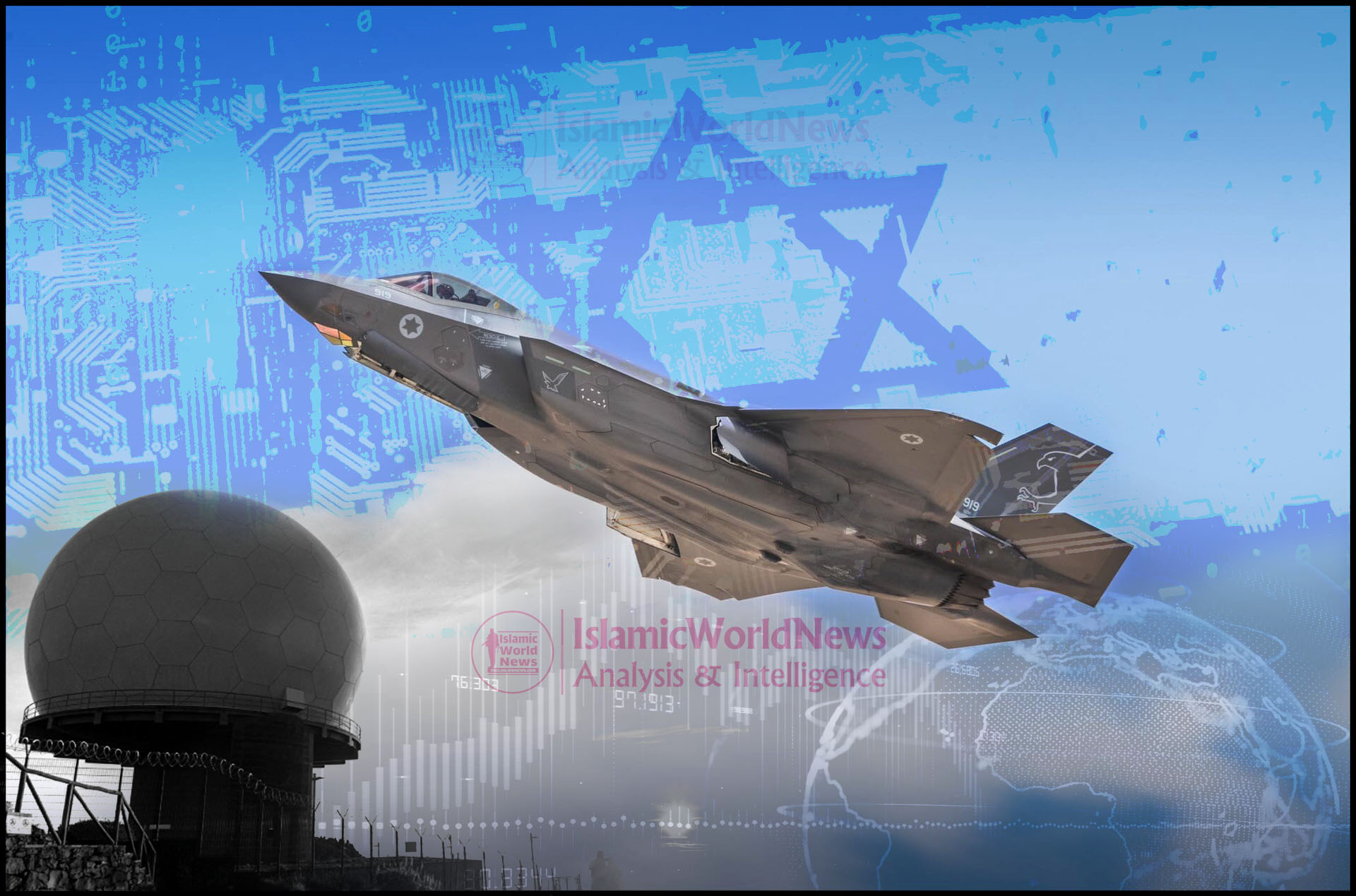
    Israel’s F‑35I Adir fighter jets, combining stealth technology with onboard sensor networks, function as more than just aircraft—they serve as airborne command-and-control hubs. These jets are tasked with penetrating air defense networks and, using “Beast Mode,” can carry external weapons after disabling radar systems to increase bombing payloads. Data collected via electronic and infrared sensors is encrypted and transmitted to command centers, guiding F‑15I and F‑16I jets for simultaneous precision strikes.

    This networked approach enables highly coordinated SEAD (Suppression of Enemy Air Defenses) and OCA (Offensive Counter-Air) missions. No previous operation against Iran has demonstrated such synchronization.

    Additionally, Israel’s long-range offensive layer includes standoff weapons like air-launched Sparrow ballistic missiles and Spice guided bombs, extending operational reach by several hundred kilometers. Simultaneous launches from multiple directions saturate Iran’s S‑300 and S‑400 systems, and when combined with F‑35I support, enable the capture of strategic targets such as uranium enrichment facilities and air defense sites. High-altitude aerial refueling not only prolongs battlefield endurance but also allows for continuous air support loops. According to CSIS experts, this “multi-axis simultaneous operations” model significantly improves penetration into Iran’s defense zones compared to traditional pinpoint strikes.

    Electronic and Cyber Warfare

    Since Operation Rising Lion, Israel has integrated battlefield and cyber tactics to neutralize Iranian defenses before physical strikes commence.

    In the first phase, electronic warfare units deploy systems like IAI’s Scorpius to target S‑300 and S‑400 radar signals, saturating multiple frequency bands and inducing “artificial sleep” in ground receivers. This multi-step process includes active jamming, injecting false data into control systems, and sudden disruptions—rendering even mobile defense stations unable to activate quickly.

    Next, Mossad and Unit 8200 cyber teams infiltrate air defense management networks and data centers, issuing fake commands to deactivate radars or reposition antennas. As a result, when F‑35I jets or combat drones enter Iranian airspace, no effective alerts are triggered.

    Simultaneously, large-scale cyberattacks target cross-border communication support networks. Internal servers are replaced, root account passwords are rotated, and encrypted traffic is intercepted using known vulnerabilities. The Washington Institute emphasizes that these intrusions are designed to disable logistical support systems and crisis command centers, preventing Iran from mounting a coordinated rapid response.

    Ultimately, a hybrid network of cyber and electronic attacks, combined with drone-based cover operations inside Iran, enables the destruction or disabling of defense systems deep within Iranian territory without direct confrontation. This model, blending jamming, cyber infiltration, and stealth explosive drones, represents a new framework for long-range attacks unprecedented in the history of Israeli-Iranian conflict.

    Support and Coordination with the United States

    At the strategic level, Israel’s formal integration into the U.S. Central Command (USCENTCOM) and close cooperation with the Pentagon have granted its air and naval forces access to extensive logistical and intelligence resources. Following this integration, Israel’s F‑35I jets and other airborne units can refuel and rearm at joint U.S. bases in the region, including B‑52 facilities in Qatar and aircraft carriers in the Persian Gulf. Logistical support—spare parts and specialized personnel—is provided under joint supervision and through coordinated exercises, reducing operational costs by up to 30% and minimizing response time.

    Israel’s role within CENTCOM’s unified command structure also facilitates missile and air defense alert sharing. By integrating the U.S. Shared Early Warning system with Israel’s Arrow system at a joint command center, any missile or drone launch in the region is rapidly detected and its coordinates shared with both nations’ commanders. Additionally, joint engineering and cybersecurity teams conduct regular drills to secure military networks and prepare for nuclear threats. This collaboration has created a secure and transparent logistical support system that complicates any offensive action with dual-layered challenges.

    On the political-military front, regional affairs officers (FAOs) and joint representatives within CENTCOM have strengthened personal relationships and information exchange among senior commanders. These interactions—through regular visits by CENTCOM leadership to Tel Aviv and the presence of Israeli advisors at U.S. command centers—enable swift and frictionless strategic alignment. The result is a secure logistical and intelligence network that pushes Israel’s offensive-defensive capabilities to saturation levels, forcing adversaries into limited reactive positions.

    Special Operations and Targeting Key Commanders

    Elite units such as Sayeret Matkal and Shayetet 13 operate within a unified mission architecture, executing psychological and tactical strikes deep inside Iran before the main aerial bombardment begins. According to CSIS, these units use real-time intelligence from fusion centers in Tel Aviv and Washington to infiltrate target facilities via small insertion teams (Fast-Rope Insertion), install field sensors, and transmit precise coordinates to jets and drones for synchronized strikes.

    Their methodology centers on “Deep Joint Strike” operations—simultaneous missile bombardment and infiltration teams supported by drones and electronic warfare. These teams identify and eliminate communication keywords and commander gathering points, crippling Iran’s high-level management and response capabilities both logistically and psychologically, making coordinated national reactions virtually impossible.

    CSIS recommends continued use of this tactical combination, noting its long-term strategic effectiveness. Iran’s ability to rebuild special operations capacity is hindered by cultural and security complexities, and the psychological deterrence created may pave the way for future successful strikes.

    Sources:
    WSJ – Israel Targets Iranian Nuclear Scientists | RAND – Israel-Iran Conflict Q&A | CSIS – Iran and Military Balance in the Gulf | Business Insider – Israel’s F-35 Warplanes | Al Jazeera – Israel’s Intelligence Operations in Iran | Defense Info – F-35I Adir as Strategic Game-Changer | Business Insider – Israel’s F-35I Stealth Jet Capabilities | JNS – Iran’s Domestic Air Defense vs Israeli EW | Rasanah – Israel-Iran Escalation Analysis | Washington Post – Mossad’s Iran Operations | BESA Center – Israel’s Move to USCENTCOM | Algemeiner – Strategic Shift to USCENTCOM | GovInfo – U.S. Congressional Hearing on Iran | CSIS – Rising Lion Report on Iran | CSIS – Israeli Strike on Iran Explained | Global Defense Corp – Israeli Raid on Syrian Chemical Site

  • Behind the Scenes of the Julani–Kalin Meeting: From the March 10 Agreement to Israel’s No-Fly Zone Proposal in Southern Syria

    Behind the Scenes of the Julani–Kalin Meeting: From the March 10 Agreement to Israel’s No-Fly Zone Proposal in Southern Syria

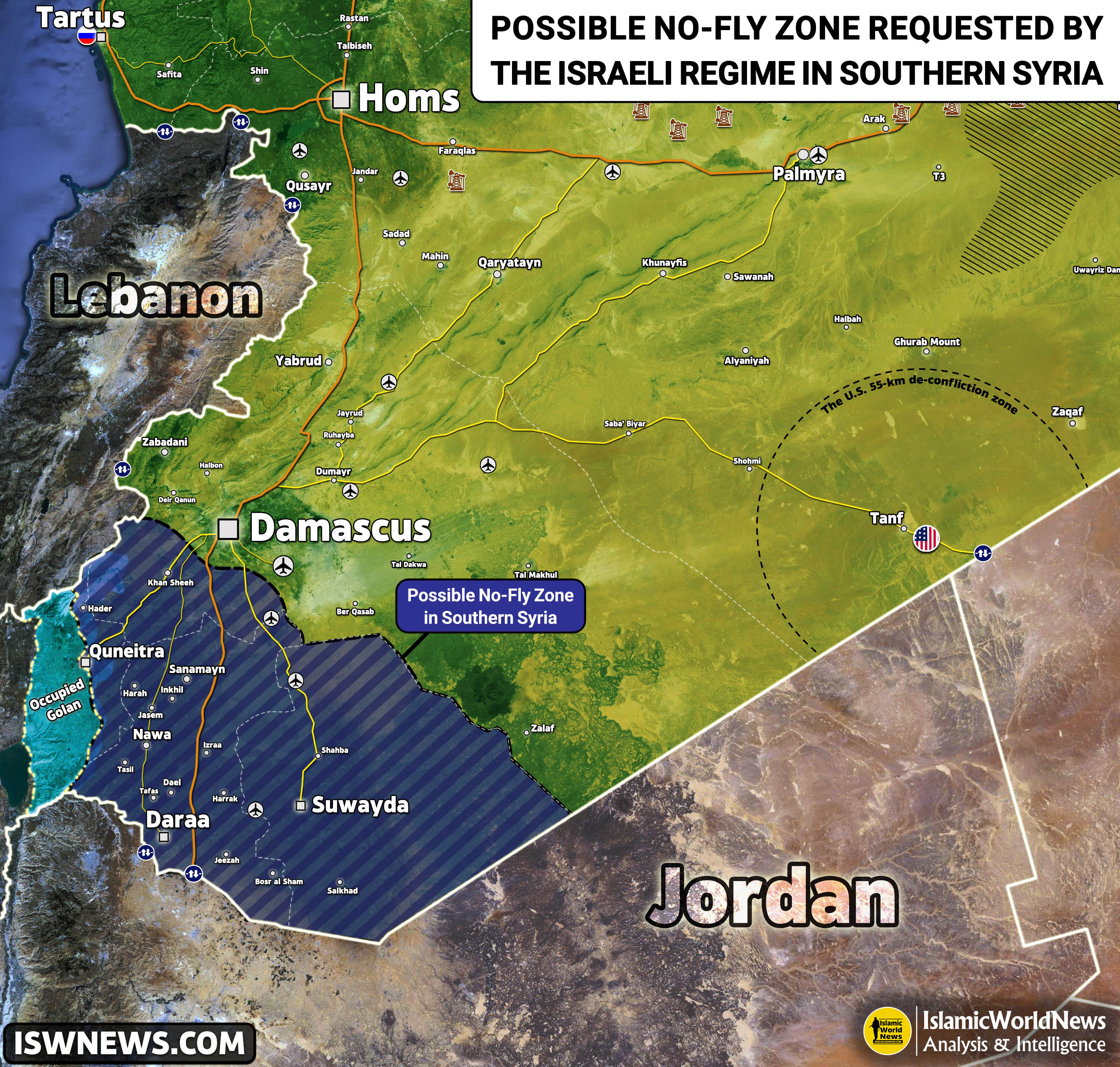
    According to Western sources, Israel has presented Damascus with a new security proposal. The plan includes establishing no-fly zones over parts of southern Syria while preserving an aerial corridor from Syria to Iran. This corridor is strategically vital for Tel Aviv, potentially allowing future airstrikes on Iranian targets. The proposed no-fly zone would cover Suwayda, Daraa, Quneitra, and parts of Damascus. In exchange, Israel would withdraw from some areas it recently occupied in southern Syria—but notably, it refuses to pull back from Mount Hermon.

    Meanwhile, Syria’s new government is expanding its diplomatic outreach, engaging with figures like Tom Barrack, Ayman Safadi, and representatives from Gulf Arab states. These interactions suggest Damascus is working to build a multilayered network of security and political alliances. The goal appears to be reducing international pressure while gaining flexibility in dealing with local forces (such as the SDF) and regional powers like Turkey and Israel. Al-Julani, at the helm of this effort, seems intent on balancing U.S.-Israeli demands with Turkey’s red lines.

    In the context of ongoing tensions between Iran and Israel, Tel Aviv’s proposal for Syrian no-fly zones is part of a broader strategy to secure a reliable aerial corridor toward Iran. The recent collapse of Bashar al-Assad’s regime and the destruction of much of Syria’s air defense systems have made Syrian airspace one of the least risky and most cost-effective routes for Israeli aircraft heading toward Iran’s western borders. Any agreement with Damascus could significantly enhance Israel’s operational capabilities against Iranian targets.

    Possible no-fly zone requested by the Israeli regime in southern Syria

    Another Israeli objective is to minimize the risk of direct confrontation with Turkish air forces. Turkey’s military presence in Syria—especially in air defense—has grown in recent months, increasing the chances of accidental clashes with Israeli jets. By negotiating a no-fly zone with Damascus, Israel aims to unilaterally manage Syrian airspace, impose its terms on both Ankara and Damascus, and reduce the likelihood of unintended military incidents.

    If implemented, this plan would have wide-ranging regional consequences, with Israel standing to gain the most. It would solidify a permanent aerial threat against Iran from the west, restrict Turkey’s operational freedom in Syrian skies, and place Damascus under Israeli dominance. Although the Syrian government may not favor the proposal, the current military realities in southern Syria are pressuring Damascus to accept it.

  • Yemen Responds with Firepower: Drone and Missile Strikes Hit Israeli Targets (Video)

    Yemen Responds with Firepower: Drone and Missile Strikes Hit Israeli Targets (Video)

    According to footage, one drone entered Eilat from the eastern direction of occupied Palestine and struck the Jacob Hotel, causing material damage but no reported casualties.

    Yemen drone struck Jacob hotel in Eilat
    Yemen drone struck Jacob hotel in Eilat

    Brigadier General Yahya Saree announced that Yemen’s missile forces successfully hit a sensitive Israeli military site in Tel Aviv using the hypersonic ballistic missile “Palestine-2.” The strike triggered mass panic, sending millions into shelters and forcing the closure of airspace over occupied territories.

    Simultaneously, Yemen’s drone units carried out two coordinated operations: three drones targeted multiple sites in the Eilat region, while another drone struck a high-value target in Be’er Sheva, southern occupied Palestine. According to Saree, both missions achieved their objectives.

    These attacks mark the 200th to 202nd aerial operations by Yemeni forces against Israeli positions in occupied Palestine.

  • Resistance Strikes in Rafah: Four Israeli Soldiers Killed in Roadside Bombing

    Resistance Strikes in Rafah: Four Israeli Soldiers Killed in Roadside Bombing

    This attack underscores the intensifying resistance operations in southern Gaza, where Palestinian fighters continue to confront Israeli forces with guerrilla tactics and improvised explosive devices. As ground incursions deepen, such incidents reflect the growing cost of occupation and the resilience of local defense efforts.

  • Gaza Still Under Fire: Israeli Brutal Strikes Target Palestinian Civilians

    Gaza Still Under Fire: Israeli Brutal Strikes Target Palestinian Civilians

    At least 14 Palestinians were martyred and dozens more injured in today’s attacks.

    According to local sources, yesterday’s bombardments claimed the lives of at least 98 Palestinians and wounded 385 others. These figures bring the total death toll in Gaza to over 65,062, with more than 165,697 injured.

    The unfolding tragedy in Gaza is not just a consequence of military operations, it is a profound humanitarian crisis that demands urgent global attention and moral clarity.

    The forced displacement of tens of thousands, the targeting of so-called safe zones, and the collapse of vital infrastructure reveal a deliberate strategy that disregards the sanctity of civilian life. In the face of such suffering, silence is complicity.

    The people of Gaza deserve not only protection but justice, dignity, and the right to live free from fear. It is imperative that the international community stands firmly with the oppressed, amplifies their voices, and works toward an immediate end to the violence. Gaza must not be abandoned; it must be defended, supported, and remembered.

  • Operation Gideon’s Chariots II Sparks Humanitarian Crisis in Gaza City

    Operation Gideon’s Chariots II Sparks Humanitarian Crisis in Gaza City

    Videos circulating online show Gaza’s exit routes packed with vehicles and crowds of people. Residents are leaving their homes in an effort to escape the intensifying brutal bombardment by Israel.

    Gaza’s exit routes packed with vehicles and crowds of people

    Reports indicate that over 190,000 people have been forcibly displaced. However, due to dire conditions in southern Gaza, including lack of shelter and basic services, some have returned to the city. Allegedly “safe zones” such as Al-Mawasi and Rafah lack essential infrastructure and have themselves been targeted by more than 100 Israeli airstrikes, resulting in the deaths of hundreds of Palestinians.

    The unfolding tragedy in Gaza is not merely a consequence of military operations, it is a profound humanitarian crisis that demands urgent global attention and moral clarity. The forced displacement of tens of thousands, the targeting of so-called safe zones, and the collapse of vital infrastructure reveal a deliberate strategy that disregards the sanctity of civilian life. In the face of such suffering, silence is complicity. The people of Gaza deserve not only protection but justice, dignity, and the right to live free from fear. It is imperative that the international community stands firmly with the oppressed, amplifies their voices, and works toward an immediate end to the violence. Gaza must not be abandoned; it must be defended, supported, and remembered.

  • Israel Builds Reinforced Concrete Shelters in Homes to Counter Iranian Missile Threat

    Israel Builds Reinforced Concrete Shelters in Homes to Counter Iranian Missile Threat

    Built with reinforced concrete and steel, they are designed to withstand nearby explosions. In peacetime, these rooms can serve as bedrooms, storage spaces, or home offices—but in times of crisis, they become secure havens for residents.

    The military is also considering upgrades such as emergency radio communication lines and thicker walls to enhance safety. Moshe Shlomo, head of engineering at Israel’s Home Front Command, emphasized that having such shelters inside homes offers immediate protection when warning sirens go off. Public shelters, he noted, are not always accessible, making in-home safe rooms a necessity.

    However, this development carries deeper social and psychological consequences. Turning homes into bunkers signals a shift in Israel’s security paradigm—from relying on military deterrence to seeking refuge behind concrete walls. Over time, this could erode public confidence in the military’s capabilities and widen internal divisions.

    This decision to build more shelters is not merely technical—it’s a clear sign that Israel is bracing for another round of conflict with Iran and its allies. The experience of the recent war convinced Tel Aviv that missile and drone threats are too severe to be countered by air defense systems alone.

    Israeli officials are also concerned about the psychological toll of future wars. Civilian casualties in recent conflicts have intensified domestic pressure on the government and even triggered reverse migration from the occupied territories. By constructing in-home shelters, Israel hopes to reduce casualties and preserve public trust. In essence, these concrete rooms act as psychological shields to prevent the collapse of social cohesion during wartime.

    Still, given the destructive power of Iranian ballistic missiles—capable of leveling several blocks—the real effectiveness of these shelters remains in question.

  • Israel Signals Readiness for New Military Campaigns Against Iran and Yemen

    Israel Signals Readiness for New Military Campaigns Against Iran and Yemen

    Maj. Gen. Amir Baram, Director General of the Defense Ministry, stated:

    “Our recent military operation in Iran ended in a decisive Israeli victory, but further phases are imminent. Iran, feeling deeply humiliated, is rapidly investing in its defense capabilities—unlike Israel, where such decisions take longer to implement.”

    Baram emphasized the financial burden of war, including costs for reserve troops, ammunition, and rehabilitation of wounded soldiers. He noted that:

    • Each strike on Yemen costs approximately ₪50 million ($15 million)
    • Total war expenditures have exceeded ₪205 billion ($61 billion)
    • A single Arrow-3 interceptor costs between ₪15–30 million ($4–9 million)
    • A failed interception, such as the Iranian missile strike on Bat Yam, can cause up to ₪300 million ($90 million) in damage

    To sustain its military edge, Israel is ramping up domestic weapons production and reducing reliance on foreign suppliers. The newly formed council will coordinate efforts across defense, finance, and national security sectors.

    Baram also acknowledged that Israel cannot sustain heavy combat on both the Iranian and Yemeni fronts simultaneously. As a result, it will rely on complementary strategies, including covert operations and alliances with local actors. Notably, Israeli operatives have conducted field visits to southern Yemen, and there are signs of renewed activity by remnants of Ali Abdullah Saleh’s network in Marib.

  • How Much is Palestine Worth to Turkey?! Learn More About the Covert Cooperation Between Israel and Turkey

    How Much is Palestine Worth to Turkey?! Learn More About the Covert Cooperation Between Israel and Turkey

    Turkey’s economic and trade cooperation with the Zionist regime is carried out through three main channels: sea, land, and air. These methods are as follows:

    — Use of maritime transport and logistics routes:
    Oil, construction materials, steel, and more are shipped from Turkish ports to Israeli ports using vessels flying the flags of neutral countries such as Liberia, Panama, etc. According to available data, about 18% of Israel’s essential non-oil goods are supplied by Turkish cargo ships.

    The maritime route is critical for supplying oil to the Zionist regime. Based on existing information, most of Israel’s oil needs are met by Central Asian countries like Azerbaijan and Kazakhstan via shipping routes that pass through Turkey. Thus, oil from the Caspian Sea is transported by the Baku government in cooperation with Turkey through the Baku–Tbilisi–Ceyhan pipeline into Turkey. Turkish tankers load the oil at Ceyhan port and, upon entering Israeli waters, turn off their AIS tracking systems and deliver the cargo to ports in Haifa, Ashdod, and Ashkelon.
    In January of last year, Israel topped the list of oil destinations from Azerbaijan, receiving 523,500 tons of oil worth $297 million.

    The Baku-Tbilisi-Ceyhan pipeline, which transports oil from the Caspian Sea to the Mediterranean Sea

    — Use of hybrid land and air routes:
    Trade via this method is conducted through third countries. Goods are likely transported overland from Turkey to Georgia and Azerbaijan, and from there flown to Israel. Azerbaijani logistics companies play a key role in this process. Cargo flights from Baku to Israel are actively ongoing, and it’s likely that Turkish goods are included in these shipments.

    — Use of Turkish and other Israel-friendly air routes:
    Turkish and Israeli airlines may use routes through countries such as Jordan, the UAE, and Greece. Cargo may be labeled “for Oman,” while its actual destination is Tel Aviv.

    Possible sea and air routes for transporting oil and goods to the Zionist regime

    Financial transactions are also conducted through intermediary countries. Banks in the UAE and Switzerland facilitate money transfers between Turkey and Israel. Even cryptocurrency transactions may be used to maintain anonymity.

    Overall, neither Turkey nor the Zionist regime shows any real intention of fully cutting economic and trade ties. Turkey profits from trade in various sectors, and Israel benefits not only from securing oil and essential goods like textiles and food, but also from Turkey’s potential role in exporting Israeli gas to Europe. Additionally, Israel can use Turkey as a gateway to access Central Asian and Caucasus markets. This is a strategically important issue that economically benefits both sides. In this context, public statements from Turkish and Israeli officials about severing ties are mostly for domestic consumption and global image management. As long as tensions remain “rhetorical,” it’s highly unlikely that the profitable trade between Turkey and Israel will be disrupted.

    Economic and trade cooperation between countries—especially Islamic ones—and the Israeli regime prevents pressure from being effectively applied and instead enables the regime to continue its crimes against the Palestinian people and the region. Cutting off these ties is one of the most effective ways to pressure Israel to stop its crimes.

    As a regionally influential country, if Turkey truly seeks to end the killing and war against Palestinians and apply pressure on Israel, it must sever its economic, trade, and political relations with the regime. Otherwise, it will be considered a direct and indirect accomplice in the crimes committed by the Israeli regime.

    Sources:
    Islamic World News
    Rybar Telegram Channel