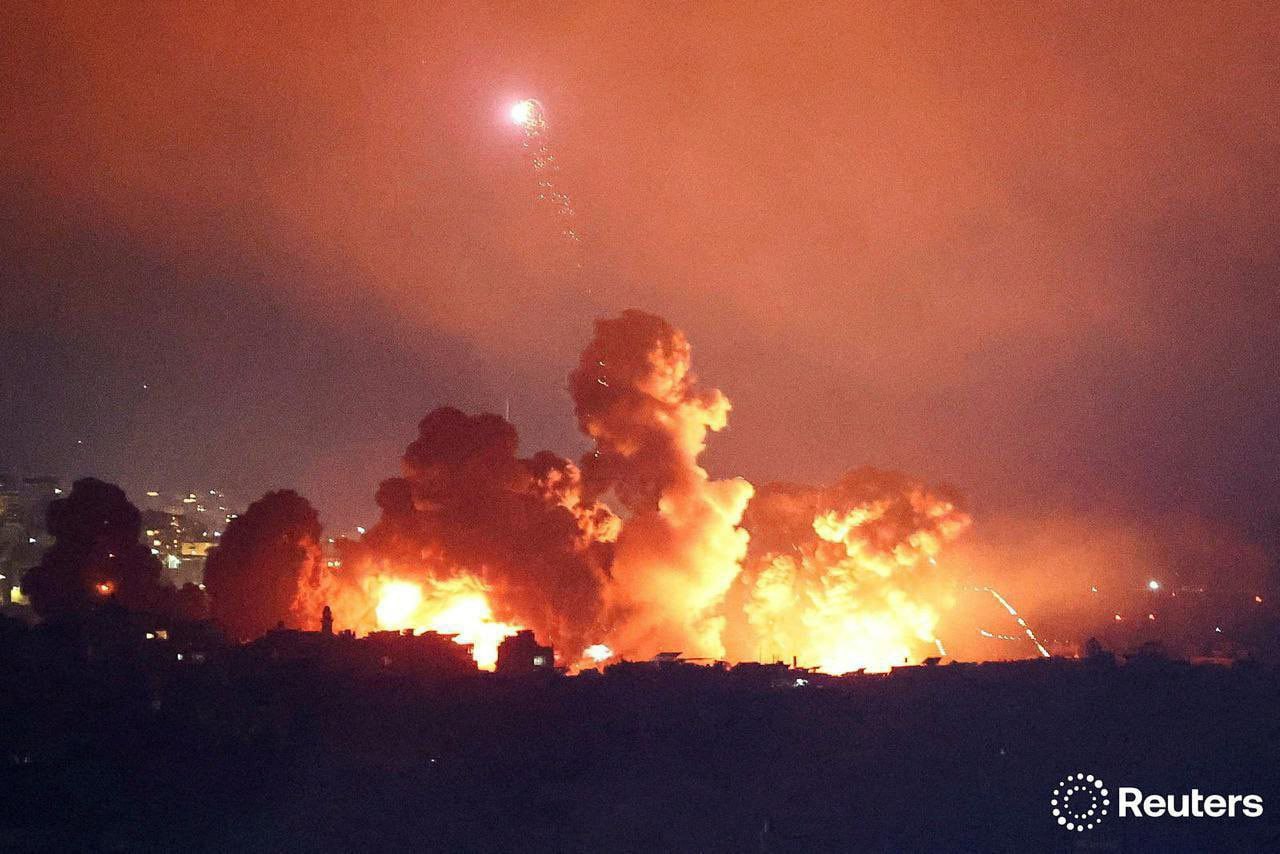
The Israeli regime’s TV network, Channel 12, reported on Tuesday about the Israel-Lebanon ceasefire negotiations mediated by the United States, claiming that if a ceasefire is not achieved, the Israeli regime’s army intends to intensify ground and aerial operations in Lebanon and exert more pressure on the southern areas of the Arab country in order to dismantle the Lebanese resistance movement Hezbollah’s second line of defense.
Additionally, the TV channel claimed that the Tel Aviv regime will prevent Lebanese residents from returning to border areas until the Israeli settlers of northern occupied Palestine can safely return to their settlements. According to this report, the regime’s army will allegedly maintain a significant presence along the Lebanese border even after a ceasefire is established.
Given the aforementioned conditions, a ceasefire on the southern Lebanon-northern Palestine front will certainly not take shape. The disconnection of Hezbollah from Palestinian resistance, establishing a ceasefire in the northern front without regard for Gaza, and retreating to the north of the Litani River are all factors that would undermine Hezbollah’s authority in Lebanon and its objectives in supporting the Gaza resistance.
Accepting any of these conditions without receiving reciprocal concessions would signify a defeat for Hezbollah.
Northern Front Metula: The Israeli regime’s army, after retreating from the southern axis of the al-Khiam town on November 2, withdrew its military equipment and tanks from the Sarda Farms, al-Hamamis area, and the villages of al-Wuzzani and al-Omra, and retreated to the town of Metula. Thus, the regime’s army suffered its first military defeat in the southern Lebanon axis and completely failed in controlling and demolishing al-Khiam.
Despite this withdrawal, the presence and patrols of Israeli troops in the village of Kfar Kila continue to ensure the security of Israeli army movements on the road from al-Udaysah village towards Taibeh and Rab El Thalathine villages.
In the Taibeh, Rab El Thalathine, as well as Markaba villages, there has been no change in the conflict zones, and the last Israeli attacks to enter Taibeh and Rab El Thalathine in the eastern axis of these areas doomed to failure. The Lebanese resistance movement Hezbollah holds a favorable upper hand in the face of the Israeli regime’s army in the east of these regions, making it easy to monitor and target Israeli military forces’ movements and gatherings.
Latest military situation of Metula and Udaysah Front – click to view in full size
Houla-Meiss El Jabal Front:
In the past 48 hours, the Israeli regime’s army carried out numerous attacks to demolish residential buildings east of the village of Houla. Hezbollah countered some of these measures, launching rocket attacks on Israeli troops’ gatherings in Tal al-Khazan district and targeting two bulldozers, which were busy to demolish buildings, that led to inflicting destruction or damage on them.
Currently, the Israeli regime’s army has advanced to the eastern half of the village of Houla, completely devastating the residential areas of the village in the east of the Marjayoun-Bint Jbeil Road. Israeli military forces have also moved towards the northern areas of the town of Meiss El-Jabal, reaching near the Meiss El-Jabal hospital. It is likely that the regime’s army will move towards the northern areas of Meiss El-Jabal after demolishing the hospital and surrounding buildings.
Latest military situation of Houla and Meis al-Jabal Front – click to view in full size
Aitaroun-Maroun El-Ras Front:
Despite the ongoing airstrikes by the Israeli regime’s army, the efforts of the 36th Brigade of the regime’s army to penetrate deep into the villages of Aitaroun and Maroun El-Ras have not been successful, with clashes concentrated in the eastern and southern outskirts of Aitaroun and the southern half of Maroun El-Ras. The main objective of the Israeli regime in attacking this axis is to reach and destroy the town of Bint Jbeil, which is the southernmost city in the Nabatieh Governorate.
Latest military situation of Aitaroun and Maroun al-Ras Front – click to view in full size
According to satellite images, at least 5,868 residential buildings have been destroyed across the border villages of Lebanon, with 80% of these buildings demolished since the onset of the Israeli army’s extensive offensive on October 1. In some areas, such as the villages of Ayta ash Shab and Kfar Kila, nearly half of all buildings have been destroyed. Many village centers have been demolished, and the majority of the destruction has occurred through controlled explosions following a widespread wave of airstrikes.
Satellite image of the situation before and after the war in the villages of Aita Shaab, Mhaibib and Ramieh
Since the start of the ground offensive in southern Lebanon, the Israeli regime’s army has destroyed most of the buildings in the towns and villages of al-Adaysah, Kfar Kila, Houla, Meiss El-Jabal, Mhaibib, Blida, Yaroun, Ayta ash Shab, Ramyeh, Marwahin, Umm al-Tut, and Al Dhahirah.
The extensive invasion of the Israeli regime’s army against Lebanon began to intensify after the assassination of Secretary-General of Hezbollah Sayyed Hassan Nasrallah, and the regime’s military has kicked off a ground phase with operations along the southern borders of Lebanon since October 1.
These assaults have so far resulted in the martyrdom of 3,002 Lebanese civilians and injuries to 13,492 others, as well as the martyrdom of over 500 Hezbollah fighters. On the other side, more than 90 Israeli troops, have been killed in Hezbollah’s retaliatory strikes on northern occupied Palestine.
This video has been published at a significant time, as the Israeli regime claimed to have destroyed a large part of Hezbollah’s missile capabilities following the assassination of the movement’s Secretary General Sayyed Hassan Nasrallah. The filming of this video took place after the assassination of Sayyed Hassan and demonstrated that the regime’s claims about the destruction of Hezbollah’s missile capabilities are baseless.
Images of Hezbollah’s Imad 5 missile facility
In this video, Hezbollah’s missile unit showcases its fixed underground launch platforms for heavy rockets (Fadi and Nasr missiles). These platforms mechanically rise to the surface for launch and quickly return to their underground positions after the operation.
The video concludes with quotes from the fiery speeches of the late resistance Leader, Martyr Sayyed Hassan Nasrallah: We cannot be feeble here, we cannot be afraid, we cannot surrender. We will neither leave the field nor abandon our arms.
Hezbollah’s Imad 5 missile facility
Imad has its roots in the name of a series of underground missile facilities of the Islamic Resistance in Lebanon, designed for rapid and destructive responses against the Israeli regime in central and southern Lebanon.
In these underground facilities, Hezbollah stationed various missiles, especially Fadi, Nasr, and Qader rockets, enabling the movement to launch rocket attacks across the Israeli-occupied territories. Prior to unveiling the Imad 5 underground missile facility, Hezbollah had released another video showcasing the Imad 4 underground missile facility.
An extensive strike by the Israeli regime’s army to occupy al-Khiam town in southeastern Lebanon ended up in a failure.
According to local media reports in Lebanon, following five days of confrontations and attempts to enter al-Khiam, the Israeli regime’s army retreated from this front and halted its assaults on this important town.
The conflicts in the al-Khiam front, like other fronts in southern Lebanon, were accompanied by air and artillery strikes from the Tel Aviv regime’s military. However, the geographical position of this region and the Lebanese resistance movement Hezbollah’s determination to defend it forced the Israeli military forces to temporarily cease their assault on the town.
Prior to halting the military operations against al-Khiam, the Israeli forces conducted air bombardments and fired incendiary phosphorus bombs towards the central and southern areas of al-Khiam.
Al-Khiam town overlooks the surrounding lands and is well-positioned to repel ground assaults. By deploying anti-tank missiles and rockets in this area and other heights, Hezbollah can easily monitor the Israeli army’s ground movements in the open lands on both sides of al-Khiam and carry out attacks on them in locations such as Sarda Farms, Al-Amara, northern Kfarkala, and other areas.
Military situation in the Khiam area
Perhaps the main reason for this retreat is this very issue, as Israeli commanders might have decided to withdraw from al-Khiam to protect their tanks and bulldozers from Hezbollah’s anti-tank missiles and to prevent heavy troops casualties. Indeed, the Lebanese resistance movement’s strikes in recent days have inflicted significant losses on the Israeli regime’s army.
The Tel Aviv regime also failed to dominate al-Khiam town during the 33-day war, but today’s conflict is much heavier and more complex than those days. To capture al-Khiam, the occupying regime must first take the eastern, western, and northern villages and heights surrounding the town, which is very difficult due to the readiness of Hezbollah’s fearless fighters.
According to local sources, the Israeli regime’s army fully evacuated the aforementioned villages after the occupying forces carried out explosion of homes.
It is worth noting that these villages are very small in terms of population and geographical extent, and that their Lebanese residents completely evacuated them before the onset of ground operations by the Israeli regime’s forces.
Despite this, these areas played a significant role in paving the ground for attacks on bases and settlements in northern Israeli-occupied territories, and most of Hezbollah’s rapid strikes originated from these regions.
The video footage above shows moments of several Israeli airstrikes on al-Khiam town.
In addition to armed confrontation, the Lebanese resistance movement Hezbollah has conducted five rocket and artillery strikes against the movements and gatherings of Israeli troopers in the southeast of al-Khiam.
The Israeli regime’s army bulldozers are also creating defensive embankments and fortifications in the eastern outskirts of al-Khiam front, similar to actions previously taken in the Netzarim Corridor, a 6km stretch of land that divides the northern and southern Gaza Strip.
This measure is aimed at providing security for infantry forces and protecting Merkava tanks from guided anti-tank missiles. It appears that the Tel Aviv regime is preparing for a heavy confrontation in al-Khiam axis.
Al-Khiam town is a significant target for the Israeli regime, and heavy preparations have been made for it.
Mikati considered US special envoy Amos Hochstein’s visit to the Israeli-occupied territories and Lebanon a good indicator of progress in the ceasefire negotiations and reiterated his commitment to United Nations Security Council Resolution 1701.
The premier also called for the handover of southern Lebanon and Hezbollah’s weapons to the army and addressed Iran and Iraq, saying that if the two countries want to send aid, it should be delivered by sea; because “we do not want to jeopardize Beirut airport! We will not put anyone at risk to reopen the Syrian border.”
He also addressed the war refugees, saying that Beirut’s schools are not their hotel!
Mikati’s verbosity kicked off following the assassination of Secretary General of Hezbollah Sayyed Hassan Nasrallah and intensified with Hochstein’s recent visit to Beirut. The path he is taking has already been followed by Former Prime Minister of Lebanon Saad Hariri, ultimately leading to his resignation and political removal.
Mikati is relying on Hochstein’s promises and is of the opinion that the issue of Hezbollah has been settled with Sayyed Hassan’s martyrdom. The situation in Lebanon is dire, but the removal of Hezbollah is nothing more than an illusion, and Mikati is not more powerful than Saad Hariri!
The southeastern areas of al-Khiam town consist of open lands and farms, and the Israeli regime’s army can advance there using Merkava tanks. Furthermore, Hezbollah positions in al-Hamamas, which overlook the surrounding areas, have been destroyed by the Israeli airstrikes.
Military situation on Khiam front – click to view full size
The border village of al-Wuzani has also been evacuated since the beginning of the clashes, and the Israeli military forces have not conducted any advances in this area aside from the destruction of mosques.
Clashes are underway in the Al wati’ah and Khallet al-Asafir areas located southeast of Khiam. Hezbollah has so far destroyed two Merkava tanks and a Hermes 900 drone in this front. Additionally, the gatherings of Israeli forces behind the frontline are under artillery fire.
After destroying several border villages in Lebanon, the Israeli regime’s army launched attacks on the towns of Aitaroun and al-Khiam, as well as the villages of Houla, Taibah, and Rab El Thalathine. Despite reports of the Israeli army retreating from the Lebanese border, heavy fighting continues in the Aitaroun and al-Khiam front, and the regime’s army is determined to maintain security for its bases and border settlements in northern occupied Palestine by destroying the border villages of southern Lebanon.
Shebaa Farms-KfarKala Front:After the failure of movements towards Shebaa town and Kfar Shoba village, the forces of the 210th Brigade of the Israeli army have begun a new attack to reach the town of Khiam.
Currently, the Israeli regime’s military forces continue fighting to push Hezbollah fighters back from Tal al-Nahas (Hourah) and Tal al-Mahamas, and the Israeli army intends to enter from the eastern and western fronts of the town of al-Khiam. If the Tel Aviv regime’s forces can capture the two heights of Tal al-Mahamas and Tal al-Nahas, they will not only secure the Metula settlement but also easily reach the town of al-Khiam.
As mentioned in previous reports, the goal of the 210th Brigade in this operation is the destruction of Shebaa, Kfarshoba, Kfar Hamam, and most importantly, the town of al-Khiam.
Latest situation in northern front of Metula and Aita al-Shaab – click to view in full size
Udaysah-Markaba: On the eastern front of Taibah and Rab El Thalathine, Hezbollah fighters prevented the advance of the 98th Brigade of the Israeli army with numerous artillery and rocket attacks on Udaysah Marjaayoun village in southern Lebanon and the Israeli regime’s Misgav Am kibbutz and its border bases. In the village of Markaba, Israeli forces have also entered from the southern front, and clashes in this area continue.
This video is related to the attempt of the Israeli soldiers to enter the villages of Rab Al-Thalathin and Taibah from the east on October 25, which failed due to Hezbollah’s rocket and artillery attacks, and finally the Israeli soldiers were forced to retreat.
Houla-Blida Front: On this front, the forces of the 91st Brigade of the Israeli army entered the village of Houla and destroyed parts of the residential buildings in this village. The level of destruction in the villages of this area is very severe, and after destroying Mhaibib and Blida villages, the Israeli army also demolished many buildings in the eastern and southern neighborhoods of Meiss El Jabal village.
Satellite image of the amount of destruction of civilian buildings in Meis al-Jabal, Mhaibib and Blida by the Israeli regimeLatest situation of Taibah, Rab al-Thalathin, Markaba and Hola – click to view in full size
Aitaroun-Ramyeh Front:In the village of Ayta ash Shab, the Abu al-Laban hill to the east of this village remains under Hezbollah’s control, and multiple clashes have occurred in this area between resistance fighters and Israeli military forces. Israeli troops are demolishing and destroying buildings in other areas of Ayta ash Shab.
In the village of Aitaroun, the forces of the 36th Brigade of the Israeli army entered from the southern road of this village and are engaged in clashes within its neighborhoods with Hezbollah fighters.
Latest situation in Aitaroun and Aita al-Shaab Front – click to view in full size
Marwahin-Ras al-Naqoura Front: In recent days, the forces of the 146th Brigade of the Israeli army made attempts to enter the towns of Marwahin and ad-Dahira, which were thwarted by Hezbollah attacks, and currently, Israeli military forces have halted their operations on this front and retreated. The exact reason for this decision is unclear, but it seems that Israel’s operation on this front is accomplished.
However, the Israeli forces managed to bomb and destroy several buildings in border areas, including the Rasul Akram Mosque in the village of Dahira. Additionally, the forest between the villages of Aalma El Chaeb and Dhahira has been set on fire.
Video of the destruction and explosion of Rasoul Akram (PBUH) Mosque in the border village of Dhahira by the Israeli regime
This mosque is located at a distance of about 400 meters from the occupied Palestinian border, and after the Ahl al-Qur’an mosque, it is the second mosque in the village of Dhahira that the Zionists blew up.
Dhahira village and archival photo of Rasoul Akram Mosque (PBUH)
Israeli soldiers laugh and sing Jewish religious songs while destroying the Muslim mosques in the border towns of Lebanon. This action contradicts their claim that “the war is limited to Hezbollah” and “they are trying to save Lebanon from the Hezbollah and Iran”. The destruction of Muslim mosques and civilian buildings shows that they intend to destroy Lebanon and fight against all Muslims in the region.
According to a statement from Hezbollah’s operations command, since the onset of the ground operation in southern Lebanon, Hezbollah fighters succeeded in killing over 90 Israeli troopers and injured 750 others. Furthermore, 38 Merkava tanks, four military bulldozers, one Hummer vehicle, one armored vehicle, one personnel carrier, and three Hermes 450 drones and one Hermes 900 drone have been shot down.
Contrary to reports published by the Israeli regime’s army, in which it claimed the retreating of its forces from Lebanese territory and the end of clashes this week, heavy battles continue. The future of the conflicts is uncertain, but the primary goal of the Israeli regime’s army is to create a secure border strip in southern Lebanon, and through the destruction of residential areas, and as a result of passive stance in Lebanon and the resistance front, its forces may expand into deeper southern Lebanon. Hezbollah will not be able to rebuild these areas at this stage of the war, and restoring their capabilities in border areas will take months.
However, expecting rapid reconstruction from Hezbollah is unreasonable. It seems they must first work on their weaknesses and then rebuild their defensive barrier in southern Lebanon with a new perspective. The Lebanese resistance movement needs to utilize various tools, including strengthening its air defense capabilities to mitigate the impact of airstrikes, establishing a stronger intelligence network, and expanding its arsenals of modern weapons to be able to halt the massive war machine that Western countries have built for the Israeli regime in these critical circumstances.
Hezbollah fighters are currently engaged in heavy combat after 23 days of fighting on five fronts. The resistance fighters have been engaged in fierce clashes from Naqoura city to Marwahin town, from Ramyeh village to east of Aitaroun town, from southern Blida village to northern Houla village, from southern Markaba village to al-Ghajar village, and from al-Ghajar to the Shebaa Farms with the 146th Brigade, the 36th Brigade, the 91st Brigade, the 98th Brigade and the 210th Brigade of the Israeli army respectively.
Hezbollah’s missile and air units continue to target military centers and headquarters along the Lebanon-Palestine border as well as inside the occupied areas of northern occupied Palestine, with an increase in attacks on the occupied cities of Tel Aviv, Haifa, Tiberias, and Safed. The Lebanese resistance movement’s air defense units have also intensified their response against Israeli fighter jets as well as reconnaissance and combat drones, increasing the number of downed Israeli drones to 11.
Since the onset of the ground operation, the Israeli forces have destroyed a significant number of villages, including Mhaybib, Blida, Ramieh, Kfarkala, Al-Udaysah, and Yaroun, but have not stationed military forces or equipment in these areas. The occupation and control of these regions are not among the Israeli army’s objective, primarily due to Hezbollah’s superiority in ground combat. Instead, destruction through bombings and heavy airstrikes is being prioritized to create a so-called security belt along the border areas and mitigate threats from the Lebanese resistance in the occupied settlements and border bases.
Shebaa Farms Front: As expected, the primary objective of the Israeli 210th Brigade in this front is to enter Shebaa town and Kfarchouba village. Advancing in this area is complicated due to the geographical conditions, and Hezbollah can halt the Israeli forces’ attempts to enter these areas with precise rocket and artillery strikes from the heights.
Kfar Kila-Markaba Front: A video from inside the town of Kfar Kila shows that on October 23, Israeli troops completed the destruction of most buildings in this Lebanese town.
Israeli army video from inside Kfarkala villageZionist media’s video of the destruction of buildings in Kfarkala by Israeli military bulldozers
The situation is similar in the Aadaysit Marjaayoun axis, where commanders of the 98th Brigade of the Israeli regime are sending their forces and equipment toward Taybeh, Rab El Thalathine, and Markaba villages. Currently, clashes are ongoing in the southern and eastern districts of Taybeh, east of Rab El Thalathine, and inside Markaba. Hezbollah fighters are not only engaged in armed conflict but are also using anti-tank missiles and rocket attacks to destroy Merkava tanks and crush gatherings of Israeli troops on border roads and in the Misgav Am settlement, west of Aadaysit Marjaayoun village, and at the al-Marj base.
The latest situation of Udaysah front / Click to view in full size
The villages of Taybeh, Rab El Thalathine, and Markaba are considered as Hezbollah’s first line of defense in this axis, and maintaining this line is crucial, when it comes to the Israeli army’s subsequent movements in southern Lebanon. These areas are geographically appropriate for military operations, allowing Hezbollah to inflict heavy casualties upon the occupying forces and show strong defense by resorting to anti-tank and rocket attacks.
The latest situation of the Shebaa Farms to Markaba / Click to view in full size
Houla-Blida Front: After completing operations in Mhaibib and Blida fronts, the 91st Brigade of the Israeli army moved toward Houla and reached the eastern areas of this village in their latest attacks. However, most buildings in this village have been damaged in the Israeli artillery and air strikes over the past year, and other buildings have been evacuated due to the war circumstances.
In the west of the Meiss Ej Jabal village, scattered armed confrontations continue within its neighborhoods, but there is no reliable news regarding the latest situation in this area. Given the Israeli army’s movement toward Houla village, it is likely that the destruction of buildings in the northern and eastern areas of Meiss Ej Jabal has been completed.
In the village of Blida, satellite images show that bulldozers and cranes of the Israeli regime’s army have ruined more than 152 buildings in this border village. Blida is one of the southeastern border villages of Lebanon and part of the Marjaayoun town in the Nabatieh Governorate, which also had an old and beautiful mosque, now the satellite images show its destruction. The Israeli regime’s army has even spared no mercy for the Blida cemetery, because its forces destroyed graves of the Muslims.
Aerial image of Blida and archival image of the historical mosque of this village
In another video from southern Blida, troops from the 920th Battalion of the 769th Brigade of the Israeli army are seen blowing up a large poultry farm on the southern borders of Blida. The owners of this poultry farm state that it was the largest livestock and poultry breeding center in southern Lebanon, raising tens of thousands of chickens. They had intended to relocate the chickens to other areas of Lebanon before the outbreak of ground warfare, but direct threats from the Israeli army prevented them from doing so. Such actions by Israeli military forces are in line with statements made by Yoav Gallant, the Israeli war minister, regarding the necessity of launching an economic and military campaign against Hezbollah and Lebanon.
The demolishing of the largest chicken farm in southern Lebanon by the Zionists
Aitaroun-Ramyeh Front: The Israeli regime’s army has successfully entered the Aitaroun town from the eastern axis, and clashes are currently ongoing in the western half of this town. The situation is similar in the Maroun El Ras village, where Israeli village are attempting to advance deeper into Maroun El-Ras and toward the southern entrance of the Bint Jbeil town.
The latest status of the Aitaroun Front / Click to view in full size
Heavy fighting is taking place in Ayta ash Shab village, particularly in the northern and eastern neighborhoods of this area, with the Israeli army conducting heavy attacks over the past two days to destroy Hezbollah positions on Aboullaban Hill east of Ayta ash Shab. Most buildings in Ayta ash Shab village have been destroyed in airstrikes, and despite the betrayal of the Christian villagers of Rmaych, Hezbollah fighters remain in the village and continue to defend it.
Hezbollah fighters are targeting Israeli gatherings and movements in this axis with rocket and artillery attacks, inflicting heavy casualties on the Israeli occupiers. However, these attacks are not sufficient to halt the Israeli war machine, as the combination of airstrikes along with bulldozer and crane activities on the ground is allowing the regime’s military forces to advance in the border areas of southern Lebanon.
The latest status of Aita al-Shaab Front / Click to view in full size
Given the direction of attacks by the Israeli 36th Brigade in Aitaroun and Maroun El-Ras, it appears that the Israeli regime’s main objective in this axis is to reach the Bint Jbeil village. In addition to Aitaroun and Maroun El-Ras, the movement of Israeli military forces along the Rmeish-Ain Ebl road (Christian villages) poses a significant threat to Bint Jbeil and could effectively encircle this small area.
The latest situation of the Houla to Ramieh front / Click to view in full size
Marwahin-Ras Al Naqoura Front: In the Marwahin-Ras Al Naqoura front, no significant ground movements from the Israeli army have been observed, with most of their activities focused on air and artillery attacks.
According to a statement from Hezbollah’s operations command room, the total Israeli casualties, based on observations by resistance fighters, exceed 70 killed and more than 600 wounded, including officers and troopers of the Israeli regime’s army. Additionally, 28 Merkava tanks, four military bulldozers, one armored vehicle, one personnel carrier, three Elbit Hermes 450 drones, and one Elbit Hermes 900 drone have been destroyed in the course of 23 days of ground combat. This count does not include casualties inflicted on the Israeli enemy in bases and camps in northern and deep inside occupied Palestine.
This level of casualties and damage significantly impacts the continuation of the clashes, especially if Hezbollah can execute guerrilla warfare, infiltrate occupied territories, or utilize devastating weapons in ground battles. The first phase of the Israeli army’s ground operation aims to create a security buffer zone in Lebanese territory, but what will determine the future of the war is Hezbollah’s response in ground combat and the extent of casualties and losses suffered by the Israeli regime at this stage of the confrontation.
Lebanon’s Hezbollah confirmed the martyrdom of Sayyed Hashem Safi Al-Din, the head of Hezbollah’s executive council, in the terrorist attack by the Zionist army fighter jets on the suburbs of Beirut on October 5.
Last night the spokesman for the Israeli regime’s army Admiral Daniel Hagari also announced in a statement that the head of Hezbollah’s Executive Council Sayyed Hashem Safi al-Din and head of Hezbollah’s intelligence section Hussein Ali Hazimeh were assassinated by Israeli airstrikes in Beirut suburb.
The Israeli statement was issued following the removal of debris at the site of the Israeli airstrike in Beirut suburb. Local media reported that rescue forces retrieved the bodies of 24 individuals from the site, all of whom were senior members of the Lebanese resistance movement, including Sayyed Hashem Safi al-Din.
Martyr Sayyed Hashem Safieddine
Sayyed Hashem Safieddine was the head of Hezbollah’s executive council, who was mentioned as a potential successor of martyr Sayyed Hassan Nasrallah, the secretary general of Hezbollah. Sayyed Hashem was the cousin of Sayyed Hassan Nasrallah and was his companion and supporter since the founding of Hezbollah. Since 1992, Safieddine has been the head of Hezbollah’s executive council and was one of the seven members of Hezbollah’s decision-making advisory council.
Sayyed Hashem Safieddine was martyred on October 5, during the terrorist attack of the Zionist regime’s army fighter jets on the neighborhood of Hara Harik located in the suburbs of Beirut.
The Israeli army bombarded the location of Martyr Sayyed Hashim Safiuddin with bunker booster bombsIsraeli airstrikes 1Israeli airstrikes 2
According to a statement released by spokesman for the Israeli regime’s army Admiral Daniel Hagari, head of Hezbollah’s Executive Council Sayyed Hashem Safi al-Din and head of Hezbollah’s intelligence section Hussein Ali Hazimeh were assassinated in an airstrike by Israeli fighter jets on October 5, when the Israeli warplanes targeted a building in Beirut suburb.
The statement was issued following the removal of debris at the site of the Israeli airstrike in Beirut suburb. Local media reported that rescue forces retrieved the bodies of 24 individuals from the site, all of whom were senior members of the Lebanese resistance movement, including Sayyed Hashem Safi al-Din.
Despite the official declaration from the Israeli army, Hezbollah has not yet issued a statement regarding the martyrdom of its senior members.
Sayyed Hashem Safi al-Din is the head of Hezbollah’s Executive Council, who had been mentioned as a potential successor to the martyr Sayyed Hassan Nasrallah, the Secretary-General of Hezbollah.